Around the Horn - Episode #17
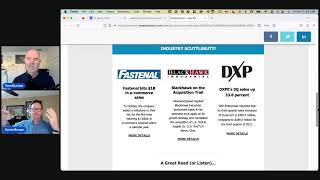
A Unscripted livestream/podcast conversation between Tom Burton and Kevin Brown (co-founders of Lead Smart Technologies) covering weekly news affecting wholesale distribution: macroeconomic signals (jobs, durable goods, market reactions), M&A activity in distribution, rapid growth of B2B e-commerce, the importance of turning siloed data into actionable analytics (and cautious, staged use of AI), and upcoming industry events. The hosts emphasize omnichannel selling, harnessing e-commerce data to feed CRM/sales workflows, and steady optimism in the distribution sector.
Questions this video answers
Episode 17
$11 trillion (cited as sales between manufacturers and distributors in North America in the first nine months of the year)
Chapters
You disappeared.
Good morning.
Good morning. Hey, here we are, episode number 17. You're looking a little bit brighter and, and more with it than you were a week ago. So that's good.
Thank you. The, the drugs are beginning to take effect. So Covid behind me tested negative a week ago now and, but a full week positive. And then now just getting over that cough and the fatigue. But on the right mend and on the right path mending up. Thanks.
Good, good. Well, let's jump right into our.
Yeah, let's, let's do our little weekly intro that we do. I think when I looked earlier, we had some, some new folks coming in. In fact, if you're joining us today and want to tell us who you are, where you're from, don't hesitate to use those comments. And then certainly most importantly, as we chat through some of the topics going on in wholesale distribution today, share your thoughts, your ideas, questions, concerns in the comments here and we'll add those in and bring you into the discussion. Which always makes things better. We've noticed the last few weeks we've got a number of comments after we ended the show that would have been valuable within the broadcast. So bring them on in if you're out there and have some thoughts. But again, here we are, as Tom mentioned, week 17. I'm Kevin Brown, that's Tom Burton. We're the co founders of Lead Smart Technologies. Lead smart is a SaaS software solution that helps wholesale distribute distributors and manufacturers, and soon to be sales agents as well, gather the data across their organization that's typically siloed. Bring that into a central place where we can have a customer intelligence and CRM solution that brings real results into businesses. So what we've done with this around the Horn session each week is we sell into a number of marketplaces in the medical distribution, industrial distribution, lots of different types of wholesale markets, including construction supplies and so forth. And so we brought a lot of data from all of those areas and brought that in together here. And we send out this email every Friday morning called around the Horn, trying to bring all this information about what's happened this week in wholesale distribution. We certainly can never get to all of it, but we try and bring some key things together. So happy to see Brad's joining us this morning from Arizona. We're good to see you there, Brad. And it's been a while since I've gotten to say hello to you. So happy to have you with us. So, Tom, why don't we dive in now that we've done a Little overview of why we do this and who we are.
Sure. So do you want to break right into the news here?
You know, as we talk about this each week, we try and break things up into two arenas, right. That latest news about kind of what's going on worldwide in the US And North America and the economy within technology as a whole. And then we kind of talk about what's going on in wholesale distribution. But, you know, it's. It's nice to kind of see we've had some, some jobs added within the manufacturing sector that's, you know, this has kind of been a good week out there. Stock market's been kind of bouncing back a little bit. You know, we see this announcement about durable goods outpacing things. And I, I really kind of keyed on this particular article about durable goods because, you know, that's what we're talking about, right. With within our audience of wholesale distributors and manufacturers that make these products. These are the, you know, these are the things that keeps America. America moving. Right. Or North America moving. Right. We oftentimes, you know, when people ask me about the businesses that I'm in and what we do, you know, as I describe the kind of technology that we make, it's like you don't think about the hydraulic hose that's attached to the box crusher behind your grocery store or where, you know, your clothing got made or your car was assembled. You don't think about the conveyor lines and all of those things that go on. But where those durable goods are being produced is really the core of, you know, what keeps this, you know, this world moving. And so it's kind of nice to see that increase in jobs going there and being paced by durable goods, which is what we love to see.
You know, I'm wondering if we, we had an article last week that I think it was last week where we were talking about the fact that, you know, a lot, a lot more manufacturing and activity is coming closer to home because of, you know, to avoid all the problems that existed with shipping and supply chain and all of that. I'm wondering if a lot of these jobs are as a result of that, that they're not so much just people hiring that have already been here, but there's more manufacturing and more types of.
These types of back the onshoring concept, right?
Yeah. Yeah, that is an interesting thought.
I, you know, I hadn't looked at it that way. I did actually kind of perusing the news this week and I always try and on Thursdays, you know, we both Kind of look through things, trying to pull together what we're going to use for this week. But I saw two more articles about both near shoring and on shoring. So there's certainly no shortage in that trend going on. I be interesting if anybody that's with us today or even down the road watches this recording, which we always have. These recordings are on YouTube, on our YouTube station. And you call it a station at YouTube. What do you call it?
A channel. A channel. But that's okay. That's okay.
You know, that's why you're here. A channel, YouTube channel, Facebook Live. It's is where we're at today as well, besides LinkedIn. So we have these recordings here. If anybody had any thoughts on that or seen the idea of reshoring happening, I'd love to get people's thoughts on that. But that should be something we should continue to watch pretty closely and talk about each week. So why don't we kind of jump ahead here?
Yeah, so the second one, I, I just thought, I think this is really funny, right? It's, it's.
I knew you would.
You know, it's. So I'm going to caveat this by saying we don't give financial advice on this show. So, so that's important. But the, there is, there is a tremendous amount of dollars on the sideline still, right? There's a lot of money that was put in the system. A lot of money that, you know, retail investors and, and institutional investors are sitting on the sideline with. And it's funny to watch. And this is what I, this is what I see. It's like you get like the slightest bit of good news and it's like, oh my God, party time. Right? And everybody rushes in. I think. I didn't see all the details, but I think they said yesterday, like that was one of the biggest gains in two years and there were some other things that were like decade old sort of records or all of that kind of stuff. And you know, the fact is, right is the Fed likes to say we're not out of the woods. We have, there's a lot, there's still a lot of, a lot of Runway here that they're going to go through and other things are going to go through, to go through there. I, I just thought it was funny, the sort of euphoria I guess you would say, from which is fine. I mean it's great that things are moving in the right direction. I'm not, don't get me wrong. But just the reaction has been Pretty funny. I think there's a little bit more tempering today, but it's just very interesting to watch. Process.
I think that's an interesting comment though you make it because I was looking at re. As I was reading this and a couple of other articles, was kind of even looking at a little bit of it from the other side, you know, is we try and always focus on the good things that are happening, right? We try and publish, you know, each week when we do this session, we try and talk about the good things, right? The M and A activity that's going out there that the world is, you know, and truly in the wholesale distribution world, there has continued to be. While there's some caution, there's continued to be some really good enthusiasm out there to see the ongoing growth and the continuation of things. And not getting hit so hard like know, people have been concerned about, doesn't mean that we're not in for some leaner times and so forth. But, you know, we've tried to concentrate on that. And as I was reading this article, I kind of looked at it and said, you know, it's almost like, you know, the Kansas City Fed or the, you know, all these different, the feds across the, you know, the country. It's like sometimes with this stuff, I feel like they're just looking for a little bit to extend their 15 minutes of fame because, you know, just this immediate squashing of some good news. Right? Okay, so you know what? Inflation didn't grow as much as it was expected to. Let's celebrate that with caution as opposed to putting. Trying to push a damper down on it. And then you get the reverse of that, you get this big push on Wall street and it's like, why can't we just find a balance here that says, okay, let's continue to work through this and be optimistic about it, versus one side being so polarized. It's almost like politics earlier in the week, right? Which I'm so glad we stay away from. But this is this polarizing forces, right? You've got one group of people with all the dry powder you were just describing on the sidelines looking to come in and make some money. And then you've got this other side that's like, whoa, whoa, whoa, we're not going to let you do that.
And yeah, I mean, that's, that's the point, right? The Fed's job is to put the headwind, you know, let's keep the headwind coming. Keep the headwind coming, right? Stop spending, reduce all that, right? Which slowers down inflation. But meanwhile, there's still a tremendous amount of dry powder, as you said, on the sideline that is anxiously. Right. We've had almost a year of, you know, okay, how, where am I going to put my money? You know, that kind of stuff. And I think that we're, my point on this is that I think this is something that's not necessarily being discussed and looked at is, yeah, we can, you know, they can, we can create fear and we can cause people to pull out or slow down spending, but there's still a tremendous amount of cash and money that was created over the last several years that's sitting there. Right. That is looking to, to get into the, to the thing. And so like I said, I'm not trying to give financial advice, but I think what we're going to see next year, if you continue to see the softening of inflation, you consider considering to see maybe the, the worst of it over, you could have a massive rally in the stock market because of all of this money on the sideline waiting to get in and do something. And, you know, we're all, we've all gotten used or we did get used to for a few years, these big returns in the market. You know, even 5, 6% in a bank account doesn't quite match up to the returns that we got used to getting in the, in the market. So I just think it's a really interesting, it's just interesting to watch. And yeah, you're right, there's definitely two different objectives, but it doesn't change the fact that there's a lot of bucks on the sideline looking for a home.
So trillions of dollars, right? Yeah, you're right with that. Well, and then we, you know, we had the other side of that. We saw the squashing of the, or I guess it continued squashing of the cryptocurrency arena and with a big bankruptcy there this week, and we're not financial guys, but I know you follow that pretty closely and I'm glad neither one of us have a lot of money invested in cryptocurrency. I guess so.
Well, yeah, we can, we can have another discussion another day. Right.
That's not for here. Right. But I did. This will be interesting to watch. Right. I, what I want to just stay focused on, on a continual basis is let's look at the, the cautious optimism, I'll call it, within wholesale distribution. Good things are happening. Right. We're seeing people, our business is growing, people are buying technology. We see people investing in their Business on an ongoing basis. We're, you know, coming towards the latter part of show and event season. Between buying groups and trade associations, it's just been a frenzy and there's been a good mood. You know, I'm getting ready to go to my ISA event in a couple weeks. Will be fourth or fifth either trade association or buying group in the last month and a half. And there is a great optimism there. You're not hearing people like panicking about I've got to do layoffs like you're hearing in other arenas and industry. So it's nice to, nice to hear and I want to kind of continue to celebrate that with what we do here on Fridays.
And I think one again, we could go off on a lot of rabbit holes here. But most of the layoff news you're hearing is from the tech industry and predominantly from companies that have been venture funded. Right. So they're not making money on profits on their own. They're making, they're, they're being funded by an external source. And when that funding slows down or dries up, right. It's, it's, it's. So it doesn't necessarily reflect economy, it reflects the cash capability or your ability to raise cash. That's very different than the economy.
So I think, I think you're right. But I think what we're seeing is a rebound effect from other people that are looking at those things going on and saying, ooh, I'm going to cut back on hiring or I'm going to do this because we get a rebound off of that.
And we said this before, right? There's some real healthy, I think healthy activity going on to kind of lean up in certain areas. There's absolutely nothing wrong with that. But if you look at the industry that we're talking to, the wholesale distribution, right, this industry is not run off of venture capital. It's run off of real revenue, real profits, real business fundamentals. Whereas many tech companies have been running off of how do I get my next round of funding? Right, so very different set of dynamics.
No, you're right. Spot on with that. Well, you know what, let's, let's. I want to kind of segue into talking a little bit about E commerce because obviously an important topic. You know, we had did a webinar earlier in the week, this week with Brian Beck. If you're with us today, if you joined us for the webinar, Fantastic. If you're looking or interested in, been getting that, the link to that, you can put a note in with your email address and a request here into the comments, you can send us a note@helloadsmartech.com just simple email address helloeadsmartech.com and we'll get you that out. But Brian's a renowned author and speaker on B2B E Commerce. He works with some major brands, both manufacturers and distributors. We did that session with him this week and we were really working a lot on talking about something that you and I talk about quite regularly. You talk about in your, in your book as well in the Revenue Zone about the changing B2B buyer. Right. And we know now that you know, depending on whose research you you read, it's either already happened or in the next year or so, you know, well over half of, of B2B buyers are going to be millennials. And so, you know those days of, you know, old school days where we went on Tuesdays to bring bagels to XYZ Factory or whoever it might be, it might even be if you're a manufacturer to that distributor you're calling on, that person might have come to work by Uber that day now. And they're just, they're different people. And as importantly with that, that we sometimes forget to talk about is the salespeople that we're getting ready to hire, whether we're an independent manufacturer's rep or sales agent. You're a distributor, a dealer or a manufacturer, that sales group of people, the customer service team that we're getting ready to hire. And as our business is growing, those people are having different expectations with technology. And we see this article here from Digital Commerce360, which is just a great resource if you follow these types of things. You know, huge growth going on now, right. It's commented in this article, right, about digital buying activity. It said that of 40% of companies that they interviewed, at least half of their purchases are being done by E commerce now. So if we're not fully engaged or working on a plan or a strategy for E Commerce at any level of the wholesale distribution arena that you're at, now is really the time to be doing that. Talked about $11 trillion being done, sold between manufacturers and distributors in North America in the first nine months of this year, just astounding amounts of money moving. And if, you know, half of purchases by more and more companies are being done by E Commerce, it's time to participate that if you're not in it already.
Yeah, I think the thing that really hit me the hardest from the webinar was really a big eye opener in our Conversation with Brian a couple of days ago was when we were talking about a lot of this growth in E Commerce isn't cannibalizing existing channels, but it's incremental business. Right? And I don't remember the exact stat, but I think he shared that at least half of this is incremental business versus cannibalizing from existing channels. And so, I mean, obviously the incremental business is better. But you talk a lot about what we do in our business, right, as far as aggregating data and then looking at that data. If you are getting more sales from E commerce and you can harness that data and you can understand who those sales are coming from on your, those incremental sales and then be able to tie those back into your more traditional channels in places where you need to provide more of a full service situation. To me, I mean, you talk about a hot lead, right, that opens up the door to a really, really interesting way of expanding your traditional business by leveraging the information that you're gathering from what you're doing on E Commerce from those incremental buyers or at least starting to understand, you know, maybe there are certain product categories that they're buying online, certain categories that they're not. Anyway, there's just a lot of insights to be seen from that. And it really hit me when, when Brian was saying that this isn't about cannibalizing. There is some cannibalizing, but that's not what this is, is all about.
No, and I think, I think that. I'm glad you brought that up, Tom, because it's a really, actually a really good point. And Brian talked about this. He talks about it, I believe in his book quite a bit as well. But I think it's real interesting, right, because when we think about the traditional, I'll just say industrial or maybe building supply, distributor, you know, they are my salespeople, go to my customer, we have a relationship and they buy from us. Well, that's true, of course. That's why the business has been able to grow to where it is. But what we're seeing now migrating is that buyer as he become younger and younger and even with older ones, as technology grows, they are getting inundated now. And I, I use the example in discussion with you and Brian in the webinar on Wednesday was that, you know, it used to be, you know, I'll say in the, even up into probably the, the early to mid-90s was that you could probably keep your customer depending on, you know, where, what geography you were in. You probably keep your customer in the dark to the fact that there's 27 different manufacturers of hard hats. He probably knew about the ones that you sold and the ones that your competitors sold. And, you know, maybe he gets a catalog from somebody else out of the state here and there. But, you know, now we've got this, you know, the world is flat, so to speak. We've got a global economy. You know, you can find just about anything that you want on the Internet now and people are using it. And so that mindset for a wholesale distributor that says, hey, I have the contract with the builder of that hospital. I'm going to get all the building supplies, or I have the contract with that Ford plant or that Tesla plant. So I'm getting most of that business because I have a contract. You know, those days are changing very quickly because while you may have a contract, we know that every contract has leak in spend. Right. And that is coming from lots of people that have great online presence. And it might not even be that they're going to look to buy there, but they start getting their information from somewhere else about maybe OSHA information that they need or maybe it's product specs, whatever it might be, if they're needing to go somewhere else, versus from you as their contracted trusted source. The opportunity for that leak on that contract to just turn into a rushing, gushing thing is out there. So I think we need to really kind of start working to continue to shift the mindset that says, I want to sell to my buyer the way he wants to buy as opposed to how I want to sell. And what we know is we talk about this constantly here is, you know, that omnichannel concept is let them consume information, get that experience, but buy from. From you how they want to.
Well, it's, to me, it's three steps, right? Let them buy the way they want. Make sure you're harnessing that data and the intelligence that's coming from that, and then use that intelligence to further strengthen your other channels that are there. And I think that's the miss. If you, if you, yeah, you can open up the door and have omnichannel, which I think is critical, as we've talked about.
Yeah.
But then use that data that you're gathering to understand not just who's buying, but what they're buying and in what situations. And then use that to further strengthen what you're doing through your traditional channels and through your traditional, you know, sales teams that are there. And I think that's where the one plus one plus one equals ten. You really start to get that capability. And I think, you know, that that came out pretty much loud and clear in our conversation with Brian. And I think that's going to be again, more of, of what's going to, you know, the 2023, to me be the further furthering of the year of data and smart intelligent use of data. Right.
I think that's a good point. You know, I was on the phone earlier this week with a, with a distributor in the Southeast and they're trying to start kind of growing their, their E commerce. They have an E commerce program now, but it's nothing where they want it to be. But you know, we started talking about that. You know, we talk all the time, right, about siloed data within organizations. We've got E commerce data, we've got marketing data, and then we've got ERP data and then a thousand spreadsheets, right, Running around the organization with different information from trade shows, events, whatever it might be. And when you harness that together and feed that back to your salesperson, that's when that customer relationship, because we have intelligence about our relationship, really expands. And the idea of a salesperson getting notified through a CRM system that there's, they have an existing customer that abandoned a shopping cart. And you know, by the way, I don't think I mentioned this to you, but we're, you know, only the middle of the month, not quite the middle of the month yet. And I don't think I've complimented you a couple times, but you know, you had built with your team some things for, for one of our manufacturing customers in Northern California, that is phenomenal the way you're bringing data into Lead Smart, a channel cloud into our product. So they're actually getting basically a live view of what's happening on their website for a salesperson. And now when that salesperson can look and say, you know, Judy, the buyer at XYZ manufacturing plant has been looking at these things on our website. Well, I don't sell her those things and I've never even talked to her about that, or she put a couple of things in a cart and abandoned the shopping cart. When that data starts flowing through, the overall view that we have of our customer becomes dramatically different. And this, this distributor I was talking to the other day, they hadn't even conceived of that. But the idea of giving their salesperson that kind of information, what was astounding to them and the reason I kind of talk about that, we tend to not talk this much about our product. But the concept out there is, to your point, right, Selling to the customer the way they want to, they want to buy. And that way that they want to buy is changing. So if how they're going to buy starts to change, why wouldn't we maximize every bit of data that we can get from that to help them with their experience, which is going to grow our sales?
Yeah, And I think it's important to. You mentioned silo data, right? Data is just that, data. The goal here is to take that data and turn it into analytics and insights and intelligence. Right. And that's where the, the genius of how you use data comes together. But yeah, there's a tremendous amount of insights and analytics that can be extracted fairly easily by the right looking at the right data sources and then putting them together. The client you just talked about, that's what we did, is we pulled. It's not just the one website. We're pulling together data from multiple sources, using that to create analytics that then they can use to actually make decisions on where their sales team is focusing their efforts and opportunities for other product categories, other types of things. You know, increase wallet share basically within their existing customers. So anyway, there's a lot, a lot that can, can go on there.
But before we jump ahead with that, though, I think it's interesting because it ties a little bit. Something you and I were talking about earlier this morning was, you know, we start talking about, you know, AI or artificial intelligence and machine learning, and, you know, we see a lot of information, you know, coming into wholesale distribution about using AI and, and so forth. And it, you know, what's interesting is you brought this up to me and kind of helped me get my head around this a little bit more. And those of you here, Tom's got a background, he's a computer scientist by training, and now he's a software guy and a distribution guy and an author and lots of other things. But your original education is computer science and understanding these things far better than a. The guy that barely got through business school over here. And. But, you know, it's interesting because we see a lot of buzz around all of these things, but the reality of it is is if that data isn't. Doesn't have good integrity to it, it's not going to feed good results. But you don't need artificial intelligence to bring siloed data together to get great, deep insights into what's going on with the customer. There's a lot of ways around that without trying to figure out how to go do machine learning and artificial intelligence.
Yeah. Artificial intelligence is a, is a potential byproduct of a good strategy. Right. But there's, there's multiple layers of, of there's a journey that has to occur to get to the point where artificial intelligence is going to be providing more value than it is a liability. And that is the problem that we're seeing, unfortunately quite a bit with companies jumping into artificial intelligence prematurely is that the intelligence that they're getting is not very good because the data and the framework is. So it's actually misleading. So yeah, again, we could spend a whole half hour or two hours talking about them.
We'll unpack this more down the road.
But yeah, I mean, just to summarize things really quickly, right, you have data, you have to then look at what is the. What data is relevant and what isn't. And that's one of the biggest issues is there's a lot of irrelevant data that you can throw into the mix that can actually confuse the process. So you look at relevant data, you look at how that data can be transformed into analytics, insights and intelligence, and then you use that. And then can you build on that in the future using artificial intelligence or machine learning to take some prediction into that? Right. Rather than you're trying to use that to help predict some things going forward? That's how we do it. Right. So to leapfrog from data to artificial intelligence, which we do see companies talking about and doing, is a. Not. Is it a big mistake, but it's just not going to work because you're leapfrogging to value to them, critical essential steps. And then you end up basically with a failed project or a lot of messages and a lot of predictions that are based on really bad, bad knowledge, bad information.
Garbage in, garbage out, right?
That's right. Good way of saying it.
I mean, that's really what it comes down to. And I think in closing with that is the, you know, is your, is your team reminds me all the time, right, that this isn't auto. What do you guys call it? Auto magic. It doesn't just happen because, you know, I said we could do this. Of course we can build this, guys. Yeah, it's not auto magic, so. Good. Well, kind of winding this down, let's talk about what's kind of going on around.
And I wanted to welcome Susan. I. Susan is a regular on some of our other podcasts and good friend of. Of Brandon and and so forth. So great to see you on our around the horn, Susan.
It's nice to have you with us. Thanks. She made that comment about selling and advising your customized by customers by viewing things from their chairs and that's right. You know, it's. There's a lot that can be done remotely these days as we're seeing. It's nice to get back in person but when we can accomplish a lot ahead of time, it's great. So good stuff. So let's kind of jump ahead here. You know, it's one of the biggest things that you know, I, I love seeing and we only have a little bit of space to talk about this in the newsletter we do each week and but you know, There was probably 5 to 7 significant M and A transactions since we were here last Friday that have been announced within wholesale distribution and really even within, I'll call it Industrial Industrial safety, building supply arena. It's in a narrow span. So we see that, you know, Blackhawk Industrial, you know, one of the largest industrial supply companies in North America did another acquisition we saw the prior week, you know, Martin Industrial. There's just been a bunch of these done and it continues. And to me that's extremely encouraging. Right there's. Because you know, once in a while we see announcements about M and A activity and it's, you know, it's a distressed company and you know, and somebody gobbled them up and helped pay their bills down and now they've expanded their own footprint. But there's some M and A stuff that's being done out there that's of some very relevant companies that are coming together and sometimes it's in mergers and most often it's acquisitions. But it's nice to see that while we see the doom and gloom we talked about in the early part of things today, it's nice to see this M and A activity going through wholesale distribution. So we saw that with Blackhawk, there's quite a few others. The other thing I was going to mention there is back to our E Commerce discussion. Last week we talked about Watsco in the H Vac and refrigeration world. You know, I think it was two and almost two and a half billion dollars of E Commerce in the previous quarter. Fastenal is hitting a billion dollars with it now as well. It's phenomenal growth within E Commerce. So it's obviously something that's got to be paid attention to. And then you know, DXP in the industrial distribution world, you know, jumping with big sales increase over the previous period in third quarter sales. So I love just seeing momentum continuing. When we hear all the doom and gloom that we talked about in the first section that we were in today. So just makes me feel good about one, the market we serve and then overall that maybe things aren't as bad as or going to be as bad as described by the pundits.
I think there'll be a lot of continue to be a lot of M and A transactions over the next year in this industry and I think for a lot of some of the reasons we've talked about, right A lot of companies looking to improve their operational efficiencies, looking to improve their coverage. You know, there's some real logical good reasons to continue some of the acquisition and M and A process. So I think that's going to definitely continue in the next year and I think it'll make a lot of the companies stronger and again more operationally more efficient and able to take advantage of technology better. And all the things that we talked about there, you combine that all the stuff we've been talking about with E Commerce. So yeah it's, it's anyway a lot of interesting, a lot of interesting dynamics coming together coming into next year. So be fun to report on it.
Let's kind of wind down today with looking at our events coming up. I think I just really wanted to plug as we do quite regularly, the Industrial Supply Association's having this big fall summit. It's going to be a really good event. We're happy to be one of the sponsors of that event. There's a three track arena, there's women in industry, there's emerging leaders and then there's a whole segment in sales works. And that sales works session is going to be. Should be really good. It's being led by a couple of, couple of all stars. We're helping sponsor and we'll be participating in that as well. I'll be in Orlando for that event later this month, beginning of December. But if you're not part of the Industrial Supply association and you work within that arena in that world, great event to be at, great group to support. Brendan Breen and his team do a fantastic job. But that event is, I'm looking forward to, I think it's going to be really great, really good speakers coming in and just some solid, solid networking opportunities. I know you're going to be on the east coast that same week while I'm down in Orlando for that event visiting some customers. So I appreciate you doing that. And we both come home and go straight to San Diego for affiliated distributors E Commerce and Marketing Summit. So that should be a good event as well, and then did I mention that I want you to go to World of Concrete this year and see our customers instead of me? You're a Vegas guy.
You know, I've been to World of Concrete a couple of times before. I thought I was a great show. I enjoyed it.
Yeah, it's a good one. So I'm just not a Vegas fan and you are. So anyways, lots of good stuff coming up. Let's wind it down. Let's thank everybody for being with us. Those of you that made some comments, we appreciate it. We'll watch each week to the. The, the hidden comments that will come in after the fact, which normally and.
Even, you know, if you have some suggestions on topics you would like us to talk more about, if there's things in here that we, you know, we've talked about that you'd like to have us unpack a bit more, let us know and we can go in those directions. There's certainly no shortage of things to talk about, that's for sure.
Well, that's. That's right. And, and those of you that know me, know I'll just talk. So if you give me the opportunity. What I did want to mention is, and it's something you had asked me about recently, I want to get. I'll get this done in the next week or two. We have a slate of guests and we always enjoy having guests with us and want to start doing that more. We have a slate of people that have agreed to join us. There's a couple people, I think, that had come on today that I'm wanting to get on with us as well. So we'll probably get a calendar of guests scheduled soon and maybe we can get that fully scheduled and then we can publicize who we'll have coming soon because we probably got eight or 10 lined up for rest of the year and first quarter that people that would have asked to join us. So we'll get that going and wish everybody a great weekend and thanks for spending some time with us this morning.
Yes, have a good weekend. Thanks, everyone.
We'll talk to you later today.
More from Tom



What does AI actually mean for a wholesale distributor #WholesaleDistribution


If your systems don’t talk to each other, your AI won’t either #AITransformation




This is why one AI agent isn’t enough for high-stakes decisions #WholesaleDistribution

