Around the Horn - Episode #21
A conversational YouTube episode (Around the Horn #21) where Tom Burton and Kevin recap recent travel and industry events, then discuss trends affecting wholesale distribution: growth of B2B e‑commerce (traffic vs. transactions), the value of CRM/platforms and clean data for enabling AI, and an introductory exploration of blockchain (decentralized computing, immutability, smart contracts) and its supply‑chain use cases. They emphasize practical adoption steps (cleaning siloed data, platform mindset) and preview future deep dives/webinars.
Chapters
Hey, Kevin, Good morning.
Morning, Tom. Good to see you.
Yeah, long time. It's like three weeks, right, or whatever.
Since it has been, you know, and it's. I got to see you earlier this week, which is good. But when we'll talk about that a little bit today. But yeah, it's. We've been away from around the Horn and you know, I guess the nice, nice part of it is, is that, you know, we still got out while we were both traveling last few weeks we've got emails out to folks, so we still do our. Our daily or our Friday morning Around the Horn email has still gone out, so we got that piece done. But to get together here for a broadcast has been. It's been a bit. And actually after today, we just have one more this year.
Wow. Is that true, man? Okay.
I think that's what we scheduled right next. Next Friday's the 16th, I think it is. And we go right into holiday stuff. So yeah, we'll jump into January. After. After that we'll get right.
Get ready for season two, because season two is early. There we go is really where the fun's going to begin.
We're gonna have to see if the network will pick us up for a second season.
Yeah. All right, well, let's, let's get into this so that we can impress the network.
Let's do. Before we do that, though, Tom, let's just chat kind of a minute about where we've been in the last couple weeks. And you know, I think there's some people here today that had scheduled to be here. And you know, I still kind of laugh. You know, I see this small amount of people that like, have clicked the attending button on. On LinkedIn. And then, you know, we're just at this show this week and probably met 30 to 50 people that are like, yeah, I come and check this out either by watching the watching, reading the email, watching the. The replay, or coming in live but not actually clicking the attending button. So it's always interesting to see that the audience is a lot bigger than you think it is when you start meeting people at events. So let's see, we went a week before last. You were out visiting a new lead smart client in Atlanta. And the only reason I mentioned that is that it's kind of something unique for us. Right. And we're going to talk about some of our versions of products later in the broadcast today because of the. A new launch of a new product for us. But, you know, our typical user of our product is a manufacturer, a distributor or dealer or a manufacturer's rep or independent sales agent. But you were back working with a buying group in the Jansan arena, which is pretty cool. That's actually going to use our platform and with Lead Smart and much of the features that manufacturers and distributors use to manage and run their entire buying group and communicate through our portal system and and so forth. So that was pretty cool. I was really, really glad you were able to get back and do that.
Yeah. And not only did I get to spend time with them, but I also got to spend time with some other prospects and customers. And I think I wrote a blog or a LinkedIn post this, but I was very, as I said in my LinkedIn post, there was never any conversation about, you know, layoffs, downsizing, cutting expenses, you know, all of that. It was, there were three themes that jumped out. One is, hey, how do I use data and analytics to drive sales going into next year? How do I better train my people so that my people are able to really take advantage of all of this in the new world? And how do I adjust better to the new buyer journey? Those are, you know, so to me, those were really proactive actions rather than reactive actions. And I was just, you know, again. And I heard the same thing last week at our show. Right. And talking to probably, literally probably 200 different companies last week in our, in our, on our trip to the ad show. Again, very similar, yeah, very similar messaging, which was very refreshing to hear. It's not that anyone's ignoring what's going on in the world, but rather than reacting and cutting and reducing and running for shelter, they're figuring out how to be more optimized, more productive and leverage technology better. So. Right.
I think that old phrase of cautiously optimistic really lends itself here because, you know, so let's go back two weeks ago. You were out visiting that partner and then went to our new client and then went to see a large new customer that we hope will be joining us in the next few weeks in the South. And I was in Florida for the Industrial Supply Association's Fall Summit, which was their Women in Industry sessions, their emerging leaders track that they had there as well. And then they had another one that we sponsored or helped sponsor for. They called it Sales Works for manufacturers and Independent sales agents or independent manufacturers representatives to learn how to basically work together better. And you know, my, my buddy and our friend of Lead Smart, Lee Richards, was there talking about and leading that whole track lease with the, the Brooks Group. And so he did a really nice job of things as well with that. So great show, great event. Heard much of the same thing you're talking about, right? Is no big layoffs, watching closely, paying attention, but investing in their business and looking at new ways to get deeper customer in information to service them better. Which means if they gain the growth that's available to them from even existing customers, things will be fine for them. So that was last week where I was Industrial Supply Association. You were out seeing customers, which is kind of funny, right? Because we swapped roles for a week there. You were out seeing customers and you run the technology side of our company. But it's great to have you out and getting the feel of the customer and listening to, you know, what's going on. And then this week we were in San Diego, which is easy for us, right? I'm only 70 miles north of there and you're a couple hundred miles north of there. And so we were able to be down with our friends at Affiliated Distributors for their E Common Marketing Summit, which was just a great event, same kind of messaging, really positive people looking for ways to serve their customers better and grow their businesses, which is no better opportunity than for us, is to meet, talk to people, people like that. So what I'm happy about, I got to show you something kind of funny here is this is. That's hard to get to. I was going to bring this over, but I've got about 15 of these things hanging from all the different events. I keep them on a lamp behind me and I was just looking and saying, man, it has been a busy year getting back to travel. So I keep kind of always, throughout my career have kept those trade show and event lanyards to kind of look back at the year. I'm going to do a LinkedIn post about that here shortly as well. So busy year. The fourth quarter has just been a whirlwind. But but good stuff and we're looking forward to next year. So why don't we dive in now that we kind of talked about where we've been and what we've been working on, you know, the first thing in our. And by the way, you know, if you don't get, if you're here with us, whether you're watching live on YouTube live, Facebook live or LinkedIn and or watching the recording, if you don't get this email, just send us a note.
You can do it.
If you're here live here through the chat or if you're watching the recording. HelloDsmartech.com send us a note. We'll get this out to you every week we've got a few thousand people that get this every week and we get a good response from it. So in fact I was talking to a distributor Wednesday afternoon after you left San Diego and she said one of the reasons she looked us up and popped in is because she reads this every week. So kind of like that. So in the news, right, we're talking about construction adding jobs. My thought with that one, as you go in and read that from Industrial Supply, it's kind of a double edged sword. Right. Because there's jobs being added. But in reading another article about the construction industry and building trades, you know, they're still having some supply chain pressures and not just that they're adding these jobs but just like everybody else, they're having trouble finding people. So I think we've got some good push on the economy and then we've got some influences that kind of makes pushing that forward has a little resistance to it. So we're gonna have to see what, you know, what the next few months hold with that.
Yeah, it looks like it was pretty stable year over year. Yeah. So not, you know, again, probably some different types of jobs, different situations, but again, nothing, nothing falling through traction, no.
Huge contraction that we, you know, turn the news on and you know, doom and gloom. So that's good stuff. Kind of popping ahead to that article on European Companies engage in B2B E commerce. I, I just kind of found that interesting as we were kind of looking through what we were going to talk about this week from article standpoint. And you know, there's a lot of European companies that have are both European and UK companies that are doing business in the US Both from a distribution standpoint and a, and a manufacturing standpoint. So kind of watching what's going on, B2B E commerce and so forth and digital commerce in those countries is great. The ones that kind of, that hit me as we look at this infograph about this was that, you know, they're, they're looking at this as 84% of those companies. Right. That are working on this are really looking at it as a standpoint for an opportunity for more exports.
Right.
So if we think about that, we don't talk about that a lot about foreign buyers when we talk about digital commerce or E commerce typically. And I thought that was a really interesting statistic about them looking at, to the, you know, the old saying from the Friedman that wrote the book, the world is flat. You know, we're in this place now where it's a lot easier to grow and do business other places.
Yeah, that's interesting about the, the export aspect of things. I don't know what kind of logistics that, you know, you can run into with that, shipping and, and time frames and all of that kind of stuff. But obviously depending upon the product, I think that's a real interesting way for, you know, companies to reach. You know, a lot of companies want to get into the U.S. right? We've worked with companies in Australia and Europe that have tried to break into the US this is certainly an interesting way to, to do that.
Well, I think if I, if my assumption would be that what they're looking at with that even is it can be a strategy to seed a new market.
Right. That's what I mean. Yeah. Yeah.
So I think from, you know, you look at it from a North American standpoint, you know, if a US Company is looking to, you know, tiptoe their way into Canada or Latin America or Canadian company looking at tiptoeing into the U.S. what a great way to do that is, is through digital commerce as opposed to, you know, hiring a lot of people and putting boots on the street and, and large warehouses or whatever it might be. So I think we're going to start hearing and seeing a lot more about that as kind of time goes on with that.
And I think, you know, going back to our marketplace conversation a few weeks back with Brian, Brian Beck, you know, again, I'm just thinking aloud here. It would be an interesting, if I was a European company, a nice one two punch might be, you know, building my own E commerce, using that, doing some marketing in the US but then combining that with Amazon or other marketplaces, as you said, sort of a beachhead way to go into an area, start to get a feel it's very low, I mean, a relatively low risk way of testing the market. And then if you're starting to get traction, then you can look at other ways outside of digital to go in there. But it's certainly a good way to test the market, test your product, see what kind of feedback you're getting and so forth.
Yep. It's astounding to me as we looked at this though, that of that, you know, 25% of the, the companies that were surveyed in this were getting 80% of their revenues were coming from digital commerce or E commerce, which is pretty cool to see. So it's growing everywhere we look. It's not really something you can avoid. And the conference we were just at this week was all about that and growing digital commerce as well. Some big numbers There too, right?
Yeah. Those are pretty staggering amounts of numbers on the other side, I guess it's not a fad. It's not going away well.
And you know, it's interesting, we talk about this a lot. In fact, we had an opportunity. You mentioned Brian Beck earlier. We had a chance to see him in San Diego this week and chat a couple of different times. And you know, it's for so long, and this has been a challenge, right, Is if you're a manufacturer, you've got to make sure that your, your products are being seen in the marketplace, they're being represented the way you want to be represented. You have control over your brand message. Because if you don't do a good job of that. We talked about with Brian is that, you know, and by the way, we've got recordings of that. That's in our YouTube channel, right, Tom, is the recording of that webinar with Brian.
Yeah.
So if you just search Lead smart technologies on YouTube, you can see a replay of that webinar with Brian. But you know, one of those, the challenges, right, is if you're not controlling your brand specifically on Amazon and other places, somebody else can grab that and start controlling your brand message. That and it's a whole lot easier to do that work up front than it is to try and recapture that. But you know, there's been so many major brands who have been kind of late to that party because they've been looking at competing the viewpoint of their distributors and dealers potentially being that they're competing with them. When the reality of it is right now those E Commerce platforms, whether it's Amazon or many of the other ones, is they're just another distributor, right? They're, they're not getting any support differently. In fact, a traditional brick and mortar distributor or dealer is going to get far more support than that mechanism. It's a go to market strategy that they just really have to be looked at as another competitor, so to speak, in the marketplace. But brands cannot avoid being in that space. So important stuff.
Yeah. I just want to add one more thing before we leave E Commerce and you know, we just had a call with a new customer a few minutes ago before we got on here and definitely heard a lot of this at the show as well. And what's exciting to me is, you know, as a lead smart and looking at it from the CRM perspective of things is that we're starting to see, you know, if we look back six months, nine months, people would talk about, well, can we track transactions in lead smart can we track the actual sales or the orders and all that? And that's great. But now what people are starting to ask about is can we also track traffic? You know, I look at traffic and transactions are two different things.
Yep.
Who's coming, what companies are coming to my E commerce site? What are they doing? Are they abandoning carts? Are they doing certain things? Are we, and then how can we use the CRM combined with the other touch points that we have with those companies to help have better communications and a better customer experience? So yeah, what we're seeing is that E commerce is not just a tool for transactions, but it's also a tool for potentially getting some insights and intelligence on traffic and who's interested and then be able to use that in a way that you can leverage that with other channels and other things that you're doing in the business. And I think that's going to be a trend for next year. I mean I'm seeing it already, I think that'll be a big trend next year is how do you leverage your E commerce site for not only transactions but for traffic and insights as well.
So I think that's a really good point. You know, as you talk about that and we'll stay here for just another moment is, you know, I, we, I think Brian mentioned when we did that session some statistics. I think we heard those as well this week at the conference we were at. But you know, for traditional B2B wholesale distributors, a very small percentage of their revenue that comes through E commerce is actually somebody clicking a buy box and following through the whole process. But the bigger part of it is like is kind of as you were talking about is information gathering. And what we're hearing a lot more now from Lead Smart customers is what they're really seeing is that their customers are building orders on their website and then they're pushing that order through without completing the transaction. That distributor is grabbing that data and then they use that almost as like purchase order.
Right.
So they're they're doing, you know, digital purchase order, so to speak, which is pretty cool to see. But what they've never had before to your point, right. About capturing data is now though we get to see if they're doing that, you know, so called digital purchase order. Right. What else were they looking at that they didn't put on that purchase order?
Right.
How often are they coming now we round out that data across the board. So that says we just have so many more deep insights. Right. So if they've been say you're a Milwaukee tool dealer. Right. And, and they're looking at Milwaukee stuff, but you're noticing that they use secondarily sell Dewalt or Ridgid or some other tool area and you've got a little bit of that and they're spending a lot of time over there. You have to start thinking about if I'm not getting those orders, who is.
Right.
And there's an opportunity for growth for a salesperson to take that data. So such good information.
All right, let's move on.
Yeah, I thought we would get some rocks thrown at us about talking from some of the distributors that are typically here talking about manufacturers being on platforms. But so far, so far, no rocks thrown at us in the chat. That's good. So this is kind of interesting and I want to introduce kind of a new topic that we've not talked about before. But you know, we're trying to, with what we do here each week with around the Horn, really bring kind of some new things to folks in wholesale distribution that maybe they're not really thinking about. And you know, it's really interesting as I read this article and talking about, you know, this whole term industry 4.0, and we hear that a little bit in the concept behind that. Right. Is, you know, this being referenced is. And some people are looking at it as I 4.0 or you know, industry 4.0. And we started with an industrial, you know, revolution was, you know, steam powered things and so forth was kind of number one. Then we got mass production with Ford being able to do the first conveyor belt and so forth. That was kind of 2.0. Then we started bringing automation and computer systems in for three. But now really what we're talking about with you know, 4, you know, 4.0 of the industrial revolution is all of this intelligent data that we spend a lot of time talking about. But you know, now we're talking about not just companies data, but Internet of things data, satellite data, all different types of data from sensors, artificial intelligence that we're gaining data from and what are we doing with all of that? And we've kind of alluded to this in many of our conversations, but it becomes quite interesting for us. And one of the other pieces of that that we kind of wanted to introduce into today's topic and you know, part of it was, I know this is something you're passionate about, Tom. We talk about is, is the blockchain, right? And using that whole blockchain, right. To streamline supply chain, to streamline ordering processes, to streamline how we Work with, you know, partners on contracts and so forth. And, and you know, the, the blockchain is something, and you mentioned this earlier, and I think we'll talk about it a little deeper, is that, you know, many, I won't say most many people think blockchain and think cryptocurrency. Watching the meltdown of cryptocurrency, you know, you've got FTX that was just sponsoring sports stadiums that's crumbled and bankrupt, you know, and so there's that negative connotation or caution that maybe some people from our generation look at within cryptocurrency. But those two things are not synonymous. Right. That blockchain is something that enables cryptocurrency. So I wanted to kind of get this conversation started about this idea behind the blockchain and its applications and implications in wholesale distribution.
Yeah. And certainly we'll just touch on a couple things today. And I believe, I don't think that next year, 2023 is going to be the year of the blockchain, but I think it's going to be a paving stone to 2024 and 25 being years of the blockchain. And really, people ask me all the time, what is the blockchain? The simple way to think of it is it's decentralized computing. And what I mean by that is.
Sorry, that's not a simple statement for some.
Well, I was going to explain it. Give me a second. Give me a second. Right, so if you think about most, the way that most computing is done today, you have a server or you have something that somebody owns, right? So you may have a server in your own business, you have your own E commerce site, even if you're doing stuff with Amazon, Right. It's all owned by Amazon. Amazon is centralized. So there's a centralized entity. It's your company or some other entity that is responsible for the computing that's being done. And that's what is centralized technology or centralized computing. What the blockchain does is, allows you to, or allows organizations to have this computing structure but not have it owned by any one person and have it shared across blockchain in a very, very secure way. But at the same time, it opens up the door for a lot of very interesting ways of doing transactions and coordination. Because again, not one person is owning the computing platform that you're doing or one entity that's owning that computing platform. So at a high level, that's what blockchain is. It's decentralized computing versus centralized computing, which is what we all know, if you really think about it, everything we do now, somebody owns the, the servers or the computing or, or whatever it is, is, is owned by somebody. And that's why it's considered centralized. Now again, we can talk later about how that all works and why it's secure and in all of that. But you know, let's just for a minute, it is true, right? It's a very secure and it's a very becoming, more and more efficient way of doing that. Again, as your point, Kevin, it's gotten a bit of a black, a black eye because blockchain is what this decentralized computing is what has enabled cryptocurrency. Right. Bitcoin is a decentralized currency. It's not owned by anybody, it's not owned by a country, it's not owned by a bank, it's not owned by anybody. And so bitcoin as a, as an example has been enabled by the blockchain has as well as Ethereum and all the other sort of, you know, scammish tokens and currency that have been created that have create a little bit of the black eye on, on that industry. So yeah, it's definitely been polluted by that, but it doesn't actually take away the power of the blockchain. And if you want to look at the plus side, a lot of the crypto and a lot of the things that have gone on over the last couple years or three years have actually really improved the technology that's available with the blockchain. So there's a lot of us that, you know, in business, the beneficiary is us in businesses. How do we take, take advantage of that? And, and so this whole area of, of blockchain as a strategy really is really the way to look at it is a decentralized computing strategy and how that can then be used with know, other things like you have here, artificial intelligence and all of that really is going to open up some very interesting applications and just I think make business a lot more seamless and, and so forth along the way. And I'm sorry about that.
I'm glad the way you really kind of unpacked all of that. And I wanted to ask you a couple questions because, you know, I have 30,000 foot view of these things. You're a, you know, computer scientist and technology guy and have been following this really closely, you know, blockchain and crypto. But I want to unpack a little bit more and we don't need to spend a lot of time because we don't have a lot of time left today. But I would like to kind of unpack the security side of it and then let's kind of dive in. Tom, too. So I guess maybe the sharing of the data. Right. If I've got my data in the cloud, that's one thing, I've got my dad in a closet, I can kind of be participating all of this with my own servers or through others, Is that correct?
Well, again, yes, but both of those examples, whether it's cloud or on premises, still a centralized computing strategy. Right? You're. You're right. Right.
If I want to participate, is that correct? My data can be shared to the blockchain.
Right. You're, you're. You can put data out on the blockchain. You can put data and even applications out on the blockchain versus on a traditional centralized environment. And then again, without going. That opens up a whole lot of other interesting capabilities because it isn't in a centralized environment. That's there.
Yep. So that'll kind of lead us. The reason I asked, that'll kind of lead us to some applications tying to wholesale distribution in a moment. But if we take a step back, can you do 30, 45 seconds on the security side of it, just as an introduction to security side of that?
Yeah, basically, and I'll try. It's basically all about encryption. So everything that's out there is encrypted in two ways. Ways it's set up so that it's what's called immutable, which means it can't be changed. Somebody can't go in and start changing what's out there and what's been basically put out there from the, from that perspective. But the other part is the encryption capabilities and so forth are just super, super powerful. So you have a lot of opportunity to, you know, again, even though you may think that you're exposing yourself through the use of encryption and through other things, you can definitely protect all of that, but still make it accessible. Right. Which is what you want to do to the right. To your right partners and your right people.
So, so that's a great description with that, Tom. And so I want to take this back to, you know, the audience that we speak to through this. From a standpoint of what came to my mind, right. Is because I go way back in the, in wholesale distribution from, you know, loading up the back of my SUV with a bag full of quarters and, you know, knowing where every pay phone was for 200 miles to cell phones to computers and, you know, and then email transactions and then some online ordering opportunities. And we've always been worried about that security standpoint, right. And what triggers for me is, you know, I remember when I was manufacturer's rep, right? We were always extremely cautious about sharing like a pricing quote, a price pricing book or a quote in just a spreadsheet to somebody because of the risk that somebody could, you know, bad intended change something in there and say, no, no, you sent me this file and the price is right here. So we got, so we got PDFs, right? And we started taking an Excel document and putting it into a PDF. And this is just exponentially that next level, right, of going from putting an Excel spreadsheet into a PDF that has pricing in it to now we can push that out to, you know, countless numbers of people through a controlled setting that gets powered by a group, but the security is deeper than anything we've seen. Is that, is that a reasonable comparison?
I mean, I don't, I think you're on the right track, right? Yeah, you're on the, you're on the right track for sure. And then I think if you extend that one step further, you have the ability through again, technology and programming to bring all of that into action. And I'll give you an example for is, let's say you have a contract that has rebates or discount levels or something like that and you put that contract out on the blockchain. Now based around achieving those discount levels, rebate levels, the computing that goes, the smart contract, so to speak, or the smart computing that goes along with that can now automate a lot of that and track all of that and coordinate all of that for you. So, and even to the point of handling payments if that's what you wanted it to do, right? So it's, it's, it's very, again, when you really start to take a step back and think about the possibilities, right. It's mind boggling on what are the possibilities. The technology is still in its early stages, right. But it's rapidly coming and like I said, I think over the next year you're going to see some very interesting applications of using blockchain. You already are seeing this in this article by some of the big players are talking about FedEx and UPS and some of the other big players in there that are there, but it's going to become accessible to the mainstream and the independent distributor and not just always the big guys. And we're working on some stuff as well that we'll be sharing next year as well, well, that's what I was.
Going to relate that to.
Right.
You've got some really cool. Hey, Ron Paulson's here. It's great to see. Thanks, rp, for joining us today. So we'll talk about AI a little bit. We've done that in the past. Rp, we'll do a little bit, we can chat briefly about that before we leave today. We do that pretty regularly. And rp, you and I are due for a phone call. It's been way too long. Or, or some pancakes as well.
I'm also excited to see Dirk here as well, who gave an amazing presentation at the AD conference we were just at about this topic, right. About being digitally enabled and innovating and, and all of that kind of stuff. And it's. I get excited about it as a technology guy, you know, you know the industry and been in the industry much longer than I have, but as I get to know this industry so much more and I see all the different things that come together, especially in this ecosystem, the potential of things like AI and blockchain and all the stuff we're talking about to really, I don't know, industry 4.0 could be a major, major, major difference between 3.0. It should almost go from 3.0 to 10.0 in terms of what's possible.
Yeah, I think you're right on track with that. And it's this kind of all ties back to what Dirk was talking about. And Joe Sissman from Forrester, the day before Dirk's keynote, gave a keynote as well. And we were back to that area of talking about platforms, right. And we talk with a lot of our customers. You know, you can buy a piece of software and it's, you know, to your term, you use regularly a point piece of software. But when you start talking about platforms, which we're our system with at Leedsmart is a platform we can go. And we had, we were on the phone yesterday with a major North American wholesale distributor who is seeing the value of that, that can move not just a CRM system or customer intelligence system, but now that platform can kind of move out into other parts of their organizations within operations and so forth. A big differentiation between platforms that Dirk was talking about and point software system. And I think the blockchain just becomes another platform. And to RP's comment here about, you know, talking about AI within distributors, you know, AI becomes very interesting. But, you know, RP will unpack this more over time. But you know, Tom brought something up that really helped me look at AI. And quite a while ago, we talked about this about a year ago. You know, we've probably all had that experience where we've used a CRM before, and we go in and I, and I look and, you know, Ron Paulson, that's with us today is a retired senior executive from Granger. But I could have looked, you know, a few years back into my CRM, and I might have four Ron Paulsons there, or seven Mitch Lewinsky, that's there. And, and Darren Rossin, you know, that's there or whatever. Which one do I put my notes into?
Right.
And so which one of those do I do that with? And. And now I don't use my data well, so when we have clean, pristine data, we can do a lot more with. And Tom, the thing you've been talking about so much recently, about the challenges with AI and even machine learning, because sometimes folks that, you know, tout AI, it's kind of really machine learning or what. What's the other term you've used? Deep.
Deep learning. So, yeah, I mean, again, we, we might want to do an episode in season two, right. That really, we dig into the layers of AI and what is the definition of AI? But regardless of what we call or how we define AI, it's predominantly going to be dependent upon data. And so the key, obviously, and I had lots of conversations with people on this earlier this week of the show, there were two things that I heard from customers that are getting in their way, if you want to call it that, from being AI. One is data, and the second is having resources in their organization that would be able to, to work on this type of stuff. Right. Yeah. So anyway, it's. But that all said, I think there is a tremendous amount of opportunity for use of AI with distributors. We could talk about that separately. You can also.
We will do that.
Yeah. And. And I think if we really wanted to get deep on this, at some point, I would like to talk a bit about AI and the blockchain and how those two actually could work together. Like, maybe we'll do a webinar or something on that, because when you start combining those two things together, you start to really, really start to see some, you know, that you talk about one plus one is eight in those. In that situation. That's there.
Right.
But before we get ahead of ourself, there's some fundamental things. And this is what I was, you know, and a lot of the conversations we had at AD was, okay, it's. This is where we want to go, but let's start thinking about some fundamentals that we have in our organization. If you're tracking data and spreadsheets and you don't have CRM and you don't have some of these fundamental core pieces and you don't have a platform as you described or whatever, right. You're not going to be able to evolve at least easily into these other places that are there. Well, and trying to leapfrog from Google sheet to AI in one jump is not generally going to be a practical strategy.
So and to your point there right in back to our piece comment with this and again, we'll unpack this more in the future. But with this right now, you know, we're looking at, you know, with our platform CRM and customer intelligence system. What we're really seeing is the vast majority of wholesale distributors either have no CRM or customer intelligence system in place or they have an antiquated, or maybe they bought, even bought a salesforce, but they've never implemented it in a way that brings value to their business. So one of my cautions have been because we talk to people so often about siloed data, right? That's kind of where I was leading earlier. And you share this all the time, right? We had E commerce data, ERP data, maybe some CRM data, hundreds of spreadsheets and some marketing automation data and they're all siloed and they're not talking.
Right.
And so we, we're now talking about blockchain earlier. Right. AI silo data is the most dangerous thing that you could have in this setting to want to jump into that world. And so to RP's comment, my personal view, view of this, this topic is with AI is, you know, if you're, you know, perhaps a Granger or a Fastenal or you know, Henry Schein, some of the larger distributors out there in different vertical channels and you have large teams that are managing technology and data and keeping it pristine. AI starts to look really good when you're a hundred million dollar a year wholesale distributor of pipe valves and fittings or whatever it might be and you have data everywhere and you're not even clear clear. If the silo data is good data, machine learning AI becomes almost impractical in some settings. Right?
Yeah. And again, I know we're kind of running short on time. I don't want to, but I'll just give. It's not even so much silo data. That's the problem is the is the silo data creates the problem and the problem becomes is that as you move as you try and aggregate that silo data. Right. How many times is Kevin Brown in different siloed places? And how do I know that Kevin Brown is the same guy? Right, right. Which he may not be.
The world doesn't need more than one, right?
Well there probably is more than one, I would bet. So the, the you have not only have to understand how you deal with the silo data, but how you take that data and get it cleaned up. If for non techie word, cleaned up in a way that you know that Kevin Brown and from Data source one and Kevin Brown from Data Source two is in fact the same person or they're not the same person or the same company. And so there's a lot of that kind of work that has to go on to make sure that. But if you get that foundation in place now you have, which is a lot of work we tend to try and do with, with customers we, you know, and so anyway, it's, yeah, and.
Dirk just, Dirk just, you know, resonated with that.
Right. So no, and, and, and I heard this over and over. Right. Is there's the reason that, you know, CRM sometimes can become a four letter word and we've run into this right before is because they didn't really, it was not so much the product, it was the process of the implementation that went about it whole thing. And you know, Dirk, you even talked about this in your presentation, right? If you're going to use CRM as a tool to be a police force or you know, Big Brother or that kind of stuff in your organization, chances are you're, you're, you're starting behind. You're starting behind before you even start. That's right. But if you're, if you're looking at CRM as a way to, I believe the word you word was humanize and build that relationship with your customer, increase the customer experience, make you know, drive sales, help the sales team again, make it something that's a tool to enable versus a tool to police or go over with that mindset, then you have a good opportunity to move forward. And you know, I, I frankly we won't move forward with our customers without that mindset. Because if the mindset is all about Big Brother, we know we're screwed right from the get go. So you know, yeah, Dirk, a lot of those have come from just the wrong approach, the wrong mindset and then they abort and then it becomes, you know, and you hear this all the time about what didn't work, right. CRM didn't work or this didn't work. It wasn't that CRM didn't work. Is that the way you went about it didn't work. And we're really. Anyway, don't get meek on my end.
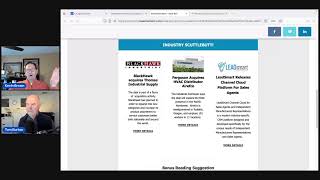
Yeah, we could go on for days about this, but that's a great comment. I think we need to get Dirk to join us as we go into the new year and kind of unpack some of these things a little bit more, which would be good. Let's jump to the news and rp if you're still here, we're going to unpack this more. Hopefully you can join us again in the future. Send us even some topics and ideas about what, what you'd really like to see discussed with us but we'll talk about it more. Obviously you can see it's something we're passionate about because our view of things is within our company and our platform is we want to be centered and focused on the customer. And if we can get more customer intelligence. A salesperson, regardless of the method, right. Whether it's within organizational's data, it's using AI, it's using other tools and we're going to grow and our organizations are going to see whether it's blockchain or AI over time that the focus needs to continue on that like to you know, use the term the H to H right. Human to human piece of it where we're trying to really help wholesale distributors get a better view of what's happening at the customer. When we're able to get a better view of what the customer is doing, what their needs are, what they're looking for, where they're looking to buy, what have they purchased, what are we missing with them? Then the salesperson gets a better view of their customer. The customer then in turn buys more, salesperson makes more. We never have an adoption issue with technology. And you know something that some of the researchers folks have done some recent research on this Mike Marks and the distribution strategy folks had this conversation after a survey they recently did, Ian Heller and Jonathan Bain did this was that if you get enough data going to the salesperson, the executive management team who the typically somebody would think is just trying to police the sales team. They get more data than they would have ever hoped for. Focus on the customer, people will adopt it. Management gets more than they would have ever hoped for. So exactly. We're over time. Let's jump to some quick news. We try and talk a little bit each week about some of the acquisitions. There was four or five this week, Blackhawk Industrial did another acquisition, Ferguson did another one. And so we try and talk each week about the positives that are going on in the marketplace and, and versus all the negative that we hear on the news. So it's a. It's a good piece that goes with that. You know, I think we have this question that came up earlier. It says LinkedIn user. I think that that's Mitch Lewandowski, our good friend, and that might have asked that. I'm not positive. But we launched last week at the Industrial Supply Association's Fall Summit. And we help the sponsors I mentioned earlier, earlier in the show today, they're what they call their sales works track, which is manufacturers and manufacturers reps having an opportunity to come together, learn how to do account planning and so forth. So the question was, you know, what are the big issues and what are the features? You know, we do a lot of work within the. The apps that we have built into our technology that is about account planning. And one of the main features with Lead Smart is that. And our system within the Lead Smart channel cloud system is that when you have a manufacturer using our system, a distributor and. Or a manufacturer's rep, they can all communicate live in real time on our platform. If any of those customers are using the Salesforce platform as well, we can move data that way. And then we've developed this unique partner portal that's external to. For these communications. And what manufacturer's reps are really looking for is this way to be able to understand the customer better. When you have 5, 10, 15, 30, you know, manufacturers they might represent, they've got to understand what's going on with each one of them at the customer level and how it relates. And that's a challenge. I think some of you might know. I was a manufacturer's rep for 10 years, so from that standpoint, we've built that into. Tom and his team have built that into those tools and so that we can get a great view of what's going on with the customer. So we launched that last week. We've got a handful of rep agencies on it already that are doing well. So it's good, Good stuff.
Yeah. And the one thing that's different, the rep agency, right, is they're literally the middleman. And so we have to, in our system, make sure that we're dealing with the full ecosystem of how they're working with suppliers as well as how they're putting there as well. So.
Looks like Brendan asking from ISA that question. Thanks, Brendan.
All right. Well, I know People are probably having to jump off. Let's wrap up here. You know, we said next week we're wrapping up season one and we're going to have a special guest, right?
We do. I'm really excited about this. Jennifer from Net plus Alliance is joining us, the president there. And I'm extremely excited to have her with us. Some people that. That may know her. She's just. Not only does she run a great organization, but she's a great human being and she's extremely insightful into wholesale distribution and gets this view from all of their members that are going to be great. So we're really looking forward to having Jennifer with us. That's going to close out the year for us as well. So if the network picks us up again, so to speak, then we'll be back next year and doing this.
It all depends upon that contract. Right.
So very good. That's funny. Yep. If we could just make some of those TV folks salaries, it'd be fantastic. But really appreciate the engagement from the folks that were with us today. And we're gonna wish everybody just a fantastic weekend. Be safe, do good things and be kind.
Yep. We'll see you next week. Thanks.
More from Tom



What does AI actually mean for a wholesale distributor #WholesaleDistribution


If your systems don’t talk to each other, your AI won’t either #AITransformation




This is why one AI agent isn’t enough for high-stakes decisions #WholesaleDistribution

