Around the Horn - Episode #8 with Special Guest Susan Merlo
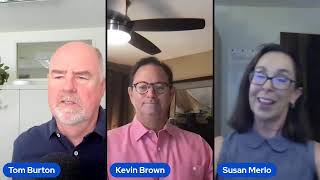
This is a recorded discussion (Around the Horn Episode #8) featuring hosts Tom Burton and Kevin with guest Susan Merlo, focusing on digital transformation and marketing for wholesale distributors. Merlo explains why distributors must adopt digital tools (content, e-commerce, CRM/analytics) to surface buyer intent, personalize experiences for segments (contractors vs institutions), and empower salespeople rather than replace them. She announces her book The Digital Distributor (debuting around late September/early October at the MDM SHIFT event) and offers practical startup guidance: prioritize content and audience segmentation, treat digitization as a 12–18 month process, and build or assign marketing/tech-savvy staff.
Questions this video answers
September 25–27 (MDM SHIFT event in Denver).
Debuting at MDM and publicly available in the first week of October (post-September 27).
The Digital Distributor.
thedigitaldistributor.com
The Revenue Zone.
Chapters
Okay, we are live and there's three of us today. It is. We have a bonus. We have a bonus. So good morning, Kevin, and good afternoon, Susan. Susan Merlot is our special guest and we'll be talking with her more in just a minute and learning a bit more about her new book that she's got coming out called the Digital Distributor. So welcome to our, to our, our show, Susan.
Thank you, thank you, thank you for having me.
Yeah, looking forward to it. You know, we've had an opportunity to do a handful of phone calls in the past and kind of talk a little bit about what we do at LeadSmart and how we work with wholesale distribution and love some of the comments that you had made and what you're doing with your book and some of the partnerships that you have in place. So I thought it would be great to get you with us today, do a little bit of a deeper dive on some of that and let people know about the book that's coming out. So I think that'll be great for us. But I think first time we want to dive in on this stormy day here in Southern California. Feel like I told my wife this morning, I, if I wanted to live in Florida, I'd live in Florida. But humid, rainy, stormy, tropical hurricane weather today here. It's just crazy.
Well, it's, it's, it's, it's actually kind of cool in a way because it's actually a hurricane that's coming up and we're getting the remnants of, and I can't remember the last time we've had that happen in, you know, Southern California.
So, yeah, I think the last time we had something that came this far north, I saw the other day that was going to impact us was 1950.
Okay.
Yeah. So that, that's even before our days.
So is this the 100 year storm?
Something like that? Yeah. And the, the people in the Southeast are laughing at us in the south central part of the US So very good. Well, let's dive, let's dive in a little bit. You know what I wanted to kind of mention and just kind of remind folks about is, you know, the reasoning behind us kind of getting going and bringing, bringing our whole program together with around the horn each week really, is to, to reach out, kind of connect with the community that we work within of wholesale distribution. Whether you're a manufacturer, distributor, a dealer working within a network, or you're a, a manufacturer's rep or independent sales agency, we wanted to kind of bring this group together and talk a lot about things and you know, one of the, the points that I've tried to make week in and week out, you know, Tom and Susan, you might have seen this before, is, you know, we can turn on the news every day, whether it's the evening news or it's, you know, CNBC or Wall Street Journal or something during the day and we just non stop doom and gloom. But you know, what we like to concentrate on is some of the really good stuff that's happening. So, you know, in our, in our newsletter and as a reminder, this goes out every Friday morning. I think there's, you know, what is it Tom, 7,000 people, something like that. Get this. And what we're trying to do is kind of collaborate or I should say bring together all of the different types of news that might be in fact impacting folks within wholesale distribution each week. So, you know, this week we wanted to focus on some good things, right? There's great things happening in the oil and gas business. You know, there's huge impact on what's going on with the natural gas and gasoline in Russia, putting a lot of pressure on there. But this article really talked about the growth, both Permian Basin and kind of the shale fields and so forth. So it talks about, quote, some distributors and so forth and, and then some of the large producers in there. So, you know, whether you're in wholesale distribution and you're either in some of these areas already, you ship to some of those areas or maybe even you're supplying other distributors as a manufacturer. There's a lot of opportunity that just was surprising to me how much is actually going on in the oil and gas, both exploration and drilling right now. So good news, good time to be in that arena. Not a lot of doom and gloom as discussed normally there right now. So that was the one I wanted to kind of hit on to start with.
Yeah. And it's very cyclical, right. So you know, there was a lot of when oil prices dropped, what, a few years ago, you know, all of the different, a lot of the oil producers were pushed out of business or they couldn't afford to continue now that prices are up. Right. Everybody's coming back in. But yeah, that's great for the distribution industry because you have to buy stuff, right? There's a lot of stuff to put all this stuff in place again. So I think certainly that's going to be a positive for a lot of companies.
Well, we were actually on the phone earlier this week, or I was with a potential new customer for our company who makes welding equipment. Welding Supplies and one of their focused main markets is in this oil and gas arena. And if you spend any time in the oil fields, which I have in my career quite a bit actually is there is just a flow and a hum nonstop of delivery trucks coming in of supplies and equipment, whether it's pipes or it's fittings, safety equipment, whatever it is. So good, good timing to be watching that market. Yeah, you know, I wanted to jump ahead. Hey, Susan, jump in on any of this.
Okay.
Don't just feel like you got to wait for us. This is free flowing that we, if somebody would have said we're going to do this event every Friday, we had to follow a script and be super, you know, fluid on that, I wouldn't have wanted to do it. So this is conversation.
All right, that's great. Now, you know, actually I don't watch the news and I don't follow it. So I'll just, you know, I get my, my news every morning from Morning Brew. It's in little sound bites.
Okay.
But I just started getting your newsletter so now I can get caught up.
Well, this is, this is tidbits from around the world. But you know, it's funny you say that and it's great to hear. You know, Tom's kind of funny and I think Susan, you know, Tom and I have been friends since kindergarten, so it's a long, long time ago. So we poke at each other a little bit. But Tom is always telling me, don't watch the news, don't watch the news, don't watch the news. And it's resonating with me a little bit, although he says don't pay attention to the news. And then mid morning he'll text me about a stocks price that day, you know, but so this, the stock market doesn't count, but news in general. But I will tell you, Tom, I didn't mention this to you when we were chatting yesterday is. It was three o' clock yesterday afternoon when I found out the queen had died. So I wasn't. I went two thirds of my day and I actually someone might.
I didn't even know until my wife told me. So.
Well, I was on the phone with my older sister briefly yesterday and Cindy's the one who said something about it and unfortunately we're kind of got some family stuff going on. As you know, my father's been in the hospital and he called to tell my sister who was taking care of my mother, that my mother loves all the royal stuff to get mom watching tv. And then somebody told me so I'm doing better just like you and Susan.
Yeah, that's impressive. That's impressive.
It was three or four in the afternoon, so good for me. Right.
So I didn't know till this morning.
So I have to be very good. Good. Well, let's jump ahead here. You know, the only other piece of this main news I wanted to talk about was about the strength of the dollar. And you know what's interesting is that article talks about, you know, Tom, if you can scroll back up a little bit there, he's talking about the dollar. We're looking at the other segment there.
Thanks.
You know, it's that it was an interesting read for me from a standpoint is, you know, we typically think about strength of the dollar. Oftentimes it's this article mentions that is it it's really tied and pulls a lot of pressure and in smaller economies and you know, or weaker economy, smaller countries and so forth. And now if you look at what the dollar is doing against the euro right now, it's great time to be traveling in Europe if you have that, that capability or the time to do that. But the reason I wanted to add this to what we're doing today. Hey, we got Dirk Beverage just joined us. Hey Dirk, thanks for jumping in. We're going to try and get you here in a couple weeks because we want to talk about your tour. So hopefully that we can get you to join us. Dirk's just finishing up his crisscrossing the country doing his We Supply America tour, which I'm super impressed with. So we're hoping to get him to come tell us about that in the next few weeks. But back to this topic about the dollar. You know, we have a lot of folks here in the wholesale distribution world that are typically joining us on this event or this show on Fridays who do as distributors who do a lot of their own direct importing. So as they're doing that, they're paying pretty close attention to what the dollar is doing, what those other economies are doing. So we shared that article today and I want to talk about that a little bit. So we'll John Perryman saying hello. John, good to see you today. Thanks for being with us.
We have another, we have another smart Tom on here who doesn't watch the news. This is starting to become a real trend, Kevin.
So listen, you know, the only, the.
Only news that's really fit to listen to is our newsletter. I think maybe that's the moral story.
Right?
Yeah.
Well, you know what, some of our other friends out there at Modern Distribution Management and you know, some of the other folks, Ian Heller and Jonathan Bain and those guys, they're doing great stuff. We're just trying to add to that and give another opportunity for folks to catch up. But there's an abundance of good stuff here in wholesale distribution. But I like that. Let's, let's read this newsletter on Fridays and join us on Friday, the only day you need the news. Right?
That's right. Next week we'll make sure we have something about the Queen in there.
Yeah, no we won't. So I'm over that. I was over that at 9 last night. But anyways, I just thought sharing this today, talking about the strength of the dollar, it's kind of an interesting thing. So we'll jump ahead so we don't waste a lot of time before we get to talk and dig in and talk to Susan about distributor marketing and so forth. But back to that positive feed that or thought that I shared early on. You know, we really want to stay focused on the good stuff that's happening out there, you know, as opposed to the, the negative stuff. So look, Fastenal had another couple of good months. Nothing compared to what people are saying is going on out there. We've seen great results from Grainger and other publicly traded companies. We're hearing the same thing from regional and local and family owned distribution companies in the wholesale distribution world. They're having good years. So it's positive. And then obviously these are just two of the acquisitions that have taken place this month so far. There's a handful of others, but Sonepower did another acquisition and Dakota Supply did as well. So positive stuff. Last thing is, if you don't get this newsletter and you'd like to pop us a note here in the comments or hit me direct on LinkedIn or text or whatever works and we'll get you added to it. That show directory. Tom, quick scroll. We added some of the upcoming ad events we're participating in. Actually, I think we're going to be at all of those events that are listed. So if you're gonna be tired.
Yeah, it makes me tired thinking about it. That's a lot.
Well, perhaps what I should have said is I am going to be at those events. So you don't.
I think I'm going to be at some of them or somewhere along the.
Two of them, I think. So let's jump ahead. Let's get, let's get in and talk about the meaty stuff with, with Susan. So Susan, tell us about you. Tell us about your background. Tom, we want to add something about your discussions with Susan before we start.
No, I just think, you know, Susan, take just a couple of minutes a bit about your background and why. Well, and let me get a little more context is, you know, Susan is you have a book coming out, what, in the next couple weeks?
Yeah. Well, no, no, I mean, it's such a story. With this book, it will be publicly available after the MDM event, the Shift event, which ends September 27th. So we're looking at the first week of October when it's debuting at the event. So everyone that attends gets a copy. And it's a special edition, Special SHIFT edition.
So by the end of the month the book will be out. And it's called the Digital Distributor, which I love the name and so. Yeah, tell us a little bit about your background and why you wrote the book. Sure.
So I have a corporate background actually. And I left corporate about 20 years ago on maternity leave and decided to not go back. Started my first business, which was an E commerce business that morphed into a web design business which. And then along came social media. I'm dating myself that I got more into marketing. And then almost 10 years ago, I was working for a client who serviced distributors. And because of that client I started supporting distributors as well. And now I do that exclusively. The reason I enjoy working with distributors is that I can see what all the other industries are doing. Distributors are unique. You know, they've been doing face to face sales specifically for years and years and years where other industries have been getting more digital. So yeah, so it's an interesting time for distribution right now. Because of COVID and generational change, distributors have to get digital. So I'm kind of, it's kind of come full circle, I guess is what I say.
That's, that's awesome to hear this. And as we dig in, it just makes me think from some of the conversations that we've had. You know, I started my career in the distribution world in 1989 and that was the days where you had a pager and a bag full of rolls of quarters and you knew where every, you knew where every payphone was. And you know, here in California, from San Diego to the, you know, Oregon border and across to Arizona, Nevada and Hawaii for me and the territories I covered is like you knew, you knew how to get there. Then cell phones came out. Then all of a sudden we started faxing right to our district. I was a manufacturer's rep for many years. We were faxing, you know, we've got coming up in a couple of days, the anniversary of 9 11. We're going to talk about that next week because Tom was in New York, in Manhattan on 9 11. And we've been friends since. And when I got up that morning and saw the twin towers come down, my laptop was plugged into an analog phone line sending out faxes to distributors. And then here we come this full circle now, but we still have dear friends in the distribution world who are still in that analog world as far as their market. Right?
Yeah. And you know, it's. You mentioned, right, Susan, changing demographics. And I think, Kevin, we talked about this two or three weeks ago on the show is, you know, in fact, I think it's now official that millennials are the predominant decision maker in B2B business decisions now. And of course, you know, not only on the buyer side, but as you hire and bring on more sellers, they tend to be younger and and so forth as well. So it's certainly there's a lot of demographic psychographic changes going on in the world that's kind of forcing the hand of this. Is that kind of a big part of what you're seeing as well, Susan, on as you kind of went through this kind of.
Yeah, I mean, I'm not. I mean, that's the way it is. We just know that that's the way it is. These millennials, I shouldn't say these millennials, next gen, I usually refer to them as they're coming into buyer positions and they don't want to talk to salespeople. So now what? You know, distributors, their salespeople are so skilled that, you know, for years and years, depending on who they're talking to in the industry, if they're talking to a contractor, they have special products for the contractor, they have a special dialogue for the contractor. They know what the contractor needs. And then on the other side, if they're serving institutional customers, when they have that conversation with an institutional customer, it's totally different than with a contractor. Right. So the problem is that the salespeople can't get in front of either one. So now from a digital standpoint, we have to make it so that when the buyers from either, you know, whether it's a small contractor or a buyer in a large institution, when they come looking for a product, or even more importantly, when they have a problem and they need an answer, they're turning to the Internet. So what I love about the Internet and what most distributors don't know is that it can be a totally different experience for the contractor versus the institution. That's where you want to be. You know, you don't want them to have to look for the answers on your website and say, okay, this is for me. This one's not pertaining to me. It's the same thing with emails. Distributors now have to segment their audiences and personalize the experience for every segment. And it's easy. That's the part that's funny is it's very easy.
Yeah. And it's interesting and it's easy. Right. But it's not historically something that a lot of these companies have been thinking about. Right. You know, especially related to many audiences and understanding your buyer profile.
Right, right. I mean, they.
All those sorts of fun things. This is a little bit new, right?
Well, it's new for distributors because before it didn't matter because the salesperson was still the one, you know, moving the sale down the pipeline or through the pipeline. Now, the salesperson doesn't have the resources or the access to the prospects and the customers as they used to. So you have to do it digitally. And what's nice about doing it digitally is that it frees up the resources of the salesperson to focus on the hot leads or the leads that are closer to a sale while they can still monitor the ones that are still moving in the pipeline.
I think that's a really interesting point, Susan. What really comes to my mind is thinking back, way back to the old days, but people are still out doing this now. We're all creatures of habit, and I don't think any of us here today are here to bash anybody. It's just the realities of the world that we're selling into. And wholesale distribution is changing. Tom commented about the millennial buyers. The other side of that that we'll talk more about today is the millennials that need to be recruited to come into our distribution partners as field salespeople. Right, right. They have different expectations. I want to trigger on that in a little bit. But, you know, it's interesting is I've kind of thought in being in sales leadership for many years in the past and. And then also running a manufacturing company where we ran, had manufacturers reps and a distributor network across North America, was you go into, I'll just, you know, say an oil and gas facility, an auto plant, whatever it might be. Right. There's lots of buyers there, and there's lots of buyers in different categories. But what we tend to focus on, if I'm Joe and I'm responsible for the Ford Dearborn Michigan plant, I follow the path of least resistance because there's so many hours in a day. I don't like conflict and I don't want to push hard to necessarily find more business. It's just natural. So I might be missing two or three other buying groups within that organization that I should be hitting, but I'm not because these guys over here, they're up 10% on what they bought last year. And I'm doing it with this one guy and he's keeping me busy, so I don't need to worry about the rest. Well, if we translate that to digital, what we're talking about here today, we.
Right.
Digitally, we can touch all of those people.
Right.
We can see where their interest level is. And if I'm a wholesale distributor, I may look at that data. If I'm managing the data correctly and saying I should have three people calling on that Ford plant and nobody at that other plant because we can't get their attention at all. So we get this. All these decisions that can be made from the data that comes from. This is so powerful.
Yeah, it really is. It really is. And you know, I should mention because I think this is really important. Most salespeople, I shouldn't say most, but what I've seen a lot is that salespeople are a little bit resistance resistant to digital because they feel like maybe they're getting replaced even with E Commerce. And it's so not the case. It's actually the opposite. Salespeople are going to have better leads, more leads, leads that are already warm. And they'll have so much information about the customer going in that that it'll be an easier close. Right.
I think we need to train them to the place that you need to see that these are support mechanisms for you.
Right?
Right. To get to that buyer. And as that buyer's changing. You know, in Tom's book he talks about this, right. In talking about their sequence that people go through, they want information how they want it. Right. They, they bought something on Amazon last night. They. They're going out with their friends tonight using Uber. They want to be able to access your E commerce site, get all the data, do the research. But that doesn't mean they don't want to see a sales guy. Want to see a sales guy when they decided. And they will have very specific expectations. Tom, I read the book. They'll have very specific expectations about what they want from that salesperson. And if that my opinion is on this, and I hope that we can really prove this over time is what that salesperson gets from that is when I do engage with him, he loves my company, he loves my offering, because you serviced me how I want to be serviced. And I'm much more efficient and can go sell more to him, sell more to other people in his plant or go somewhere else.
And I want to add one more thing to that, because I think your point about the salesperson is even being more valuable now. Right. Is. And I've seen in this industry in particular, that a lot of the salespeople we work with, Kevin, you know, and lead smart and so forth, they're very knowledgeable about their products, their customers, their customers problems. Way more so than I see in other industries. Right. You see a lot of Salespeople, frankly, in SaaS and technology that don't know anything.
Right.
They're like. But that's not the case in this industry. And the buyer to everything we just talked about, the buyer now wants that salesperson to be that trusted advisor. Right. And verifying what they're learning online, helping to amplify what they're learning online. So to me, the. In this industry in particular, the role of the salesperson can even be elevated. And it's going to be easy to do because inherently, the salespeople in this industry are much more knowledgeable about their customer and their business than what we see in other industries.
Right.
And so I really see that if. If. If I'm a salesperson, I can take my whole role to a whole nother level of elevation and make a lot more money by leveraging. It's like my digital assistant. Right. I have all this exactly, right?
Yeah.
Yep, yep.
Sort of digital assistant helping me, you know, and now I'm using my time in the right. In the most way.
Yep. Yeah. Yeah, I like that point. Tom, can you hear me? Okay, you on my end. You froze for a second. Are we good?
Yeah. Everybody kind of froze for a minute. I guess you were just mesmerized by what I was saying. So that's fine.
You froze. Maybe it was different. What you were saying was so powerful. It just stopped in time for a moment. But I did feel a little shake in the house. Maybe the earth stopped moving.
The hurricane. It's the hurricane. That's all.
Okay, Gotcha. I love this. Right. And I'm going to relate this for a second. And we throw our Susan, we throw our company name in here. But we're not doing this to pitch our software. Right. But the reality of it is Tom's team onboards our new customers. And part of the Training when somebody. Because we make a CRM and customer intelligence tool and a channel management platform and people sometimes salespeople, sometimes when they hear, oh, another piece of technology, they're, you know, big brother, they want to watch what I'm doing. CRM, well, our onboarding team trains those salespeople that this new software is a way for you to make more money, right? You to serve your customer better and you and your customer to have a better relationship when it's being used properly. And we train that way and we train those people from a standpoint that says, hey, if you work for ABC Supply in Nashville, right, you are responsible for a microcosm of that company, which is called your territory. So you should want to manage that like you were the owner of the company. Manage the territory the same way, use the technology this way. And when we tie that same thinking into this discussion that says, hey, you know what? If my e commerce system sends my CRM an update about abandoned card information at my customer, I know what they're thinking about buying.
Yeah, right.
I don't need AI. I don't need to be sniffing around their warehouse myself. I don't need these tools. My econ, their E commerce system just told me and it popped up in a report or a notification for me in my CRM. I'm in a pretty good place now.
That's exactly right.
Yeah. And I really like, you know, Susan, we talked a little bit about this yesterday and I think you're. You covered this quite a bit in the book. Right. Is, and I come from a tech background, so the ability of, you know, kind of sniffing out intent and using digital and using digital technology to understand or at least identify potential intent from buyers. Right. Is something we've been doing for many years. But what you talked about and you talk about in the book is how you use that in this industry is to be able to have an identify and flag intent related activities, which, again, makes me as the salesperson more knowledgeable, it makes me more ready, and it also allows me to be more efficient in the things that I'm doing that are there. Combine that with some of the things, Kevin, that you said, which is what we do with a lot with lead Smart is trying to help open up and provide. I call it a flashlight. Right. Putting a flashlight on areas that maybe aren't immediately visible. You combine those two things together of intent and having more visibility and boy, you can really, and we see this, you can really kick your effectiveness and your income up a whole nother level by doing Some of these things, right?
Yeah, yeah, it's true.
Well, you know, we all go to work each day. Whether we think about it or not, we're there to do make ourselves better. Right. Whether it's income or learning or whatever it is. And we have this opportunity to help people become better. And as they become better, they're going to help their company become better. Right. It just. We tie all of these things together. Susan, I wanted to throw this kind of question out to you with some of your background on the digital side of things. One of the things we see, and Tom and I talk a lot about what we just call tech stacks, right. Is, you know, people are buying this piece of software. They've got their erp, they might have bought through their buying group or trade association or just because they got pitched by somebody in E commerce system, they might have a CRM. Most many don't. Then they've got a million spreadsheets. What's your experience in the distributor network that you're working with? Are you seeing people that are tying these systems together? Well. Or are they disparate systems with data silos? What's your experience? What are you seeing mostly out there with that?
I see mostly data silos and the big.
I was hoping you would say something different.
Oh, sorry, no, no, I want the truth.
I was hoping what I see is an anomaly, but it's not.
No, I mean, it's just the evolution of technology.
Yeah.
You have to remember distributors usually come in on the tail end and getting that ERP system in place, that's like their gold. That's their whole business. So if they see another piece of technology that has an ERP connected to it, they're going to be like, well, yeah, no, we're all set. We're not going to spend another hundred thousand dollars, whatever it costs. And then along comes E commerce, and that's a whole nother story. So, yeah, I mean, and it's unfortunate, but there are products out there now that I'm seeing that pulls all that data together, cleans it all up. But it's a. It's a risky, you know, it's. I shouldn't say risky. It's a scary move, you know, to change is scary. That's just what it comes down to, what we see.
Thank you for that. What we see with that, because that's exactly what we do with our technologies. We bring all that data, we put it all together and we give you a view of things and you can see anomalies or where we should spend Time and account planning and that type of stuff. But, you know, what's. What's intriguing about that is it's.
It.
There are people that are nervous about it. Right, of course. And. And it's just the disruption that may come from all that. But what we're seeing now is the people that are doing it are the ones that are thriving in the marketplace. Right?
Yeah. I mean, it's if. If they're. If they're able to access their data and get, you know, usable information, they can read it and actually extract usable information. And there are plenty that do. And there's. There are plenty of products out there that, you know, analytical products that will do it for you then, and they have to act on it. That's the other part. Right. And then it works.
So I wanted to kind of drill down on two things with you because we're kind of running short on time. I think we could go for an hour and a half today very easily. But we've got quite a few distributors with us today, as well as a handful of manufacturers representatives. A few manufacturers as well. But, Susan, I want to kind of break down, and I'm going to tell you my two things I want to talk about, and then we can get into them. The first one I kind of want to talk about. What are your recommendations of some easy steps to get started in this whole digitization and digital marketing for distributors or anybody in wholesale distribution. When we're done with that, then I want you to talk about. You're speaking at some events coming up. I'd like you to plug those, if you would. And then let's get the followers final, absolute information on that book and its title so we can make sure everybody knows about that. Because I want you to get value out of being with us today. But let's start with what are some good tips that people can use to. To just kind of get started. And then, of course, share with what again, don't hesitate here to plug yourself in a little bit.
Okay.
What your firm does, right. It's you. You put the time in today.
Let's hear it, you guys. Do you mind if I turn my camera off for a second?
That's okay.
Okay, let me see if that will work. Okay. So actually. All right. I'm gonna ask you actually to hold it a minute because my computer is dying and I need to plug it in. I thought I can. It's not gonna work.
That's fine. Good.
Just give me one minute.
Tom, you got a joke for me?
Oh, boy. I need some Weather jokes or something like that.
Tell me what the stock market's doing.
Okay, I'm back.
All right. I don't know. I don't know. I watch the news. I don't watch the news. I have to ask my wife.
All right, Susan. So steps that a distributor or others in wholesale distribution can use to easily start breaking into the concept of digital marketing.
Okay. Yes. So what I see most distributors doing is taking the right steps, but in the wrong order. Right. They see a product like Lead Smart and they're like, yeah, I want to do that. Just what we're talking about. I want to get those notifications, I want to get those leads, they buy the product and then they're like, well, now what? While they're learning that product, whether it's Lead smart, salesforce, all of this, you know, there's a ramp up period while they're doing that. They have to put the content on their website to attract the people, to attract the eyes. So that when the contractor comes to the website, when the institutional customer comes to the website, they're finding what they need and leaving their contact information, their footprint behind. They can't do that unless there's content on your website. So if you're trying to get more people to come and see, say you offer a solution that's, you know, that nets $100,000 a year, don't you want to know that someone's looking for that solution? You have to have the information on your page in order to have them come there. And then when you have a product like Leadsmart, you know that they're there and they may download your ebook or they may go to another article or another article or another, or maybe, you know, they hit five different points on your website, making a little trail in order to get that information, I call it intel about a buyer, you have to have that content on your site. So that's really the back part of it. That's really the first steps. The other piece of this, and this is, this is what I see that's in the worst shape with distribution is who is going to do all of that? Who's going to write the content that the buyer wants to see? Who's going to put it on the website? Is my website even good? So what distributors have to do while they're ramping up their digital is start building up their marketing team. Because you don't have people. I mean, it can do it as well. Or inside sales can do it as well. It doesn't have to be marketing people. It just has to be people that are tech savvy.
Great.
I forgot the second question.
Well, so I'll come back to that in just a second. So I think what you're describing kind of ties into. Tom and I have done a couple sessions for some buying groups and trade associations. We got another one coming up later this month on making digital transformation easy. And so I think what you're saying is it doesn't have to be that hard work.
Yeah, it's not hard. It's just. It's a long.
It's. It's a bit more holistic. Right. You've got to look at things a bit more holistically, which is, okay, what are you going to try and get out of that technology and how do you leverage your content and your other, you know, online assets and so forth to start pulling those together so you get the most out of.
Right.
And you're absolutely. Susan, like in Fleet Smart, we can, we can show the whole history of what the content somebody looked at on their website, or we can show the whole history of email that they've done. But if you don't have content to look at or you're not sending emails or whatever, there's no way of getting that intel as you're talking about. So you got to be putting the framework in place to get the intel so that the technology can take. Take advantage of it.
So would it be. Would it be fair to say it's a. It's a process, not an event?
Oh, gosh, yeah, it's a process. I mean, I think I tell distributors to budget 12 months to 12 to 18 months, end to end, to get a system like that in place, firing on all cylinders, getting the KPIs identified and measurable, because it's all these little pieces that have to have to come together, and it really does need to be done in order to. That's what the book's all about.
That's awesome.
The history that I have with distributors. I mean, I always think that everything that I know, everyone else knows. So when a distributor comes to me and says, I want to put Lead Smart in place, and I'll say, oh, yeah, okay, I can help you with that. And we put the technology in place no matter what it is. And then all of a sudden, why aren't. The next question is, why isn't anyone coming to my website? So we have to back all out of that. We have to know who are the segments and what are they looking for and what can you help them with? So we can. What value do you bring. And the other piece of this too, this is worth saying, is for distributors that have the content on their website, they have to remember that the way things are now is it all has to be about the customer, not about the distributor. The only thing you can really say about yourself is that you're in business to keep them in business. That's the message you want to get across so that they stay loyal to you and when they come to your website, they see the immediate benefit for them.
Very good. That's awesome. That's a great recap. So, Tom, I think we should kind of start to wrap up.
Absolutely.
Did you have one last thing?
No, I, I, you know, I've started to read the book. Susan. I, you gave me a copy yesterday. I'm starting, I'm for the first couple chapters, but on what you just said, I'm going to go faster. And it very much aligns, as Kevin said, with my book that I wrote and published a few months ago. So there's a lot of overlap and, and things like that.
Tom, what's the name of your book? Real quick, so people can hear, where can they get it?
It's the Revenue Zone and it's on Amazon or the revenuezone.com but there's a lot of synergy between our, our mindsets on those two things. And so I think, you know, the more people like us that are out there talking about it and, and you know, helping and making, you know, companies really aware of what's possible, I think it's, we'll see a lot more changes going forward. And that's, you know, I wrote the book for the sole reason I wanted to see things change. Right. And I'm sure you're the same way. You want to see some changes, you want to help people change faster. Right there. It's, it's certainly don't make any money off of a book so that you have to use it for a passion, you know, on what you're doing.
I was thinking about hitting you both.
Can I just tell people in case they want the book where you know what to do?
Yeah. So, Susan, before, this is where I was coming back.
Sorry, I thought we were.
No, no, my second question was exactly tied to this, where you're speaking. Coming up soon. I think you've got some speaking things coming on. I think you're doing some stuff with modern distribution management. Tom Gale, Mike Hawk. I think Mike said he was going to be with us today. I'm not sure if he was, but talk about that stuff before we wrap up. I got a couple things to wrap up with today, but I know people can find you@next levelmedia.com.
No, that's not true.
Look at the wrong one. Okay, tell us the website you want them to go to.
Yeah, so if you want to follow me or if you want. No, let me just put it this way. If you'd like to get the first chapter of the book free, and the first chapter takes you through the all, you know, the whole process and then the next five chapters will tell you how to do it right. So at least get the first chapter, it's free and you have a little roadmap there. Go to my new website which is the digital distributor.com, and when you get there, you'll see in the bottom right corner there's a little chatbot type thing. But it's not a bot, it's a live person. And just tell that person they're going to ask you, you know, how can we help you? Are you a distributor? Say yes and say, I want Susan's first chapter, here's my name and email address and we'll get you the first chapter. It's not published. I mean it's not up yet for me to send it to you. So that's that. About that, with regard to MDM, MDM is doing a, an event September 25th through 27th out in Denver. And I mean it's phenomenal. We have 30 plus speakers. It's taking people from soup to nuts on digital transformation. MDM is also publishing my book, so everyone that comes will get the full copy, which is a nice little benefit. And that's it. You know, the best thing you can do, I mean, if you want to hear more from me, is to follow me on LinkedIn. I haven't been on a lot lately. I've been working a lot with MDM on the event coming up. But now that the book is getting close to launch and the events closer, I'll be posting a lot more helpful information on LinkedIn.
That's great. So the digital distributor.com book coming out in October event later this month, follow you on LinkedIn. I just went on here on my iPad below me right here and requested the first chapter. So it's already done. I'm looking forward to reading it this weekend. I did it that fast. So good, good stuff. Thank you so much. Tom's got a comment or question that comes up.
Pardon?
You just brought up Brenda's comment there.
Yeah, no, just had some good feedback. Right. So definitely sounds like what you're talking about is resonating, which is great. And yeah, I'm looking forward to.
And she, you know, she's. They're. They're transforming over there. They're also growing a lot, as I'm sure you know.
Yep. Very good. Super.
All right. So, Kevin, I think we'll call this a wrap. This has been great. Thank you, Susan. Appreciate it. We'll have you again soon. We'll keep talking about this topic. And Kevin, anything else before we sign off here?
No, I just am watching the comments coming in about people requesting the first chapter. So it looks like it was a good. A good session we did today. We love having guests with us. Susan, have a fantastic weekend. Tom, you as well. I'd probably talk to you today again, but we'll wish everybody a great weekend and we hope you get to see you next week as well.
Great. Thank you, you guys. Thanks so much for having me.
Take care.
All right. Bye. Bye.
More from Tom



What does AI actually mean for a wholesale distributor #WholesaleDistribution


If your systems don’t talk to each other, your AI won’t either #AITransformation




This is why one AI agent isn’t enough for high-stakes decisions #WholesaleDistribution

