Around the Horn - Episode #9
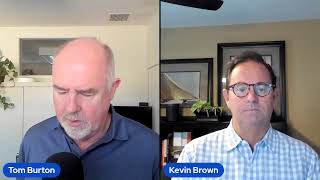
A livestream conversation between Tom Burton and Kevin (Around the Horn - Episode #9, Sept 17, 2022) aimed at consolidating business, technology, and wholesale distribution news. They open with a newsletter invitation and industry notes (Kodiak acquisition), discuss upcoming trade shows, then focus on three main themes: (1) Gen Z and younger workers prioritizing employer technology (study cited: ~70% importance), (2) the 'quiet quitting' phenomenon and hybrid work's cultural implications, and (3) benefits of cloud platforms and platform vs. point-software distinctions. The episode closes with event whereabouts (Dreamforce, National Safety Congress) and contact details.
Chapters
Good morning and good afternoon again, and welcome to another episode of around the Horn. Hey, Kevin.
Hey, Tom. How are you this morning?
Really good today.
Yeah, I had a little camera problems last week. You know, sometimes that happens when you get conflicts of technology, but solved it for today. So here we are.
Yeah. So quite a bit to cover today. Where do you want to start and. And jump in?
So I think I want to do a couple of things really quick as we get rolling here. You know, just one thing that we do every week is kind of remind people of why we're here. So the first part of that is that, you know, we have developed, you know, this around the Horn piece that we do each week here on, you know, on LinkedIn and on Facebook Live and on YouTube Live, to kind of consolidate some information of things that we see going on around both in the business world, the technology world and wholesale distribution. And there's no shortage of abundance of information that's out there from a lot of the trade publications, some of the consulting groups, but they're very focused on some very specific topics. We've tried to take this around the Horn where we're really looking at what's going on in the business world, what's going on in technology, and then how does that relate to the wholesale distribution world that we work within with our software company LeadSmart. So that's kind of purpose behind what we're doing. We're trying to consolidate this. The big piece that I wanted to remind everybody each week is we send out to, you know, a few thousand people every Friday morning goes this newsletter. So if you're seeing this today, you're not getting the newsletter, pop a little note in the comments down here that you'd like to get that. Send us a message on directly on LinkedIn if that's helpful to you, or, you know, hello atLead smart tech.com and we'll get you added to this. So the email address, if you wanted to use it again, is helloadsmartech.com and we'll get you added to this. So that's kind of the little plug we wanted to do first. And then, by the way, if you're enjoying these, if you're here each week, share this with your friends. The more the merrier because we get good questions and good conversation going. So that's the key first part of the morning. But Tom, if it's okay with you, I'd like to reverse order today because we've got some really good topics that went out in the newsletter this morning. But I'D like to kind of talk about some industry stuff first. So let's key in a little bit real quick on this, this topic there about Kodiak Building Materials Partners that that's this private equity group that's buying up some. A lot of these companies out there just acquired Western Interior Supply and, you know, we wanted to unpack that one just a little bit because one of our new customers and great people that we're working with at Jones Hertz, who is an affiliated distributor member, they're a gypsum and drywall and construction materials company, distributor in the Rockies. Great folks just coming on as one of our customers. They're part of this Kodiak Group. So it's kind of neat to see more acquisitions there.
Yeah, I think we're going to see a lot more of this right. As you see consolidation and obviously there's regional leverage between a lot of the different groups that they're acquiring. And I know we're excited to be getting involved on a broader level with them as they, as they go forward. So that's pretty cool.
Yeah, it's good stuff to see that. It's nice to see the M and A activity continue the paces and slowing down. Nice new hire at pip. I'm sure Joe Malotte and the group that got PIP to where they are today are happy to have a new president there. But it's also good news kind of about the cutting tool consumption rising. So, you know, I think we're going to see some flattening off here, maybe a little bit of falling off. But I'm. We're really, you know, still trying to stay bullish on the market that in and stay very focused with that as well. So it's good news. So let's go down real quick. I want to talk about trade shows and events.
Doesn't look like much is going on.
Well, yeah, well, it's pretty easy for you to say because you're not slugging around the country on an airplane going to a bunch of these events. So next week is the ad electrical event. So folks are rolling in on that division to, to Denver next week to the Gaylord Hotel there. We've got some of our partners that we work with closely that are going to be there, and that's kind of a neat thing to do as well. So that's happening. But I'll be heading down Sunday to San Diego. Fortunately, not too far away from that for me right now. But that's the National Safety Congress. I just was thinking the other day, I think this will be. I think I will have been 31 out of the last 33 years or 30 out of 32 years. I think I've only missed two in the since 1989, which was my first one of these events. So it's going to be great to see both some customers that we have there that use Lead Smart within their company, both manufacturers and distributors, some prospects that we're deep in discussions with, and then a lot of longtime friends. So that'll be a great event. Really looking forward to that. Net plus is coming up in a few weeks in Las Vegas. We'll be there in that annual event. We're going to showcase my lack of golf skills on their Sunday event and then their trade show for a couple of days and then these other AD events coming up, as well as the ISA Fall Summit. We'll be participating and exhibiting at those as well. So it's going to be a busy fourth quarter for us. So we'll look forward. If you folks are going to be there and you'd like to get together at any of these events, please let me know.
Yeah, we can definitely report, you know, on our Friday show a bit about the events and having pictures and stuff like that. When we're there, we can share. People weren't able to make all of these. We can definitely fill you in.
I think that's a good point, Tom. I think maybe what we'll do, it's not my favorite thing to do just logistically, but it's certainly manageable. Maybe from a couple of these events, we'll do a little, you know, short LinkedIn live to talk about what's going on. And we can let people know when we're going to do that ahead of time. You just got to remember, remind me to bring the little camera holder and microphone and all the stuff that you usually do for us when we're at events together. So that's very good. So pop in and talk about a couple of these. Cause I think these three latest kind of business world news are powerful for our friends and partners within the distribution world. Which one of these you want to take first?
Well, I was really intrigued with this first one about the Gen Z workers. And we've been talking a lot. I think we even had an episode where we kind of focused in on the whole fact that millennials are now the predominantly decision maker in B2B, while right on their tails, right. Are the Gen Z workers that are coming into the market as well. And so I really thought that this was a very interesting. I haven't read the whole study on this, but I did scan through it and try and, you know, get some of the key pieces. And, you know, there are a lot of attention going on to how, and you know, how to attract younger workers. And technology appears to be one of the key lures, if you will, for a younger worker. And I guess, you know, that makes sense, right? If I'm a younger worker going to apply for a job or look for a job. And, you know, I want to see that that company is modern and progressive and innovative and, you know, certainly just even aligned with, you know, how I've grown up and the technology that I'm used to using. So, yeah, I think it's going to become a bigger and bigger requirement, if you will, to continue to attract talent and not just at the millennial level, but even younger workers.
Well, I think you're spot on there. Right. And this is something we've talked to quite a few of our customers about and our prospects about as well is the idea of the changing workforce. Right. You've got this article talks about the amount of baby boomers that are going to be retiring and then what's the people, the importance of what's coming people, excuse me, the importance of technology to people that are in the marketplace. And it's interesting because they talk about this Gen z group, that 70% of them said that the technology that's used in the company that they go to work for is a big factor for them. That's pretty astounding. Right? And so we've talked to both our investors in our company and our technology company, as well as customers about this, is that, you know, now is really the time that you want to make sure that you are keeping up with the times. Because we've had this whole great resignation and then now we've got some layoffs that we're seeing. But we're finding this balancing in the workforce and people out there that, you know, are looking for new work and the top quality people, this younger generation. And it's not just, you know, Gen Z, as this article talks about, it's millennials and even beyond that, but people are expecting that you're going to provide them the right tools that they need to effectively do their job. And, you know, as we've talked about with so many folks, right, is now this new buyer. When I started my career and, you know, my cell phone was in a bag this big and, you know, I still had a pager and but you know, we went and saw, you know, people on a schedule on a consistent basis with that buyer. And we did lunch once a month with, you know, this construction superintendent or that factory foreman or buyer, whoever it might be. Those days have kind of moved behind us. And now, you know, people are looking at, you know, they're ordering dinner from this device that's coming to their house. They're going to the movies on the weekend by using a device. And technology is at the core of their life with how they're purchasing things. So it's, it's something that, you know, we talk about a lot here, but people really need to be thinking about is, you know, can I get the right people into my organization to sell to my changing customer, moving forward in my position to that because you don't worry about. And this is, you know, you know, one of my favorite quotes right is and I'm not a hockey guy, but is Wayne Gretzky saying, you know, years and years ago was I skate to where the puck is going. And if you're going to skate to where the puck is going in your business, right, having the tools in place to attract. And this isn't just technology, right. This is, you know, work life balance. This is vacation time pto. However, you have those balances. People have different expectations and buyers have different expectations.
Yeah, no, and you know, we talked about tech stack. I don't know if it was last week or the week before, but I think being able to articulate your tech stack and the integrated tech stack of. Right. And even when somebody, you know, you're, you're trying to recruit people or you're meeting with candidates or whatever and say, here's our tech stack and here's how you can leverage that tech stack to be more successful and we're going to help and be more successful with our customers. That's a very strong statement. And when you start, you know, if you have good recruits and top talent that are meeting with lots of different companies, you know, you can really get yourself a step ahead of that on by that. So yeah, it's, it's, it's really interesting. And this continues to become more and more of a, a conversation and an issue. And I highly recommend reading the report that we had here. In the article there's actually a full research report you can download with with all of this stuff in here.
So yeah, so that, that was kind of courtesy of Connexion technology company that did that study, but the Industrial Supply magazine is the one who posted that. So I thought that was really interesting and I think it's quite Another just almost like tie in to this second article about this quiet quitting concept.
Right?
That's from this Harvard Business Review article I read earlier in the week. And it's just, it's interesting about this concept of, you know, we expect, you know, as business leaders, we expect a lot from ourselves. Our leadership teams do the same. We expect a lot from them. But what everybody is really looking for, I think, in their companies is to have a culture where people give their best every day. And what this article kind of talks about is there's a lot of things that are changing in the world. And Covid had a huge impact on how people view work and work life balance. And we have a whole microcosm of the workforce who decided they weren't gonna go back to work because they could get checks from the government every month. You know, well, that we're seeing a lot of that change. I mean, this concept of this quiet quitting is like, really, are there people in your organization who maybe they're getting the bare minimum done, but they've already quit or left your organization in their mind? And this talks a little bit about the challenges that that can cause in organizations and how you can see some of the signs to that. So I thought it was kind of cool because it ties into that previous article we looked at about. About technology. But the workforce is changing.
Well, I think the whole. And to me, this is a good example of, you know, the whole work from home. And by the way, I personally am a big fan of hybrid working and work from home and all of that. But I think the ability to quietly quit is much easier. Right. When you're working from home and, you know, nobody can see what you're doing necessarily. I mean, and so I think it's been, in a way, and again, I'm. This is, you know, we've made it easier, right, in some ways for people to quietly quit. And so I think that is also agree with you. It ties into, you know, again, how do you use technology to not only. And not to spy on people, but to enable the people to do more and so that they're not wanting, you know, they're excited about their job and so forth. And then, you know, I think there's a lot of conversation we've talked about it about, you know, hybrid working and work from home and office. And, you know, we're even going through that in our own company.
Well, I was just going to say that.
Right.
You wrote that new policy earlier this week, right? I'm waiting to read it.
Yeah.
You done with that yet?
Yeah, I said it's. The policy is no quiet quitting, so.
Okay, good.
Okay, good. But anyway, the, you know, it's, it's not an easy. It's not a simple, like, it's not a simple situation, but it's something that I think we're going to have to be aware of and live with for maybe, you know, long, long time because hybrid working is here to stay. And you know, working from home, especially on a consistent basis, is very different than somebody. It's not that people didn't quietly quit while they were in an office. A lot of people did.
It's just, it's easier to hide now. Right.
Right. Yeah. Right. Yeah.
And, you know, I think the caution that goes with some of that.
Right.
And we've seen this is, you know, you, I don't think you want to. Anybody wants to turn into an organization where you're just becoming Big Brother.
Right.
You know, we talk about that a lot when we talk about technology, you know, and it's easy to get stuck in a place. In fact, I just had an email this morning from our friend at the distribution strategy group, Ian Heller. We've got a call scheduled next week. And, and you know, I know one of his things is, you know, talking about CRM is, you know, Ian's a well known expert in, in the industrial distribution, construction, distribution world. And you know, in his con, his thinking about, you know, CRM is like, you know, it's, it's. Most people just view it as a, you know, as a Big Brother thing and then people learn how to game it and so forth. And it's almost like the quiet quitting thing there again, right? Is I'll just do whatever I can to get by. But when people have the right technology and the right culture within their organization. You and I had a couple discussions earlier in the week about culture. As our organization is growing and people can look at that and if you have the wrong culture and you use technology wrong, you can cause disruption with your team if you use those things correctly. It doesn't have to feel like Big Brother. Right. If you have a CRM system and your employees see it as, hey, I can grow my relationship with my customer because of my insights that I have from our ERP system and other tools into the CRM. And I can see how I need to support people, that's going to make me more money and my customer is going to be happy. Now we've got this engagement that we want. The opposite side of that though is when you start thinking about companies that, you know, tell you you have to do a certain amount of this and a certain amount of that, or put keystroke trackers on your keyboard or, you know, different stuff on your software, now we're developing a culture that is the reverse of inclusive and, and really having great involvement with people. So I think there's a balance that's got to be found here.
Well, there's, you know, I think there's. You can look at tech and I think there's almost a little matrix. Right.
Yeah. Is you have thinking about it from a science standpoint.
From a science standpoint.
Wow. Shocking.
You can look at technology from an enabling perspective or you can look at it from a tracking. I want to, you know, you call it the big brother side. Right. If I go in with the mentality that I'm going to use technology to enable and if I have a culture of trust versus a culture of distrust, which is the other part of my matrix, so if I have a trust, a culture that's built on trust and a culture built on, or a business built on enabling technology, you'll get huge results. If you have a culture built on distrust and technology that is more tracking and technology, well, again, that's probably not going to be a winning combination. Again, that kind of combines with what we were just talking about. Right. Is having the right tech stack and an enabling piece. But I guess what I find so fascinating about this is that technology and the use of technology is going way beyond just, hey, I've got technology for, you know, people generally done technology in the past for productivity or, you know, just basically trying to streamline things and automate tasks that have been tedious or difficult. But now it's becoming such a different. It's just, it's much, much a broader impact in terms of its impact in the organization, its impact to the culture, its impact to the employees, its impact with your customers, it's impact with your partners. It's just got these tentacles and these arms that have been going out farther and farther. And I just find it super fascinating to watch all of this, you know, having been in technology for as long as I have.
So I'm guessing when I'm up in your office next week, I'm going to see that whiteboard behind there is going to have that matrix on it.
Yeah.
And probably will probably be a blog post here coming.
It could be. It sounds like a good LinkedIn post, actually.
Yep, yep, yep. Well, our blog needs a little bit of work too, so write that up. And throw your matrix in there. But I do like the idea. I mean, I think, look, we can beat this horse all day long, but the reality at the end of the day is the workforce is changing. Right. And you had even, we saw it at the beginning of the pandemic.
Right.
You had a lot of people in our world that are getting in a pickup truck or an SUV and driving to job sites or factories or whatever it might be. And they did that every day before. But how they went about it when they got there and so forth changed. A lot of them then got trapped in a house where they had to start using their computers and their technology more. Some people this didn't impact nearly as much. But what we can see is we've talked to a lot of companies about this, is that now there is that expectation of younger potential employees. We were talking to a company that's going to be joining us as a lead smart customer as well very soon recently in the southeast part of the US and they said that they've got applicants that are now asking them about what their technology is that they employ that will help them do their job. Right. Right. We're Talking about a 100 year old company, you know, family owned, that's a stalwart in their marketplace that is seeing something very, very different. And I think we talk about this almost every week, you know, about the value of technology when used correctly in a business. And I just don't think we can at any point in time. We can't say enough about the value of understanding where what technology plays as these wholesale distributors and manufacturers that we partner with are looking to grow their companies because think times are changing no matter how we slice it. Yep.
And I guess that then ties into the last one here from CNBC about cloud stocks, which I was good to see. Good to see that. But it makes a lot of sense is that, you know, moving your technology to the cloud, it just makes your technology that much more enabling. Right. It makes that much more potentially powerful and its reach and its capability, not to mention it cuts a lot of cost and believe it or not, is actually way more secure than trying to generally than having something in house. Right. You know, these cloud companies are investing billions of dollars to make sure that they can keep hackers and other people, you know, their products really secure. Well, most companies, if you have a server room are not spending millions and millions of dollars to make sure your server room or your, you know, on premise stuff is, is secure as it needs to be. So I, it's to Me, this is obvious. I'm glad to see the market seeing this. I'm glad to see, you know, that and I, you know, obviously the, the numbers will tell from these companies as they report their earnings and so forth, but we've seen them so far continue to grow and continue to grow strong. I'm going to be up at Salesforce Dreamforce next week and getting more of that stuff. So it's anyway, all of these things to me kind of, you know, paint a picture.
100, you know, and it's interesting, right? It's 2022. We're going to be before we know 2023 and it, you know, things are changing fast and I think they're going to continue to change fast. I mean, I was on a call earlier this week with a large industrial and industrial safety distributor. They've got offices all over the country. Great team, great people. And the guy leading their, the charge for them on, on CRM and their other technology tools was talking with me about that they're, you know, still using remote logins for their team to come in to get to their ERP data and other data within their organization. And I, it just in my mind I'm like, wait a minute, the cloud. Let's, let's talk about the opportunities with that because I think most of us have had that experience of having to go to a remote server and log in and it doesn't look the same. Yeah, it doesn't feel the same when you're using a VPN in that setting. And so we just don't need to do those things anymore. And boy, when you can get, you can get rid of that server closet, there's nothing better than that in an organization. So anyways, I think that's good stuff. We're going to continue to have these discussions. The one thing I was just laughing though about before we wind down today is regarding that article or that video clip. It's like, you know, nice to see there's two things that came out of it for me at the end of it was, you know, they talk a lot about platforms, right. Because there's a difference between buying a piece of software and buying a software platform. And so I thought that was a unique and unique conversation there because platforms really enable so much more than just buying a one off piece of software. But the other part of it I was thinking about and you know, you're a much more active investor than I am, but I'm just thinking about my technology company holdings. You know, when I watch this and I look at it and say, well, how is, you know, how is Microsoft cut, valuation cut in half in the last six months when they're growing and their earnings are good, you know, and it's just looking at Salesforce, Microsoft, Adobe, you know, whoever it might be, you know, in these things and just like, come on.
Well, it's, you have, you know, you have the market. Right. Market sentiment is driving valuation. Right.
So we know that Microsoft isn't half the company that they were, which is.
Exactly the point of that video. And, and the thing on CNBC is, you know, do we know how low the market will go based on sentiment? No, we don't. But I think there's huge opportunities with these companies as the market, you know, to get in on these companies at prices and valuations that. Right. You know, in five years you're going to go, oh, my God, I could, you know, I would love to get in a little bit of that. So, you know, you know, the, the market sentiment doesn't always reflect the, the actual what's actually going on with these companies. And I think a lot of them have held up in some ways even better than the overall market on some of the things. But yeah, I think there's definitely in, you know, in my humble opinion, and we're not giving financial advice, but in my humble opinion, I think there's a lot of companies that are grossly oversold based on, again, market sentiment and not really understanding. But, and, but they're really, really, you know. And again, I'm going to be at Dreamforce next week for Salesforce, and I've already started to look at some of the things that they're going to be announcing and talk about. And, and I mean, it's quite remarkable some of the things that are coming out again enabled by the cloud and enabled by the platforms that are there. So. Yeah. So, you know, I say just keep buying.
Can I have a raise?
Yeah, keep buying. Super.
Give me a raise and I can keep buying. Okay, well, you know, let's start to kind of wind this down for today. I'm kind of giggling to myself because we've had fewer questions and comments today than we have in the past. And you and I talked this morning that we thought we had some of the best articles that we've shared in the last month or so with this. So obviously we need to kind of find that balance there. But I loved these articles. So hopefully the folks that get a chance to watch this on the recording, it's interesting, right, because we get a smaller group attending with us live each week than we do of people watching the recordings later. I probably had three emails this morning, even within a few minutes of a starting that's like, can't make it this morning, but I'm going to watch the recording. So that's the value of having this on YouTube, Facebook and LinkedIn. And people can obviously on those, on those platforms wherever they're watching. Mostly LinkedIn is where we're at is add some comments after the fact and we'll still see those and can share. So look, you're, as you mentioned, you're at Dreamforce in San Francisco next week. If anybody that's with us now is going to be there, ping Tom t. Burton@leadsmartech.com and then if you're going to be at the National Safety Congress in San Diego over the next few days, I'll be there Sunday afternoon to Tuesday afternoon. I'm really looking forward to seeing a lot of the folks that are normally with us going to be there. I've got a couple of good dinners scheduled with some great people from the industrial distribution world this coming up over the weekend and early next week. So I think that's it for the moment. Anything else, Tom?
No. Have a good weekend and have a good week on our travels.
Thanks, everybody.
More from Tom



What does AI actually mean for a wholesale distributor #WholesaleDistribution


If your systems don’t talk to each other, your AI won’t either #AITransformation




This is why one AI agent isn’t enough for high-stakes decisions #WholesaleDistribution

