Around the Horn in Wholesale Distribution - Episode #171 📱
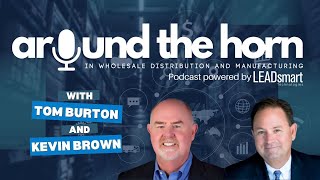
Episode #171 of "Around the Horn in Wholesale Distribution" (YouTube, 2026-01-24) — hosts Kevin Brown and Tom Burton (Lead Smart Technologies) discuss week’s news for wholesale distribution and manufacturing. Topics: economic uncertainty and Fed inflation data; tariffs and the pending Supreme Court decision (court in recess until Feb 20; delay may entrench status quo and limit future executive tariff authority; refunds debated); industry developments (electrical distribution margin pressure, Do It Best/True Value integration); growth opportunities via identifying hidden margin/untrapped potential; AI/agentic workflows for content generation and fact‑checking and risks of hallucination; and cybersecurity threats to supply chains (study of exposed credentials across retailers/wholesalers/vendors). They reference NAW executive summit, newsletter/subscribe info, and Lead Smart sponsorship.
Chapters
How you doing? All right. Fantastic to hear. Good to see you.
You're not dancing as much as usual. It feels like you're just kind of moving here, doing a washing machine or something.
Yeah, exactly. Probably. Why don't we just start the show off with my lack of preparation. I realized I didn't have two things open that I needed for the. For the event. So that was my lack of dancing today because I couldn't listen to the music. Trying to get ready. Get caught up.
All right.
Busy, busy day today. Unlike your ability to change your travel for next week. It's odd. We both live in Southern California. You're a little closer to Central California and me down pretty close to the San Diego. And we're not used to the weather that's coming to the East Coast. And you were supposed to be near. Somewhere near Boston next week. And I'm headed to D.C. and you were able to change yours. But the event I'm headed to with the national association of Wholesalers at their yearly executive summit in D.C. is the. I guess they're saying the show must go on. So I'm leaving tomorrow now instead of Sunday.
Okay, well, you get an extra day in D.C. to enjoy the do nothing. Yeah, I've got.
I'm bringing. In fact, here's my.
Listen, this would be good. You're always saying you wanted some time to catch up. Now you have some time to. You're.
I've got two flights tomorrow. And what's funny is I. I wasn't even planning this. I was going to do a LinkedIn post, but my buddy Brian Eason wrote this great book. It's called Foundations of a Giant, A Branch Boss's Blueprint for Wholesale distribution. Seeing it here, I was going to start in on this this weekend. I told him I would do it a few months ago. And I was planning a LinkedIn post, which I'll still do, but yeah, there will be some flight reading. It's crazy. I get on planes, Tom, for years and years and years, and ever since there's been WI Fi on planes. I just get on a plane and as soon as I'm able, I just start grinding out. Grinding out work and tomorrow's flights. I actually downloaded an old James Bond movie, I think it was Goldfinger, to my iPad on Netflix. And I'm bringing a book and I'm gonna get a little bit done. But my hope is that Sunday I'll be right downtown D.C. i am planning to get a great workout in and get a lot of work done, but I'm also hoping there's a break in this storm and I can get out for a little walk and enjoy it a little bit.
Yeah, we'll bring your snowshoes.
So, yeah, it's. I think they're talking about, you know, the ice storms and the, the. Yeah, it should be an interesting week to be gone.
Yeah. Yeah.
But, you know, everybody else is in the same boat. I. I was talking to some folks from NAW yesterday and they said that a. A large chunk of people are coming in a day early now because the event starts on Monday. So anyways, it should be good. I'm looking forward to it. Pretty exciting lineup of speakers. Really cool black tie dinner at the Library of Congress, which. Of all the times I've ever been to D.C. i've never been a Library of Congress. And the. So that'll be. That should be interesting. Yep. Besides getting to wear a penguin suit.
Yeah. All right, we'll take pictures.
Very good. Very good. And you. You snuck out of needing to travel this week. So good out of it. So. Yeah, they can't, they can't do the. Your session. You're able to do by Zoom. They can't do the conference I'm headed to on Zoom. So.
But we have kind of an express. Right. Version today of around the Horn because we need to be done by a little after 10 again. So let's do it. Let's get into it.
All right. Where do you want to start? Well, let's let me do this. Let's let me do a quick intro. I'm Kevin Brown. Tom Burton. Now that you know about our travel schedule, the weather and everything else, you may still be wondering why you're here. And I'll tell you about that really quick. We get together every Friday and we talk about the news of the week for. From mostly North America, but a lot of global news as well. In fact, as a side note, Tom, today I noticed just, just on the LinkedIn audience that we have, it's usually 3x the 93 to 5x the number of people that have clicked the attending button is what we get from LinkedIn. But interestingly, we had people from Italy, the Netherlands, I think Turkey, Belgium, Brazil, and did I say India? I think India as well. So broad audience just through the LinkedIn audience. And we usually hit five to seven countries at least on the. On the Apple and Spotify and other podcast platforms each week. But I was excited to have a broad audience today with us live, which is great in different time zones, but. And then, by the way, our Canadian And Mexican friends and I just call them our neighbors so that are with us each week. But it's good to have those, those folks with us. But we get together every week, we talk about the news of the week and we try and apply that what we see in the news related to the economy and supply chain and M and A and human resource things and leadership and stuff and apply them back to wholesale distribution. How they relate to the companies that Tom and I work with every day and the work that we do at the company that we work for, which is Lead Smart Technologies that sponsors our show and we work solely with wholesale distributors and manufacturers. We don't work with other companies. And what we've developed at Lead Smart is a what we define as an AI enabled customer intelligence and CRM or smart CRM platform. And what we like to do with that is take the silo data that companies have around their organization, whether it's ERP data, the marketing automation data, E commerce and and other types of data that they have in their organization that sit in silos right now that don't bring them value by being in those silos. And we bring that together in a unified data integration platform. We bring that together and we can use different technology tools as well as artificial intelligence to gain deep insights into what's happening at the customer with your team and with your overall business. So if your company is in the process of digitally transforming, would like to understand your customers better, your teams better and your overall business and truly accelerate revenue growth, then we would love to talk to you. So we couldn't do it without the sponsorship of our show or of the sponsorship by Lead Smart of our show. I'm stumbling here. So we're appreciative of that and the people behind the scenes like Lily and John that help us get this show out each week. So anyways, that is what we do. We do this through the use of our newsletter that Tom's going to bring up momentarily here. The newsletter is called around the Horn in wholesale distribution and manufacturing. Just like the show. If you don't get that newsletter and you would like to just pop us a note at hello@leadsmartech.com you can certainly look the show up on LinkedIn or look up Lead Smart on LinkedIn and you'll see an opportunity to subscribe to the newsletter there. Or you could go to the website for the show, which is www.aroundthehornpod.com and sign up there as well. So we appreciate you being with us, Tom. You want to take us away on economy and supply chain in our first segment today.
Yeah, I mean we have what, like eight articles here in this economy and supply chain, obviously, but I think, I.
Think it was more like five. But you can exaggerate if you want.
1, 2, 3, 4, 5, 6. Six.
So that's not eight.
Okay, almost eight. Closer to six than it is to eight than it is to three. Yeah, but you know, and I mentioned the takeaway as I was reading all of these articles is I don't know, you're a sailor, right? What is it when it's like the doldrums, like you kind of just aren't going anywhere. There's no wind kind of pushing one thing or another and everyone's kind of sitting here waiting to see, you know, are we going to have a nice wind or are we going to end up in a hurricane or what's going to actually take place here.
And a good description of the doldrums. Yeah, the toughest, toughest in, in yacht racing. Nothing, nothing harder to sail and then light wind if you're racing, kind of.
Like float around, right? You just kind of sit it and then hope for you're getting it, get some wind, but you don't want too much wind.
Yeah, yep, that point.
And if you look at this one article here, the USCO see, uncertainty is a top, top economic concern for 2026. I think that kind of, again, if you just look at this, there's no clear direction that we're seeing on anything. Right. Inflation seems to be pretty stagnant. Growth seems to be, you know, at least in manufacturing and other, you know, things that imports. All these things here, they're all kind of just sort of stagnant. But I think people are waiting for, well, what's coming and what is going to be the severity of what's coming.
Yeah, I think you, you know, we can talk about what some of those articles you're referencing. So there's an article there about maybe if you hit to the top there. Right. CNBC has a good article about Fed's main gauge shows inflation at 2.8% in November. Follow up article from Distribution Strategy Group was actually this article is quite, quite good. DSG and our good friends there, Ian and Jonathan and their team, they've really started tackling some bigger topics that are, you know, highlighted in the news right now outside of just distribution and then tying them back like we try and do here with the show. This one is US manufacturing trade sales rose about 66 billion from a year earlier. And then the One you just referenced about this was from HR Dive that US CEO say uncertainty is the top economic concern. And I think uncertainty ties to that. You know, you use the, the doldrums thing, right? You're kind of bobbing around in the ocean waiting for something to happen and what's next. And you know, is a, is an orca going to hit the side of my boat or is the wind going to start or am I going to sit here, you know, bobbing around or not? And, and that's the, in reality, I think, Tom, that's what we've seen for, you know, about a year, probably more than a year now, is that we're just kind of stuck in this vacillating with a, I always call it as simmering. It's not boiling and it's not cold. We're just kind of, there's ups and downs to it all.
Yeah. And no clear direction as to are we going to get a storm or are we going to just continue to stay in the doldrums, as you said.
Well, go ahead. I'm sorry.
Oh, go ahead.
I was just gonna say, you know, it just, it ties to, You know, it's interesting. I'm much more of a student of history, the economy, unfortunately, politics, which I'm not crazy about, and the news in general since we started doing this show three plus years ago. And as I learn more and dive deeper into some of these things you've heard me talk over and over again, and the policies and the, the way we look at economic factors in the US I believe could, could use some adjustments in, in how we're really, you know, analyzing things. But, you know, we could be, and, and again, I, you know, I'm a manufacturing distribution guy for the last 30 plus years who became a technology guy to go try, try and solve some industry problems along with you with your technology background, but certainly not an economist, certainly not a historian or a political scientist. But I have this feeling, I struggle to even say it out loud to an audience. We could be with the US Economy. We could be at a very, very historic time of either great challenges or huge prosperity. I think a lot of what this administration is looking at right now, I don't want to say hero or zero, but when you start looking at, you know, the narrow path they're going. I was listening to CNBC a little bit this morning and they kept using the, the term related to the president's view of how to keep the economy moving is as keeping it really hot. Really hot. Right. Well, then you start testing kind of the boundaries of some of the economic principles of what is inflation supposed to be at? How does that balance out with interest rates? And the president is saying, look, I mention this all the time, he may have more than the things I talk about, but President right now and the administration is focused on closing the borders, stopping the drug flow, balance. The more important ones are discussion right now are balance, trade. Right. And after that is lowering interest rates and on shoring or bringing manufacturing back to the US now he's also willing to push some pretty major boundaries to get those things. Excuse me, get those things to happen. If done correctly, we could see a major, major boom to the economy. There could also be some going off, I don't say going off a cliff, but hitting some guardrails pretty hard if things don't pull together correctly.
Yeah, I mean I think that's the point, right, Is there's the uncertainty. Going back to the uncertainty is, hey, are we going to be in a kick ass economic environment with the growth and thing that is possible or are we going to end up in a situation in a recession or other situation potentially worse than that that I think everyone's kind of seen around wondering about, Hence the point about the uncertainty. Hey, before we leave here, do you want a quick update on some of the, what I found out about some of the Supreme Court and the tariffs things that are there?
No, no, I do, but I, but can we pause on that for a second? Yeah, I wanted to get your thoughts too. You know, the funny thing about tariffs is I was buying my version of coffee yesterday or the day before at the gas station at the bottom of the hill. My version of coffee is a Diet Coke in the morning and much to my wife's chagrin, but I commented about the ongoing price increases and the guy behind the counter goes, trump tariffs. Grumbling, grumbling. And I'm like, I don't think there's a tariff impact to, to this Diet Coke here. And he kind of laughed.
You look at the bottle and make sure it wasn't made in China.
Yeah, exactly.
Right.
It doesn't say, you know, and it wasn't a glass bottle of, of Mexican Coke. Right. And the, but he, he kind of giggled with it a little bit and an older gentleman there and it was kind of funny. And so I can't. I commented to him, I said you don't like tariffs? And he's like, I don't really know. And I said I like tariffs. And he looked at me all anxious and like we were going to get into an argument or something, and I just told him, I said, I think tariffs can be very good. I just think how the president talks about them aren't so good. But the idea behind them of balancing trade. Right. And having the same deal across the board that, that we have, that other countries have with us, that makes a lot of sense. Right. But it was funny because the guy was like, oh, my word, am I in trouble?
So you're having this with a gas station guy?
Yes, yes. Well, you know, I wanted, I wanted to debate with my equal.
So you found parody.
Yeah. But anyways, I just, I do think it's interesting about that, and it just makes me think I was having a. Having lunch with my good friend Darren Ross and the other day, and Darren's a, you know, probably close to 30 years, if not 30 years now. In fact, he is of distribution executive veteran. And, and he was in town and we met up for lunch the other day, and I was recommending to him because we were talking about tariffs and I was recommending him that. That same podcast that we listened to, the all in podcast, where the, the. One of the hosts there, Chamath, was interviewing Howard Ludnick, the Secretary of Commerce. And if you are interested or paying close attention to what's going on with tariffs, which most of our audience here is, I think it's a great episode. In fact, it'd almost be fun, Tom, for us to go recap some of that and maybe even a secondary sideshow and talk a little bit deeper about tariffs, because what he, you know, he was talking about how the sausage was made and the whole process. We, I think we talked a little bit about this last week on the show, but it was just very valuable to see the thinking behind it of getting balanced trade, getting, you know, he kind of used, without saying the words, we're kind of saying that at some level, the US has been a little bit of a whipping boy, you know, for other parts of the world and taking advantage of things. We're trying to make things balanced and equal now. So the methodology of getting there and the rhetoric that goes with it is not necessarily always the best. So now that we're talking about that from a tariffs. Go ahead and share with us your deep research.
Well, you know, we.
Right.
We were potentially expecting a verdict, if you want to call it that, earlier in the month. Didn't happen. There was another potential opportunity for a verdict on January 20th a couple days ago. Didn't happen. Now the Supreme Court is in recess and I guess the earliest they reconvene is February 20th. So it's another month, another month away.
Do you think, before you go on, do you think that people were really expecting a ruling or was it just that there was an opportunity for a ruling?
Because I don't think they were expecting one of the 20th. I think they were. Earlier in the month, there was a lot of expectations.
Yeah, because it was just an, it was just a regular scheduled date that they make announcements. Right.
But I don't know that there was any big expectation. It was just a potential possibility. But earlier in the month, if you remember, there was, remember, I think it was a day of our, of our show or the day before of our kickoff show. Right, Correct. We were like, you know, there was all this chatter about the Supreme Court was going to have the ruling and that didn't occur. Right. So anyway, the point being is it's minimally at the earliest. Right. It could happen in February. And, and what I, what was interesting is I kind of continue to dig into this a bit more, which makes sense is the Supreme Court is actually historically very cognizant of the impact that they make. And when things start to drag out and they don't like to, if at all possible, upset this quote, unquote, status quo. So as tariffs continue to drag on and continue to go, it becomes more of the status quo. Right. Companies adapt, we work things out, we figure out how to deal with them. Right. So every month that goes by, it becomes the new normal, basically. And so what the quote, unquote experts, if you want to call it this, but I think there's some logic to this.
You mean there's experts out there besides us?
I guess so, yeah. One or two, maybe. Yeah. At least they call themselves that. Yeah.
Charlton.
So the, the, the point is, is that as it drags out, right, the status quo becomes, or the, the new normal becomes more entrenched. And so what a lot of the, again, the experts are saying is as this drags out, the likelihood of a major, you know, shutdown of, okay, the tariffs are illegal, you got to stop them immediately, you got to refund money. All of these sort of, sort of edge case, maybe scenarios are not likely. And what's the most likely at this point as it drags on is for them to say the current tariffs are in fact legal and it should continue, can continue, but we are going to limit the executive authority to do this again in the future and there's going to be some changes on to how the executive authority so, you know, kind of a hand slap, hey, you shouldn't have done that. But we're not going to mess with it because it's entrenched, but we're going to make some changes so that maybe this doesn't happen again. And there's obviously other variants of that, but I found that really interesting because it is dragging out is sort of the reason that it tends to drag out too, is there's not clear agreement and is there not clear agreement on.
Things then on the court? There's not agreement.
It's not simple. It's not a simple agreement. So therefore you tend to end up getting more compromises. Right. In order to get to a ruling that is there. So anyway, I thought that was interesting data. Obviously that's not necessarily. It could play out completely the extreme. But the longer it drags out, the least likely it is because the Supreme Court is cognizant of throwing hand grenades into things that are, again, kind of more of the status quo.
So as you were doing that research, did you come up with anything discussing the value of value, but the impact of how the courts weighted conservative versus more liberal?
You mean who was in favor and who wasn't or.
Yeah, not necessarily who, but just, you know, is. That is, you know, and obviously you hear about it from a political standpoint constantly. Right. That says, hey, how is the court stacked, so to speak. Right. And you got a big percentage of this Supreme Court that were. How many people did Trump get through in his, I think three in his first, first term, roughly. And you had some conservatives there already. So, you know, I just, I was just interested in the impact that was discussed there.
It didn't, didn't really get into that part of it as far as the pieces there, other than the fact that traditionally when things tend to drag on, it's because there's not clear consensus and the issue at hand is not very. Is complex. Right. A lot of complexities, which obviously there is here with all of this. But again, there's a lot of historical reference of if they're going to make radical changes or matic radical things tends to happen quickly, not when things evolve and continue to evolve over time.
So was this having chat GPT do long, deep research or how did you go about this?
Just kind of digging around and looking at, you know, some different things that were there.
Yeah, that's great. I assume that the sources were pretty valuable that you saw from that too, with news sources and so forth. I think it's, it's interesting. So you had some pretty strong opinions on this in the last few months about what was going to come out of this. What are your thoughts about. About what will really come out of it?
Now, my opinion was that if it was ruled illegal, Right. That there would be. We saw this, even with the Costco thing and all that, that there was going to be a run for refunds. Right. People are going to be demanding refunds.
I asked at my Costco the other day and they said I could have an extra box for myself. Yeah.
Oh, they did? Well, they.
An extra box. Yeah.
Well, if it was made in China, that's why the prices are so high. But, but again, they said they will likely rule very. Again in this research, it said when they do rule, if they do strike the tariffs down, they will make a clear statement regarding the refunds one way or the other.
Right.
So my point was if it was ruled down, people aren't just going to sit here and go, oh, well, right. And so forth. I, I didn't have really a clear.
I thought we made a bet about it.
No, we were talking about refunds. We weren't talking about whether they ruled yay or nay. So anyway, things just keep dragging out. There will be some ruling of some sort, the degree and depth of it. But I think as it continues to drag out, the chances of there being a major shift becomes less and less problem.
Well, we've got some sessions at the NAW event I'll be at next week talking about that. We've got Brian Wilde there, legislative analyst will be there as well. He was on stage about two hours at the Industrial Supply Association's event last spring, about two hours before Liberation Day announcements happened. And so I'm sure I'll get a chance to talk to Brian one on one and as I typically do at those events. And then he's got a couple of sessions that he's talking at, so we'll kind of see what comes out of that. So just to recap before we move on here, when does, when is the next potential announcement from the Supreme Court?
I don't even reconvene until February 20th.
I want that job.
Yeah, I don't know how it all works. I don't know.
Just because they're not in session doesn't mean they're not working.
Right, right, right.
That's something I'd like to learn more about is I, I don't really know a lot about how that all all plays out and all works. So anyways, well, good, good, good. Deeper research. So we'll see what plays out. So in recap of that every day that goes by. The likelihood is that they will not rule against the Trump administration's or the current administration's use of the Emergency Powers act for tariffs, for the current tariffs. Current tariffs and basically say, okay, moving forward, everything that you want to do, you need to use one of these three or four other statutes that you.
Have available to yourself or have get congressional approval.
Well, some of those require congressional approval.
Right. So that what they may say is that going forward the executive authority that you used is going to be more limited.
Right.
So and he's been using it very liberally. Right. I mean every time something comes up that it's another tariff here and that.
That'S where, that's where my concern with it lies. You know, it's, it's funny, I thought about this quite a bit this week, you know, in the, the People's Republic of California that we both live in, the idea, it's, it's really, you could almost, and this is kind of interesting, you know, you look at the, the governor of this state is already running for president for the last couple of years without saying he's running for president just in his desire to do battle with the current administration and tout himself and how strong he is and so forth. And it is kind of interesting if you look at California as the fourth largest economy in the world. I guess the leader of the fourth largest economy in the world thinks he can push back on, on the leader of the largest economy in the world a little bit. But if you look at, and this is interesting and well, I'll talk about digressing here, but we'll go fairly quick on this. But California has a tax, a potential one time tax looking like it may get on the ballot initiative for November that should in theory have zero impact on people like us who live in California, as they call it the billionaire tax. Right. And so what California is looking to do to be able to fund the budget deficit and the California Public Employee Retirement System, which is one of the largest investors of any dollars in the entire country, probably one of the most powerhouse investing groups in the world is CalPERS. They are running a deficit right now on, on their returns right now based upon funding. I'm sorry, they're at risk of obligations, they're at risk of the obligation.
Right. Over a trillion dollars, what they have available.
Right. And so with that that at play now there's this discussion of this billionaires tax. Right. And it to me it seems really interesting because it almost applies and I'm interested In your thought on this or anybody else's comments, it almost applies similarly about Trump coming back or the current administration coming back and saying, hey, we're adding some more tariffs on top of tariffs. Right. Because what the billionaires tax is saying is you've already paid taxes on this money. Right. But now we want more of this money.
The slippery slope with the billionaire tax and is the fact that they're basically taxing assets, not taxing income.
Correct, Right.
Those are two different things. And so. And they're basically potentially seizing asset, meaning seizing some of the money.
It could be unrealized financial gains. Right, right.
Or a realized or unrealized. Yes. Yeah.
So but the point with that and the point where that is tying to it is where does it end? Right.
And it's a slippery slope.
And that's why I was comparing these two things. Right. Because it's like, well, okay, well, we start with, you know, and this is the issue of the precedent. This, this could be. Right. Well, we start with a billionaire tax. Well, how, how, at what point does that go down to small businesses or people with, you know, assets over a million dollars or whatever? It's like, oh, once you set that precedent that you can say, I've already taxed you on something and now I want to come back and change it because I have a different financial need. I was just kind of relating that to the idea of what the current administration is doing today of saying, well, we've set a tax. But now, because I don't like what you're doing related to Iran or Greenland or whatever it might be, is I'm going to apply more taxes. There's got to be a place that it's like, okay, you can't, you, you can't use this punitively over and over and over again on the same people.
Which is likely going to be included in that ruling that we just talked about going forward. Right now it's kind of a free for all. You can use that. You can use that gun whenever you choose to. But I think that's what's probably going to get a little bit more muted.
Good. Why don't we get out of this economy discussion? Anything in our manufacturing distribution segment that caught your eye?
So there's this article, second article here from Electrical Trends, talking about friend David Gordon. Yeah. And you know, they're basically saying an unfortunate trend with the electrical distribution market is gross margins either stay flat or have been eroded. To me, that also comes back to my favorite conversation of organic revenue and organic growth. That interests you pardon?
That interests you? I wasn't. Wasn't aware.
Yeah, well, if you'd listen better, you know, you'd hear these things.
Now you're starting to sound like my wife.
Yeah, well, so anyway, the, you know, if you think about it, right, and this is stuff that we work on every day with our customers is how to spot opportunities for organic growth. And you know, one of those things obviously is identifying products that have potentially higher margins. But also think if you're a member of a buying group or whatever and you know, trying to leverage products to get rebates and things like that. Right. There are multiple ways potentially to identify hidden margin in the organization. And one of the things that they were saying here is a price increase occurs for a manufacturer and then, oh, they don't bother to raise their prices or even look at their pricing for a period of time, which means nobody's really even looking at the margin opportunity there. So it's kind of the negative of organic growth. But anyway, I just think there's always this. Again, this is where AI shines and we're seeing this every day in the work that we're doing is identifying those places where there's hidden margin. And what is the term of the call? We, I guess the untrapped potential or.
Potential.
Yeah. How do we untrap the trap potential? And I think there's a lot of.
Traffic say that five times fast.
Untrap the trap potential and trapping trap potential. Yeah. Including in margin is a part of that. Right. It's not just revenue, it's margin.
Yeah. And I thought David's article is good too because it talks about, you know, it says where is it hiding? And they talk about. He talks about cross functional price and cost processes. And one of the things that goes with that, I think is just where do you have. I didn't read that article close enough to know if he addresses this. But, you know, so often, you know, salespeople have really, really broad capabilities of how they price things to customers and having disciplines not only in prices that you're paying your vendors, but in prices that you're selling for. And there's great software products out there that can help you put that into your ERP system and put parameters in place. But, you know, the old override button can cause a lot of damage to that as well. But to your point about organic growth is, you know, I was same. Same company we were on the call with yesterday and talking about this, we talked about with their chief revenue officer who's a very large Electrical distributor, talking with their chief revenue officer a while back. In a separate conversation, I was commenting that, you know, when I was a manufacturer's rep and I would, you know, go, seems like 100 years ago that that was the case. But I guess what it would have been 20, 22, almost 23 years ago that, you know, I go do a end user visit with one of our distributors, salespeople to help them coach them a little bit. And vast majority of the time we walked, we walked by more available business in a facility than they actually had. Right. And so when you can start doing that, you know that that's what that trap potential is, is, you know, what, what is it that we have stocked in our warehouse that that company buys that we've not talked to them about that they might not even know we sell. Right. And, and when we start working on that trap potential, as we say component of that life changes pretty dramatically.
Yeah. And then again you're talking about revenue or additional sales, but there's also that same trap potential and looking where margin is hiding as well.
Well, and to, to continue with that thought, right, is if you think about it, is if you get as close as you can to selling full line and you know you're never going to sell everything to every customer or rarely if you ever did. But if you can go from selling, you know, three categories of the 20 categories that your company's focused on to selling seven categories, you're likely going to boost your margin because usually people get in the door by having a better price on something because they were willing to sell at a lower margin to get into the facility. So now when you start looking at an overall blended margin of what you're doing at a customer now, the more product categories you sell and the smart person goes in and tries to expand his business with higher margin categories, I mean, for some people, what I'm saying here is, you know, they think through this every day. Other people I still talk to all the time that this isn't even something they're thinking about in their business. So Good, good. Why don't we jump ahead into our. By the way, before we do that, Tom, there's a good article. We talked a lot last year about Do It Best in True Value and the challenges that it kind of hit with True Value there and the bringing together those two companies under Do It Best. So there's a whole article here about that integration and how it's going. That's from HBS dealer. So good article there as well.
Sounds like they're ahead of pace of.
Yep.
Where they were expecting to be.
Yep, yep, yep. Good. E Commerce and marketing. What do you see in there that you'd like to talk about?
Oh boy. I mean there's a few different articles here that are I guess similar in. In nature and they all tend to revolve around this. A fun topic of agents, AI agents and AI agents used for shopping and buying and so forth. Is there any one of these that you would like to focus on?
It's kind of one. I think we could kind of tie them together. You know, this one from marketing profs.com about automation versus authenticity that I think plays in a lot. You know, I mean I think so many of us right now are looking at using some of these AI tools to help us with content development and things like that. I was just talking to somebody about this the other day. Was I talking to about it? And we were talking about, you know, the help that it can really be of writer's block. And, and for me, what, you know, what do they call it? There's a sin white paper syndrome or something like that, right. Where sometimes you just need that, you know, no pun intended here prompt to get you to really get thinking about things and but there's that risk that goes between finding this balance between. I'm just pumping up about a bunch of, you know, inauthentic. Is that a word? Inauthentic or content that's lacking authenticity and that, you know, we're all starting to get a, a good AI sniffer going of what we read. And so I think there's a, there's a good discussion about the balance between those things.
Well, if you ask it, I think that the key is that when you prompt it for that inspiration you have to be maybe careful is not the right word but complete and don't tell it to go ahead and write the whole thing for you. Right. And then all of a sudden you'll end up with 500 words of something and then it just becomes real easy. Oh well, I've got it here, right. And if you prompt it and you say don't write it for me but you know, ask me some questions or give me some, you know, four or five bullet points for an outline or whatever, be more specific on what it is. I think it's great tool for you said to kind of get past that white page or white paper block. But I think what ends up happening is it becomes so easy when it, if you prompt it incorrectly where it gives you the 500 word article and you look at it and somebody looks at it, goes, oh, that looks pretty good, even without reading it carefully. And then it becomes just something that is an easy way out, right. Rather than using it as a catalyst, it becomes the complete outcome.
Well, and there's the risk that goes with it of it being wrong and hallucinating as well, right? It uses the article about Deloitte had to refund almost $300,000 after using AI and research in a research report that it was being paid to the for by the Australian government that had hallucinations all over it, right? And, and so, and then Air Canada had a chatbot that in 2024, the AI powered chat bot invented a refund policy for a individual customer. And the, the airline tried to get out of it, says, no, no, no, that's not our policy. And the judge said, tough, right? It's your, it's your chatbot, right? You, you said it and it had invented something. And then it talks about when, when Google's Bard launched in a promotional app, it said Google's own AI chatbot provided incorrect information about space EC exploration, resulting in a market value loss of more than $100 billion. Now think about that for a moment, right? You know, you want, you or I or whoever else might have a little hiccup and somebody laughs at us. But you know, look at the market cap now. I'm sure you know that $100 billion is now surpassed with another 300 billion the other direction. But it's, it's something that people need to be paying attention to and paying attention to it as leaders in organizations of what's going on and what's being, what's the output from our company. Because that can reflect, reflect on an organization's brand as well.
And that then is why you're getting a lot of chatter around what is an agent or agentic AI versus just the conversational AI that you're talking about, right? Because if you really remember, this is, I'm not saying this is easy, and I'm not saying that it's not as easy as just having a conversation and getting the data out, but what a good agentic strategy would do is you would have an agent to outline your material. You would then pass that off to another agent to write that material. You would have another agent to review it for authenticity and correctness, and then possibly another agent that looks at it related to your brand or voice or whatever the case. I mean, there could be multiple checks and balances along the way before something comes out the other end. Of what you would want to use. And that's again where I think the world of you keep hearing all these things about agent, agentic web and all of that. It's like an agent basically has some outcome, but that outcome can be passed to another agent which then has a different objective and a different outcome along the way.
You know, you're, you're working on these with our team developing agents day in and day out. But I know you're also using some different ones and looking at different things different ways and researching more than I am. But when it just came to my mind, it almost seems like you could put, you know, in the, in the fact check and maybe in multiple spaces of that path you just described where you had agents that were highly critical and then others that were maybe one that's highly critical and one that's maybe a little more lenient. Have them both come up with an answer and then have an agent that's trained on your true view and your company's position and maybe those are separate agents. Right. That then take another look at it before you get an output. Sure.
I mean traditionally. Right. Think of the, you know, even journalism and things like that. Right. Traditionally somebody would write it. You have an editor, you have different, you know, people along the way, checks and balances all of that stuff before something ends up in a production release. It's just the same thing. But how do you automate that? And you could potentially have. Yeah, you could have all kinds of different fact checking agents and all of those things. Is there still guarantee of perfection?
No.
But is the chance or the probability of something being actually valuable as well as eliminating hallucination. Hallucinations and inaccuracies is much higher.
Yep.
Right. But it's very hard to do that when you just do the conversational hey, give me a 500 word blog post and it comes out with a 500 word blog post. You're like, that looks pretty good. And then that's, you know, ends up on a website somewhere.
The. Yeah, the. So I'm just kind of trying to take this back to our audience to manufacturers and distributors. Typically here is. And I'm wondering if maybe Microsoft's thinking about taking copilot this way and Google is looking at it from a. From Gemini is in theory, you could then have company agents that are tied to the Microsoft Word licenses that you have for the whole company and or tied into your email programs so that emails are looked at before they get the sent button is pushed that make sure something is staying on brand and or there's not hallucinations in what they're doing or misstatements that could cause the company problems.
Sure, yeah.
Trying to think through the logistics of that.
I mean it wouldn't, it wouldn't be that hard to write out an agent that reviews the email or reviews something before it goes and sends it through.
Yeah. I guess if you were to look at it with Coke, it would like if you're thinking about it with co Copilot, which is, I mean my, my experience with it is pretty horrible so far, but is in theory that could be. Copilot could be programmed to say don't let something leave. Right. Even after someone hits a sent but send button, don't let it leave. If it is missing these parameters or violates any of these things based upon the company.
Okay. And I think this all ties into like this next article here. Right. There's a couple articles here. Marketing. Actually, I'll go down to this next, this last one here. Marketing the machines. A new funnel for an AI driven buyer. Right. So we talked a little bit about this last week. This came up is, you know, again the traditional buying B2B buying process is Google something. Go to multiple websites, check things out, look over here, look at a review, whatever the case may be.
Right.
A lot of breadcrumbs along the way. And what these articles again, the one last week and this one is talking about is that AI agents doing the research for you. Right. And doing the homework for you, finding the pricing, doing these things. I think it was on the, on the Gartner one.
Well, that's the next, yeah, that's the next next article coming up. Right.
There was a survey done. They were, people were saying that hey, I would trust agents to purchase up to fifty thousand dollar transactions right. Now I, I don't know anybody doing that just yet, but I could see where that could get there because an agent or a collection of agents could do, I think a really good thorough job of evaluating a situation or a purchase or whatever. More so maybe than a person, you eliminate the bias, you eliminate a lot of the other things that are there. But it completely changes the breadcrumb approach that we tend to use and build our marketing and sales actions around.
Yeah, I mean the reality, I mean we've been talking about this year on our show for, for a long time now is the idea that, you know, we're going to be in a place where our agents are talking to our agents. Right. The, the. Yeah. I think it'd be interesting to look back at last Year's transcripts and think of when, when did we talk about it first. But. And it might have even been probably was 2024. But thinking about that idea. Right. Is that, hey, I'm going on a trip, my trip this week. A great example, right. Would be I'm planning on, on meeting, you know, with a friend of our company and Jamil Francis from Core Technologies. We were planning to get together on a Wednesday when in DC before I fly out Thursday morning. And my trip changed. So I'm going in tomorrow. Right. I could have very easily just voice spoke to an agent that says change my trip, get me on a flight on Saturday, getting in on Saturday night rather than Sunday, change at the same. And that agent should then know that it also needs to change my hotel. And then I could quickly tell it to oh, by the way, go talk to Jamil's agent and see if Jamil's available Saturday night for dinner instead of. Or Sunday night for dinner instead of Wednesday. Right. And all those could be agents talking to each other, your agents talking to my agents. So that when we do finally talk, there's not, we're not talking about logistics or we're not talking about this or that or whatever it might be.
Right.
You know, my agent could say make sure that the restaurant's agent knows to bring Tom the check.
Sure. Of course that's, that's, that's should be in every agent.
I think that's a great use case. I'm going to work on that one. Good. Well, I think that Gartner study that is there is pretty valuable. Let's jump ahead. We don't have a lot of time left today because we're ending a little bit early. But technology and cyber security, you know, I'm gonna. There's a good article here from Distribution Strategy again about exposed credentials threatened supply chains. Let's hit that just for a moment. There's a few things to talk about there. Do you have any particular thoughts from that one, Tom?
No, I thought it was really good actually. And what they're saying is, is that unfortunately. Right. Because of manufacturers and distributors are maybe behind on some of their security and their technological architecture that the, the attackers are knowing that this is potentially low hanging fruit. And so a lot of attacks are being focused in, you know, the vulnerability and retail and wholesale vulnerability is what they're, what they're talking about there.
Yeah. I wanted to quote something from this. It said the analysis examined 840 large companies with more than a billion in annual revenue. 614 retailers and 226 wholesalers, along with 2,620 critical vendors connected to those firms. The findings show attackers increasingly treat retail and wholesale as a single interconnected target environment linked by common IT service providers, software platforms, professional service firms and financial vendors. So they're looking at this as an ecosystem in general, right? Yep. The other piece that is really interesting, by the way, is just as a side note, when you can later today listen to listen that recording from the meeting I did yesterday with a. The managed service provider about cyber security for, for our company and just some updates and some things that they do and some suggestions. There's a lot. I thought I had my arms around what we needed to do at Lead Smart and refining some things, but it opened my eyes to some other stuff. So get a listen to what I sent you since you weren't able to make that call. But I think, you know, the unique thing that right now that, you know, we've mostly been thinking about historically has been our company's security system is going to get hacked. Right. We're going to get hacked through entrance into our servers. Right. By some bad person in Russia or China or wherever it might be. But really what we're seeing, and I don't think this article talked about it, but I'd like to figure out the statistics on it. But really what we're seeing in this setting is not only that, but even less of that now is it's they're hacking the individual for lack of a better example. Right. The phishing emails that are coming and you know, we joke about it on the show here all the time about, you know, you get, you know, requests that look like they're coming from my email address having approved things, and they're coming to the accounting email at Lead Smart, which you see as well. And I guess I'm kind of glad I don't see that email. But it's, you know, what is it? My, my executive coaching. Right, Right. And if you had a new employee and we've got a new employee starting, another new employee starting a week from Monday and they don't know better. Right. And if you think about really large organizations, it might be hiring 5, 7, 10 new people a week. Right. You have got to get this figured out about how to get people to really understand what is it that they're clicking on. Because you could very easily get an email that's coming to you from a person appears to be coming from a person in your organization with the right signature line, with the right logo from your company, there's. And that one click could give them access into your erp.
Yeah. And even they were talking about here, right. Who you buy, who you buy, your vendors. Right. Because if your vendor security and their cloud security or whatever is weak, right. It opens up the door now they can go one to many into the organization. So I think about, we spend a lot of time on. And certainly with our platform we have a, a big advantage, I believe security wise. But man, if I was a distributor or a manufacturer, I'd be questioning not only my own internal things, but the vendors of what they're doing.
Couldn't agree more with that. Makes me laugh. It was probably a year and a half ago I watched a company that is in the technology space that we play in and work in for wholesale distributors. They don't really do stuff with manufacturers, but they did a whole press release and said that they were the only company in the wholesale distribution space for technology that had SOC 2 compliance. And I just started laughing to myself and ended up talking to a couple other executives with some of the ERP companies about this in particular. But you know, not, not only does Our company have SOC 2 type 2 type 2, SOC 2 compliance, but SOC 1, SOC 3 and 28 other security certifications and attestations. And so when I saw this, this gentleman come out and say that he was there, his company was the only one that had it, it was like, well, it's not worth the argument first, right. But it's like what really hit me is how few people actually even are paying attention asking their technology vendors about, tell me about what your security is. Show me your documentation of SOC2 compliance, whatever it might, whichever one that might be important at the time, right. As opposed to saying, I mean, I can't tell you, I can't really, I don't want to say. I've never, I can't tell you the last time I had a wholesale distributor or a manufacturer that we were talking about using Lead Smart Channel Cloud asked me about security. Now maybe we get it less because we put it right out in front in our early discussions and discovery and sales calls and so forth about the technology that we have and the security backing that we have behind things. So maybe that's a component of it, but it should be at the core of what everybody is talking about right now in this, the world that we live in.
Because you can buy the greatest, what you believe is the greatest software in the world, but if it ends up costing you a cyber attack or a security breach, it doesn't matter how good it is.
Yeah, well, and I think it's interesting too is, you know, as we partner with buying groups like affiliated distributors and NetPlus and trade groups like Hardy and ISA and NAW and others, you know, there's so much that happens from, from recommendations from peers, right. Somebody's in a network group or whatever or they're going to an event like I'm leaving for this weekend and in that setting they get some recommendations. But you know, if somebody were to ask me what should they should be asking these people about their recommendations is what kind of security questions did you ask them before you bought it?
Right.
Ask the, ask that guy before you go down a path and talk to your vendor about it. So obviously it's going to happen.
I think that security is as important or even potentially more important than functionality right at this point of the game, because you have to have both. To me, obviously you need functionality, but the security is as of equal importance. And I think this article that they went through is a good example of that.
It's great. Good. So we slide into our sales and M A as we kind of start winding down for the day. Anything that hit you in here in our sales and M A segment?
Not really. Not. Not given that we only have like two minutes left.
Well, there was one good article here is from sales and marketing management.com and it talks about your best reps are quietly planning their exit. And you know, I think it's interesting you look at this as you know it. I don't know what the statistics are, but it's very hard to both hire and get trained and train good people and specifically on the sales side of things. So this says, it says that one in four. So 25% of your sales reps are looking for new opportunities at this very moment. I didn't catch where the statistics were for, but I thought it was, it was interesting idea to really be talking about how are we managing our teams, how are we providing for them, you know, how are we even hiring is probably the better start to that as well. So good article there. So good. All right, we have our people in leadership segment with a couple good articles there. Frontline workforce problems that manufacturers have to focus on from Impo magazine and then an interesting from article from HR Dive about millennial loyalty hinges on career path, which is really interesting. I wish we had time to dive into that today, but we don't because we think about how fast millennials are changing jobs. But this ties into the path of clarity for their where's the path for them? So, you know, the days we talk about, the days of getting your, you know, your, your gold Timex after, you know, after 35 years of service, we don't see much of that anymore.
It's an interesting one. You know, millennials and even Gen Z came out into the workforce with a lot of technology skills, but they didn't come into the workforce with AI skills. They're no farther ahead.
Or interpersonal skills.
Yeah. Right. So I think that, you know, now there's this real sort of recognition that maybe I've got to not only be reskilling a bit, but I need to be thinking more about a career rather than just bouncing around from one place to another.
Right. Yep. Well, it's good. Good. So anyways, that kind of covers us for this week. Tom, anything big for you for the weekend now that you don't have to fly on Sunday?
No, I just have two days to get done what I was going to get in one, so.
Okay, perfect.
Got some other stuff to do. And it's not like we're not doing the session. The session's just going to be done virtually. Yes. There's still preparation and so forth that, that needs to go.
No, no airplanes, no airports, no hotels for you. So that's, that's a plus.
I was supposed to get up at 4 in the morning on Sunday to get to the airport. So I don't, I don't mind missing that part of it.
I guess I'm a little fortunate. That flight I changed to for tomorrow is a, I think a 10:30am flight. And it gets me in it, I think 8:45 or something, to D.C. tomorrow night. So that should be good. But, you know, as I was looking before our show this morning about this storm coming and listening to the radio as well, it's, you know, we'll see. I, I was joking with Darlene, my wife, yesterday that it's, it's going to be a dud because I made all these adjustments to my plans. Right. But it looks like it's, you know, they, the comment they made on the radio just before we went live was, you know, basically from the middle of the country east, like, hunker down.
Well, and think about all the hubs, right. That are in between there and freezing rain. I mean, freezing rain to me is like a showstopper of. Yeah, you can't, you know, you can't whatever de ice fast enough to keep the, the thing. So you're going to have, it's not just where the Snow is. It's all the impact of everything. I mean, most of the hubs in the US Are being impacted, so.
Well, I was at the weekly Bible study we go to last night and I was talking to a couple of buddies and they're like, what are you, nuts? You're flying through Chicago and one of them is from Milwaukee and another one's from New York. And you know, you're crazy to fly with a storm coming, but if you. And I told them, and then they kind of thought backwards is that storm's coming up from the South. Right. So the way my timing is, and I looked at it is when I connect my flights in Chicago, unless that storm has moved really fast, it won't have started snowing in Chicago yet.
Yeah.
So that's. So if it's. If the things stay on track the way they are, I should get to D.C. just fine. And then by Thursday, when I come home Thursday morning, we should be in great shape. So. Good. Anyways, we'll wish everybody a great weekend, my friend. You as well, I'm sure. I'll talk to you over the weekend. I will see you a week from Monday though, in our offices in Laguna Niguel and look forward to spending a few days with you and some new hires and the team that we have there. So, great week behind us. Good week ahead. We hope that everybody stays safe in this weather issue. If it doesn't impact you, all the better for you as well. So again, we thank you for being with us. We do this every week. I'm Kevin Brown, this is Tom Burton. We love that you're with us. If you'd like to get that newsletter that we were discussing today and you don't, please just send us a note@helloadsmartech.com we'll get that out to you right away and make sure that you get that every week. And we'll look forward to some guests we have coming up soon. Lastly, again, couldn't do this if we weren't sponsored by the company that Tom and I work for, Lead Smart Technologies. So if your company is in the wholesale distribution world or manufacturing world and you're looking for a way to accelerate growth in your organization, drive top line revenue, understand more of what's happening at your customers, with your teams and your overall business, we'd love nothing more than to share our solutions.
Right.
Grow your margin, find untrapped potential and get huge returns on investment on your software investment there. So that's it. So, Tom, I wish you well. I'll chat with you soon, and we'll wish everybody a great, safe weekend. And be kind and do good things.
Stay warm.
Stay warm.
More from Tom



What does AI actually mean for a wholesale distributor #WholesaleDistribution


If your systems don’t talk to each other, your AI won’t either #AITransformation




This is why one AI agent isn’t enough for high-stakes decisions #WholesaleDistribution

