Around the Horn In Wholesale Distribution - Episode 52
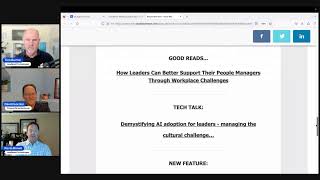
Episode 52 of Around the Horn In Wholesale Distribution (YouTube podcast, Aug 5, 2023) hosts Kevin Brown and Tom Burton with guest David Gordon (Channel Marketing Group). The conversation covers: recent economic indicators (manufactured goods orders, consumer confidence), regional and vertical variance in demand, labor shortages and likely automation/robotics responses; the urgency for distributors and manufacturers to move from pandemic 'papered-over' fixes to a staged digital evolution emphasizing adoption and ROI; AI’s coming role in pricing, inventory and sales (and related regulation debate); and logistics disruption highlighted by Yellow Freight’s collapse and implications for LTL shipping. The episode closes with industry news, events calendar and encouragement to subscribe to sector newsletters.
Chapters
Sa. Sam.
There we are. Stop dancing. Kevin, calm down.
Love that song. Love that intro. All right. Hey, first gentlemen, Tom Burton. David Gordon. Happy anniversary. Today is 52 weeks.
52.
At least I've gotten younger.
Yeah, yeah, that's right. It's your first anniversary. So.
And we were just 50 just yesterday, it seems like.
So that's it. That's it. It's the time and space continuum of podcasting live. But yeah, it's been, you know, we, I think in looking back at that, right, we, we put the go gone fishing sign up a couple of times because of travel and so forth, but this is episode number 52. Kind of disappointed in us that we've gotten wrapped up in the craziness of the week in the business and everything else and we didn't do something special. But one of these days soon we'll, we'll come back and celebrate this particular broadcast episode and maybe do something live and bottle of champagne or something.
Maybe episode 67 or some random episode.
Random number. Yeah. Yep. Yeah, that's good. All right, so let's. Before we get into things again, I'm Kevin Brown, here every week with my co founder and lifelong friend, Tom Burton. We are the co founders of Lead Smart Technologies and we're here today with our friend David Gordon. David is the president of the Channel Marketing Group and the Channel Marketing Group. I'm going to have you tell us about how you help manufacturers and distributors. But you're also the publisher, editor, writer, researcher at Electrical Trends, Lighting Trends, H Vac Trends. What am I missing, David? Tell me about you and what you do.
Well, that's enough of the writing trends. But okay.
I.
President, Channel Marketing. Channel Marketing Group. We worked, as you said, with manufacturers, distributors and reps. There was some associations, primarily electrical, a little bit in H Vac and some other industrial and construction trades. Prior to starting the business 22 years ago, we had VP of marketing for IMARK and which is a marketing group in the electrical industry. And I created the name there. Fifteen years in the performance marketing industry. So many, many years in helping manufacturers and distributors in the channel and growing the business. And like you said, we've got those three digital initiatives and actually next week is 17 years with electrical Trends.
That's awesome.
Publishing that.
Well, we're kind of excited about. In fact, I need to get with you on this at the beginning of the week is through your both H VAC trends and Electrical Trends. You're going to be following the journey of a couple of our newer customers that are in the H1 and H vac and one in the electrical market and their digital transformation and implementation of our CRM and customer intelligence solution as well. So that's going to be kind of fun. So before we dive into the news, we got a little housekeeping that we do every week. This is my ranch for a couple of moments, so bear with me, folks. But again, Kevin Brown, Tom Burton, co founders of Lead Smart Technologies. We have created a AI enabled CRM and customer intelligence solution and platform that helps sales enablement and the sales team serve customers better, driving better results across their organizations. We're solely focused on the wholesale distribution manufacturing industry. Do not do things outside of that. So we take my 35 years of background on that side of the business and Tom's technology background and the rest of our team's background, put that together to help wholesale distributors and manufacturers grow. What are we doing here each week? Well, our around the Horn and Pod in Wholesale Distribution podcast live on LinkedIn, Facebook, YouTube, and then later today that translates right into our podcast, which is on all of the popular podcast formats right now and growing and growing each week. But what we do is we collaborate throughout the week on some of the news that's going on in the industry, in the marketplace, about M and A sales and marketing, the economy and so forth. We bring all that together in a newsletter that we publish every Friday morning called around the Horn and Wholesale Distribution goes out to thousands of people. If you would like that email newsletter and you don't receive it, two simple ways that you can get it. One, you can email us@helloadsmarttech.com or you can go to the website for the podcast, which is aroundthehornpod.com you can see all the previous episodes there and you can sign up for the newsletter. So if you're listening on the podcast, you will not be seeing the screen that Tom will be sharing in just a moment, which is where we have that newsletter up and we're going to talk about a series of articles. So lastly, in our housekeeping, if you like what we do each week, Whether you're on YouTube, Facebook, LinkedIn or the podcast, click the like button, leave a comment, click the share button, or just yell outside your window. I love the around the Horn and Wholesale Distribution podcast and share it with your friends.
So, Tom, I like that analog rating system there. Yell outside your window.
So I was waiting for you to hit mute.
Yeah, yeah. So good morning to Brian, good morning to Ron. He's looking forward to another great session. So the bar has now been set, so we're going to have to perform here. Tom and Will, good morning as well. If you're listening, please jump in and tell us where you're at and where you're from and participate today because I think we're going to have some interesting discussions on economics as well as maybe a little technology before we're done.
So you're going to talk about technology?
Maybe, Maybe.
Okay, maybe some new term that every distributor manufacturer wants to know about nowadays.
Well, we sure hope so.
Execute and invest is a whole nother story.
Well, you could not be more correct, but I think, you know, it's actually there's a discussion, one of the articles, comment. One of the articles we're going to discuss today that, you know, talks about how critical digital transformation is. And you know, we, as we went through the pandemic, I think what really came to top of mind awareness for wholesale distributors and manufacturers and all of a sudden everybody had to go home even though they were, you know, essential businesses was what's wrong with our tech stack? Now it's that, okay, we identified some problems, we put some band aids make. The phrase that was used in the article we'll discuss later was papered over it and now it's time to take some action. So we're seeing some movement there, which is good. People are taking the steps forward. So. All right, newsletter time, Tom.
Here we go.
All right, first one June, manufactured goods orders rise. We don't need to spend a lot of time on this, but we're gonna string a few articles together on some things going on in the economy, which the three of us had a nice chat pre going live about some of this stuff. And it's kind of back to what we've been talking about for, well, a year now, right, as of today is this lukewarm simmering of the economy, right? We get some good news, right? Census Bureau Tacta announced that, you know, June, we had some increased numbers in manufacturing of durable goods, which was four consecutive months up. We've still got people thinking about and worrying about a recession.
Yeah, I mean, you know, David, I'm really interested in some of your, your thoughts here on this, on, you know, as you talk to people. Do you see this more? Do you see what's going on here a bit more, you know, globally? Or do you see more regional, local changes of, you know, how things are really looking? You know, are they, I guess what I'm asking is some of these more, you know, high level, global or sort of national type things, do they really make sense when you get into the local level.
Well, I think there's a couple of things. One is you're seeing there is differences in region and it change but it also changes by market segment. So southeast, southwest doing strong. Doing. Doing really good. Confidence levels are up. Major markets, metro areas. Typically the confidence level is good because it's tied around a specific occurrence economy that that market may be known for. There's. It's tied to verticals. But if you're in the single family, family residential in California, you're crying. That business is so far off. But if you're in Dallas and multi family or Houston and multifamily, it's fine. Or when I'm talking to manufacturer this hand. There's so many big projects in the country that have more zeros to them than ever before. There's winners and loses there. You either won that business or if you lost it, you're crying. And these are multi year. So there's a lot of stuff going on. But what I also find interesting when you look at the manufactured goods number and you have to really get into the data and some of these things. Yep. It's certain verticals that drive that. So the overall number becomes. But it's not necessarily everything. So you get those type of dynamics. People's confidence is. Okay. Look at what happened reported this morning. There was still almost 200,000 jobs that were created right as. And that's incremental. That's not just the replacement. 200,000 people that were doing unemployment was at three and a half percent. But there's not enough bodies out there for the roles. I think they were saying there's 9.6 people looking for 9.6 jobs. For every person looking.
That's a. It's an astounding number.
Yeah. And I saw a graphic on LinkedIn last night of first thing this morning that had the number of openings per person looking by state. There's opportunities that people want them. The question is, do people want some of those jobs?
Yeah, yeah, I know you're absolutely not.
Enough bodies for these jobs. Even around we. I wrote an article last month on electrical trends that ties into the labor workforce. Think about the people who unfortunately passed away during COVID Think of the people who retired early because of COVID who could.
Yep.
Look at birth rate over the last 30 or 40 years it's been declining. Forget about even talking about what's happened on immigration. You know, we don't need to deal with the political but there's just less bodies for the people. Pure manufacturing aspect. There's less. Even though we're at record number of people in manufacturing, it doesn't cover the number of roles that are needed. And you're going to see robotics grow over the next five to 10 years because these rote rolls have to get more out of me because otherwise you don't get production. You know, that gets back to the top line number that we have manufactured goods. You're not going to have more manufactured goods unless you have robots.
Yep, that's going to be an interesting one to watch. Yeah, I think you're right, I think you're right with that. Well, let's, let's jump because what we're talking about here and those insights that you shared, David, will kind of roll into the, this next article that we talked about about consumer confidence. You know, this is from Industrial Supply magazine. Consumer confidence rises to a two year high. And it's interesting, you know they talk about in here is not since the outset of the pandemic, you know, have consumers assessment been stronger than it is today. And it's, it's interesting, right? We, we've got ups, we've got downs, we've got pluses, we've got minuses. But it feels like what, where we're at is that regardless. And you made a comment, I think you said this before we went live today though was yeah, maybe we'll, we'll drop into a recession, maybe there's a good chance of that, but before we realize it will be most of the way out of it. And I think that really we look at this, right, the labor market, they talk about being resilient, incremental growth across there and it could be that we're just already pushing our way out of these challenges that we've been seeing and we've been having and we've survived and the sentiment and I'm really appreciative of your comment earlier David as well about you know, regional sentiments. Right. There's regional parts of the country. We look at, you know, the news that we get and the, the data that's tracked across the board is really tied to, you know, a national view. It would be, you know, I talk about this all the time, right, Is that we're, we're using economic indicators that are, I don't know, you guys might know better than I do how long. But I'm going to say, you know, most of what's tracked is at least 30 to 40 years old, if not 50 plus years old. We get so much more data available to us that we could probably make Better economic decisions and business decisions. If we took. David, your point about. Let's look at the electrical market in the Southeast. Right. Let's look at the building materials market in the mountain states, whatever it might be, and get that bigger picture view to really get a feel. Because I think what happens is, you know, Tom, you're talking to our customers with you and your team on a regular basis. Right. We talk to people in pockets of the country and the sentiment is pretty solid across the board.
Yep.
Yeah.
And, you know, I was saying before the show. Right. I'm, I'm personally, when I see things like this, you know, not since the outset of the pandemic has consumers been stronger. I feel like as consumers, we're getting a little bit over our skis. I think as we talked about before, there's a lot of debt and things that are behind that, that, that are potentially there. But. Yeah, anything, David, that you see that kind of. That when you look at this, do you see anything that kind of looks like a red flag or, you know, do you feel like we've got a bit more smooth sailing?
I think the sailing is going to be fine in a lot of industries. But if I was an employee, you know, the joy of having your own business is you can't fire yourself.
Days.
I want to, yeah.
Unfortunately, I do have a manager and usually she's downstairs.
Right.
Probably like to fire me at times. But the thing is, certain industries are very cyclical. Certain industries are just. I don't know if I'd want to be employed in them. But then, you know, if you're in health care, you're going to be fine long term. If you're in finance, it's going to be all over the board depending upon the sector of finance because of the role of technology in those or other elements. So I think there's a lot of different dynamics. And I think to your point, Kevin, about the, the metrics being old, the media likes it because it's a nice snip. People have used that they can continuously talk.
Yep.
But when you start talking to business people, it's kind of like they glaze over that. And then they've got their own things that they look at as it ties to their industry and their issue to try driving their own dynamics.
I love that. Right. Because, you know, when we look at that. Right. I could, if I'm a. If I'm electrical wholesaler in South Carolina. Right. Or Alabama or Georgia, and, and I watch CNBC or Fox, you know, business or Bloomberg or whatever, I Get all of those metrics that would suggest there's a problem. And then I look at my quotes in my system that I have out right now because of the new hospital, the all of the stuff that's coming from the government incentives right now to can't remember what they even call it. But you know, rebuilding things. But then you've got the car plant, the battery plant, the all of these plants that are going to be being built and you're looking, they're looking at this and going, well, you know what? Okay, my struggle right now is I need to hire three delivery drivers. That's the challenge of my business.
Right.
It's not, you know, yeah, I'm paying attention to commodity prices because what's copper going to be next month and things like that. But they're trying to figure out how to keep up with demand in a lot of places.
Well, they're thinking about today but just before we got it to one of my calls this morning was with a manufacturer who makes transformers.
Okay.
And they have a backlog that measures in years to the point if they tried selling something today, they're going to tell people it's not available to it for two to four years. End of discussion. And I was talking to them about put them putting together a thought leadership for electrical trends because people don't understand what the backlog. But they're seeing stuff on the utility industry which is a channel that they sell to direct, not through distribution. And think of what's going on in California. You guys know with the wildfires, efforts to put stuff underground. It's got to be global weather change to tornadoes, more hurricanes whatnot. More stuff going underground. Now we've got electrification and all the states trying to do more transformers. We've got grid. We've got more construction going on, needs more power, needs. People don't understand the other dynamics that play that affect what goes on just in their industry. So just understanding that global part for them. Global being defined their world.
Yeah, their world operative work.
It's nice to know we learned from Ukraine all the ripple effects that happened with all the raw materials from that that we knew, never knew about. We learned from COVID the definition of supply chain. We never knew where stuff no one ever asked. We're more informed now. But to your point, are the metrics that we use to measure the economy informative or are they really good sound bites and political bites?
No, I think it's. I think it's, you know, my view of this is right and is this is about something to hang somebody's hat on. Right. Whether I'm in politics or I'm in the news, I've got something I can talk about, but that's not necessarily the real world on Main street or on, you know, distribution avenue or, or construction place.
So.
And I think even more to the point, though, Kevin, given that we're now into planning processes for manufacturers and distributors for next year.
Yep.
No one looks at these numbers. They're too macro for anyone to consider for doing their planning.
That's great to. Great to great insight on that. Hey, before we jump ahead, Colby's got an interesting question. Question and thought here. Thanks for that, Colby. Why don't you tackle that, Tom, and then I'll jump in afterwards.
Yeah, I'll read the question. He says, do you think there's another mindset shift coming, similar to what Covid drove around technology because of lack of bodies needing technology to do more with less, but there still seems to be resistance to it from manufacturing. Yeah. Boy, we could probably do a whole episode on this, and maybe we should. But I think there is, I think there is definitely. And there's a lot. It's, it's, it's, there's a lot of variables I see coming together that is going to put another tailwind behind technology. It'll be, you know, Covid was sort of this abrupt thing. Right. It was an abrupt thing, and I had to like, 911 solve everything right away. So I don't think it'll be quite as abrupt as what we had with COVID But I think if you. Yes, the answer is yes, and I don't think it's going to manifest. And that's why I said we could spend a lot of time on it. I don't think it's going to manifest as obviously as it may look. You know, you may think on the surface about how that technology will play into that, you know, even to the point of driverless trucks and things along those lines that are all coming here before too long.
Well, I think another part of that, though, tomorrow ties to the issue of an issue I probably have transfer the whole concept in the term of digital transformation. The word transformation infers a lot of these things are happening at the same time. Companies can't prioritize all those things or fund all those things at the same time. It needs to be digital evolution, technology evolution. What are the key, key things for the different for the organization, but also by department that you needed it. What's the 1, 2, 3, what's the foundation that you Got to start and then you can build from. Because you can't do it all, you can't fund it all. And the other reality, you don't have the bodies and your people can't imbibe it to learn it. Because if your middle management doesn't understand something and if they can't solve, sell it to the people. You guys have seen technology implementations that just die and thought it was a great idea. They said, yes, we're going to do it. And everyone else said, you know, I get too much on my plate to worry about.
No, totally. And, and I like the evolutionary aspect of that and I think we're going to more of that here in a minute, Kevin, but.
Well, we're going to talk about a few things along that line as well. I just kind of wanted to address that. And you know, the digital evolution piece that David talks about I think is wise from that standpoint because also the transformation comment assumes you're already doing something and you're transforming something you already have. And in a lot of instances, people don't have the things that they need in place. It's kind of core of what we do within our company. Right. Is we don't say, here's your software, good luck.
Right.
You know, David, we've never had a chance to talk about this, but we were on the phone yesterday with a new customer and our complete focus is adoption.
Right.
Because adoption is what success is. So we actually, in our organization, we do the training for them on their new technology to help the salespeople, the customer service people, the inside sales, so forth, see the value to them versus the value to the organization. That's a whole long conversation that Mike Marks does whole, whole keynotes about. But that is a critical piece.
Right.
And I think that digital evolution is key.
Right.
Getting the right processes in place to grow the organization. We are going to talk about that in a few different areas for other articles we have coming up so we can kind of jump ahead. Yeah, just really. But this piece from mdm, did we start on the MDM piece yet? I don't even know if we started on it.
No, we didn't start on it.
Yeah, let's start on that right now. So MDM does a piece each quarter with Baird Research, Tom Gale and Mike Hockett and the whole team over there and they put just kind of a recap and some of the things that start off in there we've already touched on a little bit today. But they talk about manufacturing numbers and they did make a comment in Here that I had alluded to earlier today. They said in theory we could be closer to the end of this downturn than the beginning. Pricing has been strong and holding up the revenue growth for companies even though volumes have been moderating. So it's kind of interesting that going back to our earlier discussions. Right. Is another comment about we may have been through some of these things or going through these things and we're just going about business day to day.
Right.
We might not even feel it much.
And that's all you can really do. Right. It's like to everything we've just talked about, what's the answer to all of it? Just keep driving ahead and making progress and not getting all caught up in the flavor of the day or the hype or whatever it is along the line.
Well, they talk a little bit in this article too. They talk about residential construction numbers, non residential, they talked about manufacturing numbers and so forth. But they also made a quick comment. We talk regularly and I want to continue to watch this and talk about this. In fact, David, I'm interested in your opinions on this but they talked about on shoring or near shoring. Right. Adding to broadly to the growth of overall the industrial side of things over the next 10 years. So any thoughts on what you might be seeing out there on near shoring or on shoring?
There's a lot of that going on. Showing up as part of industrial construction.
Yeah.
It's companies that are expanding. They wanted to tighten up their supply chain. They don't want to necessarily fly over to China and obviously all the political issues and concerns relative to China. I even know some Chinese companies that are moving out of China. If they want to get out of the tariff issue, they want to get out of the offshoots from the political issues because they don't know what's going to happen between the US China longer term. Not necessarily war or anything like that. But you know, if we decide not to import, export this, that and the other, they just want to be out of that whole fray.
Right.
So you know, the onshoring, near shoring, that will have a long term impact. It's also I hate to take it back to the technology part on the robotics but if we don't have the bodies to do it now, I'm not talking the construction but the actual processing of whatever that production is. That will be the other thing you're seeing though a lot of that industrial reshoring goes back to Mexico too.
Right. Well that's. I think that near shoring thing.
Right.
Is I think the, the whole, we're going to see a huge uptick within growth within Mexico. I just, I see that happening quickly. So they talked about, you know, a couple of key factors that go along with this. In this article. They talked about closing the technology gap. We were just talking about that a few minutes ago. They, and I was correct earlier when I said they used the term paper over in creating technology solutions during the pandemic. Now we've got to accelerate how we use technology. We're going to talk a little bit like we typically do week after week, a little bit about AI and its impact on these things in a few moments. But they also talked about a digital first hybrid sales model. We talk about that consistently here. Right. And I'm just going to kind of quote one of the things that were from this article and said the core outside sales model was really showing some cracks in terms of its ability to meet the changing needs of customers, particularly with the impact of digital and the rise of Amazon and other disruptive players who have come into the market. Well, you know what, we talk about that here, right? Every week buyers are changing. New employees that are coming into your business are changing. They're more technologically advanced and at the end of the day, B2B buyers, if they're not already there in your market, they are going to be shifting to digital first. That's where they get their information, that's where they want to learn, that's where they want to understand things from.
But I got a little bit of a challenge though, or a nuance that ties to that. Sure, it's one thing to get information, but you got to look at your customer buying journey in the contractor scenarios. You got to really think of what they're buying processes. Not saying it won't be digital, but we're seeing more towards digital direct. Connect to estimating and procurement systems to the chosen distributor. Because if you think of from a contractor viewpoint, their buying process first involves estimating and getting pricing and information from multiple distributors. They don't necessarily. They may get information from a website that's what I call Omni Service. And we've done research where they're looking for product information and spec sheets. They'll look for their price for overestimated. But you know, email is still a hell of a lot easier to write. One email put BCC to five people and have one throat to choke. Now when you come back to buy Tip Tractor doesn't buy that bill of material from one distributor, he's not going to go to three different distributors, four different distributors to figure out who has the best price, let alone who has it in inventory. And there are some product categories depending upon the type of project. Trying to buy it online would be a nightmare because it's products that don't even exist.
Well yeah, right.
Package price. So you gotta under. It's. It's like five, six, seven years ago when all the associations would have the foresters on gardeners come out and talk about how Amazon's going to take over all these channels. It didn't make sense because no one was talking to the customer about how they buy. That's the first step. It's not thinking people are going to go and hunt and peck on a website. You need to understand the customer and what they're looking for. A website's an elementary.
Well, I think you're, I think you're right with that. I think what you, we kind of have to do too is we probably have to separate across packaged and configured products. That happens at a distributor that you're not even going to see that on their website.
Right.
Because for. They might have a bundled cable system or something like that. That, that's just, it's not a commodity item. But when we start going into the commodity standpoint, you know, and I'm going to suggest that we're just seeing the tip of the iceberg of that digital piece. Now I don't disagree with what you're saying about how things are today, David, but I think what we know is right now is that 60 plus percent of B2B buyers now that might not be right now in building materials and it might not be fully the number in electrical or whatever it might be. But from that standpoint is these buyers are changing. We're going to have AI tools very quickly that are going to be able to go look at. I mean if I'm a, if I'm a B2B buyer, that's a large buyer, I'm going to be wanting to look for AI type tools that can go out on a co pilot or a bot, check inventories and check my price throughout my network of suppliers. So there's. This change is going to be happening but it's.
But you just said it's through their network of suppliers.
Right.
Because they already have to have the credit relationship.
Yes.
Have to have delivery processes. They may have to have security clearances for the facilities. I agree. It could be AI. I mean I could see Microsoft easily having some functionality into the systems that it's going to be just happening through that they have a tool called Viva sales right now that they're co branding to copilot that when a email comes in, it can read that email, pull out the bill of material, go into the database, pull out the spec sheets, pull customer specific pricing, give this inside person three or four versions of an email and push it out and you're going to see AI being used for pricing. That's going to take the pricing processes today obsolete them because it's going to factor in Travel, weather and DSOs and you know, number of days since last time looked at it dynamics that we haven't even. That we may have considered.
Right.
But never could conceive how to get the data. Because you know what, you know the other definition of it?
Tell me.
Inhibiting transactions.
Tom, write that one down.
Yeah, because it says we can't do that. The whole concept of AI which is really machine learning is in having easier ways of having access to data. Yep. Check that out.
No, we've got, we've got that. We could go on about this for hours. But the reality I think of it is is that if we're standing still and not looking at how these things are going to be impacting our business, we're going to be the guys. And I say this probably every week.
Right.
I don't believe necessarily that people are going to be out of business, but your business is going to be very different. When your customer decides he wants to transact in a far greater use of technology and you're not prepared to support that. And that inhibiting technology comment right. About it. The IT of the role of IT at a manufacturer, wholesale distributors has to be changing quickly. You can no longer be the person that says I know a lot about our 25 year old ERP system and I walk down the hallway twice a day and check to make sure the green lights are on the server in the closet. That's not going to survive.
But it's also going to be careful not to scare everyone that sure that if you don't do this now you're going to be out of business in a year or two?
Absolutely not.
Takes time for these things to happen. Did you know PPT is the newest thing and AI is the newest thing but it's really only been what since.
March, November is when it's kicked in. But yeah, yeah, but you're right, media has really taken.
I think one of the articles you have is about regulation and stuff like that.
Yep.
Okay. We want to regulate it based upon what we know now, but who knows where it's going to be a year, two years, three years.
Yep, I agree.
I'd love to know how we're going to regulate all these little websites and apps that are coming out of Eastern Europe and Asia and things like that. That might be good functionality because you need it for.
Yeah, but where's your data?
But if it's graphics or summary or something like that, the FBI is going to have another whole division.
Well, we're going to come to that in a few minutes. Tom, let's catch a couple of these questions and we're going to talk about Yellow Freight briefly and then we're going to move on a little bit further. So I think Tom's comment there, you know, about that Black and Decker and the Jobber thing, I think that's, you know, that has certainly been the case in the past. I think there's probably some of that still going on. But I think right now, you know, what we're seeing day in and day out is in fact, we have a customer in the Rocky Mountains that's a building material distributor. And they literally were describing when they came on board with us late last year is they could get bid requests in from one of two or three different types of high end technology products that help with the bids. They still get spreadsheets and they said they could get, literally they could have a contractor ask for a half a million dollars worth of materials on a quote that they wrote on the back of a piece of drywall. And it comes in all different facets called Omni Channel. There you go. That's Omni Channel. Right.
And let's hit Colby's.
Thanks for that. Tom may appreciate that comment.
Tom's at the bar, so that's why he's asking good questions.
Yeah, that's what he said. He lives around the corner from a, if I remember when I talked to him six, eight months ago, he and his wife live around the corner. They've retired back to North Carolina and they're right on, on the, is that Lake Norman? Is that what that is there outside of Charlotte? And so they can, their lunch place is Tom's bar. That's right on the lake. All right, Colby, another comment?
Yeah, no, and I'll address this one. He says, what would you say to manufacturers? I'd rather find the cheapest technology they can and call it digital transformation. Going from paper to any type of tech, I guess is a transformation instead of looking at the top technology that is bringing the most value. So we have in Colby, we see this obviously a lot right where there's a check the box mentality, hey, we need to do something, so let's check the box and do it quickly and affordably and as easy as possible. What I've been really encouraged about Kevin, even in the last kind of couple months with some of the prospects we've been working with, is degree of diligence that they're going about doing the. And making sure they're really doing this properly and not so much caught up in how do I do it fast and easy and cheapest.
Yep.
How do I do this in a way? And the due diligence and the questions that we're getting and how we're working through them is. So, you know, yeah, it takes longer, maybe it takes the process longer, but when you come out the other end, you're so much more prepared to have a successful outcome. And so I think it's, you know, it's two things. It's one, not trying to check the box, just to say you check the box. But then as we've just talked about, think through the process. So you're not just, you know, getting the thing on the, on the line there.
Well, so we need to move ahead. But I want to make one little comment on this, right. Is I think we're at a place where the days of saying, I have an erp, I have a CRM, I have whatever other software, maybe a freight management software, and saying I have it is behind us. Right. And that's the. Historically, the beauty of SaaS software and software contracts is people don't. They don't get maximum value out of it. They're not using anywhere near where they could. They can't even point to the successes they have from their technology. But they're afraid to get rid of it because they've got to have it in their company. And those days, I think are, at least from a buyer standpoint, needs to be coming to an end quickly where we need to be able to look at technology and say, what is the impact of the ROI that this is going to have and how soon can I achieve that? Right. That's going to be a critical.
And does it make sense?
Right.
Not only now, but going down the road.
So I don't continue to just renew my contract year after year. I have to see what it's doing. So let's hit this yellow freight thing. I don't want to spend a lot of time on that topic. You know, we've been talking for weeks now. We had the west coast port strike averted. We had The Canadian port strike that was on and off again. And it looks like that's going to be ratified. It looks like the UPS contract is going to be ratified. It looks you know, strongly in that favor from what I was reading earlier in the week. And then boom, you know, late last a week ago today, you know, hundreds of layoffs of non union people at Yellow Freight and you know, 30,000 teamsters locked out of of their facilities last Sunday. I want to get to something bigger with this. I'm going to just hit a couple of facts about this which is interesting. You know, government had lent them, they had a million, a billion and a half dollars of debt, 729 million of it from the government that came through the pandemic. All kinds of issues going on within the business. They've been struggling for a long time and now we've got they were doing 49,000 shipments a day in 2022. So a large percentage of those ltl or less than truckload shipments that the people that listen to this podcast are doing right are wholesale distributors. Manufacturers are moving goods. If it's less than a truckload they're using companies like this. So it's sad to see this happen. There's all kinds of finger pointings right now between the union and others but you know, this is a difficult time for them and I wanted to get your guys thoughts in general on it and I have kind of a closing thought that's a little, it's on topic but this kind of leads us to a new path and I'll, I'll just touch on brief after you guys comment.
Well to my only comment is I guess there's some more drivers out there to be so maybe that'll that helps some of the, the other things. David, what's your, what's your take?
Although I hope that there'd be more drivers because remember these are all union members. So I'm only going to go to union shops. From what I understand from talking to some reps and some manufacturers, they had already moved a lot of the business challenges is you know, is it going to be that many less trucks on the road, that many less drivers? Where's that going to get picked up how quickly?
Yep. So there's in this article that this happened to have come from Fortune. They talk about, you know, the opportunity is out there for this to be absorbed but the prices are going to go up because you know, people are scrambling to get here. Here's what I want my takeaway from this is though because this I think impacts a much bigger issue globally, right. Is, you know, we have labor unions in this country because of horrible things that were happening to workers in the Industrial revolution, right. We had kids that weren't in school that were getting their arms chopped off because equipment was unsafe. Well, I look at this union issue, I look at the UPS factor, I look at the ports, I look at Hollywood with the screenwriters and the Actors Guild, and I look at these things from a union standpoint. And I'm going to say something here that's probably pretty controversial, right. I am 100% supportive of safe workplaces, fair workplaces and all of those things. But if you're a television writer and you think it's reasonable on August 4th of 2023 to think that you can have AI not impact your job just doesn't seem reasonable to me. If you are a union truck driver, right. Whether you're the UPS driver that's now going to get an air conditioned cab, which is great. But if you don't think that autonomous trucks aren't, you know, they're out there.
Right.
They're out there being tested today. So my question kind of right now is out there is if I'm, if I'm a big union guy or I'm a union in general, I can't stop this progress. I'm not going to be able to stop autonomous trucks. I'm not going to be able to stop AI and in, in Hollywood, right. We've got to figure a way out how to, rather than stomping my feet, embrace these things. Right. And find maybe a new role for myself versus expecting progress to stop. There's my rant.
All right. No, I completely agree and I think we'll, there's a lot we could talk about there, but we're short on time, so let's, let's zip ahead.
I'm waiting for some of the comments to throw mud at me here, but that's my thinking, right. Is people need to be thinking about what does the future hold for the role that I'm in today.
Oh, and just I guess to bookend that is. Yes, obviously the unions have to come to reality of what's going on right now and negotiate from that perspective. And yes, in that, in that writer strike, one of their request is, oh, we won't use AI tools.
It's not going to happen.
That's, you know, what kind of idiotic request is.
That was my point.
Yeah, so.
And technology is not used for any of those graphics of cinematography.
Yeah, exactly, exactly.
Yep. That's that's it. Right? It's at the end of this. Right. I was during the UPS strike or the preps for that. I heard a young woman say that what you working in a UPS warehouse. Here's all the problems with it. And it wasn't, she said, I worked at Amazon warehouse. And it we had this and this. And in my mind it's like, then put your sign down and go back and apply at Amazon.
And most of Amazon is not union.
Yep, exactly right. All right, let's jump ahead. Tom, I want you to talk about, and David referenced this earlier. We've got this article about the Senate wanting to talk about a focus of AI and regulations. OpenAI, the creator of Chat GPT, which is what most people know now from AI. Their CEO, Sam Altman stood before Congress and talked about, you know, advocating for AI regulation. Tom, you're our technology guy, our computer scientist and our nerds. So why don't you, why don't you start on this?
Yeah, I'll be real quick. I know we're short on time here. I think that actually overall, I think they're doing a thoughtful job, but I don't think that it's practical. So I think the way they're looking at this is thoughtful. And even some of the things that they're talking about, quote, unquote, regulating is okay. I mean, you can see some logic to it and it's not over the top, but I don't know that it's practical. We talked about this a few weeks ago and David, you just brought this up. It's great to say we're going to regulate something in the U.S. but the U.S. is, this is an international world, especially as it relates to technology. So it's, I don't think it's practical. I think there's, it's like anything else. There's, you know, they're saying they're creating a whole department for this and all of that. And obviously I hope that it doesn't become so bureaucratic that it stifles innovation in the U.S. and then we see a lot of innovation that normally would have occurred in the U.S. not happen in the U.S. so, you know, if you look at, we've always been the leader in innovation. So I think, like I said, I don't think there's a lot of practicality. I don't think it's enforceable. I mean, it's enforceable maybe to the Googles and the Amazons and the super large language models that are there, but it's not enforceable. To the, to the small business or the medium sized business that are there. So it's. Yeah, I don't know, it's. But I do think that at least they're being, trying to be thoughtful about it from what I can tell so far. And I haven't seen too many, you know, too much craziness at this point.
Yeah, well, and I, I understand there's some efforts in the European Union doing the same thing. So there's. Whatever any of them come up with. There needs to be dialogue across borders like that. You know, to your point, Tom, it has to make sense. I mean the reality is even out of Israel there's a lot of technology that comes out. I've only, God only knows what would happen with China and Malaysia and you know, some of the Eastern European countries. Enforceability is going to be a huge challenge is where some of those major associations and some of these big tech companies get to be part of and set up their own standards to make sense.
Yeah, that's, I love that.
The enforceability for like the deep fakes things. Okay, let's. Assuming that we pass something that makes sense, are we going to fund the enforceability side and have some cross border enablement of that enforceability for it to happen? Because think about all these cyber crimes scams that happen that once the money goes overseas somewhere the FBI can't do anything that's lost. So unless we can do something there and then I guess this is purely a political comment. So kind of leave it is. It's great to have Congress involved in this, but do you really want someone like Mitch McConnell voting on something dealing with AI and the intricacies and the detail of what gets into it? Basically, do we trust these 535 or 635 people in Congress to have the knowledge base to be able to be informed of it?
I think, I think that if you could be a fly on the wall in those meetings, it'd be the greatest Saturday Night Live skit ever. Yeah.
To David's point, right. You could go back and watch and I'm sure It's available on YouTube and a million other places. Go back and watch Mark Zuckerberg's testimony in front of Congress like three years ago. You know, if you don't do this and you don't do that and you're not, you know, monitoring my phone calls and this and that, then how do you, how do you make money? We, we sell ads, sir.
I mean just the.
Well, my son, you know, he was on the phone talking to, I'LL never forget this one. This congressman was saying my son was on the phone talking to his buddies about the tuxedos and the wedding that they had to be in. And not two hours later he told me he got an ad in Facebook about buying a tuxedo. You're listening to his phone calls? No sir. Your son searched for tuxedos somewhere the day before and we have that information to share. Em irrelevant anyway. David, your point I agree with we had an article that we talked about here on around the Horn a couple of weeks ago, maybe a month ago and it was about the regulation side of things. And the EU is way ahead of where we're at here in the US on this. And I think the interesting thing that I, I, I will throw out to both of you guys and Tom, you know more about this stuff. So I, I always defer to you on on some of these things they this article. And again for those of you listen on the podcast we've been looking at our around the Horn newsletter that comes out every Friday, talking about an article here about AI regulation that we had posted in the newsletter and let us know if you'd like to get that newsletter if you don't. But they had a series of things that they talked about, right. A licensing regime, AI testing, federal agency for oversight. Here's what comes to my mind. I'm interested in both of your thoughts on what if we just had something like Underwriters Laboratory, right. Where some David, you alluded to this, right? When trade associations get involved. I thought that was really a wise comment from that standpoint was what if we just there was a global standard for AI safety and then you get to decide as an individual or as a business do I want to go outside that certification and bring those into my business? And you may just suffer the consequences of that. But you have a feeling of safety that anyways, that's first thing came to my mind. What do you guys think?
And to that point, Kevin, if you had the Good Housekeeping sale approval.
Yeah.
Even big things like that. We all know that Microsoft and Google could easily I'm using the word easily. Not being a techie could program it into their search engines, their browsers, not to go to sites that have that the equivalent of malware could be created in the background to facilitate that.
Just like you see when you go to a website and your browser pops up and says this might not be safe.
Right. Could get done.
Nobody works on a construction site without an ANSI certified hard hat or safety glasses. Right. So that Model. Right. And I know that if I let my guys wear their own sunglasses that aren't ANSI Z whatever it is, I bring on all kinds of liability to my business.
So even the next step of we create this as association, I should not say we mean global. And part of that membership fee is you get a cyber key for your software. That's the validator. That's all feasible, right?
No, no, there, there's. Again, there's. I said this a couple weeks ago. I believe there's a lot of ways that the market can provide the safety that we're looking for without getting a lot of government involvement. That is not practical anyway. And yeah, we just touched on some.
Of those, you know, and I'm concerned that the government gets too involved now. Next year there's going to be the next iteration.
Yeah, I know it's moving very fast. Right?
Government can't move that fast.
No, you can't move that fast.
Melts faster than government can move.
Yep, right.
Exactly right. No, you need, you need, you need an industry oversight, right, for these types of things versus and maybe there's a governmental piece with it. So.
And there could be non industry people on it, stuff like that.
Yeah. Well, it's interesting, right, with you know, Sam Altman, you know, talking that the creator of Chat GPT saying that something like this is needed. We're running short, so let's just kind of talk. We have a special feature this week we just published there. What's your 2024 Value Creation Plan? I thought it was a nice article that Tom Gale at MDM wrote related to kind of thinking and planning. David, we're going to have to get you back another time because we could probably talk just about that because I know your firm consults with companies on that as well. We've got our industry scuttle, but I just thought it was interesting. The only thing I'll hit there real quick, you know, we have some information there about Ferguson doing some acquisitions, bumping up almost a half a billion dollars in revenue through that. But what I really loved there was seeing, you know, Affiliated Distributors. We're a preferred service provider partner there and love the folks at AD as well as NetPlus and the other groups we're part of but huge growth for the first six months of the year.
I was disappointed that they didn't state in there that that growth was impacted by.
Right.
By their members using our new customers that came on for their members.
That's right. All those AD members that are using Lead Smart Channel Cloud that are helping.
To drive their growth. We'll have to work for that next time in the press release.
Well, you know what's funny is we can actually help. Show them. Show them that data. It's funny you say that. So good news there. We have a good read topic each week. This week there's an article from Inc Magazine about leaders can support people and managers through workplace challenges. It addressed quite a few things that I thought were valuable, including talking about AI to your teams. And then there was managing cultural challenge in our tech talk about AI.
Yeah, I'd like to save that for next week. That was my favorite article of the day. And I think there is some really, really good stuff in there.
We'll leave that in there. David, you can email me your thoughts on that article and we'll reference you next week. So. Yep, good. So we've got. If you get the newsletter each week, you'll see we also have a calendar of events. We don't need to rush through that today, but we are coming into the hot and heavy time for associations and buying groups to have meetings, some of them back to back. So travel. Travel schedules start heavy in September. So, David, which. Which events are you going to this fall?
I've got. I'm presenting at the Missouri River Valley meeting, which is an NAD meeting towards the end of September to 25th. I'll be at NECA, which is the Electrical. National Electrical Conference Contractor association, which is late September, early October, talking to something about someone about at naw.
Okay.
A large distributor conference. Right. September, gonna be at that. And then we got NAD Eastern in November.
Good. Well, I don't think. I don't think I'll see you at those, but I'll watch for you in the airport. But I'll probably see you at the January in a W event in D.C. is likelihood, so we'll catch up on those. But we'll wrap up today. David, thank you for joining us again. David Gordon, Channel Marketing Group. If you don't get David's newsletters, H VAC Trends, Electrical Trends, and Lighting Trends, sign up for those if they're a value to you in your market. They're super insightful. So thank you, David, for being with us.
Well, thank you for the opportunity. Enjoyed the discussion.
We'll have you again.
Yeah. And thanks to Will and Ron and Tom and Brian and everybody for jumping in today as usual.
Appreciate it. Colby's coming.
Yeah, Colby's. Great questions, all of that. So thank you and everybody. Have a good weekend.
Sounds great. Take care, guys.
Have fun. Do good things be kind.
More from Tom



What does AI actually mean for a wholesale distributor #WholesaleDistribution


If your systems don’t talk to each other, your AI won’t either #AITransformation




This is why one AI agent isn’t enough for high-stakes decisions #WholesaleDistribution

