Around the Horn In Wholesale Distribution - Episode 42
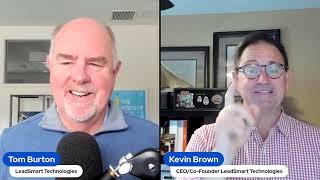
Episode 42 of 'Around the Horn in Wholesale Distribution' (May 27, 2023) — Tom Burton and Kevin Brown (Lead Smart Technologies) discuss current economic signals (port shipment drops, inventory gluts, shift from goods to services, interest-rate/debt-ceiling effects), M&A and marketplaces (mention of Volition industrial parts marketplace), and the rapid rise of generative AI. They focus on businesses becoming "AI-enabled" (not just adding features), the importance of first‑party data and platforms over point products, risks like AI‑washing and misinformation, and practical people/process/technology considerations. The episode also notes upcoming industry events (ISA Summer Sessions) and promotion of their weekly newsletter.
Chapters
Sa Sam, good morning.
Hey, how are you?
I'm really glad we have that countdown thing that really. Yeah, you know, run back, run back. Get back here.
Get back, get back before the camera comes on. Right?
That's right.
Good. That's awesome. Well, how you doing in general this morning, Tommy?
Doing good, doing good.
Glad to hear that. So, hey, Kevin Brown here, Tom Burton. We are bringing you this week's episode number 42 of around the Horn and Wholesale Distribution, which we do every week. Today, Tom, I think we're going to talk a little bit about. A little bit about more about the economy, which we typically do. Kind of cool stuff we'll be chatting about regarding marketplaces in wholesale distribution and manufacturing. I think there's some neat stuff about that. A little bit about M and A stuff going on in the market and then a little bit more as we typically do about AI. So I'm looking forward to all of those.
Yeah, no, it's going to be good. Good. And good morning to Brandon and hey, we have Chris from, from Colombia, looks like.
Yeah, Chris is in Bogota. Interesting. Chris lives in, in Brazil, so she's out and about.
I know.
I think last week, if I remember hearing from her, she was in Cartagena, Colombia. So she's.
I've been to Cartagena. I'd like to go to Bogota. I've been to Cartagena.
From everything I know. I think you would prefer, continue to prefer Cartagena and your safety will be better in Cartagena.
I don't know. Columbia is that. But anyway, Brandon's in a pretty exotic place, Atlanta and Will is in Indiana, so. Yes, that's right.
Good. Well, I, you know, we're coming into. It's funny I looked there's. But between the different platforms that we're on and we'll talk about that here momentarily. We've got people kind of coming in from all over. We have a high level of attendance happening today, which I, I love tying to having a long weekend with that is kind of, is kind of cool that we still have a lot of people coming with us today. So that's good news. So, Tom, before we dive in, you know, we've got a little housekeeping that we do every week, which is important. So again, Tom Burton there, Kevin Brown here. We're co founders of Lead Smart Technologies. Lead Smart is the sponsor for our weekly around the Horn and Wholesale Distribution podcast. So that's who we are, why we're here. You know, the world is full of information. Right. We're all getting inundated day in and day out with things. And what we started doing, you know, approaching a year ago here very soon is we started condensing and consolidating a lot of the data that we see through the week from both the news, the stock market, technology industry news regarding wholesale distribution, manufacturing. Bring them all together. We send out an email newsletter every Friday morning called around the Horn in Wholesale Distribution. If you don't get that email newsletter and you would like to, it has calendars on it of upcoming events, all different types of stuff with it. Plus the articles we're going to be talking about today. Very simple. Email us@helloadsmartech.com that's helloadsmartech.com we'll get you added to that list and you can enjoy that information each week. But what we're doing here today, we're live this morning on Friday morning on YouTube Live, Facebook Live and LinkedIn Live. If you're listening later on the podcast version, which is available on all the popular podcast formats later this afternoon on Friday. What you're not seeing that those who are live are seeing is a screenshot or a screen sharing that Tom's doing of this newsletter where we talked about some of these key topics. So we don't want anybody getting confused. Lastly, you can do us a favor if the content that we're providing is of value to you, subscribe to our YouTube channel. Click the like button on LinkedIn and other platforms. Share with your friends. If you're on any of the podcast platforms, it'd be wonderful if you'd leave a review. We can get this information out to more people. If you're with us on LinkedIn and you haven't currently clicked the like button or the follow button on lead smart technologies LinkedIn page, do that and you'll get these updates and notifications. So, ah, I'm done with that, Tom. Let's move ahead.
Yeah. And yeah, we don't give financial advice. Right.
And safe harbors.
Past. Past performance is not necessarily representative of future.
Anyways, that's, that's really true. Past performance does not guarantee anything today.
Hey, and if you're. You mentioned the podcast. I was just gonna. If you're on. If you're on iPhone, I don't know if it's the same experience on Android, but if you're on iPhone in your podcast, what I found is, is if you just scroll down when you're looking, there's just, it makes it super easy to leave a rating. There's these stars. You click it and you're done. Yeah, so, yeah, if you can do that, that'll be great. It gives the right algorithm signals to get this out to more people. So that would be.
And by the way, ours only has available the five star review button.
Right.
There's not a 1, 2, 3, 4.
Yeah, it's only five. There's only one. I've coded it so it doesn't, doesn't do that. So that's great. All right. Do you want to get into this?
Yeah, why not? Let's jump in and talk about some news. That's great.
All right, here we go.
Yeah. So, you know, we've talked a number of times. This first article talks about the, some of the declines and the ports continuing that are going on out there. And you know, one of the things that we do pretty consistently here each week is we kind of talk about, you know, the economic situations going on mostly here in the us, but North America as well and a little bit internationally. But, you know, it's just kind of interesting to watch this in. And I'm trying to remember the term you used last week. But you know, we're in this just kind of muddling place right now. Right. We got some ups and we've got some downs and we just kind of in no man's land right now from the economy. But it's, it is interesting to kind of watch the, this port scenario because, you know, a big decline last month in shipments coming in. But when you stop and kind of put together what's causing that, it kind of makes sense.
Right.
We went through this huge struggle with, you know, hundreds and hundreds of ships out in Long beach and LA harbor near where we live, and people struggling to get stuff. And then we went into this economic struggles that we've been having for the past year plus.
Right.
And so now people are sitting on these inventories, their warehouses are loaded because people are buying less and they overbought to start with. And it's, it's an issue.
Yeah, I read that article twice and the first one we're talking about here, the ports one, there's just things in there that don't add up to me. You know, if I just read it from face value, there's just things that don't, don't add up. And especially given the size of the drops that they're saying that were occurring there now, maybe you're right, maybe it's over ordering so all of the big backlog that we had. And, but I mean, a lot of the backlog was, you know, just human Resources. Right, Covid. And all that kind of stuff. But it's still. I don't know. There's just, there's. As I look at all this data, to me, it's. It creates a little bit more confusion than it does clarity still at this point. But again, maybe it's just shaking out and all of that. It's just. It was hard for me to look at that article and draw a lot of conclusions, and there just were things in there. Just felt like it just. It didn't add up.
Yeah, I wouldn't argue with you on that point. I think what, what my takeaway was we're in a really interesting place. And it's not just this port thing. It's a lot in the economy in general. And they. They really tie together.
Right.
We went through this struggle through, you know, Covid. Right. And it's not that far behind us. Some would argue it's not behind us. But the whole idea behind that is that you couldn't get anything right. So that people were struggling. And, you know, there were slowdowns in the ports. There's slowdowns in the ports again now, you know, in many places. We know that going on in Long beach and LA harbor there. But what's interesting is I think people are from a. From a manufacturing standpoint, they're also looking at. They've got all of this inventory. I think I mentioned I heard a news or a radio piece earlier in the week related to this, and one of the things it was talking about is that, you know, the purchases that people made that are sitting in their warehouses are at a dramatically lower interest rate that they got the money for. Right. And they bought all that they could because things were harder to get. So there's this glut of inventory because people are buying, buying, buying, because money was cheap and it was hard to get. So their orders were huge.
Sure.
Now that, you know, the shipping crisis has balanced out, so stuff can get in easier. But you've got all these factors, and then people are looking at it and saying, wait a minute, consumer sentiment. Right. If you're a manufacturer looking to bring in raw materials or a large distributor that's importing product as well, like, man, I kind of have what I need. Money is expensive right now in comparison.
Right.
And then I look on top of that and I'm concerned about interest rates. And the radio discussion I heard about this earlier week was even talking about the debt ceiling. Right. And the debt ceiling having an impact on this because people are concerned what could happen to Interest rates. And then if interest rates go up and credit card rates go up and consumers are buying less, do I want to be sitting on even more?
Sure.
Inventory my warehouses. So it's kind of an interesting thought.
It's a lot of fud. Right. Fear, uncertainty and doubt and. Right. Maybe that's the long and short of it is there's just been a lot of FUD related to this and so therefore. And a lot of over ordering in the past and so all that kind of catching up.
Yeah, well, it's interesting. You know, it's. I think it's something we have to pay attention to, you know, and it's not just this article about what's going on in the ports. Right. It just. That isn't a trickle down.
Oh, it's just an indicator.
It's an indicator of the broader, broader spectrum. Yep. Good.
All right, well then this next one.
Is saying go ahead on that.
Well, it's just the opposite. Right. It's like things are skyrocketing, economic growth and you know, the, the manufacturing sector, all of that kind of stuff. So how do you see these two balancing out?
Well, it's, it's interesting. Right. And so I think the key about this article is, and again, we need to remember we got to keep, keep each other honest on this. Right. We have people that later today and then over the weekend and moving forward are going to hear all of this on a podcast. So we're looking in our. On an article that mentions that the US sees fastest economic growth in 13 months despite the manufacturing cooldown. Well, the interesting part of this one is that growth arena is tied to services. So that becomes a big part of this, that it's services that are increasing as opposed to output from a manufacturing standpoint. But that in this effect it says while service sector companies are enjoying a surge in post pandemic demand, especially for travel leisure, manufacturers are struggling with overfilled warehouses and a dearth of new orders as spending is diverted from goods to services. Now my assumption in this is just one guy's take and as you said earlier, we're talking about, we're on CNBC or something here is we don't give financial advice and so forth, but I see when we get, you know, debt ceiling stuff taken care of, we get some balance and some clarity in the economy.
Right.
And it almost, you know, you follow this probably sometimes a little closer than I do, but it kind of sounded even earlier this week like because we had the stock markets, you know, my, my phone alerts this morning you know, this is Friday, May 26th at 9:12am Pacific. My phone's been blowing up all morning with alerts about this stock is at its 52 week high and that other stock is at its 52 week high. So we had a little dips a couple times this week, but overall it's been good. And I think when we get this and it just, again, we don't talk politics here, just fries me, you know, and this, I hate to jinx something here, right? But, you know, neither party in this wants to take the blame for, not for, you know, us default. The US defaulting. This is just the gamesmanship, Right. We have Brandon Lees here with us. He was joking last week when he was on the show with us about, you mean they do politics, they do that stuff. But I just, I think when we get past that, and then I think the Fed even started to acknowledge earlier this week, I don't know if you remember exactly what they said, but they were kind of hinting at the idea that said, hey, we're kind of seeing the picture that the stock market doesn't really care what we say. And, and maybe while that 2% number they're trying to get to, maybe that's not really the reality anymore.
Yeah. So I think there's a couple things you brought up. An interesting point which I hadn't thought of is, you know, during COVID right, everyone bought stuff because they couldn't have the service part of it, right? They couldn't have an experience. The experience. I couldn't go on a trip, I couldn't go on a cruise, I couldn't go to a restaurant. I couldn't have an experience. So therefore, I bought stuff, right. With my money. Now, you know, I guess what this is saying is, hey, okay, now I can go back and start having these experiences, whether it's a vacation or it's a restaurant or it's a trip to the wine country or whatever the case may be. Right. Those are all then coming through and manifesting through service revenue on the other side. So I think that's an interesting point. And I can see where you could see then that balance between, okay, the stuff, the manufacturing, the, the shipping. Yeah, all that kind of stuff is dropping. The economy is now driving again by service. I think that will again level itself out, right. As we've kind of gone for the teeter totter from one extreme to another. I think that'll normalize here as we go forward. I think that's a good explanation and it's a logical Explanation. And I, and I, and I see that around. I mean, I, here in Santa Barbara, I look at the price of. And I'm sure this is true all over the country, but the price to go out to eat is higher than it's ever been, probably by double. Right. It's like very hard to go to a restaurant with two of us and get out for $100. And that is, that's if you eat with me. Well, if I eat with you way more.
Because we're drinking wine.
Right. But the restaurants are packed. Right? They're packed. And it's again, that service or that experience. People are willing to spend the hundred dollars for the, the thing that are there. So, and that's, you know, Will saying people want the experiences, but those companies are struggling to staff. Yeah, completely agree with that.
Right.
Is. It's hard, we keep hearing it's hard to get staff for those. It's hard to, you know, get people who want to do these jobs, all of that. Anyway, I think it's an interesting sort of dynamic that is occurring and I think it, it does, it starts to fill in some of the gaps on some of these numbers.
So I think those are good points. I agree with what Will's saying. I, I want to go back for a second before we leave this topic, though, and, and you know, looking at what's, what's going on in the economy and you're, you're a, a great prognosticator on this broadcast that we do each week. I think it's usually at least twice a month you share with us. You heard it here first. And I'm going to go back and pat myself on the shoulder a little bit. But I do believe this is, I think, what we're starting to see now. I'm going to go back to what the Fed is kind of hinting at a little bit is like, maybe we need to rethink this. Right. And we talked about this at length when interest rates started to go up. I think it was very early in this broadcast that we started talking about this. We're what, 42 today is, I think our number of times episodes that we're out here. But you know, one of the things that I, I've just felt really strongly about and we've talked about is that we use economic factors, you know, looking at, you know, what the Fed thinks the inflation rate should be and so forth. We live in a different world that is just could not be more different with technology and how people go to market and how people spend and what goes on compared to when those concepts were developed.
Right.
The idea of, oh, we need to be a 2%, you know, inflation. And Ben Bernanke said this X number of years ago and so, and so did we just live in a different world. And I, I don't believe that when you look at the exuberance, so to speak, that you see up and down in the market. Right. The market is like, it's almost like the stock market is, you know, the bull wanting to get out of the gate, but it, it pull, push against the gate and then it pulls back. It pushes against the gate and it's got this, this Al, I'm just going to say antiquated economic model that isn't living in the world that the stock market lives in. And the stock market, whether it's, whether it's electronic trading or anything else that's going on, the stock market that impacts all of us every day is, is a completely different world than these economic factors that the US Government is trying to tie to how our economy should go. So I think we're seeing a little bit of that. The, the, the Fed kind of giving in a little bit on this.
Yeah, I don't know. And I don't know what they're going to give in on. I don't think they're going to be cutting interest rates anytime soon.
No, no, no, I don't. I would agree, but I think what they're saying is that 2% is maybe it doesn't happen.
Yeah, no, that may not be a practical objective.
Right.
Is what they're basically saying. And I tend to agree with that especially. There's just a lot of dynamics that go into that. But yeah, the stock market is, it's a different dynamic. Right. It's driven by capital and there's a lot of capital. There's a lot of cat. A lot of money out there still.
Right.
And so that money is what's fueling the stock market growth. Now, we're going to talk about AI in a minute. A lot of the growth that.
Wait, wait, we're going to talk about A.I.
Yeah. The NASDAQ in this week has been driven by. Yeah. A what? A what?
A what?
Yeah, that's been driven by a lot of stuff that's AI centric. Right. It's AI driven and those things. So anyway, I, I would, I haven't read what you, what you saw in that. I haven't seen that. But I wouldn't be surprised if the, the Fed is looking at this going, hey, this 2% objective is maybe not a practical objective. Maybe we need to rethink what we're shooting for here.
Right.
And then adjust accordingly. That all said, I don't think that they're going to start cutting rates anytime soon. I don't think they have a lot of room to raise rates. A lot of more for all the reasons that we've seen so far with banks and even then this debt default. But anyway, let's go into something more cool. Like I don't know who LinkedIn users is, but I like what you're saying is, you know, let's go. Let's talk more about AI. Where it sounds, sounds.
It's interesting. So we've got this. It's really kind of something how some of this happens is when we see, when we're broadcasting live, we see users coming in that we can see different than you would see if you're on, say, LinkedIn, which a lot of people are. But we can see that there's people on YouTube, there's people on Facebook Live, there's people on LinkedIn Live. And sometimes the LinkedIn user, it just pops up as LinkedIn user. I think that that is our. Well, you know what my. Yep, that is our buddy, Brendan Breen. And that's. That is odd. I can, I've got my phone broadcasting live that I can see next to me here. And on my phone it shows up as Brendan on our view, my friend Brendan. It does not show us. But that LinkedIn user, as it shows there is our buddy.
Okay, so good, let's do that. Um, let's talk more about some of this stuff here. So this was. I found an interesting article. It says generative AI has an.
You might. Sorry, I thought you might.
Oh, okay. Generative AI has an increasing effect on the workforce and productivity. This was a, A KPMG survey.
Yep.
So I have a couple of takes on this and then we can go from there. So first of all, today, I think it was today, if not today, yesterday Goldman Sachs came out and this is also helping to power what we're talking about in the stock market said that AI will increase profits by 30% over the next 10 years. Corporate profits in business just through the use of AI. I believe they're way under, way, way underestimating. But they didn't ask for my opinion, so. But that's fine. But what they're saying is, is that, you know, they believe that the AI productivity that will bring to the table will have significant, significant impact on businesses bottom line, and increase more profits that are There. What this is saying in this article is that businesses totally agree that AI is going to play an important role in productivity. But I think what we're starting to see and the thing that to me is so interesting is the speed of this. We've talked about this before, but AI when it first came out was, hey, this is a neat tool, right? Isn't this a neat tool that we can use? This is a great little tool that I can use to write a blog post or a LinkedIn post or, you know, correct my grammar or whatever the case, what companies are starting to do. And we're going to talk a lot more about this, I believe next week on, because we found some other content that we want to share next week is businesses are going, are looking now at how to become AI enabled. Now what that, that's very different than, hey, I'm going to tool over here, I'm going to use. They're looking at how they're organizing their business to become AI enabled and really building out like, okay, how are we going to run our business in our organization and our, you know, how we hire and who we hire and who we really need? How do I factor AI into those decisions? Right? I'm calling that an AI enabled business. And when you start looking at how you can use AI to enable your business versus a tool or a feature in something, it changes the landscape of how you look at this and that's what's happening faster. So, and because there's different AI tools, right, as we know, there's tons of different AI tools coming out every single day and all of that, the question becomes, well, how do you use those tools and capabilities in a way to enable your business to accomplish the productivity growth that we're, we're seeing here? But I just see some, again, very interesting shift from feature or tool to a strategic business framework.
So great, great stuff there. Let's, let's kind of unpack that a little bit. And it's funny, we're going to talk a little bit further. In fact, if you're listening on the podcast, not able to see the screen, or even if you're away from your, your device and not watching what we have here. This is from our newsletter that we do every week around horn and wholesale distribution. This was a study from kpmg and we also have two other sections coming up that we do in our newsletter. One's called an industry scuttlebutt. We talked a little bit about M and A and stuff like that. But we also have what we call our Tech Talk, which is typically an article related to this and then we have another one called an interesting Read. And in the Tech Talk article this week, we'll talk about in a few minutes, it talks about some of the hiccups and challenges that can go with us and we'll get to that in a few. But what, what, what really triggers for me, Tom, and what you were saying there is I did, I've just kind of started recently doing some regular posts on social media there. I got dragged kicking and screaming into TikTok. I swore I would never put that on my phone. But you know, now we've got some posts going to TikTok through Lead Smart Technologies, Instagram, YouTube Live and, and on YouTube lives coming next week. But anyways, I did a post earlier this week, just short like three minutes or so. A friend of mine, Sean Dubervack, who's a, a PhD economist, global keynote speaker, he's the former chief economist for the Consumer Technology association that puts on CES every year. And he is a futurist is what they sometimes refer to him as. And he is the term in talking about the importance of businesses understanding AI and what's what really these both of these articles today kind of talk about, but this one in particular of the impact that can have to help your business. He is the term reinvention. Right. We need to be looking at our businesses and we try and with the broadcast or the show that we do here each week, this is about manufacturers and wholesale distributors, right? We're trying to consolidate and distill things down that can help benefit the growth of their businesses. And that's the total focus of what we're looking at with AI is you need to understand this because it's you're either going to use it to your advantage in your business or you could get left behind pretty quick.
Well, and I even look at, you know, wearing my role of, of CTO and product manager for our lead Smart product. Right. I'm trying to look at. Okay, well I don't want to just throw AI features into our product. That doesn't necessarily help. But if I take a step back and look at what is an AI enabled sales organization or an AI enabled revenue organization look like in wholesale distribution, whether you're a manufacturer, distributor, what will that look like? Likely or could look like maybe is a better word, not even in two years, five years or whatever, but in six months or in three months and you start looking at it through that lens. Then you look at the tools and the Way that your technology works should align towards that new organization. You see, how are you going to support an AI enabled organization? The way that you support an AI enabled organization is different than the way you support a non AI enabled organization from that perspective. So it really, it, it to me it like it really starts to shift the lens of how you're looking at all of this versus look at all these tools and features versus no, if I were to be able to take advantage of those tools and features, how would my organization potentially look and then determine which ones can actually accomplish that? What did you just call it? That, what did you just call it? Not transformation but there was a, the revolution. Reinvention, right, that reinvention, right. How do I use those tools to actually then reinvent where I want to go?
Well, so there's you kind of triggered on something right as we talk about that reinvent reinvention idea with that is one of the other things that Sean said in this YouTube video that he did was he used the term we've moved from digit digitization to datafication.
Right?
Well in wholesale distribution, you know, I mean we've got Will Quinn's here with us today from, from Infor, you know, the great ERP supplier and you know Will might see this, we see it regularly is you know, you've got quarter billion dollar or more wholesale distributors here in North America that are struggling to catch up on technology in general and now. So they're, they're catching up right now to the digitization part of that statement. Right? And now we're going to datafication and you know, as you speak to all the time and webinars we've done and you, you know, talk when you're with customers sometime is the vast amounts of data that wholesale distributors and manufacturers have. But even more so with wholesale distributors from their E commerce transactions if they're doing E commerce. But all the years of ERP data when you can start like you know the tools that, that your team has been building, right is you're able to look at all of that to make business decisions from. That's that data vacation idea. But we got to digit get digitized properly first.
But yeah, no, I agree with you because if you're going to become an AI enabled organization, it's going to be fueled by data. Now that data may be coming from the outside, which is called third party data, but it's also going to be fueled by your internal, your first party data. And the people that use their first party data more efficiently and more effectively are going to be a better AI enabled organization than people who do not. I mean you could be an AI in orbit or an AI enabled organization today to a degree living off of third party data. Right? I mean, and if you look at like just, I think it was just yesterday OpenAI announced that they're now tying into Bing So that the GPT4 stuff is now tied in search results in real time from Bing. So you're getting much more real time data. But that's all third party data. That's not data that the, that your company owns that doesn't have your sales information, your gross profit information, your, you know, quotes and all of those things that run that are part of your. So not that, that's not that third party data is not valuable. It is, but what's really then valuable is your first party data. And so yes, the organizations that can properly use their first party data in addition to third party data to drive what they're doing in their organization are going to have even better AI enabled organizations. But I do believe that virtually every organization will have to become AI enabled in order to keep up. Not even just keep up with the profits and everything like that, but some of the things that it's going to enable. Again, we talk about customer experience a lot more, what it's going to drive in terms of expectations related to the customer experience and you know, even like what we all hate when we get on a phone, we dial a customer service number, we have to go through 45 different things to get to. Right? That experience is not. And so what do we do? We don't do that anymore. We don't, we don't call those, it's those types of things that, whether it's support, whether it's sales, whether it's, whatever the case may be, that customer experience is also going to be influenced by the AI capabilities. And it's just AI enabled organization is a multi dimensional piece of things and it's. But if you don't start looking at your organization right now through that lens, again, even just thinking about it through that lens, you're certainly not going to know how you're going to get from here to there.
No, that's right. The big piece, right, is all of this is do I have the technology to take advantage of this stuff?
Right?
And in understanding what we need to do within the businesses. So I think we got some pretty cool stuff happening on the horizon right now. But my final kind of takeaway from that article was they said, you know, again, this KPMG study They said a clear people and technology strategy is needed now to understand the impact. Right. Because you've got social issues.
Right.
Interpersonal issues, HR issues that go with this. You got people that are nervous about their jobs. You've got people that don't understand what we talk about regularly here. Right.
Is it.
This is kind of like, you know, everybody thought that the whole world was going to change when we, you know, Ford invented the fact of the. The production line.
Right.
And since then we've created more jobs in automotive than it took away. Probably going to see that. Right. In the same setting. It's just a change of how we do things and there's going to be new skill sets needed and organizations are going to need to get their head around that.
Right.
Is how do we keep that. The other part of it that this article mentioned to that end on this that I hadn't really thought about before. The. The idea that you've got people that could become almost antisocial within an organization because they're not socializing amongst their peers for information and data and helping. They're relying on AI tools and so forth. And I thought that was interesting as well. I bet we see a lot more about that coming.
Again, there's no doubt that there's pros and cons here and there's different things on that. It doesn't mean that the shift isn't going to happen. So just the fact that there's issues and pros and cons. There's such a tailwind on this because there's so much productivity to be had. I also agree. And this we're going to talk about next week from Chris, but this is an area I want to dig into more. Is maybe AI will help us deal with the overwhelming quantities of information, tools and the huge amounts of decisions we take every minute and reduce or be free of stress and burnout. We've seen some studies on this and again, I think we're going to drill into this more in future episodes, which is. Yeah, it's hard right now in business. Look at the number of emails we all get and all that kind of stuff. It's really, really hard to keep up. And if AI can be a bit more of my personal or our personal assistants and help us deal with the quantity of stuff and all of that. It now allows us to put our attention on stuff that we're really good at. Right. We're dealing with emails all day long and text messages or whatever.
Spot on with that. And Chris, thank you for that comment. I think that's really valuable. I'm already running into this right. Using using a couple of the different, you know, AI tools is it can also be a time capture piece. Right. You know, you think about social media ravenous. Sometimes I get started using something maybe I'll trigger for some look for some data or some stats or something to use in something I'm writing or whatever it might be and the next thing I know it makes me think of something, well, let me go ask it this and see about this. And, and you, you have to manage your time when using that as well.
And again, in business it's the same thing as just you have to figure out how you use those in a way that you're not just chasing shiny objects either. Right. That you're moving.
Yeah.
Down the line there. Yes.
Let's talk about Tom May's comment here.
Because I that's a big question. I don't know if we have time to get into that today, but the answer is yes.
The answer is an amazingly I'll say hugely valuable in Tom's comment here is right. Is that, you know, how do you see AI interaction with sales enablement? And it's astounding all the things that I'll be able to do.
Yeah, we could do it. We should do a whole episode on that. In fact, I would love to do a series of episodes. Maybe they're separate called the AI enabled Organization because in the homework that that I we've been doing, there's just so many cool things and interesting things there that I think would be worthwhile to share.
So I, I want to just address that though, because I'm really appreciative of Tom sharing that. And, and thanks Tom. And by the way, Tom sent me a an email article this week that I would have liked to have kind of shared. It's hard for us to put email newsletters from other people into this newsletter as opposed to articles. But thanks for sharing, Tom. We appreciate you you giving us some feedback and supporting things what we do here. But to Tom's point, I think you know, Tom, if you go back to the comment we had earlier, right. About reinvention digitization changing to datafication is if you think about the data in in my, you know, my relationship knowing Tom May for a while is Tom is a is a sales ops expert beyond belief right. In in his skill set with that. And I can do stuff with Excel I couldn't even imagine doing. But in looking at organization. Well, now we think about, you know, Tom, that, that data that you see you know, literally 20 years or more, sometimes of, of invoice data. Right. Within an organization you've got all these other sets of data and we bring those together.
Right.
And we'll answer his second comment here in just a second. I'll let you answer. Second, second comment there is. Now we use AI to bring that together to take a fire hose of data and distill it down into usable pieces that drive business forward. And sales enablement is exactly part of that.
Yeah. And his question, will Lead Smart be an AI enabled tool? So Tom, Lead Smart already is to a degree an AI enabled tool. But that's actually to me something that I'm really working on is I don't want Lead Smart to just be an AI enabled tool. I want Lead Smart to be a platform for an AI enabled organization. And it's very. What I'm finding from a product management perspective and a design perspective is I have to look at things differently by saying how am I going to add features or capabilities into a product versus how would this product support an AI enabled organization? And it's quite different. And I'll share more as I go along. You know, Mahesh is asking, do you know if Salesforce or other CR vendors are incorporating AI plugins in their tools? Absolutely. Just about everybody. Right. Salesforce has their Einstein piece and all the cr.
It's really, really expensive.
Yeah. And you know, I, I see a lot of what I call AI washing occurring with a lot, not just CRM, but with products. You know, hey, I look, I have, I have, I have AI of AI. Right. It's some feature they put in there just so they could put it on the brochure and say they have it. So that's happening in a rapid place again, I think whether it's CRM or ERP or E Commerce or any technologies. Right. We should be looking at it not from the viewpoint of how many more features can we add into these products, but how can we use these products in a way to facilitate what we've talked about as the AI enabled organization. I certainly don't have all the answers. It's something I have to admit. I'm very much enjoying the process of learning how to, you know, what's the best way to do this. But those to me are going to be the winners, not just people that have, you know, put a new feature into to what they're doing.
So I want to unpack those two questions a little bit more and we'll cut short on some other things this morning. Tom to Tom May's question and Mahesh's question, right. I think what people need to be thinking about now because Mahesh referenced it in a CRM platform. Right. And this is one of the challenges that's going on out there because we see across the board constantly different AI type tools. There's AI tools out there that'll say, hey, I'm going to look at all your, your sales data and tell you what you should go sell next. But that's kind of what we like to refer to as like a point product. Right. What people need to be thinking about in an organization is what's the platform that I have that can do lots of different things? So Tom May mentioned sales enablement. Right. On our platform with the new Genius Feed feature that's AI enabled in there.
Right.
We're able to do some of that same prescriptive ideas, but we can also look at nine other apps that our product has as an example that go across an organization. So one of the things we run across all the time, right, is companies that they just, they buy shiny objects because there's something new that says it does this. But what's the impact of that software across my organization? And to, you know, Mahesh mentioned Salesforce, right? Salesforce, our product is built on the same software development platform that Salesforce uses as well. To build Salesforce, those are platforms where you can move those across. It's, we sometimes call it customer360. Marketing data, e commerce data, sales data. All of those things come together. So I think we're, we're. You've talked about this a lot in the past, Tom, you know, is that we're moving to the world of platforms versus software. And AI is going to drive more of these platforms where you can see your organization as a whole instead of what we sometimes refer to as point products that maybe say, hey, let me look at your, you know, some of your siloed data that you have to say you should sell sand safety glasses and a dust mask. When you sell sandpaper, that's, that's a great feature as part of a platform, not a single point software.
Agreed. But again, I, and I know we need to move on here, but the use the word reinvent, right? Whether you call reinvent or transform or whatever the word you want to call it, you've heard this over and over. You have to look at people, process and technology more than ever. With AI, I really believe that you've got to look at the people in the process first and then look at the technology Right. And I. And as a vendor, like, oh my God, you know. No, no, no. You should be looking at technology. But if you don't look at, if we don't look at our product from the lens of how the people and the processes that are going to be affected by all of this, then we have a square peg and a round hole or we end up with something that is kind of a, a thing. On that Christine says AI washing. Tell me more. So.
Oh, don't get him started, Chris. Don't get him started.
Well, and the term comes from like you heard, you like, you know, you heard a lot of this. Like when the green, you know, green, you know, economy stuff, a lot of green washing was occurring. I call it AI washing. Is that, that people just put up AI because they want to put it on their brochure or say they have it. It's not really well thought or be.
Able to tell their investors or whatever it is.
So anyway, as we look at this, we've got to look at the holistic people, process and technology and ideally get those the best to fit together as best that we possibly can.
Yep.
Because the technology by itself, if you look, don't look at those other two areas, you'll end up, what you said with either with a bunch of stuff that is all disparate which now really messes up your processes and your people, or you end up with something that's really not accomplishing what you're trying to accomplish from a, from a, from an AI enabled organization.
Yeah.
So anyway, that's a lot to do at this point. I know we need to keep moving, so.
Nope, that's good. So we're going to jump ahead. We're going to continue these conversations about what's going on. A few good articles about some M and A stuff. Corn Maine did, did a acquisition, Global Industrial. Three different acquisitions we talked about in the newsletter this week. Again, if you're listening on the podcast, we're looking at a newsletter we send out every week. You can't see it on your screen if you're on the podcast, but we try and talk a little bit about M and A. We're running short on time today, so Tom, let's just kind of quickly look at these last two articles and we want to talk about our calendar. And Brendan, the president of ISA is with us. They've got a big event coming up that we want to talk about very briefly as well. I just thought this was kind of cool where it talks about volition, raising another round of funding. This Industrial parts marketplace. We talk a lot about marketplaces and the growth of marketplaces. And this is a really kind of a cool piece. If you, you know, it's, it's. If you're listening and not seeing us, it's Volition V O L I T I O N and they're an industrial parts marketplace. And you know, you think typically about Amazon and Alibaba. Really when you think about parts and manufacturing side, you'd probably think about Alibaba first. They're not able to do some of the things that Volition is able to do in their platform. And I, I want to move on from this. It's a great read. If you get a chance, look it up. If you don't get the newsletter, let us know. We'll get it to you. Two plays came out of this before. I'll. We'll get your take on this too, Tom. But two plays for me came out of this. If I'm a wholesale distributor and I get involved in this marketplace of Volitions developed, I can do two things. One is I can post my inventory and work as a partner on the platform as a supplier. And two, I can use it to source things for my customers that they're having difficult finding. So rather than if I'm listening closely and I'm at the heart of what my customer needs and know I can understand what their needs are and rather than them going and trying to find another vendor, I can go find that for them. So I think this marketplace for these parts is pretty cool.
Yeah, I'm, I would like, I'm interested to see kind of begin more on this and really understand kind of. Yeah, it's Marketplace 2.0 in a way. It's really taking that to another level.
Well, and the beauty of the world we live in now is I, after I read this article yesterday, this morning, I reached out to Volition CEO on LinkedIn and want to kind of have a chat with him and understand and learn a little bit.
We'll have him on the show.
Yeah, great idea. Great idea. There's my compliment for the day.
All right, all right, all right.
Last one we do here real quick.
I mean, I think this last one is an Inc Magazine article. Good article. I think it's funny. I think it's very true though. What they're the says the real problem with generative AI and it's not dystopian nightmare is, you know, basically, you know, you hear all these stories, oh my God, the AI is going to take over and, you know, ruin the world and all of that and all that. But what they're really saying here is the problem is, and this is true, right? People believe way too much off the Internet. You know, you, you hear people, I saw it on Google, it must be true. Or I did a search and it came through, or I saw it on YouTube, it must be true. And the problem they're talking about here is that the answers that you get back from generative AI, whether it's chat, GPT or otherwise, people will give it much higher, I guess, relevance in terms of what they believe is true than maybe what they should. And that may be. The bigger issue is now people are running around with all this false ideas and false things based around what they read on AI. I thought it was an intriguing article. I think it's actually very accurate. It's something I think we have to be much more cognizant of as we move forward with this AI world is, you know, the accuracy of or even the. And it's hard to know, right, because there's facts and there's opinion and it's not that you need to. There's always going to be facts and there's always going to be opinion. So. But it would be better to have more understanding of what is a fact, what is an opinion having more, you know, context, I guess, as you're looking at stuff so that you can then draw your own conclusions and, and not, you know, believe. Well, just because I see it here, it's fact and it has to be true. I love it.
You know, they made that comment, right? They say it's not the tech that's the problem, it's the belief that the tech is always right.
Right.
And this ties back and this is a. We don't have time for it today, but this is a topic we could unpack and we should do more of. It's all about the prompt, right. And you know, what are you asking it and then where is it getting the data from? So let's, we gotta wind down here. But I wanted to talk briefly before we left. We always have our calendar here as well about upcoming events. We haven't added this in.
It's a little bit lean right now, so we're going to have to add a bit more next.
I have to, I have to talk with the people that work on that internally with us because they're behind. But isa's got a cool event coming up. If you're not familiar, the Industrial Supply association, jump into isapartners.org www.isapartners.org Great organization. Brendan's with us this morning, their president of the organization. They do a spring event, a fall event, and then they're having what they call their summer sessions that are getting ready to start in June and July. Everything from culture, diversity and equity and inclusion and belonging, how to build that within an organization to customer centricity and its impact on the bottom line, on and on and on from there. Lots of stuff both on the marketing side and the sales side about Omnichannel customer experience. In fact, Tom and I, we did a call yesterday. We are going to have an opportunity. We're appreciative, Brendan and you and your team and Kristen that's consulting with you on this. Tom and I are both going to be on a couple of the panels for these events. So ISA puts out great content. If you're not following them, if you're not, great. Thank you for adding that. If you're with us live, you can see in the chat here the comment section here. Brendan, or I think it's probably Brendan. I think Joby and a few others from ISA were going to be with us today. But there's a link to that. It's isapartners.org Summer Sessions. They put out great information. A lot of it's all of it's free. There's some that's there for members. But even membership at ISA is so reasonably priced if you're in the industrial segment at all that you touch your feet into there or you're deep in the center of it, you should be part of isa. So the Industrial Supply Association. So I'm looking forward to participating. Thanks to them for allowing us both.
Yeah, no, it's going to be fun. I bet you we're going to talk about AI a bit.
AI well, and it ties into the whole Omnichannel piece that we've been this couple of these sections are so wanted to share that. We'll definitely get probably get a couple of people from ISA to jump in on the show with us before the event comes. But think about attending that if you're with us today and what you if you find what we do interesting, then you'll find what ISA has this content interesting as well.
So I just and I know we need to wrap here, but as we do, I wanted to address Tom May's comment here. He says if AI is getting data from Wiki, we could be in real Trouble. Actually, Tom, ChatGPT and OpenAI, one of their largest data sources is Wikipedia, by the way. If I don't know if it's the top one, but it's in the top three or four. So yes, that's where a lot of this data is in fact coming from. I'll try and find an article. There's an article that I saw a little while ago that showed the top data sources from where open AI and some of the other ones are getting their, their data from.
So anyway, I think the upside, the upside and I, I certainly understand Tom's concern with that. You know, the beauty. I don't say beauty, but one of the things with Wikipedia is that, you know, while people can do updates and changes, they're also typically when there's erroneous information, it's often fixed fairly quickly. The question is when did your, when did your query catch that information?
Yeah, and I'm not, I'm not saying Wikipedia is bad or good. I'm just saying this is where this data is coming from. Be aware of that as you, as you go forward. All right. All right. Thanks everybody. Have a great holiday weekend. Some great like share.
Click.
Yeah.
Join us again. Tell your friends, leave a review. It helps us get out to more people.
Get the podcast and then scroll down and click that five star. That's all you have to do. It's literally just click a button and.
Very good. All right, my friend, I'm sure I will talk to you later today. I'll look forward to that. I always enjoy our time together. Those of you that commented today, we appreciate you being here. We know we've got a lot of others that were with us. Thanks for being with us. Do good things, be safe, enjoy your weekend.
Take care.
More from Tom



What does AI actually mean for a wholesale distributor #WholesaleDistribution


If your systems don’t talk to each other, your AI won’t either #AITransformation




This is why one AI agent isn’t enough for high-stakes decisions #WholesaleDistribution

