Around the Horn In Wholesale Distribution - Episode #27
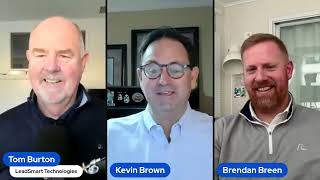
A recorded panel-style episode (YouTube/podcast) hosted by Kevin Brown and Tom Burton with guest Brendan Breen (Industrial Supply Association). They discuss B2B marketplaces and e-commerce trends, the rapid rise and practical uses of generative AI (ChatGPT/EINSTEIN GPT) especially applied to CRM and sales enablement, current distribution-sector economic indicators, and promotion/details for the upcoming ISA23 event (April 17–19 in Phoenix). The tone is practitioner-focused and industry-positive, with emphasis on networking, technology adoption as augmentation (not replacement), and member education.
Chapters
Sam.
Kevin, you're on mute, but I know you're saying something really, really, really exciting.
Yeah, I got the words welcome out. Thank you for that. While we had our intro playing, I was muted for a moment there. So welcome, everybody. We appreciate you joining us today. Again, Kevin Brown, Tom Burton of Lead Smart Technologies. Our guest today, Brendan Breen from the Industrial Supply Association. And jump back to that in a moment. A little housekeeping, though. We always like to start with, you know, our around the Horn session each week sponsored by LeadSport Technologies. We're very appreciative of that. What we try and do each week is take the news and events around wholesale distribution, both North America and sometimes internationally. Kind of break that down into some topics related to technology, the economy, M and A activity, sales and marketing, and get some guests with us to really chat about that. So we're excited about that. But what's unique and we're really enthused about as well is in the last few weeks, we've expanded beyond our original format, which was YouTube Live, Facebook Live, and LinkedIn Live, to now having this as a full podcast as well. So if you're listening on the podcast side, we appreciate that. If you're on the LinkedIn or other platform side and you use podcasts, go to your favorite podcast platform and you'll find us there as well. So we're looking forward to today. So thanks for being with us, everybody. Brendan, Tom, how you guys doing?
Fantastic. Glad to be here.
Yeah, we're. We're appreciative of, Brendan, you making the time to be here. I know you're a busy man. You got a big event coming up. We're gonna spend some time talking about today as well. We love having guests. And I'll just say this as well, I love having guests as well that I also do business with, but I can also call a friend. So it's always special when folks like you are with us. So thanks again for that.
So happy to be here.
Good. Tom, you want to share anything before we dive in and start chatting about the news?
Oh, let's. Let's get in with the news here.
To get some good questions and comments with Brendan with us today and feedback from folks. As a side note that I didn't mention, what you're seeing on your screen here. If you're watching live with us is our around the Horn email newsletter that goes out every Friday. If you're on the podcast or in the stream and you don't get that, please just send us a note and we'll get that out to you and get you on that list. But every Friday morning, a few thousand people get this email and kind of gives us a little recap of the week. All right. B2B marketplaces. We've been talking about those a lot recently, haven't we, Tom?
It seems to keep coming up week after week after week. This one was a little, you know, specific into the marketplace area, but again showing the broader expansion, obviously with E Commerce and the fact that, you know, marketplaces doubled over last year based around what the stats were in this article.
Yeah, I mean, 56 billion in 2021 to 112 billion is pretty phenomenal. So I'm kind of impressed with that. One of the things I really liked about that article as well as it talked about, you know, there's 400 B2B marketplaces now. You know, I kind of pay attention to this stuff and I don't think I could probably rattle off the top of my head more than five or six. So now a lot of those might be in, you know, medical equipment or, you know, other arenas that we don't pay as close attention to necessarily on this, this program. But it's pretty impressive to see that growing. So, Brendan, any thoughts on that, what you guys are seeing or your members are getting involved in this?
Yeah, I mean, I think it's. It's a conversation a lot of times around competition is, you know, and capturing the essence of where the end user is is in their journey. And I think that the good news for me and my members is that there is a lot of opportunity to differentiate against the growth of the E Commerce buy. I think that it's an and not an or for what I'm hearing. But it's hard to ignore the trends. It's hard to ignore news like Zorro topping a billion dollars in sales. It's also hard to separate who we are as individuals from who we are as people that run businesses. I don't know about you guys, but I got an Amazon package coming three, four times a week to my house. Sorry, that's not bad. But, you know, and. And for. We've got a fulfillment center that's near my house. And so the trucks are cruising by every day. So it's hard to ignore these facts. But I think that there's a real opportunity to. To differentiate and done well, a distributorship and a great channel relationship beats the E Commerce experience all day, both from a customer point of view and from a profitability point of view. I think a great distributor relationship with good Partners can be extraordinarily profitable and beats the profits of an Amazon or a Zoro or any of the other major marketplaces any day. So that's a great point.
Well, first off, I wanted to thank you for making that comment about only two to three Amazon packages, because I'm not. My wife said she was going to tune in today, but if we could just get two or three a week, that would be phenomenal. I'd really welcome only two or three a week. But I want to put you on the spot a little bit and there's no wrong answer here. So if you're not familiar with this.
Don'T worry about it.
But you know, Zorro has a program as an example. And for those of you that may not be aware, Zorro is a subsidiary, basically online marketplace that's a subsidiary of Granger. Right. So they have just about every SKU you could imagine that you might need in an MRO scenario in that. And so stuff that Granger might not even carry in their catalogs or carries. But Zorro has a program to partner with wholesale distributors and get them involved in the, the fulfillment side of it as well. Are you familiar with that or do you know of any of your members that are involved?
Yeah, I mean, I'm familiar with it in the essence that I've probably read the same pieces that you've read. I think it's a wait and see type of thing. I think that if the intentions are what they are, it can be a bonus to what you're already at and it can be a quick fix to getting into the e commerce game for some of those that might not have those capabilities already. But I think that people should be careful and watch what the details and how this grows in a long term way. I think that you want to maintain who you are as a business and not just look for the easy fix. Sometimes it might be absolutely right. But remember who you are as your core business. I think is what I'm hearing from the people that are exploring these types of things. But again, for some it solves a problem. And I have no, I have no knowledge that there's anything nefarious in here other than growing market share and growing sales for Zorro, which they run a business like everybody else. That's, that's what they should try to do.
And obviously you don't have a dog in the hunt, right, because you're kind of both sides of that coin. So that makes perfect sense. What's interesting for me about that, you know, and it's we're starting to see some change a little bit in this. But when we talk about wholesale distribution and it really doesn't matter whether you're selling, you know, ovens and refrigeration units into restaurants or universities or you're selling hard hats and safety glasses or conveyor belts.
Right.
Historically, this is a very mature market and distribution isn't necessarily fast to adopt technology. We just, that's just spade, a spade. Right. But as a whole, that doesn't mean that individual companies aren't doing a great job. But you know, what's interesting about this is that I think a lot of people are looking at the, that process and then even looking at the opportunities of things that they could do in partnership with Amazon. It's really, they're thinking about, well, I don't want them coming after my customer and I don't want to do. You know, that's the enemy. Right. And sometimes you need to partner up with the enemy to really make big things happen.
So, yeah, I mean, I think it's, it's partnering one way is looking at it, the other way is saying, you know, it's not. That doesn't mean that my customer is gone. It just means that maybe there's a, a need that I don't even want to try to fulfill for this customer that somebody else can take and so.
Don'T sell that brand or stock that.
Brand, but I don't deliver that way or I don't, I don't. That's not the kind of relationship I want to have with my customers. So I think that it's, it's. People need to be cautious. They need to understand the partnerships that they're getting into and they need to understand how this is evolving. But ultimately it's all end user driven, you know, and so we have to face the reality of that and then adjust accordingly.
Yeah.
Brendan, do you see the kind of both manufacturers and distributors leveraging marketplaces fairly equally? Is it more weighted towards manufacturers or distributors or any, anything that you're seeing trend wise there?
I don't know, Tom. I mean, I'll be honest, we don't collect data on that. I think anecdotally I talk to people and certainly some are leveraging it. Some, some are not. I think obviously on the supplier side there's probably a little bit more, you know, emphasis there. But yeah, so I don't have any data to support it. I think that it's happening as we all assume is happening, but, but nothing definitive that I could say.
Okay, fair enough. And before we go forward, I wanted to say good morning to our friend. Brandon here is with us today. So good morning, Brandon, or I guess it's afternoon for you. So thank you. And Kevin, should we move on to the next.
Yeah, I think we're going to continue just before we jump, we'll, we're going to continue to, on a regular basis, have these conversations about, you know, the online selling and, and marketplaces and so forth. But there's no question, right, about it that the end user wants an omnichannel experience. Right. They want to choose how and when they want to buy and, and where they want to get that. And they have expectations of delivery time. So I know we've got plans. I've got a call on Monday with Brian Beck Brennan. We were messaging together with Brian earlier in the week. Brian's one of the kind of consummate experts on B2B marketplaces. So he'll be on with us again shortly. And I think he may even be coming to ISA 23. So that's my squeezing his arm right now, twisting his arm right now to get him involved with you guys as well. But we're going to continue this conversation, probably going to do a webinar again like we did with him previously. So standby for that information, too. Yeah, let's jump ahead.
One of our favorite topics.
Yeah, yeah. So share kind of with everybody that the three of us were talking about Chat GPT prior to coming on today with some of the different uses and, you know, before we dive into this and we even talk about it related to CRM, you know, this is what a phenomenon, right? I mean, I just have a little note on the side of my screen. You can see me turning my head, you know, this, this Chat GPT or open, you know, AI and the Chat GPT tool became available in November within, I think they said, I think it was within a month they were at over a million registered users. The statistics that this shows is that it took Netflix three and a half years to get a million users. Airbnb two and a half million, Facebook 10 months, Spotify five months. Instagram is and was two and a half months. The iPhone took 74 days to get a million users. But Chat GPT, it says, took five days. So what a phenomenal, you know, that this, this has become. So, Tom, you're the computer scientist in the room here, and why don't you give. Before we kind of dive into the deeper ramifications, how we've been using it both at ISA and at Lead Smart. Why don't you kind of give the overview of the generalization of AI and chat GPT and, and what it does and how it differentiates as it relates.
To Einstein or, or.
No, let's put Einstein over for a moment. Let's just talk about the. Joe, we have a lot of new people that have registered to join us today that may or may not have familiarity. And we've got our good friend Kirk Klein asking about going to, we're going to dive deep into the CRM side of that shortly. Kurt. So thanks for the, thanks for the question, but just Tom, once you kind of give an overview of that, you know, traditional search versus AI driven search and so forth.
Yeah, I mean, so AI, obviously in GPT standing for generative. Right. It's looking for. It has a tremendous amount of data that's been pulled off the Internet. But then there's, you know, know billions of basically relationships between that data. Right. So if you think about search, you look at a website and you're saying you're searching a website and you're looking for keywords on that website. So whatever is there is there, but there's really no relationship. Right. You're not tying things together and putting all the relationships and the, you know, the different aspects of those things together. So I think as we talked about last time, there's about 167 billion parameters currently around the OpenAI system that ties all that together. That's going to, I think it's 167 trillion, don't quote me on that, but it's some extreme big jump here in the next, actually next about 45 days. So there's a lot of different relationships and parameters that the system is using to come up with these intelligent answers. Right. Search is not super intelligent in terms of answer. It's just like, it's like a phone book. It's a big online phone book. I know I'm exaggerating, but now we're getting intelligence and we're using this to not only just get one transaction, but is you. I think what's really caused the chat GPT to really take off as the killer app of the, of the decade anyway is the fact that you can continue to interact with it and get it to be smarter and smarter and smarter as you go on. You're carrying on a conversation essentially online with it. So you can't do that with search. You can't go and, you know, do that conversation within search. So it's just a, a very different experience. I guess you'd say than what we're obviously have been used to in our traditional sort of usage.
Good. I want to add one thing to that. And then we're going to kind of talk about some use cases with Chat GPT. Then we're going to answer Kurt's question and what we kind of why we brought this up about Einstein GPT. I was having lunch yesterday with a business associate who's also a customer, who's also an investor in LeadSmart. And we were talking about it. He had just been reading about it but hadn't played with it yet.
And I just.
The simplistic explanation that I gave to the gentleman was, you know, when you search something in Google, Google gives you a big list of websites. When you search through Chat GPT it gives you a summary of all of those websites.
Right.
And you're not looking at. I have to go click here and try and figure something out. And I know you get nervous as a, me as a business development, sales and marketing guy and you know, you as a, traditionally as a computer scientist get nervous when I start talking about technology to people. But that, I mean that's just, I made it just literally that simple because we've started talking earlier in our discussions before we went live today, we started talking about some of the use cases in both of our businesses. But I've asked it just some just general life questions that I might typically ask. I'm not going to say the word because it's a digital or a remote assistant next to me on my desk and if I say the name starts with an A, it'll give me an answer to something. But you know, some stuff that I've wanted to just ask that device I put into Chat GPT a few times and the data that comes back is astounding.
Yeah, no, it's, it's pretty smart. So let's, let's talk a little bit about how this relates to CRM and sales. So, and this is something I've been studying and been looking into well before this announcement about Einstein GPT. So what this is is Salesforce announced yesterday or the day before that they're adding into their platform. And as you may or may not know, our software is built on the Salesforce platform, which is allowing OpenAI and chat GBT to be embedded right into the Salesforce platform. Now a lot of questions were like, well, what does that mean? How is it going to work? What would that do? We don't know exactly. But I'll tell you my two cents on how it's. I Believe it's going to work. Think about if you're a salesperson and you come in, in the morning and you basically go into your, you know, CRM and you, rather than looking at a bunch of reports and things like that, you basically say, what should I be focusing on today in my territory as an example and have it come back with a whole bunch looking at all kinds of different information about what you already have in your CRM or in your own internal data world, but then potentially matching that and mixing that with stuff in the external world, data wise. So you may have things about existing customer or existing prospects that it's saying, yeah, you really need to follow up with him and it looks like this person would be close to buying and you know, whatever the case may be and then you could have a conversation and go deeper on that to actually work out what it is that you're focusing on. Now why I think this is a super big deal is if you remember, Kevin, I think it was two weeks ago when we had Lee Richards on and we were about how sales, you know, distributors and, and manufacturers are hiring more. They're not hiring salespeople, they're hiring engineers and customer success and people like that to become salespeople.
Yeah.
So think about this, right? If you hire a salesperson today in your business, a quote unquote salesperson, what do you do? You give them product training. You do training to get them to learn the products and the business and all of that and you hope that they can take their sales skills and meld that with the training that you provide them. But now if you're hiring people that already know the business, already know your products and you can give them this to enable their sales capabilities. Think about the game changing ramifications of that. Now you don't have to worry about hiring a experienced, sophisticated salesperson. You can hire an engineer, you can hire a product SME or whatever and then allow them to use things like this to help facilitate how they go about their sales process.
Right.
And I think it's going to be game changing and how we go about, you know, we've, we keep talking about the importance of having salespeople as a trusted advisor. This enables that to happen by who you hire and how you put together. So that's how I believe it's going to affect the industry and, and relate to CRM. And we're already seeing that. I just see it will.
Yeah.
Manifest.
I want to, I want to get some of Brandon's thoughts on this in a minute, but I Wanted to kind of unpack a little bit more about what you were just saying. Right. So take a big step back. Right. Because not everybody that's with us knows who you and I are. And our sponsor lead smart company we work for and what we do. So we make a CRM customer intelligence and channel collaboration solution. So what that means is we have versions of our system for, in our platform for manufacturers, for distributors, and for independent manufacturers reps or sales agents. And we also have an external partner portal platform that allows them to communicate with that. We built that as a vertical specific solution for wholesale distribution and manufacturing because there is not a lot, truly nobody that in our opinion, that reaches the level that is capable of being reached of offering vertical specific solutions for wholesale distribution. What we chose to do with that, because every piece of software in the world is built on a platform of some sort is Leadsmart has what's called a global OEM partnership with Salesforce. And through that we built our technology on their platform. So as we're talking about this, what we're, and why it's important to us is there are so many pieces of this that can feed into how we can expand CRM. Now I want to just kind of give you guys a quote and then I'll make an additional comment on something Tom says before we move ahead. So the, the founder and CEO of, of Salesforce said this the other day in a, in a tweet. He says it generates leads, closes deals, and no more boring, boring reports. Now it'll write them for you with the jokes included. Right. Now a little bit of that might be, you know, a little over the top to get started, but those are the kind of things we're going to see. When that tweet went out in Spanish, it says the CRM that knows your customers better than you do and can even predict their next move. So to Tom's point, right, we're still going to need to train that salesperson. If we sell cutting tools or medical devices, they're still going to need to learn product specific knowledge because the end user expects that. But these types of tools, I think are going to accelerate the learning curve to get people to do that, right? I mean, imagine what we could go do just in our customer training time and our, our company by going out and scouring a trillion data points about SAS software, right, to develop training materials. And then the other side of this, to your point, right, is how to write the right letters. And Brandon, you can maybe talk about your marketing team, how they're using chat GPT already maybe kind of share a few ideas.
Sure, sure. So, yeah, I mean, I think that it is, it is intriguing software, no doubt. I think that everybody heard the same type of messaging that Salesforce is putting out that it can, it promises to do these things. And so I definitely spent some time testing it, asking it basic questions related to our industry. But also like, like you asked it some personal questions and it's astounding. I mean, it definitely is, is crazy. I feel like I could be, instead of being authentic right now, I could be reading from the Chat TPT script and I could say, hey, I'm going on a podcast today. I want to talk about the association and tell me what I should talk about. They would give me talking points to say, which is cool, right? Us internally, we are using it as blank paper accelerator. If you have to write a lot of copy, if you have to write marketing material, if you have to do things like that, it gives you a great head start in order to get some words down on the page. And you can ask it questions like make that, you know, insert three jokes into that, into this press release and it will do that. So I think that I agree with Tom that it is game changing in a lot of ways because it's tremendously cool technology and the applications are only limited by our creativity and our ability to apply it to different things that we do. What we don't know yet is the response from customers and the response to bottom line. I think none of that has been tested at this point is everyone can say you will not need to hire as many employees, but you're only going to do that if your bottom line reflects it in better sales or better savings long term. So I think that the applications are there. I don't think ChatGPT is going to go away. In fact, I think it's the companies that understand how to leverage it the best and understand its limitations. The ones that are going to be able to be, you know, harnessing the power of it the right way. It's not a, it's not just going to solve all your problems. You don't need inside sales anymore or you don't need outside sales, or you don't need to understand the nuances of humans. I mean, all of these things are, are still a huge part of how business is developed, but it's not going away and it's going to be part of it. I think that Kurt's question is a great one and it's going to impact our industry and those companies that understand how to leverage it and not. Not try to replace what they currently do with it are the ones that are going to succeed.
Yeah. So there's. You said some great stuff there and I want to address Kurt's comment, but then Brian's as well, and I'll introduce who Brian is momentarily. But there's a whole piece in this that we didn't talk about that's in this, this article. And there's so much about what Salesforce is going to do that's yet to come. But in general, right, there's that concept. I think they use the term human assisted AI. Right. AI is going to do a lot of stuff. And one of the things that, you know, Tom's team is looking at closely right now is, you know, this tool can write code, it can do a lot of different stuff on the technology side and it may replace some people. But I think what the comment in this article was is that if you're concerned about it, you need to be learned about it replacing you. You need to become the human that oversees and influences the AI. Right. Because there will always be that factor. I think what's really unique for me and I want to. This, I think will address, hopefully Kurt pop back in if this doesn't really address fully what you're saying. And with what we said so far in this comment today, I'll just use our technology, right. We connect our CRM and customer intelligence platform to our customers. ERP systems, data warehouses, marketing automation tools, e commerce tools, and we bring that data in and then what it does is it kind of pushes it out into the different areas of our software that says, here's what I need to be working on with my partners, here's what's going on with all of my leads, here's what's going on in the company, and I know what I should go do with my day based upon this data that is limited today to the company's data. And Tom addressed this just briefly in his discussion early on. Now, what we look at this, Kurt, in, in the CRM side is now we're leveraging all of your company data again. Marketing automation data, erp, social media, whatever it is, we can kind of look at some of those things, but now we're going to take that and relate that to basically the rest of the Internet or over a trillion data points to bring that into your organization. So now, Kurt, if you're, you know, thinking about where you want your team focused on selling sword performance, you know, electrolyte beverage, then that's. That trillion data points along with your own company data. That's that big shift that will come within the CRM side of it. So.
Yep, fun, fun times.
Yeah, it'll be interesting.
And agree with Brian completely is that, you know, these are. It's all about, you know, you said it, Brendan. It's all about enabling and it's all about leveraging. Right. So I think I agree with you. We need to move away from this concept of replacing and that all of a sudden we're just going to be this automated. Everything's just going to run on autopilot. It's, it's not that at all, but it does allow us to completely rethink our business models that rethink our hiring strategy, rethink our training strategies, rethinking a lot of those things. But it's still going to revolve around having a lot of, you know, good people in there.
Yeah. And the other thing I will say is that I don't know that there is 100% of replacement for a great customer service person or a great sales person, you know, and, and I think that that's the fear that kind of comes up when, you know, when marketing things like Chat GPT or the plugin that they provide is that it's not, it's not going to do that. I mean, there, there's too much nuance that goes into there and, and ultimately, as more and more users start using Chat GPT and start understanding it, it is, it's an algorithm, right? I mean, it's an algorithm that, that can be manipulated. I saw Ron Paulson's comment here. I mean, it can be manipulated in some way. Not to say that it is, but people will figure out how to optimize the results of Chat GPT at some point and once they do, it loses credibility and it can't necessarily be trusted the same way. That doesn't mean it goes away, it just means that we need to be aware of its limitations.
So Ron that's here with us, we call him rp, is a retired senior exec, recently retired senior executive from Granger. So he kind of has some great insight into, into what this might look like in that setting. So good point here about also meaning that distributors will have to consider the state of the information, customers inventory, product information, KPIs, et cetera. I love that point about KPIs, because if we're looking at all facets of supply chain, so on and so forth with this is now we should probably be rethinking some of our KPIs because we have so many more data points to realize what we should be doing. So we, we need to move ahead because I want to spend some time talking about ISA in the upcoming event. But in this next piece about the cool kids list, which distributors made the Fortune list, a lot of the usual players that we think about. It's worth a read to see, to see that if you didn't get a chance to take a look at that. But I did want to spend a moment on that national association of Wholesalers Executive Summit recap. I was really close to going to that event and now and listening to the recap that Tom Gale at MDM did with Mike Marks. I wish I had gone because it just sounded like a great event. There's a, I don't know, it's a 10 minute recording as well as kind of some written word on that piece that we put in from mdm. But it, it's interesting. One of the things Mike Marks talks about in his takeaways was about distributors using Google alerts and things like that to not just see what's going on with their manufacturers, but to watch and track things like raw materials and so forth. So, so take a look at. And the reason I wanted to stop on this for a moment, take a think, think about that and this is worth a listen if you get a chance to the recording that they did. But now go back to the setting, right? I just heard this the other day and many people probably know this already. Costco has an internal team that tracks and manages raw materials and commodities in the commodities markets. And they have built algorithms that says when the price of corn goes down or the price of petroleum goes down, these are the suppliers we go back to and ask for discounts. Now think about what AI and that type of technology can start doing when you start taking a trillion data points into an algorithm that a distributor could use that says I know I can go back to my cutting tool company or whatever it is and I, my manufacturer friends, I'm sorry that I'm even mentioning this, but think about that, right? When you start tracking all of these different things, it will not be difficult. It's not difficult to do now if you have the background and the people. But this is going to just become something in the not too distant future where the data that's available and I'll just call it, you know, lift the kimono on the backside of the supply chain, right? There's so many powerful things that are going to come from this anyways. Get A take a listen to that if you haven't yet. Let's talk about a few of these others. You know we're getting some better economic news coming which is great. Hopefully that that R word is going to drift away here fairly soon. But you know you want to talk about bullish SRS distribution, the roofing world, 20 greenfield locations last year they opened. That's not somebody that's, that's sheepish and running in the corner to see what happens next. So good news across the board at Worth the large distributor Lyndon in the gas world and so forth. Both positive results coming out of that. So any thoughts from either of you on. On those?
Yeah, I mean kind of in line with what I'm hearing is that the, the R word is is being watched but it's not necessarily being felt. And and so it's like full steam ahead for most people with with very few exceptions. So I think people are positive on the resiliency of at least industrial know is looking good.
Yep. I mentioned this all the time right to Tom says, tells me don't watch the news. Don't watch the news because if you just watched around the horn or, or literally what's going on in wholesale distribution, truly worldwide it's bullish. It looks positive in comparison where we're getting sucked down. Right. Is that you know, cnbc, you know, Bloomberg, whoever looking for the headlines and we're finding these hiccups and but stay focused on what wholesale distribution is doing and it's positive news.
And the only reason I say don't watch the news. Right. I mean this is a very complex subject. Nobody knows. No, no individual knows. No single person knows. And so you just have tremendous amounts of opinions that really have no bearing on anything.
Right.
So just go do what you got to do and you know, ignore the noise is kind of the.
Well that's a good point. Right. Because you, you made a comment when we started talking about this, you know, middle of last year I think and I think you were just saying watch this. It's going to be a self fulfilling prophecy. Right. We're going to talk ourselves into an economic downturn even if it didn't need to happen. So anyways, we could talk about that for days and I'm sure some of the people that are with us today have strong opinions but we don't have the time for that today because I want to talk about isa but we, we always we. Brendan, when you were with us earlier last year I don't think we had done this yet but we Try and every week add a little. I just call them good reads. Right. I kind of watch throughout the week. What did I see in Inc. Magazine or you know, one of the other things that I watch and it might be personal development or leadership or just general business stuff. So that article about overcoming Lead Smart or Lead Smart, well, that's embedded in my brain, huh. Leadership, self doubt. I enjoyed that article. So others might as well. Our regular show list, that's here. If you're listening on a podcast, you can't see that. But some great events coming up and let's segue with that and to spend some time talking about ISA today.
Yeah, sounds great. One quick plug for the MDM M&A. One of our board members, Jane Millard from Turtle and Hughes is, is going to be sitting on a panel talking about M and A activity. And so I encourage your viewers to. To check out Jane's session and the rest of that. That event that Tom and some of the other folks at MDM are putting on. It should be a good event. So yeah, I love to talk about Isaiah 23. If you let me loose, let's.
Let's do that. And then when we're done with that, I kind of want to just get some, you know, wisdom from you on what your members are talking about. And yeah, I was waiting for that. Look, when I said wisdom, I see it as wisdom. But get some wisdom and thoughts from you on what your members are seeing. Because you know, what's unique about you as a more of a trade association? We do a lot of work with buying groups and so forth. And we've got some ad folks. In fact, we've got Marty McLaughlin, the CMO of AD, coming on, I think next month with us. And we've got some great folks. Jennifer Murphy from NetPlus was with us last month. But, you know, you're kind of unique because you have this whole cycle, I kind of call it the wholesale distribution chain.
Right.
Of manufacturers, independent sales agents or IMRs and distributors. And what's great at your events is you really get that mix of all of them where some of the buying group events, you don't get that independent rep feed into it. So talk about ISA 23. We're looking forward to being there. Give us the rundown on it and then let's chat a little bit broader.
Sure. Happy to. So yeah, we're really, really excited about ISA23. We have really taken a deep dive into how we can leverage the power of an event to deliver on what our members are looking for most out of an event. So we did a lot of experimentation last year with testing out different ideas. You know, take pulling back on some, pushing forward others to really gain a better understanding of what works. That people will tell you, but they'll show you in the way that they interact. So ISA22 taught us a ton. And what it taught us most is that the reason why people come to these events and our event specifically is networking, networking and more networking. They want to be able to interface with the people that can help move their business forward. They want to catch up with folks, friends, they want to develop deeper relationships with those that they know. And ISA can play a great role in doing that. Our challenge to ourselves this year has been to facilitate that in a much better way, in a way that provides a little bit more structure and intentionality. So that means it's not just saying, all right, we're all going to be in Phoenix this year, let's shove you guys into a room and let you beat each other up for a couple days. That look, that's part of what we do, but it's not the entirety of it. And so we've done a couple things to add some more structure around this one. We have fully revamped our event scheduling app. This is something unique about isa, is that we give our attendees the opportunities to make specific meetings with each other prior to the event. That way you can get your game plan set, you can understand who you're going to be talking to for how long and what the topic of conversation might be. And you can see their availability, send them requests, the whole thing. So we scrapped our old app for that because it had too many issues that we just could not overcome and it wasn't meeting our members needs. And we developed an entirely new app that's custom designed with our members collaboration. In designing it, we put together a task force to make sure that we can deliver that. So first step is making sure that people can set up the experience for themselves in advance. The second thing is not everything happens across a six foot table. You know, not everything at these events is about sitting down for that 15 minute or 30 minute meeting and discussing what you said you were going to do. The magic of these things is when you have a, what I'm calling casual collision with somebody where you strike up a conversation, then all of a sudden, six months later you're, you know, doing business with each other and you never were looking for it, it just happened because you met somebody somewhere. So we want to play a role in facilitating that A little bit better. It can happen at a reception, it can happen in a hallway outside of a convention. But we can do a little bit more to facilitate that. So not only do we have four receptions that people can meet at, we're also doing a networking lunch where we're going to try and attempt to have assigned seating for lunch to really facilitate that. We didn't know whether it would work, and so far we have like. I think it's like 70% of our attendees have agreed to do it. So I'm excited to see how that's going to work. We also added a golf event this year. Some conversations need to be a little bit more casual and, and lengthy. And so we booked out the course at Lookout Mountain, which is beautiful course, and that will be a really premier event with, you know, cocktail reception lunches, the whole. The whole shebang, silent auction, great prizes. And we're raising charity for the Special Olympics of Arizona for it. So there's also a 5K fun run happening on day two. So, again, all of these things are intended to make it a little bit easier for people to talk to each other, not just because it can be intimidating. You're not going to walk up to somebody. Some people won't. Kevin does. But some people will just, you know, not want to walk up to somebody and introduce themselves and get right into it. You know, that can feel a little bit forced for some. So give people the opportunities to create that. So the networking is going to be great. We've also put a lot of emphasis into the education and made it, you know, I think, contained in one part of the agenda, as opposed to sprinkling it throughout, which was a change from last year. So we're starting off with a big keynote with Bill Walton, basketball legend, which I've heard him speak, and he's phenomenal. Great storyteller, you know, everybody kind of knows who he is. That's going to be a really, really exciting way to start off the event. We're also working with some familiar names in breakout sessions. You know, the guys from, you know, Mike Marks, he's doing two sessions on CRM. One about do you need a CRM one on so you bought a CRM? How do you leverage it? How do you optimize it? Big pain points for everybody, as I'm sure you guys are aware. And then some sessions on technology using somebody is really leaning into the concept of and not or as it relates to leveraging technology in your business. We have somebody that wrote a book on traction. I don't Know if you're familiar with entrepreneurial operating system, we use eos. You guys use eos? We use EOS on our team and a lot of our members use EOs. So we're bringing him on to give a refresher of his research and the next phase of what he's doing. He's calling it Pinnacle. This is Tom Bauer, the guy that wrote what the Heck is eos? Which is like a smaller version of the traction book. And then another session with Russ Shearer from Brooks Group talking about how you can bring in sales into the rest of your organization. I mean, that's a constant battle in everybody's organization. Sales either is sitting out on an island and getting all the credit or, you know, it's something else. So we want to make sure. How do you integrate sales into your entire organization? Great session from the good folks at the Brooks Group. Last.
Just. I'm sorry to interrupt you. I just met Russ a couple weeks ago. We did a zoom call and really nice chat. He lives not far from Tom and we're talking about doing some work together with, with them. So. Great, great group of people.
Yeah. And I mean, it really is. And, and that should be a strong session. The last session is the guys from Dorn Group who talk a lot about go to market strategy. They're consultants in the go to market strategy. And, and really what they want to talk about is resetting the value of distribution. And, and it talks a lot about what we discussed at the top of this session. You know, how do we differentiate against the changing end user and the changing rise in E commerce? There's a, there's a way we can do this. There's a way that that independent distributor, that distributor can differentiate themselves. But it's about resetting that value proposition and making sure that the end users know about it. So really good education sessions, quality networking. Kevin will be there. So, you know, why wouldn't you want to be there?
Right? That's really nice to say. I was just going to sell you that. I, I pity the person who's paired with me for golf. But in. Tom has been gracious. The time has not commented about me in the golf course, but I think that's going to be a great event. And you know, I was going to say last year's ISA 22 in Houston, great event. And so you're talking about how much better this is going to be. I'm, I'm really looking forward to it. You know, we have a booth there, but I'm looking forward to the the networking of it as well. And you, you know, it's interesting. I'll just literally reference people that you know are here with us oftentimes. John Michael from Sterrett. You know, we've been connected on LinkedIn for quite a long time. Chatted a few times briefly, passed at a lot of events, knew who each other were. I had an appointment with the, some of the leadership team from Netplus alliance at the end of ISA 22. Literally I don't think it was a Wednesday early afternoon event was done. We were going to get lunch but we had had lunch with isa and so we just said, well you know, it's, it's five o' clock somewhere. So we wandered into the bar. John Michaels there, we're good friends now. Right. And, and I met probably three or four new people. I think Gary Tucker was going to be with us today. He was in that group and it just kept expanding. But you know what, at trade shows typically we all have much, much bigger agendas and that are critical that we're seeing all of our customers at once or a buying group event. This event. I have found that with some of the opportunities you put out there, the networking is maybe people are a little more relaxed or just not as stressed because there's not very specific people they're meeting with an exact certain time as much, you know, appointments, but not that same leverage.
Well, I mean where we're different than other events is, you know, we're not a, we're not a buying show. And so you take that off of the table and it makes the conversations a little bit less tense. We're also end users, aren't there? You know, and so it's, it's really about channel development. It's about how you bring together as equal stakeholders, manufacturers, distributors and IMRs to better work, work better together to better serve the end customer. And so I think it is really about that collaboration as opposed to, you know, making another sale here. It's really about how you can work closer and more effectively. And so I think it separates us from, from other shows that are, you know, satisfy a different need.
That's great to hear. You know what I was remiss on before we even started. We have know a broad group of people that have joined us. We have some people that, that are here today that are very, very familiar with isa. ISA has also gone through quite a few changes over the last few years. You're, Are you a year yet in your new role?
Just coming up over a year. Yeah, yeah.
So you know you took the reins of this organization, it was kind of going through some changes. I'm extremely enthused to see what you've done since. But why don't you just kind of in closing at a recap, what is ISA clearly right for those who don't know, kind of where has it been and where is it at and where is it's going and you know, what are your plans as the, as the leader, president of the organization now?
Yeah, sure. So I'll try to make this as brief as possible, but I give this talk a lot so I think I can do it. So ISA is, is a 120 year old trade association. We have been around in some name, shape or form as a industry event and association for, since 1902. And what we do is we are a channel association. We're not a distributor organization, manufacturer organization or rep organization. We represent as equal stakeholders, distributors, manufacturers and reps in the industrial MROP channel. So think metalworking, think safety, think jansan, think, you know, whatever might be underneath that category. And what we try to do is create the opportunities for channel partners to connect and develop in order to stay relevant throughout industry change in the eyes of the end user, really the pace of change has accelerated and Pandemic made it even worse. I say worse, but it's the opportunity that's out in front of us. But the pace of change has been dramatic and it requires really good relationships and a forward way of thinking. And I think isa, our charge is to lead the channel forward. Our charge is to make sure that we have all the right people there. So that's the connecting aspect at an event like ours or even within our community. And then the second thing is how do we prepare them, how do we get them ready so that they can face the challenges of tomorrow. So we do things in professional development, webinars, content education and really our focus right now as an organization, me being one year in, I think we took the last year to do a lot of experimentation with, with our model we had. This was our first show back after the pandemic and so we took that opportunity to experiment. We've also reformatted our team. I have a rock solid all star team that supports me and supports its members. We also have, you know, really I think enhanced the experience of our core offering, our number one offering which is the convention. So now it's like, all right, what do we do next? You know, what, what's coming up next? And so we're having conversations around year round networking, how do we Facilitate that. We're having conversations around education. How do we get inside our member companies and solve their pain points where they are? Talent recruitment and retention and is a huge issue for everybody. A lot of turnover in terms of people taking on first time leader positions. You know, what can ISA do to help facilitate that for companies that maybe don't have robust HR functions or robust training functions or even those that do, maybe they don't have channel specific training functions. So we're excited about a lot of the initiatives we're working on. A highlight one just while I have you and it's coming up and we're going to do a much bigger announcement about this in April, but we're rolling out as a soft launch soon an emerging leaders channel certification. So we see a tremendous opportunity where there's this big knowledge gap of those that are going to be taking over responsibilities for parts of your business. Younger talent. And how can we prepare them to not only have the relationships that are going to be the ones that they have for the rest of their career, but also the intimate knowledge of how this channel operates. That's the magic. You can learn about your own business, learn about your own distributorship, but if you're not going to be as effective if you don't understand the end user or manufacturing. So we're going to have part networking, part education and part collaboration. There's like a book club, regional meetups, channel certification. Watch your inbox for it. It's going to be awesome. That's great.
So you heard it here first, right? We're breaking news now. There you go. So in wrapping up isapartners.org is that correct? Yeah. 4-17-19th.
April 17th through the 19th in sunny Phoenix.
Yeah.
Bring your club.
Thank you for bringing that close to California. It's easy for me to get there. I'm looking forward to it. We went over a little bit today, but wow. Thank you for being with us. We talked about so many different things across wholesale distribution and technology and so forth. So, Brendan, thanks. Love to get you back later in the year before the fall event.
Absolutely. Love to do it. Thanks for having me, guys.
And we'll go from there. Tom, anything?
In closing, I'm just playing on crashing the golf tournament, so just, just let me know where and when.
There you go. Tom may show up as Kevin Brown for the golf tournament and then I'll handle the rest. So.
Good.
Well, hey, great weekend, Bren. The best of the family. Little ones doing well, I hope.
Oh, yeah, keep me busy.
We'll see you. We'll see you in a couple of months, and we'll wish everybody a wonderful weekend.
All right? So long, everybody.
More from Tom



What does AI actually mean for a wholesale distributor #WholesaleDistribution


If your systems don’t talk to each other, your AI won’t either #AITransformation




This is why one AI agent isn’t enough for high-stakes decisions #WholesaleDistribution

