Around the Horn In Wholesale Distribution - Episode 64 with Special Guest Ron Paulson
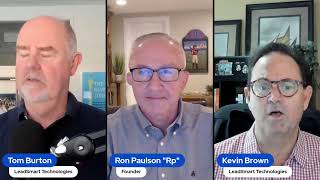
Episode 64 of Around the Horn in Wholesale Distribution (YouTube; Oct 28, 2023) features hosts Kevin Brown and Tom Burton with guest Ron ("RP") Paulson (32-year Grainger veteran, founder of Paulson Advisors). The conversation covers: RP's background and career highlights (32 years at Grainger, roles in branches, e-commerce/product data, philanthropy); current economic signals (GDP growth driven by consumer spending and inventories) and planning for 2024; the Ford tentative labor agreement and ripple effects across an estimated 5,600 auto parts suppliers supporting ~871,000 U.S. workers; urgency for distributors to invest in technology/AI and ‘go on offense’ during uncertain demand; AI topics (EU regulation timeline, data risks, compute/energy/sustainability concerns including a cited estimate that training a large AI model can emit ~626,000 lbs CO2; potential need for new energy solutions like fusion); marketplace competition (Amazon Business scale: cited $35B annualized GMV and R.W. Baird projection to $80B by decade-end; buyer behavior stats: ~60% buy >25% on Amazon Business, 28% buy >50%, 12% none); and leadership/emotional intelligence ("you're always on stage"). Hosts emphasize practical next steps: start small on AI, clean/normalize data, choose trusted partners, and leverage balance sheets to invest now.
Questions this video answers
October 28, 2023.
Episode 64.
32 years.
About 5,600 parts suppliers.
Approximately 871,000 workers.
Chapters
Sa. Sam.
Kevin. I was expecting to see you out dancing with your crutches. What's going on?
No, just the hands. Today I'm in a chair. Still two weeks, almost three weeks in on a busted up knee. In fact, my. My dad, who listens every week, was encouraging me the other day to wear a shirt that my loving, kind older sister, Cindy. Tom, who, you know, texted me the other day. She says, hey, has Amazon been by today? I didn't know. And she sent me a T shirt that's got a stick figure on it that says I do all my own stunts. So that wanted me to wear that today. I didn't. Didn't end up doing that. But yeah, I took a little fall on a trip, a couple of. Not a fall, but it stumbled and busted up my knee and been having it drained and scans and MRIs and so. But I'm getting better, so I'll be standing next week.
Man, look at Andy Mitchell's here from.
A plus A and he's in Dusseldorf, Germany. Yep.
Yeah, you got to make sure you go to the International Lounge. That's the place to hang out there.
They sent me a text message this morning with a picture of a bratwurst, so. Okay, he's right there. I'll tell you what, real quick. We got some great, great people. In fact, rp, we'll talk about you in just a second. Our great guest today, but we got poppies on here. Brian Hopkins from. From the Carolinas is there. Chris, our great friend in Brazil, former 3M executive who now consults with distribution companies. People from all over. So good to see Will Quinn's with us. Nice to see folks popping in. I think when I looked at the folks who had said they were attending just from LinkedIn, forgetting about YouTube and Facebook Live this morning, I think we had four or five countries that people were coming in from. So quite. Quite the. Quite the group coming in today. But yeah, andy's in. So R.P. andy that we mentioned on there, Andy runs the operations side and purchasing and so forth for Mallory Safety and Supply. And he's left last week and headed for the National Safety Congress for Sunday. Monday. I think he left Monday night, flew to Dusseldorf, Germany for the A plus, a big industrial, global industrial safety show. And I think he's coming home probably tonight. So. Good for you, Amy. Road Warrior. So, hey, welcome, everybody. Rp, My good friend Ron Paulson. Great to have you with us today. Yeah, so before we kind of dive in, we always do a little housekeeping. So forth each week before we get started. But, but rp, why don't we just, we try and have guests every few weeks. You've been one. I've been hounding you for what, six months?
I know, brother. Yep.
You finally succumb. So give us the quick background of, of you, where you're at, where you've been, where you're at now with Paulson Advisors, some of the stuff you're doing. And that'll give our audience, that's in our listeners, kind of a little feedback on, on the value that you're going to bring to today's show.
Awesome. Look. And Tom, first of all, thank you so much for having me. And, and you know, Kevin's right. I've been on the other side of this for many, many months. And Kevin, after the show would always say, hey, rp, you know, when can you join us? You always have some good points in there, and we'd love to share your thoughts more broadly with the team. And here I sit between Tom and Kevin. You guys, I don't know, I feel like I'm. It's a rose between a couple of thorns.
I don't know what the word is. Maybe it's not quite that dramatic, but it's. Yeah, you're the handsome one. We'll go with that.
No, but these guys are great. And again, everybody who don't, do not know me. I am Ron Paulsen. Many people call me RP And I know I sent this invite to many of my Granger brethren and wherever they are across the world and different companies and all that kind of stuff, but those people that have been around for a long time with me at Granger Call me RP and Kevin's one of them. 32 years at Granger, started one of those stories in the warehouse at Morton Grove branch unloading trucks right out of college. And I'm sitting there thinking, you know, this is going to be fun. I graduated, I did all construction, all this hard work and, and boy, now I got this company interviewed at 10 in the morning at Granger, and this is when they were doing expansion. By 3 o' clock in the afternoon, I got an offer. I'm like, oh, yeah, this is good, you know, so they say you start on Monday. So I get there on Monday and I'm thinking, I'm going to have an office because I've already worked construction, all kind of stuff. Your first job is in the warehouse.
I'm like the way they handed you a broom, right?
Yeah, just about. It's 100 degrees out, it's August 1988. And I'm in there sweating, unloading these 53 foot trucks now. And I can spend a lot of time about that. But go fast forward, it's the best thing that ever happened and it's probably something I'll share with everybody today. But it's understanding the business in ways that you never did. Because when you understand all the products, the information that's there with the customers demand, there's no better way to understand distribution than actually do it. Right. So fast forward, you know, branch manager. I was a regional vice president for the Great Lakes with Hoppy and a bunch of other incredible leaders. Did that for a while, became president of our finding more oil business which was, you know, getting everything outside of the catalog. And that's now turned into a big business side of Grainger as well as Zorro is part of that, which many of you are aware of. Ran the company's product information for a couple years and. And Tom, I know in many of these shows we always talk about data and how important it is. Well, I lived it and I've done a lot of stuff in my 32 years, over 20 different roles inside of Granger. But the one that was the biggest challenge and basically the thing that fueled granger.com and e commerce was really data and product information. So one of your takeaways today, if you understand anything from what I'm going to say today, it's going to be focus on the information, the data. That's how you leverage it. Sure, we'll talk about AI at some point. So in my last role, I did M and A, created the services inside of Granger, all these different things. But my last role, I got to tell everybody, was one I'm probably more humble and proud of is I worked with Mr. Granger on the Grainger Foundation. So there, you know, I was, I led the national program was called the Granger Community Grant Program. And we gave out money to all the branches. And then we had Puerto Rico with the hurricanes and. And it was one of the most humbling, special things I've ever done. First of all, I got to understand and know Mr. Granger a lot more. So you know, how he started the business. And then secondly, to see so many people supported and given hope and that's a life changing, powerful word that I cannot emphasize enough. But I. And then when that kind of, you know, decided to go a different direction with that, it was time for me to retire. And then I'm like these two guys where I can't sit home and So I said, well, what else can I do? And the biggest thing was, you know, I'm all in innovation and trying new things. And so a couple of people reached out to me through LinkedIn, said, would you be willing to help us with some AI? Another one is an AI software with. It's a company called Bon Jovi. The AI company I do for supply chains, company called ors, AI and then a third one is LED Connection. They do some really innovative stuff with LED lighting. And the reason I tell you guys this is I'm at the point where I want to give back. How do I give back to so many people in a career that provided for me and my family in ways I never thought possible? So I guess I'm going to shut up, because I don't. You probably got some negative feedback. He's talking too much. But that's. That's a quick snapshot, otherwise we could be here for a while.
Tom says, happy, it's. It's you talking too much versus me today.
Yeah, this was quite interesting, Ron.
This was good. You know, I was thinking back about. Was it. Was it Walker Brothers? What's the pancake? Oh, yeah, you're my guy and you're my. My Chicago, I guess we were Libertyville, I think.
Yeah, no, it's in Lincolnshire.
Lincolnshire. So, yeah. So I. We met probably, I think the first time in the very early 2000s when I was a vendor calling on. On Granger on the supplier diversity side. We met I think originally through Nancy Connor and then our good mutual friend and customer of Tom and I, Darren Rossin, kind of reconnected us again a number of years later over a nice dinner in Chicago with a few others. And here we are today, keeping the friendship going. But you're the kind of guy that brings a lot of value to this discussion, so we're really happy to have you. So we're going to kind of dive right in. But you know what? Two things came to mind real quick. Our good friend Chris in Brazil just commented. She said the best inside sales reps in distribution are usually former warehouse.
You know, the products. You know, the product.
Think about it, right? I mean, who. Who better than the person that's pulled it off the shelf, thrown it in a truck or saw it coming back on a truck, having to restock it and seeing the inside out of what's going on with all that makes it makes a ton of sense. And you were probably. What was the timeline, roughly? Ian with the distribution strategy group. Ian Heller been on as a guest with us He's. I think he's actually on with us today. I'm not positive. Ian, if you're with us, chime in. But from that standpoint, were you guys there starting kind of that about the same time?
Oh, yeah. Ian was before me, but he was a branch manager when I was a warehouse supervisor. And Ian and I, I mean, you talk about causing some trouble in the market, but good trouble. We cause good trouble and help Granger in a big way because we did some really cool stuff, innovative stuff, and Ian is one of the most important people in my career. He helped me think about things differently. The guy is just brilliant and he understands things.
That's right.
And that put me in so many opportunities for different roles inside the company and things I never thought I'd ever do.
That's great. So we're going to get started here, rp, because we could chat like old buddies for days here and some of your friends are chiming in on the chat, which is fantastic. Before we do that, let's do a little housekeeping real quick. So for those of you who are with us live again, I'm Kevin Brown. I'm with my co host and lifelong friend and business partner, Tom Burton. We're the co founders of Lead Smart Technologies. Lead Smart is the sponsor of this podcast that we do every week. We do this live on LinkedIn live, Facebook live, YouTube live, and then later in the day the recording of this is available on all of the popular podcast formats around the world. LeadSmart is a AI enabled CRM and Customer Intelligence platform that's developed solely and specifically for manufacturers and wholesale distributors. So away from the traditional off the shelf software that you struggle to make work, we've brought our background people like RP have given us feedback on product, so forth and we've developed a tool solely for distribution and manufacturing. So what we do is every week we send out a newsletter. It's called around the Horn and Wholesale Distribution. It goes out early, early Friday mornings. And we recap a lot of the news that's gone on around the world related to technology M and A sales and marketing, AI, general tools that are general information that's needed and tools and ideas that can help wholesale distributors and manufacturers. If you do not get that newsletter and you would like to two simple ways to do it. You can pop us a note here in the chat that says you would like to receive that. Just let us know your email address. Simple way to do it would be to go to www.aroundthehornpod.com and there's all of our previous episodes there. And you can sign up for the newsletter. So take care of that if you'd like to. So those of you who are listening later in the day on a recording, what you are not seeing, besides these three handsome faces, is the newsletter that we send out. So we're going to talk this morning about quite a few different topics that were in the latest newsletter that went out today. And we're going to dive right into that. So, Tom, why don't you jump in and get us started.
Sure.
Well, I guess we'll start off with our usual economic news. And this was, I think just came out yesterday, is that the GDP grew faster than expected, you know, predominantly driven by consumer spending, which honestly is a bit surprising to me. I'm, I'm expecting to see, I've said it a couple times on the show before is I'm expecting consumer spending to slow down just because a lot of the spending has been driven by debt and debt levels are very high. But it's okay. We keep using our credit cards. So and we keep spending, but also says increased inventory and investment and so forth. So, you know, the train moves on.
Yeah, it's, it's interesting. You know, we, we talk about this a little each week. And I just, I think this just kind of goes back to the, the vacillating up and down, right. We've got this pressure from the Fed wanting to compress and, and get things in line and all the recessionary discussion. And then you've got Wall street and the consumer and manufacturing numbers are looking solid, you know, every day. You know, Tom, you're on, on the phone with our customers consistently at Lead Smart. I'm talking with our existing customers and new prospects. Been on the trade show circuit and not so much trade show, but conference circuit, so to speak, with buying groups and trade associations in the last few months. Maybe there's a little contracting there with, you know, I said this a couple weeks ago, maybe some people are going to hire, you know, 10% fewer people or maybe they're going to push off building a warehouse into Q3 of next year or something like that. But nobody is talking doom and gloom. So we've got these competing pressures I think that we're seeing in Wall street is just saying we don't care about the Fed, we don't care about every anything else. We're just going to charge ahead. And, you know, it's an interesting time.
You know, Kev, my take on this as well is I've read through this multiple Times. And Tom, you've done a great job with talking about this each and every week. And I see the uptick in machinery purchases, all those different things, but I kind of look forward a little bit too. And you think about 2024 and how people are, I don't know, maybe gearing up for that now. So it's supposed to be flat. All the indications are it's not going to be strong. So I think that's one of these things where, you know, now is the time in this fourth quarter is when I know my experience, if you know something is around the corner, may not be so good. How do you leverage your balance sheet? How do you leverage all the technology if you're going to do something, start planning it Now. So when 2024 comes and it is flat, you know, it's the old innovate or die kind of thing. Right. So use this time, leverage it if you see it coming. What are the tools you have in your suite of whether it's expenses or inventory? How do you leverage your balance sheet in ways that people haven't thought of now? So this is when you think about it, when you see it and you know it's not going to last forever. What do you do next as you plan for 2024?
That's great. And even outside of that. Right. What do you. What happens. What happens when we move back into a robust environment versus a vacillating environment, how to prepare for that.
Yeah. I think we have an article coming up. Right. About how to go on the offense and not play defense.
Yep.
More than ever, you know, who knows what's going to happen?
Right.
I mean, we don't know what's going to happen. You see a lot of indicators. But to me, it's like now is the time to go on the offense and I know we're going to talk in that offense. I think, Ron, you bring up a great point. Leverage your balance sheet, be intelligent with your financial piece, but also use it and start thinking even more about how do I be go on the offense with technology, which we have a lot of opportunity to do here today, as we know. So anyway, we're going to touch on more of that here as we go.
You know, even on that topic. Right. And this is, you know, rp, we've talked to you about this in side conversations when we've been on the phone together as friends, and we talked about this morning before we jumped on is one of the real big things that we try and do each week here around the horn is we kind of look at the story behind the story. And I think the bumper intro that our editor does on the podcast is we peel back the onion, so to speak. You know, there's always a story behind a story as you look at these things. And it just kind of makes me think is, you know, our audience here is wholesale distribution and manufacturing. I was at, I had to talking earlier about busting up my knee. I had to miss one of the affiliated distributors, the large buying groups, their electrical event in Dallas last week. But the week that I busted up my knee, I was at one of their events for their pipe, valve and fitting and plumbing division. And I was, I spent some time there. And in fact, we had plans to talk again the following week at the electrical meeting because he was at both, but with Paul Kennedy, who's the President, CEO of Dakota Supply Group and DSG. There are 55 branches, I think is where they're at now. RPD, do you know Paul?
Yeah, I'm pretty sure I do.
I think you're connected there as well. Great guy, been around forever, super intelligent gentleman in the distribution world. But we have in our article today in our industry scuttle, but we'll talk about it more later. They're just busting ground this week on two new locations in two new states. Right. So talk about that bullish mindset within distribution that's like we're going to leverage these things to Tom's point and your point. Right. Let's leverage a balance sheet that we have that's strong, follow those markets where there's opportunity and take advantage of this time.
You know, my last thing, Tommy, before we and Kev, before we get. I know we'll talk more about this, but you know, it's, it's the ones who are able to do that show the weakness of those who aren't. So, you know, my action item for those of you on here, that if you haven't thought about these things because other people are going to make those investments. Right. We're in a competitive landscape. So if you're investing in AI, these different things, innovation, consolidation, all those, you know, data, whatever, you're going to be ahead of it. So when it comes out the other end, those that don't pay attention to that now is ah, you know, and Tom knows just my one phrase, we're all set. That drives me more crazy than anything. We're all set. We're all set. If I hear that one more time, especially in this chapter of my life as I talk to a lot of people no, you're not. So, you know, work with people that are around you to sit there and think about it.
So rp, it's almost like you have a listening device here in my office.
Maybe, I don't know. AI, AI, right.
We have a 22 year old ERP system. No marketing automation, no e commerce, no CRM or customer intelligence or business intelligence solutions. But hey, we're all set.
There you go, brother. There you go.
All right. Well, Tom, we're going to go about an hour and a half today. Just so we know.
I apologize. I'm talking.
Because we're just diving into article number two and I loaded this week's newsletter up. But second article, we kind of tying into this, the economic side of things. We've got two articles to talk about. The first one, here's from the Wall Street Journal about Ford reaching a tentative agreement, labor agreement, six weeks into this big strike. And you know, it's kind of interesting as we look at this. This was just before they were getting ready to hit that Dearborn truck plant right where that f. That big, the big location for the F150. I think they already did. The strike had hit last week at the, I think there's a Texas facility where they're doing the Broncos and some Explorers. But when you hit the mother load of the number one selling vehicle in North America for like the last 20 some years, Ford took action.
Yeah, you know, I, I have a. And Ron, we were chatting a little bit about this. I'm definitely interested in your take as well, but I think Ford made an agreement to buy some time and I don't think it's sustainable to be handing out 25%. I know it's not all at one time, but you know, large raises, I think they needed to buy time, they needed to remove the disruption and are going to do a lot of the things that Tesla and some of the other innovative companies are in the next few years. And I unfortunately, or fortunately, depending upon how you look at this, this could be the end of the sort of unionized traditional process that's going there. My guess is some of the other, you know, GM and some of the other ones are going to do the same thing. But I don't see this as, oh, the union won and look, we got this big deal. I see this as this might be the beginning of the end. And Ron, what's your take on that?
Yeah, I'm with you there, Tom, because I think one of the things that, you know, that was part of my region when you Know, I was the VP of the Great Lakes. And so automotive was, you know, for GMs Chrysler all the time. Right. So we had done some very innovative things with them. And you understood what it meant to be a part of, you know, their supply chain. Right. So you're right. And the thing I would tell you is that what you don't see is that there's, I saw it the other day. There's, there's, there's 5,600 estimated other suppliers that are part of this integrated supply chain that are interdependent with all of the automakers. Right. And that makes up about 871,000 workers. Right. So it isn't just the automotive side. It's everything that's up and down the whole entire supply chain. Right. So when you think about what it's going to take, you know, Tom's right. I mean, 25 increase.
Don't say that, don't say top, don't. Just, just goes to his head. He takes these snippets out and he records them. And Tom's right.
He's going to keep this around. But, you know, Kevin's right too. Yeah. But the challenge is, you know, where are you going to get that? So now, now as an executive and I throw it out to everybody is where are you going to make that up? So now you're going to think about, you know, what a Tesla. So automation, you know, we talk a lot about on this program every week. AI the impact that it can have. I've seen it firsthand in some of the work I'm doing now with rs and I see what you can do when you have big data that can be leveraged and then you bring in automation. It's not a matter if, you know, everybody on this call, it's when. And you know, I was part of grainger.com and funeral.com and orders on all the dot coms that were there. Right. And we had time. And I think that's where Tom was going. We had time because the Internet's coming and you can build, you know, the organization, the people, the processes, the technology, most importantly the communication side of it. But the one thing that it does, it takes time. So, yeah, Ford may have settled this, but what the interesting thing is going to happen is what do they do next? If you start seeing more automation, if you start seeing and leveraging them, AI, if you start seeing vendor consolidation, we talk about 5,600. Well, we're going to have a target of reducing that to 4,000. Well, what does that mean, so all these things are going to start coming into play.
Yeah, I think you really nailed it. And we actually have our two articles here that we were talking about today related to this. And the second one is about the impact, you know, that this will have. And I think there's a couple of factors that come to my mind I want to speak to briefly is one is that interdependency, you know, that interdependent network that you talked about is critical. But before we dive into that, you know there's really an interesting thought and I'm not an expert on labor relations, never been in a union, don't know the ins and the outs of those things. But I think if you apply some common sense to some of these things, there is a tipping point or a breaking point.
Right.
And you've got throughout the southwest and the southeastern part of the US you have factory after factory after factory, automotive factory and not second tier suppliers, third tier, fourth tier, fifth tier suppliers, but BMW, Toyota, Nissan, on and on, Honda and on and on that have these plants that are non unionized. How long can Ford keep, gm, Cellantis keep doing these things where. Yep, we're going to give these increases right into your point. Rp. It's got those numbers got to come from somewhere else. So one of two things are going to happen. They're going to drive it out of the supply chain and they're going to raise prices.
Yep.
If you're driving it out of the supply chain, the attention of those non union plants or the other plants that are willing to pay better are going to get the more of attention from the Johnson Controls, the, the Lears, the all of those people. Right. That are that second tier suppliers. And it just trickles down from there all the way down to a Granger, a Hubbard Supply and our industrial whoever that might be. Right. And I'm just talking about Michigan folks.
Right out of that.
That's just this trickle down effect that we see through that interdependency. So you got to wonder, right, is this model and the Tom's Point earlier, is it sustainable?
Right.
And these companies even survive if four years from now somebody thinks that they can come back and say, well I want a 40% increase over this many years and I know that 25 is the number I'll get because you did it last time.
Yep.
I don't. How's that?
The other thing I'll just add because you know, so many people on this call are distributors and wholesalers and stuff is the other thing they'll start doing is say we're not going to accept any more price increases. Sure. You know, so you know, I got to save money somewhere. So, you know, Kev, I'm not going to accept a 3% increase on your product anymore.
I've had that Granger selling price increase.
Yeah. And then, then what do you do? And then all of a sudden you say, okay, I'm either going to sell to them or not. And if you're not, who else do I go to? Tesla or somebody else? And so the interdependency is you have your spot on. There you go get, write that down. Ding. Kevin gets a spot on. Oh man, it's brilliant thought right there. Because you're right that that will have an impact down the road. And again, as we talked about a couple years. All right. I think this is a four year contract. It's going to take a while for like the, the ship, the rudders moved. But then how does the whole thing start moving the other way, change direction?
Right. Well. And you know, rp, what was that number? I was, I've not read that before and I was quite impressed with it.
I.
What was the number about that interdependent network that you described with the auto industry?
There was 5,600 parts suppliers and it made up 871,000 US workers. So every worker, it was two and a half people support that auto worker.
That's, that's astounding. So let's just take that back to, you know, our audience. If you were to look at a wholesale distributor right now, all of a sudden you got a plant that's closed down for four weeks. Right. There's less bearings purchased, less conveyor belts, less safety glasses, fewer gloves, whatever you want to put to that. And that just works its way through that interdependent network. And it's, you know, I haven't had a chance to talk to any of our customers or friends in the. About this topic in the. We'll just call it in, in the north central part of the country yet. But they have to be feeling it. And then the same side of that is right, that that glove manufacturer is going to sell that many fewer gloves to that distributor. And we just feel that all the way through the supply chain.
I saw it and felt it firsthand when it's happened before. So. And I know, Tom, we want to keep going, but I could talk about this all day.
Well, you've lived it, which is valuable in this experience. So, Tom, any other thoughts that you want to pontificate on this before we move out of the.
No, I think, I think we've covered it pretty well. But yeah, I really do believe we're going to. This is a little bit of the beginning of the end of a shift into a whole new world of automation and technology and optimization. Let's just call it optimization. So.
Great.
Before we move on, though, I wanted to, I like my comment here about we're all set. Ugh. I think we need to make T shirts that have like, we're all set red cross things.
I should have copyrighted, right?
Yeah.
Oh, and Tommy, every time I hear it, though, I, I, and I'm in these calls and I feel like my tongue's bleeding because I'm biting my tongue so much. I, I, I've lived through two SAP implementations, I've lived through, you know, startups, multiple. Yeah. And to hear someone say, well, no, I don't think you are.
There's another, there's another word I want to say there, but I won't.
Well, part of that comes down right to, and I hate to apply this because some of these folks, some of the folks that you hear that response from, you know, obviously it's funny, Mike says he just bought the domain.
AI though. Did he buy we're all set AI or.com?
Oh, my gosh, that's funny. But, you know, it's not sometimes that these people are dumb people, per se.
Right.
It's, they're wrapped, they're wrapped up in lots of other things. But the other side of it is that, you know, RP to some of your comments earlier about, you know, making hay in times like this, right. And preparing yourself for what's coming. Right?
Yeah.
Because the reality of it is right now, if you're not. And I'm so, you know, disappointed.
Both.
We just had this, the distribution strategy group put on the, this AI and wholesale distribution. Right. First event of its type was in Chicago a few weeks back. I really enjoyed being there. Had an opportunity to speak at that met some phenomenal people, was gonna get to give you a big hug and you got sick. And, you know, all of a sudden there's all these people with COVID that were supposed to be there. And I will tell you, there was a quite a large audience that was pretty excited to see you there. I had lunch one of the days with Hoppy and we were talking about wanting to get together with you and so forth. So bummer that you got sick. But through this, what we were really seeing the tone of that discussion and that that event was, you better get on board this boat, right? It's leaving the dock and if you don't, your business will be in question down the road. And I look at these things and say, I wouldn't be so, so aggressive to say you're going to be out of business if you're not embracing, you know, digital transformation and AI, but your business will be a fraction of what it was if you're still around. And so that was really the kind of the key to that, that big takeaway from that event. But I look at these people and it makes me think sometimes is you probably don't know what you don't know that's you're making a comment that says we're all set and you're all set based upon thinking from five years ago.
You're spot on. Or. Or Kev. And. And I know we're going to talk about the European AI, so a little bit. And it's not like you got to make. It's not an SAP investment of millions of dollars. Right. To get started, you know, some of them are online free. We all know about chat gbt. But some of these things, you're not talking about a huge investment. So my council advice, your action item again is do something right whether you are small. My data, you know, the one other thing Tom, I hear is my data is messed up. Well, it's not as bad as you think. It isn't. And the AI tools now, though, I know with the one I work with, they have tools to normalize and cleanse your data. So it's okay. So my thing is get started somewhere because it's coming and you don't want to be. You may not be out of business, but you're going to be far behind.
That's great.
And I think obviously isn't our. One of the articles, but I think, you know, Ron, you were just saying it doesn't. Mindset. A change of a mindset doesn't cost anything.
Yeah. And.
And what? You know, when I was at a show a couple weeks ago and talking to a lot of different people left.
The office for a couple of days.
Yeah. Let me out of the office for a couple days. Which was. Was a bit scary.
But I was.
Everybody I talked to, I tried.
Tom, we're losing your mic.
Every. Every time I talked to somebody, the first thing I tried to gauge was what was their mindset and about this. And it was interesting. We had people that had the mindset that we were just talking about. We're all set not, not, not an issue for me. And then there were other people that were frankly, very concerned and nervous that if they don't do something right now, they're going to be, you know, there was all end of the spectrum there. But, but I think the mindset, like we've talked about is the first, the first point, it's free and then it kind of opens up the door to have a look, a fresh look on things and taking a look from that, from that.
And Tommy, the only thing I'm going to add to that, though, is a bit of caution. Right. Is, yeah, be careful who you partner with. Because, you know, the three of us, and I'm sure many people on the call today, you know, I've sat through so many PowerPoint technologies that my head would spin. You know, so when you are going to reach out to somebody, make sure it's someone like, you know, lead smart or, you know, DM me, and I'll put you in contact with people I trust that I know are going to do a good job for you because you don't want to be into somebody who's going to take advantage of you and then you lose it. So.
And you're right. And there's a bunch of that out there right now. There's a bunch of that going on that you end up at the wrong. You end up making the wrong first step or the wrong first few steps and you're kind of screwed the rest of the way down the line or you can't get screwed. So, anyway, we digress.
But take us to this, the intro to. We don't do this much here on this show, but let's talk about AI for a minute. Just, you know.
Yeah, I mean, this. Well, we can cover this one quick. It's basically, you know, that the, on the eu, they've been struggling to get their regulation in place. Not surprising. My personal, you know, it says leaving any deal off the table until December. My personal take is there'll be probably nothing of substance until 2025 at the earliest for a lot of reasons. I mean, it's, you know, again, we could, We've talked a bit about what I, what I believe is regulation is probably not the right answer, but it's hard to get ahead of this stuff. And I was on a, on a podcast or a webinar earlier this week and I thought it was really funny. You know, a lot of times in webinars and stuff, they put up the disclaimer, you know, don't, don't buy on future stuff.
Forward looking statements.
Yeah, forward looking statements. Their disclaimer was everything in this webinar will be out of date by November 7th. That was the way they started the webinar. And it was like, well, yeah, they're probably right. And so it's hard to get ahead of this kind of stuff right now. And I think they're trying to get ahead of it and what does it really mean? And you know, where does data fit into the regulation? There's just a lot of complexities in all of this. And so I think trying to get, you know, trying to get containment around a regulation model is. I just don't think it's going to happen anytime soon.
Yeah, I think a big part of this is trying to get some parameters in how to manage bad actors. There's people that are going to come on, come around that there's huge vulnerabilities with your data by using their tool. There's all kinds of these things that are going to happen. Remember at the AI event that we were talking about earlier in Chicago earlier in the month, Zach Cass, who's one of the early folks from OpenAI, was in chat, GPT was speaking, really interesting guy. And he said, you know, we've learned a lot in the last. I think he said something about, you know, your Nigerian cousins email kind of triggered the, the mindset that we're a little more skeptical about, you know, online scams and things like that now and we've learned how to have some skepticism in what we're seeing. And he was talking about the fact that the value and the greater good that is going to come out of AI is so far superior to the limited amounts of bad actors that the good will far outweigh. How do you say that? The good will protect us from the bad. And so I think we'll see that. But I like the idea and I want to move on from here because there's a couple articles ahead that we really would like to spend some time on related to AI coming up here in a few minutes, but I think there needs to be some guardrails. I think if you look at what's going on in this country is, you know, we can't get somebody to stand up in front of the US Congress and take the lead amongst all the infighting. So getting AI parameters in place, we're probably going to end up waiting until the EU gets something done and then take some pieces of that and, and molded together. It's kind of makes me think of, you know, so many countries around the world Kind of follow the lead of safety and health standards in the workplace with osha. So many other countries around the world have patterned their systems after the US osha, I think we might see the reverse of that. Is the US patterning some guardrails and parameters, legislation, maybe even about AI and its safety, about what the EU comes up with. So I think we need to keep a close eye on what's going on in the EU and come here every Friday. We'll fill you in.
Hey, Kev, just real quick on that one. The only thing I would add to what you and Tom said, which is, you know, perfect, is the fact that we. We live in a global chain now, right? I mean, the whole supply chain, everything. Yeah, it is. And I think that is a key point that you just made is, you know, it used to be if we had control, our removal area, fine. But the fact there's. The whole world is a part of this now. And so that is another reason to work with a trusted partner. So keep that in mind.
That's good. All right, let's jump ahead here. Amazon Business is all about its B2B marketplace. Kind of an interesting thought that came there and it makes me think in perfect timing for you being with us today, RP as a guest. You were there at the beginning of granger.com right. And find MRO and all of those pieces. And. And I always kind of think back and this is more of a. Of a beer discussion for us down the road sometime. But I just kind of remember that, you know, Grainger, when I first called on Grainger, there was two or three vendors in each category, and it was very narrow. Right. And you needed to. It was tough to get in, especially the. I came in on the safety side of things originally. And then you look at the other side of that. And then they bought Lab Safety Supply. And Lab Safety Supply was, if you had a pulse and apparently might be able to ship something, they would carry your product. And then now all of a sudden, we got the find MRO and now Zorro. We kind of take that model back and we do a lot of things here. And so it becomes kind of interesting. But, you know, everything that I remember reading is Amazon Business. And it started as Amazon Supply was really them looking at saying, hey, wait a minute. I think the number was this was very early on that Grainger was doing about 3 billion in E commerce. And Amazon said, wait a minute, we should own that. And here. Here we sit and looking at the caliber of what they become in this setting. So this is an article from Digital Commerce360 says Amazon Business is all business about its B2B marketplace. And it just gives some good statistics about the growth that's going on in B2B marketplaces there, which we talk about regularly here.
Yeah, and it goes back to real quick is the fact that it goes. Our whole conversation today has been about how do you, how do you. I call it like check and adjust. Right. What are the things you're going to do as a business to deal with the Amazons? I mean, my whole career it was either Home Depot Supply, you know, fastenhealth company. I mean, everybody's coming after you, right? And we always had these big competitive discussions about what do we got to do. Well, you got to try to stay one step ahead. So how do you innovate? How do you get outside of your bubble? And you're thinking, I think Tom, you were talking about that it's a way you change your mindset. And you know, every time Amazon came out, yeah, they wanted Internet. So then we start thinking about is distribution, is there, the concrete and the carpet side. Right. Amazon seemed to want to go after the carpet side. So how do we get, you know, through business to business office supplies. Then it morphed into other things. Right. And so how do, how do you respond and what do you do? And to me, one of the most. Another action item for everybody is how do you get closer to the customer, you know, how to become more intimate, how do you. Is it vendor managed inventory? Is it the vending machines? It's integrated supply. It's relationships, which Amazon is not going to do. So how do we continue to enhance that, to make it closer, better? Because they're coming. It just like, yeah, it's there. I mean, but you have to stick to your knitting, understand what you're really good at and compete that way.
Yep. Well, this was an interesting statistic that came out of that from the survey that had been done by this. Well, it's R.W. baird, right. Investment analyst, had been working on all of this. They talked about, you know, their 35 billion in annualized gross sales through Amazon business. And they were talking about projecting 80 billion by the end of the decade. So that's a pretty substantial jump. But when you start looking at the people that have been involved on this is it. You know, they said 60% of buyers do more than a quarter of their purchasing on Amazon business. That's pretty significant. They said 28% do more than half.
Yep.
And only 12% said they don't Buy anything. And I'm going to probably go back and say that the 12% that says they don't buy anything also says I'm all set.
Yep, it's back. It's back. Right. But you know, the other thing too is, is, you know, adapting to how they want to buy, you know, and everybody, you know, I mean, who doesn't buy Amazon? So if you're buying Amazon at home all day and you go to work and you're very familiar with the tool and what it does and it's going to show up same day. And I think about my days at Grainger where we had what's called the DCOF distribution center of the future. So if you order by 10, you're going to get the product the same day. That was the most innovative thing I think we came out of. It was a lot of heavy lifting. Right. Well, now you expect it. I mean, I ordered some the other night. We had a broken coffee pot. It showed them at five o' clock in the morning. Yeah, I'm like, who does that? You know, but they do. So you adapt to what they do and how they purchase.
That's good. Well, we could spend a lot of time on this, but this next article is pretty intriguing that we have a feature again, if you're listening to us on the podcast and the recording, what you're missing is besides, again, the handsome three faces that are here today is we're looking on our screen at the newsletter that we send out every week. It's called around the Horn in Wholesale Distribution. We try and recap interesting ideas and thoughts going on in the economy, M and A, so forth around the world and bring those back to how that impacts wholesale distribution and manufacturing. So if you don't get that newsletter and you would like to just log into or go to www.aroundthehornpod, you can sign up right there. So we're looking at this article each week. We have what we call tech talk. Great article this week about sustainability problems with AI. We've talked about a ton of different things over the past year. Since we started the podcast about AI. We've yet to talk about the sustainability problems. I hadn't thought about it much until this conference I was at recently. It's astounding what this really actually means to business, to the environment and to energy sources. You guys get a, get a look at this one?
Yeah, no, I definitely did and I have a little bit of an interesting take on this or view on this. Certainly it is a problem. It is a problem, right now because when you go to chat GPT and you ask it to generate images for you or come back with analysts or analyze, it takes a lot of computing power to do that. And AI is a, it's a game of numbers, right? It's all about numbers and lots of volume. So it takes a lot of computing power. And yeah, the computing technology and everything is getting better and better, but it's very, very energy. It uses a lot of energy. I think though that in my opinion this could be the thing that really helps us move to a much more sustainable model for energy generation. And the reason is, is that look who's behind, right? The most wealthiest companies in the world are the ones that are behind driving AI. Google, Microsoft, right, Apple, you know, Amazon, all of those things. For them and for all of us to be able to really take advantage and leverage AI, we are going to have to solve this problem. This problem can get solved by having the right money, the right insights and the right people pushing it behind there. So while I believe it is a problem right now, it absolutely is a problem, I actually will be, believe it will be the catalyst for a solution to the bigger problem with energy and not properly utilizing renewable energy. So the level that it could be. So that's my story behind the story on that one.
I think you're right. Let's throw some numbers at this though, right? Sometimes we get wrapped up and we talk about our thoughts and we, we miss the statistics that were shared with us in this setting. And it says, the statistics that came out of this, it really intrigued me. It says training a single AI model can emit 626,000 pounds of carbon dioxide equivalent from that. So that doesn't mean a lot to me. What it says is though, that figure is nearly five times the lifetime emissions of the average American car.
Yeah, and that's training a large language model. That's, let's train a very, very. That's training a chat.
It says training a single AI model. That's, I'm sure it's a large one, but that, that's, I mean there's dramatic impacts and so it'll take us back to this session. I was at in Chicago a few weeks back, same gentleman that I mentioned earlier, Zach from OpenAI. And he was saying, you know, because he was talking about things like, you know, and everybody has different numbers that they put to things and in fact, I don't know if Lynn Chase was one of the other speakers. She was, she's been joined us on the podcast a couple times recently, if she's here today. Lynn, chime in. I'd love to hear some of your thoughts, but, you know, a lot of people have different views on the, the impact on salts, you know, curing cancer or Alzheimer's or other things like that. Zach was saying 10 years, he said there's just no way that these models as they're building and learning are not going to be able to figure these things out quickly. But he talked about, very, very focused in this presentation about it's not sustainable to get to where we want to with AI and where AI will take us with our current means of generating power. And I think that coincides, Tom, to what you're saying.
Right.
It has to drive this forward. And he was talking about, forget about solar. It was, we can't build enough and prepare enough with solar. He said it's got to be fusion. And he said. Or something similar to that. And what was interesting, he said is the AI models should take us to figuring that out.
Absolutely.
That AI model that will actually show us how we harness that correctly and safely to drive and power these things. But I just think it's one of these pieces that it's that. Again, back to the story behind the story.
Right.
Something we need to be thinking about as well.
Yep, good point, Scott. No, I totally agree. And the fact is, you know, where you start and where you end up. I mean, the evolution, it's the technology, the innovation we've been talking about, the adapting to the new world and what's your energy going to take? So you're, you're spot on.
Yep.
Well, it has to get solved. Right, right. And, and the fact that we've got the biggest companies in the world, not to mention a lot of other companies, but the biggest companies in the world behind this, with the most influence, the most wealth, all of those things. I actually think things are going to get done and alternatives. Yes. And so it's, I think it's going to be a positive. But yes, right now it is a bit of a. It's an energy hog. There's no doubt about it.
Well, if you think about it.
Right.
To your point, Tom, is, is who's. Who has the most to lose and gain? Amazon, Microsoft, Google. Right. Biggest, biggest owners of data centers in the world. Right. They're going to keep growing, they're going to keep expanding. And you can't put enough solar panels on a roof of a data center to solve that problem.
Right.
I think that's an interesting piece, but there is. Anyway, go ahead.
No, I was just going to say you can't solve a lot of the problems that we do need to solve with using fusion or other forms of energy will get solved through the use of AI. So we end up kind of, we end up using our own technology to solve some of these problems as we.
Exactly right.
Good.
Well, we'll kind of jump ahead because of time today each week. We also have on the newsletter that goes out, we have what we call our industry scuttlebutt. Great article. Posted here to Modern Distribution Management. Tom Gale, Mike Hockett and the team over there do some great stuff. This one is an interview with Mike Marks. Never, never will. You hear there's a recording on this link as well as the, the transcript. But you know, when you get Mike Marks going, you're going to get some giggles and some laughs out of it as well. But they talk there about playing offense in defensive times and this really leads back to, you know, rp, your comment, you know, early on in today's broadcast about taking a look at your business. Where are your strengths, where's your balance sheet at and what do you do in times like this that are and I'm not even going to call them defensive times necessarily. I'm just going to say maybe unsure times.
Yeah.
And there's some good kind of key points and some steps that people can take in there. Good article. Another piece in there about dxp, the large distributor that's refinancing some debt and raising some money to fund some more acquisitions. You know, they're an interesting one that announces this a little bit more than others sometimes about what they're doing in that setting. Anything. I don't know if you looked at that one. Rp, Any thoughts or any background experience with EXP on that? Not really.
Except, you know, the, the biggest thing as we talk about is, is leveraging. You know, again, I thought the AI being able to, you know, being able to have that kind of insight to understand what you need to present to somebody who's trying to raise money. So in order to cash comes to mind. You know, how do you use treasury, how do you do those different things to fund acquisitions? So there's so many tools that AI can be used to that. I go back to earlier sessions we've had where we're just beginning to tap into the power of all what can be out there when you do acquisitions, funding, all those different things.
Yep, very good. All right. So in the last one, we had referenced the last article there before in the, in our industry scuttlebutt about Dakota Supply Group. We talked about Paul Kennedy and his great team. They just great big new hire recently from a major publicly traded competitor of a new VP of sales and marketing there. So DSG is doing some great stuff. Congratulate to them. We're going to skip that last article about B2B buyers and digital bank for the buck. And every week we have though a good read that we call it. And it's funny this week, for the first time ever, I think we're mentioning, I've never heard, seen anybody in this household, in my home, care about Taylor Swift until she started, started dating a football player. And my wife's following their antics right now. But this is an article for Inc. Magazine and it really talks about emotional intelligence and the whole thing behind it. We don't need to spend any time on it really is, you know, the, the crux of the article and the reason they mentioned Taylor Swift is there's video of her cleaning up the, the Kelsey family suite at Arrowhead Stadium, you know, and picking up after herself. And the point behind it is, yeah, you know what, there might be somebody who has the job to clean up or the job to do this or that, but that doesn't mean they need to do it for us all the time and that we can't be involved in, in being involved in the little stuff too.
So I gotta, I gotta comment on this one because this is something like this is near and dear to my heart. So I don't know how many grades of people are on the call, but they're going to get this. When I say, when I was a vp, we should always have the national sales meetings in Florida, right? And we always have a meeting before the meeting. Because I would sit there and say, okay, everybody, you know, many of you are starting your first big show. Tom, Kev, you guys have been there. There can be some alcohol involved, there's some parties, there's some eating, all that kind of stuff. And don't do anything that HR is going to get involved where next thing you know you're going to make a career decision, right? And so my comment to them, and I tell you here is you're always on stage. So I know hobby's on the call. And they one day there may be a book come out of this because there was 35 little quotes. As you guys can tell, I talk a lot. And of the other 35, number 12 of that list of 35 is you're always on stage because it's so true. Somebody's Always watching you. Rather than you're at work, you're at a show. You know, whether you're cleaning up at a suite after a football game, somebody's always watching. Now, the other thing I saw in there, too, is, you know, so many times in the corporate world, it's about relationships, right? If you're in an elevator, you're walking hallway. Hey, Kev, how are you doing? Tom, how are you? It's those little things that make you a better person, a better leader. We talk about emotional intelligence. I'm all in with that stuff. And if I see someone, you know, doing something, and my boys, I have three of them. I think one's actually watching today. They know what number 12 is. You're always on stage, and whether, you know, you embrace that or not, it's a big deal. It's almost as good as. We're all set now. Yeah, well, I think that.
I think that's solid with what you're saying there. What comes to my mind, though, you know, as well, is it doesn't matter what role you have in the company. I mean, look at your career, rp, Right? Started in a. Started in a warehouse and left as a bigwig. And, you know, common courtesy.
Yeah.
People as human beings, right. At the end of the day, we all have. Everybody has problems in their life.
Exactly. Right.
It does not matter if you flew into the meeting on a jet or your car barely runs. Right. We all have issues, and we all have challenges in our life. And I think, you know, I don't know who coined the term emotional intelligence, you know, but it seems like in the last few years, we just see that thought all the time. And to me, it just seems like, you know, be a good human, you.
Know, and, you know, Kev, I said I had to. One guy I mentored, and he said, you don't understand. To your point, he goes, I was at a very dark spot in my life thinking about doing bad things, but you stopped me and said hello and chatted, and you basically saved me. And I can't remember what it was. I know who it is. But I'm sitting there going, it's something as simple as that. Everybody's carrying something in their heart, in their mind, in their life, and just, you know, you know, be someone's miracle that day, you know, that's it. So anyway, I keep talking too much. No, that's great.
So I think. Let's wrap up on that. That's a great, you know, be someone's miracle. Right?
That's not.
I don't think what people come to the podcast for. Pretty awesome if you stop thinking about that for a moment, right? And I. I wrap up every week by, you know, saying, have fun and do good things and be kind. Right? Be safe. And so that's, that's the key, right? And so I think this wraps us up well for today. So, again, around the horn and wholesale distribution. We're here every Friday morning live. Once in a while, we have a little break like we took last week because of travel schedules and some things like that. But we try in every week when we get together. Tom and I here to bring people like RP together with you. Rp, thank you so much for being with us.
Appreciate it. It's been fun. Thank you.
I only have one request for you is will you come back with us.
Again in the new year if you have me? You know, may need to add another half an hour, but.
I always tell people, right. And I mentioned this to you earlier, everybody that comes on with us as a guest is nervous. Do they have something to add? And, you know, is it going to be okay? And we always end with they had fun. And that's why we're here each week. But again, I'm Kevin Brown. This is Tom Burton. Our great guest, Ron Paulson. Tom and I lead the team at Lead Smart Technologies. If there's anything we can do to be of help to you and your company or your organization and your digital roadmap, we'd love to talk with you about that. We're here every week, LinkedIn live, YouTube live, Facebook live on Friday mornings and on all the popular podcast formats after that later in the day, after the editors get done. So everybody, have a fantastic weekend. Do good things, be kind, be good humans, and we'll see you next week.
Perfect. Hey, guys. Number 12.
More from Tom



What does AI actually mean for a wholesale distributor #WholesaleDistribution


If your systems don’t talk to each other, your AI won’t either #AITransformation




This is why one AI agent isn’t enough for high-stakes decisions #WholesaleDistribution

