Around the Horn In Wholesale Distribution - Episode 51
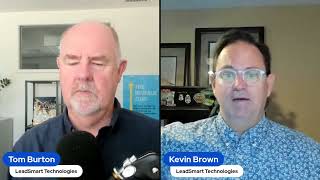
Episode 51 of "Around the Horn In Wholesale Distribution" (YouTube, hosted by Kevin Brown and Tom Burton) reviews current trends affecting manufacturers and wholesale distributors: supply‑chain disruptions (Canadian rail/port strikes causing multi‑day delays and ~US$12B in stuck goods), rising B2B e‑commerce (cited US$1.4T in 2022) and marketplaces versus owned e‑commerce, active M&A with monthly deal counts in the tens, and accelerating AI/tooling (Microsoft Sales Copilot) that will hinge on data readiness. The hosts stress planning, customer experience, digital transformation (ERP, CRM, marketing automation, e‑commerce), and data/API strategy (ETL concerns and API pricing risks).
Chapters
Sa Sam.
Good morning.
Good morning. How are you today?
Doing well, doing well.
Glad to hear it. It's Aloha Friday for me. Got a little flowery shirt going.
Do you have a Mai tai?
You know, that last week for the 50th episode, you know, my Thai Friday.
You know, one more year, one more episode.
So, yeah, we gotta figure out what we're gonna do for next week. Right. We've got David Gordon on, I think with us next week. So maybe we need to do some, something exciting, but we'll get that figured out. So welcome. Tom. Good to see you today. I think as we talk about what's on the agenda for today is, you know, I'm going to call it planning. Planning, Planning and optimizing, whether it's supply chain or technology, I think is going to have a theme kind of threaded throughout the day that will be advantageous to the discussion. So would you agree, kind of when you looked at the articles we're going to discuss?
Yeah, no, I think there's definitely some, some commonality which is, you know, kind of looking at, looking ahead and looking at what are some of the things to avert and also take advantage of opportunities. So.
Good. Well, let's, let's get ready to dive in. Before we do that, let me do our little weekly intro. So again, I'm Kevin Brown. I'm with my lifelong friend and co founder of Lead Smart Technologies, Tom Burton. We are again a CRM that's AI enabled customer intelligence and sales enablement platform that works solely and exclusively with manufacturers and wholesale distributors. We get together every Friday morning live. Both Tom and I are in California. We're about three hours apart from each other, but we get together every Friday morning where we have taken the opportunity to discuss what's happening around the world in the economy, in mergers and acquisitions, in technology, all of those things. But we talk about how they can impact manufacturers and wholesale distributors. We send out every Friday morning at 00:30 Pacific Time our around the Horn and wholesale distribution newsletter. We consolidate a lot of the interesting news from the week going on and how that again, that impacts manufacturers and wholesale distributors. And if you don't get that and you would like to receive that email, then just let us know two ways you can make a comment here today and request that, or I guess there's three ways. The second way would be email. Hello, lead smart tech.com or we just published last week a website for our podcast and live broadcast here. It's called aroundthehornpod.com and you can see all of our previous episodes as well as request the newsletter there. So if you don't get those, let us know. We'll get those out to you right away. The one request we have for you if you're with us today or listening on the podcast, is if you like what you hear, click the like button, leave a review, share with your friends, let others know, and certainly give us feedback on what we're doing. So enough of that. Anything to add to that tomorrow?
No, I just. Well, good morning to Brian. I think he's out in Dallas today trying to get you. Trying to get rid. Get out of the heat. Brian and Will, greetings from Naperville. And yeah, if you're online listening, jump in. We'd love to hear from you. And I think we're going to have a lot of good conversation today.
Good. So one last kind of piece before we dive into the news is if you're listening to the recorded version on any of the podcast platforms anywhere in the world, we're excited. I think last week we had six or seven countries that were listening in on the podcast. We saw in some of the results. But if you're listening in, you're not able to see. But what we're going to have up on our screen here momentarily is we're reviewing that newsletter, so you might hear us talking about very specific articles. If you're interested in getting what those were, just reach out to us. If for some reason you're not able to see the screen. But right now, that screen just popped up. So let's just kind of chat about item number one tomorrow.
Yeah. So seems to be a weekly conversation about who's on strike or who isn't. But, you know, this article, rail fright, real easy for me to say. Rail freight from Canada to US Continues to drop after port strike. So sounds like it's sort of a hangover, I guess, a bit on what happened there, you know, Kevin, what, what's. What is going on?
Yeah, so, you know, it's interesting. Right. And, and the reason we're talking about this is, you know, bigger picture implications. Right. And you brought up a great point. Here's my compliment of the day. I'll try not to do another one for you. But, you know, you brought this up a number of weeks ago and said, you know, one of the core premises behind why we do this each week is to get the story behind the story. Right. So this is, yeah, pretty straightforward. There's, you know, a freight issue with the rail lines in Canada right now, but there's A deeper picture to that. So we talked, you know, last month we were worried about the threat of the port strike in the west coast here. Most importantly the L A Long beach port complex which I think is still the third busiest. If you combine those two ports, third busiest I think in the world, say third or fourth major impact.
Right.
We're getting into the business some of the busiest freight times of the year right now. Well then in Canada they actually went on strike. They weren't able to avert it. They've been on and off strike now for a number of weeks that is now impacting the rail lines in Canada. Well, okay, most of our listeners. Right. And certainly the people on with us today are here in the U.S. well guess what? Some of the biggest chemical manufacturers and so forth from the US specifically in the north central part of the country or what we sometimes refer to as the rust belt chemicals and additives that they're using are coming through the rail lines from Canada. Well now what we're seeing is that they've got a seven and a half to nine day delay depending on which port you're looking at in Canada. I think it mentioned in the article There's $12 billion worth of goods that are sitting waiting to get in. And what they're saying is I think it was, it's going to take them three to five days for every day of the strike to recover and get supply chain networks back in place. So take that. Right. It's pretty dramatic. Those are big numbers. It's going to take a bit to get this back up to speed. Right.
Yeah. Well, and that's interesting. The three to five day for every day. Right. What that shows is truly the hangover or the impact of what can occur.
Hangover is a great, great term.
Yeah. And I think, you know, maybe we're always in a hangover one way or the other from some of these different things that are there. But again this just goes back to some of the stuff we've talked about week after week after week having different strategies for your near shoring, your offshoring, understanding those things and, and just looking at them from different, you know, different perspectives.
Well, I think that's a great point. I think to go with that. Right. Is, and this is why I was interested in this particular article is, you know, we just averted this UPS strike. I think they had till this Monday where they were going to be able.
To.
Where the strike was supposed to start. You, I think we talked about it last week, you know that literally they were, you know, during practice sessions for how to pick it. And roll that all back, though. Right. Look at the potential perfect storm. You know, you and I were. Spoke about that this, this earlier this morning. Right. If we would have had the west coast port strike going on, the Canadian port strike and a UPS strike, we're crippled.
Yeah, Right.
At some level, now we think about all the freight problems and the shipping problems that we had during COVID and the tankers lined up, you know, all the way down where I live, you know, 40 miles south of those harbors, and we were seeing tankers lined up down here offshore. It's just. It's just crazy. And then when we relate that back to.
Right.
What our topics and what we discuss here every week, which is, you know, how these things impact manufacturers and wholesale distributors. You want to see, you know, the movement of a UPS truck. Watch him in an industrial area or an office complex. Right. Our focus group that are with us and wholesale distribution and manufacturing, there are UPS trucks moving in and out of there all day. I saw some statistics earlier in the week. I wish I would have written them down, but the, the amount of shipments that go through wholesale distributors of how they're getting goods to their customers through UPS is crazy to the. I mean, it's. It was 80, 90%. Which is why earlier this week, before the strike was averted, the national association of Wholesalers was starting to urge the White House to step in on this UPS issue.
No, that it would. There's no doubt it would have been seriously crippling. And it looks like we dodged a bullet there, which is, which is great.
But.
But again, it seems like every week there's another flavor of the day of this kind of stuff that's, that's coming into play. And it's just, you know, I don't know that it's ever going to be perfect. Maybe it will be for a period of time, but, you know, things don't stay the same. Right.
So, yeah, UPS has a big. A big hub about 15 minutes from my house. And I was kind of thinking maybe I'd go be a strike buster and go do some evening and weekend, you know, UPS work. Because this podcasting thing doesn't pay that well.
Yeah. So, yeah, that would have been smart. You could have Ubered, maybe Uber your car over there and.
Yeah, perfect.
Perfect people up and drive them back and forth. Yeah.
So that's very good. Well, you know, and Will Quinn commented here, you know, Yellow Freight is struggling, too. And this is just, you know, the thing we have to be encouraging Everyone to be paying attention to. Right. And why we talk about this is we just have to stay on top of these things and, and a well oiled machine from a supply chain and a distribution standpoint are the people that are going to be able to weather these things and staying on top of it and planning for it is key. Very good.
All right, ahead here we're sliding ahead.
All right.
So we're going to kind of jump around a little. Looks like a little bit here from technology to economy and so forth. But this is along the. Well certainly right in the wheelhouse of what we talked about with Brian Beck a couple weeks ago and about distributors more and more moving to a marketplace. Right. A marketplace being a place where multiple, many different manufacturers, many different distributors can be represented or different products can be represented in that marketplace. And what I found interesting about the article is there was some confusion I think with, with distributors thinking, well, is it, do I, if I have my own e commerce site, should I be in a marketplace?
Exactly.
Or if I have, if I'm in a marketplace, should I have my own e commerce site? And the answer isn't A or B, it's all of the above. Right. You should have really be thinking again, this goes back to we're going to talk more about customers in a minute. But it goes about meeting your customers where they're at. Sometimes they want to buy or do stuff or shop on your e commerce site, but then they may purchase on the marketplace because of maybe freight shipping, you know, just like you have with Amazon. We've talked about prime, all of that kind of stuff. So it's not an either or in this, in this world. And I think this article spotlights out a bit.
Well, you're right. And before we even dive in further on that, let's talk about the numbers that go with this, right. B2B E commerce sales. This article was astounded me with the number. $1.4 trillion, not billion, $1.4 trillion in 2022. Right. Now let's take a step back, right. You and I together, we're co founders and business partners and this show's sponsor Lead Smart Technologies, we talk every single day to and typically on my end of the company, you know, multiples 3, 4, 5 different wholesale distributors and manufacturers every day there are probably half of them or more that we talk to on a consistent basis. And these aren't necessarily small mom paw shops. These are some very large, you know, well known national presence distributors who have extremely limited or zero E commerce presence. So when you look at, to me, it's just astounding. $1.4 trillion and there is a large percentage of the available market in this setting that hasn't even dipped their toes in this yet. So that number is just going to skyrocket as things continue.
Yeah, absolutely. No, we're, we may seem that we're, it's a very mature thing, but we're actually very early in all of this. In the, in the world of distribution. It's very early.
Yep. And what's interesting, right, And I think what people are starting to get their heads around, one of the quotes from this article, you know, it was talking about E Commerce changing the game for distributors and said traditional models often were limited to geographical locations based upon physical presence. Right. I am located in Southern California. I have a warehouse in San Diego, maybe I have one in Las Vegas and I have one up in Santa Barbara where you are. So great. I cover California, fifth largest, I think it is, economy in the world. It's nice to have a big piece of that covered in a little bit of Southern Nevada. When I open up to E Commerce. Where am I at now? If I do it right, I'm global. But interestingly enough, I don't know if you caught this. If you did go ahead and comment about, you know, they were talking about brand recognition and that being a huge value of the marketplaces because if you're on the right marketplaces, you automatically get some credibility from that. Many thoughts, Tom, on that.
Yeah, no, there's definitely a halo effect in a lot of cases by being on the right marketplace.
Right.
And also not just the brand aspect of it. But again, we've talked about Amazon, right. People using, because they have prime or the shipping or the, or whatever their negotiated rates are to be able to leverage that across the marketplace. Again, it's knowing the objective of each channel. Right. A marketplace has its objective. An E commerce site has its objective. A in person branch has an objective. There's multiple, there's different objectives for different channels. So it's understanding each of those objectives and then looking at that again more from the customer perspective, which I know we're going to talk about here in just a second. So I just thought there was some good ideas. Good food for thought in the article here. Yeah.
So I think the key for me is looking at this is that expanded reach piece. Right. We've had Jennifer Murphy with NetPlus Alliance Buying Group with us and I know one of her members that she has talked about a number of times is Jay at Ohio Power tools. And here you have. I, they might be two locations. I think they're one location, but they have, they're in marketplaces. They have a phenomenal E commerce presence. And they're on TikTok, they're on Instagram, they're on Facebook, they're on YouTube tool demonstrations. Building a brand out of a single location in Ohio. Right. And now they're shipping probably all over North America from that. So there's countless examples. That just is one that came to mind. Jay joins us here and listens on, on the show here and there. But it's astounding to me. What I, what I really liked about this though, is in, in this ties back to something that, that you talk about regularly. When we get together here, we've talked about with multiple guests. You know, we know buyers are changing. Right. The statistics aren't lying. I had an opportunity earlier this week to participate with ISA and their, their Omnichannel sales execution session. We talk about experience. Right. You, you reference experience all the time. I thought this was powerful. It says buyers expect and demand more from their purchasing experience and they have no problem switching suppliers to if those demands are not met. And it said 40% of business buyers reported switching vendors in the last 12 months.
Yeah. Well, I've said what, you know, we said on previous shows. Right. The customer experience is more important than your brand.
Yep.
And what I mean by that, your brand recognition or your name or whatever, obviously those statistics back that up. We're going to talk more about that again in a second here. Tom has a question.
Yeah.
Do distributors participate in online directories to help elevate their presence in search engines? What's your take on that?
Well, I think they absolutely do. And I, I think that maybe.
I'll.
Call that phase zero almost. And where they could get. And I think that's appreciative of Tom's question with that because we got to start somewhere. Right. And building a brand is critical. But as we get to that, you know, you start kind of there, start building that credibility up, if I'm understanding Tom's question correctly, is that's nice to be listed in places, but then it's what do we do next?
Right.
What are we doing in our.
You're in a search engine. Where are you. Are you clicking through to a website or an E commerce site or.
Right, exactly. And then ties in from that. Right. Is our, our search engine optimization plan.
Right.
How are we going to execute that? And then are we. Maybe we're not selling on our own Website, but maybe we're doing product features and videos and so forth. Those are some, there's you know, steps and plans. We're going to talk about that in one of the other articles a little bit about easing into some of these things. So yeah, directories like that is a great place to start. But you know what becomes really interesting is when you look at, not just, you know, we automatically think about, about Amazon but as Brian Beck, you know, our, our in house e commerce guru will, will call him, you know, Brian talks about he could probably rattle off seven or eight different marketplaces depending on, you know, where you're at. Right. There's, there's very much tool and fastener marketplaces, there's chemical marketplaces, but one of the great places that people can kind of also participate in is drafting, I'll use the term off of Granger's energy. And we're going to, we've got a piece of the newsletter today about Granger's growth last quarter and they have their Zorro marketplace where you can actually be part of their network and help them fulfill to the end user. So there's a lot of places to go with this and to Tom's point, you know, directories and so forth is a great place to kind of get started. I think you referenced this a little bit Tom and maybe just before we move on, maybe expand upon this a little bit. You know, it's not A or B and it's not A, B or C, right.
It's, it's not, it's, it's, it's again looking at multiple channels, looking where your customers are at. And I, and I'd like to even use this as a way to dovetail into this next article about M A, right? What, what better way? You know, and the reason this is related to M A, right? M A, if you're selling, you're looking to sell your company, clearly you want to maximize the valuation of your company and your enterprise value. One of the ways to increase enterprise value is obviously showing that you are growing or have strategy for growth. What even if you're a small, like you mentioned the one in Ohio, even if you're a small regional or local distributor, but you want to be able to kind of spread your wings a little bit, put your tentacles out, get a bit more growth. What better way to do that by testing the water with some E commerce or some even directories as Tom was pointing out there, and show that you're increasing that reach in that. And so maybe you're going from A small geographical area to a bit larger geographical area. You're not going national or something overnight, right? But all of these allow you to do that. And then looking at, so the strategy is, okay, what is the geography that I'm trying to reach? Who are the customers that I'm trying to reach in that area? Then how do I use the different channels based around that strategy that I'm, that I'm trying to accomplish? And obviously that's going to vary by what you're selling and, and your, you know, their company and your customer and so forth. But that's the basic structure, straw man of building the strategy.
That's awesome. So, I mean, let's, let's take this down to brass tacks, right? If you're a wholesale distributor and you're contemplating that, whether it's because of lack of a succession plan or retirement or whatever it is, you're contemplating selling your company in the next few years, there are still a lot of national companies that have not cracked the code on E Commerce and there are a lot of small regional players out there that have. I look at the acquisition models, right? If we're doing two, three, maybe four times EBITDA and then all the clawbacks that would come in a deal, right, that says, oh, well, you know, your family's getting paid this or the cars this or whatever it is, right? There's just tons and tons of clawbacks or takeaways out of a deal like that. You want to maximize your, your valuation on an exit, be the company that somebody can help you can help somebody leverage to the next level for their larger organization.
And you know, as we talked about data, get it, get your data, act together, do those data. We have talked about it once or twice, I don't know, somewhere in the 50 previous episodes. But anyway, and it's. I do think it, and I think maybe we can use this to kind of move ahead into the M and A report. But, you know, M and A is still happening, right? There's a lot of private equity money out there. There's a lot of M and A still happening. I'm sure there's a lot of companies and a lot of distributors out there that are considering like, okay, well, is this something that I should be thinking about? Should I be considering, you know, looking at that opportunity, right? Again, if you're going to, you want to maximize your value and things like data, things like the stuff we've just been talking about things of understanding that customer, all of that are all things that when an acquirer Comes in. Yeah, they may look at your EBITDA or your profits and all of that, but there's all these intangibles that you're pointing out that are really strategic. Right? They're strategic intangibles that can really, really increase your valuation. And we've had numerous conversations with private equity groups or things like that recently. And I would say more and more emphasis is being put on those intangibles now than even the, hey, just look at the raw numbers. I look at the spreadsheet here and I see the raw numbers. The multiple on those raw numbers is being really, really influenced by those intangibles that are there.
No, I like how you said that. So you kind of eased us in. All righty, to the next article. For those of us that those folks that can't see what we have on our screen here is modern distribution management. If you don't follow subs or subscribe to MDM do so great, folks. Tom Gale and his team, Mike Hockett has been a guest with us. We're gonna have Mike on again. And they just published some great stuff. But what they do is they do a quarterly M and A report because they track and manage with their large team watching what's going on across the industries. And so they're tracking the PE groups, the venture capital groups that they are investing or acquiring, and then the deals done inside. You know, we're going to talk about some of these numbers, but we spend time and I'm interested in your take on this. Right. We almost every week we open this show talking a little bit about what's going on in the economy. Right. Are there, are, are there some levers and cutting tools? I think last week we had a cutting tool report that, you know, suggested manufacturing is going to be picking up. We, you know, the Fed, you know, burped again this week, but, you know, the stock market kind of said, you know, flicked him in the air and said, yeah, we don't care. And hopefully the Fed's going to be done soon. But we talk about some of these things and it just. I'm going to get going to go Dirk Beverage on you here for a minute and get a little passionate about something. It was so great having Dirk with us last week. But, you know, I look at the industry that, you know, our sponsor and the company you and I work for, Lead Smart Technologies, the industry we serve about manufacturers and wholesale distributors, right? And we have a lot of folks that are related to plumbing, electrical, industrial that, you know, kind of comes where My background is and, and you've been doing a lot of work here in the last few years. But we have people now from, you know, food service, equipment sales, produce brokers and things that are, that are joining us each week. The whole concept of distribution, right, or channel, 75 cents out of every dollar around the globe goes through a channel. I love being involved in this business because it's what drives the economy. And you know, I'm going to rant here for a second, but when you look at this is we continuously get good news about M and A and about the strength of this market. You know, 40 deals announced in April. This article talks about 37 in May, 27 in June. You know, Mike Hockett that I commented on a moment ago said in this article he thinks every says anything over about 20 is a healthy marketplace. Back to, you know, Dirk Beveridge's comment he talked about last week. You know, he calls it the noble calling of distribution. You know, these folks are what makes the world go around. It's pretty cool.
Yeah, no, absolutely. And I, I believe that we're going to continue that. We've talked about this. I believe we'll continue to see the M and A and activity continue to pick up for. Yeah, lots of different reasons. You know what you were mentioning earlier about some companies, some local companies having their E commerce act together, whether it's data, E commerce, AI, a lot of bigger companies, their speed, what I call speed to sophistication, they move slower because they're just bigger little companies can become more sophisticated and more technically relevant faster. And that's very attractive to a bigger company that's trying to break in. So again, there's a lot of intangibles that go into now this M and A. And so I believe we're going to see the volume of deals picking up, but I think we're going to see multiples picking up. We're going to see multiple or values of dollars going in the other way. So again, so far so good. Everything seems to be, you know, June was down, it said a little bit.
Yeah.
But you know, again, things keep moving along in summertime, right. There's seasonal, seasonality and stuff like that as well. So.
Well, I think your point, right, your comment about valuations, right, this is, you know, because when you're in the M and A world, right, you and you, we talk about this oftentimes offline is it's the buy versus build concept, right. Do I want to go in and try and compete in this new market or Do I want to acquire somebody and if that company that I could acquire is doing much better than I am in a certain category that I need to be moving in the multiples change. Right. So good. Well let's jump ahead a little bit more about digital transformation in our next article. Right. Because after that we get into some deeper tech stuff which.
Yeah. And I think we can zip through this one pretty quick because we hit a lot of this on the previous conversation. But this is another kind of looking at that, kind of a complimentary to that E Commerce article. Put customers first in your digital transformation. As I said a minute ago. Right. Your customer experience is more important than your brand. People argue about that, but the proof is certainly coming out more and more. Right. It's all about the customer. If the customer is not getting the experience they're expecting, they're. They have no problem finding the experience that they're expecting and leaving you and going to look for the other.
They will get what they want.
That's right. So you know what it's saying here, right. Is if distributors are not willing to adapt to the changing needs and wants of customers, they'll be leaving money on the table and losing customers to more forward thinking competitors. And again it goes some detail in here. More information on this. This is I think a great summary of a lot of things that we've been talking about week after week after week. But it's happening and you know, more and more. And again I. And we do this with our conversations we have with our prospects and our customers. I always want to look at how do we use this to help increase that customer experience. Right. Even as from CRM and Customer Intelligence, Customer relationship management, hence the name. There's how do we use this to improve your customer experience? How do we use this so that you have more data and analytics to know if those customers are creeping away? Right. Because it can happen in a blink of an eye.
Yep.
And without even knowing it there. So anyway, I don't know that we need to spend much more time on this.
There's a couple things I wanted to hit on before we go.
Right.
This is an article that was published in Industrial Distribution. It was written by Mike Marks. Mike Marks is the busiest retired guy that I've ever met and he will tell you that he has failed miserably at being retired. But he's constantly on the go. I was messaging with him last week. He's going to join us before the end of the year. But Mike's prolific in his speaking and so forth. So if you don't follow Mike on LinkedIn or on any of the platforms, you should probably do that. But there's two things, Tom, that I think are extremely relevant to what Mike talked about.
Right.
He was talking about building a roadmap and all of these things, but he talked about competitors, and he said, even if you're not changing what you do, odds are at least some of your competitors are. And he said distributors that invest in technology for improved customer experience, better visibility and increased sales opportunities will get the lion's share of available business. Right. And I'm going to say now and moving forward, sure. The, the issue here is if you're not digitally transforming, you have to question your opportunities for growth. And I hesitate to say survival, but certainly survival at the level you're at now. And so Mike made one last comment in here that goes with that about looking at the competitors is he said, look at your customers. And he said, if you are behind on digital transformation or technology enhancements, if you're behind what your customers are doing, the first thing to focus on is catching up. Now, that's not a topic we've really talked about before. We talked about competitive things and the pressures and the need to digitally transform. But you know what? We need to stay upright, up, up to date with what our customers are doing.
Yeah, I mean, you know, keeping up with them, you're saying, versus the competitor.
Well, I mean, it's, it's a global picture. Right, right. But we haven't really, in my memory of our discussions, we've not really talked about necessarily a wholesale distributor trying to make sure they're at least at the level or of what they're, you know, because they're selling B2B, right. They're selling other businesses.
No, I mean, if the customers. And customers willing to jump. Right. Where. Where could they be jumping to?
Yes, exactly.
Right. And. And I think that's, I mean, we have that right in our world. We have to constantly be looking at. And, and so, yeah, where. If they're. And it's easy for them to jump, where are they likely going to jump to? Is it another regional. Is it a marketplace? Is it a. Right. I mean, who knows? Right. It can be for different purposes, but yeah, I think that's great to know. Where, you know, what are the different places and what are those two things that are doing that could lure those customers over to the places that are there? So, yeah, absolutely. That's kind of just part of your strategic overall, you know, understanding of the, of the business and the landscape.
Yep. Well, and you know, I think the whole concept on digital transformation, you know, I, I like to talk about it from the, I call it the four pillars. Right. Of, of high quality erp, you know, modern smart AI enabled CRM that looks across your business, not in silos within your business, but takes all of the silos and brings them together. Marketing automation and E commerce are kind of the early four pillars that, that people need to be looking at and you need to be having a strategy for that moving ahead. So very good stuff. So I think that slides us right into this. Right. Because part of digital transformation is going to very kind of quickly tie into AI. You know, we don't spend a lot of time, you know, talking about AI.
Yeah. I think in our, as we move from 50 to 100, we need to spend more time on AI. So maybe we should just call it, you know, AI around the horn or something.
Yeah. But you know, I, I've got, I've got some vacation I want to take soon. Maybe we could, maybe we could build a, an AI version of me that can just kind of drop in with you when I go away.
That's a little bit scary. And I'd be interesting to think what Will and Brian and Tom and some of the other guys online think about.
Those people, some of those that know me.
Yeah. Well, is Andy on? I think no, no, no, no.
None of my critics. So let's talk about this.
Yeah. So you probably all heard, right? Microsoft released, I think it was a week ago or a week and a half ago. They didn't release. They announced, I guess is a better word is their whole copilot suite. I talked to somebody at Microsoft earlier this week. It doesn't sound like the Microsoft Office stuff will probably be released until later this year, early next year, but they're releasing pieces and one of the things they released here was the sales copilot, which is a tool that you can plug into different CRMs, ours included, but that you can use for again, generating emails, text messages, customer insights, those types of things. What I find interesting about this, and this is just the beginning of it, I don't know, we're old enough to remember when Microsoft Office, you know, Word, Excel, all that stuff came out way back what, in the late 80s, early 90s, somewhere in that and how game changing that was to, you know, typewriters and everything else. Right. Everything that we did changed everything that I, I believe we're going to have a similar seismic shift as these AI Office products or business tools start coming out because all of these are driven by these prompts. Right. And knowing how to use these tools to get the output that you're looking to get. And you know, I spend a lot of time on this and I feel.
Tom, we lost you.
How about now?
There we go, man. The world needs to hear what you have to say.
I thought you just muted me or something.
No, no, no, no. We need to hear what you have to say here.
So anyway, my point is, is that this is going to be the first example of the sales copilot piece of a tool, a business tool that's going to be driven by generative AI. It's going to be driven by prompts. Obviously, data that we've talked about is super important to all of this, but this is just the first of a lot that's going to be coming out over the next six to nine months from the biggest, from the. I mean, I would assume almost everybody on here uses Microsoft Office in some way, shape or form.
Yeah.
Or they use teams or they use Outlook or all of those things. And these are all things that are going to be extensions to those very, very soon.
So do you remember, I mean, and I, I'm not asking you for a date or exact year, but roughly when Microsoft office launched.
80S, you know, somewhere mid, mid, mid.
To latter part of the 80s.
Yeah, yeah, something like that. Yeah.
So. So remember Clippy?
Yeah, sure. That little great paperclip thing.
Yeah, yeah. So that would pop up in Outlook or I think you're trying to do this, right, that little paperclip with eyeballs. Well, I mean, think about that. Everybody hated it, but that was like the very embryonic stages of where we're going. And now what we're looking at is this. You know, I, I'd like to discuss a little bit further because I think this is powerful to the people that are with us and it's, it's something that, you know. Well, I want to talk about what is a co pilot really and how will these things work. And, and you're certainly much more of an authority on that stuff than I am. But I want to, I want you to take this from a spin of some conversation we had offline related to Lead Smart was recently was you said something in a conversation we were having about, you know, 10xing our marketing capabilities or something like that. And I, it got me thinking and I looked at my own productivity and I think my comment to you was, let's figure out how to 2x my productivity. I don't even worry about 10x but talk about a little bit. When we think about productivity and the things that we can do with what these co pilots can really help us with eventually.
Well, a simple definition for a co pilot, right, Is just in the AI world, it's a tool that helps you get something done more faster, more efficiently. So I could have a co pilot to help me write an email, a copilot to have me write a blog post, a copilot to do customer reporting or customer insights, right. I guess the sky's the limit. So the goal is, is that you have sort of your right hand co pilot with you or co pilots is really what it is that's going to be able to help you using intelligent AI capabilities to get stuff done a lot more efficiently. Right. And if you even look at, if you saw, if you saw the Microsoft announcement on their Office copilot, one of the examples they showed is literally taking a Word document and saying, create a PowerPoint presentation out of this. And it created this beautiful PowerPoint presentation based on a Word doc or even just somebody putting in a prompt and say create a PowerPoint presentation that talks about, you know, my sales numbers in this spreadsheet and then boom, it creates this beautiful PowerPoint. Right? If you were going to do that, you know, think about that now. If you're going to create a investor presentation or a board presentation or a prospect presentation, you might spend a few hours putting something like that or, or.
Hire a third party, right?
Or hire it. And literally. And think about how this is going to have. These prompts are going to be incorporated with the brand of the company. So you're getting the brand of the company and the voice of the company like that in there. So that's what these co pilots are. That's the simple example of it. You're going to hear this term over and over the number of co pilots that will have. In the same way we have, you know what, sometimes hundreds of apps on our phone that do certain things, right? We will have hundreds. And I think this is a downside, but I'll save this for another day. We'll have hundreds of copilots that we'll be able to have access to. The question is how we use those efficiently and not get overwhelmed in the same way you can with apps on your phone or something like that.
So in our, in our L10 meeting, our EOS L10 meeting on Tuesday, are you going to show me with probably product roadmap that we have an app to manage, coming to manage co pilots?
Yeah, I, well, we, that's just going.
To come right for somebody.
Yeah, yeah, no, absolutely. And, and then obviously there's the mashup of the co pilots and how they work together which is the whole concept of agents. If you think about agents, the term agent in AI world is really just a mashup of co pilots that are working together to accomplish a series of things all at one time. So that's, that's you know, down the road and but there's a lot of work going on that as well.
So to be able to use this particular system from Microsoft, right, to help you drive your business forward, you need to be either on their platform or related to one of the other other major platforms and or CRMs out there. That there's the kind of niche, small industry specific CRMs are going to struggle with this for some time probably. Right?
Yeah. I mean they're obviously they're going to support the more market leading platforms. Right. So they can't, you know, they have their own Microsoft Dynamics CRM but that's small compared to Salesforce platform and some of the other ones that are out there. So yeah, I mean, and this is true, right, is your Office products. You know, we've talked a lot about integrating Office products into CRM for email or Calendar. Well that's child's play compared to some of the things that will be able to be. You'll want to be integrated because if you are generating emails and you're generating, you know, whatever it may be, you want to record that and have that data. So the integration capabilities also become a bigger and bigger. Anyway there's a lot of dimensions to this but this is just the early stages of it and I think over and again I talked to somebody at Microsoft earlier this week. I think as you go into next year you're going to see just a tsunami of this type of stuff coming out and it's going to be interesting. I think it's really, really going to change business because so many people are relying on Microsoft pieces.
Well, I mean it's interesting right. We use it internally exclusively at LeadSmart.
Right.
We do everything internally and Excel and Word and Outlook and teams and so forth. And so I'm pretty excited you know, as you, you know and, and as you mentioned earlier, right, this Microsoft co pilot is going to work with Lead Smart Channel Cloud, our CRM and, and the Customer Intelligence tool. So having that I, I like ecstatic about. In fact we have a, a call that you let me join with your developer team on Fridays and I can't wait to Have a little bit of this discussion in our call later today with the development team. So I'm, I'm enthused about this, but I think what we want to look at with this is back to kind of the story behind the story, right? Is platform matters, roadmaps matter, understanding where we want to get with these things matter. And technology. Technology is changing quickly, specifically right now, exponentially quickly, tied to the tools we have available through AI. But yet we're stuck in a lot of areas in legacy technologies, which kind of leads us to this whole fiasco that's happening at Reddit related to APIs. And I think the takeaway, and we're going to the story behind the story right now in this relation discussion about APIs. I'm going to ask you to dive in on this with your background, but is, you know, that's legacy technology and there's so many unique things happening in the world right now. We need to be paying attention to how we move data, talk about data regularly. Let's jump to that next article.
Yeah, and just to wrap up what you're saying there, right. The punitive punishment, if you will, for choosing wrong technology platforms in the past has not been as significant as it will be in the future because you're going to find yourself locked out of things that you really would love to not be locked out of. And, and I think that's why it is important to really look at a lot. There's just a lot of variables into this. It's not just who has the most features and functionality or whatever. When you're picking technology, platform really matters, integration capabilities matter, data capabilities matter. And you know, obviously the, just the ability to leverage some of these AI things tying to that, this Reddit API, this is not a new article. I think this came out in June.
Going on for a number of months. It's a big deal.
So if you don't. API stands for Application Programming Interface. Simple answer, what that is, is how do you connect from one software application to another and get its data right? So Reddit, if you know Reddit is like a big online search, you know, social media community, all that, lots of people on there, they have, they have an API that allows other software vendors to extract data out of Reddit and use it in their software application through their API. Well, when chat, GPT and open AI came out, they really wanted to tap into Reddit and Reddit's like, well, wait a minute, this is valuable data. If you're going to tap into Reddit's data with Our API, you're going to spend, you're going to pay an arm and a leg. And so they literally, I think they raised the prices of their of acts to use their API like I don't know, 100 times or some absurd amount. It was like a ridiculous amount that they raised it because they're like, hey, if you want our data, remember we say data is the oil of the future. Right? If you want my oil, you're going to pay a lot for it. So.
Tom, can I interrupt you for just one second? I'm sorry to do this to you.
So.
Let'S think about this, right? We could replace Reddit with any software vendor that you're API into.
Absolutely.
So replace whatever the name is of a software vendor that you're working with on APIs. And again, this isn't to say APIs are bad, right? There's alternatives, there's different things going on. But pick any of your software vendors and you could drop Reddit in here real quick. I don't want to move forward about talking about them raising the price because this isn't just saying somebody went from I have to pay $300 a month to $325 a month. I know they went from somebody that was paying, I think maybe close to nothing to it was going to be $12 million a month.
Yeah, it was some crazy. Right, right. And so, yes, I mean, I'm very good example of that. Replace Reddit with anything.
Yes.
In your organization. The reason that I wanted to touch on this article is so up until the recently, right, no one gave a crap about their data. That's the long and the short of it. So it was free, it was a commodity. Hey, if you want my data, great, go get my data, you can use it, right? It was a value add. Now with AI, everybody cares about their data because data is the fuel of AI. And Reddit being one of those. Well, we're seeing this now starting to trickle in to business software. I'm not going to name names, but there are several well known players in the wholesale distribution space that have either raised the price of accessing their API, are considering raising their price of their API access, or in some cases making it not available at all unless you're a certain level or a certain piece along the way. And I kind of call it a data war. Right. The API is basically turning off the pipe. Okay.
It's a kidnapping risk, right. Or a hostage risk potentially.
Yet APIs are the fuel of a lot of the things that we've been talking about. So what I know we're talking about with our customers is, look, APIs are critical in your business, but make sure you're going in eyes wide open and look for is there other ways and other opportunities to extract data that you need from one application to another without leveraging their API. Because all of a sudden you could be in a situation like a Reddit where you're either paying little or nothing, and all of a sudden you have a 25,000, $50,000, $100,000 bill for accessing data through the API and people say, well, it's my data. You're right, it is your data. But you're getting it through the software that you've purchased.
They own the pipeline.
And they own the pipeline. The only tip I would say is that as you're negotiating contracts with your vendors or you're talking to your vendors, ask the question, put in some caps on API pricing. Most people don't even think about it, right? They might put a cap on their purse, user price or whatever, but ask your vendor about pricing related to API and as their caps and price increases and put that in the contract. Because this is kind of the new war that we're going to be dealing with going forward. And Reddit and I think Google just raised their price. And if you go and Google API price increases, you're going to see a bunch of this. That, that's, that's happening right now.
Yeah, there's a lot of articles about that. So people might be looking at this and saying, well, wait a minute, you guys are both, you know, founders and executives of a software company. What's the alternative? Right? I mean, I, I'm stuck, right? Most people think that they're. If I want to move data from, you know, X system over to Y system, I've got to use APIs. Is, is. Are we at a place where we may be before too long seeing that there's alternatives? It might even work better. Right. I think you've described to me that the firehose, the capillary system and so.
Forth, I don't know about working better, but again, it's going to depend on your platform. Is it a cloud platform? Is it on premise? There's lots of different things that are there that I mean, even, you know, some of the reporting tools that are, that exist in a lot of software applications can be used to extract data, put it into, and I know this sounds, maybe this sounds archaic, but putting it into a CSV file or something and then using that to transfer there's other ways to do things potentially. All I'm saying Here is Again, APIs are not bad. I'm saying beware.
Yeah.
And also have a contingency plan. Right. Or have options that are there because you could be caught in a Reddit situation. And like I said, I don't want to name any names, but there are, there is conversations of this happening and with a lot of the people that a lot of companies that people work with in this industry. So it's just, you know, and again, use look at your contracts and your renewals and all that stuff. Just don't ignore the API pricing. That's what I'm API situation.
Well and Tom, before we move on from this, so you mentioned we were talking about something yesterday about, you know, three things customers need to be able to do with their data and even using APIs struggles with kind of that. Can you kind of reference those?
Well, you have to be able to extract data from a, from a third party system. Usually you have to transform that data, do something with it and then you have to load it into your current system. Right. If you look at the fact that what, that's what you're doing with data is extracting a transforming and loading, then you can take a step back and say is there multiple ways to skin that cat that are less risky? Or and again it depends upon the volume of data, the amount of data, what you're trying to do. There's a lot of variables into that. But rather than saying how do I do you have an API? You look at okay, how do I extract, transform and load data from one thing to another?
It transforms the big piece. Right.
Yeah. And how you then massage that into how you actually want to use it. So probably deeper than we wanted to go here.
Yeah, that's okay. It's good discussion. I'm glad you, you kind of unpacked that a little bit. Let's kind of move ahead. We'll, we'll pause here for a moment about some industry scuttlebutt. We'll move pretty quick. You know, we talked a lot about E commerce earlier today. It's a good article here about msc kind of doubling down Manhattan Supply company, publicly traded company. And they are, they're getting this E commerce thing figured out. Good news. Both, you know, from both motion industries and Grainger. Significant upticks in second quarter sales. Good news. So again, if you're listening on the podcast, can't see our screen. On the screen that we have here. What we're discussing is a series of articles that come out weekly in our newsletter. It's called around the Horn and Wholesale Distribution. If you would like that and don't get that, email us helloadsmartech.com or pop on to www.aroundthehornpod.com where all of the newsletters are posted as well. So Tom, let's kind of jump ahead this. We're going to close out pretty quickly here, but each week we have a segment called Good Read and there's an interesting article here talking about the most valuable asset missing in a talent management strategy. Now it's interesting, right? The first thing is that's an assumption that says you have a talent management strategy. Right. But the idea is this is a pretty solid article about collaboration across not only departments but people and skillset sharing and so forth. I enjoyed the article. I'm going to ask you to talk very briefly as we get ready to wind down and wish people a good weekend. But each week we have a segment called Tech Talk. This is a pretty good article about Bard versus Chat GPT. Tom, will you kind of give us the, the quick 30 second overview of the difference between those two?
Well, Bard is Google's AI platform solution and Chat GPT is OpenAI Open AI partnered with Microsoft. So you could assume that Chat GPT and Open AI are more Microsoft and bar Google, if you want to look at it that way. You know, I think take a look at the article. The, the biggest difference really. I mean there's technology differences and there's things on how they're the models behind the scenes and all that. But the biggest difference that it relates to, to you and I is Bard right now is a bit more tied into the whole Google search ecosystem and the search network and so they can look at more relevant search results and.
They'Ll show you where they came from.
And they're right. Right. And chat GPT and OpenAI has been doing that with Bing. But obviously Google and Google search is way larger than what's been going on with Bing or what is happening with Bing. So you know, there's accused of a lot more hallucinations so far than Chat GPT and some returning bad data. But I thought they did a good job in the article just kind of showing the pros and cons between both of them. Yeah, I don't think you could say that one is better than the other. It's just there's differences and, and I think it's worth taking a look at.
Yeah, no, I think that that's good and I think it's, it probably Comes down to two, I think two things, right. What you feel most comfortable using. I still feel Most comfortable using ChatGPT because I think it's what I got started with right before these things were even there as a comfort level. But really it comes down to also what do you want to accomplish?
Right.
Do you want to look at the reference points of where they found that information versus just getting the information? So there's some good crossover. Good article. Right. Kind of. In wrapping up today, we've got each week we have the Public Distributors index tracker in the newsletter if you want to know what publicly traded company and wholesale companies in wholesale distribution and manufacturing are doing. I just had an alert pop up on my phone. Stocks are surging this morning as a Friday morning at 9:55 on July 28th. So we'll see what the day finishes up. We have our calendar of upcoming events. I need to really work with the folks we work with externally on getting this updated. But we're coming down to the wire here on the last few segments up. Here's the stocks you brought up there. What is it? What does it say?
It's a little hard to read, but I think it says it's up to. Nasdaq's up 270. So it's really. There we go.
And your, your personal holdings are through the roof today. That's awesome to see.
Yeah. My two shares of Microsoft.
Yeah, that's right. Very good. You know, you, you have quite a few shares of Lead Smart as I remember, so you're going to be fine one day. But isa summer session winding down. Two more. Two more sessions. Tom, you had an opportunity to participate in two. There's sessions this summer. I did one earlier this week with Colin Brown and from Stellar Industrial and Bill Dwyer from Wyler Abrasives. Great sessions. Then we go into show and event seasons for the buying group and trade associations. So it's going to be a busy fall and early part of the winter. So good stuff today. Appreciate everybody's comments.
Yeah, we'll take up Tom's comment about his chat getting dumber. It's a good question, actually, and we'll take that up in a future, future.
Thing because it's great.
The answer could be maybe.
Okay, as long as it says chat, not Kevin.
So maybe to the typo. Tom, did you typo there? Well, we can find out, all right? Of course.
Good. All right, my friend, thank you for today. Thank you, everyone, for being with us. Whether you were listening on the podcast later in the day, when things go live globally on all the podcast platforms or with us live on YouTube, Facebook or LinkedIn. We appreciate you being with us. If you have thoughts about things we should talk about. If you have comments or thoughts about how we could do things better and or guests that we should have, pop us a note either here in the chat or again helloadsmartech.com if you want to get to previous episodes aroundthehornpod.com will have that there for you. And again if you would share this with your friends click the like click the follow click the ratings buttons that will help us get to more people in manufacturing wholesale distributions. Tom, anything exciting for the weekend before we go?
No, but I just want to thank Brian for the the the feedback. Tom confirmed that it was a typo. So good that feels feels better.
Is Kevin getting dumber? And Susan Merlo just joined us wondering if I'm really getting dumber.
Yeah. So have a great weekend everybody and thanks.
Be safe. Have fun, do good things.
More from Tom



What does AI actually mean for a wholesale distributor #WholesaleDistribution


If your systems don’t talk to each other, your AI won’t either #AITransformation




This is why one AI agent isn’t enough for high-stakes decisions #WholesaleDistribution

