Around the Horn in Wholesale Distribution 2.0 - Episode #2
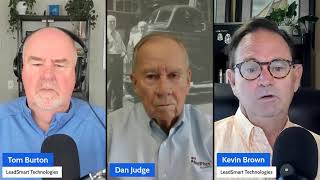
Episode 2 of Around the Horn 2.0 (May 29, 2025) features hosts Kevin Brown and Tom Burton interviewing Dan Judge (founder of NetPlus Alliance). Dan recounts his family’s distribution roots (Ward Brothers, Lockport/Erie Canal), joining the business in 1969, expansion through acquisitions, and co-founding ID1 (an early industrial buying group). The conversation covers the evolution and collaborative spirit of distributor networking, workforce changes and training (NetPlus Academy, BlueVolt), how buying groups evolved into national contract suppliers, an industry outlook survey NetPlus runs (started ~2018) with near-term concerns (tariffs, hiring, pricing volatility), and technology’s role — from early terminals/ERP (mini-computer terminal rollout in 1979) to modern CRM, AI, and robotics. Practical guidance emphasized: stay calm, stay nimble, communicate with customers/suppliers, invest in people and training, consolidate SKUs where sensible, and adopt CRM/ERP and AI thoughtfully.
Questions this video answers
"Around the Horn in Wholesale Distribution 2.0 - Episode #2", May 29, 2025.
1969 (joined family business full time after college).
NetPlus Alliance (he is the founder).
About 2018 (started ~6 years prior to the episode).
1979.
Chapters
No dancing.
No dancing.
Way too serious today.
Yeah, boy. There's a serious show today.
That's right. We got. We got a lot to accomplish today. So no dancing. Save the dancing for Friday. I just wanted to be respectful of our guest Dan today.
And thank you.
Yeah, you've seen that before, right, Dan?
Right, I've seen it.
And he thinks.
And he's thankful. Very good. All right, well, let's. Let's kind of jump in here. Good morning, everybody. Appreciate you being with us. If you're with us live today, please, please let us know. Pop a note into the comments. I'm Kevin Brown. I'm here with my lifelong friend and business partner, Tom Burton, and our esteemed guest, Mr. Dan Judge. We're certainly excited to have Dan with us. We are hosting the second episode of around the Horn 2.0. And you know, Dan, you are a big factor of us actually doing this version because we sat on a bus in Aurora, Colorado with a beer on our way to topgolf and we were talking about the podcast and the fast paced movement of the regular show. And your comment was. I'd like to just have a conversation. And so we developed around the horn 2.0 and this is the second time we're doing it. And we're pretty excited to have you here with us, Dan. So I'm going to do just a quick little bit of housekeeping. We're going to get Dan introduced to the audience and we see some great folks coming in. We see Bob, happy to have you. Our good friend Paul who was with us last week, Paul Kennedy and Will Quinn. So we're thankful for all of you being with us.
I just want to make sure everybody knows this is not replacing the Friday one.
Very good, Tom. Thank you.
We are doing our normal one Friday. Yeah, I believe. Right.
As I was told last night by Lily, who does all the pre production stuff, that she was getting those invitations out this morning. And John will be handling the back end of all of that as well for us. But yeah, the whole point behind around the horn 2.0 is, you know, our Friday show is we talk about the news and all of the topics in the news. And once in a while we have somebody that we want to just get together with and chat about distribution in the industry and the things going on in the economy and so forth. And so we've got Dan with us today for version number two of that. But as Tom said, this does not replace our Friday show. We'll be here Friday and going through the news of the week. As well. But as we do that, we wanted to make sure that everybody knows that this live podcast, an interview that we're doing today with Dan, is available on YouTube Live, LinkedIn Live, and Facebook Live. But later in the day that'll be available. Like all of our episodes are on Spotify and Amazon and Apple Podcasts and so forth. And what we always like to do is if. Ask people that if you enjoy what we do each week, whether it's in this format or our standard format, is that you subscribe. If you're on YouTube, subscribe and you'll get alerts for that. If you're on LinkedIn, please just go to the Lead Smart Technologies page and follow the page there. All of the live episodes are there. And you can also sign up for the newsletter that we put out each week as well and get a copy of that. But if you're listening in on Apple Podcasts or Spotify or whatever that podcast platform is, please hit the subscribe button and ideally leave a review. The way that that helps us is that more people get exposed to this. We typically have three to five different countries joining us each week live and many, many more for downloading on the podcast. We're appreciative of that. So we're looking forward to today. But we couldn't be here if we didn't have the sponsorship of the company that Tom and I work for. We work for Lead Smart Technologies. And Lead Smart has developed what we describe as an AI enabled smart customer intelligence and CRM solution that helps customers. We work with both manufacturers and wholesale distributors, gives them an opportunity to gain deep insights into what's going on at their customers. We bring silo data from across an organization and probably talk about that a little bit today with Dan, but we bring siloed data from ERP systems, marketing, automation, data lakes, other areas of the business. We bring all those into a centralized platform where we have the opportunity to gain deeper insights that have typically never been seen before. So if you are in the manufacturing space or wholesale distribution and you'd like to accelerate growth in your organization and get deeper insights into your customers, your team, and your overall business, we would love to chat with you. So, okay, we got through that. So, Mr. Judge, thank you for being with us today. Can you do us the great favor? And again, I've been wanting to do this for over a year, so pretty happy. Dan, can you give us a quick background on you and and netplus before we dive in and do the deep dive?
Sure. Thanks, Kevin. It's A pleasure to be in 2.0. Must have been a long bus ride, I think, to cover what we covered.
Yeah, it was actually.
I'm Dan Judge. My current role is the founder of Netplus Alliance. I been in this industry since 1969. And like many in this industry, I grew up in the business. My parents, my father and was a stockholder in Ward Brothers Mill Supply Company in Lockport. Ward Brothers grew up on the Erie Canal. Erie Canal was founded 200 years ago and it really opened. The West Lockport, as you may guess, has some locks. We have two locks that lift the canal 60ft basically from the level of the Hudson river to the level of Lake Erie in Buffalo, where the canal terminates. In those formative years of the canal, a lot of industry grew up. A lot of mills were powered by water, used water. One of my and uncle William Nolan had a machine shop on the Erie canal. Started in 1885. 18, 1885. These guys behind me are my great uncles. They took over the business in 1919 as Ward Brothers Mill Supply Company. Their one of their sons, Sam Ward, took over as president in the 50s. I joined the company out of college. I went to Clarkson University, took their industrial distribution program, which was sponsored by the time when it was created. It was sponsored by nida, the National Industrial Distributors associated with association cita. The Southern association started a similar program at Texas A and M about the same time. And that program still exists? Yeah. Spent two years in the army, including Europe, Vietnam, came back, went to the University of Buffalo and then joined the family business in 1969 full time.
You know, Dan, that's a long and storied career that we're going to dive in a little bit more to. But you know, I wanted to kind of ask you about that. You know, the Erie Canal is, you know, I think every American probably in Canadian student learns about it in school and so forth. And you know, having that legacy that goes through that certainly shows the depth of your family and your role in distribution. But I kind of wanted to ask you, you know, with the decades and decades that you've been involved with distribution, maybe give us a little bit of your kind of perception about. And we're going to talk about leadership and workforce shifting and technology and so forth as we go through our discussion today. But you kind of maybe give us a little bit of an overview of kind of the big changes that you've seen of, you know, perception of independent distribution over the years.
Kevin, can I ask one quick question before we go into that, you know, Dan, I've been to Lockport. I've been to your office there. Those locks are very elaborate. Right. There's a lot going on there. Was Ward focused on providing, you know, equipment and tools for the people working on the locks, or was it predominantly just for the mill industries and. Or a combination of both?
Well, it was probably a combination of the mill industries. Then the manufacturing that grew up. General Motors started their radiator business. A guy named Henry Harrison started the radiator business and sold its radiators to General Motors. The first radiator happened to be made right in this building. And then certainly the mills, the commercial traffic that was coming through the canal, if they needed hand tools or cutting tools or abrasives or anything. So the business grew up that way, and they maintained a machine shop through some of the early years that I was at the company. And then the machinists retired and there was nobody to place. And it wasn't much of a. We weren't doing a lot of machining then at that time. So it was. It was really. The canal created a lot of industry here, as did the Niagara river and Niagara Falls created a lot of. A lot of industry because of the quantity of water and the availability of power.
I wouldn't have thought about that from that standpoint, but the power side of it makes a ton of sense.
Yeah. First of all was water power, and then. And then electric power. There's still a huge hydroelectric plant in Niagara, couple in Niagara Falls, one on each side of the river, one in us and one in Canada.
So coming out of all of that with Ward Brothers, and I know kind of if we go fully downstream to that, we kind of end up with Net plus in this.
That was funny, Kevin. Downstream. That's pretty funny. Yeah. You practice that, Dan, for.
I woke up at three in the morning. I was like, how could I tie this in? Very good.
But.
So maybe, Dan, I'm going to come back to the previous question I had asked for, but before we do that, maybe talk maybe about kind of the transition from the different levels of Ward Brothers and then down to kind of where we are today, maybe.
Yeah, well, we. So I joined the company in 69 in. In 1970. I think it was 74. We bought a distributor in Buffalo, New York, industrial supply business of Beals, McCarthy and Rogers. And they were. They were sort of the key industrial distributor in Buffalo, but they were owned by a company that was. Was basically a steel service center who didn't want the industrial supply business. So we took that. We took that business over which expanded us into Buffalo. So lockport is about 20 miles north of Buffalo. The big industry, excuse me, is in Buffalo and in Niagara Falls. So we weren't much of a player in Buffalo till we bought that company. And then in, in the mid-80s, we bought a second company in Buffalo, the, the E.F. mcCarthy company, who ironically, those two companies, E.F. mcCarthy was a split off of Beals, McCarthy and Rogers. And we actually put four people back together who used to work with each other back in the early 70s. So it's, you know, it's just, it's interesting how things, things go around. And in 1990, my cousin Sam Ward decided to sell the business. I was a minority stockholder. The economy of western New York was in pretty bad shape. We'd lost manufacturing. I didn't see really a road to buying the business and taking out the debt that would be required. In 1987, our company, along with five others, started ID1, which is the first buying group in the industrial supply business.
So, Dan, Dan, before you go further on that.
Yep.
That's, I mean, that's a big step, right? You went from being a minority shareholder in a family owned distribution company to say, hey, let's just go start a buying group. I mean, can you maybe unpack that a little bit?
And was there no buying groups at that point? Was that not a concept that existed.
Or was it existed. It existed, but not in this business. And sort of going back to where you started, Kevin? Yeah, one of the things I think that's, that's changed or one of the benefits that I had was at the time there were so many distributors in western New York. There were probably 35 distributors who sold the industry. They sold hand tools, cutting tools and abrasives. They sold plastic, they sold pipe bells and fittings, they sold electrical supplies. And we had an association called the Niagara Frontier Industrial Distributors Association. We met five times a year, including a golf tournament. So I got to know not only my competitors, but the other people that were selling. We were all selling to the same customers. And that was like my first network. The New York State. There was a New York State Industrial Supply association. And we, we met three or four times a year. So I got to know distributors across the state. And then that kind of got me into being involved in NIDA and being on a committee, going to Penn State for two, two weeks in a NIDA program. So I think the networking that took place 40 years ago is probably not available to the distributors. At least what I see. I mean, they do Come to our meeting and they network like once a year, and they might go to ISA or they might go to staff. But I developed a wide range of people they knew all across the country. And that's kind of how id1 started. I was at one of these meetings and somebody said, you know, we ought to be able. Let's do something together. And one, Murray Miller from Trumbull Industries, their family business was in a group called Seal Lot, which was a plumbing and heating buying group. And they were the first buying group in that industry. So we started ID1. There was nothing like it. And we were met with some trepidation in the industry that we were going to disrupt the loyalty between suppliers and distributors. It was kind of a closed group. There were only 40 distributors, like one per market. We kept it pretty quiet.
Was the turmoil with the suppliers, or was it on the distributors or. Or both? Or where was their most. Most angst, I guess, the distributors?
Incredibly, incredibly among the distributors. I would have.
I would have thought the reverse, Dan. I would have thought it would have been a struggle for the manufacturers to say, hey, you know, what are the big guys going to think about me partnering up with a large group of smaller guys?
Yeah, I think the manufacturers, they had been part of hardware co ops, okay, and other kind of other ancillary business.
The true values, the aces, those types of books.
But the, the distributors, I mean, at that time, I was in the chairs of nida. I was. I was vice president. I was going to be president the following year in 1989. And there was a. Because there was only print media at the time. There were letters to the editor in both Modern Distribution Management and Industrial Distribution magazine, slamming my role of vice president of ID1 and starting this bayou which is going to rip the industry apart. Knight and Sight emerged right around that time. And there was no impeachment articles in our. In the constitution of the group and the bylaws of the group. So I did not get impeached and was asked not to resign. But it was the networking that I had developed through those years that brought that about. And so as we grew ID1, we grew it to about 40 distributors. And there was an opportunity. One of the distributors had an opportunity with one of his really good customers who said, is there a way that you can take your contract and service plants across the country? And we, we went from being just a buying and rebate marketing group to being contract supplier. And it sort of changed the tenor of the group, but it certainly caught the attention of distributors in other marketplaces in fact, about that time, General Motors was going through a change of operations where the purchasing used to be local. And I mean, it was so local that we had a General Motors plant here. We would go into the purchasing department, go to a desk that we, we had our own desk because we had all their MRO business pick up whatever releases there were to be shipped the next day, every day. Some from our company was, was there they went, they hired, they promoted a guy named Lopez to centralize all the purchasing in Detroit and ID one bid on that business because we had key members in every major market that GM had. So we had, we'd won a contract with 25,000 SKUs with General Motors that we were servicing.
So, Dan, this became then a shift for those early members of being, hey, I'm getting some good pricing to. This is a revenue driver.
Yeah, yeah. And we were, you know, in those early days, we were very, it was a heavy networking group because we, we met five times a year.
Okay.
As, as we got into the national contract business, different levels within the company were coming. Instead of the CEO, we were getting the sales manager because they're interested, getting that what kind of contracts we can build. And, and of course, there were distributors in each of those markets that. Oh, I'm going to have to get a power cord. Give me one second.
We'll get him back. He needs that Netplus tech team behind him.
One thing I'm interested, I would like to ask Kevin, when he comes back, is he's talking about networking or maybe that I'm interested to understand, I guess, the spirit of the networking that was occurring then, how that compares to what. I mean, you go to a lot more shows than I do, but.
I.
Don'T see distributors really collaborating together. I see them maybe conversing and talking to the suppliers and things like that, but I don't know if there's this deep collaboration that may have existed.
Absolutely there is. Yeah. I mean, most of the trade associations and not just NetPlus, but a lot of the other groups have a lot of focus on network groups and having ongoing meetings. I think, you know, we have some different tools now that, that as Dan's describing that from the early days, you know, there was no such thing as zoom to jump on with, you know, five other guys and so they could use conference calls. I think it's definitely worth asking Dan. The question is, as we get him.
Back, so.
Just got to get all powered.
Yeah.
The world revolves around power.
You think somebody could help you out, Dan? After all You've done there.
I'm wondering why. I guess I'm plugged in.
I think we can still hear you and see you, so that's good. All right.
Hey.
Hey, Dan. We wanted to. I wanted to ask a quick question before we move on. You mentioned the concept of, you know, networking and how important the networking was. And maybe it's a bit different than what you, you know, see today. What was kind of the spirit of the networking, was it very collaborative, people, like, really working together and collaborating? And how do you see the networking that occurred then? How does that differ from what you see today?
It's funny, it was pretty operational networking. We didn't compete with each other so we could share ideas. And I remember one of the meetings we got talking about how do you charge customers for freight? And most of us at the time had our own trucks, so you couldn't really charge people for delivery on your own trucks. But if you shipped it by ups, you could charge them the shipping. And one distributor said, I don't know how many of you do this, but we mark up our UPS charges. To me, that was like a holy cow, you can do that, right? You know, it was, you know, I don't say $2 to ship a package. And he had a chart and he had a 25 cents. If it was $2, if it was $5, added 50 cents. I said, holy smokes. I think, I think we can.
That's the handling fee, right? The shipping and handling.
It became shipping and handling. Right. It was just sort of simple things like that that people shared, you know, which product lines you buying, which. What your, you know, what are your margins. We did a. We did kind of a simplified PAR type report where we shared financial data. And so there was, There was. That's the kind of networking that went on was pretty.
Yeah, Dan, while you stepped away from when Tom and I were talking, you know, and I know with, within NetPlus alliance, your members do a lot of networking amongst themselves besides the events that you have each year, that they're staying pretty close in touch like that. And some of the trade associations and other buying groups out there do, you know, regular ongoing events. So I think there's a lot of a pretty deep collaboration, I guess what. What I'd love to kind of look at is the evolution of it. All of you know, where that started kind of originally and then where we're at today with it is how different are things today with the collaboration amongst members and, and, and their support of the organization than it was in the early days. What kind of dynamics have you seen shifting over the years?
Well, I, I, you know, my only experience really is the networking that, that takes place at the Net plus meeting, formal networking event. And what Paul Burns, who's our VP of development, tries to do is come up with four or five topics and he sort of, he runs it, he divides the distributors maybe six to eight to a table, making sure that we kind of have like non competitive distributors that you. And then the distributors pick a topic and they talk about it and they report back on it and it's. And I, and I know from that they, they sort of then develop relationships one on one, you know, with, with different, different companies across the country that they can share data, share information, share ideas.
That's great. I want to shift gears a little bit on us here, Dan, as well. Kind of talk about, you know, one of the things that themes that we hear so often and consistently now is, you know, the difficulty of hiring people and the shifts in workforces and so forth. So maybe could you give us maybe a few of your thoughts? Kind of, you know, early days, I think probably, you know, when you started your career and with the family business in 1969, as you referenced there, people stayed at companies a lot longer.
Well, that was a key point that I, when I was thinking about this. Yeah, they stay at companies longer. They stayed in the same job.
Right.
There was a classmate of mine in high school who went to work at Ward Brothers. He worked in the warehouse. And when we sold the business in 1990, he was still in the warehouse. He was doing a good job, but he didn't have the opportunity. Maybe he didn't ask for the opportunity, but we certainly didn't provide. And I think that's true of most of the distribution companies way back. They didn't provide the opportunities. There wasn't the opportunities to learn. There's so much more education available now than there was at that time. We would send people to factories to learn products and we would bring people in to train our people on products. But we never trained anybody on, I mean, I wasn't even trained on leadership. If I hadn't been in the army and been a second lieutenant, I might not have even known what leadership involved.
It makes good sense. Yeah.
Even then my leadership was a gold.
Bar.
On my shoulders because I said, so the leader. Yeah, somebody gave me that gold bar. So you're the leader. Didn't quite have that when you get back into a business. But there's, there's so many more opportunities now. The, the associations offer a lot.
Yep.
Yeah, there's trade schools, there's leadership schools, local universities and community colleges offer so much.
Well, it makes me even think too, Dan, as you described, that classmate of yours that worked in the warehouse is, you know, in the late 60s, 70s, even early 80s, we had television, but we weren't necessarily somebody working in the warehouse in Lockport. Probably didn't even have any idea how many other, you know, potential job opportunities there were with other companies because they might not even have been aware of them.
Yeah, I mean, really, the only other opportunity was manufacturing that, you know, Harrison Radiator division of General Motors had 20,000 people in Lockport. We were competitive with them from a wage and benefits standpoint. We had to or we wouldn't be able to hire anybody in the warehouse. So there wasn't, we didn't see people leaving to go to work there.
Their, their workforce was similar to the population of the town, right? Yeah.
Yeah. And I mean, there were really good, you know, the, the middle class, these guys. I mean, anybody who worked there had, they had two cars and they had a boat and they fished and they had, you know, pretty good life. They worked hard in the plant, but they had, they had a pretty good life.
Good. Well, you know, let's. I kind of want to get us kind of moving ahead here a little bit and, you know, tying to the shifts in the workforce we talked about a little bit. But you know, you've got, at Net plus alliance, you've got a broad scope of members. You have publicly traded companies to single branch locations and very, very large organizations with, you know, thousands of employees, down to Maybe companies with 20 or 30, you know, as you've looked at kind of what's going on, specifically some of the uncertainties of the marketplace. And we want to spend a little bit of time today talking about the industry outlook recap that you do consistently. But what advice maybe would you have for the small distributor or midsize distributor that's kind of trying to navigate the markets, whether it's purchasing, trying to compete against the big guys. And then obviously we're going to spend a little bit of time today talking about the big, the big T word of tariffs that we're facing now. But what are your thoughts overall on kind of guiding people and adapting to what's going on out there right now?
Well, I, you know, one of my key thoughts has always been change, adapt, change. I look at our staff here. We, Jennifer is hired a very strong staff, a lot of young, very smart people that Are that are just doing a phenomenal job for us. And I think that's what the smaller distributors need to be looking for. They need to be looking for people that have an education and want to learn and want to be part of something and you know, help help something grow. The thing that amazes me when I look at some of the small distributors and our group is they've been small for 25 years. You know, it's, it's like one guy selling to a bunch of customers and, and if he wants to grow his business, he's going to have to broaden his horizon and, and you know, track new people, attract new customers, take on new product lines, take, take some risk and, and change, change your business.
That's great.
I wanted to maybe step back just a little bit. I want to hit Bob's question here and I was thinking about something, Dan, when you were talking about, you know, the way hiring and the longevity. But Bob had a question here. You know, he said the advent of suitcase benefits which replace pensions. Right. So rather than having a pension, you have 401ks and options and who knows what else. Right. Is that what impacted or decimated the workforce longevity or is that occurring in the distribution industry as it is in manufacturing? And I wanted to add one more part to that is are you seeing with the companies you're working with today, are you seeing people coming into the company looking for that career path, not looking to stick in one job, but say, okay, I may come in at entry level or a lower level position, but I want to have an opportunity to grow within the organization?
Yeah, I think they definitely are. I think people definitely want to grow in the business. I think they have a broader perspective of the world. I grew up, we had the first television on our street.
Wow.
My father wanted to watch a Notre Dame football game today. You got endless ways to learn and to grow and to see what opportunities are out there. So I think if the young, you have to have a benefits package that's attractive and competitive and you.
You need.
To offer, you know, salaries that are good in the marketplace and allow some people to have a really good, a good life and give them the opportunity to grow, train them, send them to school, send them to seminars, send them to the trade show, send them to conventions, let them see what's going on outside the world.
Or the Net plus Academy.
Or the Net plus Academy we have. It's interesting that we've kind of always wanted to have some training. We've partnered with Bluevolt for online training and they have, you know, they have a wonderful catalog of courses. It's kind of funny when we started looking at them, I, I signed up for some of the courses and they're pretty good because they're, they're short. They're like 20 minutes. You can do them at lunchtime, you can do them in the evening, you can, you know, give your employees time to do them. But they also have a lot of soft skills training so people can learn about leadership and they can learn about, I just a whole raft of business skills. And, and then we, we have, we arrange trainings for our distributors to go to a manufacturer for training. We have a online training where the manufacturers will actually do the product training on our, on our training setup. So they, we call them hands on hands, Hands on online hands on virtual training where the manufacturer will send tools or parts or grinding wheels to each distributor is going to participate. So they actually have the product in hand while they're watching the online training.
I've seen some of those, some videos and images of that on LinkedIn, how those work. And those are great partnerships. Dan, I'm going to kind of shift gears on us a little bit because I want to start talking about a little bit of the economy and some of the pressures going on in the marketplace a little bit. You know, I'm going to just kind of throw out a broad question. We'll leave this to Dan, to you and to Tom and to the audience that's here too, is, you know, as I mentioned earlier, within NetPlus alliance, you have a, you know, broad size of members. But what would be a fair size, Dan, if you had to look at the average of an, of a Net plus member, Is it maybe a three to five branch company, something like that, or.
Yeah, I'd say something like that. Probably around. And this is a broad range, but 20 to $50 million in sales.
Yeah, I was kind of kind of thinking something like that. I kind of people, you know, in the technology world that Tom and I are in, you know, they, people always kind of of talk and use the term ICP or ideal customer profile. And I've been trying to kind of work. I mean, I certainly have that laid out exactly what that is for our company. But I kind of look to that as articulating rough, rough dollar size by branches and people. Right. You can kind of get a feel when somebody says they have, you know, nine branches, roughly where they're at from a revenue standpoint.
Right. I always ask how many people.
Yeah.
You know, and whatever, however many millions of dollars in sales. The number of people is.
Yeah, that, that's great. So, you know, you've seen a lot over your career, right between the Vietnam War and the early days with the, the family business and all of the things that you've seen through. You've seen a lot of ups and downs. You've seen economic downturns. You've seen up cycles and swings. Maybe give us a little bit of your. I'm going to ask you to do two things. Give us maybe, Dan, if you would, your take on what we're seeing right now without getting political, but let's kind of talk about tariffs in the marketplace, interest rates, some of those things, and either one, how you're seeing. And I know you're not as deep in the weeds every day like Jennifer, your daughter, is of running the organization now, but what have you seen over the years of how people and wholesale distributors have really managed through the ups and the down cycles from. We've seen within the economy. And what advice would you have for people today?
Wow.
Just free reign for you to give us a dissertation.
Yeah, it's, you know, it's kind of interesting when you think back, you know, to your history. I think I was at a night, a meeting in 1982. We, we were, we had, we broke for lunch and some people came in and there was a. The market had crashed. It just, it was a Black Friday crash. And I was too young to have a portfolio, so I didn't, I almost didn't understand what was going on. And then our, our business just. Our business just fell off the table. We had, we didn't lay anybody off. We just had people painting the warehouse. They painted all the offices. We straighten everything up. And then business, you know, business came back and of course we all, you know, everybody here recalls, you know, the COVID Stop. You know, how do you deal with that? And I, and I, I just think people are resilient. Business owners are really resilient. They're.
They're.
They're going to figure it out. You know, what do I, what do I need to do to. To take care of this problem? You know, how do I change, how do I change my business? How do I manage my people? When the tariffs started to hit, I thought, well, when we do the industry outlook, we need to ask, you know, how are the tariffs affecting your business? And I came up with a clever scale. I didn't want it to be like 0 to 10 or something like that. So I had five answers. Not at all. A little. Some. A Lot not sure. And the response was a little, was 21%, some was 33. A lot was 23 and not sure yet was 20. And of course before we were even getting the replies back, the situation has changed and continues to change. So I think that's my, my advice to the distributors. This, this case here is, you know, just calm down, stay, stay kind. And that's my, sort of, my personality. I'm a, I'm a calm guy. Don't, don't get excited, just calm down. Talk to your customers, talk to your suppliers. You know, make sure you're keeping your system pricing up to date because you don't want to get behind that. In the answer to this question, a number of distributors noted how they're sort of getting buried and trying to keep their system pricing up to date. Doesn't all come in by EDI and easily updated. Some of it's printed sheets that still come out. So that was, that was sort of my, my thinking was just, you know, stay calm, keep your people informed, talk to your customers, talk to your suppliers and, and we'll get, we'll get through this.
That's great, great, great advice with that. So let's, that's going to kind of take us and migrate us into kind of the discussion about the industry outlook. Could you maybe share with us what, what that is, how long you've been doing it, how did you get it started? And then we're going to kind of dive into some of the, the results from your most recent one. Would you mind sharing that with us?
No, we, I think it's about six years old. This is, we think it was 2018. We had a, Jennifer's just done a phenomenal job of getting, getting our partners involved with our business. So we have a distributor advisory board and we have a supplier advisory board. Supplier advisory board meetings. The suppliers were asking, the guys there were saying, well, how is your distributor's business? You know, we were reporting on how the business that Net plus was doing with the supplier suppliers. That's one number, that's what our members are buying. What the suppliers were asking for is well, how, how are the distributors doing in their business? How, how are their sales to their customers? So that was sort of the, the idea behind starting the industry out. So we basically asked the first question is always how's your sales this year versus the same period last year? And then what is your outlook going forward? So in this case we asked our distributors what were their sales in the first quarter versus the first quarter 2024 and we have 25% that are up over 8%. 30% are up between 3 and 7%. 30% are about the same. So that, that gives us and it gives our suppliers and our distributors to have a sense of what, what the business, what's going on in the business of the Net plus members. And then we ask them what their forecast is for the going forward. This chart that Tom's got up here is our Net plus business index. So one of the things that we started about the same time was the suppliers would say well how are you doing compared to the industry? And I started an index of the eight publicly traded industrial distributors. So I tracked them on a quarterly basis average their increase in sales and that's a net plus index for the industrial supplies. That's the black bar in this chart. Net plus is the red bar and the gray bar is the construction supply. Publicly traded construction supplies distributors. Because we have a significant amount of construction supply distributors and suppliers in our group. So the net plus index always shows how we're doing, how are we doing against, against the industry. And we've always been, we've always been doing better which is a buying group has to do. We have to drive more business to the suppliers than they would just get some distributors on a day to day basis. We've got to find ways for them to grow their business among our membership. True.
That'S powerful. One of the things that just came to my mind and looking at this is you know, with, with some pretty major swings coming right now with pricing, right. Besides the fact of, of how what a drain it is on the, the human side of things of, of making the changes of the ups and the downs. And I was talking to an industrial distributor a few weeks back and they said one of the, in fact our guest on this traditional around the horn show last Friday, Paul Kennedy with DSG Supply, we were talking about this. Is it just a drain on human capital with all of the changes going on in the business? But I think in looking at kind of even from a comparison if you having a year and potentially next year this having some similarities. Hopefully not, but it's almost. I think we need to start looking at, at unit levels versus dollars because I think if we just were looking at dollars right, we could have a huge swing in that because we're moving a lot more revenue but not necessarily more units.
But that, that's always been the case.
Is it okay?
Yeah, I mean it's been the case through any, any sort of.
But incremental, incremental increases. Not 20, 30, 40% increases. Right.
No, no. And it's hard to measure in certainly in the industrial supply space, you can't, you, the commodities are so, so vastly different, you know, but he could be in the fastener business and they could sell a million pieces. And we, we might ask, well how, how's your unit growth? And they could probably, I doubt, doubt if any distributor could tell us.
Okay.
You know, big, bigger distributors probably. I don't think the smaller distributors could.
Gotcha.
You know, and in the, in the manufacturers know it because they just got their little niche of products. The power tool people know. Well, we sold, our sales were up 10% but we only sell 5% more.
Fraction of the SKUs that a distributor would have.
Yeah.
Well, Dan, with this great recap on all of this, I think the takeaway is what was keeping people up at night from this edition was tariffs, employee challenges and the unknowns. Right. And your advice was stay nimble. Right. And manage, manage the real time day to day. Is that a fair statement?
Yep. Stay nimble. Adapt to change. Stay calm.
Good.
Get a good night's sleep.
Yeah. So we're going to kind of jump into our final topic area of the day. And you had talked about, you know, some distributors abilities to get good data, good resources that goes available information that they can have. I wanted to talk a little bit about the role of technology, not only in the past with wholesale distribution, but in the future. I know you have some great experience from the early days of erp, but I want to talk a little bit about that, but then kind of get your insights and take on how you've watched technology support the growth of distribution, including buying groups and then maybe what you see for the future with that. Is that fair question to kind of wrap us up today?
I think it's very fair. I'll sort of do the technology piece kind of quick, although there's a lot to it. When I started at Ward Brothers, we wrote five part forms manually. There was, there were no computers, so the orders were written 5 parts.
Packing.
List, shipping receipt, invoice copy, accounting copy. Yep. I'd say the, the, the most, the most major technological advance was when six distributors that I was a part of developed an online, developed an ERP system to go to go into distributor's office and I put a computer terminal on everybody's desk.
What year was that?
That was in 1979.
Wow.
He was even ahead of Microsoft's vision.
1979. We put a computer on everybody's desk at that point. Most of those People had never seen a computer.
Sure, yeah.
I was going to say what computers were you putting on their desk? Was it like a radio jack or something?
It was a computer terminal. The computer was a Honeywell system.
So it's like a mainframe or a centralized.
Yeah, they called it a mini computer. The CPU was the size of a refrigerator. There were a couple of disk drives or like a washer and dryer, big line printer. But everybody had instant access to their, to the inventory. They could enter the orders. The warehouse had a printer, print printed the documents and, and to me that was, that was a huge shift from manual documents, which took forever.
And then you probably had inventory cards and stuff like that.
Oh yeah.
In the warehouse as well.
We, we were pretty advanced though. We had a system where our customer could send an order using an IBM card. And I have an IBM card right here.
Wow. You remember this, huh?
I do, I do.
Bethlehem Steel had, we had a contract with Beth Bethlehem Steel and they had, they had a whole deck of cards with the items that we supplied. And then every day they would take the card out that they needed.
Put.
It in a punch card reader, put the quantity, and at our end we would get a punch card with the order and we still had to, we still had to hand write it, but it was, it was quite a leap. And Bethlehem seal was 40, 40 minutes away. So it got the orders. It was like first time edi.
Okay.
So you know, that was, that was a great system. Prophet 21 was being developed about the same time they had partnered with IBM. Their partnership with IBM was better than our partnership with Honeywell who decided to get out of the business in about five years. So we sold, I, I don't know, we might have sold the 12 systems, but it was a, it was a.
So you were, you were actually selling your system? Okay.
Yeah.
I was telling you earlier, Tom is, Dan was one of the grandfathers of, of modern day erp.
Yeah. Yeah.
So Dan, as you look at this, you've obviously you were a trailblazer I guess I would call it in bringing, helping bring technology to distribution. What's kind of your advice to doesn't matter the size, small, mid size or large distributor relating to looking at the opportunities with technology. What would be your, your suggestions and guidance for them?
Well, I, you know, you guys are very involved in the CRM marketplace and I think it's really important to have a CRM and have. Because you need, you need, just need to know what the hell is going on. And I don't know if that's your tagline. But help you know what the hell's going on. Should be a good.
Well, let's work on that.
Hashtag. We know what the hell is going on.
Yeah, right. Yeah. And I don't know what a hashtag is, but I've seen them.
Right. Your grandkids use them all the time.
Oh they do, yeah. Yeah. And, and you know, and then of course a good ERP system or a good, a good way to, to run your business. And, and, and now today you've got to know what's going on with AI. And even, even, even I know a little bit of beta about it. I use chat GPT to check recipes and awesome the things. But I, you know, I know the folks in our office use it for different things. Joan McDonough who, who writes the Outlook, I asked her if she used it and she said no, I don't want to put myself out of a job. So but, but I, I know we use, we use it for, for some things. And, and I think distributors just got to know what, what is going on and how they can use it and what their customers are doing with it. And you know, robotics at some point as well.
Yeah, I think, I know, I think we're going to be there. We talk about that on our Friday show quite a bit. You know Dan, I think the Thomas made a, a great comment in the past and you know I, I started in wholesale distribution in 1989. I hate to hate to say that, but with you here starting in 69 it makes it sound a little better. Yeah, I'm a puppy. The. But Tom, you know, Tom has been involved in, in, in wholesale distribution for coming up on about 10 years now from some projects that we did before we started our company. And you know, Tom made a comment and it's been off and on for years now is that you know, there's very few industries out there that have the abundance of data and available information to make decisions on that. Wholesale distributors do. And wholesale distributors I think far more than even manufacturers just because of the sheer volume of transactions. And you know there's, I think so many distributors and I would say the majority of them are not taking advantage of, of the available information and insights they have from the data that they have. Some are doing almost nothing, some are doing great things, but I think just about everybody has an opportunity to improve. Would you agree with that?
Oh yeah. And I, one of Jennifer's favorite phrases is trying to get our distributors, especially the small to mid sized guys to work on Their business instead of working in their business all the time. And like EOs, right. Yeah. You. You get, you get down in the weeds. And what do I have to do to make this a better company?
Right. Well, and, you know, and the. I've kind of looked at things, especially when you're looking at. At. You can look at it two sides, right? Employee information, but really customer data. The customers are screaming to you through the data of what they need, what they want and where the opportunities are. They're literally screaming at you for that. They don't realize it, and most companies don't realize it, but when you start doing that, deep dive into those things and really unpacking and we work on it very hard with how we work with things. At Lead Smart is distributors have siloed data across their business. Right. They've got maybe some marketing automation, some starting to get involved with E commerce, their ERP data. And when you start bringing that data together, the insights that come from that are pretty astounding, right? Yeah.
And really doing it, you know, taking the data and managing your inventory. And one of the things that we talk to our distributors about is consolidating the product lines and getting, getting down to something that's more manageable and not just every win that a customer says, we got to have this. Yes, well, we have this and it's just as good or it's better. And of course we want them to consolidate to Netplus alliance product lines, but. Because there's a lot of benefits to doing that.
Yeah, great. Good. Tom, any additional questions for Dan before we wind down today?
No, I think it's very interesting. It's interesting to kind of hear all that evolution.
Yeah.
And you know, I think to your point, right. A lot of distributors, I see some of them have evolved a lot and all. Honestly, some of them have not. Right.
The opportunity is there. You know, one of the things that I think they need to do is go out and get some smart, young energetic people and give them, give them the, give them the lead and say, here, develop this.
Well, I think that that is, that is great, great wisdom and insight to that, Dan, because I think, you know, the reality of it is, and I certainly say this regularly regarding AI, you know, people are out preaching, you know, sometimes doom and gloom that, you know, if you don't embrace AI, you're going to be out of business. And, and I, I wouldn't go that far to say you're out of business, but your business is going to be very different because the barriers to Entry. Right. Are very different now. We've got, you know, lots of wholesalers that you can buy from. The ease of putting up an online store is you can have an online store up in a couple of days very easily at a very reasonable price. And the access to products through wholesalers is certainly available. And the people that go figure out how to use technology to really drive that ahead have the opportunity to potentially leapfrog the people that are staying stagnant and not taking advantage of some of those things. So I think, you know, I look at it as. It's not a, it's not a end of the world moment necessarily, but it is a dramatic change in the world coming.
Yes. All right.
Well, Dan, can't thank you enough for making the time to be with us today. That the description of the evolution of where you started to where Netplus alliance is today, you're I think as respected as people come in the wholesale distribution world. People speak. I've never, never heard anybody remotely not when your name comes up, just not start glowing with great things to say about you. So and, and you know what's, what's happening. I thought that too is same thing is happening with Jennifer from, from your legacy, carrying on the business there at Netplus. So great organization. We love being partnered with you. Tom, any other takeaways on the day or.
No, let's wrap. We'll let everyone get to their next meeting.
Well, Dan, we one thank you again for today and we thank you for your consistently being with us on our Friday show. And thank you.
Yeah, this has been great and I like your Friday show. So see you. See you Friday.
It's not going away. Just let everybody know.
We'll see everybody Friday and Dan will wish you a wonderful afternoon and enjoy those kids that are passing through for their tour today.
Okay, thanks a lot.
All the best. We'll talk more soon.
More from Tom



What does AI actually mean for a wholesale distributor #WholesaleDistribution


If your systems don’t talk to each other, your AI won’t either #AITransformation




This is why one AI agent isn’t enough for high-stakes decisions #WholesaleDistribution

