Around the Horn in Wholesale Distribution, Ep. 119 #blockchain
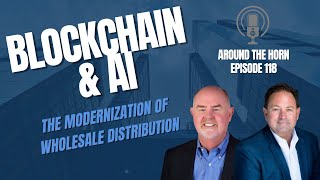
Episode 119 of the 'Around the Horn in Wholesale Distribution' podcast (hosts Kevin Brown and Tom Burton) reviews their weekly curated newsletter covering macroeconomics, manufacturing, supply chain, e‑commerce, technology, M&A, and leadership. Key points: discussion of sticky inflation and Fed rate cut probabilities; ISM/PMI showing manufacturing contraction but signs of stabilization; trade/tariff concerns including China’s restrictions on critical minerals; growing B2B e‑commerce trends and ‘watchable’ podcasts; technology deep dives on blockchain for procurement, agentic AI and Gartner’s 2025 tech trends; active M&A in distribution; and leadership/HR guidance. Sponsor: Lead Smart Technologies (AI-enabled smart CRM for distributors/manufacturers).
Chapters
Sa. Sam, I was just waiting for you to twirl around in your chair.
I'm standing.
All right. There we go.
Yeah, I'm standing today, so. Hey, man, how are you?
All right.
Very good. Well, this is a unique one for us, right? We're live every Friday morning on YouTube live, Facebook live and LinkedIn live. And later in the day recorded on all the podcast platforms. But that's not it today, is it? Nope.
No, it's Wednesday.
It's Wednesday at 3:25 Pacific Time and we're recording in advance. And I can tell you what, I am confident that tomorrow, Thursday or Friday morning, there's going to be some amazing global news announcement that we should be talking about on Friday, but we're going to miss it today. But the reason we're doing this is, as we say every week, we're live on Friday mornings at 9 o' clock Pacific. Unless someone's on an airplane, in the hospital or on a planned vacation. This guy is going to be on a planned vacation on Friday. So we're recording in advance and I appreciate you making the time to do that. We didn't want to miss a miss another week because we were dark last week because of Turkey Day. So we'll dive in today and get some things going. What I did want to mention, though, to folks is just because we're not here looking at your comments, responding to your comments, if you're listening, still throw comments in because we can come back later, respond to those and others who are listening at different time can do that as well. So it's still very valuable to put your thoughts and comments in and we greatly appreciate you being with us and we hope to to be back live with you very soon. So, Tom, any other thoughts before we get into our housekeeping? And then the news for the day?
Let's go. Let's go.
Let's do the housekeeping pretty quick again. I'm Kevin Brown. I'm here with my lifelong friend and co founder of Lead Smart Technologies, Tom Burton. And we get together, as we say, every Friday. Typically today's Wednesday, but we get together and we review the around the Horn in Wholesale Distribution and Manufacturing newsletter. That newsletter goes out to over 10,000 people each week. And if you don't get that emailed newsletter and you'd like to, we'd love to share it with you. You can find it in three different ways. You could go to the website for the podcast, which is www.aroundthehornpod.com. you could send us a email at helloadsmartstech.com or you can jump onto LinkedIn, which is where you might even be listening. And if you go to Lead Smart Technologies page, you'll see the around the Horn and wholesale Distribution newsletter there and you can subscribe right there and it'll drop right in to your email box from LinkedIn as well as you can read it anytime on LinkedIn. So what we do with that newsletter is we take and bring together and kind of consolidate top news of the week and things like the economy and wholesale distribution and supply chain and manufacturing and IT and AI and all kinds of other technology and cybersecurity. We look at people and leadership issues. We look at sales and mergers and acquisitions. And we bring all the news together from the week. We kind of collate all that together and curate that into the newsletter. And, and then when we get together here, Tom and I talk about that we oftentimes have guests. In fact, we have some cool guests coming very soon and we talk about how those news topics relate to wholesale distribution and manufacturing. So again, if you'd like that newsletter, please reach out to us to get that. If you're listening only and you're not watching us on the show here. And you, you will be missing what we'll be showing on the screen today, which is that newsletter that we'll be going through. So again, you can get that from us anytime. So if you have thoughts and ideas for future topics, future guests, please let us know. Lastly, we could not do this show every week if we didn't have the sponsorship from the company that Tom and I work for, Lead Smart Technologies. Lead Smart has developed a AI enabled smart CRM and customer intelligence solution. So we solely work with wholesale distributors and manufacturers. We don't work with people outside of that arena. And we bring a roughly 70 or so percent ready out of the box solution solely developed to support manufacturers and distributors. And we help them bring data from across their business. What we call disparate silo data, marketing automation, E commerce, ERP data, data lakes, data centers and so forth, we bring all of that into one platform. We use some sophisticated artificial intelligence tools to help make great business decisions to serve your customers better and accelerate growth in your organization. So if you're building out your digital transformation journey or technology plan and you're looking to either raise the bar on CRM and customer intelligence and or jump into that for the first time ever, we'd love to have a conversation with you. So thank you to our sponsors. I miss anything?
Nope. Other than let's get the news Started here.
Get the news started. All right, well, comments.
I keep looking over in the comments and there I don't get it.
You want me to type something in for you?
That's all right.
All right. So for those of you that will be watching the recorded version, the newsletter's popping up. We start each week with the latest news in the economy and supply chain. That's our first segment that we look to each week. First article is from CFI. Cfodive.com and inflation accelerates as Fed officials view easing with caution. Tom, I was on the phone earlier today with a potential customer for our technology at Lead Smart, and he hadn't put two and two together yet. And we were a moment into the call, he's like, hey, are you the around the horn podcast guy? Right. Because we were on a zoom call. I said, we are. And so we chatted about that for a moment as we're talking about his business and technology. And a few minutes into the discussion, he goes, hey. He goes, I listen when I'm at the gym on my phone. He goes, who else? Who is steak and what's all the steak thing about?
So if you talk about that anymore, that's old news.
No, it's, it's, you know, it's still relevant, but yeah, so I explained the whole thing about that. You're going to be buying me a steak one of these days soon. How does that tie in? Well, we're seeing this discussion about inflation accelerating. I heard Mr. Powell, the Fed chair, on the news today when I was having lunch. He was talking about how good things are looking, but at the same time that this number is kind of vacillating back and forth a little. Any thoughts on your end on that?
I mean, I think this article lined. I saw a brief thing about his talk today. They're going to move more cautiously. They're not going to rush into rate cuts. I think we'll get one this month. I think there's a reasonable probability of that depending upon the job report that comes out. What, Friday, Friday morning?
Yeah. Normally we'd be able to talk.
One piece of news we're going to be missing, but no, I mean, it's just this all just aligns with what we've been seeing, is that inflation's a bit stickier than anybody thought. There's still a lot of unknowns related to some of the policies from the new administration. So we'll move cautiously.
Yep. I think we were talking the week before last because last week was a holiday here in the US I Think we were talking about. What was it? We had a guest, I think too, didn't we? But anyways, we were talking about the idea of the likelihood of only a 50 chance of having another cut in December. And I think that's up to.
I think it's up to like 70% now.
Is it? Okay. I haven't seen what the pundits are saying. I wanted to see what your ideas were.
I, I think there will be another quarter point cut in. In the thing this. And again, there's something. Unless there's some crazy data that comes out on, on Friday.
So that's just basically reinforcing that, the fact that there was multiple cuts this year, not just one, right?
I guess so. Yeah, I guess so.
You know me, I'm always looking for another opportunity to pat myself on the back. So.
Yeah, well, I think your arm's pretty.
Pretty sore from that.
So.
Gotcha. Gotcha. All right, well, you want to jump ahead. And this next article that we have here, this is kind of interesting and I probably should have ordered these a little bit differently because we have an article coming up about manufacturing shrinks and that kind of ties all in. Why don't we reverse our order there, Tom? Do you mind if we talk about that one first? Because that aligns a little bit better. This was Leonardo. Yeah, just the. You went too far there. So scroll back. That manufacturing piece, right. So this was talking about the ISM survey and said US Manufacturing activity in November shrank for the eighth straight month even as a measure of new orders edged up in positive territory, according to the Institute for Supply Management. And that's. They put this survey out on a consistent basis. They talked about production execution eased in November consistent with demand and weak backlogs that they normally have large backlogs on. But then they started to refer in here to an uptick of things as well and an improvement in new orders that is indicating there could be a tailwind coming from the election. So I thought that piece was kind of good to see too.
Yeah, there were two articles. That's why I was scrolling down. There's this one and then you got another one here about nearing stabilization. You know what?
We.
I think we heard this even on some of the conversations we had with. I'm trying to remember the guests, but. Yeah, but even before Alex, where, you know, once, if the, once the election was passed, us and people had some ideas of what was going to be happening, that uncertainty that M and A, I'm sorry, M and A manufacturing process would. Would be picking up a lot of manufacturing. It still doesn't look, it's looks like it's kicking up, but it doesn't look like, oh, it's, you know, the floodgates are opening in opening up. And so I'm not sure exactly, you know, where still some of the issues are. But if you look at the economy, the economy growth isn't necessarily aligning with the manufacturing.
Well, I think the issue comes very clearly to this, right, Is that as they talked about, you know, this uptick and they referenced two things here, right. Was the potential from a, a tailwind starting because of the election being behind us, but also with rates going down a little bit. Right. So it helps for investment and so forth. But the other side of that becomes, excuse me, is we've got the tariff issue, right. So I think before too many people are going to be ready to, to start putting a lot of dollars in there, looking at, okay, what's going to really come out of this tariff thing. And I, I think we, we really don't talk about that a lot today on today's show, but we have consistently previously and we'll talk about it a little bit today. But the idea here really is, you know, I'm going to go back to, you know, you, you mentioned this. Peter Thiel, the Silicon Valley investor, said, you know, relating to the new president and the new, the new regime, so to speak, is to take him seriously, but don't take him literally. And so I think we're already seeing this, right. He came out blasting last week with these huge tariffs on Mexico and Canada. And the prime minister of Canada got on a plane and went straight to Florida to have dinner with the president and came back with, you know, some, some concessions, do all of that based upon securing his borders better. And I think we're, to me, one guy's view of looking at this is that was the first sign, right? Big threat, right. Everybody's up in arms. The news is up in arms about, wait a minute, Canada. What about Canada? And Canada came to the table right away with some concessions to make sure that that didn't happen.
But that's a great example. Right. And a good negotiator uses leverage, right?
Yeah.
So tariffs are a leverage point that he can use because he can do them with an executive order, doesn't require congressional approval. Right. So it's a big stick that he can wave from that perspective. And what you just described is a good example of that. Yeah, okay, there was some leverage. But then what did tariffs have to do with securing the border, not a hell of a lot, but it still shows some of the overall leverage that's being used.
I'm gonna get what I want and I've got some sticks that I can wave around in the air. And that's what he's. That's what I think. I just thought this was a great example of, you know, everybody panicking about all this tariff stuff. And, you know, we just saw what, you know, it just, you know, speaks to what, you know, Peter Thiel was saying. Right. About, you know, serious but not literal. Right. Take him serious that he's. He's gonna wave this stick around, but we'll see what comes out of the next one.
In the bond market, we didn't get into this, but the bond market is actually, rates have been dropping a bit over the last couple weeks and a lot of that is, for that reason is that they're. The bond market is thinking, hey, maybe we got ahead of ourself on, on the potential inflation risk associated with the tariffs. And maybe they're not going to be quite as, you know, ominous as we, as we originally thought. So anyway, we'll see.
Yep, very good.
You want to go back to this one?
Yeah, let's jump back there. So Goldman Stacks came out with their 225, 2025 growth analysis, the research forecasts for the year. In fact, a couple of these, Tom, I've downloaded and made available to our team internally. I'll get you the link to that. But this was a good article. They cover quite a few things in this. Again, this one's from. You could just go to goldmansax.com forward/insights. And it talks about the global economy forecast to grow solidly despite trade uncertainty. And it's just, it's kind of more of what we're talking about here. And this, this report came out a couple of weeks ago, but they're talking about a worldwide GDP is forecast to expand 2.7% and US GDP is projected to increase two and a half in 2025. And it's interesting, it's the previous consensus that they talked about had been 1.9%. So things are kind of looking up in that area. And they talk about real GDP growth, but then they talk too about will changes in trade increase US inflation. So quite a. Quite a few different tidbits in here, different segments that they talk about.
It's funny that no one. We brought this up with, Alex. Nobody is talking about, you know, the whole Doge initiative.
Yeah.
Using government expense. And how would that impact the gdp when you have so much, you have so much spending that's occurring in the government, in particular the federal government space, no one seems to want to talk about that.
Is it a third of gdp? Is, is government or government related?
Alex had some different statistics, so I, we should probably. But nonetheless it's material, right? It's not, it's not, you know, material or immaterial. So no one seems to be talking about that. And I do think that there's definitely a potential impact if it comes through. Of course, maybe no one believes it'll happen, but that's a different story.
Yeah, well I, I think that's maybe to your point and that whole DOGE thing, the Department of Government Efficiency, is that right? I think it's one probably. If you look at someone like Goldman, they probably had the majority of this written before, right. The, this was even a discussion. But I think right now people are probably still trying to figure out is this really going to happen and what does it really mean?
Well, they've already brought up that because I didn't realize this. 50% of federal workers are still working from home, right? 50%. And one of the first policies they're going to implement is no more work from home.
Yep.
Right. I think their comment was, well, you can work from home, but not for the federal government.
That's right.
And what they believe is there is a lot of almost fraudulent activity occurring with people working from home, literally not working at all or you know, checking emails twice a day or something like those long. So if that is true, if that's 50% of the federal at least employee budget, how many people either a, are not going to return to the office and if they did return, there's not really an appropriate job or a relevant job for them. Again, there's some low hanging fruit that they keep talking about that seems to be pretty massive.
Well, and this group only has till the midterms, right.
Their goal is to get it done in 18 months.
Right. Their office is closed after that period of time. And it was interesting. I was in earlier this year, in fact, late spring I was in, in Washington D.C. and it was really, really crowded downtown. I was just, literally I was visiting the national association of Wholesalers and I was just a couple blocks from the White House and the Uber driver and I were talking and I said yeah man, because it was, it was mid afternoon or early afternoon and I said man, it is just so crowded downtown. I said is, is this normal for this time of day? And he goes no, it's on this day of the week, he said tomorrow at this time these streets will be almost empty. He said this is one of the days all the workers have to be in.
And yeah, it's interesting they said they have to be in or someone have to be in one day a month and those. So they'll come in the last day of the month and the first day of the month.
Okay.
And then they don't come in for then that gives them like 60 days without having to come in.
Yeah, well, he was saying that there was the large percentage that he was talking about have to be in a couple of days a week. It was multiple days per week. And he goes, this was one of the specifics in the departments that we were near because we were driving by the Department of Energy and the Department of Commerce and all the buildings. And it was just, I wasn't aware to the magnitude of what, what that was all about in that case that he was able to share that with me. So anyways, it was good stuff, but this is just things we need to continue to watch. I do think that's a great point you make about the, the Department of Government Efficiency is. Nobody's talking about that yet, but I think it might be a little bit early. But this report's quite good. It talks about what the tariffs could mean in relation to general trade policies could mean in relation to the overall U.S. economy. So good article. This is again, Goldman Sachs.com insights and the global economy forecast. So it talks a little bit about the Chinese growth in this as well and how it could impact, how that could be impacted by the tariffs as well. So good enough. You want to jump ahead here into our next segment. What are we going to talk about next?
Well, this, the manufacturing distribution first article here. China bans exports of critical minerals to US as trade tensions escalate. This all just kind of ties in, you know, the other thing. And I'm, I'm really going to hope that this is true. Right. Is the last thing I, what we just talked about. Right. The whole trade and tariff thing is a leverage point for negotiation.
Right.
But it would actually be foolish in my opinion, for us to enter into trade wars. Right. And this is an example of entering into a trade where, oh, well, we're no longer going to ship you or ban the shipment of, you know, the minerals that we need. And well, then we're not going to do this and we're not going to do that. I think that's would be really stupid. Yeah. And I'm hoping that we don't end up in that situation. I'm like I said, hoping that he's surrounding Trump, surrounding himself with enough intelligent people and he's looking at this from a negotiation perspective rather than a tit for tat trade war. But.
Well, in this case, this is talking about China is not shipping some critical minerals that are needed and critical pieces that are needed both in military and civilian applications. And a big part of it is.
Military so doing kind of the inauguration. Right. So they're trying to.
Right, right.
That's right.
So it's, it's going to be interesting. Some of these are used in semiconductors. So I sure in their mind it's, you know, and the other part of it is a big part of these minerals that are coming are tied to solar and solar charging cells. And so I think that's going to be this little bit of this leverage point because, you know, they're looking to keep, you know, Chinese charging charging equipment and, and cells and as well as Chinese EVs out of the country. And so it was interesting this impacts quite a few states pretty greatly. Both they talked about Minnesota and Michigan that this could have a big impact on. So quick shot across the bow to the manufacturing segment back from the Chinese on this. But you have to know that this was, this has all got to be thought about. I mean there's, there are you, you can think whatever you want about the new president, but he's not stupid and, and he might fly off the handle on some stuff, but he's got some pretty sharp advisors behind him when it comes to this stuff as well. So you don't get where you're at in the business world without having good advisors.
And to me, a trade war just goes right up against everything that, yeah, everybody is trying to preach in terms of growth and you know, and all that. That's a trade war is not a business friendly outcome. So.
Yep. Yep.
Good.
So this, we talked a little bit about this next article here about manufacturing near stabilization in November's PMI numbers. This was kind of good. That just the recap of it. They said companies preparing for growth under second term of President Trump even as the threat of tariffs caused some uncertainty. So I think we've got some good gearing up. You know, Supply Institute for Supply Management does this purchasing managers index comes out regularly and it rose to 49.7 last month. And so obviously 50%, I should say obviously, but 50% of that is the, you know, is a, a neutral kind of segment for that. So they talk about here in in this, they call it near stabilization. Last month is they called it input cost inflation falling to its lowest level in a year as companies are planning for growth. So there's companies still talking about coming out of the pandemic and the inventory gluts that they had and so forth. And then people being very concerned and cautious about investments based upon interest rates, being geopolitical concerns, shipping issues in Panama, Panama Canal or Suez Canal. And it just shows to some potentials for some good, strong growth coming into the year. Good. All right, I want to jump ahead. We're, we're moving pretty quick. E commerce and marketing segment today. So Digital Commerce 3360 any thoughts to start off on that particular article?
Yeah, I mean I actually was a little confused about the article a bit because they were talking about Black Friday and B2B companies and and then it immediately kind of jumped over to AI. So it kind of covered a lot of different, different ground on things. Did you understand it wasn't clear to me in the article what they were trying to point out related to Black Friday and B2B E Commerce?
Well, I think what they were, you know, part of this was it ties into some of the other articles that were out there as well is that, you know, the brick and mortar world didn't get what they were kind of anticipating this year because of the even on Black Friday, the Black Friday purchases that were done online. And it was this piece in particular, and I don't disagree with you, it was a little, a little varied in what they were trying to say. But it just says close to 30% of leaders report similar revenue contribution from shopping events like Black Friday in B2B. And so it seems like this B2B or what we historically seem of B2C, there's people that are also starting to do. I've even seen this with some people that we communicate with regularly that are propping up specials and so forth during that time as well. And this was tying into a McKinsey study from US and Europe about then spotlighting artificial intelligence and supporting all of that B2B side of growth of things.
So yeah. And on the art, on the AI side of it, I think we use the word E commerce. To me, it's more like E sales. Right. Is it's a channel that people can do self service on and that's what they were getting into more as well is okay, well how do we provide a better experience on this channel of E or digital and what are the things that can be done with AI as we Move forward to make that experience even better, more personalized. All of that, which I totally agree with. It just was a little bit. Okay, now we were just talking about Black Friday. Now we're over here talking about AI.
Well, they talk about this here, right? It's talking about purchase shopping and purchasing events. It says over 40% of leaders drive more than 10% of their annual E commerce revenues from shopping events like Black Friday. And then 25% of the laggards in this study don't participate any of this type of thing. And basically what they're talking about here is that there is a lot of organizations that are tying their specials and events and online pieces around what people are used to at the consumer level as well.
So I guess, I guess you could even have a cyber week or whatever the week after, stuff like that.
Well, they talk about here it says Black Friday in the year end holiday season, the most critical shopping events, even to B2B companies. Many of the companies plan to increase spending on these events over the next 12 months. So it said almost half of all large brands allocate 10% of their E commerce budgets and said similar. And that was consumer brands. It says 42% of small consumer companies and 30% of B2B companies make comparable investments. So what it's kind of tying to is that about 30% of B2B companies are saying, I'm going to align my, my promotional dollars and my E commerce investment dollars tied to some of these additional traditional events that are going on.
I can see that I'm connecting the dots a bit more.
Really what it does, Tom, is it just ties into the, the gray line, you know, or the gray space that we talk about all the time between a B2C and a B2B experience. Right. We've got. It makes a ton of sense to me when you kind of dive into it a little bit deeper is that, well, why wouldn't we want to play to the emotion of our buyer if it's, you know, a digital buyer is he's getting inundated on the same device or the same computer that he's buying B2B supplies with B2B side of it. So why not play that same game and play to that emotional side?
Yeah, no, it's a mindset. Right. If people expect to get deals around Black Friday, they probably do the same thing around Prime Day. Right? People to get deals around Prime Day. Well, we could have B2B now, maybe not Prime Day, but B2B Deal Day, you know, whatever the case may be.
Something I, maybe somebody will make this comment when we get some comments going. When we, we don't have any comments.
Today, it's really quiet.
I don't understand but because it's 3:53 on Wednesday afternoon.
Okay.
And the last thing people are thinking about is, is around the horn on so. But what I don't know. It'd be interesting to take a look at but I believe it is the case. But somebody could prove me wrong. I think that Amazon's prime day. They do a lot across the board in their Amazon supply on the B2B side.
Okay.
You know, so if you start thinking about moving those two other marketplaces could.
Do the same thing. Right. Or other E commerce could do the same.
Yep, that's exactly it. So yeah, moving in along and continuing in our E commerce and marketing segment, we talk a little bit here about why B2B commerce development is essential to business growth. We've talked about, you know, this topic in general quite a bit off and on but that we could expand upon it a little bit today as well. Any takeaways from you on that?
Well even I think the point I was making a minute ago was really more tied to this article where they were, you know, really talking about the experience of self service digital sales. And I don't like the word E commerce because sometimes I think when you hear the word E commerce you just think of a transaction.
Yeah.
What this is talking about is that the digital experience is a lot more than a transaction. In fact, the transaction may not even happen digitally. But the research, the buyer journey, all of those things could be happening through digital, through digital means. And so E commerce is really, I don't know, it's a little bit short. I won't say short sighted but it's limited in its, in its what we're really talking about here.
Yeah, well, I mean listen, if people aren't in the wholesale distribution world and even the manufacturers world. Right. Because we have so many manufacturers who are either partnering with marketplaces on their own and because it's what their end users are requiring or we've got, you know, distributors that are wholesale distributors. It doesn't matter if you're in the office products business or the plumbing supplier or electrical or medical equipment or whatever it is, you know, the end of the day we've got to meet the buyer where the buyer is and the buyer is moving from where he has been. So if we're going to use that old adage about, you know, kind of that Wayne Gretzky thing of skating to where the puck is going. We should be way ahead right on where the vast majority of folks are in an E Commerce solution. And what we're learning, you know, we speak to this regularly here on, on the show, is that, you know, the, the buyers and I just heard this statistic has gone up to over 70% now that 70% of B2B buyers are millennials. And there's a big chunk of those that are coming in now that are going to be Gen Z's. And the guy that you and I, or I should say me earlier in my career was selling to that I was in Bakersfield on the second Tuesday of the month. And so I went out for Taco Tuesday with Joe. Joe's retiring and the guy that's replacing Joe is not interested in having tacos with me because he had Chipotle delivered by Doord fashion. He's buying the movie tickets for him and his girlfriend on Fandango on his phone and he just is looking for a different solution. And Saturday morning at 9 he wants to be researching his power tool purchases for his company that week or, or who they're buying their paper from or whatever it might be. So the buyer is changing. And this article has some great discussions about the benefits, not just in meeting the buyer, where he's going to be at, but what you get from that. Where they talk about better reach and accessibility. Right. This is something, and I've spoken about this a number of times in the past on this podcast and others, is that, you know, it's the vast majority of individuals in the sales world walk by more business than they have. I've used in this discussion the example of being at a Ford Motor plant with people from a major national distributor and asking them because we're seeing one guy, it takes you an hour to get through parking and security and everything even to get into the plant and you're seeing one buyer and then starting to ask questions about, well, you know, how many other areas of the plant could be using the category that I was there working with them on. And they're like, I don't know, I work with Judy over here. And when you really dig deep right now, all of a sudden you might realize that there's four other buyers that are in the same floor in the same part of the building that you should be thinking about talking to. Well, now this is where E Commerce comes in and we can start using tools from data enrichment tools and other tools that are available within our Smart CRM solution even to go find out who Else should we be talking in these arenas? And that's what E commerce really allows us or digital selling really allows us to do in general in that setting.
So I think this, I thought, by the way, this was a really good article, was very well put together.
Yeah. Yeah. So this comes interesting. I've not quoted much from here before, but this is called tycoon story and tycoonstory.com and the title of the article is why B2B E commerce development is Essential for Business Growth. And it's, it's. There's some really cool stuff in here in general, so I think that would be a good one. I'm going to subscribe to this one and get some additional articles coming in from them that we can be using in coming months. So last article in the segment is. We're talking about E commerce and. And marketing today in this particular segment is. This was just a. A quick article and it talks about podcast consumption grows as more fans look for watchable options. We don't need to dive into the article per se. I posted it, but it says, you know, the longer someone has been listening to podcasts, the more they consume. And I think about you, so you might be the poster child here.
So I think so. I mean, I mean, first of all, I have not watched a traditional news broadcast. I couldn't tell you for how long. I mean, probably years, right?
Not even the election results and stuff?
Well, I mean, I did watch the election results, yes. But I mean, the traditional nightly news broadcaster, and I've watched some weather on from time to time, but other than it. Other than that, I have not watched a traditional news broadcast and. Yeah, how long. But, and, and the reason is, is what I find in traditional news, it's sensationalized and it's biased. Right.
The bias is the biggest piece, right?
Yeah, it's all, you know, oh, my God, you know. And I think with podcasts, people are recognizing that you can get the news, if you want to call it that, or understand what's going on in the world, but you can get it from a different objective. And I'm not saying that there's not bias in podcasts, right? There are, but you have options, right? What do you have when you turn on the TV? 3, 4, 5 options, maybe for news, Something like that. I mean, you have hundreds of options that you can look at. And. Yeah, what would it say? The average is about seven or eight hours a week on. On that. I probably do that. I probably consume seven to eight hours a week of podcasts. Not More.
News. Right.
And I think that's more and more the case. I think that's happening more and more and more. I mean, they said this election in particular was by far driven off of alternative media like podcasts way more than any previous election. And, you know, there's talk of future elections really having the traditional media having almost no impact.
So unless somebody finds some balance to get rid of the bias that goes with it, and the false information, I think, is the key, this article is really tied to the growth of people wanting to watch their podcasts.
Yeah, that was an interesting thing as well. Yeah, I mean, that was the core.
The core of this was really about the watchable options. And, And I think what you're seeing now is, you know, the vast majority that you probably, I don't know, top, Top five, top ten podcasts globally are. You can listen on Apple or Spotify or whatever, you get your podcast, but you can go to YouTube and watch the whole thing. Right. And then there's true innovators like us that have been watchable since day one. We. Isn't that funny? I mean, we were. We were broadcasting live for almost a year before we even put this onto the podcast platforms using LinkedIn and YouTube and Facebook Live. But what I think this is leading towards, and this is just, you know, again, as we try and tie these things back into the wholesale distribution world, is there is so much data available. You know, there's a handful of great podcasts that the folks at MDM and the folks at Distribution Strategy Group. Jason Bader's got a great distribution podcast. We're here. There's a handful of them out there, folks that I just mentioned. I think we're all top five globally in. In wholesale distribution and manufacturing podcasts. But there's. People are wanting to see the graphs and the charts that go up. We don't have as many of those today as we normally do. But, you know, they're. They're wanting to visualize things.
They want to see that newsletter.
That's right. Well, yeah, and the handsome people that are here. You're talking. So anyways, I just thought it was interesting to watch that shift. Right. Because podcasts are through the roof, you know, and. And I. It really hit me a while back, I was talking to a. A really large plumbing distributor in the Southeast a while back, and, and we were having a conversation about our technology with. With him and part of his leadership team, and he mentioned about halfway through the call about that he listens to podcast every week, and I asked him where. And he's YouTube. It's all on YouTube. And so everybody has the different medium, but a lot of people are moving in that, that arena. And I'm starting to listen myself quite a bit more on to podcasts that I like on YouTube because sometimes there's great charts and graphs that, you know, make a difference when you can see them. So good stuff. Anyways, we spent a lot of time on that. But there's a shift.
Where is that where the podcast is becoming more of a webinar?
Yeah, yeah, absolutely. Yep. So good. All right, let's into our technology, cyber security and AI segment for this week. I'm going to ask you to take the lead on this one. This is blockchain's potential to transform procurement in wholesale distribution. So any thoughts on. On that came out of that initially for you?
Well, I mean, we've actually touched on this off and on over the, the years or months or whatever. This was a pretty in depth article. So I can't say that I'm, I, I'm fully versed on some of the things they were talking about in here. But what they were really again talking about is when you have supply chain and you have information moving from one entity to another, right.
Transparency and traceability. They talk about.
Say it again.
Transparency and traceability.
Right, but across organizations, right, it's, it's relatively easy to do that within a, within the firewall of an organization. But when you're going cross organizations, that's not as easy to do. So what they were talking about doing, I think what is there is they were talking even about building tokens around different products or different things that are moving through the supply chain, having those tokens being basically trapped and managed on the blockchain and then they become immutable. And, and what was the word you just said? Transparent. And what were the traceability? Traceable. Right. Traceable and transparent. So, you know, the blockchain has been a bit, since AI came out a couple years ago, has been kind of.
A whole lot less discussion.
Right, Less discussion. It'll be interesting to. And I was thinking about this, I don't know if this will be true, but with the whole sort of renaissance of crypto in the last couple months and the quote unquote, you know, belief that we'll have a crypto friendly world, what I'm wondering is, is that going to cause a renaissance of the blockchain as well? I don't know. I mean, they're very different, but they're still in the same category.
Yeah. So I think this would be valuable for our listeners as we talk about tokens and these types of transactions. What do we mean? Just give us the quick overview. I've asked you to do this every time we talk about this, but what is, what is a, a digital transaction using the blockchain look like in this setting?
Well, it's not that it looks like anything. It's what's being recorded there. And I think they even talked about this in the article, the smart contract, which determines how things actually the processes and the actions that are either, you know, quote unquote, legally or are allowed as part of it. So it's really just think of the blockchain as sort of stamping, you know, that, that, that footprint along the way of what's happening and then having the ability to use that to communicate. It's not physically moving any physical products. It's tracking the process of what other products are.
The digital invoice, perhaps, or the digital quote in this setting, right, is now moving across this blockchain in a way that is. Got this sophistication to its security and how it's moving and it's an inability to be hampered with and so forth.
So that's a great example, right? Take an invoice, right? An invoice has here's what you bought, here's how many you're going to get, here's your payment terms, right? That's a smart contract, or it's a contract right? Now, if that invoice is recorded as a smart contract on the blockchain. Now, a lot of those trend, everything that can happen, the transactions, the money movement, all of those things could be facilitated in theory by that data is on the blockchain. And that data can't be messed with. So somebody can't go in and say, oh no, I'm going to change the payment terms or I'm going to change the price or I'm going to change all of that. I mean, an invoice is a great example of a. It is a contract between two entities.
Yep. No, that's good. Well, this. So I think after that example, this I'll share. What this describes here is they say that there is the potential. This is Ernst and Young's research and it says there's potential for process improvements which has demonstrated a staggering 99% cut in processing cycle time and 40% cut in administrative costs using smart contracts. So you start thinking about AI tools that are automating, automating manual entry and manual work. And then that's Moving across the blockchain for a higher level of security. And think about the efficiencies that brings to a wholesale distributor that's trying to push boxes of widgets out the door and get them onto a truck all day long. And they're worrying about, you know, things like, you know, are we really shipping these copper wires to a construction site?
Right.
And through a fraudulent potential buyer. These are nice stop gaps that start coming into place for that.
Right. I mean, the problem is technologically, the blockchain is still pretty complicated. It can be expensive to use depending upon the blockchain that you're using. The benefits certainly haven't benefits, maybe even more, more higher benefits than ever. But the adoption process and the implementation process, I'm just still interested to see is it really going to, you know, take off and is it, is there a tailwind by some of the other things related to crypto?
And I think we're seeing that. Right. Because we've got, you know, a new, a new governmental group or a new, what am I trying to say? The new White House, you know, and a new policy group coming into place. And from that standpoint that have alluded to, if not we say alluded to, promise to be more crypto friendly. Crypto is tying fully to the blockchain. And then there's all these other benefits that we've started to talk about today that go with that. So I, it'll be interesting. And I do think you started this discussion off with a key point that was super relevant. That was, you know, where, where are we at? I think it's. We just passed last month. Latter part of last month was two years since Chachi PT dropped into our laps and everything changed and people stopped talking about blockchain and crypto in the way that they were. And, you know, I mean, when was the last time you heard somebody talk about NFTs?
Yeah, it's coming back, though.
I'll believe it when they see it.
And all coins and all that stuff. But. Well, a whole different discussion. But yes, yes.
Nike announced this week that they're closing down the whole, the whole operation that they had scaled up to have NFTs for shoes. Don't close it all down. So there's just no point.
NFT is just a smart contract at.
The end of the day. Well, it's, it's exactly what we're talking about here. Right, Right. Yeah. So good. Well, let's kind of jump ahead. I'm gonna, we will just spend a moment. There's an article here from Forbes called Gartner's top 10 strategic technology trends for 2025. This is pretty geeky. So I'm going to just kind of just overview this pretty quickly and we could kind of move past unless you have some specific thoughts. But if you're an IT manager or a senior executive and you're starting to think about, you know, AI and, and the risks with IT and so forth, this talks about one of the big, some of the big trends. They talk about the 10 big ones. And a lot of it is tied to AI, AR governance, platforms, disinformation, security, a lot of pieces like that, where we're starting to talk about cybersecurity and we're talking about the use of AI. So I think what we're going to start seeing is a lot more solutions tied to cybersecurity and AI in general that says what's going on with my data? What are my people able to see? And so forth. So a little bit geeky, a little bit of a deep dive, but if you're into that stuff, then we wanted to post this today. But Tom, before we went on, I wanted to get your thoughts, if you, you had any in particular.
Yeah, I thought Gartner was being a bit aggressive for 2025. If I were to look at article, I would say maybe those things that they, some of those things they talk about is the trends or the maybe two or three years out, maybe more like 2027, 2000, you know, over the next three years versus the next one year. But I do think that at a high level in terms of trends and things that companies will be thinking about, I think those are all relevant. I just don't know that all of those 10 things will be a priority, let's put it that way. In 2025.
I think the first one that they talk about here, I guess we will talk about this for a minute, is they call it agentic AI, Right. Or agents.
I do believe that is. And that was number one, right?
That was number one. And that's what we, we talk about agents every week about in the workshop we do for wholesale distributors and manufacturers to help them get their heads around. In fact, if you're listening and you're trying to get your head around really where the world is going and where, what is the difference between AI and smart CRM and, and how do you get data out of your ERP system and look at data across your business and where's the future going to be with job losses or job advancements or job support through AI? We work with wholesale distributors and a great workshop that we do, it's entitled what Got yout Here Won't get you There. And so if you're interested in that, we'd love to talk to you about that. I hadn't even thought about bringing that up today, but there's a plug for us. We get a couple of them in. But Agents is the future. And this does say, I think in this one, I say might even happen a little bit quicker, although I don't know about the percentage, but it says by 2028, Gartner expects that at least 15% of day to day work decisions will be made autonomously by agents or AI driven agents, up from 0% in 2024. And this is, I mean, I just, I'm going to take this down to the most simplistic piece since I'm leaving on vacation tomorrow. Right. Is if we think about an agent that does our, our planning for our trip right now, the last thing I want is to have somebody other than me. I mean, my wife checked in for our flights tomorrow, today, and it made me anxious because that's. I do that. Right. It's like I have this cycle because I travel so much of how I do things. But this is even describing where we're going to be. Right. I just need to be able to tell, you know, my digital twin or in that particular case, an agent that says I need to be in Chicago Tuesday to meet with XYZ company at their main location and we need to have dinner at a cool spot and the guy likes sushi. Right. And everything else can just be done from there. And, and all of the other decisions that have to happen about that can be done by that agent that knows what time our meeting's in and what traffic's like, that time of day to get to the restaurant that it's suggesting. And everything else happens.
Yeah. And you know, I think the agent part, without spending a whole lot of time on this right now, the use of these AI agents might in fact be the catalyst that drives the blockchain that we were just talking about.
Oh, interesting.
Okay. Because when you start having autonomy, you need to have the security of those types of data that's happening. Right. The audit trails that are occurring, the things that are happening as a result of that agent or agents doing its thing and having that sort of recorded. Not everything, but some of these things recorded on the blockchain in an immutable format makes that even that much better. Which ties into a little bit of the disinformation security, which I love that term. I do think, I do think that this is going to be a topic that no one has talked about, which is we talk about security of privacy. We talk about security of, of, you know, access, like who has access to stuff. What about the security of making sure that the data that you're using to drive AI or to drive your reports is, is the correct data for your company? It's factual data. It's so, you know, we're not going in and changing and biasing the data. Most. There's not a lot of talk about that. The security part of it is, tends to be, hey, do you have access to it or should you have access to it? Right. Or co. To co. They don't talk about, well, wait a minute, is this data actually. The integrity of the data actually there. And I do think that's going to be a very, very big topic in the next year. And there's areas I've been doing a bit of research on about how to deal with that.
But anyway, sounds like a blog post.
Could be, could be very good.
Let's jump ahead to our sales and M and A segment that we go to each week. And this talks about this. An article from Modern Distribution Management from our friends there. Big deals for Applied Wesco Lead another busy month and they do a recap typically every month about the M and A cycle within wholesale distribution. And man, you think for a month that we've got a couple of. We were losing a few days and people are, a lot of people are taking some time off But November had 31 M&A transactions in the whole solid distribution space which prior year was 26 deals. So it just kind of makes me think about some of the articles that we were talking about earlier as we were talking more about manufacturing is, you know, maybe there's a little hesitancy for movement, but there's no slowdown on the M and A front. And I'm sure there's, you know, we've talked about forever that there's a lot of dry powder out there in the private equity space. But the majority that I saw of these transactions that I reviewed were, you know, the shark eating the guppy.
Right.
Or, or you know, somebody buying a little, somebody a little bit smaller than them. But it's cool to see that activity level.
Yeah, My, my take on that. Is it more related to this next article that we have, which PE pressure could spur more tech M and A.
Right.
But if you look at that even in our industry, right, where a lot of these acquisitions have been private equity based and private equity usually like that's what this article says. Private equity generally has a five to seven year holding period before they're looking for that next handle for the next acquisition. So if we're seeing more, what this article was saying is hey, there could be a lot more companies that are, that are private equity owned that now may be on the market to be sold. And then you have companies that aren't private equity owned potentially you know, being picked up by private equity. I'm interested to see if that changes that supply and demand as it relates to, you know, the, the acquisition of that companies from. Yeah, you said the shark and the guppy or whatever.
Yeah, sure.
So because that's an interesting, you know, we had a lot of money but we haven't had the pressure from the PE groups to start making those, those sales versus the acquisition. And now that's starting to come up based around what we're seeing here. Good.
Well, I think it's going to be an interesting thing to watch and I think what we're going to see is this scaling up even more as we get the new administration. Administration was the term I was looking for about five minutes ago talking about post election. I don't know why I could not get that to come out of my mouth but administration. So I think looking at this based upon the new administration, but probably even more so is as we watch what's going to happen with rates. Right. Because if money is easier to get a hold of and it's more reasonable. Right. You're gonna, what you're gonna see is that the mid market and the lower market side of things where you've got, you know, the, the five branch distributor that can get access to monies, maybe he's got some, some cash sitting aside, but he's got access to money that for the last three years have been super expensive to get to and now he's gonna dip his toe into doing some acquisitions himself.
Yep.
So that's good. Let's jump into our people and leadership segment that we do each week. There's kind of a fun article, I don't say fun, but a good article in here from Forbes. It talks about five questions to ask a hiring manager in a job interview. And you know so much of what our listeners are our folks in a management role. But even managers and executives sometimes move roles. So this was a good article from Forbes and it talked about some key questions to not just basically there's five questions to consider asking a hiring manager and talking about, you know, teams and collaborating and key objectives for roles and so forth. I think people forget that. So, you know, earlier this year, we're coming up on almost a year now that we've had this People in Leadership segment. Our friend Dirk Beveridge is the one who kind of prompted us on that. We were missing out on that. So we're trying to post a lot more articles and about both in for employees and employers in this segment. So that particular article is quite good. It's Forbes.com and then the next article is from HRDrive.com which is what employers should know now that the 2024 overtime rule has been vacated. And that's some good. This is kind of more of a, if I'm an executive, I'm reading through this and saying I should probably review this with my HR manager.
Right.
And really understand where we're at from an overtime standpoint who, who is impacted by this within our organization and the changes that have gone on with this.
So yeah, with non exempt and exempt employees and all that stuff. Exactly a headache reading through. I was like, oh God, yeah.
We were just talking about employees and issues and stuff before we even jumped on on the light the show today. So I got it. So good. As we slide in, as we do every week, we have our segment called Industry Scuttlebutt. We try and talk a little bit about some of the M and A things that are going on. So there's three acquisitions that we referenced that are just from later last month, although we just learned that there was 30 plus of them. So core and main sales are up. And then Motion Industries acquiring a company as well as D now acquiring a rental company in the water space, which is kind of new for them as well. So that's good, Thomas. We kind of wrap that up. Let's go to our what we call our Great Read segment. We have it here every week and sometimes it's as I we call it now, a great listen because once in a while we'll feature a podcast or a recording there. But this was a pretty cool article and I, I'm looking forward to reading this one in depth a little bit further. It says this, this, this is by the way, from Inc. Magazine and it's entitled 7 Powerful Communication Skills that Separate the Best Leaders from all the Rest. This does not surprise me at all when I think about my role is it says leaders spend more than 75% of their time communicating. Extraordinary leaders, it says, have developed powerful communication skills as part of their personal leadership practices. I Thought this was just great. They talked about being fearlessly authentic. Right. There's nothing worse from a leader than feeling that they're, you know, inauthentic and insincere. Two is that they carefully listen to the emotion. But behind the words, right? There's always a story behind a story, and there's a little bit of truth, as they say, behind every joke. So these. I thought these were really, really good. Any of them stand out to you?
You know, I didn't even get through this article, so you want me to hit them?
Hit them real quick for you. I'll carry you here. Okay.
Through this one.
You know, it makes me laugh here. Most of the people listening know because we've talked about it over and over again. We've been friends since kindergarten. And last week, up in Long beach, where. Where we both grew up, you didn't make it down for this, but got together with about 15 or 20 guys that we grew up with, and one of them brought a computer with him with a laptop with a big monitor, and we were looking at pictures, and it's. There's a picture on the beach, and you're there, but you're not in where I wish you were. Because one of our dear friends that we're both still very, very close friends with, that we grew up with, we just got out of the water from surfing, and we're both in wetsuits, and I'm carrying him over my shoulder, and you're in the distance. And I was like, you know, if I just had a picture of me carrying Tomorrow over my shoulder, I could use it every week in the podcast and manage meetings. So I'll carry you through this article, right?
Photoshop it or something.
I might have to do that. I think Lily on our marketing team might have that skill, actually take care of it. I think the funny part of it was, is in that picture is you're standing there with a beer, which is pretty cool. There's an upside to that, right? You have your priorities.
That's right.
So this article says that authentic leaders, they don't blame others or accuse others. They're grounded and centered. It says they don't get triggered by assigning their own meaning to what others are saying. That's a powerful thing, right? Because we can take what somebody is saying and spin it into what we're hearing, what we want to hear, and then spitting back to them something that's more tied to what our thoughts are than theirs. So I love that. That piece. It says they're curious, not Judgmental. So while listening for emotions, leaders are open to and curious about all possibilities. This ties to something we did with our marketing agency in a call a couple weeks ago using that, that tool of saying yes. And so instead of being judgmental about something or an idea, say yes and, and adding two things, maybe kind of think about that. This is something you do well. They said they look for patterns, right? They're listening closely and looking for patterns and content and the process of what people are doing. And it says they create a safe space so that people feel comfortable with communicating with them. And that seventh one ties to. If you're doing the other ones well, you've created a safe space. So I thought this one was really good. You know, a large percentage of our listeners are in a management role of some sort, managing people. And so I like this one. And this ties in pretty well for source.
You know, this wasn't in here, but I read something recently. I'll try and find it maybe for a future show. But they were talking about employees that left, you know, and why they left. You know, the people that leave your, you don't leave a job, they don't.
Leave their job, you leave the manager.
And yeah, what, what they, what they thought or in the survey was is that people were leaving because they didn't like their manager. But what they found was, is that even more importantly than liking their manager, they respected their manager for things getting done. The number one thing. And when, when things weren't getting done, that's what caused them predominantly to leave. Even over, hey, I didn't like them. Which I found was really interesting. It's like, can the leader get things done or get groups to get things done versus just being likable. So that's good.
I like it. Okay, well, my friend, another good show. Got a good week. We're an hour and three minutes. That is a recent record, so that's good. I've got my ties on the brain. Although I've got another call still left today and plenty still to do this evening. But I enjoyed being together with you today. We appreciate everybody that joins us each week. Again, we try and do this every week. This is a recording, recorded episode. If you, if you got till the end here and you listened to us and you hadn't made any comments, we're still looking to hear some of the comments. We'll see them Friday afternoon after this airs. This will be airing on our normal lifetime on Friday mornings at, at 9:00'. Clock. So we thank everybody that's with us on a consistent basis. We've got, as I mentioned, quite a few good guests coming up. I've got pretty excited. We've got a, a, we're waiting on the exact date, but we got confirmation he's coming with a futurist, an economist, PhD in economics, who's also a futurist and a global keynote speaker and works a lot. He's the former, his name's Sean Dubervack. He's a good friend of mine and Sean was the former chief economist for the Consumer Technology association for and now he's on on his own and works both in distribution and manufacturing. And so he's going to be with us. We're getting a date nailed down for him in January and quite a few other industry guests coming shortly. So the, the lineup coming for the new year is going to be great. They're going to be much more consistent. And then I am now still trying to nail down we had three industry heavy hitters with us the first part of January last year to look at 2023 and prognosticated a little bit about 2024 and I've got one of them nailed down time wise. I'm waiting on the other two but we should have that that show in probably mid January as well. So thanks again to our sponsor, Lead Smart Technologies. Couldn't do this without the company. We've got John Taylor behind us as our producer and editor and Lily that works countless hours on getting the newsletter out and keeping things updated. So if you like what you hear, you can do us a favor. Wherever you're listening, hit the subscribe or the Follow button. If you're on LinkedIn Live, just hit the Follow Lead Smart Technologies page and you'll now see a new showcase page there for the podcast that you can follow. If you'd like the newsletter, 3 Ways to get it, you can send us an email at hello lead smart tech.com and the team will get that you signed up for the newsletter. If you would like, you can go to the website for the podcast, which is www.aroundthehornpod.com and sign up there as well as listen to previous episodes. And then you could also just go to LinkedIn.com, look up lead Smart Technologies and you'll see the link to the show there and you can just follow Lead Smart as well as the show and sign up for the newsletter that will come to you directly from LinkedIn. The big help you could do for us if you're listening somewhere around the world on the podcast on Spotify or Apple or Odyssey or whatever it might be, hit the subscribe or the Follow button, Download it, leave a review, share it with your friends. If you're listening to the video related podcast, then please again hit that follow button and share it with your friends as well. We'd love to have more and more people joining us. And again, finally, if you have any type of content that you'd like to hear us talk about or other guests you might like us to see us have, feel free to do that. And then finally, in closing, our sponsor Lead Smart Technologies and the AI enabled Smart CRM and Customer Intelligence solution. If you're trying to gain greater insights into your customers, your teams and your overall business, and you want to do that through technology that can use the latest and greatest and move across your organization to help your growth and accelerate your growth within your company, please reach out to us. We'd love to have a conversation about how we help companies do that. So, Tom, I'm heading to vacation, man.
Lucky you. Yeah.
Yeah. Well, it's, I'm saying I'm going on vacation. What I'm really doing is I'm taking a long weekend. So but I'll be back at it on Tuesday and then we'll have our show next week. So thanks everybody. Thank you, Tom. I appreciate you and all you do. And then the team behind us and we're going to call it a day.
Okay? Have a good weekend.
Be kind.
More from Tom



What does AI actually mean for a wholesale distributor #WholesaleDistribution


If your systems don’t talk to each other, your AI won’t either #AITransformation




This is why one AI agent isn’t enough for high-stakes decisions #WholesaleDistribution

