Around the Horn In Wholesale Distribution - Episode 85 #datastrategy
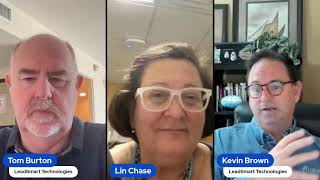
Episode 85 of Around the Horn in Wholesale Distribution (Apr 6, 2024) — hosts Kevin Brown and Tom Burton interview Lynn Chase (Carnegie Mellon PhD; 35 years in AI; university administrator). Topics include Fed-rate debate, supply-chain disruptions (Baltimore bridge collapse, Panama Canal drought), nearshoring investment in Mexico (Queretaro), industrial metaverse/AR-VR use cases, robotics adoption among small manufacturers, B2B commerce and the role of 'semantic planning' for data, cybersecurity concerns (rise in data theft and the XZ backdoor), and workforce/resource implications of large-scale AI. Practical advice: start with a semantic/data strategy, move critical spreadsheets to cloud platforms, combine key silos incrementally, and prioritize data security.
Chapters
Sa Sam.
Lynn. I was hoping he might just miss that part today, but no.
Nope. No.
But the whole Kevin dancing in his chair thing.
Yeah, I don't know if I do it still because I love the music so much or to irritate Tom. Just not just one of those, you know, there's a whole story. Lynn, I'll tell you another time about the music we chose, but I think I was thinking. Yes. Day before yesterday after we were on the phone real quick, I was listening to some of your music. I think ah, maybe we should pull some of this in one of these days. So you're quite a musician as well. But hey, Lynn Chase, Tom Burton, Kevin Brown here. Great to see you both. Everybody okay, all good. We've got the country covered. We've got Tom in Florida, Lynn in Minnesota and I am in Southern California. Raining here. What's it like where you guys are beautiful?
Yeah, yeah.
And if you're online, let us know where you are. Fill in the gaps because yeah, yeah, we've pretty much got the edges of the country covered.
We do. This is good. So hey, I want to dive in before we even get started with today's news and, and chatting with Lynn, we'll do a little bit of what we call kind of our housekeeping that we do each week. So we wanted to welcome everybody. I'm Kevin Brown. I'm here every, nearly every Friday with my lifelong friend and co founder of lead Smart technology, Tom Burton. And we get together on what we call around the horn and wholesale distribution and manufacturing. We try and take the news of the week and the hot topics that are going on in the economy, in E commerce and mergers and acquisitions and supply chain and sales and marketing, AI technology and all the different things that are impacting manufacturing and wholesale distribution, we put them into a newsletter. We send that out to, I don't know, 8,9000 people now each week and we get that information but we try and put a little bend on that each week and we talk about as we so called peel back the onion, so to speak, talk about how that news impacts manufacturing, wholesale distribution. So a lot to talk about today we do that newsletter. If you don't get that newsletter and you would like to, you can reach out to us very simply. You can email us@helloadsmartech.com or you can go to the website for the podcast which is www.aroundthehornpod.com and you'll see all of the ways that you can listen in. You can also get subscribed. So we do two things here. We get together live again Friday mornings, 9 o' clock Pacific and on LinkedIn live, Facebook live and YouTube live. You can watch the recordings there anytime as well and any of those three platforms. Later in the day our editor will take all of this data and by mid afternoon we're on all of the popular podcast formats of Spotify, Apple, Amazon. Wherever you get your podcast, you can do that. The last thing that we'll do, two last, quick last things that we'll do is we'll ask you that if you enjoy the content that you get each week from us, you know, click the subscribe button, click the follow button, let us know even in an email or some comments about your thoughts about our broadcast each week. We would love to hear it. The sponsor of our show that happens each week happens to be the company that Tom and I work for. We work for Lead Smart Technologies. Lead Smart is the developer of the Channel Cloud AI enabled customer intelligence and CRM solution solely developed for wholesale distributors and manufacturers. So as many people know, traditional off the shelf software doesn't work real well. We've taken my 30 plus years of background in wholesale distribution manufacturing. Tom, with a similar number of years in the technology world, brought our thoughts together to develop technology that's built solely as a baseline for your AI journey as well as current needs today with CRM and customer intelligence. So let's kind of dive in. I covered a lot there. Lynn, thank you so much for being with us. I'm not even going to do a big intro for you. I'm just going to say I had the privilege of meeting you last October in Chicago at the distribution strategy groups. AI in distribution. I know Ian's going to clobber me. I'm not going to say this exactly right, but Distribution Strategy group, Jonathan and Ian's great event that they kind of, it was I think the inaugural event for wholesale distribute distributors to be able to come in, hear some industry experts like yourself, like Zach Cass, number of other speakers and talk about the, where we're at with AI kind of where we're going and we had an opportunity to meet and, and chat a little bit and get to know each other and our love for sailing and different things like that. So before we dive in, give us, you know, we're going to get your take on some of the news and what's going on in the world of not just wholesale distribution but in the technology world. I think there's a few topics that doesn't. I could not even be here because you and Tom will go down a great road. But you have such a diverse background. Tell us what you're doing today, but maybe how you got there just as important. Sure.
Well, the basic idea is that I have from a very early age been very interested in math and science and computing, but also music. So I've kind of had two parallel careers. I earned a very fancy PhD from Carnegie Mellon in artificial intelligence. You know when you talk to a speech recognition system and it goes, I'm sorry, I didn't quite understand that. Could you say it again, that really annoying thing? Well, I invented that. That's called confidence annotation. So anytime you're talking to an AI system and it asks you to repeat yourself, you can blame me. But the idea was that it was necessary to sort of situate that artificial intelligence listening and talk system in an error feedback loop so that it could learn when it knew that it was understanding you and when it wasn't. So it's not perfect, but that's, you know, kind of my background. I've spent 35 years in industry working on artificial intelligence, in particular machine learning type applications all around the world, in North America, in Europe, spent a lot of time in Japan and Korea, a lot of time in India, and have just worked with enterprise scale clients globally for many, many years, helping people understand how to apply AI, helping people get their underlying data in order, in order to be able to even attempt AI. So that's kind of been my, my techie career. I did that for 35 years in my dotage. I decided that I would become a university professor and try to manufacture some more people to kind of come out into the world as participants in the STEM communities. And so I ended up in Minnesota where I was the founding director of a new computer science program here at Minnesota State University in Mankato. I did that for a couple of years and then I got tapped by the president of the university to work on data and analytics and planning. And eventually we're going to get to AI rollout as well at the university. So now I'm of all things, a higher education university administrator. So that's cool. That's how I look.
Hey, so three more things I want you to, if you don't mind, briefly reference. You've got quite a background too, with working with some startups as well.
That's right.
You lived on a sailboat in the San Francisco Bay for quite a long time and you play like 27 instruments.
I do, yes.
So a quick overview on those things and we'll dive into the news let's.
Do the sailing first. So there is nothing better than a blue water experience where you're offshore for weeks, weeks. And just, you know, it just changes your. My spiritual connection to the world and my sense of what it means to be a part of the planet. I think it's really cool. I know you're more of a racer, I'm more of a cruiser. I think we kind of figured that out over. Yeah.
But I've done some distance racing, so I, you know, the red sky at night, sailor delight stuff. Right. It's just that nothing better than watching the sunset and sailing with a, you know, moonlight throughout the night and. And I've done that Pacific Ocean, Atlantic Ocean, Mediterranean, Adriatic Sea, and the. The major dangerous Sea of Lake Michigan experience I've ever been on a boat. Lake Michigan.
Yeah. I think the Great Lakes are terrifying. I live very close to Lake Superior now and it's absolutely terrifying. I think those overnight experiences. My favorite crossing was from Southern California to Catalina and having the midnight watch and being at the helm overnight. Everybody else is asleep and it's just me and the fog and sometimes the stars and wondering if I'm gonna hit a sunken shipping container.
I'll tell you, we jump onto your startup and your music quickly before we get to the news is my first experience offshore was at 14 years old. My memory, I was 16, 17 years old. My dad told me recently I was barely 14, was bringing a racing sailboat from Long beach to San Francisco. And, you know, we transited quite a ways offshore and I didn't realize I'd done that at 14. So kind of a cool experience. But so a little bit about startups that you've done as well quickly and we'll kind of dive ahead.
Well, at Carnegie Mellon, you can't help but get involved in the entrepreneurial mindset. It's kind of built into the bloodstream there. And so the first thing I did when I graduated was join a startup. And then I did a series of startups in ever increasing positions of authority until I raised my own money and started my own company with a very dear friend named Yoon Kim. And so, you know, I've been CEO of a Silicon Valley startup company in the software space. What an experience, right? What a hard.
Isn't it?
Life forming, life changing. Yeah. Just incredible. I can't tell you how grateful I am to have had those years.
Yeah, that's good. Good to hear. So the reason I mentioned that. Go ahead. Just the reason I wanted to get that out is you have a broad level Experience that you bring to our discussions. Go ahead, Tom.
No, as we get into it, Lynn, obviously kind of an OG here in the AI world, right, for 35 years, did you think that, you know, if you look back 30, 35 years, do you think it. Did you ever think it would take this long for AI to kind of enter the mainstream and become.
Yeah, we've been popular. Part of that. Yeah, we've been through a bunch of cycles of AI winters. I actually. Yeah, that's. That's what everybody calls it, you know, it's winter, right? Yeah, yeah, up and down and the, you know, the adopt crash cycles. I'm actually astounded at how far we've made it. I did not expect. I mean, when I started, you know, when I was 19, I'm 61 now. When I was 19, this is where you guys go, you couldn't possibly be 61. Look how beautiful you are.
That's right, that's right. Well, you know that earlier.
Well, I started when I was 19, I'm 61 now. I. We didn't even have statistics. We didn't have. We weren't using statistical models. We weren't. We had statistics, we weren't using statistical models. We were building closed form solutions and building kind of direct symbolic representations of what we thought an artificially intelligent creature would do. We didn't switch to statistics until I was in my 20s and I genuinely thought that this would just go on and on and on forever and that we would never cross the line. I just typed into Suno AI last night a request for it to write me a song, a country song about meatloaf.
The food or the musician?
No, I didn't tell it, which I said, write me a country ballad about meatloaf. And. And it wrote, recorded and produced for me in less than a minute, a really funny, well produced song about meatloaf. And I mean, I'm like, wow, AI, the AI part of me just put the musician part of me out of work. It's done. Game over.
Yeah, interesting.
Very, very interesting. And it was a funny song with weird like wordplay in it that was right on target and actually very entertaining.
So, well, not to go off. But then, you know, there's all these things now I don't think you can copyright AI generated music and. Or at least there's discussion on that. So it'll be interesting to see in the future if that meatloaf song becomes a best selling hit. Right. What does that mean? You know, do you own the rights to it or no. Or Whatever it's going to be anyway.
Very particular commercial license that you sign up for. So, you know, but you're right. It's a very. The shifting ground is very.
You know, I'm thinking if you've got a hot new country ballad, you could pitch it to Beyonce.
Kevin and I had a long conversation about the Beyonce Country Carter album. I'm a huge fan of that album. I had never been a Beyonce fan before, but I have listened to. I listened to the whole album again last night after we talked. Yeah.
Very good. All right, Tom, take us to the news. William, a friend. All right, so we're back to our. Our weekly discussion. And. And we're gonna let Lynn in on this bed if she wants. What? Tom, you, you, you. In fact, I'm gonna ask John maybe later today when he. John, if you hear this when you're editing things, maybe cut out of last week, The. The bet that Tom and I made about Fed cuts this year. So Tom says. What did you say zero?
I said one. No, I said one. And I'm doubling down on that.
Are you.
Despite what this says here, I mean, you look at the job numbers that just came out today, way above what was expected. The economy is steaming along. I don't see any way, honestly, that they can certainly start cutting in the next few months. And I think we're going to see one. We may see a half a point on that one just to kind of appease people if it happens. But I'm doubling down on my one. Good.
So you're. You're doubling down based upon. And we've talked about this a little bit already, is. You're doubling down on that. So we're talking about two stakes. Is that the gig?
Whatever you. Whatever you like.
Lynn. We have a place that. When we have a small office up at Santa Barbara where Tom normally is at. And, and when I'm up there, we have got a little local steakhouse, Chuck's. Chuck's Steakhouse of Hawaii in Santa Barbara that we go to. And so when you're in Santa Barbara next, we'll take you to dinner there. But so I decided in this discussion, Tom, I think the. Here should be. The deal is the. The winner buys the stakes, the loser buys the wine.
Okay. Okay.
Right.
Because whatever. Whatever works.
Has a pretty good wine list. And I've got some. My eye on a couple things. There's. When we get two cuts. So. Okay, I just, I say this right, and back to the reasonableness in this discussion is I think there's two factors that we have to think about what's going on with this. I'm going to ask Lynn if she's got a take on this and wants in on the bet In a moment. But the first is all of the economic data that they're using. Right. That's the statistical model. The other side of it is I think that then we, they don't talk about it and we don't talk about is there is a whole, I don't know what else to call it other than an emotional side of this or a human side of this. The stock market has already baked in some of these changes. Right. There's going to be potentially more of that happening. I think what the stock market, rather than baking in these anticipated changes is saying is we don't care. We're just going to charge ahead and do what we do as a stock market because stock markets are following what's really happening in the world versus 30 or 40 years old or 50 year old data points. Right. And I've talked about this on a soapbox that maybe the statistics that we use to track inflation are not the right statistics anymore. Don't know, not an economist, not a, not a, anything like that. But I believe there's an emotional component to it and the people of this country are expecting something and I think we're at a place right now where they're already maybe, maybe you win and it's one because of that emotional factor. I think what we just see in this article is that there's, you know, multiple Fed officials who are voting officials who are saying they still see that we have a window for three. I think two might be the number. But I think there is that human factor that we're not talking about just one guy's thoughts.
Well, I do agree there's an emotional aspect to it or maybe even a political aspect to it.
Yeah, good point.
I also think the election, I think.
Yeah, well, and there's also. Right as, again as we have higher rates, that then means our, the debt, the interest we're paying on our national debt is that much higher as well. So there's a lot of variables that factor into it. Like I said, I think we could end up getting one half point cut which might be kind of like you said, handling the emotional or the political aspect of it because it's a greater cut. But man, if you just look at the data and you look at what's happening, it's hard for me to. Again, I'm not an economist either and Lynn, very interested in your take on this, I just don't. It's hard to justify three. It's just given what I'm seeing right now, I just. It's hard to see that that's going to happen if Lester's like a, just a completely political reason, which they say over and over, the Fed is not political. But we'll see. Yeah. Lynn, do you have any, any thoughts before we.
No, I'm, I'm on this one. I'm just like, I would like to see what happens. I still have this inchoate, probably completely irrational wonderment about what is really going on in the economy post Covid. I think we've seen a lot of cleanup in the supply chain. I think we've seen a lot of uptake in certain kinds of employment sectors. But the impact of AI is real in the domains where I work. I am helping to run an undergraduate program in computer science, and allegedly there are 8,000 computing jobs in Minnesota that have gone unfilled for the last few years. But the doubt about what the role of AI is going to be in that employment sector is so large that not all of my students are getting jobs as quickly or at the level of pay that we would have expected. So there's some kind of something changing under the surface?
Well, there's a disconnect with what you just described. Right. I mean, we're hearing about all these jobs, but if people aren't getting jobs or at the, at the rate that they had expecting, that's an interesting factor.
But it's probably sector specific. And I think AI is impacting that in some sectors more than others.
Good.
Okay. Well, we'll have to see. So here's, here's the closing question, Tom. And we've been having these little, little wagers for, you know, close to, well, probably about 50 years, probably at some level now. Tom and I have, you know, I think, you know, Lynn, that we've been friends since kindergarten, some days closer friends than others, but. But it won't be the first time one of us had to buy the other guy a beer. So, Tom, you had mentioned maybe there's a single half point cut versus multiple quarter point cuts. So if it's a single half point cut, is it a wash? Do you win?
No, of course I win.
Of course.
It's just the number of cuts that we're saying. We didn't say the amount. It's the number. Okay. So, yeah, if they do three half point cuts, you win. If they do three quarter point cuts, you win.
Doesn't matter now, do you guys need an arbitrator or.
That's what I was, that's what I was looking.
As we get closer. As we get closer.
I mean, because, because I'm saying two, maybe three. Thomas saying zero, one. And I'm.
I never said zero. I always said one.
Okay, okay.
Yeah.
By Tom saying one, I'm saying two or three. But I've always had.
Just call me if you need a mediator.
You will be. We should agree right now that Lynn is the mediator on this. But that's fair enough.
I'm good. Whatever.
All right. So we talked last week was. We talked about in our. We're in our supply chain and in the economy section of our newsletter and we talked last week about this huge bridge collapse in, in Baltimore or in the harbor there. What a horrible thing. You know what I've been thinking about related to this a number of times is lars Noslin from 3M made a great comment on the discussion. Right. Because this is a factor. If you only looked at this bridge collapse related to supply chain, probably not huge global news.
Right.
But when you think about this happening, right, and this is the major port in the US for cars to be unloaded. Cars can go other places easier. But this is the main spot that, that farming and agriculture equipment really comes in. And it's not as easy to move where that stuff is going through because there's some specialized skills and some things that go through that. So just saying, hey, we're going to go to New York or Savannah or wherever it might be is not as simple as that. That Lars made a great comment in this discussion last week and he said, you know, it's not just any one of these things about the, the Houthi attacks and the Suez Canal, right. That are supposedly Iranian backed and the, the, the turmoil, you know, economic, or what would you call it, I guess political turmoil that's going on in those arenas. And then you've got. We post in our. An article today. One of the last sections of the newsletter is our. We call it a second look. It's articles that we may have discussed before and follow information. And that's about the Panama Canal, right? And the lake on the far side of the Panama Canal is hugely impacted by the drought in Panama. It's not changing quickly, so there's fewer ships getting through and they're a smaller size. And to Lars's point on our discussion last week is when you put these three things together, we have a major global impact that's happened out of this. Good news is they're getting a few, few small ships through right now. But just quick thoughts from either of you before we jump into meaty technology stuff on that.
No.
I'm the only guy who cares.
No, it's a complete side note though. I've, I've gotten and you know, Lynn and Kevin, you're all you guys are, you know, have a lot more knowledge of, of nautical things than I do. But I've watched a few YouTube videos about just sort of what happened there and the fact that there were nothing around the like the whatever they call. Yeah. No bumpers on the pylons and, and just what, and, and the sequence of events that happened with that, that caused that kind of perfect storm, I guess for that to I mean just really, really. Man, I had no idea how much intricacy there is in all the nautical things and the navigation and all of that. And I just think it looks very unfortunate that all of these sort of unfortunate problems came together at one time in the wrong place. So.
Well, it's to go with that, Tom, in you know, I'm a, I'm a double geek on this, right. Because I'll call myself a mariner, lack of a better term related to this. I just love things, all things marine and but having been a firefighter for many years, I was very interested in the emergency response side and I ran across on YouTube last week the first like 15 minutes of the 911 traffic or the radio traffic from the Baltimore Fire Department. And then as the state got involved and listening to the voices of the first responders to realize the bridge is gone. Then it was there's a ship into the bridge. So it's quite an intriguing piece there. And on that. And so anyways, cutting to the chase, we got a lot to talk about today. Something to pay attention to. Good news is some of the trapped vessels are getting out, but it's really only smaller ships. It's going to be a long months before there is transiting of, of cargo ships through there.
Again.
We'll keep following up on it. We're paying attention to these things as a key. So let's jump in and talk about the next article we have here and talking about what's happening in just south of the border in Mexico, a Business Insider article about the borderlands Mexico. It talks about investment surge in Mexico as company supply chains plan for new factories and so forth. All of this ties full circle, right? Tougher to get goods moving around the world. Right now we've got huge increases in fuel costs, delays in Shipments and container prices are through the roof. So we talk. Lynn, you know, you may have heard in the past when you've joined us for the show is we talk oftentimes about on shoring and near shoring. This is the first piece where we've seen actual statistics related to that as well.
Yeah, Ben, you were just there. What did, what did you see and what are you seeing?
I, I spent about a week in Queretaro, which is a city and a state just north of west of Mexico City. And I was flabbergasted and astounded at how strong the economy is there and how much investment is going into in fact supply chain in that region. So I went there as a part of a delegation from our university to negotiate exchange relationships with a constellation of six technical universities in that state, in that city and state. And they have, I'm just so impressed with the state government and the federal government in Mexico in their forward thinkingness. They have developed something called a triple helix model which aligns government both at the state and federal level and industry, major industry players and the universities and they have co located technical universities in industrial hubs and one of them is in a major supply distribution hub in and it's I think the third or fourth largest supply chain hub in North America now. And I heard it was all in Spanish. And so they were talking about FedEx and De Ache Ele, which is DHL, sure, right. Which is UPS. And I visited and went to the university that's situated right in the middle of these huge corporate complexes where there are trucks and trains and airplanes coming in and out with material all the time. And I was just so impressed with how clean and safe Queretaro is and with the youth and vigor and sort of rigor that they're applying to not just supply chain, but we also visit the aeronautical complex and the automotive manufacturing complex. But I mean they're just doing it right. And boy, I was super impressed. And my, my provost who was with me had never been to Mexico before and he turned to me about halfway through the visit. We were there for five or six days and he's like, this is not the way Mexico is portrayed in the United States.
No. Yeah, that is a great statement. You know, and I think most people in the US have two perceptions of Mexico is poverty and beach resorts. And there's a whole country in between that that is thriving in so many ways. And if you look at the manufacturing side of it, you know, it's, what's funny is if you drive a, a Volkswagen or a Ford. There's a high likelihood that there was a whole lot of either components for your car or your car was assembled there and look inside some of your clothes and it's astounding. I've, I've had some involvement with manufacturing in Mexico in a couple of different roles I've played in the past. And if you get into some cities like, I mean, Monterey is a good example, you know, just thriving, bustling city of commerce. And to your provost's point. Right. Our perception, I think you've kind of nailed it. Our perception this country is not what that country really is when you get down in it. And funny enough, my next door neighbor that just bought the house next door from us about a year ago is a retired corporate telecom attorney from Mexico City. And I have some conversations with him that's like people need to hear the deals that are being done, you know, and, and in your piece there, but Triple Helix, you mentioned. Yeah, to me that sounds like something I would like hear during the Winter Olympics. Figure skating.
Well, they mean the, the, the completely intertwined and, and centrally planned interactions between the academic institutions, the government institutions and the industry partners. The industry partners help the universities make sure that the content and curriculum that's being delivered is absol. Appropriate so that the graduates are really ready to hit the ground running when they come into their jobs. And the government is funding, it's funding initiatives that allow industry and universities to be very closely tied and to be working together very effectively.
So in wrapping this up, here's the gig of what's going on there, right. We've been talking for a year and a half on this show about near shoring on shoring and the increase of that happening. And the reason geopolitical is the term I was looking for earlier. Geopolitical tension in China, Taiwan, Asia, pressure, US Iran, relationships with what's going on in the Suez Canal. Here's what happened in Mexico this year. $31 billion has been invested in manufacturing infrastructure by specific companies year to date, 31 billion. Last year, 2023, all total 36 billion. So, boy, I don't want to say you heard it here first because you heard it a lot of places. But what we were talking about early last year, late 2022, about this coming around. Here we are. So anyways, that's good. Why don't you.
I wanted to hit, I just wanted to hit Bob's comment real quick before we leave here. And I'm Lynn, I'd like your take on this. You know, he's Talking about the approach of building redundancy in local sourcing. Do you see, or maybe it's not 100% clear. Do you see that companies are using Mexico as a redundancy or kind of an alternative, or do you see that a lot of companies are just saying, hey, I'm moving my, a lot of my supply chain to Mexico or you know, in South America, Central America and going all in.
I'm not sure I can comment on it so much from the supply chain point of view, but from the aviation point of view, Queretaro is now the fourth largest aviation parts manufacturing and assembly hub in the world. And it's only behind Seattle, which is Boeing, and Toulouse, which is the European consortium manufacturer. And one other location that I can't remember, it might have been in Asia somewhere. So it is very clearly in the aviation industry. Anyway, a fourth leg, not a redundancy play. But I don't know from a DHL and UPS and FedEx point of view, I do know that one of the things they're taking advantage of is good land and rail connection to their seaports. Queretaro is kind of centrally located between the east and the west coasts of Mexico. So that might be more of a redundancy from a network, a supply network point of view.
I think there, I think there's a mix of that which I've seen in some of my experiences we've got in, I've worked in the textile or for me it's been protective clothing arena where plants in the U.S. plants in Mexico, some very highly skilled workers in Mexico that work at a lower rate. And with NAFTA it's easy to move things back and forth. And so I think we're going to see much more. Tom, one guy's opinion here is I think we're going to see much more of the mainstay manufacturing and kind of co manufacturing tied up into this. But I think we're going to see a growth of not just redundancy but new, new technology there as well, or new new factories there as well. The key thing that I think we've got to watch really closely in this and we need to move on because we're going to not have taken advantage of Lynn's background and our guests here if we don't get into some of our technology discussions deeper quickly. But last piece on this is watch closely what China does here. Right, China. Of the, of the investments that have come in, 57 this year. Today 57 are from the US followed by 17 Germany, 14 Argentina, but 6% of it's from China. If we start seeing that number of from China move up, you might start seeing specifically with this, well, this political, I was almost going to say regime, but political group that's in charge of the country right now from the president side of things is we may see some pressure on what we're doing in Mexico as a country if China's stake there increases too much. So let's watch that in coming days, weeks, months, and so forth. So jumping into our manufacturing distribution segment, 6 industrial metaverse use cases for manufacturing. Anybody want to lead us off on that?
Yeah, I asked Lynn earlier, you know, I asked her, is the Metaverse really kind of a thing in manufacturing yet? And then I thought your answer was really good. Is that virtual reality, virtual augmentation has been around for a long time, but it's still kind of working its way through the system in a lot of different places.
Yeah. So I remember years ago working when we were first doing virtual and augmented reality, working with a manufacturer in the Pacific Northwest who had a line, a manufacturing line that included a lot of radioactive materials. And before they could in good faith put a new worker on the line, they had to go through a significant amount of training, safety training and operational training. And they were doing it all with virtual reality and augmented reality. And I thought that was a really, really great application. But that's a, admittedly from a, from a total dollars in the manufacturing industry, that's a, that's a niche case. So there's that. I also saw some really cool work at Boeing before the word Metaverse came online, where they were using augmented reality to speed up parts placement and harness connectivity in their wiring line, in their, their wiring production line. So, yes, I think the Metaverse is a very real thing in manufacturing, but I think that a big play, a big general play, a big application in general, is probably going to have to end up being something more along the lines of facility layout or facility and process planning, something that everybody can use. And I think we're still in the early adoption phase with those kind of broader use cases.
I think those are great points. And you know, you made the comment about, about training with that, and that was number five on that list of six. And that one was the one that really stood out to me. And my, you know, my background being in starting my career in distribution world was with safety equipment. And, and if you start thinking about in that great example, in that nuclear setting. Right. Is pretty niche, as you say. But you know what, there's thousands of people just in the US being trained every day on working at heights, how to wear fall protection correctly. Right. How simple would it be? Rather than putting somebody up on a, let's just large piece of scaffolding and assume that they're comfortable with that. Why not replicate that with virtual reality or augmented reality? So they feel they're standing two feet off the ground on a piece of scaffolding. Right. But they feel like they're 40 stories up. And how do they work in that environment? Is that the right person to continue even training? Right. And I think, you know, that if you think about military pilots and even commercial pilots have been training in simulators for, I don't know, 50 years probably at some level. And I know that's how the military kind of weeds people out as well. I, I see some phenomenal pieces. I mean, the facility design and engineering piece that you were mentioning, Lynn, is great. But the training application for me with this seems phenomenal. Not. And not just in that nuclear setting or the safety thing that I said, but, you know, just using, using different tools and, and equipment in that setting I think could be really interesting.
Yeah. I love your idea of screening possible applicants or early stage. It's great. What a great idea.
Well, I mean, if you just, if you take something as simple as, you know, working at heights. Right. There's hundreds of thousands of people around the country that, you know, probably millions, every around the world that put a harness on that have to connect to a, you know, a welded anchor of 5000 that can hold 5000 pound rating and all of these things to it. And sometimes companies will hire somebody that or somebody in their job now needs to go be involved in that. You don't know how they're going to react to that until you put them in the setting. So I think what we're going to see is over time there's going to be so many of these things that we can do. And it just opens the discussion broader for this idea of how we're using the Metaverse digital twins with AI and robots. Right. Other things, all other things we're going to discuss today. But I think what we're our workplace today and this is, I'm kind of passionate about this because, you know, as we talk so often about people that are concerned about their jobs or whatever, and we were talking about this earlier today before we went live and you know, with the, even with the song you talked about.
Right.
Is you're out of business. Well, I think when we look into specific wholesale distribution and manufacturing, these technologies are just going to make us so more, much more efficient now. Maybe we won't need to hire as many people, but I don't see a net loss of jobs in, in that many places. So anyways, that's my takeaway is I think when you talk about the Metaverse Digital twins and some of the things that we can do with, with this, we're in a great place. All right, let's jump ahead. We had another article about small manufacturers building a case for robotics. That article, if you, if you have the newsletter, take a look at it, it ties right into this previous discussion and what we're going to talk about a little bit more. One quick thing, Tom, before we move ahead into our E commerce and marketing segment is if you're listening to us on the recorded podcast we're reviewing and you can't see that if you're on the podcast on our screen next to the the Today we truly have a rose between two thorns. With Lynn joining us here. You, you can't see our faces nor the articles that we're looking at, but we publish the newsletter every week. It's called around the Horn in wholesale distribution. It's sponsored by Lead Smart Technologies. And if you would like that newsletter, just reach out to us at www.aroundthehornpod.com. you can sign up for it there. Send us an email@helloadsmartech.com so e Commerce and Marketing segment 4 Ways AI will Reshape B2B Commerce Mr. Burton, why don't you start us off?
I don't know.
I mean, I'm just going to start. You know, there's a few good points in here, but I'm going to bring this over to Lynn because I think we can have a good conversation about this.
Should I just go to the restroom and come back in time?
It seems like data might have something to do with this. What do you think?
Yeah, do so even though like I've had this big, fancy large scale career in artificial intelligence, I am really, really have for the last decade anyway been really focused on earlier stage adopters and getting people getting companies and helping small and medium businesses and larger businesses get into the digital realm. Really just kind of getting on, getting on to the digital platform, getting out of initially it was getting off of paper and into digitized formats, but now it's getting out of spreadsheets and getting into platforms where there's a certain amount of what I might call semantic framing going on. Meaning, thinking about what is the meaning of the data that we're working with and Planning for what is the data that we need, how do we want to be organizing it and accessing it with always in mind what are the decisions that we want to be able to support and what are the actions and initiatives we want to be able to undertake by standing on this data platform. And that is kind of the gong I've been banging on for the last decade because it's just, it's everywhere. I mean people can feel really overwhelmed with the amount of data they have. They can feel overwhelmed with what they think of as they're not clean data or the lack of quote unquote cleanliness in their data or the aging out of contents that they have content that they have in their data. And that can be overwhelming. So I'll stop there for a second. Tom, Kevin, any, any thoughts?
Tom said I'm qualified here.
Yeah, I liked what you said about semantic planning. I think that is not something that's in most vocabulary of a lot of companies and data. When you think, when they think of bad data, that's predominantly looking at data hygiene. But there's a lot of things like I see this every day and the work that we're doing, the data hygiene, yeah, there's some data hygiene issues, but to me that's not. Or that's not what we really run into is being the showstopper. It's getting that semantic planning and looking and saying okay, how can we take even some data that we have and start utilizing that and then let's start seeing the analytics or the things that we can use with that and then keep adding to that incrementally. And I see that and I'm, you know, it sounds like you're seeing the same thing is there's a lot that can be done incrementally. It doesn't have to be a big bang. We have to spend five years doing data hygiene and, and all of that. But no, you can start moving things over and taking small steps and kind of getting a minimum viable data strategy in place.
That's exactly right. And I'll give a just a simple example. Some organizations have just for historical reasons, just because of how things have operated, especially during the growth phases of maybe a family owned business. The operational data around who the customers are and what they've been ordering might be separate from important financial data related to the costs of the raw materials or the costs of the SKUs that are being shipped. That happens all the time and it happens in every industry. In my world, in the university, in running a university, it's that the catalog data, meaning what are all the courses and, and what are all the prerequisites for all the courses and who can teach them, is very traditionally separate from any kind of cost center information about what does it cost to actually hire and teach, you know, have a faculty member or pay for the lights to be on in the, in the classroom, that those are typically siloed from each other. And when it comes down to being able to do really important strategic planning, some semantic planning around the data has to be done. And you have to take small steps to say, well, let's connect this chunk of the operational data to this chunk of the financial data, and let's plan to do this going forward. Let's plan to how we're going to keep that data aligned and let's put some auditing in place to make sure that it stays clean once we've cleaned it up.
And just to tie it back to this article, right. The four ways, you know, one of the things they were talking about is product catalogs kind of going away, but using AI to basically, you know, just use that for search or conversation or so forth. All this stuff that we're talking about with data can absolutely be applied to the things they were talking about in B2B commerce here. So it can be applied in B2B commerce. It can be applied to your sales team, it could be applied to your operations team. So taking the time that data semantic planning you're talking about has a lot of different tentacles and where it actually can create benefits in the business. And it sounds like, Glenn, you're doing a lot of that with helping companies kind of get that first, as we are too. And again, like I said, data hygiene, to me, what I'm seeing, that's the least of the issues compared to some of the other things that are better.
And I think what, you know, what goes with that, right. Is I think sometimes people are, you know, in our world, we're talking to wholesale distributors and manufacturers every day, is sometimes I think they underestimate the data in general, is in this, you know, Tom, you've made this comment so many times over the years. Is your deep experience in business is, you know, I think you've said, you know, you've never seen an industry that has the amount of data that wholesale distribution has. Right? You. We work with companies that are 100 years old and, you know, they've got, you know, 20 years of invoice data and they're pumping out 200 invoices a day, you know, whatever it might be so but I think sometimes they get rep people get wrapped around the axle thinking about, oh well, I have emails in the website field on our ERP system or you know, or I have three addresses that are, you know, or the simple one we see all the time. Right. Is we have ACME Manufacturing, ACME MFG and ACME all in our ERP system. So my dad is bad. Well, it's like that's a, that's a, you know, a fly on an elephant right at this when we're talking about the bigger picture of what we need.
To look to accomplish.
So yeah, we completely agree with that. One of the things that I often have, I often spend time with clients and collaborators on is helping people get used to the idea that the data doesn't have to be perfectly clean. You can refer to ACME three different ways but still be able to make the connections between the data silos in ways that lead you to understand. Answer questions like which customer segments should I be focusing on right now? Who should I be upselling what to do which. Which skews need a little love right now because if we don't start moving it now, it's going to time out in the warehouses and we're never going to be able to move it. You can answer questions like that even on top of data that isn't perfectly clean. As long as you're thinking about. As long as you're thinking about. Okay, what kind of noise am I willing to deal with once these things are combined?
Great, great comment. So if you take back to the. And you're obviously both familiar with it, but I've not heard that phrase. Was it semantic planning? Is that the term?
I think we just made it up. I was, I love it.
But I've never heard and I'm feeling like odd man out.
No, no, semantic just means the meaning of the data instead of just thinking about the overwhelming.
I get it. Yeah, I love it. I thought maybe it was something they taught in like computer science courses or something that wouldn't have let me even in that building but let alone the class. But I think when you talk about that, Lynn, it's so powerful because you mentioned something that is might be the single biggest issue that most wholesale distributors and manufacturers both faces siloed data.
Right.
And I think this is one of the biggest values that AI is going to bring is when we can start thinking about data lakes that have, you know, every, every, you know, valuable spreadsheet that they've had. All their live ERP data, their marketing automation Their E commerce, other connected systems, maybe there's some supply chain data coming in. And then we have every man from a distributor. I've got, you know, every spec sheet from every manufacturer that I've had. I've got all of that across the board. And I have yet to ever meet anybody in wholesale distribution manufacturing that has really figured out how, forget about AI, have found a way to really take advantage of their silo data. And there's ways to do that with proper CRM tool planning right today without AI. And then the things that we're going to be looking at, Tom's team or Tom runs the development side in our company and the things that we're building within our company is being able to talk to your data from all these sources and getting those singular silos from many silos. And it's astounding to me what's available to us in the near future.
So, yeah, Tom, the bottom line for me is always it doesn't really matter how deep into your AI journey you are, whether you've not gotten started yet or you're just having your folks play around with ChatGPT to kind of get used to it, or whether you're really deep into it. The, the notion that we have to be stewards and apply husbandry to our data is really critical. And the kinds of things that we have to constantly be thinking about are what are the decisions and choices we're trying to make given what's in this data, given what we know is in this data. From there, sky's the limit. You can do very simple things that are very powerful, or you can throw everything into a data lake and bring in the biggest large language model and have it solve all the problems. You can be anywhere on that spectrum but still get a lot of value out of it.
And look at that across the organization, not just accounting has all this data and then marketing is on an island over here and planning is over there. So I think that's good stuff.
No, I just want to say one thing. I just in. We could spend probably the whole afternoon on this is, you know, the quality, right? What you're saying, Lynn, is a little bit of good quality data from a semantic perspective can produce a lot of big insights just with a small amount. And those insights can then be used to determine where you go next. You don't have to throw the kitchen sink in to think you're going to get something back that is a value. Anyway, I think we need to do a session like the Five Myths of Data or something. And, and kind of go through that because I do think it's something that a lot of companies are putting attention on. We've talked about it, Kevin, I think a week or two ago, what was 60 some percent of companies saying the data, data projects are on their horizon.
I think what we should do is if we can convince, convince Lynn to come back later in the year, she can then adjudicate the stake that you owe me and we could do a separate session where we're just talking about data that. Okay, I think that would be. That would be.
Let's see if that would be a service to humankind.
Yes, very good. Okay, so to cover a couple of other things, there's. We have another article there about manufacturer sales to rebound via digital commerce. Great article. Some good, good. I was going to kind of jump ahead to some of the other pieces past this one, but there's some good charts in there. If you're getting the newsletter, look at those charts in there. They've got some good data there. If you're not getting the newsletter, let us know. We'll get that to you. But a couple of pieces that I wanted to talk about since we're talking about data. Right. The next article as we get into our technology, cybersecurity and AI segment is this article from Infosecurity magazine about a report of a sevenfold increase in data theft cases. So we're having all these discussions about data. Right. We've got all these cybersecurity issues as well because, you know, think of the way it comes across in my mind is the better I get with my data, the more valuable that might be to somebody else or somebody else wanting to hold me hostage with my data. Did you, either of you have any takeaways from that article?
Well, this was more personal devices. It looked like, you know, taking money off.
They mentioned personal, but then they talked about business as well.
But yeah, of course, I mean, is. Is. It's anything that's got value, right. Is potentially at risk for some sort of criminal activity. Right. And you know, data, what we think about data, that's, you know, Social Security numbers and personal data and all that stuff. Well, that's just. But all these business analytic data that we're talking about and the, you know, the quality of your semantic planning and how you put that together, there's some potential value and yeah, of course you're going to have to treat it as an asset because it is an asset. So.
Yep, yep, that's positive stuff. Lynn, any thoughts on that before we move away.
Just real quick, there was a major earthquake in the software system security. I emailed you about it earlier in the week. Kevin, the XZ backdoor.
Yeah, talk to us about that because I just realized we did not include that and I had planned.
I'll be super quick about it. In the software development world, which is where I spend a lot of my time, there's the notion of the software supply chain, which is a little different than the way you guys use the word supply chain. But the basic idea is that over the last, let's say 15 years we've shifted entirely from a software development approach as a world, this is on the world level, not just in the United States. We've shifted from companies writing proprietary software that they have absolute 100% control over and every line of code is written by the people who are paid to be in the room writing the code, to having a very open software supply chain, meaning components of software that get built into the systems that companies are building and selling as products are coming from the open source community. And it's about 90% of software now that is sold and delivered has about 90% of the componentry is from the open source community. And so this open source approach to developing software has many, many benefits. It's a very interesting almost socialist model or almost communistic model of how people are applied, how software engineering talent is applied to the creation of software. And built into it is a system by which developers have develop reputations and you have the right to contribute to code that gets produced and then sent out and used. And this XZ backdoor which you can read all about it is the first major expose of social engineering happening in a way where fake. It was a long game, multi year fakery around who the developers were and pretending to be trusted people in a very core piece of software that affects many, many operating systems and therefore many computing systems. And so it's kind of shaken the world dramatically to think that social engineering, which used to be just phishing and calling up someone and asking for their password, is now fundamental. It's like in the foundational levels of how all the software that we run is being built. And now everybody's looking left and looking right and going, do I really know who Joe Schmidt 3 from Chicago is? Or is that guy a Russian military in fighter?
So is that mostly tied to open source software then or.
Yeah, but that's most of the software in the world, right? Okay, yeah. So it's pretty, pretty, pretty interesting times in the software supply chain world. Yeah. And it directly relates to this uptick in data security and data violations and what you're seeing in the data.
So bringing that full circle to if I'm listening and I'm a wholesale distributor in middle America. Right. Is when Ian Heller was with us earlier this year with we called it our Legends show because we had kind of three of the top probably, I'll say 10, 10 minds or so in wholesale distribution that were with us. We had Mike Marks, Dirk Beveridge and Ian with us. And as we were winding the show up down, we were talking about cybersecurity and Ian brought up an actual instance that's happened of a. And it ties into literally what we just read about earlier in the week. That is it. I don't remember if it was chat GPT that can do this, but within what was it, 60 seconds of listening to your voice can replicate your voice moving forward. I can't remember what the the time was but there was an instance where somebody got a phone call at an electrical distributor wanting to buy X thousands of dollars and have it delivered of copper tubing. Wasn't the company, it wasn't a standard address.
Right.
So now you start thinking about this. When we think about deepfakes or whatever the term becomes Right. Is, you know, and we had a comment on there from on that particular show from somebody that said they won't deliver to a new location for one of their customers unless it's been physically verified that there is a job and a project and it's that company going on there because you think about, you know, the, the price of copper and other commodities. Right. And how easily those can be resold. This is the kind of stuff you just related it to is that how big of an issue it is potentially with software and technology, you take that across the board is what happens when we get an order for something that we normally wouldn't get. But it's Bob's voice. I've been talking to Bob for 20 years. Right. So interesting times. All right, Tom, any other closing thoughts on that piece?
No, no. Let's move ahead.
So I want your take. We don't need to spend a lot of time on this but all we've been talking about in the world for the last, what is it, 20 some about 20 months or so has been ChatGPT and, and open AI and the Microsoft relationship and Congress said not here.
Yeah, I think it's a bit of a non story. I think that Microsoft obviously is working on, you know, things that will pass the government scrutiny and pretty soon this will be a non. I mean, look, these are early products. Right. And doing anything with government and government level security and government level regulations and so forth is not for the faint of heart. And so I think it's going to be, you know, I don't think it's going to be a big deal. I think Microsoft obviously has the resources and, and a lot of the other big companies that do this and eventually it'll, it'll be, you know, able to pass some of the scrutiny on that side.
Well, the idea behind it is security.
Right.
It's right. So somebody does. And they banned the free use of Chat GPT. But it's interesting just to use the Microsoft copilots with this which are supposed. And I think there's a big difference here. And both of you could correct me if I'm wrong here. Please do. Is there's a big difference between saying how you use the free version of Chat GPT where someone could load in some legislation not realizing that they just put that on the Internet. Right. I've shared over and over an example of a security document I had for how we keep our congregations at church safe that is goes out globally from my faith. And I almost did a comparison to two different documents from a previous one and caught myself. But those things could happen. Right. Versus having, you know, what was it called? Clippy from right. In my PowerPoint if I work in Congress. I mean those, those are pretty unique differences in my mind. Or use cases.
Yeah. And I think this is, this is basically a safety move. Copilot is built into the Microsoft Office suite now and they're saying turn it off so that you're not accidentally drafting the next legislation for whatever. And Microsoft is listening. Just, just you're not allowed to use it. I don't think that they're going to end up with not allowing people who work in congressional district offices to use Microsoft products. It's, it's a temporary.
It's absolutely attentive to your point and to Tom's point. I agree there is another spin and I'm gonna, I'm gonna drop a grenade and we need to move on. But here's my grenade. In all of this. There will be a line of thinking and it will be talked about in lots of other podcasts out there that this is part of also this administration scrutiny and sometimes said torture of big tech. So let's move on. I'm just going to throw that bomb out there and we'll see what happens next. We'll go into Our sales and M&A section we don't need to spend a lot of time here. We talked at length last week. Blockbuster deal done middle of last week. I think it was actually last Thursday with Home Depot buying SRS Distribution. Huge deal. Biggest scene in many, many years. Mike Hockett, who's been on our podcast with us multiple times, senior editor at Modern Distribution Management, did a great recorded conversation with an industry expert on M A in that side of the distribution space. So if you're interested in learning more about not just that deal, but an M and A roundup for year to date so far, MDM is a great resource for that. So let's kind of jump ahead. We've got. There's a few articles in our People in leadership segment seeking AI's productivity potential at the ground level. And then we've got another one in there about US workers being anxious about AI use in finance and operations. Any take from either of you two on those two articles?
I think it's more of a lot of the same stuff that we've been talking about. The one about AI and finance and operations I think was maybe a bit more insightful on some of the things that people are worried about. And rightly so. And rightly so. Right. It's, I think, the risk that we have. And Lynn, I definitely want your take on this. I think the risk that we have is we start to take the AI for granted and we just assume that it's all right. And I think that's maybe the biggest maybe risk that we have right now. It's like, you know, people say what's on the Internet, it must be true. If it comes from AI, then it absolutely has to be true. Yeah. Right. And especially in business, I think there's some, you know, valid points in here about just, you know, looking at it willy nilly.
Yeah, I agree with that assessment entirely. I don't remember which of these articles it was in, but one of the articles said something along the lines of the difference between AI and previous disruptive technologies is that AI really only happens in the bits and it doesn't use up real raw materials or real material. And I just really wanted to point out that that's not true. AI, particularly at scale, uses a huge amount of electricity and water.
Huge.
So much so that people in my world, people who've been doing AI for a long time, are very, very concerned about who's going to control the rivers in 20 years. Because it could be that AI installations end up controlling all of these raw materials and natural resources in order to exist.
Yeah. So we've talked. I love that you brought that up. We've talked about this a few different times over the past year or so, but it was. And actually not over the last year, probably in the last six months at the event that we met at. Lynn, Zach Cass, who was, can't remember his title or role, but was one very early employee at OpenAI, the makers of ChatGPT. He. Were you there yet for his keynote at the event?
Yeah, I saw it. Yeah.
Yeah. So he talked at length about the energy needed to support AI.
Right.
And he was even talking about fusion or we need. We, we're not going to be able to get to that place. And, and I'm not going to try and quote Zach here. I'm going to make my own statement about this. But you know, the thought about saying we can solve and cure cancer, we probably can't get there until we have solved the issue of how we can power the computing to get to the place where we can solve. Now I'm oversimplifying that and maybe it's not a good use case example, but all of the things that we're talking about three, five, seven, 20 years down the road of what AI will do for mankind probably can't get there unless we figure out the way to power that as well. Yeah, great point. Glad you brought that up.
Good.
Let's just kind of kick our way ahead here. There's one other article in the People in Leadership segment about, and we referenced this a little bit earlier, the discussion about people and jobs. It says manufacturing could need 3.8 million new employees by 2033. I'm just going to say I think that number is actually low tied to our earlier discussion today about near shoring and on shoring because we're going to be doing quite a bit of onshoring as well that goes with this. And then when we've got the infrastructure bill that we've got out there now and spending, I think that number may go higher. So I think. Yeah, we just added. Lynn, you don't know this. We just added our People in Leadership segment a few months ago because we had one of the top speakers and writers and researchers out there related to wholesale distribution say hey, you guys don't talk enough about people. So now we have this segment. So thank you Dirk, for the reminder on that. So anyways, any that Tom, you want to jump into this where you're, you're at there with. I'll just, if you guys don't mind, I can so give us a few minutes at the end. We can close out with some good discussion on the day with Lynn. But I'll just hit a couple of things. Our industry scuttlebutt, the folks from Tipco in in Maryland have done a new deal in South Texas which is a it's kind of a big deal for them. I was actually messaging last night with the CEO of Tipcomina trying to work out our schedules to have lunch when I'm in Washington D.C. in a couple weeks. But great move on their part. Congratulations to both parties involved in that deal. There is that MDM breakdown of the megadeal with Home Depot was talking about and that kind of tied that whole discussion ties in a lot deeper to the overall building materials market. So that's good. And then finally in an acquisition that was kind of surprising to some people that we talked about when it first hit a couple weeks ago, is Valen Distribution acquiring a division of Wesco. And Wesco being a large electrical distributor, largest in the country of what they do and their integrated supply division was sold. That's done and complete. So lastly is we try and do each week the good reads. This week is a kind of a cool article about what employees think the workplace will look like in 30 years. I don't know if you guys had had a chance to take a look at that, but it was kind of, I think as an employer it's something we should be thinking about.
I thought it was pretty good. I thought it was pretty accurate. I think what's missing is potentially the impact of AI into that workplace in the next 30 years. But I think at a high level I thought it was pretty good article.
Yeah, that's good.
That's good.
Well, we're kind of getting to our time frames right now, but, but I just wanted to kind of get a chat from both of you right as I'll defer to you as the experts. We talked about a ton of different things today, but if we had a listener here with us today that runs a wholesale distribution company or a manufacturing firm, maybe we can kind of wrap up with some maybe simple takeaways on what I should be thinking about in my business, what I should be. I've got my marketing people wanting to buy a tool. I've got my sales guys wanting to maybe get a better, newer CRM. I've got accounting people that are talking about all this data. Maybe. What are some takeaways from from the two of you for for today for our listeners on where maybe where do I get started?
Go Ahead, Lynn?
Well, for me it's always about the data. And the framing question is, given all the data that you know you have, how do you want to kind of frame up the decision making? What are the decision supports that you want that data to provide? What are the main questions you want to be able to answer? What are the main initiatives you want to be able to undertake once you harness your data that will lead you to what's the low hanging fruit in terms of maybe combining silos or it'll lead you to the things you can get done soon.
That's great. So that's kind of sign of some actionable insights, as I like to say. And the reason I brought this question up is not just our discussion today, but I listen into a lot of the webcasts and some of the events and so forth, where I'm hearing people just consistently talking to wholesale distributors is, you know, the simplest example that says, you know, just get started, just get started. But they don't really talk much about what is getting started mean. Right. And you made a comment earlier, Lynn, when we were talking before we went live today about even just doing some good things with getting, utilizing the cloud for different things.
Right.
So maybe you can elaborate on that for us a little bit.
I'm so sorry, I can't remember what I said.
Oh, you were just talking about getting started using cloud based tools within our businesses. Right.
Right. No, I know what you mean. This is the get off of the individual spreadsheets, get into platforms that support broader sharing of data, broader connectivity of data. I'm always very suspicious when I go into work with a new team or a new company and they say, well, Carol uses that on the spreadsheets on her laptop. And I'm like, yeah, I'm thinking that that's an indicator that we're not really thinking at the organizational level about the value and the accessible worth of this data if it's sitting on one person's spreadsheet. It's an indication to me that we should be thinking about, okay, where do we want to put the data, why do we want to use it, how do we want to access it? And that would normally mean some kind of, of cloud solution.
Yeah. And I'll just finish off with one thing I, I realized, you know, I like the word semantic planning we were talking about. I'm going to go one step further and call it semantic strategy. And one of the things that I'm, it just hit me even in this conversation today because I see it over and over and Over I see similarities as we work with our different customers. I think that we can, and this is our responsibility, right, as vendors and technology providers that are out here, is to provide kind of some best practices for semantic strategy. Because I think the fact that we are seeing a broader spectrum than what an individual would see in their company, we can provide some insights into what should be some semantic strategy. And I'm already seeing, it's like, well, yeah, we always see this and we always see this and we always see this and it's maybe obvious to us, but it's not going to be obvious to somebody in a company, especially your point, if they're running stuff off of a spreadsheet somewhere. So I think there's a lot we're going to be able to do with semantic strategy which can then lead to semantic planning, which then can be leading to the proper project plan as it relates to your data. So that's my last word.
I think, I think that ties well, Tom, you know, and we kind of laugh. We were talking to in a board meeting recently, we were talking about this is that you know, somebody. It was, it was kind of a joking thing, but it's true. Right. And when we look at things from, from Lead Smart, from our channel Cloud, customer intelligence and CRM solution is, you know, we were talking about competitive companies and our biggest competitor, there's two of them. One is email and spreadsheets and the other one is apathy. Yeah, right. Because I'm afraid to go take these big leaps because, you know, my business has been running forever pretty well by doing what I do and that, you know, it's on, you know, Ann or Margaret or Joe's, you know, laptop. And you know, we talk about this even internally sometimes it's like our, is our data structure even in simple things like SharePoint.
Correct.
Right. And we can be taking those steps quite a bit easier in that setting. But yeah, it's interesting because we do see so much of that out there. It's like, where is that? Is it in a spreadsheet? Is it in a report? Is it, you know, and so that cloud based solution, you getting involved with that early that you're talking about, Lynn, is good. So any other takeaways on the day for either of you?
No, I think some good, good conversations. Lynn, thank you. Really, really, really added some great value. Loved it. So thanks for inviting me guys.
What did you call me? A rose between two thorns.
That's right.
That's right. I'm a delicate flower, right?
Yes, we'll, we'll have the editor cut that piece out and. And send it to you in a clip. So you've been globally. We get six to seven countries a week downloading the podcast and hundreds of people either listening in live or listening in later on on YouTube and Facebook and LinkedIn. So this has been good. Lynn, folks want to follow your work or see what you're up to. What's the best way for them to. To pay attention to what you're doing? LinkedIn.
LinkedIn, LinkedIn.
Okay, there's my curveball for you for the day. You knew one was gonna come. All right, but where can they Hear your music? Woofactormusic.com I was checking it out the other day. I'm gonna listen to more, so that'll.
Be put out of business.
So, you know, I. I believe that. I believe that that experience you had you described earlier with. Was it Sumo? Is that right?
You know, S U N O. And you remember the prompt. The AI prompt was write me a country ballad about meatloaf. You know what it called the song A Slice of Heaven.
Okay, very good. Yeah, that. That seems like something.
Send us a link. Send us a link.
I'd like to put that. Yeah, I. I think the. That makes me think of that probably could be sold to Weird Al Yankovic. Right. And. And to go even further back, I don't know if you would remember this, but the old Dr. Demento show from.
Yeah, right.
So there we go there. We're aging ourselves now. Okay, so Lynn chase, find her. Woomusic.com is that right?
Factor.
Okay.
And then LinkedIn is a great place to follow her. We'll have Lynn back. It's been great to have you in wrapping up. Thank you both for being with us and the time you both put into today again. We get together every Friday morning or nearly every Friday morning, and we chat about the world of wholesale distribution and manufacturing and the impact of the news of the week on that. If you would like to get our newsletter and you don't, just let us know@helloadsmartech.com or you can go to the show's website, which is www.aroundthehornpod.com. we're grateful for the people that join us on a consistent basis. We've been doing this. We didn't mention this today as number 85 that we've done this. It's astounding to me. We've done this 85 times. I actually have a thread that I'm working on in chat GPT about what to do for your hundredth episode of your podcast. So I'm working through that with some ideas now because we've got to figure something fun and special to do. So that's it for us. Tom Lynn, thank you both again. If you like what we do, hit the like the subscribe, the share whatever it is you do on the platform. You're listening. Leave us a review. More people will hear about it. At that point, I will wish both of you and everybody with us today a wonderful weekend. We'll thank you again. Be kind, be safe, and do good things.
More from Tom



What does AI actually mean for a wholesale distributor #WholesaleDistribution


If your systems don’t talk to each other, your AI won’t either #AITransformation




This is why one AI agent isn’t enough for high-stakes decisions #WholesaleDistribution

