Around the Horn in Wholesale Distribution - Episode 100 Summit! #wholesaledistributors
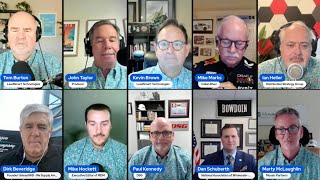
Transcript of a live-streamed podcast (Episode 100) where industry leaders discuss the state of wholesale distribution and manufacturing. Major themes include macroeconomic outlook and interest rates, supply-chain and reshoring/nearshoring dynamics, mergers & acquisitions activity (including private equity interest), people and leadership (hiring, changing buyers, purpose), and digital transformation — especially AI, inventory optimization and CRM/customer intelligence. The tone is industry-focused, cautiously optimistic, and practitioner-oriented.
Chapters
Welcome to the 100th episode of the around the Horn in Wholesale Distribution, live stream and podcast. Each week our distinguished guests discuss the impact of the week's news on wholesale distribution and manufacturing. Join us as we go around the Horn to gain unique insights about the economy, supply chain, M and A, E commerce, AI marketing and technology. Want to join the conversation? Our discussions are based on our weekly newsletter which you can find at aroundthehornpod.com or by emailing helloadsmartech.com and remember, if you enjoy the podcast, please leave us a five star rating or review. It helps other people find the podcast and we sincerely appreciate your support. Around the Horn is sponsored each week by LeadSmart Technologies, a global technology leader providing purpose built solutions to wholesale distributors and manufacturers. The flagship LeadSmart Channel Cloud is an AI enabled CRM and customer intelligence platform that helps users gain deep insights into their customers, teams and businesses, accelerating adoption, roi, revenue and growth. Now your hosts for the hundredth episode of around the Horn in Wholesale Distribution, Kevin Brown and Tom Burton.
Thanks everybody. How exciting, huh? We, we're just so happy and appreciative to have everybody here with us today. It's we've only got three topics we're going to talk about. Usually we review our newsletter. We have, you know, 10, 15 topics we go through, but we have been able to wrangle a who's who in the wholesale distribution and manufacturing world to get together today to enjoy our 100th episode here. Super excited and appreciative of everybody that that's come together. In fact, as we look at this screen, I'm going to just get started and with an intended pun, say let's go around the horn and do some quick introduction. So Mr. Marks, Mike, will you dive in, tell us for, for those people who have been in a cave for the last 30, 40 years who you are and where you're from and what you do.
My name is Mike Marks. I'm a consultant. Been a consultant since 87. Came out of distribution and getting all these people together demonstrates the power of compromising photographs. I just have a lot of things and opinions, some of which are true.
Ian want to try and follow that? That's not fair of me to do to you, but I will.
Yeah, thanks. Thanks Kevin. So I'm Ian Heller with Distribution Strategy Group. I spent most of my career working for publicly held distributors and now we are a media analytics and events company that covers the wholesale distribution industry. And thanks for inviting me. I'm honored to be part of this.
Illustrious group that's Great, Thanks, Ian. Marty, how about you? You're next in line?
Yeah, sure. Thanks, Kevin. Thanks, Tom, for inviting me into this group here. Hey, so Marty McLaughlin with Mosaic Partners. I've been, as Mike said, a consultant and a coach for a good long time. I really hope companies really find the true value that they bring to their customers and change the conversation from about their products to kind of why their customers buy. And looking forward to just a great, great fun conversation today, guys.
So thanks super.
Dirk.
Truck Stop Dirk.
Truck Stop Dirk. Hi all again, Tom and Kevin, congratulations. Super thrilled to be here. Dirk Beverage, founder of Unleash WD and executive producer of We Supply America. Currently day 61 of season four of We Supply America out championing the noble calling of distribution. And just super thrilled to be here. Thanks for having me.
Are you going to have a special episode for day 100?
You know what, will you all.
Can I.
Can I get you all to say yes right now to the invitation?
We'll be there. We'll be there.
All right. I seen whose thumbs up.
All right. I'm pretty sure you could get this crowd to join you. If I could. You could.
So very good.
Mr. Hockett.
Yeah. Mike Hockett from Modern Distribution Management. I'm our executive editor, so consider me our content guy. Whether it's our articles, our research, our podcasts, news, it all goes channels through me at one point or another. So great to be back here on the program surrounded by, you know, a lot of people that I look up to in this industry. So, yeah, just thanks for inviting me back onto the program.
All right, Mr. Kennedy.
Wow. I'm looking at this screen and I'm saying, how did, how did you guys, how did I end up on this screen with you guys for the Pot of Palooza? Number 100. Congrats, Kevin and Tom.
That's.
This is just really exciting. Outstanding. I'm Paul Kennedy, President CEO of DSG. We're a wholesale distributor headquartered in Minneapolis, Minnesota, 56 locations across the upper Midwest. I have the privilege of leading our thousand employee owners. So we're 100% employee owned company out building futures in our communities.
Hey, Paul, before we jump to Dan real quick, you are pretty active with a couple of other organizations that you do a lot of service back to wholesale distribution as well. Can you mention those real quick? Because we don't want to miss that.
Yeah, sure. Thanks. Thanks for that, Kevin. Because sometimes I, you know, I've got my day job and I've got my other day jobs, so I'm also currently serving as the chairman of the national association of Electrical Distributors. And I sit on the AD LLC board as well as the AD Electrical board. And I'm also an independent director for Boss McBraun Industrial Distributor in headquartered in Toledo, Ohio.
So you don't have a lot going on.
Not much.
All right, Dan joining us from Washington D.C. yes, thank you for being with us.
Notably missing the Hawaiian shirt today. So I feel like a little bit of a fish out of water today.
It's in the mail if you don't have it yet.
Well, I'll tell you what, I'm Dan Shubert. I help lead our executive team here in Washington with the national association of Wholesaler Distributors. We're the trade association that represents the entire US Wholesale distribution industry. I come from industry. I served as a leader, McMaster Carr for the last 15 years prior to coming to Washington and trying my hand at helping to bring the industry together and build a great community of distribution companies. Thrilled to be with you today, Kevin. I've really enjoyed getting to know you and the team and just excited to be part of this, part of this lineup today.
Thanks. Appreciate you being with us. So I'm Kevin Brown. That's Tom Burton. If you've been here before, you've seen us, you don't need to hear a lot about us. We're the co founders of Lead Smart Technologies that John, our producer and host, talked about earlier. And we do this every single week. But we have never had a group like this before. So rather than talking too much more, let's dive in. We have three topics we're going to talk about today. We're going to talk a little bit about the economy.
Hey Kevin, before we do that, I want wanted to just, you know, if you're online listening live, please jump in, say hello, say where you're from. Welcome, Will. We have Will Quinn, the distribution guy, we have Darlene, we have dan judge from NetPlus Alliance. So we've got some legends outside listening as well. But please jump in and say hello and ask questions along the way.
Great point, Tom. Thanks for that. So we're going to talk about three topics today. We're going to talk about the economy, but quite a few different subtopics in there. Going to. And by the way, Dirk, thank you again. When Dirk was with us last January, when we had Ian and Mike with us as well, Dirk said, hey, you guys don't talk enough about people. And we added a section to our newsletter that we do every week. It's called People and Leadership. So we're going to talk a little bit about people changing buyers, changing workers, what's the hiring sequence like out there right now. And, and then we're going to move into technology and we'll talk quite a bit about digital transformation, AI, a little bit of E Comm and so forth as well. So gents, let's kind of dive in here and get started and chat about the economy a little bit. I'm going to throw out just a general statement about the economy, what's going on, both internationally, here in the US and then we'll kind of maybe talk a little bit about, you know, interest rates, inflation. Poor Paul and Ian, you guys, I think, have both talked when you've been on with us in the past about the risk of deflation. We could talk about that a little bit as well if we'd like. But let's kind of get rolling and then we'll maybe round out this discussion on the economy. Talking a little bit about M and A as well. Any initial thoughts on the economic news?
Maybe?
Dan, do you mind if I throw this to you with the global view that you have from. Naw, yeah.
No, I appreciate that. And I think the economic story has been a pretty interesting one for the past handful of years. Right? You go from a period of a brief recession followed by an incredible period of inflation. Inventory and supply chain challenges have only pushed the cost of goods and services up higher. You know, now I think what you see across the industry, if you take a look at where most distribution companies have been after a few tough months in 2020, you've got companies pulling in record profits in most segments of the industry, obviously some exceptions with hospitality and things of that nature that has slowed, but it hasn't slowed back to the point where profits and orders and sales are lower than they were in 2019. So bottom line is we've come through a pretty, I'll say, bizarre and unprecedented period in American economic history and we're all generally better off. But there's some uncertainty obviously on the policy front with what's coming next. Kevin, you mentioned interest rates. I think that's probably one of the most important indicators as to where the economy is going to move in the next couple of years. Right now it seems like the Fed is signaling with almost certainty we're going to start seeing some rate cuts, hopefully by the end of 2024. But you know that we had baked some of those cuts into the earlier parts of 2024, not the, not 2H24. So some of the Fed's Hesitancy to ease up monetary policy, I think, has had a little bit of a chilling effect on investment in a number of different segments. You know, we've heard about projects being delayed, capital investments being pushed to the next fiscal year. And so I think hopefully the Fed can signal and signal pretty quickly that they're going to start easing monetary policy and that hopefully it ends up spurring investment in plant, equipment, people, technology, all the things that are really helping to keep our industry profitable in a world of very thin margins. So that's probably the biggest indicator that we've got our eye on here in Washington.
Thanks, Dan. Two rate cuts this year, is that what you're thinking?
Yeah, two seems to be where the Fed consensus is, and I guess we'll know pretty shortly.
That sounds like a steak dinner to me.
Yeah. Yeah.
Come out and join us.
I do have a question, though, and maybe for Dan or for the group, and not trying to justify my one rate cut prognosis, but, you know, we obviously saw this week, right, that there was very good economic growth in the, in the country and interest rates are down. Is there a real incentive for them to cut interest rates when we still have the economic growth that we're seeing? Like, why not hold them longer? Because things are working out. Okay, what's your take on that?
Well, maybe I'll take that briefly. I think we go back to the conversation about two Americas, right. And I think depending on your populism view and your politics, you might have a different perspective on it. But look, I think from a business climate perspective, right now you're seeing robust economic growth in a number of different sectors. You're still seeing average Americans hammered by high interest rates on things like housing, mortgage costs and the ability to purchase a home. And so I think the Fed obviously has to govern a country not just catered to a business segment, one being a leading indicator, the other being a lagging indicator. So I think at the end of the day, there's pressure from a number of different segments, you know, to really continue, I think monetary policy easing. And so even if robust economic growth from a jobs perspective continues, I think you're still seeing a lot of pain in the individual household budget perspective. I think the Fed's going to react to that. That.
Mike.
Yeah, Just to add, because Dan really nailed it. And you got to remember, 3/4 of our GDP is all consumer. And there are the pain he talked about, people are still feeling. And we talk about two different Americas. There's also two different Americas in terms of the consumer economy. Which is 3/4 in the B2B. B2B is still suffering from supply chain issues that still haven't sorted themselves out. It's pretty much over old news now, but, but I mean, there's still a fair amount of pressure and I'm very much aligned with Dan in terms there's probably going to be two. But then again, we're just making this up because we don't know. And one of the things that the Fed's very good at is, is leaving uncertainty. Uncertainty is a weapon.
Mike, I'm violently in agreement with you. Is that the right term? That's what you say? Right. Okay, very good, very good. All right, Marty, Dirk, Mike, Ian, any other thoughts on kind of interest rates and where we're sitting right now?
No. Yeah, we just keep hearing from distributors that, you know, they're, they're kind of waiting to see what the Fed does before they can make some of these big capital purchasing decisions. And if the, if the Fed is kind of holding to what they've been saying the last six months or so, that they just need more data, they need more time to digest what's happening on the inflation front, hopefully this means that they have had enough time, they've seen enough, you know, level leveling of the inflation field here that they feel confident to, to make a rate cut here sooner than later. It just seems like, yeah, you know, a year ago at this time we would have thought there would have been several rate cuts by this time, but it just kept pushing further and further out. But yeah, I think if inflation is the key gauge that they're watching to base their rate cut decisions on, it seems like they, there's enough data, enough just normalization there that it would encourage them to do that. So, yeah, really interested to see what their newest comments are going to be in this newest Fed meeting.
So I'm going to throw a little, little bit of a monkey wrench into this real quick. And I have been questioned, I've questioned it on this show a couple times. Tom and I have chatted about it, but I've questioned, are the metrics that the Fed is using still the appropriate metrics to be using in 2024? We talk about this kind of stuff. I'm far from an economist, but I kind of question is, when we think about, and I don't know if you gentlemen are familiar with this, but we talked about it on the show a while back, is the whole 2% number you guys familiar with where that comes from? A politician in New Zealand that threw it out in an interview one time. So that sounds like a good number. And literally that's what it was, I think 30 years ago. If you haven't looked up that story before, just kind of Google, where did the 2% come from? And it's astounding when you look at the largest economy in the world is basing their Fed decisions, their interest rate decisions, and the economic factors that we're seeing in the economy right now about a passing comment that a New Zealand politician made to a reporter.
I have more of a question than I do than a comment on this one too, and it probably is more directed towards Paul. It's just how does this view of interest rates start turning into projections around business over the next 12 to 24 months in terms of growth of their businesses too? And I know I had some conversations a few months back and there was still a pretty robust view, even in a high interest rate environment around where business was going over the next 12 to 24. So just like get a sense from Paul in this time of uncertainty around interest rate cuts, how does this start playing into his, his thoughts around the robustness of his business going forward?
Yeah, thanks. Thanks, Marty. You know, as we think about it, we are, we are optimistic, you know, second half of 2024, looking into 2025, we are absolutely optimistic. I think the interest rate play kind of shows up in a couple of different spots. One around residential, new construction, you know, we still have a, we still have a housing shortage in the U.S. millions, you know, we're short millions of housing stock across the US that, you know, ultimately need to get built. And I think interest rates, you know, coming down and softening are going to help, you know, kind of restart some of that. It's leveled out at a pretty good spot. But I think interest rate, some interest rate relief is going to, you know, kind of goose that a little bit. The other thing I think, and I think Mike and Dan were talking, both talking about it is, you know, is the investment, you know, you think about all the reshoring and the investments that are needed, you know, for reshoring, manufacturing and in plant investment in the US Interest rates softening are going to, I think, help spur some of, some of that growth as well. And then you've got, you know, the Infrastructure act and, you know, the CHIPS act, which is really driving a lot of government spending in the infrastructure investment in water and sewer and broadband and power, power infrastructure, the electrical grid, you know, building out a charging network across the US So a lot of investment now we just need the supply chain, particularly on electrical gear, switch gear to catch up to, you know, to that demand that's being created by all of this government investment in electrification of the US So.
Hey Paul, I have to ask, you have a fire hydrant on your desk. Is that for, is that for a take your dog to work day? And how does that work?
Nicely played, Ian. No, that's actually, we're in the waterworks business and that fire hydrant is a watchless fire hydrant that's manufactured right down the road in St. Paul, Minnesota.
Cool.
So I mean, I think, you know, wholesale sales were down last year like 1.6% for the first five months of the year they're up 0.7%. You know, the, the Wall Street Journal just interviewed or surveyed economists and only 28% of them are predicting a 2024 recession, down from 29%. So that's roughly the same thing. I think we're hearing, we're hearing worse news from distributors than we're seeing in the data. There are some, like Paul, that are predicting a robust second half of the year. But we do see a lot of them pulling their horns in. And I do think it comes down to what the Fed does. I think if the Fed really does cut interest rates a couple of times, they're gonna pretty much finalize a soft landing.
I mean, good for them.
I mean that's not been done much in the history of the US So you know, I think we're gonna wait and see. Mode to us to some degree, but it doesn't feel like the second half is going to be dramatic either way to me.
And do you think there is some real pent up demand that once those interest rates start coming down, we're going to see kind of a spending spree both at the distribution and the end user level?
Yeah, but I think it depends on the sector. So to Paul's point, the gear manufacturers need to catch up in order to fulfill that demand in the electrical sector. So the supply chain is going to regulate that to some degree as well.
Interesting.
Okay, before we jump past that, hey Dirk, I want to come to you real quick because you've been to how many different distributors so far this year? 15.
Yeah, 15.
So what, what's the tone and the mood that, that you're feeling?
Yeah, and, and that's a good way to say it, what I'm feeling. Yeah. You know, the one 80% of our stops are on the we supply. Mercator are organically driven. Right. People reach out to us and say hey, Dirk, would you stop in to see us? So I think we're self selecting. They are self selecting those that are optimistic. Right. Those that are optimistic, that they see that the strength that Paul just talked about. So Kevin, I would say overall, the things that I'm hearing is cautious optimism.
But.
But the, the data is, is. I, I can't speak to the data as the others can, but there's a, there's a cautious optimism that I'm hearing.
Very good. That's helped. That's helpful.
Dirk, is the optimism that you're hearing based around, hey, we see, you know, interest rates coming down, we see opportunity for more spending. Where do you see the optimism kind of emanating from?
Yeah, the I, I, my conversations don't get into the interest rates and the economy per se. They're talking about the outlook from the customers and the demand from the customers. That's what I'm hearing.
Very good.
Just wanted to add here on the economic front, even with the interest rate situation, inflation and this overall industrial softness we've seen for the past year and a half or so, it doesn't seem to be impacting the appetite for mergers and acquisitions activity, at least from the MDM perspective. What we've been covering 2023's M&A activity in distribution far outpaced that of 2022. And so far in 2024, the first half of the year, it's on pace to outdo 2023. So it makes us feel that there's a lot of these distributors out there that are kind of in the mode of if we can't gain market share during a down market cycle, we can still gain market share through mergers and acquisitions. So it's just been interesting to see that even with interest rates challenged as they are, it's not holding a lot of distributors back from pulling the trigger on some of these acquisition purchases. So we're going to keep watching that to see if that changes based on what happens with interest rates.
So let's put a pin in M and A because we got a whole segment that we want to chat about that. And I know there is a lot of knowledge of M and A activity going on with this group. But Mike, I appreciate you bringing that up. So we kind of talked about the interest rates. I think consensus is, is that Tom's going to owe me a stake because there will be two this year. Everybody here is welcome to come out to Santa Barbara for that evening. I'll send you invites and it'll be on Tom and we may Do a whole other show just for that. But what is funny, and I think this is an absolute huge risk. And Tom and I were. We actually had a steak together last week in Santa Barbara and we were talking about this. It could very easily be one at the end of the year and one in January or whenever the first window is. And then I'm. I'm stuck.
Right.
So we'll see with that. But we. We've tiptoed around a little bit. Couple of comments. Paul made a good one about specifically in the electrical market, about supply chain issues, things getting caught up. Mr. Marks said something similar. We starting to see a little bit of data. Some areas are catching up, in fact. But I want to throw two things out there and just kind of throw this into the pot. One is, let's talk further about supply chain in general. Maybe what we saw pandemic then post pandemic and where we are today. But I want to kind of throw a couple of wrenches into that and talk about some geopolitical issues that go with that as well. Most importantly, I think Paul mentioned a few minutes ago about the onshoring. We talk oftentimes here on the show about near shoring and on shoring, I think it would be an interesting thing to talk about supply chain and then maybe some geopolitical issues related to China, Mexico, other parts of Latin America, and the near shoring idea there. So let me kind of throw that out to the group, see if anybody wants to start with that.
Yeah, Kevin, I can chime in on that. And Paul, I'm glad you brought up the near shoring approach. Maybe a couple of things that we hear a lot about from members and when we start talking about the health of the global supply chain, number one is supplier diversification has been a top focus for many, many distributors across the industry. You know, I think depending on your business strategy, you know, you might have been on one side of the pendulum or the other. But, you know, the strategy of putting all your eggs in one basket, negotiating a sweetheart deal on pricing, only to have that supplier, you know, struck dead from a pretty critical, critical supply chain shortage like what we saw in the last handful of years, I think has a lot of distributors rethinking that strategy and thinking about how they can be sourcing from multiple different partners in multiple different parts of the world to mitigate some of that risk. The second piece is, and this is something that we featured pretty prominently at our annual meetings in the last couple of years. We brought Secretary of State Mike Pompeo and Most recently former Defense Secretary Bob Gates to speak about it. You know, the risk from China and really moving manufacturing and production and supply capacity out of China and toward Brazil, toward back here in America or toward other parts of Southeast Asia. That is an accelerating and a high priority for many, many companies that have that level of exposure. More and more as the geopolitical temperature rises, particularly with some of the conflicts happening in Europe that China is either involved with directly or on the periphery. Folks in America are recognizing that China is not a competitor, they're an adversary. And the more we can reduce our risk of exposure by reshoring, as Paul said, or by near shoring, you know, that has become a strategic objective of a lot of companies that have had supply chains heavily dependent on China and policy experts that know China well. Those two individuals that I mentioned would say you probably can't move away fast enough just given the way our geopolitical environment is moving.
Thanks, Dan. I'm appreciative of that comment that you're making there because I'm going to throw this out. I'm looking at things and, and my belief on this is that in the next few years Mexico may play a bigger factor than we've ever thought about Mexico playing in the US economy because of the influence already of China trying to get around steel tariffs by going through Mexico and many other things that go with that. So I'm going to kind of throw that out to the group. Any further thoughts? Anybody feeling that, seeing that Agree, disagree. What are your thoughts? Mike Marks. Have at it.
He's so polite, raising his hand. I didn't realize he was so polite.
Who's this guy that says Mike Marks?
What happened? Because, because of past history, Kevin has an electrode implanted in a very sensitive spot here. So I'm trying to be very nice.
Hell, I would expect you to be not so nice.
It took 27 minutes.
Now we're gonna have to start cutting stuff out.
Here's the deal on the reshoring and this kind of leads into. I'm advising somebody on an acquisition and the target was really going to benefit strongly from the reshoring. But the problem, it's a PE firm and if you go back to what Paul was saying in terms of the Chips act and all this other stuff, people lose perspective on manufacturing. Manufacturing back in the 60s was 50% of population. It's like 4% now. But the manufacturing output's at an all time high. We're still world class manufacturers. We're pulling this stuff back. But if you think about the war in Ukraine. Think about all the problems with the defense contractors trying to manufacture munitions and everything else. There's a multiple year lead time to get that going. So my point to the PE firm is that yes, they will benefit, but by the time, once people start to spend money, it's years before you get that scale back. And we still have fundamental problems. I mean, one of the things Paul and everybody else in the electrical business has to live with, those transformers you see up in the telephone poles, the lead time now is like 12 to 14 months and the manufacturers won't even give you a fixed price because of the copper content. And they only let you know when you're 60 days from shipping. So I mean, things, things are still broken. And this reshoring I think is going to be, Dan said, where people are looking at strategic things about their supplier orientation. The rest of it, I think it's going to be a large trend, but it's a direction of the tide trend, not a, not a size of the wave trend. That's all.
Very good, Paul. Any thoughts on that with what you're seeing out there?
Yeah. So I think to Dan's point, the, the, you know, the rationalization of our offering, you know, to limit exposure, I think we all got exposed during the early parts of the pandemic. You know, we're, for years we had all rationalized our offering and became more important to a fewer number of suppliers. And you know, that bit us in some instances. So I think we've seen that, you know, that kind of diversifying our supplier base more both by manufacturer and by geography. As Dan pointed out, the. So that's an important part. And then you've had the whole destocking because, you know, everybody so much inventory got pumped into the system during the pandemic that there was a glut. So you've seen that destocking, which I think in some cases has helped alleviate some of the supply chain challenges that we saw and frankly, you know, kind of flip the tide. You look at plastics, that's where we've seen deflation just because, you know, this capacity was built up and so much inventory was flooded into the market and now all this capacity is sitting there and not enough demand for it. So that's where you're starting to see, you know, some of that deflation push through. But in to Mike Marks's comment around transformers and I think 12 to 14 months is being optimistic, we're seeing two plus years on transformers right now and that demand is real and it's you know, the copper. I mean, we saw a run up in copper earlier this year that it settled back down a little bit, but that was all, that was all demand driven.
Paul, let me ask you a question to kind of go with that a little bit. We were talking with a while back with Mike Mortensen from ARG and Alaska Rubber Group and their Pacific Northwest distributor and hose and fittings and so forth. And Mike was talking about, you know, I hate to quote him. Exactly. And if Mike, if you're here, fix this. I think he was going to join us today in the comments. But Mike was talking about, you know, historically you might have had, you know, two or three times a year of doing some vendor and supplier reviews and then, you know, asking some generic questions. But now it's like weekly and monthly supplier meetings and reviews and asking very, very hard questions about their supply chain. Are you seeing an uptick with that? And anybody else, maybe Mike Marks is nodding his head. Marty, you as well. Are you seeing that from people you're talking with, increasing their communication?
Yes, we absolutely are. And we're asking different questions today because, you know, we're asking questions we didn't.
Know to ask three or four years ago.
And you know, it's become more important relative to country of origin, you know, with what was going on in the, you know, the Red Sea. And you know, that was a whole different story of, you know, what's coming from that part of the world and what do we need to know and understand about that. So the other thing I will, I will tell you is we are much more metric driven in having those conversations as well in understanding performance of, you know, delivery performance on time in full and, you know, and then also trying to gain. And there's actually a project underway with NAED where we're trying to get the electrical manufacturers, the contractors, the reps and the wholesale distribution, all of those associations to think about answering the question, where's my stuff? To drive project continuity and to be able to give visibility at the contractor level on when these complex products that we're, you know, ordering and manufacturing and delivering are going to make their way through the system so they can become much more productive and efficient in managing labor, which is in many cases their largest, you know, obstacle. So, you know, bringing that visibility to the entire supply chain is going to.
Continue to be really important.
Just to add to that, I think that's a fascinating application of data science that we've been pretty excited to take a look at as well. There's a number of spinoff companies from the Department of Defense that have developed some pretty sophisticated supply chain mapping models. And it was all in reaction to, you know, essentially the butterfly effect. And the story that I heard was an interesting one. You know, during the pandemic, the number of inspections that would take place in Malaysian factories, for example, went, went down. Right. They're not sending inspectors in. Or what happens when you don't have safety protocols? You start having fires and disruptions. So these factories would shut down. They would contain a scope 3, scope 4, scope 5 component of something that's going into a finished good. Maybe it's a screw here or nut or bolt here. And all of a sudden the delay of that finished good reaching market here in the United States, it's five weeks. And that company, the distributor, didn't have an opportunity or the knowledge to start to source that product from another supplier. And so some of these models are just fascinating where folks are getting alerts, you know, in real time. When there is a potential disruption to that supply chain at the single product level, it allows the salespeople to start expediting or start to find an alternative solution. And to your point, it allows the distributor to reallocate labor to a different project or a different opportunity where the inventory exists. So I think it's just one of the many, many really interesting applications for heuristics and data science at this point in time.
That's great. Good.
I want to bring up a question here. I think this is a really good, interesting question from Debbie and maybe Ian. This would be a good one for, for you to grab. Is are you seeing and talking to distributors a consolidation or a loyalty developing with their manufacturers and suppliers as a way to get, you know, and shorten those lead times and shorten those things, or are they just going, I just got to find it one place or another?
I think right now there, it depends on again, on the, the vertical you're in. Because the supply chain problems are very uneven. I think a lot of them are just trying to find it wherever they can. So there's been sort of this deconsolidation of purchasing. But I, I just view this as cyclical due to human behavior. I think people are going to go, man, I really got burned during COVID so I'm not going to concentrate my purchases one supplier, and then as they get kind of numb to that, and it's like, well, doesn't seem to be any problems anymore. If I concentrate my purchases, I can get a better discount. And so they'll go right back to what they did before. I just think human nature is they're going to respond to the most immediate problem, change their behavior for a little while and then go back to whatever is going to help me make this quarter's plan the best.
Well, I mean I think Ian nailed it and it's just frothy and it goes back and forth and it was this way long time ago. It'll be this way far in the future. The thing I find that's interesting about Debbie's comment is that when you look at people and I know we're going to talk about digital transformation, the rest of it, in my experience what I'm seeing is the distributors are much further ahead on supply chain than their manufacturers. Distributors have actually done a lot of punch outs with their customers where the customer can enter it in their SAP or i2 kind of system. It'll actually print in the warehouse loop, lights out, order processing. So it's seamless for the customer. Distributors are locking in their customers to make it very simple for them. Suppliers are absolutely reluctant and resistant to doing a punch out where the distributor can see their work in process and their finished goods, inventory and the rest of it because we keep getting different notices. And I have used the term manana is a Mexican word that means not later. It means not now and not now can be forever. And so supply distributors still have problems getting quality data from the manufacturers because they're behind. The manufacturers as a group are well behind. There's still major manufacturers that are doing special price authorizations or, or meat comps or whatever you want to call them in different industries and they're still sending them out to people on PDF files. I mean, so it's, it's the gap is getting to be sort of a pain in my butt, at least for the people we're working with.
Yeah, Kevin, if I could add to this conversation to transition between kind of an internal focus that has been consuming distributors for many years over the last two years, either supply chain issues, hiring people, the overall view of labor shortages and where to get product and pricing increases too. To this view of I had a conversation with the distributor just two days ago. They kind of lost focus of their customer and understanding what their best customers are looking for, what their best customers need and shifting over to, as Paul said, what questions should I be engaging those customers in to understand them better, to do innovation with them, to create the overall futures of growth together into the future. So this view of there's a position of power when you understand your customers better than anybody else. In the marketplace and asking those questions, not just what do you buy but why do you buy from us and what value do you need from us? What are your growth projections over the next few years and where are new revenue streams going to come from? Where are you making investments to open up new markets? So it's this view of shifting from inside view because things still need to be fixed and they're not going to be fixed tomorrow. But there is this conversation now of how do I get to know my customers better to them and innovate with them.
Awesome.
Like that. That's insightful. Thank you, Marty. I think that's where people kind of miss it about that understanding really where the customer is going and what their plans are moving forward. So that's, that's powerful. Thank you, Kevin.
Can I jump in please, With a different anecdotal perspective, the conversation started with a discussion about near shoring and on shoring. It's real interesting to me that this summer, this fourth season of We Supply America, we have stopped at, been invited into five manufacturers, right? So we're not just championing the noble colony of distribution. Manufacturers are saying, hey Dirk, we're a key part of this supply in America as well. So it's just been fascinating to me. And so we've had a chance to stop at Paul, I think some of your partners at Nibco, Liberty Pump, Lancaster Water Group, Merit Brass, a master distributor and a manufacturer and then, right. Tools. And first, I'm fascinated walking through distribution centers. I'm fascinated walking through these manufacturers. But my point is this, you know, there's been a narrative for years, right, in terms of, of we can't compete, right, with the labor, with cost of labor. And so we had to send manufacturing over overseas. I'm telling you this summer, you guys stopping in these five manufacturing facilities, meeting the people on the floor, seeing them forge this, this metal, if you will, into the products that are on your shelves as distributors. A, it's fascinating. B, I'm here to tell you what I have seen is that world class manufacturing is alive and well in this country. And there is a labor force that loves what they do, that is compelled by the work, that they understand the bigger picture of what they do. They're proud of their earnings and their wages. And it's so world class manufacturing is alive and well. And I would just encourage the manufacturers that are listening, man, if you haven't thinking about it, find a way to bring it on shore.
That, that's great. Good. So from that standpoint, just so we move on. We've got a lot to cover today. Thanks for all of those comments about the economy and so forth. Let's just spend a couple of minutes talking about M A. Mike Hockett brought that up earlier, gave us some good stats for that. I think we're all seeing quite a bit of that activity. I'm going to throw it out to the group here, thoughts on what's going on with M and A. But I'd like to add into this, there's this group out there that we've not seen before that all of a sudden has this monster investment fund, the QXO folks. And we can kind of see what any of the thoughts are, what we're seeing. That's industry folks versus traditional PE folks coming in. So just general we can chat about. You know, Ian, I know you've got a ton of research. Mike, you probably hockey, you probably do as well. But let's get it. Let's get some thoughts, maybe. Ian, do you mind if I throw it to you to start off in your thoughts on M A activity year to date and then moving forward?
I agree with what Mike said earlier. I mean, last year was surprisingly robust. This year seems to be just as busy, maybe, maybe even gaining momentum. And I think, you know, as interest rates get cut, it's going to pick up. I think QXO is really interesting. You know, Brad Jacobs has a long history of transforming industries and, and, you know, he's certainly aiming for this one now. And that's going to heat up the competition, I believe. But there are a lot of PE groups out there with dry powder that are willing to invest. And so, you know, barring some black swan event that buries the economy somehow, I think you're going to continue to see a very healthy M A market. And I think, you know, it's important for distributors to take that into account. It's important for buying groups and associations because they're seeing a lot of consolidation of their membership, which reduces their overall income. Because if you get, you know, two companies who are paying $10,000 in association fees and they. They join forces, you don't get 20,000.
Right?
You get something less than that. And so I think there are implications across the industry and you need to plan for it. Whether you're a distributor who wants to be acquired, who wants to do acquisitions, you're an association, you're a manufacturer's rep, you're a manufacturer, because people are going to have more purchasing power when they consolidate. So I think the dynamics go. Go across the industry, it's a. And it's going to, it's going to probably begin to accelerate.
Oh, they're, you know, I haven't, I.
Haven'T looked at the QXO thing in a lot of detail. But what based upon what you guys know and what would be an advantage of a distributor, you know, doing something with say a QXO versus more the traditional private equity, what is their strategic advantage or value between those? Anyone have some thoughts on that?
I mean part of it I think is just the funding backing that you would get with qxo. You might, it might be enticing to the notion that you're going to be able to do some bigger and cooler things that maybe you've never had the resources to do just on your own. But with QXL's backing now maybe you can pursue some of those things. But yet I think that's what everyone's watching right now is now that they QXO's funding is up to 5 billion. It sounds like they might grow it as much as 10 billion before they make their first splash acquisition of and it sounds like they're targeting large distributors when they do start doing this expansion plan. So it's just a question of who's it going to be. And I think Home Depot's acquisition of SRS Distribution definitely is going to help or influence what that target is going to be as far as I'm sure they're already in talks with who that first target is. But yeah, again that other than that Home Depot acquisition, most of what we've been seeing across the distribution landscape has been these smaller bolt on acquisitions. There haven't been many giant splash moves other than Home Depot. And now what QXO is doing, and I think a lot of that, as Ian alluded to, is private equity is driving so much of this activity. When I talked with several investment banks around mid-2022, they, they indicated that yeah, given that nothing really happened during COVID there was so much built up dry powder that it was still being spent at that point. But you kind of kept having the feeling that that has to run out at some point. But based on what we've been seeing last year and so far this year, that definitely is not the case. So like I said, just still a lot of appetite for merger and acquisition expansion plans here.
Good.
Mike raised his hand.
Well, I mean just going to what Mike Hockett's saying, I mean he pretty much nailed it. We have over, I don't know the exact number. I haven't looked at it recently, but it's well over a trillion dollars of uninvested capital in PE funds. And so you have all this money looking for a home. And the problem today is there aren't, there's more money looking for companies to buy than there's companies worth buying. A lot of these companies that are for sale. And when Mike talked about, you know, if you're a platform you can do bolt ons and a lot of times people are putting lipstick, excuse me, lipstick on the pig to get it gone. But when you start talking about Brad and the rest, and by the way, Brad Jacobs bought me a motor yacht because of what he did at United Rentings from me. And I did very well in that and I know he's going to be successful. But they're looking to buy platforms, they're looking to buy things of scale. So and, and the, the part of the problem, a lot of people misunderstand when a PE firm buys a company, they're buying it to create shareholder value and sell it. They're trying to get a return to their investors, not the company. And so the culture clash in a lot of these has created a lot of problems which is part of the reason that the number of distributors remain constant even though there's all this, this consolidation. Because the VP of sales and VP of operations say I don't want to work for intergalactico, let's go whisper in the supplier's ear, get some lines and start a new distributor. So I mean this is, it's a pressurized system. It is. There are over 20 PE firms of the 1400 plus that are registered in the US that have full time partners dedicated to buying industrial distributors. So I mean it's just, it's, it's just, it's pressurized but you're not going to see the multiples, the multiples aren't going, they have been really high after. Right, right after the, the COVID deal you're getting, people aren't paying those kind of multiples anymore. It's, you're not going to be seeing these crazy things people talk about.
So Mike, with.
People get stuck and they're bumping bellies.
Yeah, I think with, with that. I know like in the, as an example in the technology world, crazy valuations into the, even into 2022, 2023, those fell off a cliff. They're right. They're not going to go back to, you know, 24 times forward looking sales that they were. We saw some deals like that, but they are rising back up into the double digits and as well are we kind of seeing that likelihood of, you know, things fell off a cliff. But in traditional M and A, in or acquisitions within, by PE firms within wholesale distribution, do we see those numbers, the, the valuation starting to tick up a little bit again?
I, I think you're going to see the interest rates affecting it. A lot of things went on hold and I think Ian nailed it. I mean it's just this, this is going to continue. It just, it's going to be part of this generation and, and it'll work until it doesn't work anymore. But part of the problem, when I learned how to do this a long time ago, you can't be buying a distributor with their typical return on capital that they get and pay a 15 times EBITDA multiple and never be accretive. You just can't do the math. And I just tell these guys, pass the joint when you're done.
I want to tie what you're saying back to where you know, Dirk lives a lot too. And, and you mentioned the term culture clash too. And when these views of mergers happen, where do they get that value accelerant? And it usually is at the cost of those things that make distributors different, unique and special in the marketplace. And that is their culture, the core values, purpose and their people. Those things seem to get pushed aside for more locations, better E commerce and all those things. So it's interesting to see kind of how they you this ability to put two companies together to get something better down the road, but maybe at the cost of what made that, that overall acquisition special in the first place.
They're not supposed, they're not supposed to, I'm sorry, they're not supposed to make the company better for the same playbook. Sell off the asset, lease everything back, return that cash to your investors. What that does, it takes the cushion away in a distributor. Manufacturers have property plan, equipment, patents that all still there at night. Distributors, all of our assets go home at five or six o' clock and you hope the suckers come back in the morning. And you can't treat them as fungible assets. And so the playbook works really well. But it's kind of like when people started to buy houses and fix up kitchens. It works to the point until you have a real estate collapse. And I think this playbook is pretty much past the best buy date now. And you can see some of the brighter firms, some of the midsize firms, not, not the big ones starting to innovate and find different ways to Create shareholder value.
I love that. So, Marty, thank you for hitting on that. People, point of things. Peter made a nice comment here about the detrimental aspects of partnering, selling to pe, which, you know, Marty, you started that segue. We're going to take this and kind of segue into our section. We were going to talk about people for a little bit.
And before we do that, John wants to know when, Kirk, you're announcing your upcoming Senecamp.
Well, hey, hey, hey, John, John, I ran for Congress in 2010. I'm sitting in a freaking rest stop area in the middle of Iowa. You know, how my political campaign, how my political life went.
So there you go. Well, Dirk, you, you have, you have Dan's attention. If you want to take another run to help guide and direct you, you.
Know, this rest area is pretty good for you. Yeah, yeah, you did. And, and you contributed. Michael, thank you.
Yeah, they're very good. So as we, as we kind of do that, that segue, as we talk more about people in this, I want to throw out three things that we can talk about. And, and again, Marty, thanks for helping us make that shift to the people and so forth. By the way, Brian Hopkins, that works with Ian and Distribution Strategy Group says Dirk for president. So you didn't say president of what? President. Right.
Rest area cleaning.
Dirk, we think more highly of you than you do of yourself, that's for sure. Right. You are esteemed in all of our eyes. So as we talk about people, three, three key things. Changing buyers, changing workers, what's going on with hiring and things getting better. We've seen a few articles recently about maybe things are easing up a little bit about getting workers in the door. Dirk, your travels would be great with this. Paul, what are you seeing with your teams? Let's throw that, kick that off on talking about people for a little bit.
Paul?
Sure.
No, I'll kick off. So finding, maybe start with finding workers. It is exponentially easier today than it was, you know, two years ago, a year ago. And I think you're starting to see that with the tick up in unemployment and kind of, you know, settling down into a little slower growth mode. So, you know, we're, and we, you know, we measure, you know, application, you know, number of applicants.
Time to fill.
Roles and things like that. And you know, our applicant pool is increasing, our time to fill roles is shrinking. So it is becoming a little bit easier. We, you know, we've spent a lot of time, to Marty's point, on our culture and, you know, being an attractive place, having an attractive culture and being an esop, we believe, you know, those are kind of extra extras that we have that maybe make us a little more appealing place to come to work than maybe some others. But we think that, you know, hiring is, hiring is getting better and, you know, we expect that to continue. And I think as, you know, as productivity, you know, continues to improve with, you know, technology and, you know, with AI and the introduction of AI into some of the processes that we're seeing, you know, we can grow, you know, we can continue to grow and we don't need to grow our labor at the same, you know, at the same rate as we historically had to.
Very good, Dirk. Any thoughts on that from your travels?
Yeah, so I'm gonna, I'm gonna get on the stump speech though, if you don't mind.
Right?
That's right. That's why we're here.
So.
This, this topic of people, as you all know, is, is what I've been drawn to, right. Fourth season of We Supply America. Each season seems to have had a quintessential, quintessential moment. Season one was in Porter Pipe when we met an 85 year old outside salesperson who broke down crying saying that the family here at Porter Pipe is, you know, the best decision, the best, best thing of his life. Just crazy. The second year, Paul Kennedy, you know, it was up in Plymouth, Minnesota with Rich, right? He's worked with you for 22 years at that time, transfer manager in the warehouse. He walks out, looks at the camera and says, you know what? This is my world. I own this place. Right, Paul, you guys are doing something good, man. And you can see that in the, the culture and the people. Last year was at Nelson Jamison, I'd say, and every place we've been has stories like this, but Nelson Jameson, the owner, or excuse me, the president of the company, Mike Rindy, I asked, you know, I threw out this idea of businesses, distributors being a force for good. And he just, he just paused and he says, you know what, you're right, Dirk, we are. And when we, when we talk about and really help our people see the purpose of that they have and the impact that they have, why would people want to work anywhere else? And so we can look at the economic indicators, but man, you got to look at the cultures, right? And why would anybody want to work somewhere else? It's amazing. This year I still got 60 days or so in front of me, but this year's quintessential moment might be when I was talking to an outside sales representative outside of Washington, D.C. thomas Somerville.
And.
And what he said to me when I'm asking him about the relationships and the partnerships with his customers. Here's what he said, you guys. He said, dirk, you need to understand that we're living life together. Full stop. You guys, just think about that. When we're thinking about people, the human side of what it is we do, living life together. That's what your employees do every day. They spend 50% of their working hours at work. It's not just work. We're living life together. And when you think about that, you think deeper. You got to think about the life that everybody's living. I know. I'm going to put up that, Kevin, that one slide of the GDP real quick, and then I'll transition away from that. All right?
No, that's fine.
You guys, look at.
Yeah, it is.
Thank you. Look at this data that I found from the book Flourishing by Martin Siegelman. He started the positive psychology movement. You take a look at this, and what they tell us is that the gdp, all this economic talk that we've been talking about is fantastic, right? It's grown three times over the last 50 years. What we don't talk about is the GDP rises when positive events happen. We pick back and shift product. We make product, but the GDP rises when negative things happen. When more pharmaceutical are being consumed, GDP goes up. A car accident happens, GDP goes up. Right? And we don't think about that. So over those same 50 years that scientists will tell you that while the GDP has increased three times, life satisfaction has at best remained stagnant and depression has increased 10 times. And you could put whatever you want on that red curve. You could talk about loneliness, you could talk about drug use, you could talk about suicide use. And so this graph, to me is very, very important. When we think about people, your people are spending 50% of their time with you, their life. And we're living life together. And all that says to me is we have a growing responsibility and a growing opportunity to impact people's lives beyond the transaction of a paycheck, beyond the transaction of the paycheck to help them flourish. And there's. There's. So we're doing a lot of great things, man. That's the stories we're telling. We supply America. Great things are happening at dsg, Paul. What you guys are doing, doing something good is one of those stories. But we could be doing much more.
That's great.
Dirk has my vote for president. It's over.
It's over.
It's over.
Yeah.
Game over everybody else, go home. Tom, would you highlight Will Quinn's comment there real quick?
Dirk is a national treasure. There we go.
Right, right, we'll stop. Right. So this is great, Dirk. Thank you for that. So we know we're seeing out there. I think the numbers, I think it's 62% of B2B buyers are millennials. Now, I talk to distributors about this every day because, you know, in our work at Lead Smart Technologies, we're working with distributors and manufacturers both. You know, we're talking with, you know, quarter billion, half a billion dollar a year companies who are struggling through digital transformation, maybe have never had customer intelligence and CRM in their business. They go through this conversation in their mind about, yeah, but my guys might not want to digitally transform.
Right.
But what we're seeing in these conversations is that the buyer is changing and has higher expectations. Right, but the incoming salesperson. Right. I've talked to, I can't tell you how many distributors I've talked to recently who have had applicants asking what the tech stack is at the distributor and can your tech stack help me do my job correctly? So I'm going to throw that out to the group and see what are your thoughts on changing buyers, changing workers, and then we're going to dive right into our technology discussion.
Mike.
Go for it, Mike.
Yeah, I just want to share one point. I get mentored once a month by Gen Z's. We take our three top MBA students at Florida Tech. They come to my house once a month, they get me a hundred dollar bill because graduate students have no money and they coach me. And when they get over being nice to me, then they start tearing me up because I give advice to people on how do you deal with Gen Z's and Gen Alphas and the rest of it and looking at them and their values and what they're doing. My only comment is I'm very optimistic that things are going to go much better. And the chart that Dirk just showed is pretty impactful. And I think people lose that. We don't, we don't report on that. And I think once the, I gotta say it, they played a song for me celebrating the death of the last baby boomer. And apparently when the last baby boomer dies, there were unicorns all along the stop when Baby Boomer was born and, and they all came out. We had rainbows. I was laughing my butt off and I wanted to download it to share with some of my clients, but YouTube took it down for inappropriate content. But I thought it was hysterical. So the Young. This next generation is going to fix a lot of our screw ups. I really believe. I'm very optimistic about that.
Very good.
I think history shows that every next generation has done that right, is pushed, you know, that next generation forward. And I agree with all the comments. I think this next generation. What's the tech stack in your, you know, that I'm going to be working on and is it going to enable me to do my job? Absolutely. But they also bring new ideas and you know, we're all creatures of habits and have done things the same way for so long, so we've got to make sure that we have them sitting at the table that provide us that feedback and point out things that we don't necessarily see. And then the one other thing I will say is purpose. And this generation, and you know, the generations coming, you know, want a greater purpose other than just delivering profit. And profit is what drives a lot of the business growth. But they want something beyond that to bring meaning to their work. To Dirk's point about spending, you know, 50% of their waking hours.
You know.
At work, what's, you know, what's the, the fruit of my labor other than just, you know, providing a return? And what purpose am I serving? And, and what greater good am I creating?
That's great. Very good, Dirk. You're muted. I think you're talking.
Yeah, thanks. Am I good there?
So.
Yeah, yeah, Paul, I will add to that. I, I find in talking to them to look for purpose, they're also looking for impact. They need to know that what they're doing matters. And third, potential. They want to grow. They demand the opportunity to grow into their full potential. And if you cannot show opportunities for growth, and growth does not necessarily mean a management track, if you can't show that you're committed to their growth, they're going to go somewhere else.
Yeah, I think you're right about purpose. I put on Facebook one day, I don't know where Penny and I went wrong raising our kids. They grew up with such better values than we tried to instill in them. And, and, and this, their whole generation. I mean, you look at their friends and their engagement in the world and their desire to do good things and help other people. And yeah, they want to make money, want to make a living, but they don't want a purposeless job that pays well. They want to, they want a, a meaningful job where they feel like they're, you know, helping the world. And I love what Dirk is doing because, you know, you are helping people reframe and, and, and correct in many ways the perception of what distributors do, because we do, we do supply America and we do important work and we keep business running. And I think that that is important not only because it's true, but also because it helps distributors recruit the right kinds of people into their organization. So, you know, Dirk, it's your world, we're all living in it. But I love the work that you're doing. I think it's essential and, and, and timely.
Yep, absolutely. Hey, and Ian, before we jump from that, I've met Penny and, and I think it's from her.
There's no question. Yeah, there's no question. Marry above your station and then make sure she never figures it out. That's my key to a good marriage.
My wife's logged into this, so let's keep that.
Oh, sorry, I didn't mean to. I didn't mean to disclose the secret.
Yeah, that's right. I married way over my head. So great conversation about people. We, I love. We could go on forever about this and, and I'd like to, but we need to kind of, for time's sake, move head ahead. But I want to continue to this kind of conversation as we talk about people, as we move into the technology discussion. So digital transformation is such a broad term, right? We hear it all the time. It means different things to different people. But I want to kind of throw out that. Where are we seeing that, that distribution and manufacturing is moving? I mean, I talk to people in the technology world, you know, consistently and when we talk about the markets that we work with closely at Lead Smart and they hear about, you know, large organizations that are on a, you know, 20 year old ERP system and have never had a CRM in their business and are just tapping into E commerce. It astounds some people, but that's where we're at today. But that doesn't make anybody bad. It just means that this transformation and shift is needing to happen. It seems like AI is kind of getting people's attention. Ian, you just hosted a wonderful event. There's other events coming up as well related to that. So let's kind of get this conversation started about what are we seeing from a digital transformation standpoint. We can throw AI and E comm and whatever other topic we want into that. But Dan, we haven't heard from you in a little bit. So let me if I can, hate to put you on the spot, but I'd like to start with you. What are you seeing in your travels? Naw members and maybe Even what NAW is doing internally. Digitally transforming.
Yeah. So a couple of things. One of the best outlets we've got to keep a pulse on digital transformation. You mentioned it's a broad term artificial intelligence. We've got a couple of technology focused roundtable events. We bring together the chief information officers, chief technology officers from some of the larger companies in the country to really share best practices benchmark against one another. Talk about the ways in which they're experimenting in their businesses. And I find that conversation fascinating because, you know, six months later, the conversations have shifted sometimes in pretty radical directions in terms of how far along people are in implementing and experimenting with new technology. So maybe a couple of things that come out of that one just at a high level. If you're not playing right now and you don't have a sort of an entrepreneurial, exploratory, curious mindset within your technology division and your strategy division, you're probably starting to fall behind. So I think the name of the game is people aren't making long term decisions about new technologies in the artificial intelligence realm. But people are kicking the tires. They're experimenting with companies that are startups. They're experimenting with companies that have incorporated some form of machine learning into their technology stacks and platforms. And they're. And they're kicking the tires with dedicated project teams across the United States. You know, I think of Jeff Dice over at Wind Supply as one of the CEOs that I think is a little bit more thoughtful on this. And you know, when we sit down with Jeff, he'll tell you, here's the 12 projects that we're thinking about and that we're funding. And you know what, you know, 10 of them are going to go nowhere. Two of them might be exciting, but we need to continue to challenge ourselves to learn and to experiment, to explore. Otherwise, you know, we're simply going to fall behind our peers. There's probably three applications that I think most folks are doing some level of experimentation on in terms of the companies we speak with. And they're really supposed to be the larger needle movers. I think with some of these artificial intelligence applications, specifically the three that I like to talk about. One is artificial intelligence applications that help eliminate low value added work. So think about things that you can only hope to not lose, but you can't win. So manual data entry of orders, things of that nature. You know, the technology is so much smarter than what we've seen in optical character recognition, which has been the predominant technology for the last two decades. Where, you know, the Machines can learn very, very quickly what customer master data looks like, what purchase orders look like, what scribbles in the back of a napkin look like relative to our inventory. And the system can really go a long way to manually automatically keying those orders in. Not having individuals do that, they can focus on value added work and customer service. So I love the elimination of data entry across the industry. Can you imagine how many humans in the United States can be liberated to do more valuable work if we didn't have to key things into ERPs anymore? The second is inventory optimization. Right. So much of our dollars are tied into inventory investment and just the amount of data that you can bring to bear to make optimized decisions, particularly as you expand or explore alternatives in your supply chain. That's where distributors are freeing up a lot of working capital. And then the third, I think is an interesting one. You know, sales enablement, sales transformation, really bringing to bear a lot of data to a transaction at the point of sale. Instead of having to have a representative hunt and peck for information, you know, source pricing, take a look at previous conversations. Having a tool that really consolidates history and information to make a better sales conversation, a more focused and effective sales conversation that takes some of the calls that might take a half hour an hour brings it down to a much more convenient interaction and transaction for the customer. So I think everyone is experimenting with something. These tend to be the areas where they're seeing a lot of ROI and are really excited about what artificial intelligence bring to the table. So if you take nothing else out of this conversation, now is the time to play. But you got to start making some decisions at that about what's going to be a long term strategy for your business.
Yeah, great, thanks, Kevin.
If I could just add to what Dan said too. The opportunity to speak to a few distributors a couple months ago, and Paul was one of them. And when you started talking about the overall view of their digital transformation journey, and these were some of the most important advanced, technical kind of distributors that we spoke to, they were pretty humble in their perspective of where they were on that journey. If we said on a scale of 1 to 5, where are you on kind of your random. Somewhere like two. And these were really advanced kind of folks. So going back with Dan Patient, there was a lot of view of where this goes next. But Peter made a great comment on comment section here of the almost the inverse relationship there it is between digital transformation and the connection with the customer. So to add what Dan said, this has to add to the Overall customer experience. This whole transformation has to transform kind of how we bring value to our customers. It needs to be kind of a view of being more efficient in our communications with our suppliers and driving the internal efficiencies and cost savings around inventory. So there are some key categories, but ultimately there's a long, long way to go for sure.
Marty, that's a great point. I talk to people regularly about the thought ties in with what you're saying. What Dan was saying there is we should be thinking about what are we doing with technology to help us understand the customer better. And when we take advantage of data about the customer because distributors, manufacturers, anybody adopting new technology is concerned about are we going to get return on investment? Is it going to be adopted in our organization? You know this, Ian. I've heard you say something similar from the stage, Mike. Mark screams it from the top of his lungs. The vast majority of data in your CRM should be from the company to the salesperson. It's the reverse of what 98% of companies do. Whether that in Mike. Mike and I had lunch in Phoenix last year at an ISA event and we were chatting about it. It doesn't matter whether the number is 80% or it's 60% or whatever it is. That data that's going to the employee and we really focus on that in our world is. And I talk to people day in and day out about. Think about empowering your team with data about the customer that will make the customer's experience better with your organization because of technology. If your customer experience is better because of how you're serving them, they will buy more from you, your salesperson will make more money and they will be ecstatic about their use of that technology. And as an executive, your return on investment is going to go through the roof and you won't have to ask anybody to go log in and put a few notes in because 20% or 25% of the use of that technology is their work. The rest of it is a company feeding them things that is going to make the customer gain value from the technology investment. And when we're able to take that full circle, a distributor, owner, manager, executive will get more information and more value than they've ever imagined from a technology investment because the adoption goes up and ROI and the software goes through the roof because the customer had a better experience.
I think a big part of that. Sorry, I think a big part of that is communication. And you know, as a, the leadership team, you might know what the value of these new digital and AI tools are going to be. But if your frontline people who are using hands on these technology tools don't understand that value, that's where you're going to get pushback. And that's why change can be so hard, is when communication doesn't back it up. So I think that's just, it's so important to have that communication element there both to the customer. If you're, if you have a new tool that's going to make them pay in a different format or make them send different files than they're used to, you have to communicate what this is going to do for them in the long run or short run. And same thing to your employees who are using these new technologies. They have to understand the why, what it's going to do to make their lives easier during the workday. So I just want to touch that. Communication is a huge component of this overall digital transformation.
That's great, Mike, thank you. Mr. Mark, go ahead, Tom.
No, I just wanted to, you know, I talk to, I work with hands on distributors and manufacturers every day and they're not really, you know, we're, we're, the things that we do are putting a foundation in place for AI, but it's not, AI is not on the top of their, as their priority. Right. It's, it's the foundation getting some of those things in place. There was an article actually in our newsletter, I think today From Gartner, about 34% or 35% of CEOs they interviewed said AI was the number one priority going into the next year. And maybe, Ian, this is a good one for you from your conference you just had. Are you still seeing, are you seeing people actually getting serious about AI or more, hey, let's poke around, play, do research, get foundation in place and then let you know, let's, I'll follow along as we see more, more actual practical use cases coming together.
A lot of executives are getting a lot of pressure from their boards or PE owners or other stakeholders to figure out an AI strategy. And in a lot of ways we think that's the wrong thing to do. You know, you really need to figure out what the business problem is that you want to solve, find the best tool. And in many cases there are new alternatives that incorporate AI that, that are the best tool. So you know, AI is such a broad. AI is just a whole new form of technology that's going to be a part of every type of application. So I think that they are beyond dabbling in many cases, you know. So for example, There are distributors who are making their own order to quote automation tools. Right. That are all ML based. So I think the serious players are past dabbling in it. But the serious players are also focused on solving business problems, not doing AI.
For the sake of AI.
Yeah, well, that's. I think that's a great statement, Ian, that AI for the sake of AI. Now I think, you know, we think kind of about the Gartner hype cycle with things. Right. And as we're watching those things happen, I think. And I was unfortunately stuck on. On crutches and didn't make it to your event and had planned to be there. But I was at your event in October that DSG hosted and phenomenal to watch the movement and the excitement of people. The speakers were amazing. I think what we're seeing now is a big push of. There was that excitement. You mentioned it. In fact, John, can you pop up that piece from another. That Gartner, what CEOs are looking for might be a little hard for us to see, but this is talking about use of. This was a CEO related survey. It says top CEOs believe AI will impact revenue. And it goes through and talks about a few different ways, realizing that's pretty hard to see. But I think to Ian's point, right, we've got. Whether it's a PE firm or a board or a CEO is pushing down in the organization is like, okay, let's go get, you know, at least understand what we should be thinking about and doing.
And.
And now we've kind of seen a little bit of that wave happen and now we have to see some real applications that actually happen in the workplace. So John, you could take that down if you would, please. I think it's. I thought it would be a little easier to see, but it's a little bit harder. But that's kind of my take is we've had a lot of calls into our company over the last say six months of all. I don't want to say tire kickers, but you could almost feel that it was a junior marketing person or a sales manager and he was asking questions that someone in his organization wanted to get a little feedback on, but they weren't necessarily ready. So I'll kind of throw that out to the group. Are you seeing any of that as well?
Yeah, I think, you know, from, from my perspective, I think Ian hit the nail on the head when you got to start with a business problem you're trying to solve and then go find a solution. We have never, we've Never been short of finding solutions to problems we haven't yet defined. And the, you know, the tech stack is, is littered with, with, with examples of it. So I think really starting with the business problem you're trying to serve, start, solve and then to Marty's point around, starting with the customer. Because at the end of the day, if it's not improving the customer experience or the employee experience, you know, what's the, what's the value that you're creating? The couple of other. Just quick points, I'll make one. And I've heard this, I've heard Ian talk about this a lot. What are you measuring from an ROI on your technology investments, whether it's AI or anything else. If you're just measuring the amount of sales that are flowing through your E Commerce channel, that's probably not going to give you the answer you're looking for. So being able to, you know, to measure and KPI the return that you're getting from the technology investments you're making because they're not necessarily going to show up where you might think they might show up on the P and L. And the last thing I'll mention, it's something Dan said and I love this word he used word curious but curiosity and having a curiosity about some of these new technology tools that are out there. And you know, I think AI is the buzzword and, and but it's really, I think there is, AI is being infused into other tools that we're using. So, you know, we're already kind of using AI and it's getting a deeper understanding of what the possibilities are and revisiting some things that maybe there wasn't a technology answer for three years ago, that there is a technology answer for today because of AI.
Right, That's a great point. You know, and Jeff here makes a great comment, you know, related to what Ian was talking about there and he talked about AI being baked into existing technologies. And I think we might be, I don't want to say tipping point, that's probably too dramatic, but I think we're getting to a place here pretty soon where distributors are going to have to make a decision that says I want to trust existing or new trusted and well known partners that can help me on my AI journey because they have AI technology built into their existing technology. Or I need to go hire a lot of people and bring in a bunch of consultants and go try and build it. It's kind of the build or buy scenario. But I think we're getting to that place where that's going to be the decision is finding hey, do I want to take this this journey with a trust? Maybe I'll build a few things on my own, but with a trusted partner. You know, Jeff, I think is with Infor is a good example, you know, baking things some AI tools into ERPs. Many are doing that same thing in our world with, with CRM and customer intelligence. So any thoughts as we start to kind of wind down today a little bit on partnering versus Building? What are you guys seeing out there?
Foreign.
I'm going to throw a comment out that that's aligned to that, Kevin, but not exactly on point. And this is again from conversations that that it starts looking at how distributors define themselves too as, as the new tools come in place and how they engage differently and ultimately how they bring value to their customers. Some are defining themselves more like a software company than they are distributor products.
So.
And I think that would start how you define yourself would start impacting your view of make versus buy or build versus buy too.
That's great. Thank you for that. Good, good. All right. Well, you know, I was going to mention too, one of the just as a, as a compliment that's very well deserved is Mr. Kennedy, with your looking at your management team with both having a chief information officer or technology officer and a chief digital officer within your organization. Those are the steps that, you know, we're really seeing from people that are, hey, we're putting somebody in place that's responsible. And you know, Tom and I talk to folks every day and you know, we have customers who, you know, their, their IT person might be a person that started in a completely unrelated role in the company. No real background, but they're doing the best that they can and, you know, bless them for that. And then there's other organizations are saying I'm investing in people that have experience and background. So I think we're going to see a lot with that. There is a lot that goes with people as, as this happens. So I know that. Go ahead. Who's.
No, I was going to say is I, I know we have to wrap up here. I know there's some people that have to leave. I would love to wrap up maybe with a quick around the horn right Is we're here kind of the way we started and get each of our, you know, each person's kind of quick take on what you think is, you know, just in 30 seconds what you think the next six months are going to look like. If there's one thing to be thinking about in, in this world. And as we go into next year, other than the fact that we know there's only going to be one more interest rate or one interest rate cut this year, but beyond that, what do we see in the, in the next six months?
So before timeout, before anybody starts, you know, Mr. Marks, there's got to be a you did too many drugs in high school comment or something like that for Tom with that silly comment about one interest rate hike.
So, so Mike, why don't you start. You're on mute, Mike.
You're muted.
Tom didn't really want to hear what I said, but I was just going to share that. Denial is more than a river in Egypt, Tom.
All right, very good. Right, well, let's, let's. To Tom's point, I think let's go around the horn, so to speak. Let's talk about what are your thoughts about the next six months and then we'll kind of wind this down because a few people have to go and the fact that we still have an audience listening is, is only because of this group here, but we appreciate everybody's comments. So, Mr. Marks, let's start with you. What do you, what do you see in the next six months? Any, anything exciting?
I think it's going to be. Well, I mean we, we have a presidential election and, and there. So things are going to be frothy and colorful and, and I, I think since I'm starting, Dan will be the wrap up. And I'm really curious as to Dan's take on this. Just saying. But, but while he's closer to it, there's so much noise in the system, it's very hard to figure it out. But barring a shock of, of, you know, a global issue with like China invading Taiwan or something, I think it's going to pretty much be the same. I think, I think we will. We will see the pendulum coming back and, and it's just going to be. People just have to keep changing and using this time theoretically to be doing things. Things. The one thing I would share with people. I follow Mark Dancer's blog very close. He's another one of the NAW folks and he recommended a book that shocked me to the core, which I just read called Proximity. And if somebody's interested about how this technology is going to play out in distribution, I would highly recommend it. It's a pretty easy reading, so. And with that I'll let it go.
That's fantastic. Why don't we just go move across? Mr. Heller.
Yeah. I think you're going to See continued M and A activity. I think you're going to see continued focus on AI. And I was surprised at how fast people had learned about AI from our October conference to our June conference. I think people are self educating on this more so than they have other technologies. And you know, I think we're going to see a pretty stable economy.
Great, Marty.
So I'm going to refer to an article that you shared marketing budgets have increased, but how are they being spent from 2% to 5%? I think the elevation of marketing and CMOs as a key profession within distributors, as you said earlier, Kevin, there's a lot of positions that folks have just grown up in the organization and I think that will continue. But there's going to be a view of bringing some outside folks in. Not consultants, but I think real talent from other industries to help with all the stuff we talked about today in terms of transformation, customer experience. You know, the view that Mike just said, proximity and the proximity that marketers have to customers, competitors to partners to really impact strategy with data insights that no one else has available to them except them.
Great point.
I will. Thank you, Marty. I'll be downloading that book this afternoon for weekend listening. Thanks for that, Mike. Marty, I really appreciate your comment because, you know, we've talked quite a bit about people today. We made the comment about some of the great things that Paul and his team are doing at DSG with bringing outside people that aren't necessarily from wholesale distribution, but bring great depth of experience into our organization where we've so much so often seen that homegrown people within the organization, which is wonderful. But sometimes bringing that mix in to help raise the bar a little bit. And that's gonna, you know, the old saying about, you know, rising tide raises all, rises all boats, that's going to do the same thing with people too, right? I think that's a great statement. So Marty, thank you for that, Mr. Beveridge. We're just kind of looping around here, so we're going to come right to you. You're on mute, my friend.
He almost looked like he got hit like a tanker truck a minute ago.
Yeah, I did go through. I will not prognosticate. I am going to end with a call to action. And Mike Marks, you just talked about all the noise that's out there. There is a ton of noise. And my call to action is I'd love everybody to write down the term the future is human. The future is human. And in the end, if we don't double down, if we don't rethink. If we don't reimagine the impact that we have and can have on people, our employees, our customers employees, what the hell are we doing this for? I, I, I know the, the, the financials and everything we've been talking about is absolutely critical but in the end, in the end, if we don't double down on focusing on the people around us, what the hell is it for?
Probably should have come to Dirk last. All right, thank you Dirk. Mr. Hockett.
Yeah, I'm the poor step that has to follow Dirk, but kind of touching on what some other people have said. I think we're going to see some rebound in industrial demand in the second half of the year. I think we're going to see wholesale distribution hiring continue to incrementally improve. We're certainly going to see more distributors dabble and expand what they're doing in AI. And yeah, I just think there is definitely a lot of cautious optimism out there even though everyone's going to be reporting their second quarter financials. I think we're going to see a lot of statements of flatness and softness continuing but talking about a more momentum going into the second half and yeah, just a shameless plug for come to MDM shift conference. There's going to be a lot of great thought leadership there where I think you're going to learn a lot more about what we talked about in the this hour today. So just a quick plug for that in September.
Good, thank you for that Mr. Kennedy.
Yeah, real quick. Thanks. Been an honor to be here with all of you. I, I, I am incredibly optimistic about the second half and, and I think leading into a, an optimistic 20, 25 as well, kind of similar to Mike Hockett's comments there. And I, I think we're gonna, you know, it'll, it'll be incremental over the next uh, the next several months but really we are optimistic about that and we are curious about technology and continuing to improve that customer experience. And Dirk, the future is human and I think if that remains at the center, I think we're all going to do pretty well.
That's great. Thank you for that. And Dan, you going to take us home? Yeah.
Well first I'll share Paul's optimism on the business out. Look, I think between interest rate cuts, increased demand that Mike Hockett referenced. I agree and I think most distributors agree that the 24 and the remainder of 25 are going to be pretty positive. I think the question mark and Mike Marks, you set it up. Well, you know we've got a pretty consequential presidential election and I know folks like to describe this election and many others in existential terms. But just to talk about brass tacks, you know this, this election is going to determine the President and the Congress that's going to have an unprecedented opportunity to reshape or to continue some of the pro business policies that have been in place since 2017. Specifically on the tax and regulatory front which obviously impacts investment a great deal. You know, for those keeping score at home, if you're a C Corp, you know there's talk about raising the C Corp rate although it was supposed to be permanent in 2017 back up from 21% to somewhere in the 30s. If you're an S corp, a pass through a family run business, well that 199A tax deduction, the vehicle allows you to deduct 20% of your taxable income. Well that's very much on the table for expiration unless the Congress acts. And so these are two examples of slew of tax and regulatory policies where the two parties have diametrically different views on how to tackle those issues. We believe there is a thoughtful, reasonable, pro business majority to be had in the Congress and we're out there working every day to make sure we help legislators understand that the wholesale distribution industry has 30,000 companies, employ 6 million people and is one of the greatest engines of economic drive America has ever seen. And thank goodness we've got Brian Wild. He's our chief government relations officer, the lead lobbyist for the distribution industry in the saddle. You know, he's the best in the business and one of the most effective lobbyists here in Washington. So we're out there making our case every day with members. But buckle up. I think the choices we make in November are going to matter and you know, I think it's going to be the difference between throwing lighter fluid on some of the optimism that Paul is describing on the economic front or throwing a cold blanket on what could be one of the best economic years in the United States. So stay tuned.
Good. Thanks for that dan. I met Mr. Wilde on an airplane a while back. I was on my way to visit you from the ISA event and across the aisle seat from me was was Brian. So we had a nice chat there. So thanks for that. So as we wind down I'm going to go back to the term grateful. Getting this group of people together was just astounding. I don't know if we there's been a platform or an opportunity in the past to have this many people of this caliber together. So we probably had more comments today than we've had in the past. I wanted to thank, you know, Kelly, Ron, John, Jeff, rp, Debbie, Ron, Peter, tons and tons of great comments that came in today. We didn't get to very many of them, but Tom, before we go, any thoughts from you wrapping up?
Yeah. Well, I'm going to take this and take the transcript, turn it into a chat bot and this will be the, you know, de facto information related to wholesale distribution. Anyone wants to get the data, it's going to be here. This is.
Yeah, that's right.
This has covered it. So stay tuned. Stay tuned.
Yep. Paul, Mike, Mike, Dirk, Marty, Dan, Ian, you guys are awesome. Thanks so much for being part of things. We'll get maybe get this group together again before we get to 200. How's that?
Love it.
Sounds good.
Thanks, everybody. Appreciate everyone with us. All the best.
Thanks, everybody.
More from Tom



What does AI actually mean for a wholesale distributor #WholesaleDistribution


If your systems don’t talk to each other, your AI won’t either #AITransformation




This is why one AI agent isn’t enough for high-stakes decisions #WholesaleDistribution

