Around the Horn In Wholesale Distribution - Episode 54 with Special Guest Ian Heller
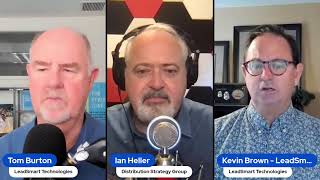
A recorded live discussion (Around the Horn episode) featuring Kevin Brown, Tom Burton and guest Ian Heller (Distribution Strategy Group). The hosts review recent industry news—freight delays (Panama Canal), port labor risks, bulging warehouse inventories and reshoring—and then shift to AI and data strategy for distributors, emphasizing data quality, CRM use-cases, and an October AI conference in Chicago.
Chapters
Sam.
Sorry, I thought we were gonna miss it. I thought we were gonna miss it.
Oh, well, what a way to start, huh?
Yeah, that's right. Good morning.
Good. Good morning. Good morning, Mr. Heller.
Good morning, gentlemen.
How are you?
Great to see you. Great to have you with us. The famous, esteemed researcher, marketer. You're looking for somebody else, right? Yeah, behind you. No, we're. We're really happy, Ian, to have you with us. Ian Heller with the Distribution Strategy Group. Been wanting to have you with us for a long time, so we're thankful that you're with us today. Tom Burton, lifelong friend, co founder of mine, and business partner, Elite Smart Technologies. So, before we dive in and do the housekeeping of the day, Tom, any thoughts to start the day, other than being excited to have Ian with us?
Yeah. No. This is going to be fun. And welcome everybody who is online live. Sean, good morning. If you're online, jump in, say hello to Ian, let us know where you're from. And, yeah, today we're going to talk about a little bit of economic. Some economic information, but with a little bit of a different slant. And also we're going to talk about. I know everyone finds it hard to believe, but some AI stuff, but also different from a little bit of a different slant. Right. So we're going to go out a little bit differently, and, yeah, some other interesting news, so.
Well, it's good. So before we kind of dive into that, I'm glad we're going to have that. That AI discussion today, because Ian's organization, the Distribution Strategy Group, is getting ready to host a big AI event in Chicago in the coming months. We'll talk about that as we go through this today. But, Ian, before we kind of do the little housekeeping that we do every week, why don't you. I can't imagine there's somebody here that doesn't know who you are, but just in case. Right. Somebody from Lithuania that just got power, that hasn't, you know, heard you, met you before. Give us a little background on yourself and. And the Distribution Strategy Group, if you would.
You guys are way too kind. I mean, thank you.
Wait.
You're way too kind. So it gets.
It gets worse. Ian, by the way, this is as good as it gets. Everything else is downhill from here. So is that.
Is that we don't know what's in Kevin's coffee mug? Is.
That's right.
That's. That's great shot. The good. Good point. I'm gonna just go ahead, though. Just this. This is, in fact, a tea Bag.
Okay. All right, got it.
You're not a Bushmills bottle or something next to me.
All right, I'll. You. Seems you seem pretty sober, so I believe you. Yeah. So I spent most of my career in distribution. I started started in distribution as a truck unloader at a Granger branch in College. Left 15 years later as the VP of Marketing. Then I did that job at three other big publicly held distributors. The last one was with the White Cat Construction Supply out of Atlanta, which was a division of HD Spy at the time, where I headed up e commerce and marketing and founded Distribution Strategy Group a few years ago with my illustrious business partner, Jonathan Byne. And we do media, so we have a newsletter and we do podcasts and webcasts and original research for distributors. Do a little bit of consulting here and there. We have three analytics products like, you know, NET Promoter Score and Man to market Estimation, stuff like that. And so we are producing a conference on AI in October in Chicago so we can talk about that when the time is right.
That'll be be super. So. And anybody that's either listening on our podcast or with us live this morning that can see these three beautiful mugs here. You know, when, when we've had some, you know, Jennifer Murphy from Net plus alliance and, and Kristen Krykili was on with her work that she's been doing recently with isa. We, we put them in the middle and said, you know, the rose between two thorns. I don't know what we'll call these three mugs here today, but three thorns.
Three.
Three thorns. And there's four mugs if you count the one your tea is in.
That's. There you go.
Good.
So hey, before we dive into the news, which we need to get to, a couple more good mornings, Will Quinn, the distribution guy, Lars Nosland is with us as well. We've missed you, Lars, recently. Sure. Ian, you probably know Lars as well. Great friend. So who we are, what we do, why we're here. Let me cover that housekeeping stuff. So again, Kevin Brown, Tom Burton. We're the co founders of Lead Smart Technologies. We have developed a industry specific CRM that is AI enabled and customer intelligence solution solely for wholesale distributors and manufacturers. We've been doing that based upon my 35 plus years in the wholesale distribution manufacturing world and Tom's 30 plus years in the technology field. We come together each week to review the news in distribution and the world. We talk about the economy, M and A sales and marketing technology. You're going to be shocked. Today we're going to talk about AI again. So what are we going to be reviewing? We're going to be reviewing a newsletter that we send out every Friday morning. It's called around the Horn and Wholesale Distribution. If you do not receive that and you would like to, you can share a comment with us here in, in the chat, if you're live with us or very simply send us an email. The email address is hello atLead smart tech.com or you can go in and jump right on to our website for that, which is aroundthehorn pod.com www.aroundthehornpod.com all of our previous episodes are there. And as well as the newsletter, those of you listening later in the day on the podcast or in the future, you will not be seeing the newsletter that will be up on the screen, but we'll reference that throughout in the articles that we published this week. So enough of that. Let's dive in. Look for first article and boy, my little hiccup through that dissertation there was based upon Will Quinn's comment thinking that he was at a modeling clinic for a moment for the flunkies out of that clinic. Funny guy, Will. All right, Tom, take us away.
All right. Can you hear me?
Okay, we can.
All right, let's start in here. You know, our favorite stat, seems like our favorite economic tool here is cutting tools and Good morning, Ron. Good morning, Brian. Yes, that is Ian Heller, believe it or not. Ian, say a voice so you know, Ryan can prove that you're really here. R.P.
How you doing, buddy?
You guys go way back, I just realized, don't you?
Yeah, we worked in the same Granger branch in Chicago in like 80s, late 80s, 1990, 1989, something like that.
Yeah, yeah. RP is a great friend. So we're happy, in fact, he's going to join us on the show hopefully soon. I sent him some dates yesterday. So, RP go look at your, your messages there. So let's dive ahead, though, and talk about these cutting tool orders. Exciting stuff, right, Tom? Especially from, you know, your, your background from coming into wholesale distribution from technology.
Yeah, I'm going to leave this one, I'm going to leave this one to you and Ian to get your take on that. I'll, I'll save some of my takes for later on.
Okay, good. Well, you know, we talk about a little bit something each week that ties to the economy, whether it's an uptick or a downtick. And it kind of ties back to what we talk about regularly is this kind of simmering effect, kind of going on in the economy out there. But you know, it's obviously there's, you know, some, the article talked about some hiring pressures have eased, which helps people, you know, get caught up on backlogs and drives their business forward. My question, Ian, as you read things like this, you're one of the hats you wear as researcher as well. And you and the work that you and Jonathan do brings so much different research together. What do you think from your take? One, your take on this. But two is what do you, as you're doing your research and talking with wholesale distributors and manufacturers, how many different economic factors are they all taking into impact and is this one of them of significance?
Well, this is certainly significant in the industrial sector. I mean, there are a lot of different stats. Some of them are exciting, some of them are not. I mean, wholesale inventories are way up, right? So if you look at 2019 versus the last report, wholesale inventories went from basically 500 billion to 700 billion on a monthly basis.
So.
And I know we've got an article later about overstuffed warehouses and I do kind of feel like this bullwhip effect that some of us have been talking about is materializing now. Right? So the cutting tools thing is actually encouraging in a way because, you know, it feels like, well, it's, it's generally a positive number. I think some of it's about reshoring, right. As manufacturing comes back to the U.S. some of it's specific to the defense sector, which is really hot right now. And you know, related to defense expenditures as a result of arming in Ukraine, for example, transportation is hot right now. A lot of airliners and cars are being made. You know, there's a huge shortage in automobiles for a long time. They're starting to catch up with that. So I don't think it's a long term number that I would be that excited about. I think we're still catching up on production, but it is related to this potential for this big inventory overhang that could lead to deflation, which is very, very concerning. It's very insidious. It's in many ways worse than inflation. So I think you have to take the combination of factors into account. I think we're in a very uncertain time right now in terms of where the economy will go.
Thanks for that. You know, I think my takeaway in looking at this is, and I hope we see more and more of this consistently is that there is, you know, some, some breathing room coming from the hiring side of things. So if people are truly starting to see specifically on the manufacturing side of things that they're able to get people into factories and operating machinery. And we're, you know, seeing less of that great resignation, so to speak, going on and people can get to work, build more stuff and balance this out. And you know, kind of our articles today kind of cheer all the way through. You know, we're going to talk about freight and so forth in a moment. Then we're going to talk about warehousing and then we're going to talk about reshoring today as well. So anyways, good news. Thanks for that, Ian. Tom, why don't we jump ahead? Just there's some stuff ahead that's going to be much more valuable to us. You know, we, we've talked a bunch in the last few months, right. We, we averted a West coast port slowdown. Slowdown. We didn't ever we had the slowdown, but at least a strike. Right. As I was researching some of this this week and in this particular article from CNBC about the state of freight and what's going on in the Panama Canal right now is really took a look at there was another article about how so much of the rest of the world has automated ports and warehouses with automated container unloading and automated container movement into warehouses and so forth. And we've got such a strong union factor here in North America in these ports that that's kind of putting these ports at a disadvantage. But so west coast port strike averted. Canadian port strike happened on the west coast. Off and on for a month. They were striking, not striking now I believe that's been ratified then we were talking a few weeks ago about the UPS strike. But can you imagine that perfect storm if you had from Mexico to Alaska with the ports basically on strike and UPS striking. Do you imagine trying to move goods and then yellow freight going under? I would have been crazy.
Yeah. And it seems like we've avoided some of those for sure. But this Panama Canal thing that's here.
Yep.
It's too bad that the picture I couldn't get it to really come out very well. But if you look very closely, there's a lot of little dots here. This is a satellite view. And those are all ships that are basically that's South America, Columbia, I believe right there. These are all ships that are just hanging around here waiting to go into the Panama canal. They said 154 vessels.
That's right.
21 day wait time that are there. And you know, to me this is similar. Right. It's all about reducing, you know, whether it's a strike or this, it's all friction in the supply chain one way or the other that is potentially going to impact. And I don't know, I haven't been watching the weather in the Panama or the Panama Canal if there's any, any, you know, drought is being, is getting going in the right direction or, or where that's going. But yeah, that's a lot of, a lot of ships hanging around out here.
Yeah. So the, the issue, right, is the lake that it empties into, Lake Gatun, I think it's called. Right. Is at, you know, record low. And so the Panama Canal, we have some friends that took a sailboat through there a few months ago and it was astounding to them from that. But, you know, I hadn't paid attention to this before. Right. But 40% of all U.S. container traffic goes through the Panama Canal every year and 73% of the traffic is representing commodities from the US or coming to the US so pretty big impact. So it just seems like, and the reason I popped that in this article in this week is we just seems like there's every month, right, we've got port strikes, we've got UPS issues, we've got the yellow freight thing that just happened and now we've got this Panama Canal issue to deal with.
Yeah. And let's balance that out. And Ian, definitely want to get your take and I want to unpack your comment on deflation too, a bit more. But this next article here about bulging warehouses and obviously we've talked about this in previous weeks about the fact that companies stocked up, right. They stocked up with the whole supply chain issues. Now we've got all these warehouses with all of this stuff basically, you know, but you also have these other events like we just talked about Panama Canal or strikes or other things. You know, I'd love your taking in on kind of if you were to balance all this out. Where do you think we land? And let's unpack, you know, some of these risks of deflation a bit more.
Yeah, I don't, I don't know where we're going to land. I mean, you know, for every economist you'll find a unique opinion. I guess, you know, Harry Truman was famous for saying he wanted a one armed economist because every economist he talked to said on the one hand this.
On the other hand that.
So I, I mean, look, I think the economy overall is in pretty good shape. I think there's some significant risk factors and deflation is increasingly beginning to look like one of them.
Right.
So if you have prices that are going down in the marketplace, but then if you're a distributor, particularly if you're on the LIFO method of accounting.
Right.
Then your margins automatically shrink because you're selling the, the latest higher priced purchased products first and so your margins flat. Now you know, the other problem is at some point in time you might wind up actually writing down inventory. Right. And a lot of distributors, probably most of them have lines of credit that are secured by the working capital, which is inventory and accounts receivable. Well, deflationary times, you have customers that are not selling as much so they start to pay slower, you've got lower profit margins and then you begin to write off inventory and you know, you get to the point where you might trigger some violations. Yeah, right. Which frankly is what happened to AZP recently. Right. I mean theirs was self inflicted, but they just got themselves in trouble with the line of credit that was secured by inventory and receivables. And distributors that are operating on a little bit of a edge when it comes to their lending limits could find themselves in trouble. Certainly profits could go down anyway. So you know, I don't think it's going to be a crisis, but there's always the potential for that. I mean, you mentioned the perfect storm unit ago and the reason that they normally don't happen is because a lot of things have to line up to make that perfect storm happen. Right. And like the housing crisis. But in this case there was no perfect storm because the odds didn't play out that way. And for most distributors that won't happen this time either. But there is a risk of it.
I just want to ask a quick question or clarify. You know you mentioned about lifo, Right. And what that really means, tell me if I've got this right, is I may have bought goods at a higher price. I can buy goods now from a, at a lower price, potentially from the manufacturer, but I got to sell the ones that I bought at a higher price at a lower price, if that all makes sense right now. So it squeezes both ends. It's not. And eventually it may catch up. But if I, if I don't catch up, it's a little bit of a squeeze.
Yeah. Usually what happens to distributors is their selling prices go down before their purchasing prices do much better.
Said yes. Right.
So. So as a result they wind up selling at a discount versus a good they bought later that was at a higher price. So if I bought a bunch of stuff for a hundred dollars Each per unit. Now it's 110.
Right.
Well, I have to put the cost of goods sold at 110, and my selling price has actually gone down from, say, 150 to 140.
Right.
So that's what squeezes the margins. If you're getting price declines from your manufacturer, you don't have the same kind of problem. But usually the selling prices, like. Like I said, go down before the buying, the purchasing prices do. So it's, you know, and you think about, like, okay, for any individual sku, it's not that big a deal. For any individual distributor, maybe it's not that big a deal. But when you have, you know, compounding. Yeah, you have 100,000 SKUs, and, you know, a million distributors, and it can be a big problem.
No, I couldn't agree with you more. Right. So what we're looking at now, too, right, is this kind of slingshot thing happening is that we went through Covid, right? And you look at just. You take a safety distributor or an industrial distributor that sells a lot of safety or a medical person like that, right? They couldn't get their hands on enough gowns, N95s, nitrile gloves, whatever it was, and they were willing to pay whatever they needed to pay to get them, right? Then they got all of this stuff, and then now they've got a glut. I was a couple months ago in a distributor's location here in Southern California who had brought, you know, every. Every single N95 or KN95 mask that he could find in. And now all of a sudden, the selling price was half because the market adjusted back to what market prices were supposed to be, right? We're sitting on all this inventory that we brought in because we could sell it to anybody. Anybody would take it for whatever we were selling it for, market adjusted. And now I'm sitting on this inventory, looking at it and going, wait a minute, I've had this for a year. And the market prices slingshotted back to what they were supposed to be.
Yeah, right. So now what's that inventory worth? I mean, if I had a million dollars worth of inventory that fits some kind of character set of characteristics like that, now it's worth half a million. At some point in time, I got to write that off, and my line of credit is secured by that. So it's, you know, it's a. It's time to be very, very cautious. We've been advising this for a while that, you know, did you ever play a game called the Beer game.
The beer game.
Yeah.
I've played a lot of different beer games. I'm not.
Yeah, this is one is not. This one's not a drinking game.
Actually, there's a. Oh, then I probably haven't done it.
Oh, yeah, okay. Yeah, probably not. Right. You even find ways of incorporating the beer drinking into like Scrabble and chess and stuff like that. But the, the beer game is. I played it at Granger like 30 years ago. And there are different levels. There's a wholesaler and a retailer and a consumer and you get these orders in. And what it shows is the human propensity to over order in first in reaction to shortage frustrations. And so there's actually a beer game app now. I think it's beer gameapp.com but every. Everyone I've ever heard play it screwed up and ordered way too much inventory for demand in reaction to fluctuating demand cycles.
So that's why you have all this toilet. All these people have all this toilet paper in their garage that they bought at Costco during COVID Right? Same thing. Yeah.
And there are lots of distributors out. You know, lots of customers were like, well, I'm, you know, I'm trying. I'm waiting on this H vac unit from this one distributor. I'll go ahead and order from two other distributors and I'll just cancel the two after the first one comes in. So the distributors turn around to do the same thing to their suppliers and pretty soon, you know, one unit gets turned into nine. So, you know, eight units of phantom demand.
Yep. And I think we have a LinkedIn user here. I'm not sure who this is, but he says, very insightful comments. But I think what I really like the most here is about unintended consequences.
Right.
And I think that's what I. And I think maybe I've been saying this, but maybe not as articulately as you have, Ian. I think that there's potential for unintended consequences that we may not have experienced before, at least in, you know, our lifetime on some of these things because of the different dynamics that are coming together.
But I think you're. I think that's a great comment, Tom. And boy. And sorry, I just. Your lips were just starting to move. I started talking. But I think that a little bit ties in, Tom, to what I've been saying for. For the longest time is, you know, we're in 2023, right. We've got all of the things going on that we've got going on with technology and AI and tools and, and data available to us. We're going to talk a lot about data. You're further into the broadcast this morning, but we're still using all of these economic factors and indicators that are. I don't know if I should, I've mentioned this before, I should go look it up. But you know, when did we start using that term for inflation of two progressive quarters? And I mean, that's got to be 40, 50 years old. Right. And so I think of this as we, the comment was, I'm going to guess that might be Brendan Breen with isa, because every time he comments in the past, he just shows up as LinkedIn user. But we'll, we'll call it, whoever that is, is insightful themselves. But you know, I just, I wonder sometimes as we think about that with unintended consequences is we're playing this game with these rules that are maybe antiquated is too strong of a term, but we're in a different world, in a different economy. I think those things have to catch up at some point.
But it's not just the economic factors, it's the, just like Ian, you were saying, all the banking covenants, all of those things are all based on things that we've done for a lot of years.
Yep.
It's going to be interesting to see what AI does for supply chain visibility. You know, I think, I think, I'm not saying this because it's your show, but I think we're entering a golden era of distributor CRM. And in part because, you know, the products actually fit the needs of distributors now. I mean, most CRM products historically were ideally suited for companies that sold CRM software. You know, so you had these big deal making pipeline things, you know, so it was less about customer communication and interaction and more about managing a pipeline of million dollar deals.
Right.
I think modern tools fit the distributor use case a lot better and you guys are obviously a part of that. But I think the same thing hopefully will come to supply chain visibility. I mean, really, if we can get human decision making out of these, out of these situations, we're going to have a lot better outcomes if we can get the AI to the point where it understands that. You know, one of my keynotes, I, I show a guy sleeping at the, in his, in his drive, in the driver's seat of a Tesla and I say the headline is Someday AI will make it safer to sleep behind the wheel than to steer it. Right. Because humans are such bad drivers. You know, we text, we have road rage, we get In a hurry, make bad decisions and AI won't suffer from those flaws. And if we can get, you know, more coordinated supply chains, thanks to AI managing this stuff, we're going to be a lot better off. I don't know if we'll ever get there.
Yeah, well, and Ron, Ron says here, same thing I use and exactly what you're saying, right. Impact for AI supply chain is going to have a big impact, impact on this. And obviously I know that's a big part of what you're going to be talking about in your event.
Yeah.
You know, before we jump ahead though, Tom, if you go back to the RP's previous comment, which is, you know, and we didn't, Tom probably wouldn't have thought of this because he hasn't lived it in his career yet, but you and I have lived this. Right. Is the salesperson that comes in. And RP's comment is the other part is that it is distributors who bring in stock and assign a special SKU so no one else sees it for a specific customer. And that can turn into debt inventory. Right. So we've all seen the sales guy that comes in that says, hey, I need to do X, Y and Z for this customer and they're going to buy this amount of it or. And sales manager and purchasing says that's not one of our key vendors. They're not part of our buying group. Whatever it is, we don't want to do that. Are you sure? And salesperson euphoria says, oh, gotta do it and we're gonna land this business. And you look at that, you know, RP comes from, you know, recently retired senior executive at Granger. You multiply that across a five person sales organization, it's trouble. You multiply that over hundreds, if not thousands of salespeople. It can be, you know, a recipe for disaster. Ties right into the whole warehousing piece too.
Again, unintended consequences, you know, of things. All right, let's move on. Kevin, do you want to go deeper on the warehouse piece or no?
No, I think we're good. Let's jump ahead because there's, we've based upon time, there's a lot of great stuff we want to talk about related to AI. But you know, all of the stuff that we've talked about today and you know, all of these have kind of lined us up to talk about this next article that talks about US manufacturing sector reaping, benefits of reshoring and you know, it's the inmate that comment earlier and was astounding to Me, you know, about the, the difference in costs of manufacturing or of salaries and so forth in China versus we talked about that before we went live. I think we did. What was that stat, Ian, that you had just read about, about wages and so forth?
Yeah, what I read, this is one source, so take it with a grain of salt. What I read is that labor in China, like I think 20 years ago was 1 40th the hourly rate of manufacturing labor in the US and now labor in the US is 2 1/2 times. So you went from 40 times more expensive to an hourly rate to 2 1/2 times. Plus you add in the effect of increasing amounts of automation that takes labor out of the manufacturing process to begin with. And it's really driving a lot of this reshoring, especially after these supply chain scares and you know, how the transportation costs and you can forecast more accurately because you're not waiting 90 days from output from the factory to reach the customer.
Yep. And that 90 days can be in a good setting too. Right. When you start thinking about, right, you've got 154 or whatever vessels that are sitting at the Panama Canal or you've got a labor slowdown in one of the ports. It really leads to that. It was astounding to me in this article. It said that and it's not so much the number. It was the number this year based upon the fact that we're in August. It said there's expected 400,000 new jobs just in the US in manufacturing tied to reshoring. I mean that I don't know about you guys. That number really surprised me based for this year. To say that that was by the end of 24 or something like that would have made a lot of sense to me. But this, this was astounding to me. So I think it's interesting too. We, you know, this particular article talked about, you know, on shoring, but I think the near shoring piece is, is solid, solid as well. You know, living here in Southern California when I was from the manufacturing distribution and then even my time as a manufacturer's rep spent a lot of time bouncing across the border into the Makilia door district throughout, you know, Baja California and across into Texas, where so much man, you know, you look at all the auto companies that have plants, whether they're stamping plants or assembly plants down there, that kind of seemed to settle down for a number of years now. But I can see a huge spike to that happening again.
I see the one person there has mentioned clients moving from China to Vietnam or Thailand. And we, yeah, we had a, we've had a supply chain professor from the University of Colorado on our, do a couple of webinars for us. And on the last one, he covered the migration of manufacturing from China to Vietnam. And he had just been over there and talked about, you know, I mean, there. And it's not just labor costs, it's also political stability because there's all these fears of war between China and Taiwan. In fact, he said when he was in Taiwan, the business community just accepted that they were going to get attacked soon and there was no question of if it was when. Yeah. And so if you own plants in China and you think you're going to get embargoed by us pretty soon, moving to Vietnam looks even smarter for not just economic reasons.
Yeah, that's, it's interesting. And did he talk about what types of manufacturing we're moving in that direction?
I don't remember. Good question, Kevin.
I don't recall.
Well, and the only reason I asked, I didn't mean to put you on the spot, was right, you know, historically, and this is maybe this is just my mind from, you know, where some of my background comes from, but I think about textiles, protective clothing, you see in that, in that movement to Southeast Asia. Right. There just have historically been strong in, in cutting and sewing operations and things like that. So I'm really would be intrigued. I meant do a little research to find out is it heavy manufacturing moving that way or is it just more of the traditional type stuff that people are doing? So, but there's got to be a shift. And I don't know if either of you saw this on the nightly news last night. There was a talk about the race to Mars and using, using the moon as like kind of the, what do they call it, the jumping off point. Right. So base stations on the moon for the jumping off point. And, you know, Russia's trying to get some things going there, but China is really wanting to, you know, put a, you know, a stake in the ground, so to speak, or I guess I'll, I'll say a flag, you know, another flag on the moon for that type of base. And, and the head of NASA was talking about, hey, we've got a, you know, we, we had the space race and, you know, we, we fought it out with, with Russia mostly on, on the moon. And he says now in this Mars thing, he said because of the economics, the governmental instability and the economic instability with our relationship with China, we need to plant that flag first. Basically, and it was this whole thing like migrating to space was kind of made me scratch my head a little bit. But, you know, I think that the political instability in China is a big piece of that, so. Good.
All right, let's move on to two funner topics, at least from my, my, my perspective.
So, yeah, you're done with reshoring and on shoring time and you want to talk about AI.
Yeah. Well, that's enough.
Go figure.
That's enough for the month.
Should Ian and I just like, click out and we'll go get on the phone and talk about the weekend and you can just finish up in like.
Two rooms or breakout sessions, I guess.
Right.
So, yeah, no, this, you know, we've talked a lot about data over the last few months and the relevance of that to AI. And this is a really good article by Fortune. And what they said here is, with artificial intelligence quickly becoming a key driver of competitive advantage, the need for quality, timely data is more important than ever. However, the vast majority of organizations don't fully trust their own data to get them the best possible AI outcomes. And, you know, Kevin, we work with companies. I spend a lot of time working with companies all the time now talking about strategies with their data. And you know, Ian, I want to tie this back into what you're seeing and some of the program you have coming up. But what I see is that first of all, you know, people have obviously lots of data. Right. I think in the distribution and manufacturing world, we are data rich compared to other industries. But they don't really know where it is. It's siloed, it's. They don't know the quality of it. And then when they start thinking about it, they don't think about it as holistic data, but they tend to look at silos. Well, I have data over here with my erp or I have data over here with, you know, supply chain, whatever the case may be. I have different data that's from different places and they're not looking at it from. But how would I combine some of that data to really create one plus plan one plus plus one equal five or eight or ten down the road. And that's where I see a lot of opportunity, is not only just the quantity of silo data, but the data to pull that together. And in this article, they were talking a lot about the importance of the quality of the data is more important than the quantity of that data. And I guess as I read through this and you know, Ian, we were chatting beforehand and definitely want to get your Take as, as relates to your upcoming show. But the amount of education that I see is really required to just understand the elements of what it means to transition to an AI organization or an AI driven organization is much larger, I think than maybe we originally thought or believe. And would love your take on that.
Yeah, thanks. So, yeah, I wrote an article recently about how CEOs are increasingly getting pressure from their boards to implement AI and they don't know what to do. Right. So I don't understand it. They, you know, so I had some recommendations in there about what to do. But I actually, I wrote an article that's going out today. I have a quote from this guy and he said by far the greatest danger of artificial intelligence is that people conclude too early that they understand it. And I think that's right. People have, they don't, they don't really know what it is. Right. They don't really, they can't differentiate between a term like advanced technology and artificial intelligence. Right. So, you know, I think that for distributors in particular that they need to get started in putting together a strategy based, that incorporates AI. I say putting together a strategy today without incorporating AI would be like putting together a business strategy in 1995 without incorporating digital. Right. It's going to change everything about the future. So if you do a strategy without it, you're, it's going to be, it's going to be seriously flawed. So you need to incorporate it, but you have to understand it. And I think, you know, for distributors, they should be calling technology companies and asking for explanations. And you can get a lot of that at our show. Right. Because we have a bunch of technology companies there. But you know, I hope you have distributors reaching out to you saying tell me what about your AI enabled solutions? Because I need to figure out how I improve productivity, quality, customer satisfaction, profitability with, with AI enabled tools because they're so much better and, but different than anything we've seen before. But I have a question for you, Tom. I read that article, thank you for sending it. And they did talk, they did emphasize data quality over quantity, which I thought was interesting because I don't think I've read much about that before. But I have a question for you about what is data quality? Because from reading the article it sounded like they're not just talking about how pristine or accurate the data is, they're also talking about getting it organized in such a way that it's accessible to the AI tools. Is that what you think of when for data quality?
So data hygiene, we typically think of data hygiene as my address is correct and my name's correct and all of that, that's one little element of it. But if you look at how AI models work, right, they don't just absorb spreadsheets, they look at, you know, what's called semi. So if you think of a spreadsheet as sort of very structured data, a lot of these models operate off of semi structured or unstructured data, which can be, you know, product catalogs, PDF files, all kinds of other things that you wouldn't necessarily consider data. So what, when you look at data quality, what you're looking at is what is the quality of the data that will potentially get the best results from my AI in terms of the intelligence that it's returning back and coming back there. And a lot of that is looking at not just the more traditional data you would think about coming out of your ERP or some of your software packages, but what other data do I have in my organization that isn't that structured data? But actually there's a lot of built in intelligence into it that's there. And so, and I think the biggest, and I just wanted to touch on something else you just brought up, Ian, was when people come to us, yes, they are asking about features, AI features in our product. And I try, and Kevin and I try and change that conversation to say, you should not necessarily be looking at this as a feature game, but this is a strategy game. And I think the problem that we can run into right now is, oh, look at this nifty AI feature. Oh, it will write an email for me or we'll, you know, create a blog post or whatever and that's fine. But what, and the risk is, is that if companies start going down the road of using, of thinking of AI as a feature rather than AI as a strategy, they're going to find themselves, I think, pigeonholed in a place where they're like, holy crap, I wish we wouldn't have gone down this road. And the data part of that is by looking at the data a bit more holistically and from a strategy perspective and the quality perspective, it's. And so we try and do that. We sometimes to our detriment, frankly from a, from a product company is we try and say, take a step back and look at this from a strategy perspective, not as a feature. And you know, just, I'll end off here. We had a number of people that have implemented products that are AI feature oriented now are coming back to us going, oh crap, I feel like I may have gotten ahead of my skis here, help me pull back and take a bigger view of it. So hopefully that answers your question.
Yeah, it does. That's a great answer.
Thank you.
Yeah, if I, I can piggyback on that a little bit too. And it's, it's interesting, right? It's, and Tom May made the comment right here is that you need a data strategy before you introduce AI, right. And, and what's, what we're seeing is specifically like in the CRM and customer intelligence world is that there's companies that are, you know, and, and, and we've talked about this on phone calls a number of times in the past is, you know, you've got companies that are quarter billion dollars in sales, right. Hugely successful, multi generational, maybe family owned companies that have never had any CRM in their business.
Right.
They've got a 15 plus or 20 plus year old ERP system that's running on a server down the hall in the closet and they've got two people in it. And those two people really are focused. And this is not a dig to any of these people, it's just the state of the world in some instances where they've got those two people and most of what they do is you're changing outlook passwords and fixing zoom cameras and making sure the green lights are on and the servers in the closet. And now we're throwing this thing because their CEO, who's running a hugely successful company goes to an event or his trade association or buying group is, or they're listening in here and we're talking about AI and they want to rush to AI but they have no clear understanding of where their data is at across their, their organization. They have no strategy and no plan. And then to Tom's point, sometimes they'll jump in and they'll buy an AI only solution and realize I bought the sizzle, but my organization doesn't have teeth to chew the steak. And so we, we kind of look at, and this, I'll make a comment that might sound a little self serving but I mean it genuinely is it, you know, we are, we use the term with, with lead, smart channel, cloud, our, our CRM and customer intelligence solution as being AI enabled. But we have all of these other tools that are not necessarily needing to be AI enabled to block and tackle to help an organization grow. And so now you can crawl, walk, run by adding to those AI solutions. And I think that's where the risk may be in a little bit. And I, I think we see that from this article is that somebody goes from I'm doing nothing to now I want everything AI, because to your point earlier, maybe my board said I needed to do that. Right. They put themselves at risk.
Yeah. And I want to hit a couple of the comments here because I think they're, they're really good. Ron says, of course, the first thing, Tom, you're so correct.
It's shocking that you would put that up there.
I'm just going to end off right there.
Yeah. No more, no more needs to be said.
Yeah.
So do you see a theme here?
I'm learning that Tom is always correct.
Yeah, See, just ask him. I've actually just as a side note, before you go ahead with that, Tom, what I've really found is if I just listen to my wife and Tom, I don't even need to think.
I told you, don't watch the news. Just listen to.
Just, just listen. Everything's fine.
I've married 33 years. I figured that out a long time ago.
Yeah.
And I've met Penny and Penny's smart, just like Darlene.
Yeah.
So anyway, what you're saying is my experience, it was almost personal for those to provide their area data. Right. So basically saying people wanted to hoard their data, they didn't want to give it up and did not understand the criticality for the company. Communication was key on why data fuels everything. One of the toughest roles I had to manage and lead this initiative, you know, is to get people to even part with their, with their data that's there. And I also wanted to bring up here, you know, our LinkedIn user again is that, you know, he said never thought of data hygiene from the viewpoint of, and even brought up customer reviews. Right. Customer. We're going to talk about that in a minute. But customer reviews and customer feedback or customer phone calls or whatever are great sources of high quality data potentially for what you're doing with, with artificial intelligence. So what is the quality of that data? How is it tracked? How is it put together? All of those types of things all go into that bigger piece that's there. And anyway, Ian, anything else you want to add to the, to the data conversation before we move on? But yeah, I think there's a lot of this. I assume you're going to be covering in your conference and really helping people see that bigger picture.
Yeah, I mean, just a minute on the conference. So we've got one keynote is Zach Cass, who's the head of Go to Market for Open AI, the Chat GPT people. We spent some time with him on the phone. He's going to be there for 90 minutes, most of it answering questions from the audience. We got some other good general sessions and then we're going to have some technology companies demoing their capabilities and there'll be a, an exhibit hall. So it's the, the lineup of distributors is just mind boggling. I mean, every major distributor you can think of is already attending. And I will say this, this is kind of interesting. So I was at granger in the 90s when we did digital adoption. I had nothing to do with it, right. I was working on something else. So I'm not taking any credit for it, but there are some visionary executives that really drove that initiative. Our first two registrations registrants were former Grainger executives who helped drive that digital transformation who are now in PE and invest in distribution companies. So these guys have that ability to understand the importance of embracing technology early. And what do you know, here they are showing up again even though they're now my age, whereas they were just young, enterprising executives back then.
So that's really cool. Well, I think in, in kind of wrapping up this topic, right, is, is you look at the statistics out of that article, right? Is that, you know, 77% of the participants interviewed said that their organization's data is neither timely nor reliable to use with AI and machine learning. Right. So takeaways I think are strategy with my data, strategy for how I'm going to use AI, and a technology strategy and roadmap that puts these pieces together because there's some steps to take in ahead of time. And I mean, that's a, you know, a astounding number, right? 77%. The vast majority then don't trust their own data out of this research set. So that data does become key. We kind of talk about it most weeks before we jump ahead. I want to reference though again to those who might be listening on the podcast. This is, we do this session live every Friday morning on YouTube Live, Facebook Live and LinkedIn Live. But later today it'll be all available on all the major podcast formats. So if you're listening on the podcast and you are not seeing these three handsome gentlemen that are speaking today, what you would also have been seeing on your screen is the newsletter that we send out every week. So as we're referencing these articles, if you were with us live, you would be seeing that. So if you're not getting that newsletter and you'd like to, hello atLead smart tech.com is where you can request it and or at www.aroundthehornpod.com. so just a little housekeeping to remind people because I think when I listen occasionally do us on the podcast, I have to try and visualize what's being seen on the screen. So jump ahead here, Tom, onto the next Tech talk.
Yeah, I wanted to just hit on real quick Jonathan's comment. We can talk more about this later. I think in future shows he says best pace to deploy AI in that type of organization is agent based productivity insight. I'd like to actually get into more of that later in a future episode about agents and co pilots and things like that. But I agree, I think a bigger picture. I think what Jonathan's saying is, hey, there are some things you can do to show some wins and show what's possible. And I think when you start to see what's possible, it helps the organization look and take a step back and go, oh my God, what can I do at a bigger picture? So I think it's that, you know, crawl, walk, run and that back and forth. It's not like you have to, you know, boil the ocean all at once. But anyway, by the way, I worked.
With Jonathan at whitecat, brilliant guy, made this transition out of IT into operations. So if you're talking about a business executive who's very well suited to understand how to apply technology of any kind of to the business, including AI, he'd be a great person to talk to.
That's great. Well, thanks for being with us today, Jonathan.
Yeah, welcome. So the next tech talk here more, a little bit more on AI, right. Amazon AI features summarized product reviews I think it's only being rolled out partially so I don't think everybody has it. But basically what they're doing is if you go into the review rather than sorting through the reviews and looking at all of them yourself, there's little buttons that they're going to have at the top of the app or on the top of the computer to summarize them based around a number of different kind of topics or views that you would look at them there what I found and I think that's interesting, I think what's probably more interesting about this is a couple things and interested in both of your takes on this is one as a seller, does this give me some insights that I wouldn't necessarily by looking at the reviews, does it give me again quality data that I can potentially use to, for, for even how I position my product, my descriptions, my keywords, all of those types of things that are there. And then I wonder Kind of secondly is, is this just the start for Amazon? Like will this actually turn into a conversation generative AI process where then you can go in and start asking questions well, what other products then are similar to this or and actually get some of the product recommendations and, and build a conversation around this as it goes. My instinct tells me this is just a, the early part of things.
Go first Ian. Or you want me to go, why.
Don'T you go ahead. But I do have some thoughts.
Yeah, well I just, the key thing that you know to your, your comment or question there, Tom, was I think this probably starts as a great tool in the marketing side of the organization. Susan Merlo, who's with us pretty regularly that works with distributors on their marketing efforts, did a great LinkedIn post earlier in the week that I thought was neat to see. So thank you Susan for that. Was, you know, talked about literally using those terms that you can see there in a. For SEO work. Right. So there's a lot of things I think that may be coming out of this that probably start on the marketing side of an organization that can really kind of piggyback because you're never going to outspend Amazon. Right? You're never, you're just never going to be in that world. And so I think that's where this is probably going to start is using it. I kind of question, you know, the salesperson actually trying to figure some of these things out. That's kind of a heavy lift for a person. I mean, you know, sometimes folks are struggling to just get there's their CRM updates done and reading the data that the CRM provides for them so to go that next step. But I think the smart people from a sales standpoint, you know, that really want to understand me take a look at this stuff. But I've got some thoughts on the future. But I want Ian to jump in here first.
Yeah. When I think about Amazon and AI, I usually look at it more on the threat and ordering side to distributors. So I think one of Amazon's goals is to take the keyboard and computer out of the ordering process. There's. I read a, I have a job description for machine learning data scientists from Amazon and it says we envision Alexa to be the all knowing, always available agent that knows you connect that and also understands everything about every product ever made connected to a store that sells everything. Okay, so they're talking about Alexa, which is voice activated. Now that indicates that they're going to make it more involved in purchasing. At least that's their Intent. So you know, imagine there's a, you know, guy on a job site and he's grinding something as part of his process and he, he's got, you know, AI enabled vision, you know, vision AI glasses or a connected tool or connected tool. But in this case, you know, say the, the glasses can see what he's doing and he's got, you know, a microphone connected to Alexa and he can say, Alexa, figure out what these cutting blades are, order me another case and deliver them to the job site and Alexa can go back and look at his purchase history, analyze. Maybe he glances at the box, reads the barcode or the description, maybe just looks at the tool itself and figures out what it is. And it says, oh, this is the, these are the, these are the grinding wheels you need. And they put it on an Amazon autonomous vehicle, whether that's a drone or a ground vehicle, shows up at the job site and you know, there's no keyboard involved because you think about like how inefficient a keyboard is as the intermediary between your brain, which is a computer, and the computer you're trying to order from, right? Your brain going zoom, zoom, zoom. You get the, the compute, the Amazon data servers going zoom, zoom, zoom. And what's, what's in the middle? Click, click, click, click, clickity, clickity, clickity, clickity, click. You know, it's just such an inefficient interface into a computer. You're much better off talking or using vision or maybe, you know, someday Elon Musk's neural link will take care of all this for us.
Great, great description. I, I love that. And you know, it's interesting, I don't know about you guys, but, and I haven't researched this that much, but as soon as you use that description, Ian, about the guy on the job site, you know, it came to me was while he's having his, you know, tuna sandwich for his lunch break, the drone pops in, you know, and drops, drops off what, what his needs are, right? And of course using that AI tool that Amazon's going to do, it's going to suggest to him that seven to 10 other items that he may need, right? To go in that same order. And, and so I think from that piece it's interesting. I just wonder, as we think about the autonomous vehicles and drones, it's like I, I hate drones to start. Just, I hate the buzzing. They, they're, you know, when we're down, I do some stand up paddle boarding regularly and be down in the harbor and enjoying a nice Quiet sunset paddling and getting a workout in and so just try and swat them out of the sky. So the idea of like having Amazon having tens of thousands, if not hundreds of thousands of drones dropping things off and pizza is getting delivered that way, I just, there's this Jetson, right. Space age thing happening. I just think about the air traffic and the noise pollution. Yeah, I'm sure somebody else is thinking about that too. That's smarter than me. But it doesn't sound appealing to me, so, But I do, I mean, I, I, I don't know. Ian, what are your thoughts on that kind of, that whole idea starting on the marketing side of things, to start using this tool? Because I think Tom's comment was how can others, you know, piggyback off of what Amazon's doing?
Yeah, it's not that hard. I mean, we use AI to do sentiment analysis in our Net Promoter Score tool.
Right.
So I think, you know, distributors can sample customer interaction data. They have a lot of it and could apply AI to that. That would probably be the closest thing that I would see. What do you guys see as applications in this area?
The first thing that comes to my mind, you know, I, I like what, what Susan was saying the, the other day. Right. If I'm a marketer at a distributor and I can see that that am is what Amazon is doing and they're saying this is what people are searching and there's that descriptions there. I can maybe even tie that into my, you know, PIM solution or, you know, what do I have, do I have the right, you know, do I have the right descriptions and so forth of how I'm doing? That's when I, when I said kind of piggybacking off of that, I should have defined that a little more. I think there's some things that distributors could, could, you know, see what, how Amazon is going to market with something and doing something and maybe enhance their, their online offering a little bit.
Oh, got it.
An easy starting point, right? Yeah, I think that's what Susan was trying to say.
Got it. Yep.
But I do think, you know, we're gonna see this across the board and, and there's going to be more and more of this. You know, I think the, if I were a distributor and you know, whether it's, I'm, I'm getting this stuff through my buying group or trade association and I'm really starting my online e commerce journey and even if I'm, you know, years into it.
Right.
You're never, you're never gonna, you're never gonna beat Amazon. But there are ways that you can take what they're doing to refine and enhance what you're doing and service better or do whatever you're gonna be doing in your local market from that standpoint. So I do think, you know, we can learn from that.
Agreed. When I think we can learn people, as we look in the consumer world, people expect an Amazon like experience, right? In business, more and more they're going to expect an Amazon like experience. Like you said, you're not going to beat them, but you can under learn from them and help to incorporate that into what you're doing.
What do you mean? What do you mean? Four days to get the product.
Yeah, I know.
I want it today. If not today, tomorrow.
Right? Where's your drone? Don't you have a drone that can drop this off for me?
No, no drones. No drones. So anyways, last couple things for the day today before we wrap up. A couple acquisitions this week. I think it was Wednesday a stellar industrial announced their acquisition in Tennessee border states. Did another one. So a couple things happen in there. If you get the newsletter you can read those a little bit further. The last thing I don't think we have time to discuss today. Maybe we'll leave this for next week as well. This talk and there's an article I just. We have a feature every week in the newsletter. It's called Goodreads. It's oftentimes tied to, you know, more personal development, human resources related thing. The title, articles title egg on their faces. 80% of bosses say they regret earlier return to office plans. So they don't think they did it right. Ian, any quick takes on the people that you talk to, you know from a distributor standpoint and you know they had a lot of their teams probably I'll say distributed already. But as far as the back to office, do you see anybody that had some really great success with it or, or had some failures with their failures? We don't need to name them.
Yeah, I think a lot of distributors, I mean they went virtual with a lot of their customer service functions. I saw some of them do that very well, some of them do that very poorly. You know if you're in a branch based environment, that whole labor pool in the branch tended to move from one area to the other. So your phone staff couldn't back up your counter anymore. You saw some long wait times. Right. So I think most distributors I know are going back to, they're moving at least the customer facing positions back into the branches or offices.
Yep. I think that's happening. And I think it's the key takeaway from that article is that how we do it and how we present it to our people and how do they feel about this as they're doing it. And it's, it's. It becomes a leadership issue.
I think I would like to. Next week. Kevin, I read an article on LinkedIn this morning. It just came out. They did a survey that 50 of the people they surveyed think AI is going to take their job in the next and 77% believe that their job will be impacted by AI. I think it'd be an interesting conversation for next week. Let's combine a couple of these articles together and talk about it, because it's bottom line. Right. It's impact to the. The traditional workplace as we. As we know it today. But anyway, let me sort of throw.
One last thing out to you, Tom, on that. Since you're the chief operating officer of our company and you also oversee the admin and finance side of our company. Could AI replace my job but not my paycheck because I'm good with it.
Yeah.
Send me the money.
What we'll do is we'll just take the drone to drop off your check and that's all you have. You're good to go? Yeah. All right, Alexa. And say pay me and then the drone drops it off. It's really, really cool.
I am so happy how many times that that smart device's name has been said today and the one on the desk next to me is not responded.
That's great.
In the past, the guest or Thomas said that and it's, it's answered because there's one three feet for me, so. Well, let's, let's wrap up. This has been great.
Yeah. And you're awesome.
Thank you. Oh, thank you. You guys are awesome. Thanks for having me.
So before we. We finish up on this, the Ian describe a little bit more about distribution Strategy Group where people can find you. You and Jonathan produce some phenomenal content. I listen to it in the car regularly because so I register so I can get the recordings. Maybe give us a little feedback on that and then a final plug for the upcoming AI event.
Yeah, I don't want to make this too much of a commercial, so that's fine.
That's what we do with our guests for the last couple minutes. Thank you.
Yeah. So go to distribution strategy.com. the top banner has all the information about the AI conference. It's October 3rd, 4th and 5th. It's at the Chicago Mirad O' Hare, so you can take a shuttle from the airport. Should be easy to get to. We, you know, really focus on good quality content. We don't do any advertorial stuff, so we. We paid a lot of money to content content contributors to produce great content. So we really pride ourselves on having the best content out there. You can subscribe to our newsletter@ DistributionStrategy.com and sign up for any number of events. All of our content's free and we do have three subscriptions for subscription products for distributors and Net promoter Score employee engagement. So how happy your customers happy your employees. And then the third one is estimating end market demand by product type and location, and even individual customers. So my. My business partner, Jonathan, as I said, he's got the PhD in computer science, so he's the brains of the operation, I'm the looks. He's much better at his role than I am at mine.
And that's why we get along well, right? We both have that, right, Thomas? Thomas, my Jonathan.
Yeah, that's probably right. That's probably right. No offense.
I do the looks and the technology.
No, that's.
Oh, man.
So, yeah, so that's it.
I don't need to say anymore.
Well, that's great. So thank you again. But before we go, probably the final two comments from our guests today were the most insightful.
So, you know, we need you, Kevin.
Yeah.
Yeah. All right.
On that note, we will wrap up. Yeah.
So everybody, until next time, again, if you. If you like what you heard today, click the like button on whatever format you're on, hit the subscription button. Leave a review, share with us thoughts and ideas as well on how we could make the. The podcast here better. And check in on what Ian's doing with the distribution strategy group. So in closing, Ian, thank you again. Hope you'll join us again. Everybody, have a fantastic weekend. Be kind, do good things, and be safe.
Thanks, everyone.
Guys.
More from Tom



What does AI actually mean for a wholesale distributor #WholesaleDistribution


If your systems don’t talk to each other, your AI won’t either #AITransformation




This is why one AI agent isn’t enough for high-stakes decisions #WholesaleDistribution

