Around the Horn In Wholesale Distribution - Episode 74
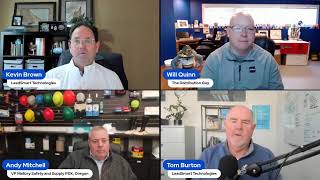
This content was created by Tom Burton. This content was uploaded by Tom Burton. This is a YouTube video titled "Around the Horn In Wholesale Distribution - Episode 74" featuring a conversational discussion among Tom Burton, Will Quinn, and Kevin Brown. The episode covers various topics related to wholesale distribution, including the impact of AI and climate change on business viability, productivity challenges in the workplace, and the evolving needs of younger B2B buyers. The conversation also touches on global trade issues and the importance of adapting business practices to new technologies.
Chapters
You know? You know, Will, what Kevin reminds me of when he does that? It's like, you remember the movie Caddyshack and the Gophers kind of dancing on the. Perfect for that, right?
Oh, he's all right.
Yeah, I'm all right.
Makes me want to get that gun out that he had and start shooting. I don't know.
That's fine.
I'm just telling you. I'm just being honest.
That's not how we want to start our day. We're kind and friendly. No guns, no shooting. Co hosts.
Okay?
Not what we want to do. All right. Hey, fellas. Good to see you guys, man. Tom Burton, Will Quinn, Kevin Brown here to discuss the news this week in wholesale distribution. Will, how are you snowing in Chicago?
I'm happy to be here. It's chilly. It's cold. But, hey, that's what we signed up for. Living in the Midwest.
Yeah.
And there's nothing here that's gonna kill me outside, so.
Good. Are you from the Midwest originally?
Yes.
Gotcha.
Very good. Okay, cool.
Well, so Dirk's back. Ready to see your dancing already, Man, I didn't. I didn't.
I love that guy.
We need to be on Tick Tock is what it boil down to.
That's what this is going to become. The around the horn dance moves. Yeah, yeah.
You add Dirk Beverage in there if I can get.
Okay. So, man, we're way off track already, right? This is. This is funny. So I was messaging with Dirk last night, and Dirk Beveridge was on with us last week, and just a phenomenal writer, speaker, and a supporter of independently owned and whole wholesale distribution in general, but distribution across the board. But we were messaging yesterday because we found we have a mutual friend. And I'm not going to say who that mutual friend is, but what I'm going to try and pull together is get Dirk back on with this other gentleman who's a global keynote speaker and very well known, which turned out it's a mutual friend of both of ours. And we're going to do a people episode, hopefully April, May. So that's a little cat out of the bag. Got a lot of work to do on that yet, but Dirk's got a big event coming up that we're going to try and help him promote, but that's. That's that. We'll get working on that this morning. Will, Quinn, my friend, introduce yourself to our audience. A little bit about you, a little bit about Infor, and then we're going to dive into the news. Sure.
Thanks. Thanks again for having me on. Well, I'm Will Quinn. I'm the distribution guy. If anybody else tries to say they're the distribution guy, they're wrong because I trademarked it. So I'm, I'm, I'm celebrating my third year with Infor. Super excited about that. Infor is a global software development company and our really claim to fame is having industry specific ERP that allow our customers to get a faster time to value. And before joining in for I spent my career in the industry. So I came from Grainger, I spent some time running distribution centers for companies like Coca Cola, MSC Industrial Supply, WEG Electric, and before that I cut my teeth in supply chain logistics in the Marine Corps.
So just a wee bit of experience in distribution.
A wee bit.
All right.
So Will, how long have you been the distribution guy? Like how long have you had that, that tagline?
Officially? That's, it's, it's about two years now.
Okay.
And it's, and it's, it's unbelievable. I filed it two years ago and it's still kind of crawling its way through the system. It's not quite yet.
So I could go challenge, I could go throw it in the challenge.
No, no, no, no, no, no, no, no, no, no.
Very good. Well, I tell you what, you are in fact the distribution guy. Words of wisdom about to flow freely as a comment. Big clap out from Susan Merlot as well. So that's obviously you're well known and looking forward to having you. We've got a sneak guest coming in later in the show today to do a little highlight with us on some cool stuff about M and A and in independently owned distribution as well. So before we dive into the news, let's hit what we have to do a little bit of housekeeping every week. So my name again is Kevin Brown. I'm here with my lifelong friend and business partner Tom Burton. Tom and I are the co founders of Lead Smart Technologies who graciously sponsors this event each week and covers the cost of production and so forth. Lead Smart Technologies developed the Channel cloud AI enabled CRM and customer intelligence platform. And what that does is it enables wholesale distributors and manufacturers both have modules for each one of them to accelerate growth, bring time to value within their technology investments and highly understand their customer in ways that they haven't been able to before, which really drives growth within the organization. So we do that only for wholesale distribution and manufacturing. We don't work with companies outside of this arena. So very specific focused product. We get together every Friday morning here at 9 O' Clock Pacific on YouTube live, Facebook live and LinkedIn live. And we talk about a newsletter that we publish. And that newsletter is called around the Horn in Wholesale Distribution. If you don't get that newsletter and you would like to couple simple ways, two simple ways to get it, you can send us an email@helloadsmartech.com and we'll get that right out to you. Just request the newsletter. Or we have a website for this podcast and live show. It's called aroundthehornpod.com. so it's www.aroundthehornpod.com and you can see listen to past episodes there and sign up for the newsletter. So we review this newsletter so those of you who are listening later in the day on Apple Podcast, Spotify podcast, whatever podcast format you might listen to once it's posted there, you won't be seeing the newsletter that the rest of us will, nor these handsome faces. But you will be able to listen to all of the content as well. So I think I got all of that. Let's dive in and start with some of the news, huh? So again, we're looking at this around the Horn. Well, the around the Horn and Wholesale Distribution newsletter got some of our articles posted up here. Now, the first one we'll talk about today is we've talked about this a little bit a few weeks ago, but it's becoming much of a bigger issue about global trade rates related to the Red Sea attacks and the shortage of ability to get container ships through the Suez Canal. So the article talks about 1.3%. There's a global trade drop and 1.3% already with ease. Now, before I throw this out to you guys, I want to tie in on this for a second and put a little context to this. Right. I did a little additional research. It talked about roughly 12 to 15% of global trade by volume and about 30% of the world's shipping container traffic goes through the Suez Canal. 60 to 70% of trade between China and Europe transits the Suez Canal. And then obviously anything from the Middle east that's coming to Europe or North America is going through there as well. So they talk about 200,000 containers are going through their daily today. Typically it's a half a million. So will your logistics and distribution guy, I'm going to throw that your some of your thoughts. Did some of your thoughts on this one first?
Yeah, I was going to add that, that statistic about the 12 to 15%. But yeah, it's huge. And, and, and it's, and it's continuing to escalate. Right. So we're hearing more and more attacks and, and more and more responding attacks from the United States, Britain and, and our allies. And what's happening is, is, is companies are, some of them are just saying, all right, we're not going to go, so we're going to take the long route around the, the, the, the, the, the cable. Good hope to, to, to kind of head that off. And that's, you're adding 10 days to the travel time. So if you're, if you're anticipating getting this freight in now, you're, you just have to add two weeks to the, the transit time.
Yep.
And so now you have to order more, you have to order more frequently. They're using more energy. It's, it's increased costs. And for the ones that are continuing to go through now, they're having to add mitigation for extra security and measures and, and kind of retrofitting some of these shipping containers with barbed wire or the, you know, the big, big water cannons, snipers, that sort of thing. Because this is just, doesn't this seems to be going somewhere not well.
I have a question. If I'm a shipper, right, if I'm somebody who is spending the freight, do I have the, and I guess do I have, when I, you know, decide who I'm going to ship with or work with, can I decide that I don't want somebody who's going through the Suez Canal because if I was shipping, I don't want my stuff going through there as well. Is that happening as well that you're aware of or any, you know, are the actual customers saying, hey, I don't want to ship with these companies or unless you are taking the long way or have a different route?
I'm not sure, but I imagine there are companies that are asking, right. And I imagine the more you ship, the more influence you're going to have on the shipper itself. So I personally don't know, I don't.
Know the answer to that as well. But I'm fairly confident that as you're working with your own large organizations, working with their own logistics and supply chain teams are making those decisions and working with their freight carriers. But at the same time the smaller ones that are working through freight brokers and, and assistants and so forth are probably able to identify that. I think one of the challenges that really goes with this is that, you know, supposedly, you know, this, the Houthi groups and so forth that are apparently Iranian backed are supposedly going after us US allies and or Israeli backed or owned ships. But that's not what they're seeing. What they're seeing is lots of others are getting hit through this. So it's not just nobody's apparently safe through this whole piece. But you know, we always try and tie everything we talk about on the show here back to how that impacts wholesale distribution. Right. So what we know from this is there's some statistics, our second article that we have posted today related to this as well, talks about air freight rates going up because of this, because critical items, people aren't going to deal with that extra 10 days. And so they're looking to ship by air. But what's happening now is ocean freight rates. This article references have risen by as much as $10,000 per 40 foot container. Now, you know, there's times where you can do $2,000 for a 40 foot container, you know, depending on where it's going. It's coming from Asia here. But big impact on cost, big impact on times. And then there's the whole factor that goes with us on this setting is fuel prices. Right. So in this article talked about that Shell confirmed that oil takers are temporarily being rerouted around the Red Sea. And it's talking about a 10 or 5 to 10% price impact. So I don't know what it's like in Illinois, but in Southern California we're just for the first time starting to see gas under $5 a gallon here. Don't know how long it's going to last.
Yeah, we've seen around $3 a gallon. So they don't quite tax it as much as they do in California. But it's still, if you go to Wisconsin or Indiana, it's still. You probably 30, 40 cents cheaper.
Okay.
Yeah.
Interesting.
Good.
All right, well, let's kind of jump ahead. Let's talk about this article about younger B2B buyers accelerating demands. Tom, you want to lead us off on that?
Yeah. Are you able to, you able to hear me okay or. Yep. Okay. Yeah, there's a little bit, Kevin, I think on your end, a fan. I don't know what's, what's going on.
There, but should be gone now.
It is gone now. Boy, that was a big change.
I'm astounding like that. When I select the right microphone. It's amazing how things work correctly, all this technology stuff.
So. Yeah, so this was another, I think really good article in, you know, about the. I think there's two things in this article that really stood out. One is obviously more demand for Self serve and not having to deal with, with salespeople. And the other is the fact that they were talking a lot about the fact that I believe now the, the majority of B2B decision makers are now millennials or younger. Right. So us old guys are no longer the majority of us of the decision makers that are, that are out there. I think that though, you know, and this is something that I did some research on when I first was researching my, and writing my book, the problem with people doing everything self serve is it's very easy for people to get confused and not really get from here to there on what they're trying to accomplish and what they're trying to learn. So I think there's going to be, you know, we've talked a lot about this. More and more of a need. Right. People want to do things more self service but how do we facilitate that self service process in a way that doesn't allow the buyer to get lost down rabbit holes in different directions and, and don't make any decision or don't make any purchases along the way, which is a risk when you're not being guided, you know, with the right salesperson or having the right guide, if you want to call that. And then the other thing we just talked a lot about is how do we make our salespeople more valuable so that the buyers, even if they're younger buyers are willing to have that interaction and want to have that interaction. So you know, there was a few, a lot of different nuances that came out of that article. Will, what's your take?
Yeah, yeah, there's a lot to unpack and I can't say, you know, I don't, I don't know anybody that's in Gen Z that wants to use an AS400 green screen.
Yeah, exactly.
So you want the user experience to be, to be friendly. And I, I, you know, they just want to be able to do it. You're right. They don't want to talk to people, they don't want to order from sales people. They just want to go on, find what they need and, and go. And that's why your, your, your website has to be amazing. So even if they're not going to be doing the ordering specifically from the website, it's got to have all that information. You have to have the, the expertise around the, the in the data, good picture, 360 view pictures, good reviews. That way they can do their research and then take their antiquated system they have to use and make their ordering.
Yeah, well, it's interesting, you know, I think is we will talk in a few moments about some of the statistics from this article. But you know, I think what for me how this boils down is people want to make decisions when they want to make decisions. And I think that the younger generation, whichever gen we add this into as we get younger and younger buyers and let's just say I think one of the stats they were talking to were people here born after 1981 or later. They're saying that they now. Yeah, that was what it was. Those born in 1981 or later now hold the keys to decision making for the majority of purchasers. Now it's important we talk about and sometimes we get stuck here where we dive into an article and we start talking about all of our thoughts versus the article. This was a survey done by forrester research of 14,000 B2B buyers. Right. So as we talk about these stats, I think it's important that we always continue to reference that where the research from, where the articles from and so forth. And the article that we're referencing today, if you're listening and not with us live, is from Digital Commerce 360. And so for me, how I look at this, if I were to try and boil some of this down is we have two factors that are happening in the workforce, right. And I tell you, we talked earlier today as a little digression here about our guests last week. Ian, hello from the distribution strategy group Beverage with Unleash WD and Mike Marks with Indian River Consulting Group. And we what we caught my biggest takeaway from that amazing group we had last week is we don't talk enough on this podcast about people and the impact of people. And we have two factors in my mind that are hugely impacting manufacturing and wholesale distribution. One is if you're a distributor, Your end users B2B buyer is becoming younger and wants a different experience. Two is the people that you're going to be hiring to sell to that person are going to be younger and younger and younger and younger. And that impacts manufacturers the same way by the buyers at the distributors that are working with manufacturers are becoming younger. And I think what this is personal opinion to go with all these stats is that it's less that the buyer only wants a and I think if you asked a little bit deeper question than it looks like they did here, I think that the buyer is looking for more flexibility than just an online experience and it's more about doing things when they want to. Versus I have an appointment with Joe on Tuesdays at 9 and he brings bagel for the shop. Right. I don't want to have to be ready to see Joe from XYZ Supply at 9 o' clock on Tuesday mornings. If I want to get Joe, I want to message Joe. I want to call Joe. I may need Joe to come in, but we'll decide when that is. And I may want to do this purchase at 9 o' clock at night from an iPad from home while I have Netflix on. Right. I think a big part of this is they're looking for the flexibility in when and how they do things because these are the same people that don't think about what they're having for dinner until they decide are they going out or is doordash coming to their house or.
I think there's. I think there's three things. Right. I agree with you. I think they want it where they want it. Right. The channel. They want it wherever that may be when they want it. To your point. But I also think that the third variable is if they are going to interact with the sales or a person, they want value and extreme and high value from that interaction. So that's a hard. I'm not saying that's a hard order. Right. When I want it where I want it and providing high value for the personal touch. I wanted to hit on a couple of these comments that have come through. Yep. I think they're really good. You know, let me go back here. One Bob made and I think this is true, right. Is that as the top of the funnel becomes automated, there's no training for new sellers. What we're going to have to do as we bring on new people. Kevin, to your point is we're going to have to train them in a way to respect that buyer and know that they want that value. They want to have the channel options and they want to be able to put that and have the win and the where and the win and then have the value at the same time. And also want to hit Brandon's point here as well. The overall experience is still important. It will change. But buyers still want direction, help, support. They want flexibility, but they still want seller support. So I do. And they want that with value. So I think it's all those things that we've talked about.
No, I think that's actually well said. I like that comment both on that from, from Bob and from Brandon as well. You know, and it's interesting, Bob Britain here made another comment. He said that the skill sets for sellers who are selling digitally are different than traditional face to face selling. So I think that is something that we need to be thinking about. Right. As business owners and as leaders about how am I transferring that, what did Mike call it last week? I love that. It was belly to belly. Right. You know, that's historically how we do things. We put our boots on in the morning, we get in the truck, we go to job site to job site or plant to plant or whatever it is. Well, now we need to have a hybrid selling method exactly like we have a hybrid buying system. Right. So if I can buy from a bot from by email on the website, or I can call customer service or I can still see my replacement, I have all of these methods. Our selling tactics need to go along with that as well. Right. Am I prepared that I can, am I comfortable enough? Right. And within, with, you know, our company Lead Smart Technologies, our CRM and customer intelligence solution, we. I jumped in on one of the trainings that you and your team did yesterday with one of our newer customers and a couple of their guys that were there for the training were in their vehicles driving to customers and listening. Right. And so that mindset for sellers is going to have to shift too. That I'm going to be prepared to meet my customer where they want to be.
That's part of the beauty of the, the omnichannel experience is being able to just like everybody's saying is, is buy what you want when you want from whatever device you want. Yeah. And, and, and utilizing the technology like I use ChatGPT, I put the article in there. So give me the high points. And it's detailing some of those exact statistics you're talking about where three quarters of everybody would prefer to buy from a website than from an actual sales rep. But in those 25% of times you want to be able to have that person, the sales rep that's got the knowledge and has got the acumen to help make that sale.
Yep. I think that that's great. You know, it hit some of these statistics, right. They talked about live chat with a real person. 45% people had interest in that call centers. 38. But 35% were still saying they always want to have access to that sales rep. And I think the reality is, and I think we've kind of nailed this on this particular article for the morning here, is that, you know, people want that flexibility in their buying solution. If I'm a wholesale distributor or a manufacturer, my online presence, my online tools for communicating, whether it's, yeah, digital twins, AI bots, Standard bots. For now. I need to have lots of tools because I need to meet my customer where my customer wants to buy, not how I want to sell. And I think if you keep your mindset in business today of how I want to do things, the world is going to move past you.
Yeah.
And add value. Right. And provide a. Because sometimes the buyer doesn't even understand the. The assistance or the guidance that they really need.
Right.
So kind of, you know, make sure that they make you make them aware of the value that you can provide so that they want to take advantage of that. That's there anyway. Yep.
Very good. All right, let's jump to our next article today. Interesting article from CNBC about the number one challenge Fortune 500 execs say they are facing with employees right now. Guys want to dive in on that.
This, this was my favorite article.
Was it okay.
And it didn't really talk about AI at all.
So, Tom, you're interested in AI?
Well, yeah. Last week. Not this week. This week I'm interested in. In productivity. So.
Very good.
The number one challenge that they're talking about here is, you know, they were saying, well, is it work from home or whatever? And if you really look a couple layers lower, they're saying that executives are very concerned about employee productivity in general. And we've. Kevin, you and I have talked a lot about this. And I think this all goes back again to some of the stuff that we were talking about last week on the, on the show with Dirk is productivity is not an issue of whether you're necessarily, you're working at home or you're in the office. I believe the productivity issue is the distraction that we get every day. And I'm going to date myself, but in my first 10 to 12 years of my career, right before cell phones, if they called the office, I remember the rules were no personal calls unless it's an emergency. Right. And you went to work, you weren't distracted. You didn't have emails and the text messages and all of that. Now we're in a world of constant distraction and disruption and interruption. And some people deal with it well, and a lot of people don't. And the product, whether you're at home or in the office, and the productivity suffers. Now, I'm not naive to think that it's going to go back to the way that it was right in there. But I do think it's a real, real issue that in the same way that we need to do sales training, we've just talked about that and training our people that way we have to also train them on how they can be productive. Otherwise we end up like all of us that are, that are doing work 24 by 7 because we're constantly behind the curve. Right. And I think that's the risk. That's what's the trade off has been, is all this technology. We've been distracted and now we end up working 24 by 7. We don't end the day at any certain point. So.
Well, let me tie this in real quick because we, we kind of started talking about our thoughts. But this article is from CNBC. What they interviewed was 100 Fortune 500 and 100 Fortune 1000 CEOs about their biggest organizational challenges and basically what they said. And this ties into Tom's thoughts on this is only a third of the executives with an in office mandate said they thought their in office policies have any impact on productivity. Instead, 76% of the Fortune 500 executives surveyed said they are worried about how their teams are working. Are more worried about how their teams are working than where they work.
Right.
So. And this article talked a lot and you know, will you work for a large company in a moment maybe you can talk about kind of what happened in the. As the pandemic hit with, with a large distributed team. But you know, this talks about there was soaring productivity in the first part of COVID but then in the first half of 2022, statistics say that productivity plunged at the sharpest rate since 1947. Right. So now what these people are saying is I got to figure out how to get more out of my people and I have to provide that environment within the workplace. So I will, I want to kind of throw that over to you because you work for a big company, Tom and I work for a much smaller company.
Sure. So at the start of the Bentepec, the Potomac, I was still at Granger and It was a 1.1 million square foot facility.
Wow.
And you know, it was a lot. Everything was question marks. Like we didn't have the benefit of knowing what we know now. So it was a scary time. It was a challenging time. It's like, well, we, we still have to get our orders out the door and that's not something we can do from home. Right.
Right.
So, you know, with 700 plus people in that building, we had to say, okay, well we're gonna, we're gonna designate different areas. So the receiving folks, you're gonna stay over here. You're gonna have this color race band wristband on. You're going to eat lunch in this area. And we're going to try to keep people segregated. The shipping folks are over here, inventory control folks. Obviously you need to be everywhere, but just try to keep your distance. And there was challenges like, well, okay, well, how do I keep socially distance and do a team lift on an item that's £100, right. So those were challenges that we had to overcome. But I think, and you know, during the early part, you know, there was, I think there's several factors. So there's, there's labor challenges and with more and more people required to work more longer and longer hours, you'll see, you're seeing that product, you're seeing some burnout. But as far as main the distractions part, I think it goes back to presence.
Right.
If I'm going to be present at work, I want to focus on a task, right. So if I'm going to say one of my tasks is to write a presentation to do some enablement, I want to focus on that, not get it, not look at every email as it comes in one by one and try to answer those. Because the starting, the stopping, the whole idea of, of multitasking is just, is just not right. Like we can't do all three or four things at well, at once and do them well and do them productive, productively. So I can focus on one task, complete it, and then move on to the next thing.
Very good. I like that.
Well, I wonder, I wonder, the drop that you talked about in that article about from 2000, did you say it was 2020 and then.
Yeah, the first part of 2022.
Yeah.
Then it dropped, skyrocketed, and then beginning of 2022, down to 1947 was the last, last, lowest level of productivity.
So I'm wondering during lockdown, right, if that we were much more productive because everybody was home, our kids were home. We weren't running around, we weren't doing a whole bunch of things. And then lockdown ended. Life kind of came back. We stayed the work from home, we stayed some of the other things. And now we had more distractions. Right. I mean, we were pretty. Pretty.
You didn't have anything else to do?
We didn't have anything else to do. Right. Well, stayed. Yeah.
I'll just go back to work.
But we didn't have to, you know, take kids to school, run around, go do. I mean, we were very secluded in what we were doing. And so therefore, maybe that's where the productivity.
I loved it went up. Yeah, I loved being locked down. I'm one of the few. No, I think that's good. You know, and so the issue I think that we have here, and again, you could, you know, look at this as well, these are big companies and so forth. But again, what we try and do here every week.
Right.
In the purpose of our show is to bring these topics and bring them back around to what do they mean to wholesale distribution and manufacturing. And it doesn't matter if you're the CEO of a, of a Fortune 100 company, whether you're in touch with these things or not, if you're running that family owned or even PE owned distribution company. Right. You need to understand these factors and tie these into how am I understanding productivity in my business. One of the things that's not discussed in this article though, but I think is paramount to this bigger discussion is lack of a better term. Virtual assistance. Right. You know, we have people I know that are on, on the show with us today who have commented, who have virtual assistants in other countries that are active in their business working on US hours and critical parts of these companies. And if you can nail the productivity part, and it doesn't matter if you're an electrical distributor in the middle of the country or if you're a pipe valve and fitting company in southern Florida. Right. If you can nail having a culture of productivity in your organization and get that figured out, you may have customer service executive assistance in other parts of the world because you have a culture built within your organization. Right. That people want to flood to.
Agreed. I think people do want to. I think people do want to be productive. Right. We don't want to leave at 6 o' clock or 7 o' clock and feel like we didn't get anything done.
Right.
So I do think that, you know, companies that can create a culture of productivity better and there's, you know, even if we incorporate AI into that as we go forward, we'll attract people. Right. Who want to be in a more productive culture. So. But anyway, it's, it's definitely an issue.
Yeah, well, we try and continue to bring these things to the surface, the things to be thinking about for, you know, I'll use the word constituents, I guess, and those are the same, you know, for our company with Lead Smart Technologies and Will's company within four and erp, we're talking to the same people every day. And then bringing these things to the forefront or us bringing these things to the forefront for them is, is why we're here every week. So let's jump on to the next article because Tom you said your those favorite two letters, what are they again?
Something with an A.
A A AI. Right. So this was really interesting, right. This is an article from AP News. It talks about more CEOs fear. Fear their companies won't survive 10 years as AI and climate challenges grow. Right. And the core of this article I think was much more tied to the AI function and the changing workplace in this setting that we better get our arms around this and understand how this is going to impact our business.
Yeah, I mean it's, and here's what's interesting is that most don't really know why they have that fear. Right. So it's not like I know that this is going to happen and I've, you know, I'm going to be. There's a little bit of this mystery that. And I think that's where the fear is coming from. And it was interesting I read this morning that there was a. As Udemy or one of these court places where you can go get courses or whatever. They said that people are buying the AI course once every minute. Right. So there's more and more really need and demand right now for you talk about, you know, helping to guide as to what is AI, what is it going to do positively, where can it potentially negative or impact the business. So I think a lot of the fear is from the unknown. Think about climate change is the same way. Yeah, I mean there's a lot of unknown there. So it's more of a fear of in the unknown I think than a fear of a specific. I don't.
Well they, you know, they're, they're looking at this and they comment in this article. Right. And this was four 700 CEOs and they, they talk about needing basically the quote says they're questioning whether their companies will survive, survive the coming decade without a major overhaul because of pressures from things like climate change and technologies like artificial intelligence. So right. There's going to be cost implications ongoing with climate change and so forth. But the big factor is can they compete in a marketplace when they're not advancing technologies. And the biggest takeaway from here is they're talking about overhauls of their organization. Now that's a big, big deal when you're in a large organization. But that can happen a lot quicker in a smaller and mid sized organization. Another one of the statistics here, they said 45% of the respondents were worried their businesses wouldn't be viable without full reinvention.
Right.
That's a big, that's a big number.
It's funny, weren't we talking about this just a couple days ago about. You hear this word transformation a lot, digital transformation. And Will, Kevin and I were talking about, and I'd love your take on this, I believe that the digital transformation that we've been doing for the last 10 years with technology provided really incremental improvement to what we were already doing in our business. But what's going to be happening now with that overhaul you're just talking about is not only am I going to just be adding some technology to improve what I'm. My processes or what I'm doing, the processes, the technology and the people are all going to end up changing. It's going to be a true transformation versus an incremental improvement.
Or reinvention.
Or reinvention. Yeah, right.
Maybe that's, maybe that's a great term to be looking at. We've been looking at digital transformation for, you know, eight, 10 years of different things. Now we've got a reinvention potentially, because it's not just which ERP system or which CRM do I have, it's what is it doing to impact all facets of my business. Right.
And even. And again, we see this as we talk to our customers about CRM, they tend to want to just try and automate what they've already been doing. Now what we've been trying to do is go, no, no, no, let's take a step back and rethink where the puck is going, not where the puck is right now and where you want to be in a year, two years, three years. And let's make sure that the processes and the structure and the, and how you're using the system aligns to that, not just on what you're doing. It's. It's a hard thing. Right. And that's what I mean about true reinvention or, or true transformation. Will, are you seeing that in your world?
Yeah, and there's a lot to unpack there. So at first I would say is, you know, you want to see this. These tools, like artificial intelligence, just like that. It's a tool, right? It's, it's, it's something that I can use to help my business better. I can help serve my customers better. I can do things better. It's no different than in the warehouse with a forklift. Right. Forklift is a tool by which I can, I can make things better. I can. I do things more efficiently. But if I don't understand how to drive a forklift and how to use the forklift, it's not Much good to me. Right. It doesn't make sense to take an erp, take it to the cloud and then do the exact same things that you've always been doing because now you just have a hosted environment where now you don't have to upgrade all the time, but you haven't made, you haven't made strides to, to improve the processes now in terms of revamping or re engineering your whole business unless you're, you're being left behind. Like if you're in the horse and buggy industry and, and now Ford has, has made a car. Yeah. Then you need to transform. But if you're just, if you're an H VAC provider or you're providing electrical distribution or industrial supplies, you don't need to transform your business because of artificial intelligence, machine learning and automation. You just need to upgrade your practices, your procedures to utilize those tools so that you can increase the efficiency of your employees without just going out there and saying work faster.
I think that's a good point. I push on you a little bit with that. I think there are people in that arena that can do exact exactly what you described and I think there's other companies out there that reinvention is probably going to be what they're going to need because they are. I mean we were joking earlier today, right, about you know, green screens on, on big terminals and we see that sometimes and, or very antiquated technology. And some of these companies are going to need to figure out how to, you know, I mean it's not uncommon, right. That we still see, you know, I want to say inventory cards but you know, something similar still in warehouses here and there where yeah, we have some automation but we have a clipboard, you know, hanging on the end of the pallet rack too. So there's going to be a balancing act with this. But that's, I appreciate those, those are good comments. Well, and it's so valuable when we have guests like you because you know, with an organization that you work for, in for, with your broad scope globally, with customers all over the world and one of the main, I don't know the size, but I'm going to suggest wholesale distribution manufacturing is probably a large vertical for infor. Your insights are extremely valuable.
I want to hit Brandon's comment real quick, Kevin, before we move on because I think it ties together what we just talked about. He says, I believe reinvention is a good term too because it helps create the mindset that we have to think differently no matter what AI causes us to think differently. So I do agree. Well, you can't certainly have a one size fits all right. Every company is a different situation. But I do think that every company needs to take a different mindset to some of the technology and tools and things that are and the AI that's coming and how could that be used to maybe reinvent a little bit more than they really would normally do otherwise. Some do need to require but if you take that mindset, it gives you the opportunity to at least make a valuation on what makes sense for your for your business. On it.
Good. Let's jump ahead, guys. We're going to run short on time and we've got a lot to cover still. So each week I'm going to kind of put this plug and reminder in that if you're listening on the podcast that we do each, this should say that this live broadcast goes into our podcast format later in the day. Today, if you're listening in on the podcast, what we're looking at on our screens and reviewing is the around the Horn and wholesale distribution newsletter that goes out every Friday morning, oh dark 30 Pacific time to thousands and thousands of people. And we recap the news of the world and North America in particular and try and tie that together, how that impacts manufacturing, wholesale distribution. If you don't get that newsletter, please let us know. You can reach us@helloadsmartech.com and request the newsletter or just go to our website for the podcast, which is www.aroundthehornpod.com and we will get that out to you. So you're not seeing what the rest of the audience that's live is seeing. If you want to catch this, you can also go anytime you want to the Lead Smart Technologies page on channel on YouTube, Facebook or LinkedIn and the live broadcasts are recorded there. So next article, we have a feature each week in the newsletter called Tech Talk. We have just a couple of moments before we need to jump in because we're going to bring another guest in in a couple of minutes. AI chatbots for ERP assessing the benefits and the tools. I am just going to go straight to Will, the distribution guy and ERP guy, and I'll let you get started on this one and Tom and I'll chime in.
Sure. I think that goes back to the first couple articles you were seeing. It's like, well, how can I get my questions answered without actually having to talk somebody? How, how can I do something more efficiently? I know when these first things came out it was irritating. I just, I just want to talk to a person. But now that the technology's been out there for years, like, okay, 90% of my questions I can answer through a chatbot and the other 10, as long as I have a person I can talk to that that's great.
Yep. Well, you know what's interesting is I'm watching is Nai tools are just going to make this better, better and better and better and better is I don't want to talk to a bot that just takes me to a knowledge base and gives me seven articles to look at. Right. Because that's what we're seeing so often still today with within organizations is, hey, here's the answer. It's probably in one of these. And then it just is ready to push you out and says, did you find your answer successfully of what you were looking for? No, I didn't. Let me chat with a human who actually knows the information or a digital twin is what's really going to be wonderful. Right. Because I can have John or Judy, who are my key support people that would know the answer to everything that have a digital twin that can actually communicate to a certain level. So I'm looking forward to these, these things advancing a lot. Before I throw this to you, Tom, though, what I love probably most about this is, you know, there's customer facing things, but a lot of what they reference in this article too about chatbots with ERP and is available for the employee that's using the system. That's what really gets neat. Intriguing for me is, hey, you know what? It's great that we talk because we talk constantly about whether it's E commerce or whatever it might be and the tools that you have for your customer. But what about what your people get in these tools to help them do their job better through a bot?
Yeah. And, and I'll just talk on this real quick because I know we got to move on is just think about what I call a conversational interface or a conversational experience.
Right.
As an employee with an ERP or even traditionally with CRM or other applications, it's very transactional. You know, you go in, you enter your stuff in, you maybe run a report, you do some things like that. But if I have the ability to have a conversation with my data, right, talk to my data, that's the word that we use, which I believe these chatbots and especially AI give you the opportunity, whether you're an internal employee or, or an external customer, to talk with the data and use that to then get relevant, valuable information back versus those other chat bots back in the, you know that as you just pointed out that are all based around knowledge bases and stuff. Yeah. And knowledge based type things. So it's I, you know, I'm a big, big, big proponent that conversational and talking with data is the future, whether it's a customer or an internal play. And I think, you know, ERP is a great place for that to happen along with, you know, CRM and other sort of data, data centric applications and organization.
Good. Well, let's jump, let's jump ahead. That was a good article. I appreciate Will's feedback. I'm going to pass right by our because I'm going to come back to it each week. We have a segment in the newsletter called Industry Scuttlebutt. She's typically tied to M and A or some other good announcements with that. But we also have a section called In Review and the In Review section in the newsletter is where we might post another article about something that we've talked about significantly in the past. We were talking earlier about the Suez Canal and that impact on global shipping. We have an article we posted this week about California's long and battle ports are winning back some imports. So Long Beach LA harbor, some good news in there and then we post a good read is what we call it each week. It's just an interesting article and it's talking about AI at Davos and the glitterati they called it at Davos and all the discussion. So if you're watching AI, there's some highlights and some low lights coming out of the Davos Economica Forum in Switzerland right now going on currently that that article is about. So the important piece we want to talk about this week is the top warehouse trends of 2024. And this is an article that you need. Tom, how's you normally drive the show here? If I want to share Will's article, this is Will's article. I need to stop and reshare. Right.
I believe that is. Well, you don't need to stop and reshare, but you need to share a different.
Yep, I will fix this here for us. And here we go. Will Quinn, our guest today, wrote this great article posted in Industrial Supply magazine, the Future of Distribution 10 Top Trends and predictions for the next decade. So Will, let's let you dive in and hit a few of the highlights from that, if you wouldn't mind.
Sure. So as we've been talking about efficiency, there's just some, there's a lot of exciting technologies that are coming out that are going to be helped, being able to help distributors, you know, in the next 10 years. And it's really time that they get, you know, everybody gets on board because the, the, what we call Industry 4.0 is really about artificial intelligence and machine learning and automation and robots. And right around the Corner is Industry 5.0. Right? And a lot of companies haven't even caught up to 4.0. So 5.0 is, is, is cobots, is, are the, the robots that are working with people to help make those jobs better. Like, well, let's have the, the robot do the heavy lifting and I'm walking along with that robot. So automation, analytics data. Let's, let's get there for, let's go to the cloud first, right? Get all the data from all of these disparate systems, right? Every company's got a number of companies that they're using with the different softwares. Put all that data together so that I can, we can use artificial intelligence, we can use machine learning to, to help automate processes. Put automation into your, your distribution center so that you can go from Industry 3.0 to Industry 4.0. Get that going and then move on to Industry 5.0 before 6.0 gets here. Because you know, technology is, is accelerating, the pace is accelerating. Right? And, and, and as soon as I was just watching you know, 60 Minutes piece on, on quantum computing, that's just going to take us even, even further, much quicker and it's, it's amazing what they're, they're projecting they're going to be able to do with that.
That's great. So let's hit these 10 real quick. We won't go into each one of them. But and you know, I wanted to mention this.
If you go ahead and scroll down, you can scroll down.
Yeah, I'm going to do that. I was just going to make a comment here real quick. Is in reference to Will. Will is a prolific writer and a good writer. So if you're not following Will on LinkedIn and watching for his articles, I would highly recommend that Will Quinn, the distribution guy. So first one at hand here is automation revolutionizes supply chains. We talked about that. Advanced analytics and big data, right. Tom, you talk constantly about the vast amounts of data that manufacturers and wholesale distribution have. Those are going to start driving decision making. Number three, the last mile delivery revolution. Four sustainable and eco friendly practices. Five is the rise of direct to consumer A D2C channels. That's a whole show we could do in itself in that discussion. Six is blockchain revolutionizes traceability and transparency. Seven is hyper personalization and customer centric experiences. Earlier discussions that we've had today. Eight, augmented reality. Another whole show we could probably do about a warehouse with augmented reality to be phenomenal. Nine, 3D printing enables distributed manufacturing. And 10, collaboration and ecosystem integration. Man, we should just do another show where we just talk about each one of these. Those are great.
Yeah. You know, one thing we've never, we. We've stopped talking about since AI is the whole blockchain and web3 aspect of it. And I think that's an area that's kind of gotten swept under the rug a little bit technologically and is an area that I think is going to have a much, much bigger role. So I'm glad you called that out. Called that out, Will.
No, that's good stuff. The other thing that in fact, we want to talk about, and I would just highly recommend this article. Again, it's an industrialsupplymagazine.com is where you can simply find it. The future of distribution, top 10 trends and predictions for the next decade written by Will Quinn. But this last mile delivery revolution, that's where we're starting to thinking about, you know, drones dropping stuff off on a job site. Right. Think about just a construction project. And I hate the idea of drones flying all over the place dropping things off, but yeah, you know, how many times are you on a job site where a skilled person has to stop and go to the Granger location or the white cap or whatever it might be to pick up something that's a $7 part, but the project stopped right where over lunchtime, potentially you could get a drone to drop something off. So that last mile is cool. So great article. Thank you, Will, for writing that. I love how much you post and write good articles. So continue that if you would.
Or just the weekend warrior doing a project at home.
Yeah.
How many times do I need to go back to Home Depot or Lowe's because. Oh, I forgot this or I forgot that. Well, if I can just. I can just continue working and have a drone deliver it. Yeah, why not?
Yeah, that's exactly right. Exactly right. With that I clicked the wrong button there. Tom, will you take us back to where we want to be?
Yes.
Okay, so I will get this ready. We are going to jump back to. Let's see. I want to share my screen.
But I will say, Kevin, that that great article you're referencing in this week's is. Is by my colleague Jerry Beeston about the, about the warehouse.
And we're going to publish A great read too. Yep, exactly right. Good. So we're back here to our around the horn newsletter sharing and we're going to have us. Tom, will you bring Andy in with us? We've got Andy Mitchell joining us from Portland. Are you in Portland today, Andy?
Yeah, I'm in Portland.
Can you hear me fine?
We can, we can hear you great. Thanks for being with us. Andy. I never get your title right. Would you tell me your title real quick?
I'm vice president of Mallory Safety and Supply and I'm based here in Portland, Oregon.
Very good. There's more words after your vice president title. But, but you, you and are the right hand of, of Tim Loy, the, the owner of Mallory and you guys are doing some great stuff out there. We brought Andy in and Andy's a regular listening in on our, on our show each week and we appreciate the feedback and the comments that he makes. As you can see on the screen right now in our industry scuttlebutt section that we have each week we talk a little bit about M and A. We've got an article here about border states and an acquisition in the electrical market. Large acquisition or excuse me, a large goal that a major roofing distributor has for e commerce sales. But Andy, you guys just announced, I think yesterday is when that went out, an announcement of another acquisition. And could you kind of share with us a little bit about the last, I don't know what the right number is here, Andy. Is it the last five years or so? Mallory's got an acquisition terror.
This acquisition is the 14th I've done with Tim Woy here in the last eight and a half years. We've grown the business from in the last eight and a half years from about 60 million and basically being the Bay Area in the Pacific Northwest to a last year a quarter of a billion dollars and a national distribution company. As of today we've got about 600 employees in 40 locations. But yeah, we're real excited. We just closed a deal this past Monday on buying RMI Rocky Mountain Industrial. This was a family owned about 24 employee $7 million safety industrial distributor in Wyoming with locations in Casper, Cheyenne and Rock Springs. You know, Wyoming is an interesting market. I also expanded in November into Colorado Springs and there's about the same amount of population in Colorado Springs as risen the entire state of Wyoming, but is also a more of an industrial state. You know, probably more of the workers are working in oil and gas mining and you go into towns like Casper and you see they're basically to supply Towns that are supplying the oil and gas mining industry across the state of Wyoming and also North Dakota. So, you know, we had locations in Denver, so we're sort of around that area. And this really helps fill out our Rocky Mountain area and also gets us into some new markets. Traditionally we've sort of done a little bit and dabbled in the oil and gas and in the mining sectors. And this now gets us in with key customers in that region.
That's great to hear. So the big thing we were kind of wanting to catch today as well, Andy, and when I first met you and started calling on you when I was still on the manufacturing side and called on you, you guys were mostly kind of Pacific Northwest as you described earlier, but now you have a national footprint pretty much. Right? Where, how far east do you go?
We have facilities in Florida and also in Boston.
Yep. So. And that was all came through acquisition, right?
Yes, acquisition. And we've done a couple of organics in Phoenix and Amarillo.
Very good. So, you know what I think would be valuable for our audience today is, you know, your Mallory is on, and correct me if I, if I don't state this perfectly, but safety distribution and some industrial. And then we see a lot of large industrial distributors also do a little bit of safety and you cross paths with quite a number of those companies who are, are even in some of the same associations and or buying groups that as you're part of and both you and Tim are on different boards with affiliated distributors. You see this with some others and not just in your region, but others in other parts of the country where there is a growth in acquisition by family owned and independently owned wholesale distributors. Kind of, I don't want to just say gobbling up the little guys, but doing strategic acquisitions partnerships and buying even distressed companies. Can you maybe talk a little bit about kind of that whole process? Not just Mallory, but what are we seeing across M and A in independently owned distribution, which is very different than private equity firms buying up companies and. Or national, publicly traded, national companies buying up companies here and there.
Yeah, I mean we could spend a whole session on this, but I'll just try to cliff note it a little bit. The marketplace is getting very challenging for the small distributors and there's a lot of family owned companies that have a passion towards worker safety and giving the best in supply chain to their customers. The challenging thing is, is that many of the large manufacturers are rationalizing their distribution, sending many of their customers to wholesale distribution, which there's a place for wholesale distribution. But of Course, that gives you a few points off. And in this industry, which is a single digit margin, Profitability, EBITDA industry, 3 to 5 points could knock you in or out of the business out there. The other challenging thing is in the last three to five years, the banking industry has become more challenging. And so, you know, we continue to talk to our staff. If you bring on a customer, it's going to do $100,000 a month. Well, I probably need to buy 45 days worth of inventory and then the customer is not going to pay me for 45 to 60 days. And now all of a sudden, how do you float that $100,000 worth of cash flow? And if your bank isn't working with you and you don't have the right size and also generating the profitability to make your banking partners happy, you can't continue to grow. We continue to keep in touch with probably 40 different companies across the country. And this one was an interesting1. About two or three years ago, we sat down with the family, had a little visit in Casper and said, hey, what's going on? Told the Mallory story of we're the same as you are. It's just we've gotten bigger and we can, we can have all those attributes that compete with Will's former employer and so forth and so on. Yeah. And you can say Ranger literally came up four weeks ago on Wednesday and a variety of events have happened over the last two years that have put them in a situation that basically they needed to sell or they needed to basically close down the business.
Yep.
And this was a marginal business out there. And so literally in a matter of four weeks, we, Tim and I flew out there two weeks ago, did two days of due diligence. I brought a team out there to do inventory, and as of Monday this week, they were on our computer system, phone system, emails, and you know, they're now, rather than having $1.6 million for the inventory, they're part of $37 million worth of inventory. And we're out there. You know, there's, there's little transitional challenges that we're continuing to work through. But you know, that team now has the strength and ability to go out there and service the customers. Interestingly speaking, to many of their customers last week in person, I found that the customers loved rmi. It's just RMI wasn't giving them the supply chain that they needed to speak to another customer. They had most of the business. They had the mushroom brushes, which I never knew what a mushroom brush was until last Week. But, yeah, we put them on our Milwaukee tool. And I go, well, I don't see. We had that Milwaukee business. And he goes, yeah, RMI wasn't competitive. And I said, well, we can talk to you about that.
Yeah, that's great.
Salesperson excited next to us, just turned around and going, hey, I haven't been competitive in the past. So we love talking to these companies. I had another one yesterday from Southern California call us. We had about an hour conversation with them. They're in the same sort of situation. So, you know, we're continuing to, you know, pick up opportunities and get these people that have a passion for servicing customers, for solving solutions for customers, and then bring them part of a larger organization so they can go out and do what they really like to do and not worry about the financing, the employee issues, the HR and all those other issues out there that larger companies need to deal with.
And, Andy, this. This model is happening across the board. It does. It's not just safety. It's industrial supply. It's gas and welding equipment, it's construction equipment, it's building materials. It's across wholesale distribution. Correct?
Yeah.
I mean, we're seeing it in all channels out there. And, you know, we. We're, as you mentioned, we're part of affiliated distributors. And, you know, we have a number of our members, whether it's Martin or, you know, Duvall Safety or Blackhawk, that are continuing to lead. And, you know, we want to have the independence, the smaller independence continue to succeed. But it is a challenging marketplace out there. You know, we have three or four offers right now out there. We'll probably knock down two or three this year. But, you know, with what's happened in the marketplace, post Covid a lot of these companies, 20, 20, 2021, man, I made a fortune, sold a whole bunch of hand sanitizer, and then all of a sudden, it Woke up in 2022. I mean, every one of these companies, I mean, I just inherited $100,000 worth of KN95s and N95s in Wyoming. All these companies went deep in this stuff. They can't sell it. The cost of doing business has gotten up higher, and it's just a very challenging marketplace that they've woken up to, and they want to continue to ensure continuality for their customers and for their associates.
That's great.
Good.
Tom, Will, any questions or thoughts about some of Andy's comments?
I have lots of questions and thoughts, but I will save them for another time. Andy, you'll have to come join us. Because I have lots of questions that I would love to dig into on some of the stuff you've been saying.
Good.
Your show and your format, I mean it's really, I think bringing the leaders in the industry together and helping us to think outside the box. I think many of us are focused inside our business on a day to day type basis and it's nice to be able to break out and do something else. So we appreciate this opportunity to network and learn.
I would just say there's, there's ample opportunity for what companies like Andy is doing because if you look at just industrial supply, it's extremely fragmented. You may have Granger and McMaster, Carr and MSE. They have a tiny percent of the overall business. So there's lots of opportunities for companies like Andy's to continue doing what they're doing. And hats off to these family owned businesses, the kind of businesses that Dirk Beverage highlights in his We Supply America tour that really care about people.
That's exactly right. Well, good. Well, that's going to kind of wrap things up for us today. Andy, thanks for being with us. We really appreciate one you being with us consistently. Don't go anywhere. Just hang on for a couple minutes. Will, thank you so much for being with us. We always appreciate one your feedback when you're with us popping comments in and and our interaction that we have on LinkedIn and other formats. But having you as a guest is great. We appreciate that. Tom, anything to add today in closing?
No. Thanks for both of you.
We're gonna wish everybody.
Thanks Kevin, keep dancing. Doesn't matter what Tom says.
Thanks buddy. Appreciate it. No matter whether Tom wants to shoot me like I'm the, the mole on the gopher on Caddyshack. Huh?
I just stick the hose in the hole.
That's.
There you go.
That's safer for us. Hey everybody that was with us today that made comments that were listening. We had a large audience across LinkedIn, YouTube Live, Facebook Live and later today, those that are listening from the podcast when it goes onto the format. Thank you for being with us. We appreciate you every week. If you have thoughts or ideas of what we could do better guests we could have topics we should cover. Please reach out and let us know. Find me Tom on LinkedIn. Find us directly through Lead Smart technologies. But we thank you all for being with us. We wish you a wonderful weekend. Be kind, be safe and do good things.
Thanks everyone.
More from Tom



What does AI actually mean for a wholesale distributor #WholesaleDistribution


If your systems don’t talk to each other, your AI won’t either #AITransformation




This is why one AI agent isn’t enough for high-stakes decisions #WholesaleDistribution

