Around the Horn In Wholesale Distribution - SPECIAL Episode 73
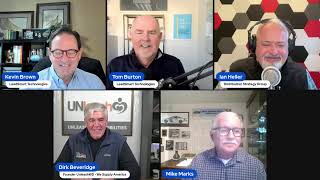
Special live episode (Jan 13, 2024) of "Around the Horn In Wholesale Distribution" hosted by Kevin Brown and Tom Burton with guests Dirk Beveridge, Mike Marks and Ian Heller. The panel reviewed 2023 (MA slowdown, workforce/talent shortages, increased digital adoption) and discussed priorities for 2024: making people/talent a first‑class strategic priority, accelerating digital/e‑commerce and CRM/AI usage, improving salesforce management, and guarding against AI‑enabled cybercrime. Dirk emphasized the "We Supply America" tour and employee focus; Mike highlighted digital moving from talk to spend and urged preparation now for 2024–25; Ian highlighted AI, marketplaces, buyer behavior (buyers now do more of the journey digitally) and cyber risks.
Chapters
There we go.
I thought we were going to avoid it. I thought we were going to miss it. And then there it came at the last second.
Did you. Did you catch? Did you catch, Dirk?
Kevin, you can. You can dance better than that.
That's all I have to say.
All right?
Dude looked like he was break dancing and stuff, but you, Kevin, I don't know. It's a different thing.
I don't know what I was doing. But my wife, Dirk, would suggest that that's not true. Yeah, right. I get it. That I can't dance better than that. So, hey, good to see everybody and so happy to have this fine group with us. I'm Kevin Brown. I'm here with my business partner, lifelong friend, Tom Burton. And we are so fortunate and appreciative that we've got these three guests with us this morning. We have got. I've had people this week reach out and mention legends. I've had a couple of people say esteemed quite a few different things related to Ian Heller, Mike Marks and Dirk Beveridge. The other ones that came in were. That were less popular, I certainly won't mention. But great, great to have you guys with us. We've got some great people popping into the show right now as well, and we appreciate it. If you're joining us this morning on our live broadcast, which we do each week on Friday mornings at 9am, we are on Facebook Live, YouTube Live and LinkedIn Live. If you're on any of those platforms, please say hello, maybe tell us where you're from and share your thoughts with us as we go through the day of discussion. This is a really positive day for us. So before we dive in and do a little housekeeping we do each week, I'm going to kind of go, no pun. Well, pun intended. Around the horn, Dirk. Here we go. I'm going to start with you, Dirk. If you wouldn't mind, my friend, Dirk Beveridge. Maybe tell us about Unleash wd. We supply America yourself. I think just about everybody that's going to join us today probably knows who all three of you are, but would love to get a little bit of feedback on what you do each day.
Yeah, super cool. Thank you, Kevin, Tom. Honored to be here. Mike, Ian. Love to share the stage with you guys. It's super, super cool. So thanks for bringing us together, Kevin and Tom. I'm Dirk Beverage, founder of Unleash WD. We've been over the last 30 years, we've developed a platform that is designed to help distributors rethink their business and remain relevant, profitable and sustainable in this age of disruption. We do it through our keynote speaking, our strategy workshops and the like over the last three years. You put, put it up on the screen. We created this platform called We Supply America. And unapologetically, we're going across this country championing you, the backbone of America that allows our society to. To live and provide for us all in the way that we do. Doing that by going across the country in the we supply America RV, championing your stories. 24 documentary films over the year over the last three years. And I just love meeting the people. Our passion right now over the years, we've really focused on sales, we focus on innovation, we focus on technology. My passion right now because of these last three years is, is people. When it all is said and done, when it's all said and done, I am absolutely passionate that the reason we are in business is to help people, human beings, grow, thrive and flourish. And you can take that in any direction as you serve your customers, you're helping individuals thrive. My real passion is what we do for our employees. And that's what we're going to be talking about a lot of in 2024 and beyond.
That's awesome. Thanks, Dirk. You know, I was just going to share with everybody if you, if you haven't watched. Well, first off, if you haven't heard Dirk, Mike or Ian speak, you need to find an event to get to to hear any of their keynote speaks speeches. They're all unique in how they do them. I'm going to leave it at unique, but they're all phenomenal. And no one has ever left hearing any of the three of you give a keynote without takeaways that they can use in their lives and business. So, Dirk, thank you for that.
I saw Dirk do a keynote and I think you lost ten pounds by the time you were done. You were like soaking wet from. Yeah, yeah. Running around.
And Tom, I have a few more £10 to lose.
Get hired for more keynotes, right?
Yeah, yeah, that's. That's right. That's good. All right, let's jump over. Mike, how about filling us in on yourself in Indian River Consulting Group and what you guys do, and we'll get to Ian then and we're going to dive into our discussion today.
Sounds good. My name is Mike Marks. I am the founding partner of Indian River Consulting Group. Used to be the managing partner. Mike Emerson's our current managing partner. I'm old and I told the other partners, I said, I want you. You guys to treat me like a lump in a toothpaste tube and squeeze my butt out of here as fast as you can. But. But we work with distributors and the work we do with manufacturers is, is basically helping them understand channels and the role of a distributor. So we've done a lot of projects from small distributors, mostly medium and large size distributors, and written a bunch of books. I'm a research fellow with naw and sort of teach a little bit academically and just have a lot of fun and have a really good girlfriend. I get to race sports cars.
Mike, how many years you been doing this?
Oh, geez. They were dinosaurs when I started. We started the company back in 87 and it was either going to be with the two names, it was either going to be Indian River Consulting Group because out of the corner of the bathroom you can see the Indian river, or it was going to be Roger and Mike's Excellent Consulting Company. Fortunately, we made the right decision. You can tell what movie was big at the time.
Yeah, yeah, yeah, that's very, very good. So you're a California guy originally and living in Florida now, right?
Yep. Went to school in California and lived in 44 places. Other than a brief, brief bout in the 60s with LSD, it's all been on the planet.
Good, we'll get into that. We'll get into that in a different show. Hey, Kevin.
Kevin, can I jump in real quick? And I'd like to give a shout out to Mike. You know, when the pandemic brought itself across the country, we did this thing every Sunday afternoon. And Mike was kind enough to be one of the first individuals to raise his hand and say, dirk, how can I help? And he and his partner came on and brought some, some absolutely needed insight on doing stress tests of businesses. And I think that was absolutely super timely. And it's just a little microcosm of what he's been doing over the years, but something that, that he did to help this industry at a time in need. And I still thank you for that, Mike.
You're welcome. Nobody cared about cash until they didn't have any.
Right? That's good. Hey, a quick question before Ian, before we have you dive in here real quick and then we'll get into our. Our questions and discussion for the day. Have the three of you ever shared a stage before?
I'm old and I can't. Can't quite remember specific. Never the three of us all together, but the two of us. Dirk and I and Ian and.
Yeah, so I mean, Dirk.
Yeah, yeah, I think I Figured you guys, you guys all might have been together, like bookending keynotes of events.
Yeah, that's kind of how. That's kind of how it plays.
I. I'm just trying to have something be a, you know, first in history here this morning. Saw it here, first type moment.
Mike and I were in the same federal prison for a while.
And.
And I may have been wrong about Tom Burton because maybe we did go through rehab together.
Yeah, it's starting to come back. It's starting to come back.
Okay, very good. All right, well, let's jump ahead and Ian, please take us and get us back on control and on track here.
That's not a fair thing to ask me to do.
Control? No, not Ian.
So Distribution Strategy Group is a media and analytics company. We do a lot of thought leadership content like webinars and white papers and discussion panels of distribution executives and technology executives. We have a podcast that I think Dirk and Mike, you've both been on our podcast, and we also have three subscription analytic products to do. Net Promoter Score, Employee Engagement, and End Market Demand Estimation. We did the first ever industry conference on artificial intelligence in October, and we'll do another one in June.
Awesome. Your AI event last October was fantastic. Well attended and I'm appreciative of having been there. We were exhibiting at that as well, but I got to meet some of the speakers and actually Lynn Chase is going to join us in April on the broadcast here.
Yeah, you know, well, you know, my business partner, Jonathan has a PhD in computer science in AI. And when we became equal owners of the company, AI wasn't such a big deal. And I'm glad because he could have negotiated more than ye.
Yeah.
And Kevin, if you don't mind, I'm going to jump into. From. From working with Ian. Man. When Ian, you and Jonathan joined partners to create the business you've got, you filled a big, big hole in this organ, in this industry to bring the needed thought leadership, I mean, in so many different dimensions. And then you already mentioned it, how you guys jumped on the AI to really help distributors rethink and bring that in. Your leadership is absolutely commendable, buddy.
Well, thanks. I really appreciate it. I mean, you guys are both invited to the conference. You're friends of the firm, so you get the hundred percent discount as attendees.
So when can I become a friend of the firm?
When you don't.
When you don't get the leads.
I don't care about the leads. So.
Yeah, very good.
Well, for a company called Lead Smart, I would think you Care about the lead we do. We made.
We may. It may be something important to us. All right, so before we jump ahead, two things we need to do. Tom, will you do me a favor and highlight Phil Samuel's comment there? This is the kind of stuff we're hearing.
Yeah.
Greatest collection distribution minds to be on one podcast in the history of the industry. All right, let's just call it a day.
By the way, just so you know, I have compromising photos. I'm to trying Phil Samuels. He's, he's got a really good bs.
Yeah, okay, very good.
He paid for the front row seat for the, the floor seats here. So make sure we treat him well today. Yeah, he paid a little bit extra.
All right, well, before we jump into the full discussion of why we're here today, which is to talk about 2023 and moving forward to 2024, we got to hit just a couple of quick housekeeping things that we do each week. So again, I'm Kevin Brown. I post this co host this broadcast every week with my lifelong friend and business partner, Tom Burton. We are the co founders of Lead Smart Technologies. Lead Smart is an AI enabled CRM and customer intelligence platform that helps wholesale distributors and manufacturers gain deep insights in to their business that they've not had before that are actionable to help accelerate growth. Lead Smart is the sponsor of the around the Horn in wholesale distribution podcast. Can we do it? Every Friday morning, 9 o' clock Pacific live on LinkedIn, YouTube live and Facebook Live. And later in the day this will be available this today's recording as all of ours are on Apple podcasts, Spotify, Odyssey, Amazon, all the popular podcast formats. If you are listening in at a later time on the podcast, you don't get to see these five handsome faces that are with you today. And we'll have some images that are going up today and so forth. But you'll be listening in what we talk about in a normal week when we don't have these esteemed guests with us to talk about 2023 and 2024. Like today is the newsletter that we publish each week. What we try and do is consolidate some of the news from around the world in the economy and technology, artificial intelligence, sales, marketing, mergers and acquisitions. We bring all that information together into a single newsletter. We send that out. We've got thousands of people that get it. If you would like to get that newsletter that we review typically every Friday and you do not a couple simple ways to do it, email us@helloadsmartech.com or even simpler. If you want to see any of the past episodes or listen to those. Www.aroundthehornpod.com is the website. This recording will be there later in the day. All of ours. You can sign up for the newsletter as well. Last thing I'll ask you is if you enjoyed today's content or if you've been with us before. Click the like button, hit the share button. If you're not following us at Lead Smart technologies on LinkedIn or any of the other social media platforms, please do so and share this with your friends so they can join us and see great guests like we have today. So that's our housekeeping. Let's dive in, guys. How's that?
Let's go.
I. I put together with the help of Mike, gave me some feedback and everybody here did. I've got a bunch of questions. We'll see how many of them we get to, but let's just. There is no format for today, so we're just gonna chat. So first one, when you look back at 2023, what do you see as highlights and low lights for manufacturing and distribution and any other B2B markets that you might see highlights and low lights of 23. Who wants to go dive in first?
I think Ian wants to go first.
Saw that coming.
I think a little.
I was later.
M A activity was way down. Right. I talked to M a guy just yesterday who told me that it was the slowest year for deals they've seen in a long time because, because of interest rates, they're expecting somewhat, somewhat of a recovery this year. I mean, it's still not a bad market to buy or sell a business, but it's not nearly what it was a couple of years ago. So I think that's a low light. I think. Mike, you were about to say something too now, right?
No, actually, Ian, question for you on that is that because the, of the interest rates, because a lot of these were PE firms and they're doing the leverage buyout and they just. It's just the cost of capital is so high. Is that really what things would slow things down?
Yes, for sure.
The other thing is that there's. There's some very inflated multiples that people were paying, you know, a lot of the funds. It was very easy to get a fund together. People want to invest money, get the return, but. But there aren't that many good companies to buy. And it's been kind of a seller's market for the last couple years that Ian alluded to. And, and that pendulum is coming back relatively rapidly. And, and the thing is, you can't go out and pay 14 times adjusted EBITDA for a distributor and ever have it be accretive.
Wow.
Yeah, you know, so it just, you know, people don't know the math. And it's if there's a disease out there called crazy to wind and there's a lot of zombie PE funds that are out there right now just because of that. And so people have, there's Sounds like the tech space.
Sounds like the tech space. There's a lot of zombie VC firms out there as well right now.
Just, just think about the fiber market when everybody was going to change everything and how that went way up and how it came down super fast. So good.
Dirk, anything to add to that?
Not to the next the mergers and acquisition I what I saw in 23, again on the people side of things, guys, is the continued struggle to find the right people for the right positions. And it's not going to go away anytime soon.
You want to maybe expand on that a little bit, Dirk? Kind of. I mean, how many with your We Supply America tour? How many stops did you make this past year?
Last year was around 30 different stops, about 85 over the last three years. And continuing theme.
Right.
Getting people without question.
And a lot of the struggle is obviously in the deskless workers.
Right.
And the second and third shifts is one segment of that as well. And I believe that there's work that we all can do from looking at the problem tactically to really be a more strategic and looking at the employee value proposition that we've put together and other things that we can talk about going forward. But the people and talent issue, getting the conversations I've had has been big and will continue to be big going forward.
Turk, is this.
Can I, can I make one last thing even. And Tom or Kevin, what I'd love to suggest is if we play back the replay of how you listed your the newsletter that you put out, which is absolutely amazing and if you look and if we replay that back, all the different things you try to discuss in this newsletter, what was left out of your list.
We didn't discuss that. A whole lot people didn't discuss labor.
A lot people in talent was left out of your list. And going forward to remain relevant, I really believe that we need to change this narrative. Technology is important. M and A is important. AI is critically important. But none of it, none of it works without people. And unfortunately, people have been relegated to a second, third or fourth conversation. We need to raise that up to be a first conversation.
Love that. Will you help us do that this year, Dirk, on this platform?
I will do that.
We should throw rocks each week if we're missing stuff, right? Yeah. I have a quick question on that, Dirk. Is the people issue predominantly a generational issue, that people are retiring and it's hard to find people? Is it people just not wanting to do the jobs? What do you think is the primary? Or is it all of the above?
Yes, yes and yes.
Right.
So the demographics are absolutely critical. The macro Trends. There are 3 million more jobs available than people searching for jobs right now. Right. You just can't overcome that. What does that mean? It suggests that we have to take a look at, again, our employee value proposition even deeper. We got to look at the definition of work. We got to look at the changing needs and wants and desires of employees. Covid absolutely accelerated the needs and wants and desires of employees. So we got to rethink that. We have to rethink our leadership. I've been in. Mike and Ian. Have you guys been in conversations with people? And I've been in conferences where somebody will raise their hand and they'll start pointing the fingers at this younger generation. They don't want to work. They're not collaborative. They want to become vice president overnight, whatever it is. Right. And I believe that's just the wrong mindset to bring into the problem. We have to look in the mirror first.
Hey, Dirk, people have been saying that the older generations have been saying that about the emerging generations since the. You could find engravings by ancient civilizations. This. They don't want to work. And they, you know, they are lazy with. And. And uncouth and drink too much wine. I mean, it's just. It's just. I think it's nonsense. And so do I got. I got two kids in their early 30s, and, man, in fact, I put on Facebook one day. I don't know where Penny and I went wrong with Austin and Blaine. They grew up with such better values than we tried to instill in them.
Right, Right.
Yeah.
Ian, they're brilliant. I mean, the mindset. Let's change the mindset this next generation. They're brilliant.
Right?
It's our job to learn how to tap.
Tap into that. Right? Yeah. Yeah. You know, it's interesting. I mean, I kind of see both sides of that because there is some of that. Trying to think of the word, but, you know, the, The. Give it to me.
All right, sure. Yeah, yeah.
So there we do see some of that, but that doesn't mean that we can't as the generation that we're in, guide and direct and manage and support that. I want to stick on this topic for a minute. I want to take it back from an economic standpoint though, for a moment too. We talk a lot. Pretty regularly. We've been posting articles on the newsletter and having discussions here about onshoring near shoring, reshoring, right. So now we've got, buildings are starting to be built again, right? We've got, you know, the, what are the. Rebuild America or whatever. The Biden administration's pushing some dollars out, right. There's interest rates seem to be going to calibrate here. Hopefully soon. We're going to see more building. We're going to see this trend of reshoring on shoring coming, right. Those all create jobs. And to Dirk's point, right. If we don't have the workforce, it's going to be real challenging in those settings.
I'm in violent agreement on the subject with Dirk and I, I'm at the board of a university in a business college and I have three graduate students that are my mentors. I pay them to mentor me once a month.
Cool.
And they treat me shabbily.
And you would expect. What else?
Well, yeah, but they're very articulate, I'll give them that. And one of the things that happened, I mean, there was a song, I was on the road, somebody sent it to me and it was a song on YouTube about what happened to the world when the last baby boomer died. And I laughed my butt off. And it's like, it turns out unicorns are real. They just didn't come out till the baby boomers were gone and the rainbows were back. And I downloaded because it'd be great in a workshop, but YouTube took it down for inappropriate content. But, but they, they realized there's no such thing as long term employment. They, they want to have meaning the snowflakes that we're talking about, they don't want to work, want to be vice presidents. It's less than 5% of the Gen Z's, the 95. They want to have impact. They want to do something right. They care about things like diversity, they care about mental health. They care about a lot of things, but they want to learn because they figure they're only going to be there for a couple of years because their dad got laid off when he was 55 and they just don't trust it anymore. And so what they care about is you're going to teach me, you're going to let him do something. And if you think back, I mean, we're all a bunch of old guys. There was a point when all of us were young. You're in a company and you're going put me in Coach, I can do it. Give me a chance, I'll show you. I get the results and go, you don't have enough scar tissue, kid. You got that old catch. 20, 30 years.
30 years.
Well, and they're going through that same thing now and they're talking to these old geezers and they're just really frustrated. The problem is that is the CEOs and the senior leadership need to change their perspective.
Great.
And there's no shortage of talented, committed people that want to go do something, but they're going to do it their way. And the other thing on all this remote work, to me there's a lot of ways you can have flex work. Even if I'm second or third shift in a warehouse and I mean just nobody's bothered to even go. Look, one of the things that we found is that good companies, leading distributors are throwing out their employee handbook because they say weak middle managers hide behind it. I have a really good person, a young Gen Z that I want to preserve. Their father's dying or something. They need some time off. We say, well no, we only give you three days for death in the family. He's not dead yet. You got to wait for your dad to die. I'm not making this up. This stuff happens all the time. But when you throw out the employee handbook, that person is really valuable to you. You go take care of it. We'll worry about it later. Because if you don't have the manual to hide behind when the loser, when Susie Shortcake who spends all of her time on the phone talking to her boyfriend wants time off, it takes a strong manager say no, you know, you're not, you're not a core part of this. And so you know, senior executives have to change. And if those that figure it out, it's really interesting. A players are loyal to other A players and co workers, not the companies anymore. So you need to create an environment that A players want to go to work for you. And if you do, you're going to be brilliantly successful. And if you don't, you'll suck.
Yep.
So if I'm running, if I'm running the distribution or the manufacturing company the way that my grandfather ran it, with the same, same processes and same come to work times and the whistle that goes off at lunch and so forth and I'VE got. I've got something coming to me.
Probably you're. You're way past the best by day.
Yeah, There we go. Okay.
Kevin, Kevin, do you mind? Can I just give three data points what Mike said? And in this so three data points that I think help tell this story is according to Great Place to work, only 16% of employees are flourishing. Only 16% of employees are flourishing. We can do better than that. Okay, now hold on to that. Deloitte then goes and reports. Let me get the Numbers Right. That 96% of employees say. Listen to what Mike just said. 96% of employees say that well being was the responsibility of organizations, yet only 79% say that well being is being designed and integrated into work. There's a gap there. And then third is our own future distribution report says that 95% of distribution leaders believe that we must have the mindset and the ability not just to help people do their job, which is traditionally what we've done, trained to do the job. 95% of us believe that we must have the mindset and the ability to help people and our employees thrive, not just professionally, but personally as well. And that requires we rethink how we lead. It requires the definition of what work is, how work gets done. And so there's this big gap in terms of what we must do to address this inflection point of what work is and who's going to be doing the work, why people work, so on and so forth.
That's good. I like that. All right, gents, we need to pop ahead here to some further points I.
Want to say for the record, before we leave this topic. I'm a Gen Z and I like to work hard. I like to work my ass off. So, yeah, you know, I must be one of the exceptions as the Gen Z guy. Yeah.
Can you do a lot of crack in junior high?
It's because I work so hard. I look older than I probably should.
Okay, very good. So we talked about the two low lights of 2023. Let's go one minute each. This could be tough on highlights of 2023. Ian, we'll throw it to you first. Oh, Mike wants to go first. Go ahead, Mike.
Well, the two things. I mean, you could spend all day talking about stuff that happened, but two of the things that kind of stuck with me is that we're out of the talking stage on distributors engaging in digital. They're gotten past the point that digital is going to replace salespeople. I mean, people have figured out digital supposed to enable our team and you're seeing it's more than just a major topic. People are spending money. There isn't a clear path forward. Everybody's still trying to stumble through. Some associations are doing leads. But the thing that to me that's been the most fun when you look at industry consolidation. A lot of manufacturer be very careful not to name names. But many manufacturers are actually starting to really recognize the value of the smaller distributors. The big distributors have tons of takeaway power but they've got 300,000 stock keeping units. And there's no way a salesperson is going to be able to save grace over any even a fraction of that. And so what they're finding is that a lot of the really big distributors end up being more logistics providers. But they can't do belly to belly selling and introduce new products and to manufacture that's trying to expand and get share. They need the small distributors that will actually advocate for a new product. And belly to bel. We're still a senior scientist at IBM told me once the thing that people screw up on digital is we're still analog beings in a digital world and people still need to deal with people. And the companies get so big it's all about logistics and money and quotes. And so you're starting. There's actually several manufacturers that have got a strategy that says and just imagine Big Guy is the name of a company. I have a strategy that I'm going to grow the business. That's not Big Guy. I want to reduce my share of that giant distributor because all they do is beat the crap out of me. Yep. You're starting to see that widespread. I don't know if you guys have seen the big.
The big guys have become logisticians as opposed to salespeople. Right?
Good analogy.
Right.
Have you seen anything like that?
Like you.
I hadn't connected the dots until just now. But yes, I. I'm gonna go visit a plumbing manufacturer in two weeks who has. They remind me of Apple. Do you remember when Apple pulled out of Mac World and everybody said what? But they had a different strategy. This manufacturer has pulled out a K Bis. Imagine that. They pulled out a K biz with the intent and the strategy to get closer to their customers. They're taking that money and rather than investing it in one week in Las Vegas they're investing that money to enhance their training, to enhance the internal university and to enhance their ability to get closer and develop those relationships that you just talked about with the right distributors. So I never connected it until you just like so super cool.
Ian. Highlight of the year.
A couple. One is the Infrastructure Investment and Jobs act was, you know, it's a bipartisan, bipartisan bill. Harder, hard to say, even harder to get something done that's bipartisan and that is, I think distributors don't understand it. And it's, you know, it's $1.2 trillion. There's a lot of business there. We're going to produce some content on it. But you know, that, that really started to take off in, in 2023 and I think it's gonna, it's gonna be bigger by a lot for distributors. 2024, I think the, the emergence of AI as a focus topic. I mean it's good and bad, but there's a lot of good, exciting stuff that AI began to enable in 2023 and I'm excited to see where it goes.
Cool.
I have a quick follow up question, Mike. What you said on yours is about digital, right? Finally kind of coming from less talk and more action. Do you see an AI obviously being part of digital? Do you see that by the fact that companies are getting more sophisticated with digital? And this may go back to you, Dirk, that that is helping to attract employees, attract more a players that want to be able to leverage digital in their job? Or is that not quite connected at this point?
It's, it's like cooking a magnet. Instead of putting two magnets together, you reverse the poles and they're repelling each other. If you want to bring Gen Z's in there, remember these are people. I mean, think back. You're sitting in the Atlanta airport. You see a baby that's in diapers and can't even walk, playing with an iPad, waiting to get on the plane in the stroller. I mean, they're used to digital and they come in and they're looking at a green screen and somebody's or Cardex and they're going like, why do I want to be a part of this Triassic reptile? So if you really talk about I'm in, I'm, I'm in the early stages, I've got my employees engaged, we're looking for applications. I'd like you to be a part of it. That, that makes you more attractive to them.
That's great. I love that analogy, Mike. You know, it's funny, I talk to distributors and, and manufacturers every day. And most importantly, probably with distributors is the. We talk and we've talked about this on the, on the broadcast here all the time is about the changing B2B buyer. Right. And so I can't remember what the most recent number is.62. 65% of B2B buyers are millennials. Well, distributors are trying to get their head around that if they're, if they're open to even the discussion. When you introduce the conversation that says, oh, and by the way, the workforce that you need to be hiring is pretty much the same.
Right.
It's, it's, it's, it's gonna counterbalance. And guess what? To your point, Mike. And it's, I think this slipped through. And if you guys didn't catch it, when Mike mentioned green screen, he wasn't talking about what's behind the weatherman, he was talking about, he was talking about the font color on the CRT tube terminal.
Right.
That, you know, the 22 year old ERP system that's still driving the organization. And there's no such discussion of what's a tech stack. No, Many, many are doing great jobs at this. Right. But this is, and my highlight, I think of the year is, you know, it's impossible to narrow them down. But if I looked at it from distribution, is that because of a lot of the work that the three of you are doing and others are doing and companies like ours is, we're trying to raise the bar that says, hey, you know what? You and I say this all the time because people talk about, you know, we, and we heard this at Ian's Distribution Strategy Group's AI conference in October. You know, oh, we're going to be out of business and dinosaurs and this and that. It's like my view is you're probably not going to be out of business, but the business is going to be very, very different if you don't make some technological changes. Yeah, it's not going to be what you're used to because you can't run it back to the employee manual we talked about. Can't run it how your dad ran it or how your grandfather ran it because the world's changing.
Well, and if you go back and take a look at the. A lot of this changes because the pandemic changed how customers want to buy right now. Garden just put out. A study said buyers spend 17% of their time face to face with salespeople. The rest of it they're doing online, doing it as a group. And, and it's not just one salesman and one buyer anymore. There's multiple buyers. The number of buyers in a major decision has tripled in the last five years, according to Gardner. And the study they just put out, they put out they don't have 23 data. 22, 72% of buyers. This is a very large sample size. And if you just Google, Google, Gardner and I mean, it's all out in the public domain, you can share it. But 72% prefer a sales rep free experience. They don't require. They prefer a sales rep free experience that's on repurchase. Right. Because you got to remember, in industrial distribution or basically any of this, you're looking at 85 or 90% repurchase rate. Once when somebody sold it the first time, it's not sold the second, it's bought the second. Yeah. And there's just a lot of changes that are going through there. And when the buyers are doing this, that 17% with salespeople that they spend, you're sharing that with their competitors. Right. So when you start looking at all this, you have to be doing some digital because that's how you communicate with those customers early in their buying journey. And the other thing that's happened, and I mean, I think, you know, you're supposed to be talking to us, quote, unquote experts, but I think you and Tom can really chime in here too. The cost of this technology has collapsed. A small distributor, a distributor, $10 million can be a fully digital distributor if.
They decide they want.
It's about vision and leadership and the promotions that are running like the granddad, just they're by the best by date as well.
Well, you know, it's an interesting comment. You know, we see this sometimes too, right? And you know, my background is in 30 plus years in distribution manufacturing. And Tom's background is in technology. But he's been working in and around the technology world for the distribution world for eight, nine years probably now, at least. And one of the early conversations we had as we founded our company was that, you know, once in a while we'll see this. Right? It's my dad's. I'm the vp. My dad, dad owns the company. My dad's grandfather started it. And Everybody's comfortable with 8 or 10 or 12% growth that they just, that's just, you know, the gift that just happens in the marketplace.
Right.
And it's like, well, wait, we take all the vacations we want, we own a vacation home, all the kids have salaries in the business. And that mindset has got to change sometime soon because their business is going to be impacted dramatically. So one of the things, before we jump ahead, I want to get to our next topic, but if you look over Tom's, I guess left Shoulder. He's got an image of the book that Tom wrote and it's called the Revenue Zone and it talks about the whole concept of this changing buyer. So you get an opportunity. We got to plug Tom's book as well, since we're plugging everybody else's stuff. I'm not bright enough to write a book, so. In fact, something funny happened earlier in one of the comments. Came in when I was struggling to find a word, the word enablement. My wife owns a marketing, design and print company. Then she works with a lot of major manufacturers that you would recognize if you. If we said them here. And she shared the word I was looking for.
Anyway.
That's great.
We're all trained to do what women tell us.
Yes. I'm trying to get better at it. I'm hoping that she doesn't comment any further about my training, so.
Hey, Kevin, Kevin, before we go on, can I just comment on one other thing, please?
Okay.
Because you skipped me on what I saw in 23. You skipped me.
Dude.
What's going on?
Mike? I'm failing. No, no, no. Mike said. Dirk, Mike said I'm supposed to be the adult supervision and I'm not doing well.
And it ties into what you all were just talking about here at the end. What I find encouraging from 2023 and beyond is, and it's maybe a little bit more nuanced than what we all have been talking about here is this generational change that is taking place in the leadership of these businesses. What I am seeing is as this, this gen. This generational change is taking place. There's this intersection of a new aggressiveness, of a new understanding of the world going forward and the nobleness of business and this leadership, I just see it as coming together to be. To bring a new world view to their business. That is everything you guys been talking about, about being digital, about the changing customers demands like. But also doubling down on the words we've used is the nobleness of the business, the goodness of the business, and what that means to the employees as well. And I see that being a great trend that is going to drive performance forward.
Hey, Dirk, before. Before we jump past that, Tom, let me just go real quick. Here is the noble calling of distribution. Is that the phrase?
It has been the phrase.
Yeah.
When did you coin that?
I wrote about that first about four months into Covid when I wrote an open letter called shift to tomorrow.
Okay. In that open letter, so the first time I hear. Heard you mention that when I think we talked about this, we had Lunch in San Diego early last year. And I had heard you use it a number of times in the past and it kind of was like, eh, yeah, that's a little hokey, right? And then I started thinking about it, and then I started thinking about, wait a minute, 75 cents out of every dollar globally goes through a channel, right? And that channel is distribution. And without it, our world stops, right? And I started using that, thinking through that noble concept. And, and it, you know what the people that we're all here talking to and about is the world can't go without it. And, and I think that term, well, when it first hit me, it was like, eh, maybe that's a little over the top, but, but what it did is, and I love that it was a little over the top because it got me thinking and it got me thinking about what it meant. So I'm glad you used to a phrase like that because it, I think it gets, and I'm encourage others to think about that. But you know, the calling of distribution, it's, it's critical, right? Nothing happens without it. So, so I'm gonna go ahead. Tom.
Well, I, I just, I. What I'm hearing is, right, is I kind of put all this together and. Dirk, you just kind of, I think, put the bow on it. If you can create a company or adjust your company to have that purpose and that culture, right? And you combine that with, you know, modern technology and you, and you combine that with the modern mindset related to the employees like we just talked about, if you put those three ingredients together, I think you could skyrocket, right? But if you're missing any one of those ingredients, it starts to get a bit fragile because I don't know that you could really have the A team employees if you don't have the right purpose and the right culture. And I can have a lot of digital, but if I don't have. You see, it's like they all kind of are interrelated is what I'm hearing is we put all these three things together.
Tom, would you restate those three things?
Yeah, it's, it's, it's really just culture, right? And, and purpose behind that culture. I think, Dirk, to your point about the noble calling of distribution, it's purpose and that, but purpose is key to a culture. You combine that with the technology and the right sophisticated technology or modern technology, I should say, AI included, then you combine that with the, with the employee aspect of things, right? Mentalities as we were talking about earlier, I think that's the Formula for success. If I'm hearing you guys right.
I like that.
Considered stolen.
Just remember, if you take from one person, it's healing. If you take from many, it's research.
That's right.
I think you really captured it real well. And in my mind, from the perspective, Purpose. Perspective. The tremendous opportunity we have going forward, tremendous opportunity we have is to operationalize that throughout the organization. Purpose and culture is talked about at the C suite. That VP level, you know, at.
At.
To a strong degree. But the further you get away from there, the more that is diluted. Our opportunity going forward is to work with those frontline managers, right. To truly help them what we call embrace positive leadership, understanding that they have the opportunity to help these individuals flourish in life. And science will tell you there's five things. There's five things that are required to flourish in life. And that's positive emotion, positive engagement, positive relationship, positive accomplishment, and positive purpose. The degree we can help that warehouse supervisor, the degree that we can help that individual manager bring those types of leadership skills to the work every single day, that's part of what you just said, is going to allow those organizations to take off.
That's great. I love that. So we're going to move to a. I've got a series of other topics we talked about and we've already been touching on them a little bit. So, Ian, I don't, I don't want to put you on the spot, but I'm going to come to you real quick if you don't mind. You know, we've, we've touched on technology a little bit. We've touched on a little bit about AI. Let's chat amongst us. And Ian, if you don't mind, I'm going to ask you to kind of get this kicked off for us. But what are we seeing about changing buyer habits with technology? And is that impacting at all how manufacturers and distributors are working together based upon technology?
Absolutely, 100%, yes. As mentioned earlier, buyers increasingly want to have digital tools. And I think distributors are finally understanding that a lot of people shop online but don't put the order online. And so it screws up the attribution of websites.
Thank you.
So, you know, distributors think that their website's selling a million dollars because we're just looking at the shopping cart. It's actually selling 20 million because people are putting POS together on the website and they're emailing them to you because that's how they buy. And so you've got to get the attribution right because Otherwise you're going to underinvest your digital capabilities. I think distributors start to understand that. I think we talk to suppliers all the time. We get calls like off the record. We're really frustrated with our distributors digital capabilities. We're thinking about selling direct or going through other channels. How would you approach our distributors to help them understand how dire the need is for them to fix their digital skill gaps? Right. So, and we, you know, walk them through, you know, our approach. And I think it's helpful sometimes. But you know, Amazon business last year announced they did $35 billion, right. And you can go on there and say, I want to buy sustainable small business, whatever. You can choose your options and buy any way you want. The Air Force is doing over a million dollars with that. I mean, you know, these institutions and businesses that used to be thought of as pure distribution clients are buying from Amazon business because they have incredible digital capabilities and in many ways are substitute for a E procurement platform. And you know, Zoro's over a billion dollars now. A lot of distributors who couldn't previously afford digital capabilities, as you said earlier, Mike, they can now, but some of them don't know it. Right. So I, I think going forward you have to have those capabilities. Stop measuring the damn shopping cart as your way of looking at revenue because it's wrong. And when you hear somebody say your b2b site should be like a b2b2c site, when someone says your b2b site should be Like a b2c site, run away from that person. Because the, the requirements, the way you build them are very different. Distributors are in this fantastic position to take share, grow share, not just go on, not just to get a defense, but go on offense. But a lot of them don't know how.
Love that, love that. You know, it's interesting talking about that experience, right. Is I, I describe it, and I've said this on, on this podcast and many, many other places. Is that that buyer, that B2B buyer, he took his girlfriend to dinner last night in an Uber. He's ordering lunch on doordash.
Right.
He buys his dog treats come from Chewy.
He met that girlfriend on an app.
Yeah, correct.
Exactly.
Right.
All right, let's mute Mike for just a second. But, but they're, they're living in that digital experience. And if they're coming to their distribution partner. Partner, right. And by the way, Zorro Granger, Amazon and everybody else that has these strong presence are trying to touch that person. You need to be in that place. And I love the point that you're talking about there, Ian, from a standpoint is don't be, and I'm not going to articulate this as well as you did, but don't be in a place as a wholesale distributor where you're trying to do all things and then most importantly, understand that having that web front with your products and resources and all of the things that go with that is dollars coming into your business. But it's probably not coming through that shopping cart. Right. And you have to get to that presence. And what I'd love to throw out to everybody else is this is great. Mike Mortensen with ARG Industrial in, in Alaska says the website is Scottie Pippen, not Michael Jordan on most days.
Yeah, it does the assist.
Right. That's beautiful. That's beautiful. So, but I think that's exactly the place that we want to be. Mike, before we come to you, what I'd like to throw out is a lot. I'd like to expand on the discussion that Ian brought up and I'm really appreciative that you brought it up, is the manufacturers struggle to say, hey, you know what, maybe I should just put everything that I sell on Amazon business because they're just another distributor is the mindset. Distributors are getting upset with that. But if the distributors aren't keeping up, the manufacturers have to do something. So Mike, let's hit your comment if you want, but I'd like to circle back to that topic.
Well, I think there's two things. One is that McKenzie just put a study out called DTC Direct to go consumer and a lot of manufacturer clients are saying there's a bunch of other intermediaries that are unbundling. You got Visa, Mass Charge and Amex that want to take over the receivable function for manufacturers. They don't have to do it. Most of the distributors of Corian don't even stock product. They use third party logistics providers. And so you know, that's, that's a multi billion dollar industry today. So a manufacturer can go out between digital and the rest of it. They, they, they don't need the traditional bundle of the distributor unless they do something valuable. And a lot of the distributors, you know, to me there's a big gap in the mind of the manufacturers between the distributors that are the horses pulling their chariot and some of the ones that are past the Best Buy date and they're starting to really discriminate in terms of treating those people differently than everybody else. They're the smart manufacturers are starting to treat Distributors like channel partners instead of customers. And, and it just hangs in there a whole lot better. People think they can ignore it, it'll come back and bite them in the butt.
Yeah, well, we're, you know, we're starting to see more and more of this. Right. Of manufacturers that are either selling on their own website or selling in some marketplaces. And marketplaces are, I mean, Ian, you've done multiple shows on marketplaces, right? These are going to continue, continue to grow. And I think the distributors got to get their head around that of even participating in it. And it seems to me, and I'll ask you gentlemen this question seems to me when you look at distributors that do have an online presence, there seems to be two camps. One is I'm going to try and do it all on my own, or the other camp is I'm going to do it on my own, but I'm also going to participate in marketplaces because I can be selling as a third party seller in these different marketplaces as well. But I've talked to a few who are adamant against not participating in marketplaces. They only want to do it on their own. To me, and I'm asking you gentlemen, you're thinking to me is that should be a dual strategy, not a singular strategy. Would you agree?
I mean it, it's, it every day is not Groundhog day. And part of the vision of an owner operator, the person owns the capital is also the chief executive is they tend to look at, I want to replicate what I've been doing. Once I'm in flow, it keeps going. And they don't see this. They haven't quantified the downside of being in a marketplace making the product available. Just remember, inventory is a substitute for demand information. And if I can get, if I can get better velocity in terms of where this is going, it allows me to have higher fill rates for my existing customers. Customers. Yeah.
So.
So they're looking at it's either or it should be C. All of the above in my view. I mean, take a look at the growth rate when you take a look at what Granger's done and Ian's. Ian knows a lot about Granger. They've had tremendous growth with, with Zorro. But one of the things that they had internally, everybody thought it was going to cannibalize their regular business and it didn't. It was additive. Once you actually look at the data and can you, without violating non disclosure, could you add a little color to that?
Yeah, we've never consulted for them. I Left there a long time ago. But no, that's right. I mean they, they went after a different market with that. I think ultimately, look, sellers are going to go where the buyers are. So you either put your products where the buyers are or you build a place to draw buyers. And that means, you know, so, so if you're bad at digital and you don't sell on marketplaces, you're on a, going on a business path now. You know, most of the time people are going to adjust before it gets that dire. Right. But you've got to go where the sellers are or create a place for, for good. Excuse me. You have to go to go where the buyers are or build a place for buyers to come to. Those are your choices. And you know, I think, you know, there's a reason miracle. The marketplace company was valued at what, you know, three and a half billion dollars or something a couple of years ago. And you know, that's, and that was their second valuation. So it wasn't like there wasn't any data to go by. You know, that was our second round of fundraising. So, you know, marketplaces are real. You got to figure out what your strategy is. You can build your own, you can participate in others. We talk about marketplace vacation. Like, you know, msc for example, doesn't have a marketplace, but what they do have is you can do direct ship orders from their manufacturers. And so there's a bunch of stuff they don't ever intend to stock. Their manufacturers carry it, but you can order it from the MSC website. So that's a step towards rapidly expanding your assortment without building a third party marketplace. What if you collaborate with a non competing distributor with whom you have relatively small amounts of overlap. You sell construction supplies, I sell tools. How about we pull our assortments and we fulfill orders for each other, you know, or, or maybe it's half a dozen companies. And I remember at Naw Mike a few years ago, the guy, you know, guy from Motion and, and Kevin.
Yeah, yeah.
And, and Kevin at ORS NASCAR were saying, hey, we're talking about sharing warehouses and websites. Right. And they said that publicly. So we're not, I'm not disclosing anything.
Right.
I don't know if they did, but you know, I think. Okay, good. And so I'd like to hear about that actually. But I think these, these notions of collaborating to expand assortment and in their case leverage real estate or facilities. There are a lot of interesting opportunities there for distributors without actually building a full fledged third party marketplace.
Well, and I have several smaller distributors, have A plumbing distributor that got connected with a very large consolidator and electrical and. And so they've now added five locations, five selling locations even with the pipe yard. But they're all in the existing locations of the electrical distributor. Take a small part of the warehouse. They don't need a whole lot, but it gives local presence. And a lot of times in. In these industrial industries, local presence matters a lot. That's the personal touch that Dirk was talking about.
That's great. Hey Dirk. To go along with this, you spent all those months and hours in Walmart parking lots. Thank you. And Cracker Barrels or wherever they might have. You had some great campgrounds you stayed in over the summer too. I enjoyed watching some of those. But as we talk about E commerce with you traveling the country plus your regular work with, with distribution. What, what are you seeing as you're through your travels in this discussion about e Commerce? You know, 85, I think you mentioned companies over the last couple of years. What percentage of those had some level of. Of E commerce or. We're getting ready to launch that.
Yeah.
Kevin, great question. And I'm not the person to ask. Okay, I really don't have a good answer on that. Here's what's going through my mind on this conversation. I go back to how Ian started this and what I'm really pulled into is Ian, you mentioned there's the opportunity to get on the offense rather than just be on the defense.
Right.
And a lot of great ideas in the last 10 minutes have been swirled around. I'd love to hear from the four of you.
Right.
What would you recommend? If you're sitting in the board with, you know, a mid market distributor right now who has been a little bit slow, you know, to, to move to the digital opportunities in front of them and you wanted to coach them on being on the offense rather than on the defense. What are the 1, 2 or 3 things you'd recommend that they start thinking about now?
I'll answer that. To start. Yeah, I would say, and we talked about this a lot on the show is really treat your data with the respect that it deserves. These companies have a tremendous amount of data and it's like every day and I'm relatively new to this party as far as distribution. So I'm coming at it from an engineering tech background. But the amount of data that you have that is super valuable and that can really drive a whole lot of things, not just AI. It's certainly the fuel for AI, but it's a fuel for just having Insights and understanding of your customer and how you can better serve that customer. And I just see over and over that that data is not being treated with respect. And if you start with the data, I think it opens up the door to a lot of opportunity. Whether you're going into AI or anything else that you're. You're doing in your business.
Cool. Ian or Mike, before I jump in.
Well, I think if you, if you have a sales. Sorry, Mike, you want to go?
I'll go.
If you have a Salesforce, if you're in a business model that, that where salesforce is relevant, which is often the case in distribution. Get great software, you know, lead smart. Right. Is, is a tool. You need a really good CRM. Manage the heck out of your salesforce. I mean we had Mike Emerson from your firm Mike on to do a webinar on salesforce compensation. Holy cow. It was incredibly useful. And I mean distributors need to get that kind of help build a great salesforce. Manage it. Well, because you know, I've heard people say, well you know, how am I going to compete with 5,000 Home Depots? I have 100 locations. To that I say, yeah, but you're actually on customer sites. You're on more of them in one day than Home Depot is in a year because they don't go out to the customer.
Right.
So that's going on offense is just manage your salesforce. Well, I mean I think the digital stuff is a no brainer. You have to do it. But I've seen Mike, I don't know what your impression is or I know Tom and Kevin, you guys are around salesforces and Dirk, you are too. It feels like distributors kind of lost their mojo with how well they manage their sales forces. I mean stuff like, you know, the gap analysis and coaching and making joint calls and making sure senior executives are getting out in the field sometimes, I mean it just feels like they've kind of fallen off in managing salesforces as well as they used to. Or maybe that's, maybe, maybe it's me getting old.
I think it's easy to stay busy right in that setting. Right. And that's, you know, we have like we built a tool into our technology with our CRM and customer intelligence tool that we're, we're looking through an AI tool because we're connected to E commerce and marketing automation and ERP systems. And bringing all that into the CRM component is we're able to point out where should you be spending your time versus where are you spending your time versus thinking about I should sell an item or I should sell a category. It's. Yeah, that's. We, we can do that too. But it's what quotes are open that need to get closed this week, what customers are at risk for churn. And, and we're, we're not seeing. I agree with you, Ian. I mean, we spent a lot of time and I, you know, my, I started my career working for a national distributor. I was a manufacturer's rep for 10 years and later invested in a manufacturing company before I came full circle to what we're doing now. And across the board, we did a lot of that in the past of like trying to really segment accounts. Well, and are we selling full line and all of those things? And I see much less of that, but I don't see anybody less busy. People are still busy, but I don't know what they're accomplishing at the same level. And I think the people that embrace all across the board technology are going to drive that shift and make a change of significance right into Mike's point earlier. Mike, you made the comment about belly to belly, right. We are still in a relationship world and I think people like to have the relationship and Tom talks about this a lot in his book is that people are going to buy how they want to buy, but that doesn't mean that they don't want access to you when they want access to you. So, Dirk, I'll throw out my point to your question. Right. Is. And I'm going to introduce another question to the group here. I think people specifically right now, if I was talking to a CEO, I would tell them a couple of things right now. Have a people strategy, which I'm learning more and more about all the time from you, but have a digital strategy. And a digital strategy is not. I bought a bunch of different software program. Right. A digital strategy is I'm buying these strategically to do these things in my company, whether it's EE commerce tools, CRM, AI tools, whatever it is. And I have a strategy of where that's going to take the organization because very few people have that in my day in and day out. They have a lot of, they own a lot of software. Tom used a term years ago, I remember, and he said people want outcomes, not software. Yeah, right. But people buy software because they saw a shiny object real quick and we have to help people get out of that. As we talk about E Commerce, though, the last thing I'll say to this, and I want to come to Mike's final comment on this topic because we got a few other things to discuss here is we haven't mentioned today buying groups and associations much and all of you in fact. Mike, we had lunch at ISA meeting. Dirk, we had lunch at an ad event. Ian, we've been together at. You know, I can't think about all the different events that we've been together at and, and if the, the good ones are doing a great job of. I don't want to say the good ones. There are. All of them are trying to do something. There are some that are really excelling at helping their distributor members with digital strategies and I don't know what it is. There must be something that keeps many distributors away from joining buying groups or being active with trade associations. I don't know what it would be because there's so much data, so much information. Guys like you coming to speak at events.
Right.
That is so valuable to them. I would always encourage that to your question. Right. What would I tell a CEO is look into that closely and get, get involved because you're going to get back more than. I mean it sounds like I'm promoting, you know, all of these folks but truly I think people get back more than what they, they put in.
I hear it all the time.
You bet. Yeah.
Good.
Mike, close us out on that particular topic to Dirk's question.
2 Comments. Giving advice to a CEO of somebody that's been slow to start. We've, we've, we fix CRM deployments when everybody ends up subtly sabotaging them. And two, two clients, they did everything right except their sales managers. All they'd ever done for years was coach people on transaction closing. They didn't have a sales management process. It was documented they lacked the skills to actually develop the sellers to make them more capable in terms of their own growth. Talking about Gen Z's and so in two situations this last year we had to call a timeout and the managers had to go through and create a flowchart. What is your sales management process? It's more, more than just transactions. They actually changed out. A couple people had to go through some skills training. So that's one number two, if you're going to do anything with digital, stop playing with vanity maker vanity metrics in E commerce and trying to talk about page views and, and, and we're, we're in the sales business. If I was going to spend money as a new distributor, I would spend money on effectively lead gen. So my CRM or however you're going to do it owns the front of that Funnel. And my goal is not to get people to come to the website to look at papers or doing that. My goal is I want to put my field salespeople in front of new potential customers in a meaningful situation. And I'm going to measure how many of those events that happen every month and then what is a 90 day yield from doing it. You want your technology to enhance your salespeople. The Star wars stuff. Right now people are actually talking about synthetic sales reps. But that's not to replace a sales rep that I give one to each one of my sales guys. So all of a sudden it can be almost autonomous selling. I'm using the predictive stuff that's like in Lead Smart and a lot of the other AI enable tools that are saying we should remind the customer they order this every six weeks. It's been seven, they haven't done it. And the synthetic sales rep generates the email, puts it in front of the real sales rep and all you have to do is go click, click, click and send it out. It significantly amplifies their capability. So instead of trying to be Amazon, try to really think about how do I build a set of tools to my field Salespeople have a knife in a, in a hand fight where there's no knives. I want to be the guy with the gun and a knife fight. I want the knife and a fist fight.
Love it.
There we go. There's our Indiana Jones analogy, huh? For the day. That's good.
I know, quite.
Kevin.
I know we have a couple more questions, but I just wanted to clarify one thing real quick. Ian, you said in the beginning, do you think that the sort of erosion of the sales management. Did you. Do you think that Covid really amplified that as people started to work from home and go out of the office? Do you think that's a big part of the sort of, I guess, erosion of the sales management process?
It's a good question. I think it preceded that. But I do think that made it worse in part because I think what a lot of sales reps learned is that they can actually be more efficient by spending more time on the phone. So a blend of outside and inside activity is actually optimal. I don't think distributors understand those processes or how to coach them yet. So I think it was already happening. But to your point, I think that changed the game somewhat.
I agree.
Very good.
Exposed that the pandemic exposed a lot of sins.
Yeah, yeah, yeah.
That's a great, that's a great way to look at that. I think that is And I think to Ian's point, right. That idea of inside, outside and partnering inside and outside. Right. In those settings as well is key. So, Mike, you had thrown out a comment or a question that we could use today that was, what are some of the signs that a distributor is falling behind the pace of change? And I'm going to, before I'm going to ask for answers or thoughts on that is I'm going to throw it out there in, in a few different ways. Right. Let's talk about it from a people standpoint, a technology standpoint, and then maybe a general business standpoint or if there's something you want to add to that. But you know, what are some of the signs that a distributor is falling behind? And I think in this discussion we could probably say distributor or manufacturer.
What was the third thing? People Technology. And what was the third one?
Just general business.
Okay, got it.
Or. Or the d. All of the above that you chose to add. How's that? Who wants to kick us off?
Mike, it's your question. Why don't you go?
All right, thanks.
It's.
It's pretty nice under this bus here. And I'm looking forward to pulling you down under the bus recently.
Hey, it was your question.
I know, but, but Kevin. Kevin. Kevin's good at this. Kevin gave me a framework, so now I got to give you a real answer.
You can't do stuff like that, Mike. When I got the cup to my mouth, I just almost covered myself well.
But if, if somebody's behind the curve, it shows up as margin and net profit pressure because all of a sudden what happens to their employees? We, we can't do raises this year because we're not making enough money. And, and so people start to think, you're not taking care of me, or they're cutting their benefit point program, or they're doing various things for the employees, or the first thing they do is cut training and development, which, if you're a Gen Z, is probably one of the most significant things that exist in your life. So the other thing, in terms of technology, you have people in your company saying, well, we need to do X, Y and Z. And the owner says, we can't afford it because we're not making any money. And what happens? They have a series of semi religious experiences where they have a supplier that terminates them or puts a big national right in on top of them and they lose a lot of their protection or the whole thing just gets worse and worse and worse because they're not making money. They never see the problem. They never diagnose the problem as executive leadership or lack of vision or anything else. It's always the competitors. And this is. The market's getting tougher and they whine about it. And fundamentally, they choose whining as an exit strategy.
Yeah, that's so well said. And I tell you, you know, I love the work that you do, Dirk. I think you're the most inspirational person in the distribution industry, and that's saying something, because it's a gigantic industry.
I agree.
Yeah, Yeah, I think. And. But I tell you, I agree with everything you said, Mike. And another thing I see is cynicism is a. Is. Is venom in a culture. And if I see cynicism, I see a distributor that's falling behind. Because if you're cynical, you're blaming the world, you know, you're blaming your manufacturers, you're blaming your customers, you're blaming your employees. And what is really compelling about the work that you do, Dirk, is there's no cynicism in what you say or do, and there's no cynicism in the language or the spirit of the distributors that you call on. It's earnest. It's like. I mean, like one of my favorite shows in the last several years is Ted Lasso.
Right?
Yeah, I know. I know it's a show, but Ted Lasso is not a cynical person. He's sincere, he's forthright. He has no malice, he has no guile.
Right.
And I think that is a wonderful way to lead. It's what I aspire to do. It's really hard to do. Right. That's what I aspire to do. But I see it in you all the time, Dirk, and I see it in the companies that you visit. And those are companies that are not falling behind because they take responsibility, they take accountability, and they lead with a positive, uplifting style.
That, Ian, is amazing how you position that. And I'm a hugger. I want to hug you because of what you've just said. Not about me, but about those businesses that I have a chance to visit. And it ties into, you know, this core belief that I have. You know, two years ago, it was all about the great resignation, right? And now it. Now it's. It's talent and people and all that. And I think where we're falling behind is in terms of developing our employee, our employer brand. Just listen to what Ian said there. And then you look at the demographics of the workforce coming into the workforce, the people coming in the workforce.
Source.
They want everything that Ian just Talked about. They want earnestness, they want truth, they want meaning. They want purpose, they want family, they want connection, they want bond. Where in the hell do you get that? I'll tell you where you get it. Get in the RV with me and come in the. And that's where you get that. And we are sitting on a fricking gold mine. These, these and, and I love all of distribution. My heart is with the independent, family owned, employee owned distribution business. That's where my heart is. And if we could help these individuals, number one, truly believe that, that they have something that, that the workforce is yearning for. Help them believe that. Help them see that. Number two, then goes to what you were talking about, Mike. Think about it strategically, not tactically. You can't just tactically complain about the competition or your manufacturers. You got to dive deep into the real issues in the business and in the market. And then number three, traditionally we've been rotten communicators and marketers not just of our product, not just, but of our value proposition to the marketplace. We've been rotten communicators and marketers about who we are, what we believe in, what we stand for. And man, if we can help these businesses, absolutely wrap their arm around the goodness and the opportunity and yes, get on the offense. As you said. Sign me up. Because. Because there are 6 million people at least employed in, in distribution and there's an opportunity to bring fulfillment, meaning, purpose and damn good lives.
When I could listen to you all day.
No, when we do this stuff.
And this is great. Yep, this is good. So we're, we're kind of running short here. We said we would just go till we're done talking, but I want to throw a couple things out so we're not keeping you guys all day. We had a bunch of other questions, though, that we didn't get to. But you know what's interesting? They all got woven in pretty much the discussion today. We had about nine topics we were going to discuss. We got to four, four formally, and I'm going to do the final one. But as I look through the other ones, they've been woven in, through the entire discussion today. And that's, that's the value for me of having not just business relationships, but friendships with you gentlemen and your background and your experience bringing to these discussions. Because this. And there's a quick side note. You know, when Tom and I decided to do this 70, probably close to 80 weeks ago, I guess it is now because we missed a few Fridays along the way. What I told Tom is I said, you know what? If this ever has to get overly scripted, too many people involved. So on the back end of how we're doing things, if I have to have the exact perfect microphone or I can't worry about Mike Marks slipping up with, you know, here and there, if we. If we have to. If we have to worry about this, I don't want to do this. I want to have a discussion. Tom and I have known each other for over 50 years. We have a discussion every Friday morning, and we bring guys like you in on a consistent basis to have discussions. And it's never fully scripted or outlined, which I guess if there was professional podcast producers would probably scold us on a lot of things. But like I said, I could have listened to Dirk continue on that for an hour. So.
Me too.
Here's what I want. Here's what I want to throw out there. We talked a lot about last year. We talked a lot about change. We've talked about M and A. We've talked about people. We've talked about technology. We've talked about CRM. We've talked about E commerce, a million different things. Most of it is about. We've talked about some challenges, some opportunities. Let's look forward to 2024 and even. Even beyond. We can talk about it and we'll do it as a group. But I'd like to hit each one of you. You know, what do you see as maybe biggest challenge in 2024 if we haven't hit it yet today? And then let's talk about biggest opportunities, and we can kind of wind our way out through of today's discussion with kind of, what do we see coming? Pluses, minuses, cautions, maybe is the. The three things. And let's. Let's hit it off. Tom, I'm going to start with you this time.
Is this like a speed round? You know, we have to answer in like 30, 30 seconds?
Nope. I was just trying to give everybody that the end is in sight. Okay, how long we choose on this last one is up to all of.
I thought this was like a telethon that we were going to be doing for a few hours.
Jerry Lewis is not here, so.
No, I. I think, you know, I'm just gonna. I think the look ahead and the challenge and the opportunity are the same, and I think it's going to go back to this. You guys really hit me when. When you kind of. When we talked about that, you know, the three legs of the stool, right? The purpose and the culture and the. And the Technology and the people. I think though, the opportunity, though, with technology, just because that's more of my world, I think there's a real opportunity with AI and with technology to use that as a catalyst for all of those things and, and to make it not as a. Something that's a fear or oh my God, it's going to make things less personal or less relationship. I think it can make us all a lot better. I think on the challenge side is that we're not ready. I mean, I work with technology, I work with companies at the technology level and the distributors and they're not ready. And so I think this next year has got to be a focus on readiness to be able to take advantage of the technology. A lot of the AI technology that's out there right now is not prime time. It's not ready for enterprise level use. But it's going to be, it's going to be before we know it, we're going to blink and it's going to be there. So I think the challenge is readiness right now and the opportunity is, is the, is that technology? All right. That was, I think less than a minute.
Doesn't. There's no time limit on this. That was good. Okay, anybody else? Mike. Have at it.
I'm always the first guy when there's a buffet at a meeting. I always the first, the first guy in the buffet line because everybody waits for somebody else. I was the oldest in five boys growing up. So you had to eat with your arm around your food to make sure there was enough. So to me, looking at 24, I go back to what the Buglio brothers have done in terms of talking about the economy. We're going to have a spotty economy in 24. It's going to be a little bit soft in spots. Some things are good, some things it's, it's just volatile. It's like we all like up, we all like bubbles, we don't like recessions. We all know how to hunker down. But right now we're kind of like in the middle. And it's like our economy is a salad dressing and an industrial lubricant and everybody just looks at you funny. So I would follow their advice and they said, you don't. The worst thing you can do in 24 is to hunker down and go into your turtle shell and wait for the market to come back. Because their prediction is even though 24 is going to be its body, 20, 25.
Did I lose Mike or did everybody?
What's that? So so, so what happens? They say, make your investments. My advice to them would be spend some time working on your business instead of in your business and start to think about what do I want to do with technology, how do I start? Because this is the year you want to be able to go on the offense in 25. So do the preparation, get the people thing right. Do the kinds of things that, that we've been talking about before on the business instead of in. That would be my advice.
Awesome.
Love that.
Super cool.
Dirk or Ian.
I'll go in. You can guess. Mine is going to focus on people. I'll throw out three numbers. 120 and 80. 120 and 80. And I think generally we do an amazing job at training our people, 100% of our people on the hard skills to do the job. We do a great job of training everybody in the organization of the hard skills to do the job.
Why?
Because we need that productivity. And then I think, so that's 120. I think we do an okay job with 20% of our workforce, the sales team, we're constantly investing in developing them. The emerging leaders, the women in industry, the high performers. We're, we're investing in 20% of the individuals to help grow their capabilities. But the real opportunity going forward, in my mind, is the 80%. The 80% who really, there's part of our workforce that has been forgotten about that once we've developed them to do the job out in the warehouse, to do the job as accounts receivable, that individual performer who doesn't want to be on a leadership path going forward, but our business stops without them. We have an opportunity to change our frame of reference, to change our mindset, to say, what can we do? What must we do? What's our responsibility and what's our opportunity? If we focus on the 80% that we've forgotten about to some degree to help them grow, develop, focus on purpose, impact, and growing their potential. And I think if we are able to do that, the sky's absolutely the limit to where we can take our organizations.
Beautiful.
Well, pressure's on you, Ian. Pressure is really on after all that.
Well, I'm going to start with a negative. Sorry. But I think one of the big challenges is going to be adjusting to AI enabled cybercrime in 2024.
Wow.
Yep.
So right now, you, you could be an electrical distributor. You could get a call from a customer that you've worked with for a long time, recognize that person, holy cow. They could, you know, say, hey, I'm, I'm I need $20,000 worth of copper wire and, and power tools sent to this address for a job I'm starting. You know this person, you recognize their voice, then they send you an email that came from them, and the whole thing's a crime, right? I mean, that's, that's happening right now. I wrote an article about this, and there's a Japanese company that lost $35 million because someone posed as a director of the board and asked them to transfer money for an acquisition, and it was gone. So, I mean, there are whole new ways of cybercrime that distributors need to adjust to, and they really need to get training on that now. And that all that earnestness and that, that personal contact makes distributors more vulnerable because criminals are inherently cynics and opportunists and bad actors go after good people. So that's the bad side. The good side is that AI is going to allow distributors to compete in unique ways that a lot of the leading technology competitors are going to have a hard time matching because AI can enhance people. I'm not saying AI is not going to take jobs.
It will.
But I think, you know, to your point, Mike, earlier, about the synthetic salesperson, I mean, you can double your salesperson's productivity with AI, whether it's in a good CRM or it's this, you know, the, the having it compose auto responses to emails that you review before you send them. And so you can, it's like putting, you know, I think I heard one speaker say it's like an iron man suit. I think it's a column. We, somebody just wrote a column for us that, that used that metaphor, is that AI can be like an iron man suit for your people. And I think looking at those kinds of tools and having the combination of people and AI can make distributors ferociously competitive and go on offense. Smaller things, or at least more tactical things. There's a pretty good chance the Fed's going to pull off a soft landing. Interest rates are probably going to come down a little bit later in the year. And so I, I think to your point, Mike, it'll be a little spotty, but it's a, it's, it's not likely to be a recession. It's a good year to work on your business and, and get ready to come out strong in 2025.
Nice.
That's great. I'll, I'll throw this, my take on this in as well. And I, I loved all of these comments and, and Ian, thank you actually, for, you know, throwing out that caveat right, we can be, we can have fancy rose petals thrown around all the time and talk rah rah kumbaya, but that doesn't mean that there's, you know, not elephants in the rooms as well. And I think you're wise, wise comments about, and we've talked about that a number of times last couple months. Henry Schein, right, the huge medical distributors got hammered two times from the same cyber criminals right in their organization. And they've threatened that they're still there and they may come back. Right. Which that's that. We could talk for an hour on what the implications of that are, but I, I think that that is cyber security is something that we're going to be talking about more on this, this podcast over the coming year. My take in looking forward is and it recaps a little bit of the broad discussion we've had today is whether you're a distributor or manufacturer is go look closely at your business. Go dive into all facets of your business, the people, the processes, the buildings, the technology. And don't think that doing things the way we've always done them. What's the old saying, we got you here won't get you there. I don't know if that saying has ever been more true than it is today. Things are moving in the world that we live in so quickly, Tom, you know, literally Tom and I go after this, we finish up here today, we go to a call with some of our development team to learn about the things they built this week. And my, I leave with my head just bulging. Right. For many reasons but, but we're, things are changing fast. Mike, you've made a, you made a couple of comments earlier that some of the statements you made referenced the tools that they use about within EOS entrepreneurial operating system. Right. If you're not doing things like that, I'm not saying that EOS is the answer, right. But change is, is upon us. And I'm not a naysayer that says you're going to be out of business, but your business is going to be very, very, very different very quickly. If you're not looking at all of these things and Tom mentions this all the time to me, he's never seen an industry that has more data available to them. And now is the time to take a look at all facets of the business to say where do I want if you're a family owned business, where do I want this business to be for my grandkids? And now is the time to really look at that because I'd say this is the year that we're going to start seeing people have major impact upon their businesses that aren't making these shifts and changes because AI is moving so quickly. And it doesn't matter if you're a pipe valve and fitting distributor with 2 acres of pallets of stuff out back or if you're selling technology components. Right. The guy down the street is going to be taking advantage of this stuff. And if you're not, it's a big risk that goes there. So my closing thoughts on that as we wrap up today. Dirk, takeaways from the day. Any additional thoughts?
I'm going to ask a question as my takeaway if you don't mind. Kevin, as you just said that my mind is going crazy.
Okay.
I want to ask you a question. How does the lead smart technology help these distributors that you were talking about? Take that data and use it in the way that you were just saying we need to.
Well, that's kind of you. And the check should arrive by lunchtime.
No, no.
That'S nice.
I want to hear your answer too, Kevin. Yeah.
In a nutshell. And maybe Tom will add to this as well. Right. Is to the point that distributors and manufacturers but really distributors and as we talk about these legacy family businesses. Right.
Yep.
They've got generations often time of data.
Yeah.
And you know a great example of that who's with us today commented a couple times earlier was Dan Judge. Right. The that started Net Plus Alliances and Dan's going to join us sometime soon for not our regular around the horn. We're just going to do an interview and have a chat with Dan. I spent some time with Dan this fall but you look at them, make.
Him share his quarterly report with you.
We you know what, we should talk about that. In fact maybe that's the right time Mike to have Dan because I read it when it comes out we're partnered with Net plus. Spending a little bit of time and having, having a beer with Dan is is it's like having a beer with any one of you guys. It's. I just walk away having learned so much. But the in answer to Dirk's question, what we try and do as a technology company is very different than what traditional CRM companies do and even some of the AI companies out there. We try and look holistically across an organization by taking data sources in from whether it's E commerce, marketing automation and obviously always ERP data wherever possible, combining that with what the salesperson is seeing. And Mike, you know what you and I talked about this over lunch earlier in the year, early last year you mentioned as a number of 80, 20. Right. Companies should be putting 80% of the data into the CRM for their salespeople. Salespeople, 20%. It doesn't matter if it's 60, 40, 70, 30, 80, 20, whatever the number is. Right. We should be flooding salespeople with information and data that's actionable and where we do something different in our company. To reference to Dirk's question is we try and use AI related tools to make things that are actionable that serve the customer better. And when the customer has a better experience with your organization, salesperson sells more, salesperson wants to adopt and use the technology.
You bet.
Owners and Mike, this takeaway and Ian, you've talked about this many times as well, as well as Dirk, is when you use technology right in your business. And we think we've embraced this in the tools that we've built through our AI tools as well as general CRM tools is ownership and leadership gets far more return on investment, far more data, far more details than they would ever imagine from a technology investment investments just by supplying data that's actionable. And what we've done with the AI tools that Tom and his team have built is now we get these reminders within the technology that says, hey Dirk, these things are happening this week, right? These quotes this customer hasn't bought. This customer is low in this category of purchases. Right now we're bringing actionable or insightful data and that's what we try and do.
Different.
Different.
Kevin, what I heard there, that really stood out to me. What I heard there is your focus is on your customer's customer.
Yep.
It's focused on the end user serving the end user, backing into that to provide the data to the sales team to be able to serve that end user. I and I'll.
And I'll just add one more thing, a little sneak peek. You guys got me all fired up today, so I have to give you a sneak peek is we're using that data right now and we're aggregating that in our CRM and using it in a bit of a traditional way right now. But what we're going to have, hopefully technology keeping up with our design, is that synthetic salesperson that you just talked about.
Cool.
And using that data to drive that. I think somebody else in the comment mentioned that 24 by 7 synthetic salesperson. I call it digital twin, whatever the right word is for that. But it's leveraging that data and it's that Guardian angel that can help. It's not to replace you, it's to help enable you. And really, I mean, think about it, right? We all get caught up in a lot of BS stuff in our job every day that we would love to have something be able to help us do so we can focus on what we really do. Well, that's what I see. What we're going to be able to enable us to do. So a little sneak peek, more of this is coming. I had to tell you because you used the word and I couldn't resist. But it all starts with having the data, right? If you don't have the data and the. That we're capturing, then that becomes the fuel to drive this. Otherwise it. It doesn't work.
I know I've jumped in a lot. I love the term guardian angel, man, that. That as describes it.
Maybe that's what we should call it. Maybe that's what it should be called.
Rename. It's not going to be Channel Cloud. It's Guardian Angel.
Guardian angel AI. There we go. We should buy that domain quickly.
Go ahead. That's your role.
You do that.
Ian, any. Any closing thoughts? Thank you for those, those kind words, Dirk.
Yeah, no, I think it was. This is a fantastic discussion. I felt really honored to be here. I think, you know that there are. I think distribution has a very bright future. And I think one of the things that I love that you say, Dirk, is people need to stop saying distribution isn't sexy. I've always thought of it as a fascinating industry and place to work. I've never really had trouble recruiting. Even when I was in Atlanta with HD Supply and we were competing with UPS and Delta and Home Depot and all these other much richer companies, we were able to build great teams because we communicated vision and excitement and opportunity. I think if you really believe that and you act that way, that other people get infected with that optimism and excitement. And so I think we got a lot of challenges ahead of us, no question about it. But we got a lot of smart people in this industry who are going to overcome those challenges. And we're going to beat some competitors along the way too.
That's great, Mike. Wrapping up.
No, I think we pretty much covered it. I mean, the autonomous thing that Tom talked about, the synthetic sales rep, everybody knows in the military, Iraq, if somebody fired a mortar at us, we've got the round going back before it even lands within six feet of where they launched it. And that's a C ramp. That's the system we use to do it. The system's automatic, but if you think about it, it's controlled by a sales rep. There's a soldier that's sitting in there. He sees all this stuff in real time. It comes up, there's an inbound deal. Should we fire? He. All he has to do is hit the button. When you build that twin thing, this is not about replacing salespeople, people. This is about giving those tools to the sales rep. All those messages, all those suggestions you need to buy, it's all done. And all I have to do is go click, click, click. Yep, you do that and all this CRM. So everything just goes away. And every sales rep in this industry is going to go, where do I get mine? That's all you got to do.
That's where I get my guardian angel.
That's right.
Exactly.
Tom, get to work.
I already checked the domain. It's not available. So I put a bid down. I bought it. Yeah, he was faster. This was faster than I was.
Well, guys, thanks for having me. I had a hoot. This is good. It's like the band gets back together.
Yeah. I tell you, I've had, I think three or four people reach out to me in the last couple weeks about us getting together today, and they said, how on earth did you get all three of those guys together to join you? And. And I just wanted to tell all three of you thank you because. Thank you.
Yeah.
Great respect for all three of you. You all do a lot of similar things and a lot of nuances, and I learn from each of you and I consume all of your content that all of you put together. We try and reference it when we do this each week. So I don't want to put anybody in the spot, but I'm hoping that we could get this group together again down the road because, you know, we've got people that have been with us for an hour and a half and they're still making comments on what we're doing. So thank you, guys. I can't tell you how much I appreciate. I appreciate getting to know each one of you better as we run across each other through the shows and the events. And I'm grateful for what all of you do, so I'm going to wrap things up. Tom, anything to. To add before we go?
I just want to thank everybody as well. Thank all three of you as well. This has been awesome and I can't wait to do it again.
Good. We'll work on that. So, again, those of you who are listening in from the podcast standpoint, you get didn't get to see these, you know, five pretty faces today, but you got to hear some great insights. Those of you that were with us live, we appreciate your comments. We do this every week at 9 O' Clock Pacific on YouTube Live, Facebook Live, and LinkedIn Live. And then we're available later in day on all of the top podcast formats. And we look forward to having you join us. If you'd like our newsletter, please reach out to us as well.
And Kevin, I want to. We, we didn't get a chance to hit any of the comments really today. I wanted to thank everybody. There was a ton of great comments. We usually try and incorporate them more, but we would have been here for another. So thank you for everybody who commented.
And some great point.
Really great comments.
We're gonna, we're gonna wind this down. Gents, I'll ask you to hold on for just a second so we can thank you one more time. But thank you everybody. Have a great weekend. Be kind, do good things and be safe.
Happy Friday.
Yeah.
More from Tom



What does AI actually mean for a wholesale distributor #WholesaleDistribution


If your systems don’t talk to each other, your AI won’t either #AITransformation




This is why one AI agent isn’t enough for high-stakes decisions #WholesaleDistribution

