Around the Horn In Wholesale Distribution - Episode 48
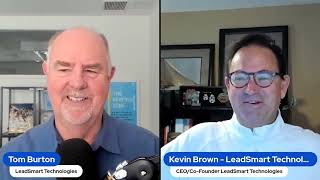
Episode 48 of "Around the Horn in Wholesale Distribution" (hosted by Kevin Brown and Tom Burton, Lead Smart Technologies) — live on July 7–8, 2023 — reviews macroeconomic indicators, labor risks and supply-chain disruptions (West Coast ports, Canadian longshoremen, potential UPS/Teamsters strike), near-shoring as a resilience strategy, and antitrust scrutiny of Amazon (FTC actions). The hosts emphasize practical implications for manufacturers and distributors (inventory planning, delivery commitments) and discuss AI's role in predicting disruptions, testing/QA challenges for AI systems, vendor due diligence, and phased adoption.
Chapters
Good morning.
How are we doing, my friend?
We're doing good, doing good.
Glad to hear it. Happy Friday morning to you. It's a weird week, right?
Just kind of a short week. It felt like Wednesday or whatever, but nonetheless it is Friday and we are here.
Yeah, no, absolutely. With, you know, working Monday most of the day, but then Tuesday was full day off and then coming back Wednesday was a struggle. I'm sure we're not the only ones with that struggle. So. Hey, my name's Kevin Brown. This is my good friend and lifelong buddy and business partner, Tom Burton. And we are here with around the Horn in wholesale distribution. So Tom, on the agenda today, some supply chain stuff, some labor stuff that's pretty significant. It's not going to probably shock anybody that listens regularly. With us is we're going to spend a little time talking about AI. And today's topic is data integrity, which we've kind of talked last week about dirty data and so forth. And we're going to kind of dive in on what is, what is data integrity and security mean in this setting. Right.
Yeah, I think there's some interesting, I like the way some of the topics that we're going to talk about today kind of come together. They relate to each other. So, yeah, I think it's going to be fun.
Well, you mentioned regularly, right. I think it's important for us to talk about. We're going to describe here just a second, who we are a little bit more and why we do what we do here. But you know, you know, there's always a story behind the story with the news and that's what we really try and do, is unpack this with our guests and our live listeners that chime in throughout the morning on this is to kind of unpack that a little bit and see how this impacts folks in manufacturing, wholesale distribution. So on that note, why don't I get kind of the housekeeping stuff out of the way real quick and let's kind of jump ahead. So again, I'm Kevin Brown. Tom Burton joining me today. We are the co founders of Lead Smart Technologies. We make a CRM, customer intelligence and AI enabled platform that helps manufacturers and wholesale distributors gain deep insights into their customers, their teams and their businesses to make better decisions and drive revenues quickly. So Lead Smart is the sponsor of our podcast that we do each week here. What we do though, in this live broadcast that we do every Friday morning is we review a email that goes out to our subscribers and, and that is also called around the Horn and Wholesale Distribution Goes out every Friday morning. What we do is we try and kind of take a look at what's going on in the economy both in North America and globally. We look at impacts on labor, on mergers and acquisition, sales, marketing, AI technology. We try and bring all that together in one single newsletter. We put it out to the public in the wholesale distribution world. If you don't get that and you would like to simple way to do that, just send us an email. Helloadsmartech.com we'll get you on that list and get you that email each day. So if you're listening later in the day on the podcast, you will not be seeing the screen, but what's up on our screen. And we're talking about these articles and you could certainly either reference back to us and we'll get you those articles or you could find them online. So last piece of this, if you enjoy what we do each week, click the, like the share the follow button on whichever platform you're on. We're on all the major podcast platforms around the world live on YouTube, Facebook and LinkedIn on Friday morning. So share the wealth with your friends if you enjoy what we talk about. So let's get going. Tom.
Yeah. And, and good morning to Ron and Brian and Jerry.
Great to see you in Germany. Good Morgan. Or good Nabin.
Okay. Wow. International.
That's right. You know, I think last week on the podcast we had seven different countries download.
Okay, well, maybe next week we'll do it in German.
9, 9, 9, 9.
All right. Shall we jump in?
Let's do it. Factory orders missed expectations in May. You know what, we've been talking about this so much over the last year, really, just the ups and the downs. And I, I didn't. Did you catch the jobs report that came out this morning?
It was it a little below. Little below, but, you know, not horrible.
Yeah. So we consistently try and talk about the, you know, the, the positive signs that we see in the economy. You know, somebody brought this up and I'm trying to remember if it was on a, on another podcast I was listening to, but I think it was actually one of our guests said this and, and, or commenters with us, you know, said, you know, if you take and push the news aside, right, Whether it's cnn, cnbc, Fox, whatever your flavor is, if you push that aside and you talk to manufacturers, specifically here in North America, talk to manufacturers and talk to wholesale distributors, their businesses are strong. Right. And so we try and talk about this kind of the ups and the downs where we're at from a recessionary standpoint, are we going to fall into that? Have we already a little bit each week we look for the kind of the silver lining to some of this. But boy, I just keep thinking about, you know, when we talk to and I've talked to quite a few distributors since we've been on in the last, our last broadcast and people are feeling good about their business.
But yeah, I mean, I mean again, we've seen kind of a roller coaster set of statistics and data over the last few weeks or months.
Yep.
I think that again, I think there's, I won't call it ominous, but I think right now more than any time it's awareness is of what's going on is important. I think there's a lot of variables coming together that it could go either direction. Right. And it could very easily go into a worse direction. I think the stock market is overpriced at the moment. When stock markets get overpriced a lot of times, you know, there's opportunity for correction in there. We're going to probably get another couple of interest rates increases here over the next couple months or three months, probably one in the next week as it said here. Right. People are slowing down because they said of higher interest rates and higher cost, all of those things. Obviously, I don't know, AI may still save the day, who knows. But there's a lot of things coming together that I think it's just worth keeping aware of. I think it's by no means I would say that hey, all is rosy and we don't have to, it's all fun and games. I think there's a lot of things, a lot of indicators. But at the same time, we've had a lot of indicators for months and we still keep plowing ahead.
So it's, Let me ask, let me ask you a question that goes to that you think, you know, when we look at, you know, their Wall street, right. There's, there's pressure for another bull run and you know, then there's others that say, well maybe we haven't quite hit bottom yet, but I think in general we're starting to see some, some pressure building there. Do you think that maybe Wall street just eventually capitulates to the Fed and says, okay, let's go ahead and have the recession so we can get it over with or do you think we'll keep this pressure going where the economy starts? I mean, because this article we talked about today, right. Was from Reuters was talking about, you know, a mixed index up in May. And they're just. Things are up right on factory orders. They're just not as much as they had hoped. I mean, do you think maybe we might feel a, you know, just, okay, uncle, let's go ahead and have this small recession and get it over with.
Are you saying from a stock market perspective or from.
I think it's a global economy.
Yeah.
Just your opinion?
No, my opinion is, I mean, to a degree, we're already sort of seeing a minor. We've been in a minor recession for a long time as it relates to the stock market. You know, the stock market is based predominantly off of trading and momentum and you've had a lot of momentum up momentum in the last whatever, six months or whatever the first half of the year here. And if you start to watch the stock market, it's starting to kind of bounce around at the top and not really move. It's been kind of sideways for the. And when you start to see that generally, then a lot of the traders then want to have a momentum down. So you have actually something money to make on the whole thing. So that what I, again, I just look at a number of different indicators that are, that are out there. Some of them obvious, some of them not so obvious. I do think that we are probably going to. We're getting ahead of ourself on the interest rates and I think there will be at least one or two more increases this year which will take us, you know, very, very high on that. But again, will the, just the economy in general, will the consumer, the like we talked about a couple of weeks ago, consumer spending, all of those things continue to carry through what AI save the day on the job market and the tech space. It's, it'll be interesting to see.
Yeah, it's interesting you say that. I think, you know, there's the economists and the folks and whether they're at the Fed or wherever, it's almost like they have to force this to show that they're the value of what they do. And you know, I've said this a hundred times here on our broadcast is I just sometimes I feel like we're, we're managing, trying to manage the economy with antiquated, you know, 2%, you know, whatever, whatever we're looking at. These metrics are maybe, maybe the metrics of what defines a strong economy need to be redefined based upon the technology and the advancements of, of society in general.
Yeah, it's complicated and they're doing things within the world of what they're of the. Which they're operating right. And their job is to bring interest or, you know, cost of inflation down. Their job is to bring inflation down. And they're using the tools that they have. But there's a whole lot of other dependencies, as we know, related to all of those things that they're not really dealing with. But yeah, it's. Anyway, it certainly has a potentially large impact. It's good.
Well, we can move on from here. I'm sure if Jerome Powell joined us.
Today, he would be about getting him on. I think we should get him on maybe. Yeah.
There's a date in the first weekend in September. I'm going to be away at a, at a conference that starts on Friday. And so maybe you and Mr. Powell could, he could take my spot and we could fill in that day.
He'd be kind of boring, but we'll do what we can.
I can't, I can't imagine not being excited listening to you and Jerome Powell, probably. All right, let's jump ahead here. Let's talk about, you know, we talked for a number of weeks off and on about. And again and take a step back. Right. We try and look in our discussions each week, kind of the story behind the story. And when we look at the next few topics we're going to discuss today, they really tie to what's going on in supply chain. Right. And how distributors and manufacturers really need to be staying on top of these things, planning inventories, planning production schedules, planning shipment schedules. And there's all these hiccups that are coming. We talk for a number of weeks about the potential of the port strike here in California. Right. Up and down the, the. We're not even California, the West coast. Up and down the West Coast. That was averted a couple weeks ago. You know, when we talk about the ports of Long beach and Los Angeles, you know, combined there, I think they're the third largest or third busiest in the world. Third or fourth. Right. So pretty dramatic. Well, we just averted that, which. Okay, great. Now we think about holiday shipments and, and not just, you know, think about holiday shipments being consumer driven. Right. But the reality of it is, is manufacturing companies that are our customers at Lead Smart and, and our audience here, both, many of them, both make consumer and wholesale related products. So big impact. Right. As that happened. Good, good news. But now we've got this whole shutdown in Western Canada and with the longshoremen strike there, and it's could be a pretty big, big impact on manufacturing and distribution throughout Canada.
Well, I think it probably depends Again, like how long it lasts, Right. So that the longer it lasts, the bigger the impact. But. And I think we have a couple of these, you know, the UPS one we'll talk about in a minute. But it's, it seems like, right. There's constantly little hand grenades, some bigger hand grenades, some smaller hand grenades that are constantly being tossed into the industry. And I don't know that that's ever going to stop. Right. It's like, you know, we could solve the Canadian thing and then we end up with something else the next day. So it's just dealing with these different hand grenades that are. That can potentially impact the business.
Yeah. You know, and I think what we talk about here, I was messaging this morning with a friend and friend of the show in Michigan. Right. And when you think about, you know, we don't often think about the Canadian side of automotive manufacturing. And when you look at Michigan and we think about all the GM and Ford plants and so forth throughout Michigan, there is a bunch of them right on the other side of the border in Ontario, Canada. And so one of the comments from this article that I thought was really important was that, you know, there's 29 ports in Canada that have been at a, in Western Canada that have been at a standstill since Saturday. What we don't normally think about, you know, because the easy thing, right. Is to think about if I'm in Texas or if I'm in, you know, in Ohio, I. Western Canada ports. Yeah, whatever. Right. But the reality of it is 20% of the trade that Canada does with the U.S. that is huge impact on the automotive industry. The products come through those ports, right. To get to those manufacturing plants that are going to get to the distributors or whoever it might be. So this is something we got to pay attention to. Right. Because it's impacting rail lines, trucking lines and so forth.
I want to bring up Ron's comment because I think it's awesome.
You didn't want to comment on my wisdom there first? No.
Okay. But because I think it's related actually is he says, I know we'll be getting to AI, but this is another AI application that can help rewrite shipping and decisions based on what is going on in the market. I think he's right on with that. And I think AI will help us even potentially predict some of these things with probability. Like is there going to be that Canadian strike or is there going to be, like you said, the 29 ports that are shut down or whatever the case may be. Right. How do we Proactively stay ahead of that. And now I know we're going to talk a little bit about some near shoring stuff in a minute which would tie into that. But yeah, I mean, let's use AI to help avert some of these hand grenades before they actually occur and be more nimble.
Absolutely. Yeah, absolutely. But today we're not right, or most, most people are not. We need to get to that place and, and there's a lot of tools for this type of stuff, but we're going to see that, you know, and I think it ties back to our silo data conversations and all the different tools that people have within their organizations, whether you're a manufacturer or wholesale distributor, to tie into all of that. I do think we've just got to kind of keep an eye on these things. And it's interesting though, you know, timing and I would guess that these, some of these labor unions have the idea of, you know, tying their contracts and their labor negotiations to unique timing because right now we've got. UPS is the next article we have here. Right. And if you don't think UPS can have an impact on manufacturing wholesale distribution, we got another thing coming. I'm hugely concerned about the UPS strike because we're, you know, we have a driver here multiple times a day with Mrs. Brown's Amazon habits. They are here regularly and we're concerned about the future of our driver because he's part of the family now, so.
Well, and you, I guess you won't eat or you won't have toilet paper either because Amazon won't be able to deliver it so.
Well, that's, that's, that's exactly the case. But what I found interesting, you know, as we look at, there's, there's an article that we posted in the newsletter from Fortune magazine, but you can search this anyway anywhere because this is a major issue. But, you know, I just found this interesting is as of the weekend, they were doing practice strikes at different locations. So I, I just read about one this morning up in Gardena, which is about halfway between where, where you and I both live and where we're both. Right by, where we were both raised, they were doing practice picketing and, and then down in my area, they're doing a practice strike today. And that just doesn't bode well.
Right.
When you, when you're. That, I mean, that's doing some big chest banging that we're not, we're not really ready to negotiate in good faith, at least in my mind.
Do they have, do you know if they've got replacement drivers or they're lining up replacement.
I didn't read anything about that yet. And it's interesting because, you know, one of the other articles that I read about that was called UPS by the digits. And you stop and think about the impact. Right. And you and I were talking before we went live today about this is, you know, if you're a wholesale distributor, you've got UPS picking stuff up and, or dropping stuff off multiple times a day. I just ran through in my photo stream on my phone. I was looking for a picture from a trip we took to New York and about 10 years ago as a family and walking. I'd been there a couple of days earlier on business and my wife and our youngest son joined us. And as I was walking down the street, I saw 50 merchants that were bringing all their stuff to the UPS truck. Right. And that's both wholesale and retail companies. So the impact is crazy. The article describes 6% share of US gross domestic product, ships UPS on its trucks every day, 18.7 million packages every day. And that. And it also said 80 days is how long negotiations on a national contract have been underway. They started in April. And it says that it's unlikely there's enough time to agree on it and ratify a new contract. So powerful, right?
Yeah, yeah, I think that's a, that's a bigger, that's definitely a bigger hand grenade, I think even than the port strike. Yeah, I think that's a bit more wide reaching and it has more immediate impact. Yeah, that's impact right now versus something that could impact in a couple of months.
Well, it's interesting. I guess I don't want to say this good news because I don't want to take a position for or against the unions. Although I have strong feelings, I just won't talk about them here. But Deutsche Banks believes that the Teamster strike fund is $346 million. Where that gives them. I think it said, let me just look my notes. Three weeks.
Okay.
To be compensating drivers out of that strike fund. And then. So that could be interesting. Right. That's not a long time. So we'll see what comes out of that next. But you know, definitely something we need to be paying attention to. And obviously if we're trying to, you know, and this, this goes back to the whole Amazon effect that we're living with in the world right now. Right. You know, if I'm, if I'm a distributor of industrial safety products or cutting tools or, or food service Equipment or whatever it might be.
Right.
My customers have historically been used to a window to get them things right and they planned accordingly. Well, when we buy off of our phones from Amazon and we get it in two days, there's been downward pressure on supply times and whether it's a port strike, a rail strike or a UPS type strike can be damaging.
Well, let's use that maybe to transition into the next article here about near shoring.
Yep, that's good. I'm interested in some of our guest thoughts a little bit about that today. But this talked about from supply chain Executive magazine talked about redesigning supply chains for near shoring and it used the term that I love in this setting. They just called it, described it as pivoting.
Right. Yeah. And I really like the article. I mean, it wasn't a long article, but I thought they did a really good job of. You know, I think when you hear the word near shoring, sometimes you think it's, oh, this is just about changing a location. Right. I'm going to order from Mexico or instead of ordering from Canada. But what they were talking about in there is a near shoring strategy. So what I can look at here is, okay, if I'm going to go, how do I become more agile, how do I become more nimble? How do I look at this strategically versus just saying I'm going to move from one location to another.
Right. They use the term. I loved circumventing disruption.
Yeah, yeah, right, Great phrase. Right. And, and I think going back to Ron's comment, if you were to combine AI again, if you're just looking at it from a strategic perspective, look at, okay, my, my goal here is to circumvent disruption. Right. That's my, that's my job here, should you choose to accept it, destruction or disruption. So then you look at that near shoring strategy about, you know, different locations like they were talking about again, being more nimble, more agile and then combining that with an AI strategy around that, you really could circumvent a lot of disruption or any one disruption. Right. So therefore you're not, you know, you're not going to be necessarily. Again, you could be set up so that UPS by itself would not provide a huge disruption or the port strike would not provide. Now granted, if you get a perfect storm of a whole bunch of things together, but even then you could probably even model that in. I just think it's a very interesting way of looking at it.
Yeah, I thought this article was good. Right. And we've got a broad scope of manufacturers and distributors that join us each week live and on the podcast. And it made a comment and said based on these indicators, supply chain leaders should begin to consider near shoring as a strategy for their operations when they notice any of the following in their supply chain. One, Lack of flexibility amid unexpected events. Boy, I mean who would not be seeing that? Right? Inability to meet customer delivery commitments, unreasonably long cycle times, high minimum order quantities and high inventory write offs. Right now I think we're probably that last one would normally be we've got a lot of ways to manage inventory write offs, but not right now because I mean I was at a distributor's warehouse, it's probably been a month or two now. And walking the warehouse, which you know is one of my favorite things to do is get out and see customers, is that they've got all kinds of post Covid era stuff that they're getting ready to write down because they ordered to get everything that they possibly could. Then it finally showed up as the pandemic's winding down. But these are key things and I think there's a whole lot of people lack of flexibility and unexpected events, inability to meet delivery commitments, long cycle times and minimum order quantities being high. Those all really kind of tie strongly to Asian production or Chinese production. You see any of those, it's time to start thinking about that. And if you don't think that they're working hard in Latin America, in particular Mexico to bring people in that, you know, we had a wave in the 80s and 90s and early 2000s when Makilador is at the border was phenomenal. That's kind of slowed down. You don't hear the same discussion about that as you used to, but I can only imagine that's going to pick up significantly.
Well, and I can't imagine that if you're are if you're predominantly sourcing from Asia or China, you're not going to have at least three of those five.
Great point.
Yeah. Right. So I don't know how you would work around it. Just it's, it's again, again having the technology else to facilitate that really makes it much more feasible.
Well, and I'd welcome any of the comments from those, those listening in today. But I think, you know, one of the factors that, that we don't talk much about in general, but you're starting to see this now is that China has emerged of having a middle class and forever right when, when everybody was pushing to China, prices were so compressed. But now we've got all of these other factors that are going on and the fact that people want to make more money because we have a middle class developing in not just China, but Asia, but most specifically China, that compressed, you know, margins, or I should say margin. But the, the pressure on cost is going to continue to support that. And we've got all the geopolitical issues that go with what's going on with China right now as well. Right.
So you have a declining population in China as well. So there's a lot of things that are happening there. But I thought this was a really good summary of the case for Near Shoring, kind of tying together some of the things we talked about over the last few weeks.
Yeah, that's good one. So I think it's important for us to just take a quick pause and remind those who are listening if you are on the podcast listening later in the day. Today's Friday, July 7th. We do this broadcast live every Friday morning on LinkedIn Live, YouTube Live and Facebook Live. And then later today it'll be available in all the popular podcast formats. If you are listening and you're not able to see us because you're on the podcast, we're reviewing a newsletter called around the Horn and wholesale distribution that we send out every Friday morning. So if you have an interest in getting a copy of that, just reach out to us@helloadsmartech.com because unfortunately you're missing Tom's beautiful face and my amazing physique here as well as a picture of the articles. If you're just listening in.
All right.
Do you want to jump ahead and talk about the FTC coming after Amazon?
I think everybody's trying to come after Amazon, but yeah.
Lena Khan, she's got it out for him and she's loading her guns heavy.
Yeah, look, I mean Amazon is a bit of a bully or they certainly can be a bit of a bully. They've strong armed a lot of people. The example they were we, we were referring to here is fulfilled by Amazon. Right. And yeah, I mean they definitely, they definitely give you more, you know, credit if you're doing and more benefits if you're doing fulfilled by Amazon. But I'm struggling and I'm interested your take Kevin, on this. I'm struggling as I read this to really figure out how they're going to win this and how they would or how they would. I can see that they can throw a lot of rocks and have a lot of issues and, you know, make a lot of noise. But I'm, I'm struggling to see how the FTC or any sort of antitrust suit would actually win in. In this situation.
So I think. Good, good questions. I would, I would agree with you and I want. Before I answer your question, I want to relate this to our audience. Right. We have a mix of people that are regularly joining us who are either I hate Amazon because they have Amazon business which started as Amazon Supply and they're coming after my customers. We have a whole nother group that's getting larger every week that has fully embraced that concept and said my, my manufacturers have products posted there and are selling direct and I'm in a leverage off of that to expand my business. I was, I think gentleman Mike from Alaska that I was chatting with is a. Runs a very large wholesale distribution company in the industrial and hose and fitting space. And we were talking about this last week, right. Is the people that have embraced, whether it's Amazon or their own e commerce efforts or ideally combined and are leveraging that are now selling globally, right? They've got unlimited. What do they call it? Unlimited aisles. And so they can sell anything and they're selling it outside of their normal geography. So we have that mix of people that are, you know, hiding from things and then we have the other ones who are embracing it. But I think. And so this is my take on it based upon that. I believe in reading a couple of articles on this over the last few months is that besides the fact that this woman would like to have her Netflix series about how she took down Amazon and her books, right. Is she's building a case. They've already sued Amazon and Amazon had settled three times with them on issues related to how Alexa is used, ring doorbells are used and some deceptive practices regarding prime. Right. So they're building this precedence already in the courts that Amazon is already.
This is.
You asked me my book take this is my turn. Is that they're building this up significantly, right. One by one. They started with hitting some singles, right. And now they're looking at this major piece that they're looking to come after them right now about this monopolistic piece and a whole antitrust case that's really related to how they work with fba, right. Fulfilled by Amazon. You've sold through Amazon. I've sold through Amazon. My wife does. I have some dear friends that have large Amazon businesses. And you use the term to start with bully. And it is. That is probably a major understatement. Right. And. And I think the government is saying specifically the chairman of the FTC is saying, you know what, I just had three wins and now I'm loading my guns. So I think it'll be interesting.
Yeah, I completely agree that they set some precedents right there. It'll be interesting to see if there's another, another settlement there or, you know, how far that case actually goes before. But yeah, I believe there's a lot of politics and other things in here as well.
It seems, Tom. Like this and it's interesting. I mean, Bloomberg is the one who's really, really on this. And it seems like this is the. I got the bases loaded with these first wins and now I'm swinging for a grand slam. I mean, Bloomberg commented in this article, it says if the FTC can show that Amazon is maliciously manipulating a market, it has something like monopoly power in it. It could make the case that the company needs to be broken up or restructured. That's, you know, and I want to hit pause there for just a second. Now. Look at what if you think about this, right? Let's go back. We don't hear about this as often anymore, but the Fang stocks, right. Facebook, Amazon, Netflix, Google. Right. So Amazon fits into that whole world, right, with their streaming services, Alexa and so forth. Look at what, look at what Congress has been doing in all of their attacks on Facebook and other social media and wanting to kind of manage that. This is, in my belief is this is another piece of that. I don't think the FTC is going to have a tough time getting Congress behind the potential, looking at a restructuring or a breakup or something like that. And I think that's what they're, they're trying to do here is weigh some power. And, and I would tell you, you know, this term that they use here, maliciously manipulating. You talk to some people that have had bad experiences with Amazon as Amazon sellers. That's an understatement.
Yeah, yeah.
Right.
And as Chris pointed out, it sounds like come to Brazil, Amazon is terrible here. Yeah. You know, distributors have much better service as well. And I, look, I've worked with Amazon, done stuff with Amazon. I had a thriving Amazon business that they literally shut down overnight because some robots saw some ingredient in the product that we had that they didn't like. Right. And it was literally shut down overnight. So I'm not a, I've had my share of bullying by Amazon, but I just, it's be interesting to see if they can in fact pull this off. You look at, there's been a lot of antitrust sort of things with Microsoft and other big tech Companies. At the end of the day, Amazon is a tech company and it'll be interesting to see, you know, if in fact, other than a lot of, you know, threats and rock throwing and whatever, if in fact it could come together or there'll just be some other settlement. But it'll be interesting.
I think you're onto something there. What comes to my mind is I think I feel a little bit stronger about what might happen here because of the track record they already have. Now, you know, to your point earlier.
Right.
It just might be they just write a big fat check. But it would probably need to be a check that could have an impact on the federal deficit.
Yeah.
To get out of this one.
Well, you know, we have a deficit. One way to handle it is. There we go.
That's right. Maybe that's. Maybe that's their plan. So it's good to see. Will Quinn just popped in, joined us. He's traveling with Dirk beverage. Dirk's on with us in a couple of weeks. You do not want to miss the. I think it's the 21st. Dirk is scheduled to be with us. You don't want to miss around the horn and wholesale distribution with him. Dirk is with us. Talk about energy. I'm going to be exhausted when we're done. I love that guy. And he is out on the We Supply America tour. And as Will talked about celebrating the noble calling of distribution and Will's company, the. The great ERP developer Infor is one of the main sponsors or the main sponsor of that event. So thanks for sharing that, Will. Tell Dirk hello. I saw on LinkedIn this morning that you guys are together or at least wore yesterday. Tell him hello from Tom and I. So anyways, that Amazon thing, I think it's something we're going to watch pretty closely and it is if that suit and there was some impact in there about the timing of when it needs to get filed. I can't remember what that was, but I think if we're going to see something that we're going to see it before the end of August.
Yeah, well, we'll, we'll keep posted on that.
All right. Yep, that's good. All right, what's next, buddy?
There's something here about AI. It's a good thing we have that.
We don't talk about that here.
Yeah. So this article, AI wants to bring trust to supply chains. Can it be trusted? There were a couple, you know, there were actually the article kind of had two main points in here that I thought were. Were good. One was you Know, they were talking more about cyber security. Right. And looking for anomalies, you know, looking for things that are not normal. And AI and AI tools can, based on the amount of data that it can process, can see things that we as humans can't, as far as anomalies or abnormal or even kind of foreshadowing what could be happening in the future.
Right.
Earlier in the, in the process there, we talked a bit about this. It was either last week or the week before, I think, as well. I think the other part of it that, and I believe this is an area that in any sort of emerging market, we've seen this forever. Building AI applications are very difficult to test. That's what they were talking about there. If you look at traditional software applications. And when I started my career in technology, after I graduated from college, that's what I, I ran a testing organization.
And we start there as an intern doing that even.
Yeah, I was an intern. Yeah, yeah. And they were writing the company with.
Insert intern joke here. Sorry to interrupt you, but go ahead.
But what we did, right, is we could, we would take software and we knew predictably what that software was supposed to do, and then we would run tests on it. And there were two types of tests we used to do. One was called a black box test, which was, I didn't look at the code or anything under the surface, but I just said, hey, it's supposed to be two plus two equals four. As that would happen. Did it come out with four?
Yeah.
And then the white box testing was you look behind the scenes and you say, okay, is the code doing what we expected? And can we see why, how it's running? And that's why it's getting two plus two equals four.
So did, so did it. The question then was, with the white boxes, did it get there the way.
We wanted it to get there where we wanted it?
Okay, it answered two plus two equals four correctly.
Okay, but is it, but is the, is the code processing right and is it handling the numbers correctly and all of those types of things behind the scenes? Right. So. And that, and that was, I might say, fairly easy to do because it was predictable. In the world of AI, that's almost impossible to do right now because if you even look about it, if you go to chat GPT, you can ask the same question and get two different variants of an answer, Right?
You change a word, change a word in your prompt and it can be very different.
Or you can say, what's two plus two equals. What is two plus two? It Will Mike come back one time saying it's equal to four and then they come back next time and say, well, it depends. Right. Or just whatever the thing or I.
Don'T have enough information.
I don't have enough information. Right. And so that's hard. That's hard testing. Then behind the scenes, that white box testing is also very impossible to do because of all the different, or difficult, I won't say impossible. All the different permutations and things that are in a typical model. Right. And how these are working together. So I really believe that a lot of it, the next sort of chapter, if you will, of this whole AI revolution is companies that are going to be building tools. How do you test, how do you test and validate in QA what's going on with AI? And the reason I just went through that long dissertation is that's exactly what they're talking about in this article related to supply chain. So how do I test? It doesn't have to just be supply chain. It could be any use of AI. How do I test, validate and QA things in production and then just cross my fingers and hope that it actually works?
So let me, I'm, I wanted you to keep talking on this because you've got this background. I appreciate you sharing that is. So I'm a, I'm a wholesale distributor or manufacturer and I, I read our newsletter and I chime in occasionally on, on our live broadcast here. And I'm trying to evaluate AI in my supply chain, AI on my machinery, on the manufacturing side of my business, or an AI enabled technology platform like Lead Smart that sponsors our show. How do I look at this, Tom? How do I take these potential security issues? We talk a lot. Last week we had that whole section about the title of the article was Dirty Data that we really kind of did a deep dive on. If I'm John Smith and I run a large distribution company that's maybe got 15 locations and I know I want to drive my business forward. How do I look at this from that security and trust standpoint? What should I be thinking about?
Well, I think that you have to be thinking about no different than if you're writing traditional or using traditional technology. How are you going to test it? The good news is there's a lot of money going in right now to companies that are exploring this problem that I just went through. Yeah, right. Looking at these problems, how to, I mean, these are not, these are problems that any company is going to address. Right. Whether you're United Airlines or a distributor or whatever, you're all still going to have to deal with these problems I just went through. So there's a lot of money going into this area and the infrastructure and the ops. So it will get handled and get taken care of itself. Obviously, you just need to make sure that again, any sort of development or technology project, you just need to make sure that you have the right tools and the right capabilities to do that. But that's happening.
All right, so let me, let me. You mind if I did not tell you I was going to ask you these questions? Thought you might be all right with it. So we were on the phone yesterday. You joined me with a potentially very, very great company in general, but a large distribution company. They're in the plumbing, pipe, valve and fitting arena. And we were talking, you joined me on the call yesterday with our leadership team and we were talking about some of the AI attribution tools that we have built into our technology and some of the stuff that your team is expanding on at Lead Smart. In moving ahead, people are getting now inundated because anybody in the technology world right now, especially if they're trying to raise money, is. What did you call AI washing, I think was the term right there, plugging AI in to say, well, we do this and now we can jump on the bandwagon. And so if I'm a manufacturer, wholesale, distributor, and I'm looking at, regardless whether it's on, I'll call it the supply chain side of the business or the revenue side of the business. What are some questions what, what I should be asking myself about this and what are some things I should be asking my vendors about related to their AI and how that is working within the, within somebody's software to make sure that I'm safe.
Well, I think the degree of due diligence that you need to do is dependent upon the mission criticality of how you're using AI. Right. Using AI for supply chain like we just talked about, or I'm sorry, you know, running my supply chain and putting out, that's a pretty mission critical application. Yeah, right. An error can cause a lot, a lot of problems. Right. If I'm using AI to write emails or blog posts and it's not as reliable or I have to have somebody, okay, the world's not coming to an end there. Right. So I, I think that obviously you have to look at your, your level of diligence as a function of the mission criticality of how you're using it.
Okay.
I also recommend we talk about crawl, walk, run a lot. I recommend starting to get familiar with AI in a much less mission critical way if you're not using it in other places. Right. So start using it in places to like we're like we do with things on how do you use it to help, you know, facilitate sales or drive more revenue or identify opportunities or again, even for some of the, you know, how do I better write emails or some of the marketing type of thing on that. Right. There's a lot of ways to. Now you still want to be able to do some testing and validation on that, but the depth of what you need to do and the level of what you need to do is nowhere near what you need to do if you're building something to run your supply chain.
But what should I be thinking about when I'm looking to select vendors or questions I might want to ask?
Just make sure the vendors can answer the questions right. You're going back to your point about AI washing. It doesn't. It's real easy to put a marketing spin that says I have AI. Now the fact is most of these people that have quote unquote AI, all they've done is wrapped in a interface to OpenAI or chat GPT to be able to use that API to make some calls to, to that. But yeah, no, you should, you should definitely. And I think the person we talked to yesterday said hey, I want to have a separate conversation to really understand your AI, not just your AI features but the way that you're going about the AI process.
Right. And roadmap.
And a roadmap. Right. And, and I think that is yes, don't get caught up in the AI washing, but go deeper, go ask questions and make sure that they understand when they're saying AI what they're talking about versus just using it as a marketing ploy because everybody else is doing that.
Great thoughts. All right, well thank you for that. I thought you were the one to answer some of those things because you know there, everybody's getting just inundated right now right from this standpoint. And, and it's something people need to be aware of. So because of time let's kind of pop ahead to our industry scuttlebutt. There's just one thing in particular I wanted to mention there today that I thought was two things. Right. Real quick is great article that MDM published. It was a Gartner's research about women now comprise 26% of supply chain C suite roles. That's great. It's moving up. But also with that is that 41% of the supply chain workforce workforce is made up of women and there are some great women out there. We're going to talk just real quick in a moment about the Industrial Supply Association. We had Kristen Kry Keleaf with us last week. She's a powerhouse woman in wholesale distribution. And so it's great to see that the, the scales are balancing a little bit here and we hope to see that continue to grow. You, you've got with ISA coming up in the next couple of weeks with next week, I guess, is your next session with the Industrial Supply association summer series on omnichannel marketing. And you're. So you're the thorn between two roses on that, right?
I believe that is correct, yes.
Yeah. So we'll look, we'll look forward to that one. And then I, two weeks after that, I'm on with, I think, yeah, I'm on with two other gentlemen and Colin Brown from Stellar Industrial Supply. And I'm just escaping me who the third is. We'll talk about that one next week, the one that I'm going to be on as well. So we're looking forward to that. So Industrial Supply association also, if you're with us live, you can see our screen. You see that they announced their 20, 23 and 24 board of directors. Some familiar faces if you're actively involved with isa. So Brendan Breen and your team, great job continuing to grow and support the industry. And again, the summer series is continuing to be ongoing there. So the last thing we'll chat about quickly today. Tom, maybe I don't know if it would work from your managing the screen. We could almost, if you want, click on that. Each week we have a topic called a great read and we posted an article there this week and it's artificial intelligence glossary, 60 terms to know. You know, we talk each week about, you know, the, the how AI is going to impact wholesale distribution and manufacturing. But there's so much going on and we use terms sometimes. In fact, you know, Tom, you and your team are light years ahead of where I am and I'm way ahead of where most people are on this. So great little article there about some different terms. We talk about agents all the time, what are algorithms and so forth. But if you want to get kind of caught up on where this is all going, I thought this was a great article and using it was 60.
Different terms to know the glossary was outstanding. It was an outstanding, I think it's an outstanding glossary. And going back to your question a minute ago about how you evaluate vendors. Right. You know, start, you know, familiarize yourself with some of these more basic terms that are.
Yeah, good point.
And then as you start to talk to vendors and if you get a deer in the headlight look and you know, even, I mean, this is, you know, a stupid example, but valid, right. Ask a vendor says what's your plan for agents in the future? Or using agent what? Right?
And then, and then, and then ask about copilots and see how they, they respond to those too.
Right? So, but there's some really, some, I mean, there's some really techy terms in here, but I thought they did. And then there's a video here as well. I thought that this is a great, great, this is something to bookmark and have available. This is a really, really, really great summary.
This came. If you're listening on the podcast and can't see our screen, this is titled artificial intelligence glossary, 60/terms to know. It's tech. Target.com is where it came from. And I get their newsletters each week, so I thought that was valuable. The other thing is I posted on my LinkedIn page myself a week or so ago a really great chart with a lot of prompts that would be valuable for people as well. So if you want to take a look at that, I'll affect, I'll put that as well on the lead smart page as well shortly. So people could look at that. Nice list of prompts. Those are going to continue to grow. We're going to continue to see a lot of those. But good. So good discussion today, Tom. We've got upcoming events. ISA Summer Series. Tuesday the 11th, Tuesday the 18th, Tuesday the 25th, Tuesday, August 1st and Tuesday, August 8th will be ongoing discussions of omnichannel marketing sales, execution against that and selling Omni Channel. Good stuff. Then up comes quite a few Ad Net plus gas welding distributors. And we've got to do some updates to our calendars. Quite a few other events. It's going to be a busy second half of the year. I was, I was talking, I was at a Bible study last night, was talking to a good friend of mine who travels almost every week and I told him I've been on one airplane in 2023 and he was just astounded. And he works in manufacturing selling through wholesale distribution. So he's pounding the pavement as a regional manager, you know, constantly. And I'm loving the fact I don't need airline status anymore in my life.
The fewer airlines, the better.
No, the second half of the year is going to be. I'm going to be moving a lot and you know, you, I know you're trying to ignore this, but you're coming with me to a couple of them, so.
All right. Well, thank you, Ron, for the kind words and for everybody in their participation today.
Brazil will Jerry in Germany. It's a great international characters today and great to see my old friend Jerry with us joining. But yeah, lots of folks with us. We had people both from Facebook, YouTube and LinkedIn Live. So we thank you for being with us again. Kevin Brown, Tom Burton, and if you do not get our around the Horn in Wholesale Distribution newsletter each week, let us know. Tom, before we go, anything exciting this weekend? What are you, Lauren, up to?
Nothing too exciting? No, no. Hopefully the sun comes out here.
Come on, man, do something good. Go get down to the beach. Crow flies. What, you're three miles or so with that?
Yeah.
Yeah. So get, get down to the beach. I'm going to do some yacht racing, some sailboat racing tomorrow. I'm really excited, so I can't wait to get out on the water. Hopefully the weather holds right for us. So we'll be sailing from Long beach to Dana point about 35 miles and hopefully we can do quite well. So I'm looking forward to that. We'll wish everybody a great weekend, do good things, be kind and we will hopefully see you next week on around the Horn and Wholesale Distribution.
Thanks.
More from Tom



What does AI actually mean for a wholesale distributor #WholesaleDistribution


If your systems don’t talk to each other, your AI won’t either #AITransformation




This is why one AI agent isn’t enough for high-stakes decisions #WholesaleDistribution

