Around the Horn In Wholesale Distribution - Episode 59 with Special Guest Mike Mortenson
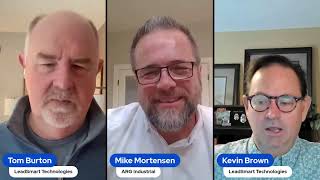
Episode 59 of the "Around the Horn in Wholesale Distribution" livestream features hosts Kevin Brown and Tom Burton with guest Mike Mortensen (President & CEO of ARG Industrial). The discussion covers ARG Industrial’s background (headquartered in Anchorage, employee-owned ESOP with ~200 employees across 12 locations), regional manufacturing demand (Alaska vs. lower 48), the UAW auto strike and potential automation impacts, and practical AI topics — privacy/regulation concerns (EU/Poland, U.S. policy), corporate adoption examples (Walmart AI pilot, Microsoft copilots), and how distributors should approach AI roadmaps and employee upskilling. The show closes with industry workforce/education highlights (high-school logistics programs, military-to-logistics pathways) and practical advice on standards vs. legislation for tech governance.
Chapters
Good morning, good afternoon, whatever we are.
Yeah, well, that's it. I just was thinking about that as we were going through the intro. So, Mike, you're in Anchorage, right?
Yeah. In. Just outside of Anchorage, Alaska, this morning.
Yep. And Tom, you're in New Hampshire today.
Exeter, New Hampshire. Yes.
And I'm here in Southern California. So I just was thinking we should have had an additional guest today that's somewhere in Florida and we got everybody surrounded.
Texas or somewhere like that. Texas would have been better right in the middle.
But yeah.
Anyway.
But we're. We're close. So. Mike Mortensen, thanks for being with us with ARG Industrial. We're happy to have you with us today. We're going to talk more with you a little bit about your company and so forth. But, Tom, what's kind of. What do we got happening today? What do we talk about a little bit?
Well, we're back to our. A bit of our normal format, so we'll. We'll start off with a bit of some economic news. And then that seems to dovetail really nicely into AI, which we have some AI discussions. And Mike, you're looking forward to that. I know, I know.
And then.
I know we have some pretty interesting. Actually the scuttlebutt this week is pretty interesting. Some of the stuff on there with some of the school stuff. So looking forward to that. And then some good articles. And there we go. And then we have Mike Franz in Minnesota. So that's all right. That's good. We're covering it. Yeah. And Brian, I think, is up in the Bay Area. Right, so that's right. Good morning, Brian. Good morning, Mike. Yeah, chipped in. Let's see if we can get all hit all 50 states.
That's. That's perfect. Well, hey, before we die, Mike and.
I got the oddball states covered, so, yeah, we can get the rest.
And you have the oddball part covered as well with you.
I've got the oddball too. Yeah, that's right. That's your job. That's your job, Mike.
You knew what you were in for when you showed up today, right?
That's right.
Yeah.
He's like, I'm done with this. I'm not.
That's right. Well, let's. Let's do a little housekeeping and then we'll chat with Mike a little bit. But just those of you who are joining us live this morning, we're on LinkedIn Live, Facebook Live, and YouTube Live. My name is Kevin Brown. I'm with my business partner and lifelong friend, Tom Burton. We get together every week here on LinkedIn Live, as I said, Facebook Live and YouTube Live. But later in the day this will be up on all of the. The recording will be up on all of the popular podcast formats as well. So little disclaimer here if you're listening. Later in the day on the podcast, you will not be seeing the newsletter that we will be talking about today. But that's the format of our broadcast that we do each week we get together, we kind of talk about all the things happening in the economy, in the world and wholesale distribution and manufacturing. We look at economic factors, mergers and acquisitions, sales and marketing, technology, AI, all of these different things. We try and bring them all the way back around to how that impacts wholesale distribution and manufacturing. So if you do not get the newsletter and you'd like to get that newsletter, there's two simple ways to get it. First is and the simplest is send us an email. Email address is hello@leadsmartech.com and we'll get that right out to you. Or we have a website for the podcast now. It's called aroundthehornpod.com all of our previous episodes are there. You can see upcoming events, guests we have coming as well as you can subscribe there. So a lot going out. But again if you're listening, we are talking about that email that goes out every week. So enough of that. Mike, my friend, I'm was just thinking this morning, been wanting to have you with us for quite some time. You're the president and CEO of arg, your distribution company throughout the Pacific Northwest, right? In Alaska. You want to give us a little feedback?
You bet. Thanks Kevin. Tom, I appreciate being here. This is, it's always fun to listen to you guys go over all these topics. But yeah, I'm the President CEO of AIG Industrial, been with the company for almost 29 years. We are headquartered in Anchorage, Alaska with locations across the state of Alaska, Washington, Oregon, serving Idaho, Montana, even down into Northern California a little bit. So we're in the fluid conveyance, hose and fittings, lifting and rigging verticals. Kind of a semi family owned culture roots. But we became a 100% employee owned company in 2006 and so that's been our story since then and about 200 employees, 12 locations. I tease and tell people that we are, we're a tech company that plays in industrial distribution.
So I love that. Well you know what, it's funny, I don't know who actually made this comment because I've heard it it attributed to Jeff Bezos before, but with Amazon. But then I had heard that that's not the case. But the comment was, every company is a tech company. You just some other way that you sell a widget or do something else to. To do that. But we've all got to be tech companies. I don't think that's ever been more true than today. And Mike, I, you know, it's interesting. Makes me think, right. We, we met and developed what I'm enjoying as a. A newfound friend in all of our conversations. We met through technology. Right?
Technology for sure. And we've, our friendship has kind of been across technology. Right? Yeah.
It's funny. I'll give this quick example before we move into our topics today, but Tom's. He's written a book about, it's called the Revenue Zone and it talks about buying your behavior and things like that. And Tom's also involved in another podcast about social selling. And you know what, we developed a relationship because I saw one of your posts somewhere and we weren't connected. And I just started following you for a while and loved your content and started commenting on things. And I'll never forget because all of a sudden when I reached out to connect, it was a Sunday night and we spent about a half hour chatting across LinkedIn.
Yeah.
Yeah. On a Sunday night at like 9:00'. Clock. And here we are. So.
And that's more common than not, I can't tell you. You know, like being in the industry that we're in, so many people are, are waking up to this. It's kind of a late adoption industry. Right. The hose and fittings guys and lifting and rating guys, we're greasy, dirty business. And, and more and more are waking up to that. And so I'm having like, the conversations I'm having around my industry are not about the product or even the customers. It's about the tech and the, and the employees adopting the tech and all of that. So it's been fun.
That's great. Good. Hey, Tom, you want to join in on the discussion?
Yeah. What were you guys talking about? I'm admiring here. So we have, we have Tom May, who. He's North Carolina, right?
Yes. Yeah. Right outside of Charlotte.
And then we have Duncan in Canada somewhere. So that's good. Yep. And so that's another one. And then Pierre we have here, I think.
Right. So just with Pierre this week. Yep.
Right.
He's, he's, he's a good friend of ours. We have a, through his company, Moblico, we have a integration and a technology partnership. With our company lead Smart Technologies, who actually sponsors our event today. So I missed mentioning that earlier. So why don't we dive in, use the time. We have to kind of talk about some of these articles. We, we tend to kind of start each week talking a little bit about some economic factor. And you know, I, we kind of come all the way back around full circle each week with, you know, we've got this lukewarm thing happening in the, in the economy. You know, the Fed spoke the other day again and it just, I just watched this, I was thinking about Charlie Brown with, you know, blah, blah, blah, blah, blah, blah, blah, blah, blah, blah blah blah. You know, again it's like, well, we're not sure and we may reserve the right to raise and this and that. But that said, things are maybe looking a little bit better there. We've got some information about manufacturing production, you know, tenths of a percentage points that we keep seeing up and down and so forth. So what are your guys thoughts on, on kind of this production piece that we talked about here.
Mike, what are you seeing? I'm interested in your take and especially we talk about this a lot during the show is a lot of this is regionally, you know, a lot of this depends on your region, where you are, what's happening, what are you seeing in your neck of the woods for sure.
So regionally Alaska is a little bit removed, right? We're very resource development dependent and so that's up and down and we're a little bit used to that cycle. And it seems kind of like when the rest of the country hits a lull, we seem to hit a spike and vice versa. And we're grateful we're diversified with locations in the lower 48 and up here in Alaska, but we're still seeing strong demand. We're hitting record months. Broadly we've been hearing about this slowdown or the recession that's coming. And I kind of tease with some of my colleagues in our industry is we refuse to participate. We're full steam ahead. However there, you know, and, and so whether it's we're out there taking market share or we're finding new applications for our products, we're not, we're not really overly concerned about a recession. I do, I do think there are some things that are causing us to make some changes and, and our manufacturers are talking about slowdown. And I think that's, that's primarily because of most people, you know, really, really did some, I don't know if we call it panic buying, but there was a lot of, you know, inflations of inventory. And I think we, some of the distributors are starting to right size that now. Which is, which is you're seeing in the manufacturing, you know, see some order lag and things like that, but we're still, we're still seeing strong demand at the end user.
Mike, I'm glad you shared that one. I was going to kind of ask you a question related to that and not necessarily related to arg, but just as you see in the, in the broad picture, and we've got Duncan here with us from Canada who runs a distribution company as well. And do the typical. So not the highly capitalized and not the struggling. But does the typical wholesale distributor rely a lot on lending facilities on an ongoing basis or is it kind of balanced, have a line of credit just in case we need it? The reason I ask that is tied to what we're seeing with interest rates and so forth and the potential impact of that.
Yeah, you know, and definitely there's a range, right. From the, from the, from the medium to the small. I think most of the small operations, smaller operations that are running successfully are not using a lot of credit. You know, we, at our company, we have one small banking relationship and we've used that very successfully for all of our acquisitions and expansions. Other than that, we've been fortunate enough to kind of handle everything out of our own cash flow. We don't have like a revolving line of credit that we use. However, interest rates are ticking up and that, that typically on those in. In, you know, those business loans that, you know, those, those are a fixed rate. And so we are watching closely.
Good, good. All right, well, let's just keep watching what's happening out there and kind of pay attention across the board. You know, there's a potential rebound effect from all of these things. So I'm. I'm hoping that, you know, and by the way, that might be the best phrase I can remember in a long time on this broadcast was we refused to participate. I love that. Right. Because that's the, you know, I was at one of the, one of the industry buying associations or buying groups, I should say, national meeting last week with Affiliated Distributors in Denver. And that's the tone, right? It's like our businesses are strong, our customers are working, they're paying their bills for the most part. You know, things are, things are fine out there. And, you know, you've heard us say here on the broadcast over and over again, right. Tom always says, don't watch the news. We just Happen to have a new show every Friday, but don't watch the news in between is Tom's mantra.
So all you need to know is.
Go ahead, Tom.
No, I was gonna say all you need to know is here. So why watch the news during the week? It's like, it's all here. All right, Kevin, let's move on.
Yep, jump ahead. So this auto strike, the. It's 9:00 Eastern Time, which I think was the deadline. And I, as I saw in the news this morning, because I did watch the news this morning a little bit, no changes with the UAW strike, so they're going to hit a bunch of other plants. Mike, we were talking earlier. You had been at a show, I think, last week with the shift conference with MDM in, in Colorado. I think the best picture I saw that whole thing was Tom Gale trying to mimic Deion Sanders sunglasses.
Yeah.
Yeah. So that was a pretty, pretty funny picture on the, you can see that on the MDM LinkedIn site if you'd like to. It was pretty amusing. But, you know, I think you had said that, you know, why don't you share a little bit about what some of the discussions with your, some of your colleagues were.
Yeah, so I love going to these conferences that are a little bit outside my vertical, just wholesale distribution in general. And I make new friends every, every time. It's awesome. But for some reason or other, hosers tend to find each other. Right. And so I ran into, I ran into a large distributor in the, in the Detroit, Michigan area in, in our industry. And we, we became, you know, acquainted. And so I thought, hey, you know, I'm gonna ask him about this strike. And I'm like, how's that affecting your business? Are you, you know, are you worried about that? And he's up. He's like, these guys do this every three to five years. And it's a lot of, you know, it's in the news and the politicians use it, you know, leverage and, and everything like that. But we're pretty used to it. I go, so it's kind of like us in Alaska with oil prices up and down. He goes, yeah, it's probably the same thing. And I asked him about ev. And if that was really driving that. And he said, you know, we've got so much business, you know, in that arena, it doesn't really matter whether they're burning gas or electricity. We're still, we're still selling lots of products. But he, he didn't seem to think it was, it was, you know, too Much too much going on for him. Now that said, I, I, you know, I think that these workers are asking for a heck of a lot, right? Going back to, you know, pensions of the yesteryear and a 32 hour work week with a 40%. And you know, I, I support workers and I think you got to treat your people right. But oh my word, boy, you know, I know in distribution we're looking for employees everywhere, so the, the autoworkers got to pay attention because, because there's definitely places for people to go to work, but I think they're asking for a lot.
Well, it's, you know, I, I've got to be, I have strong opinions about, personally about unions and I think they played an absolutely wonderful place and were needed at the turn of the century. And then, you know, now there's just, there's a lot of other jobs out there and we've got technology coming in right into a lot of organizations. And this plays into this. Right, right now we've got, there was an article we didn't end up using last week, but, and I wish I would have kept it, but there's kind of an AI component, right. With this as well. We've got, you know, the writer strike going on. We've got all kinds of things going on out there that are components of it are tied to artificial intelligence and people worried about their jobs. And, and when you look at this, what you had just mentioned to me, it's like, and by the way, Tom, if I can't have a 40 raise and a 32 hour week, I'm not coming in Monday, you know.
Okay, well, it's a nice, nice seeing you.
Yeah, yeah. You'll miss me, right? No, I mean, think about that. Right? These are not poorly paid people to start with, you know, and, and it's not that they're not skilled. I've, I've had an opportunity early in my career. I've been in four or five at least Ford plants and multiple GM plants. And, and it's not that they're bad people, but you know what, at the end of the day, you gotta, you gotta be able to sell a car at a reasonable price too and return the dollars to you as a shareholder.
Yeah, right.
And so there's a balancing act that they're gonna have to find here.
I agree, Kevin. The AI and the automation that's continuing to roll forward is going to only put pressure on that, you know, request for those higher wages. It's, it's amazing to think about what's going to happen and it's sometimes scary and I know it's driving some of the things that you're going to talk about in some of these other articles.
But.
I think people have to recognize that there's a definite requirement for upskilling coming and it's going to change how we do work and it's going to change our ability to demand, you know, the type of demands that they're asking for for these type of jobs. And I think honestly their demand, their demands are only going to throw gas on the fire for these big manufacturers to push harder into automation.
And that's, you know, that's an interesting piece. Right. And we could spend the day talking about this. I laugh as we think about this. In my mind is my mother retired as an administrator at a medical center and the last three years that she was there, she was in the same union that my father in law is in as a retired iron worker. The iron workers came in and organized the administrative staff. Mom had no choice, right. And so you see this, you know, this thing building on itself and I, I'm concerned, you know, for, for things in general. But to come back and say we want a 40% raise over a few years and then all these other concessions because part of that is thinking about, well, if we get there, we'll never go back and at least the people that get to keep their job when all these other things are going on, whether it's AI driven or it's, you know, digital twins in factories or whatever it might be. Right. And there was an article I just read the other day about. It was talking about co. Robots, right. Robots and humans working side by side together on projects as all that's going to happen and it's going to impact the United Auto Workers now, the auto plants. It's going to be interesting. The downside of this, besides what could come later, and it was mentioned in this particular article too was, you know, it's, it's something that I'm sure most people that are outside with a picket sign aren't thinking about is, you know, if that plant is producing parts that need to go to a, to a dealer for replacement parts. What about the emergency vehicles? Right. I don't know about what it's like in Alaska or Tom, where you are in, in New Hampshire this week, but where Tom and I normally live in California, it's hard to find a police vehicle that's not a Ford.
Yeah, right.
It's Fords and Dodge and, and Chevy vehicles are abundant in the fire service and Law enforcement as well. So how do you get those parts for that paramedic unit? Van Right. If this is all going on. So that talks about this, about the trickle down effect and so forth. So I'm sure they'll come to some concessions. And to your point earlier, Mike, this happens regularly. I remember, I'm an old guy, I remember lots of these. I don't ever remember 32 hour weeks and 40% increases.
Yeah, that's, that's a big ask. Yep.
So that we started talking about AI. You know, we, a little bit in that discussion. We talk about AI pretty regularly. Right. You were at the shift conference last week. That was a, a big topic there. There's the distribution strategy groups, upcoming event, Chicago next month, big topic there. And there's a lot of underlying things in this next article. You know, if you just read the newsletter coming out or looked at your screen and wonder why are these guys talking about Poland investigating OpenAI, the maker of ChatGPT? One of the things that we love to do here each week though is really talk about kind of the story behind the story as opposed to just a piece of news. And Tom, I'm going to kind of throw this over to you real quick. This is talking about GDPR and privacy issues and so forth. Can you talk about not only with this article, but kind of some of this broader.
Yeah, I mean the fact is, is the, I don't think they're going to need to investigate all that much to find out that there are all kinds of different privacy issues, quote, unquote. I will put those in quotes or in air quotes around what's going on with AI in general and large language models and ChatGPT and so forth. So, you know, I don't know why Poland happened to be the first one to kind of jump in and start investigating this. And like I said, I don't think they're going to have to work too hard to find the issue. I think the bigger issue and this kind of ties into maybe the next story we're going to get into as well is, you know, and Mike, you touched on this a little bit. I don't know that there's anything that doesn't need to be rethought in the new world of AI. I think that you have to be willing to take a step back and look at a lot of the GDPR stuff was based around using your email address and all of that kind of stuff without permission in Europe and some of the rules behind that. And it was fine for what it is. But it doesn't even make sense in this new world. I think you have to take a step back and look at some of these things in an entirely new context. And I think a lot of these regulations and things that we've done are going to have to be, if not thrown out, revamped considerably along the way. You know, Mike, what's your, what's your take?
Yeah, I agree. I think there's a perception of privacy and all of that that we have, and then there's the reality that we live in based on the tools that we're adopting and willingly using every day, if you think about it. But yeah, I think the emergence of AI in a whole new way and how it's going to touch just about everything that we do in our personal lives and in our business lives is going to, is going to be discussed. You know, it's, it's, it's. And I think discussion is good. Right. I think that that's going to lead to the best result. I, I do worry when governments get involved because I think that there's, there's sometimes, you know, different value propositions depending on, on who they're, who they're trying to serve. But I think discussion around this is good and I think there's, there's going to be lots of court cases, there's going to be lots of legislation, just as there was when the Internet arose, you know, a couple decades ago.
Well, and you just have, you know, whether it's privacy or copyright or, I mean, you just look at the, I don't know, it's just hard for me sometimes to put some of these old school or older regulations and try and fit them into this new, more modern way of doing things. It's, it's, that's going to be a hard, hard job. Well, it's also not even just a hard job to track, but to actually manage.
Yeah. It's also going to create a whole new category of ambulance chasers.
Right.
For sure.
A whole new group of lawyers that are going to now be experts on this and want to, want to find out whether the bathroom had a railing in it or not for you. Right.
I think IP rules are going to change and you brought up legislation. I think IP rules are going to necessarily change and morph similar to the music industry. Right. If you think back 20 years ago, you know, if you wanted to buy some music, you bought a, a CD or whatever, and the music, it was a very small group of companies that controlled that access to the music. And, you know, the iPhone Kind of. And Apple music kind of blew that up. Are people still making music? Absolutely. Is it democratized the making and distributing of music? Absolutely. Are people still getting paid? 100%? It's just. It just changed and probably improved, if you ask most people.
I think that's a great comparison to all of this. Right. And wondering how all that would play out. I think what's interesting here, though, is, you know, and Tom, you had mentioned about, you know, this not being difficult for them. I think this was, you know, this group in Poland throwing a. Throwing a bomb into the, you know, into the fire, so to speak with, on behalf of the European Union. And so there, you know, what's one of the things I want to do a little reading on? We've talked about it a few times here, but really kind of get a grasp on where the EU is. I know they're ahead of the US in this, but the next article we're going to discuss talks about the US wanting to have something in place within a series of months. So I think this is going to need to be right, because we're thinking about data that potentially is going to move and go across the entire Internet in very different ways than it ever has before. And so we're going to need some global standards, I think, to go with this. Not just what did the EU say and what does the US say? US wants to talk about it partially because, you know, politicians in this country need something to banter about, but secondly is they're talking about the competitive nature, right. Where does it leave the US in a competitive standpoint? So I think it'll be interesting. Tom, anything else? You want to jump ahead and talk about this?
No, let's jump ahead. I think this next one here, you know, titled Must Tell Musk, Elon Musk tells Congress the consequences of getting AI wrong are severe. And I was, I was listening to an interview with Sam Altman, the CEO of OpenAI, and the most he was being asked, he was being asked, you know, he's traveling all the world and all over the world and introducing OpenAI and chat GPT to different companies or countries and different governments. And he's. The question to him was, what is the most, you know, what do you, as you're talking to people, what are you finding unique or what are you finding? You know, questions you're getting that you wouldn't have expected. And what he said was, is the biggest thing that he has found is that most people, when he first talks to them, believes that chat GPT as it exists Today is the end all be all. Like they've done, they finished the development, they finished the product. This is it, right?
Yeah.
He's like, this is the model. Yeah. This is such the tiny tip of the, it's not even a model T, it's like a horse and buggy. Right? This is such the tip of the iceberg. And you know, some of the things that are coming that are, I mean chatgpt as we know it was really like a prototype for us as consumers to just get an idea of what's possible. It wasn't designed to be the end all, be all. And you know what he said is just the people don't have any real understanding of what is going to be coming and the power of what's going to be coming, you know. And Mike, that's certainly going to have major disruption and major impact to businesses as we talk about each week. But as we look at this article I agree that the consequences of AI could be problematic. I don't agree that the way that to handle it is to try and create a government regulatory body that doesn't know anything about this. And I also think that the people like the Microsofts and the you know, Facebooks or Meta or whatever that are getting in on this, there, there's a bit of a self serving aspect. They can go in and create the rules, right? It's gonna, you know, and they have the money and the wherewithal to create the rules. What is that going to do to the little guy? So let's go back to the music.
The music analogy like, because I totally agree, I, I think it's important that we're talking about this because I think there's a lot of concern, there's a lot of excitement and you could be anywhere in the spectrum there. But I, I kind of think these, these guys, these tech guys sit musk. That's a pretty hyperbolic statement, right? There's somewhat north of a, of a zero chance that AI could kill us all. I mean, you know, come on. So part of this seems a little self serving like hey, we, we got, we own this thing, we got our hands around this thing.
You better ask me what the answer is.
You better listen to us.
Right, right. No, think about it, right? If you can make the rules of the game then you know, or define or influence the rules of the game. Wick. I mean and especially, let's face it, the politicians don't really understand this. So it may all sound good, but what's happening now is you're really blocking some of the other smaller companies to be able to come in and, and do that because they can't get through some of the regulatory hoops that these larger companies can get through.
You know, Tom.
And I do think it's a problem because I think companies will go offshore, they'll start, you know, doing things. And so do I think that this is something that has to be absolutely watched and looked at and, and I don't like to use the word policed, but really monitored. Absolutely. But is this the right way? I'm not, I don't, I don't think so, but no one's asked my opinion so far. But, you know, who knows?
Well, I think what, what really ties into this and, and I, I will make the analogy is. Mike, I, I don't know exactly what within the. Hey, by the way, as a side note, you made a comment earlier. Is it appropriate for somebody that's not a hoser to call a hoser a hoser?
And we, we'll take it.
Okay. Okay. Because I, I love that.
And if you're. And if you're Canadian, you got to put a after it.
Okay. Perfect.
Perfect, perfect.
Yep. The hoser, eh. Perfect. I'm writing this down, so I'm gonna, I'm gonna start my emails to you. Hey, hey, hoser. But, but, you know, I know you guys do a lot. You know, obviously a big part of your business is hoses, fittings, but you also do a lot, as an example, with lifting straps and hoists and things like that, I assume. Now my background is in the industrial safety world, where we're totally tied to industry standards, American National Standards Institute, ANSI standards and so forth. I'd assume in your market there are. Are industry standards for things, is that correct?
For sure.
Well, both on the, on the lifting and rigging side, it's, it's more highly controlled. Right. ASME and OSHA control a lot of that around fabrication, tagging, all of that information. And then on the hose and fitting side, it's a little, A little more open. Right. Like, so probably one of the best resources is nahad. The national association for Hose and Accessory Distribution has the Hose Safety Institute, which really has published a lot of White.
Safety week last week. Right.
It was, it was Hose and Safety week last week and we had a, it was a first, first time doing. It was a great effort by lots of member companies.
Well, the reason I asked that is that's in my mind, that's where this all ties together is we don't need Congress to say x Y and Z. I don't, in my opinion, it doesn't need legislation. It needs some standards bodies. And when you have those, I mean, I just think about it, you know, if you think about a pair of safety glasses, right, right. On the inside of the safety glass, it should say there's a Z87 one.
Right.
That's the ANSI standard that they're saying we meet.
Right, right.
And if there's some standards that come with AI and so forth like this, that. Now, and what's interesting about right. When you have that is if you chose to buy something that's not ANSI compliant, as an example, using maybe a lifting strap or a pair of safety glasses, and, and it's not compliant to that. The doors that are open from a legal standpoint are the floodwaters are coming at you. Right. Because it's very simple in court to say you were aware, right. You chose not to do these things and hence here's your liability and somebody was injured.
Yeah, yeah, I agree with that. I think, you know, one of the things that, that Musk said that was right was the, the referee comment. Right. I don't think we need a police person to a policeman. I think we need a referee. Somebody that's. And somebody that's willing to, you know, say, hey, these are. And a, a body that, that creates best practices and standards to, to prevent people from being hurt as much as possible. But I do think it's smart that it's the United States that's leading this effort, at least in the discussion. Right. I think that that's good for us. And I, I think it's silly that politicians say, well, we're going to have some legislation crafted in three months or worse yet, an executive action on AI. I mean, that, that.
But maybe follow and going back full circle, they don't even know what that is. Right. That's because they're going to base it off of what they see today or know today and there. And you know, just some of the things, automation wise. We were just touching on this a minute ago with, with the auto worker piece. Right. Some of the things are going to be able to be automated intelligently are. I don't think most. I, I know, I don't even comprehend it. Right. And I study this stuff all the time. It's like, it's incomprehensible. Some of the things that are, are going to be possible. So how are they going to put something together in three months that would make any sense at all?
Well, you know, and a Big chunk of this is grandstanding too, right? We, we've watched this. I mean, it was. And I think that's. You mentioned this earlier, Tom. You know, as we've got, this is a little bit of the, what they call it, the, the fox and the hen house or whatever, right? You've got, you know, this oversight group that doesn't even understand truly what they're trying to put oversight on right now. And then you've got this group of, I'll call them foxes, right, that are saying, I want to lead the charge in this because, you know, I know, right, what, what should be. And I think I take this back to it. And I've mentioned this before on our broadcast, but watching a Senate hearing panel grilling Mark Zuckerberg from Facebook about what data they keep and what they have. And this one senator, it wasn't like he was 90 years old, like lots of them are. I mean, he was, you know, late 60s probably. And he went on and on and on about how Facebook has listening devices in homes. And Zuckerberg's there, he's just as straight faced. I mean, I'm sure inside he's just like laughing beyond belief. And, and Senator tells him about, you know, well, my son's going to a wedding in a couple of weeks and he's a groomsman and he had just had this conversation with, with his friends about the tuxedos that they need. And, and it wasn't like 20 minutes later that he got an ad for a tuxedo company on Facebook. I'm just like, and it's like, how does that happen if you don't have listening devices? Zuckerberg's like, sir, your son searched the Internet for tuxedos, point for tuxedos. And hence we provided him more information on what he had been searching. Well, how do you do that? And finally, it's like, sir, that. That's actually how we pay our people.
Yeah, that's the whole premise of Internet advertising.
Right, because somebody paid us to put an ad to your son about something that he was already looking for.
And that goes back to my comment about our perception of, of privacy versus the reality of privacy as it exists today in a digital world.
Yep, exactly. So I think we're just going to continue to see more of this. But here's where I wanted to bring this back. Kind of back to story behind the story, Mike, and I'm going to kind of throw this to you, my friend, is that, you know, you're running a company and, you know, we've had some conversations about the technology that you use and you guys are ahead of the game compared to a lot of people out there with what you're doing. But, and more importantly, I think about what you're looking at with you and your executive team. One of the things though that comes out of this is in my mind it's like, okay, if I'm, if I'm a senior executive in an organization that needs to start looking at putting AI into my company, I know that I need to build a roadmap, right? All the presentations I'm hearing is I need a path and a roadmap for my tech stack and where I want to be and where I want to grow to. So Mike, I know you're, you know, you're doing this with your team and you, like I said, you've got great people with you, with Jeremy and so forth. And, and, but is this playing into your mind at all? Is, is like, as I'm building my tech stack, should I be paying attention to what are those regulatory requirements going to be? Should I stop and wait and see what happens over the next few months? How does that play out for a guy like you?
Yeah, we're not stopping and waiting. I think this is going to be formed over time and if anything has proven out industry resilient and finds ways to work over, around, under, through regulation and hopefully it plays a part in crafting any kind of regulation that comes up. But yeah, we're thinking about this in a much more holistic way, realizing that it's going to touch just about every part of our operation, first and foremost our people. And so, you know, I was at a conference for the National ESOP association down in Northern California here recently and that was the tone from some very well educated AI people that came and spoke to us is that we need to be having real conversations about how this will impact our people and not in a scary way. You know, at the SHIFT conference, one of the Gartner fellows was there and she was speaking about AI and she said that AI in the end will allow humans to become more human by removing some of the redundant data entry processing repetitive tasks and allow us to focus on what we really do, which is, you know, here and not, not necessarily just here. And that really connected with me. And so we're having conversations with our employees at the ground level of, okay, what are the tasks that you're doing every day that are repetitive, you know, that are kind of beneath you? Right. You're an intelligent, thinking, thoughtful, caring human being. What can we do to eliminate some of this friction on your day and baking that in to the conversation.
I think that's great. That's powerful piece and what you just described about that with your people. Let's jump ahead, Tom, to the Tech Talk article that we have each week. And by the way, it's about the time I should plug this in. I do each week. If you happen to be listening on the podcast, whether it's on Apple podcasts or Spotify or Odyssey or wherever you get those. We are live this morning on LinkedIn Live, Facebook Live and YouTube Live with our guest Mike Mortensen from ARG Distribution. And you are not seeing what the rest of the folks who are live with are seeing, which is our around the Horn and Wholesale distribution newsletter goes out every Friday morning to about 8,000 people. If you'd like to get a copy of that, let us know. So the next article, we have a feature every week that we talk about Tech Talk. This week that article is about Walmart gets employees involved in how to use Generative AI. Right. I didn't look into this as far as I would have liked to, but what a great idea for an organization of that size to get an employee focus group, so to speak, to start looking at how can this make our company better and you and your job better.
Yeah, that this article about, I think was the best one of the, of the newsletter. It really was inspiring to me because it's exactly what I'm talking about. Like, you know, where we want to go. They're already there. I'm not surprised. Walmart is a huge company and they're years ahead in many aspects, but they're, they're creating an AI playground for their employees to tell them, tell them what's what, what we should be focused on, what works for them, what AI tools make their lives better and, and collecting that feedback and trying and failing and trying again. And I think that's just, it's, it's everything that I'm hearing these professionals in AI recommending that we do with AI in our business. Walmart's tackling that head on. And so it's pretty impressive.
Yeah, I was going to mention, you probably have heard, you know, Microsoft is releasing copilots, AI copilots for all of the office products next year, but they have a number of, and I'm not sure if Walmart's one of them, but I know they have a number of beta clients that are working with them right now and providing feedback on how they're. And Microsoft's Whole positioning is very similar, Mike, to what you're saying, which is, hey, how do we give, you know, some innovation and some ideas back to our. To people versus the drudgery of work, as they call it every day. And you know, one of the things they're really looking at is even with Outlook is your inbox. Like how many, how much time do you spend going through your inbox? Okay, do I need to reply to that? Did I forget about that? Where did that happen? How do I put some AI to that? So when I come in in the morning, Kevin, kind of like our Genius Feed, as we call it.
Yeah.
Is I have. Here are the emails that really matter and here are the emails that I really need to follow up on. And here's the one stuff that. And have that really, you know, so you're not spending all of this time, all this drudgery time and administrative time and you're actually getting stuff done that matters.
Yeah, I think that that's really what this is going to do is help us get rid of the noise and let us listen to the music, so to speak. There's so many things and it's cool to see that these features are just starting to pop up in. You mentioned Microsoft and So we're a Microsoft 365 employed customer and we do all that and just, just the tools that are starting to come up and my people are like, hey, did you know this does this. And it's really starting to reduce some of that noise in our day.
That's great to hear. I'm looking forward to more of that coming into our company. Hint, hint. The. It's interesting, Walmart, you know, as they talk about here, they have this, they call it My Assistant. That's a desktop or mobile app for their people working in their corporate facilities to help them get rid of monotonous tasks. So I think some of what Microsoft is hoping to do with that is key. It's interesting because I look at our company with Lead Smart. Tom mentioned our Genius Feed feature which looks across your ERP data that's coming into the CRM, your marketing automation, e commerce, data warehouses, whatever connected systems we have and looking for opportunities and risks and sending alerts to that. That is opportunistic, I'll call it, right From a standpoint of how can we drive more revenues and service our customer better. The other side of this whole equation is kind of what they're talking about here is, you know, how can we get rid of some redundant tasks and, and so forth, which is really Powerful to see with that. So I, I think we're, you know, we're living in a, in an interesting time in the world. Tom made a comment a while back about, you know, we, the three of us were around at the start of the Internet. Right. Our, our kids, no idea what life is like with that. And many of them, no idea of life without a smartphone.
Right.
You know, it's just totally, totally different for them. So I think what we're going to see out of this, you know, in 10 years, we're going to look back to Tom's point earlier. We're going to look back about chat GPT. What was that? Right. Because there's going to be, it's just going to be pervasive throughout our life.
Yeah, it'll be the new, the new public utility. Right? It's.
Yeah, that's right. That's good. So let's, Good stuff. Good on you. Walmart. Happy to see what they're doing with that. I think that was really cool, Mike. Again, compliments to you on what you're doing with your team. One of our features every week is what we call our industry scuttlebutt. We talk about different things going on in the industry. There's an article that I shared here about an Alabama high school launching a distributional logistics academy. You know, we, we read, we hear, we talk all the time. Mike, you're, you're the expert on our group today about what's really happening in the world in the field. But everybody talks non stop about not being able to get enough employees. And here we've got not only, you know, I was, as I mentioned earlier, I was at a buying groups meeting, national meeting last week in Denver and there was the, the folks from the Texas A and M program in distribution, industrial distribution and warehousing and so forth. We had a couple of students come spend some time in the booth to look at our technology. But now we've got a high school that's doing this. I just love to see this.
Awesome.
Any thoughts on this further, Mike, about maybe getting some of your Alaska high schools to do that or Washington, Oregon, Idaho. I love that.
Yeah, that's so, you know, I did, I don't think I chose distribution. It kind of chose me. I was on track to become an attorney as really kind of where I was going to go and jumped into distribution and started working as a delivery driver and in the same company that I'm in now. And man, what an amazing journey industrial distribution, wholesale distribution can be for you. You get exposed to so many different things. I talk to people in our industry all the time about making what we do more accessible to the next generation. And part of that is technology. Right. If we're not investing in our businesses and making them feel like home, when these digital natives walk into our, our businesses, they're going to go look for something else, right? Yeah.
So.
So helping them understand just how important distribution is to our country, that it really makes everything that we do run and work and, and stay and stay productive and profitable. I think that's super important. I love. You know, I was at a conference talking to people about, you know, if you're in any kind of business, distribution especially, you should have a relationship with your local high school's guidance counselors. You should be out there talking to them, introducing your company to them so that they can, they can, you know, suggest that as an opportunity for, for a summer job, an internship coming in and, and taking a look at what we do for a living and find it, find a potential career, because it's a great way to go.
That's awesome.
It's interesting, Mike, is. I come from a tech background. Right. Distribution's relatively new to me over the last few years. And if you can go in and work in a distribution organization, especially now with some of the things we're talking about, technology, and you can understand all the different nuances of supply chain and all the different partners and manufacturers and all the ecosystem, you can go to other industries, I think, and it's, it's going to be easy. It's. If you can really make it work in the whole wholesale distribution industry and learn that and really get your, I guess, sea legs, you know, as you're coming into a career, you can go to a lot of places with it.
Sure.
And I've just learned a lot. You know, it's a lot more. There's a lot more going on here than there is in the traditional tech company that my, my history or my background's been from.
Yeah, go ahead. I was just gonna say so many layers to the onion. I, I have been so blessed to learn logistics and manufacturing and production and maintenance and customer service and the sales cycle and technology and finance and acquisition and merge. Like it goes on and on and on. Right. And so there's just so many different things that you can, that you can learn. And to your point, Tom, I. I feel like if my life were to take a turn and I was to choose something different, I would have relevant skills in just about on any team.
Yeah, exactly.
That's A really good point, you know, and people don't stop and think about it, right. When, when in fact, week before last, I was at a technology conference in San Francisco and, and I was watching, I'll call it that ecosystem. And this kind of plays off of Tom's point, right? Is you have. And just here's a simple example, right, Mike, you, you send your people to a trade show or, or an event and you, if you get a booth there, it's say 1500-5000 for a 10 by 10 booth.
Right.
We do these events consistently with trade associations and buying groups across the board. 1500 to $5,000. A 10 by 10 booth is at this tech conference was $50,000 starting. It could, depending on where you were at, it could go up to 70. And I sat back, I was talking to a gal that's in the finance world and venture capital world and sitting in a corner kind of in a chat, looking out across this, and we're talking about it. And I said, you know, one of the venture capital guys that was speaking this morning, his money is probably in half of these companies and they're just spending money amongst themselves right now. No offense to anybody there, but when you take a look at what we talked about into Tom's points about wholesale distribution is this is what makes the world run. Right. People don't think about how pipes get lifted off of a truck to go into a pipeline. Right. That your company offers. Yeah. People don't think about how the fork and knife and the glass at the dinner table at the restaurant that they're at actually got there. 75% of worldwide commerce goes through wholesale distribution or a channel.
Right.
So what a great place to start with in the high schools. We're at this place in time right now, I think where blue collar work is becoming sexy again. Right. We want people. You've got. What was the guy's name from Dirty Jobs? Mike Rowe. You know, his big pitch is, hey, you know what? It's honorable to be a welder. And it is, right? Yeah. Or a plumber. Right. And so I love to see this opportunities to people to get into distribution that way.
So if I could just tell a quick story. I was sitting at dinner on Tuesday night with the founder of a tech company who, if I said his name, you would know him for sure. But. So I'm not. But we were talking about technology and tech business because ARG Industrial is now just launched as a partner of a tech company for our, for our configuration engine that we've built. That allows people to put things together in a digital way and represent the assembly work that most of us as wholesale distributors do in some form or fashion. And so I was talking to him about that and I said as distributors we take a thing that's worth a dollar and we sell it for $2. Right. And he said, huh? In tech we put 2 million in and we take a million out. Wait, how does that work? I think I said do you want to buy our tech company right now? Because I think I'm going to stay with distribution.
Well, that's not how our tech company works, but I think I might know who you were talking about. The. That's funny. So before we jump ahead, Tom May made a great comment here. Right Tom, maybe you can highlight that. Right Tom, thank you for that. You know we've got all the existing military personnel who worked in logistics and so forth. The reason I really wanted to target about that because Tom making that comment does not know but four or five comments up in this is the author of the next article I want to talk about which is Will Quinn from infor and Will Quinn was a logistics officer in the Marine Corps and now is in distribution. So Tom, we have that other article there about it's our special feature. They're creating a culture of continuous improvement and that article was written by Will. If you get a chance, check that out. And Will's a regular here. In fact I think he's our guest next week. Either next week or the week after. I've got to double check. But to Tom May's point, right out of the military supply chain stuff, logistics, warehousing and now he's using that to support in for the ERP company's customers. So if you don't get the newsletter and you want to look at that, you could just look up Will Quinn, the distribution guy. He has a registered trademark now for himself. You can look him up on LinkedIn. So last two articles, we don't need to spend time on those because of time today but there's each week we have the Good Read feature. It said should you put employees ahead of customers Whole article about Richard Branson's ideas. I I have my own take on some of those. Mike, when we're together next over a beer we'll chat through that. I love the concept. I've got some twists to how he does it but I know you have and with as an employee owned company there's a lot of employee involvement there. The last article that we have here though, in fact I think we Hit them all. Yep. And so I think we've got all those covered today. Tom, Mike, last comments or thoughts on the day?
Well, you were mentioning Will. You were mentioning Will Quinn and he had a very important comment earlier that I, we didn't show, which he said you have to watch Strange Brew to get the proper use of hoser down. So that's, that's my, my homework for this week. What a.
What a high quality duty is. And now we got.
That's going back in the archives there.
That's right, that's right, that's right. That was. That was. Right. That's a vintage Caddyshack. Vintage time. Right. Is about that strange.
We don't make movies like that anymore.
I may need to put that on the iPad for an airplane flight soon, so. Hey, Mike, thanks for being with us. This was awesome. Every time we chat with you. Yeah, there's good insights. Will you come back again sometime later in the year of the new year?
Absolutely.
That's great. We're looking forward to seeing you when you're here in Southern California, hopefully later this year. Tom, you're trying to be on vacation a little bit this weekend. Go, go do that. We'll thank everybody for being with us today. As always, we wish you a great weekend. We wish you to be safe, do good things and be kind to others.
Sounds good. Have a good.
More from Tom



What does AI actually mean for a wholesale distributor #WholesaleDistribution


If your systems don’t talk to each other, your AI won’t either #AITransformation




This is why one AI agent isn’t enough for high-stakes decisions #WholesaleDistribution

