Around the Horn In Wholesale Distribution - Episode 69
Episode 69 of Around the Horn in Wholesale Distribution (hosts Kevin Brown and Tom Burton), recorded Dec 8–9, 2023, is an informal, industry-focused conversation covering cybersecurity/ransomware trends, economic indicators (unit labor costs, consumer stress, interest-rate expectations), and rapid AI developments (procurement use cases, Google’s Gemini launch and a criticized demo). The hosts relate these topics back to wholesale distribution and manufacturing—highlighting risks (cyber exposure, phishing, ransomware), adoption signals (procurement directors saying ~45% will adopt AI immediately; 80% within two years), and practical implications for distributors (contract analysis, quote/ERP monitoring, incumbents delivering AI).
Chapters
Can't hear you. It's wonderful. We're starting off not able to hear you.
I guess you're going solo today. I'm out of here.
Yeah, well, gotta get that mic fix. And you know what, at least you didn't get to comment on my dancing to our bumper music there. So we've got that going for us.
At least I do, which is nice.
Yes. How are you? Perfect. How are you this morning?
I'm doing good. How are you?
I am, I'm doing good. You know what? Happy to be here. It's. I don't know, it's a good morning. I don't know what, what it is. I'm looking forward to our conversation. We're guest list this week, which is sometimes fun. It gives us an opportunity to, to kind of chatter amongst ourselves. Not that we don't spend enough time talking throughout the week already, but it does give us some good opportunity.
Opportunity today I think there's some good news and some good con. Good, good, compelling news, I guess. Or that we're going to cover.
So there is. Although I got to tell you, the response I've been getting in just in conversation with people and email exchanges, text messages, LinkedIn chatter and so forth is the roster of guests that we've been having recently has been really powerful. You know, I've had some great comments about our last week's guest, Paul Kennedy. Or Paul, if you're with us this morning, I think you're planning to be. Thank you again for joining us. Great, great feedback. I thought about something from the Paul was saying a bunch of times this week. I'm going to mention it again in a few minutes. Our time with Mahesh from 3M recently was, was great. And so the reason I mentioned all of that is that I'm working really hard right now on our guest list for the coming year. And we've already got commitments from some returning guests and a bunch of new ones as well. Well, so that, that should be good.
So, yeah, we have quite a show coming, I think, in the first part of the year.
Yeah, you know what we've got, I think it's the 12th of January. I'm glad you brought that up. I'm. I'm not ready to say it out loud, although everyone's committed, but it will be the blockbuster of, of probably all of our events. So the, the. Thanks for bringing it up, Tom. So I think maybe the easy way to say it now until we make the announcement is we've got some powerhouses from wholesale distribution, some very well known names bringing together on January 12th on our live broadcast at 9am Pacific on LinkedIn Live, YouTube Live and Facebook Live. And then later in the day in our podcast, we're going to do a full hour, I'm guessing with the, the people that we have coming. We're going to go longer, but we're going to look at the, the past year, in fact. It's a great thing. I haven't even talked to you about this yet, but I'll share with the audience. I think we'd love your input and feedback on what did you see as the top issues and topics relating to manufacturing and wholesale distribution in 2023? Was it the economy? Was it interest rates? Was it labor issues? Was it hiring problems to go with the labor issues? Was it, you know, I think I mentioned interest rates, Was it AI? Was it technology challenges? What were those? And we want to take probably the top three to five of those and we're going to take this panel and break all of that down. So if you've got ideas, pop them into our comments here. If you're with us today and or feel free to pop us a note about that. I'm going to talk about that in a minute. Tom, any other thoughts on that before we dive in today?
No, that's good. Let's get moving. Good.
Your, your mic's fading out on you. I could barely hear you.
Can you hear me now?
Nope, just.
All right, go ahead and keep going. I'll see if I can fix things over here.
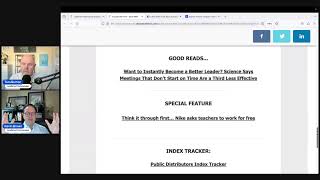
You got it. Very good. So Tom will be back with us momentarily. So hey, thanks for being with us. My name's Kevin Brown. I'm with my co founder of our company Lead Smart Technologies and my lifelong friend Tom Burton. We get together every single Friday. Well, almost every single Friday, unless we're traveling or at an event or the rare day off. But we get together each week here on Round the Horn and Wholesale Distribution and we chat about what's gone on in the past week with each other, oftentimes with our guests. And we talk about the world of mergers and acquisitions, sales and marketing technology, the economy, labor, all kinds of issues as it relates to manufacturing, wholesale distribution. So Tom and I, as I mentioned, are the co founders of Lead Smart Technologies. Lead Smart is the sponsor of this show every week. Lead Smart is AI enabled CRM and customer intelligence platform. We bring data in from connected systems throughout your company and turn those things into manageable, intelligible and actionable insights on what's going on with your customer with Your team and your business to help accelerate sales and grow your business. So we bring that out to that product, out to wholesale distributors and manufacturers. We don't work with people outside of that arena. So we have an industry specific solution. So we get together each week and discuss a newsletter that we send out. That newsletter as well is called around the Horn. In wholesale distribution. It goes out very early Friday mornings to thousands of people. If you don't get that and you would like to, there's two simple ways to get it. You can certainly reach out to us by email, which is quite simple. It's helloadsmartech.com and we will get you on that list right away. We get a handful of people from each week's show. Or secondly, you can go to aroundthehornpod.com where all of our previous episodes are there and you're able to listen to them there. You're able to subscribe to other platforms as well and you can certainly subscribe to the email newsletter there. So blah. That's our housekeeping stuff of each week. Again, if you're listening on the podcast that's recorded later and you're not able to see us, we're going to be looking on our screens and those that are live with us on their screens of that newsletter that we send out. And we're going to talk about most of those articles that go along with that today. So, Tom, can we hear you now?
I don't know. Can you? Am I here?
Yeah, you're still real faded, but I can hear you.
All right. I'm going to try one other thing here.
That's okay. I think you're okay. Let's give it a whirlwind. All right, let's dive into. What's that?
So I won't touch anything?
Yeah, don't touch anything. Don't touch anything. Good. Well, by the way, we got a few good, good mornings coming in here. In fact, Tom, you always do this and I always forget, you know, we have guests usually, or I should say people attending with us from our LinkedIn community, YouTube and Facebook. We usually a few hundred people from that each week. Some people accept the invitation that we send out and we see that they're attending. Others just let us know, but let us know where you're from. And one of the great things is. And Will, who just mentioned checking in this morning from Chicagoland. But let us know about where you're from. But more importantly, share your thoughts with us. Your questions, your comments even challenge us if you, if you feel the need to with this discussion today. So we're happy to have you with us. Tom, let's dive in this first article here. Cyber attacks.
Yeah. So, I mean, we've talked a bit about this the last few weeks, right. About cyber attacks and so forth. I think the article is here saying is that they surged in 2023 and that the groups that are doing this are more organized, they're more structured, there's more things going on. You know, I was thinking about this as I was reading this article and, and, and again, we kind of start looking ahead to next year is companies start to do a bit of an IT makeover. And if you're going to do a bit of an IT makeover for AI and otherwise, this whole thing of security has got to be part of your makeover. And I, I think that unfortunately it's going to get worse before it gets better. And unfortunately, I think some of the AI capabilities are going to make it easier for some of these bad actors to do some of these things. Yep. But, yeah, and we even talked about it last time. Right. It's not just the data, like your privacy and all that, but how to make sure that they're not, you know, that ransomware or other people are not injecting false information into your data that you're using for other things. So I think it's, it's going to be a, it's got to be a key, key part of your IT makeover strategy over the next, you know, 12 to 24 months.
Yeah, well, I think it's going to become part of your tech stack.
Right.
I mean, tools are going to need to become part of your tech stack.
Yeah, yeah. And I'll say for myself, right, as a tech guy, it's an area that I haven't put enough attention on. I just, you know, it's, I just assume that it's not going to happen. Right. Or you kind of hope for the best. So. But I think that you have to take into account more unfortunately, this as, as you go forward.
Well, I think you're spot on. And you know, we see this stuff on the news all the time. Right. That this is going on and the concern about it. The article talked quite a bit about health records, you know, as well, and said, I can't remember what it was exactly. One in four people have had some of their health records exposed in the first three quarters of this year. Well, that's pretty dramatic.
Right.
But our audience that we're talking about now here is, you know, wholesale distribution and manufacturing. And I'VE been really, I think, I don't want to say remiss but you know, we've only started really talking about this regularly in the last maybe month or so. And I think it's, it's something we need to continue because I know that, you know, we work in our company as an example, Elite Smart, right. We work with a lot of mid sized businesses, right, that maybe they're 5 to 25 branches. We have some customers that are in the 40, 50, 60 branch range that are much larger companies, have very large IT departments. But you know, there are tools and there's capabilities out there for you know, the smaller companies with, you know, outsourced it or one or two people to be kind of working on these. We're going to talk about that a little bit more even later in our discussion today. But you know, the reality of it is is that the vast majority, in fact the statistic it used here, that 98% of businesses and government groups work in some capacity with a company that has been hit by cybercriminals in the past year. And you know, the, the number that this started with, it's, there were more ransomware attacks in 2023 to date in the first nine months is actually what it says in the first nine months than all of last year. So it's scaling incrementally, right. So it's something that we've got to.
Be paying attention and unfortunately it's working for people. So they do more of it. Right?
Yeah, well, and it's interesting, right? Let's just, you know, Will made that comment there, right. Services on the dark web, smaller companies are being targeted. You know, so there is, there is a piece of that, right. Of moving to the cloud that's helpful. But sure, you can even be moving your data to the cloud and things to the cloud and if you let somebody into your system through malware or you know, click of an email or whatever it might be. And I, you and I were, we were talking about this a couple weeks ago, you know, about the amount of, even with all of the spam filters that we have and the security that we have built into 3, 6 Microsoft 365 for, for us at Lead Smart, it's astounding to me the amount of phishing emails that still even get through to me, you know, that's the, you know, eft remittance from such and such a customer and they've even shown up sometimes with our customers names on right now, you know, I'm, I don't say Wise enough, I think I'm scared enough that I'll click on, look at the sender and go, huh, those people don't owe us any money right now or I've never heard of that and move on. But you know, sometimes these things look very official and once you let somebody get into that system, you got a lot of issues.
Yep.
You know, so that's, it's something I think we're going to continue to discuss but the reality of it. Right. And I think Will even commented about that. You know, it can be crippling to a company. You know, if you think about it, if you're a, you know, a mid sized manufacturer, a small to mid sized distributor and all of a sudden your data is corrupted or your data is not available to you because someone got into your system that is crippling to your business. I mean we talked last week about Henry Schein, the massive medical equipment distributor. They couldn't operate their e commerce functions. Right. Which meant, didn't just mean people weren't buying online, that meant people weren't transacting with doing purchase orders online. Right. Of existing customers. So it's pretty substantial what this could mean. We're gonna try and stay more on top of this. I've got an idea about, I don't know if it'll be a guest for us next year or a separate episode we're going to start doing. In fact I'll mention this briefly now in 2024 we're going to do, I don't know Tom, what are we going to call them, special episodes or something like that. But we've got some interviews planned with some pretty impressive people. And so we'll do separate episodes. But one of the people we'll probably have coming in is a cyber security expert that has some tools for small and mid sized businesses. So you don't need to be, you know, a multi billion dollar company to really take this serious.
Yep. So, and before we move on, I want to, I want to, I want to say good morning to Paul as well. And I have had more comments in the last week about our last show with Paul and some of the insights that he brought. So Paul, I wanted to thank you again. You've been creating quite a buzz over the last week on some of the things that, that we covered. So.
Yeah, agreed. You know, and I actually had somebody tell me that we should just maybe, you know, have Paul replace Tom a couple times a month.
Did they use the word Tom or did they use the word Kevin?
No, no, I heard Tom Okay. Anyways, what's funny is you, you say that is we're a little more informal this morning. I'm realizing that the normally a little banter here but the next article we're going to talk about is third quarter labor unit labor costs. And and I was actually going to bring Paul up because he had said good morning. We know he's with us this morning is that I wanted to make a little video snippet between. Because both of you as I started talking about the, the economic statistic last week was everybody was just agreed and shook their heads is we're all confused. Right. And I can't remember what Paul's exact words were but that really kind of stuck with me that we were all in the same place. Right. We're seeing kind of conflicting data and, and I'll have to make a little snippet out of that one because it was, it was funny because we were all in the. In the same place. But here we are again right. You know, third quarter unit labor costs which we've not talked about that statistic before but that one's falling. Right. And so we're just in this and I guess we continue to be in this weird place but I think the pressures building of this, you know, I think you called it a simmering economy once earlier this year. I think, I think the. We're probably going to get to a boil here pretty quickly because we're getting plenty of statistics now that are coming in that are saying hey you know, we don't need to be at 2%. I heard this comment multiple times this week. We need to be on the trajectory to 2%. You know so Fed, it's time to really start pulling back. I, I read a statistic yesterday or not statistic a comment yesterday from pretty well known economist that was saying that they have kind of packed in two already in their mind. They have two interest rates reductions in Q3. Other people are seeing. We're going to start seeing it late Q2. Other people are saying late Q1 and Q2. So hopefully things are going to solidify a little bit. We could get back to. I don't know that there's any such thing as normal but we'll see what comes next.
Yeah I'll just you know one sort of. Again this isn't really related to this article but it was something I was seeing yesterday and I keep talking about consumer. Right. We know consumer debt is at an all time high but in the last month the number of increase of withdrawals from 401ks, you know, early withdrawals, not withdrawals. Early withdrawals went up 13%. So what again, you could read into that that hey, as consumers we've capped out our credit cards and now we're going to our 401k. Right. Which is not a, not a good economic indicator for the consumer.
Well, it's trickle down.
Right.
It causes all kinds of problems lately.
Right. So again, I think there is so much conflicting data, so much things. Now we're going to add an election into the next year. So who knows what that's going to do to everything. But yeah, there's certainly no, no clear, clear vector I guess on how everything's going to come together.
Well, I think we may see the impact of this simmering economy and high interest rates and you know, all of the other things impact the election. You know, there's just, and people, you know, I'm not a political scientist, nor am I political at all, but the, the idea is that, you know, people vote with their wallets and it could be an interesting time with all of that. I think the counter with all of this though is that the stock market has stayed strong. You know, when we see the stock market kind of, yeah, we had a couple, you know, a couple of years ago, things were, were taking and we had some big dips and so forth, especially in tech. But now if we look at, you know, earnings announcements for the most part are very strong. When we look at the things that, in the technology stocks, what AI is doing to those things, it's, you know, there's a lot. And I think that's what kind of has been bolstering things from a viewpoint of many people has been the stock market. But at the same time that, that probably has caused a lot of the simmering as well as you, you know, describe it right.
Yeah. And, and if they do, you know, again I'm, we don't give financial advice here but if, if we start to see interest rates, if we start to.
Don't take it. I'm sorry to interrupt you. If we ever start to give financial.
Advice, don't take it, don't take it. But if we start to see interest rates being cut earlier, you know, the later next year, first half of the year, I think you will see quite a bit of an uptick in the stock market because there's a lot of money on the sidelines that are invested in, you know, interest bearing things that are going to now move back into the market. There's a lot of money on the sidelines as it relates to the stock market. So, you know, and then that creates a wealth effect. And I mean, there's just so many different things here, but it doesn't change the fact that we have a large amount of consumer debt and all these other things. So there's just all these sort of interdependencies that are, I don't know, a little bit. I don't know. Scary is the right word, but just interesting, for lack of. Lack of a better word.
Well, and I think part of the risk of that comes is that we boomerang, right? If we go from super high interest rates. In fact, that's funny. I saw on social media a few different times in the last couple weeks, you know, realtors popping up in either people that I know or sponsored ads, and they're all excited about interest rates dropping. It was like, oh, great. It went from 7.8 to 7.4. It still starts with a 7. Right. So, yeah, it's nice. I think we're in week six of interest rates dropping, which is great. But we've got some, some turnaround to do. But the hope is that we don't boomerang back to, you know, free money and, and then just find this vicious circle. We've got to find a balancing point with these things. So that's good. Well, let's, let's kind of jump ahead, you know, not being economists, but being pontificators on economy. The economy. Amazon Business Procurement directors, they did a study. Procurement directors want to leverage AI. Any takeaways in particular on that? Right away. It's a good article.
Yeah, no, it is a good article. A couple things. You know, I think, you know, we talk a lot about what's going to be some of the killer apps for AI, what are going to be some of the killer applications. And I hadn't thought about it, but procurement and negotiation and contract analysis and all of that may be one of the early killer apps. And, you know, I used to work, if you remember back in the day with Computer Associates, which they were the worst as far as preparing complicated, difficult, and you could even argue maybe sometimes unethical contracts that they would provide. You know, they're working with enterprise it. Right. But people never understood the contracts they were signing. They, you know, they, they just kind of like, well, I, I think I understand it, but we'll, we'll move forward and the speed of which AI can take a contract apart and break it into its pieces and really then provide you guidance on how to best negotiate and what's important and all that on both sides too. It's not just procurement. But think about from the vendor perspective as well. And I think it will become an early application of AI that's early adopted in organization because it has direct implications on money and the business side. But I also think it will help businesses understand how that same concept of what you're doing with procurement can be carried over into other parts of the business as well. So. But I do think it's going to be very interesting to see, you know, how it changes contracts, how companies even or vendors even create contracts and does it actually maybe level the playing field a lot better and make things a lot smoother and require less back and forth? I don't know. We'll see.
No, I think that's good. I appreciate your thoughts on that. You know, it's interesting is it triggered for me and I have because I haven't done this yet and if anybody that's is listening with us today has maybe pop something in the comments or share with us. But since I've been more actively using Chat GPT and, and actually I think I mentioned to you, even showed you yesterday my wife had been having some back pain and she had an X ray and the results were, you know, I think I understood them but then I had also had this weird kind of rash on my back and they took a little biopsy of it and they thought it was, you know, some weird name disease. But it was, you know, sometimes I'll get this little itchy thing and. But the, the pathology report, I just had no clue what that one said. So I put both of those into, into Bard instead of chat GPT because I wanted to be live with the Internet basically. And, and you actually I showed it to you and you suggested some better prompts that I could have used which is great. But I got this layman's terms example of what this medical diagnosis was from a pathologist and I take that to the next level as. And I want to start even doing much more of this myself is the agreements that I've signed In the last 45 to 60 days for our organization, they're short two to four page agreements that are pretty straightforward. So I haven't worried about it. But you know, I have a contract sitting over here and it's one of the major ones that are part of our company and it's 203 pages. So just for posterity's sake, for the future, I have a printed copy on a desk next to me just to look at it once in a while. But you know, if you have large contracts and you have one that you know is exactly in your, not necessarily in your favor, but fair, loading that contract in and another one in and having them compare and contrast and give you risks and so forth, what a valuable tool, right.
You know, but think about now carrying that from a contract to a business contract to your sales data or to your ERP data or to your, you know, whatever. Right. Conceptually, you can carry all of that through into other parts of the business. But I think as far as a rapid adoption, this is going to be an area of rapid adoption because it's obvious, number one, number two, there's direct business benefit from it. Number, you know, two. And that's what they're saying in this article is that 45% are looking to do it pretty much immediately and 80% said they would be doing it within two years.
Yeah. And, and this wasn't a small survey, right? This was 3,000 companies.
Yeah, yeah.
Right. That's substantial. If you're kind of looking at this. And, and, and I want your thoughts on this, Tom.
Right.
Because this is what triggered for me is if, because you know, our focus here is how does these things impact wholesale distributors and manufacturers? If I'm a, if I'm a distributor, right. And I'm thinking that seeing that 45% of my potential customers are willing to incorporate AI immediately if as they basically, I read that and if you, if you read it differently, share this with me. I read that as saying they're willing to incorporate AI immediately into their procurement, procurement operation, dot, dot, dot, if the perfect tool was available, right. Or they start finding some tools that they can use. But if I'm thinking about that, if I'm a wholesale distributor is if that's what my customer's thinking, I better be prepared for what's my response to them using AI tools and how they purchase.
And there's an interesting. So you know, we had a client, right, that we were working with where they were looking to use our product to manage some of their business contracts because they then would be able to track rebates and then use to understand where the customer was in their ex. In their fulfillment of that contract in order to incentivize them to keep moving. Right. So now think about this process, right. I go through the process of analyzing the contract from a procurement or a Now I can take that same data and carry it over into my CRM or whatever to make sure are we actually executing on that contract or is our customer executing on what they're doing there and intelligently use it as a way, not as a hammer but as a tool to help facilitate so that we get maximum results out of that contract. I mean it can start there and move. It's just got a lot, a lot of very, very interesting downstream implications as well.
Yep. I think it's, it goes back to, you know, being prepared for these things and there's, you know, easy early things you can do now. It's just one of the AI tools that's built into, you know, our product with Lead Smart Channel Cloud is that ability to look at quotes. Right. And comparing the quote to ERP data in, you know, worst case scenario for, you know, wholesale distributor is to, to do a large quote for an end user customer that's worth, I always use the example, say it's you know, a half a million dollar quote and then they say you won and three months later you've got $50,000 of purchases against that. Well, wait a minute, something went wrong, right. They're buying that from somewhere else or there's something wrong with the, with the, with the project and having the alerts that come and tell us about those things. So I think we need to be thinking about those types of things more on the distribution side because our purchasers are going to be looking into that as well. So Kelly made a great comment here about ripe sectors. I hadn't heard that term. So I talked to Kelly, had a call with Kelly earlier this week and she's doing this AI program at Berkeley. I like to say berserkly, but ripe sectors, easy to implement and obviously a huge amount of custom data sets. And you know, she's, she's singing your song here, right Tom? Data, data, data.
And I guess low hanging fruit. Low hanging fruit is the right, right, right sectors. But I do think again we see this, we see a lot of, I can't put my finger on it, hesitation I guess with AI right now and maybe a misunderstanding, I don't know, fear may be too strong. I don't know if that's the right word. But we see hesitation and we see reticence. And by getting some of these ripe sectors where you're seeing the power of it and you're seeing the capability of it, that then becomes the beachhead that then helps push it into the other part of the organization. So yeah, I think these ripe sectors are really important and I have a lot of other ideas for ripe sectors that I think can make a big difference.
So before we go on, you know, I want your thoughts and your opinion on. You had made a comment earlier about hesitancy or being cautious about some of these things for most people. What do you think that is? Do you think it's. We don't. They don't know enough yet. I, I have some thoughts. I'll share when you're done, but I'm really interested in your thoughts. First is, what do you think's causing people to slow down and, And. Or to take their time in getting into some of this? We'd love to hear people's thoughts in the comments. If you, if you have a thought.
About this, why aren't you? The honest answer is I don't know. But what I, What I'm observing is that it is such a paradigm shift. It's such a shift in so many different aspects of how we're used to operating in our business, how we're operating in our life, that it's. It's. The hesitancy is. And again, I, I don't like to use the, oh, my God, the boogeyman's coming. It's. More of. This is so different and so weird that I'm a little bit nervous because the shift is so. Yet they see. On the other side, they see some of the output or the. Or the potential benefits of it, and they're in there. They're super excited. So it's a weird sort of dichotomy of excitement and hesitancy. And like I said, I don't think it's clear. It's. It's. And there's a lot of data. It's like, you know, Kelly is also saying they don't know where to start. Right. There's a lot of different variables that go into it, but I think it's just the change. It's a paradigm. It's such a paradigm shift in how we're used to how we've operated for the last. Whatever period of time. Forever.
Really think there's a little bit of ostrich. Bury my head in the sand because I don't know what to do.
I don't know yet. I don't. I mean, I'm sure there is that. Right.
It's probably early, like you say. It's probably early to know.
Yeah, I don't. I don't think there's. I think the hesitancy is just what I just said so much as. And, yeah, the way some people will address that hesitancy is to stick their head in the sand, but I'm not seeing that as a rule at this point. I'M just seeing more hesitancy and, and maybe nervousness or in anxiety about it. The reason I just described anxiety is.
An interesting thought too. You know, I'm, I'm in Kelly's camp here on this. And you know, and Kelly's a long time marketing consultant and he's worked with distributors and buying groups for I won't even say how many years. But that I think the issue goes back to and it's what my experience is and you know, I talk to distributors and manufacturers every day in industry folks isn't, you know, I spend my life on Zoom and the phone and is that really not knowing where to start? And I think today's not the time because we got some articles to catch up on here. But you know, we're going to have that discussion at some point again soon about where are we going to take that first leap on things moving forward. If I'm a wholesale distributor, where's my first leap? Is it am I going to go out and hire a bunch of people to try and go build an AI strategy or am I going to use that theory or that concept called incumbents, where I'm going to rely on a trusted source, whether it's my CRM provider that can bring me into that arena or I'm going to bring AI in through Microsoft 365 through their, what do they call it, Clippy and you know, advisor. And it's pretty funny, right? Think about that. Clippy from Microsoft was around what, 15 years ago? But there we go. There's the comment of the day from Kelly. She says lead smart's the first leap because we have some AI built into our CRM and customer intelligence solution. And the stuff that Tom and his team is building out right now is astounding. We'll be talking about that more down the road. But yeah, that's that incumbent idea. Right. And whether it's us or you're using Microsoft's AI tools coming in, I think that we're going to, when we talk about maybe late adopter markets, which oftentimes is wholesale distributors and manufacturing is they're probably going to start with that, in my opinion is they're going to start with that incumbent solution and then go to that big use the term, you know, the killer app, which is something that, where people will go this wholesale change, it says, hey, I'm going to look and change everything in my business. So we're obviously these conversations are going to continue as we move forward.
Yeah, I, I have a little bit of a different viewpoint, but I'll do that for another show.
Yeah. So yeah, good talk to us. Tom, you're you were so excited earlier this week about the next article. In fact, I'm going to hit pause here on us for just a second for those of you that might be listening on the recorded podcast. And we're recording this live. This is Friday morning, December 8th. It's 9:33am Pacific Time where Tom and I are both located. And later in the day we have an editor that takes everything that we've done today, put some music and some info at the front and the back of this and combines it all together. John does a great job and gets that out onto all the popular podcast formats. So if you're listening versus watching us live on YouTube Live, Facebook Live or LinkedIn Live, you are not seeing the newsletter that we send out every week. So I always hit pause about midway through. If you'd like the newsletter that we're talking about, these articles from, reach out to us at hello lead smart tech.com or go to the website for our podcast, www.aroundthehornpod.com. you can see all of our previous episodes there as well as sign up for the newsletter. So Tom, we got excited earlier in the week. Google launches their Gemini, kind of really scaling up what's happening in the article here. You we use one from Associated Press, but just about every, every news organization in the world covered this pushing the boundaries on what barge is going to be able to do compared to chat GPT. I'm going to ask you to take this away because of your profound expertise in this space. Catch. That's the December compliment.
Okay, good. Yeah. I mean, okay, so the, the, it's, it's a new model right from Google that's going to compete, if you want to call it that, with OpenAI's model and chat G, you know, GPT4 and all those types of things. They did a lot of benchmark testing on it that showed that it was performance wise, better than GPT4, meaning faster, more accurate, more all of those types of things. The other thing that's very, I guess, interesting about it is what they call multimodal, meaning that it works with images and it works with, you know, a lot of different types of content, audio, video, all of that kind of stuff to intelligently evaluate things which is coming on all of them. It's not like Google's going to be the only one to do that. It also is going to be tying more into their search and into the, you know, Google probably has the largest repository of data of any company on earth. I think that's probably safe to say.
Yeah.
I mean if you think about the fact that they own YouTube and they own obviously all the search data and all of the data off Androids and phones and all of that kind of stuff they have, you know, so there's a tremendous amount of data that they have available to train these models that they're building. And I think one thing that is not really been discussed a lot is that there are three versions of the model that they released. They kind of released a small, medium and large and like a big huge model and then a medium sized one and then one that actually they call Nano that would actually run right on your mobile phone. Right on. It would run locally on your, on your device.
Which is a big deal. Right. Because that's where everybody thinks Apple's heading is. It's going to run. Your model is going to run on your computer or on your device versus elsewhere.
Well, for yourself. So yeah, you know, I mean obviously Google has Android so they're thinking as it relates to Android. But yes, Apple's looking at the same thing. And so think about that for your own personal life.
Right.
Your model about your finances, about what you, you know, the things that you care about. Wine, you know, you brought, you showed me a wine thing. Whatever.
Yeah, isn't that cool?
Whatever is, is personal to you. You can have a personal model that will run on your device. Right now go back to security and some of the stuff we talked about, that's a different issue. But you don't need a big massive model for Kevin. You need a Nano model for Kevin and his life. Now that model may be able to access other models, but that's what's coming is that we'll all have our own little personal model on our, on our device that reflects ourself and what we care, what we're reading, what we, whatever. Right. And then everything can now be tailored based around that personal model that's on our thing. So you know, they haven't really talked a lot about that and the, on the, on the OpenAI side, but it hasn't gotten a lot of press. But they did actually release kind of three versions of the model here.
Yep. So, so before we talk about the hiccup that happened with this, which we'll talk about in a moment, I want to ask you. This is I think important and you know, we're, we're not a technology show directly. We're trying to take what's going on in the world and applying it to. Back to the. The audience that we serve and the company that sponsors our podcast serves, which is wholesale distribution manufacturing. But I want to, I want to throw this question out to whoever wants to comment on it, but I'll throw it to you is so right now, if you were to take what we have today available in the largest, probably best models out there, there's lots of startups doing models and large learning models, so to speak and so forth. But right now, today of what's been announced, the races, Google and Microsoft. Right. I. E. Microsoft being open AI and ChatGPT. Is that fair?
And Facebook with Llama.
Okay.
And some of the other ones. So there's definitely an Amazon. I mean there's definitely other ones, but yeah, there it's.
I have, correct me if I'm wrong, I haven't heard the depth of those. I know Meta made some announcements earlier this week that were pretty profound, but the Google, it seems like there's a space race, right? And you just described four. The question is, right, there's. I'm going to throw out two questions. One is where's Apple? Right? And, and what I know about that is Apple's like always is probably going to come late to the game with something that's crazy game changing because of the same thing you just mentioned of all the data that they have. Right. So my question then is, does open AI and ChatGPT being 50 whatever percent owned by Microsoft, are they at scale or at par with Google and all of the data that they have and Apple when they jump in and all that they have and then Meta and aws because it almost, it's. I think the space race thing might be a reasonable analogy to this because it may end up being these groups and then all others.
Well, I do believe that the large, the large language models like we're talking about here are going to come down to four or five major companies, right? The ones we just talked about. Google by far has the biggest data pool out of all of them.
Because of Chrome mostly because of Chrome mostly.
They have all the search data. They have Android, they have Chrome, chrome, they have YouTube, they have, I mean you just keep going on and on and on.
Yep, right.
I mean Google knows more about you than you know about yourself. So think about, you know, so, so Google probably, Apple probably not far behind, you know, Amazon I think, for certain buying habits. Right. And what you're doing and all of that personally. And Microsoft may be the laggard, I think, or the OpenAI piece, maybe the Laggard.
Well, that's what I was wondering because do you feel like those others are.
Maybe a step ahead of them for certain applications? Yes.
Okay.
I actually think Microsoft from a business application may be ahead, but I don't, I don't know enough about Gemini yet to make a real. You know, they, they haven't even released their development platforms which are coming in a week or so. So there's still a lot more to understand there.
Right.
But it's got different applications for different purposes. But these models are going to start to become commoditized. Right. And they're just going to be, you know, you'll be able to access them. You'll be able to access them at an affordable price, a very affordable price, maybe in some cases for free. They're going to get bigger and better. So really the only thing that's going to differentiate is your use case.
Right.
And your own data. Right. So there's, there's going to be three things that are going to differentiate the winners in AI, whether it's a vendor or a business. It's how intelligent is the use case, what data are they using is not available everywhere else, and what is the experience that you're creating for that user to make it a compelling use case on those things? Those are the three things that we're looking at all the time. Yeah. These models are going to be plenty powerful for all kinds of different things. So it's not about the model anymore, it's about what you're doing with the model and in particular in those three things.
So if I'm a, if I'm a wholesale distributor or a manufacturer, am I going to need to kind of look at these things regarding my AI strategy, much like I would cloud storage? I need to pick a horse and ride that horse.
Not necessarily. Okay. I think that you'll be able to use, you'll be able to use these different models when they're at the right place at the right time. Right. Use the right tool for the right job. But what I don't think is you need to spend a lot of time worrying about what model am I going to use or picking that horse. As you're talking about, the time should be spent using on what am I going to. Again, how do I leverage the data that I have that isn't in these models?
Sure.
How do I leverage my first party data, which in our industry we're very rich on first party data. What is the use cases like procurement and other things we've talked about with what are the use cases, and then what is the experience I want to create for my employees, my customers, my users, and so forth? Those are the things we need to be thinking about, not whether, you know, who's got a better, bigger or better model.
Right. So let me kind of see if I can wrap that up a little bit. And I got another question for you related to this. But. So in theory, in the not too distant future, I could have a user interface that I have designed or picked for my organization that, depending on what my needs are, I could be using different models, but I'm accessing all of those from one interface.
Yeah, but as a user, you won't know that. Right? As the user, you don't. You're not going to.
My IT department took care of all of that.
Right. Are using the right models for the right jobs.
Yeah, very good, Very good. Well, that, that's, that becomes very powerful because then we get the best of all worlds, right? I mean, in theory, right, you're using Microsoft, Google, Apple, Meta, and whoever else you choose behind the scenes, all for the best results. Which is very different than needing to say, I'm using Amazon Web Services for cloud storage or cloud services versus Azure, or I'm an Apple or an Android guy. Right. That's powerful.
That's good.
So we, we want to move on past this, but let's talk about the hiccup that went with this as well, because there's a great lesson that that goes with.
That's what Gemini launched as well. Yeah, it really pissed me off. So if you, if you've seen this, you probably saw there's a video that went pretty viral on YouTube. It was in their announcement showing some of the capabilities of Gemini and its ability to kind of visually look at things and have conversations based on visualization. You know, they were showing what apples and oranges and ducks and all kinds of things. It was a pretty compelling video.
It's duck squeaks.
And the way the video was laid out, I think it was like a five, six minute video, but it was laid out like this was all one spontaneous, continuous conversation. Well, it turns out that that video was a fake. It wasn't a fake in the sense that Google made it. They did make it, but it was misrepresented in a sense that they spliced together a whole bunch of different interactions with the model and made it look like it was one continuous, spontaneous thing. And if you watch the con, the video, it's like, oh, my gosh, this is like life changing. And it's not that we won't get there. I'm not saying that we won't, they won't get to that point, but it was very misleading and it was kind of a rug pull, if you want to call it that. For a lot of the, in the tech world who was really excited about what they saw in that video and then found out, well, that's not really what was, what was actually occurring. So shame on Google for that one.
Well, you know, a couple things with that, right? If, if you haven't seen the video, I think it's just very simple. You could just, you know, do a web search or just go to YouTube and, and search, you know, Google Gemini video and, and watch. Because it's astounding when you see that. I mean, the things that it showed it was going to be able to do, right watch was watching someone draw a picture and as the picture expanded, it was able to identify what that was. I think if you've used, just as a simple example, if you've used ChatGPT before and you've had to wait for a response to come back, had that video been actual fact, actually true and factual about how quickly it could do things, it would be amazing about how quick that model was working. But I do think it's well worth going and watching that video because just because they can't do things that quickly today does not mean we won't be there very, very soon. The big thing is, right, somebody didn't think this through. We're going to talk at the very end of our, of our, of our broadcast today, briefly about that. So we'll want to kind of look at, you know, poor decisions, poor decisions that are made in businesses. And in this case, I think the fact that they faked the video could end up trumping the big announcement and that is not how you want to do these things.
Well, and Google released this to their development community, right? This was released. So you don't, you don't, you don't do something like that and then wave that in front of a, a technical audience and then just go, oh, wow, that was really not, it's, it's, it was just. There was just so many things that I think were poorly thought through on that. And I'm just shocked that somebody thought they were going to get away with it.
But yeah, well, it's a, and that's, that's a great point and it's interesting for me and hopefully for, you know, the folks that are with us today or listening later, is that, you know, you're you're not just the co. Founder and COO of Lead Smart, you're a chief technical officer as well. You're a, you know, computer scientist by education. And we've talked about this or you know, since that announcement came out late in the day. We messaged last night and this morning. You're offended, right? As a developer. Right.
Yeah.
So that's a big deal.
I was disappointed, I guess is the right word. I was just disappointing. Yeah.
Good. Well, let's jump ahead and kind of get. Get winded down on the day. You know, we, we kind of added this new, new. Well, let's talk about this. EU talks on AI legislation.
Probably go by that real fast. It's still going on. That's all we need to know. And.
Well, the interesting thing I wanted to catch on that one, Tom, is you know, about European Union talking about AI legislation is. It's a mess. It's a mess there. If you were to read this article right there. You know, all of a sudden, late in the negotiations earlier this week, Germany, France and I think Italy popped up some new thoughts which are very, very self serving based upon the AI companies, some of the large ones that they have in their company or countries. Then you look at what the Biden administration put out a few weeks ago, which was lukewarm and convoluted and way too long and missed a lot of things, is these people are, you know, I think it's important personally, my view is that some regulatory group, I can continue to go back and I'm going to apply it to what our audience might understand. Well, as you know, American National Standards Institute an ANSI standard or a NIOSH standard or you know, something similar where we have an industry trade group that is the standard and then regulation can refer back to that.
Right.
Just like osha. Right. OSHA doesn't make rules. OSHA says you need to do these things. I shouldn't say they don't make rules, they don't approve things. They have a standard and for an approval you go to these organizations. Right. And I think in my mind that would be very beneficial here. But it's interesting because you know, they're, they're trying to get this done in the EU before they all have these elections and everything either gets stalled or they start getting different opinions from different parties. Yeah, interesting time.
It's a mess, as I said before. It's not, it's not a workable process. So it's become a mess. Because it's not, it's just not a practical thing right now.
But anyway, if they just asked me, I've got the idea they can, they can model it after osha. All right, you'll be fine. So hey, we put in a new little piece this week. We sometimes talk about similar topics weeks in a row and, and so we put this in and we just called it in review. There's now some new data out. This is the, the good folks talking. Tom Gale and Mike Hockett in the group at, at MDM put together some statistics in an article about the UAW strike and we've talked about that quite a bit as it was, you know, coming and what it was going to do and the trickle down effect. Rp when Ron Paulson was with us, we had some really good chatter about, you know, what that did these other businesses. Well now what we're really looking at is that GM is saying it's going to cost them $1.1 billion. They've recast earnings reports. Ford $1.7 billion. They got hit super hard during the strike at some of their most profitable plants, their SUV and their truck plants, high margin vehicles. They're going to end up turning out a hundred thousand lower vehicles than planned. So if you're a shareholder in those companies, it's kind of a big deal. Stellantis 800 million. So then the question is with all of this is, you know, Ford later on in another report says that the cost effect of the strike is anticipated to be about $900 per vehicle by 2028. So guess what? Someone's going to pay for all of this. Maybe the union, you know, feels like they won for those that small group of workers. But there's a big impact across the board. So anyways, we're going to keep probably using this in review topic in the future to you know, kind of review back on things we've talked about before. So we'll hit this quickly. I'm going to scroll through this. The next topic that we have in our newsletter each week is called Tech Talk. There's a nice article in there. It's, it seems fairly basic as it describes. It's actually from Inc. Magazine, but if you're not, if you're not up on top of ransomware issues, cyber security issues, if that's not your thing and you're just kind of trying to get aware, there's some really good hints and points in that article. I would highly recommend that. Again, it came from Inc. Magazine. It's called Defending against Ransomware Back Basics. It's in our newsletter. You could Find it if you're listening in by going to Inc. Magazine as well. I'm sorry to be moving quick. I want to hit just a couple of those really quick. Good stuff happening, a little more M and A stuff. Tipco, which is a large hose and fittings distributor, they've merged with another company. Some great stuff in there. In a NewsWeek article that MDM broke down about most responsible companies. There's some great distribution companies in that as well. So each week we have that industry scuttlebutt section as well. So anyways, Tommy, did you get a chance to read that article about the, the meetings in our Goodreads section?
Yeah, yeah, I agree.
I'm late to meetings all the time.
And they're not very effective.
Well, it's, that's the way the research says this, right? It says one, the article is, describes this is one instantly become a better leader. Science says meetings that don't start on time are a third less effective. Here's, here's the thing why I, I read that and it caught my eye. I would love to find some statistics and I'm sure somebody's worked on this is we went from busy people getting a lot of stuff done, having meetings and we hit Covid. Covid. Everybody went home and what did we do? We started having more and more meetings because we didn't have as many things to do because we weren't going anywhere. And I think that that has been a hangover effect into organizations of the number of meetings we have, whether they're zoom meetings or they're in person meetings. And there's, there's a way to run meetings. I know, it's an interesting example. We run our company on eos, the entrepreneurial operating system. We have a leadership meeting every week that runs the exact same way and it runs well when we go outside of that. Right. And that EOS meeting is you're not allowed to be late. And the only way, what's the EOS mindset is the only way you miss that meeting is if you're on vacation and it's been scheduled or you're in the hospital. So that's super structured and it's very productive. But people coming late, so forth, and I, I'm guilty of that is that they're a third less effective in those meetings. So I was appreciative of that article. So any thoughts on that before we jump to the last article today?
I think that I'm generally a very on time person, very disciplined that way.
I'm going to go back through all my team's messages, be right there. Be right there.
But I do think that it does put a better discipline in. And I think again, you talk about culture. Right. There's a lot of talk right now about company culture, especially in remote world. I think putting some of that in, well, not only is going to make it more effective, but it's just going to put a better culture in a more responsible culture.
That's good. I think that's a great way to look at that is developing the culture in the organization. And, and you know what, people follow the leaders and if the leaders aren't, aren't following through on something, others aren't going to do it. It's no different than parenting. Before we wind down today that we have a special feature most weeks. This was an interesting article and it talks about. It's called Think it. I described as Think it through. First, Nike asked teachers to work for free. And this article talks about, you know, the billions of dollars that Nike puts out just to the top two or three athletes between LeBron James, I think it was Christian, the soccer player.
Doesn't matter.
Cristiano, it'll come to me in a second. And, and Michael Jordan. Right. There's about close to $4 billion that goes out to them for wearing their shoes. It's awesome. But they're doing this community program where kids can write, write reports or something like that and get some, you know, some swag and some Nike products and so forth. So Nike went out in an announcement out to teachers asking them to help them review these for free. And I'm just going to take things back to Google and the Gemini announcement. Right. It doesn't matter what business, whether it's our business as a, as a technology company or you're a pipe solvent fitting distributor. Right. When you're making announcements and pushing things out to the public, think through them. Right. The impact, the negative impact that can come from things that are poorly thought through. And you know, you brought that up strongly in talking about the Gemini thing with Google is like, how did that get through? And the same thing with Nike. I mean, why not say you get three free pairs of shoes for helping us review these essays.
Yeah. You know, or if nothing else, put together a little fund and donate it to the schools or to don't pay the teacher a million ways to handle it. Right. But. But that was probably the worst as far as, as far as. So, yeah.
And the reason we talk about these things is really, it's just kind of my maybe an awareness of like, are we working within our organizations and our teams so that when things go out to the public and even to our employees, right. And things go out, is how are they handled? Are they, you know, what, what could be the backlash? And most importantly, are we doing the right thing? So good stuff. Hey, good chatter today. We gotta wind down. Got a full business day ahead of us. Still appreciate all the comments today that came in. Again, if you're listening on the podcast and not seeing the newsletter we were reviewing through, if you'd like to get a copy of that each week, just send us a note or go to the website around the hornpod.com or hello@lead smart tech.com. we'll get you. The newsletter comes out every Friday morning. So, Tom, thank you for today. Good time together. Appreciate it.
Yep.
Good.
Have a good weekend, everybody, and we'll see you next week.
Yeah, be kind, do good things and have some fun.
More from Tom



What does AI actually mean for a wholesale distributor #WholesaleDistribution


If your systems don’t talk to each other, your AI won’t either #AITransformation




This is why one AI agent isn’t enough for high-stakes decisions #WholesaleDistribution

