Around the Horn in Wholesale Distribution Live Show - Episode 91 #aiforbusiness
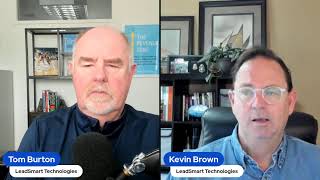
Live episode (Around the Horn — Episode 91) hosted by Kevin Brown and Tom Burton (Lead Smart Technologies). The discussion covers economic indicators (CPI, PPI, labor market), new US tariffs on Chinese imports (EVs, solar, batteries, medical supplies), manufacturing and construction backlogs, B2B e-commerce buying complexities, and fast-moving AI developments — notably OpenAI's GPT-4o (multimodal: voice, vision, text) and implications for CRM, sales co-pilots, and field workflows. The hosts tie AI to practical use cases (digital co-pilots, meeting capture, image analysis, automated quotes/orders) and emphasize upskilling, data readiness, and CRM as the integration point. The episode promotes a webinar on "What is Smart CRM" and invites listeners to subscribe to the weekly Around the Horn newsletter.
Chapters
I was late. Can't hear you, Tom. Great way to start the morning.
You still can't hear me?
I can now, but couldn't hear anything.
I spent all this time trying to. I thought I had this all fixed. Well, I guess I didn't.
Were those your insights for the day? It's been a great show. Appreciate everybody coming and we'll see you next week.
No, I was. I was just about to say it was funny when the music was playing. My watch is buzzing, my phone's buzzing. I was. What's going on? It's got all these things around the horn starting. Around the horn starting. Around the horn starting. Oh, good. Thanks for letting me know.
Yeah. Well, that means John Taylor and his team are doing their job, getting the word out.
That's right.
Appreciate John being our producer and editor and all things podcast. He does a fine job for us. And we don't call out John's. John's work enough, so we got to do more of that. Probably get him on to join us sometime soon. So how are you this morning?
Doing okay?
Good. Other than your microphone?
My microphone's perfect now.
Okay. Careful what you send out to the universe.
That's right.
Murphy may jump at you. Good, good, good. Well, it's good to see you today. I'm Kevin Brown. This is my lifelong friend and co founder of Lead Smart Technologies, Tom Burton. We get together every week or most weeks, I guess I should say, here on LinkedIn Live, YouTube Live, Facebook Live. And we chat about the topics and happenings around the world, most of it tied to North American distribution and manufacturing. We try and bring all of the data from the economy, the mergers and acquisitions world, sales and marketing technology, AI, all the things that are impacting wholesale distributors and manufacturers. We put that into a newsletter that we publish every week that we do every week, no matter what that goes out. It's called around the Horn and Wholesale Distribution Manufacturing. And it consolidates a lot of that news that matters to folks in manufacturing and wholesale distribution goes out to over 10,000 people every week. If you would like to get that and you do not get that, we'd be happy to share it with you. We get new requests every week. You can reach out to us@helloadsmartech.com and we'll get that out to you. Or you can request it at the website for our podcast, which is www.aroundthehornpod.com past episodes. Are there information? Is there beautiful pictures of Tom and I. And it's. It's a pretty special place, but we do this every week, first live, as I mentioned on LinkedIn Live, YouTube Live and Facebook Live where a nice audience can joins us each week. In fact, if you're with us, we'd love you to see in the, in the comments where you're from and where you're listening in from. And. But we record all of this and we've got, as I mentioned earlier, John, our editor and his team take all of that, put it all together and get this out onto all the popular podcast formats later in the day on Friday. So if you're listening in on Spotify or Odyssey or Amazon or Apple podcasts or wherever it might be, if you're listening in versus watching us, which you'll be missing today, is that newsletter I mentioned will be up on our screen and we talk about a lot of these articles. Few little graphics here and there. So if there's something that you're hearing but not seeing, you can always pop onto the Lead Smart Technologies YouTube page where a full recording of the podcast is there and you'll be able to see all that data. Fortunately, the company that Tom and I work for, Lead Smart Technologies, Lead Smart has developed an AI enabled customer intelligence and CRM platform that helps manufacturers and wholesale distributors gain never before seen insights into their customers, their customers buying habits, product categories that they're buying, quotes that they have open all kinds of things that help drive revenue and grow business, but also in deep insights into your team and into your overall business. And that brings all that data in from external sources like erp, marketing automation, e commerce, data warehouses and gives actionable insights to help grow businesses. So Lead Smart's our sponsor every week. We greatly appreciate that because we couldn't do this otherwise. So let us know if you'd like that newsletter. Tom, any thoughts before we dive in? What did I miss?
No, I think you covered, covered everything. And yeah, if you're out there listening, please let us know. We still have been having weird things with comments coming through. Yeah, and they come on LinkedIn, they don't come in here. So yeah, if you're out there and you can let us know you're here at least we at least know we have some comments coming through.
Yeah, I was a guest on another podcast yesterday which was grateful our our Lead Smart customer and good friends at Perimeter Office Products in Atlanta host a podcast each week called Pushing the Envelope. Great show. And I had an opportunity. I seemed like there was a little snafu a little bit with, with LinkedIn comments there as well.
Comments are. Anyway. All right, let's get on with it.
Let's do it. So each week as we break down the news in our newsletter, we start with a section called Economy and Supply Chain. So we'll kind of, we've got a number of articles that we posted about things going on within the economy. But you know, Tom, we talk about this all the time because we've got a stake bet on this and this article was talking about that for the first time this year we've seen a little bit of a slowdown which could be beneficial to the needs of our hopes of. Well, maybe not your hopes. My hopes of two or more interest rate cuts this year because things are getting dicey first part of the year we weren't seeing additional slowdown like we saw in the second half of last year. So any thoughts on that?
Well, I mean I have a few thoughts. So first of all, yeah, inflation core CPI was down but PPI was up. Right. The, the market I believe is completely overreacted to what I think is a minor, minor change, Tom, and doesn't necessarily and I unfortunately think it plays into my stake, winning my stake. But I don't think it's great overall. For the situation is now you have yesterday the stock market hit 40,000 quickly overreacted to the news of the lower inflation. And what does that do that creates you know, even Biden was out talking about hey, look at, look at how great the economy is, look at how great how much money you're making in the stock market that causes people to start spending again and drives up inflation. So I'm still very much sticking with my, with my prediction of the one cut this year. And I don't, I think the market is way overreacted. But I also on the plus side is that maybe there is some positive change. I just sometimes we kind of have a double edged sword, right. And we get ahead of ourself and then we end up back in the same place. So.
Well, I think you're, I think you're right and you know, I haven't said this in three weeks or so. I don't think. So I'll go ahead and say it now is I just, I look at, you know, it's interesting, right. And I haven't even said it this way before but with when we think about the, you know, auto trades that are done and the computerized trading that goes on on Wall street.
Right.
And, and how that, I don't say manipulated but how those things happen and move quickly, that wasn't around the way the stock market moves and the ability to analyze things. None of that was around when the Fed started figuring out that, you know, 2% is the right number and all these other, you know, we talk about these every week. We've got, you know, another article coming up where we talk about the labor market, all these things. The stock market wasn't working the way the stock market works now when we came up with all the metrics that we try and drive, you know, manage inflation from. And that's just been my thinking for a while and you know, you set me straight a couple times on this that you know, my thoughts aren't going to change it. And you know, I took two or three economic classes in college and that was about it. But so certainly don't claim to understand or know these things well. But I question is we've got a stock market and a business world that's moving at light speed in 2024 and we have metrics that we use to define the economy that are from one of these days I'm going to go look up when all of those metrics came together. But it was, you know, early in our lifetime, if not before you and I were alive and I don't know that we've got the balance there. And so I'm appreciative of your comment. Right. About what the stock market's doing. Then we get a little exuberance, so to speak, going and what does that mean to these other, these other datas?
So the market is based predominantly off of sentiment and momentum versus actual data. Right. So, and, and we can overreact both directions. My point is we may end up with a self fulfilling prophecy of oh my gosh, look at all the money that we're all making in the stock market. It causes people to go spend spending, creates inflation and now we're, and even like I said, the cpi, the consumer price index was down but the producer price index was up. So I don't. And you're on mute by the way, or your microphone's not working now or whatever.
No, I hit mute there for a second. I was going to say there was that I had some back. I forgot to mute my phone. So I'm a little embarrassed with that. But no, I think what we're looking at from that standpoint with what you're just describing there is the, it's kind of the reverse because usually we'll see on the manufacturing side first and then we'll see it on the consumer side. Right. And so that's what we really, you know, that piece of it surprises me but what I really look at with this is the Fed chair commented and I think he said he was he was in Amsterdam this week when he made the comment. But the he said acknowledge that the economy just a little quote from this the economy is different this time because so many Americans refinance their mortgages at very low rates before the Fed began raising borrowing costs in March of 22 and many businesses or large businesses also locked low interest rates in for other purchasing at that time. Said it may be that the Fed's rate policy is hitting the economy not quite as strongly as it would have if those two things were not the case. So I mean that to me it's like okay, well are we using the right you know, are we using the right stuff? So anyways, that being the case, let's just wait and see. I'm still bullish on two plus. I I just still as I mentioned in the past few weeks, you know I watch usually at lunchtime or even during the day. I'll throw it on to my digital assistant here and listen to cnbc and you can pick whatever status you want about no cuts, one cut, three cuts, two cuts, whatever it is this year and there will be a pundit on that will have great data behind their reasoning.
So yes.
Anyways next article that we reference here is about the US labor market fairly tight and that the broader economy is losing steam. So just a little bit of data in there about what's going on in the in the market for the jobs. So it was a Reuters article. It says number of Americans finding new job claims for jobless benefits fell last week and it says nearly unwinding nearly half of the jump at the start of the month indicating the market conditions remain fairly tight even as the job growth is cooling. So another one of these impacts, you know that we've been seeing kind of bump up and bump down with that.
Yeah. I don't know if it tells us anything or not. Seems more just sort of a lot of more of the same.
Yep. Well as we kind of let's move ahead then and let's chat a little bit though, I think this one's important. Our next article was about the announcement this week about China tariffs that have been announced $18 billion worth of Chinese imports related all kinds of things. And you know the article starts talking about electric vehicles, solar panels, batteries and more. And the reasoning behind that is and I was impressed with kind of the depth that this particular article kind of went into on this is you know the Chinese government I would assume that governments around the world have plenty of arguments about our economic and manufacturing trends and how we do things here in the US as well, where you and I live. But there's been so much of a glut of EV solar power and battery development that there's just a glut of it in, in, in China. And the idea of dumping that is here. And the issue that talked about a lot in this was about not just solar panels, but about the Chinese cars that could be coming in and wanting it. And frankly, we talked about this in the last couple weeks as we've talked about near shoring and on shoring. This ties really well into what we were talking about near shoring in Mexico.
Right.
Because we've read and seen how much China is wanting to invest, moving steel into Mexico. And steel is another one of the big tariffs that are here.
Yeah. And there were. You want to show that list? I mean, there was quite a few of them.
Yeah, well, that's, I was going to mention that this for the first time there. Let's, let's just kind of before we do that because that shifts gears off of what this part of things. But the, you know, their major tariffs on steel and, and alternative energy sources that are coming in. But for the first time there's, and you can throw it up there, there's been tariffs that are imposed on medical imports, which is huge. We're going to do needles and syringes in the medical place. So many of the, the there we go. It's popping up. So many of the folks that listen regularly onto our weekly show are in a space where they're selling some safety equipment as well. And historically, huge parts of the safety market have been manufactured in China. When we think about N95 respirators and so forth. I was talking to a large distributor earlier this week and I was asking about that and they said they had over the last couple of years moved a lot of that out of China and other parts of Southeast Asia. But if you think about now, all of a sudden tariffs that could be up to 25%. Right. Is we're seeing this chart here shows us an increase of 25% on face masks on medical gloves. That medical glove one, fortunately is not coming until 2026. But syringes and needles up by 50% on the tariffs on them. That's going to impact, you know, every manufacturing company, every medical facility across the board. And you know, they, they reference your medical gloves. But what they're really talking about with that is all of those disposable type of gloves that coming in, whether they're vinyl or they're latex or whatever the material is. And those are sold in abundance by just about every type of distribution company out there, whether your food service, your medical or your industrial or your safety. So these are going to have, I mean, something. And the reason we, it's one of the reasons we have our show here every week, right, Tom, is this would be an easy article to just bypass.
Right.
And go, yeah, hit those Chinese, lots of tariffs. But the reality is this is going to have an impact on all of us and our insurance companies that, that, that pay our insurance bills too well.
And, and I want to. First of all, first of all, thank you, Will, for God. Morning. I'll take two Ds. Yeah, two Ds.
Chicago, the Chicago version of God.
But I also wanted to hit his comment here. He said he was recently in Mexico City. Lots of Chinese trucking companies with boots. Right. This is what we've talked about before. Are the Chinese going to then be moving into Mexico City to potentially avoid some of the tariffs that we're just talking about? Yeah. Oh, guess what Will just said. Yeah, he's just saying I wonder if companies will import to Mexico then track to the USA to, to get around the tariffs.
Will not listen to this show regularly.
I think so, yeah. No, absolutely. So it's an interesting. Right. If we keep squeezing the tariffs on China. Right. China's smart. They're going to find ways around that. And Mexico is a great place to be doing it.
Right. And that's to Will's earlier comment. He talked about being Mexico City and lots of Chinese trucking companies there with boots. We talked about this the, either last week or the week before though, was the issue now is how much stuff can get through the border in a timely fashion. Right. And there's only so many border stops and there's only so many border agents that can do that. But I tell you what, you know, we laugh amongst ourselves and you say this regularly in our company meetings is, you heard it here first. But I, I think Mexico and Latin America, unless things settle down between the US And China, I think Latin America is going to play a much bigger role in these issues moving forward than we probably give it credit that.
I agree with 100% and it already is. And if we look ahead in the next five years, I think it will be the predominant source of a lot of the manufacturing things.
Right. Hey, Tom, before we move on, just to keep the screen up, you know Will made that comment earlier. Will's been a guest with us a couple of times and on the show. Will works for Infor. He is an industry expert in distribution and I just wanted to shout out to Will, Will post it on LinkedIn and I haven't even wrote my comment yet about it but I wanted to congratulate Will because he posted a picture of his the US Patent and Trademark Office with his approval of his trademark of being the distribution guy. And, and that's just, I just think that's so cool. One, it's cool because as you get to know Will, it just fits. Right. And but secondly is how cool is it that somebody thought about hey, I'm going to go trademark a cool name to go with me in my chosen career.
Why don't you go do that for the distribution dude? Right? Because you can't get guy now, but you could be the distribution dude.
I don't want Will coming after me. He's a tough dude. He was a marine and that would scare me. The distribution dude.
Yeah.
Let me run, run that by Mrs. Brown and see what she says that.
Maybe grab that one too because.
Yeah, yeah. So anyways, congratulations.
Congratulations.
He put a lot of work and energy into that and I, it's well.
Founded and oh, it's great personal branding. It's, it's awesome.
It is. Yep. It is. So it's going to go into his book that I'm sure will come down the road. So as we kind of jump ahead here, we talked about those tariffs first time tariffs going to be, I think we're going to notice those, I think in our pocketbook, maybe more than we realize. You know, it's interesting. The last comment on the tariffs though is that Biden administration is saying that there's going to be any inflationary impact to that. Of course you would say that in an election year, but I, I kind of question that. So we'll see. So anyways, jumping ahead, Reuters article today about small business sentiment rebounding a little bit. That's from a National Federation of Independent Business study. And just kind of an optimism level is up a little bit and things had been, the sentiment had been down quite a bit. Q4. So we'll just see. We're just going to kind of watch this a little bit closer. But small business is what, you know, runs the world. We don't think about it as much. But you know, when you look at where job growth is typically coming from, it's from startups and small business.
So yeah, when they say that you know, persistent labor shortages still continue.
Yeah.
To exert a lot of pressure. I don't know. The confidence. Right. Can be a lot of things. It can be based around the ability to get resource to get employees to get to hire people. It can be based around economic factors. There's a lot of things that as a small business owner gives us confidence one way or the other.
Yep, very good. Well, we can kind of jump into our manufacturing and distribution segment next. Again, as I mentioned, we, in our newsletter each week we have a series of different sections. We talk about the economy and, and supply chain and we talk about manufacturing and distribution. We have posted an article this week, it's actually from Modern Distribution Management about industrial production stalling in April. Again, this is kind of this, I'll call it fluttering ups and downs that we see with really, you know, a fraction of a percentage point changes. But the articles there, it talks about anyways, it's, it's in depth about the manufacturing adjustments as of April and capacity usage and so forth. And that's those manufacturing side of those, those metrics. Those metrics are all tied to capacity and the use of capacity there. But I did want to jump, jump ahead a little bit in this segment. There's an article that we published today about the Associated Builders and Contractors Group, the trade association from TED magazine, which is the electrical distributor magazine, posted an article about construction backlog, which is interesting. Right. When we talk about interest rates being high, there's raw materials or building materials and so forth. Pricing has been so high, dipped a little bit. But over the last few months. But, but raw materials or building materials have increased again. But backlogs are up and it's a little bit surprising that to see that.
Surprising in what way? I mean, what are you.
Well, you wouldn't, you wouldn't expect. Housing starts to be at a higher level and construction backlogs are tied to buildings being built. Money is harder to get. Money is more expensive. Building materials are higher. But all of these folks here are talking about having backlogs now, which means they've got more work than they can manage.
Right. Which makes sense. Right. So they've got. Because of housing's picking up and all of those things that you would have a lot of the backlogs that are there.
Well, it's the, it's kind of the issue is it should be a little bit. Housing is needed. We know all the statistics say the housing is needed, but the money is tighter to get and fewer people are qualifying for that homes until interest rates coming down. So.
Yeah, and it is weird. I mean I agree but they are especially not necessarily in California, but, or maybe certain parts of California but in other parts of the country they're really building still like crazy.
Yeah.
I mean even in Vegas. Even in Vegas. I was there a couple weeks ago. I mean I, I thought Vegas was kind of saturated and they just are continuing to build out farther and farther and farther. Yeah, I mean, you know, so somebody must be wanting to move there.
No, no, it's, it's, it's. They definitely the case. I was just looking at this real comment. One of the comments here was had said while there are occasional hints of software in certain segments of the construction and over a certain period the average contractor continues to report solid backlog and the belief that sales and employment and profit margins will expand over the next six months. It then the economist that that wrote this talked about time will tell whether this optimism is justified. So you know I just saw something in the local newspaper and where I, I live here in Orange county in Southern California. Is there somebody this morning it says it takes $200,000 of income to be able to afford to buy a house. Well, you know now other parts of the country that that would be $200,000. You get a beautiful home. Right. But with interest rates or where they're at, it's a challenge. Yep, we'll see. We can jump ahead on that and move into our E commerce and marketing section. What's that first article there tomorrow?
B2B buying is complex. How to make it easier. I think that's something we would all like to know. And this is talking more from the B2B digital buying, E commerce sites, things like that. I thought it was a really, really interesting. There were a lot of things in there that I had never really thought of or had a lot of exposure to about kind of what's happening to make that self serve buying experience better and, and, and more fruitful.
I thought it was interesting right. Because we talk all the time right on on our, on our show here each week about changing buyers. Right. The, the idea that you know our, I think it's 60 some percent now of, of B2B buyers are millennials. They have a different experience the sales side of things and the employee side of things and wholesale distribution manufacturers, those their teams are getting younger coming in and they have different views and different expectations. We talk about that all the time. This article that it was in digital360.com, great article about the complexity of the buying process and you Know, we have a. Through LeadSmart, we have a partnership with Optimizy, the E commerce and marketing company, which is a great partnership with those folks. We see the movement through affiliated distributors, Net plus Alliance, all of the buying groups and trade associations of propping up and supporting E Commerce within their members. But this is a great article that really unpacked and even if you're a distributor and you're listening to us today and you're working with E Commerce and you maybe bought one of the off the shelf tools or your trade association or buying group has helped you with that, this is really great because it talked about some things that I think a lot of people maybe don't think about as much because we're talking about like the fact that B2B buyers want the B2C experience, but they have different needs. Right. In a B2B or B2C experience or business to consumer experience. And just. Let's just use Amazon, right? You don't need to click a button to share for approval or get others collaborating that are working on jobs that it was talking about. And not all, not all E commerce tools have some of these things.
You don't have the workflow there. I got to bring this up before. I love this comment from Bob here. The new state bird in northern Texas is the crane, the construction crane that is Tom.
You're fading away there. We've lost Tom, friends. That's. Let's pause for a moment and more in the last. How about now? Okay, he's back.
How far do they get on that?
We heard about Bob's comment about the state bird of North Texas. I love that. I wonder, Bob, maybe you can comment. Is. Is it just north Texas? I think it might be.
Well, I think that may be where he is. Right? Where he is.
Yeah.
Yeah.
But that's, you know, it's true. We see all that construction going on. So back to this article.
Yeah, going back to it, one of the things that I found interesting in that article just that jumped right out at me is the idea of having multiple shopping carts, if you will.
Right.
So if I'm. Which I actually think could be valuable from a consumer perspective as well, but from a B2B perspective. Right. I may be working on one project. I want to put all of that in one shopping cart that's got to go through one workflow, one approval cycle. Now I have other things I'm working on that's in a different cart that has to go through a different workflow and a different thing. So the whole buying Thing is a lot more than hey, just throwing up a Shopify site and having some products on there that, that I can purchase.
Well or even, you know, there are some, there are some very fantastic E commerce tools available to wholesale distributors in particular that are packaged for them already. That makes kind of, there's some in varying levels of complexity. But this really, you know, you commented about the CART page and, and they talk about, you know, being able to work on an order for a particular job and they talked about card approvals. Right. And sometimes there's, you know, Tom Burton can spend this much money and he needs somebody else's approval and being able to click a button to have somebody else approve, approve that order and so forth. So this was really, really kind of cool the way it talked about a lot of these even requests for quotes. It just you know, talked about a, a salesperson being able to you know, get even a quote started for somebody and then the customer come in and add to it, approve it, change it and so forth. So it's good.
Yeah. And we're seeing this even with our lead smart customers. I'm seeing more and more that the quote and the pricing that they're giving people are dependent to a degree on their AR balances, their days to pay, are they meeting their terms and they're even setting job limits and credit limits based on, around that. And that's a lot of different permutations, so to speak that you ultimately want to be able to incorporate into your, your self serve experience. Right.
Well it's, you know, one of the interesting things too I talked about. I agree with what you're saying. There is that optimizing checkout and you know, I think all of us have gotten stuck in some type of E commerce purchase before where it is just a horrible experience for our checkout. And this is talking about, you know, it's that the checkout experience is directly responsible for driving sales and contributing to larger sales and it talks about you know, B2B customers not having the patience for this and they'll, they'll move to the better experience.
Right.
And if we want them using our E commerce site to do that, we've got to make it just. These terms are from the article distraction in an interruption free experience.
Right.
So the experience is what life is about in this setting.
Well, we're going to talk about AI in a couple minutes, some new stuff but I think AI is really going to make a big benefit or a big, a big change here with some of that as we go forward.
Yeah. So before we jump out of this segment, the Electrical Distributor magazine also announced their 2024 best of the Best Marketing awards for both manufacturers and distributors. So if you have the newsletter, you'll from us, you'll see the the link to that. Otherwise you can go to the electricaldistributor.com and and see that list. I think Scott Costa, that is publisher of that magazine and senior executive at the national association of Electrical Distributors, I think he was actually going to be with us today. So hopefully he's listening in, which gives me the opportunity quickly to say, as we try and say about halfway through our our show each week is if you're listening live, you are. And viewing with us live, you're seeing things on YouTube Live, LinkedIn Live and Facebook Live. And you can see the newsletter that we talk about here, which is the around the Horn and wholesale distribution and manufacturing newsletter that goes out every Friday morning. If you would like to get a copy of that and you do not a couple easy ways to do it, you can go to www.aroundthehornpod.com and sign up for that. You can send us an email@helloadsmartech.com and we'll get that out to you. And again, if you're also listening on the recorded podcast on any of the popular formats and you're not seeing this and you'd like to get that newsletter, you can do it the same way. And finally, if you're listening and not watching and you'd like to watch the recording lead Smart Technologies YouTube page would be the best place to do that. So Technology, Cybersecurity and AI Tom, why don't you take us away on what OpenAI is doing this week?
Well, you probably heard that they released they had a announcement Monday, which I found kind of funny because they came out at the last minute and said they have a big announcement on Monday and I think Google's big announcement was on Tuesday. So they kind of jumped the gun and kind of got ahead of the curve. But as you're you may have heard, they released OpenAI GPT4O. It is actually O O stands for Omni. That's the the moniker for that. And what that really means. Well, it means a few things, but what the new release is as it relates to their model and the 4.0 model is that it is designed now to really be able to work across multimodal. So multimodal meaning voice, visual, text, video coming soon, whatever different inputs that you're providing into it, it can operate. I so here's the the plus and the minus. I think that like most things nowadays that's going on in the AI world, they're quote unquote, releasing something or announcing it, but then they're not making it available. So I think there's a small set of people, very small set of people that actually have access to a lot of these multimodal capabilities. I've been trying to get at it all week. I've been able to get at a few things, but not everything. But I think it will come over the next 30 to 45 days. Interestingly enough, a lot of the reasons it is not coming out is that they don't have the computing power. Right. These things take a lot, a lot, a lot of computing power to actually do. But one of the things that they demoed is the voice aspect of it, where the new. And there'll be a new mobile app for your phone, and there's actually an app for. For Mac, and there's one coming from Windows soon. Where you can truly have a conversation with ChatGPT right now. You can't really. You can. You can give it a verbal prompt, but then you have to sit there and wait and you can't really interrupt it or stop it. And it comes. It's a little clunky here. You can actually have a conversation. And they were showing that and even be able to translate automatically to have a conversation from one language and have it automatically conversationally translate to another. So there's just a lot of. I could go on and on and on. You know, Kevin, I have told. I've been sitting here, you know, harping to you and others that the killer app, especially in our industry and wholesale distribution and manufacturing is coming. A lot of times, AI, I don't think AI has been taken seriously because the killer app hasn't been there that people could see and go, oh, my God, I can't live without that. I think we're getting very close to starting to be able to see that these killer apps are going to be available and coming out that are going to cause people to go, holy crap, I can't live without this. And we haven't had that up to this point. Right. I think Chat GPT has been more of a toy than a business tool. But now we're. I think with a lot of these new releases, we're going to see that coming. Awesome.
Have you ever had me be this quiet for that long on this podcast?
I was almost wondering, are you okay? Did your microphone stop working? What the hell happened?
No, I wanted to Hear, I mean you, you study this so much and you and your team are working on these things to, to bring what you're just describing to light in the product family that we've developed with Lead Smart Channel Cloud, our, our AI enabled customer intelligence and CRM platform. So it's important. There's a bunch of stuff I want to unpack with this and I've got questions for you on this. But before we do that, you know, Bob made the comment, he said here that you only imagine the size of the server farm for this they must have their own nuclear reactor. And you know what, that's going to be the big issue behind all of this. Right. Is powering it all. And in server farms are one thing, so to speak but the, the big issue is the power behind it. And it's interesting right where, and I'm not an expert on any of these things and I something that I'd really like to read and study more. But if you think about it, you know, we've got a current, current presidential, president and administration Push, push, push on Ev. Ev, Ev and I should know this, but excuse me, where we live here in California, both of us. What do you Remember? Is it 2028 or 2030 that you won't be able to sell?
I think it's 2030. Yeah. 30.
You won't be able to sell internal combustion engines anymore in this state. Right. Well, the power grid can't handle all that. And then you put all that's going on top of this with EV. You know, I heard Zach Cass from OpenAI at distribution strategy groups AI and wholesale distribution event last October. Their big event is coming up in about three weeks in Chicago. We'll plug that a little bit further and then we've got someone. Jonathan Bind from Distribution Strategy Group is going to be with us as our guest next week. We don't always let the cat out of the bag on our guests, but Jonathan's with us to talk about that event more. And, and Jonathan has a PhD in Computer Science and I think artificial intelligence or machine learning as well. So we'll get that out of Jonathan. But he's, he's quite the expert there as well. I'm, I'm afraid about the two of you on the show, I might just, I might just take the day off.
Yeah, go for it. Yeah, we're all good.
But the Zach from, Zach Cass from OpenAI commented about, you know, fusion and all, you know, that's going to be more than solar is going to be needed long term for us to reach the full potential of, of AGI and so forth that goes with that. So that's going to be an interesting piece of it. But let's, let's dive a little bit, you know, deeper into the, this whole discussion about this multimodal thing. And, and I wanted to, to get your thoughts on this Tom, because I was listening last week to the all in podcast it which you know I've been listening to for probably a year, year and a half now. You introduced me to it and that's you know four interesting right? If you don't listen to this podcast, it's for technology. You know, Wiz's experts from early Google. Early I think Chamath Poly Mapatia. I shouldn't even try and say that is very early. You know, like when, when Facebook was like in the, in the. I think it was 50 million, 70 million, something like that.
They're all early stage tech investors and.
You know one of them, the, the least they go from I think a billion dollars worth, one of them is worth a billion, one of them is worth a half a billion, one of them's worth a quarter and I think one of them's worth or anyway something like that. But crazy, crazy wealth. But smart guys. Great podcast. They talk about everything across the board and one of the things they were talking about relating to the video component of these tools moving forward is they take it back to Google Glass. And when Google made the Google Glasses for that short period and they were talking, they were leaning this to Silicon Valley. But I could see this happening in, you know, not to the dramatic edge that they talk about here, but people being frustrated within my social circles. But they were talking about people getting punched in the face because they knew that the guy that was wearing those glasses was recording everything they did and said.
Right.
And they talk about it all the time. What do you see with that in our day to day life? And then maybe translate that quick question of the video component into the work life of a pipe valve and fitting salesman or an executive in a, in a electrical distributor.
I think you have to separate out the video modal capability and then the channel of which that video is obtained.
Okay.
So you know, one of the things that I believe we will see probably this year is the ability to install your open a chat GPT app on your computer and literally have it record video wise, not just a meeting, but maybe record everything you do during the day. Right. So think about. I was just thinking about my day yesterday. I think I had six Zoom meetings. I did Some emails, I did some other things. If it was recording all of that during the day, it would then be able to take that video, summarize all of my Zoom meetings, summarize what I did, possibly give me a to do list like a personal assistant.
Yeah.
For the entire day. Right now that isn't, you know, that's different than wearing glasses, right? That's videoing somebody else as you're using it for your own purpose. But, but the same concept could occur right through, through a glass or through a wearable.
You got to know wearables are coming, right?
Wearables are coming with it. But, but I think that what we're going to do is we're going to get used to how we use the video as a modal video and text as a way to fuel AI. We're going to get used to that in things that are less intrusive than wearing glasses. We're going to get used to it through our phone, through our desktops, through other things that are less intrusive. And then inherently it will find its way into wearables. And so it culturally changes because I think the big, and I think it's going to take a while actually, because I do think culturally it's a big jump between recording your desktop and then having glasses that you're recording in a conversation. Right. With somebody on. But if you just look at the underlying technology that enables that, it is very resource intensive. It is very power intensive, but it's here and it's coming much, much faster than we probably. Again, resources, assuming that the resources are available, the technology is, is close to being there, if not there.
So this, where, this, where I struggle with this and I'm going to share this, I want your thoughts on it is, you know, I look at this and, and you describe that with your day, and that's my day was very similar. A couple of the Zoom calls you were on, I was on as well. I was on a podcast yesterday. I. Boatloads of emails, a little bit of looking at some of our, you know, Lead Smart's financial plan for next year and even in the rest of this year and next year. So just so many facets, right. As a, as an executive, so many different hats we wear during the day. So I think for me, right, is what I want this to do is to be able to say, help me be at a place that says, you know what, you can come to work at 9 and leave at 4 and have been more efficient versus I'm still going to work 6:30 to 6:30. But I'm just going to get that much more done.
Right.
Because the risk I think that we have is is it not helping with quality of life? It just helps grind us, grind out more and more and more. And I'm not sure that that's what we all need.
Well, I think it could go either direction, but I think it's up to, to us as the user, right. To figure out are we going to just use this technology to potentially improve our efficiency and our quality of life or are we going to use it as a way to just get more done in the 12 or 14 hours that we're.
I think it's going to become an issue within organizations.
Right.
To make sure that people are using it in a way that's, that's healthy and good for them. Because I think there could be, you know, use, use the term double edged sword earlier and I think that that could be potentially an issue with all of this as we, as we look at it. Yep.
It's very, it's very, very different. Right. It's a very different way of, of working, a different way of thinking. It's a different way of. So it's a very big cultural shift between the different things that are there.
Right? Yeah. Well, so let's take this back to use case. Right. Because a lot of our listeners are our manufacturers that have sales teams out in the field, internal teams running the operation. We've got a large audience of wholesale distributors, which is a big part of our customer base at Lead Smart that we talk to every day. You know, people getting up and pulling boots on in the morning and getting to job sites and then going to a meeting at the office and so forth. So let's, let's play with this back to that, that multimodal comment that you made. With that, let's go back to mult. That multimodal comment. Let's look at maybe distributor, say field salesperson's role in late 2025 with these tools and maybe even back to insider, a counter person. What do you see coming from that, Tom?
Well, I think it'll be very. Not very. I think it'll be very, it'll be different based on the role. Right. An outside salesperson will use this technology different than a inside salesperson or even potentially a counter person. But you know, we've talked about this before. I really am a strong believer that this tech and this is where we're headed. Right. We're, we're betting on this inside of, inside of Lead Smart is that this Technology will be used to provide that really sophisticated co pilot or if you want to call it digital twin to sales sales members of the sales organization. Yeah. The way that it's used, the way that it's set up will be different for an inside person. Unfortunately I think there's quite a bit that will be automated even from an inside person and I think the role of the inside person may end up actually dropping because there's so much that can be done with AI through the inside piece or redirected at resources. Right. Redirected comes back to what we were just talking about with the website. Right. And the E commerce piece of it. I think from an outside perspective the having that co pilot that you can have a. I said this I think in the beginning, right. I'm driving to a meeting or I'm driving to a, a location and I'm having a conversation with chat GPT in my truck or my car and I'm getting not just oh, who's the, the primary contact of this account or how much are they bought but I'm actually getting deep insights into how to best maximize that visit that I'm going to have with that account right there and providing data and information that about the account that you never would have necessarily even thought of even looking for. And now you go into that account and you're adding so much more value for the account but you're also adding so much more opportunity for you as your business and your. And yourself as the salesperson.
Right. So instead of bringing bagels on Tuesdays and talking about last week's orders and what needs to be replaced or whatever it is, we're bringing business insights that can help our customers grow their organization. And it's not that people don't do some of that now. Right. People work very hard on that and have forever and ever and ever. But in the light of this is the magnitude of what that can be and the efficiencies that that brings are very, very powerful from that standpoint. I'm looking forward to all of this and I do think what we'll see the. And there was just a comment that said, you know, that came in. Bob mentioned the point about potential to largely replace fifteen to twenty dollar an hour jobs and we're going to talk in a few minutes about maximizing efficiency through another article that we have today. But I think what we're likely to see with this is it's not. It's probably will be less about people losing their job and more about what they're doing and so it's kind of funny that ties into another article we have later on today about, about training, job site training in our people section. So I think it will be different but I'm going to throw out a use case and see let you pick it apart if it's, if I'm mistaken at all this. But in theory, in the not too distant future, right. Even using a product like ours with lead smart channel cloud, you could be just in the life of a field salesperson, right. You have a, a digital assistant, a co pilot digital twin as we call it that can recap as you're getting ready in the morning, if you chose to could recap to you yesterday, recap to you what you need to do today, who you're seeing, why you're seeing them and what you need to talk.
About.
While you're there at the customer. You could be with their approval, you could be recording your discussion. You could be snapping pictures of a job site, a project, a piece of equipment, a cutting tool, a piece of machinery, taking that picture, having that analyze the picture to give you feedback. All of that could be tying back to then the data that you get from the customer that says by the way, yes, go ahead and get me 27 of those widgets and put them on this week's order. And that data could push right out, including the video recording, the AI recap of that meeting, the to DOS could all go into your CRM and in theory even into your ERP to process or E Commerce to process the order.
I think you're absolutely right. And we're again, there's three elements to this, right? To making what you just described and we just talked about come to life. There is the underlying call it software technology, which I believe is head is ahead of everything. It's having the infrastructure like we talked about, the computing resources, the energy and so forth to make that happen.
Yep.
And then we have to have the data to drive it. Right. Those are the three legs of the stool. What I see is that the software technology part of it is zipping right along. I don't know that we're keeping up well with the infrastructure and the thing, but there's a lot of money going into that, tons and tons of money, right. That are, you know, beyond us. And then having the right data to fuel that which we're spending. I spend my entire day in life night looking and working at how are we going to get the right data to be able to fuel these things. Because this is not something just fueled off of the General Internet. This is using data that's coming from your company, from your business, from all of those things that are there to help fuel what we just talked about there. So yeah, we're, we're, we're not that technologically. We're not far, far away from it. We keep far falling I believe farther and farther behind because again we haven't as businesses we haven't seen the killer app. So we haven't made it a priority to do the things to get prepared for these things that are coming. But the killer app I think is going to be here soon and that's going to cause a, a stampede if you want to call that for some of these things getting dealt with.
Great, great analysis. Thanks for going deep on this stuff. You know, the last piece I'll share with this is book that we both I think read last year. It's Dan Sullivan and Ben. Ben Hardy wrote a book, 10x is easier than 2x how world class Entrepreneurs Achieve More by Doing Less. You know, as I went through that book, I haven't even finished it yet, but I've listened to a lot of it. It's hard to have 10x thinking.
Right.
The concept behind it is, you know, my mindset should be getting 10 times ahead of where I'm at today. Doing things that will get me 10 times ahead today, using my times away and time in a way that doesn't just get what Kevin can get done today. But how can I 2, 4, 6, 8, 10 12x what I can accomplish by doing certain habits. And I think these are the tools that we've just talked about in this segment that will allow us to 4, 6, 8, 10x our potential of what we accomplish and then if we do it right, give us some good freedoms in our life and or quality of life that oftentimes we struggle with in the work world because we're just too dang busy because we're trying to, we're trying to accomplish 10x things in a 1x world.
I totally agree. And if that accomplishes that, as I said before, it's going to be the way that, you know, you or the company chooses to use it.
Right.
But the ability to actually accomplish that is definitely there.
Good.
Anyway, I know we have a lot more to cover so yeah, we will.
Move, we'll move through. I think it was well worth spending the time on that. Let's move ahead to our sales and and M and a segment. There's an article that ties right into this. It talks about will you and your sales team Be relevant in the world of AI. They actually referenced the same book I just referenced in that. And they asked the question am I a transactional business person or a relevant business person? And they talk about eliminating 80% of the nonsense and non productive activities in your life. I think she was the writer of this, was writing an open letter to Kevin Brown in this setting as well. But it was really powerful. They. I don't know. Do you have any takeaways on that before I go on?
I mean, I think it fits perfectly in what we just were talking about here. And you had mentioned, right. About the jobs are going to change. And this goes back to Bob's comment about the 15 to $20 an hour type jobs is what the jobs that are going to be required, I believe. Well, I more than believe I'm seeing it are going to be coordination and conducting. Right. You're going to be conducting things in the organization that is leveraging AI into what you're actually doing. So the jobs that are going to be the most valuable are people that can understand how to coordinate and conduct using AI versus people that can just get something done. Because the AI will allow you to get a lot more things done. But if it's not coordinated, conducted, put together. Right. It can't just run on autopilot. That's the orchestrated at the same time. The orchestration. Right, the orchestration aspect of it. So. And I think that's a lot of what that article was talking about is that the sales even from a salesperson or somebody who's in the field, it's no different. We just talked about. If I'm thinking about how am I going to coordinate my day, how am I going to orchestrate my day, how am I going to versus Okay, I just got to go visit some people. Right. I think it's a very different, I won't say it's a, it is maybe a different skill set because it's more than just, hey, I have good relationship skills and I'm charismatic and people like me and they trust me and things like that to going into actually being more business oriented. And we've talked about this on previous shows, even in the training of people, the people, the salespeople are going to have to understand the business possibly more than what they, what they do now. So a lot of different contexts on that article.
Well, there's some really good pieces to this. Right. And they talk about some of these segments. Right. I talked about transactional versus being a relevant business person. They talked about jobs that are repetitive and don't require the deep thinking will be the first to be replaced by AI. Right. So this where we're headed with this is we we tend to in the risk for anybody is that we go through the motions of our day. Right. I was busy right now the thing is talking about the deep thinking that the author here represents a number of time of what is most relevant. Now we talk about this constantly with Lead Smart Channel Cloud customers with the Genius Feed AI tool built into our system now is it's easy for us all to stay busy but Genius Feed can actually go look at the data that we have in the CRM from ERP and E commerce and marketing automation and general CRM data and say these are the things you need to pay attention to today.
Right.
Helping with that deep thinking about what needs to get done. I've got this many quotes that are closing this week and here's my alert. I've got overdue AR balances with these customers I need to check in. These are the things that will allow people to accomplish more with less ideally as we move forward. But I like the the idea that this author used about talking about deep thinking because so often people don't think a lot about their day, their week, their month. They're not intentional, they just respond. Right. As opposed to being the reactive as opposed to being very proactive in this setting. So good things about you know the transactional conversations that can have the coaching that can that how AI can help with coaching. We talk about that with all our customers all the time is you know when this Genius Feed is alerting a salesperson within Lead Smart Channel Cloud regularly about what can be what they should be paying attention to and that same alert and or a summary email report comes to a sales executive they can be coaching better. So much that can be done. So great article. Loved it. To see our next segment that we talk about each week is people in leadership. There's an article there about navigating the FTC new ban on non compete agreements. There's a lot of pressure on that. That's from industry today.com Naw came out with their national association of Wholesalers came out with their stance on that this week and their pushback on that as well. So back to kind of tying into all of this AI people, you know, whether it's jobs being, you know, shuffled into other parts of a company or people potentially losing their job. We posted an article in today's Round the Horn newsletter about human resource from human resourcedirector.com magazine and it said 7 out of 10 employees would like to update their skills more often. So it said ultimately 71% would like to do that and are looking for upskilling and reskilling opportunities. Now that didn't say AI or efficiency per se, but it's screaming right. Teach me more about how to use these tools.
Yeah, and it's good to see that. I would like to see that, that demand to learn more and to grow more in our sales, in the sales world. And we see it. It's interesting. I see a lot. I work with marketers a lot and I work with salespeople a lot. I see marketers really, really, really trying to improve their skills, update their skills. Along the lines here. I see it less in the sales world. And I think as salespeople we tend to rely on our relationships. Our Rolodex shouldn't use that word, I guess that dates me. Our Rolodex, our, our charisma, our whatever. And maybe we feel that there's less that we need to learn, but I think in the world of sales more than anything, that 70% is going to need to really, really change from that. We can't just rely on our, on our charisma and our Rolodex. So I'm hoping we see more of that urged for, for learning and stuff in the sales world. I just don't see it. I see it a lot on the marketing side. I don't see it a lot on the sales side in the world we're in.
Got to keep at it. Right. And, and working on that. So I think organizations that are thinking about training upskilling their people is great. So that kind of covered that people section. We go each week we have our industry scuttlebutt section where we talk a little bit about M and A and expansions and things. So article here about Imperial Dade expanding some coverage and an acquisition Motion Industries growing by acquiring another company in New York, Whitecap and their acquisition of National Ladder and Scaffolding. There was like five others we could have posted this week or more that that came through. But we try and have some of those articles each week. We also have though each week a section that we call a good read or goodreads and there was a really good article that I we posted. We've been posting more stuff lately from Mark Dancer and I don't know if folks follow Mark Dancer or not, but the easy way to do it other than LinkedIn is and Mark is just a veteran of the manufacturing and distribution world, a writer, a speaker, researcher, fellow with a couple of organizations. And the easy way to read Mark's Topics are at markdancer.substack.com so substack is kind of what's replaced most of the blog platforms this day and age. But he talks about seeing the supply chain in a new light and we won't spend too much time on it. But it talked about him using having a chat with chat GPT about the uses of AI in a wholesale distribution company and talked about data a lot. And these are things Tom that you talk about consistently in our organization and then what other people be talking about right. About the amount of data that a wholesale distributor manufacturers as well but distributors even more so transactional data, inventory data, customer data, supplier data, logistics data, financial data. And he starts asking relevant questions in addition of of chat GPT about what why do these things matter and how do we do how do we use these things and how do they impact our community and so forth. Really kind of intriguing. So if you get a chance follow mark markdancer.substack.com check him out on LinkedIn. That information's there but I was kind of intrigued by how we went about that and is a thoughtful article.
Well it sounds very in alignment with the things we were talking about today 100 how the how you the future of how we're going to work and look at things. So. Yep. I think it's a good example of it.
Yep, exactly right. So additionally, you know, before we get going our second look that we do each week, we oftentimes have articles here where we've talked about them before. We talked at length about the impact on supply chain with the Baltimore ship sinking there or crash that had there. So now they're they're talking the article is coming out on what was really going on. They talked about it being a perfect storm of the of the equipment and the systems on the ship that had that crash. We posted an article there and then the probably key thing we need to talk about before we leave here is something exciting happening next Wednesday that is available for all of our listeners and anyone that they might know as well. What's what's going to happen next Wednesday, Tom?
Well, I think there's a good webinar that you are going to want to attend especially if you you know are want to kind of see a little bit of where the future is going is we're going to do a webinar as what is smart CRM and why does it matter to your business? And we're going to obviously frame it in a lot of the things that we talk about here, which is how do you, you know, look, how do you start building the foundation for the future, how do you take advantage of AI? What are some of the things that are happening and so forth. So yeah, I'm looking, I'm looking forward to it. It's going to be a deeper dive on a lot of the things that we kind of hit on here.
No, it's going to be good. We've done something similar in the past and it's gone very well. This has got some updates to it with what we have as far as AI. There'll be some expanded information on AI there as well. So whether you're a manufacturer or distributor, come join us. If you would like information on that, you can send us a note@helloadsmartech.com you can probably simpler or easiest just go to the LinkedIn Lead Smart Technologies LinkedIn page and there's information about it pinned to the top there and you can click on that link and join us. We had a big audience last time and found it very insightful about, you know, the concept behind it. Right. Tom, is what we're really trying to think about with all of this is CRM. And you've used this phrase in the past many times. Sometimes that three letter word can be referred to as a four letter word because it's just been something somebody bought and threw into their organization and no return on investment. Their salespeople don't use it, their salespeople don't, you know, it's not helpful to them. We're going to unpack all of that and we're going to talk about why that was so 2018 and what are the steps people can take to really drive growth and better visibility across their organization. I always use the four terms, right. Visibility, accountability and actionable insights. If you have any technology in your company that doesn't help you with those things, you're missing the boat. So.
Well, it's also, and I, you know, it's also CRM will be the energy data power plant, if you want to call it that. That's going to drive a lot of what you're going to be doing going forward.
Well, it's the place to visualize all the rest of the data in your, in your business. Right.
And it's going to drive other things in the business. So good. Very different than old school CRM definition.
That's so be a good show. So we'd love to have you join us.
You can just Click on the link right there. There's a link to sign up right in the newsletter.
So that's true. It is. If you have the newsletter, you can do that right away and. But then if you don't have the newsletter and you'd like it. LinkedIn is simple. The Lead Smart Technologies page. The last thing before we go, Tom, that I didn't mention the beginning of the day is, you know, we, we. We are at number 91 today. We're coming up on AUND. 100 times we've had the newsletter out. Probably our. I'm gonna guess it's our 85th show, probably today live show. Somewhere in there we have a great audience. We. It's everywhere I go. Trade shows, events, conferences. People that I've never met before. Oftentimes companies I've never heard of will comment about the newsletter and the podcast. And we're. We're really appreciative of those people who join us. Got an email through or a message through LinkedIn this week about a gentleman who's going to become a new friend of mine who, he said he's used the terms. I stumbled across your podcast and love it, and now I'm a listener every week. I don't say that to pat us on the back. I say that because if you get value out of this, the way that we're able to continue to do this consistently is if you hit the follow button on the lead smart technologies LinkedIn page so you get the updates and your friends will see that you're getting the updates. If you're following us and listening on YouTube, click the like and subscribe button. That way you'll get the alerts and you can share those with others. If you're not getting the newsletter, let's get the newsletter out to you and share it with others so they can help us grow this as well. And if you're listening on Apple Podcast, Spotify, wherever it might be, please not only subscribe, but leave a review. Because the more reviews you leave, the more. More relevance that we get out there. And then the last part of it is be part of our family. Share with us, as many do, on what we could do better. What are the topics you'd like to hear us discuss? Who would be relevant guests to have? We would love to get that information. So stay part of the family if you enjoy what we do and help us grow.
Sounds good, no? For sure.
All right. Well, Tom, anything exciting for the weekend?
No, no, nothing. Nothing too exciting.
Building those tools. You. You go use chat GPT4.0 and go.
There and keep refreshing my screen until I start getting the new tools I'm supposed to get.
Very, very good. All right. Well, Tom, I wish you a great weekend, my friend. Thank you, everybody that joined us today. We're grateful for you being with us. We're grateful that we have this opportunity to bring this information to you. So we'll wish you a fantastic weekend. Be kind, be safe, do good things.
Thanks, everyone. Have a good weekend.
More from Tom



What does AI actually mean for a wholesale distributor #WholesaleDistribution


If your systems don’t talk to each other, your AI won’t either #AITransformation




This is why one AI agent isn’t enough for high-stakes decisions #WholesaleDistribution

