Around the Horn in Wholesale Distribution - Episode 98
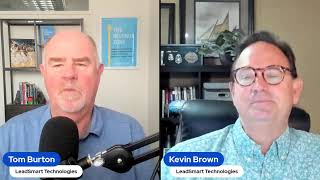
Episode 98 of the live webcast/podcast 'Around the Horn in Wholesale Distribution' (hosts Kevin Brown and Tom Burton) is an informal, wide‑ranging conversation covering economy and interest‑rate expectations, supply‑chain updates, nearshoring/US–Mexico trade dynamics, e‑commerce and B2B marketing, AI adoption and its organizational implications, labor trends, M&A in distribution, and a preview of the 100th episode. The show mixes news roundup with opinion, listener comments, sponsor notes (Lead Smart Technologies), and announcements about the newsletter and upcoming special episode.
Chapters
Sam, is there a problem with the music?
Never came on. No dancing, no music, no anything ever came on.
You didn't see the little thing coming on?
No, not today.
Okay.
Dance.
All right. Well, that's weird. I was sitting here dancing and waiting for you to come on.
Oh, man. Maybe. Maybe it's. Maybe it's me. But hopefully we're. Hopefully we're live and broadcasting out there.
It says we are. So, yeah, if you're. If you're out there and you hear something, please let us know. And let us know if you heard the music, too.
Yeah. Nope, I see us. I got us right here. Got us going on my phone. But that's okay. That's all right. Very good. How are you, my friend? Okay, very good. Well, we got a lot to pack in today, so let's do our quick introductions in our housekeeping getting rolling and hopefully we get some good guests and some good, good guests, but good listeners today and some good comments. So if you're out there, let us know where you're from. If you're with us on the live broadcast. And so to get started today, I'm Kevin Brown. I'm the co founder and CEO of Lead Smart Technologies. And I'm here with my lifelong friend and co founder of Lead Smart Technologies, Tom Burton. And we get together every Friday morning, unless somebody's in an airplane, vacation or the hospital, I guess would be the way we look at that. And we chat about the news of the week. And mostly.
You just went on mute now your microphone went away. Wow, it's a tough morning for Kevin. It looks like he just dropped off. Well, anyway, I will continue. So as Kevin said, we are covering the news each week. We go through a number of different categories as we know, economics, technology and so forth. And actually we have some great articles to cover today. If you are listening on the podcast, you're obviously not going to see the newsletter, but you can see the replay of this on LinkedIn as well as on YouTube and a number of other streaming places. I think Kevin has just completely disappeared, so. Oh, and by the way, I'm not used to doing this. This is usually his job is. We are sponsored by Lead Smart Technologies. That's the company that Kevin and I are the co founders of and they sponsor this each week and allow us to move forward. And I also wanted to make one more announcement before, before I guess I get into the news is. Is the 100 episode. This is episode number 98 of around the Horn. We have the hundredth episode coming up here on not next week, but the week after the 26th. And we have like the legends of all legends. So I think we talked about this before, but if you want to join. Jerk Beveridge, Ian Heller, Mike Hockett, Dan Schubert. The list just goes on and on. Marty McLaughlin, Paul Kennedy just keeps going and going and going. Please go to the LinkedIn page for lead Smart. You'll see it there at the top. And you can join and sign up for that show, which is coming up in two weeks. All right, I can only assume that Kevin lost his Internet, but let me see if I can find out. Well, I'm not hearing anything from him, so I only can assume that he has lost his Internet. So I will handle the news myself until we get him back here. And hopefully we are coming through on the other end. Man, this has just been one, one thing after another this morning. So starting with the news here. Economy and supply chain. And it really is too bad because Kevin would be really gloating right now. As you're probably aware, if you've listened, Kevin and I have had this bet about are we going to have one rate cut or two rate cuts this year? You know, a month or so ago, the Chair Powell had basically said, we're going to do one one rate cut. And, you know, Kevin was telling me that I was gloating. Well, now what's come out this week is that inflation has fallen a bit. We're still at the 3% rate, but it's down from what is expected. The Fed or Chair Powell had a meeting saying that, you know, they don't want to continue to hold rates for too long. Oh, looks like he's coming back here.
Hey, did you miss me?
I was just going on my own. We were already down the road. And economy and news.
Well, man. And I'm guessing everybody had probably joined right in and said, Kevin's not here. It's gonna be a great show.
Yeah, it's. I'm getting more comments and there's. Everyone seemed to be super excited, so.
Well, I apologize. I don't know what happened there. All of a sudden I got this thing. I was on mute and no camera and had to re plug everything in and change microphones. And I don't think it was a microphone issue. You know, I. I got a new mic as you've been helping me with this week. But you can hear me okay, I presume?
I can hear you. Okay.
Okay. Sorry about that. And, you know, I'm sure you covered the news. Everything's good.
I. I tried to do the housekeeping as best I could. It was probably a little clumsy, but I think people got the point. So I was interested why we're here. Yeah. Yeah.
Okay. Well, I apologize for that. That's, you know what, we're 98 today and that's the first, you know, pretty big snafu we've had. So it's not too bad. So thank you for covering for that.
So I was just saying to everybody, you're probably gloating and I was just going into these first articles about the inflation changing, but, well, I was thinking.
I'm gonna see, I'm gonna see you next week in person. You want to just go ahead and buy the stakes now or.
Yeah, yeah, that might happen. No, and I was just, I was actually just about to go through, you know, despite all of this, again, opinion. Right. Yeah. And I was thinking about this a lot last night. If I, and this is not just me trying to, you know, hold my one position, but if I really just look at this, this is how I kind of see this playing out. I do agree that we are going to see a rate cut probably in September, assuming that nothing drastic changes between now.
Yep.
I think that. I don't think we're going to see, you know, we're at this 3% rate or whatever. I don't think we're going to see much difference in that whether it goes to 2, 9 or 3, 1 or 3, 2 or whatever. I think it's going to stay around there for the next few months. But I do think we are going to see that rate cut in, in September. I think that's a high probability event. But then I still believe that's the end for this year.
Okay.
And for, for a lot of different reasons, because I think unless we the, the inch, as we talked about, I think two weeks ago, I don't see the interest rates changing or the, not the interest rates, the, the inflation index changing much over the next few months. The job level may change and if the job level continues to drop gradually, then we're going, I believe we'll see more cuts going into next year, which I do believe will happen. But I think this year we're not going to see a radical change. They're going to give us the one, throw us the bone, and then that's going to be it till the end of the year. So, yeah, I, I'm still sticking, Sticking strong. Yeah.
Well, you can clearly hear yourself trying to justify a poor decision.
So I don't call a poor decision. I just call It a, an estimation.
But anyway one, one lacking in in merit. Anyways. I I think that where I would disagree with you on that, Tom. I think this that from the standpoint is there and this is what, this is what I and I'm going to read between the lines a little bit and preface I guess I should say that, you know, as we always do, we're not economists. We're not nobody's invited us to be a board member at the Fed or a governor, as they think they call them. But I think here's what's really going on if with listening to Powell this week with some of this is numbers are looking better, right? They, they, I think they use the term speed bump of what happened, you know, in the first quarter and now things are doing what they expected them to do. But what you're hearing more and more and more of and, and from Powell himself and then Janet Yellen came back out and commented that, you know, the, they looked at things from the, from the labor market reinforcing what Powell had said about the labor market supporting that we're on the right track with this. I think what happens is you look at this is that bond market had an adjustment, stock market had an adjustment or the Treasury, I should say had an adjustment earlier this week when Powell spoke. Stock market certainly did. Stock market is certainly factoring these, these changes in I think significantly at this point. But Powell, I think is really starting to say in this setting is that there it's almost like he's rationalizing. I've got to get this done because of the, the negative impact that could happen if we don't.
Right.
If we miss this, it could be just as bad for the economy as us getting a late start of raising interest rates. And I think that's a big piece of where he's coming from right now.
Well, I agree, I agree with that. But I think there's another edge, another side of that coin. If they start cutting too much too quickly and then they have to come back and go, oh crap, and then they're actually talking about raising something again that can also cause so it is a balancing act. I just think if you look at all the dynamics, I'm still sticking with my one.
So and I think that's good. I mean, I'm appreciative of you doing that. It really kind of sounds a lot like what the Republicans are, you know, stalwarts are staying saying about the president. Stay in the race. Stay in the race. Right. Stick with your opinion. I do believe, though, Every day right now. And you know what? To your point though, we could see an uptick in something or a change or something in the next couple months, but there's pretty major people out there right now that are also talking about they should be doing something in July versus waiting till September. I don't, I don't see that. I think right now everything is pointing to two. There's, in one of these articles there was an economist that had his whole explanation of why we should do three this year. I think my view of it is, it's just different than yours, is that I think we're going to see two this year because it's baked into so much and Powell and the Fed is scared of not having the reverse effect and that maybe we don't see anything in Q1 of next year that's. I'm going to take a little different view than yours and say to this year because of the pressure to, to get them in.
And we're probably saying the same thing as it relates to the next six months or next nine months.
Yeah, yeah, I think you're right on track for that.
I think it's more of the timing issue that I'm looking at differently because again, there's two factors that are two major factors that tend to be the ones Lisa, we hear about. One is the inflation rate or the CPI or the PI or whatever they call it, and then employment, right? Well, if we see a tick up in employment, which could very well happen going into the holiday season and so forth, if we see a tick up even from the 3 level to 3, 1, 3, 2, then they have every reason to work. Okay, let's not get ahead of ourselves. Let's hold back a little bit and be more deliberate. Now, again, it's a timing issue, right? Then you come into the new year, you have the election, you have a lot of other things that could affect the dynamics of that and the timing of it. So it's a bit of a crapshoot, I think still at this point. That's why I wasn't voting two weeks ago or whatever when it was. We're only having one. Right. I mean, look how much has changed and two weeks. Right. You know, or whatever it was.
And I think that's key. We've gotta. And hopefully that's why people tune in with us pretty regularly and to kind of at least see the articles that come in the newsletter, I presume. When I fell off the face of the earth there for a couple minutes, you talked about the fact that we Publish a newsletter each week called around the Horn and Wholesale Distribution.
I did, yeah. I didn't do it near, anywhere near as eloquently.
It probably went faster though, but it.
Was much faster than. And I'm sure people got the point.
Yes, very good. So we had four articles this week about related topics to, to this. We're going to talk a little bit about the job market, things easing a little bit there as well. But I think, you know what we are. I think if we looked at things from the next six months, we're probably on the same page. I'm going to ask you though to throw this out there and neither one of us have enough insight into these things other than having an opinion. But an election in November, pressure from the White House on the Fed because you can say all day and all you want that I'm not the Fed, say that they're not impacted by this and they don't care.
I actually think that the, with everything else going on around the election and the candidates and all the other things that are happening, I think that the Fed is taking a back seat and I think that their impact on the election, given all of the other dynamics of the election right now is relatively minimal. And I think it gives them a bit of a get out of jail free card to not have to one way or the other feel like they're, they're being politically inclined. I think it gets, it's taken them out of the, the limelight limelight a bit. So. Okay, so I don't think we're going to see much movement one way or the other based on politics.
So is if, am I understanding you saying that if it wasn't for all of the myopic polarizing view of what's going on with the current president and his mental status or health issues, if there wasn't that, that there could be some talk and some pressure here or there's. And there's too much going on related to that for anybody to care about this.
Yeah, pretty much.
Okay. Yeah, I think you might be right with that because I do think that there would be a great amount of grandstanding that could happen if we're, you know, have a cut in September and then we're looking at another one late. Was with be November right would be the next option.
Right.
I think right to be, you know, grandstanding the day before the election saying, you know, next cut's coming and look at what I've done. So yeah, it'll be interesting to watch.
And that's not the issue at hand right now. Right.
So yes, correct. Very correct. Which is we don't talk politics on this show. So we'll, we'll just jump ahead on that. So the, I'm gonna kind of jump here, Tom. The other article that we had in, in our weekly section here where we talk about the economy and supply chain was about re retail imports continuing to rise despite supply chain issues. And this was, I thought, a pretty good article here where it shared the idea of the fact that stuff's getting in through the ports. Right. Probably not as much as supposed to, but they're talking about this happening in spite of freight increase, price increases being up significantly. No likelihood this article talked about no likelihood of there being any change to the Houthi rebels situation going on in the, the Red Sea, in the Suez Canal and the fact that we've got labor issues going on, there's oxygen in Canada, there is risk of a rail strike right now. And then you've got the east coast and the Gulf ports unions who September is when their contract's up. So things are still getting in, but prices are way up and that's going to impact both wholesale distribution and, you know, the B2B world and the B2C world and inflation. Well, there you go.
In the article here, which I found interesting. Right. For all the challenges and things that. But what they didn't say is necessarily why or how. Right. It just said that it was better and that people were getting through, but it wasn't talking about, well, what strategies or what's, what are companies doing to, to kind of, you know, navigate around all the barriers and challenges that are there.
Yeah, they, they did allude slightly to the shift to west coast ports.
Okay.
And you know, us being Long beach guys, you know, both of us growing up there, you know, maybe those ports are a little more efficient when you think about the west coast, but there's a lot of them too, Right. You know, Seattle, Tacoma, you know, down to Portland. There's even, you know, coming in on the Columbia river there. And then you work your way down to the Bay Area and there's multiple ports before you get to la. And you know, the port of San Diego has continued to get more and more important and valuable both for produce coming from Latin America to the US markets as well as the automotive market. There's huge movement in, in the tankers that are coming in or not takers, but to car carriers coming in into San Diego. Those of you who come out to San Diego for trade shows and events when you're at the San Diego Convention center, literally an eighth of a mile away, you can see it from some of the parking structures is where parts of the port are, where some of the car carriers are coming in there. So yeah, it's going to be an interesting thing to see what happens with this. That is funny your comment about the inflation component of that. But it's true.
That's exactly my what I was saying earlier. Right. It's, it's you just. And again, right. Things change literally it seems like by the hour sometimes. But if you take a little bit of a longer term view, we're certainly not out of the woods as it relates and the ups and downs and the little ups and downs on any given day doesn't change the longer term situation that it still exists. And anyway, I know we're off that.
So let's, let's find, you know, so we're, we're still in our economy and supply chain. We have quite a few articles there this week because they were good. There's an article and it's, it's talks about, it's from MDM Modern Distribution Management, but it was quoting some other things from the Biden administration. And the article is about taxing steel and aluminum imports that are routed through Mexico. And you know, the issue behind that, Tom, and why I wanted to address that briefly today was the fact that we talk a lot on the show about onshoring and near shoring.
Right.
And so from that standpoint this matters a lot and we've talked about quite a few times here is that we need to be watching when we're thinking about manufacturing wholesale distribution in the U.S. we need to be thinking about how is Mexico, you know, nuzzling up if, if they were to, how are they nuzzling up to China and Russia in particular and this tariffs are related to aluminum and steel tariffs that are coming from China, Russia, Belarus or Iran and Mexico. I, you know, I, I view this as Mexico could probably be a. Just made me think about, I need to have a discussion with this over some good sipping tequila with our next door neighbor. Their next door neighbor that moved in about a year ago is a retired telecom corporate lawyer from Mostly M and a lawyer moved here from Mexico City. You're a great guy and I think this would be a great conversation because what Mexico does right now over the next 12 to 18 months, even in this setting about China steel coming in there and coming to the U.S. it could be a big, big factor in U.S. mexico relationships and the impact of NAFTA. So these tariffs Coming in could be an interesting thing to watch, and we're going to watch it here for everybody.
And they said that Mexico is cooperating with that.
Yeah, exactly. Right.
I think that I agree with you on them. I think Mexico is going to be the most interesting country to watch, not over the next few months, but even the next few years.
I think you're right.
I think it's got a really strategic role internationally, but certainly on the North American side of things.
Yeah.
And I think that's one of the things that's going to have to. We're going to have to continue to build the relationship and strengthen the relationship over time. But I think it's going to be one of the most interesting areas to watch over the next period of year, not just months.
I mean, it kind of makes me think I want to do some research thinking about how that relates to. To NAFTA in general. Right. Because it's not just an impact here in the US it's an impact in Canada as that. So we talk. You know, the reason we included that article was we talk regularly about onshoring and near shoring. Near shoring things coming into Mexico or Latin America for manufacturing. We would love to see them using US Steel from that. But most of that steel and aluminum are coming from countries that the US has some struggles with right now. So we'll. We'll keep an eye on this for everybody, right?
Yep.
Good.
Hey, before we go on here, I was going to say good morning to Will.
Hey, Will.
Good to hear that we are coming through too. So anyway. But.
Yeah, well, by the way, when I fell off the face of the planet for a minute, I still had my phone going and I was watching. I was trying to get all this stuff reset and was watching you continue to talk. So you were.
You were mesmerized by my intro.
I'm sure it's actually recognizing the fact that it's important that we have two of us.
Yeah.
I think it would be hard with one person.
I don't think this show is set up for. For that. I don't. This. You know, there are some shows that. And if you had a different style or whatever, it would make sense.
No, no, I. Yeah, absolutely. You know, it's interesting as we talk about that is we just do things different here around the Horn and Wholesale Distribution weekly is that, you know, I get emails every day and you probably do too, from. From people wanting to. You know, there's. There's folks out there that are like agents for podcast guests wanting thinking that because we have a podcast with a title. They've never watched it or listen to it. Right. That we have a webcast and a podcast. And, and, and they want to, you know, show us. Here's the 17 reasons why this guest would be perfect for us. And I, I don't respond to them because I don't want to have to educate them on why that their guest probably wouldn't work well here in the format of reviewing the news. So. But we're excited. I don't know if you mentioned we're coming up. We'll talk more about it before we leave today, but we're just a couple of episodes away from the big one, the big 100 with, yeah, all the, all the big fancy guests. So it's going to be.
I did bring that up.
Good. So. So we jump into the next section of the newsletter here. And again, I'll just drop in. The fact, and Tom mentioned this earlier, is that we are live here this morning on YouTube Live, Facebook Live and LinkedIn Live. But this is being recorded. And later in the day, John, our producer and editor, will take all of this data. He and his team will get that onto the popular podcast platform, Spotify, Apple, so on and so forth. And we'll get that information that we do live here out onto the podcast podcast world later in the day. So if you're listening on the podcast recorded later, you're not seeing the newsletter that we send out each week. It's called around the Horn and Wholesale Distribution and Manufacturing. It goes out to about 10,000 people. If you do not get that and you would like to simple email to helloeadsmartech.com and. Or just go to the website for our podcast, which is www.aroundthehornpod.com, and you can sign up there for the newsletter. We'd love to get that out to you. So we have these sections. We're moving into the next section. Manufacturing distribution, Tom. Manufacturing technology orders.
I wanted to hit. I want to hit Mark's comment here, though.
Thank you.
Are you seeing comments or are those not coming through either on your end?
I see them.
Okay.
I can't control them like you can.
So I think Mark's point is saying near shoring will benefit Mexico and should change the entire relationship dynamic with the US Which I agree. Including topical matters such as immigration. I completely agree with that. I think that obviously the immigration issue is a hot topic, a hot political topic, a hot topic of the election. I think it is going to change a lot of those relationships and how we work and how we, the immigration laws and all of that. That's why I said I think it's going to be one of the most interesting relationships and dynamics over the next few years of any country that we've, you know, obviously been involved with in a while.
You heard it here first and Mark helped us get that word out. Thanks, Mark.
We will, as you said, we'll, we'll keep, this is something that we'll keep on the docket for a bit as we go.
Well, we, we've been chatting about it off and on for quite some time. Right. It's, I, I remember you might have brought it up prior to that, but I brought it up two, three months ago at least when we were talking about near Shoring. And I think what's interesting about this too is watching the political landscape that, you know, the current front runner in the presidential campaign has shown him or election cycle has shown himself not to be afraid of busting up, you know, not funding NATO to the same way, you know, if it's not working right, you know, if the Trump administration is there, there could be some risks to nafta.
Okay.
Yeah. Anyways, you'll, you'll, you'll hear about it here on a consistent basis, assuming things move in the right direction there. Quick article that we had there from Industrial Supply magazine talked about manufacturing technology orders grow. There's a report that's put out regularly by the association for Manufacturing Technology. So we had some growth in that segment, which is good to see. We've got some important articles, so I want to kind of move past that. I did want to mention though, if you get the newsletter, you can see it on our side or just go to Modern Distribution Management's website. They have their mid year outlook that captures kind of a current snapshot. They give some good information about growth in 2023 and then kind of a snapshot of where we are in 2024. So they've shared some good data that's there as well. From a growth standpoint. They're predicting the MDM forecast projects 24, 2024 only having a nominal growth of 3.3% and then 4.8% in 25. So that would take the wholesale trade revenues to $8.147 trillion.
Yeah. And I thought it was really nice how they broke it down by category in there.
Yep, they do a great job with that.
Yeah. Yeah. So everything's broken down and some, some, some good, you know, insights around some of the different categories or verticals within wholesale distribution. Good.
Well, let's jump into Tom, into our E commerce and marketing segment which we maybe we have some things that are maybe a little less, a little less volatile to talk about now. How's that? I don't know if that's the right term but that's what kind of comes to my mind. There's a good article that we, we Featured from Digital Commerce360 about the B2B organizations wanting to scale revenue versus E commerce. Any takeaways on that one?
You know, I, I, we, I know we talk a lot about E commerce and I think we need to get, do some more drill down on this, you know, next year or later on this year is I keep seeing and digital commerce360 obviously is a little, potentially a little biased that more and more sales are happening through E commerce. But it's a little bit different than what I see and hear we see and hear every day in working with our customers and prospects. What I'm seeing is more and more they're looking at how do we strengthen our outside sales team, how do we strengthen our inside sales team, how do we strengthen our counter people, how do we improve the relationship. All of those things which are, which are, I won't say contradictory but they're, they're not about how do we move everybody to self serve. Right.
You're right.
How do we provide a much better full serve or, or hybrid serve option along the way? And it's not that you shouldn't, I'm not suggesting that you shouldn't have an online presence and there's not a, a reason to have an online channel and a solid online channel. But this article was more like hey, everybody's just going to move everybody to, you know, 53% are going to move everything from in person to E commerce. I don't, I don't see that in the world we're in now. Maybe it's different companies and different verticals that they're dealing with but I just don't see that same sort of mindset, I guess.
Yeah, so there's some, there's some good and I didn't take away that that's fully what they were saying. But I do agree with you on the bend that that goes with that. Right. I think that in my, that you know, I do my little show notes each week and in my, my little note here says discuss net new. And what I mean by that is I think the big factor that's available that people should be thinking about is one customer journey. Right. E commerce is we. So two, it's like meeting the buyer. We're the one buyer buyer wants to buy, right? I think when we had our, our we call it our Legends show, but I don't think we can call the January show our Legend show with the group that we've got coming. Super Legend, Super Legends, right? But I think it was Ian Heller made a comment and he said we got to meet the buyer where the buyer wants to buy, right? Or where the buyer's at. And the buyers are out there. B2B buyers, right? We know that this was 62% or whatever it is of B2B buyers or millennials. Now, they have different buying habits. They want to research in different ways, do different things. I always say that that buyer, you know, probably ordered dinner on DoorDash and took his girlfriend to the movies the couple of days before on, on in an Uber, you know, and so their buying habits are different. And I think where what we're seeing is people are trying to figure out how do I use E commerce to serve my customer better, get more information in a platform, which this article talks about as well, about getting good information there in one place for customers to do research. But Ivy, I view this as the discussion about Net New Right. It's not. And I think you're saying what we were seeing with our customers at Lead Smart. But the other side of it is what people should be doing and that is embracing the E commerce side that says to meet the buyer where the buyer wants to buy. It's going to bring me potential efficiencies. But then I have to look at that and say now that I have different data about Buyer Journey, what am I doing with that data, which very few people are doing, which is part of it. Part of the big partnership that LeadSmart has with optimizing is bringing that data in to an AI enabled CRM platform where you can visualize Customer Journey. And now we take the data that has there's two components to this. One is we take the data of Customer Journey from E Commerce, what they're doing online. Two is we have the data from inside sales, outside sales, customer service counter, people that are participating and sharing data, even mobile messaging, if that's connected into the right platform like we do in our platform, and we bring all of that data to illuminate how we serve the customer better. And E commerce is a big component of that. The other side of it though, that I think is really important that people need to be thinking about. It's tied to what you're talking about is the Net I call it net new.
Right.
How many customers can I go get in front of? Because I have a great e commerce platform that I would have never got in front of because of my salespeople. My salespeople just have never stopped that.
But I think you have to differentiate your e commerce platform from a research platform versus a buying platform. Right. And everything in between. Right. So it could be a research, it could be a quoting and it can be a buying. There can be. Right.
That's what you hit. Right. So I think it's three. Right. It's I'm doing letting people build quotes and orders.
Right. Right.
Or I'm taking or I have a great platform for research for my customers to really understand even more about our company and how we can serve you besides just products. And then three is both net new and existing customer sales expansion. But I think it's got to have a strategy. And that's, that's what worries me sometimes when I get out to some events and industry events talking to people is that sometimes that you'll hear people, they just, they just bought a platform and now I have E commerce.
Yeah.
And, and there's not a lot of strategy behind it, so. Good. Anyways, let's kind of shift gears out of E commerce and go into that marketing. I know you had some cool thoughts on the. This article is from Forbes. It was called the shifting tides of Marketing and it ties kind of into that omnichannel, you know, customer world as well to that. Right.
Yeah. And I'll read the byline here. It says for the last decade or so, advancements in digital marketing, while making huge strides and creating new opportunities have led to some less desirable outcomes as well. And you know, is, you know, Kevin, I used to own a digital marketing agency and did a lot with digital marketing. So I'm very familiar with the, the pros and the cons, but I think they des the less desirable outcomes that they're talking about there. And they didn't specifically state this, but they kind of indirectly stated it was. It's, you know, you get what you measure and you reward and what we've been measuring and rewarding in marketing about, you know, how many more clicks can you get and how many more MQL's marketing quote. Remember we talked about this a few weeks ago and how many people did we, you know, get to visit our website? And we, we have been measuring in a lot of cases the wrong thing that is not very customer centric and is not very buyer centric and it's More vanity metrics on the side of the business and they don't even necessarily represent exactly something that's going to turn into revenue growth or sales. So a lot of the bad marketing, quote unquote, that they're talking about in here has resulted from measuring and rewarding the wrong things. And we talked about this a couple of weeks ago. If you really look at how do you use marketing to improve the customer experience, provide more relevance to the customer and drive more revenue growth and you look at that versus all of these other sort of metrics that may or may not make any sense to those three things there, then you can start to reward the right statistics and the right things that you're measuring. And this article, I think did a good job of reviewing that.
I think that's good. I think there's another factor here. Right. And it's interesting. I sent this article this morning to an agency that does some work for Lead Smart and wanted to chat with us in our next meeting that we have because one of the things they that this article talks to, it said, well, just said says the norms in B2B marketing channels and tactics are becoming less effective due to macroeconomic climate, content data load or load, data overload and buyer fatigue. The focus is no longer on digitalization for efficiency's sake, but rather on using very, these very tools for, to forge authentic connections. And I think that's the challenge. Right? You referenced MQLs and the world right now and it's amazing how many people want to sell you a service, right? Whether it's a marketing agency or it's a platform for an event or whatever it might be and talk about the leads that you should get and what happens is that, is that so often when you get an MQL or a marketing qualified lead which just says, hey, marketing says this is good, we're going to nurture this lead a little bit forward, see if we can get some patterns out of it, maybe some signals from it that says now it becomes an SQL or a sales qualified lead and it can jump the fence to the sales side of the house. And that is so abstract and so generic of a mindset because what's not happening is we're not having, and I just love the, the term that they use here is authentic connections. And part of what this, this article talks about is the opportunity that AI brings is when you're using AI to look at the correct signals. Now we can start. And it's funny, Tom, and you have a lot more experience of this than I do. But I just think about it. When we think about the difference between marketing campaigns and marketing automation, right? A marketing campaign and a constant contact or something like that is just shoving out email after email after email. A marketing automation tool is saying hey, they clicked on this or they resonated on that. Now let's trigger this next event. Well, AI just now starts taking that to the nth degree where we can start seeing habits and movement and where are these people doing other things outside of our organization? And, and, and again, I'm going to toss this back to you in just a second. But what my belief is, and it's was something I, I'm just super passionate about because I'm working with some third parties right now on, on the marketing efforts at Lead Smart is using the right digital tools to get out of the world that their people are talking about with content and data overload that people are seeing. Just because we're doing things the way we've done it for the last five or seven or ten years of. If I pump out enough emails then I can get this is what the funnel is going to look like where I can say how do I take that and move that to truly having an authentic relationship with that potential buyer?
Well, and it's as much as relationship, it's relevant relationship. You're not going to have a relationship without relevance and value.
You can't.
Right, right, right. So it's, and I do agree that AI and I'm trying not to go down too deep a hole here, but one of the things that historically in digital marketing has been a big thing is lead scoring.
Right.
So you have a lead and well, they did this and they opened this email and they clicked on this link and you give them points for every one of those. And then once they get to a certain quote unquote score, you then as you mentioned, they, they're ready to go to sales or they're ready to take the next step that's there. I, I think the concept of lead scoring could go to another level of quality through the use of AI. So you're not just looking at clicks and, and transactional lead scoring, but you are looking at more relevant data that actually says, okay, now the customer, you talked about the journey, right? Right now the customer is, or the prospect, it makes sense to move them or to help them facilitate to the next step, help to influence them to the next step in their journey. Their journey, not your journey.
Their journey, not your journey.
So I think there's a, there's an opportunity for that for sure. With AI and can kind of change this whole mindset of lead scoring based on who many that they clicked on my email or, or they opened an email or they, you know, whatever the case may be that may or may not have any relevance or value again to the customer and what they're doing.
Doing. So I think that's, that's a great recap of that. So anyways, marketing's changing and.
Yeah.
And keep up is the important. Right.
Yeah.
Yep. So the, you know, and Tom, before we jump, I want to make a comment. You see Will's note there about. Basically he's talking about gdpr which. Yeah, you can't, you can't spam people anymore. But the reality of it is, and I agree with what Will saying that about you don't have an opportunity to spam people the same way. You know, you could get away in other parts of the world in, in the EU with gdpr. But the other side of that goes back to the fatigue because you could have an opt in list that is fully compliant with GDPR and you're still putting out junk to them even though they've, they've just not never opted out.
Right, right. Relevance and value. Relevance.
Relevance and value. Right. Yeah. So good. All right, well thanks for that, Will, because he's right on, on, on track with that. Right. There's some pretty major, major issues if you violate as a company, if you violate gdpr. But the other side of that is, you know, keeping people on track with relevant stuff that brings value to them. So let's kind of jump ahead to these, our technology and cyber security section.
At AI and AI.
We talking about AI here?
This is what it says. I'm just following what you have in your newsletter here.
That's right. I'm the one who added the technology cyber security segment with AI. Right. So China leads the world in adoption of generative AI. Survey shows your first takeaway. This is from Reuters.
Yeah, I've read the article actually a couple times. Honestly, I don't have a lot of takeaways here. I don't. It was, I was trying to kind of get the story behind the story as to. And I'm absolutely surprised because there is a lot of regulation that AI regulation that is developing in China for reason, obvious reasons. Right. That you can imagine. So it didn't really give a lot of insights as to why they are the leading and how they're necessarily using it. So I don't, I find it interesting, but I don't have a lot of a lot to add to it because there just wasn't a lot of meat on the bone in terms of what was going on behind the scenes there.
Yeah, so there's two, two components of that though that, that, that really come up out of this and it's the. They're leading the world right now. In fact it was last week a report from the United Nations World Intellectual Property Organization that China was leading the patent race in gen AI which I thought was really kind of intriguing to see how far ahead they are on that now. Is it, is it great? Is it good technology? Is it game changing to the point of an, an open AI or somebody like that? Probably not, but it is interesting. But the, the big takeaway for me of this is besides the fact that that's great that you know their, their businesses and people are adopting specifically chat GPT more so than other areas is the piece that goes with this that they talked about. I'm just trying to look at the note they called it the enterprise adoption of generative AI in China is expected to accelerate as price war is likely to further reduce the cost of large language models. But then they also talked about the fact that they're using far more in China which there is a big risk and people are concerned about is they led the world in continuous automated monitoring or what they call cam which is extremely controversial because it's the tool for monitoring vast amounts of data on users activities. Yes, right. So there's the risk and that's the thing that people talk about being a concerned about. Right. Is you know you get nation state that starts monitoring my behavior and my communications and privacy in front of.
That's the big thing on Tick Tock. Right. That's the whole big uproar on.
Exactly right. So well and it, this article even referenced that one of the you know they call it tech giants that's getting behind some of these patents that are being issued in China with regarding AI is ByteDance and ByteDance is the own current owner of. We'll see as things change. But current owner of Tick Tock and that's exactly right. It's like you know, how much do people know and what's available. So you know, interesting too. Did you catch Will's comment? Thanks for that Will. Will commented about how much information has been redacted from the large language models. Yeah, I hadn't thought of that. Right. It's like here's what we want you to there's more data but you're going to get to see this. So that would be an interesting thing to see. So.
No, I said that you, you take you. There's a lot of, to me there's a lot of questions that come out of this article and I'm, you know, maybe there's answers to them. They weren't necessarily covered here but yeah, there's a lot of follow up sort of discovery that would be interesting to see as it kind of goes down that rabbit hole.
Well, I think it's extremely valuable to see articles like these that will trigger. Trick. Trigger us to be paying attention to.
Absolutely right.
What's next and that's incumbent upon us to hopefully bring some value to our listeners and readers to follow up on this stuff. It's going to be interesting to watch because that, that last segment there about that, that you know that continuous automated monitoring, that's the, that's the stuff that worries people. Right. That's. That's the stuff that is a. Is reasonable to be concerned about.
So. Right.
Let's keep a close eye on that one. Let's look for both, look for other articles that we can share related to that. So jumping ahead, what do we have next there?
Well these two are related. I actually want to start with the second two. There's two articles here about AI and use of AI in business. But I'm going to start with the second one here. Top priority for CFOs replace labor with AI automation. The survey reveals that 2/3 of CFO state their top priority is automating tasks typically performed by employees with a significant majority planning to integrate AI in the next 12 months. Again, I haven't seen that a lot in our world. Right. I have not seen a lot of. But I do hear a lot of it outside of our industry. A lot of chatter about companies talking about replacing their, replacing people with. With AI. But what I also see is they have no clue of what that means. Yeah. Or how to do it. And I think that's what the second article here talks about. The Harvard Business Review article. The six disciplines companies need to know to get out to get the most out of gen AI. Right. And the cape, you know the dis. The it says AI requires several different types of disciplined hence the word disciplined capabilities there that unfortunately most companies lack these is what it says and it's a big, big A big gap I believe from and I think this is unfortunately what's going to impact the. Going back to our rate cut conversation. I do believe there will be a lot of. I don't know that there'll be a lot of layoffs in the next 12 to 18 months. But I think there'll be a lot less hiring in the next 12 to 18 months because they're going to say, well, can we do that with AI? Can we do that with AI? Can we do that? Do we really need to hire this person or can we do it with AI? And yet, fundamentally, as it talks about in this article, the foundation is not in place to even remotely have an AI centric organization in place. And so you're going to end up with the worst of two worlds, right, where you're not moving forward and hiring to do a job that needs to get done, but you're not set up in a way to actually leverage AI. And one of the keys, the, one of those key six points was system thinking was they were in there, right? And we struggle with this, even with our customers and prospects, is getting them to be thinking more systematically about how they do sales and how they things. And that's not, it's just not in the DNA of a lot of companies. But it's going to have to be if you're going to take advantage of AI.
Well, I think you're right on about the idea about if you want to take advantage of AI in this setting. I think, you know, I, I, you know, I talk to our customers typically on the, on the front end of their relationship with us and your team gets them implemented and you get to meet with strategy meetings with customers. I don't, I can't think of conversations of, you know, whether it's a, you know, a small regional distributor or large national distributor that we work with that has deep focus on where are we going to replace people. It's, the topic is, and this is, you know, what I am focused on, it's just kind of related to what you're talking about is, you know, maybe I need to hire fewer people, right? Maybe I need to reskill some people. But the idea of trying to, and some of the results out of this survey were surprising to me. And thinking about the idea of how many people do I have now, how could I reduce my head count by 20% with AI, I would suggest, and to your point, right, it really ties those articles together nicely is because from that standpoint is you need to have a strategy. And if you don't have, whether it's the six disciplines that the Harvard Business Review article talks about or it's things that you've put together on your own, if you don't have a strategy of how you're going to use AI, forget about the idea, I mean the damage you could cause to your organization by saying, oh, I bought one piece of technology or I hired somebody that says they know a lot about chat, GPT or OpenAI that you're going to start, you know, changing your organization. I think that puts you at much more risk.
Yeah. Well, you're making organizational resource important organizational resource decisions that are not really based on any reality. But, and I agree with you, I don't, I don't ever hear anybody talking about that in our world. No. But I hear about it outside of our world all the time from other friends and people that I know that have businesses.
I have a friend who has businesses, Tom.
Well, I have a friend, as you know, that has a pretty large electrical, you know, B2B commercial electrical.
It's a contractor.
Yeah. Contractor electrical service. He's talking about it. Right. He's talking about how to. He believes that he could reduce his, his non electrician staff, his internal staff that do estimates and quoting and customer service and whatever by over 50 to 60% by using AI. But again, the big but is he have absolutely no idea how that would actually occur. Right, right. And the systems, and he's probably more system oriented than a lot of people that, that I've heard this from that are there or if you, again, if you look back to the Harvard Business Review article and you use that as an assessment and go, okay, how is my organization as it relates to those six key points that are there and then go back and then balance that against where are you really ready to be thinking about higher or reducing 50% of your customer service staff?
The, my, my question for your friend, and you've talked to me about him many times, is when Walter's electric or CED or whoever he buys all of his supplies from moves in that same route where everything that his interaction with them now is AI is. What are his thoughts on that?
Good question.
Right. And it's interesting. He may go, his question will be.
If it works, I'm probably for it. If it doesn't work, I don't want it. Right.
Yeah. Yep.
Provide a better experience for me or a worse experience for me.
Yeah.
Does it help me reduce cost? Does it help me get things on time? Does it help me, you know, he, it is interesting I listening to him from the other side because you're right, he gets stuff from distribution.
Sure.
And a lot of times he doesn't get it when he needs it. And there's, you know, the usual issues, the downstream issues there.
Yeah. So does he want A bot telling him when the stuff's going to be ready at the counter that he needs to pick up. Right. Does he want, I mean and I'm not trying to throw any rocks at.
Him, but I, I think he would if it worked.
Okay.
Right. It's getting again, is it work? What I mean at work is, is it giving me a good as good or better experience than I get now by doing things with live people?
Good.
But if it doesn't work. No, you don't want it.
So nutshell on, on these multiple articles here is you need a plan. You need to be focused and understand what you're doing with with it. You need to roll out a plan and adoption within your organization and you're probably going to be better off if you're looking to find ways to enhance the people that you have versus get rid of the people that you have. And I think what we're going to find is over the. This would be an interesting look at this snippet of today's show and you know, July 12th of 2024 to talk about this in 2027 and get a real look back and say, you know what. And I, I would prognosticate, you know, or, or pontificate at the moment here what we might find in the typical, let's just say A, a 30 branch H vac distributor or plumbing distributor or food service equipment distributor that they might have reduced their headcount by 3 to 5% of existing, but maybe found a way to do better at things and not need to hire more people. That's my takeaway in a high touch service level industries like we talked about.
I would tend to agree at least over the next couple of years for sure. Yeah, looking out five years maybe. But again, even if all the technology existed today and it was bulletproof and all of that, it still goes back to those points in the Harvard Business Review article. Organizationally you've got to be, you have to re engineer a bit your organizationally mindset, your philosophy, how you do things in order to take advantage of it.
Right.
So you know, we're missing both the technology and so forth.
Well, you know, it's interesting. Let's roll into our sales and M and A section that we have here because I put a link to TrumpEngageSelling.com it's a short, short video clip in there. I kind of like some of the stuff they come up with. It's. I don't always agree with it but I like seeing it. But this one is, it says is there such a thing as a low quality customer conversation or a poor quality stakeholder? And I want to tackle this for just a second because I think it ties into what we've just been discussing about your friend. What's your friend? The contractor's name. You always say my, my electrical buddy, John.
John.
John.
John.
All right. I feel like I know John, but I've not met John. We will when I see you next week. Maybe we'll see.
You might, you might, you might meet him next week.
Yeah. Okay, good. I'll be up with you for a couple of days in Santa Barbara. So anyways, I, what I thought this article was neat about is it talked about, you know, as sellers or sales trainers and coaches. Right. We always talk about people about, you know, knowing the decision makers and are there multiple decision makers in an organization and make sure we know how their buying process and so forth goes. And, and I thought this article went in and talked about it didn't say that those things aren't critical and important, but it says basically there's no such thing as a low quality customer conversation or a poor quality stakeholder. And the idea behind that is understanding your customer and the value that. And I talk about this all the time with our customers. And I'll give you the, you know, the simple example is, right, we'll, we'll talk to distributors mostly in this setting, and they'll question as they look at bringing on a customer intelligence and CRM platform like ours. And they say, well, my counter guys don't need it, right? My counter guys, they're not important in this part of it. And some people stick with that decision. But what we're really finding with most customers is what they're realizing is that the salesperson is only talking at a consistent level to a leadership person, an owner, an executive at the contractor that they sell to the building owner, whoever it might be, and the amount of data and info that is available from Joe that stops by at a branch to pick up some Piper Wire, whatever it might be about how a project is going to, or the fact that they're getting ready to bid this big new project are things that when a sales guy is calling on that company at a different level and twice a month versus the guy that stops at the counter, I love it because this article just sets right into that thinking is there's no bad stakeholder or no poor quality conversation with any stakeholder in a business.
Yes. And I, and I also, this kind of comes back to our marketing conversation earlier, right. What better way to understand how to provide relevance and value conversations at all levels of your of your customer base there.
Well if you if you think about it from the standpoint of you know, sales guy is reviews his notes or gets a you know in our case a genius feed AI alert to him that says hey XYZ company just told us at the at the counter and and and they need to do X in their organization or they're working on these projects. So good stuff that if you get the newsletter check out the video and if otherwise you can find it@engageselling.com so moving ahead a little bit staying within that segment there's we talk about sales and M and A. There was a merger that was discussed last month between the iMark Electrical Group and bringing just the electrical group out of IMARC into the AD group. And so that was approved earlier this week I got an email from from AD and so it's looks like that's going to move ahead and that'll start at the beginning of next year that those groups will be combined which can be powerful. That takes AD up to I think when you look across the organization it takes them up to probably over 1500 members within AD which is super powerful. So congratulations both the IMARC electrical team and the and the AD folks. So people in leadership next segment will kind of jump in. Good article there about this was from MDM as well about labor market and warehouse labor market improving. Now this is something we do hear constantly from our customers and discussion and industry events that we may attend and so forth is how tough it has been prior to the pandemic and then even more so after the pandemic to get good people. There's some statistics excuse me that they show here that it's. That's easing up a little bit and that's great to hear. So.
Yeah. And it was interesting on on you know some of that saying is that even though there has always there has still been a struggle to meet demand.
Right.
That most people are finding that it's and again I'm wondering if it comes back to some of the economy thing and stuff is that are people willing to take jobs again that they weren't willing to take six months ago? Don't know.
Yep. Yep. That's well. And could tie back to the economy as well. Right back to our stakes.
That's right. All related. So it comes back.
All things relate to red meat and red wine right at the end of the day. So anyways that just that was a nice little bump of news there that that sees that because it's just look, you can't grow your business if you can't find the people to support it. So whether it's you know, warehouse forklift operator or a box packer or whatever it might be, you got to be able to get the people there. And you know, and it transfers inside the the building as well. And the carpet, you know, side of the building from, from the concrete side of the building as we we laughingly say is goes to customer support, it goes to inside sales, it goes to all of those things. So that's good if we can see that. Free up a little bit. Good follow up article from Inc. Magazine here as we stay in the section about people it says key better. The key to better work life balance might be AI And I put this in there but for me the concept behind it was right. They showed some research and some surveys of talking about the potential of reducing 12 hours of work out of your week using AI. I have my thoughts and takeaways on that. I'm going to ask you about yours first.
Well, I think there's two parts of that. One, could AI reduce 12 hours of work out of your day depending upon what you're job is? Not right this second. But could it in a year or two? Yeah, I completely agree with that. But the other side of that coin is will those 12 hours get filled up with something else?
Bingo.
And I think the, I think that's maybe the bigger issue. Right. Is the work life balance aspect of it is kind of a decision with yourself and with the organization as to whether or not you decide to fill up those 12 hours with other work related things. Yeah.
Yep.
I do think that a lot of things though that a lot of administrative stuff that kind of hey, we got to just get this done before I go to bed or I want to. I don't want to have to deal with this in the morning. And all of that could very well be taken off the plate of a lot of workers. But again it just is a matter of are we going to willing to to use that time and more and less in less work related ways? That remains to be seen.
So I think you kind of nailed it there and I think this might be a generational factor because I mean and I see this and struggling is in maybe it's you know, being an executive in an organization is part of it as well. But I might be able to find a way to reduce these three things over here. But that doesn't mean that the 27 other Teams messages or emails that came in. I'm not going to be still back at my desk later in the day. So I think you nailed it. The thing that I've been thinking about is this will take a discipline because AI might do some great things to reduce some of the mundane tasks that we have. But do we fill that time and you and I come from a generation that I should be to my desk by. What was the old football coach's name in Green Bay said if you're five minutes early is on time and on time is late. Something like that. You know, if we think about I need to be at my desk by 8:55 or 7:55 working, you know and I've got these time frames and then the idea of not working till five. Right. That's generational because you know, I don't think any of my kids think about, you know that are all in the work world. Think about, think about that from one for one second. Right. Is what are the hours I'm supposed to work. I just need to go get stuff done. So. Interesting thoughts. Yeah, good. We can kind of bounce past that. There's last article there about the FTC working and banning non compete agreements. I know NAW filed a brief against that and there's a partial block to that at least for the moment. So we'll see what comes out of that. Industry scuttlebutt section. Another acquisition for Core and Maine. The Industrial Supply association just released information this week on their updated board of directors. Jim Beal from Blackhawk is now on the ISA board. So congrats Jim. He's a great guy, great organization there at Blackhawk. And then big announcement just two days ago about Global Industrial, the publicly traded distributor. Their CEO hasn't announced where he's going, but he's leaving which is kind of a big deal there. So we'll watch and see if anything significant comes out of that. And then lastly we have a feature each week that we talk about. We just call it a good read. And this week it's an article it came from Inc Magazine. It says every business can learn from this one phrase in Netflix's New Culture Memo. And I think it's pretty valuable in life, not just in work. Do you have any takeaway or thoughts on that?
What was the phrase? It was disagree or disagree action or disagree.
The whole thing behind it was is disagreement is fine until a decision's made and then get behind the decision.
Yeah, I had a boss many years ago back in my early part of my career and he was Very. The CEO of the company was like, if we get into a meeting, we can disagree all we want, but once we make that decision, you can't bitch about it. Right. Doesn't mean. And so don't go and say, oh, I wish we would have done. You have to be on board with that decision. Right. Once we make that decision, doesn't mean we won't change the decision down the road. But once we make a decision, everybody in the organization needs to be behind it. And I thought it was a very healthy way because it gave everybody an opportunity to express their opinion. But at the end of the day, once the decision was made as a group or whoever made it, right, whether it was an executive decision or as a group decision, is that your job was to toe that line and push it forward. And I think that's pretty much what Netflix is.
Well, that's incorporating here and it seems almost common sense. Right. But it's not human nature. When we have a strong opinion on something and I think, I think it's powerful, it kind of ties real well into that. The entrepreneurial operating system or eos that we operate our company on. Right. Is you set the rocks and you work the rocks accordingly. And there may be modifications or adjustment along the way. But, you know, I do a lot of, I'll just call it faith based volunteer work. And I'm, I'm on as an elder in my congregation. I sit on a lot of meetings and committees and so forth. And we use the term yielding.
Right.
It's. You have to be willing to yield your strong thoughts on something to the better good or the, the decisions of the group. And once the decision, you know, the hands have been raised and a decision has been made, get behind it. Yield. And because the worst thing that can happen is if you become divisive and continue to politic and play games behind the scenes about your decisions. Right. So powerful stuff. Good. Anyways, interesting discussion. Good discussion in general today. You know, a lot of things tied, kind of tied together from all of the different sections as well.
So all comes back to the steak that I'll be having later on this year. So that's the.
I'll tell you what. We're. I'll. I'll see you late Monday afternoon when I get up to Santa Barbara. We'll be together Tuesday and Wednesday.
I think I'll be buying the stakes this week though. So.
Yeah, we'll see. We work for a good company that can, can help us with that. But, but the other side of that is you're moving and you're moving about next week and we're moving our office and getting ready to open another office down here in, in Irvine closer to me, which means you're going to be driving down here a lot more. But the bummer is you're, you're moving, you're moving away from our, our favorite steak place in Mai Tai spot.
Yeah, well, there's others, there's others.
I don't know. They don't have, they don't have one in Ventura. So you gotta spend your time in Ventura and get back to Santa Barbara just for my, my Tai intake. So.
Okay.
So in closing on that, that though, great, great segment segue into we have our, what I'm referring to as our Aloha Friday hundredth anniversary episode coming up in two weeks. So if you're listening on the podcast and you haven't joined us live before and you get a chance to join us live, YouTube live, LinkedIn live, Facebook live on the 26th, I believe it is. Is that right, Tom?
Two weeks from today? Yeah.
9:00Am Pacific Time on the Lead Smart Technologies channel. On YouTube, Facebook or LinkedIn, we have a cast of characters that will be, it could be absolute mayhem or it could be just the best episode ever.
Yeah. No, and I've seen a couple or heard a couple people say, hey, I'm, I've canceled my Friday lunch appointment. Yeah.
Right.
Make sure that I can. I think this is one that it would be worthwhile to be at live. I just think there's going to be a lot of chatter and a lot of conversation. Not that it wouldn't be worth re listening to on the podcast, but I think this is one to definitely get their lives.
So makes me think back the last time Mike Marks was on our show from Indian River Consulting. Mike, you had made a comment about something and Mike asked you how much drugs you did in high school. You never know what you're going to get with with Mike and a few others. So. But we're also having, you know, Dan Schubert is joining us for the first time, which is from naw. Which I'm excited that Dan's going to be joining us and bringing some relevance too. But I think it's going to be a lot of fun. So. But the, you know, the biggest issue I, I know this is important and we'll wrap up here momentarily is, you know, this 100th anniversary episode. It's, it's not about Tom and Kevin and it's not about, you know, just around the horn. It's really we developed a great audience. 100 episodes is pretty rare for podcasts unless you have huge budgets and, you know, huge teams behind you. And we do this with a small group of people. But it, it, it's only of relevance because people listen and care. And, you know, I'm getting, coming into the time of the year where I'm going to be traveling a ton to, you know, industry events pretty much non stop from September into late November. And every time I'm, I'm at one of these events, I meet somebody new. I've never heard of them and I've never heard of their company. And they will come by the booth or I'll meet them at a reception and they'll talk about the podcast. And, you know, I'm thankful to those people. Some of them are our customers, some of them are maybe our customers, and some may be great customers, our competitors, but they enjoy what we do. So it's because of those folks we're able to do this good. All right, let's wrap up, let's call it a day so we'll wish everybody a fantastic weekend. Always like to end with be kind, be safe and do good things.
Have a good weekend.
More from Tom



What does AI actually mean for a wholesale distributor #WholesaleDistribution


If your systems don’t talk to each other, your AI won’t either #AITransformation




This is why one AI agent isn’t enough for high-stakes decisions #WholesaleDistribution

