Around the Horn LIVE - Episode #6
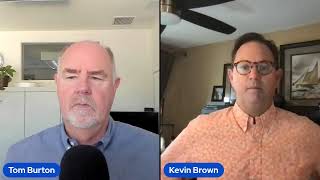
Tom Burton and Kevin from Lead Smart Technologies discuss wholesale distribution trends, including housing starts, cloud services growth, and an Epicor study showing demand for industry-specific software with fast implementation. They also cover women in distribution and CRM adoption strategies.
Chapters
We are now live. Good morning, everybody. If you're on the western part of the country and I guess good afternoon now if you're on the eastern or Happy lunchtime. I'm Tom Burton with Lead Smart Technologies and I'm here with Kevin. Good. And Kevin, good to see you.
Great to be with you this morning, Tom, all the way up there in Santa Barbara.
So they've got just the two of us today. We had a great addition last week with Brendan Breen from isa, but we're just going to be the two of us today. So we'll do our best to keep up with last week. And remember, if you have questions, anybody who's listening to this, if you have questions or comments or anything, just post them in the comment section here and we'll do our best to address them as we go along. I know last week we had tons of engagement, which was really, really good.
Yeah, Brendan, he's pretty popular guy, so it was good to have those comments and questions coming in with folks related to that. You know, I was going to mention two couple things before we dive in, Tom. One is, you know, we push this out through LinkedIn and other resources to, you know, industry friends and partners, business associates, manufacturers and distributors all over North America and the UK and parts of Europe as well. So this is always available on replay on the Lead Smart Technologies Facebook page, Lead smart technologies on YouTube and lead smart technologies on LinkedIn. So if you want to share this with somebody, if there's of any value, that would be great. Last thing I'll kind of add to that briefly is that, you know, you mentioned having Brendan with us last week. That was extremely helpful and valuable and I think a lot of people got some good feedback from that. What I was going to mention to go along with that, though, is we've been working in the past week or so and again, this is number six for us. Is that right?
Number six, yes.
Yeah. So we've got a list of about 20 plus, I think in growing other, other industry veterans and experts. I was talking messaging this morning with Susan Merlot, who's just finishing up a book on marketing for wholesale distributors, and she's really looking forward to joining us when she gets back from vacation. So we've got quite a few good folks coming on with varying expertise within wholesale distribution.
Yeah, I would, I would expect they're not going to have to put up with just the two of us for, for quite a while next few episodes.
So, yeah, good stuff. Good. Well, let's dive in. Let's look at the, the newsletter that went out this morning, we, as we mentioned, each week we send this out to a few,ousand Piedmonts, 5,6000 people I guess each each week throughout the wholesale distribution world. So, you know, I was just going to reference really quick about these numbers with Home Depot, you know, some as because we talk about wholesale distribution and we oftentimes think about Home Depot and the success that they're having with these numbers that they've just shown being tied into consumers, right. Business to consumer sales. And but what we've got to remember when Home Depot is, that's reflecting in the numbers that show here are their HD supply division, right. Which is mro, multifamily housing unit divisions and so forth. And so they're tying right into competing with a whole lot of folks in the wholesale distribution world. So I think it's important to read, but it's nice to kind of see these signs. I was going to mention to you quickly, Tom, I was thinking about this one right after we got off the phone yesterday. Is it, you know, at lunchtime oftentimes when I'm working from home, I'll, I'll flip CNBC on and kind of watch the pundits going back and forth about the economy and look at what's going on in the stock market. And when I tuned in yesterday, they had and this kind of ties into this next article that we post about housing starts. They had Professor Shiller that did the Shiller housing index and economic growth studies and he's kind of the gold standard in that arena. And you know, it's interesting, we watched this piece with, with home starts going, you know, being at a low for lowest in one and a half years. But that makes sense, right? One and a half years ago we had this monster peak and we've got a housing shortage out there. So it's not surprising for us, for us to see that. But watching CNBC, as you and I talk about all the time, right. Is it literally you can see one group of analysts that come on and it's like stock markets hit its low, things are coming back, other people are, oh my word, we're recession next month. And I think we're starting to feel though there's maybe I don't know what your feelings are. Others are, you can certainly comment here, but my gut's kind of telling me we're in a different economy, as I mentioned, all the time than these economic statistics or economic factors that we use that were developed 50, 60 years or more ago. And so I'm not so sure things are going to be that much worse. I think we may be finding a spot where we're not too far from seeing some change coming into next year or at least by mid next year.
I think we're just going to continue to see a lot of roller coaster opinions for sure, in a lot of opinions. As you can tell from the stock market. All it needs is one Fed guy to say one thing and the thing can roller coaster one way or the other. It's very volatile. It's very subject right now to a lot of opinion more than it is to really facts of what's going on which can cause that volatility. You know, obviously there's going to be, you know, there was a spike, right? The pandemic situation created in a lot of markets, in a lot of situations, abnormal, you know, abnormal spikes really. So things are going to level out. Of course. I think the housing start is a great example of that. Plus you combine that with the fact that we had such a low interest rates for so many years, right? There's certainly going to be some leveling out of that and there's going to be some leveling out. But yeah, you see a lot of conflicting statistics. I guess the one thing though that I think we can really count on and I know we're going to talk a bit more about this is is the growth in continued spending in technology. And you see that here with the last thing of the cloud market. I think we talked about this a couple of episodes ago as well as the cloud market continues to grow, but we even have some more specific statistics. I know we're going to talk a little bit about this in this distribution industry and technology and all of that and that is going to continue to grow for sure. I think you can count on that no matter what.
Yeah, yeah, no, I think, I think it has to. And it's interesting, you know, when you look at some of this next article we posted there about, you know, distributed clouds going, becoming bigger and bigger and bigger. You know, a big part of that focus, if you were to read that article, is about the major growth that we're going to see in, that is in, is in North America. And you know, I just, I kind of think about our, our audience that we talk to so much here in wholesale distribution is that, you know, we, we still within our company that, you know, you and I started a number of years ago Lead Smart Technologies, which is as we describe it, a customer relationship management, a customer intelligence and a channel collaboration platform. But as we talk To a lot of folks in the district specifically on the distribution side, maybe a little less on the manufacturing side is, you know, there's still a whole lot of folks out there right now that have, you know, server closets, you know, or server rooms in their organizations where they've got, you know, the big stack of the, the Dell, Dell servers going on and they've got, you know, third party coming in and servicing them and their IT people managing that. And you know, while that hasn't gone the way of the dodo bird yet, it's, it's certainly going to move and migrate to the cloud. When we see how easy maintenance and uptime and all of those things go. When we have critical business, you know, systems that are operating off of it, you can't be in the wholesale distribution world and have your ERP system be down for a couple of days because your server crashed.
Well, it's the whole on premise concept, right was built predominantly also around on premise workers and all of that. So you have distributed workforce, you have work from home, you have all of that. Obviously on premise becomes less and less practical and one of the biggest concerns that people have had with the cloud, right is security and control of that and that I think those concerns are actually going the other way in a sense that a lot of if you're dealing with a reputable cloud platform, your security and all the things that kind of go with that are going to be better than what you're going to be able to do in house with on premise. So a lot of the things are starting to switch on that and yeah, a lot of applications are certainly going to continue to move from on premise to the cloud over the next few years, that's for sure.
So I just, I just think about it with you know, within our company, right, if we were, you know, we were on site based software, you know, the work that you and your team would have to do just an updates and helping customers get updated as opposed to pushing a couple of buttons and shooting updates on our system to the cloud. So I think we're just going to see more and more of that. Obviously it's being adopted across the board but within our wholesale distribution world here, we obviously see some good migration to that. So I'm going to, Tom, I want to kind of do a little revers minute to, to talk about some of our industry scuttlebutt stuff here from we're gonna go from right to left versus left to right because we wanna spend a significant amount of time on this article and this study that the folks at Epicor did, which I think is pretty valuable, but I think it just first kind of a little shout out. We always like to, you know, talk about trade associations and buying groups and kind of show our support for those groups. Brendan was with us last week so Isa this week announced the winner of their Women of Influence awards. Good folks at 3M. It's interesting and it's great to see both at the buying group level here in North America specifically and at the trade association, they're all putting a great emphasis on women in the marketplace and wholesale distribution. We think about a lot of it specifically when we start talking about the MRO or plumbing and pipe valve and fitting arena and so forth. It's been a male dominated industry for so long but you know, now we're starting to see some of these great distributors out there that second generations are coming up and the daughters are running the company. So it's, it's great to see that. Isa, you know, NetPlus, AD Hardy, a lot of these groups are putting emphasis towards women in business and their influence. So it's great to see just quickly that the DSG report, you know, reporting a loss that's a recently, I think it was last April or May, you know, earlier this year that what's now DSG is a, is a collaboration or a merger of three large players in the marketplace, Lawson Products and a few others. I think they're going to see a little bit of hiccup. Obviously they, they didn't quite make the numbers that they had hoped for in that first quarter of them being together. But I think we'll see that turn around a little bit. But shifting now let's dive in and let's talk about this, this shift in strategy regarding digital transformation that the folks at Epicor did with their research. You want to kind of get started on that?
Yeah, I mean it's a really good article and it's here in the link and we're showing it here as well. But the thing that really hit home to me and it's something we've certainly been observing a lot in the lead smart side of things. But the statement that they make here is that, and I know this is a little hard to read here, but it says 95% of. Let me see if I can read it better here. The believe that the right fit technology will accelerate growth and that they really, you know, companies really want tailor made solutions for their organization. Right. If you talk about migrating from on premise to the cloud and you're going to look for new solutions. More and more companies are looking for things that are actually tailor made for their industry. And I was thinking a couple of other statistics here. Then I want to share something that I've seen based on which I really find amazing based on my career in software. But notice Here it says 92% want to partner with providers who have specialists. That's a huge, huge thing here that basically the value companies, how much in this distribution industry, how much they value people who basically have experience and know what they're doing. And what's really intriguing to me about this, if I look at my career, right, I've been in software and enterprise software my whole, more or less, my whole career. If I go back even 10 years, 15 years ago, and I was talking to companies about software, it was all about features, right? It was like, you know, what features do we have? You know, specs, all that features, functionality, all of that. And I was thinking about this this morning after reading this article and if you really think, Kevin, about the conversations we're having right now with prospects and customers, it's revolving around three things. It's revolving around best practices. What can you do to help me with, you know, give me best practices on what I should do, how do I. And then secondly is what can I do to accelerate and speed up the implementation and my time to value. So they want to get time to value really quickly. And then three, which may be the biggest one we're seeing as much as anything else is how can you help make sure that this gets successfully adopted in my organization and people are using it. It's like the conversations we're having about features and functionality is like, okay, great, you have features and functionality now really? Let's talk about how you can take your industry experience, your knowledge and help with your best practice, help me get implemented quickly and help to make sure we're adopted. I would say 80% of our conversations are around that versus features and functions, which is a completely different world than I've lived in my whole career.
No, I think that's great. And you know, it's funny, I just, and I'm going to share a couple of tidbits to kind of go with this real quick is, you know, we, as we've said, as we got started doing this weekly, we didn't want this to be like, hey, you know, the news hour with Tom and Kevin. But you know, more little dialogue things. So I'm going to remind people that we, if you haven't, you know, got some people today that have tuned in. I don't think I've been in with us before and newer to the broadcast and then obviously people will see this, the replay of this. But, you know, we've been friends since kindergarten in Long Beach, California. So as you described your early stages of, of, you know, enterprise software. So I remember those days, right. I remember you being, you know, September 11, which is coming up here really quick at the New York Trade Center Marriott because you were there working with a bank in New York, like you're describing, right. But there's that features, you know, feature play. And you know, you talk about that too in our business all the time, right. You mentioned not wanting to play feature poker. Well, we're moving away from that concept of feature poker, right? But I know, you know, talking to you when you were in other parts of the world, even Switzerland, working with pharmaceutical companies or insurance companies, right. It's tough for you selling enterprise software and if you're a one size fits all to understand an industry. Right. And now what we're seeing, this report is clarifying what you and I see as we talk to people day in and day out within our business is people are looking for that we use the term with our technology of purpose built, right. That we've built something from an industry background that I bring. And your technology background is we understand what the needs are. We've even had a few conversations this week. We have a new customer coming on next week that's a construction equipment and supply wholesaler and in the Rockies. And they're talking about, you know, what you guys and your software understands our business, right. We have a, you know, national manufacturers rep agency that's looking on coming on board with us here in the next 45 days or so. Same idea, right. Their people need, to your point, a tool that fits their business, that they'll get the adoption from their people to use it. And when you go by whether it's Epicor that sponsored this study of I think it was 1300 decision makers that they used, if you go to them and say, here's the exact same ERP system that we would sell to a bakery or a law firm, right. Or a fishing company, and you want to use that in wholesale distribution, you kind of scratch your head and you know, it just does. It's not a fit for people. So this study reinforces what we're seeing in discussions in the marketplace of people want that tailored solution.
Well, and you know, maybe 10 years ago you didn't have a choice, right? You only really had horizontal solutions and so you took, you know, solutions that were more generic and you try and fit that in, shoehorn that into what you're doing, right? And now because there's so many more options, and again, the cloud goes back and gives us a lot of those capabilities. You know, there's no reason for a company to have to settle for something that is again, not going to be based around their industry and what they're doing. But again, you have to combine that with the best practices and the know how and the knowledge because, you know, a lot of companies have not implemented some of these technologies before and they've not. So they're, they're looking for that guidance or looking for that roadmap on how they're doing that. I, I just, I think it's, I personally think it's great. I've always hated feature poker. I hated feature poker 20 years ago, right when it was. Because feature poker really commoditizes what you're talking, what your software and technology does. And it really gets away from solving a problem versus focusing on features and capabilities, which in a lot of cases a lot of companies will never even use or want to use, and really focus on what matters, which is how do I make sure that this helps me and what I'm trying to accomplish? How do I get my time to value quickly and how do I make sure my users get time to, or get value out of it and are able to use it quickly? To me, that's a much more productive conversation than, you know, how many features do you have that I can compare to somebody else so well, and when.
You, you know, you get into, you know, we sometimes, you know, call them pretty girl contests or, you know, who's going to the prom because people want to start, you know, looking at features and benefits and do you do this, do you do that? And you know, one of the things that I think is so important and we're going to unpack this, I think more in some discussions with some guests in the not too distant future. But you and I talk a lot about. And in fact we do a digital transformation webinar that we've done for one of the buying groups already. We're going to do another one soon and hopefully with some of the trades associations about kind of how to, how to make digital transformation easier, you know, and something that's truly manageable the versus something to be afraid of. One of the things that we talk about a lot in that is the idea of a tech stack. This particular study really talks about ERP and E Commerce is kind of the big focus. And you know, there's a third leg of that stool in wholesale distribution, right? And that's that, that customer intelligence that you get if you pull that E Commerce data, that ERP data, and you bring them together. We obviously, I wouldn't be talking about it if we didn't do that in our software solution. But the idea is, right, where do you want to go look to gain all these deep insights into what's going on? And you've started really helping us think within our organization recently about thinking about. We've oftentimes used the term of business intelligence. But it's not just business intelligence, it's customer intelligence that you can gather from these disparate sources and bring that together. And I think now as we start talking about this word that's, you know, it's. It's not real common in wholesale distribution to talk about the word, the words, tech stack. But now when you start putting multiple pieces together that talk, right, and that bring real value, we always use the phrase login fatigue so that you don't have to go to seven different pieces of software, four different pieces of software. This data can come together, give you true insights into your customers.
Again, I know we're running out of time here, but the cloud is also another part of what enables this. It makes it much easier to consolidate or aggregate data from different sources and then repurpose and utilize that data to go forward and to really accomplish that customer intelligence. So I'll just answer one of these questions here from Tom. Does Lead Smart invest heavily in implementation management to help the organization increase adoption? So I want to answer that not so much from a Lead Smart perspective, but a lot of effort that we've put in just in general, to optimize the speed of how the technology is actually implemented and configured. So one of the things that we did, rather than trying to figure out, okay, well, how do we build a services organization that can help increase adoption or anything like that, is we architected our technology so it could be more plugged in. Almost like you have mobile apps on your phone, right? If you want something on your phone to do something, you download it, you plug it in, and it has that purpose and it does it. And that's very quick, right? It's very quick for you to get value out of that concept. Whereas if you had to, in order to use your phone, if you had to implement and configure 50 different apps all at one time to get value, you'd probably be like, screw it one of the things that we've done, Tom, is spent time in architecting how we do this so that when we architect our technology, it's inherently easy to plug in and implement. I say that not because I want to spotlight our technology. I'm saying that because it goes back to my point that we get so much many questions about which is how quickly can I get time to value. I don't want to make this a multi year project. I don't want to have to hire a bunch of people. I want to get value now. So how do I do that now? And then that ties in also to that adoption piece. So really, really good question, Tom.
I think I want to just play on that a little bit. Most folks are used to if you buy off the shelf software in a business setting, right, you'll pay flat fee for the software, seat licenses or whatever. And most people get into a position where they need to pay and this is just industry standards is, you know, one and a half to four to five times the cost of the software to get implemented. And to, you know, to Tom's question there and our discussion about adoption is, and then you've spent all this money and then you go roll it out to the field and say, hey, by the way, here's your usernames and passwords. And they never really got any clarity on what's going on. We've tried to do something that we, we would encourage other organizations to do, right. Is we get everything ready to go and then bring a training group in and you know, in our case, I will plug us just for a moment. You know, our software tends to for implementation, it becomes a, a percentage of the cost of software, not a multiple of the cost of software because of the architecture and the way things are built the way you described it earlier.
Right.
And so when you can find a setup like that where now the people are trained to use the software to show. And you know Ian Heller with the Distribution Strategy group, we were meeting with him face to face in Phoenix in, in December and Ian was commenting, you know, about adoption within, specifically within CRM and he said, you know, so many people, in fact he thinks just about everybody misses the boat on adoption. And what Ian's comment was, if you can get user adoption management will get everything out of the investment that they wanted, the insights into the customers and so forth. So you know, Tom, when your team trains, you know, our new customers, they go in with the mindset that that field salesperson that gets a username and password for lead smart Channel cloud. This is his way to go. Make more money and commissions or bonuses, service customer better and run his unique little business unit that's different than what a lot of software companies do. It's like, hey, buy my stuff, right? But when we get adoption, right, management now is going to get the return on investment that they wanted and the data that they wanted all along. So. Great question, Tommy. We appreciate that, Tom. Before we go, two things I wanted to talk about real quick. You know, I've got my Industrial Sage coffee mug or tea mug this morning. Danny Gonzalez, I think, is with us from Industrial Sage. But the article that you just posted or we had up a moment ago on the screen was from Industrial Supply magazine, I believe. And you know, I wanted to mention kind of where we get our resources. So we get, whether it's Reuters or all of the, the press companies, we get data coming in each week from some of it comes from some of the magazines and trade, trade groups. We try and kind of focus and feature. Right. Because we're not suggesting with what we're doing that everybody should stop paying attention to what else is going on in the industry. You know, there's some great publication, Contractor Supply, you know, Industrial Safety and Hygiene News, Industrial Supply Magazine, Modern Distribution Management puts out good data every week. Distribution Strategy Group does as well. Just bring all this stuff in. We try and kind of, you know, consolidate some of it for our Friday discussion. So lots of data coming in from different places so we can bring it to, to the folks that join us.
Yeah, no, it's definitely an aggregation effort.
Yes, very much. Good. Well, thanks for tuning in, Tom. This was good. We appreciate those who joined us or those who watch the recording later and we'll wish everybody a fantastic weekend.
All right, thanks.
More from Tom



What does AI actually mean for a wholesale distributor #WholesaleDistribution


If your systems don’t talk to each other, your AI won’t either #AITransformation




This is why one AI agent isn’t enough for high-stakes decisions #WholesaleDistribution

