Around the Horn with Special Guest Brendan Breen, President ISA
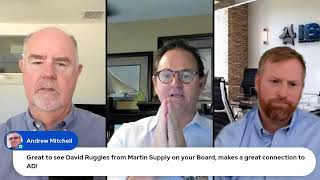
A YouTube panel (Around the Horn) featuring Tom Burton, Kevin, and Brendan Breen (President of the Industrial Supply Association) discussing near-term economic conditions and their impact on the industrial supply channel. Key themes: labor, inflation and pricing strategies, supply-chain and freight pressures, onshoring/reshoring tradeoffs, and persistent end-user demand. Brendan described ISA’s role (120-year history) in helping members via networking, tools (Topline Pulse), and events (including a Fall Summit Nov 30–Dec 2 in Orlando with tracks for Women in Industry, Emerging Leaders, and SalesWorks; keynote Joey Coleman).
Chapters
Hello, everybody. Welcome to our fifth episode. Can never. Every week I'm like, more amazed. We've got it to number five of around the Horn. And if you're watching us here, you probably see there's now three faces this week instead of just Kevin and I, who you've had to put up with for the first four. We have really special guests. Kevin, do you want to introduce our special.
So, Will, we're actually really happy today to have Brendan Breen with us. Brendan's the. Yes. I don't even need to say really new anymore, but you're coming up on, I guess, a half a year, a little bit further than that. Brendan is the president of the Industrial Supply association. So thanks so much for being with us today.
Thanks, guys. Happy to be here.
Yep.
Very good. Yeah.
And we're going to talk. We're going to talk about a few different things today, but if you're online and listening and you have questions or is anything you want to. For us to possibly cover, drop it in there and we'll. And we'll incorporate it into our session today. So, Kevin, why don't you kick us off and let's get rolling here?
Yeah, so I think, Brendan, what we're going to do is, you know, each week do kind of a real quick look at the week. We're going to do that really, really quickly. My old friend Tom May just popped in. He says safety in numbers. That's right, Tom. We'll have to get you on the show. It'll be safe, too.
So I want to get like six or nine on here. We have like a Brady Bunch for us old people that remember that.
Yeah, right.
So I think, Brendan. Well, we're going to recap the news a little bit very quickly, get maybe some of your feedback on that. But then we're going to go in and I really kind of want to talk about ISA a little bit. Some stuff going on in the marketplace. Obviously you've got an event coming up and just kind of share some thoughts. The last thing I ever want to do with this Friday event that we do is have this become, like, super structured and rigid. It's just the idea and opportunity for us all to chat a little bit. So, Tom, why don't we pop up the news and let's look through that briefly. And by the way, as a reminder, if. If you're not getting this around the Horn email, just pop us a note here and we'll make sure that you get it every. Every week. But I think we. We've got Right here is kind of three, three topics, you know, as we do our general news, you know, that really kind of impact all of us, right. This discussion about what's going on in the stock market. That's ups and downs and have we hit bottom? Are we not quite there? Where are we at with that? The speculation on some commodities and then we're looking at the inflation. You know, this week we, you know, mortgage rates dipped a little bit. Then mortgage rates went back up. I think yesterday maybe the recessionary pressure isn't as much. We've got all this stuff going on and I thought I'd throw this out to you guys without talking about any one of these particular articles. Maybe let's talk about the general economic feel a little bit and maybe. Brandon, let me throw it over to you. Do you have any kind of thoughts on what you're seeing as you talk with. Because you spend every day, right. Your constituents and members are manufacturers, distributors and independent manufacturers. What's your take and feel on things?
Yeah, so I mean, nothing new from my conversations. I've been hearing about three main topics is labor and inflation and prices. And so the.
Oh, there he is.
There I am back the recent news, I mean I've watched what came out in the last couple of days, good strong numbers from labor inflation starting to, you know, having a decent month after some, some really rough ones. And then certainly, you know, seeing some of the supply chain stuff ease and seeing gas prices and fuel prices come down. All that stuff is, is great because what all I've been hearing from my members is those are the things that have been really driving them nuts for the last, you know, several months. And so I'm optimistic that, that some of these trends will continue. Obviously there's still a lot of uncertainty, but we're all looking for some optimism. The best news though is that through all of this stuff, demand is still remain really strong, at least in the industrial sector. So yeah, optimistic. That's my word for the day.
That's great to hear. You know, one of the things we've talked about a little bit and Tom, you can comment on this in a moment. Tom and I talk about it a lot, I think.
Told you.
Tom and I've been friends since kindergarten. So we chat besides the business interest we have together, we chat a lot about these types of things. But you know, it's interesting as we look at recessionary, you know, the way the market looks at things.
Right.
What are we looking at from what is the mark, stock market doing? You know, what are the Other economic indicators that we look at right now, those are, you know, 40, 50, 60, sometimes longer year old concepts in economics, but yet the world is flat. Right? Here we are, you know, you're in New Jersey, Tom's in Santa Barbara, I'm in South Orange County. And so here in Southern California we're able to come together. I'm seeing people that are joining us from all over the US and Canada right now. And we can communicate so easily. So we're living in a different world, completely different world than when those factors or economic indicators were developed. So I'm hoping that we're going to start seeing some things coming together that maybe this doom and gloom are not nearly as big a deal as what.
People are talking about. Well, and related to that, right, There's a lot of noise even then that if you just look at those three articles we put up there, if you were to read those three articles, you probably have a lot of different opinions, a lot of different, you know, I mean, it's just a lot of noise. And you know, even like the stock market one, you know what I think a lot of people don't realize is that almost 70 to 80% of trades that are made on the stock market are done through computers. So it's computers and algorithms and things like that that are to a large. I mean, obviously there's momentum and economic shifts, but there's a lot of day to day things that are driven just by algorithms and computers. Well, you're never going to get ahead of that. You know, you're never going to be able to. I wish we could predict all that, but. And we could really be wealthy, but we're not going to be able to. So I think, Brendan, to your point about just staying optimistic and focus on what you can control, right? So put your attention on growing your business or if there are situations like you said, because of higher fuel costs or other things. Okay, then how do you address those? But it's so easy to get caught up in the noise. And I think, you know, even back to your point, Kevin, about the indicators that we're using and we're looking at, it's like, I don't know, I mean, again, they are, but a lot of them are probably a bit obsolete and not entirely up to date. So stay focused on what you can control. And I think that to me is my moral of the story.
Yeah, I mean, I'll say one more thing. I was taking a look at, we have a tool at ISA for our members called Topline Pulse. And it Basically allows them to navigate business cycles. And I think what it does for me, when I look at it is it takes the news and kind of parks it to the side and said, let's look at how this trend rolls out over a period of time. Because you don't want to react to the news what happened today. You want to look at a rolling 3 or a rolling 12 and see exactly how that curve gets smoothed out a little bit and then how you can take advantage of what's coming as opposed to what just happened here yesterday.
That's great, Great point. So now I'm realizing that's a tool I haven't looked at.
I. I keep telling you, Kevin, to stop watching the news. So we need to get that tool and look at that.
It's like, well, we're ISA members, right? So we should probably take advantage of some of these, these things that they offer. It's kind of funny to think about that. Well, let's take that conversation about those economic factors. Let's roll that down, Tom. Kind of the next level on today's kind of news email, and we kind of look at what ties with that, right, Is we've got doom and gloom, if you turn the TV on in so many instances. But then we look further down here and we see we've got multiple organizations at Applied Industrial, the Zorro Division, at Granger. Just like Granger as a whole, they're strong, right. We're not seeing these factors. And one of the things that just baffles me through all of this is, as we talked Brendan mentioned earlier, the labor market, right. It's like, well, wait a minute, we have the great resignation crossing over with layoffs, right? What is this? And I think when we look inside, what we like to refer to in our business as the channel or as distribution, manufacturing distributors, dealers, wholesalers, independent sales agents and so forth. You know, bridges are still being built, right? Hospitals and infrastructure, whatever it is, the big projects are still going on. Factories, even if they maybe had a slowdown at the factory, they're still running and breaking belts and needing mop buckets and all of those things that drive these people in. The Industrial Channel specifically. And so we're kind of seeing that, I think with some of the results that are being posted, what'll be interesting is to see next quarter, right. That'll probably give us a much better indicator. And my gut tells me that maybe results won't be quite as strong, but I don't think there's going to be big dips.
Yeah, I mean, I think that again, if I'm, if I'm leaning on much smarter people than me, meaning like actual economists that look at this, they are saying that. Exactly. What you're saying is yes, there is going to be a slow dip based on demand softening a little bit, but we're not seeing the catastrophic things that, or they're not showing the catastrophic things that the news are talking about. They're talking about a somewhat softening of, you know, things like construction, US industrial production, but that coming back in middle of 2023, they're seeing it coming back around and maybe even getting higher than where we are now. So you got to just ride the trends, guys, I guess.
No, I think that's a great point. Go ahead, Tom. Sorry, no, I was just going to.
Say, while he's on that topic, Brendan, we had a question here from Tom May related to kind of along the line. What you're talking about are, are your members passing along the inflationary cost increases or are they absorbing and then hoping that that tide turns, you know, kind of riding out the storm?
Brendan, before you answer that really quick, let me want to add a little bit of context to this. Tom May is a longtime business associate and friend of mine and Tom is like a whiz at biz ops and sales ops and it just spins spreadsheets like you've never seen to get deep, deep insights into what's going on with sales teams. So a little context of where the question's coming from.
Yeah, I mean, talking about how prices are set is a constant question that I get from people is what is the overall market doing? And what I can say is I asked the question back to that individual, what are you doing? And it's all over the board. I mean, yes, in some cases they're passing it on to the end user. Yes, in some cases suppliers are, you know, are passing that hit on to distributors. Sometimes it's going back down the channel back down to the supplier. So I think that everyone's really trying to figure it out and I think that really depends on how long people think that some of these inflationary costs are going to last. I think that if people are taking a more long view and saying, okay, maybe this isn't going to be around forever, they hold their prices where they are and they rely on trusted and long term relationships. But those that are saying, you know, we, we can't weather that storm if it lasts a little bit longer than this, we have to pass this along, then they're going to pass the buck so it really depends, it depends on whoever, whatever their individual situation is. But I'm hearing it all over the place tomorrow.
Great. Let me just throw something in here real quick, Tom, before you jump. I, I know we've got a handful of, of distributors that are on the, on with us today. So if any of you have an interest in maybe throwing out what you're experiencing in the marketplace right now as far as cost, passing through an answer to Tom May's question, that would be great. Tom, back to you real quick.
Well, I was just going to say, you know, from a little bit of a different sample from our lead smart customers because we have a lot of distributors that are lead smart customers and I would say at least half of them have, I mean, I know this because they update our software to be able to facilitate this. I would say at least half of them have done price increases and updates and even some of, I would say probably 25% of them have done more than one in the last couple months or last few months. So not that that is a great, you know, way of sampling, but I think it gives an idea of, you know, that it's probably along the line of what you're seeing, Brendan. You know, some are, some not and probably depend upon the industry as well.
Well, and I'd say that it's also felt everywhere. I mean, you go to the grocery store and things are 20% more expensive. So I don't believe that price increases are a massive shock to anyone right now. Those that are doing it are probably not seeing a massive amount of pushback just because it's not like there are competitors who can come out and beat it that often. So I think that those that do it are in a position either they're in a unique position where they have to do it or they have figured out exactly how to, how to trust that relationship. But one thing I know is those prices normally don't go back down. So once this is over, I mean, that's your new standard. So it'll be interesting to see what happens then.
There's another interesting question on this from Kyla here. Related to that is might be not a question but a statement, but I think it's related. Are you seeing costs being passed only really just to cover the additional cost of not making any margin? And like you said, well then, as you know, maybe over time the margins will come or is everyone just trying to cover their costs? Are they actually trying to look at potentially making margin?
It's another good question from my girl KJ from Surplus Dunn, what's up kj? I mean again, it could definitely, it could be in some cases. I think that it all depends on the outlook of that distributor and it all depends on the relationships that they have and how they see the future panning out. Again, if they think that this is going to be a very long trend and they're not able to weather it, then they're going to have to be out there. And if they do do that and increase prices, transparency is key. I mean, you've got to show the why. Otherwise I think you tarnish your relationship for sure.
I'm kind of wondering and looking at this if KJ's had a question more than a comment because Surplus Dunn's a manufacturer's rep agency that's a long time well respected large agency in the Midwest in the industrial segment. And this might be what she's actually seeing there. And she commented here about still honoring quotes for 30 days even if the price increase comes during that period. My guess is if we had a couple of distributors on here as well. And I noticed we've got another comment we could talk to in a moment here from Floyd Clifton with sureworks. But I think if we talk to a handful of probably right now, take a sampling of 10 distributors and 10 manufacturers and get 7 different answers that were within a pretty similar of each other, that you know, there's a variance across the board. I think people are like that. And I've been on the manufacturing side as a, in an operational side and ownership of a manufacturing company and you know, I've never seen anybody in all my years in this industry that says let me find a way to take advantage of or stick it to my partners. Right. It's some companies are extremely efficient and can absorb more of their raw material increases and have a mindset of partnership. Others maybe have less of that partnership mindset and don't have the efficiencies in their supply chain or their manufacturing have to do it faster. So I see a note here from Tom Harvick as well that says Tom's manufacturers repair on the west coast seeing price increases in disposable gloves, but other safety products have maintained their price increases. So kind of an interesting thought there. Why don't we chat about Floyd's comment here though as well or question.
Yeah, so, so Floyd is asking, you know, do you feel the price pressure from supply chaining increases imported products will spur a trend towards manufacturing in Mexico versus the U.S. or partnering with suppliers who manufacture in the U.S. are we seeing a Balance shift. So I think the punchline of that question is that will cause us to look at where we make our stuff, right? Do we change where we actually are getting our stuff manufactured?
I think he's talking about are we going to see more of onshoring? Brendan, are your members talking about that?
They're talking about it. I think that people have been talking about onshore long before this crisis, for sure, onshoring and reshoring. But I think that it's about speed. I mean, how quickly can you establish a new partnership or how quickly can someone set up a new manufacturing facility that actually takes advantage of the issue that's present? If there's a new. If there's a different option that already exists, then certainly people are looking for that. And I am seeing a lot more of our members that manufacture the United States putting that up front, really putting that out there in their marketing, putting that out there in their pitch, their value proposition. But if a company decides to pick up their manufacturing facility out of China and throw it into Mexico or North America somewhere, that doesn't happen overnight, you know, and so it's, I think it just, it could just be a reaction and good news, but it doesn't. I don't think that it's upending the apple cart right now.
I think that's a really, really great statement because I think what we're. And you nailed it, in my opinion, at the beginning with your comment, Brandon, was people have been talking about this, I want to say, four or five years. We've been, you know, if not longer, just some inklings of onshoring specifically in the industrial world.
Right.
But I think what you might have out there, in all honesty, is probably a lot of senior executives who were part of their companies when their companies offshored.
Right.
Or remember or see, there's remnants still within the organization of what happened when they offshored. And those weren't necessarily great experiences either. And then obviously you've got that same pressure that says, well, if I'm going to make that commitment, then I'm going to do it X amount of less dollars. And I think what most people probably do would be partially reshore onshore, so to speak, as opposed to getting rid of that. Then you got to look at, well, what's my pricing like with those factories that I'm now decreasing consumption with there? And I'm transferring that to Mexico or somewhere else in Latin America. So it's an interesting concept, but what really ties to that is what Andy Mitchell's mentioning here in a comment that he made. And the first part of it that I'll, I want to look at is freight costs.
Right.
You know, ocean freight has gone from 18,000 to $25,000 on a 20 foot container or a 40 foot container. I should say, you know, that I see that a lot. I live about 40 miles south of the Los Angeles Long beach harbor and I'm up that way and a couple of spots of highways that I drive, you can see. So when you saw those, you know, hundreds of ships out there, that's not, you know, just miles from my home literally to the point that as far south as I am, there were some ships waiting to even get in that queue. So it's kind of interesting that if we don't see some downturn in freight costs coming in, that's going to pressure. I think that whole on shoring or reshoring concept as well.
Yeah, that certainly could have a whole nother level of cost right to the margins and everything like that. On top of that, if that continues to change.
Hey, this is fun. As we're diving into this, we've got now I just saw a comment here with one, one viewer or friend that's joined us today talking with her mother or mentioning something to another one in the chat. So that's really cool.
We've lost control of our show.
I don't know if it's that I'm like liking to think that it's, it's a value. So that's good. Maybe we can drive, help drive some relationships out of this over time. So I want to kind of jump ahead this because we only have about 10 minutes left and. Hey Brandon, I just saw your glass. Can you hold that up again?
It's filled with the wrong thing right now.
I was going to say that Guinness is pretty light. That's, they might have a new light version.
It's 12:30 where I am and even earlier where you are. I don't know how you guys do business on the west coast, but. But we take ourselves seriously.
Yeah, that's right. And I just, it just triggered me for the Friday after late Friday afternoon though. Good stuff. Hey, I wanted to spend a little time though because of, you know, we're appreciative of you joining us today. Brandon and I want to spend a little time talking about Isa. And I want to preface that right. Because I'm going to give you maybe a. I think you and I talked about size. You know, fortunate enough we got to have breakfast together last December in Princeton, New Jersey when I was Back visiting ad went up to visit with you, which was great. Thank you again for making that time. But I've spent close to 35 years in distribution, most of it focused in the safety world. I've become more knowledgeable about ISA in the last 24 months than I have in the last 30 plus years. Now, there's a difference there that I want to preface with that is I for a long time did most of my business as a, you know, on the west coast and with a smaller manufacturer or having a manufacturer's rep agency. But what I found interesting is, and I want to get maybe your take is this as we talk about it, because I've been trying to, since I've been involved with isa, both, you know, Lead Smart, our company being, you know, a technology supplier partner, a member of isa, getting to know you, get to know Ed previously and your team and really appreciate what your group is doing. I don't see ISA having the prevalence, and this may be my ignorance and naivete with this, but I don't see historically having the same prevalence in the industrial safety world and maybe a few other markets with the strength that ISA has in that tool and a cutting tool and maybe abrasive markets and so forth. And hence why I've been trying to introduce you to quite a few people recently and get more people involved. But I wanted you to maybe take a few minutes to talk to kind of this, even a small and growing audience that we have and maybe talk to where's isa? What are they about? Where have they been? But more importantly, you're doing some really neat things with your team and the leadership that you've, the volunteer leadership effect, the new group that you've just recently installed. So maybe spend a little time and unpack that and talk about how we can help ISA as a group of people grow and improve.
Sure, sure. So thanks for the overview there. I won't take too much time going into who ISA is, but we are the trade association, the Channel association for the Industrial MRLP supply chain. So that is our members being manufacturer distributors and manufacturers reps. We also have companies like Lead Smart who support the channel through uses of technology or consultants, things like that. So we have been around in some name, shape or form for 120 years. And our purpose and what we are here to do is to lead this channel forward. We see an unprecedented amount of upheaval and challenges from stemming mostly from an evolving end user in the rise of Industry 4.0. And so what that does is it really challenges our channel to keep pace and remain relevant. And so we see it as our opportunity to provide the right things for our members to remain relevant. So whether that's the right networking opportunities, whether it is the right tools, whether it's the right strategies, whether it's the right education, we see it's always our responsibility to keep pace with the end user and get out in front of it for the benefit of our members. So some of the things that we're working on right now. You mentioned safety. I will say that my members are telling me to get more safety involved in isa. They're saying this sector has grown for industrial core. Industrial distributors that maybe didn't pay as much attention to the safety portfolios they did in the past are now seeing the benefits of it and incorporating it into what they do. And so now I'm getting safety manufacturers to come to us and say, we need to get in front of your distributors because they now make up a big part of our channel sales. We're also seeing more distributors come to us and say, okay, now that you're going to represent your cutting tool market and your safety market better, this is a better fit for us now. So I think that for whatever reason, we did gravitate more towards that cutting tool realm. And safety was a, was always a second part of what we did, but not nearly as strong a part. Now I think that there's a deliberate focus to bring that into the poll because it's what our members want and it's what our end users want. I think they want to buy both of those things at the same time. So we're, we're working heads down at a strategic level to try to continue to pursue that. But I did want to talk about, is this the right time to talk about Fall Summit?
That's just fine. But you know what, before you do that, because I did want to unpack that a little bit more about your upcoming event and your event in April. I had an opportunity to attend and have an involvement as one of the speakers as well. But that virtual event or hybrid event, both in person in Houston was fantastic. Maybe, maybe hit super high level if, if I'm a manufacturer, distributor or an IMR that's going to listen to this either live today or moving forward, that maybe, especially if I'm a distributor, maybe I'm already involved in a buying group or multiple buying groups. ISA is different than that. Maybe just a couple of quick sentences for each one of those about what value they would see in not only being part of a buying group, but Also being part of Isaac.
So I mean, we are different from buying groups and we have a great relationship with the buying groups, all of them in our space. We think that they serve a great purpose for networking and for establishing relationships and allowing kind of a group to be bigger than the. Or the sum to be bigger than the parts. So I think that the biggest differentiator is that we are not a. We are a, a nonprofit organization that is, that is driven by value to its members. And a buying group is much more positioned to provide financial incentive for the relationships. So they have rebate structures or it's co op or something like that. What we are really a big, biggest difference for us is that we are not limited by, by those relationships. We have the ability to bring in all partners. So if you're members of a buying group, that's fantastic. I encourage people to do that. But you're only going to interface with those partners that are part of that buying group. So my advice to everybody is be involved in both. If you see value in a rebate structure or a co op structure, pursue that. But this is your channel association. This is where the scope of the MROP channel comes together and has the opportunity to come together. It's a great avenue for prospecting. It's a great avenue for efficiency of meeting with all of your channel partners in the same place. And we're only going to increase that. Our newest kind of mantra internally is let's grab the flag and plant it and say that this is where channel networking happens at isa. And so we're pursuing, not just strengthening our events, but we're looking to add events in this fall summit. We're also looking to see how we can enhance networking opportunities throughout the year, you know, possibly through digital means. I mean, it's not about having virtual events, but it is, you know, some other tools that maybe folks younger than us guys would be more comfortable with than going to a trade show. So it's an exciting time. I think that the value of ISA and an association that's positioned like ours only has only has know opportunity out in front of it. So I'm really excited right now.
So I'm glad you, you described it that way. And there's a comment that Andy Mitchell just made. He said, great to see David Ruggles from Martin Supply on your board. And, and that probably is a just a prime example of opportunity crossover, right? Is, you know, Martin Supply a big powerhouse within ad and you know, there's David that's on. On the board at, at ISA and You kind of put those things together and you get, then you get the best of both worlds versus one or the other. So I think it's great. I also really would encourage any independent manufacturers reps to get involved and look closely at this. When I was in the manufacturers rep arena from 1993 to 2003 and had wished I had been participating in a broader scope because it really brings deeper and wider opportunities of scope for products to represent, you know, meeting the distributors and not just manufacturers. And it's sometimes it's really hard to get those relationships going. I used to rely on trade shows to try and meet new manufacturers and so forth. Everybody's there with a different agenda. Now when you get to an event like an ISA event, everybody's there to mingle, to talk and to chat about opportunities. So we're running short of time and we have. I've got a list of other things we wanted to talk about, but I don't want to leave today. Two of the things I want to cover quickly. One, let's talk about the Fall Summit. Why don't you spend a couple minutes on that and then I'll talk about when you're coming back in a few weeks so we can talk about the other stuff.
Yeah, no, I feel like we can go forever, guys. So, yeah, quick, the Fall Summit. This is a newer event we have taken the opportunity for this fall, it's November 30th to December 2nd, to have a large event in December that is in Orlando that is geared around performance professional development in three unique areas. The first is in for women in industry and it's really a leadership development program for women in all women in this industry. And the program and speaker lineup there is phenomenal. The second is Emerging Leaders and a quick shout out to kj. She's on my Emerging Leaders committee. They're doing phenomenal work to bring topics like forecasting to a younger audience so that they can think bigger and think like CEOs. So they're going to be diving into that with ITR economics and theirs. And then the last one is SalesWorks. These are all individual tracks at that event. SalesWorks is geared towards the manufacturers and the rep agencies and their focus is all on business, joint business planning. And I see Lee Richards is in here as well. He's going to be our moderator with another co moderator to facilitate not just the conversations around joint business planning between reps and manufacturers to make sure that they have better strategic alignment, but we're also going to give the opportunity for them to actually Sit down with each other and conduct these joint business plans. So there's great education and some awesome networking opportunities. Plus we've got a great keynote speaker, Joey Coleman. He wrote the book Never Lose a Customer, which how is that not valid to absolutely everyone in this channel? And then we'll have some great networking opportunities. So please definitely check out the ISA website, isapartners.org and go to the Fall Summit. If you have questions, reach out to me personally. I'm happy to talk to anybody about it.
We had a little question there at the end that says will lead smart be participating? Yes, we will. We will be there. Kind of got snubbed on the speaker side of things, but you know, sorry, I, I, my, I've got to grease the right, the right people, I guess. But we'll get there. But yeah, we'll be there. We love isa. We've participated speaker before and really see the value of the organization. So we're late. In closing, what triggered Brendan, you joining us today was a comment you made last week. We were talking about technology and adoption. So maybe sometime next month we'll get you back on a Friday if you've got time. Will maybe do a deeper dive on technology and not about the technology that we developed but and how that works. But that along with connecting technology systems within an organization and how that can really drive organizations forward. Really kind of that whole digital transformation. Love your thoughts on that. And we maybe, maybe we'll get some of the something to join us on that as well. So yeah. So say thank you hello to the family. Have a wonderful weekend. Thanks everybody for joining us. Every Friday, if you're not getting the newsletter and you'd like it, reach out to us. Let us know if you've got suggestions.
Great.
And you know, I hate this all the time because you see it everywhere, but if you found some value, click the like button and more people will see the opportunity to join us and we'll keep these conversations going. Great weekend, everybody.
All right, thanks, guys.
Thanks, everyone.
More from Tom



What does AI actually mean for a wholesale distributor #WholesaleDistribution


If your systems don’t talk to each other, your AI won’t either #AITransformation




This is why one AI agent isn’t enough for high-stakes decisions #WholesaleDistribution

