B2B Marketplace and AI Tools Coming Faster Than Expected #b2bmarketplace
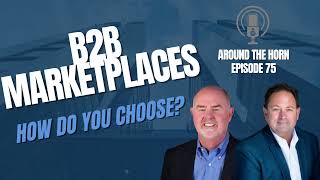
This content was created by Tom Burton. This content was uploaded by Tom Burton. This is a YouTube video titled "B2B Marketplace and AI Tools Coming Faster Than Expected #b2bmarketplace" created on February 16, 2024. It features a conversation between Tom Burton and Kevin Brown, co-founders of Lead Smart Technologies, discussing various topics including the growth of B2B marketplaces, AI agents, and the future of AI-driven automation in business processes. They also touch on economic trends and the impact of AI on business operations.
Chapters
Boy, this is awesome. Awesome. Just keep going. All right. I love the dancing. I love the dancing, man.
There you go. See, cc, everyone comes around eventually.
That's right. That's right.
It. It always. If you keep at it. This is about consistency, right? Maybe a good lesson in consistency. If you keep at it, people will come around and you'll get the results you need.
What do they say? If you can't beat it, join it or something.
You do things 21 times consecutively and it becomes a habit, right?
That's right.
That too. So. All right, well, that's it for today, folks. We appreciate you stopping in and a couple good tidbits for the weekend. Anyways, how are you?
I'm good. Good.
Tell me about. Tell me about your legs and your ski trip and. Are you dying?
No, my legs seem to be in decent shape. I have a little blister on my ankle from the boot rubbing, but other than that, I'm. I'm okay. So.
Your. Your shins should be bruised from driving forward in those. They are moving.
There's definitely some. Some stuff here on the shins, but hey, I'll live.
So glad you got away for a few days and. And burned off a little energy and had a little fun. So good for you. I, on the other hand, will be doing that, some of that later in the year, but I got to spend a few days in Texas with some great folks at the Affiliated Distributors e Commerce and Marketing event in San Antonio. I hadn't been to San Antonio in 10 plus years, so it's nice. I get a little walk on the riverfront and a riverwalk there, but a great event. We'll kind of tee into that a little bit more as we go through the morning. But before we dive in, should we maybe talk about who we are and what we're doing here?
Let's do it.
Let's do it. All right. Well, I am Kevin Brown. This is my co founder and lifelong friend, Tom Burton. We are the developers of and co founders of Lead Smart Technologies, which is an AI enabled CRM and customer intelligence solution where we bring data from across an organization into a CRM platform to make intelligible decisions across the board related to that. So we get together every Friday morning where we discuss the topics of the week in wholesale distribution. We publish a newsletter each week. It's called again around the Horn and Wholesale Distribution and Manufacturing. And we talk about it here live on this podcast. If you don't get this podcast, we would love to share it with you and you can get that by reaching out to us@helloadsmartech.com simple email, ask us to send you and get you on the newsletter list. Or you can easily get the same information by going to the website for the podcast, which is www.aroundthehornpod.com. and all of our previous episodes are there as well. Thank you so much. And Tom, let's dive in.
Do we have a. Do we have a mascot or something in the background? We do.
Somehow, Cooper got into my office, the dog of the day. So I'm gonna push him out real quick while you get started on that first article.
All right, well, we're going to start, as usual, with a little bit of economy news. And I read both of these, actually. There's kind of three of them here, right. That are sort of related. The inventories and the Fed data and then the frigid weather. And I kind of read all three of those where I was trying to connect the dots a little bit. And once again, it kind of left a little more confused than I did enlightened about what's happening.
Isn't that the theme, though, Tom, before you jump ahead, isn't that the theme of like the last at least a year is, you know, we get ups and the downs and we get the, the balancing of it all. It's, it's. I think you and Paul Kennedy both commented on that a while back in a discussion about, you know, I leave some days more confused. Reading. Reading the news. The news.
Yeah. I mean, there's. I don't know. I don't know if you were, you know, I was. I'm interested in your take on it, but I couldn't, I couldn't even look at, if I looked at all three of those, I really couldn't connect the dots to say is there anything that's actually newsworthy there or relevant, I guess in terms of insights into where anything's going. It just sounds like, hey, things move forward. Yeah, we had some cold weather, a little bit more inventory, a little bit more. Less, you know, act factory activity, but nothing, nothing. Life, you know, life changing one way or the other.
Yeah. Well, so just real quick, we've got a couple articles there from Reuters and MDM and a couple of the other folks that we look to regularly for info. And, you know, with this, my kind of takeaway from it was, look, you know what we've got. I, I just kind of like to go back. I, I think you might have used this term first. Early last year was simmering. Right. I don't remember how we got started on that, but we talk about it a lot. Right. So we're seeing this movement of slight movements up and down, and I don't think slight movements up and down are going to help us in growth in wholesale distribution manufacturing. I also don't want to see these massive numbers. Right. So if all of a sudden tomorrow interest rates went back to, you know, 3% or 4% or, you know, sub 5% interest rates, then we see these big spikes and that's not healthy either. But I do think, you know, it's important that we stay on top and kind of pay attention to what's going on with some of these things from a standpoint of, of following closely. You know, we're talking about that, you know, 7% up from November in some of the instances within manufacturing, a lot of things being flat within that. But, you know, it's, it's, it's interesting to me kind of looking at these continually to see where I guess we're kind of seeing almost, almost like a, a heart rhythm, right? Slide ups, slide down, slide up, slide downs. And if we could do that and more watch it like a stock curve where it should be going, slide ups and downs, but the ups are more consistent, I guess, is what I'm watching for as we look at all these pieces of data. Right? Yeah, maybe that's my analogy for the day is not a heart rhythm but a stock start that's got some ups and downs and flows as we go. But, you know, I think it's important, you know, as we look at it, you know, ideally we'd like to see sales up and production up and inventories maybe a little bit lower, which means inventory is ideally really efficient while we're growing. That's what we want to be ideally, I think, looking for in the setting. And to your point, you know, there was an article in here about, you know, the weather. I think it's important to think about that as well. You know, I don't. We've had a couple of big storms, obviously. There was one earlier this week. We've got another storm coming here in Southern California, I think this weekend. So we're going to see those kind of seasonally or seasonality pieces with it, but I think we need to continue to watch it and look for that. Hopefully look for that tick up.
Yeah, obviously you're going to. It has to be a trend over a longer period of time. But even in the last year, as you said, I think if you were to look at the statistic, it would be kind of flat versus moving in any one direction.
Yep.
So anyway, I guess that's better than going, going down or going in the wrong direction.
You know, in one of the articles there talked about, you know, they highlighted the potential recovery in the manufacturing sector, you know, and it's interesting. Right. And that why do we talk about these things week after week and we talk a little bit about this, you know, we always have a little bit about economic data in with this. But you know, one of these articles even talked about, you know, that we've had stagnation was the term they used in for 2023 and just kind of flat with things because of interest rates and so forth. But the relevance of all of this and paying attention to it is, excuse me, just the manufacturing segment, not distribution side of it, but 10.3% of the US economy gotta be paying close attention to this stuff and know what's happening with it. They talked quite a bit about overcoming this stagnation though in a couple of these articles with interest rates adjusting and I think we just have to get to this place over the next, you know, where are we at coming up on March before too long. It's more than the middle of February now. So we get into March and we start looking at what happens in May. If assuming the Fed doesn't do anything in, in March, then we get to May and we hopefully, and I think if we don't have any major changes with jobs and so forth and some of the factors they're looking at that we get to that May 1 dip and then I hope we see that consistent increase.
Yeah. I don't know if you saw the latest news this morning, but the, it was a producer price index was definitely higher than expected. The CPI index was higher than expected. The 10 year note has gone up significantly. So I don't know, I wouldn't be banking on May at this point if the way the data is actually looking.
But you know my thinking on that, I think we're, we've got to adjust the data what, what our expectations of that data are.
Yeah, right. But I don't know that the Fed is listening to your, your advice on that.
Tell you I just, I left a voicemail for Paula last week and I haven't heard back yet. But you know, when you look at, and you know you've, you've always, you know, we've been friends forever and you've always followed the stock market and stuff a lot more than I have. But I just look at this and say the stock market.
Right.
And what all of the economic factors that the Fed and so forth are looking at, they're not in alignment.
Right.
To give us real good data. Right. Stock market is saying I could care less about in theory. Right. Stock market is basically saying, I don't care about what the Fed is saying. And all those other things going on, I'm going to do what I'm doing and then the Fed uses these, I'm going to look at jobs in the 10 year and all of these pieces and it's got to be below, you know, 3% before we even consider things. We're trying to get to 2%. And I don't know, again, maybe I, I'm just about this than I do.
You have to understand that the stock market is driven by predominantly momentum, emotional momentum of if you want to call it greed or fear. Right. And obviously we've had a lot of positive momentum being driven by. Anyway, we could talk a lot about this, about where that all comes from. But the momentum and the actual data and the statistics may or may not be correlated. Right. And I think we certainly see situations where the data and the momentum is correlated. We've certainly went through that. But if you look at the last, even last six months or even the data and other than the one point where I think Powell came out and said, you know, we've reached our peak or I don't know what it was. It was last year, I think, when he did something that really kind of set things off. But if you look at the data for this year and you try and correlate that with the momentum in the market, it has not been. They're not correlated.
No.
And the question will be, will it correlate? Don't know. You know, but a lot of it's being driven.
So no, I think, I think you're right. You know, with that, it's just.
It'S.
It'S interesting and we've talked about this before too, is so much of the trading on Wall street is, you know, automated trading as well. I mean, look at what happened with Lyft earlier this week. Wasn't it they, you know, said 500 basis points was they where they were off versus 50 and all of a sudden that trading just triggered in and things went nuts over, over a typo.
So, so it's, it's all right. Should we move ahead?
Absolutely. Absolutely. We got. Our friend Will Quinn is with us this morning, our recent guest. Glad to have Will with us in a little note there dancing, but I bet he was here in time. I'LL get a little more in later on, you know. You know what I didn't mention, Tom, in our intro was that the we're live this morning, it's 9 o' clock or 9:13 Pacific Time on Friday the 16th. But we do this every week again both on LinkedIn Live, YouTube Live and Facebook Live. So lots of options to watch the live podcast and broadcast here. And then our editors take this, all of this information and put it onto all the podcast formats. The Apple Spotify ought to see all of those by middle of the afternoon today and those will be available there. And I think I forgot to mention that because I had a visitor in my home office here this morning, so.
Very good.
Want to jump ahead to this E commerce and marketing segment?
Sure.
Yep.
So go ahead. Yeah, go ahead.
I was just going to say, you know, there's, this is from Digital Commerce360. I always like to try and reference where our articles come from, but they were just, they, you know, they have a chart in there and they show, you know, the, the doubling over the last three or four years each year of, of marketplaces. Right. And so I think we had an article a few weeks ago that talked a little bit about E commerce in general, having had some flatter spots last year, this article talking more about marketplaces. But it's, it's pretty astounding. And I just think that, you know, my big takeaway was that in the next two years that we could be seeing over a thousand B2B marketplaces available.
And well, there's, there's 750 vertical B2B plate marketplaces. But they said right now.
Yeah, yep.
And, and I think they said, I don't know if it was 2006 was, what was the, there was like 76 or something of them. There was a real, yes. Very, very small amount. And now you talk about niche. I assume each of those are very, very niched into certain verticals. I do have a question for you and I know you were just at an E commerce show as well. Yep. I just struggle and again, maybe it's just my lack of experience in this industry, but why as a buyer would I try and have all of these different vertical marketplaces that I'm buying from? Like what's the benefit to the buyer for this? What's the benefit to the customer, the end user for all of these? And is there a benefit to the supplier and to the distributor?
Well, that's a couple of big questions. So this one guy's take on this is, I think what we're looking at when we look at all the vertical marketplaces where they're more product category vertical. Right. So it could be medical hard goods, it could be medical disposables, it could be things like that. Or we could get into, you know, there could be one solely for power tools as an example, different things like that. So I think that's where these numbers are coming. It's less about there's, you know, 25 of them that are solely for, you know, pipe, valve and fitting or something like that. Right. And then you have the different types of them of how they work.
Right.
So we could talk about, you know, plumbing marketplaces, try and use a good example here. So I think this might be a good one, right? Is there could be one where, hey, we're, we're selling, the marketplace has water heaters and, and plumbing related tools and, and things like that. But there's no auction site for it per se or great tool for finding the best pricing for bulk PVC pipe or iron pipe or whatever it might be. And there could be another one that is like, hey, this is a particular marketplace for lumber, right. Or lumber and drywall in truckload quantities. That could be a whole new marketplace in itself just doing those types of things. So I think we get these unique pieces based upon what is it you need to accomplish and then what marketplace are you in.
But I even like I, and I'll bring up Kelly's comment here. You know, she said eyeballs, Walmart gets 30 million views a day. Actually though, that if there's 750 of these, that's a lot to spread eyeballs around.
And. Sure.
I just, I don't know, it seems to me that I understand what you're saying is that the fact that you can definitely verticalize and niche these very, very specifically based on what the needs are. It just seems obviously it's working because they're building more and more of them and if there's going to be a thousand of them here very soon, I just, I'm struggling myself to see from an end user perspective how that's a huge benefit. Especially when you get all this and how this, you know, you're, you're actually then taking those eyeballs and you're basically scattering them over all of these different places that somebody could go. And it just, it seems like the experience could be less than ideal.
The, the point I was trying to make with that is there won't be lots of them in each vertical.
Okay. Right.
There will be. And think, think about it maybe a good example would be just you compared it with your experience and I. And you know, you know a ton about wholesale distribution. But you're a technology guy who only got involved in wholesale distribution, you know, and understanding that more was it six, seven years ago? Probably. Right. So you know a lot. But think about where your knowledge was, where your learning curve has grown.
Right.
In all of the segments. Right. That we work mostly within. Within Lead Smart. You know, we work a lot in building materials and Plumbing&H Vac&P Pipe valve and fitting and so forth. And then you move across into. I mean, you know, you've got. Think about the verticals that you have just within something safety related. As an example, you can have companies that could, you could have one vertical, just marketplace just for personal protective equipment. That's high visibility. You could have another one for respiratory protection.
Right.
You can have the combined ones, but I don't know how this will shake out. I would be surprised if you had more than, you know, eight or 10 different ones, depending on what you do. But you would do different things and there will be overlap. Right. You can go to Temu or Amazon now. Right. And there's others trying to fight into that place. I obviously Walmart as well, as Kelly mentioned earlier. So when you start looking about those pieces, I think that's what we're going to see is you may have multiple options, but it's not like you're going to have 20 to do something. You might have 20 available to you in your niche vertical, but they do different things. Okay, so good. Anyways, I thought that was just interesting. It's cool to see that this is where we're moving. And you know what? It's. I think one of our guests, when we had our big show a few weeks ago with Mike and Dirk and Ian Heller, you know, one of the comments was made is just you have to follow the customer where the customer wants to buy.
Right.
And what we see so often right now in this setting is that you've got companies coming into this arena. Right. That aren't. Or I should say that have been in this arena forever that are still trying to sell the way that they've always sold. And that's not a winning solution.
Sure. All right, moving ahead. You're on mute. Did your, did your microphone go out? That was used.
I muted for just a second. There's a printer behind me that decided to reset itself. So it was like going through a cycle.
You have all kinds of fun stuff.
I like. I am. Mr. Fortunately, my phone's off and I've got some do not disturbs on, but.
This one of those things up in your. Your studio or whatever?
Yeah, exactly. Thank you for that. So anyways, just finalizing and then the last piece on that, you know, is we've got to follow the buyer where the buyer wants to buy. The buyer is moving online. The buyer wants to live is one of the takeaways that I had for this and I heard it this week at the conference I was at. Is look, people are moving more and more every day, and I.
It.
It's interesting because we didn't hear people talk about this as much, you know, even early last year, but the words are being said very, very clearly now in lots of formats. Is the buyer that buys B2B products wants a B2B experience. And it's being said from the mountaintops now versus people tap dancing around it a while back, right? It's like, look, I ordered Uber Eats for my lunch, right? I want to get data while I'm eating my sandwich about what I'm doing for, you know, a fastener order. And I want to have move to my desk and have the same information available. I want access quickly and easily to product specs. And when I want to talk to a sales guy about showing me a sample or touring my facility, I want him to be available too, because that's how I live my life, right? I can decide do I want my groceries delivered or do I want to go to the grocery store and I want to buy B2B supplies that way again.
So, I mean, that's. The consumer experience is driving the business experience in all aspects of business, not just in wholesale distribution, but virtually everything.
So. Yeah, Good. All right. We got to move on to something you. You're excited about, so let's jump ahead. You know, as a reminder, we updated the newsletter that we put out each week around the Horn and manufacturing Wholesale distrib and the now we have specific segments. We have a segment this week that we want to talk about a few articles from about technology, cyber security and AI. Got a few of each of those going on here. So the first one, OpenAI is developing AI agents. Tom, you've been talking about this long before the announcements was made, so I'll let you fire off on this first.
Well, I think it might. It might be worthwhile to take a minute and take a step back and say, what is an AI agent? Right?
Great.
This is not anything again, new, but if you've used, you know, you've used chat GPT. You've built GPTs, right? You've built in. You built your own custom GPT. So if you've either built those or you've actually used them, built another one yesterday. Yeah, essentially those are quote unquote agents, right? The whole OpenAI. And if you. What is an agent? Basically, an agent is an AI tool. It's obviously based around the AI model. It takes some input and it provides some output. Right. So if you build an agent to build marketing materials, you give it some input, you give it a prompt, and then on the other side, it may create a blog post or a data sheet or whatever the case may be. Right. That's an example of an agent. When they released the whole ability to create these GPTs a year or so ago, or maybe it's not that long now, but a few months ago, and even some of the developer tools that have came out, you know, they said this was our first step in. In the sort of AI agent world. This is sort of the baby step, right? You talk about crawl, walk, run, this is crawl, you can build these and so forth. Now what they're, I think hinting at because they're not available yet, is that now you'll be. Soon you'll be able to build agents that not only take input and give you an output, but then automate actions. So rather than saying, okay, build me a blog post and use my GPT that has all of my company data and all of that to create a blog post, it's going to be. You just said it here. I want to build an agent to order me lunch on DoorDash and have it automatically go and do that. What is intriguing about this is that you would think, well, God, that would be very difficult to build these automated things because you'd have to know API code and how you link to all these applications. And what they talk about in here is that they're not going to use API. These agents don't use APIs. They use. They basically emulate what you would be doing if you were sitting at the keyboard. So if you were going to go order doordash for lunch, you would sit down and go to your mobile app or your desktop and you would put in what you want and order your food and blah, blah, blah. Right. What the agents will be able to do is be able to automate those actions, almost like keystrokes, emulate what you do on all of these different sites and then it will learn, you know. Yeah, you always order sushi for lunch or whatever the case may be. Right. It's going to learn what you do and then be able to automate those things as you go forward. So when you think about the number of business applications that are out there, you wouldn't have to rely on APIs. And you know, Kevin, the hell that we've gone through dealing with APIs, ERP systems and all of that kind of stuff, and we've talked about it on the show about APIs and some of the, you know, companies not letting you get access or charging large amounts for them, in theory, this could bypass the entire API.
Right. That's what I wanted to kind of talk to you about. There's. There's two things that I think we should talk about with this. Right. So to boil this down, I think you did a nice job of identifying what those are and how. What they would be.
Right.
Is we have different things that will say very easily by voice command, likely do something mundane that says take this data. Right. And maybe it's. We get to a place where we can even tell it what file that spreadsheet is in. Or we can take a bunch of statistics that came out of an article earlier and say take these multiple articles, take the data from them and by a voice command and put them into a spreadsheet and, and send them to these three people.
Right.
So that. That's manipulating data in that setting. But then the next phase of that would be. And then if John responds with these three responses, then schedule a meeting for John and I next Tuesday, but schedule it for both of us by. Were you working with his assistant to find a time that works out? Because we should meet in San Diego face to face. And now all of those things trigger.
Right.
Because we would now have hotels booked potentially. We've. Our assistant looked at John's assistance calendar. Maybe it sent a reminder to John that says, hey, Kevin wants to meet with you in San Diego next week. Are you cool with that? Everything looks smooth for you and I've got flights standing by. Right. I think that sounds just astounding for me. I've looked at it from a way of. And I'm coming around to using AI in this in a lot of settings is show me that use case and let me ease into it. Let me get comfortable with some things that I sought. I sought actually from an analog world. I saw some digital things happening that now I have a confidence in and I can take another step closer. Closer to that on a consistent basis. That's kind of my takeaway from this.
Yeah, I think that, you know, I've always told you, or I've been saying, beating the drum, right? AI adoption will basically hockey stick when. When you experience that killer app.
Yeah.
Right. And I've been saying you have months now that the agents are going to be the foundation of those killer apps. What? And I think again, obviously the devil is in the details if this works, right. But if it works the way that they're saying that's going to work where you wouldn't need to use APIs and you could basically emulate anything that you're doing through an AI and assuming or an agent assuming that they even work halfway decent and they don't go off and do crazy stuff, right. You look at the potential, not just a killer app, but the killer applications that are possible from that and just, you know, in your personal life alone. But look at the business side of that. It really completely allows you to rethink a whole lot of ways that you go about everything that you do. And I do believe that when that is making your life way more productive, easier, enjoyable, opening up opportunities that you wouldn't have before, that is going to be the killer app of AI and that is going to be what I believe, which will skyrocket the adoption and change it from being. Well, let's, you know, stay on the sidelines and kind of watch and see how it goes to how fast can I get this into my company?
So that's good. I got a couple questions I want to ask you about this. I wanted to hit Will's comment there, right. He said a new way of saying your people talk to my people. Right. And I see something like that and I do like that thought, right. I see that moving to a place where we, the groundwork is laid and I'll just use, you know, Will's comment there. And I need to meet with Will. I've shared a bunch of information with Will. I've had all of that automated. Maybe I had it sent to myself as well. So we could, you know, I could spot check things along that way, but I could get all of this groundwork done before I even do a phone call with Will.
Right.
So I, I could, you know, or I could send let's. Will's in Chicagoland area. We need to meet in San Diego. Our, our agents have done all the work. I could then call Will because I still want to live in a human personal world, right. And say, hey Will, are you cool with all of that? Did you get everything? Are you comfortable with it? And we talk personally for a moment and say, great, I'M going to get there. Hey, I just heard about this new restaurant. If you're cool with having this kind of food while we're in town, I'm going to have my agent book us a meal. But we, we get to play that. Right. All the legwork about what we're going to do got done by our agents, by managing the data, managing the trips, all of those things. And we're kind of separating the resources that it's going to use. It's going to do things like preparing things for documents, evaluations, analysis, making spreadsheets, be able to do some of those things. And then the separate piece of it that becomes more personal is it prepares us to go make that trip.
Yeah. And, and again, I, I, you know, the trip is, or the meeting is just one little sliver of the possible things that could, could be automated.
No, no, no. This is a hypothetical out of their use case, out of millions of them. Right, right. That we could be with that.
So I really want to emphasize the API thing because that's where I'm headed right now. Integrating applications as you know, and if we, we live through every day is difficult even with APIs. Right. It's, and it's requires programming, it requires a whole lot of things. You remove that barrier of the API and you look at all of the ways of connectivity, potential connectivity between technology and, and just anything that you do, it's really, really mind boggling when you start again. I, I'll have to believe it when I see it. Right. But if you just look at where obviously a lot of billions of dollars are being invested to make this a reality, it is going to become a reality. It's just a matter of when versus if.
So I want to unpack two things related to this because this is an important topic.
Right.
And I mean we could probably do, in fact, this will be a great conversation. We've got next month, actually I think it's in April. We've got Lynn Chase coming on with us. And I met Lynn at an AI conference last October and she was one of the keynotes. And Lynn is, you know, has been in the AI world for 20 plus years. She's ph, it's Dr. Lynn Chase and, and she's fun. So it'll be a good discussion. But this might be a great kind of key for us to chat about this because what I really want to do, we're here to help folks that are in manufacturing and wholesale distribution understand the things that are going on in the world, whether it's economic or it's it or it's people or whatever it is and AI to help them understand and unpack what this means to them moving forward. We wouldn't exist, we wouldn't come here every Friday if it wasn't for that. And our goal with Lead Smart Technologies is to support companies in their digital transformation and digital growth by helping accelerate their businesses growth in general. So this is important stuff because how we work could be extremely different in the coming months and certainly years. So a couple of things with that. Right. Let's take a step back. We have people that join us regularly who maybe even an API doesn't isn't clear to them.
Right.
So I'm going to describe this one and you enhance it. Is that all right?
I guess, sure.
Yeah. Because I'm the, I'm the less technical. Right. So Application protocol interface. Right. It's a program.
Application programming.
I'm sorry, program. Thank you. So what it allows us to do is. And I use. I was literally talking to my wife about this over lunch yesterday because we were talking about this article and some other things and I use the example of her calendaring app that she uses with her customers. And my wife has a marketing, design and print company and she uses Calendly like I use. Right. And we connect Calendly, which is a SAS or cloud based software program that we access through a browser to a desktop product called Outlook in our case or Gmail or whatever. And those two things can talk, right? And it says don't allow anybody to schedule on Kevin's calendar because the software product Calendly can see Outlook and says Kevin is not available. Those are APIs. Software, not software, but code that has to connect two pieces. To your point earlier, we see this every day where we work with customers that struggle with APIs from their legacy type ERP systems that aren't easy to use. And we're solving those issues day to day right now. Everything we want to do is a big world of APIs. To your point was when we get through AI technology that allows us to do these things because of shared and pooled connections and data without that programming interface, that's lines and lines of code, lack of a better term. It just kind of happens. The amount of connections and things that we can see amongst not only our tools within our company, but externally will change the world.
No, I think that's a good, good explanation and it's, it's going to open up the number of permutations of communication between technology applications and you're going to be Able to train the whole idea. Right. If I sat and watched what you did every day, or I let the computer watch what you do every day as you sit at your. We can look at that and then use that to train these agents to say, how do we best automate or where do we want to automate the things that are being done every day or whatever, as an individual, as an organization, as a team, as whatever the case may be, and then be able to train the different scenarios not based around programming APIs, like you just said, connecting through the plumbing from Outlook into your calendar or whatever the case may be.
But actually I can think of.
Right. But to train based on the actions that you actually take and want to do between those. So, anyway, very interesting. They've talked about this for a while. I think we're going to see. I think we're going to see the first glimpse of this. It'll be very beta and very rough, I'm sure, but I think we're going to see the first glimpse of this probably in Q3, later. Q3 into the summer fall time frame coming from OpenAI. There's other companies that are doing this as well, but I think from the OpenAI perspective, we're going to see this somewhere in the.
Yeah.
Later this year.
I want to go, if you stick with. Before we move on to the next article, I've got another question that goes with you. I can't remember the name of it quickly. You sent me a link a couple of weeks ago, probably a month ago now, about a device, right. That had been developed. What was it called again?
The Rabbit. Yeah, the Rabbit.
Right. So it was kind of looks like a smartphone, but it doesn't have smartphone features. It's all AI. So let's, before we go on, talk a little bit about this from a standpoint of where will this take place for us? Right. Right now I go to my phone and I where are we at? What is the smartphone? 15 years old? The iPhone now? Something like that.
2008. Yeah.
Okay, so pretty close there. That changed our world, Right. So most of us are thinking about, okay, I sit. I either work on a phone, a tablet or my computer. And I have all of these apps. I have software programs as well. Tom, I'm asking you this as a computer scientist. How does all this take place? Is it on my device? I know Apple's talking about having your whole language model for what your personal needs are on your device. What does that look like from a. Where does this stuff happen?
Well, when you say where does it happen? Where do you train the agents or where do they actually.
Let's, let's look at that. Right. Model has to be trained about what I use. Where is that happening? How do, how am I going to then access that? And what does that likely interface look like? From what we know today, it's going to be different in months and a year, but from what we know today, what does that look like?
So I believe the training aspect of it will happen everywhere. So whether you're on a phone, a desktop tablet or, you know, your AR glasses or whatever the case may be. Right. A lot of the training, I believe will occur omni, omnipresently wherever you, wherever you're dealing with things. And it's not just, it just happens automatically. You're going to have to, you know, either as an individual or as a company, work out how you go about the training process. So the training process shouldn't be underestimated, but it will happen everywhere. Where it will actually run and be executed, I believe will predominantly be on a mobile device and I think it'll predominantly be voice driven also, you know, maybe not even entirely. Again, once this whole thing with AR and VR actually becomes practical, they'll have other things that will drive it, but short term it'll be voice driven. So you would just, you know, and if you look at what Siri is trying to do today, or even Alexa, and they do it very poorly, they're trying to take away. Well, you go to this app and you go to that app, they're basically trying to say, you tell it what to do and then it will try and figure out what to do. It just does it very poorly. Poorly, yes. But if you look at that and said if that was being done very well and you just basically say, order me lunch, I want sushi. Right. That's all you have to say. It then does everything else and then the sushi shows up at your, at your house, right. From the place that you want to order the sushi from or whatever the.
Case may be, or they ask you, do you want Mew Sushi or Genkai today, maybe, and it knows what you normally like. Right?
Right. Yeah, you, you know, you normally order this on Friday. I don't know. So those are the types of things that are going to go through. I, I do believe it's not that the desktop will go away. I do believe there'll be a lot that will occur on the desktop, but I do think more and more the mobile device, the tablet device, all of that is going to have way more capability rather than jumping around from app to app to actually execute on these things. And yes, with the new Apple phone that's coming out, I think later this year, having the ability to even have a local model, having local data on your phone, personal information combined with it, just you start to piece, connect all the dots here and you can see where this will go and what the capabilities will be. We haven't seen it yet, we haven't experienced it yet. So we haven't had that killer app moment that we had in 2008 with the iPhone and with a smartphone. But it's coming faster than we think, so that's great.
So it just triggered for me in this conversation is, you know, I think it was Steve Jobs who had said, you know, our job is not to give you what you want and create the product you want. Our job is to show you what you will need. Right. And I think that's where we're headed. So I do like this where all of this is headed. I think what's going to be interesting for us is, you know, in. I'm sorry, I'm going to take a quick step back. When you talk about what Apple's doing is right now we have a large language model, right, that's accessing the Internet and all kinds of other pieces of data. When we use ChatGPT as an example, right? That's the world. What's going to be on our phone is portions of the world, but everything about Kevin and it's going to know me, which is why we're able to do that on a singular device. Where we're probably headed long term is the world will be available to me through my glasses that I'm reading through my device, and those two things will be synchronizing as well as wherever I'm at at my desktop. And my desktop will probably launch new things when I set my phone down because my glasses see that I'm in front of a desktop, right? These are the types of things that are not far away from us, that are going to be very quickly available to us. I'm going to tie this back to why we're here every week, right? If I'm in manufacturing and I'm in wholesale distribution, I have got to be thinking about how this is going to impact my workforce, my customers, and the growth and change within my organization. And I need to be thinking about those things today. Do we have to have it figured out? No. But am I moving the direction where I'm preparing myself in my organization for the changes that are coming where my buyer is going to have more data available to him than we ever had. Right. 20 years ago when I started in, you know, 30 plus years ago when I started in wholesale distribution, a guy showed up in his van or in his sedan and went into the factory with a bag of samples and said, this is what's your available to you? And maybe two or three other guys did the same thing and they bought based upon our recommendations. This is a whole different world. Anyways, I'll get off my soapbox, but I thought this was a really exciting article for us. It's time for us to be preparing for this. That article also said that Google had some of these capabilities to schedule appointments and things like that in 2018, but they never launched it because they thought that the world would not be able to handle it. So November of 2022 chat GPT came along and now we're moving much quicker into this arena. So good stuff.
All right. We will keep everybody posted as, as the story develop.
Well and we're going to continue to talk about this, right? Because I mean I was, I, it was great. I, we talked about earlier. I was at this event earlier this week and I had, you know, I probably met close to 10 people who I'd never met before. Some of them, I wasn't even aware of their companies who come to the podcast every week. And that's just so. I just love that. Right. I met a gentleman latter part of the, the day on, on Wednesday just before we were leaving and we hadn't had a chance. I knew of his company, but we hadn't had a chance to meet before. And, and he's a regular coming to the show. So I think people are looking to us to bring some of this to him. So anyways, a couple other articles in our same technology session here or segment article from Inc. Magazine, Google had a. And we'll move on this really quick. Google had an article or an ad on the super bowl about accessibility, right. And it was a really neat thing. What they did is they had, you know, a blind man was able to show it showed how he's able to like capture important moments and enhance his relationship with his girlfriend based upon just how he uses his smartphone. And we could spend a lot of time talking about that takeaway for me. And what I thought was really cool about that was and we have this in our technology segment here about AI and technology. This could almost be in our people section, right when we talk about people out there. But I think this to Me was AI. And the advancement of technology is going to be a huge help to people with disabilities and with accessibility needs. And it's going to open up more jobs and opportunities to them. And folks that have those challenges, that are already working in wholesale distribution and manufacturing are going to be able to be even more valuable to their organizations because of what's happening with this. And Darlene and I had. My wife and I had dinner with some dear friends up in Newport beach last Friday night and my good friend Paul Lane, who's with us sometimes. Paul has a radio show with ABC Radio and multiple podcasts. And Paul's in a wheelchair and he works with Sony as a consultant on accessibility. He's worked with Google and Samsung as on his accessibility consultant. And watching how his life is enhanced by this is phenomenal. So good stuff.
Yeah, no, I, it's. There's a lot of accessibility obviously and so forth is huge. I think you also have the same opportunity when you just think about, you talk about the world being small and the internationalization of everything is that, you know, language barriers and all of that stuff will really, really be significantly reduced. Right. So it's, if you think about it, right, it's. It's whether it's an accessibility issue from a handicap perspective or just a different location or a different. It's removing barriers. It's removing barriers that have existed from, you know, for eternity. Right. And you. It's. It's really interesting. I think the point here is really good is like at the end of the day, how does it really help the people? Even the stuff we talked about, how does it really help?
It doesn't matter if it doesn't bring value to our life.
Right.
I heard that. You know, going to share something with you real quick because we're. In few minutes we'll have another article about, you know, people's jobs. Are we going to lose jobs? We're going to gain jobs. What's going to happen from AI? And there's all this worry. And one of the panels I was listening to the other day is Chris Bond from APR Supply, Large H vac and Plumbing Distributor. That's an affiliated distributors member in Pennsylvania. Chris was, and I had a chance to talk to him before his session, but I didn't get to talk to him in depth afterwards. But Chris made this great comment, you know, because people were talking about replacing jobs and so forth. And he said, look, he said everybody said that about computers, right? And when, you know, in the, in the 80s we had, you know, big terminal green Screens on desks. But when PCs came around, it was supposed to just change everything. Was anybody any less busy? Are we have. Do we have less jobs because we have computers? Probably not. We probably actually have more jobs. And Chris made that kind of correlation between this. We'll see what plays out. But I love that he, that he brought that up. So, Tom, let's jump ahead. We have an article in this segment as well. And by the way, just as a caveat, as we're doing this show each week, if you're listening in on the podcast, Apple, Spotify, whatever platform it might be, what you're not seeing is that Tom and I are looking through a series of articles that are up on the screen that come from the newsletter we put out every week around the horn in wholesale distribution and manufacturing. We do that on Friday mornings where we review that newsletter. The newsletter goes out on Fridays. If you would like a copy of that because you're not seeing it here, just email us@helloadsmartech.com or go to the website for our show here, which is www.aroundthehornpod.com, and lots of information about the show there, as well as you can sign up for the newsletter. So article here about scammers using generative AI to improve scale of phishing attacks. We've talked about this quite a bit already. Takeaway is that they did a large survey, 65% of organizations experience experience attempted or actual payment fraud in 2022 with 71% of those companies have lost money or compromised through email. The challenge that we have here is that distinguishing between what's real in the world right now is going to get harder and harder and we're going to need to be diligent in our organizations about figuring that out.
Yeah. And it's, I actually believe what we just talked about with the agents can ultimately end up helping this quite a bit and helping avoid some of this situation anyway. We will. We'll see about that. But yes, we've talked about this a lot. But I do think that on the, on the bright side of it, there's a lot of things that are coming that are going to make this. Yeah. More difficult. Right. Yes, the criminals are using generative AI to their advantage, but there's also ways to use AI to actually counteract that. You're right.
I'm glad you brought that up because I think we're going to see a lot about that. Zach Kass, who spoke at the A Distribution Strategy Group's AI event in Chicago last October, I think he's Speaking at it again in June. I'm looking forward to seeing him again. In fact, you're supposed to be getting together with him. He had asked me to connect you guys because he's in Santa Barbara where you are as well. But Zach who was one of the early team members at OpenAI, makers of Chat GPT he was part of the original team that I think he led a big part of the team that got it ready for prime time to introduce it into the world and commercialize it. But Zach just made the comment at that event which I did just really resonates with me. He said there are, there's too much good in the world in the use of AI for the world that the in business that that will overcome the challenges just like you know and I think he used the term. Right. You're the prince from Nigeria's emails. We figured that out pretty quick that those weren't real and we shouldn't send money so we get more money later to the guy in Nigeria. Okay. No offense to anybody in Nigeria. We just all remember those scam emails. Right? We figured that stuff out. We're going to figure this out again in that setting. So good, good piece there. A good article that just good to be paying attention to. So another article we just in our sales and M and A segment there's a spot there from the electrical distributor magazine, TED magazine. Their publisher will be on with us in the next few weeks as a guest as well they talk about affiliated distributors. We had mentioned earlier about the growth in revenue huge sales record 70, almost $79 billion in sales through their organization of their member organizations. It's crazy, so neat to see that. Another article that was published that we referenced here today was about seizing opportunities for growth and innov in 20, 22, 24 and beyond. That's an article from Industrial Distribution magazine. It talks about you know the challenges that we've seen in the economy in the world over the last few years through the pandemic and so forth. But it paints a nice picture. We won't go into it a lot of topics there because we've talked about so many of them today. Right. Data. Data analytics. Moving our businesses ahead and thinking about how we what you know it's kind of the ultimate what got us here won't get us there mode. I was talking to a large distributor this earlier this week and company that's looking at partnering with us at Lead Smart is I won't use the numbers but family owned company that's third generation. What they've accomplished in sales growth over the last say 50 years. They're planning on doubling in the next five. Right. You can't do that without the right technology and the right mindset. So I thought that was pretty neat to kind of compare those things. So that article was great about sharing some good spots about, you know, managing tradition with technology, local businesses having an opportunity to grow globally through E commerce. Great examples of that in there.
Agreed.
Yep. All right, let's hit on this a little bit. Another article in our people in Leadership segment about generative AIs threat out there about job opportunities versus layoffs. And we've talked about this a lot already today, but this was an interesting piece. Right. It talked about in, in the tech segment of the market of the economy, there's been 33000 layoffs this year.
Right.
But it was interesting. It was talking about it's not tied to AI, it's tied to Wall street typically, or companies that just haven't been able to scale and make it, that are closing down. So what were your takes on some of this piece about?
Yeah, I mean there's. I have a lot of takes on the layoffs and everything else which we can save for another day. But I think as it relates to this article, what I think is very interesting and it kind of ties into everything that we've been talking about today is the job postings and the skills and the criteria that companies are looking for are very different than they would have been maybe even six months ago. And if you think about just what we just talked about, about all those agents and training agents and all of that stuff. And I mean just think about the, the type of. You don't. Assuming that that type of scenario exists, you don't need to hire people to do those things. You need to hire people that can facilitate those things. And that's a very different skill set. It's a very different job, if you want to call it that, than what we're used to hiring where our whole life, right, we've been hiring people that can do stuff. Now we need to hire people that can facilitate stuff. And that's a very different set of skills to facilitate versus actually do. And that's what you're seeing in these job postings, right. It's sector. In sectors prone to automation, labor market experts are seeing evidence of a notable shift towards hiring fewer employees. Yes, you are generally going to hire. It's. You're going to have to hire fewer. Right. Because you don't need the same number of people to do the things you can have one person facilitating what 20 people or 50 people are 100 people were potentially doing before. And obviously in certain industries and certain situations it's going to be different. But even in software programming we're seeing that now, right? You don't need to hire 100 developers to write, to do the, you know, writing code. You can hire maybe three developers or five developers or 10 developers, but you're more facilitating that through the process that they're using AI on. So anyway, it's just a very different mindset.
Well, I like the article, made a comment here, right. Generative AI is a new form of offshore outsourcing. But instead of jobs going to India or China, this time they're going into the machine, right? Yeah, but the, you know, the takeaway for this, right is we're going to see this very quickly. And, and I think our friend Dirk Beverages, he talks about, people regularly talks about the, what does he call it, the non desk employees. Right. The warehouse workers and so forth. And so what comes to my mind about that is those people are going to become really valuable because when all of a sudden their smartphone, right. And this can be happening later this year. To your comment earlier Apple releases an iPhone that's got a language model built into it on my personal device. I, I am going to become very conversant in using AI tools. And it doesn't matter whether I drive a forklift or I'm running it at a manufacturing plant or a distributor, we're all going to become more conversant in this. What I loved about it is it talked about changes coming where people will be getting what they called micro credentials. Right? So you don't need to go be an AI expert to work in a manufacturing plant about everything AI does. You might be become a micro credentialed in ERP and AI or micro credentialed in warehouse management and AI. And I thought that was a really unique point. So I think we're gonna, you know, we're gonna see changes. I don't know that, you know, it'll be interesting to go back and see Net Net what we end up with. But I don't think it's gonna, my opinion is I don't think we're gonna see the. Because just because I need fewer workers in my business does not mean there's not a spot for those people.
Right?
Those people that have those skills will find somewhere else to be just because there's new businesses starting every day. And this is going to be. Generative AI is going to help more and more businesses get started as well.
So, yeah, I mean, there's again, you're going to have the micro credential thing I think is really interesting. But I, we've talked about this before as an employee, right? You're going to have to be able to a really be able to understand the business. A lot of times employees don't really understand the business. They understand their job, they don't understand their business. So you're going to have to really understand the business, whether that's in the sales, marketing, whatever production, whatever part operations, whatever part of it. And then you're going to have to know, again, as I said, how to facilitate that and what we're trying to accomplish in that business. So the skills and the things that as an employee you're going to have to be able to do, which makes sense on the micro credentials because you can't be, it's unrealistic. Think you're going to know every part of the business, but you might be an expert in the sales and marketing aspect of it or the customer service aspect of it or the whatever the. The case may be. And then there are going to be people that are going to have to have that more holistic view of everything that's there.
So that's good.
And that's where the big, the big salaries, I think, are going to end up getting paid.
Well, very much could be, you know, and the last thing about, you know, Kelly made a comment here in the chat about, you know, and this is something that you've, you've mentioned, right. I think ubiquitous is the term that we've used, right. Going to our smartphone to use an app and check on whatever it might be has just become part of our life. Our life will just be a little bit different where co pilots are doing different things for us. I mean, it'll be interesting in five years for us to go back and play through some of these episodes as we've been talking about that, to see where we talked about things were and where we actually have come. Right. We're going to be giggling about it because, you know, I could be sitting on the beach this morning doing the podcast from there and getting fed information under my eyeglasses. And that's just part of life.
Good.
All right. So kind of jumping ahead, we've got our industry scuttlebutt section. We do each week a couple of good articles there about our friends at Veruz and Paul Noble and his team getting involved deeper with both aws. And this is this is really an interesting thing because. Well, thank you, Kelly. Kelly made the comment that Lead Smart will be the driver of some of this. We hope so. That's the intention. So Paul's company Veruzan works with with manufacturers on both automation, AI tools and so forth about driving results, works with automakers and so forth. Great guy. They're now partnered deeper with with aws, which is cool. Wesco and Rexell both, both competitive companies. Both announced some results that's available there. We have a special feature that we do each week. We would do it most weeks. We don't always have something we want to put in there. But this week there's a great article. Ian Heller with the Distribution Strategy Group. Ian's company sponsors the AI and distribution session. Last October they had a great one. They've got another one coming up in June. We'll be participating in that again. Ian wrote a great article about why AI holds more potential for distributors than for retailers. Interesting thought. Process worker. Read. You can find that@distribution strategygroup.com we also have a second look if we've a segment of our newsletter each week. We've talked about something before. We talked about Ford last week and their losses based upon the UAW strike. Now they're rethinking where they're going to make their cars and they called it a watershed moment that they're at right now about labor people and where they're going to make their cars. So I think that'll be an interesting thing. Finally, in closing out today, we had an article that we try and post each week, we call it goodreads, that sometimes is about executive health. It might be about leadership, it might be about organizational development or it just might be something fun. Nice article from Inc. Magazine. Seven examples of poor leadership behavior that limits business success. If you were running a team, I thought that was a good article. Again, if you don't get the newsletter, reach out to us@helloadsmart. Team Tech.com will get the newsletter. That article was from Inc. Magazine. Seven examples of poor leadership behavior that limit business success. So that's it. That covered the newsletter for the week.
Yeah, you know, and I, I do. You just mentioned the leadership piece. I think that. And maybe we should go back and post some of this from, from the conversation we had with Dirk a couple few weeks ago. If I look, if I was to look ahead and kind of be futuristic here in business, that really the three legs of the stool are going to be for business success is that culture and leadership is going to be critical. You Combine that culture and leadership that Dirk was talking about. You talk about the AI adoption in the use of AI intelligently and productively and then you look at just how you are hiring that we just went through. If you look at all three of those things there they all are interrelated. And if I, and I, you know, we're trying to do this in our own business, right. It's not just, this isn't just about distribution. I think any business, the three things that you've got to be thinking about is your culture and leadership, how you're going to incorporate AI into the business in the way that we've talked about it and what are the types of people that you need to be bringing on to facilitate what you're going to be doing in there. Again, with the right leadership and the right culture, the two three all feed on each other. So it's, it's to me becoming very, very clear. Those are the three legs of the stool that are going to be critical in business that I think have often been overlooked. Right. And that's one of the things Dirk's.
Big points is, you know, this is being recorded, right?
Oh, it is, yeah.
Because, because you coming. And I will say this with all due respect, right. Having, we're, we're both older than, than most and so we had an early career where people just got stuff done, right. And so you, you sometimes we were in a meeting a couple weeks and you're like, culture. It's just not what I think about all the time. Right? It's not necessarily. No, it's, it's not your thing.
I'm not immune to this new world, right. It's like it's, it's, it's, it's, it's. But it's, the fact of the matter is it is very important because think about it, you don't want to be bringing in people that you're really going to ask to really learn a lot about your business and become fluent about your business and how to facilitate your business and then have a crappy culture and poor leadership and have them running and jumping from job. I mean, that becomes untenable. So I do believe that actually the job hopping part of this, we're going off on a tangent and I know we need to wrap up, but the job hopping part of this, which we've seen over the years, I think the idea of a career is actually going to come back. You're going to get people that are going to spend longer times in a job. And so if you're going to try and create that environment. The leadership and the culture is very important. It's not an area that I certainly have been very good at. I don't believe in my career, but it doesn't mean that it's not relevant or super important as we move ahead.
Yeah, well, and I made that comment that you had, you know, about that not being your thing, but the reality of it is is you, you build the culture within your team and help me within our organization. That is just by being a good person. Right. I think where my. I don't want to put words in your mouth, but your disconnect on culture is the concept of I have to go work on figuring out what does culture look like and you know, things like that. Right. As opposed to you develop on your own a good culture of a good place.
If I look at my first job, right when I walked into a first tech job, they handled me a pile of manuals and they said figure this out and go do your job. Right. Which made sense because I was hired to do a job. I wasn't hired to facilitate doing something in the organization. So had I been hired for a different purpose, the culture and the leadership and you know, it took me probably, I worked for that company, my first company with 11 years, it probably took me three years to figure out what the hell they really did. Right? Because that wasn't, that wasn't what I was trained on. I was trained to do my job or asked to do a job versus understanding what the business was actually trying to do. So anyway, I know we're going off on a. No, that's good.
No, that's good stuff. Right? But I think that is, I think it's a phenomenal point you made, right? Is maybe by having the right culture, right? And the right culture is not ping pong. You know what? I made a quick little video the other day that some might on my LinkedIn, you know, about people. This event I was at and it doesn't matter which association or buying group that, you know, I travel to and visit with is, you know, Dirk Beveridge calls it the noble calling of distribution. Right there. These are good people out there, right? And, and when I'm on the tech side of the world and the conferences and events related to tech, it's not that they're bad people. There's just a different feel than there is that when I visit a customer and I'm getting ready to get to the east coast and visit a bunch of customers the next couple weeks and it's a different, it's a different feel and a different take. So culture is, is an important piece of this. So it's good. Let's wrap up on that, right?
Yep, let's do it.
Yep. Good. Tom, thank you for today. Thank you for the comments. Thank you for those that were, were here with us. We're appreciative of that. And anything exciting for the weekend or just recovering from your couple days, a.
Little bit of recovery and some catch up.
So get to the gym and get in the Jacuzzi this afternoon. So that'd be good. All right. Well, Kevin Brown here, Tom Burton, co founders of Lead Smart Technologies. If we can be of help ever to you or your company in your digital journey and getting prepared for the things to come, that's what we do with our customers. We would love to be of assistance to you. You can reach out to us at any time. We're here every Friday or nearly every Friday. We put the gone fishing sign up a couple of times a year because of travel and things like that. Phenomenal slate of guests coming up. I think we're pretty much booked every other week for guests for the coming, I think through June or July, actually. So we're going to continue to do this. If there's something that you think we could do better. If there's suggestions you have for guests or topics, please reach out. You can find either Tom or I on LinkedIn. We're both very prolific there and they're consistently. You can send an email to hello@lead smart tech.com reach out in any way that you would like to give us suggestions, ideas of how we might be able to do better with this. If you like what you hear each week and you join us regularly, we would greatly appreciate a couple things you could do for us. Tell your friends when you get the invitation. If you get one from LinkedIn, click the attending button, go to the Lead Smart Technologies page. Follow that page. You'll get those updates as well. If you're listening on YouTube, Facebook, click the like subscribe or Follow button. Where it might be and then very valuable to helping us is if you're listening on the podcast, pop in, write a quick review that gets us out in front of more people. We typically have five to seven countries that we have people listening in each week and a growing audience here in North America. We would love to expand that. If you see value, help us get the message out. So that's all I've got. Tom, anything else for you?
Have a good weekend. Thanks, everyone.
Yep, have a great weekend. Be kind and do good things.
More from Tom



What does AI actually mean for a wholesale distributor #WholesaleDistribution


If your systems don’t talk to each other, your AI won’t either #AITransformation




This is why one AI agent isn’t enough for high-stakes decisions #WholesaleDistribution

