Blockchain and The Metaverse in Wholesale Distribution
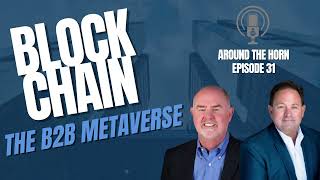
This content was created by Tom Burton. This content was uploaded by Tom Burton. This is a YouTube video titled "Blockchain and The Metaverse in Wholesale Distribution" created on June 6, 2023. It features a conversation between Kevin Brown, Tom Burton, and Tom May, discussing various topics related to wholesale distribution, including blockchain, supply chain issues, AI, and the metaverse. The discussion is part of a series sponsored by LeadSmart Technologies, focusing on news and technological advancements impacting the industry.
Chapters
Foreign welcome to around the Horn in wholesale distribution with Kevin Brown and Tom Burton. Sponsored each week by LeadSmart Technologies. Tom, Kevin and their guests review the news of the week and dive deep into the topics impacting manufacturers, wholesale distribution, independent sales agents, and the global wholesale supply chain. Whether It's M&A SaaS and cloud computing, B2B, E commerce or supply chain issues, we peel back the onion with our guests into the topics that impact your business the most.
How are you, my friend?
Good morning. Good to see you. Guess who's here.
Tom May.
Happy St. Patrick's Day, everybody. I got green on. This is sort of green. It's hard to see, but it is green.
Not even remotely on my radar when I got dressed this morning.
But I don't have any Guinness, so Tom, if you could send one over, that would be great. And Andy asked, is that music from a Charlie Brown show?
Well, you know what's funny? He said that. So let's tell that quick story. When we turned the around the horn LinkedIn live session that we do, you know, LinkedIn, Facebook, YouTube live, when we turned it also into a podcast earlier this year, part of doing that with we hired a three third party consultant to help us with that and that edits and develops these things and we wanted to do all the bumper info and, and so those of you that are listening on the podcast later today know what that is. And there's intro music and there's discussion about Lead smart as the sponsor of the podcast and so forth. And just as a quick side note to this, you know, my name's Kevin Brown. My father has been in the construction industry and industrial industry distribution most of his career and he is in failing health. And dad has always gone by, his nickname has been Charlie Brown. So in answer to Andy's question, that is the Peanuts. The composer of the music for all the Charlie Brown shows and the Peanuts show is Vince Guaraldi. This is a different song of his, but it's called cast your fate to the wind. We love it. And so it's a little homage to dad. So there's a, there's that piece for it. While dad's health has been declining recently.
So I hope he's listening.
He listens to the podcast and quite regularly. And then I didn't tell you this. He's been listening to your book. I told him, I said, you've never had trouble sleeping. Why are you needing this?
Feeling better every day by reading.
That's right. That's right. It's all of his health Improvements are, are from the revenue zone. Tom's book. So good stuff. Well, hey, it's great, great to see you.
Welcome, Will. Happy St. Patrick's Day to Will. Happy St. Patrick's day to Brian, and happy St. Patrick's Day as well to Ron. So thanks, everybody.
We have, we have sushi in our house tonight, so I think other people might be eating other stuff, but this is actually going to a party tonight.
I'm looking forward to some green beer.
So there you go. Well, thanks, Will. That's nice you to make a comment about dad. I'll share that with him when I see him tomorrow. So, hey, let's kind of get ready to dive in and let's do the housekeeping that we always do with this. So, again, my name is Kevin Brown. This is my nearly lifelong friend and business partner, Tom Burton, and we're the co founders of Lead Smart Technologies. Lead Smart is the sponsor of the around the Horn session again that we do on LinkedIn Live, YouTube Live, Facebook Live, and as well as a podcast that's available on all of the popular podcast formats. What we do each week is we kind of consolidate a lot of the news around wholesale distribution. And what we try and do is look at things that are going on in the economy and the news in technology and so forth, and then get together on Friday mornings with the group of you that are here live and get some comments fed into it. We try and get some guests on it here with us regularly and talk about how this impacts the world of manufacturing distribution and also independent sales agents and manufacturers rep. So we look forward to comments today. I guess we should be headed to the northern suburbs of Charlotte to Tom May's house. He says he's got five briskets on the stove. So before Tom gets too far into his Guinness, let's get rolling, huh, Tom?
All right, let's do it.
Awesome. So first little thing we'll talk about today is some data that came out of an event that's going on right now in, in Las Vegas. There's the big international equipment dealers. It's, you know, asphalt, concrete, heavy machinery and so forth. And they shared some really good news about things improving in the manufacturing of equipment segment. And you didn't want to spend a lot of time is those of you that are with us regularly listening live or on the podcast know we're typically trying to look for, you know, good news of what's happening out there. You know, we hear the doom and gloom on, on, on the news about the economy and all the banking Things that have happened in the last week. And when relevant and necessary, we talk about those things here. But we're trying to look at some good stuff. And the reason that really I kind of triggered on this article. And you know, as a side note, we look through, I think when we put this together, probably look through 75 to 100 different topics that we could look at each week and you know, review closely about 30 or 40 of them and just kind of distill those down to things that really make sense. But there's one quote, Tom, that came out of this for me that I really was appreciative of it. It said, there's a gradual return to normal conditions for global supply chains and increased availability of raw materials have helped us manufacturers turn a corner. Now, they also cited that article that we had quoted last week about the New York Fed and their discussion about improving manufacturing times and so forth. So obviously there's other factors out there. They mentioned. There's still labor issues, there's still some challenges that, you know, I think people are still having trouble finding folks to do the work that they need done, but at least there's a less, less pressure in the supply chain.
Yeah. And even there I saw from south by Southwest, which is going on right now, there was a. I saw an interview with the CEO of GM and she was saying that they're still having supply chain issues on semiconductors, but they're short term. So it's like a week or two week. It's not months of delays along the way. So even when the supply chain issues exist, I think it's less, you know, less. It has less time and things move a bit faster to get resolved. So that probably helps as well. Yeah, not perfect, but better.
No, I mean improvement. Right. And that's. I think that's moving in the right direction is what we're looking for on anything like this. So let's kind of jump ahead. This is, and I want to. Before we even read the title of the next article that we, we posted, you know, one of the things that we really try and look at. We're a technology company. My background is in manufacturing and wholesale distribution. Tom's background is in technology. We came together to develop our company that helps wholesale distributors, manufacturers and independent agents manage their business better. Get insights into customer intelligence through the use of a smart CRM. And we like to talk about the pending things going on in technology that may be impacting whether you're a regional or local or a national distributor or manufacturer. But the things that are Coming that sometimes we think about this, you know, that's 2001 Space Odyssey. That's, you know, way out there. That won't happen anytime soon. But there are really some neat things going on out there that are going to really impact manufacturing and distribution in the very short term. So we're trying to bring some of these things, you know, up. And you know, I, I struggle to sometimes keep up when I hear, you know, Tom talking to other technology folks about some of this deeper learning stuff. And, and, but we want to try and distill some of this down to make it easy for folks to just be thinking about the possibilities of what's next. So you want to dive into this one, Tom?
Well, I think first of all, and maybe this is a good test for Tom May to see if he's had enough Guinness already is this title enterprise centered and customer centered. Blockchains and supply chains say that fast. So yeah, a lot going on there. Interesting article. And you know, first of all, right, a lot of times we even hear this talking to investors and other people is sometimes this idea of blockchain immediately means in people's mind, crypto.
Crypto, right.
Bitcoin and all that kind of fts.
And ftx, they're going to jail. I gotta stay away from this.
Right, right. It's amazing how much sort of the A equals A equals A exists here. But if you really, you know, blockchain, if you strip all that away. Yeah. Blockchain is the underlying technology that enables cryptocurrencies. Right. But if you take away all that part of it, really all it is is basically, you know, looking at. And here's a good example that I like to give people. Right. Remember when you first, you know, Dropbox first came out and you were able to share a Dropbox folder and you could put stuff in it and I could put stuff in and we could share.
Yep.
So it gave us a centralized way for us both to access the same thing. Well, think of blockchain is kind of that concept on steroids. So it provides a central or a decentralized place in this, in this example in blockchain world, a decentralized location for businesses to share data and share information in a secure way that doesn't, isn't owned by anybody. So you're not having to deal with the firewall and who has this and all of that. And it allows you to then build on top of that all kinds of interesting applications around that shared data. And obviously one of the first use cases, which is a big Part of this article would be supply chain, right. What better place is, is, you know, what better places is, is this exist than in a supply chain where you're trying to share information and share, you know, what's happening and am I getting here and all that kind of stuff. Blockchain is a great place for that. So. But they talk about other use cases of this I really believe, you know, and this is an area that we're looking into very, very carefully. And from a, from a sales and revenue perspective side of things is we hear more and more everybody wanting to share information with their partners, share sales information, sale lead share, lead information, share, you know, business, collaborate more on business, all of that. Right. Or even contracts or agreement information. The blockchain is a great way to potentially do that and it opens up the ability to build technologies that really are open to both, all parties in the equation. Not just two parties, but multiple parties along the way. So as they say in that article, right, we haven't had the killer app yet like we have in with, you know, chat GPT in the AI space. That was the killer app that kind of shot AI into the stratosphere. We haven't had that yet. You know, it's. Some of these applications are a bit more behind the scenes and they're not quite as sexy as a chatgpt. But I think we're going to start to see more killer apps evolving from using the blockchain and B2B and a combination of, you know, Web2, which, which is our traditional way of doing things in web 3, which is more what is the category of the blockchain and those two things working together. So. Right. Anyway, I think a lot of that is coming and who knows what will be the killer app that will cause everyone to go, oh my gosh, how do I get that?
But it is, I think it's interesting, right. In your, your analogy there to, to Dropbox, you know, and, and sharing tools I think is really valuable to that this article, a really common and a handful of kind of unique things in it. They call it blockchain for bsc, blockchain for the supply chain. And it talked about information sharing, inter firm data and business documents are communicated in standardized manner on an infrastructure shared among participants which we can now bring outside parties into as well. Right. And to your point, it even mentions this later in the article talking about siloed data that, you know, we talk about in organizations all the time, right. As we get E commerce data and we've got ERP data marketing automation, maybe Data warehouse, that type of stuff. And so. But then it talks about tracking, right, a flow of units in real time and then tying this blockchain data into, you know, we think right now we kind of think IOT a lot of folks in, in wholesale distribution and manufacturing both start thinking about rfid, you know, tracking tags, that type of stuff. But as we really start getting into the Internet of things right now, we have all of these millions of pieces of data about where did things stall, right? And where are things slowing down and where were we late getting something delivered or what, where's our breakdowns and processes? That's now this whole new additional set of data that's being developed that now can move through all parts of an organization. So the other thing that was interesting to me and it talks about validations and distributed ledgers and so forth and those are things much up your alley. But what I really liked is it talked about smart contracts. It said once a set of conditions in a code pre specified by relevant parties are met, inter and intra firm processes can automatically be triggered. Now that's a mouthful that I'm not sure really said much, but what that means to me is exactly what you're doing and starting to work on with one of our big clients.
Yeah, it's. I'll give you an example, right? Is a simple example and I believe this is where contracts and agreements will go. But let's say I have a contract with one of my suppliers or I have a contract with a customer and that contract has discount levels and they have rebate levels. It may have other incentives based upon main volume, based upon even certain product skus or product categories that people are buying. Right. Right now for most companies that is, that would. Right now for most companies that is very difficult to manage. But when you put that up on the blockchain, what a smart contract does. So let's say now you have the contract there. You also have the data based around the sales, the sales data and so forth. So you have that as well. Now you have a smart contract that think about that as just sort of overseen Think of a smart contract is just code. It's just code running on the blockchain that is looking at all of that information and then this so example, let's say that a discount level is achieved or a rebate level is achieved or whatever the case may be. All of that can be tracked and automated. And if you think about the ability in one of our customers, right. They really want to be able to take their contracts to another level. They want to be able to add more incentives. They want to add incentives and rebates and discounts, even around AR schedules and all kinds of different variables that become almost impossible to track manually or to have an accounting group track. All of that can be managed, tracked, organized and processed through this concept of a smart contract or smart code on top of that. So it's, you know, again, there's still a lot of. There's still technological hurdles because we're still in the early stages of this. And one of the questions that Tom, Tom May just ask is about security. Right. We talked about this, I think, a couple of weeks ago on, on the show is some of this potential security issues. But there's a lot of things, some of the encryption and some of the other things that can go on with blockchain can actually make it a lot more secure than what you would generally have in your own business. Now, like anything, there's, you know, people out there trying to find ways around that and there's going to be more and more security. I met with a person a couple days ago that are working on some major, major security things for the blockchain, which I think will be really, really relevant as we go forward. But like anything else that is there and it will continue to get stronger. But I think the, again, the way to look at this right now is what's possible and start thinking about what's possible and then using that as part of the roadmap. And I'm hoping on our end we're going to be releasing some things on the lead smart front this year that I believe will really. I don't know if it'll be a killer app, but it might really illustrate some of the power of what's capable of the blockchain as it relates to business and sales.
Yeah. So thanks for that comment. Tom May, about that. Came in on the chat here about. About security to drive that conversation, we just got another comment there. It says, top of the morning, lads. I'll bet you a green beer that's Brendan Breen. But he just shows up as LinkedIn user. But I think this might be a big day of the year for him. So just my guess, but I won't.
Take your bet on that. No.
Okay. All right. But I'm looking forward to seeing if that is Brandon. Looking forward to seeing him. We're going to talk about that a little bit later. There is a Industrial Supply Association's big event is next month. But, you know, I want to go back to what you were talking about. We Got a little bit of time today on this.
Yep.
I was. You owe me a green beer. So the Thompson or Brandon says winner, winner there. So let's go back to that quote and contract piece, right? Because we talked about, you talked about contracts, let's talk about quotes and imagine that scenario. And I say this because it's going to be, this is the future. And you're doing some of this right now. Right. We work with quite a few folks in a world where they work building materials, electrical distributors, pipe valve and fitting distributors and so forth, where a big percent, sometimes 75 or more percent of their business is tied to quotes, right. So a contractor comes to them, says, hey, we're, we're doing bidding this big hospital whatever it might be, right. I need my pricing on all of these things for this project. Well, you know, that has now data that can be tagged and part numbers and, and quote numbers and all put together. And when you start using technology to look at those things, and it's astounding to me as we talk to some of our customers that they're really not doing much of any of this other than manually. And we know from research that says that, that it's 80 plus percent of spreadsheets have errors, right? That's international research that's been out for a number of years now. It's probably even more as we, they become more prolific. But now if we're trying to like manually ask a sales guy to stay on top of quotes or inside sales or, or somebody else, most organizations we talk aren't even sure how many of these things they've won or not won. But when you take a step back and what does that mean to a business, Right. If you could look at and get easily in easy insight into all the quotes that are out there, what are they worth?
Right.
Did we win them? If we won them, how much are people buying against that? Right. Nothing worse than we quote somebody for half a million dollars for a big project and they spend 50,000 with us. These are meaningful ways when you can put technology to work into an organization. We're working on this with quite a few of our customers right now. When you're able to view and get those insights, talk about return and investment of technology, right. It happens very quickly. When you have this insight now, when we start putting things like blockchain together and some of these other tools and even some AI pieces into that, the world changes very quickly. And now all of a sudden, you know, the things that you're working on to tout our Company a little bit with some of our customers is it's very, very different than CRM or even basic customer intelligence. It gets really deep.
Right. And the quote example is another good example of where the blockchain I think will really make a difference. Just think of any place where you have some relationship, I guess that's a bad word, but some collaboration with somebody who's not in your company. Right. Whether that's your customer, whether that's your supplier, whether that's your vendor, whether whatever that case may be. Right. Now let's. If you really look at it, the interaction and the collaboration that exists between intercompany relationships are clumsy. And they're, they've been based around, okay, I've got my stuff here and you have your stuff. There's. And then we'll try and communicate back and forth and work things out.
Right.
The quote example you just talked about as an example, if that quote was on the blockchain and there were some smart contracts or code monitoring that and using that to communicate now to both sides based around the agreement or as.
You said, in real time.
Real time, Right. And maybe the agreement says we're going to, you know, the quote was it turned into an order, we're going to buy $500,000 worth of staff over six months. But now we're six months into this and they bought $50,000 with it.
Right.
Whatever. Right. None of that. You can't keep up on that. There's no, you know, even if it's internal, you don't know how to collaborate that with the customer. So the future, again, in my humble opinion, the future from a technological perspective is going to revolve around collaboration, which is really kind of taking the barriers down between all of the different stakeholders and players and the AI and the intelligence that we can use to leverage and open up those things that are there. Those. That's where the one plus one equals ten.
Well, there's. So there's two comments we have here that just came in.
Right.
So Tom had commented here about forecasting process. Right. Forecasting is awesome. But what happens when we, we do forecasting and forecasting, you know, nine times out of 10, and Tom may and I worked on a project together a number of years ago where, you know, the, the forecast should have been written by screenwriters just because of the, the lack of, what I put it, the lack of factual data that's really there. But now when we take what's forecast and that's forecast against third parties commitments that they've made to Us, and we can track that by, you know, live real time. We can track that all through to know what is happening with our relationship.
And.
And I want to take this before we talk about RP's comment that he made here in a moment, which is extremely valuable, the discussion here. But this is part of servicing a customer better, too, because, you know, we look at. We're working with one particular building materials distributor in the Rocky Mountains right now, and they look at it as, well, not just about what they're going to do to increase and drive additional revenues.
Right.
But it's oftentimes, let's just say it's a, you know, a contractor. You know, maybe it's electrical contractor, something like that. They might not know that they're not buying everything that they're supposed to internally for the project. They might have, you know, people working on projects that are going somewhere else and buying things at the wrong price or at a higher price than what they contracted for. So this just isn't about how it helps the distributor. This is about also how it serves the customer better.
Collaboration inherently means all. All sides, Right. It's not like it's all benefit to you and none to me. Collaborative means you're benefiting, I'm benefiting, and we're running a more streamlined and profitable piece. And I think also, though, that ties to what Ronald said here, is that you buy inventory. You know, and a great example. We see this a lot, right? Oh, a big order. I stock up so I can do the order. They don't purchase it, it doesn't pan out, you end up with that inventory.
Yep.
All of that kind of stuff. Yes. And then. And the AI, Right. So smart contracts, again, without going too deep on any of this, Smart contracts are a term that was created for code that's running on the blockchain. Okay.
So I was going to talk about that. You want me to go really deep on that?
I would like you to. And we'll. We'll do that separately.
Yeah. Okay.
I'm gonna listen to some Charlie Brown music while you do that.
Okay, Very good.
Actually, I better yet, I'll go drink Guinnesses with Tom, maybe. Yeah. But the, you know, it's just all. It's color.
Put your big boy pants on if you're gonna go drink beer with Tom May. That's all I can tell you.
All right, fair enough. So anyway, the, the. What I was trying to say is that when you start to look at that from that perspective and you look at, then the AI aspect of it, right. That can look at the intelligence of what's actually going on there to maybe proactively rather than waiting six months to figure out they haven't bought from you, you can start to look and see, hey, we're a month in and we, we're way behind where we think we should be and so forth. So a lot of things that can can go on here related to that.
Well and it's interesting right you and what really triggered me off of, off of RP's comment here and, and even with, with Tom was following up on and we've got folks here that are large regionals that are gaining national scope that join us. We've got local distributors that join us. But, but RP has retired. I guess it was a year ago. Is that right, Ron? From one of the largest, you know, wholesale distributors in the world. And this challenge, right, this is one thing if you're a, you know, a 5 million dollar or 15, 20 million dollar a year distributor, but when you're a 200 million dollar distributor, half a billion dollar distributor or a 10, 15, 20 billion dollar a year distributor like you know, RP comes From, I think 15, 16 billion is the number thousands of two years since what time time flies since RP retired. But when you think about how that magnifies when you have thousands of salespeople and hundreds of thousands of customers and millions of SKUs, what can that do to a business? Right? So when you think to the magnitude of that some of this technology is going to have on efficiencies and you know, I always like to talk about how does it impact the final customer and if we can make their experience better through faster execution on contracts or better delivery and all of the things that go with that, we've got a customer for life. And that's going to be the differentiator for the people that adopt smart technology fast and early is the other people are going to be behind them trying to catch up.
Sure. And maybe that's a good bridge to go into this next article because exactly what this is, this next article is, is you know, Amazon trying to do that, trying to make it easier and more efficient for the, for the customer.
Well they just describe it, right? It's a, the, this new piece that they're working on, this new. It's both mobile app and desktop. It's a tool designed to quick to quicken. I'm just reading a note I wrote about it. Quicken purchase order reconciliation without the need for a desktop computer or a handheld scanner. So they do this Three way match thing where they have account administrators, buyers and then the Amazon mobile app can reconcile everything and dial it right into. They call it their punch in procurement tool which reconciles back into ERP systems. Okay, so what's the what what's the breakdown of that and why does it matter? Is better for the customer. Right. And adopting better technology and we don't want to get left behind.
Yep. Now and again just another example.
Right.
Of how to make the customer experience more streamlined. Easy button, all of those things. Anyway, it was a. You know, just to me Amazon continues to invest right. In the info the business infrastructure and making things easier for businesses. Not just Right. Yep. All right, so let's move in because we still have some cool topics to cover here.
We do and I just realized I think we're getting some comments and today's a big, big move in March Madness. So you're, you're, you're Bruins that you're a fan of in my Trojans play this morning or wait, last night, didn't they.
Yeah, they won last night. Yeah, yeah.
I'm not, I'm not over overly optimistic about USC at Michigan State this morning. In fact, I think it starts right about now.
I have UCLA going to the winning the whole thing. So I'm off to a good start. And, and listen, listen, Tom, we work.
So hard doing this each week just to remain credible to people but statements like that come on.
Well and I. My alma mater, UC Santa Barbara plays today and I have them winning three games. So I don't think they've ever won a game in the.
Well, you'll, you'll hear me cheering for the gauchos.
Okay.
Probably will never hear me rooting for the Bruins.
All right.
Anyways, let's talk about. Wouldn't be a normal week lately without us talking about chat GPT. Right.
Yeah. So this is another really interesting article. In fact, this is where I saw some of the stuff about the supply chain issues that they were talking about is, you know, using artificial intelligence and chat, you know, generative AI in automobiles and some of the examples they were talking about. Now I think there are kind of ho hum, right? They're interesting. It's like, oh, I can, you know, tell me about what's in my owner's manual, you know, or tell me how my electric window, you know, or my heated seats work or whatever the case may be. I think that's all great, but I think this is just the starting point. And think about this right when you're driving and you use your phone and you go to Siri or whatever and you say, you know, where is a Mexican restaurant near me? Or where is a good, you know, if you're in a city, you don't know where's a good Mexican restaurant or a good Italian restaurant or whatever the case may be, Right. And it'll just give you a list and then you have to kind of go through and look at the ratings and figure them all out and where do you really want to go? And, but now think about if you go, what are some good Mexican restaurants near me that are close to the freeway?
Yep.
Now it's going to come back and go, oh, where you really need to go, Kevin, is, you know, Pepe's here. Right.
It's only, you know, ready for Pepes.
It's not busy generally at this time of day. And make sure you have the chile verde. Right. That's the type of response that we're going to start getting back.
And stop at one basket of chips.
And stop at one basket of chips. Yeah. They charge extra for one basket of chips. Right. Now think about the whole chat GBT thing where you continue the conversation. So you go, great. Does Pepe have Guinness? Yes, Pepe has Guinness on tap. And it's Happy hour from 3 to 6. Right. And continuing that conversation and then saying, okay, go ahead and you know, do whatever. So that's where this is going. And. But yeah, it's going to be incorporated probably into, you know, most vehicles, I would say in the next, know, a couple years.
Yeah, well, so let's, let's unpack that a little bit even further. Right. Two, two things come to my mind is I was trying to, to talk a little bit about chat GPT and in all of the AI solutions that have similarities, right. You know, you, there's tools now on Instagram where you can, can take a, take a picture of your, take a picture of your dog and AI will change the, you know, make it look younger or whatever you want to do with it.
Right.
There's all kinds of AI applications out there, but with the things that we're talking about, I kind of look at it, I've been describing to people from a standpoint that says think about AI from a standpoint specifically with Chat GPT is when we go do a Google search, Google gives us a list of websites that we can go look at to probably find the answer that we want when we ask Siri or that Amazon system that I won't say out loud so she doesn't engage in our discussion here. Because she's on the table next to me. But if we were to ask any of those smart assistants, they're going to come back and say, here's what I found on the Internet. Sure, right. Now, when we asked the question to ChatGPT, it went out and looked at billions of pieces of data and came that back and brought that back to us, fully distilled to your point with this is the time of day that they're busy. You, this is what you should eat. All of those things that go with it. Will just made a comment that with Chachi PT4, you can take a picture of a bundle of pipe and it'll count it for you. That's where we're going with all of these things, with some of them already in place. And the reason I wanted to share that was this article about GM including artificial intelligence in the driving experience. They've been doing some of these things since 2019. Is what this article references, right. When our cars started to get over the air, updates right to our systems. I probably three times a month get in my car and. Or when I'm getting ready to shut my car off, going to park, and it says updates are available. Make sure doors are locked and it'll do the update when I leave the car. Right. So that's the start of this. But now this. You know, you gave some good examples of what we could ask it. But it also talks about, you know, the chat bot could program your garage door codes for you, right? And those are never as easy to do as they say, right? It can. You could ask it things about your owner's manual, and it'll not only give you what the owner's manual says, but it'll give you feedback and insight in what to do next. So a lot of cool kind of stuff happening there. All right, let's move ahead because I know this Metaverse article. Let's. Let's pass by the news. We'll come back to the news at the end. You know, our scuttlebutt there business in the Metaverse. Let's chat about that a little bit.
Yeah, I mean, well, Metaverse, right, is another extension of the whole blockchain application. But, you know, Metaverse to a lot of people means, oh my God, I'm wearing AR glasses and I'm roaming around and games and things like that. And certainly there will be an application of that in business. But you know, even when you're on a Zoom meeting or right here today, what we're doing today, right, we're doing a form of the metaverse. So what the metaverse means is you're doing something virtually, right? You're doing something in the digital world versus the analog world where you're doing something, something live. And so anyway, without going into it, it went into some really good conversation about how this will be used in the future. And in particular around commerce, you know, and purchasing and all, all the things that we've just talked about, again, making that better customer experience. You know, we could spend a whole episode on this. But the metaverse itself is again, enabled, I guess is a better good word because of the blockchain. Right. Without the blockchain, it's not going to really have the foundation. It doesn't work without the blockchain. Because the metaverse is all about collaboration and working cross company and working things that are there.
Yep. Well, it's interesting, right? You know, we think about, we were just talking about, you know, March Madness, right? You, you could be at that Gauchos Santa Barbara. You see Santa Barbara, Gaucho's game. Not sure who they play, but you could be there. And if you were to just go live on Facebook or if you caught me on Microsoft Teams we use internally at our company and we're sharing the images right now you have more of the immersive feel. But if I connected to the Sonos speakers behind me and my whole office is filled, we're starting that process and all that we're going to see with this is it's going to become more and more immersive. So I want to talk about this a little more, but Tom just asked a comment about ChatGPT having a pay to play model. Carson, we're glad you're with us today as well. And the answer there is yes. You know, the chat GPT piece that we can@OpenAI.com that you can go sign up for right now is free. It only is accessing, Tom, is it through 2020, is that right? Internet data?
Yeah, it's, it's. Well, the data that's being driven is I think the end of 2020 or somewhere.
So. And then that was mentioned earlier and one of the, one of the comments was chat gpt4 and that is where you jump into the pay to play model.
So I don't know, you know, Carson is at Microsoft, so he may know more than I do about this, but I don't know if there's plans for having like a pay where you have in Google where you can pay for your search results, which I think is what Tom is asking Tom May is asking is, you know, if you pay to play that, you end up at the top of the search results.
That could be it too.
Yeah, we're not, because we're not quite at real time yet with Chat GPT and, and looking at those types of things. But it's clearly obviously where that would probably go right now, how that all works with OpenAI and in different models or do you have your own proprietary models or using, you know, the Open A models and all that stuff. There is a Pay to Play model right now they're on Chat GPT where you can upgrade and get a, you can pay to upgrade and then you get, you know, preference and all of that stuff for using Chat GPT. But I don't know if there is a plan currently to do something like Google Pay per click or search.
You have to assume that's coming though, right?
So I would assume.
Hey, you know, I'm gonna just completely monkey wrench this discussion though with. Because Carson's with us and Carson's a sales executive with, with Microsoft. We didn't even talk about this and I should have added this in. Microsoft announced yesterday and I haven't read this yet, but outlook, Excel, Office, PowerPoint, Microsoft's going to be embedding this technology that they've invested in with, with OpenAI into all of those tools. And I am excited about that because, you know, we've spent our lives in, in Outlook and, and these products. So maybe just Carson, I just want.
To go in there and say, right, write the newsletter and just have the newsletter show up with all of this every week.
Wouldn't that be great? Well, but you know what a quick example of that is, I had an update to do for a couple of our investors yesterday.
Right.
And I ran by you what I was going to send to them. And you, your response was, you know, this is really well written. And what I did is I went into Chat GPT and I said what the topic was that I needed to cover the style and the tone I wanted. I, I only used maybe 20% of what it came back with, but it just fired my brain off with how this needed to flow. Got me out of that white paper syndrome. Fantastic stuff. So anyways, I don't know if Parson has any other insights into that Microsoft Office and 365 tools that this will be embedded into, but I'm looking forward to that.
Yep, absolutely.
Good. So that last thing on the, you know, on the, on the Metaverse is. Right. We're already living in it. It's just going to become more immersive and it's going to become part of our business. The last thing though, that I was going to mention that it does. Does talk about in this article is about us owning our own digital identifi identity. And that whole back to the blockchain. Right. Decentralizing, all of that is what allows that right now. Right. You know, Google wants us to use our Google ID to sign in places. Facebook wants us to use it. Apple wants us to use. All these people want us to use our Apple id. And guess what? They gather when we do that.
Yep.
Right. They're following us all along. And you know, that's some of the scary stuff that goes with some. I'm okay with that, maybe with Apple at some level and Google, but I'm certainly not okay with Facebook, you know, owning at some level owning parts of my, if not all of my digital identity. And this is really going to differentiate and separate that.
Well, yeah. And you can actually go out right now and procure your digital identity for. For the blockchain and Ethereum and all that. Yeah.
Should we be doing that? What's your.
We can talk about it next week or whatever. I can take you through how to do it. It's not hard to do, but you can start to go out there and start to procure your digital identity. Because in the future. Right. The whole idea is rather than having passwords on 5,000 websites and everything, you have to keep track of and you know, am I using my Google login or. I mean, you know, think about it. That's. If you really think about it, it's kind of archaic. You should be able to just have a digital identity and then be able to go where you need to go.
I'm here.
So that. That there is some tool or some capabilities out there to start at least establishing your digital identity identity in the web3world. Whether it's very practical and useful right now is to be determined depending upon what you're doing. But it will be so something that, you know, we can definitely talk about that on a future show and how to do that.
Let's plan on that. Yeah, that might be something kind of cool to do. All right, so let's jump back to the scuttlebutt going on in the industry. We'll talk about a few things real quick. Some. Some good news about growth at dsg. Pretty significant. The folks at Hardy, the Heating Air conditioning Refrigeration Distributors group, has just partnered up with another group to kind of strengthen both of their bases, which is kind of neat to see. And we're starting to see some consolidation in buying groups more than associations. But we're, you know, we're seeing here and there where some, some smaller buying groups are getting gobbled up by some of the larger ones and, and mergers of them and so forth and sometimes they get announced as acquisitions. But the reality of it is, you know, one group thinks they're still going to keep their identity and they've been merged, but it was an acquisition. So. But if it's, if it's good for the distributor and it's good for the end user customer, I'm all for it. So some big news at Graybar as well. We're not going to go in and talk about these, which we typically don't each week. But before we kind of wind down today, let's chat about the webinar we did earlier this week because the link is here in the newsletter to that if, if you have an interest, if you didn't get an invite originally to our webinar that we did on what is smart CRM and why does it matter to your business? We had a really great attendance to that this past Wednesday. We did it live. The link is here if you would like to have access to that. Two quick ways to get it if you don't get our newsletter that goes out each Friday morning that we're showing here. One is just put something in the chat here if you're connected with Tom or I on LinkedIn messages that way, I guess. Or there's a third way is email us@helloadsmart tech.com and we'll get you the recording out for the this as well because we got some great feedback and talking about, you know, why, you know, I always use the term.
Right.
That'll referencing that old Buick commercial. Right. This is not your father's Buick. What's going on in the world of smart CRM that we're working on and doing at Lead Smart is very, very different than CRM. Right. That we're used to in just traditional.
Yep. And we talk a lot about why historically CRM has been a bit of a four letter word.
Yeah.
Right. We talk a lot about that and what caused that situation with the four letter word. And anyway you can, if you just click on right here in the thing, it'll take you right to the replay. So really simple to do.
Yeah, I did. I think there's quite a few people both here and on the webinar that don't get the email that's sent out so that link won't work for them.
Okay.
So if you need it, just let us know. Just. Just about an hour. Some great questions came in and we're gonna do another one soon. Another live one. So. Hey, events coming up next week, the affiliated distributors, Bearings and Transmission national meetings in San Diego. I will be there for a few days, but we've got, as we mentioned last week, we've been boosting or beefing up our. Our listing on the newsletter. And again, if you don't get the newsletter each week and you'd like to just let us know, we'll get you added to that list as well.
So.
Good. Any other thoughts on the day, Tom?
No, I just got smart and put the webinar replay in the link here. It's like. Or in the chat here.
So.
Perfect. Why do we need to make this more difficult? But. That's right. I do have a question before we go. Is Tom, what number are you at? Because I think a minute ago he was just at number four. So I'm thinking, I don't know if.
We want to get him started.
We could be at number six or something.
Yeah. Yep. We got to give them the benefit of the doubt. It is 1246 right now on. On the East Coast. So for those that are. Are going to be listening on the podcast, we're. We're broadcasting this live on YouTube, LinkedIn and Facebook. And it is in California where Tom and I are. It's 9:46 on St. Patrick's Day. Morning.
So.
All right, well, number five says number five, but I think Patty, his wife, is smarter than that. And he's probably on number three because Patty's got him scheduled throughout the day.
But depends on if he's drinking those big cans or the little ones. So.
Yeah, there you go. Good point.
Good.
All right, well, I hope everybody has a fantastic weekend. Thanks for joining us. May your basketball team do well, unless you're a Michigan State fan, may they not do well against USC today. And go gauchos, right, Tom?
That's right. I think they start in like 10 minutes, so. Well, you.
You scheduled us with our finance company at 10 this morning, so so much for that idea.
All right, well, I think this is a good way to end Happy St Patrick's Day, everybody. It is five o' clock somewhere and. That's right.
That's right. Thanks for being with us, everybody. Until next week, be good, be safe, do good things.
We hope you enjoyed today's episode and our guests, each week we try our best to dig into the topics that are impacting your business, so please reach out to us and let us know how you think we can make the show better or topics you'd like for us to tackle or talk about more often, and even guests you'd like to see join us. We're looking forward to bringing you next week's session and hope that until then, you stay safe, stay focused, and do great things. If you haven't already, please subscribe to the podcast and leave a review to help others in wholesale distribution get access to the conversation. And finally, please check out our sponsor, Lead Smart Technologies and their manufacturing and wholesale distribution industry CRM Customer Intelligence and channel collaboration platform. That's Lead smart technologies@leadsmart tech.com.
More from Tom



What does AI actually mean for a wholesale distributor #WholesaleDistribution


If your systems don’t talk to each other, your AI won’t either #AITransformation




This is why one AI agent isn’t enough for high-stakes decisions #WholesaleDistribution

