Global Trade Shifts And AI Deep Fakes: Managing Disruptions In 2024 #aiforbusiness
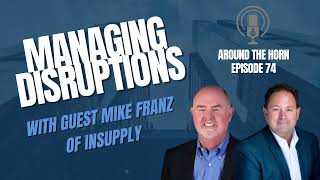
Weekly episode of the 'Around the Horn in Wholesale Distribution' podcast (hosts Tom Burton and Kevin Brown) with guest Mike Franz (InSupply). Discussion covers shifting global trade (U.S. buying more from Mexico than China, nearshoring/reshoring), supply‑chain fragility, labor market resilience, growth of B2B e‑commerce, gaps in distributors’ front‑office technology vs. back‑office investment, and urgent cybersecurity risks including AI‑enabled deep‑fake scams. The episode also highlights practical actions (technology strategy, CRM importance, verification processes for orders/deliveries), industry research projects (InSupply/Texas A&M capstone), and calls-to-action to subscribe to the newsletter and sponsor LeadSmart Technologies.
Questions this video answers
Tom Burton and Kevin Brown.
Mike Franz (InSupply).
LeadSmart Technologies.
A reported case where a company lost US$35 million after scammers used a deep‑fake impersonation of senior executives (video/voice) to authorize transfers/orders.
February 9, 2024.
Chapters
Foreign.
The horn in wholesale distribution with Kevin Brown and Tom Burton. Sponsored each week by Lead Smart Technologies. Tom, Kevin and their guests review the news of the week and dive deep into the topics impacting manufacturers, wholesale distribution, independent sales agents, and the global wholesale supply chain. Whether It's M&A SaaS and cloud computing, B2B, E commerce, or supply chain issues, we peel back the onion with our guests into the topics that impact your business the most.
Yahoo.
It's good morning, Mike. Are you turned off already? You want to leave after watching Kevin? Will's probably super excited. Will Quinn's probably super excited to see you dance this morning.
Will Quinn, our buddy from info, loves my dancing, as does anybody with an ounce of common sense and style and taste.
Well, I gotta say, guys, the. The music, being a Minnesota guy, the music reminds me of the Peanuts music. And so listening to that, listening to that. Ellis gets me a little jazzed up, too.
Well, that's why it's there. And so the quick story behind that, I haven't shared it in a long time is that's Vince Guaraldi that the tune is called cast your fate to the wind. Pretty famous. You can't help but be in a good mood. You know, we're Friday mornings getting ready to go to the weekend. So that was a side of it. There's a little piece of that that's sensitive to me or important to me is that there's a riff in there from the Charlie Brown or the Peanuts show in there, and he wrote the music for that. My dad, his name's Gary, but he in his career always went by Charlie Brown and he was in wholesale distribution for most of his career. So a little homage to ties together.
Very nice.
He's sitting in his chair this afternoon. Will be this afternoon as his recliner at 88 years old, listening to the recording. So that's a little homage to dad. And Tom knows my father as well. So, Mike, great to have you with us. Mike Franz with insupply. You've been with us before. Obviously it went well because we invited you back. So happy to have you with us. Mike, why don't you.
Lots of pressure. Wow.
No, no, no. We don't ever want to have pressure here. This is. This is Friday morning fun and hopefully some good insights. But, Mike, before we dive too far in and we get talking about the news and so forth, you know, time out. Hey, Tom, how are you? Good to see you today.
I'm doing well. I'm doing well. You know Mike. Mike is in Minneapolis. He Says he's going out to the beach after we're done here. Hang out at the lake? Yeah.
Usually. Usually going out to the beach to hop onto the ice to go ice fishing, but it's a strange one this year.
That's odd. Good. And Tom, it stopped raining in Santa Barbara. Is that what you said?
It's a beautiful sunny day at the moment. Yes.
Raining outside in Laguna Niguel. So maybe this storm will pass us by in California. But let's get back to Mike. Mike, tell us about you and your team at InSupply and the projects you've got going and what you guys do.
Guys, first of all, thank you for having me. I really appreciate it. It's an honor to be back, especially after, wow, some huge lineups that you guys have had already to kick off 2024. I'm. I'm a little nervous and anxious because, wow, tough acts to follow and to proceed of what's coming, what's coming next. So thank you guys for having me. I really appreciate it. Yeah, In Supply, we're great. We continue to grow. What it is, it's a mobile app designed to bring digital online and mobile visibility to local distribution. So we try to get end users to see the value the services and the support that local distribution supplies. So go to insupply.com check it out. Also, you can't see it in the screen here, but very happy to announce that I personally partnered up and have co founded a company called Shop for Coffee which is all about trying to reduce the skills gap in manufacturing and also support workforce development within the manufacturing community. A little bit of the proceeds from all the coffee that we sell goes back to big national and local organizations and programs to spread the wealth a little bit across that my partner and I thought that it would be. We were trying to think of ways that we could actually give back in a kind of a meaningful way. So we started up Shop for Coffee and it's, it's taking off. Honestly, we've got some big announcements coming up, but we've Already partnered with AMT, we've partnered with SkillsUSA, some local organizations and we continue to grow. There's a lot of excitement around it. Thank you. Yeah, I'll take that, that, that golf clap or coffee clap, we'll call it maybe. But yeah, very exciting stuff and lots of stuff to come for that too.
Good. Well, we're happy to hear that. We love seeing when things go back, but what you guys are doing at In Supply and it's just for people to go if you want to go look it up? It's insuppli.com correct?
Yeah.
Thank you for that.
Make sure we get, get that out there properly. So really what you've built is a mobile app that helps end users identify how to buy from locally owned, maybe employee owned and or family held distribution. It's easy to go to the large publicly traded companies, but be able to see how you can buy local and or regional. Is that a good.
Yeah, exactly. So the whole idea is that you log into the mobile app, you search for a part number, you find what distributors have it locally within a 90 mile radius of where you're actually at.
Great.
It identifies the inventory and we get you directly to that website, the URL for that particular part and then the end user can make that buying decision from there. One of the biggest goals that we have is to support local distribution and oftentimes, you know, you'll, you'll go online, you'll find you'll have, have a hard time finding these local distributors that offer such great service and value to their customers that we just want to help.
Highlight that that's good. Well, we're going to jump ahead here, but you may want to since you're in the Twin Cities as is Paul Kennedy with Dakota Supply Group is also there. He just made the comment do something good, a great hashtag. So you may want to drop off a package of coffee off it for Paul at DSG and he's right up the street.
No problem.
Great friend and a great business leader in wholesale distribution. So hey, who are we and why are we here and what are we doing? So let's. Before we dive into the news again, my name's Kevin Brown and I'm here with my lifelong friend and co founder of Lead Smart Technologies, Tom Burton. Tom and I joined together a number of years ago to bring deep technology into wholesale distribution and manufacturing. Who historically has struggled to take off the shelf generic software and put it into use effectively within their businesses. We developed a AI enabled CRM and customer intelligence solution that helps both distributors and manufacturers accelerate growth by having deep insights into both their customers, their teams and across their whole organization. So that's what we do. Lead Smart Technologies happens to be the sponsor of our around the Horn in Wholesale Distribution podcast. We get together every week and we talk about the news going on in the world, most specifically in North America. We talk a little bit about the economy, about mergers and acquisitions, cybersecurity, AI training, development of people and so forth. And we try and boil that news down into A manageable insights for you to take action on within your business. How do we get that message out? Well, every Friday morning, bright and early, out goes a newsletter. That newsletter is called around the Horn in wholesale distribution and manufacturing, as you might imagine. If you do not get that newsletter and you would like to two ways to simply get that one, you can send us an email at helloadsmartech.com helloadsmartech.com or you can go to the website for our podcast, which is www.aroundthehornpod.com aroundthehornpod.com all of our previous episodes are there. All of the options to go out and click and sign up for or subscribe to your favorite podcast platform are there as well. We do this every week on YouTube live, LinkedIn live, Facebook live, and then later in the day on all the podcast platforms. If you're on the website, that's the other way you can subscribe to the newsletter. Just fill out the form there. So last thing before we dive into today's news, if you like what we're doing and we get some nice emails and some comments both on LinkedIn and by email as well, hit the subscribe button, hit the like button. If you're on LinkedIn, get to the Elite Smart Technologies page, hit the Follow button. You'll see all of our past episodes are there and recorded. But share this information with your friends. Subscribe on YouTube, leave a review if you're on Apple Podcasts or the other podcast formats and that helps us spread this word out. Most weeks we have people from five to seven countries that are joining us on the podcast. So that's what we do. Tom, let's get started. Economy and supply chain. First section of the newsletter. What's going on there?
What is going on? Well, for the first time in two decades, the US Buys more from Mexico than China. I think that's actually quite remarkable. And there were some good stats in there. What were some of the key stats that you kind of looked at here?
Well, you know, as I looked at it, there's a couple of things that hit me. And the first thing before we talk about some of the stats was that it told an interesting story about a gentleman that had been a senior executive, I think it was with John Deere or Caterpillar maybe. Caterpillar. But he saw a number of years ago this opportunity that this could be happening bringing, you know, we talk a lot here on the on the podcast about onshoring and near shoring and so forth. And he saw the vision of that and kind of stepped away from that role and started working and putting together. The first thing he did is he worked with, interestingly enough, a Chinese manufacturer that wanted to start doing more work here in North America. And with that, he partnered with a Chinese manufacturer and built $152 million manufacturing plant in Mexico. We're seeing more and more of that happening on a consistent basis. We saw that the statistics you mentioned, the trade deficit with China narrowed last year significantly, with goods imported from China dropping 20% to $472 billion. I'm sorry, $427 billion. I mean, it just, it's astounding to me the amount of money that is. Right. That had been coming in from one country. And this is now being balanced out accordingly. So it's, I think it's good news. As we see, global supply chain issues are fragile. Another article that we'll talk briefly about in a little bit mentions a little bit about that fragility, but I think it's something to pay close attention to.
I think it's good news for the US and what we do here don't think it's very good news for China. So I think we touched on China last week about the fact that their economy is definitely down and the trend is not going back in the other direction.
So, you know, when you look at the tensions, right, Washington and Beijing are kind of little pushing and shoving a little bit already, Right. And then you look at what China's threat to Taiwan is, and then you look at the manufacturing impact, specifically to chips and so forth, as we talk about semiconductors and so forth, that that Taiwanese implication brings. And then you look at the fact that if you're in Europe right now and you look at the Suez Canal issue, everything's coming from China going through the Suez Canal to get to Europe. There's a lot of factors that suggest that centralizing manufacturing or refining manufacturing opportunities that are closer to where things are going to be used needs to be on everybody's radar.
Sure.
Before we move on and Mike, you might have some thoughts of this. Working closer with a lot of regional and local distributors as well, though, is, you know, this has got to be on the radar of everybody in wholesale distribution because no one wants to get caught again like they did during COVID Right. Covid was just a, you know, if you're, if you're older, you remember other times that we've struggled with shipping rates quadrupling. And I think even in, in Covid times were 20x what they had been. But these are things to be paying attention to and maybe even asking some questions. You might have some comments from some of the distributors that are on the show today or folks that have worked in distribution, but maybe even asking some hard questions of your key manufacturers. Right. Of what is it that you're doing to make sure that our supply chain is protected.
Yeah. And just to add a little bit to that, guys, is that later last year I was fortunate enough to do a presentation at the ASC and the association of Supply Chain Management National Convention. And one of the breakout meetings that I attended was all around top trends for supply chain professionals going into 2024 and reshoring and on shoring was within the top five. There were other obviously ones that we'll dig a little bit deeper into even today, but that was top of mind. So understanding that they don't want to get caught with, I don't want to say get caught in a bad spot like they did with COVID So everybody is focused on finding alternative suppliers, local suppliers, closer suppliers, trusted suppliers they can rely on other than going overseas.
Yeah, I think there might be a significant winner out of this whole concept and process. Might be might be Mexico, but we're going to see a lot more of this coming to the US and you know, it's interesting, one of the conversations that we've seen for years now is that when we first started, I think it was 70s or 80s to make a big push to China.
Right.
There was really not much of a middle class in China. Well, over these years a middle class has developed in China and now wages are going up there. So that barrier of cost to Mexico and or Latin America versus China, that delta has narrowed significantly. And as that delta continues to narrow and we have these other threats coming together, boy it really makes sense to be thinking about on shoring or near shoring. So it's not always going to be possible, but it's something to be considering.
Well, and your shipping is going to be way less as well from Mexico than it is to China.
So you know, although we got it, there is now challenges though with shipping getting container and trucks getting across the border based upon all the challenges happening at the border. So maybe you hear heard it here first. That might be the next article we're covering in the next few months is some of the challenges of getting things across with all the problems at the border. So what's next? Let's dive ahead.
Jobless Claims Week US Weekly Jobless claims stay low despite, you know, you hear all the announcements about the in the tech industry all the layoffs that occurred, I doubt that any of those layoffs would have trickled through into some of the most recent statistics. But overall, saying, you know, continue to be very strong and the job market continues to get tighter and tighter and tighter.
Well, it's interesting with that, right? We've talked about this and looked at the job layoffs and so forth that we talked about in Silicon Valley. A lot of this happened late Q3 and early Q4 as well last year, and we didn't see even a couple months later that that had much of an impact, which I wish I knew enough about the labor markets, which I certainly don't to speak to why that is, because you had just, you know, single companies were laying off 700 others with a couple of thousand. I think Google's just had a major layoff and a few others. So it's interesting to kind of see why those aren't going and impacting these numbers.
My guess is because I just had a friend, good friend, that got laid off from a tech company and he got a big time severance package and a lot of other things. And the way he's looking at it is, hey, I'm going to take my time to go find. It's interesting to listen to his viewpoint, right? It's like, first of all, I'm going to go find the right job and take my time, but I really want to find something where I'm not like here one day, gone the next. And he was second in command at a pretty large tech company that didn't get their funding and all of a sudden had to cut and like I said, literally here today and gone tomorrow. So I think there's a lot of dynamics in the tech industry that are related to people and severance packages and all that that are different that you would possibly see in other industries.
Great point.
And so it'll be interesting to see if it plays out that way in the next next few months.
Is there severance at Lead Smart if I get fired? I've not heard anything about that.
Yeah, yeah, you get, you get a afternoon, you get an after pay for after an afternoon. You're good.
After the after the Friday podcast, I get free lunch and we'll take care of this week.
We'll take care of this week, not to worry about it.
Great.
Okay. Send you some coffee too.
Thank you very much. You know, if I get whacked at Lead Smart, I'm going to need everything free I can get, so. Well, good discussion that. You know, one of the comments that was made in that article that said that the labor market resilience is the underpinning of, is underpinning the economy. And the latest claims reading suggested that the strong economic growth Momentum from the fourth quarter continued in early 24, potentially delaying anticipated interest rate cut early this year. So there we go. I still believe, I haven't said it in a couple of weeks that we may be in better shape in the US Economy if we go back and look a little closer at what are the metrics that we use and are they still the right metrics from when they were developed based upon.
Did you watch, did you watch Mr. Powell on 60 Minutes this week?
No, my dad mentioned that I needed to watch and I haven't watched it yet. Tell me about that. I'm going to try and watch it this weekend.
No, I mean, we were, he was talking, they were talking a lot about the 2%, you know, and one of the questions that came up was he.
Said, I was listening to around the Horn podcast.
On the show that dances. Yeah, I don't remember his name. That's what he said.
Yeah, okay, perfect. I'll take it.
And he was saying, you know, they were asking him about does inflation have to hit 2% exactly. For them to be feeling like they've accomplished what they need to accomplish.
Right.
And he was like, no, that was never the objective Is to hit 2%. Exactly. But to get in that 2 ish range and even see if he didn't, I don't know if he gave an exact number, but if he was like around 2, 5 or somewhere in that area, if they got into that area, then they would say, okay, we're safe to be starting to cut rates at that point. But I thought it was a good explanation and I thought the questions that they asked them were very good. It was very, very pointed, good questions.
So it's they weren't softballs, huh?
Yeah, they were good questions. Yeah.
Well, and my thing is, and it's not just whether 2% or 2.5 is the number, it's more of what are all of these other, other underpinnings that we use. But you know, is there a better way to look at job stats or manufacturing stats or all of the different pieces they use the term underpinnings, all the different pieces that they use, maybe that should be reevaluated just one guy's thoughts. So. All right, so getting into some more interesting stuff here. We have talked quite a bit in the last few months about some of the disruptions going on in both manufacturing And Supply Chain. Good article here from Supply Chain Management about disruption keeping manufacturers on edge. And it's not just all of the same stuff. They shared some pretty good statistics about raw materials and commodities. If you get a chance to look at this article, probably well worth. Again, it's called Disruptions Keep Manufacturers on Edge. And from Supply Chain. Was that, what was that again? Supply Chain Management magazine. So I don't know if either of you had any thoughts to add, but there's a kind of. They talked about, you know, not to expect the challenges of what we saw as the pandemic hit, which was kind of a perfect storm of some other challenges going on in the world. In the pandemic hitting where factories were closing down, it's a little different. Right. Factories aren't closed right now, but shipping lanes are and, you know, and so forth. So it's interesting that the way that they went about this.
Yeah. I mean, a clog and friction is a clog and friction. Right. Regardless of what it's, what it's coming from. I thought it was good. And Mike, interested in your take a little bit here, but talking about the importance of investing in technology and new strategies, and we don't talk a lot about that is we talk a lot about technologies, but especially now with AI and especially even what we do with Lead Smart, you've got to rethink your strategies and your processes at the same time as you're looking at technology. One of the things that I find myself doing more and more as we work with companies is helping them understand that as they adopt the technology, you shouldn't be doing the same things necessarily that you were doing strategically or procedurally to take advantage of that technology. So I thought that was a good point as well. Mike, do you have any take on that? Yeah.
And to your point in what I'm seeing and trying to understand is what are the most important things for in this particular case, what are the most important things? Technology. Speaking for distributors, and what, how are they finding out about these things? Do you guys see that distributors have teams set up for this to understand all the new tech that's coming into the market? Do they, do they fully understand what is available? In this particular article, I know they mentioned that the importance of visibility and efficiency and there's tools out there that help with, you know, supply chain visibility and efficiency gains. But I'm not sure if, you know, there's a focus on understanding what that technology looks like or if, you know, how do you find it? Where do you, where do you get it? How do you gain knowledge about it? Does it make sense to look into it even? And I'm wondering what you guys are seeing when it comes to that. You're pretty tied to, to a lot of different, a lot of distributors. So I, I'm curious to what's your take on that?
I think it's a great point, Tom. I'll dive in on that first if you don't mind. And to Tom's point, right is going in and moving forward with technology and having the same mindset as we've always had can be problematic. I think Tom, it's probably been a long time since there's been a new customer that's come on using our technology from LeadSmart that hasn't modified or adopted or adjusted at least the revenue side some processes and procedures that they have and systems and so forth. So I think that we see that pretty regularly that as people are adopting new technology and it's really something you should look for right. In a technology vendor. Is are they going to help me big picture with my business or are they just gonna sell me a. Tom uses the phrase consistently of a point product. Right. I bought it. They'll call me back in 10 months because my contract is up to get me to resign or are they bringing some value add to help me with my business? Because wholesale distributors, whether it doesn't matter whether you're. I mean I'm consistently on the phone with half a billion dollar a year companies who have teams in place but they might not have good processes for a quarter and systems in place for acquiring technology. And when I say that it's not just that they don't know how to buy it, it's how does it. To Tom's point, I think a little bit is how does the technology that I have on my supply chain side fit with the revenue side of my business I'll call it and do I have a tech stack that I'm working on versus these point one off products. So it's really having a, a method or a methodical process of how we want to go about this in our organization and we just frankly don't see it that often small companies as well as large companies. Tom, would you agree?
Yeah, I would tend to agree. Certainly I don't think there's and certainly it's not a one size fits all. But as a general rule we don't see a lot of strategic vision on the technology part of it and how it's going to be used or even what's available. I Think also on the. We're more in the front office, right? We're in the front office dealing with sales and customer service and those types of things versus in the supply chain or on the manufacturing floor. But what we do see a lot of is in the front office is the world has been geared around ERP transactions and they haven't thought about beyond what leads the transaction. Like how do I actually get to the point where I get more transactions? They just, you know, we get transactions, okay, that's great. We want, we want transactions, but we want more transactions. We want higher profitable transactions. We want all of those things. And that's what I mean about strategy is you can look at that and say okay, how do we look at this to improve all of those things? And then do we set the process on that anyway, we've digressed. I know.
So no, I think. But I think that's a really good point. I'll throw one last piece into that. That kind of goes with Mike's question before we move on was that I got a received a message Yesterday through my LinkedIn messaging from a gentleman who regularly listens into the podcast here and he is a software salesman for a company actually that we compete with but great friendly relationship with him. And he sent me a video note and I loved it because he said, you know, he said, Kevin, he said just wondering if you ever think about this and it's something he had been thinking a lot about is he said when I talk to both manufacturers and distributors, he said and he sells to your point Tom, front office, I'll call it revenue, more revenue related technology as we do and a revenue associated technology. And he said, you know, he said I talked to companies day in and day out that have spent hundreds and hundreds of thousands of dollars on warehouse management systems, supply chain management systems at a manufacturing site, it might be some robotics with high levels of technology and software that have to manage all of that. And that's all on the other side of the wall, I'll call it right. And he said and there is never a challenge to get those big budgets. But yet he said he talks to like, like we do talks to large, right? This I'm not talking about, you know, a mom PA with one shop, but large wholesale distributors who don't have a tech stack, don't have a plan for a tech stack and might be a quarter of a billion dollar a year company and have never had any type of CRM or customer intelligence solution in their business, but they probably have a million dollar budget on the other side of the wall for the technology that manages the warehouse and the supply chain. So it was just an interesting take. It was great. He sent me a video to talk about it and I sent him a video back. And it was just an interesting thought about, you know, orders come in the door all day long and they always have, but how many more orders could. If we put the same energy that we put on the supply chain side from a technology standpoint, on the revenue side.
So guys, can I add one more thing to that?
Yeah.
So. And I see comment there in the, in the comments about technology. Reality is the larger gap than anyone wants to discuss. And by William there, and just kind of to that, what you guys are talking about, my experience in dealing with small and midsize manufacturing companies. It's the front of the house and the back of the house and there's a huge investment put towards the back of the house and the front of the house gets left behind a little bit, especially when it comes to technology. Just what you just. Your point there, Kevin? And I would say that us being in technology and bringing that education to the front of the house is a massive opportunity. And I think it's our responsibility to help to do that because the focus is not there. And if we can bring to light. There's tons of technology out there, but it's also getting cheaper and cheaper to get involved with that. And there's so many options and so many things that just a little bit of guidance and steering in the right direction, education and being able to understand what the needs are of a particular business. I mean, we're talking about large, large national industrial distribution and wholesale distribution companies. But I think about, you know what Dirk? I was. Dirk's running around the country talking to the smaller guys and the smaller players and they don't have the resources, time, the energy, the effort to put to understanding what sort of technology solutions are out there. And it's up to us to help bring that to light and provide a little bit of education to do that. Because, I mean, it's our job. We sit here and we talk about technology and AI and all that. And there's other tools that can be provided to these companies to push them in the right direction.
I think those are great thoughts. Thanks, Mike, for that insight. You were referencing to our mutual friend Dirk Beveridge with his We Supply America tour that he does every summer. I know he's gearing up for the fourth one right now. He'll be back with us, I think before he heads out on that and then we'll likely have him on while he's traveling. So to dive ahead, there's some good articles we want to jump into. But again, if you are listening on the podcast versus on our live Friday morning broadcast, you are not seeing the screen that everyone else is. And on that screen is the around the Horn and Wholesale Distribution newsletter. So if you're listening, not hearing, we're talking about a series of articles that we've brought together throughout the week and curated that we thought would be interesting for the world of wholesale distribution and manufacturing. We do that every Friday Morning live at 9am Pacific on LinkedIn live, YouTube live, Facebook live, the editors take that. And later in the day it goes on all the popular podcast formats. If you're listening in and would like to get that newsletter, simple way to get it is send us an email@helloadsmartech.com or the website for the podcast is www.aroundthehornpod.com and you can get signed up for the newsletter there as well. So whichever one of those works, we're happy to do that. So, Tom, we're jumping into the section of our newsletter called Manufacturing and Distribution. We won't spend a lot of time on this, but there's some stats in there and some interesting things from an MDM Baird that Modern Distribution Management came together. The Baird Group did some ongoing research that they do multiple times per year and they talked a little bit about the outlook for 2024. I love a comment they made in here. It said the strong revenue rebound years in 2021 and 22 and the air leaked out of the tires throughout 2023. Great comment. I think that was from Tom Gale there. So if you didn't get a chance to read this, just jump onto the MDM Modern Distribution Management website and that article will be there. You guys have any thoughts on this? And it's kind of some interesting data points.
No, I think it's just worth reading. I think it's a good article, well worth reading. Some good statistics in there. All of that. A lot of the same sort of, you know, things that we've been talking about about sort of the confusion of the economy and what's happening and all the different things that are there. But I do think it's. It's well worth looking at.
Yeah, one of my takeaways was interesting is we talk so often with, you know, our audience tends to be folks in building materials, H vac, plumbing, pipe, valve fitting, electrical, industrial safety, and so forth. But the whole lot of segments within Wholesale distribution. And this talked about that the growth possibility that's looked at strong being in mro, safety cutting tool distributors, but that they had big growth in 2023 that was seen was landscape supplies, pool and spa and waterworks along with OEM fasteners, datacom safety and general industrial. So nice jump there and expecting more. So let's hope that the second half of the year, and I think a lot of what we're seeing is the discussion about the second half of the year is going to be strong, which is we're coming up on the middle of February already. So let's look for what happens with that and we'll keep talking about it here each week. Interesting article as we jump into our E Commerce and marketing segment from Digital Commerce360 was this article B2B.E Commerce laps US business sales. That's gotta be tough to swallow for some folks that aren't embracing digital, don't you think?
Well, what they said in the article is that, you know, in general B2B was pretty flat, right? This overall sales were flat, but the E Commerce sales were up, I believe 17%.
17% is exactly right over that same period.
And then they have that little chart here which I'm a little I chart here, if you can read this. But it had a whole bunch of different statistics about the different months and the different channels and all that kind of stuff in there. I still we've talked about this before. I would love to have a little bit more understanding of what people consider to be a true E Commerce transaction. Maybe when we get Brian back on again we can chat about this a bit more because in the customers that we work with, I see a lot of omnichannel, right, where people may request, you know, go online, they may request a quote, they may do some shopping online, then they purchase actually through a PO or through a more manual process. So I wonder often how much this is as influence versus actual transaction. But either way, the bottom line is right, the technology is driving and facilitating the way people want to buy and clearly at a much higher rate than the more traditional sales channels. Yeah.
So go ahead, Mike, finish with that please. Ken, I want to hear what you have to say because I'm going to shift gears a little bit and I think you're responding to Tom there. So go ahead.
Yeah, no, just to bring up something that we're personally working on. So we're working with Texas A and M on a capstone project right now to understand a little bit more around the buyer behavior. So one of the. We call it gray data. So we collect data between the end user that is actually going to distribution to their websites to try to understand what that, that. I hate the word journey, but I'll use it in this case. So the buying journey of how an end user is acting to make those digital purchases or E commerce purchases and the data that we're collecting is I think going to be a, a great tool and a great resource for distributors to understand what that actually that buying experience kind of looks like for their customers. And Tom, to, to your point, the where does that, how does that, how does that really impact the. Or what is that experience? That what is the true B2B online buying experience look like? I think it to me it's not so much the actual buying experience, but it's before that where does it start? How are people looking for things? What is their. Where did. What's their go to as an end user? And you know, we've talked with Ian Heller and the team over at DSG as far as what their statistics are showing. And they've been saying this forever. You know, everybody go the numbers. I don't have the exact stats but it's something like 70% of people go online first to research and to start their buying journey or experience. And we know that trend, we understand it and it's just a matter of how do we kind of capture some of that data to make that experience better for the end user which will ultimately impact the distributors as well.
I think that's, that's well said, Mike. And you know, Ian has commented over and over again, I've heard this with DST and I've heard it other places as well. But you know, the challenge is when you're, if you're a wholesale distributor and you're venturing into E commerce is one we don't do a good job of tracking that Omni Channel journey. Right. I'm gonna make a little plug for something here in a moment as well. But we don't do that. And so we use what it called, I call it veiled or false statistics on the impact of our E commerce on the business. Because somebody might quickly look at that and say, well we only did X amount of dollars but we, our return on investment is you know, this number and we spent this, this was a bad investment because we can't see that. You know, oftentimes in marketing these days we're using because of you know, so called dark social and things like that. We're using self attribution. We need to figure that out within E commerce. Right. Because there's so much more to that transaction. And the article here says that business buyers today use anywhere between three and 10 channels to research, negotiate and purchase goods and services from sellers. They can include online e commerce and apps, B2B marketplaces, e procurement and offline, including branches and manual orders entered by a sales rep. Tom's talked about this forever. He talks about it in his book the Revenue Zone.
Right.
The buyer's habits are changing. We know from research now that 60 plus percent, I think it is, of B2B buyers or millennials and they are going to choose how they're going to buy and we need to meet them there. Right. And so this E commerce piece is interesting. So Tom, any other thoughts on that?
No, no, I think that's good. Again, another article worth definitely digging into.
Well, I'm going to go back before we jump ahead and we'll just spend a moment in this next E commerce related article.
Right.
Is one of the biggest challenges that wholesale distributors are seeing is they've got a whole ecosystem over here related to E commerce and they've got the bigger part of their business between branch sales and phone sales and inside sales and outside sales. And none of those things are connecting well. And the best place we can be to serve our customer the best is where everybody in the company. I always use the term if your customer facing, which includes your website and your e commerce solution. The data needs to move between those. And some companies are doing a good job of that. Most aren't. My quick little plug for our sponsor and the company Tom and I work for. We'll be making a very large announcement next week about a global partnership where we bring e commerce data together right into where we visualize data, which in the right setting is always going to be through your CRM. So excited to announce that next week we'll be publishing that while we're attending affiliated distributors, E Commerce and Marketing Summit. All right, so Granger sees stronger sales ahead for its online businesses as well as Next article that's also from Digital Commerce360. So you know, I'll throw my first couple of 2 cents out for this and then I have some comments before we close on it. But people talk all the time right now about Amazon business. Started as Amazon Supply. Amazon Supply flat out said it when they launched they were coming after Grainger's online business because Grainger was doing already at the time, I think 3 billion in online sales. And Grainger just continues to see that that is a bigger part of their business, as is almost all of the big national players.
So can I add something there?
You can add anything you'd like, my friend.
No, that article is very interesting because one of the business units is, is in, is overseas and they're contributing quite a bit to that number.
That's right.
Which is, which is good. But then also the Zorro factors in there as well, which is their online marketplace, which contributes to that too. Yeah, which they announced that they added something to be effective. Now they, they're up to 13 million part numbers within their system, which is a, which is a hefty amount. So you can go on these platforms and pretty much buy whatever you need. That said, yes, that's growing but there's, there's, there's also a huge need for, for people out on the street. I mean the, I'll reference the ASCM event that I went to and conference earlier too where a huge sentiment was based on that. Okay, we can go online and find what we need and make that purchase but we still need experts out in the field to come and provide those solutions to us. So it's not, I mean Wales talk kind of about doom and gloom of the salesperson within distribution. What's that going to look like moving forward?
Forward.
But there is a. Buyers want that experience, that digital buying experience when necessary. But then there's times, especially in the markets that we serve that expertise and that knowledge and that service that is provided by the distributors and their sales teams is, that's not going away. So which is great and it's encouraging for those distributors. And if you can provide that value, people can see that you provide that value by going to your online, your, your website and your online stores and show the offering that you truly have. That's makes a huge difference. So here I go. I've had too much coffee and I'm starting to babble now.
That's good. Appreciate it.
Well and the value is even in my opinion is you get more technology and you get more channels and you have more buying ways that you can research and more ways you can buy. The value of that salesperson as you just talked about becomes even more valuable because they have to be that guide. Otherwise you end up in, you end up more with more confusion than you end up with results.
Yeah. And I mean Paul Kennedy just said in the, in the comments, frictionless experience for the customer no matter how they interact with us. I mean there's going to be. And Tom, I know AI is near and dear to your heart so there's you know, with bots and with assistant sales assistants and things that are coming through the pipeline and technology that's happening, it's only going to make that experience better for the end user. But to coordinate that, to your point, Kevin, with the data and the knowledge and the things that can be put towards that, it's just going to be that much more valuable to the end user as a distributor to kind of harness that and to make that communication process internally visible to the customer. It's going to be, I think it's a cool new way to provide solutions to the end user and to the customer.
That's great point there. I appreciate that. Before we kind of jump ahead to a next article, we're going to move into our technology, cybersecurity and AI section. But I just have a separate screen here with our LinkedIn feed going and I'm seeing some comments there so that we're not seeing on our simulcast tool here. So if you've made any comments today on LinkedIn and we've missed you, we're sorry about that, but we'll try.
And if you have any comments or questions that are relevant that you're seeing, go ahead and bring them up. Kevin?
Yeah, there was a few hellos and so forth that we didn't get, but we can do that certainly. But I want to jump ahead and kind of, and we're going to continue these e commerce conversations as time goes on. But you know, the next article that we're going to talk about, Tom, is about scammers and videos and so forth. But we had, I'm going to say this is a, you heard it here first moment. Tom, will you play this little clip real quick before we jump ahead? This is from a couple of weeks ago here on, on our, on our podcast.
But I think one of the big challenges is going to be adjusting to AI enabled cybercrime in 2024.
Wow.
Yep.
So right now you could be an electrical distributor. You could get a call from a customer that you've worked with for a long time, recognize that person.
Holy cow.
They could, you know, say, hey, I need $20,000 worth of copper wire and, and power tools sent to this address for a job I'm starting. You know, this person, you recognize their voice and then they send you an email that came from them and the whole thing's a crime. Right? I mean that's, that's happening right now. I wrote an article about this and there's a Japanese company that lost $35 million because someone posed as a director of the board and asked them to transfer money for an acquisition, and it was gone. So, I mean, there are whole new ways of cybercrime that distributors need to adjust to, and they really need to get training on that now.
There we go. Ian Heller brought this up. There's some. This is a similar story, if not the same one. I think this is a different one, but company out $35 million plus after scammer stage video call with a deep fake of their cfo. So, you know what? Why does this matter? If we were to just post this about, you know, this happening to this one company, who cares, right? That's not my company. It's in another country. But Ian really nailed it right there. These are the types of things we're going to talk about another article here as well. We could kind of even almost combine these in the discussion is the tools are out there now for literally in this case.
Right.
We had this deep fake that was built that was literally the faces and the words and the. The voices were perfect of a group of executives from a company that were in a video call telling someone to make some transactions. Scary stuff, right?
Yeah, no, I believe it from what I. In the article. And it's quite an intricate process they went through is there was an email and then that led to a zoom meeting or an online meeting where they. That was supposed to be the CFO on there directing them send money to different places. It looked and sound exactly like the CSO cfo. Plus they said there were other workers or other staff members on there that also were that all. So it all looked very legitimate until it wasn't.
Yep.
And I do think, unfortunately, this is one of the scary things, you know, in the personal world. Right. You hear a lot make sure you have a code word like if you, you know, get a phone call from your child or your family member or whatever.
Oh, great point.
And you're not sure have that code word like, you know, make sure that you have a. As a family or as friends and family, you have a code that you can do. I think that there's ways to also incorporate that into some of these things in business as well. Right. You could simply ask a question that every. The only way that it would know is if you got into those things. I don't think that's certainly the full solution to it, but there are things that I think immediately we need to be. Start preparing for, because unfortunately for the. For the criminals of the world, this is too, too good to be true at this point. You know, in terms of what's possible.
Hey, Tom, hang on for one second. Yes, you got it.
Okay, good.
Apparently, I just got word we actually had enough of Mike's voice and video that we've actually just acquired a controlling interest of. In supply. So.
Okay.
Thanks for being with us today, Mike. Yeah, you bet.
Hey, now you guys can retire to the islands. Very good.
I'm ready.
Right.
Minneapolis, we're going to retire.
Yeah.
So.
But, you know, can I. Oh, yeah, go ahead. Go ahead, Kevin.
I was just gonna say that, you know, the point of this, right, is this person wasn't a dumb person within this organization, right. They. They even comment that they originally thought that the first email was a phishing scam. And then things went on from there. Then they got them to transfer the money and then they continued an interaction with them ongoing for. I think it mentions. The article, I think mentions over a week. So it wasn't, you know, like we've got, you know, a large organization. In fact, we have another article that we posted today about a $10 million reward from the US government over the hive ransomware leaders out there. This is not what doesn't need to be a big organization anymore, full of a, you know, 100 people in a. In a room in Russia trying to, you know, pull these phishing scams off. This was very different. And with the technology that's there now, it's pretty significant. We also have another article today that talks about. It's from TechTarget and TechTarget.com and it talks about AI in the 2024 election and the spread of disinformation. These are one and the same of this scam piece that we saw and what we can be faced with and forget about the political side of it, you know, whether we see, you know, in that particular article, it talked about disinformation and talked about. I think it was before the New Hampshire primaries that some robocalls went out with Biden's voice saying, don't bother to vote. You know, the point of this and why we bring this stuff up and bring it to our audience is that if you don't have some things internally for this, Right. That whether, I mean, to Ian's comment about somebody calling up a branch, the voice sounds the same, right. Do we still, in this day and age take phone orders without some other type of confirmation from the organization? Right. Do we only deliver. And this may be stretching too far, but do we only deliver to known job sites related to. I don't know what the fix is. Right. But within wholesale distribution and even manufacturing can happen just as easy to a manufacturer where, you know, all of a sudden we've got, you know, that the buyer from Grainger that they know that's, or the buyer from Joe's supplier, whatever it might be that they believe they know. And all of a sudden they're shipping all kinds of stuff to a different location. These deep fakes, right? They don't need huge operations anymore. It can be done with one or two people that can put these things together.
And to that guys, I mean there's, there's larger implications to, and just for audience members to be aware, there's going to be CyberSecurity through the DoD with publicly traded companies. And there's a list at the bottom of the newsletter that references the public distributors and there's a list from DSG that's included with that. But data sharing and integration with these large publicly traded companies, there's going to be cybersecurity implications, regulations and concerns and policies that are going to be coming through the pipeline. They're already starting. You guys are probably aware of them. But just a couple to mention. NIST cybersecurity, you can check there for Some, some information. ISO 27001 is another one that you can, and I can send out a link to this. But then obviously we know about gdpr, everybody knows that acronym. But being aware of that information and just being able to reference that and being getting up to speed on those policies and regulations is going to help everybody out in the long run.
That's good stuff. It's funny you mentioned that, Mike. I heard, I saw a meme, I think it was, and it was talking about GDPR and all kinds of cybersecurity and so forth and email security. And it said, remember the day when somebody used to put a 4 inch thick book on your doorstep that had everybody in town's name, address and phone number in a book that they gave you for free. So I kind of got to chuckle out of that. But point being, right, takeaway is if you're wholesale distribution and manufacturing, be thinking with your teams, right? Because most companies don't have chief security officer and so forth in their IT departments. But be thinking about what do we do internally to protect ourselves against this? Because this stuff, it's just going to be more and more prolific. Closing point on this. And you, you guys may have a thought to go with this as well. The. This is great. Tom, will you hit that Ted Stark's comment there? Because this is, this is key to this right. Says I know a distributor that now requires an in person site visit by the sales rep before delivering to a new customer. That's a good step. Right? Those are, I don't know if that works in everybody's business. That's a great, great point. So real positive the last piece is this article out of Tech Target again that talked about all of the cyber deep fakes and so forth that can go on within the election. And Tom, I'm interested before we move ahead here quickly on your thoughts on this. But my belief is that coming out of this election cycle we're going to learn a whole lot more about what can be done and we're going to see a lot more examples that we can start protecting against.
More that can be done about the deep fake situation or well, we're going.
To see more examples of what people are doing and how they're doing it and, and the opportunity to guard against it will have learned a lot.
Yes, no, I unfortunately I think Ian was Exactly right. Is 2024 from a security perspective is going to be the year of the deep fake and the fake things that are going on, whether that's in our business life, personal life, political life, whatever the case may be. And yes we're going to understand and look at ways on how this will be able to be addressed. But yeah, right now it's a bit of the wild west, that's for sure. And again even if you don't have to go visit us, I think having some keywords or things like that, something that you can use that can validate that again that somebody else would only there would only be the real person would only know. I think is really important to be keeping that, you know and honestly not to tout, you know, to self promote but another reason why CRM I think is really important for companies is you got to know who you're working with, you got to know who you're dealing with, you got to know the different contacts that are there and, and so forth and a lot of people don't know, you know, they just call up and they say I'm so and so from such and such a place. They don't know and the inside sales doesn't know, they don't have that data. There's no way of really cross referencing any of that. I think all of that is, you know, going to end up being a, a very important point as we come out of the year. Good.
Well great points from both of you. Thanks Jeff Braun for your comment as well about Mike's comments about local and in person service and expertise. Important stuff. And we're going to continue this conversation. The two my two takeaways from Q4, latter part of Q4 and then the beginning of this year are two areas that we've not talked a lot about in the past year. Plus with where are we at today? Thomas 76 or 77 Episode 777 times we've done this. Ray Born what's, what's that Mike Ray.
Bork episode for all your hockey fans out there.
Okay, very good. The I, I don't get it, but I should, I should learn at that stuff. But you know, we didn't in historically we've not talked a lot about cyber security, which is a major threat and could have a major impact on manufacturing, wholesale distribution. And Dirk Beveridge helped us realize on our early January episode that we had an all star cast on that. We don't talk enough about people. So we've kind of restructured the newsletter that we send out each week. We're going to jump in, Tom, if you want, just because of time, I'll kind of scroll through a few, a little bit of these additional articles and you guys can kind of dive in. If you'd stop there at the Sales and M and A section, we saw that Sonepar's Crawford division restructured following an acquisition as well that they have there. So there's good read there. That's from mdm, but one of the things I wanted to hit on and it's a great piece and it's from a number of years ago from Forbes. I added it into the sales and M and A section this week. It's called the 12 Essential Steps of Win Win Negotiations. So Lee Steinberg, the famous sports agent that the movie Tom Cruise's character in the movie Jerry Maguire was patterned after, he's a local guy, lives about 15 minutes up the road here. Lee wrote a book called Negotiating with Integrity. And in that he talks about 12 essential steps of a Win win negotiation. And it just, you know, our life is negotiations no matter what.
Right.
Tom, you were in town this week and you know, we're co founders of a company and we sat in a room for two days working on stuff that we had to find. We had different opinions on some things. Right. We deal with it in our marriages, with our children. Life is a negotiation at some level. Right. So those 12 steps are there. This article, this link is to Forbes. I would just throw it out there. If you've never read those 12 steps, they're great for business and life. You could Google them. Lee Steinberg, 12 essential steps. A win win. So love that we put each week now a people in leadership section in a good article there about developing leadership soft skills, right? And especially with growing organizations. And if either of you have any thoughts or comments on this, throw them in there. But this is from Inc. Magazine. But, you know, people are different today than they were. We had this discussion on Tuesday, right. I think you made the comment was why can't people just get their job done right? People are different than they were when our generation, I hate to say it that way, was young and leadership skills are more and more important. So nice short article there. Any thoughts from either of you on that?
Yeah, I mean, I think it plays into. I think we've mentioned this on the show before. I do believe is that AI, as AI becomes more prevalent in organizations, that the culture of the organization is going to as well become more important. And it's good because it's going to be the way that we work is very different than the way that we've worked in the past and the way that we need to be. You know, and it says here, right, it's about exuding confidence and authenticity, not playing into politics or fear. So I think we have an opportunity to really, through AI, provide another level of ability that people have. But we also have an opportunity to really change the culture a bit because the AI is going to level the playing field. It's going to potentially make more, you know, instead of having A, B, C, D players, you're going to have more A and B players that are being, you know. Anyway, we could, we could go on and on about this, but I do think culture is going to be a big deal.
Hey, Tom, before we jump on, we might have just had the top comment of the year come in.
Yeah, I know. I realize when will that. I definitely need to use my training to show a better pre because, you know, I keep saying our culture needs to be more like TikTok and things like that, and I just haven't appreciated it well enough, so. Well, you're very right.
Very good. All right.
Can I make one comment there, guys?
Yeah.
Okay, so when. When you sent this out to me pre show kind of prep stuff, I was looking at the last article and then this particular one and I kind of combined them in my head is as far as culture. And one thing came to mind. It was a podcast I was listening to, not this one, unfortunately. It was a different one, but it was.
You listen to other podcasts Believe it or not.
Believe it or not. Sorry, I'm very.
I guess this would be your last guest appearance.
Yeah. Traitor.
Anyway, it was, there's, there's a guy who started, it's called Appsumo. Anyway, he was talking about his, the culture within his company. And one of the things that he noticed, especially on a sales team, was working and negotiating with his sales team about hitting attainable goals. And hitting attainable goals and creating those with his team pumped up morale. It gave them really good goals that they were, that they felt confident they could hit. But then also it propelled them to think about the next goal and then the next goal and how they wanted to do that. And that was just from a sales team perspective. That was one of the things that I really thought was relevant to kind of this article in a tactical kind of way, to look at brightening morale and looking at how the culture within a company can be improved.
Sometimes it's as simple as do unto others and have a culture like that in an organization. So I like those thoughts. And I was just thinking, going back to our negotiation article that we had earlier, and then some of this HR and people stuff is I think Will Quinn's actually doing a little bit of that right now. He's kind of behind the scenes using soft skills to negotiate his next appearance on the show, you know, so good job, Will. So each week we have a section called Industry Scuttlebutt. We talk there about some, typically it's some acquisitions as a news point, and we have three of those each week, their acquisitions, maybe sales results and so forth. So good stuff there if you get a chance to look at it again. If you don't get our newsletter, it's called around the Horn in Wholesale Distribution Manufacturing. You can get that by sending an email to helloeadsmartech.com or visiting the website for the podcast www.aroundthehornpod.com. the last couple things we'll talk about today is we've also added a section called A Second look. And that's where we might post articles about things that we've talked about maybe even multiple times in the past. Article here about Ford Motor Company posting a $523 million Q4 net loss. And almost all of that is tied to labor and the strike. So we talked about that when we were talking about the auto strike and its trickle down effect. Had some great comments from a lot of folks about that. So finally we try and add a section in each week called A Good Read. We usually make that about personal Development, leadership and so forth. But this week we threw it in there about what it takes to give a great presentation. All of us consistently give presentations, whether we know it or not. And if we have some skills to do that, it's better. This is a Harvard Business Review article. I really enjoyed that. So again, a lot we covered today from the newsletter as well as other news topics. Mike, it's been great to have you with us. We just got to note that Jerry, Jerry in Germany is hopping off and thank them Jerry for being with us as well. And Jerry works in the wholesale distribution or sorry, the representing manufacturer in the medical market through distribution in Germany. So like having him with us. Great comments today, Mike. Any takeaways, any closing thoughts?
Of course, closing thoughts for sure. No, thank you guys so much for having me. I really appreciate it. Just a couple of quick bullet points about what we've got going on. So insupply has got a lot going on in the first, second, first and second quarter. Very cool stuff. Specifically with the one thing is with the Texas A M industrial wholesale distribution program, the Capstone project, we're going to have some cool stuff around that. Shop Floor Coffee is making waves and if any distributors out there want to put it on their website, fantastic. We'd love to do that. And the third thing is as far as this podcast, you guys do a fantastic job and I really appreciate the opportunity to hang out with the crew. And Ted, I appreciate the comment there. Minnesota guys joining in and joining the conversation for sure. So thank you guys, appreciate it very much. It's an honor to be on with you guys and thanks again.
Thanks for the, thanks for the compliments. We appreciate it when you're with us even, even when you're not on as a guest, when you're making comments. We appreciate the comments because this isn't about Tom or Kevin. This is about wholesale distribution. And the more people share the podcast with their friends, the better the comments we've got. We had a broad group of comments from multiple countries today, which is great, Mike. I was thinking though, wouldn't it be rather than making waves, wouldn't it be better that things are really brewing at Shop Floor Coffee?
You're the smartest man I know.
Just, just a thought. One of them is really brewing. All right, well since since our deep fakes took your in supply business away, we got to really make sure you, you've got your coffee business going. So good stuff. Always enjoy our time together. Mr. Burton, any closing thoughts on the day?
No. Have a good weekend. I'm Torn, I'm gonna watch the super bowl, but I really have no idea who I'm going to root for. It's like, can they both lose? If they both could lose, I would think that would be the ideal outcome, but I don't think.
Can I make, Can I make one other comment? Okay, so I, I was a little disappointed we didn't talk a whole lot about AI stuff today, Tom. I wanted to kind of pick, well, that's Kevin's fault.
That's Kevin. So. But yeah, we touched on a few things. But you're right, you're right.
Didn't we, didn't we have a lengthy discussion about deep fakes?
Yes, yes, for sure. One thing I will mention is that keep your eyes peeled. I've created a whole bunch of customized GPTs that I'm going to be launching over the weekend on a LinkedIn post. So keep your eyes peeled for that.
All right, well, in case I miss it, forward it to me. I know that you do a lot of work building some cool GPTs, which, if you're not aware what that is, it's using a tool like Chat GPT to not just ask it questions, but program it so it has specific types of information that will, it'll look to on a consistent basis. We use that for some of our marketing at Lead Smart as well. So that's cool, Mike. I'll look forward to seeing that. What I was going to mention is if you follow me or we're connected on LinkedIn, if not, you can just look for me. Kevin Brown on LinkedIn. I posted, reposted a post from a friend of mine, Shawn Dubervak, this morning. And Sean is a futurist. He's the former chief economist at the Consumer Technology association, formerly cea, that sponsors ces. Sean's going to be on the program with us later in the year, but he gave a heads up about some of the super bowl ads that will be about AI. So there's, I think four of them. So I reposted Sean's post this morning about that. You may want to take a look at that. All of a sudden, there might be a reason to watch the super bowl for me. So that's it. Let's. Let's call it a day. We'll wrap this up. Mike, thank you again. Tom, my dear friend and colleague. Thank you for everything, everybody that joins us each week. We appreciate you. If you weren't coming back, we wouldn't be doing this. From Tom Burton, Kevin Brown and Mike Franz. We'll wish everyone a happy weekend, a safe weekend, and please be kind to others. Thank you.
Thanks everyone.
We hope you enjoyed today's episode and our guests. Each week we try our best to dig into the topics that are impacting your business, so please reach out to us and let us know how you think we can make the show better or topics you'd like for us to tackle or talk about more often and even guests you'd like to see join us. We're looking forward to bringing you next week's session and hope that until then you stay safe, stay focused and do great things. If you haven't already, please subscribe to the podcast and leave a review to help others in wholesale distribution get access to the conversation. And finally, please check out our sponsor, LeadSmart Technologies and their manufacturing and wholesale distribution industry CRM Customer Intelligence and channel collaboration platform. That's Lead Smart Technologies atLead smart tech.com.
More from Tom



What does AI actually mean for a wholesale distributor #WholesaleDistribution


If your systems don’t talk to each other, your AI won’t either #AITransformation




This is why one AI agent isn’t enough for high-stakes decisions #WholesaleDistribution

