Great Economic News for Manufacturers & Distributors! But Where Do We Go From Here?
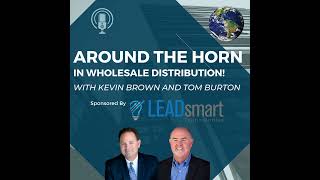
A transcript of a YouTube episode (Around the Horn in Wholesale Distribution) hosted by Kevin Brown and Tom Burton that reviews weekly news and trends affecting manufacturers, wholesale distributors, independent sales agents, and the supply chain. The episode (their 75th) covers economic indicators (PMI, Fed PCE), supply‑chain disruptions, sustainable logistics, ecommerce adoption (Fastenal digital sales), cybersecurity risks to manufacturing, and five risks of generative AI for distributors, plus industry M&A and people/leadership items.
Chapters
Foreign. Welcome to around the Horn in Wholesale Distribution with Kevin Brown and Tom Burton. Sponsored each week by LeadSmart Technologies. Tom, Kevin, and their guests review the news of the week and dive deep into the topics impacting manufacturers, wholesale distribution, independent sales agents, and the global wholesale supply chain. Whether It's M&A SaaS and cloud computing, B2B, E commerce, or supply chain issues, we peel back the onion with our guests into the topics that impact your business the most.
Hey, you know what? I am excited today. You know, today is 75. Is that astounding? Yeah, we, we every time we talk about this with John, our editor, that takes care of putting all this stuff together in the intros and the outros and the loading the podcasts and editing and video clips and all the stuff that John does such a great job of, he's like, you guys need to celebrate, right? My, my. I have three, three boys and the middle son's a. Something of a social media guy and, and he's constantly like, when you hit every 25 episode milestones you hit, you got to have a celebration and, you know, drink champagne and, you know, do all this stuff. I'm like, I kind of forget. We just go week to week and plow through it, right?
Yeah, yeah, but we can have champagne. That would be good. I'd make your dancing even better, I think.
Well, well, at least it'd be more tolerable, right?
That's Good point. Good point.
Yeah. For you, it would be more tolerable. Hey, though, interesting. We do, and this is housekeeping here, but we do, we should start planning what we're going to do for the 100th anniversary. If you're listening in with us today live on LinkedIn, live, Facebook live, YouTube, and you've got ideas about what we should do for the 100th episode, which is coming up in, I guess, the middle of the year, let us know. Maybe we should put our feet up. My wife just chimed in and said, no dancing.
And I have the same, same view.
Darlene with Ink Works Print and Design Group, my lovely wife just shared that, you know, unless we're at someone's wedding and she's been drinking a lot of champagne, she, she doesn't like me dancing. So I think I'm actually quite good. But that's okay. But we do, we do need to start planning what we're going to do. We should probably do it live somewhere. And when I say live us together in the same room, we'll figure something out. So we'll work on that. If you had ideas, throw them out there to us. We'd love to hear it. Big news for us today, although we're going to talk about some other big news today is we've re structured and reformatted our newsletter. You know, historically, Tom, we've had kind of our, our just information in the general news. Right. We've invited people to come look at that. But you know, we had a, a great group of guests on a while back a couple of weeks ago and one of the guests that we had was, we had Mike Marks and Ian Heller and Dirk Beveridge. And Dirk commented and, and he did it, you know, caringly for the, the best of things with us was he came back and he mentioned to us we don't talk a lot about people here.
Right.
And Dirk's work through Unleash WD and we Supply America tour is celebrating people that work in independently owned wholesale distribution. And so what we've done is we've restructured the newsletter. So the newsletter is now going to have a series of five sections. Economy and supply chain, Manufacturing and distribution, E Commerce and marketing. We're gonna have a technology, cyber security and AI segment within the newsletter. And then we're gonna have a sales and M and A section and then finally a people and leadership section. So it might be two articles, it might be four articles in each section each week. We're gonna continue with our great read and a few of the other pieces that we have in the newsletter. But I think the structure of the newsletter is gonna be extremely valuable for our audience moving forward. I appreciate the work you and your team did on that as well, Tom. So let's get ready to dive in. You want to worry.
I think it's important to point out that the newsletter will have possibly a lot more articles week to week than we had. It doesn't mean that we'll cover every one of them. This is going to turn into a three hour show. So if anyone's nervous about that, that's not. We're going to try and hit some of the ones that are the most relevant.
We didn't, we didn't talk about that. I blocked my whole morning.
Oh, you did? Okay, I'll just keep talking. Yeah. Say good morning to Ron. It's always great when he's here. And Brandon as well. Two good friends and always great to, to have them on the, on the show live.
Good friends and good friends of the show too. Ron's a now a consultant and working with some, some large brands and retired senior executive from Grainger Brandon Lee's a marketing whiz and social media whiz and from the great team at Fist Bumps, which is a fantastic tool if you're working consistently on LinkedIn and trying to grow your LinkedIn network and do some modern selling. I think that's the right term now, Tom, isn't it? Versus social selling. Modern selling.
Modern selling, yeah.
If you get a chance. Yep. If you do. To use LinkedIn for some of your prospecting and developing your network, you may want to connect with Brandon Lee and follow his his posts as well as his company Fist Bumps, which is a great tool to go with that. So before we dive into the news, my friend, let's get our housekeeping out of the way again. My name's Kevin Brown. This is my good friend and lifelong, say lifelong friend and great business partner, Tom Burton. We get together every Friday morning. We typically have guests with us every couple of weeks. We usually do it every other week. We've got a phenomenal list of guests coming up. We've got almost half the year already booked. Some big names that you'll recognize. We'll mention even a reference, a few of those later in the broadcast. This morning we get together every Friday morning. We go live on LinkedIn live, YouTube live, Facebook live, on the LinkedIn or the elite Smart Technologies page on any of those platforms later in the day. What we've discussed on the podcast here that's live will go on to all of the popular podcast platforms out there, Spotify, Apple Podcasts and so forth. So again, I'm Kevin Brown. Tom Burton, we're the co founders of lead smart technologies. LeadSmart is the developer of a product called ChannelCloud and ChannelCloud is a AI enabled smart CRM and customer intelligence platform that brings deep insights and accountability into both customer data, internal company data, and allows for actionable decisions that accelerate growth. Lead Smart Technologies is a sponsor of what we do here every week. In turn, what we do is every Friday morning we put out a newsletter called around the Horn and Manufacturing and Wholesale Distribution. That newsletter goes out to thousands of people. If you don't get that and you would like to, two simple ways to do that. You could send us an email@helloadsmartech.com or you could go to the website for the podcast, which is www.aroundthehornpod.com, and sign up there. All of our previous episodes are there and available as well. So we'd love to have you there. One last thing before we dive into the news today, what we would love and we greatly Appreciate if you enjoy coming. Each week we have literally hundreds of people that join us through an audience on LinkedIn. Click the attending button if you get an invite from us. Let others know that you're coming if you also want to get the reminders. But you're not necessarily getting our invitations follow or like the Lead Smart technologies page on LinkedIn, Facebook and certainly our channel on YouTube where all of our videos, we have some product videos and things like that about Lead Smart there as well. So click the like, share with your friends, share with others what we're doing and we would greatly appreciate that. So I'm done. Let's dive in, my friend.
Okay. Let's go into the news, into this first big topic and supply chain.
Yeah. Well some things picking up out there. Right.
You know it's, it's again looking at the article right. Talking about and this was I wanted to get your take on this. It said products falling to the lowest level in more than three and a half years. What, what I couldn't decipher as I read the article was that mean that the prices actually drop or was it just the price increase was the least in the last three and a half years and it wasn't 100% clear in the article.
Yeah, so it says prices charged by companies. And I had a discussion with one of our regular guests or regular attendees who's been a guest on the show who runs a very large distribution company and they were talking about deflation where their prices went up and haven't changed, but their consumer is expecting and driving lower costs from them. And that's what we're looking at in this setting. So we're seeing some of that across the board where things are settling down. You've got people in the marketplace charging less for some items out there. Prices are driven down at the, we'll just say at the contractor level or factory level or whatever it is that are buying from distribution. But their costs have mostly stayed up even when some of the commodity prices have dropped. Some folks Tom, to your point and we could talking for hours about this and there's others that are far more versed in this than I am. But you know, we see just like, you know, just like a simple example is right when you go to Chipotle for lunch, prices were through the roof, you know, earlier last year because of supply chain issues and labor issues and all of those things. Those prices aren't ticking down for their costs and they're not lowering their prices to you. You may now choose to go to the taco stand across the parking lot who might have a little bit lower prices. And in the world that we live in, within wholesale distribution is once somebody goes across the street and gets a lower price for the tacos, they come back to the bigger taco stand and try and start pushing on them for that price. So there's elasticity, you might say, with that as well. But that's kind of what we're looking at there. So that answer kind of your question there.
Yeah, sort of.
Sort of.
You know, again, it's, you know, the reason I was, it's an interesting, is suggesting that the economy kicked off 2024 on a strong note. But is that a strong note or.
Well, well, yeah, right.
Yeah.
The reference point is, right, let's make sure we quote this, this article right and make sure we stay on track with that part.
Right.
Is this was coming from the S and P global surveys that are done. This was a Reuters article that's done consistently. And remember, this is looking at the PMI outlook, so the US Composite PMI Outlook and Index. So this article was talking about the, the, the, the positive notes of the index that they did. And they comment that, you know, anything over 50% indicates expansion in the private sector and positive news. The number that they just came up with with this was 50.9, I'm sorry, increased 52.3, the highest level since June. In December, that PMI index was at 50, which, anything again above 50 is a positive note. And it's at the highest level it's been since I believe it was 2021 was the number in there. So we're, that's, that's the idea behind this. Right. Is that PMI index. So that particular index that is moving in the right direction, that PMI index takes into account lots of different factors and details within the economy and then that brings it back for their index. And we've talked about, we have, I don't know, four or five indexes that we look at fairly regularly here on the broadcast. And this just PMI index happens to be one that we've looked at and it's moving in the right direction. It's interesting that they came out of this with January numbers on the 25th.
Right.
That's what, you know, we got a few days left in the month here. But I, there's no way that number is going to fall off of any significance. Right. So, you know, there's smarter people listening in today than me on these factors. So if they wanted to share something with us, that, that, that's I would love to hear more. The issue though, that this article did go in to talk about though, is while we've got, you know, and by the way, just a quote from that, right. It says this higher composite reading bolsters economists predictions that the economy will continue to grow this year, although at a moderate pace. Receding inflation in the survey also supports expectations that the Federal Reserve will start cutting interest rates sometime in the first half of 2024. So it's just bolstering. It's an index that they've pulled together. But they did note about rising delays in getting material Right. Now we talked last week in length with Will Quinn that was with us about the Suez Canal issue, right. And the Red Sea with the Houthi rebels and so forth and the ships being attacked and people going around the Cape or the Horn there. That's adding 10 plus days and a lot of costs.
Right.
There's that factor. But now, right. We had Yellow Freight go out of business last summer. There's trucking issues out there. And then we've had all these winter storms. And so right now the winter storms are what is hitting the supply chain issue.
Right.
I literally just ordered some swag for the company the other day and some sweaters and some things for the team and they couldn't tell me when it was going to ship. Normally it would have shipped same day, but because of the storms last week, FedEx and UPS are way behind. There's all those things going on that impacts manufacturing getting raw materials in and wholesale distribution getting things from manufacturing. So there was that factor that they mentioned in this article about those delays could be impacting February, March issues. Tom, before we jump ahead though, interesting that I got an alert this morning as I was waking up about from this was a Yahoo News update about Federal Reserve made some announcements this morning with their readings. So I was pretty encouraged about that. The comment that was made from that was that the Fed's preferred inflation measure, which they call a core personal consumption expenditure, that clocked in at 2.9% for the month of December, which beat estimates. And it said that is the first time that gauge fell below 3% since March of 2021.
So it's that magic twos.
We're in the twos, right?
Yeah.
So there's that.
That.
What do they call that now? Maybe some hawkish versus dovish. Is that the right term?
Well, more dovish than hawkish. Right. Hawkish is, you know, hey, we're going to keep raising. Yeah. Raising rates. So dovish.
That's the right term.
Right?
Very good. All right, so sliding on a little bit.
What's next to our next category? Manufacturing and distribution.
I'll take manufacturing distribution for 300, Alex.
Yeah, exactly. That's what it seems like a little bit. So this is about the future of sustainable logistics, innovating for efficiency and environmental impact. Good article. I thought a lot, on a lot of different fronts about introducing. They talk about in the article some different technologies that we've touched on over the last 75 episodes.
Right.
But have been a bit overshadowed with the whole AI conversation in the last few months. You know, in particular, really looking at IoT Internet of things, blockchain, other things like that that are, I think, and this is something that I really believe to be true. I think Internet of things and blockchain, while in and of themselves have been good technologies, really, really get boosted as their technology value when combined with some of the AI things that we're doing. So I think we're going to see a much resurgence on those things.
I think you're right. And it's interesting, right? I mean, we had some nonstop discussion pre the really. I think if you looked at it, it's pre. What would that have been? November of 2022, is that right? When OpenAI launched ChatGPT.
Right.
Prior to that, all we. We talked constantly about blockchain. We talked constantly about Internet of things and connected factories and RFID tags and sensors and all the things we're going to change the world. Right. And all. And then particularly. And you're much more informed on blockchain and a big blockchain fan much more informed on that than I am. But you know, the reality that so much has come out of this, it's almost like those things got pushed, paused on at some level, at least in the media, pushed pause on. And all we talk about is AI. And I like your comment. Maybe you can expand upon that. So I'm appreciative of that idea of how those three things can support each other.
Well, if you look at IoT, right, Internet of things, it's obvious claim to fame is being able to get a lot of data in real time. Right. Get data from devices or things that are there. Well, what fuels AI is data. So I think that there's going to be a resurgence in the And I think IoT as a technology certainly had a lot of hype, but it really hasn't lived up to its hype in the last few years. But I think that that's going to really be a resurgence for that technology as a way to again gather more real time data that can be used to fuel whatever your AI that you're doing.
And I think, Tom, can I jump in and add something to what you just said? Because I think it's a really valid point. I think what the world has seen to Your comment about IoT hasn't moved as much as there's a lot going on with IOT in, I'll call it the commercial side of the world versus the retail side of the world. I think what we've felt today so far is every. I don't want to say everybody, but I can't think of a house on my block that doesn't have a ring or a Nest camera on their front door, which is this most simplistic of IoT type devices or some level of connectivity in their home. Well, well, I don't think what we found is that people care a whole lot right now about having a connected refrigerator that can order milk from Amazon for them, those types of pieces. What is going to be interesting is, and I think to see a larger burst to your point of the concept of IoT's expansion or Internet of Things expansion in the manufacturing process by taking advantage to your point of blockchain tools, which is going to bring more data as well as AI.
This article was about logistics, right? So how do we use iot? But I think the number of, I do know the number of use cases that even go above and beyond what's going on today can expand and the value of those use cases are amplified through the use of AI and the data that's coming from there. The second piece of it was blockchain, right? And we'll talk more about blockchain in a couple minutes as we talk about some of the security articles that were cybersecurity articles we're talking about. But blockchain, I also agree with you, has sort of been swept under the rug from a, from a new and modern technology has been overshadowed by AI. But again, as you start to do more and you're starting to connect more companies and connect more data and you want that security or you want that immutability that comes with blockchain, which is basically it's there forever, right? You're storing information, you're storing information securely decentralized. So blockchain, it really opens the door for a lot of decentralization. It again now becomes, its value becomes amplified and magnified when you combine it with those other two things that are there.
You know, it's funny, it just Makes me think, can I digress for a minute and tell a funny story and. Cause as it talks about. What was the term it used? Immutable ledger of transactions and movements. Right. So that at the end of the day, that is for us looking at that, that is. Or in our, I guess, in the world that we're talking to, manufacturing, wholesale distribution could be a huge, huge value in that setting. Because I just thinking back to when I was a manufacturer's rep for many, many years in the 90s and early, very early 2000s, sitting in front of a distributor, the distributor would have. And I might, you know, we represented as an example dupont and their protective clothing line. And for ppe, sitting in front of a, you know, major distributor, he had his printouts, the distributor did, from his ERP system about what their numbers with us were by item. I had my data from my rep management system that was based off of the invoices we were getting in big envelopes twice a month from DuPont that showed us our copy of an invoice that got sent to a distributor. So I had my own data and reports and then I would get spreadsheets from the manufacturer. And not, I don't think once in the history of the 10 years I own the rep agency did we ever sit down with a distributor and everybody had the same numbers.
Right.
They're always off. Now, if you're starting to look at blockchain transactions and it's immutable and that's it. Right. Or infallible, almost everybody shares the same data. That's correct. If it's wrong one place, it's wrong everywhere.
Yeah. And you're not going to use blockchain for everything. But it's, it's, it's something that again, fits into your stack, your technology strategy. And, you know, one of the things that I know we need to move on, but one of the things that I really opens the door to, in my opinion, is decentralization. And if you look at technology and how we've used technology traditionally, it's very siloed and centralized. We talked about this before, but in the world of AI, it opens up a lot of opportunity for decentralization. Blockchain is all about decentralization and IoT is about decentralization. So if you start to really look at those from a macro level of how do you use technology more in a decentralized way? Those all kind of fit, work together really nicely.
So good. Should we jump into our Ron.
Ron's comment real quick? He said he had a thank You. There was a great interview with the CEO of William Soma and she spoke about how AI has helped her profitability with big impacts on their supply chain and customer service. She said AI is real and not just an idea. You know, I think, Ron, that AI is a bit of a fad. But you know, I'm. I don't know, I, I just. Maybe it, maybe it is for real. I don't know. I've always been saying, Kevin, it's a bit of a fad. But you kept going. It's. No, no, it's real.
So Tom, when was the last time you didn't wake up in the middle of the night thinking about AI? Honestly, it's been months at some point, I guess.
Yes.
Okay. I think it might be here. I think it might be something here to stay. We're going to slide through the next article in our E commerce and marketing segment, but I did want to comment. I thought it was great. The article that we published there was, let's see, what's the final title on that? Fastenal sees Digital as a key to Long Term Growth. Again, if you just, if you don't get our email newsletter that comes out every week and you'd like to please let us know this article is available there, we won't spend a lot of time on it, but I thought Fastenal started off in Winona, Minnesota as a small family run fastener distributors and now is publicly traded company and with locations all over the country selling general line, industrial and safety as well as fastening products. But they talked about a billion dollars in their fourth quarter numbers were digital which accounted for 58% of their total net sales were digital. So you think, you think back to talking about fads, right? If you think E commerce is a fad, not so much.
I'd love to know how much of that 58% was not 100% digital but more hybrid where there was digital touch points along the way, but then there was also potentially a salesperson or a human interaction with it. Yeah, My instinct tells me is that a fair percentage of that 58% was hybrid and not 100% digital. But because that's an awful lot in my opinion for 100% digital. And we're seeing more and more hybrid sort of scenarios. People we're talking to.
Well, and I think what we have to remember with that, and you're spot on with the hybrid part of it is you know this. I can guarantee you that they did. That's not a billion dollars of people buying safety vests and having them shipped to them. Right. Their E commerce platform is ordering, it's building quotes. It's much deeper, which is what most wholesale distributors are doing with that. But the reason I wanted to talk about this and not spend too much time on it is that the quote that was there is that they said, let's see. Digital sales methods provide customers with multiple channels they want while also providing Fastenal. Ready? Tom, take a deep breath.
I'm ready.
Providing Fastenal with the data it needs to grow its business. What do you talk about all the time? Distributors have and manufacturers have this treasure trove of data that is rarely tapped into to even a fraction of what it could do for them. And that's what this article is saying about. You want to think about it, right? A billion dollars in online transactions or E commerce type of transactions. And they're saying it's the data that they need to accelerate their business.
Those billion dollars of transactions there is an asset that's created as a byproduct of that, which is all of that data. Right. By using that. So not only is it just the transactions, but all the data that is which may in fact may be more valuable than the transactions themselves. Right.
You know, so I. It's interesting. You want to catch Ron's last comment there. You want to skip that one?
I saw Ron. Let's. Let's see. I saw Ron here saying that. I just see others are starting to realize it, not just us, which is, which is great. And I wanted to spotlight James's comment as well about AI not ain't being a fact. Right, right. And it is being, you know, interesting to hear out being applied across multiple circles. That's all I see. Is there a comment that you see that I missed?
No, just. Just you know, Ron saying nice things about me. So. Which is. I expect you would. Would skip that. I do. When. When we appreciate everybody's comments. But I really like James comment because James is runs a perimeter Office Products in Atlanta and they do business nationally with office products. A lot of our audience here is, you know, distribution from a standpoint of H vac pipe valve fitting, industrial safety, whatever it might be. And our audience and as well as lead smart customers are broadening out to all different facets of wholesale distribution. We kind of get myopic a little bit sometimes. And I love, you know, some of the chats I've had recently with James that brings a different perspective than when we were just talking to people and you know, we'll call it building materials Factory supplies, things like that. So appreciate that comment, James.
What's true about that is that a lot of the same challenges are the same, right? They have different things. They have different things. They're selling different customers. But a lot of the same challenges and opportunities are, are the same. Which is interesting for me to observe as not being a 35 year, you know, veteran of the industry.
Yeah, well, I, you know, I think you're right. And it just, it ties me back to. And James will probably laugh at this, but the. I've said this, I think before on our show here, but I had dinner in San Diego after a large trade show, probably, oh, probably 2013, I'm going to guess roughly. And it was with a couple of Amazon executives, middle management person, a more senior executive. And we were at a nice dinner downtown San Diego, and we were talking about their business in general. And he made the comment, he said, you know, Kevin, we were talking about their expansion because it was some of the earlier days of Amazon business. It was called Amazon Supply at the time. And he basically said, you know, Kevin, if, if it fits in a box and it's legal and reasonably moral, we'll sell it. And, you know, at the end of the day, it doesn't matter if you're selling, you know, pipe valve. We were on the phone yesterday with, you know, one of our customers who's working on a major bid right now for a new football stadium in the Southeast. And it doesn't matter if you're selling a box of copy paper, ink and toner or it's pipe valves and fittings. Right. People buy the way people buy. And the technology to support that is growing and getting better every day. And the data is. The data, right? The data that in that case that James has is no less important than the data that Granger has from their transactions. So good stuff, good stuff. You want to jump ahead?
Let's do it. Let's go to technology, cyber security and AI. We should put this one to the top of the newsletter, I think.
You know, if you wanted to get that done, I would be okay with that because I know that these things are dear to your heart again.
So which of these do we want to touch on? I know we don't have time for all of them here.
Well, I think we were going to talk about the. The just spend a little bit of time about talking about the manufacturing. We've got three articles there. One is Cyber Security Competence, New Regulations and Standards in the Industry. That's probably an important read, but we could unpack that another time. We've got an article in this section too, in the newsletter. Manufacturing attacked in the cloud more than any other industry. And the last one we'll finish up with is generative AI 5 risks that should be Addressed. But, you know, let's just kind of talk about this first one about manufacturing Tact in the cloud more than any other industry. I didn't realize that until I read this article that it kind of surprised me. And it said this is now was a small survey. It was 1610 IT and security professionals. But what was interesting, it was across 100 countries. I thought that was kind of astounding with that, how broad it was globally. And it said, according to the survey, 64% of companies in the manufacturing sector suffered a cyber attack during the previous 12 months. And it said it's similar to the finding among organizations overall that 68%. Man, those numbers seem so high to me. Tom, I don't know what your thoughts are, but maybe there's a lot of attacks that are going on there that are simplistic, that they're counting, and maybe there's stuff that people don't even know about. I'm not sure.
Yeah, it'd be interesting to know what they consider a cyber attack. Right? I mean, in theory. I mean, look at the number of phishing emails we get every day. Is that a cyber attack?
Yeah, it says. It says right here, among manufacturing companies that detect an attack, 85% spotted phishing in the cloud compared to 58 across other verticals. Right. So basically, manufacturing is getting attacked a lot harder by phishing scams. And, you know, you and your team run, you know, the. Our email system within Lead Smart Technologies. And I'm confident in you guys, and we've had these discussions about what we're doing for safety, but the amount of spam that's phishing that I get every day, it's. And so I look in my. My track or my spam or junk folder and there's probably a hundred things in there, maybe 60, 70 each day. But of things that even get through into my email, there's another 40 or 50 minimum every day. And it's. It's astounding. So it doesn't take a lot for somebody that's unsuspecting. And this could be, you know, John the forklift driver that has to enter some things into the computer that also has a company email that, you know, I get things almost every day that looks exactly like our banking logo or our bank's logo. Right. And so if we're not training our people on this stuff. It can be pretty darn dangerous, clearly.
Yeah. But the point in this article was, is that the manufacturing sector experiences more cloud infrastructure attacks.
Right.
Than any other industry surveyed.
And unpack that a little bit for us, Tom, because I want you to dive in on that, if you wouldn't mind. Because, you know, we talk when we've talked about cybersecurity, which we've just started doing more on this show in the last few months, but we've had a number of people comment, and I don't think they're saying this as cavalier as it might sound, but it's easy to have the caution that says, oh, if I'm in the cloud, I'm perfectly safe. And while it's safer, maybe you can expand upon those thoughts.
I don't. Well, the issue, I don't think so much here is the cloud. I think it's the fact that in the manual and they talk about this, right. In manufacturing, we're in an ecosystem, right? Or in distribution, we're in an ecosystem. So we're constantly working with other companies, we're getting data from other companies, we're getting information from our suppliers and all of that. So there's a lot of handoffs occurring, right? And whether using EDL or the cloud or whatever, or in blockchain, we can talk about that in a minute. But the handoffs open up. Those are the kind of the cracks in the armor, if you will, because if there's all these handoffs going off between one company to another, and that's what they said in the article, this opens up the door for a lot of the cyber attacks to come in and kind of exploit those handoffs and those cracks as they move from one company to another. And yes, it's not so much the cloud as it is the fact that we have an ecosystem and we have handoffs occurring between companies, and then it opens the door again for your vigilance and so forth, is not as strong, so to speak, as you're working entirely within your own, within your own company.
So let's talk about those handoffs that you. Let's unpack that a little bit. What are your thoughts, maybe on an example, even in our company, in a technology company.
As it relates to.
Well, I mean, you're talking about ecosystems, right? And cloud handoffs and so forth. I mean, let's maybe use an example of that.
Well, if I'm, again, if I'm a manufacturer, right, I have suppliers that I'm getting my supplies from, so they're not my company. Right. So I'm getting information from third party companies, I'm getting communications with third party companies, data, whatever the case may be. That's a lot happening through the cloud. If I'm a distributor and I'm getting stuff from my suppliers and my, you know, so forth. And so again, we're not, we don't work in a siloed. If you look at technology, right, in the technology world, we may have some partners, but our ecosystem is nowhere as sophisticated and large as we have in the manufacturing and distribution. So we have a lot of handoffs and a lot of communication and collaboration.
Between companies that isn't necessarily just connected systems, if I'm hearing you correctly, that it says I'm connected in with one of my vendors. But it could be just as simple as they gave me my own Dropbox folder and we're sharing spreadsheets or the email transactions that are going back and forth. Is that kind of what you're describing?
Yeah, I mean, it's all of it. Right, it's all of it. But again, the cloud infrastructure of data sharing data, information, all of that stuff, again, whether using EDL or cloud or API or whatever it is you're using to share data, it potentially, and I believe that's what they're saying in the article, it opens up the door for some cracks in the armor that may not exist within a company on its own. And again, I believe that's where blockchain will start to have more of a presence, because blockchain is a decentralized way of sharing information between companies. And there's a lot of security that can be done with blockchain. That's not as it's, it's much more difficult to do without something like that. So again, I think the issue that needs to be observed is not just cloud, but the fact that there's a lot of communication between companies, intercompany communication that's occurring through those.
And there's just going to become, there's just going to become more and more of that as we grow technologically. Right, of course. And so takeaways for me on that is know where your, your ecosystem is connected, have the right people that you're allowing to do this. And you know, I think so often we get vendors that want to talk about connections and different things like that. Understanding the cybersecurity issues that your partners have right in place, understanding the transfer, if we're going to connect, whether it's APIs or share data in any Way understand, maybe as an example, we talk about this with our customers all the time. You know, most companies in wholesale distribution, unless they have a sophisticated IT department, don't think through the process of even asking hard questions about the platform that a software product is built on. Right. How secure is that? Could attacks come in through that to get to their system? Right. There's a lot of things like that, and those things become very important in understanding who you're partnered with and where your data is coming from. Probably the biggest thing we're seeing today, and I think some of the statistics in this article even suggested that are tied to the idea of, you know, email. You know, I think the fastest way to any organization is through email. I just actually heard yesterday, you know, not highly sophisticated, but a great company that works hard on it. That's one of our customers, had a major hack last year that I just heard about yesterday. Right. And it's, it's not so much sometimes even what they'll get from you. It's the, it's the cost and the inconvenience to go fix things. And it's just a powerful. We could spend hours talking about cyber security. And frankly, I'm far from an expert on it and would like to get some guests on coming up this year that can talk even more about that, about, you know, some ways to protect ourselves better. So why don't we jump ahead, my friend?
And I realize I got too many different acronyms in my head. I use the word edl. I meant edi, right? Edi Communication, not edl. I've been doing too much with ETL recently.
Okay.
All right, so next one is what? Generative AI5 risks for distributors.
And it's great. I wanted to congratulate you today and I placed these in when I put my notes together for the newsletter. I placed our first article that discussed AI at all over halfway through our broadcast today. And I thought you did well. I anticipated you to be shaking a little bit, maybe sweating, waiting to get to this, but you did a good job and I'm proud of you.
Yeah, well, practice makes perfect, right?
Okay. Very good, Very good. So good article here in talking about generative AI5 risks for distributors. And this was from Industrial Distribution Magazine. Tom, I'm going to hit timeout for just a second. We do this every week about. It's usually more than halfway through. Remind those who are listening on the podcast who are not seeing these two handsome faces here this morning discussing these topics. If you're listening versus watching what you're not seeing is that we're reviewing through the newsletter that we publish every week. It's called around the Horn in Manufacturing and wholesale distribution. It's sponsored by Lead Smart Technologies, the company that Tom and I both work for. And we bring together news and data about, as we have talked about today already, E commerce, marketing, people and leadership, the economy, manufacturing, distribution, sales, M and A and so forth. We bring that together, we discuss it with our audience that's here. We get great comments as we've had today and we bring that to you every week. So if you're not getting that newsletter and you would like to simple way to do it is an email to helloadsmartech.com or we have a website for the podcast www.aroundthehornpod.com and you can see all of our previous episodes there and you can sign up for the newsletter. So if you'd like it, join us. Always want to address the fact that we've got a very large audience. In fact, our, our podcast audience dwarfs our live online audience. Now we're most typical weeks we're in somewhere between five, seven, even eight countries that are listening in on the podcast, which excites us. We're appreciative of that. Last piece on that little bit is if you like what you're hearing, hit the subscribe the follow, share with your friends, Let others get involved in this as well. So that's it, Tom. We're going to talk about generative AI5 risks for distributors. Do you want to lead that off?
Well, why don't you just kind of go through the quick five and then we can hit on a couple of those.
Well, yeah, there's, there's. I had thoughts on every one of the topics, right. And this is the first one was inadequate quality control and inaccurate output. Garbage in, garbage out. Safe way to say.
Yeah, I, I think the first three in there, if I remember right, the first one was, you know, bad output and then bias, I think was the second one. Second was.
Second was biased or prejudice.
Third was ip right. Copyrighting ip.
Fourth was over over dependence on technology. And the fifth was data system security vulnerabilities, which ties into our previous article. I've got a quick thought on most of those, but I want you to drive this one.
Yeah, well, I think, you know, so to me the punchline on at least the first couple here is. And we've talked about this, right? First of all, know what you're doing with AI so because I can be, you can be playing with fire a bit if you're not if you don't know what you're doing with it and how you're setting it up in your organization. So, and this becomes more and more relevant as AI starts to incorporate the first party data that we've talked about that we all, that we all, you know, have talked a lot about. Right. In things here. So if first of all certainly know what you're doing, know how it's being set up. But even if you properly have set up AI, we're not at the point where AI is running on autopilot. And I think the first two things there are make sure that if you're, whether you're creating documents or letters or articles or blog posts or emails or whatever the case may be is make sure that you're reviewing it before you're just, you know, arbitrarily sending it out or using it. Because yes, it can be very. And again, this is all dependent to a large degree about how you're setting up your AI, your prompts and your data and all of those things. But even, even if you've done a great job of that, you can end up getting something that is hallucinate. Hallucination, Right. If you want to call it that. Just bad data. And you can get biased on things. So you have to qa. Right. You have to QA and review it. I know there's AI coming out to do AI to review these types of things. Right. So there's kind of like levels. I don't see that. But it's.
So where's that bias and that struggle that the AI review AI comes from? Right.
Threat. But again, it's just the point being is you can't look at it as an autopilot type of thing. And you see that a lot. Even I, you know, I, I see emails more and more. I can just see even, especially quote, unquote spam emails that I get from people. You can just tell that they went into chat, GPT, wrote something and put it in there and didn't look or think about it twice. Right. And that's kind of a, can be a risky situation.
Yeah. You know what's interesting to me on that as you make that, that point is in, in we talk a lot about this with, with ourselves and with guests as well, about stopping, you know, helping with writer's block or white page syndrome or whatever you want to call it. Big help for me with AI when I stop and take the time to write. I enjoy writing when I have the, the flexibility to do that. But what's interesting with that is I'm seeing consistently now specifically on LinkedIn, but in other social arenas with people who historically have not posted a whole lot are posting long articles. Not articles, but long posts that are far more expansive. And it's not bad. Right? Because it's their thoughts because they had to put the prompts in to get that output. So it's not that it's bad. It's just interesting to watch how many people are now doing this, which is really important. So you know, that's I want to.
Hit on Kelly's comment related to that because many don't understand how elaborate prompts are. They're not one word or one sentence prompts. Very sophisticated. To get good results is now a job in an art form. Right. And, but right. It's a job title. So it's not just like create me an article about, you know, the economy or something. It's and, and you have to continue to refine your prompts over time. But there's again, we don't need I won't try and get into a little master class or if you want to call it on on the AI structure, but you have prompts, you have your data, you have a lot of different things that influence the output of that. Right. Of that AI. And but you completely agree with Kelly is that prompts are is a real becoming a real science on how to use those and by using them properly. I think I did a prompt this week with something that was probably 500 words and multiple paragraphs. And the good news is you can tell it what to do and for the most part again it will try and do that, but you still have to QA what comes out the other side.
And that's the I think the key. Right. Two things come to my mind quickly. I'll share. Related to that is I we were messaging this morning, not about the podcast, but about our business and I shared with you some statistics that I had used Chat GPT for.
Right.
I would never want to share those with a third party unless I had gone and vetted those further and found the reference sources. Right. Now that's the beauty of ChatGPT is you can if you have the paid version, if you're using ChatGPT versus another model is you can ask it for it to always in your results show its sources or you can go back and ask it for that. But I did an interesting exercise earlier in the week that there's a lot of additional work to be done on still. But I was trying to do some work related to helping with our messaging as a company within Lead Smart Technologies. And I asked ChatGPT to ask me 20 questions as a starting point to help it. And so I built a GPT right own small model there so that we could help us ongoing with our marketing efforts as a company. And I wanted to share that with the agency that we work with and other people that we work with. And I went and asked it what I wanted it to ask. Basically said ask me the questions that you need to become an expert on my company. And it was tons and tons and tons and tons that very valuable of what that came back with. So before we jump ahead on this Tom, you know we let's I'm going to recap these. The risks that they talk about in this article again, it's from Industrial Distribution Magazine is inadequate quality control and inaccurate output. Right. So garbage in, garbage out. Lack of a better term, biased or pedestal content and conclusions. You could convince AI to give you the answer you want if you ask the questions and load data that way easily. We could infringe on intellectual property. People start starting, I think to depend on tools that aren't fully baked even yet. Right? There's a lot we need to learn. People I think are starting to rely on on AI technology and tools like Bing and ChatGPT and other reference points that they have as kind of gospel and not necessarily checking their work or adding to writing it and something becomes, I don't want to say fake, but totally written by something else versus their ideas. And then there's security issues that go along with it. The last piece is there was a quote at the end of the article. It says the power and potential of artificial intelligence to wreak havoc has often manifested itself in movies like 2001 Space Odyssey or, or the Terminator. It says while distributors may not have to worry that their use of generative AI will bring about the apocalypse, they should approach its adoption cautiously and thoughtfully to minimize the risk of unintended consequences. So I love that. And that brings me to a point. I'm going to say something I've had. There's people on the broadcast with us today that say we don't talk enough about what we do at Lead Smart. And there is a whole concept within AI that says, hey, you know what? You can go out and hire prompt engineers. You can go out and hire PhDs. We've got a PhD in AI coming on. We got two of them scheduled as guests coming up in the next 45 days where we're going to learn A lot about all of the sophistication of what they do. You can go do that. You can also go quickly and easily start buying third party products that you probably don't fully understand how they work and bring those into your business. There's a concept, I think Microsoft's the one who introduced the topic and they talk about incumbents and the incumbent concept is taking your AI roadmap through trusted existing sources. And the roadmap that you and your team have developed for our company is to allow us to be that trusted source for our customers to bring chat type tools and AI and structured and unstructured data and all the big words that people like to talk about in to a wholesale distributor or manufacturer with a trusted source on the secure trusted platform. We were talking about earlier today about cybersecurity so that you go with a trusted partner on your AI roadmap rather than just trying to go through the jungle on your own with a dull machete. So there's a little plug for the.
Day but I wanted to tie that in. Kelly's on my bandwagon too. Kevin Domen, Domain specific data within a customer.
Thought he was smarter than that. Yeah, go ahead.
It's going to be very accurate and powerful. It's not and what we're learning and by the way, speaking of lead smart, if your company is on Eclipse, Epicor Eclipse, we are, we just this week are finishing up a really new integration with Epicor Eclipse that's gonna is super slick. So if you're on Eclipse, talk to Kevin because we have some really great solutions for you. But one of the things we're really working on there is what data really matters. Right. It's not just take every piece of data and throw it into the data lake and, and let's use. It's like what data matters and what data is really going to have the best result and not create some of those issues that you're talking about before. So there's a lot that goes into it to making sure that you're going to have a foundation to get those results that you're, that you're. And having that right guide and putting those together is very important.
Yeah, we need a guide in lots of phases of our life and in technology. Most organizations need a big help and a big support. So if you're interested in our roadmap of AI, we'd be happy to talk to you about that. So as we move on. What's that?
No, I like Kelly's comment. Hero data, right? Yeah, very. It's Great.
Very good. So as we kind of move into our next section, we'll talk about a couple things as we wind down today. So we have this new section called Sales and M and A. Exciting news this week. National association of Wholesalers have purchased Modern Distribution Management. Tom Gale and his team have done a phenomenal job. We publish content from them, multiple pieces of content from them every week. We're very appreciative of them. Great relationship with them. In fact, Mike Hockett, senior editor there, is on with us in the next. I'd have to go check in the next few weeks. Mike is going to be here. Mike is a regular listener. Tom's with us, Gail's with us occasionally. I'm excited to say that I've been in discussions in the last couple of days with the folks at NAW and we've got at least three of their executives are going to be guests on the show this year. And I'm. I'm very proud of that. We've got. I know Eric Copland, their CEO is coming on, I think Dan Schubert, their CRO is coming on, and a few others. So this is a powerful, powerful piece. And we publish information, you know, and share information from so many sources every week. We love the folks at Distribution Strategy Group, naw, National association of Manufacturers, but this is a unique, unique piece. And so we're looking forward to having. Mike's going to be on and then some of the NAW people coming shortly. We're expanding our partnership right now with NAW as well with Lead Smart. So really kind of exciting because you bring this behemoth.
Global.
I don't want to say global, but very national. The largest trade association within wholesale distribution that has the lobbying group, their training and technology groups. They have, you know, all the roundtable sessions they have throughout the year. They have. Their big, biggest event of the year is next week in Washington, D.C. now you're bringing them with another group that has very unique and specific research and other data with mdm bringing that together. I think there's going to be some neat stuff that comes out of that. So it's good stuff. Congratulations to everybody involved in that.
Yeah, I just, I think to me it just continues to spotlight the importance of how companies are recognizing the importance of having good thought, leadership and good information to be able to be sharing with their, with their members. So I think it's going to be great.
Well, and I think too, you know, we had this discussion last week that I thought was. Was really interesting. That and just it kind of comes to mind to me in this setting is that, you know, I, I had somebody in, in another that has somebody else that has a podcast and, and publishes a lot of data, you know, asked me the question a while back if, you know, we were going to become their competitors and, and I kind of, it kind of made me giggle because we just jump on the phone ever on LinkedIn live and you know, and YouTube and Facebook live and the podcast. Every week we just have conversations, right? We have a wonderful sponsor in the company you and I work for and run that does that. But we just bring people together and have a big discussion with things is where we're at with this. And but what I realized is the competition out there is for time. And so I, I know I read consistently almost date, not almost every day. I read MDM content and naw content to start seeing some of that I'm assuming combined into a simple single format will be great. Will be great. So that I think will be very helpful to the group going on. So as we kind of pushing through this today, I think probably one of the best articles that I've read certainly year to date, if not in the last few years, is in TED Magazine, the electrical distributor magazine. They were gracious enough to get just one of the finest industry experts out there. I think, you know, you're probably really excited about this one. Do you want to lead this one off about the pros?
I agree it's such an impactful article that I'm not going to do it justice. So what I would recommend is go read it because we're just, we're not going to have time to cover it today and do justice with it.
Well, so the good folks from TED or the electrical distributor magazine, great publication. If you're not subscribed, go subscribe. We've got their publisher coming on in the next couple of weeks. Mr. Costa is kind of going to join us as a guest. We're looking forward to that. But their writer, Susan Bloom, did an article about the pros and cons of private equity and we kind of joked is I'm who she interviewed through the whole article on this. And we talked about venture capital, private equity, other debt forms and so forth that are available. We see such an abundance and growth of private equity coming in to wholesale distribution and it was a really enjoyable process. I wanted to thank them for including me.
And in all seriousness, a really good article. It really is a good article and I do recommend reading it. There was quite a few things we could end up talking about. There in the world of yeah, we.
May do something like that down the road because you know, the reality of it is I think people have a fairly if you're not involved, if you're the CEO of a, you know, 50/plus million dollar distributor, you're having conversations off and on with PE. But general understanding about how PE works, how these deals work, what are expectations coming out of the deals, what may happen, what do deal structures look like. That's what this article about is about. So if you're interested in what private equity does and this happens to be published by the good folks at the Electrical Distributor magazine, but the topic that we're discussing goes across the board in any type of distribution and the relationship with pe. So we are going to move ahead, talk about a couple things as we wind down. We have our new section called People in Leadership. If you're not seeing our screen Tom, just scroll to that. We have an article in there from cnbc. It talks about as companies lay off even more workers, they could be making a big mistake in the way they're doing it. I think this is just a good read to kind of think about. Not even just if you had to do a group of layoffs, but just even letting somebody go, which we all have to do in business. Great article to just kind of give you some feedback on. I think there's more in here about what not to do. Jumping ahead. We still have our Industry Scuttlebutt section each week. Nice to see 3M delivering some good results. There's an article there from Industrial Supply. MDM published something this week too about Lawson Products which is owned by DSG and they acquired Emergent Safety Supply regional safety distribution company in Illinois. So nice acquisition there and then another acquisition by MSC Industrial. So three good posts there that are worth reading. Our Goodread article this week is five Ways to Demonstrate Leadership Beyond a title. So if you get a chance to do that. Lastly, as we close out today, so important, last week we had a great guest on Will Quinn with Infor. Will is the distribution guy. Do not try and use that word and call yourself that because Will has trademarked the distribution guy. Great guest, great friend of the broadcast here. I think he was on with us earlier, made a comment. Will was on with us last week and as I curated our articles for last week, what we posted in the newsletter was an article from one of his peers. This week we have it posted. It's called the Future of distribution top 10 trends and predictions for the Next Decade. We talked about it on Last week's show with Will. It's published in this week's newsletter. Again, if you don't get the newsletter, reach out to us helloeadsmartech.com as an email and we'll get it out to you. So last thing, I'll hit on Tom in this diatribe here. I've got rambling is we don't talk about this regularly. We have a link here. The good folks, Ian Heller and Jonathan vine at Distribution Strategy Group, they publish on their website, they have an index tracker for publicly traded distributors. And if you're an investor, a stock trader or just kind of paying attention to what the publicly traded companies are doing, go to Distribution Strategy Group. I think it's just distributionstrategygroup.com good folks over there. Great information that they publish and they have that index. I look at it off and on. Last thing is, we've just updated our, through the help of our research and MDM is there's a great listing of events and shows coming up, whether it's power transmission distributors meeting, NAED meetings, AD meetings, Granger show. All of these different things are published through the middle of the year on our newsletter as well. So, my friend, in closing with all.
Of this new stuff in the newsletter, I don't know that you need to read anything else during the week.
That's right.
There's a lot of stuff in there now.
Get the newsletter on Fridays.
That's right. Just summarize everything.
So, okay, I, I am proud of us. We did one article today on AI.
It's okay. We're, we're diversifying, we're dive. We're an equal opportunity. Very good contributor.
All right, well, listen, Tom, thank you. As always, gracious of you for all the hard work you do on getting this show out every week. Appreciative of your friendship and our business relationship. We love everybody that comes and joins us each week. Again, tell your friends if you don't get the newsletter, let us know. We thank you. We're looking forward to next week. We've got an abundance of great guests from across the board. In fact, James that was with us earlier made a comment from Perimeter Office Products is going to be joining us and a broad group of people coming that I think will excite you. If you like AI, stand by. Over the next couple months, we're going to have two different PhDs in AI coming with us. But both of them are able to not boil the ocean, but bring things down that are manageable and you'll, you'll leave with Great take.
Have you got Sam Altman signed up yet?
No, but what's cool is, you know what I wanted to mention is that Distribution Strategy Group has just opened registration for their upcoming AI event in Chicago in June. And I did see that Zach Kass, who was the original, I think he. I can't remember the title, but Zach, I had a chance to meet him at the previous DSG event in in Chicago last October. He gave the Key Main keynote. I think he was the Chief Commercial Officer or something like that. Super insightful. Had a chance to talk to him for about 10 minutes after the keynote. Great guy. He's coming back to that event evidently. So great event. Distribution Strategy Group Jonathan Byney and Heller get an opportunity to look into that event in Chicago in June at the Chicago o' Hare Marriott is where it's at, which was a great spot for it. So that's it. We're going to wind down, my friend. Have a wonderful weekend everybody that was with us today. Whether you're with us live or you're listening later on the podcast, have a wonderful day. Be kind, do good things and be safe.
Thanks everyone. Foreign.
We hope you enjoyed today's episode and our guests each week we try our best to dig into the topics that are impacting your business. So please reach out to us and let us know how you think we can make the show better or topics you'd like for us to tackle or talk about more often. And even guests you'd like to see join us. We're looking forward to bringing you next week's session and hope that until then you stay safe, stay focused and do great things. If you haven't already, please subscribe to the podcast and leave a review to help others in wholesale distribution get access to the conversation. And finally, please check out our sponsor, LeadSmart Technologies and their manufacturing and wholesale distribution industry CRM customer intelligence and channel collaboration platform. That's lead smart technologies to@leadsmart tech.com.
More from Tom



What does AI actually mean for a wholesale distributor #WholesaleDistribution


If your systems don’t talk to each other, your AI won’t either #AITransformation




This is why one AI agent isn’t enough for high-stakes decisions #WholesaleDistribution

