Has AI Hype Peaked? And Why Branding Is So Important in #B2B
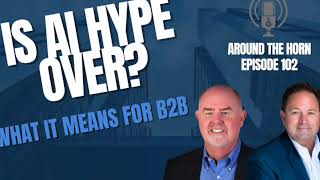
Kevin Brown and Tom Burton review the week's wholesale distribution news, from labor data and recession risks to port security and Chinese maritime influence. They discuss why B2B branding matters more than ever and whether AI hype has peaked in search and distribution.
Chapters
Welcome to around the Horn in Wholesale Distribution with Kevin Brown and Tom Burton. Sponsored each week by Leadsmart Technologies. Tom, Kevin and their guests review the news of the week and dive deep into the topics impacting manufacturers, wholesale distribution, independent sales agents, and the global wholesale supply chain. Whether It's M&A SaaS and cloud computing, B2B, E commerce or supply chain issues, we peel back the onion with our guests into the topics that impact your business the most.
I'm Kevin Brown, that's Tom Burton. We get new listeners each week. In fact, we've got quite a few new people that I saw from LinkedIn. And then obviously on the podcast side of what we do, we get new listeners each week. So quick reminder again, I'm Kevin, that's Tom, and we've been friends most of our lives. And a number of years ago we started a company called Lead Smart Technologies. And Lead Smart Technologies is the title sponsor of the around the Horn and Wholesale Distribution Manufacturing podcast. And on the podcast we get together every Friday morning or most Friday mornings, oftentimes with guests. Now we have a call in for the first time ever and we talk about the news of the week and how it impacts wholesale distribution. So we put out a newsletter. That newsletter goes out to 10,000, almost 11,000 people now, and that talks about things like the economy and supply chain mergers and acquisition, sales and marketing people and leadership, AI technology and cybersecurity, e commerce and marketing. We have segments in there and we get together on Friday mornings, Tom and I, and sometimes with our guests, and we talk about the different factors that are going on in the world and how those impact wholesale distribution and manufacturing. If you don't get that newsletter and you would like to just pop us a note@helloadsmartech.com or you can go to the website for the podcast, which is www.aroundthehornpod.com aroundthehornpod.com. you can see past episodes there. You can sign up for the newsletter and if you are listening on the podcast, which is on Apple and Spotify and Odyssey and Amazon and all the podcast platforms, later in the day, you will not be seeing that newsletter. So that's what will be the difference. For those of you that are live with us or watching a recording on YouTube Live, Facebook Live, or LinkedIn Live, you'll be able to see that as well as the comments as they come in. So lastly with that, if you like what we do, please hit the follow the subscribe or buttons or leave a review that'll get this information out to other people. Again, we're sponsored by Lead Smart Technology. It's a company that Tom and I work for. Lead Smart Technologies has developed an AI enabled customer intelligence and CRM solution solely for wholesale distributors and manufacturers. And Lead Smart helps companies get a deeper insight into the what's going on at their customers and how they can help their team drive revenues and accelerate growth within their business. And we do that by connecting to external sources like erp, marketing automation, E commerce, data lakes and other materials. And we help gain insights into serving customers better, which grows businesses. So that's it for that. Tom, you want to jump into the news?
Let's do it.
All right, so up pops the newsletter. Here it is, our economy and supply chain segment. Weekly jobless claims fall to 233,000 less than expected in a positive sign for the labor market. But boy, talk about an up and down week in the stock market to go along with that, huh?
Yeah, talk about, in my opinion, an overreaction. Right. I, I think though that the overreaction to a degree is sort of, to a degree, Wall street having a temper tantrum that we need to cut rates, you know, sooner than later and make sure you, you do it in September.
Yeah, maybe half a point in September.
Maybe. I, I don't, I don't, I don't think so, but maybe, But I think that there was a bit of a temper tantrum and you know, I mean even there was like, oh, let's have an emergency cut and all this stuff. And what did the job market get missed by, I don't know, 20,000 jobs or something? It wasn't like a major, major thing. And then it gets reforecasted, it gets restated. It's just, anyway, to me it was a big overreaction and clearly I think I, I believe, I haven't checked, but I believe that most of the losses have been made up for this week.
Yeah. You know, and it got me thinking about that. I was just going to look at the market this morning, but it got me thinking about the fact that in your temper tantrum comment was great because I think that's what a little bit of this is. And it, it's pretty frustrating that you can see something like that. Let's see, The Dow's down 55 and the Nasdaq is just a little over a quarter percent or down 47. So. But it's, it's, it's kind of, I'm just going to use the 14 year old term lame that, you know, you could see that pressure from Wall Street Trying to drive the Fed by. Go watch what we'll do to the stock market for a couple of days. And then, oh, look, this, this signaling about the weakening job, the jobless claims and the weakening job market that balances out and say, okay, we wanted to hear that because that's one more thing that's going to force you to make a change. So now you've got to go do this and okay, we'll show you that. We'll bring the market back a little bit as well. I might overstated that a little bit, but it's kind of along that line.
Yeah. Again, I don't know all the inner details and workings, but it did seem like a bit of a temper tantrum and a bit of an overreaction to something that wasn't that big of a miss. And every, every month anyway it gets restated. Right. So I think, you know, those are initial estimates a lot of times and a lot of times it changes. If it would, you know, if it was off by 200,000, I could see a different, different reaction.
But anyway, I think the interesting piece that goes with that is, and you brought this up earlier was the astounding amount of people. And you know, I've shared this many times. I'll have a lot of times, I'll grab lunch and flip on cnbc. And the amount of conversation there was about with folks and then the alerts that I got about people talking about the need for an emergency meeting. But that was Monday as things were tanking and they tanked Monday or Friday and Monday and then the world was on fire and now everything is settling in a little bit.
Yeah.
Yeah.
So a couple of comments here. I agree completely. Right. The correlation between the performance of the exchanges and the actual economy isn't always strong. We need to blend in our gut instincts and personal observations. Totally agree. The correlation is for lots of reasons which we could get into. But we won't near and agree with Marty. Right. One, one month isn't meaningful. Trends are needed and we, we reacted or the market reacted like there was a trend all of a sudden versus a one month piece.
But anyway, and maybe, maybe what the market did was in a manipulation versus a reaction.
I think it was a temper tantrum. Yeah, right. It got, it got the, it got the attention and it's like, you know, damn it, you're gonna lower rates come September.
Yeah.
And yeah, maybe you can do it a half a point, you know, or whatever. So.
Well, there seems to be a lot of push for that. I, I do think that, you know, if I were you, I would be pretty excited about a them doing a half a point and then maybe we don't do a second one, but they only do a quarter point. Man, my taste buds are feeling that steak already. So.
Yeah, well, if you remember, I think seven or eight months ago I said one could be half a point.
Yeah, you did. No, no, absolutely. And we've been seeing, there's been some discussion about that as well. So let's jump ahead. Next. Next article that we were looking at there was about US Recession worries surge again and what is in the data. Any.
Well, this was a really good article. I, I would, I would say if, you know, if you haven't read this article, I haven't seen in the newsletter, this was a well put together and well, lots of good information. Right. It wasn't just sort of a quick opinion and, and bottom line is, look, there's a lot of factors that determine whether or not we are quote unquote in a recession. Historically it's been around gdp, right? GDP growth, product growth. But if you start to look kind of peel the onion on gdp, you start to find that a huge, in fact even a larger proportion of GDP is driven by government spending and even our debt repayment structure. And so you really have to kind of dissect the GDP and take a look at it, you know. And so there was all kinds of different kind of key indicators, I guess you would say, that they were going through in here. And look, I, I stand behind what I said last week. I don't think whether we end up in a recession or not is not a function of whether we cut rates, but it is a function of some of the things that they did talk about in this article that are still a little bit too early. As Marty just said, there's no clear trends at this point to show one way or another are we actually in a recession. But regardless of if we are or we aren't, I don't. Cutting rates is not, other than in certain spot verticals and areas and things like that, that there could be an impact. You know, they talk a lot in here about the consumer, right. The consumer debt situation and all of that. But anyway, I thought it was a good overview of.
Well, they, and they look at this, right? They talk about, you know, a couple of different segments here. They talk about growth and demand. They're talking about that most recessions occur because of overall economic output, also known as GDP and that falling notably. And they said this hasn't happened and doesn't look like it's imminent necessarily. And they said growth in second quarter came in at 2.8%. And then they talk about the strength in the service sector as well. So it was interesting. One of the quotes that came out of this, they said that the July surveys and the part of this was tied to the overall economic activity. And they said the July surveys are indicative of, indicative of the economy continuing to grow at the start of the third quarter at a rate comparable to GDP rising at a solid annualized rate of 2.2% pace. So talk about, you know, how close can we get to where they, they say they want to be. I think all of this leads to the fact that we're going to get these cuts and every, the pressure is coming from everywhere. And I, you know, we've talked about this before a little bit is that I think Powell is in a, in a difficult place. He's kind of almost in a hero or zero. I mean he could, he misses this too bad, right. If they, if they don't do enough quickly, this could be a very quick recession happening. And I know you're, you're describing it as the rates. Not necessarily having said, I don't agree.
I don't agree but that's, I don't think it has an impact at all on how quick or how much they, they act.
Yeah, I think it's, I, I anyways, we can agree to disagree on that. I think at the end of the day is we've already watched when, when the economic indicators weren't suggesting cut, that there was an emotional pressure to cut from the stock market. And I do, I think these things are just my thoughts. I think they're more tied together than what you're, I don't think they're completely disconnected. And I know there's others saying what you're saying, but I don't necessarily believe that they're fully disconnected at this point.
So either not 100% disconnected. But I believe the impact of rate cuts to whether or not we have or don't have a recession is relatively minimal. Now I do believe there's all kinds of other factors, as you've just stated, that will determine even, you know, Bob just said about an election year, right. It's, there's a lot of other factors that will determine whether including the stock market and including Wall street, including that will determine or impact or have impact as a result of a rate cut. But the recession or whether we have a recession or don't have a recession in and not just in my opinion. I know there's others that look at this as well. I don't think there's going to be a strong correlation between how fast and how much and whether or not we, for the reasons we kind of got into last week, which I won't repeat today.
So that's fine. The. If we agreed all the time, it would be no fun, right?
That's right.
It is. You know, to Bob Britain's comment here about the election year, we're going to talk more about how we're seeing that some trends into some of the marketplaces that a lot of our listeners are in the industrial segment and construction and building materials. We're going to talk about that, about how people are looking at the election right now. And you know, I thought it was interesting yesterday, one of the candidates, you know, said that he felt that the president should have more impact on what goes on with the Fed. And you know, then you've got, you know, another candidate who probably hasn't. Marty says we never agree with each other.
Good.
That might be true. Well, that's why you're here each week, right, Marty? So the I try and agree with Tom even, you know, I even let him think he's right sometimes when I know he's not. So it's like what my wife does with me. She lets me think I'm in charge sometimes. So the it's just interesting. I, I think all of this, there is probably more of an underlying political or election impact going on with this than people would like to let on.
Absolutely. I mean, you have to factor it into the, to the ingredients. Right. There's no, no way it can be.
Yep. All right.
Should we move ahead?
Yeah, well, because we don't know what's going to happen. But I think, you know, before we do that, actually, Tom, I do think what we're seeing is there are a lot of factors coming to a head in the next 90 to 120 days besides, you know, obviously the elections there. But all of this stuff, you know, we're going to know very soon about are we. Did you know soft landing? They used the term in the last article, Goldilocks, you know, scenario. And I think we're at a big risk for this not to be soft landing and so forth. So let's see what happens. We're going to talk about it each week. We won't neglect this further. But our next article talks about it's from There's a. One of the newsletters I get. It's interesting because we've been talking so much more lately about I was aware of this for a long time and have read articles from them before. But it's called g captain and gcaptain.com is kind of the global newsletter for what's happening in the supply chain and shipping and so forth. So a lot of stuff in there is, you know, unless you're a mariner of some sort, it's probably not of real interest. But we do get a lot of good information that pops out of that over the last couple years of doing this show. So I started subscribing to it and we've talked a lot in the last year or so and really probably a year and a half now about the the idea behind, let me try and say near shoring and on shoring. So with that we've also started looking at how that impacts Mexico as well and from that standpoint and Latin America in general. So as we're at where we're at with this is this is the article talking from G Captain about two both sides of the aisle, the Republican and this very strong Republican in fact is interesting. This came from both Senator Scott and Senator Rubios, both who had been their parties, potential parties, vice president candidates came together introducing legislation to stop the Chinese maritime threat. And the idea behind what they're talking about there is if you were to look at any of our large ports in the U.S. some of the largest land lease holders there are shipping companies that are controlled by the Chinese government and they're even buying up land in other places where they're able to and this ties right into that Latin America piece of onshoring is we've talked a number of times recently about, you know, the Chinese looking to get around steel tariffs by bringing in steel through other companies and through Mexico and so forth. So there's something we're going to need to pay attention to. This article is kind of interesting. They, they talk about, they use the phrase countering the growing maritime threat posed by China. The legislation mandates the U.S. department of Defense, not, not the FTC or any other organization, but the Department of Defense to devise a strategy to address the increasing influence of Chinese companies in key global ports, which poses a risk to US national security, trade routes and global supply chains, which is kind of us acknowledging as well with that is our economy right now kind of shuts down if we don't have the right control of things coming from I shouldn't say shuts down, but major impacts to it on the supply chain with what's going coming in from China.
No, I Think it's smart legislation or it's, it's an intelligent, it's an intelligent thing to be aware of and to, I mean, if you control the ports, as we've talked about, right, there's, you don't need to drop a bomb. I mean, you can, you can stifle a whole, whole country, a whole, a whole world by controlling the port so well there.
And there's a whole cyber security and, and, and intelligence component to that as well as what are they able to get from the data that they're doing there. So I think, you know, this is, this is something that is going to need to be watched really closely because, you know, if we can, as a manufacturer can't get the raw materials incorrectly that are coming there or finished goods, we've got more and more distributors that are doing direct importing themselves now from overseas. And I think in that setting is something that we really need to keep a close eye on. All right, want to jump ahead to manufacturing and distribution?
Let's do it.
Yep. So we just published an article there today from Supply House Times. Nellie Foster wrote a. Put a good article there together about the pipe, valve and fitting market, and it's forecast to reach 52.6 billion in the next six years by 2030. But it's an interesting thing. They did quite a few interviews with distributors across the country and I thought it was kind of intriguing that you kind of saw some, you certainly see some political bends to things. But, you know, back to what we were chatting about earlier is we're at a time in the year right now where there's a lot of things at play. Any thoughts particular on that article?
No. I mean, I think, you know, they're. What I, what I read into it, right. Is that there is some potential ambiguity as to how all this will end up shaking out based around what happens in the elections and so forth. Right. There's initiatives, there's projects and things like that that would be certainly impacting this market, the PVF market, potentially based on which administrator, you know, do we get a new administration or does the current administration move forward? And I mean, I agree, I agree with the article. I think there is definitely some, some significant impacts that could happen based around that for these sort of infrastructure projects and other things like that that are being, you know, funded through, through government and through the government initiatives was interesting.
They're talking to distributors in a manufacturer across the country, California. They're talking about a downturn, Southeast and eastern part of the US they're talking about an upturn with some of these infrastructure projects. What was an interesting takeaway from the article as well was the idea of not just the political factor. We can talk about that a little bit more. But with the infrastructure projects, there's a lot of regulations tied to those as well as, and requirements that get a little bit expensive for folks to comply with. So now if you think about it, and I think it was an interesting piece with this that one of the distributors there was talking about at length was okay, so in their part of the country where they're at is they're building lots of battery manufacturing plants for EVs. Well, you've got current administration that's saying we're going getting rid of internal combustion engines. California is saying 2030 or 2035 maybe it is and we've got to go build all this infrastructure. Well, there's not enough of that infrastructure yet to support even remotely building as much of the battery plants that they're looking at building. And there's not nearly enough of demand for electric vehicles because electric vehicles are falling off. So they've got those issues. So now if you're a distributor, you're and you are participating and your customers have won these, you know, contractors that buy from you have won these contracts, then you're in another spot where you're saying, well what, what do I do with this? What does it mean to my business? Do I load up on the inventory and then I've got to look at it and say, well wait a minute. One of the other candidates is saying maybe he's not going to push ahead on some of these initiatives of the current administration. So it does kind of put folks.
A lot of ambiguity. Right.
Yeah.
It's a great example of just contract in hand does not necessarily mean money in the bank.
Well, and it's, it's. Yeah. And how far is it going to push ahead? And then what am I going to commit to?
Right, right.
Is on those issues as a, as a distributor, what, what am I going to do? And then I look back to that and too and you. And this is, you know, I mentioned a few minutes ago, things coming full circle is with this whole full circle idea is you've got the economy, interest rates. Right. Do I want to put a bunch of extra inventory in place because of the risk of what might be going on here. And that's expensive money. Right. So we have a lot of things and that's are all compressing down as we get into the latter part of the year.
You got to run it through AI and see what AI thinks. Yeah.
And then, and then make your decision after you've run it through five different models and so forth. So you don't make decisions off the hallucinations. Very good. Well, that's an interesting thing in the PVF market. We appreciate that article and Natalie does a good job in the stuff that she puts together there on an ongoing basis. So onto E commerce and marketing again. If you're listening on the podcast, you're not seeing the newsletter that we post here. We do this newsletter every Friday. It's called around the Horn in Wholesale Distribution and Manufacturing. And if you would like to get that and you don't currently get it, you can send us an email@helloadsmartech.com or go to our website aroundthehornpod.com and you can sign up for it there. So it's good. You know, Bob made a good comment as we closed out on that last article about all the things going on is he says it's difficult to manage cash, cash flow when costs are on a roller coaster ride as well. So we've got, you know, inventories being balanced now post Covid and a lot of factors that are out there right now that, you know, it kind of makes you, makes you understand why some people might be cautious with some things.
So you have to try, you have to tread a bit carefully and take it to some degree day by day.
Yeah, good. Well, we'll jump into our e commerce and marketing segment. In the newsletter here we have an article From Digital Commerce360 talks about key manufacturing and distribution trends so far in 2024. There's some good charts and graphs in there. We've talked about some similar stuff in the last few weeks. So I don't think we'll spend a lot of time on it today. But in our e commerce and marketing segment, there's a great article from Fast Company on three ways strong brand can help you master the long sales game. And you know, we were talking a little bit, Tom, earlier before we went live about, you know, the brand ideas. You know, we, we've been watching some, some great companies out there both on the manufacturing and distribution side of things that have been working on, on image and brand and messaging and so forth a lot. We've got Marty McLaughlin with us today. Marty's the former chief marketing officer at Affiliated Distributors and is now with Mosaic Partners, a company he founded. He works with manufacturers, excuse me, with distributors on their brand, their market, how they're tying to their messaging to what their market needs. Are and I think we, you know, we, we live and we work as we talk about wholesale distribution in a, I'll say just historically. What would I say historically? I'll just use the world, maybe a little old school. We're slow to change brands, we're slow to change messaging. We rely on the fact that we've got seven, oftentimes seven or 17 or 70 branch locations and our deliveries are this percentage of efficiency. But we're in a world now where people are looking at things differently. We've got, you know, the average where we had 60 some percent of B2B buyers are millennials. We've got the Gen Zs involved in all of this. So big time to start thinking about brand. So I'll throw, toss it over to you and get some of your thoughts on what they had to say there.
No, I, I, I completely agree. See, I agree Marty. I agree with Kevin on this one that brand is more relevant or is, it needs to become more relevant in this industry. However, I think there's a lot of confusion around what people believe a brand is, right? So a lot of times you think of brand, you think of logos and household names, McDonald's, Kleenex, you know, things like that, right? Things that are household names. And those are fine for the, for the mega brands. But really I think, and this is not just true in this industry, I think brand is becoming not so much. Well, it's your design and your look and feel and all that stuff is certainly very important, but it's more the emotional reaction that somebody has when they hear or think of your business. Right. And I think you're right with a long, younger, younger buyer, they're a bit more, they put more weight on that emotional response as to how they feel about a business and how others feel, not just themselves, but how others feel, how their influencers and friends and colleagues feel about that business. And so that emotional aspect of it, of the brand, in my opinion is as important as the design element of the brand. Certainly they come together. So to your point, right, if you have a stale looking brand, if you go to a website and the logo is stale and the website is stale and all of that, what emotion does that create for somebody? Does it make you think that you're dealing with somebody who's modern and up to date and doing, or you think you're dealing with something from 19, you know, 75, right. So I think it's certainly relevant, but it ties into that emotional aspect of things on the brand.
It's critical, right? So let's look to this comment before I make my next statement here. But Marty had to say here about long sales cycles usually equate to complex sales cycles and multiple buyers. Brand is the connective conversational tissue between the different buyers. I mean, that's, that's a really a powerful statement. And I, I want to build on that a little bit because, you know, if you stop and think about it, just pick your widget, right? A3M, you know, N95 respirator. If I'm a B2B buyer, I can get that at Amazon. I can get it at Zorro, I can get it at hundreds of different websites and all of my approved suppliers for my facility carry it. And they're all within 5 to 8, 5 to 15 cents per box for them.
Right.
And they all can have it to me today. Amazon will get it to me tomorrow. My distributors, these four distributors already have trucks coming to my, my facility today. I get it from anybody. So how do I differentiate? Right? Because I, I can't differentiate by price, I can't differentiate by delivery, but I can differentiate by, and I love that conversational tissue. Right. That Marty said. But if the brand is strong and I have an emote to your point earlier, right. I have an emotional attachment because I feel good when I participate with that organization. That is going to be what changes.
That's the X factor. Right? That's the difference.
It's not that Kevin brings bagels on Tuesdays anymore.
Right, Right, right.
It doesn't, that doesn't impact it. And Kevin's price is, you know, $0.05 difference per box of Tom's price. Those don't matter. So it goes to that piece.
So, so it's who, who do you want to work with emotionally, right. Who do you want to be associated with? And when all other things being equal, that is the differentiator. That is the X factor.
There's a few points that this article post points out I'd like to share. They talk about reexamining your brand platform and they describe the brand platform for all of your sales and marketing activities. So it must present cohesive, compelling image and storytelling story conveying the value you provide. And it's not just the simplistic stuff we talked about. The two is create tailored content for diverse stakeholders. I see this missed every day. And it's something, frankly, we're trying to do a better job of at Lead Smart Technologies, right? Is that we have a tailored content for stakeholders. Right. People have different roles and organizations. Different things are important to them. We need to understand who we're marketing to, the value that we bring to that stakeholder. And that could be different from different buyers in different facilities. So it's important to do that. And then they talked about the importance and the power of storytelling to engage the stakeholders. And storytelling is pretty phenomenal. You know, we, you and I have both read the story brand book. I know about, you know, creating a hero and a guide and, and tapping into the emotions that go with that. So that's, that's good stuff. So, Marty. Well, it's the first to Bob talks about. Problem comes when you try to create a brand for everyone. You need to pick your serviceable available market and create a brand for them. And I would throw. What Bob's saying is what ties to what I was describing is doing that at each customer and then within your market segments as well. But because we have different, different stakeholders and different constituents at existing customers. So we need to market to them as well.
So, again, right. It's all about relevance. Yep. So obviously, if you. And we have this situation, even at Leak Smart, right. Not all distributors are the same. They don't all sell the same. They have different. So we have to communicate to those different. They're not even verticals, but I guess just different customer profiles.
Yeah, Constituents. Yep.
Right. With more relevant communication on how we're actually doing it. Well, that influences the brand. Right. If they're getting relevant communication from us in that, in that customer profile, they're going to feel better about us and the brand that we're. If they're getting generic communication or communication that's not relevant, then again that's going to be a detractor, which I believe is what they're saying. Aaron there in the article as well.
You know, Marty talks about brand. Right. Who are we, what we do, how we create unique and compelling value for customers and what we solve for your business. But all of those are touch points. And I like that idea. Right. It's that we have lots of touch points and there's, there's. We're starting to see some more and more of this. I mean, I just think of the example is, you know, a few weeks ago on our 100th episode, one of our guests was Paul Kennedy with Dakota Supply Group dsg just completely rebranded their website. They. I think they added a tagline to their new tagline to their company that more represents them today than what they've been doing historically. So we're seeing a lot of this. And so Marty's comments, what you guys are doing with through around the horn. And you know what? There is absolutely the fact that what we do each week here speaks to many of our constituents that are our customers or prospects within Lead Smart Technology. So it's in brand is you know I think in closing I guess on that is on time delivery is not enough. Right. To compete in 2024 and moving ahead. So good article, Fast Company. Three ways a strong brand can help you. So we'll move on to our technology and cybersecurity and AI segment. Tom, you want to take that first one?
Yeah. So first one here. OpenAI Is OpenAI a bigger threat to Google than U.S. regulators? And this is something that we've touched on before. This article is, you know, does ChatGPT or. And I haven't even used it. I don't know if you've used it. I haven't used the new OpenAI chat search capability a lot.
I've been doing complexity.
Pardon?
I've been using Perplexity since. Yeah.
And what they're trying to do is compete with or potentially knock out Perplexity. But Perplexity is a AI driven search engine as well. But basically they're saying is are these more AI centric capabilities, whether it's Chat GPT perplexity or whatever going to completely knock out the need to go to Google and search for things on Google look, hey, like anything, right. There's no black and white answer. I think Google will continue to be used for certain searches and it will never be replaced by AI. Right. If I'm looking for a restaurant in this area in my area or a Chinese restaurant in my area, I'm not likely going to go although I could be wrong, but I'm not likely going to go to AI to look for that. If I'm looking at how recipes for cooking Chinese food or cooking a good Chinese dish, I might go to AI for that type of thing. So I think that Google and traditional search engines are going to have their place for certain types of searches. That said, I think there are other searches and other things. We've seen this already. I mean you've seen it on Perplexity and otherwise where the value is there. I also think the challenge that why it's not going to happen overnight is familiarity. I know I find myself going to Google just because that's what I've been doing for 15 or 20 years. Right. So I end up doing that first even though maybe I could get a much better result out of Chat GPT. So I think there's that whole familiarity aspect of things. But I, that said, I think, yeah, I think Google has got a real, I mean if you look at the majority of their revenue and profits come from ads from search. They've got to, and I know they are. It's not that they're not, you know, that doesn't, they're not aware of this, but it certainly is a potential impact.
Well, let's talk about what the article is really talking about here because the big issue is that earlier this week they were found, there was a US ruling on Monday which found that Google built an illegal search monopoly. Right. And so regulators have been after them about this. What happens with that after the fact. But they're talking about an increasing number of people using AI tools, including OpenAI's popular ChatGPT are already eroding Google's dominance. Right. So you were talking about that piece. But now we've got this issue that's happening where basically it's unwinding some of the stuff that they're doing with Apple and many others potentially. And now you look at this and that's why they're talking about this really being a threat is their normal business is different. It says Google has long been synonymous with search, commanding around 90% of the global market share and bringing in about 175 billion in annual revenue. It says even Apple, which prefers to build all software and much of the hardware goes that goes into his devices, has allowed Google to be its default search engine for a handsome fee. Well, now if that monopoly that they have in search is starting to get broken up a little bit and you have other people going other places for search, I mean, you can search stuff now within Facebook. Right. And, and you know, and so, and that's not to say that, you know, Google doesn't have their own to erode that monopoly.
We don't need the government to erode them. It's already happening.
But what they, but so that's the point of this article. What the point of the article was is the government took action irrespective of AI. It was, it was coming after them from a standpoint of a monopolistic issue with search. And the point of the article here was about, wow, we got the government factor and we have eroding search tool or they're eroding, I'll say share in overall search because people are using other tools now, that doesn't mean that they won't be just as good as some of the others. And I think we've talked about this before that, you know, LLMs are going to become kind of commoditized over time. They'll have theirs, it'll be great. But we have so many people going other places and we just talked about it. Right. Perplexity. Three months ago, I hadn't used it. You and I were doing some work on together on growth planning for. For Lead Smart Technologies and we were actually looking at some staffing models and we threw some things in there about salaries and stuff. And the data that came out of that was by far the best search experience I'd ever had. Because it wasn't just saying here you go, read it. Which Google does. And it wasn't just chatgpt saying, oh, here's what I found. And then I have to go ask it for its reference. It was, here's all the reference points, here's all the places I found this data. I'm giving you a synopsis of that data in this format. But if you want to look deeper, you can go have the old school Google experience by just clicking on those links.
Right.
And I think Google's got to catch up with that. So very good.
Anyway, I think that Google's got other issues. As we said above and beyond the regulators. I think the market share, the monopoly quote unquote, is, has a much bigger risk to be impacted by the market than it does the regulators.
Right. Yep. The. Let's jump ahead is, is it a bubble?
Is it a bubble? Is, Is the AI bubble about to burst? You know, I. There's so much to be talked about here. I don't want to. So no, there. Is there an AI bubble? I don't believe so.
So it's a Forbes article mag Forbes.com actually article. Is the AI bubble about to burst?
Right. Right. And I don't believe there is an AI bubble. So I don't think there's anything to burst. I think that there is a lot of hype around AI and a lot of it is because we're all learning together and we're all working through this together. I think that the hype factor is diminishing where people are realizing, hey, this is cool, this is interesting, this is neat, but how do I actually get value out of this in my life and in my business and as we've talked about. Right. It's still a little difficult because of resources and costs and other things to even in building with it and developing with it to get the value that you would potentially really would perceive that you could get. But so I think the hype factor is becoming normalized a bit. I Think I'll speak for myself. I expected if you would have asked me and if you go back and listen to what we were talking about this last December, I would have expected we would have been farther along, way ahead our application and some of the use cases of things with AI than we have been this year.
Right, right.
So I had more hype in December. That hype to me has dropped down because we haven't materialized. But it's not because there's a bubble, the opportunity is still there. It's just it hasn't materialized at the speed that you know that the hype may have projected that it could.
So a bunch of stuff we need to consider that comes from this that we haven't talked about yet in today, in this related to this article, right. Is the article was talking about what we're seeing on Wall street as well, right. We are looking at this and saying okay, we've got these magnificent seven stocks. And then you look at Nvidia, you look at Microsoft spending, what was it or how many billion, 20 plus billion dollars just as an investment not to own OpenAI. You've got all these huge dollars and it's really what's been driving the stock market's growth this year has been tied to that. Right. And when you look at it from Nvidia's standpoint, it's, it's, you know, they're not the, not this but they're chips. And, and now all of a sudden people are starting to say where's the return on investment from all these dollars that get it are getting invested into AI? And I think it's astounding and I want to make sure we tie this back to you know, wholesale distribution and manufacturing, which I think is important here in a moment. But I think that's the big push about what this was. Is the AI bubble about to burst? And the article wasn't saying that it is, but what it was saying is hey, you know what, they were making some comparisons to the dot com bubble burst in 2000. Right. Roughly. It's not the same with that because what you're seeing is these companies are very large companies that are making these big pushes and then very large companies putting dollars behind startups that are involved with it as opposed to every Tom, Dick and Harry that, you know a good example, right. If you think about it, you know, I'll compare it with our company Lead Smart Technologies in the dot com world. We could have taken lead smart public three years ago, right. In 88 or 98 through 2000 roughly. Right. And so they were making those comparisons but differentiating from it as well. But I do think what is important to look at and I think the takeaway from this is you can look at the Gartner, you know, hype cycle that we've talked about of, you know, technology triggers and then you go peak of inflated expectations. I think we might be there and kind of moving into that a trough of disillusionment before we jump into those next levels. Do you have any thoughts on that?
No, no, I agree with that. But I want to make a point on the, the dot com thing, right? The 2000. If you look at the dot com bubble, right, that bubble was being fueled by applications that were built on the Internet, right? So pets.com, toys.com whatever, right? Those were all applications that were being built on the Internet, the infrastructure at the time on the web. And those applications had very little business value or promise for actually achieving business value. So the bubble at that point was not built on the Internet infrastructure. It was built on the applications that were here. We haven't even gotten to the point of the application. If you look at the number of the big seven and all those things, they're investing in infrastructure, they're investing in models and in hardware and in data centers and all of that. We haven't gotten to the point where there's a bubble of AI applications that have gone public or that are overly hyped in the market like the pets.com and all of that. If we had a whole bunch, and I'm not saying there aren't AI applications that have been potentially overfunded by vc, but we haven't seen those into the public market yet. So we don't have a whole big market that's being driven by AI applications that don't have business value in the same way that we had dot com applications. We're still at that infrastructure phase.
And I don't, I don't think anybody's prepared to go back through that, that euphoria that they saw in the dot com world of going public. You do see a euphoria on the venture capital side of things, pumping money into AI related startups and so forth. But I don't think anybody's thinking that you can just go public and do some of the stuff that they're talking about in this. So it's interesting. I want to pull us full circle back to, you know, the folks that we talk to here within wholesale distribution. Manufacturing though is, you know, if we think about, I wish I'D sent you the image of the Gartner hype cycle.
I have it up here.
We talk about technology trigger peak of inflated expectations. I think we're kind of in that area. We're going to drop into this trough of disillusionment and then we're going to go they call it slope of enlightenment and then plateau of productivity. And I everything that I'm seeing in with what we're watching with AI right now is going to follow that. I think exactly the case. It might, it might compress time wise a little bit. But I think we're now we're at this place where it's and I think about you know, the events that have been going on and all that we talk about in wholesale distribution about AI and you and I look at it every day from a standpoint of where are we going to be able to be with AI as a foundational tool within a wholesale distributor manufacturer over time versus where we are today in all frankness. You know we, we've seen this in in fact we have a call with some of our developers later today and one of them brought this up a while back and he was mentioning a company that we kind of bump into in deals here and there that has come out with some big announcements about what's coming. But when you peel the onion back on that the tools to power that in the AI aren't even there yet. You know we've chosen in their company to kind of keep our a finger on the lid of what's coming on a lot of this stuff until we can actually do it. But I think we're, we've hit that kind of hype place and now people are starting to say and if I was a senior executive and wholesale distributor I would be hitting looking at things and saying okay, I see all of this. Let me hit pause for a second and then digest all of this based upon what's available today, what do I see coming and where do we want to be and those things coming together I think is the right approach.
Well what you can do now that doesn't regardless of how fast it comes and get your data act together which we've talked about. Right. Because then as those things materialize you are have a foundation to actually to do that. And you know, I'll sit Bob's comment here real quick about reportedly we're running out of new data. What people forget is there an infinite number of ways to pull all that data together? Well, are we running out of new data on the Internet? Maybe. But in A business, oh my gosh, there's tons of data that can be used to fuel what you're doing.
So we did a webinar last, last week for one of the buying groups about, you know, we talked about that. We talked about what, what smart CRM and the importance of data. I'm giving a similar presentation in Denver on Tuesday morning to a buying group, a group of their members and you know, we're talking about structured and unstructured data and pulling those pieces together. So this is good stuff. This was well worth spending some time on today and I think tying it into the Gartner hype cycle of things because I think we now we've been, we're coming up on two years in a few months since ChatGPT and OpenAI popped up and everybody got all excited and, and now it's time to look at what does that really happen in our business. We were, you and I were on a call a couple of weeks ago with a, an executive from an AI related company that was talking about the importance of how you visualize your artificial intelligence data that you're getting. And one of the tools that's, you know, we take the position that, you know, visualizing your AI driven data, do it through a foundational tool. You have the ERP companies are pulling together AI tools that will give you some financial views. You can look at a lot of other parts of your business, including the back of the house and the front of the house. If you have the right CRM that you can do that in and the right platform and figuring out how to use a foundational tool that you already need and have in your business to view some of these things. I think we're in a really good place, I think where, where things are going to settle in a little bit and we're going to start seeing real world, real world use cases coming soon.
It's going to happen, right? It's more of a matter of when than the if.
Well, you look at even with the Internet, you know, the dot com bubble and so forth, right. And the whole view of what the Internet was going to be, it went through the hype cycle and now it's ubiquitous in our lives. It's how we live, right. You know, and it's, it's. You had commented earlier about searching for Chinese food, right? It doesn't matter if it's perplexity, Google or Yelp, right. You're accessing it through this Internet and the Internet went through the same cycle. All right, so quick article. That's There there's a video interview about distributor opportunities in AI. It's with Brooks Hamilton. Brooks spoke I think at both of the distribution strategy group AI events. Really sharp guy. He talks about a number of things that's from industrial distribution, if you'd like that. It's in the newsletter. Tom, you had a couple takeaways from that when we talked about it briefly earlier as well.
Well, I, I liked what he said because I agree. I think there he says there's two key. In his mind there's two key areas where distributors are going to have the most benefit from AI. One is in sales enablement, which is the world that we're living in. Right. How do you use AI to drive and help sales organizations drive more sales? Whether you're an inside sales, outside sales counter person, tons of opportunity there. And I obviously we live that every day. His second aspect of it is, is there's a tremendous, tremendous amount of knowledge in the organization. And that knowledge, how can that knowledge be harnessed and be able to be used so that as you know, people leave or retire or that tribal knowledge doesn't ever kind of disappear? And that wasn't necessarily sales oriented. It was just more at the business level of what's going on. And I agree. I think there's both because of the amount of data and because the amount of information that exists in these companies, there's a tremendous amount of knowledge that can be not just transferred but augmented to go to another level. And so anyway those are the two areas that he, that he, that he spoke on.
Yeah, that's good, that's good.
The.
Let's see here. We're going to jump ahead, Tom. Let's move into our sales and M and A segment and get off of the AI piece for a moment. A couple of good articles that we posted here. One from Industry Today and one from Chief Executive magazine talking about M and A being a growth industry and manufacturing. Both of these were referencing manufacturing but one of them was PricewaterhouseCooper's analysis showing some good confidence in things. And then the other one was they had five tips on the anything as we kind of bundle those together maybe in our discussion that you take aways.
From that, you know, nothing, nothing too exciting. I know, I know we're. We still got a little bit more to cover so.
Yeah, well let's hit, hit a few of these things. But they, you know, they talked about on shoring again right in, in these articles and that onshoring was going to bring some opportunities for that. They were very Much hoping for interest rates to be cut. And as people get some confidence in that, which I think we're starting to see that that will open up the well even further, the wallet, so to speak, for more M and A activity. But it said it was interesting that the first four months of 20, 24, 80% of deal activity in M and A and manufacturing took place domestically, which is up about 20% of what normally takes place. So I thought that was an interesting thing which is start talking about those geopolitical supply chain risks.
Right.
That go with that. So there are some key points and some good takeaways from those. Confidence. Hoping for continuing improvement in confidence. But you know, I think last quarter the, the mdm, which was a distribution M and A survey, things are a little bit flatter, but deals still, still very frothy and active. So there's money out there for the right deals.
Yeah. And I do actually agree completely, you know, about interest rates cut, impacting things like this.
Right.
Whether it's, you know, capital expenses, but even M and A is a lot of private equity or using debt financing and.
Right.
So forth. Right. It does free up some things as it relates to the whole M and A market. So certainly I believe a positive impact. There's an example of one of the areas I think that will definitely be positively impacted.
Good. Well, let's, let's jump ahead to our final article in the sales and arena here, the M and A and sales section. This was, I just thought this was cute but really worth talking about for a minute. Paul Riley, who's a sales coach, wrote an article in Industrial Distribution magazine. He says, are you a cicada seller? What salespeople can learn from these temporary visitors. And his first one is, are you present in your territory? He says cicadas show up every 13 to 17 years. How often do you show up at your customers? Do you need to reintroduce yourself every time you visit? Says cicadas also spend 99% of their time underground. How much of your selling time do you spend underground? Talk next about, do you listen more than you speak? Cicadas are annoying. And their most annoying quality is their mind numbing noise. Their constant buzz is louder than a chainsaw and it's unrelenting. So he talked about the importance of listening more than we speak and causing less noise. And then it said, do you have a purpose? He said, is it me or do cicada seemingly have no purpose? What do they do? Cicadas emerge every 13 years, party with their mate and then die. How often do salespeople approach their profession with no purpose for value added Salespeople? Their purpose is to make a difference, not just deals. So don't be a cicada. Is the takeaway from that. Thought it was a cute article in industrial.
I thought it was interesting. It's definitely worth reading and thinking about. Right.
Three quick points. But they were, you know, they were, they were good. They were solid points to go with that. Our last segment of our main segments of the week is people in leadership. Good article here from HR Dive magazine. Employee job seekers express increasing concerns about unexpected layoffs. Any takeaways from the data that they shared there?
I think it's relevant. You know, we touched on this last week and, and even on some of the stuff we talked about today is that I think job are people are concerned that virtually out of nowhere, right. They could be laid off. And I think the AI promise that a lot of companies are banking on doesn't help that situation. So I think it's really, it's a really valid point. I think that goes back to your company culture, your transparency. You know, if somebody has that anxiety, right, that they're, hey, they're going to walk in tomorrow and whether or not they have a job or not, I think part of that is not really understanding the business well enough or the business not being transparent enough to help them understand the business of what's actually going on. But I do think it's a valid issue.
Well, it's big, right? And they're talking that the article references here, it says with unemployment rate jumping to 4.3% in the latest U.S. bureau of Labor Statistics report, economists told HRDive the labor market now is in a perilous spot and at an inflection point. So it talks in the article about a third of employed job seekers. So workers who have a job but who are looking for something new are looking because they have a concern about unexpected layoffs. And that's increased 28% in the survey. So a lot of that is happening and going on. They're talking about the need for work, life balance, growth and opportunities in their industry. And it said, in addition, 44% said their biggest fear was not receiving a salary increase or raise because of these other factors that are going on. Here's my takeaway from this and we talk about this a lot, being of an older generation is I think when you think about Gen Z and millennials and so forth is they want, in most instances, they want their employer to figure all this stuff out for them. They're not necessarily in a place where they're looking to figure it out. They're waiting for somebody to do it for them. So they're willing to move jobs to get these things that they're looking for because they don't want to figure it out themselves necessarily. They want to bounce to the place. And what, you know, we've seen this and people that we've met, run across and met is the grass isn't always greener. Right. But we'll make a move because we're expecting somebody else to do this for us. And I think that's something as employers and wholesale distribution and manufacturing and even in our world, we need to be thinking about. You commented about culture earlier, and you can have the best culture in the world, but if somebody is expecting you to solve all of these other issues about work life balance and opportunities and salary increases, and they're waiting for you to do it all versus them stepping up and, and helping with change could be some challenges that go with that. So.
Yeah, and it's, it's hard. Right. Because as we said, as kind of an older generation, that's not how we.
Were brought up in our, in our made change.
Right, right. And. But I see it all the time, especially as we've been interviewing people. I've been seeing this expectation that.
Let me give you my demands.
I'm.
I'm a professional athlete.
Yeah, exactly. And I think there's a middle ground. I don't. I can't say that I think I've figured it out yet what that middle ground is. I, I do think that it is important, though, you have to have some responsibility for your own career and how you're doing that. I do believe that there, that the companies can do better. I don't think. I think there's definitely things that we can do from a company perspective, but if you don't have responsibility for your own career and your own purpose, as you were just talking about, is the cicada seller and all of that, I, I'm not sure that the company can fix all of that. Right.
That's good. Good. Well, let's jump ahead to our industry scuttlebutt section. We usually hit some highlights of the week. This was a low light, the first one in here. Jack Keogh, the longtime editor of Industrial Distribution, died. I think it was actually over the weekend. Last weekend. I didn't know Jack really well, but had had dinner with him before and, and chatted with him in a lot of shows over the course of my career and did a handful of interviews for him for, for Industrial Distribution magazine over the years and wrote some articles on his behalf as well. Just a really, really kind, kind gentleman and sad to see him go because he was a kind of a force within industrial distribution. You saw him at all the big shows and the events and, and you know a Boston sports fan from. Can't remember if he lived in Rhode island or, or in Massachusetts but you know, that strong Boston accent and just a kind, kind man. So sorry to see him see him go. So thank you Jack for all you did. Then there's a quick article in there about the Hardy Air Conditioning Refrigeration Distributors International Group. Their distributors reporting revenue increases in June which was nice, almost 2%. And then a little quick article there about distribution Hour D now second quarter sales rising. Some others big players in the industrial world had a little bit of a fall off as well in, in the second quarter and so there's a handful of other articles. Lastly as we wind down we talk about our Good Reads section. There's an article that we posted here as well about industry leaders Digital trans talk about digital transformations lessons that they learned. This is a. An interview that Distribution Strategy Group Ian Heller and Jonathan vine hosted. There's a nice recap of some key leaders within some large distribution companies and their takeaways from where they're working on digital transformation. So Tom, anything on those last pieces that I covered?
No, but some. I just some good follow up stuff on some of the things we've talked about before.
Yeah, yeah. Last two segments that we have. If you're seeing us live you can see the newsletter there. We. We have a little segment called A Second Look. There's a piece in there about the east coast and the Gulf dock workers, the risk of their strike, their meeting. It says next month but the, the. They better do something fast when they're there because if I remember correctly their contract expires late in September. So that could be a big issue on supply chain issues as we try to talk about. We've already talked about this as an issue coming up. So. And then the last feature is we call it a special feature. We don't always have something there but when we do have a good article to add this is called the lagged effects of COVID 19 supply chain disruptions on Inflation. And if you're tracking and following inflation and so forth that there's some good feedback in that. So that's a special feature article that we did this week. So that's about it.
Tom Hey, I left the, I left the replay. Okay. 100. I'm going to leave it in here for this. But this, this will be the last week. If you haven't watched it, please go. Not for, not because of Kevin and I, but because of all the other people that were on there.
In spite, in spite of Kevin and.
I being on there. You can, you can mute us and listen to the rest of them that are there. But it's, it's just so well worth listening to and I've listened to it a couple times and I get stuff out of it every time, so.
Good. Well, the next thing you have on there of the, of the upcoming events, the next one is next week. It's the Affiliated Distributors Bearings Power Transmission North American meeting. I will be leaving for that Monday morning and have an opportunity to speak at that on Tuesday. And then tons and tons of great meetings set up. So looking really, looking forward personally to that event. Those events are always really solid. So that's it. Anything else for the day?
That should do it.
All right. Well I will see you in a.
Half hour Date on the news.
That's right. Well, it's a good, good week in news. Covered a lot of ground. Great comments. You know, we appreciate everybody that comes. We've had a lot of new people I think coming in the last few weeks. We're very appreciative of that. Again, we do this every week. Kevin Brown, Tom Burton with Lead Smart Technologies we appreciate the sponsorship of the company that we work for. We couldn't do this without their help. If your company is looking at expanding your view of your customers, your teams and your overall business through both intelligent data and AI driven insights that come from erp, marketing automation and E commerce data that you may have in your business and you want to get a closer look at that, we would love the opportunity to talk to you about that. You can reach out to us either for that or for a copy of the newsletter that we post at. Hello atLead smart tech.com we'd welcome in a conversation with you and we greatly appreciate you taking advantage of the newsletter. And the last thing we'll say regarding that is we'll see you next week and if you like what you hear, share it with your friends. You can do that by forwarding the invite that you might have had or get each week. Leave a review on Apple, Spotify, wherever the podcast format that you are is, leave a review there is great. And if you're following us on LinkedIn and you get an invite from us, just go to the Lead Smart Technologies page and follow that page and you can do the same thing on Facebook, on YouTube Live, and you'll get the alerts each week that we're going live. If you'd like to do it that way, the more that you share, the more will impact other folks if you're getting some value of this. So we thank everybody for being with us today. We thank our friend Dirk Beverage from Chiming in from the road was great to hear him. I know it was a little hard to hear, but it's always good to hear him. So that's about it. Tom, anything else from you?
Nope. Have a good weekend everyone. And next week, that's it.
Do kind things, be safe and enjoy.
We hope you enjoyed today's episode and our guests. Each week we try our best to dig into the topics that are impacting your business, so please reach out to us and let us know how you think we can make the show better or topics you'd like for us to tackle or talk about more often. And even guests you'd like to see join us. We're looking forward to bringing you next week's session and hope that until then you stay safe, stay focused and do great things. If you haven't already, please subscribe to the podcast and leave a review to help others in wholesale distribution get access to the conversation. And finally, please check out our sponsor, LeadSmart Technologies and their manufacturing and wholesale distribution industry CRM customer intelligence and channel collaboration platform. That's LeadSmart Technologies@Lead smart tech.com.
More from Tom



What does AI actually mean for a wholesale distributor #WholesaleDistribution


If your systems don’t talk to each other, your AI won’t either #AITransformation




This is why one AI agent isn’t enough for high-stakes decisions #WholesaleDistribution

