Innovations, Supply Chain, and Gen Z: The New Drivers of Wholesale Distribution
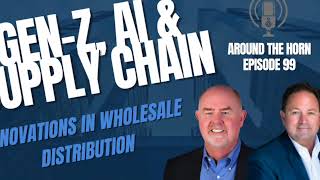
Kevin Brown and Tom Burton review what's reshaping wholesale distribution: 570,000+ unfilled manufacturing jobs, Gen Z workers demanding mentorship over paychecks, and supply chain shifts as companies nearshore production. They cover AI readiness, Amazon's B2B pull, and why distributors need digital transformation to compete.
Chapters
Welcome to around the Horn in Wholesale Distribution with Kevin Brown and Tom Burton. Sponsored each week by LeadSmart Technologies. Tom, Kevin and their guests review the news of the week and dive deep into the topics impacting manufacturers, wholesale distribution, independent sales agents, and the global wholesale supply chain. Whether it's m and a SaaS and cloud computing, B2B, E commerce, or supply chain issues, we peel back the onion with our guests into the topics that impact your business the most.
How are you?
Okay. Look at my beautiful new studio.
That's right.
Yeah.
It's Friday and everything. Yeah, well, you know what, that's what happens when you move. So it's been busy week. Busy week for you.
But I'm here and anyway, I don't have my good microphone, so hopefully it comes through all right.
But yeah, got to get that office set up properly, you know, can't rely on good help for that.
Look at that beautiful plant back there. I mean that, you know, what more do you need?
Yeah, that's right. You'll have it all. I'm confident for the big show next week, you'll have it all, all in place and all will be good. So that'll be awesome. Let's kind of get ready and dive in. Tom. So we are here again, like we are just about every Friday, unless there's a crisis of some sort and an airplane, a vacation or a hospital, I guess is the case. And I'm Kevin Brown and I'm here with my lifelong friend and co founder of lead Smart Technologies business partner, Tom Burton. We get together every Friday morning as mentioned, and we do this with our around the Horn podcast and live stream as we're doing today. And we talk about the happenings of the week throughout the world, most of it typically in North America here. But we look at everything from the economy and supply chain, wholesale distribution, manufacturing, e commerce, sales, marketing, supply chain issues, mergers and acquisitions. We talk about all those things that are happening in the news and we try and break those down and as we like to say, peel back the onion, so to speak, on how that impacts wholesale distribution and manufacturing. So again, as I said, we do this every week. But. But what you'll notice is if you're with us on the live stream is in a few moments, you're going to see that newsletter that I referenced earlier that goes out every Friday morning. Again, it's called around the Horn in wholesale distribution and manufacturing goes out every single week to about 10,000 people or so, if you'd like that. And you don't get that, you can Certainly let us know. We'd be happy to share that with you. We've had a handful of requests for that this morning, which is great. And that goes out, as I mentioned, about 10,000 people. We review that here. So if you happen to be listening on, on the podcast at a later date, you won't see that newsletter that's up in front of you. But again, you can reach out to us. You could request it@helloadsmartech.com Very simple. Or you can go to the website for the podcast, which is www.aroundthehornpod.com and request it there. So we're appreciative of that. We're sponsored each week by the company that Tom and I work for, Lead Smart Technologies. That's what makes this available. We editor and a producer and people behind the scenes helping us with this. And Lead Smart's the sponsor of that as well. Elite Smart has developed the AI enabled customer intelligence and CRM solution solely developed for wholesale distributors and manufacturers. So before we jump ahead, two last things. One, if you like what you hear each week, the best thing you can do to help us get out there further is to hit the, like the subscribe or the Follow Button on the LinkedIn Technologies page on YouTube, Facebook, LinkedIn or if you're listening in on the podcast, whether you're on Spotify or Apple Podcasts or whatever format, hit the review button and hit the subscribe button and that'll get us out to more people. So that's special. But Tom, something else happening next week.
Week. Well, I first of all want to say good morning to Ron rp. Great to see him again.
Fantastic.
And Thomas as well. Good morning. And Marty and I think this is a great. Yes, it must be Friday because it's around the horn day.
Ah, beautiful. Thanks, Marty.
But next Friday. Yeah, next Friday I think should be a national holiday.
Yeah. What's going on?
Nothing. Usual. Just a few people coming together.
Just the normal thing. Huh. So today is. Today is number 99. We've done this 99 times, which is just astounding to me that this little thing that we talked about, getting a newsletter out that then turned into. In fact, I think I might have mentioned this to you recently. I went back a while ago and went to the Lead Smart LinkedIn page and found the original show that we did. And they're not perfect now, but they sure are a lot better than they were at the beginning. But we came together quite some time ago and said, let's give this a try. And, and here we are Now. But, you know, what's interesting is we're coming up as again, today's number 99, coming up on 100. And we've put together quite a group of people here. Most of the folks, in fact. I think all but one of the guests that we have for the 100th episode has been with us before and are just great people. And, you know, I look at this, Tom, as is something, you know, I.
Think first thing we can.
We can think about here is that we want to, you know, use this hundredth episode to promote the show and to promote Lead Smart and whatever it may be. But, you know, the reality of this is this means nothing, what we're doing if we didn't have the people that come every week. You know, there's hundreds of people each week. I put up kind of. I don't know if you saw it or not. I know you had a crazy week, but I posted something on LinkedIn the other day because I asked anybody if they had connections or contacts in Antarctica or if they might be going there, because I was looking at some of statistics for the podcast and. And we have. Every week, we have six of seven continents, people listening.
Was Antarctica missing? Is that the one?
Yeah. We've never had anybody in Antarctica. I looked back to the beginning of the podcast and. And it does not show in here.
That's a hub of wholesale distribution, so.
Well, yeah, so I don't know what's wrong with that, but we need to get that so we have those stats in place. But my point is, you know, we're not here because we're trying to pat ourselves on the back with 100 episode thing. The reality of it is is each week we get more people. Each event I go to, each. It seems like almost every day there's an email coming in with somebody that we might not have met before, maybe heard of their company before that is requesting the newsletter. So something's going right here. But it's because of people like we have on the screen here that have been great guests for us and are coming back again. So let's hit them real quick. We've got. Some of these folks are famous and some of them are infamous. Some of them have the risk of being on a Post Office wall as well. But we've got Ian Heller with the Distribution Strategy Group joining us, Dirk Beveridge with Unleash wd and we Supply America tour gonna be with us. Dirk's gonna be with us from the road. I was texting with him the other day, trying to track down where he's going to be. And he, he wasn't positive exactly at that part of the morning where he was going to be. But we got Mike Marks. You know, Mike is, Mike's the spark plug for that show. I think.
There'S a lot of spark plugs there.
That's true. That's. I guess Mike is the one that you just don't know what you might hear. Right? You just don't know. I mean, you know what, I can be a wild card sometimes too. But we've got our good friend Mike Hockett. Mike's been on the show multiple times with us. Mike's managing editor. Managing editor, I think that's right. With Modern Distribution Management. Good friend Marty McLaughlin who's with us today. Marty just made a comment a few minutes ago. Marty is founder of Mosaic Partners, which is a strategic marketing firm that works with wholesale distribution and manufacturers and helping them find their voice in the market and understanding their customers better and how to market to them better. Marty's the former chief marketing officer of Affiliated Distributors. We've got Dan Schuberth with us. Dan is just on his way back now with probably an emotional hangover from a week at the Republican National Convention. He's had some pretty amazing posts from that being in Wisconsin this week. But Dan's the chief revenue officer of the national association of Wholesalers. And then rounding out this group is our good friend Paul Kennedy. And Paul is the President CEO of Dakota Supply Group or DSG with us regularly. Been on the show before is a good friend, great human being and an icon in the distribution world. So I'm pretty impressed.
And I guess Marty's concerned that he's not going to get a word in edgewise with. I'm not so sure it's, it's going to be, you know, Dirk isn't going to be the only talker in that group.
Yeah. The other side of that, Marty is. I'm pretty confident that Dirk will let you talk because I know you've signed some invoices for him a few times when he's done some of the events that you.
But just to wrap up and we'll get in the news here, I just want to. This is not going to be the normal episode where we're going through the newsletter. We're picking a handful of topics similar that we did the beginning of the year, kind of a mid year review on a number of different topics and get feedback in the, in the world that's here. So a little bit of a different format but Yeah, I don't think it's going to be a quiet show, let's.
Put it that way. No, but it's going to be a lot of fun. I call it. Calling it the Aloha Friday Potapalooza is, I think, how I sent the invite out to these gentlemen. So we've got. It's going to be a fun day. But, you know, before we jump off this, in all seriousness, it's gonna be fun. Could be some giggles. There's going to be our. Our editor and producer. John Taylor's gonna be with us for the show. John will do some fun outtakes. I think we'll have some great bloopers. Probably we'll keep some bloopers from before we go live and after as well. But I don't want to sound sappy. There's. There's a better word than humbling. But I'm just going to say I'm grateful and appreciative because all of these gentlemen are leaders in their fields, they're leaders in their organizations, and they're busy people. So the fact that these folks took the time out to spend some time with us on that day, I'm grateful for. So we're looking forward to it. Any other thoughts before we do that? I guess the last thing is you haven't signed up.
You can go to the lead smart tech LinkedIn pages right at the top. You can sign up to register for the live event. Yeah.
So. And let's see what breaks out. That could be a lot of fun.
Yep.
Very good. All right. Well, like we said, every week we get together, we chat about the news and we start. If you're not able to see the newsletter, that's okay. The newsletter, though, has. Is broken down into segments. We start off with talking about the economy and supply chain and then we move through some different areas. So we'll talk about that as we do that. But, Tom, you know, we'll. We could probably. It's pretty funny, right? I saw you face to face earlier this week and we had a stake, but. But the company bought it this time because it wasn't part of the bet. Neither one of us has given in on it, but there's no articles about interest rates in the US Or. Or ups and downs of things other than. We start off with an article. Modern Distribution Management recapped this, but there's a link here in the article if you get the newsletter. If not, you can also find it both on our website for the show and. And Modern Distribution Management about the international Monetary Fund Modestly Lowers US Growth Outlook as Global Markets Hold. So kind of an interesting piece with that. Any initial thoughts on it?
You know, it was interesting and again, I'm not an economic or economist or whatever, but if you looked at the growth rates in there, they're kind of right in alignment with the inflation rate across the board, not just here, but across the, the countries that are there, so.
Exactly right.
What's not clear to me in reading this is growth continuing from prices increasing or price, you know, what's the driver of the driver?
Great point.
Is it a price increase? Is it more demand? Is it all of that? That wasn't 100% clear. So I think that would be interesting to know a little bit more about. But yeah, it seemed that was, it jumped out at me. Right. So I was like, okay, is this just a matter of prices continuing to increase?
Yeah. So just to quote a little bit of this here is right, the, the global economy is expected to grow 3.2% this year, unchanged from what they said in April, but slightly down from the 3.3 in 2023. But they highlighted the role of China and India, which are projected to account for nearly half of this year's global growth. So I thought that was kind of interesting. What triggered for me about that, you know, and by the way, part of it, why they talked about other markets being a little bit slower, were inflation related to services in the marketplace were holding up and then there's limited progress on disinflation. So they talked about, they use the term complicating things with that. Yeah, what, what triggered for me though is, and we're going to talk about this a little more, a little bit more later in today's show, and we talk about it regularly, is the idea of onshoring and near shoring. And that's just not boosting in this country, that's boosting in other parts of the world. So with China being the strong China and India being the strongest growth factors there and, and China being that manufacturing, you know, bulwark that they are, as we start seeing that, it'll be interesting to see if there's any updates. I want to, this is something I want to pay attention to a little bit closer as the year progresses and then certainly into next year and see if that issue with China starts to fade a little bit based upon the potential of some on shoring and near shoring. So we'll see what happens with that. Okay, John, before you go, I just subscribed this morning to the IMF newsletter And they let you pick out a bunch of countries that you're interested in and there's a, they have their own newsletter that comes out. One thing I wanted to mention before going on, if this is, you know, something that intrigues you about Global Outlook on, on overall growth, this, the data and the charts. And they're, they're not sometimes we have references in some of our articles to charts and graphs that are just, you know, you'll fall asleep if you look at them for 15 seconds. These are pretty dynamic and valuable charts that I saw. So. And I'm not the numbers guy and the science guy that you are, but I need the visual impact from. But I think some of the stuff that IMF is doing is quite interesting to watch, so. Good. All right, jumping ahead, next article in economy and Supply chain is about Supply chain from cnbc. America's freight recession is nearing its end. Logistics experts say this was kind of intriguing to me to watch about because we talk about, we talked less recently about trucking than we do about the overall supply chain efforts. Shipping, air freight. We even talk about, we've talked about all the port challenges and so forth regularly. But there are some good key points in this one. Any key takeaways for you?
Well, I wanted your take on it more I think because the.
Touche.
Yeah. No, I, I, this isn't obviously my forte, the logistics part of it. But what, what in your mind is do you believe is changing with the trucking industry and why was there that recession for that. Was it just because there wasn't enough enough or there wasn't enough coming in for the, for the trucking and the intermodal to, to work on or what was causing that.
Yeah. So we had all the issues that went with COVID right. Things, ships getting stuck in the ports and so forth. But there was during a slowdown you had and I think the article talked about that. There was just trying to remember, let's see, over the course of the last few years, Yellow Freight, Convoy Freight and Flexport were all bankrupt. I'm sorry, Flexport just major struggles. But Yellow Freight and Convoy Freight, two of the biggest carriers went out of business. So we've had huge issues with tighter capacity. And as you've gone through that and then the recessionary times, it's just been hit them from all angles. And so that's a big, fairly big factor with it. And then now they talk about this uptick that's going on right now. A big part of it is tied to people. They've been depleting inventories. And now they want to bump inventories up. And we've talked about this a number of times is people are looking to bump inventories up significantly because of the issue. And this article particularly quotes the Suez Canal as being the biggest issue. And I think that what's interesting is it's, it's intriguing because there, you know, we talked about the depth of the lake on the far side of the Panama Canal, and that Panama Canal is a little less water. Some ships can't get through. It's slower to get them through. Now there's a bottleneck there, but we just don't hear about that as much. But it's interesting and it's, this is a whole bigger geopolitical thing that we won't go into. But it seems like every week there's two or three of the articles that we are either posting or looking and talking about or that I've reviewed through in curating all of this. You know, I mean, I think most of us have heard of Houthi rebels before, but not having an impact on global trade like they are. Right? And you've got this whole issue where they're. What was the statistic, the thing I read a while back on or heard on, it was on 60 Minutes, I think I said, you know, they're using $25,000 drones to attack these ships and it takes a 2 million dollar artillery blast to, to take them out. And so this is an interesting thing. And that's. So that's a big part of this, why these, these inventories are increasing. And then it talks about, you know, the key takeaways from this was North American distribution facilities and top five retailers show freight volume is up by 30% year over year in June. So we just talked about that increase. Those rates are increasing. A bunch of what they talked about here though, as well, Tom, was retail. But you know, as. When you think about things related to. I was thinking about that, this, this, this morning in the shower and you know, retail, wholesale, you know, wholesale distribution. You know, some people might say, well, you know, that's retail. But you know, the reality of it is when you're driving down the road and look at that truck going by you with the container that says, you know, Costco on it or, you know, MSC or whatever the, the freight company might be, you don't know what's in there. That, that could be a wrench or a hard hat or a valve or a fitting going to a distributor. Or it could be children, little girls, dresses going to a Retailer. When you look at that, just even the picture, you know, of the port of San Pedro or Long beach here, LA and Long beach, that's in this article that you'll know what's in those containers. Right. But the issue of the trucks and the ships is all the same. So what we see, whether it's that retail inventories, I think we're seeing the same thing going on the other side. Okay, so that helped this.
No, that helps. And I wanted to hit a couple comments before we leave. This Will brought up.
He.
Will, good to, good to see you here. I wonder if the near shoring will change significantly depending upon who wins the presidential election in the U.S. interesting idea. The only thing that I'm wondering, you know, the one area that I think both parties tend to agree on is the tariffs. That's, you know, both, both parties have been emphasizing more, more tariffs with China and, and so forth. Will that actually that won't change one way or the other. Will that really affect the near shoring piece? Right, because the near shoring piece could be related to the tariffs and the other things that are, that are there. So I don't know.
Well, that's, that's. I like that comment. I hadn't, hadn't thought through that. I appreciate that, Will. We'll have to see what that holds out. That'll be an interesting one. That'll be an interesting one to watch. Any thoughts from anybody out there on that? We get some nice comments coming in today. Let us know your thoughts on that as well.
All right. Should we move ahead?
Absolutely. Let's jump. Let's jump. We're at our next spot here as we jump into our manufacturing distribution. Top three actions for manufacturers to drive innovation. Top three, technology.
Technology.
Wow, that's a shocker. I would have never thought of that from you.
No, I mean it was what if I remember, it was technology people and bringing factories on shore, factories back.
Right. It's back to the reshoring piece. Right? It's exactly right with that. So yeah, they talked about taking advantage of emerging technologies. They were, they were looking at the increase in implementation automation within businesses, digital solutions throughout factories, and gaining the accuracy, quality and efficiency both in distribution and, and manufacturers as well there. But the second point was in fact bringing factories back to North America. And it's interesting, one of my takeaways from that as we talked about reshoring is going into that article. You know, I think we've got distributors that buy from manufacturers offshore. They've got things coming in and sometimes those Things are being kitted or assembled offshore and manufacturers certainly are doing a lot of assembly, not just manufacturing offshore. And I think one of the it's triggered for me in reading this article yesterday was that there is a great opportunity to have starting to kind of dip your toes in the water with reshoring. Because when we think about manufacturing, right, there's a big difference between John Deere, you know, or Honeywell or 3M manufacturing offshore and Tom and Kevin's, you know, equipment company with, you know, 25 employees, maybe somewhere. And. And how do you. How do you dip in if you're not a global player, how do you dip into reshoring on that? Really what came to my mind is assembly is probably the best place to start. Now I'm not. I've been in the manufacturing side. I was invested in a manufacturing company for a number of years and we started doing some things, both manufacturing some assembly stuff in Mexico, so we didn't have to do one here or two in China. But I think that that assembly and kitting type thing might be a great place to start where maybe you're bringing in some raw materials from multiple suppliers, but you're doing the assembly here to ease into that. So I think that might be a great place that we see people getting to get started in that.
So if you're doing assembly right in an area, you're bringing in different parts and you know, now you have a supply chain to. In order to be able to do the assembly that's there, would you. In order to kind of. What am I trying to say? To basically get around some of the problems, right. Would you end up bringing in a lot of that inventory, you know, really bulking up on the inventory and then making sure that you're ready to be able to assemble whatever you need to assemble. I know there's probably not a yes or no answer, but it seems like it opens up a lot of the same issues.
Well, no, I think what it does is it actually alleviates a lot of those issues if you were to plan that. Right. And I'm certainly not a logistics or in a. In a inventory management expert, but if you think about it, right, if I decide that I'm going to shift in that setting from I'm using factory A and factory B to make similar same items for me, right. And typically it's more like it's more likely to be one than multiple and I've got them sending me a finished good. If I decide I start doing my assembly or kidding or whatever, I'm going to do related to that. I can now manage my parts from those better. And if I have a generic part, maybe it's some tubing, maybe it's something that's not a, a branded product that.
I have to have.
I can have two or three vendors that I could be calling on. Maybe I even have one, you know, here in the US as my backup. And I can manage my inventories across that versus being tied to one particular company that happens to be in a company that in a country that you might have some challenges with geopolitical issues or whatever it might be.
Okay, that makes sense. Okay.
Yeah, but that's just, I mean, just. Hey, but you know what? I just missed something. I just all. I hadn't been able to see the comments at first. The comments came back in. This was quite some time ago. But you see what's on my mind. Marty mentioned a comment earlier about a tiki bar. So yes, it is Aloha Friday and my ties will be welcome during the hundredth episode show. So Marty, if you want me to have some Mai tai's delivered to your house, let me know. I'll make that happen here.
If you want, that's fine too.
You'll have a Mai tai. I will have one delivered to your home.
All right.
All right. How's that? Friday, my mind shifted. But anyways, in closing out on that, right on that, you're driving innovation. It was, it was great. There are some solid points in there. When you start thinking about the last piece time that we didn't talk about and we're going to talk about this more later in the show is people, right? And we got the, the great distribution people person, Dirk Beveridge coming on with us next week. We'll talk about this. But I wanted to hit a stat here. You know, I always like to reference these stats because I can just babble on for hours about my thinking on things. But let's talk about the stats regularly. It says in the US this says despite 13 million people employed by more than 244,000 manufacturers in the US there are still over 570,000 manufacturing job openings as of March 2024. So over a half a million openings in manufacturing. And this is, we've got. We're going to talk about this further in some other articles today. But investing in people, in fact, it's part of it as our next article as well is pretty powerful about understanding how to fill those jobs. So that was the fourth and final point from that previous article. Okay, very good. All right. So as we dive in there, as we talk about our continuing manufacturing and distribution made to stay, how production careers can entice Gen Z, any thoughts or takeaways there?
A lot, yeah. You know, I mean this is not an issue that just exists with manufacturing and distribution. Right. Is. And it's an area that I've really been starting to dig into because when I'm, I'm going to, you know, show our age here, right. When we think of going to work, right. We in our, you know, in our childhood and what our parents did or whatever it was, you went to work and you did your 8 to 5 or 9 to 5 and that's what you did.
Right?
Right. And you were really focused, right. There was, there was nothing else that was distracting you, you weren't doing. I know in my early career we were not allowed to get personal phone calls at the office. Right. Unless it was an emergency right now. And that was, you know, that was the only potential distraction. Right. With those that are there. So you went to the office, you did your job and, and you did the other things on nights and weekends. Right. That you wanted to do in your life. The world that we live in now doesn't think that way. And I'm not, and I'm saying this generally, but it's generally true. Right. Gen Z worker does not think about how do I walk in and do a 9 to 5 job and I'm not checking my email or my apps or my text messages or whatever it is that are there. And it's a struggle for a lot of companies right now to figure out how to make this work with this generation. Now if you take this in manufacturing and distribution or if you're working on the, on the floor, right. On the concrete side of the business versus the, the carpet business as it says here, you're going to have to have old way or gonna have to adjust the old ways of doing things to attract and retain a generation for whom security respected making a difference make more than compensation itself. I'll go one step further. I, I think it's the work experience as well.
Right.
I don't have the answer to it, but it is an issue that I think we really have got to figure out not just in manufacturing, distribution, but even in tech or anything that are. That are there.
Well, we talk about this consistently, you know, on, on the culture at least more technologies and you know, I think you've got some strong opinions on that. I think, you know, Marty made a great comment here about Gen Z says are they more Attracted to culture, core values, impact on this world and how my work aligns to me as a person. And I think that's true. And I think what's interesting is, you know, we saw the previous generation that was typically more money motivated, right? And then you go way back, right, to our generation and our parents. And I remember, I think I've said this before. Here is. I remember asking my dad very early in my career and this was probably just as cell phones were coming out. And I remember asking Dad, I said, you know, how did you do business before? You know, fax machines, FedEx and pagers, right? Now look at that compared to where we are today with distractions and challenges. And dad said, it's because I came home. I was. He said, we didn't do it the way you do it. We worked from 7:30 to 5:30 and maybe brought a file home to review. But we got to spend time with a family that was uninterrupted, right? And now think about, you know, where do you find a household where everybody's not running around with a device? So very different, but big motivator differences here. I had a conversation probably, I don't remember how long ago it was, but I was talking to a technology executive in Utah and there's that whole corridor between Salt Lake and Provo they call Silicon slopes. Now. We were looking at some hiring there in that region and I was talking to an executive and salaries for technology people are a little bit less. They're probably 10% less than here in Southern California. But this woman that ran a tech organization and is involved in some associations there as well, she, her comment to me was, and it kind of ties into what Marty's saying here and there, it's a little bit different. And she said, you know, she said the culture that you're, you would build with people here and why they're willing to work for a little less money is the quality of life, right? They want to be able to, hey, it's, it's. I want to leave at 4 because my, this group that I cycle with are going mountain biking on such and such a trail today or a snow day, right. Great powder day. They want to go skiing. And so there's just different motivations. Where to your point earlier, right in, you know, early part of your career is no personal phone calls at work. You know, you had a certain amount of, you know, PTO we didn't even talk about is get this much vacation and this much for doctors and that's it. And it's Just the world is different now and, and businesses and companies need to adjust as this article talks about. Yeah.
And obviously we don't have time to get into it. I think there's gotta be an adjustment. I think there's gonna have to be an adjustment in both directions. I think the Gen Z culture is gonna have to learn that work is maybe not the way that they think it is, but I also think on the other hand that as the, you know, the employer, we're gonna have to balance that as well. And I don't know the, I mean, could you imagine. I just was thinking back at the job that the early job that I had, which was at a startup, which was at a tech company. If we would have, if the idea of them thinking that people are going to have their cell phones in their hands or their computer all day long looking at websites and.
Right.
I mean that would have been like a concept that would have been unfathomable at that time, you know, from a, from a distraction perspective in the business.
So yeah, I think there the challenge is going to be with this and I'm interested in other people's thoughts as well. But I think that if you say balance, I don't think it's going to get balanced, Tom. I think there's going to be a bit of an adjustment that's needed to your point about both sides. But I think the reality of it is that businesses are going to be having to adjust and find a way to make things happen at a higher level of production than you might see sometimes today. But I don't think you're going to change the, you know, what you're talking about is changing a global culture versus an individual's culture. And, and that's a challenge. So it's going to be interesting. Yep. So it's going to be interesting times with that. So there's a good comment that came in here. Communicating these things is a differentiator for customers as well. So. Good, good, good, good. Okay, good article coming up here as well from. It's published in Supply House Times and where did I go here? Lost my notes there. Jumping ahead to this was from Brad Williams with the Behringer Group. It kind of the title is why big box retailers fall short against local Industrial suppliers. But it really talks about some of the things that are, that are important that, that local distributors are working on. And you know, it starts off talking about digital transformation and automation. And I, I want your takes on this as well, Tom. But you know, my takeaway was if you read the, the bullet points in this article, separately, they seem fairly generic when you put them together. It's a nice kind of roadmap. Right. For how to compete against the big guys and how to really def. Differentiate.
Yeah, it was pretty comprehensive. The title didn't quite do justice to the article, I didn't think.
Yep.
But there was quite a good comprehensive, as you said, roadmap or blueprint for companies to be thinking about in order to compete and how to differentiate between. You're not going to necessarily need to be the same as the others. You just have to play to your strengths.
Yeah, absolutely. It's interesting as it puts us together. One of the things, and we talk about this regularly in conversations about data, one of the things they talked about was fragmented legacy IT systems. And that, though, hits both sides of this. If you think about big box retailers, it's a struggle for everybody to make change. And there are fragmented, struggling systems at the big guys. And we talk to people at the, you know, Home Depots, HD supplies, those types of folks regularly, some Lowe's folks, they're struggling there, but they have the big, big budgets to make those changes and modifications to that as a whole as well. So we see.
I think budgets and big budgets and big things don't always make you lean and nimble. That's right. Your velocity is very slow.
Yeah, yeah.
Take five years to turn the ship, whereas a small company can turn the ship in six months.
That's right.
I think there's a lot of opportunity for smaller players to turn the ship faster and to get a big competitive advantage over the. The big companies that have all these resources. But I mean, we see that in some of the larger companies we work with. I mean, just it can take weeks to make the most simplest of decisions, which in a smaller company can happen in, you know, an hour.
Yeah, no, you're absolutely right. I think the. This, there were some key points in this. They talked about, you know, digital transformation automation, customer buying behavior and omnichannel trends. We talk about that all the time. Fragmented legacy and IT systems and then industry consolidation. And one of the things that we're seeing more and more through the M and A side of things is people buying adjacent companies. Right. You look now we have some great customers at Lead Smart who are H vac lighting, plumbing, pipe, valve and fitting, electrical, and starting to add industrial and maybe even industrial safety products to that as well. And sometimes that comes very quickly. And what I really appreciated is they talked about the high degree of fragmentation, but that being an opportunity For M and A as well. It made me think about, you know, if you are in a position as a, as a distributor and you're, you know, trying to position yourself well against the big guys, you know, if you, you might be lacking, let's just use the, you know, the legacy IT and fragment the legacy IT systems that are, that are referenced here in that setting. You know, if you've got a strong balance sheet, you can acquire your way into those systems as well. Right. You could go kind of kill two birds with one stone. You could find, whether it's a competitor or somebody in a new vertical that you want to get into or a new market you want to get into geographically that is way ahead of you in some things. Acquire that company because you have a strong balance sheet that will then lead you into that place of solving that issue that you have in your business. And we see that here and there. So, yeah, a lot of opportunity. So we appreciate that. It's first time we've, we've used anything here from Brad Williams. Brad's with the Behringer Group, their investment banker that does a lot of consulting with family owned wholesale distributors as well. So good, good article there. So next we wanted to skip ahead.
On that real quick before we get here because. Yeah, I agree. I understand.
Ron.
I'm dating myself too. You know, we're going back to our previous article, right. He had a pager just in case, and it was definitely different. Right. It's like it was an exception to get interrupted or distracted versus it's being the ubiquitous situation that we have now.
And so he's right on. I, I have to laugh when, when I was just, as cell phones were coming out, had small company that I just started, I worked as a reserve firefighter and I worked in two different locations for the Orange County Fire Authority here in Southern California. And I had one point in time where I had the bag phone in my car and I had three pagers. No, you know, as I, Darlene and I, my wife and I were just talking about this the other day because we were talking back about when we both had pagers. And I said, I always say that, you know, if I was important, I would have no pagers because other people would have the pagers. Right? But yeah, because I had two different pages for the, for the fire authority and then one for work. And then I had this new crazy, you know, what was it, you know, $3aminute cell phone, you know, that I had as well for conversations. But those are, those are the old days. Rp. Those are the old days. So good. All right, let's move ahead to our next segment of technology, cybersecurity and AI.
Are we skipping E commerce and marketing?
Why? Why would we do that?
I don't know. I just asked.
Yeah, let's not do that. We're going to catch that first article. My apologies. Let's jump into that. Yeah, I forgot about that one. That one was kind of cool. You know, interestingly enough is from Digital Commerce360, how manufacturers get a B2B sales boost from Amazon Prime Day. Thanks for keeping me honest on that. Two companies that they talked about here, Grasshopper company Grasshopper makes the lawn equipment that takes care of the White House and lots of other places like that and which you wouldn't really think about Prime Day sales. And then Dynabrade, which is manufacturer of abrasives and cutting tools and power tool related items as well. So for power tools, I should say.
I thought this was really interesting.
It is.
Is in basically what's going on, right. The prime day creates like a halo effect for E commerce. Yep.
Right.
So people get all excited about E commerce, right. With prime day, much like I guess even Black Friday or Cyber Monday or whatever at the thing. So it's like, oh wow, this is where I got to be thinking about buying. And even if you're not selling on prime is what they're saying. They're not doing big prime day promotions on Amazon. They're taking. Riding the wave, essentially. They're riding that E commerce wave and saying while people are in the frame of mind of buying on E commerce, I think it was really, really a brilliant positioning and marketing strategy to. To actually do that. And it's. I hadn't really thought about it. But you know, that does create that big halo effect for E commerce every year in the B2B and B2C world. Whereas, you know, Christmas or holiday time, it's more B2C but it still creates that. That halo effect for you can jump into.
No, I. Thanks for sharing it that way. Tom. I think you're spot on. What's interesting about this is in, in the quotes that are here, tie right into this, right? Is distributors have. It's kind of like a three tier approach, right. Distributors either fully embrace Amazon and want to participate and understand that their vendors have a presence there and so forth, or they are maybe having. Wanting to have a presence themselves of some sort but frustrated with their manufacturers being there or third is they fully embrace the whole thing. Right. But some of them are just, we want nothing to do with, I mean, say Amazon out loud in their presence and you're going to have a struggle with it. And then you've got on the manufacturer side, you've got a whole lot of them who are in a position where they say there's no way I'm going to upset the Apple cart with my distribution network, so we're going to stay away. And then there's others that look at it and it's, I guess it's threefold here or three points here again is there's others that say, well, you know what, it's just another distributor Amazon business. And at the end of the day that's really what they are. They're another distributor. They just go to market differently and I'm going to embrace that. And then the third that's most powerful, that which is what these two companies are doing, Grasshopper and Dynabra is they're embracing Amazon to sell as a platform, but they're also trying to use it to support their network of distributors as well.
Right. But you could do this even if you're not selling on Amazon at all, even you have your own website or your own e commerce site, you could still have a Prime Day special and ride that wave. Right. Just a positioning perspective.
Yeah.
And you buy on your website but you're giving a deal or you're providing some, you know, discounts or whatever it is, you can still ride the wave so well.
Yeah, I think, you know, both of these were, have a position and had a place on, on Amazon as well.
And these in this case study. Yes.
Yeah. So in, in here, the two things. Right. Ron Veders, that's global brand manager at Dyna Braid, makes some good comments here. I've had a chance to meet Ron a couple times at some affiliated distributor events and super guy and, and you know, he talks about their, their Amazon storefront. But what's interesting in this is, you know that both of these companies saw this nice lift out of. What we think about is that you're going to buy shoes or toilet paper or you know, some sporting equipment from Amazon Prime. They saw it with, you know, pneumatic power tools and, and average price of a, of this Grasshopper company. Their average product price is $20,000. Right. So they saw that. Last thing I wanted to mention about this article because he's a friend of the show is both of these companies receive. I'm just going to quote the article. Both Grasshopper and Dyna brand had received advice on Amazon Marketplace strategy from Inceba A digital marketing agency. And that's our good friend Brian Beck. Brian's just a great, great guy. He's been on the show a couple of times and he's. And there's, I'm sure plenty of other firms out there. But Brian works with a lot of big, big companies like this in helping them find that balance of their strategy so that they can support wholesale distribution while having a presence in market, not just Amazon, but marketplaces as well. So if you, if you get a chance, you're looking in that. Want some feedback on that, Brian? And the in SIBA folks are solid in that.
Okay.
All right, where are we headed next? AI readiness requires buy in technology and governance. Let's move on that fairly quick this morning. Any big takeaways from you?
Well, I think in general, and I'm pleased to see this, right, I'm pleased to see rather than, and we're even seeing this in talking to our prospects and customers rather than just trying to patch in some sort of. AI companies are recognizing. It goes back to our data discussions we've had over and over and over, right. That there is a readiness process to get ready to actually do more of a holistic AI strategy patchwork piece. And I think that's good. I think a lot of everyone kind of ran out in the beginning and wanted that cool AI app somewhere here and there. I call it patchwork AI. And I think people are realizing the value that is being received from that is, well, interesting in some cases minimally overall compared to what they were expecting. They're realizing the importance of using their own data and not only their own data, but their processes, their best practices, all of those things and then having the right governance and so forth. So I thought this was a good overview of, of that. I do believe that in the next year that is going to be a big theme is AI readiness. I feel like a lot of the work that we do, you could say, well, we're doing CRM and customer intelligence. Maybe that's 50%. And 50% of what we're doing is AI readiness. Right. Of getting the thing the people in place ready for actually to take advantage of some of the things that are, you know, hopefully coming down the road sooner than later.
Well, you're spot on. I think with that. And this isn't, and I think this is what distributors are very quickly learning is they've spent so much time in the last year and a half, two years, and it's really since, what was it, November of 22 when OpenAI popped up right. Is it triggered so much for people. And now I was talking to a writer and researcher in this field earlier in the week about this and now people are saying, okay, we can see this vision of what's coming. There's limited amounts of things that are really available today that work really well. And then now how do I go build my roadmap to make this, make myself, you know, in a position where long term I can be, be executing this and my, my philosophy on this and it's kind of our philosophy, I'll say from a company standpoint. I wrote something on LinkedIn earlier this week about this is, you know, I use the term in AI readiness and it ties into what you're saying about, you know, the work that we do at Lead Smart with helping wholesale distributors and manufacturers, you know, the work they're doing to get customer intelligence, AI enabled, customer intelligence and CRM is work that's going to help them in the long haul on their AI readiness in general. I used the term in a post I did earlier this week and I said, you know, it's that, that old adage that if you want to go fast, go alone, if you want to go far, go together. And I think that ties in really well to identifying is my organization. I think very, very few. This gentleman that I was talking to earlier in the week, he said outside of the Graingers or the Fastenals or the Wesco's or those types of organizations, it's going to be difficult for wholesale distributors that even with good size IT departments to go figure out their AI, not just their roadmap, but actually executing against it. And they're better served to have a partner that can be there, you know, walk hand in hand with them through this to help them in their, in their journey.
Well, the other reason of having the partner is it's so easy, right, in your own company to get caught up in the analysis paralysis, right? Trying to let you know, great get into in the way of good and are perfect, perfectly getting the way of progress. And I think having that. It's almost like an AI coaching exercise that I see a lot of what we're doing is like, no, here's what we can do here, here's what we can do here and help them make those decisions quickly so we don't get caught up in this analysis paralysis on things because perfection, AI does not need perfection. That's not a, it's not a prerequisite. What AI needs is the right foundation and that foundation can be actually kind of even mediocre and still get a lot of very positive, positive outcomes as we, as we look ahead.
So, yeah, no, I think that's great. I mean, I think the reality is if you can get started in these things with a trusted partner that has good AI solutions that can work with you through all of this, that's what's going to differentiate for people that gets to get fast opportunities out of things. Good. All right, where are we headed next, Tom, on the sales and M and A.
Sales and M and A. Yeah, we'll get through this pretty quick here.
Yeah, good. So they've got an article here about setting sales benchmarks for farmers versus hunters. And that came from the center for SalesStrategy.com and I just thought this was kind of neat. It talked about, you know, you've got hunters and gatherers right in your organization and as hunters and farmers, so to speak. And this was a good article talking about, you know, some benchmarking for that, whether it's, what are the metrics for each of those, how do they balance out? You know, sometimes we think about, you know, a hunter is generating leads, getting meetings going. They talk about conversion rates here and farmers that are cultivating those relationships that get started by other groups. So, you know, they talked about that and a lot of it was, you know, balancing between the two and then finding a harmonized compensation and success plan to go with all of that. So if you're managing, if you're a sales leader and you're managing both hunters and gatherers or hunters and farmers as they reference here, balancing that comp plan. And I tell you what, I've lived that, trying to, trying to manage that comp plan on both sides. It's, how do we do that? And, and you know, it's, it's, it's very different because you'll find organizations where, you know, you'll have, and it's not just this is on the sales side, not thinking about the, the lead gen type stuff that goes on in marketing. But it's like if I'm out there, you know, working hard to get that customer in the door, I'm going to expect a very high commission rate or compensation that goes with that. But you know, oftentimes it's that, it's that farmer, gatherer, farmers, they recognize it here that really gets that customer to the next level where all of a sudden what the sales guy sold, if we just kept selling them that we would never grow very much. But it's that farmer. But they are typically not compensated quite as well. In that setting. So good article here.
Well, and we have a customer that I think one that I'm thinking of that has done really good job with this. You know, they're in the office supply business and the way that they've set it up is for their hunters. In order to get the commission credit for a new account, the account has to buy twice. Can't buy once, it has to buy twice. Okay, once the account has bought twice, it then gets handed off to the farmers, if you want to call it that. Whose job is to obviously can keep, keep the recurring stream going, but increase the wallet share and the, and take advantage of the, the white space that's in there.
But look at, look at you with all these distribution terms.
Well, I don't know if they're distribution terms or not, but the, the idea of getting. And I think it's really smart about getting not one purchase but two from that first, that first process that's there.
Right.
Once they purchase twice, then it's like, okay, there's a relationship. And I think what they've realized is that the relationship didn't really exist just after one purchase.
Right.
But after two purchases, and this is office supplies and office materials and you know, wholesale type of things, then you start to build a relationship and now you can effectively farm that account going forward. So things like that I think are. And we're seeing more and more. I think I'm seeing more and more companies that I'm working with want to do more hunting and not just, you know, focus entirely on the farming piece.
So. Yep, that's great. Very good. I like that. So let's slide right into our People in Leadership segment. There's a good article that we posted here and this was from Human Resources Director magazine and it's talked about coaching deficiency leaders, worker and workers dissatisfied with mentorship level. And I just, I thought kind of like that. I thought it was a good article about people being coached versus directed. Any thoughts on your end on this one?
Well, I think it ties exactly what we were talking about earlier. It's the same concept and in particular with. And I think, I think that is the right solution for this whole Gen Z problem to look at it from a coach perspective.
Right.
Because it's not that a lot of people don't want to do. It's not that people don't want to do a good job and they don't want to have a great, you know, result in their job and their company, but I think they need coaching and help maybe more so than in previous generations on how to accomplish that.
Yep.
And if you look at it from that perspective versus just saying go do that and you know, just being the boss and telling them what to do and all that stuff, you're going to get much better results. Hence what they're talking about here.
My, my wife taught me decades ago that saying, have you considered is a lot better than you should. Right. And that's just the most simplistic piece of it all. But this was good. The article talks about some statistics and in one of the quotes here it says what people are looking for, given the world of change and ambiguity, is for someone to coach them through thinking about a solution, not providing the solution. Makes me think about this. Tom, you may remember this. There's Dan Martell, who's a former technology guy that now does coaching and guidance for SAS founders and startups like ours. He has, I think it's called one three one rule with working with his team. And you know, people will oftentimes come to a leader and say, you know, how do I do this? Or I've got the example. I was watching one of his videos a while back and the example was an HR person that said, you know, I need to hire 12 people this month. What do I do? And his, his thing was, hey, timeout, you're, you're the HR director. I, I hired you to tell me what to go do here. But his comment is, I think the 131 is 1 is clearly defined, the issue at hand. Then he asks for three possible solutions and the related outcomes to those. And then the, the ones after 13 1. The one is what is the first one that you see right now that looks like the right solution. And he said something like 99 of the time, the conversation's over as soon as he gets him started on that discussion. So that is really interesting.
That builds a good cultural mindset that people start to do on their own.
Exactly. Exactly or no. Just knowing, right. That my boss is going to ask.
Me 131 my 131 strategy, right?
Yep. And then maybe I might give you an opinion or a thought or somewhere else to look, but I'm not going to solve it for you. So Marty made a good comment here. So many roles that a manager needs to play for Gen Z employees. Also, time is value is important with short tenure Gen Z employees. And that's one of the key things and one of the articles we hit on earlier today actually talked about that is when you start understanding how to work specifically in manufacturing, how to adjust the culture on a manufacturing plant floor that fits more to a Gen Z. Right. That that job. And we see this in the technology field all the time. Right. Is you know, you see people that have been somewhere nine months and then you know, 12 months or 16 months and they're just bouncing around and moving on. But we can appeal to these people if we develop our culture within our organization correctly. Right.
People don't leave jobs, they leave managers.
Right. So yeah, great point. Yep. Yeah, yeah. Our processes and systems. So you know, with slide. Just a couple of things to comment on. The congratulations to the folks at First Supply in Wisconsin top workplaces in the industry award that they received, which is great by the way. One final comment on this that I usually make it halfway through making it at the tail end of the show. If you're listening on the podcast, you're not seeing the fact that that we're reviewing through our newsletter that we publish each week called around the Horn and Wholesale Distribution and Manufacturing. If you'd like that newsletter and you don't get it, simple email to helloeadsmartech.com and we'll get that right out to you. Or you can sign up for it at our podcast website, which is www.aroundthehornpod.com and we'll get that right out to you. So Tom, sliding into our industry scuttlebutt acquisition by Valen, the industrial supply company in Ireland has got them moving internationally now out of the US And Canada and Mexico. Stellar Industrial in the Pacific Northwest just did a headquarters Pacific Northwest just did another acquisition and another acquisition for Whitecap that's discussed in there on the construction supply side. Lastly, every week we have a, a couple of other features we talked. One is a good read and the second one is what we call a second look. We didn't. In the second look piece we publish each week, it's usually a follow up article to something we've talked about. This is about more Red Sea issues in the Suez Canal area there. But there's a pretty cool article here that we published. It's called your heart Digital twin may save your life. So Tom, just give us quick as our resident AI and technology expert, walk us through quickly. A digital twin.
Well, digital twin is a virtual copy of something, right? So in this case it's an example of taking a scan or you know, doing it whatever of your heart, in this example, creating a virtual copy of it essentially and then being able to use AI essentially to emulate and look at, well, what are the possible things that could be going wrong with that part or with whatever. How do we improve that part or whatever. It's, it's a virtual copy of something that you can then coach, you can then adjust, you can make things and look at and even do what if scenarios. It was interesting to see. I'm sure you could say, well, if I did aerobic exercise for 30 days, what would the heart look like after 30 days in terms of the beats and the pulse rate and all that kind of stuff. So it's, they're talking about this. It wasn't just hard, it was all organs, you know.
Yeah, this was, this was pretty cool. This was, they talked about, the article starts off kind of talking about the, the market size and so forth. And they use the, you know, avatars that, that we see in a zoom meeting and Personas and so forth that we see and how to show ourselves with a pair of sneakers on and, and that they're using that as some, some, some digital twin ideas. But this, what they're doing at John Hopkins University, talks about, they're creating digital twins of real patients. Hearts with potentially fatal arrhythmias is where they're starting. So that's an arrhythmia is an irregular heartbeat, said. First, patients complete a cardiac MRI. Then researchers use AI to turn the scanned images into a 3D reconstruction of the patient's heart, complete with scarring and damaged cells that were seen in that heart. The on screen heart is then filled with virtual cells which can generate electrical signals and a heartbeat. The digital twin can then be used to predict the location of irregular arrhythmias and plan out future procedures to fix them. Just, I mean, this is, you know, if we were, if, if, you know, we were to be able to talk to our grandparents and tell them about this, just be crazy. Right.
Well, and I do believe, and I do think this is the plus side of AI, right. I think absolutely is. I think we will have a digital twin for obviously our physical body and all that stuff we're just talking about here. We'll have it for our job, we'll have it for our hobbies, we'll have it for our things that we do. And if used properly, it's, I mean, think about just the benefits and the insights and the right spot on the ultimate guardian angel, I guess, for everything on the.
Well, you know what's interesting is, you know, we've, we've, we've heard people talk about, you know, the, oh, we're going to get a chip implanted in us down the road and it's going to do all these things. Well, as I commented on, you know, in our previous conversation before we went on went live today was if you look at this is like, look, if you can put me into a full body mri, replicate my body and then tell me. Yeah, good point. But then tell me, you know, hey, by the way, these are the things that we see are going to likely happen to you and here's where how we want to guide you and coach you. And then you came and said, hey, you know what? And I think we're a ways away from this. But if you said at that point, hey, we can put a little chip in your wrist that's going to monitor these things even closer and give you feedback, you know, much better than your smartwatch does, give you feedback and give us feedback to help keep you alive. Powerful stuff, right? And so things that we've thought about just being science fiction are right there in front of us right now. And I think that that's great. And those to your point, right? That's the beauty of AI, right? This is some of the really cool stuff that's going to come from it. So we'll go from there. So let's wrap up today. I know you've got a full day ahead of you, right?
Well, notice our first event here. I just want to make sure that everyone sees the event.
There you go.
For the 100. It's right there, right on the thing here.
And we show every week in the newsletter is a series of events, whether it's trade association, buying group, whatever it might be, events around mostly North America. Those shows and events are there in the newsletter. So Tom, why don't we splash back up if you have it handy, the screen for next week. We're so excited and grateful as I mentioned earlier, for the folks that are going to be joining us next week. So again, if you tuned in late and didn't get to hear next week is the 100th anniversary or hundredth show that we'll be doing. I shouldn't say 100th anniversary, 100th show that we've what we'll be doing. We've been around now for a bit and we got some great people going to join us. So if you were going to have made any of our shows this year, this is going to be the one to do. So you can sign up for that and watch it live. Certainly if you're on LinkedIn, just let us know by hit the attending button. But if you consume our content on Facebook Live or LinkedIn Live it'll be there as well. Smartest thing you can do to get this information regularly to yourself and to benefit us as well, is to hit that subscribe or the Follow button on any of the pages. And then if you're listening live on the podcast, please subscribe and leave a review. Get this out to other people so Tom, hectic afternoon for you and and I wish you well and in the rest of the day.
Yep, yeah.
Everybody have a great weekend. Be kind, be safe, and do good things.
We hope you enjoyed today's episode and our guests. Each week we try our best to dig into the topics that are impacting your business. So please reach out to us and let us know how you think we can make the show better or topics you'd like for us to tackle or talk about more often. And even guests you'd like to see join us. We're looking forward to bringing you next week's session and hope that until then you stay safe, stay focused and do great things. If you haven't already, please subscribe to the podcast and leave a review to help others in wholesale distribution get access to the conversation. And finally, please check out our sponsor, Lead Smart Technologies and their manufacturing and wholesale distribution industry CRM Customer intelligence and channel collaboration platform. That's Lead smart technologies@leadsmart tech.com.
More from Tom



What does AI actually mean for a wholesale distributor #WholesaleDistribution


If your systems don’t talk to each other, your AI won’t either #AITransformation




This is why one AI agent isn’t enough for high-stakes decisions #WholesaleDistribution

