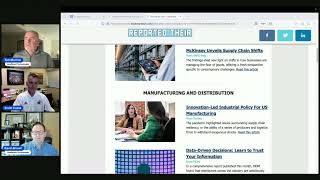
A short YouTube talk by Tom Burton highlighting ongoing supply-chain risks (Panama and Suez Canal issues, geopolitical tensions) and survey findings showing widespread disruption. Key cited survey results: 95% of companies reported supply-chain footprint challenges in the past 12 months; 50% reported reliance on another region; and 89% plan to reduce dependency—shifting focus toward Western Europe and Southeast Asia. The speaker emphasizes building resilience and that shifts away from China often reflect market-targeted manufacturing rather than universal relocation.
Questions this video answers
95%
50%
89%
Chapters
So now we've got Panama Canal issues and we, we talk about this regularly, right? Panama Canal issues, we've got Suez Canal issues, we've got geopolitical tensions and so forth. We've talked about this on an ongoing basis here and I think it's important that we bring this to light and continue to try and get people thinking about this just from the standpoint of the impact that it can have on the business that, you know, I always like to make sure that we, it's easy for us to kind of pontificate, but this, the survey had some really good information, right? It said 95% of the survey companies reported challenges with their supply chain footprint in the last 12 months. So just because we've come out of the pandemic time and so this is saying that's not changing, right? Because you know, we've had, we talk about this regularly, right? Port strikes, you know, Suez Canal, as we just said, Panama Canal and so forth. It said 50% reported their supply chains were reliant, are reliant on other, another region and 89% plan to reduce their dependency with a focus on Western Europe and Southeast Asia. So moving away from China and a big part of secondary out of this article was talking about and the single biggest word that came out of this article for me was resilience, right? We've got to have resilience built into our supply chain, whether you're a manufacturer or a distributor and understanding where things are coming from in those issues. They talked so much about people moving away from China and it's not leaving China, it's shifting because there are one, you know, there's a great amount of, you know, US based manufacturers that are manufacturing in China, that are manufacturing China for the Chinese market, right? That's not leaving. But when we start looking at how are we supplying Europe and how are we supplying the Americas.