ISA Summer Series Recap With Guests Brandon Breen and Kristin Kraai-Keely
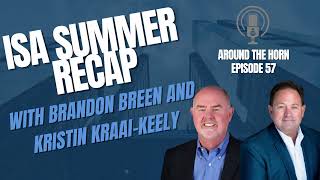
A recorded podcast discussion (Around the Horn in Wholesale Distribution) recapping the Industrial Supply Association's 2023 Summer Sessions. Hosts and guests (Kevin Brown, Tom Burton, Brendan Breen, Kristin Kraai-Keely) describe the origin, format, attendance, most popular topics (omnichannel marketing, customer centricity, sales, talent, DEIB), and plans for upcoming ISA events (Fall Summit and ISA 24). The series emphasized practical, peer-led panels, recorded content for members, and follow-up deeper dives on tech stacks and execution.
Questions this video answers
Brendan Breen
Roughly 300 people attended live across the series
Average rating of 4.6 on a 5.0 scale
On the ISA website (under Engagement)
October 18–20 (Orlando)
Chapters
Foreign.
The Horn in Wholesale Distribution with Kevin Brown and Tom Burton. Sponsored each week by Lead Smart Technologies. Tom, Kevin and their guests review the news of the week and dive deep into the topics impacting manufacturers, wholesale distribution, independent sales agents, and the global wholesale supply chain. Whether it's m and a SaaS and cloud computing, B2B, E commerce or supply chain issues, we peel back the onion with our guests into the topics that impact your business the most.
Good morning, everybody. Thanks for joining us today on a special edition of around the Horn and Wholesale Distribution. My name's Kevin Brown. I'm joined by my co founder and business partner, Lead Smart Technologies, Tom Burton. Today, in this special episode that we're doing, we're recording this with our great friends, Brendan Breen, the new CEO of the Industrial Supply Association. Not new to isa, but the new CEO and our great friend Kristen Kryghley. What we're going to do today is we're going to recap and talk through this wonderful summer sessions that ISA did. ISA put together a great group of topics and we wanted to do a little special recap with these two great people who coordinated this event. Tom and I both had the opportunity to participate in it, but we thought it would be great to bring this group together, kind of give you a recap to see what happened this year and get ready for what's going to come next year. So we're going to dive right in. Let's get started again. We've got Brendan Breen, recently announced last week as the new CEO at isa. Brendan, tell us a little bit about summer sessions. This was kind of something new, not something that had happened in the same way in the past. Let's add a little bit of behind the scenes of how this all came together.
Sure.
Well, first, thanks for having us, guys. Always nice to be on the show and I definitely like commenting. I will figure out how I can show up in your comments. Not as LinkedIn user. I don't know why, but I'll figure it out at some point, guys.
Well, now that you're the CEO, now that you're the CEO, you need to get that worked out.
But if you know that someone's throwing a little jab at you, it's probably me. Yeah. So anyways, guys, I really do thank you for having me here to allow you or to allow us to talk about the, the summer session. So, yeah, I mean, we learned a ton of good new skills during the pandemic and one of them was the ability to scale education virtually. And we all got really Good at it. I mean, look at what we're doing right now. You know, this was a medium that a lot of people weren't really playing in, but everyone was sort of forced to adapt and learn how to do this. And so we invested a lot in our technology. We invested a lot in even our skill sets on our team. You know, we had our events manager get a digital event certification. Now she's our events director. I mean, so we had all these skills, and really we stopped doing the virtual, you know, as part of, like, a hybrid model for our events. And we stopped doing these once Covid was over. And what we were recognizing is there was a lapse in our engagement. We were seeing that members would engage with our convention, they would enjoy that experience, and then they would have to wait until our fall summit in order to engage with us again. And that, to me, was six months too long to be talking to our members. And so in order to fill that, we started thinking, what can we do? What skill sets do we have on our team? What ideas can we generate in order to fill that void and create value for our members and engagement with them throughout the year? And so the idea came up and it kind of shocked people that we would do, you know, a dozen or so sessions. I mean, some of them would be all in one day, some of them would be spread across. And so we said, well, how could we do this? And we laid out a calendar, laid out the skills needed, understood the marketing, started branding, it started collecting topics that we maybe could discuss, and there was a critical piece missing on our team. You know, we are very well. We're very well designed to put on our events. We're very well designed to engage with our members, to talk with our members. But we knew we needed some extra help in order to do this. And the missing piece to make this really happen was a conversation that I had with my co guest here, Kristen, who has led so many educational initiatives for us via Women in Industry. So she had been, I think, the chair of their education subcommittee and serves on their leadership team and put together some phenomenal programs, has a really good grasp on education. And she was looking for some extra stuff to do. And I said, well, I've got something you could do. So the conversation went really quickly. We started talking about the idea, and she had ideas, we had ideas. And all of a sudden, boom, Summer Sessions was born. We spent a couple of weeks doing the marketing. She went off and started thinking about the design for how it would flow, what we would do, who we would Talk to how it would be done. And then we launched one mini DEI convention, then eight sessions every single week. And then we wrapped it up with kind of one last session. We added another one just because it was going so well. So it really just grew out of a desire to want to engage with our members, an understanding and a listening to our members that they need more in terms of value from isa, as they always should. They should always ask for more. And we believe that workforce development and learning is a great avenue for us to provide value. And again, the missing piece coming together was K3 to the rescue. There we go.
So a couple questions to go with that. So first, our first involvement and my first involvement with ISA was virtually in. I guess it was the 2020. Was it the fall event that was the first one online?
Yeah, I think so. No, we had our. Yeah, I mean, yes, yes, it was because we had. We had to pull the plug on our April convention because everything shut down in March. And then we spun everything up for. For the. The fall stuff. And I think you might have been part of SalesWorks.
I think we were exactly right. And we were fortunate to participate and help sponsor that. But that was our first exposure as a company. And the reason I mentioned that, certainly in mine as well, I spending, you know, 30 plus years of my career in the safety and industrial world. I was very aware of isa, but hadn't been involved before. And so it was really valuable to kind of kick that off. The reason I bring that up is I thought those events, because we were all new to that. Right. I thought you guys did a really nice job first one. And then as they expanded throughout the pandemic, they got better and better. The fall event was fantastic in Orlando. Kristen was there doing her thing and. But the spring event in Phoenix was great. And I kind of laughing, as you know, you had those discussions with Kristen because she wasn't available last February.
Right.
And so I'm assuming that there was a lot of discussion at the ISA23 event in Phoenix with members and so forth to start getting this together. Is that the case?
Yeah, I mean, Kristin can kind of echo this, but we had, I think, a couple weeks before the convention. I knew I needed to address the group in Phoenix. I needed to talk to everybody and tell them what we were going to be bringing to the table in terms of value. And I can always stand up there and, you know, pat ourselves on the back on past success and that we're growing members and there's more attendees there and good distributor numbers all These things are great. But, you know, if you're smart and you're discerning out there in the audience, you're going to ask me, what are you going to do next? So this idea came together and literally Kristen and I had some conversations, you know, pretty much right before or at the convention to say, all right, what can we commit to when Brennan gets up on stage? And it really came together.
It didn't help you that Bill Walton stood up there before you and talked about pushing yourself and goals and objectives and all of that. Right.
I was furiously editing my deck in the background saying, I need to strong enough.
Yeah, very good.
If I could add one thing there, just in regards to the timing, it was great that ISA 23 happened, you know, a couple weeks before we really hit the ground running. I think it was the week of May 8th comes to my mind when I really was able to start digging in. But gosh, the survey feedback from the attendees of ISA 23 was extremely pivotal in deciding what the content for the summer sessions was going to be. And it was, it was very clear in going through that feedback. Omnichannel, Omnichannel marketing technology. What about AI? You know, there was very consistent feedback. What about recruiting? What about retention? Like, the real pain points of the ISA membership truly came through, I believe in the feedback that was, that was part of those, the survey responses from ISA23. And so that's really, you know, how the curriculum for the summer sessions was built. And the goal really was to help inform ISA members on what does some of those things mean and really, why is it important, you know, why is it important to understand an omnichannel approach to your go to market strategy and to get people to really start thinking differently about that, to help people understand how that buying journey for the end customer has changed. And quite frankly, to get people to understand that if they don't start changing to accommodate for that buyer journey and the changes that have happened before COVID But I think we're really, oh my gosh, put on hyperspeed as a result of COVID that it could be really detrimental to their business if they don't start to think differently and act differently. And so that was really a big part of the intent with this, with this whole summer summer session series.
So one thing that you had mentioned, both of you mentioned earlier is that by going with the summer series and going virtual, you reached a lot more members broader reach and deeper reach. You know, Kristen, and maybe I have a question for you and then maybe a follow up for both of you is one is who were the types of people that showed up to these? You know, in terms of, obviously you have, you know, you work with manufacturers, manufacturers reps and distributors, but there's different job levels and roles. Right. And then I guess the, the second thing out of that is what were the, what were the aha moments that people, you know, you said one of the most important things was getting people to understand that the world is different. What were some of the aha moments that those people that came and attended had?
Yeah, so I'll, I'll start high level and obviously Brendan, you know, feel free to jump in. So quite frankly, like when Brendan and the team and I were talking about, we're like, we don't really know what to expect. Like, we have no idea how many people are going to attend these sessions. And quite frankly, we agreed it doesn't even really matter because we, we have made the decision to do this. We're dedicated to it, it's going to be recorded, people can go back and revisit. And so we ended up, over the course of the whole series, we had about roughly 300 people attend those live sessions. We've heard some stories and Brendan, you can hop in here about how some companies have chosen to use the recorded sessions. You know, one of the stories that I heard was that one of the companies is using each such, each session. They're having a weekly meeting with their leadership team and using it as a strategy session which, oh my gosh, like, how fantastic is that that these sessions could have that type of an impact for one organization. Totally worth it. So, you know, when I looked at the attendee list, you know, we had CEOs, we had VPs of sales, VPs of marketing, VPs of sales and marketing, you know, HR people, we had IT people, you know, managers, directors, all different levels within the organization. We had manufacturers, distributors, independent manufacturer rep groups, you know, service providers for, you know, to the ISA membership. And so again, that was just so great to see that at some level we were really engaging with all aspects of ISA membership.
I thought that was great that you guys did that too. In fact, the session that I participated in, it was, Kristen, you were spearheading it for us. But we had an executive vice president from a large distributor, we had a senior vice president or executive vice president from a very well known manufacturer and me as a service provider. And it was a really broad mix. And we, when we, if we were to look at all of our careers and backgrounds, we have a lot of Similarities, but our roles today are at three different layers within wholesale distribution.
Yeah, I mean, I think it was for. For me to sit back and watch. I think that, you know, first the structure, I think was. Was really well done. And I'm going to let Kristen go through how that worked. But I mean, really focusing on. On the end user first, then getting centered there, and then focusing in on sales, then marketing, and then talent, and really applying the principles of omnichannel and hearing all the different perspectives on how it can be applied. What I loved about it is it did that engagement in not just new companies for us. We actually saw 60 companies that primarily have been on the sidelines with ISA. They've been members and loyal members for years, but they haven't been to a conference in a while. Maybe they haven't participated in anything else we're doing, and they got engaged here. So not only were we hitting new companies, but it's like gold to us when we see people that aren't just our primary contact engaging in the material. You know, somebody that works in HR caught a talent session, and then I get to hear from my primary contact at that company, maybe the VP of sales or the founder, that they're like, hey, out of the blue, somebody came to me and said they watched an ISA thing. What was it? I didn't even know about it. I'm like, I guess our marketing's working. This is great. You know, and it takes the pressure off of that one individual to have to represent ISA internally. We get to provide value throughout their company. You know, and the other thing that we. This wasn't a revenue generator for us. We didn't charge for it. We didn't have sponsorship for it. We wanted to keep it clean. You know, we wanted to make sure it was pure value for our members. And so summer sessions, it just. It was a lot of experimentation on our part, but it worked. I mean, and it's definitely. It struck a chord. All the feedback has been very positive, and it's definitely something we'll plan to do again.
Good. So we've kind of touched on this already, but I'm going to Kristen in a second. I'm going to ask you if you want to kind of discuss the format and so forth about how it went. But let's first get out there the title of the event, what we were focused on. We're going to go through each of the topics here in a little bit and unpack those a little bit, but let's kind of get an overview of that and Then first is this was for ISA members. Right. We're playing this on our around the horn podcast audience, which is people around the world in all different levels of distribution. So if someone wanted to go back and see that, how would they go do that if they're members or not members? Maybe Brendan, you could tell us about that.
Sure.
Just to divide in the format.
So yes, if they're members, they can go to the ISA website right now. And all the recordings are available from every session as well as all the decks that went along with it. So Kristin did a ton of research on each one of the topics and had a lot of links to some really good resources that kind of colored some of the commentary that she was introducing and people were referencing. So all that content is available on the website under engagement, I believe. And you know, for non members, you know, unfortunately, we did this. Well, I wouldn't say unfortunately. Fortunately we did this for the benefit of the ISA members. And so if you're looking to engage with it, I suggest you join if you want a taste of it and reach out to me. Bbreenisapartners.org and let's have a conversation and we can talk about your goals and how summer sessions or something like that might help.
That's great.
Kristin, dive in and talk to us about the format and how did this all work?
Yeah. So as Brendan and I and the team were thinking through how do we really get people engaged in this, we made a very intentional decision to not have it be like a presentation oriented type of series. And so as we thought about that, we decided that involving ISA members and giving them an opportunity to have, you know, a stage, I guess, for lack of a better term, to share their knowledge and expertise and for ISA members to hear from their peers on the different topics that we discussed seem to be a really great way to engage people to have it be more discussion oriented. And so, as Brendan mentioned, I did quite a bit of research and boy, did I learn a ton throughout this whole process. It was fantastic. So, you know, I was referencing different, you know, studies from really well, you know, McKinsey and Forrester. And, you know, all of those studies, like Brendan said, were referenced. The way that we worked it is we add, you know, a topic, brought in insights from the studies that I had researched. I created outlines for all of the panelists for each session. We had three panelists that, you know, we started calling them subject matter experts, but then we got some feedback from some of the panelists. They're like, you know, that makes me really uncomfortable. I don't really consider myself to be a subject matter expert. And is that okay? And the answer was absolutely, yes, because that's real. And if your company isn't exactly where they would like to be on this omnichannel journey, we still appreciate those insights because there's going to be a lot of members and member companies that are on this ride alongside of us that are in the exact same position that you are. And so it was interesting to hear that feedback from people. But that was one of the things that I got the most excited about with this format was. And Kevin and Tom, I think you both experienced this is, you know, when we were doing our practice sessions and going through those outlines and hearing what everybody else had to say, there was really great connections being made between the panelists. And, you know, I heard people talking about, well, I would love to circle back with you on this after this session. And so I think just the networking and the information and experience sharing that happened among the panelists was, I think, something that I didn't anticipate as we were, you know, creating the format for these sessions. That was really cool. I mean, to the point that, you know, on one of the calls, somebody was like, hey, we need a panelist reunion at the ISA Fall Summit, which I think, Brendan, we said we were going to make happen. So we got to hold true to our word, but, like, some unexpected, really positive outcomes from the format was really cool.
I'm getting together Thursday in Denver at an industry event with one of the other panelists from my session, so.
Nice.
That's so great.
Yeah. No, and I think what I hear you saying, Kristen, is there was a bit of a community, Right. Started to form, not only within the ISA members, but also sort of the whole ecosystem of people that normally may not have be working together or seeing each other, which is. Which is really cool. Take us through at a high level. I know just in the interest of time, we can go through them quickly. But what at the high level were the topics and the structure and how did it lay out? Because I know there was a method to the madness. Right. There was a sequence that people went through. And it was interesting. You were talking about the strategy sessions. Each one could build on the other, so a company could use these piece by piece to build not only one strategy session, but a whole series of. Of things.
Absolutely. So, as Brendan mentioned, the start and the finish was around diversity, equity, inclusion, and belonging. And that felt really appropriate, just because, you know, when you're talking about any kind of Strategy, the people piece of it is a huge part of it. Right. So that kind of bookend the whole series. And then we started super high level with talking about end customer centricity and its impact on the bottom line, trying to drive home why is this important? Why should you care about this and what's the impact it could have on your business. And then we jumped to in the next session, the end customer centricity piece of it. You know, the customer experience and how that's changed and why that matters. And so we started with two high level sessions and then we jumped immediately to what does omnichannel marketing mean in the next session? And then how do you execute to omnichannel marketing in the next two sessions? We focused on sales. What does omnichannel sales mean? And then how do you execute to that? And then we shifted to how do you apply omnichannel strategies to employee recruitment and to employee retention? And then like I said, ended back on the DEIB topic. And so there was a method to the madness. And again, very much tied to all the feedback that members provided from those ISA 23 surveys.
Yeah, if I can just hop in real quick on that. I think a big part of it was to. Because one of the feedback we got from the previous year was because we did a session on Omnichannel. It was related to sales and a lot of the feedback was, okay, Omnichannel is great, but that's really just for the bigger companies that can afford to do things like that. And what this whole series was is not just a series focusing on Omnichannel. It was demystifying Omnichannel to show that there is many different approaches and there is a crawl, walk, run approach that you can take. There are baby steps that you can take, and we wanted to highlight that. And so hearing companies large and small talk about the steps or even just the mindset of an omnichannel approach, I think the hope was that we were showing our very diverse audience, by title, by company, by company size, that they can do better. It's not about doing it as good as a multi billion dollar publicly traded company, but maybe sometimes you can be a little bit more nimble when you're smaller. Maybe sometimes applying that mindset to the baby steps can have a much bigger impact. I think that Kristen and the crew of something like 30 speakers did a really great job of bringing that back down to earth, back down to home. To say, here are a couple of things that I can recommend doing based on my experience. And anybody can do these. So I thought it was great.
Yeah.
Kristen is known as a. She's a globally recognized cat herder from her previous years with her former manufacturer's rep agency that she was the glue holding it together for all those years. And so she brought those skills. Right. Right in. But I think it's interesting, the point you make, Brendan, about that is that the. I think it was heavily weighted at the event to manufacturers, but there were manufacturers reps there of all different sizes. There was distributors of all different sizes. And you really brought this across on the Omni Channel conversation about. It doesn't really matter. You could be a three person manufacturer's rep agency and there's pieces of this that you can truly take advantage of. Advantage of. You could be a, you know, a one single location distributor or you could be a 200 location distributor. And there's things you could be doing to expand your business in an omnichannel format.
Yeah, yeah. And I think that the conversations that are there, I mean, I've already gone back with my marketing department and rewatched a couple of them. They don't. They're not dated by. Okay. This is, you know, based on one piece of technology that's popular right now. This, again, it's a mindset. And so if you just remind yourself of these mindsets and remind yourselves of these principles that it really isn't about how you want to do things, it's about how your end user wants to do things with you. That it really does make this an evergreen product. So I'm happy that we're keeping it live for our members and that they can go back and reference it at any time. We're doing it internally on our team.
Yeah, that's very good.
Good.
So we talked a little bit about the sessions. Kristen, anything else to add about the topics that we went through with those?
Yeah. And what were some of the best ones? Like, what were the ones that really. Here we go.
Here we go. He's gonna want to talk about Omni Channel marketing.
Go ahead.
Just let it. Let him know now that that was.
I've been waiting to hear the vote, the verdict. So come on, Tom.
Did you want me to also name who the panelists were on the most popular sessions?
I think that would be well served.
Yeah.
So the number would be well served by that most highly attended session was the omnichannel marketing execution session. The omnichannel marketing session. Just the introduction of it was the third most well attended. The second one was the end customer Centricity and impact on the bottom line. So our very first session introducing the whole topic, and then the fourth one was the Omnichannel and customer experience explained. So that was the second session. So it kind of makes sense, right? Like, the two big picture sessions were highly attended, and then the fact that the marketing ones were highly attended was not a surprise based upon the ISA 23 feedback. And I know I keep going back to that, but like I said, it really drove the content. And there were so many questions and requests for more on Omnichannel marketing, so I. Those didn't actually come as a surprise.
Well, I don't know, but Bill Dwyer, Colin Brown and Kevin Brown are never going to be the same. Our egos are just destroyed now. You know, I'm never going to hear the end of this, right?
It's, it's, it's. You've created a big problem here. I think that I'm seeing lead smart crumble as we, as we go here. But I will say there was. There was good attendance throughout, though. I mean, and good engagement throughout. It wasn't like there was a big dip up and down. I mean, we had consistent attendees coming back every week and some new, some coming in, some coming out based on their subject matter areas. So I was thrilled with the, the attendance at all the sessions. I thought that, you know, virtual is tough. It's tough to grab attention. I get invited to 30 webinars, you know, a day. Um, and it's tough to grab people's attention virtually. So, you know, when I talk to other people doing shows and things like that, and I shared our attendance, they're like, wow, that's really good. So I guess it's hard to benchmark these types of things because it's all new to everybody. But I was thrilled with the participation. I thought it was great.
Yeah. I have a theory on the sales pieces, Kevin, and here's my theory could be totally wrong. I think people feel like they've got sales more figured out than marketing. And for those people that think that, I would encourage them to go back and watch those sessions because there's so much technology and new thought process around how to form a sales team to accommodate for the changes in the end customer experience. I think if you feel like you got it figured out, maybe you don't.
Check your Venmo.
But I couldn't agree more. I couldn't agree more, Kristen. In general, that we see this a lot, right? There's a lot of confusion, it seems like, with marketing and they think they've got sales a bit more figured out, but if you don't look at both of them together and you don't take a fresh look at both sides, you're. You're really missing the boat. So. Yeah, I completely agree. Go back and check those, the sales related ones out as well and look at them in context with the marketing piece.
Well, Tom, that's a good point. It's kind of you to say that at this stage after you're gloating. But the, you know, one of the interesting things we did talk about in the omnichannel sales side of it was and it really crosses over and I heard from some people outside of the session and then Bill and Colin and I have talked about is we talked a lot about really not having sales and marketing.
Right.
We talked about having a revenue organization that is driving customer experience and if customer is being served well, everybody wins. Sales and marketing, you might have functional areas right in those settings. But that was a deep piece of the conversation we had of that crossover and bringing sales and marketing together.
Yes, good.
Well, what. So ratings were good, obviously. Brendan, what did you guys see kind of across the board from a membership? What was their view on all of this?
Yeah, I mean, there's, there's the, the hard data that, that Kristen can, can share some of that back. But you know, we surveyed people afterwards. But anecdotally I think that the best, the best piece of feedback I got was that, and I already mentioned this once before. I heard from several companies that, you know, their people watched it, you know, and it was being discussed around the water cooler or whatever. You know, it's, I think it is. That's the telling thing for me when, when somebody, you know, I always have good relationships with the key contact at our companies and typically value flows through that individual into the company. But when I can get in and, and talk to their companies and it comes back to that individual, they're thrilled because that takes it off their plate. And so I think that that was the big success story for me was that, you know, we were creating a buzz in a time when typically ISA is quiet. You know, we're always working internally. You know, these events don't just show up overnight, big ones. But, you know, our members don't hear from us and wouldn't have heard from us all summer. And this allowed us to really be present and be in front of people, new people in a brand new way. It was really awesome to see.
That's great.
So as we kind of start to wind this Down a little bit. I want to talk about a few different topics. Kristen, what, what did people want to know more about? Right. As you went through the feedback, you did all the reviews, you kind of spearheaded this whole program. What were maybe four or five things that people wanted to learn more about? And obviously you've got some other events coming up that are going to probably be talking about that.
Yeah. So I think first and foremost, like Brendan said, we did ask people to fill out surveys at the conclusion of every single one of the sessions. And for the people that did, we had an average rating of a 4.6 on a 5.0 scale. And so I think the good news is, is that the content did resonate with people and that there were learnings that happened and that there's always room for improvement. Right. And so some of the key takeaways as far as what people wanted more of it was really dive, deeper, dive deeper on this topic, on this topic. And some of the key topics where they wanted that deeper dive was not, not surprisingly, Tech Stack. What are the key components? How do you use it more as a revenue driver? How do you get departments, Sales, marketing, customer service or success IT data working together around the Tech stack? And how do we use all the data that's available to us in ways that are meaningful? Those were a couple of really key topics. Digital transformation. You know, people were saying, okay, you keep talking about how you got to break down silos between the different functional areas. How do we do that? You know, tell us more about what does that look like, you know, sales training, use of AI, employee engagement and onboarding. So those were some of the key areas. So they were pretty consistent with the feedback from the ISA 23 surveys. But, you know, this, obviously you're only able to do so much, you know, in a 45 minute session. And this was really meant to introduce topics again, why they're important, why we need to think about it, how can we think differently about it, how do we execute differently? The questions really were, okay, we get it now help us with the next steps in the execution.
Do you, do you see next year? I know we're going to talk more about how you see this, but do you see as you look to the next summer, going deeper on some of these topics or maybe having different tracks that, you know, a track that may be more appropriate for a business leader and then a track that may be more appropriate for a deeper tech person or something like that?
It's a really good question, Tom. And you know, I don't think that we have. I think we haven't really discussed it. First off, I have to wrangle Kristen again to come back, but we haven't talked about that yet. Kristin, Sorry, but. No, we'll help you.
We'll help you.
But I think that the reality is, is there's, there's. We have a great problem on our hands and that there's more great ideas than we know what to do with. And it's really about finding, I think, something that ties it all together. I think a big part of the success this summer is that there was a theme that went through the whole thing. And so having something that is unifying, that ties all the sessions together so that if people do want to engage in every one, it tells a story. There's an arc to it. And, and you feel like at the end that you have a much better grasp on a much larger topic, but you were able to dive a little deeper into different areas. So I think that that'll be our challenge for the next year. We've got a good list so far of things that we could dive a little deeper on, and I think each one of those could be a full summer. You know, like we could do that. We also have our Fall Summit coming up, which we're going to survey again and ask people what other topics do you want to hear from us on. And so that'll be good. And then as we did this year, our convention will be probably the best source of new ideas too. So we'll come out with something great. I know that, but it just is. Is a matter of figuring out what the best one is and then maybe back burnering the second best one for the next year or doing it more often. We're playing around with all formats right now.
Well, that's the beauty of virtual, right?
You guys do this once a week. Why can't we, you know, it's easy, right? No, no hard work at all.
Yeah, exactly.
Exactly.
So as we kind of wrap this up today, Brendan, tell us about Fall Summit. And then spring ISA 24.
Yeah, sure. So we're, you know, a little, a little over a month, I guess, away from our Fall Summit in Orlando, October 18th to the 20th. This is year two of combining three different events into one event. We have our Emerging Leaders event, you know, Emerging Leaders track, our Women in Industry track, and our newer track called Channel Pros. So we've adapted what used to be salesworks to a little bit wider of a topic focusing in on very industry specific, hard topics called Channel Pros. And it's applicable really to anyone in a management role or up all the way to C suite. Topics like pricing, rebate management, distributor, financials, channel marketing, collaborations, lots of different stuff. So I think that it is a really great opportunity. If your organization believes in learning and believes in continuous learning, this is a good way for you to invest, not just in yourselves as a key decision maker, but in the rest of your people. I know that the fall is riddled with tons and tons of events, but think about those folks that don't get to go to all the events, the ones that are back at home. They want to engage in their community. They want to engage in this industry and your young talent, the women in your organization and maybe some of your middle managers. They're looking to get out there and feel like they belong here and they care about learning, they care about career mobility. All these things they can get by attending our Fall Summit.
So the Fall Summit is Orlando. The dates again, October 18th to the 20th and they can find out more about that at isapartners.org Yep.
There's a little bar right across the top. You can see it there.
Yep.
ISA 24 is where and when.
That is in Charlotte, North Carolina, right at the convention center. You know, we're having our opening party at the NASCAR hall of Fame, which should be awesome, but that is April 15th to the 17th. Similar format to last year. We'll start it off with a really cool, fun golf tournament at Ballantine Country Club. Really beautiful course if you've never played it. But that's how we'll start. We'll have some pre conference workshops and then, you know, networking and education throughout the rest of the the time. So really, really excited about that one and excited to, to get back to the east coast and, and see this thing grow.
West coast is good too.
Tom.
You know what, Brendan's a ball striker too. The guy can hit a golf ball.
And we have some great facilities here in Santa Barbara. We have great golf courses. So I think we should be thinking about that.
I think we should maybe have an exploration trip out there. I could come out and you can show me all these things.
Yes.
You know, there's even wineries and things like that around that we could, we could go to.
So this all sounds like fun.
Very good. All right, we got to wrap up today. So Brendan Breen, CEO of the Industrial Supply association, isapartners.org Great event. We got to talk about today related to the summer sessions. Kristen K3, you are phenomenal. I hope you're able to do this next year. I don't think this could have been pulled off without some of your. I think it was a lot of it was your industry experience and you knew a lot of these people and you knew the questions to get them rolling. So great job. ISA Summer Sessions if you're not an ISA member now, look into it closely. Join, get access to all of these events, plus the coming events. Great value comes from being a part of this. So closing words from anybody or should we wrap up?
My own closing word is all those connections, a lot of them I made because of isa.
That's awesome. That's great. All right, well, we'll wish everybody a great day. Be safe, be kind, and do good things.
Have a good weekend.
Thanks, guys.
We hope you enjoyed today's episode and our guests Guests each week we try our best to dig into the topics that are impacting your business. So please reach out to us and let us know how you think we can make the show better or topics you'd like for us to tackle or talk about more often. And even guests you'd like to see join us. We're looking forward to bringing you next week's session and hope that until then you stay safe, stay focused, and do great things. If you haven't already, please subscribe subscribe to the podcast and leave a review to help others in wholesale distribution get access to the conversation. And finally, please check out our sponsor, Lead Smart Technologies and their manufacturing and wholesale distribution industry CRM Customer intelligence and channel collaboration platform. That's Lead smart technologies@leadsmarttech.com.
More from Tom



What does AI actually mean for a wholesale distributor #WholesaleDistribution


If your systems don’t talk to each other, your AI won’t either #AITransformation




This is why one AI agent isn’t enough for high-stakes decisions #WholesaleDistribution

