Leveraging Data and Creating Supply Chain Resilience, With Guest Scott Costa #supplychain
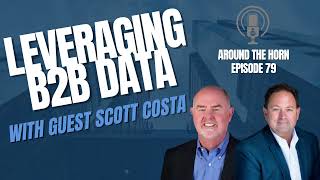
Scott Costa from NAD/TED magazine discusses how wholesale distributors are using data to build resilient supply chains. He covers nearshoring and regional infrastructure, the massive cost of electrifying truck fleets, and why data maturity has become critical for staying competitive.
Questions this video answers
59% (quoted in episode)
More than 400,000 people (stated by Scott Costa)
24 digital editions per year (twice a month)
Named B2B Digital Magazine of the Year (2023)
Chapters
Welcome to around the Horn in Wholesale Distribution with Kevin Brown and Tom Burton. Sponsored each week by Lead Smart Technologies. Tom, Kevin and their guests review the news of the week and dive deep into the topics impacting manufacturers, wholesale distribution, independent sales agents, and the global wholesale supply chain. Whether It's M&A SaaS and cloud computing, B2B, E commerce, or supply chain issues, we peel back the onion with our guests into the topics that impact your business the most.
Mr. Costa, how are you? Thank you for being with us today.
I am great. The honor is mine. I really appreciate the invitation. Excited. I've seen a bunch of the podcasts, so I'm excited to be able to take part and enjoy the time that we're going to spend together. I'm excited.
So let me get this right. You're a Chicago native living in Missouri. Yep.
Living in St. Louis.
And apparently you like Kansas basketball?
I'm a big. Yes. Big win last night. Rock Chalk. We're excited. Had to stay up past midnight Central time to. To watch us win and, and survive in advance. Yeah. So I, you know, I've been in a whole bunch of different play. I've lived most of the country. I lived in California for a little time. I lived in Atlanta. I've lived in St. Louis now for what, 30 years now. I think it's been, you know, I've been with ted magazine for 12, with NAD and TED magazine for 12. Great to be a part of the national association of Electrical Distributors. Learned just a ton about so many things related to business. So it's been a, it's been a great run. I'm excited to, to be a part of TED magazine and to be a part of NAD has really been a career highlight for me.
You know, we, we have Scott, we have folks from everything from office products distributors to folks in the medical business, in manufacturing, distribution to electrical. Right. Everything kind of between building materials, bearing, power transmission, all kinds of distribution, manufacturing. Give us, can you just kind of the quick rundown about naed. Right. Electrical distributors. Quick rundown. But then you're the publisher of their magazine publication. Right. How you and I met, we met briefly through LinkedIn, which, you know, we all have wonderful networks and relationships we've developed there. You guys were gracious enough to interview me for an article recently on private equity and coming into distribution as well. I thought I was going to be a couple of quotes and it turned out it was, it was me. I was really great. Your writer was fantastic to work with, but maybe give us kind of overview of the magazine. And the organization before we dive into the show today.
Right, sure. So the association, first, again, the national association of Electrical Distributors, we have, you know, don't hold me to the numbers. The important part is this. We have more than 400,000 people who are. Who are employed by the companies that belong to the association. I mean, it's a pretty massive number of people who get the benefit of what, again, what being a part of an association does. And we host meetings, we provide education and training and leadership development for our member companies. Obviously, communication is a huge thing. Conferences and events, whether it's regional conferences or it's again, what we call niche conferences, or our Women in Industry forum is going to have a thousand women attending. You know, this coming summer. We have a marketing summit that's coming up that I know, Tom, they're working with you on. We have a lead conference, which is a leadership development conference that's coming up in the fall. And, you know, we're big on advocacy. We have a, you know, a group in Washington, D.C. that works as lobbyists for us. So we work for our member companies, you know, 365 days a year. We're always around trying to help you out. We have a great, amazing staff of people who are incredibly dedicated to, you know, what they do.
Awesome.
Outside of that. And yeah. And then of course, we do a magazine. We do a publication called TED for the Electrical Distributor. And it's funny because I've been there 12 years when I go to, like, I was just at it. I was just at the biggest lighting trade show in. In the United States this week. And I'll be walking down one of the aisles or one of the hallways. And this week was actually a pretty good percentage. I had five people from behind yell, hey, Scott. Said I turned around from. And then I had two people yell from behind, hey, Ted. And I'm like, yes. I didn't name the magazine after myself. It's the Electrical Distributor, not ted. Like, that's my name. So the percentage is getting better. The ratio is, you know, getting better. But, you know, we. We work again. My crew is spectacular. The people that I work with at TED magazine, we do 24 digital editions of the magazine, full magazines a year, twice a month. You know, we put on a magazine. We do daily news on TedMag.com news that happens today. We post today. We do another website called Lighted, which focuses on the lighting News. We do six E newsletters a week that we send out to 12,000 or so people, even though there's only 5,000 12,001.
Because we're starting to use the content.
Great, great. Love to see it. Love to see it. Yeah. So we do, you know, we do six newsletters a week, even though there's only five weekdays. We have a massive audience. Our open rate for our newsletters is 59%.
Wow.
Which is just incredible. So we're excited about the fact that.
That'S award winning in itself.
Yeah, it is. In fact, you can't see I got trophies over there. We were named the Digital Magazine, the B2B Digital Magazine of the Year in 2023.
Wow. That's fantastic.
Which is just incredible when you consider the staff that I have and how much work, again, 24 is the amount of work that I put on folks. So we're. We're proud of the work we do. And it's really important to me to get news and information to nad members from somebody that they trust and somebody who can be consistent in providing that content.
Good. Hey, Tom, I'm just realizing, I'm looking at some of the comments coming in. If you could just put admin controls for the show over to Scott, we can step aside because, you know, I'm just looking.
Yeah, I'm not seeing any comments. So if I'm doing anything.
Yeah, there's. There's Andrea.
I saw Andrea at the conference I was just at. She contributed some content. So we're at this trade show and it's just, I don't want to go too long on this because we have stuff to talk about, but they basically, God love them, you know, it's a good problem to have when too many people show up at your trade show and everybody's packed into this event. And, you know, so imagine, you know, 10,000 people packed into a space that probably only holds 2,500. And I saw Andrea there and I'm like, andrea, I'd love to get your thoughts on what you think of this, but it's too crazy right now. I'm like, you have to email me something later. And so she just sent me the best through the views of a distributor she works for, Swift Electric Supply out in the northeast, out in New York area. She gave me the best view of the event through the eyes of a distributor. I'm like, I am. I'm taking that and posting that online as fast as I can get it. And so she's just awesome. I'm thrilled that she was able to give me a different perspective of what was happening there.
Well, we've got a good friend of the show and a guest last year and an upcoming guest, Paul Kennedy with dsg. We're talking about them shortly. I had a nice thing to say about you as well. So if you're good in Paul's eyes, you're great in my eyes. So we'll go from there.
Paul's our next chair, by the way of nad. So yeah, yeah. Thanks Paul Boss.
He's a special one. Great job. So let's dive in, right? Welcome to around the Horn in wholesale distribution and manufacturing. I'm Kevin Brown. I'm here with Scott Costa, as we've been talking about, as well as my co founder of Lead Smart Technologies, Tom Burton and lifelong friend of mine. We get together every Friday morning at 9 o' clock Pacific time. Tom and I are both typically Tom's on the east coast today, but typically here in California, where I'm at. And we discuss the news of the week, both internationally, but mostly here in the U.S. north America. And what we do is we try and take that news and we consolidate it. What are the top topics that are going to impact manufacturers and wholesale distributors? We put all of that information into a newsletter. It's called around the Horn. And wholesale distribution goes out every Friday morning to 8 or 9,000 people now. And we bring that news together back on this show. Around the Horn and wholesale distribution, podcast and live show. We get together with Tom and I do with our guests. We're live on YouTube live, LinkedIn live and Facebook Live. And later in the day, an editor will have taken all this data and sorted it all out and put it on all the social channels as well as published it to Apple Podcasts, Spotify, Amazon Podcasts, all the popular podcast format. So if you happen to be listening on the podcast format, what you are missing today, besides three handsome gentlemen, is you will not be seeing the newsletter that in a few moments will be up on the screen. So that newsletter that goes out, we discuss all of those topics and really try and kind of we use the term peel back the onion and get the story behind the story and how it impacts manufacturing and wholesale distribution. So we're going to dive into that in just a moment. But if you do not get that newsletter, you would like to just let us know. You can do it in two simple ways. You can send an email to helloadsmartech.com and we'll get that right out to you. Or two, you can go to www.aroundthehornpod.com, aroundthehornpod.com and all of our previous episodes. Are there information about the show? Is there and you can sign up for the newsletter as well as subscribe to the podcast channels right from the website. So we love doing this. We are. Tom, are we 83 today? Right. So I was just, just talking to some of your team yesterday, Scott, about your the NAD marketing summit coming up this summer that I'm looking forward to attending. And I was sharing with them a little statistic that they say that about. What is it? 90% of B2B podcasts never get to 10 episodes. So being in the 80s now, we're pretty excited about that. So that's good. The only way we're able to do this is there's a lot of costs that go with this. Our show each week is sponsored by the company that Tom and I work for, Lead Smart Technologies. Lead Smart has developed an AI enabled customer intelligence and CRM platform for wholesale distribution and manufacturing. We don't work with people outside of that realm. If a school district or a law firm were to call, we would encourage them with where they might find a good solution. But what we've done is taken my 35 years of experience in manufacturing and distribution and brought that together with Tom and his team's background of similar amount of time and technology to build a pre developed solution for manufacturing and distribution. Most of our companies customers find that they're about 70% ready right out of the box with our product because we've taken our experience, we do customer intelligence and CRM in a very different way to bring deep insights and analytics to things that people have never been able to see before about their customers, their teams and their business. So Lead Smart's our sponsor, we're appreciative of that. And Tom, anything to add to that before we dive into the news?
No, other than we don't have a 59% open rate yet. So yeah, have to tap you on the, on that for our newsletter here.
That's exactly right. Good. So in the newsletter each week we break it down into segments. We talk about the economy and supply chain and manufacturing and distribution. And our first article that we published this week came from the American Journal of Trucking and it was talked about a report that pegs the cost of electrifying US commercial truck fleet at a trillion dollars. That's not a small amount of money. So moving to electrification, certainly the current administration is very, very focused on that. Scott, any immediate thoughts on that? I know it probably is exciting. I had gone into it thinking about just the trucking fleets and the cost of all of that. And you've got, I think Some thoughts on the opportunity that lies with that, you know.
Yeah, we can go negative, we can go positive here. So I tell you this much, I question the number $1 trillion. Just so you know, we Congress right now is talking about funding the government for 1.2 trillion before tonight's deadline. So only 200 million more than what it's going to cost to put trucks on the road. I mean, our defense budget, the budget that we use to defend our country is like 860 billion. This is 200 billion, whatever, 1440 billion more than that. I mean, it's just I question the number then I question the, the, the cost per truck. So I did a little research and found that there's whatever, 16 million, you know, commercial trucks on the road. Divide that into 1 trillion. I'm horrible at math, but that's like $74,000 a truck. And that just doesn't seem to add up to me. I mean, I don't see the return on the investment.
Yeah.
The positive side is members of nad, they make the products that are going to be electrifying the US Whether it's EV chargers, the copper wire, the, again, this, you know, this is all going to put a strain on utilities. So we have to talk about micro grids and batteries and solar or wind or other ways that we're going to be able to power these things, to charge these trucks. Our member companies make all that stuff. They buy that stuff, they sell that stuff. So if you don't want to be greedy and you just. I try again, horrible at math. So somebody check this for me. If you just want to take 1/10,000th of 1% of 1 trillion, it's a hundred million dollars.
So.
Okay, I mean, the difference between a trillion is radical. Radical.
So, so, so I'm wondering, Scott, if this number includes the infrastructure like the charging stations and all of that stuff.
That's exactly what it was, charging stations. It didn't, the only thing it didn't include was the, the actual buying the vehicles. Yeah, the vehicles themselves.
Right.
It included utility upgrades and charging infrastructure.
One of the things to talk to as well.
Right.
We've got everything in the react. Reason I wanted to talk about this today. Right. Is, you know, we've got a couple of comments made earlier in the show from, you know, NAD members who are large distributors and they have large fleets and depending on the size of a distributor or a manufacturer, they may have semi trucks all the way down to pickup trucks and every type of vehicle in between that, that's moving between branches, moving between distribution centers, delivering to customers and so forth. You know, there is a continued ongoing push for, especially if you live in California, is mandating all electrical. Right. All, you know, internal combustions or engines or ICE vehicles being, you know, limited or gone over a period of years. And it was interesting. One of the things came out in this article is, you know, typically a Class 8 truck, which could be a large delivery truck or a semi truck is roughly $180,000. Where when you do that with a battery powered electric truck, it moves up to over $400,000.
Right?
Now you trickle that down, right, no pun intended in electrical there. But you start looking at that just even the pickups, trucks, right? Whether it's a Ford Lightning pickup truck or it's a mid sized delivery vehicle, there's a lot of that, not just infrastructure costs. And wholesale distributors and manufacturers are going to need to build that infrastructure on their sites and locations and branches as well. So, you know, this is again, I made the comment earlier peeling back the onion or story behind the story, and that's what we always try and talk about here on our show each week is what does that really mean? And I think this is something that we've got to keep a really close eye on and we'll continue to talk about it as we see potential policy or legislation about it. Because it means a lot, no doubt.
And we've seen legislation already. I mean, there are a number of states that have said you can't sell gas powered vehicles after 2030 or 2035. So as you're talking about again, as simple as those pickup trucks, as those wear out because they get a lot of miles on them because they deliver a lot of stuff, you're not going to have the opportunity to replace them with another combustible engine. You're going to have to, you know, and then the expense starts to get like you were talking about, a little bit extreme for distribution to have to keep pace.
Yeah, well, I hope we're not losing any of our, any of our listeners today on this. It don't mean at all for this to be doom and gloom because there's, you know, obviously a, another side of this. It could be beneficial to the environment and so forth. But you know, these are things to be planning for and boards need to be thinking about this, right? Is budgeting for it and planning down the road because you stop and think about it, whether you've got, you know, three branches or you've got 35 branches, there's going to be a fixed cost to that you know, solar chart or the electrical charging stations. Should we outfit with solar? What should we be doing? So something we'll continue to keep talking about on the show here. So why don't we jump ahead here, Tom, to that next article that came from impo magazine about McKinsey having a study and some perspective on some takeaways that they had regarding shifts in supply chain. Any thoughts from you guys to start off on this?
God, do you have any take on this? It looked pretty similar to a lot of the things we've been in, reading the article, a lot of the stuff we've been talking about over the last few weeks.
Yeah, yeah, exactly. I think that. So a couple of things that come to mind on this is one, you know, we still have supply chain issues and there's still long wait times on a number of products, which is scary. So obviously getting manufacturing done closer to the, you know, what Amazon calls the last mile, getting manufacturing done closer to your customers, obviously is important. And so that's essential. And then the second part is, you know, customers are interested in sustainable products. They're interested in origination of where that product was made now. And so these are all, I think, factors toward where manufacturers are shifting their, their focus. And, and just whatever it was a week or so ago, you know, Schneider Electric, who's one of our members, announced that they're investing $140 million.
40 million, yeah, we talked about that.
Last week and their plant in, in Tennessee and they were going to hire 750 more people. And they were, you know, again, they, these are, these are big issues, I think, as far as getting, you know, getting stuff made closer to where it's going to be installed to kind of ease what's been a supply chain problem now for three and a half or four years. You know, it's definitely been an issue.
Well, that's some good points that come from this article as well. Right. There's been problems long before the pandemic. Pandemic triggered a lot of things because ships weren't able to leave China on the way. That's the other thing.
The Red Sea, we can talk about that forever.
Exactly. Right. So now we've got Panama Canal issues and we talk about this regularly. Right. Panama Canal issues. We've got Suez Canal issues, we've got geopolitical tensions and so forth. We've talked about this on an ongoing basis here. And I think it's important that we bring this to light and continue to try and get people thinking about this just from the standpoint of the impact that it can have on the business. I always like to make sure that it's easy for us to kind of pontificate. But the survey had some really good information, right. It said 95% of the survey companies reported challenges with their supply chain footprint in the last 12 months. So just because we've come out of the pandemic time, this is saying that's not changing. Right. Because we've had, we talk about this regularly, right. Port strikes, you know, Suez Canal, as we just said, Panama Canal and so forth. It said 50% reported their supply chains were reliant, are reliant on other another region and 89% plan to reduce their dependency with a focus on Western Europe and Southeast Asia. So moving away from China and a big part of secondary out of this article was talking about and the single biggest word that came out of this article for me was resilience. Right. We've got to have resilience built into our supply chain, whether you're a manufacturer or a distributor. And understanding where things are coming from. And those issues they talked so much about people moving away from China and it's not leaving China, it's shifting because there are one, you know, there's a great amount of, you know, US Based manufacturers that are manufacturing in China, that are manufacturing China for the Chinese market. Right. That's not leading. But when we start looking at how are we supplying Europe and how are we supplying the Americas, a little bit different challenge that they're starting to look at. So 64% said regionalizing their supply chains was important and another 66% brought suppliers closer to their main markets or that last mile like you were mentioning, Scott, with a 30% growth of that year over year. And, and we're going to continue to see this, right? The geopolitical tension right now between us and China and then China and Taiwan, these are big issues, right. And got to keep the supply chain moving.
Demand has not gone away. Yeah, I'm not an economist. I don't want to pretend to be one. I took an economy class in college. It didn't go well. So I'm not trying to say that. But there were dozens if not a hundred economists in 2021 who insisted we'd be in a recession by the end of 2021. And now we're almost halfway through 2024. And so I don't think that demand, especially again on the, I can only speak for the construction side, you know, backlogs are still fairly solid. Jobs are still available. I was just in New York City, there's cranes in the air, people are doing big projects and small. So I don't, I think supply chain issues are going to hang over us if we don't start doing some things to speed that up a little bit, keep it moving, you know what I mean?
No, I think you're right with that. Just a couple of last topic comments on this. It said from the article, it said one example on the near shoring topic, it says when that whole near shoring discussion started, everyone said we need to near shore. And that was pre pandemic. But it became a big issue during the pandemic. It says it stabilized a bit in 2022. And then now the articles research said that the political tension has really pushed things over the top to really get a peak going of the discussion about near shoring. So I think it's interesting. We see tons of this moving to Latin America, not just Mexico. Big part of it's Mexico with nafta, but a lot of it to Latin America in general. The last thing I'll say on this though that this article talked about that I was really surprised about was that there was a discussion about the lack of awareness of some of this boards of directors. And that was part of their research, was that surprisingly not enough board of directors are bringing these topics up and are even clearly aware of it as opposed to, you know, senior management within a company. So that, that startled me a little bit. Yeah.
Yeah, I agree.
Good.
Tom, any thoughts on that before we jump ahead?
No, let's, let's move on.
Okay, what's next? Tom, why don't you dive in on the manufacturing distribution ties. Right. More back into that whole resiliency idea again. Right?
Yeah, I mean I think we're just, you know, next article in innovation led industrial policy for US Manufacturing again, the same sort of thing. Right. We highlighted issues surrounding supply chain and all of that and, and the ability to kind of withstand those shocks. But it does look like there is actually a fair amount of at least innovation happening on the manufacturing side, more so potentially than even happening on the distributor side of things. Maybe it's trickling down as you just said, along, along the way. Scott, do you have any thoughts here?
I have some thoughts, but I think more of a question in terms of, you know, for, for both of you in terms of, you know, what's the, what's the cost of innovation? I mean, what do you think the cost of innovation is and where do you think that tipping point lies? Yeah, you know, it's like, yeah, I want to be innovative. In order to be innovative, I have to invest dollars. A percentage of what my whatever bottom line is now is not going to go toward something else. It's going to go toward changing the way I, whatever manufacture my products, whatever it might have to be. But where do you think that balance I don't know. Where do you think that balance lies in terms of when manufacturers are going to say, you know what, it's great to be innovative, but I can't go out of business either?
Well, I think it's a good question. I'm not sure the exact answer to.
No, I'm not either.
What you're describing, I don't know that there is an answer. And you know, I said sometimes I feel like, you know, one. I wouldn't suggest to your point earlier about not being an economist. I'm not either. I just, I just pretend to be one on Fridays for an hour.
There we go.
Right. But, but the, I think what, what I'm looking at with this and again this article, these two last two articles tied very well together, right. The resiliency. And it just makes me think of a quote that we discussed on was one of the articles we talked about in last week's show and it talked about historically we've seen this, you know, nearshore, onshore, offshore discussions. They've kind of peaked and valid and it's just always been China, China, China, China, China. If you want to do something, you know, that's, that's reasonably priced, that's changing. I mentioned this all the time, right. As China has a middle class. But the article last week commented about this is this isn't a topic that's just going to come up here and there. Now this is something we need to be focused on in our business. Every day is working on supply chain. Now we see all over the place, you know, supply chain analyst titles and this, that and the other. What I believe is as we talk about resiliency is there's never probably been a more important time to have clarity and understanding of your supply chain. And if you're a distributor, that means in Mike Mortensen that was on with us a couple weeks ago from, from ARG Industrial, we were, Mike was talking about this as well is, you know, never before having had the closeness and relationships with manufacturers to understand their supply chain.
Right.
Because historically, you know, and I remember when I was, you know, back 93 to 2003 and I was a manufacturer's rep and you know, a distributor had, you know, an A, B and a C, source for items and so forth, and they just kind of relied on them based upon brand or price or availability that those dates are gone.
Right.
We have to really understand because the risk of this is if you're tied to the wrong suppliers and the suppliers don't have a resilient supply chain for you impacts your growth and your business. Now, maybe it's not that you are having to close branches or lay people off, but you're probably not going to make your growth initiatives. And if you don't understand where they're at, you can't prepare for it. So I think the issue is, and I don't know if I'm answering your question, but my belief is I don't know where that tipping point that you mentioned is. What I do know is if you want to be accelerating growth in the future, you need to be supply chain resilient. And that's not just a sentence. That's a something people have to live.
Agreed. Agreed. And the again, the partnership part really is, I think, essential too in terms of let you know, making sure that your partners are aware of the commitments that you're making. Andrea. Andrea, I hope you're still here. I hope you remember this. This was like eight or nine or ten years ago. We were at a conference together, an NAD event together, and we were unveiling some research we did on partnerships. And literally 90% of distributors, which was the flip side of 92% of manufacturers, said that they would like to, quote, reimagine their partnerships with their supply chain partners because they're not happy with that. And this was years ago. And I remember Andrea and I looking at each other like that's 9 out of 10. 9 out of 10. They're not happy with it and they're partners. And so to your point, now it's like the strength of partnership today, I think is so incredibly valuable to make sure that folks realize again, your partners realize up and down the chain what you're doing, why you're doing it, how you're helping them while you're investing in yourself. All seems to be so essential today and will be in the future.
Yep, I agree. Last piece on this article, we got a lot more things to cover today is it talks about policy in there as well. I just from what we've just been through, I think policy becomes secondary to all of this. It's nice if there's some policy that's beneficial, but it talks about, it says industrial policy, governmental policy is written to balance social concerns, national security and economic dynamism priorities include job creation, wage levels and domestic resiliency. So resiliency, resiliency everywhere we look is that and you know, what does that mean? It means I understand and I'm not going to, I can adjust and adapt and bounce back if there's issues because I have an understanding and clarity to things within my own supply chain. So anyways, I can't imagine this isn't going to be, you know, Tom sometimes will mention, I think we just talked about this last week, you know, in some of the articles. But you know what, that's our role here is to bring up and one of the main reasons we're here is to bring up topics within manufacturing and distribution that are going to be impacting them. And each week we seem to have a little bit of, a little bit bend on things. But this resiliency thing I think is going to be an ongoing topic for us. Tom, let's jump ahead, let's move ahead. Yeah.
So speaking of things that we've never talked about data.
Yeah, very good. This is an article from Modern Distribution Management. This great Dan Sherworth from New posted this on his LinkedIn this morning about how cool this is about talking about data driven decisions and learn to trust your information. I commented on Dan's post that we would be talking about this here today. Tom, you want to kind of dive into that a little bit about data since you're the data guy on the show and at Lead Smart.
Yeah. Well I find it interesting, right Is that now I'll get the exact quote here. The exact quote was, is 70% of a survey of 200 distributors. 70%, most of or half of them, I apologize, say have very low data maturity today but 70% say they will have high data maturity within three years. So a couple things that jump out with me on that one is obviously they're starting to take data seriously, right. We've been talking about this for, you know, a year or whatever or longer. The one thing that I wonder about is what they mean by data maturity and does it mean that they're going to go in and clean up their data making sure that, you know, data hygiene or what is really else is going on to clean up that data to make it ready for AI and other analytics. So it didn't get into that in the article. I'm hoping that a lot of people are not just thinking, well I'm going in. Kevin, I think we have a call later today with a customer who wants to talk about their data and their data situation. The data Hygiene, the part of email addresses being correct and phone numbers being correct and all that, that's just one little piece of it. The second and maybe more important piece of it is what data are you actually going to be incorporating into AI and your data lakes and so forth to drive a lot of what you're doing. So didn't get into that, but at least there seems to be some real attention on this now. Good.
Scott, any thoughts but your, your background and experience within nad about data as it relates to this, a couple of things.
You know, it doesn't help to make strategy often dirty data because it's, you know, it's, it's going to be incorrect. And I've, I, I, I don't say what I was, I guess a data guy. Like, I, I firmly believe that if you have a restaurant and you know, traffic flow and you know what your revenue is per night and you know, what the, you know what, what items don't sell, what items do sell, you can, you know, you can determine how much food you should order, what your scheduling should be, when you should have specials, what you should be pricing things. And data should be able to tell you all this. And I believe in all that. I'm not trying to say that I don't, but I was talking with Herm Edwards, the former football coach who you play to win the game guy, for those who don't remember who he was, he was our keynote speaker in, in South Central Conference that nad had just in, in February. And we were talking backstage about data and being data driven. And he said, yeah, you should trust your data, but there are times you have to trust your eyeballs too. And he said the point that he was making was, you know, his to his data showed that 17 times out of 100 on fourth and one and a half yard we make it, which is great. And then you look over at the other team and, and Ray Lewis is the linebacker and he's screaming at people and blood is rolling down his face and the data doesn't show you that. And you're like, no, no, we're gonna putt because I'm not going up. My eyeballs say I appreciate the data, but the data doesn't show me that. So I think that there's sort of a, I'm now kind of moving away from being 100% data guy to a 92% data guy and an 8%. Let's trust our eyeballs a little bit too on some of these things, on some of our decisions. And again, and that's not to knock this particular article because again, I think data driven decisions are essential. I just think there's also some experience and some eyeball tests that, that need to go along with your data driven decisions.
Yeah, I think those are good points. I love that example with Herb Edwards. Yeah. Where does he live by the way?
Because he lives in California up in San Francisco area because he got run out of Arizona.
So. Yeah.
Yeah. And he's, you know, he works for. Now we're way off the subject. He works for ESPN so he's got a fly to Connecticut in the football season. He flies to Connecticut every week back his commute is San Francisco to Connecticut. Every is crazy. Yeah, well that's the story I couldn't imagine.
Yeah. Anyways, back to the data point. Here's my takeaway on this. And, and this is ties right into what we do at Lead Smart and it's really important. Right. Is in. Tom made this, Tom made a comment to me a number of years ago. As you know my background is in wholesale distribution and manufacturing both. I started in distribution in 1989. So I've been doing this a while. And Tom's been a data guy, right. Computer scientist by education and has started and exited multiple software companies and he knows the data field. And Tom came made a comment number of years ago and he said I really never seen markets that have the amount of information and data available to them like specifically wholesale distributors have. And if you think about it from a standpoint of where this data really is, I always describe it as manufacturer ship stuff in boxes and pallets and truckloads. Distributor breaks that truckload, pallet or box down to ones or boxes of something and gets it to the end user. So a lot more invoices that a lot more invoice data at a distributor than a manufacturer. Lot more touch points data of lots of other customers. Right. Distributor has hundreds and thousands of customers, you know, or hundreds and, or thousands of customers and a manufacturer typically has hundreds in that case. So but if you look at the distributor immense amounts of data on top of the fact that you know, you used the, the, the reference point earlier. Scott took restaurants, right? You don't find that many multi generational restaurants, but you sure do wholesale distributors.
Right? Right.
And you sure do find a whole lot of multi branch wholesale distributors that have data across large pieces of geography. The challenge is, and it's, it's part of what's going on through this article is that historically this data is all siloed within an organization. Right. We got warehousing data. Here we've got invoice data here we've got E commerce data here we've got, we've got hundreds, whatever numbers of spreadsheets all over the organization. And the issue is getting that data back together, that becomes challenging. One of the great things that I really appreciated about this within this article is they talked about really finding a way to help the customer, right, with the data that they have available, help a customer understand their business even better. And I try not to talk too much about what we do at Lead Smart, but the term customer intelligence is so broad. But how we use that is we use it internally. We have a tool called a revenue expander right within our software where a distributor can look and say, here's all my product categories that that customer's buying and using an AI tool against that data that says, hey, Scott, you're visiting this customer today and they only buy two of your nine categories or 14 categories. And in fact, they're up in this category and down in this category. Triggers us back to that. Your point earlier, right, about what my eyes are seeing, because now I know what to talk to these people about and what we find from that constantly. And I just remember this, you know, from my days as a manufacturer's rep and talking to distributors about buying full line for me was oftentimes the customer doesn't even know that they're not buying things from you. They might think they're buying this category from you, but really another buyer over here is buying all of these things. So when we can start taking that data, we can do three things with it. We can help our customer better. We can help out and help them even understand their business better. We can help our people understand better how to accelerate their time and how they use their time, and we can get deep insights into our overall business. But what we have to do is bring that data together to make it actionable. And that's what I think this article, really what I loved about it is it's talking about, right, what are we doing about that? How are we looking at churn models with customers and what does that mean to our inventory levels? And we're at a tipping point, I think, in technology right now with the AI tools that are coming available as well that we can use within distribution and manufacturing. That's really going to change how we use our data.
Agreed.
Tom, anything further on that or you want to jump ahead?
No, let's go ahead. Good.
All right, so we dive right into our segment that we do each week on E Commerce and marketing. Tom, you, before we started Lead Smart together, you had invested in a digital marketing agency as well. So let's talk a little bit about, in our E Commerce and marketing segment, we're going to talk about the false allure of B2B intent data that came from Martech magazine. I actually sent this article off to a, a friend that runs marketing for a very, very large distributor in, in Ohio. Then I knew she would love this. I sent this one off this morning. So Tom, you want to lead us off a little bit on that one?
Yeah. Well, I think we should start off by talking about what, what do we mean by B2B intent data.
Good.
So there's, you know, and Scott, I'd be interested to see if you're seeing this especially with, you know, some of the stuff you have coming up in your conference. In the tech world, it got very popular to have tools that would kind of sniff out basically what, you know, people, what buyers were doing and to alert, use quote unquote, that if they were in fact, you know, doing things that showed in high intent action. So you know, are they going to your pricing page, are they watching a demo on your website, are they searching for you in Google and so forth or looking at review sites or all of those types of things. It's gotten very popular in the tech world. There's a bunch of high priced tools that go out there and do B2B in tech data. You know, quick question for you, Scott and I have a couple other comments on this, but do you see any of this happening in our, in the, in the world of manufacturing and distribution.
On the nad side? Again, I'm only speaking electrical. Sure, absolutely. There is no doubt that the investment is there to track, you know, who's coming, what they're doing, where they're going, how they're operating, how long they've been, you know, on a site or on a product or whatever. And here's a secret. So am I. Everything I do is digital. I know how many pages are viewed in the magazine every month. I know how long the average amount of time was spent on each page. I know what hyperlinks were clicked. And that's not, you know, I think that's the, the way of the world. But it's certainly happening amongst our members and, and their websites and trying to track as much as they can.
Yeah. And what the article then was saying here, right. Is, you know, first of all is what the first comment that they made in here is that roughly it is a high number 5% of, of your. Of any market is looking for what you sell at any given time. I think it's actually a little bit lower. But five, you know, we see usually between anywhere from 1 to 3 to 3 and a half percent. They said 5% in here. You know, of course that'll vary by market and situation and what you're selling. But the point that, and this is, you know, we talk a lot about this even with our customers. Right. If you're going to solely try and just capture that demand, you know, basically look for somebody to have intent, as I said in this article, you're probably way late to the game.
Right.
They've already done research with other options, other competitors, there's. And all of that. So by direction. Right, right. So that by the time they get to the point where they're seriously considering making a purchase, if you're not already in that at that party, you're probably not going to get invited. And so we talk a lot with, you know, about the importance of creating that demand earlier in the cycle versus just trying to capture demand, looking for intent data along the way. And again, they went one step further and said, even with intent data, there's a lot of false positives and, you know, the, the accuracy is not as great as maybe you'd like it to be because let's face it, you know, buyers don't have an exact process that they go down. You know, one thing doesn't necessarily mean just because I'm on your pricing page doesn't mean I'm ready to buy. So anyway, I thought this was a really good article for anybody who's in the marketing space to really look at and think about, you know, again, the importance of creating demand earlier in the process versus just trying to capture the demand once you're seeing some of this intent data that you may be tracking.
Yeah.
So, Tom, are you saying just for clarity's sake, so I'm running a marketing department, There should be higher focus on the quality of marketing long before you're looking at intent data.
Exactly. Yep, exactly. Through your thought leadership, through your, you know, industry information. I mean, frankly, a lot of, I mean, look at what we're doing here on the show, right. We actually get a fair amount of people in our leads for prospects for Lead Smart through the show. And we're talking about things that have nothing or really nothing to do with our technology or looking for intent data. So it's really. How do you get awareness, Start building demand, Creating demand, getting awareness, building trust. Higher in the process. So that when they get time to making that decision, you're somebody who at least is under consideration.
It's got all that a little bit to what Tom's saying, because I really appreciated this article as well. And they use. I haven't heard the term exactly this way before, but they use the term consideration set. And in the research that they talked about here, it says the consideration. When somebody comes to buy and you see intent data, maybe they're looking a lot at your pricing page and so forth, they're saying on average they're doing that with five other people. Right. So we sometimes think, and this is one of the. I think the challenges that we have in the distribution world is, you know, there is in. Ian Heller with the Distribution Strategy Group has been on the show a number of times, talks about this a lot. He said, you know, don't look at your E Commerce data as we got, you know, 2% of our sales come from our website. It's not the case at all when you go out and you do individual interviews. And I was just listening to an interview that Ian did recently on this and I was very appreciative of one of the comments he made. And I don't want to quote them exactly because I know I'll get it wrong. But the idea was if you're an executive within a distribution company and you're working on E commerce and your company's working on growing as an executive, go call 10 or 20 customers and thank them for their recent order. And as part of the discussion with the order, ask them, did you do any research on our website, by the way?
Right.
Do you do that with other people? And now you'll start getting a feel for the guy placed the order at the branch. But he just said, yeah, you know what? I found these four items and I researched them on your website. Now you start to get that whole piece of what's going on and to. What Tom was talking about earlier about this consideration set is it's more than having a website. It's more than marketing. Now we get this. Whether we, you know, a lead feeder, you know, these different intent tools and so forth that are out there, that are showing people what they're looking at on your website. That's nice, but that's a component of what your salespeople are doing, what your marketing is doing, what your events are doing. When you pull all of those things together. Now we're having influence on a customer and we know we're going to be in that consideration set at a higher level and hopefully get that order. So love this article.
Good article.
One of the things they talked about was finding needles in haystacks. Right. And you know what, you need to go in there with a magnet and I think this is some good tools. So let's jump in and talk a little bit about tech, cyber and AI in our upcoming section here. And there was a little article there about Gen AI and Cybersecurity CEOs concerns. A little bit of additional survey on that as well. So Tom, you want to give us any thoughts on that one?
I think it's, I mean at least I think that is accurate. I think those probably should be the top concerns from an IT perspective. The two are, there is some interrelationship between those as well. But yeah, I mean if you're not thinking about cybersecurity and AI in your business and how that's going to, as it says here, deliver and capture value in the next three years, I don't, I don't know what else there would be potentially more important from a technology perspective.
Well, and you know we're going to see more and more of this every day as we talk about AI. This thing talks about the 68% expect generative AI will change the way their company creates, delivers and captures value in the next three years. And obviously there's a huge cybersecurity issue for that. I was talking to customer of ours earlier in the week that's just been dealing with their, their third party E commerce company that they partner with just went through literally a horrible, horrible cybersecurity issue that devastated all of the databases and distributors are having to rebuild things that are partnered with them and it just, I don't want to talk about it too much that I don't know enough about it, but I mean there is great risk out there right now that we need to be balancing all of these things as we go. So kind of next article we're kind of going to just because of time. There's a few other things to talk about today, but we'll skip over here. There is an article that we shared about. There's this discussion right now that Apple and Google, you know, their stocks both jumped this week on some discussion that Google's Gemini model might be being used to, to power a lot of what Apple's doing. And you know, I threw this article in for, for conversation there mostly just because we, we can't go into AI blind within our organizations. We need to have some level of understanding of what's, you know, what's behind the curtain. And so this is just kind of a good idea and this talks about and I can't remember what the number was and it's not relevant but how big it's. But the amount of money that Google already pays Apple every year to be the search source on your iPhone is astounding. The number in the billions of what they're already spending. So you would think, right, Google owns Android competing against an iPhone but yet they're so tied together already. It'll be interesting what Apple chooses to do with Gemini or what they end up doing on their own generative AI tools as well.
And yesterday the Department of Justice launched investigation into app the iPhone being a monopoly. Can you imagine Apple and Google partnering? I mean the investigation into monopoly. I don't even know what you would call it at that stage. It's just crazy.
So hey, just, just let me send a picture from my iPhone to my sister who has an Android and let the picture go through in the text message and I'll be happy.
Yeah, exactly.
Right.
That's, that's one.
Keep it simple. That would be awesome.
Yeah, well, but that was one of the things that they cited right in that suit was that you know, Apple will, you know, makes it difficult to group chats with people on different devices and sharing images and you know, things like that and they're trying to dry use that to drive people there. It's like I, I don't know. I think, I think the Department of Justice someone and some of this stuff is trying to follow that. The, the gal that said trying to make a name for herself at the ftc. So we'll see what happens with that. Anyways, jumping on to our sales and M and A section. Kind of an interesting article. Private equity group is taking a sterit. The cutting and abrasives company that's Massachusetts based 144-year-old Precision Tool & Co. That's going, going private in $122 million deal. So it's kind of interesting. We see a whole lot of PE ownership but we don't always. We see a lot of PE movement. We talk about M and A on the show in that setting it's usually buying a distributor but now seeing publicly traded company going back to privately held is an interesting one. So any thoughts on that? Do you see that in the electrical world at all? How many of your. Your manufacturer members are publicly traded? Ballpark by percent.
Oh wow. Well you know it's, it's really sectional and I, that's a tough. I don't Think I can give you an accurate answer that I'd be comfortable with.
Probably a smaller percentage though, than, than still independently or PE owned, right?
Absolutely, absolutely.
Good, good, good, good. All right, well, that's a. That's a good one. It's nice to see that. Tom, something to add?
No, let's just jump ahead. Okay.
Yeah, so we'll jump into our people and leadership section. This is. We added this in January. We didn't talk much about this and we had the. We called it the Legends episode. We had looking at last year and thinking about the coming year. We had Mike Marks with Indian River Consulting Group and obviously he's very active with naed and Dirk Beveridge with Unleash WD and, and we supply America tour. And then Ian we talked about earlier, Ian Heller from Distribution Strategy Group. We had the three of them together. And you know, Dirk does so much writing and speaking about people and what do you call it, the non desk employee and so forth. And he focuses on so much of that on the tour that he does as well each summer. But this was. So we added our section about people and leadership because he mentioned, you know, on the podcast he goes, you guys never talk about people. Like, let's start doing that. So we had an article here about how to use AI to support employee development. And this came from. It's called the Training Mag. It just talks about the newer advanced AI technology being able to do learning and development programs and really help with employee engagement, employee development. So any thoughts on that from either of you?
Okay, I will not criticize another magazine. That's not fair. But wouldn't it be awesome if we can just stick our future leaders in front of a computer and the next thing you know, their CEO material. I mean, are we serious here about using AI to. For leadership development, employee development? I mean, go experience things. Go to a conference, go talk to your partners and your. Go walk through your. Your warehouse and go talk to people. Go experience things. Go see what makes people tick. That will make you a better leader. I don't think AI could really. You know, I could. I was talking about this the other day. I can make a magazine where I just put things into chat GPT that says, tell me how the electrical code is going to impact contractors with less than 150 employees and they'll give me a 2,000 words. It'll crank out.
I just.
That's not experience. Go talk to electrical contractors who have less than 150 employees employees to find out how it's going to end this Story just really kind of boggles my mind. And I cannot believe that we're going to take Leadership Development, which is a program, by the way, that nad does Shameless Plug. We're going to take leadership Development, just hand that over to AI. Like, look, we're going to create geniuses now through a computerized, like, go experience things, go touch things, go talk to people. I just. I couldn't believe this.
Hey, Scott, how do you feel about this?
I'm sorry about this.
I think he's channeling her.
Yeah, yeah, go ahead, Tom.
No, I was going to say, I agree with you, Scott, in general. I think that there's kind of a middle ground here, though, on some of this could be used. And we talk a lot about even like digital twins and the ability to use AI to have digital twins to optimize what, you know, different employees, salespeople and all that stuff do. I think there's data and information that can come from that, that can be valuable in deploy employee development. But I agree with you, Scott. You can't completely automate all of that and have it, you know, basically be a robot. There's too many. There's too many variables that you just can't. You can't put into an AI system.
Yeah, no, you're. You're exactly right, Tom. And then let's just. Part of this. The subheading here is allow AI tools allowing business to streamline their learning and development programs and use this for assessments to suit their employees. So I would. I'm not going to say push back with. On you, Scott, because I don't disagree with what you're saying about experience because I'm. I'm an experienced guy, 100%. But I do think we're going to see some AI tools that will allow us to enhance and refine what we do from an automated standpoint. So to see, you know.
Yeah. Again, as we go back and forth on this, my response is, should you streamline development of your. Like, just do it at the right pace. I mean, people. People think and walk and talk and move in different paces. And I don't know if really streamlining is. Is the way you want to develop. Hey, I know we got to develop you as a leader. We're going to have to do that in the next six weeks. Like, easy now. I mean, let's have a succession plan and let's make sure that you're doing it the right way.
Yeah, I think this is good. You know, Tom, if you wouldn't mind highlighting that comment from. From Kelly there, she says we need to blend old, new and AI and experts. Right. That's, I think thanks for that, Kelly. That's a great comment. Right. And that's been my view on things all along. Right. Is, you know, and Tom mentioned digital twins and co pilots and so forth earlier. And that's the beauty. Right. We're not going to get rid of people. We're going to make people better and enhance what they're doing. But I don't ever want to stop going and shaking hands and grabbing a beer with people at a trade show and event. I mean, the vast majority of my travel is events. So good. Hey, we need to move on. We have an article here from Supply House times. Meet the 10 most influential women in PHCP Pipe Valve and Fitting World. And there's some great folks in there. So if you, if you don't get our newsletter and I forgot to mention, slow down if you would there, Tom. Go back a little bit. Tom tries to sometimes move me ahead when he's ready to move forward. And he's done on a topic by, by moving the slider to the next article. I'm not biting on this one. There's some great, great ladies that are, that are mentioned in this article that are really doing some powerful stuff within their organizations, both from a executive leadership and a marketing and a sales side of things. So what I didn't mention earlier in the show that I normally do about halfway through is we're here every Friday. I'm Kevin Brown. I'm here with Tom Burton. We have a guest most weeks. Scott's with us today from NAD and we publish a newsletter called around the Horn in wholesale distribution and Manufacturing. It goes out every Friday morning to thousands and thousands of people. If you do not get that newsletter, you can simply ask us for it@helloitesmartech.com or go to the website for the podcast which is www.aroundthehornpod.com. the reason I interject that usually throughout the show is if you're listening on the podcast and not seeing what we're looking at as we're looking at the newsletter on our screen were talking about these articles. So again, this was from a Supply House Times magazine. If you don't subscribe to that, it's a good one. If you're anywhere related to plumbing, heating, pipe, valve, fitting arena, a great one. But there's some good folks in that. It's International Women's Month and so a good time for that one. So some good folks in there. Tom, we'll hit the industry scuttlebutt. Really quick. We've got. I know Paul Kennedy was with us this morning. I think Joe Solheide and quite a few people from Dakota Supply Group. They've unveiled their inspirational rebranding. And I just, I think they handled this so well. And I'm not saying this because Paul's been on the show and Stefan Folip is Chief Digital Officer and I got to spend some time together at an ad event recently and they're just good people there. But I just thought they handled this and Scott, I'm really interested in your feedback. I just thought they handled this whole rebranding thing amazingly professional.
Right.
Joe just commented. We are DSG.
I tell you, I, I went to the DSG 125th anniversary party in Denver.
They invited my invite to that.
They invited every single employee branch and some of the folks who were there had never been to an airport before ever in their life. That's LUDA Denver for this incredible. I mean if you want to talk about we are dsg and if you want to talk about people who care about each other, I was just, I was again my job stand on the outside and observe. And, and so people who talked on the phone to each other for their careers, you know, or sent emails to each other but never met each other, met each other for the first time when they were in Denver and were genuinely excited, standing there watching, generally excited to meet each other and talk to each other and see each other in person and just talk for extended period of time about family and life. And I was just so impressed with this company and what it is that they do and how they do it from the, from the bottom up for lack of a better. I mean they're an esop. So everybody's an owner.
That's right.
Everybody has an equal stake in the game and everybody cares about each other. So just deeply, you know what I mean? And, and it was just so just an incredible thing. And the way they rolled this out is, is an absolute mirror image of, of who they are and what they do. That's such a great job how they captured it.
Yeah, well, you know, it's interesting to watch about that and I, I don't. Sorry to the DSG folks that are with us, but it's not that I mean to turn this today into a DSG commercial. But you know what? Esops, I did some advisory work a number of years ago with an esop and not every ESOP is employee owned company is the same. Right. And you can see that within their organization from the very top all the way through. And what I congrats to Joe Solheid that's here with us today. He came from a large publicly traded fastener distributorship over so when you watch this expansion and the reason I'm talking about this is more of other smaller and mid sized distributors right in other parts of the country can kind of take a look at some of the path that DSG has taken recently and get some good feedback on some things to do in their organization. So anyways congratulations to everybody there. Thanks for their support of our show as well. Endre's International put a new big distribution deal together with Penn Engineering. Some good friends over at Endrey's as well. So congratulations to them. Border States shocker. Another acquisition but that's a solid one there as well. So anyways the last thing we'll cover in every week in the newsletter we have the last pieces we we call it a good read. It's called this week's article is what does a chief AI officer look like in the marketing world. And the we're seeing more and more of this right whether it's a chief digital officer. We just mentioned that a DSG hired last year a chief digital officer, AI officers. And we talked about this a little bit last week. I've been asked this question a couple times recently. What I'm seeing is maybe it's not a C level person but we're starting to get more within organizations folks that are being either promoted within and learning about AI and digital. And the seriousness of this is you can really see it changing.
The marriage. I think between our stories here is starting to be become more clear to me about again hiring a chief AI officer, a chief digital officer, Chief data officer and mergers and acquisitions. We have to accept that there's a level of distributor that's saying how much do I need to invest in these positions and these technologies to to remain in business in 2030. And the bear part of it is again like you know, Wednesday Sona Pyre acquired two electrical distributors in Michigan and a week or so ago Graybar acquired a Parish Hair distributor in in Texas. And and we have to accept that those companies spend you know, I'm making up thumbs. I really don't know what it is $100 million on digital technology which comes down to about 1% of their total revenue.
And you're doing math again.
Yeah. What's that?
You're doing math again.
I know. And then there's companies like but here's my point and Then there's companies like, you know, that are around the size of Dominion, who might only be able to spend $5 million on digital technology, but that's 10% of their total rep. So they're. Yeah, they're spending exponentially less dollars, but the percentage is so much higher that it makes it difficult to say how much am I willing to spend on these AI officers before it impacts the bottom line much more significantly than these big guys.
Right.
Good. Good.
All right. Tom, any thoughts on that before we wind down?
No. I mean, I agree with Scott. I think what you're just saying is that's going to continue to drive the M and A trend.
Right.
It's like you got to get bigger to compete, and it's going to be hard for, I think, a little guy to really, you know, be hiring chief AI Officers and all of that stuff and make it affordable. I mean, those are not inexpensive positions.
And that's why NAD started the Digital center of Excellence. All you NAD members get in touch with us. We're trying to help you navigate the digital future. So, again, shameless plug, but good plug, because it is about the future. So get in touch with NAD if you're interested in the Digital center of Excellence. We've really invested big time in that.
Good.
And we're going to continue to talk about these things here every week as. As we continue to move forward. In fact, we got to get things organized. Tom, for our. What are we going to do for our hundredth episode coming up later this year? We're going to have to figure that out, so we'll get. Get that rolling together, but we're going to wind down for the day today. Scott, thanks for being with us. Sure. Appreciate your time and energy that you put in for us.
My pleasure. My honor. I appreciate. And congrats on coming up on 100 episodes. You know, you don't get to 100 without being good at what you do, so.
Yeah, we're trying to do something right. Thanks. Yep. Good. Tom, any closing thoughts?
No. My Kentucky was one of my final players, and so my bracket's already busted, so I've got Arizona left, but I don't know where. I picked Kansas. I have to go.
Look, most picked them to lose, so shame on.
Did you pick them to win all the way?
No, I picked them to win again tomorrow, but then they're going to run into Purdue, and who knows what's going to happen there?
Okay. Okay.
So not. All right. Well, not the highest level of confidence, just an early level of confidence.
Have you seen Kansas play basketball the last month or so. It hasn't been pretty, I got to tell you.
Very good. All right, well, listen, Kevin Brown here again, Tom Burton, Scott Costa. We thank everybody that's been with us today. Whether you're listening on the podcast, later in the in the recording, or you're with us live today, and those of you who made comments, we're greatly appreciative of that, as we are each and every week. So we will wish you a wonderful weekend. Enjoy yourself, be kind, be safe, and do good things.
Thanks everyone. Have a good weekend.
We hope you enjoyed today's episode and our guests each week we try our best to dig into the topics that are impacting your business, so please reach out to us and let us know how you think we can make the show better or topics you'd like for us to tackle or talk about more often. And even guests you'd like to see join us. We're looking forward to bringing you next week's session and hope that until then you stay safe, stay focused and do great things. If you haven't already, please subscribe to the podcast and leave a review to help others in wholesale distribution get access to the conversation. And finally, please check out our sponsor, Leadsmart Technologies and their manufacturing and wholesale distribution Industry CRM customer intelligence and channel collaboration platform. That's LeadSmart Technologies at Lead Smart Tech. Com.
More from Tom



What does AI actually mean for a wholesale distributor #WholesaleDistribution


If your systems don’t talk to each other, your AI won’t either #AITransformation




This is why one AI agent isn’t enough for high-stakes decisions #WholesaleDistribution

