Millennials: The New Drivers in Wholesale Distribution
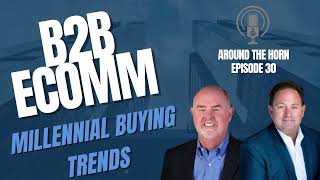
Kevin Brown and Tom Burton talk with Tom May and Pierre Barbeau about how millennial B2B buyers are reshaping wholesale distribution. They cover supply-chain normalization, falling transportation costs, and why personalization and transparency now matter as much in B2B as they do in e-commerce.
Chapters
Foreign. Welcome to around the Horn in Wholesale Distribution with Kevin Brown and Tom Burton. Sponsored each week by LeadSmart Technologies. Tom, Kevin and their guests review the news of the week and dive deep into the topics impacting manufacturers, wholesale distribution, independent sales agents, and the global wholesale supply chain. Whether It's M&A SaaS and cloud computing, B2B, E commerce, or supply chain issues, we peel back the onion with our guests into the topics that impact your business the most.
All right, all right. You warmed up?
I'm warmed up. Love that. Love that tune. So we start into things today. Hey, Tom, good to see you. Pierre, great to have you with us.
And look who's here early.
And Tom May is here early. Look at that man.
He is like the overachiever. He is. He is going to win the around the Horn. Overachiever.
That's right.
I believe. And it was a bad start, right? It was.
That's because you. Tom's a. Tom's an old business associate and friend of mine and. And you spanked him one day and put him in a penalty box.
Yeah.
So that's why he's. He's chiming in early. Tom's a great, great guy. So he moved from San Diego, where we worked on a project together, to the Charlotte area a number of years ago. So good to have you with us, Tom. So, hey, before we dive in first, Pierre, great to see you. We'll talk about you being with us in just a moment. My name is Kevin Brown. Tom Burton. Got Pierre Barbeau with us with Mobiliko. We'll talk about that again a momentarily. But this is around the Horn. This is our weekly LinkedIn Live, Facebook Live, YouTube Live, which then later in the day goes on all the popular podcast formats as well. This is where we get together and we chat about what's happening in wholesale distribution. So as we talk about each week, we see around the U.S. north America, and even around the world, we take a quick look at economic topics, M&A, sales, marketing, E commerce, B2B topics. We put all of those things together and we look at how those impact and relate to what wholesale distribution. We send out every Friday morning to thousands of people. A newsletter where we've combined a lot of these topics. If you're not getting that newsletter and you'd like to please, either direct message us or if you'd like to reach out to us by email. Very simple. HelloAdsparkTech.com is the email address. So we got all that behind us. We got a bunch of folks here. Will Quinn, Mike Lauer, Tom May. Brian Connolly. Good to see all of you folks with us. I know there's a lot more out there as well, but we'll kind of. Before we dive in, let's meet our friend Pierre that's with us. Pierre, how are you?
I'm doing great. Thanks for having me. I'm excited to be here. Thank you.
Very good. Why don't you just tell us quickly about you and a bit about Moblico before we. Before we get rolling. Sure.
So Moblico is based in Kansas City. We've been helping wholesale distributors since 2010. We're family operated business. We focus on independent distributors and we help them basically stay connected and do business with their customers as well as enable mobile communication, marketing and commerce solutions that are used by customers as well as with employees. So we're always looking for ways to improve efficiencies processes within organizations with communication tools.
That's great. Love that Mobile message. Mobile marketing is kind of the thing that goes through my mind quickly as I think about your company. Tom and I work for Lead Smart Technologies. We're a CRM customer intelligence and channel, collaboration and partner management solution and platform. And Lead Smart and Moblico have a partnership together as well and we work with some similar customers and some of the same trade associations and buying groups. So always like to spend time with Pierre. So we're happy to have you with us today.
Loved integrating with you guys and always like to have you guys as a booth neighbor when we're at these.
That's right.
Yep. Tom, I think you're muted. This is one of my favorite ways to enjoy my time with Tom. The lips are moving. How about now? No, you're not able to hear Marie Pierre.
I know. I cannot.
Well, and Tom's our tech check.
Everything was working great in preview.
Yeah, that's okay.
All right. How about now? I had to switch microphones. We got you because you heard me a minute ago. Right. When we, when we first started, then it just decided to disappear anyway.
Yeah.
Don't disregard all the things that Pierre and I just said about you.
Yeah, no, that's fine. But I was going to give Pierre a shout out because one of the things that we really like about working with Mobilico and we always talk about data. Right. How do we get data from different sources? And Moblico does a great job of aggregating a lot of that communication data, the text messages and the things like that that normally kind of just end up on people's phone somewhere but not really get put into A centralized place. So, and then we do a lot on the lead smart side with that data to help really make it more actionable and more insights and all of that stuff. So as we talk about Data, I think MobileCo is a great way to harness more of that data. So shout out to Pierre and the team for that. Anyway, thank you, that's great.
Why don't we dive into the news, huh?
All right, let's do it.
All right, so again, if you're watching live with us today, you'll see we've got a image up here of our newsletter. If you're on the podcast with us, you're not able to see that, but this is again, we take a look at this newsletter we send out each week. So let's kind of jump into that, that first topic that we have there about supply chains back to normal. So I think there's going to be lots of conversations of this happening going on. We'll probably see more and more info related to these types of things very soon.
Yeah, it's, you know, we, we've talked about this the last few weeks. Right. About the supply chain. You know, a lot of the headaches, right, that existed a couple years ago are starting to normalize a bit, as they said here, whether it's through shipping or transportation or all of that. And you know, the, the good news is it seems to be continuing to normal out. So hopefully that's one less challenge that we all have to deal with. This is that going forward.
Yeah, I think it was kind of neat that it talked about here. It says less shipping congestion, easing of parts and short part shortages and unfortunately weaker consumer demand have pulled this kind of indicator that, and this is, this comes from the New York Fed that shared this information. So I think from that standpoint there's a lot of factors that play to this. You know, I say this all the time, but when we talk about this topic. But I was in, in Long beach for a dinner meeting last week and the gentleman that I was traveling with, fact, it was with Lee Richards who was a guest with us a while back and Lee was in town and we were kind of driving down along the shoreline in Long beach and looked out and there was just a normal amount of container ships out there. And that is really encouraging to see because, you know, a year ago when this crisis all started, there were, you know, tankers backed up almost, you know, down to where I live, 40 miles south of there. So, you know, that's my quick indicator when we see the harbor up there doing Better things. It's good to see.
Let's, let's address this question too, from Mike here about, you know, are we seeing trends that are bringing manufacturing back to North America? You know, Pierre, you, you work with a lot of companies, obviously. Are you seeing anything like that where. Or any indications where people are taking more of their, you know, at least working maybe with manufacturers that are more onshore or any trends that you've seen there?
Yeah, so we, we attended the NAW meeting just a couple of months back, and that was one of the top topics of the, of the meeting. And I think, I think it's. It's clear, the message was very clear to the, you know, distributors attending the event that only. Not only was this an emerging trend, but they all should be taking. I think they call them near shoring or. Yeah, because Mexico was one of the countries they listed as one of the countries that people should. But the message was to look at alternatives to the Asian markets that are like China, for example, where there's obviously a lot of manufacturing going on and they're saying, hey, go look at alternative venues. So not only is it an emerging trend, but I think we're going to see more of it in the coming years. Which, by the way, something, you know, I don't know if you guys caught the, the, the couple that there was like four Americans who got shot up there in Mexico, unfortunately, border. And, you know, my thought process was, well, if we're going to nearshore in countries like Mexico, they gotta get handled. Right. They have to get a handle on some of these issues there to make it a safe place to do business. Right. So we're gonna have more activity, more Americans traveling there for business to run their operations. You know, these are all things that are interconnected. I think so, but I think there's definitely a trend in that direction. It was clearly communicated to all the people at NAW to be seriously moving in that direction.
That's great, great feedback. That was. You were at the NAW executive. Was the executive summit in Washington, D.C. in February. Yeah.
Yes.
Great event. Didn't go, but we're planning to go next year, so that was good. You know, it's interesting, Pierre, I think, that you brought that up, right, about some of the challenges in Mexico. And I did some work a number of years ago with a company that had two plants in Mexico, and we had a leadership team that was running those plants that lived across the border in the US across the border every day. You know, it's interesting. It kind of ties into One of the comments that were made here from the LinkedIn audience with Tom May here said Chinese top three thinking about Chinese intervention in the Ukraine possibly screwing up the supply chain again. And you know, it's interesting, right? You got that topic that Tom brings up about, you know, China in, in Russia support there. You've got the tensions of China and Taiwan, you've got U. S. China tensions already going on with that.
Right?
But then you look at that whole concept that says, and then, by the way, just what we've been talking about here about supply chain issues, the next thing we're going to talk about is, you know, freight rates and so forth. You know, people were paying last year, you know, 10 and 15 and 20 times what they would normally pay for a container to cross the ocean. So now you get to say, okay, well, maybe the fees and costs that go with that, I should be trying to nearshore that in Mexico or somewhere in Latin America or maybe back onshore here in the US but if you're thinking about near shoring it in Latin America, specifically in Mexico, to your point, Pierre, there's a whole lot of other issues that go on with that, with the cartels and so forth. So a lot of things that executives have to juggle in that setting, to Tom May's point, about Chinese intervention in Ukraine, listen, this is not a political show, but I don't think you can avoid right now being cautious of about what China is doing and how they're flexing muscles could have a major impact on things.
Well, and, and I think regardless if it's China or it's Mexico or whatever, I think what's the reason that a lot of this is normalizing out is companies are. They have contingencies, right. They have different ways of getting things. They're. They're looking at things a bit more omni. Omni chain, if you want to call it that. Right. That's what really came out of COVID is, hey, we just can't take things for granted. And I think we took a lot of things for granted as it relates to China and the supply chain and all of that, and it all seemed really good until it didn't. And companies are looking at contingencies along the way. So.
Yep.
And I think Ron here is saying, I couldn't agree more. Right. Is that the technologies are going to allow us to potentially even have more flexibility on our supply chain. And the contingencies that we talked about, because, heck, you don't know, on any given day, as he said here, right. Geopolitical weather related, train blowing up, whatever the case may be, all of those things you can't control, but what you can control is having contingencies on how you're doing things.
Yep, that's great. I appreciate RP commenting about that. And you know what, it just, we're a technology company, we talk so much about technology here. But the reality of it is is that if you don't have a handle, right. And we're going to talk a lot more today about data, which it seems like we talked about week in and week out. Right. But that available data that we need to have that can help us make decisions becomes more and more critical.
All right, should we move on to.
Transportation since kind of already referenced this a little bit. You know, we have this article there that talks about transportation prices setting a record rate of decline in February. So, you know, they just mentioned here that it's the fastest rate of decline that's been recorded in the six and a half year history of keeping these surveys, which isn't a long time of data. But you know, we saw this meteoric rise, right, with fuel prices and manufacturing crisis and supply, the other supply chain issues, you know, the transportation costs just.
Went through the roof.
And you know, time, right. We, we saw all this going on 20, 20, 20, 21 and a good chunk of 22 with, you know, containers sitting, waiting to get into ports around the country. And it's been interesting. It kind of goes back to RP's comment about rerouting supply chains, right. Is all of a sudden there's a whole lot more items coming into San Diego and into Oakland and in other parts, I mean, companies have even been rerouting stuff that I've read to the east coast rather than bring them into west coast ports because of the delays. So rerouting, balancing has to continue to go on over and over again.
I think the other thing that's happened here is, you know, there's more people, quote, on the job again than there were before and.
Yeah, good point, Tom.
You're, you know, you see these, you know, I think the employment report came out today and it was pretty substantial for January and it was large before. A lot of that is people that were, you know, the quote, great resignation or I'm not going to work or I'm going to change my work, are going back to work. Right. And so as you have more, you know, definitely more capacity for transportation, that's going to help. It's going to cost less. It's all of that comes into play. I don't know how it's happening here in California because every time I drive by the gas station, the price seems to be going up. So.
Yeah, what's with that?
My transportation price is not declining, but it's good to hear that it's happening across the board.
Are the interest rates playing a part in this as well? Right. So curtailing demand potentially is also maybe contributing to this. Another thought to you guys is as you look to, again, as things get near short onshore, you know, the cost to move product should decline over time as well. If they're made closer to where they're consumed. You would assume that, I think.
Yeah. And Kevin, on this article, was this more intermodal and basically in or did it include shipping and everything like that?
No, I think it didn't necessarily specifically say. I think it was across the board.
So I think that's a great point, Pierre, is that, you know, you, your, your costs may change or it may go into different places that are, you know, different from a shipping cost versus a, you know, trucking cost or something along those lines.
Right, right. We even talked about this last week, I think, or the week before a little bit about container costs coming down as well. But you know, it's interesting, you know, Tom, you brought up the, the fuel costs. It's man, just crazy. We, you know, here in Southern California. And I think, you know, some of the, well, side note, Pierre, what are you paying for, for fuel in Florida, where you're at?
I want to say 350, 360.
Okay.
I have a plug in electric hybrid car, so I don't pay too much attention to it. But from time to time, maybe once a month, I gotta fill up my car.
I thought you had a big old Jeep. Is that a hybrid? It's a hybrid, yeah.
Has a, a plug in hybrid.
Oh, very cool. Anyways, I, I stopped and got fuel last night and it was 5.19 a gallon for mid grade, whatever they call that. So I don't know what it is up Santa Barbara, Tom, but here in Orange county, it's disgusting.
It's similar. It's similar. As I look out my window here, I think I might just get a boat because it's raining so hard I can barely see across the parking lot. So I might need an ARC or a boat for my own transportation here.
There you go. All right, let's jump ahead because I want to talk a little bit about E Commerce. So this next article that we're talking about was quite of interest. It talks about three E Commerce Lessons companies should apply in store. Now we're here to talk about wholesale distribution. If you were to look at this article, it's really kind of driven toward B2C business, consumer. But the principles really align well with wholesale distribution where you have branch locations, maybe showrooms and so forth. I really liked a lot of what this had to say. Just, you know, kind of talked about aligning with customer values and this just ties so much to our general conversations. We're going to talk more a little bit on the next article about millennial buyers. But you know, as buyers become younger, one of the first points they talked about here, talking about aligning with their values is, you know, no matter how we slice it, wholesale distribution for the most part is a very mature business. There are some very old school companies, you know, multigenerational companies and so forth, and not always the fastest ones to change. But yet everything that we see here is, is pointing towards the need to really aligning how we do business with how our customers want to buy.
Yeah, one of the things I really liked about this article that I think was a bit of a different take, you know, they were talking about, for example, even on websites, right? You talk, you know, e commerce sites tend to promote, hey, eco friendly packaging, eco friendly shipping, things along those lines that, you know, make sense right. When you would think about it on E commerce. But they're saying, you know, especially for younger buyers who care a lot about that is promote that in your physical store as well. Promote that, don't just promote that on your website, but look at this again more holistically in your organization. Some of the things that you're really doing to whatever it may be, right. Whether it's pricing, whether it's packaging, whether it's shipping, whether it's all of those types of things make that experience truly omnichannel. And I think that's a smart strategy, you know, and is is really looking at what we've talked about this before rather than looking at here's what I'm doing with E commerce and here's what I'm doing, you know, live or in person or here's what I'm doing here, looking at those get more holistically across the board. And you know, I'm sure you have a lot of experience with this or seeing this with the companies that you're working for.
Yeah.
So a couple of thoughts. First, we do work extensively with e commerce providers, extending the e commerce experience in a mobile context. So we produce custom native apps for many of our customers that are connected to and leverage their e commerce systems. That's one thing when it comes to retail we'll call retail experience. At a branch, for example, there's a lot of things you can do by introducing digital in essence in the experience. In some instances we can see prospective customers approaching a location, we can see them enter a location, we can see them leave a location. These are all opportunities to establish communication with with those customers and enhance the experience that they're having with the retail experience. Right. Maybe we can make the products ready for them to pick up on time. Maybe we follow up with a value add message. Maybe it's a survey of their experience today, maybe it's an upsell opportunity, maybe it's a reminder of an event that will take place at that location later that month. There's a lot of examples of how you can the retail experience with some of your digital assets, again.
In improving.
The communication experience with the customer. But you're also, in some instances, you're also going to improve your internal processes and make things a little bit more efficient internally as well.
That's good. Pierre, a question about that. From a feature standpoint, did I catch that correctly? With your technology, a customer that had their mobile device that walked into a facility, you could through beacon or geofencing or whatever it is, know that they're there. And in theory that could even trigger to somebody to get their order brought up.
Well, so, so let's break it down. So yes, so you, with geofencing you can basically geofence a physical location. With Wigans you can establish a Bluetooth connection to the device. Right. So this is more proximity based type connection, the notification, the communication part with the back office. You know, there's different degrees of simplicity and complexity, right. If you're integrating erp, one thing, if you're just going to send a notification to the team, let them know somebody's coming, that's something else. So there's different sort of degrees of how you would implement something like that. The other I'll say caution to this type of technology is that in particular in recent years both Google and Apple have made it more and more difficult to track some of that, some of that data and consumers are always in control, right? So the end user, in this case, a contractor for example, would have to accept and turn on the ability for the technology to make those connections. So there's breakage, right. But if you give the end user an incentive or very good reason why, maybe it saves them time in their day or there's some kind of other incentive to motivate them to do it. You know, then you can overcome those challenges. But Apple and Google certainly have made it harder for publishers to access that data. Interestingly enough, I don't think Apple and Google have made it harder on themselves, but they're making it harder on publishers to put their apps in their app stores.
You know, but Pierre, question on that, not to go down a rabbit hole on this, but you know, and I, we integrate, when we integrate with MobileCo, right? We're tracking events that are occurring on the MobileCo app and then we're putting them into Lead Smart so that we can track that history and then use that as part of the sales process or at least have visibility during the sales process. But if you're connecting, a lot of times that's gonna, if it's in again, I know you have to get the approvals, but that becomes first party data, right? So that becomes data that you as the wholesale distributor own that you're getting from that, from that beacon or from geofencing or whatever the case may be. And as you gather more of that, then you have to rely less on that third party data which Apple and Google and everybody are trying to keep everybody from getting their hands on. So now I could see there's probably some logistics of all of that, but wouldn't that be an advantage of ultimately, you know, incorporating that into somebody's, the way somebody does things?
Absolutely. And Tom just adds what you said too. Because you can, you can record the data doesn't mean you have to do something with it immediately. Right? So the data itself is knowledge. Right. So recording these types of metrics can contribute to decisions you might make later on or actions you take later on. Some people are not comfortable using that data instantly. Some might feel it's intrusive. Whatever your policies are, having the data though is a good practice. To your point, having it somewhere where you can use it among all the other data sets you have as part of your analysis is a good thing.
Well, and even if you use the data not from an individual or transactional basis, but you use it more aggregated, right? You can start to look at trends and things like that. So you're not, you know, you're not using it, you're calling it a creepy way from the thing, but you're using it as a way to again provide more insights.
But that ties really well though into the second point in this particular article, right? It says get personal is what they reference in that. Right. And they say your customer purchase of Behavioral data capture consumer data. And so we know that emerging buyers, millennials, B2B buyers, are becoming younger. They're used to this personalization.
Right.
So I think what we'll probably see with some of the technology that Pierre's talking about here. Right. Is that the average millennial buyer is probably fine with all of that because they want their experience to be better. Right. So I'm willing to share data with you if you make my experience better.
Yeah. And that's generally true, Kevin, is people who, particularly younger generations, you know, they. They don't want to hand over their data unless there's something in it for them.
That's right.
So if you make it a better experience, if there's, you know, benefits to them that are clearly spelled out. Understood. Then they may participate. Right?
Yep.
In that program, it's convenience.
Right. It's convenience weighed against security or privacy and all those things that are there. And if you make something convenient and a better experience, then it outweighs the privacy issue that they're looking. That somebody would be looking at.
Just real quick, Tom touched on it earlier. The advantage for the distributor to have this information and being the master of it, essentially being your domain can be a huge advantage.
Absolutely. Well, it all comes back down to.
Right.
As Tom was just saying. Right. That customer experience in anything a wholesale distributor can do and even a manufacturer could do in understanding their distributors better and their end users better. Anytime we can understand behaviors and needs that allow us to add value to that user is going to enhance everybody's experience and make things move smoother and drive more revenue at the end of the day. Right. So everybody goes to work.
Yep.
Yeah. And a couple things just before we leave here, you know, first of all, Mike, I think you said it well. Right. And this is, again, what Pierre was saying is it's. How do you look at this, again, broader across the board to look at, provide that customer experience. But I want to touch on one more thing about data. It's the theme of every show, but every day I become more convinced of this is you look at everybody trying to use AI or whatever it may be, automation. It's all driven off of data. And if you think about it, right, data is the fuel, or if you want to call it the oil. It's like without that, the cars. Cars don't run without fuel. Fuel doesn't get created without the oil. And the data is really this currency, this digital currency or the digital oil that ultimately is going to drive everything that you're doing with AI, automations, all the things that we've been talking about so far. And Pierre, you've probably seen this a lot, right? Companies ignore and they treat their data like crap, right. They don't consider it a valuable asset. And when you start to see the power of what that data can do, and I think Mobilco is a great example of that, and we've tied it into our system, is when you see the power of what that data can do and the value it can provide and how it can fuel, whether it's AI or automation or reporting or insights, you start to see the value of that data. And I still think we've talked about this a lot. I still think there's way too many companies that are ignoring the asset that they have with that data, how it can be used in so many places to do all the things that we're talking about here.
Tom, we call it data on the shelf. Right?
On the shelf.
Get the old books. Yeah, yeah.
You know, it's interesting because, you know, when you think about the collaboration opportunity that comes from this with manufacturers and distributors, because manufacturers have huge amounts of data from their marketing, their advertising, their events, the shows and stuff that they do. They have their data about what's going on at the end user, then they have their data about what's going on with their distributor or dealer partners, and then that distributor, dealer partner has different insights, but into that same end user. When you start thinking about that, the opportunity to bring all of that insight together in a partnership that is through a portal or something like we do. But there's so many ways that you can do that. You start sharing those insights and, and now at the end of the day, if we continue to think about this is, you know, if we can make that customer experience, and that's what this article we were just talking about is if we can make that customer experience better, they're going to become more loyal to that particular vendor or distributor and to the brand that they carry. And you can do that now in partnership so well with this data that's stored at manufacturers and at distributors.
And just to wrap up here, you know, looking at Ron's comment here about what he was saying when he was at Granger, right. Is that they started off in doing this with their e commerce work and it's a big investment of money to resource to do it. Right, agreed. But there's things you can do certainly. You know, talk about crawl walk run, right? There's a crawl walk run approach to it that can be done and which is different Than ignore and, or, and I think. Or as you call it.
Right.
Shelfware, data shelfware. Pierre. That's not really, you know, so there's different things that can be done especially now to kind of crawl. Use some data. Use it better, get it better and be thinking about it strategically about what you're doing as you go forward. And there's a piece of data that we have here in our comments here that we got from Lars that really bugs me.
I wanted to bypass that because that was just irritating.
Yeah. So.
My friend.
Yeah, that's painful. So that probably.
Maybe Larson bottle hit the gas.
Yeah.
California.
That's it.
Transportation cost. You might, it might, might work.
I guess. I guess the way Lars would probably look at that with him, you know, being in, in Minnesota is that $2 a gallon for us is a sunshine surtax, maybe for having no snow. So, yeah, that was, that was.
We don't have snow.
So that was it. It's that. That's the price we pay is the extra price of gas for not having the snow. So.
So let's, let's touch on this last article here about the. I think it ties into what we've been talking about.
That's exactly right.
And this, I really thought this was an interesting article from Industrial distribution. Right. This wasn't from Forbes or Inc. Or some of the more general business magazines. This is from a industry business magazine. So what were some of the highlights?
Well, I thought as I read this the other day, I was like, I can't remember the gentleman's name is. Who wrote this, but it's like he must listen, listen in with us each week because these are things that we talk about. But, you know, we know this talks about millennials. 72 million strong is the amount of them. But, you know, we're seeing more and more and I think, you know, now we're approaching. I think the last thing I saw might have been Gartner was 64. I think it was a B2B buyers or millennials. But just if you figure this way, you know, the way I like to look at it is whether it's 51, 62, 74, whatever the number is, buyers are getting younger every day. So our historic buyer that we might have, you know, been having lunch with quarterly and getting purchase orders every week from, in a normal style of how we've operated in wholesale distribution or from manufacturers to their distributors, the buyer at the distributor and the buyer at the end user. The people that are coming in are far younger and they have different expectations. So they, they, you know, kind of hit a series of different topics. I think they had four of them here that they talked about. We can kind of unpack those a little bit more. But they talked about what these people are looking for. And we talk about this every week, because if we're not preparing to give these types of buyers what they want, similar what we were talking about throughout the day so far, they're going to find a way to buy things from both brands that they want and distributors or dealers that serve them the way they want to be served.
Yeah, you know, we get this question asked, Kevin, quite a bit, and I'm sure you do, Pierre, as well. But, you know, just people asking us, like, what are the biggest disruptions or disruptive forces, if you will, in wholesale distribution? And, you know, they ask, is it the economy or is it technology? Which both of those are. Yes. But I think as a disruptive to this industry is the buyer and the, and the change of the buyer. And the millennial buyers now represent over 50% of decision makers. So. And that's going to continue to go up.
Right?
It's not going to go down. It's not going to reverse. On top of that, we have Millennial employees, we have many old salespeople, marketing people, all of those types of things. So I think it is, you know, they. And we've talked about this week after week after week. I thought the article did a great job of summarizing it, that these are some of the things that you really want to be thinking about as you, you know, again, go back to that experience of the millennial buyer, the convenience. I think that was one of the things they talked about in there. The convenience. And all of that is, you know, critical as you're, as you're thinking about your overall strategy. Yeah.
So, I mean, the first thing that they talk about this, and it says, give them back time in their day. The quote is, as the first generation to grow up with immediate access to information through the Internet, instant messaging, texting, and smartphones, millennials expect convenience and speed. Right. That was from an American Express survey that they said, look, at the end of the day, I'm holding up my smartphone here.
Right.
These buyers do things different than all of us here. I mean, Pierre, I know you're a young man, but Tom and I are in our, you know, latter part of our 50s. But, you know, we didn't grow up with these. When I started my career, we didn't have it, you know, in the same way. So these folks are used to you know, they, they call for Uber to get them to the airport or to the out to dinner. They use Instacart or, or doordash or whatever it is. And they expect immediate gratification. And if we're not, you know, adjusting how we bring our solutions to them, they're going to find it where they want to find it.
So, Kevin, when we first founded our company in 2010, when we signed our first distributor, people were. Your cell phone plan did not include unlimited text. You had to pay, you have to pay for text plans or per text. About 20% of the US population had a smartphone. That, that's where we were when we started talking to distributors about. Just put things in context here. So to your point, it's not just the consumer, but it's the change in the consumer behavior and expectations, right? That's what changed. And it changed at home first, right? So it changed in your personal life, right? You started buying things online, you started messaging, you started doing this and that. Now, my generation, we're partially digital. We're largely digital. My parents were somewhat digital. My grandparents don't know a thing about digital. My kids, that's all they know, almost. I think their kids would be 110% digital. Sure. The millennials not only prefer to communicate the way they do between them when they go to work, right? The Gen Z and Gen Y generations that are right behind give you a step to make the point. Millennials do about 2,000 messages, text messages per month on average. Okay. The Gen Z, z, Gen Y guys, 1824 ish, 4000 messenger, right? They live on their phones.
Now.
Those of us who have children, you know, we've seen them do it, but that's, that's where it's at. So. So as a business, not only do you want to connect with your customers the way they want to be connected with, right? In the format and the channels they prefer, but your employees are in the same boat. So we're seeing a lot of our clients, for example, when they implement programs with us, it's sometimes the motivation is employee first. They actually are implementing mobile solutions internally to improve how people are communicating. And then they roll that out to customers. Sometimes they do customers first. It depends on priorities of the organization. Another point I want to make is two way conversational type. Communication is one thing. Messaging is usually under that umbrella. But also something called self serve, right? Sort of on demand, right. I turn to my phone, I press a button or two and get what I need. Three is the ideal number, by the way. Three Clicks or less.
Right.
So on demand is another sort of element of that experience that the consumer, in this case the millennials, have really grown up with. So I either want to have a conversation with you, or I'll just help myself and get what I need and move on with my day. Same with the employees. I don't want the tools to be difficult. Right. I go to work on the green screen in front of me. What is going on? Right. So, so those are all the things that I love this article and it's interesting because it was written in a vertical. I think it was.
You're talking about fasteners.
Fasteners, yeah. So the author, I thought the author of this article was supposed to be.
Did a really nice, really nice job.
Yep.
Well, you know, it's interesting, it's kind of of funny because we, you know, we talk a little bit about our products and we talked about your product today, but they made four points here. And I want to, I want to kind of recap these before we move on. We talked about the first one. They said give them more time back in their day. Right. They want immediate access to information, how they want to get that information. The second one was deliver a highly personalized experience. It says millennials expect their sales rep to have a strong handle on, on their service history and their buying history. Buyers get frustrated when they're constantly speaking to new people with no familiarity of their account. Right. So it kind of goes back to what we do, right. We take silo data from around an organization, we bring that together, we decipher that and distill it down into actionable insights that anybody in the company can use when they're using the right technology. And it talks about this same topic here, right? About personalized experience. Talks about convergence of data driven and human support. I mean, I could not have said that any better.
Right.
People still want to have in that Omni Channel experience, they want to choose. Tom writes about this in his book as well, is people want to be able to choose when they want to engage with a human and they want that Omni Channel experience. So I really liked what they did this. It kind of ties to Tom May's comment here about it's not a sales process, it's a buying process. And your sales process needs to, I would add to that, needs to align with your customers buying process. Tom, I'm guessing you might have something to add to that.
No, I just, you know, Tom Mays, he just keeps adding more and more brownie points. He is definitely going to Be our mvp. But what are the other two points? Let's get to that.
So the final two were be transparent when issues arise, right? It says millennials value proactive communication when issues arise. It talks again to Pierre's point that this was talking about supply chains within the fastener world. Things have been stable and involatile, but then things have changed with COVID and shipping and so forth. People are following the news, right? They have instant access to everything going on, you know, right. At the touch of their fingers. And they don't want people fooling around with, you know, misinformation or not being straightforward and proactive. Right? They're looking for that. They, they, they can look at their phone and see exactly where the pizza driver is, that he's turning the corner and coming to their house. So if we're going to be delayed in shipping them some respirators or some fall protection or some fasteners or some tools or whatever it might be, they expect that same transparency that they have in other parts of their lives. You know, Pierre brought this up as he was talking about, you know, number of text messages and stuff by generation, right?
The.
When we started our careers, right, we got kind of got to go home at night. You know, I remember Tom of this back when, you know, you and I were younger and you were in New York at the, the World Trade Center Marriott on September 11, 2001. And I had a while you were out note on my coffee table when I woke up in the morning that said you were there, right? Remember those little things that we got while you were out? I mean, imagine that now, right? We have mobile devices, and so people want that clarity that happens for them. Then the last point is meet them where they communicate. It says millennials prefer email and other digital service channels over talking on the phone. Demand for Omni Channel support grows. Distributors should work on meeting customers where they like to communicate. Talk about the right article to have Pierre on today.
Kevin, those four points are all achievable. They're all dual. They are the, the transparent one. For example, automated notifications related to your order status. Right, Right. Maybe we did an integration with a group called Apex. Yeah, you're sending keys on, through, through a text message so you can access your locker when you go pick up your stuff. There's so many examples and use cases. They're all very achievable.
Yep. That's great. Well, that super dialogue on this and, you know, it's, I'm, I'm very, very appreciative that we had Pierre on because Pierre, you. Your experience and you know, we didn't talk about it, but.
Right.
You were, you were, you're. You come from the, the telecom world, right? Your early days of Sprint and so forth.
Yeah, my part, my partner and I both worked for Sprint. Ironically, we didn't really know each other.
There.
But Jim led the development of the first mobile advertising network in the US that ended up in. Was ultimately purchased by Nokia. And then I worked on the first camera phone and picture sharing services. My product was called Sprint Picture Map. And you know, we did that before MMS was a thing. We were using email as per channel. And I worked with a group called Lightsurf out of Santa Cruz led by Philippe Kahn. And we did some great things together. And to this day it's funny because I still correspond with some of the guys and we reminisce some of the best times of our lives. Those few years when we took that product from an idea, you know, to when I started, we had 7 million subscribers on the product. I remember going to a Chiefs game, sitting in the crowd, we're the Chiefs. Yeah, we'll talk about that later. At that game, I recall I had seen our subscriber numbers maybe the day before and we had 30,000 subscribers. I remember sitting in the stadium at Arrowhead and I was like, wow, there's 80,000 people in here. So it's only like this many have a, have a camera phone in the country right now. Right, Right now it's, you know, we know where it went. So.
And look at what we talked about today. Right? That's just with, with what people and how they're using their devices.
Kevin, to wrap up and move on is to answer your question because Pierre and I being gen zers know, we don't know what those. While you were out things are, but those sound interesting, but I.
That's not as fun, Karen.
Right.
You know what, Tom? You still have your hotel key from the World Trade Center Marriott. And I wish I still had that little note because it said call Tom Burton, World Trade Center Marriott and the room number. And man, that's probably would be worth something. So. Because it was, you know, it would have been on September 10th. I got that note. So yeah, I'm sure you guys don't remember that because I'm the, the old guy here. So let's jump ahead. Let's talk about.
This conversation's too good and we're running behind and.
Yeah, no, it's good stuff. So just a couple things in the News. Cool acquisition that both Pierre, you and the Mobiliko folks and, and Tom and I have some good friends at the Master Group in, in Canada. Pierre, do we say A? And you're Canadian. Do we say A at the end of the day? Okay. But they just did a nice acquisition. It's a good article that we added in here too though, about further on B2B marketplaces. We had Brian Beck on a while back talking about B2B marketplaces. We're gonna do more with him this year as well. So kind of cool how some of the expansion strategies that Base Supply is doing online with their scenario. And then another marketplace is Zorro. Right? We talk about constantly Zorro. We should get Ron Paulson RP on with us some one of these days soon because Ron was at Granger still at the early stages of Zorro. Probably give us some feedback on that. But being a subsidiary of Granger, they appointed a new president last week. So those are all good articles. Keeping up on what's going on out there. We've added this Tech Spotlight and Goodreads each week to our newsletter. So we had an article here about Grammarly and I don't know if. Pierre, do you use Grammarly? Don't you?
We do.
Yep.
Tom, you use it or no, No.
I don't, but I, but I know a lot of people that do.
Yeah, it's. I don't know how we get by without it. But if you don't use Grammarly, check it out. And they've just introduced some Chat GPT AI tools into it. They use AI already, but Grammarly is a great tool that can plug right into your email system and, and Microsoft Word or any other document that you're writing. And it analyzes your spelling, your grammar, your punctuation, and makes suggestions. I love, absolutely love it because I forget commas here and there because I write like I talk, so it really is helpful. But they've just a neat little article there about some of the updates they're doing. And the good read that we added for this week is an article from Inc. Magazine about stress can literally shrink your brain, which makes me imagine mine's a peanut right now.
Now we have a good excuse. Okay.
Yeah. So five ways to reduce it without changing your lifestyle. All right.
And then the webinar, you know, we're having a webinar this next Wednesday about Smart CRM. I'm going to drop the registration here right in the chat.
Oh, great idea.
Hopefully it works. But, but please, if you, if you, you know, we're going to dig into a lot of the same topics we talk here, but how they apply to this world of smart CRM and how, why does it matter to your business? So it's, you know, it's going to be, I hope, a great webinar. We've got a lot of good pieces coming together, so please join us. That'll be great. That'll be next Wednesday. And Kevin, I know there's a bunch of events on here that we want to.
We just did just before we close out on the webinar. You know, the topic for that is smart CRM, Right. And CRM has been around for a long, long time. But smart CRM is a very different thing. So we're going to unpack that and really talk about that, how that can be beneficial within businesses and organizations to help.
We might even talk about data and AI. It's possible.
It's possible. Exactly. That's good. So that'll be a good session. But, you know, there's a big difference between CRM and smart CRM, and that's what we're going to be unpacking. Yeah, we did. I did some work earlier in the week. We've been pulling some further events together. You know, if you're listening on the podcast, you can't see this, but again, if you're a podcast listener and you'd like to get this newsletter email that we send out every week, just let us know. But yeah, we found a bunch of additional events. And then our friend Mike Hockett at Modern Distribution Management, he just published quite a few, too. So there was a handful that Mike had that we didn't have, so I captured some of his as well. So thanks, Mike, for your help on it. So, yep, good stuff. Lots of events coming up. We'll be at an ad event week after next in San Diego. Pierre, where's your next event from Oblico Commonwealth on Monday, Commonwealth Group on Monday. Great. Another buying. Great buying group. Where are they? Where's that event at?
Texas.
I'm sorry you have to leave Florida. What a shame.
Well, actually, we're sending. We're sending my better half and our lead marketing.
That's great to hear. Well, good. Well, hey, thanks to everybody who commented today for being with us. If you're with us live, fantastic. If you're listening on any of the podcast formats, please don't forget to subscribe. Click the like button and make sure that you get notifications. If you're enjoying what we do here each week, we appreciate the feedback. Pierre, any final words before we say goodbye.
Big thank you. Always a good time spending with you guys and appreciate the opportunity to join your show today.
It's a lot of fun, some great insights.
So yep, we'll see you soon, my friend.
All right, thanks everyone. Have a great weekend.
We hope you enjoyed today's episode and our guests each week we try our best to dig into the topics that are impacting your business, so please reach out to us and let us know how you think we can make the show better or topics you'd like for us to tackle or talk about more often. And even guests you'd like to see join us. We're looking forward to bringing you next week's session and hope that until then you stay safe, stay focused, and do great things. If you haven't already, please subscribe to the podcast and leave a review to help others in wholesale distribution get access to the conversation. And finally, please check out our sponsor, LeadSmart Technologies and their manufacturing and wholesale distribution industry CRM Customer intelligence and channel collaboration platform. That's Lead Smart Technologies at Lead Smart Tech. Com.
More from Tom



What does AI actually mean for a wholesale distributor #WholesaleDistribution


If your systems don’t talk to each other, your AI won’t either #AITransformation




This is why one AI agent isn’t enough for high-stakes decisions #WholesaleDistribution

