Navigating the Marketing, Distribution, and Manufacturing Challenges of AI Integration
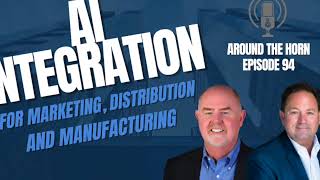
Podcast/video transcript of the June 7, 2024 episode of “Around the Horn in Wholesale Distribution” with hosts Kevin Brown and Tom Burton (sponsored by LeadSmart Technologies). The conversation reviews weekly news and industry developments affecting manufacturers, wholesale distributors, independent reps, and the global supply chain — covering macroeconomics (jobs, Fed/rates), blockchain and AI adoption in manufacturing/warehousing, B2B marketing (critiques of the MQL model), e‑commerce/B2B webstore experience, open vs. closed AI models, M&A activity in distribution, and some leadership reflections. The tone is practical, industry‑focused and advisory; episodes include product/firm plugs for LeadSmart and invitations for listeners to engage.
Chapters
Welcome to around the Horn in Wholesale Distribution with Kevin Brown and Tom Burton. Sponsored each week by LeadSmart Technologies. Tom, Kevin and their guests review the news of the week and dive deep into the topics impacting manufacturers, wholesale distribution, independent sales agents, and the global wholesale supply chain. Whether It's M&A SaaS and cloud computing, B2B, E commerce, or supply chain issues, we peel back the onion with our guests into the topics that impact your business the most.
So how are you, my friend?
Doing okay?
Yeah, Just okay. Want you to be doing great today.
Doing great today. Just dark and dreary here. I know it's hot around the other parts of the country, but here it is not. It is like it's crazy 60 degrees or something.
Yeah, I was at, I was at Bible study last night and I was standing out in the parking lot talking to a friend and all of a sudden it's like drizzling and it's like 56 degrees and drizzling. And it's not supposed to be that way on June 7th of 2024. And it's wet outside. So those of you that are listening in about the complaints of the weather people here, it's Tom Burton and Kevin Brown with Lead Smart Technologies to launch into our around the Hornet wholesale Distribution live show and podcast. Today, Tom's up in beautiful Santa Barbara, California. I'm down in Laguna Niguel about, about three hours apart as the crow flies. But, you know, while the rest of the, the country and much of the world goes through difficult winters, we have sunny days that are nice. But then this is our, I think for me it's our worst part of the year is May and June, you know, it's just May gray, June gloom. So that's what, what we have to deal with. But that's okay. So anyways, any big thoughts on your week before we dive into the show?
Anything but I want to say hello to James, a outstanding Lead Smart customer. And he says it's 82 in Atlanta. There we go.
Yeah. And, and so it might be a little sticky there too.
82 sounds very pleasant.
It does. Except when it's 98% humidity. That's good. Well, let's dive in. So again, I'm Kevin Brown. I'm here with my lifelong friend and co founder of Lead Smart Technologies, Tom Burton. We get together every Friday morning unless somebody is on a plane or on vacation and vacations, we may even do some from. But we get together 94.
Is that right?
So this is the 94th time we've published our around the Horn and wholesale distribution newsletter. It goes out to distributors, manufacturers, manufacturers, reps, consultants, agencies that work within wholesale distribution and manufacturing. And what we try and do is pull the news together of the economy, sales and marketing, AI technology in general, mergers and acquisitions. We pull that data together and we try and have a nice discussion about that with regularly having guests on with us and talk about how that impacts manufacturing, wholesale distribution. That newsletter goes out to about 10,000 people every week. If you don't get that and you would like to a couple of simple ways to get that from us, just reach out directly by email to helloadsmartech.com we'll get you on that list. Or we have a website for our weekly podcast here. It's called www.aroundthehornpod.com. you can see past episodes there. Great pictures of Tom and I. And additionally you can sign up for the newsletter right there if you happen to be listening on one of the podcast formats later in the day. Spotify, Odyssey, Amazon, Apple, whatever it might be. Or in the future, what you won't be seeing because you're listening is, is the visual of the newsletter. So we'll have popped up on the screen today, the newsletter. We go through a series of different segments within the newsletter and we'll talk about those things and see how those impact wholesale distribution manufacturing. So we're live this morning on LinkedIn, live, YouTube live on Facebook Live. If you're with us live, check in, maybe share a comment about who you are, where you're from, and we'd love to hear from you as we dive in to the news today. So Tom, anything missing out of that?
Let's get on with it.
That's very good. You know what I forgot to say, I always forget to do this, and it's probably unwise for me to do that, is that we couldn't do this each week without the sponsorship that we have of the company that Tom and I work for, Lead Smart Technologies. Lead Smart is a AI enabled customer intelligence and CRM platform that helps wholesale distributors and manufacturers get deep insights into what's happening with their customers, their teams and their overall company and brings all that data together by connecting the ERP systems, market, animation systems, E commerce systems and other connected systems to get deep insights into the business. So that's who sponsors our show each week. The last piece of that that I failed to mention is if you like what you see by being with us each week, the best thing you could do for us would be to jump on LinkedIn on YouTube wherever you might be listening, click the subscribe or the like button to lead Smart page and or if you are on any of the podcast formats, leave a review would be fantastic for us. So that's about it with our housekeeping time. We want to dive into the news.
Yeah, let's do it. So economy and supply chain. Our first article here is already out of date based upon the job report interest rate. This is from Yahoo. Finance from yesterday, I believe. Interest rate cuts shift after surprising ADP jobs data. So the ADP jobs data came in soft, but today the jobs data came in hot. So I was reading that there was, I guess they have, you know, there's bets on Wall street, bets on when they're going to be rate cuts and so forth. And it went way up yesterday and then way down today.
Yeah.
So, you know, the roller coaster continues.
Well, I think, I think you're spot on with that. One of the things, you know, we chatted about a little bit earlier today related to this, that I thought was interesting, you know, was, okay, you got Bureau of Labor Statistics with their reports, right. The government side of things that came out today, yesterday, adp, who is the largest company in the country at, at managing payroll and benefits and so forth, had their data. It's like, who do you believe? And I think it's almost, you know, again, we, I think we both have this, a junior pretend economist, hats on the side of our desks that we put on on Friday mornings. But yeah, it's like, which one do you believe? Right. One soft, one strong. The market shifted yesterday to today and all of this stuff, I think it just, just comes back to these kind of tepid waters that we're in. You know, as people that listen regularly to the podcast and the broadcast here know, we've got a little friendly wager together as good friends, lifelong friends. You're still saying one cut this year, and I'm still saying two. I, I'm going to go with the idea that I think we have a potential issue that we're going to see the, the sentiment or emotion cut. You got can't imagine that the Biden administration isn't, you know, applying some level of pressure on the Fed to have some type of a cut. And I think the whole country because of this, up and down, up and down. And one of the comments in this article was that it says the longer the Fed holds rates steady, the more cracks could develop in the economy. And we're starting to see more and more cracks with pressure on lower income consumers and rising Household debts. And I think one of the challenges that the Fed has in here and I. This is not an original thought. I've been watching this for weeks on CNBC and other things I've been reading is the Fed has to be really, really careful that they don't wait too long. And then all of a sudden we get a big rebound effect that causes other, bigger problems.
Yeah. And it's pretty clear that there's, that there's, it's pretty clear that. About the unclearness or unclarity of a lot of this. Yeah. Not just for us, but for them as well. Even the latest report today, even though the number of jobs went up, unemployment went up at the same time. So how do you get your hands around that? It's like a slippery fish. It's very hard to get your hands around. So that all said, I do agree that I do believe there will be that one rate cut, whether it's September or December, I don't know. But I think you're right. I think it's like, the hell with it, let's do one, see what happens here. Right. We don't have enough data to say no, we don't have enough data to say yes, but what the hell, let's give it a try. And, and it will help. Like you said, the sentiment. And I still think it comes back to the same point of one, I don't think they're going to do that twice. I think in order to get twice, they'd have to have the evidence to start doing that. I think to do it once, they'll do it. They could do a little bit of a what the hell type of approach.
I think you could see that quarter point. Right. As a, let's test the waters and see what happens in the economy from there. I did want to pause, though. This was a really interesting point you made a moment ago. I've known you for well over 50 years and I have never heard you use a phishing analogy in a statement before.
Okay, well, you know, there's first for everything. Right?
That's right. That's good. Okay, so I gotta hit a little bit of a pause again. So we've talked about this, you know, since we started this show, right. We've talked about this consistently week after week. We talk about what's going on in the economy and rate cuts and hikes and all the things, you know, because we were around doing this as hikes were kind of getting, just getting started. And one of the things that I've kind of pontificated I guess I'll say a number of times is, you know, where does this data, the 2% and all of the things come from? And, and I've look at this Paul Kennedy, who says the slippery fish gets the worm. All right, good for you. There we go. That's just because Paul wants you to come to come to Minnesota and go fishing with him. So that's good. I was on the phone with Paul earlier in the week and that's always an engaging conversation that I learned from. But you know, it's interesting. We've talked about and I think I've said this mostly right. It's like, where does all this data that the Fed looks to, and there's so many components and some of them are antiquated and I've proposed the idea that maybe, maybe it's time to rethink these. So I've said, you know, eventually I'm going to go do the research. So last, I guess it was Monday, I was listening to a podcast that you and I both listened to. It's a really popular podcast called the All In Podcast. It's for Silicon Valley tech executives that talk about everything from technology, the economy and politics and so forth. But one of them brought up the idea that this whole 2% piece that the Fed weighs everything on right now, you know, came from New Zealand. And so I went and did a little bit of further research on that because I've been saying I was going to. So I wanna share this with you a little bit. And the data that I have here, I saw it in two or three different places where I grabbed a couple of quotes was from council on foreign relations.org so pretty, pretty reasonably reputable organization. And it just. I'm just gonna read a couple of quotes here. Cause it just astounded me. It says the 2% target widely adopted by central banks today originated from New Zealand. And surprisingly, it came from no true academic research or study, but rather from an offhand comment during a television interview. During the late 1980s, New Zealand was going through a period of high inflation. In 1988, inflation had just come down from a high of 15% to around 10%. New Zealand's finance minister, Roger Douglas was pressed during a television interview about whether the government was satisfied with a new lower, albeit still higher level of inflation. Douglas replied that he was not saying that he'd ideally want inflation to be between 0 to 1%. At the time, there was no set targets. He said what came out of that was basically an upward bias. They talked about that Got them to around 2% once they said that in that whole interview. Off the cuff happened, it says once that happened virtually became gospel among central banks. Canada and England quickly adopted the 2% as their inflation target, as did other central banks. And then it says the Federal Reserve in the US never adopted an official numeric target during that period until 2012 under Ben Bernanke, they adopted 2% as formal. No studies, no research, no anything behind this. It came from a comment in a press conference.
Yeah. Sounds very arbitrary.
Yeah, I just. So, I mean I, I don't think for a second that that vindicates my statements about where this is at, but I do think, you know, put, let's put some science to this fellas. You know, it should at least, at least happen with that. Now I'm sure Jerome Powell could spend three days talking about this non stop and about why it works and, and so forth, but it. Just to look at, you know, the major economies or many of the major economies the around the world is that are adopted. This is a struggle.
So. Yeah, well it's. And I think part of the reason my guess is the 2% was adopted is if you look at the compounding effect in terms of, you know, how things compound or whatever the compounding effect is relatively. Is that you dingy? It is.
I, Yeah, I turned on my do not disturb and it's disturbing.
Yeah. So anyway, I agree with you. I mean it is totally arbitrary, it appears and, but I don't think on the other hand it's going to get changed anytime soon. So I think. No, no, no.
I don't think there's anybody at the Fed that is sitting back wondering what Kevin Brown is saying.
But it is being talked about. I mean not just, you know, here, but it's being talked about. Right.
So no, it's it's just so interesting that there's a, there's an arbitrary factor to that that just seems unique to me. And I, I just, I look at, you know, and I think Powell even has said this a few times that, that you know, maybe it doesn't need to get to 2% but it needs to be on its way there. And that I think is a reasonable statement as well. So.
All right, let's move on.
We got a lot to cover today.
Yeah.
So diving into our manufacturing and distribution segment, navigating blockchain. Oh yeah, sorry about that. Let's keep me honest there. Go ahead, dive in on that one. I missed that.
Well, and this new article also in the true impact of blockchain for global supply chains is yet to be realized. I won't spend a lot of time on it. It's a good article. It really goes very deep into what has been the challenge of blockchain and just at a high level. Right. If you're wondering what, why would I care about blockchain? Blockchain is providing a decentralized platform for you to. This is very simple explanation. A decentralized platform to share information across companies. Right. Basically, blockchain allows you to, in theory, collaborate across the firewall between companies and between organizations and partners and so forth. So there's been a lot of talk over time about using blockchain to help facilitate supply chains and coordinate with your suppliers and all of that, which I do still believe is going to be in the future, a really, really good solution. But as I said in there, it's, it's a lot of challenges. Right. The technology is still, has been early stage. It's, there's not a lot of, of knowledge about how to do this. There's not a lot of expertise. So yeah, it's going to be, it's not going to be easy.
Tom, how long have we been talking about the blockchain? 10 years, 8 years, something like that now?
Well, if you go back to, if you look at it from a crypto perspective, right. If you look at Bitcoin, which really 2010ish was really when bitcoin, but I think it's blockchain and business has been being talked about the last few, four or five years really probably somewhere in.
That neighborhood without any true great progress. Right?
Well, it was the next technology and it got usurped totally by AI. Like AI just kind of like pushed it away and said no. A lot of companies were investigating Web3 and blockchain, but that kind of has been pushed aside in a lot of companies because of the whole AI thing.
So that's not an either or, right? You should.
No, no, no, it's not either or.
Right.
But no, but it's, it's no, it is not an either or. Yeah, but they're both, both new and require new skills and talent.
And the Hype site, the hype cycle shifted to AI, right?
That's right. That's right.
Yep. Well, let's, let's watch that and, and see how it goes. And we'll continue to discuss that here. So diving now ahead into our manufacturing distribution segment, we have our. Again, for those of you that might be listening and not watching, those that are with us on the live broadcast that we do on Friday mornings at 9 o' clock Pacific. We have a copy of the newsletter up here in front of us. And in our manufacturing and distribution segment we talk about navigating AI integration into manufacturing and it's not going as quick as people had hoped.
Well, it kind of sounds like what we were just talking about, right, is it's, it's, it's complicated and, but you know, as you says here, right, the global AI, the manufacturing AI and manufacturing market is projected to increase at a growth rate of 45% right until 2028. So clearly it's being incorporated or util or looked at to be utilized. But as they said, the integration and the implementation is always not as easy as you, as you think for a lot of the reasons I mentioned in their talent, skill sets, all of those types of things.
Well, and, and you know, let's, at the end of the day, right, no offense to anybody that might be here and manufacturer or a distributor, but you know, our industry that Lead Smart Technology serves, I've spent my whole career in, you've been involved in for well over 10 years. I think now is, it's slow, it's a slow moving group and, and you know what, you need to stop and think about it if you're a, it doesn't, I don't think it matters if you're a five location distributor or a 55 location distributor. When you start looking at major shifts in technology whether, you know, I mean, I think the easiest way to discuss this is, you know, the, the people that we talk to on a day in and out, day in and day out basis in our work with, with Lead Smart as we talk to distributors, you know, some of them are on ERP platforms that you know, if you look at the user interface and user experience, it's, it's very 1997. But the idea of ripping and replacing that in an organization, it's astounding the amount of energy that would in time and resources and costs. And you know, it goes back to as well to what you were describing earlier. A couple of the key points from this article talked about, you know, complex integrations, skill gaps, data challenges because data is all over the place in organizations. Potential cultural resistance. You know, I mean if you think about, if you've got somebody that's been using, I'll just use ERP as a simple example. You've got somebody that's been using the same ERP system for the last 10 or 15 years in your organization and they're, I'll call it Maybe a mature worker in your. On your workforce. They're not young and excited about technology. The idea of moving to a whole new interface and a whole new experience is challenging for people psychologically as well and emotionally. So you have a lot that goes with that. So I think we're going to see all of this happen. I think there's some slowness to this and I think it really ties across. And we're going to talk about this some more in a couple of the other articles today. I really think it. I'm going to be really careful how I say this, but I used the term earlier, you know, hype cycle. But that's just, that's a standard industry trend of what we've seen with new technology introductions and we go through a series of phases of that. I don't want to for one second think that. I've read a couple articles related to this this week as well. I don't for one second want to minimize the impact that AI is going to have. You know, one of the comments that I heard at a conference last year was, you know, from a, one of the original employees or early employees at OpenAI was that, you know, AI might be the, the most important development in mankind's history since fire. I don't know the answer to that, but what I do know is embryonic might be even a little bit of an overstatement, an understatement, I should say, of where we are right now. And the idea that, you know, distributors and manufacturers are getting it on their roadmap is one thing. I don't. I do think there is a little bit of a push right now from some organizations across the board. Right. Whether it's one of the magazines or even companies, you know, that are in the space awareness service providers of the. You're going to be out of business next week if you don't do this. I think you need a focused, leveraged approach, working with existing partners that can help you down that path and planning for the future. But I do think there's a little bit of a push that this all has to happen next month.
Well, I think there's two parts of the equation and we're going to talk about this. I think there's using AI itself and then there's readiness for AI. I think you have to separate those two out very clearly.
Great point.
So I think that there should absolutely be a sense of urgency on the readiness part and readiness, starting with data, looking at your data, understanding the data that you're going to be able to Utilize to drive AI. And I think they even touched on this in this article that was here. Part of the problems and the challenges was just not having the data. I think you have to look at data. I think you have to look at use cases and this is talking about manufacturing. But if you're looking at more operational use cases, sales, marketing, front office type of things, looking at the use cases that are there and the data that's there and then starting to be ready and moving in that direction from a readiness perspective, from an actual application perspective. So there's two sides. There's readiness and there's application. From the application side of it, as we know we are in a very early stage and as a result of being in an early stage, it's hard to implement. We're going to talk about this later about some marketing related things. It's hard to implement and there's talent, not the talent's not there and there's just, there's a lot of other things that make it difficult from the application perspective. But the readiness stuff should be absolutely like right now. And because it's not, you're not going to just snap your finger and be ready. Right?
Sure.
That's the, that's the key thing.
Well, I think that's, that's. I'm glad you described things that way because I think that's extremely valuable to two components. Right. Yes. I should be focused in my organization about the readiness part of it while I'm evaluating things. And I think there's a risk right now of diving in. And I don't say risk, but there's a caution. Right. Of trying to do everything all at once when you're not ready because of fomo. Right. That may be going with that. So anyway, some good points. Good article that was there as well. So this as we move ahead today, Industrial Supply magazine had an article about wholesale trade being among the 13 growth industries in May. So it's nice to see this side of the business. I we'd be interested if any of our listeners here that were with us that chose to maybe share with us to see how their business was in May. But across the board, the results for May were tracking wholesale as one of the growth categories and there was quite a few declines as well in the last month. So good to keep. I sometimes look at this stuff, Tom, and I think about this from a standpoint of what would I say, data overload. Right. I mean there is just so many statistics out there and I think it's healthy to have an overview of them and understand and pay attention to what's going on across the board, but that we could also get too wrapped up in, in economic data and so forth.
Yeah, and it's, it's probably as. As long as I can remember in my lifetime is. The data is numerous and confusing. So it's, it's not really telling a whole lot, as we've talked about before, but. All right, should we move ahead?
Let's do it. So, E Commerce and marketing, we're moving into our next section here that we have in the newsletter each week. Rethinking B2B marketing. Moving beyond the MQL vortex. Now, that's a mouthful, right? But unpacking that a little bit just to start with is MQL Marketing qualified lead. It's just a term that's been used forever and people have very, very different metrics of what's a marketing qualified lead. And marketing departments are thinking about what an MQL is and how can they turn an MQL into a sales qualified lead to drop it in the sales team's bucket. But this article dives in and has some good thoughts about rethinking that concept. We've talked about that a lot already on the show historically about rethinking all of that. So you want to take that away, Tom?
Yeah, well, it's, I mean, to me, the whole concept of MQL and let's just define what an MQL is if somebody's not sure, right? A lot of times, like let's say you go to a trade show and you're out scanning badges, you're giving away candy, or somebody's out scanning a badge and they're, they come back and they say, oh, look at all these leads that we have. And we've seen this over and over, right? That most of those people don't even remember getting their badge scanned and who you were. They just came by and got a badge scan for one reason. Never got some swag. Got something that's there, right. Or somebody who just is downloading something off your website and they fill out a form or whatever. Those are what have traditionally been called marketing qualified leads. The challenge with those is that, and this all started in the tech industry. So as tech people, we're. We're sort of the guilty ones for starting this thing. So is when you're in the tech thing is okay, then that somehow then that translates to, hey, that guy wants to buy, or that gal buy right now. And then you throw it over to.
Sales and wonder why they didn't do anything with it.
Right, right, right. So it's, it's, it's a model that I think did have some validity in the early 210, 2010s, the early 2011s, mainly because people couldn't do their own research. Right. So you would fill out a form or you get scanned at a, at a show and you didn't have all the data online that you have today. Today, a buyer, and especially in distribution, right. Has all kinds of information they can find about the products, the suppliers, the distributor, what they're doing. There's no shortage of places to find information about what's going on. And so as buyers, we, as we talked about, we just want to do our own research. And if we need something, we don't want to be bombarded by a salesperson because we're looking for some data or putting those things into place. So not only is it ineffective from a sales perspective, but the whole MQL philosophy is a horrible customer experience. You take those two things together, it's kind of a lose, lose, right? It's not creating what you're, the outcome that you're achieving and at the same time, you're pissing off your prospect or your customer along the way. So again, long story short, and this is what they go through in the article is accept the fact that the buyers are doing the journey. Right? I've written a lot about this. I've talked a lot about. This is now what do you do to actually help influence and help that buyer journey. But that's a different thing than trying to jump on every web form that actually comes in, in the business.
Well, and that's, I think this is the core of the challenge that you've seen historically of the push and pull in sales and marketing, right? Marketing says sales sucks, right? Because they don't close leads. Sales says marketing sucks because marketing doesn't give me good leads. And part of it is, you know, historically we've not understood our buyer and organizationally there's not been a view of what is our ideal customer profile, what types of customers are we looking for, what, what is their engagement level that really means that they're ready to buy, who is our buyer, you know, as I said with an icp, but really understanding what are their needs. And we, we talk about this all the time. You talk about it in your book, right? Changing buyers, it's different. And you know, Joe, on the plant floor that we've been, I hate to beat this drum too much, but we talk about it regularly. Right. Joe on the, that's the purchasing guy at the construction site or on the factory floor or whatever that you show up at the job site on Tuesdays with donuts. Well, guess what? Joe's counting the days to retirement probably. And he's got that number on a calendar. He's checking them off. And the guy behind him that's coming in is a millennial. We know now, I think it was 62% or something like that of B2B buyers or millennials. And they have different thoughts and different expectations. So we've got to be addressing that. And there was 11 points that this article. I'm going to hit them quickly. And if you want to, if we want to narrow in on any of these, Tom, just stop me. But you know the first one they talk about is ungating content. Right? So what does that mean? You know, companies have web form, you might have a white paper on your website and you can't get to it without putting in your email address. Right. There are times when gated content is reasonable, but it is not the standard anymore for how we want to gather names and information. Just because somebody put their name in on your website to enter a contest or to register for your lunch and learn or your barbecue or whatever it might be, does not mean they're a marketing qualified lead in that setting. So what does Mike say here? I call it a five by five connection. Five of my folks. Okay, there you go. I like that, Mike. That's great.
Definition of mql.
Yeah, there you go. So the other, the next thing they talked about being upfront about pricing packages directly on their website, finding ways to make reference customers freely available. You know, sometimes customers, their references, they're kind of hidden. They don't like to bring them out. But this is, this is some of the stuff that's important. Right? Talks about educating on industry problems rather than their own products. And this is probably one of the biggest takeaways that I think people could get from this article or this discussion is people aren't interested in how many years you've been in business. I mean, that might be a factor. But what they really are interested in is solving challenges and problems that they have.
Right.
There's a whole story, brand concept and marketing. Right. Of creating heroes and you being the guide. So I think those are powerful in this setting that we can. So I'll just hit a couple of other these things they talk about post regular expert podcasts and live learning sessions. So there's one. But talking about nurturing employee Advocacy, investing in brand development, high intent customers over corporate cold sales call. So prioritizing where we're spending our time and I'll, I'll put a little shameless plug in. You know, that's a tool that you have built in with what we call Genius Feed within Lead, Smart Channel, Cloud. The CRM and customer intelligence solution that we have is there's an AI tool that tells you who are the best customers that you need to be spending time with today based upon lots of different factors. So these are just, you know, a handful of them. It talks about, you know, collaborating industry influencers and opinion leaders. The world is different. Right. The people that we need to talk with are different. So you know, the big change out there right now we need to pay attention to.
Yep. And I think just to wrap this up, because I'm seeing more and more as I work, as we work with our customers, I'm seeing more and more of emphasis being put on the marketing front of things. In particular, not just marketing to existing customers, but how do you go get new customer. Yep. And I think that unfortunately though I'm seeing the playbook that's being adopted is what we've done in the tech world for years, which is this MQL playbook. And okay, we're going to send some emails and we're going to see who opens the emails, we're going to lead score them and if they open five emails, which is not reliable at all now we're going to consider them an MQL and send them off or whatever. Right. So I think we have to be, I hope we don't, as an industry don't start adopting the bad habits that as a tech industry we came across with. And I think a lot of the things that come up in this article allows us to look at things philosophically a little bit different than the traditional things that really are just outdated is what I would have thought.
Tom, check your mic plug. You were a little bit garbally underwater there for a second.
How about now?
Perfect.
Okay, perfect.
Well, let me rephrase that. Can't tell you you're perfect. It sounds much better. So, all right, moving on. What do we have next here? Despite this article from Demand Gen report says despite 75% integration rate, just 21% of marketers are actively utilizing AI. So it ties right into what we've just been talking about previously about changing trends in marketing. Any thoughts initially on this one?
Well, I think the answer to this or the is behind this is the an article that we have Coming up later, I think it's in the Goodreads or whatever about prompt management. So basically what this article is saying is, hey, a lot of market, according marketing organizations are saying, yeah, we're incorporating AI into what we do. The problem is a lot of marketers and I are not using it actually day to day. Now. The reason is, is because currently AI, right, I can go and say we'll create an email or create a blog post, but if I don't give it good prompts and good training and good all of that, I'm going to get something really bland, really generic, a whole bunch of emojis in it. Right? And obviously clearly content that was created from AI, right? It's not high quality content that's coming out the other end and unfortunately right at where we are right now, to really use this well, you have to know how to do the prompts, you have to know how to train what you're doing. You have to really give it a lot to work with. And for a lot of marketers that's not. Either they don't know how to do that or they don't have the time or the ability to make it happen. So then it becomes, you know, I might as well just write it myself or I might as well just do it myself. So I think unfortunately, and then they were mentioning in there, but then people get worried like, oh, am I falling behind because I'm not using, I'm not using AI? The reason you should be concerned necessarily is not so much that you're not using AI, but how are you using AI? And that even comes back to what we were talking about readiness and some of the stuff before.
Well, I think it also ties dramatically to having a plan, right, it's. And putting a plan in place of how that's going to be used. There's a big difference between a couple of people in a marketing department that have a $20 a month ChatGPT account and they can go use that to help with some blank page syndrome or whatever it might be and pumping some things out versus saying we have a plan for AI adoption within our organization, specifically in this setting within marketing that says we're going to use it for these things. And back to our conversation about MQLs, right? Is you could just be using AI tools to go out and finding your ideal customers through one establishing you can use AI to help yourself establish an ideal customer profile. Great AI use, right? To help do that, you can push, literally you can, you know, we're going to be at a place very soon, hint, hint, where you can be in your CRM and you could ask your CRM to help you identify your ideal customer profile in that setting to say who are the right people at the right types of organizations that I should be talking to and that are much more efficient with how we're using our time. So it's having that plan, I think that becomes a big piece of it.
Yeah. And I think, you know, I'll touch on Kelly's comment here real quick. You know, she's talking a little bit about what we were just talking about, which is you have kind of the old school marketing mindset and then you have the newer approach to looking things and there's sometimes a mismatch between those types of people and that types of philosophy. But I think that if you believe it or not, I actually believe that what we've been, we're talking about with MQL and the old school marketing approach and, and looking at that, looking at the, you know, at a more modern marketing buyer centric approach combining with AI and AI, those two together actually go arm in arm really well if you use them together, if you try and shove in AI with the old school MQL stuff, it's, it's actually a bit more clumsy. So if you start looking at it.
Yeah, right.
There's the other way. So if you look at the two together, one plus one is actually three or five. Whereas if you try and shoehorn them in the other way, you're actually going backwards. Yeah. And because yes, by taking the time to know your customer, build out your icp, then you can use that data to train your, your AI capabilities as well and then incorporate that into your marketing and then you're able then to provide higher quality content that's based on that. So we could do a whole an hour on this discussion.
Well, it completely ties right into the next article. Right. Talking about you transfer. This is our marketing E commerce segment. And now we're going to go into talking about from Morningstar with a survey about B2B web store woes drive manufacturing buyers elsewhere. And I think you could take that word manufacturer, manufacturing buyers and substitute construction, building materials, whatever you want in there is because one of the things that we have to be looking at doing is that overall ecosystem, lack of a better term of what are we using for tools to touch and reach our customer. Right. So we hear the term Omni Channel all the time. And, and it takes more than just having a website. It takes more than just sending out emails. It's A broad scope view across an organization of who am I selling to, what are the methods that they use to buy, how do I follow their journey? And there's, you know, as a company, we're partnered with Optimizely, one of the top e commerce solutions in the world. And Optimizely and others do a great job of following Customer Journey. Now when you take Customer Journey online and you take that data and bring it into a technology tool like an advanced modern smart CRM solution with AI enabled capabilities and I can watch my customer journey from what he does at the branch to what he does online, to what they do with their interaction with customer service or inside sales versus outside sales versus how many quotes do we have open now? We have this amazing level of intelligence that we can pull together with all of this, but our online experience has to match that wonderful experience that we might create at a branch or how we're meeting with people in the field. These things all have to be a cohesive piece to get to that highest level that we all want to get to over time.
Well, it boils down to me three things, right. As far as customer acquisition and customer retention, which is what we want in customer growth. We have to be relevant, we have to provide confidence and we have to be trustworthy.
We're losing you again.
Am I underwater or am I losing the.
No, this time you're underwater.
Sometimes you go away because the microphone won't be. It's not a mic. So it's an Internet thing if I'm underwater. But anyway, what I was saying is there's really three parts, right, to customer retention and acquisition. There's relevance, there's confidence and there's trust. And if you can build, if you have relevant offerings. Right. Relevant things for your customer, that's good, that's great. That's a good first step. If they have confidence in you and your business, then that's good as well. And then the third, obviously is building that trust. So the problem with this article, as they were saying here, is that if your website's not working or your B2B E commerce experience is a little bit clumsy or incorrect or whatever, what does that do? That drops confidence.
Yeah.
So you may have great relevance and you may even have some trust, but it reduces confidence along the way. That's there. So I think all of those things have to come together.
Yeah, it's. It's systemic.
Right.
It's not. There's not a single answer. Right, Right. And that's what we've historically done in manufacturing Distribution is we've had one of the comments Kelly made earlier here today was about Patchworks is you know, we did a webinar a couple weeks ago. We've got another one coming up later in July with one of the large buying groups about smart CRM. And we talk about AI in that, about the patchwork solution where we buy one off, one off, one off pieces of software and they're the silos of data. So Tom, we need to kind of move ahead. We got some other things to cover here today. So we're going to dive into our technology and cybersecurity and AI segment. Kind of a cool article in here. You know, when we first read this, it's from Fast Company magazine, it's talking about generative AI is now scanning your Amazon packages for defects before they get shipped. We don't need to spend a lot of time on this. What the reason I was as I was reading it earlier in the week, this article and decided to include included today was really tied to the idea of back to AI in warehousing and distribution. There are so many tools that are going to come in and this they call a project, you know, PI that they, they refer to this as and it's looking for defects or problems or damaged goods before they even leave their facility. And these are things I think we should be thinking about. It doesn't matter if you're a one branch location that's got a nice E commerce solution or even you're just taking orders over the phone, but there's going to be more and more tools that we can be using to augment the teams that we have to make sure that what's going out the door is the right thing. Because I would assume if Amazon can look at things and say if we could reduce 1/2 of 1% of missed shipments, damaged goods shipments, what it does not just to profits, but the environmental impact of boxes getting thrown away and things getting shipped back. Major impact. And that can translate right over to the mindset and thought process that goes into wholesale distributors and manufacturers in the same setting.
And it's a great example of the whole multimodal capabilities in AI where they're using breaking photos and things like that to identify things that are there.
You know, one of the things before we move on from this because the next topic is going to take us a little bit of time but one of the interesting things that might take away in reading that article right is we hear so often the discussion about people thinking about, you know, AI eliminating jobs. There wasn't one mention about anything in here about reducing labor or anything like that. In fact, they talked about it. They're using this system so that once those items are identified, they can go to a human to be evaluated could they be resold or not. And so I think this is not about getting rid of jobs. It's augmenting human roles to make them more efficient and better. So I love it when we kind of read and see these things that are kind of more tied to the, hey, we're on the right track and we're not going to be getting rid of all these jobs that people are worried about.
It's optimization.
All right, very good. So let's, let's get our geeky propeller heads on. Everybody take a moment and stop and get ready to do a deep dive on some technology terms. And the reason I say that is we talk pretty, pretty much every week. We have stuff that we talk about AI, right? And it's just what's in the news, right. We've got around the Horn and Wholesale Distribution is the newsletter we're reviewing and we talk about technology. But as we're diving more and more into a new world of AI and we're starting to see solutions that we might be looking at buying with different vendors. We talk regularly about what's happening with Gemini, at Google or Llama with meta and open AIs ChatGPT. We start talking more and more about open versus closed AI. And ran across this article, it's actually from LinkedIn was a great, great article that kind of describes the two. And Tom, I'm going to ask you to unpack this a little bit for us today. But I think let's start with why does an executive, if I'm a president or CEO or a VP of sales or, or a marketing person at a distributor or manufacturer. Why does, why does understanding the difference between open or closed AI solutions matter to me?
Well, it's philosophically a very, a very different way to go about solving the same problem or solving a problem right. Or, or accomplishing something that are there. It's, it's very different in the types of skills that you need, the things that you have to be aware of and so forth. But let's explain. I think before, and I know we could easily spend another half hour on this. So I'm going to go through this as quick as I can. What is open source? Basically open source is, hey, I have a product or something that's been developed, somebody and the code for that is out there openly so that you can take it and multiple people are developing at the same time and you can add to it. And people are. It's open, right? It's an open environment for updating the source code, the actual development code around what's there. So if you remember Linux back in the day, right? Linux was an offshoot of Unix. Linux was an open source operating system still exists to this day, that, you know, people continually have thousands of developers working on. You can bring it in house and you can get updates through. Literally opens thousands of developers doing that. Closed is where it's owned by a company like a vendor or a provider. And they do all that work, right? They do the development, they do all of that. You don't get to have your, you know, people come in and do the code. So you're buying a, or you're accessing something that's a finished product between those two things that are there. The reason that this has been a big conversation and almost debate in the AI world is that there are models, large language models that are open source. Like Facebook released Llama, which is a large, large language model, which is open source.
Sorry, there we go, you're back.
Okay. It's a large language model that is open source so that you can download it and start playing with it and changing it and so forth. And a lot of companies have used that. There's tons of other open source models that are out there in AI. And then there's OpenAI, for example, which is closed source, right? You don't get to get the code from OpenAI and start modifying it along the way. Same with Gemini. Gemini is a closed source model. So I think there's two things that you philosophically have to look at when you're making this decision. If I'm a CTO or a caio, we talked about that last week, Cheeks tfa, you have the model and then you have the applications. So what you want to be able to decide is do I want to be able to have it closed, do I want to build my business around a closed source model or do I want to build it around an open source model? And then the applications that exist that run with the different models, those could also be open source or closed source, right? So you could have closed source applications or open sourced applications and you don't have to do both, don't have to be the same. So those are the things that you're really trying to take into consideration. And this article went into, well, what are the pros and cons? I won't go into all the pros and cons of the things there. But philosophically you're saying kind of a matrix, right? I've got my model that I want to work with and I want to have applications that are working with those model or models plural. And then do I want those to be open source on the applications, closed source on the applications, open source on the model, closed source on the, on the model. And that really determines the talent you're going to need, what you need to be thinking about. I mean, there's just a whole bunch of strategic ramifications that come out of those decisions that are there. Right. Hopefully too geeky.
Yeah, it's pretty geeky. But there's no way around it on this. Right. So if I'm, if I'm Joe Smith and I run a distribution company in Montana with, you know, seven locations and I'm looking into these things, top three reasons, maybe I don't know whether the fair questions, but a couple of key reasons why one or the other might be better for my organization. And it sounds like what you were describing is you could have a mix of the two within your organization. Right. You might have an open source model, but using some tools related to that that are closed source pluses and minuses of those. If I'm Joe Smith and run a distribution company that I should be. And Tom, before you go ahead, the reason I say that is we talk to companies every day, right. That are 100 million plus dollar a year companies that have a half a person or one person in an IT department and they're listening to this show or they're reading articles or they're relying on their trade association or buying group to kind of what should I even be thinking about? So let's try and boil that this down a little bit to a place that gives some good takeaways.
So the majority of the distributors that I certainly have worked with or are working with, I would absolutely say stay away from an open source model and stay on a closed source model. They're not prepared or ready to be in an open source environment for the model. Because, because, because you have to have the skill set to be able to deal with that. Right. You have to have the skill set too.
Right?
Right. I mean, and it's attractive, right, because it's less costly in some cases or at least perceived as less costly. You have flexibility, it looks good on paper sometimes, but there's a lot of, there's just a lot of talent that you have to have, especially in today's world, to be able to do that? I don't. On the application side, I would say it depends. I think that there are going to be some open source applications that even distributors and, and manufacturers that are not heavy on it might find to be because they could outsource or work with somebody to actually get them. I think there will be some really good open source applications that should be considered over time. But right now I think more of the closed source thing is the right way to go just because of the resources that are there and the talent that's there.
So what we see today Tom, most often in these discussions just, just because of you know, what, what's out there and who, who broke the eggshell so to speak for AI to come out and become popular. Was OpenAI and ChatGPT currently still closed source correct? Completely, yes, with some no discussions even.
Though they're called OpenAI. They were originally discussing to being open.
Source but and I think they're under pressure now by some, some as well to to be open in that setting. So good example is that's a closed set and there are others that are very open. And so maybe the takeaway on this is that if you don't have a high level of tech resources, not just, not just knowledge but people and knowledge and, or third parties that you trust that you work with following maybe two components of that is down that path is one is a closed source model that you don't need to worry about overseeing and managing and the cautions that go with security and or did somebody do the right thing or not is best. And then two is from the application side is work with a partner that really understands the difference in these settings and can be truly your partner and your guide, not just a part product provider that can help you along that way. Kelly made the comment about data lakes and isolating data and so forth which is you know, kind of key and kind of important for us to think about this. And it's I think I use an example of a, of a hiccup I almost made about a year ago with with chatgpt of sometimes we can load documents in and not think about if we haven't protected ourselves or clicked a couple of the right right buttons that we could be sending sensitive data out to the world. And to Kelly's comment here, that's where data lakes really help us on isolating our own data.
Yeah. So I think anyway that may be enough to talk about right now about.
I want to unplug one last thing and I know we're kind of running up on Time here. But it just. I know we have had a couple of comments from some distributors today that are with us and that are in different buying groups. Is there. And this is. You know, we both work for a technology company but I'm a distribution guy and know more than most about technology. But nowhere near what you do obviously as a computer scientist and developer. But is there a setting in a set? And I know the answer to this is yes. But is there a setting that's reasonable to think about could be done where if you had 25 people from a buying group or a trade association that they could have their own models and their own systems but maybe use open source to support and share benefits that they're developing on their own in that setting?
That's a really good question. I actually believe that there's a real opportunity for. For us and the buying group community is an interesting one or even like an AW who we were on our show last week. Right. Is I think there's a real opportunity to share because if you invest in building. Forget the model for a minute. But if you invest in building applications on top of the model, having those and making those open source and shareable within a community is a very powerful concept. Very foreign, but I think very powerful. I do think if that was supported through an association or through a buying group or whatever. So it wasn't just a big wide open piece there. I think that there's. Again, it comes back. Still comes back to the talent issue that's there. But I do think that open source in a finite community, especially at the application level, not at the model level, at the application level could make a lot of sense because there's a lot of applications that will make sense for wholesale distribution that you would want that in theory, multiple people, multiple companies would want to want access to.
Yeah.
And then you allow you can you share the wealth. Right. Or you share the cost too on building those out. But you still have to understand how to do open source and manage that. There's a lot of things that comes with that.
And the reason I was thinking about that Tom, and it kind of the light bulb. I thought about it yesterday and then the light bulb kind of went off. As we've talked further today with this is, you know, there's. And there's a number of phenomenal buying groups and trade associations here in North America and internationally. And if you just look at some of them here in the US that we work with and are partnered with, they've done a phenomenal job of helping their members Go down the E commerce path, right, with product information systems and so forth. And so maybe that's that next level and that next place to be. So good. Well, hopefully there was some value to that of open source versus closed source. Happy to talk about that further with anybody if they want to get geeky with us further. But we're going to dive into our sales and M and A segment today as we kind of head into the last, the bottom of the night, so to speak. And of today's show, great news this week. Affiliated Distributors and the IMARK buying group, the electrical portion of that, have come together in a merger that was announced. Pretty exciting. You know, you've got now 725 independent electrical distributors coming together now when you've got that combined. So that good news. I had a discussion with a couple of folks that were very close to this deal earlier this week. In fact, one of the comments, one of the gentlemen that was intimately involved with the process was shared with me. As said, it was phenomenal that in this article talks about, you know, that it was the negotiations and discussions were going on for seven months and the fact that we're in this day and age with texts and emails and stuff is that none of it got leaked. And so congratulation to both, not just the board, but the entire organization. I think there's a lot of buzz out there about this right now and I think everything that I've read so far, the electrical distributor Scott Costa and his team with TED magazine, the electrical distributor magazine, posted a quite a few quotes this week from large electrical distributors from both organizations talking about the value that they saw with it as well. I think what, what really comes out of that is you've probably got some manufacturers squirming right now because both of these organizations probably had, you know, most favored nation status agreements with their vendor agreements. And you probably got some manufacturers in the electrical space scratching their head right now that says, ooh, I hope we're complying with our agreements because now we've got these two groups together. So should be interesting. Important to note that that did not include IMARC Canada or IMARC Plumbing and a couple of the other IMARC Group groups. It's just the iMark electrical group merging with that and joining with AD. So I'm excited to see that one. I think for us is, you know, as a company at Lead Smart is we're partnered with Affiliated Distributors, we weren't partnered with iMark Electrical and there's a whole lot of people that we get to meet and make new friends. So good stuff. So back here we're back in our sales and M and A segment. Modern Distribution magazine posted this week some great news about May's M and A activity. Big bump ahead in activity. I think there was over 40 deals done. 44 total M& A news items that they covered. I was going to mention with that we cover a handful of those each week. We kind of pick and choose in our industry scuttlebutt section. We don't talk about a fraction of what's really going on each week. We pick some select ones.
But.
But great article folks in Modern Distribution Management now part of national association of Wholesalers. Great piece there. So worth a look. If you haven't checked on that about M and A activity and the last piece on that article, I don't know if you looked at it closely, Tom, we see consistently, right, there's some marquee names in the marketplace in building materials and electrical that are out. They're just, they've got big M and A teams and they're out on the hunt for deals regularly. There's some listed in there that are smaller one off type deals that I like seeing those too when you see, you know, Joe Smith that's buying, you know, Ralph Jones and Judy's business down the road as opposed to a multinational coming in and doing that. So people in leadership segment, our I call Ode to Dirt beverage segment. Dirk called us out on this friendly lovingly earlier this year that we needed to talk more about this two articles we have this week. One of them is why CEOs need to check their blind spots and their judgment. Any quick thoughts on that one, Tom?
No, I mean I think it's, you know, don't judge the book by the COVID Right. And I remember when I was reading this, I remember when I was in college and I worked at a liquor.
Store, I remember that.
And we had this motorcycle gang show up there and I was like holy crap. You know, I was like, you know, just shaking practically. And turns out they were the most nicest, most courteous, respectful group of people that we ever. And they came in all the time and they were just like so respectful and so courteous and. And so whatever. And I think that was a lifelong lesson of not judging the book by.
The COVID I think that's a great point. There's a lot of really neat pieces in here. They talk about prejudgments in our life and our work. And I think what's interesting is, and I look at this as later stages of my career, having been in distribution and manufacturing for I guess 35 years now is when you think about it from a leadership standpoint. Not even a CEO, but just director vp, leadership role is you can't have achieved the skill set to get to that place without having developed some biases along. It's forget about what we were raised with in our life and in our personal life, but we have business biases that we get to in that, in that setting as well. And so I think this, this article was really good, Ken. It was a pulse check for me as our company is growing as well, you know, but developing cultures where, you know there's. And it's, it's so much different. You want to be cautious too. It's so much different than just the, you know, diversity and inclusion stuff that we read and the, you know, the pressures that are out there in, in the world right now about, about inclusion and so forth. It's more about just being open and honest and evaluating your own judgments. Because I will tell you at, you know, someone in their late 50s is that I can look at someone and prejudge them like that. Now I have to stop myself consistently from that because it goes back to your example of the biker game, right? Great people. And how many times can we reflect back in our lives where we prejudged someone and they weren't what we thought. And so I think this was just a solid kind of gut check for people in leadership on that from that standpoint. So the, the last article that we're going to talk about today when we get there has a relationship to it. We'll do that quickly but kind of jumping ahead to our industry scuttlebutt section. Border States announced a large distributor now really national distributor have put together a whole new plan for some of their warehousing, some of their operating models and leadership changes. Another employee owned company that's doing great things out there, really great leadership team there. So some announcements there that came out of that that came from the distribution strategy group national association of Wholesalers. We had their CEO Eric Copland with us last week as what a fantastic guest. I was looking through John, our producer and editor of the podcast. His team made some clips from last week and posted them to social media and I was listening to a few of those clips and was really appreciative and message earlier this week. We've got probably two more people from NAW coming on with us later in the year as guests. So happy to see now with them having acquired Modern Distribution, management. They've got their management team, kind of some adjustments that they've made and some promotions. So that was good. Good to see Tom in the newsletter. As we kind of wind and close down today, there's a link in there to what is Smart CRM and why does it matter to your business? There's a link there to an on demand recording. Back to marketing we were talking about earlier. It's not gated. You don't have. You don't have to put your email in to go watch the recording of what is smart CRM and why does it matter? That's there. So the marketing people at Lead Smart have gone away from gating. But we have a segment each week and we'll talk about this as we close today, briefly. And it is about, we call it a good read. And it might be about health and wellness, it might be about leadership, it might be about, you know, personal development. It's different every week. I liked it this week and it ties into the last article that we were talking about CEOs and it's from Inc. Magazine. It says three words to make you a smarter leader. Any thoughts on that or any takeaways on that?
No, I just. I agree. I think it just ties into, you know, the. I don't know. Right. And that it ties into maybe humility a bit on things. And it ties into the other article.
I think, really well.
Yeah. I think leadership, no different. Right. Leadership is going to change as well. You know, how we lead and how we go about it and how we work with people is going to be very different than it was 30 years ago or even five years ago. Right. So.
Well, I think. Go ahead. I'm sorry.
No, it's just, it's just. It's all part of the change. Right. It's all part of the shift of whether it's marketing, AI, leadership. It's all kind of coming together at the same time.
I like that. The way you put that in these two articles. They kind of. Maybe I should have even popped this into the Lead the leadership and people segment. But it was. I think it's really powerful from that standpoint is, you know, one of the comments this article makes and the statement, the article is titled three words to make you a smarter leader. And the three words are I don't know. Right. And what I loved here is it says pretending. Pretending doesn't make you know it and does not build trust in your organization. Right. So people come to us as leaders looking for answers and solutions and actually triggered for me in the previous article we Talked about with CEOs, it says, you know, they were quoting one of the founders of Home Depot and his comment about, you know, what would you do?
Right.
How would you handle this? And are very valuable in that setting because sometimes we might not know the answer. But as leaders, if we can coach someone to or burp them even to get the answer from them because they probably might have the knowledge that's right there and available. So powerful stuff. I like that Kelly made a comment about a big project working with people from all over the world and talks about it being one of the most fulfilling projects of her career. I think that's great. Right. You get people in multiple countries. We've just had some work done for for us by a foreign company and good people, solid people. So I think it's great. So anyways, that's a little soapbox for me from a leadership standpoint today. But good week, great articles, good discussion, great comments. Tom, anything before we wind down today?
Yeah, I hope we didn't go too geeky and too. There was a few of these articles today that seem like a bit deeper than usual.
So.
But I will say if you are trying to sort out your AI readiness, we're happy to chat with you about that. We do a lot of that and really has nothing to do with selling our product or it's just helping people understand what are some of the things to be thinking about in that AI readiness journey is pretty important.
Yep. These are good discussions. I very appreciate the comments that came in today. Yeah, people are working on and projects that they're doing and, and, and then, you know, slippery fish gets the worm.
Tom, on that note, on that note.
I think no I'm going to ask you any exciting weekend plans or are you just going to be working on. On making our product better?
No, I'm working on figuring out how I'm going to move my house.
So. That's right, you're moving in a couple weeks.
That's right. Forgot about that.
Yeah, I'm disconnect my phone and I don't have a truck but that's good. Exciting stuff. And around our house. Youngest the baby of the house is 25 and he's getting married a week from Sunday. So buzz going on around here. If you know our family, you know my kids and certainly you know my wife and there's a pretty, pretty exciting buzz around the Brown house with yesterday I was working from home and went out and looked out the window out back and Austin and his fiance were out there with Darlene and Austin and Darlene were practicing their their mother sun dance in the in the backyard. It's pretty cool to see. So anyways, last final comment from rp Our good friend Ron Paulson. Appreciate the compliments. He was at the Applied AI show this week in Chicago. He had a great show there. Our PI will probably be calling you catching up a little bit shortly. Tom before we leave, next week on our broadcast is something we've never done before with guests. We have an international guest joining us for the first time, which I'm super excited about. We have Max Meister joining us. Max is the co CEO of Ludwig Meister which is a local large power transmission and industrial distributor and hydraulic distributor based in Dachau, Germany which is in Bavaria. Max has a podcast as well. Super sharp gentleman. If you enjoy it when we have guests, join us next week because we've got Max is going to be live from Bavaria with us and I've been kind of messaging with him off and on with him and it should be a super guest.
So looking forward to it. Yep.
All right everybody, have a wonderful weekend. Tom, we'll talk more later today. Be kind, do good things and stay safe.
Thanks everyone.
We hope you enjoyed today's episode and our guests. Each week we try our best to dig into the topics that are important impacting your business. So please reach out to us and let us know how you think we can make the show better or topics you'd like for us to tackle or talk about more often. And even guests you'd like to see join us. We're looking forward to bringing you next week's session and hope that until then you stay safe, stay focused and do great things. If you haven't already, please subscribe to the podcast and leave a review to help others in wholesale distribution get access to the conversation. And finally, please check out our sponsor LeadSmart Technologies and their manufacturing and wholesale distribution industry CRM customer intelligence and channel collaboration platform. That's LeadSmart Technologies@Lead smart tech.com.
More from Tom



What does AI actually mean for a wholesale distributor #WholesaleDistribution


If your systems don’t talk to each other, your AI won’t either #AITransformation




This is why one AI agent isn’t enough for high-stakes decisions #WholesaleDistribution

