Robots, Web3 and The Metaverse in Wholesale Distribution
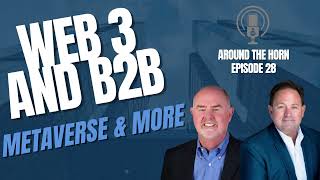
Kevin Brown and Tom Burton discuss how robotics, digital twins, and Web3 are reshaping wholesale distribution. They cover dark warehouses, supply chain recovery, inventory challenges, and why companies need to prepare for disruptive tech rather than ignore it.
Chapters
Foreign.
Welcome to around the Horn in Wholesale Distribution with Kevin Brown and Tom Burton. Sponsored each week by LeadSmart Technologies. Tom, Kevin and their guests review the news of the week and dive deep into the topics impacting manufacturers, wholesale distribution, independent sales agents, and the global wholesale supply chain. Whether It's M&A SaaS and cloud computing, B2B, E commerce or supply chain issues, we peel back the onion with our guests into the topics that impact your business the most.
Good morning, Tom.
Good morning.
How are you?
I'm glad we both got the memo to wear the light blue sweater. Good, good. All right, we're off to the right track.
Yeah, that's it. Very good. Got a couple other colors coming your way before too long as well, so. Good stuff. How's your week? Been good to see you.
Yeah, been good so far.
Well, I'm excited for you. Your wife got into town before the storm last night after her extended business trip. So congratulations for a good weekend.
Yep, yep. And it's supposed to get pretty nasty today, so.
Yeah. Well, you're up Santa Barbara way. I'm down here in south Orange County. See where maybe some of our guests are if they want to chime in where they're at and share what the weather is. I was talking to two or three times this week to people in, in Minnesota and in New England and either Minnesota was already getting hammered or others were beginning bracing for the big storm that was coming. So a lot getting ready to pound the country this week. So we'll, we'll wish everybody the best. You've got what your 2 miles probably as the crow flies from the ocean at the office there. But looking at snow capped peaks that are 10 miles away from you, probably right.
Yeah. I can't see the mountains right now because it's raining. But I would assume that once, if and when it starts to clear up. There was definitely snow on there yesterday and we'll see more snow today. So very good. Good pictures.
All right, well let's, let's jump into our broadcast today. So again, my name is Kevin Brown and I'm here with Tom Burton. Tom and I are the co founders of Lead Smart Technologies. We make a CRM channel collaboration and customer intelligence solution as LeadSmart that sponsors this event that we do every week. But the reason we're here and we're live this morning on Friday morning on Facebook Live, LinkedIn Live and YouTube Live. So you can watch a recording and or be with us as many are today live. But within a couple hours today this will also go onto all the usual podcast formats. So you can catch this by recording later on as well. So what we do each week is we send out a newsletter after we've kind of culled through the news of the week about technology and MA and sales and marketing and all those topics and how they impact wholesale distribution. And we try to pull that together. That email goes out to like, I don't know, five, six, seven, whatever it is, thousand people each week. If you're not getting it and you'd like to pop us a note either here in the chat or if you're listening on the podcast or to a recording. Helloadsmartech.com and we'll get that right out to you right away. But what we do is take all that information. We kind of chat about it. We get some guests here and there. Today it's Tom and I, but let's get started. Tom, let's talk about this week.
Well, and before we do that, I want to say good morning to. We have a few people coming on with some weather stories here. So, Ron, I it's like I hate to even talk about stuff here in California. Yeah, the crap in Chicago and other areas. So I'm not even going to try and compete with that. But Craig says it snowed in Sherman Oaks yesterday. Yeah, it snowed, almost snowed in Santa Barbara. You're yesterday, Craig. Rumor had it at my house there was like slush. So it was at my office. But anyway, all cool stuff for here. And Will, good morning. And Brian up in the Bay Area.
That's great.
And we have a first timer, Mike. So good morning.
Welcome. Mike's in Minnesota, chatted with him earlier this week. So we're happy to have Mike.
So we're not going to be able to compete with Mike in his weather either?
No, no, he's, he's probably got, in fact, RPs. RPs weather in Chicago is nothing to that the Twin Cities got hit with. So it's good to have you folks here today. You know, one of the things we didn't mention is we get a lot of great comments from, from people that we have met in wholesale distribution, maybe worked with in the past or gotten to know. And the best way that we can get this out and share this with other people is if, if you do that for us. So if you're watching on, on LinkedIn, you can click the like and the Share button. Same thing with YouTube Live or Facebook Live if you're listening to the podcast, certainly subscribe. So you get it each week and and share it with your friends. So our audience keeps growing each week and we're appreciative of that as well. So let's dive in and chat a little bit, Tom.
All right, let's do it.
Yeah. So, you know, interesting, this whole concept here of dark warehouses and robots and so forth. So we don't want to spend all that much time on this today. But, you know, it is kind of an interesting article thinking about, you know, we talk so much about technology and how things are changing so quickly in wholesale distribution that it is kind of interesting to look at what's going on in the world of automation. One of the things that this article really talked about that I noticed was that manufacturers specifically are looking and distribution companies are looking so much more at robotics because through the pandemic and afterwards, we've had so much difficulty with labor shortages. In fact, this article talks about the average warehouse worker salary is $43,800. So there's one, they're hard to find. Two, they're expensive. So robotics into warehousing is growing pretty quickly.
Yeah. And it's not an area I know a tremendous amount about. But I'm wondering, you know, I find we talked last week about getting packages from Amazon and I don't know, more recently I've. These big boxes show up at the house. Like big, huge boxes from Amazon. I'm like, what the heck did we buy here? And I open it up and there's like this little itty bitty thing in there in this big, massive box.
Yeah.
And the only thing I can think of is that's all being done by their robots and all of that kind of stuff. And they can't necessarily, you know, there's issues with. So I think there's probably, you know, obviously inefficiencies and things like that that have to be continue to be worked out. But it's not an area, like I said, I know a tremendous amount about. But I would assume it would continue to be more and more of an issue just for the. Or more of more adopted, like you said, because it's so hard to find workers and things like that to do that.
Yeah. So there's so much more of this happening. It's something that's been being looked at for many, many years, that companies are doing more and more of it. And I think what this article talks quite a bit about companies kind of easing in because some of the technology is a little bit harder to adopt. You know, one of the things they talk about is, you know, pack and Pick is very difficult to do in that setting, but it's much easier when you're doing full cases and so forth and obviously specific size boxes. But technology is moving quickly. It's growing in that arena. We're going to see more and more of it on a consistent basis. So obviously something to watch out for. But it as the economic issues impact things. Right. And whether it's labor or it's pricing or whatever it is, we're going to see more and more of that. The reason I kind of triggered on this is wholesale distributors expanding into E Commerce that we talk quite a bit about each week are also needing to take a look at this because you know, as order frequency picks up and it's units versus cases being shipped, they've got to become more efficient at that because they're still going to be needing to take care of their brick and mortar customers as well. So.
Yeah. And I know in some of our distributors that are doing E Commerce, they're really, they've been trying to work with their customers to increase their average order value. So they're not just one off ordering. But I don't know if that's going to change. Right. The convenience of the one off order and just in time and all of that, I don't think that's going away. So you know, you have to, you have to deal with that in some way, shape or form.
No, you're absolutely right. So we'll see what, see what happens next with this. But something to watch. I think we'll kind of continue to look at some of these articles and see and it just kind of leads to so much of what we're going to be talking about in general today, right. With Supply Chain. And we're going to talk a little bit about web3 and the metaverse later on in, in our conversation today. And these things are all becoming kind of one. Right. We used to look at technology way over on one side of the business and we've got our warehousing and, and our worlds are just merging. Right. Everything is coming together. And you know, that's one of the main reasons that we, we do this each week is we have a kind of a unique insight because we, we're spending all week, every week talking to either our customers or folks that are members of trade associations and buying groups that we're partnered with and we're learning and seeing what people are doing. So gives us the opportunity to give some feedback on, on what's happening here. So good stuff. Okay, so let's jump ahead okay, Yep. So some good news on the supply chain front, right? We spent so much of last summer and fall and talking about all the challenges in the harbors and, and the railways and so forth. And you know, we had crazy PR going on out there. But there, this article talks, it's good information. Talks about both retailers and manufacturers feeling better and expecting fewer disruptions and lower freight rates this year. The freight rate piece of this is what just astounded me, right? Because you know, we deliver our product over the Internet as a SaaS software company, but, you know, I've spent my whole career, you know, in with warehouses full of goods and my car loaded up with samples to be out seeing customers. And this is just astounding, right? It talks about what does this really mean is they called it the darker clouds from rising interest rates and pullback in consumer spending would have been a perfect storm if warehousing and logistics and supply chain issues would have continued. But they talked about what was going on in this article and they were talking about shipping a container from asia to the US West coast that went up from $2,000 before the pandemic to over $20,000. I mean, think about that, right? You've got this 10x multiplier in just your freight costs. And then when there's all the other supply chain issues going on, pricing was going up, man, real challenge. Now the other challenge that people are dealing with too, but I'm not hearing as much about this as I was a few months back, but was so many distributors in particular beefed up on inventories on anything they can get right, especially through the pandemic. And now people have some use the term bloated inventories. I was in a distributor's warehouse two weeks ago and we were kind of walking by a bunch of. A bunch of N95 masks and some other Covid related items. And I mean, there was probably 20 master packs, so maybe let's say 80 or so cases inside there. And they said that right now they just don't have homes for those because those were a product that they brought in that weren't anybody's favorite product to use. And so it really put them in a pickle. But we'll see this stuff ease up a little bit.
Yeah, we've talked about this, I think on a few episodes is that, you know, that it continues to get better. I think a lot of the, A lot of the adaptions that have been done moving, you know, having more manufacturing potentially done onshore, taking advantage maybe more of Mexico and Central America rather than shipping something from China. I mean, if you're paying that kind of freight, all your cost savings of doing something in China pretty much evaporates or certainly gets seriously reduced. So it gives you the freedom to start looking at some other options as it relates to the cost and everything that are there.
Yeah, I think that's a, that's a really good point. You know, and that's going to tie into other conversations that we've had recently and I'm sure we're going to continue to have as we talk about onshoring or reshoring. Right. So interesting stuff. We can kind of jump ahead. But yeah, that was a nice positive spin on, not even spin, positive data on really what's going on out there. So it's good news.
Before we move on, I wanted to read what Will wrote here because I think he answered my question, which is really interesting. He's saying that some of what happens when you simplify workstations and limit the boxes you keep at pack stations. Referring to my. I think my Amazon big boxes, right. UPS and FedEx want a dimensional charging model versus only wait. Many shippers adapted because of the cost. What can limit that is big companies have deep discounts. The added expensive and significant. So interesting. So they're really, they're not necessarily looking at things by weight. They're looking at. Based on the dimensions of the box. Yeah, it just, it seems to me inefficient and maybe even wasteful. Right. Because that big box takes up space somewhere, you know, and it's shipping and, and all of that kind of stuff. But it's an interesting, you know, interesting situation there.
Yeah, well, you got the environmental factor.
That goes with that.
Right. We're going to chat a little bit. There's a component, one of the other articles we talked about today regarding, you know, ESG issues that are going on in organizations and when you start to really look at that, man, what are we doing to the environment? I think about that all the time. Right. When I go put the Amazon boxes, there's a, there's a significant Amazon habit in this household, and my wife's not the only one guilty of it. But, you know, when I throw those boxes away consistently, I'm thinking about, man, you know, I would love it if we could put those back on the shelf on the patio or the porch and have Amazon, when they deliver next, pick up our old boxes to be reused. You know, there's, I know that's not efficient. I know that doesn't work well, but there's just something out there that says, it just drives me crazy that we, you know, what we're doing with all this. So anyways, onwards from that.
Right, so business activity rebounding to 8 month high in February.
Yeah, isn't it great?
Yeah, it's, it's. And I think there was a new report that came out this morning that inflation is a bit higher than expected. And you've certainly seen reports on the job market. It's, it's really a very, very interesting situation. We've talked about this for the previous weeks, but economically a very, I've never seen anything like this in my lifetime, you know, in business career. But it's amazing about how much it's like. It seems like this is what it seems like. Right. We started to see inflation drop a bit. We saw the stock market start to pick up again and then everybody like, okay, we're back at it. We're just full speed ahead, even from 55 to 65 miles an hour, which I know is pissing off the whole Fed process because the Feds want this to slow down. And then they're flexing their muscles and saying, well, we're going to keep raising interest rates then and if you're, you know, if you're going to keep growing and expanding, then we're going to show you by raising the interest rates higher and higher. It's, it's just a very, very interesting situation. But yeah, I've seen, you know, business activity rebound and you know, the, just the unemployment and all of these types of things is quite remarkable.
Yeah. There's a quote in here that kind of ties into more of what we've been talking about and it's the articles. This is from the chief business economist at S P Global Market Intelligence and he says despite headwinds from higher interest rates and the cost of living squeeze, the business mood has brightened amid signs that inflation has peaked and recession risks have faded. He said at the same time, supply constraints have alleviated to the extent, extent that delivery times for inputs into factories and are improving at a rate not seen in since 2009. So I think what, I don't know, I'm, you know, last thing anybody would call me as an economist. But what I see out of this is, you know, the economy is the, the Fed is saying one thing, right? Wall street is saying something, bouncing up and down in trying to anticipate that. But the business world says forget it, we're just charging ahead, right? And they're taking advantage of everything that they possibly can, right? To Drive business forward and let those, the pundits and the Fed and, and all of those folks just do and say what they want, but they're going to drive business forward.
Yeah, the, the question will become is, you know, again, the war, I guess the war events, the business growth and the Fed, Fed thing is, is there, you know, where does that collide? And I'm sure that a lot of they believe that it would have collided a long time ago or prior to now. And we haven't seen the recession, we haven't seen the downturns, we haven't seen despite interest rates being, you know, creeping up on 5%. And I mean that, you know, there is an impact on that. Right. It's, it's not like you can just totally ignore that.
I think you're right. I mean, but this is really an interesting point, right. I'd love some people's take on this. I kind of look at this just like business in general, right. We have a way that we've always done things and we talked about this a bunch last year, Tom, you know, with some of our guests that we've had on as well. It's like, you know, we're using, in this one, we were, everybody was, you know, third quarter panicked about huge panic about recession, maybe second quarter as well. Much different feeling than what we have today. But, you know, we're using again. We're not, you know, neither of us are economists. We're just business guys who've been around a long time. But I look at this, I see the Fed is using the, the curves and the algorithms that they're using. All the things they're tracking, managing are, you know, 20, 30, 50, maybe even old years older than that. And we're living in a different world and our economy is different. And at the end of the day, again, I'm no expert here, but what I view this as is you guys stay, business is saying, you guys stay mired in all that gobbly gook that I was, you know, talking head stuff. And we're gonna wait and see what happens. But at the end of the day, people are buying stuff, specifically on the B2B side. Factories are busy, orders are getting shipped, supply chain is improved. We have all of these things we've talked about earlier and people are kind of saying, I don't give a rip about what you guys are doing because I'm going to overcome interest rates. I, I over, you know, you look at manufacturing companies, right, that say, I survived and overcame covet this whole little thing. I'm going to plow through this. That's one guy's take.
And I, I, I, I agree partially with what you're saying. I think there may be some ignorance too. I don't know that it's, it's like damn the torpedoes, we're moving forward on all fronts. I do certainly believe there are businesses doing that.
Yeah.
I also see, I see and I see this. Even, you know, when we talk to businesses about technology, sometimes there's a bit of this, you know, head in the sand and I think there may be a bit of that here as well. So anyway, it's just, it'll be interesting to see how it plays out. Right. I don't think there's any specific situation but.
Well, you know, I hear what you're saying. I'm going to quote you though, right. Is talking early last year about self fulfilling prophecies. Right. And, and at the end of the day, right, we're, we're still building hospitals. Right. We're still repairing potholes. We're still running the factories that make the tools and the equipment to fill the potholes. And the people that go do that, that, you know, as, as Dirk Beveridge says, right. The noble profession of distribution, you know, those people are driving forward and making, just going to continue to make things happen. Now the economics that go on behind that might play a, you know, factor, right. That the CEO of the manufacturing company or the family owned distribution company, maybe their dividends aren't going to be what they were expecting to do. But you know, wholesale distribution and the manufacturers behind those distributors are what drive a huge part of this economy and you got to figure out how to make it work.
Yeah.
So, you know, it's back to your, your old thing about don't, don't watch the news. Right.
You know, don't watch the news. But I do think you have to be aware.
Right.
The fact is, is that as interest rates continue to rise, there is an impact.
Sure.
An economic impact, especially in how you're using, you know, debt financing, all of those types of things. It's not a news issue, it's just a fact and you have to be aware of it. And there is going to be impacts or potentially there can be impacts.
Yeah.
And, and I don't know that I don't think the consumer has really accepted that. You know, you see high levels of debt on the consumer side.
Sure.
And there's, you know, but I think there's also a bit of that on the business side that it's been a little Bit of just, you know. Well, I'm not, it's not my problem right now. And I think the risk that we have is potentially it catches up with us. I hope that's not the case. Yeah, I think that's a risk.
You could be right. But I think that what goes with that, I mean, when did interest rates start, you know, poking up again? Third quarter, right?
No, no, this has been going on almost a year now.
You know, okay, so here we are, and they're the highest that they've been. You know, some people are talking about them starting to drop later in the year. I look back at this, you know, if we read that article again, what you're hearing from CEOs is we're getting around this, we're overcoming this. So I think you're, I mean, I think anybody is wise to do what you're describing there about not having their head in the sand, but I think what we're seeing is a sentiment from this particular article is that, you know, we're rebounding.
Right.
We're overcoming, there's, there's factors of things that are better.
We're really resilient. Right. And business has been super resilient. And I think that's amazing. Right. And I'm, you know, I love that from a business perspective.
Sure.
But I also think it's really important that we as business people in general. Right. Are not just ignorant to what's going on at the same time as well, just because it may not, we may not be feeling the effect right this second. And there can be, you know, definitely a downstream impact. And if the Fed keeps flexing and raising and you know, doing the things that they say they're going to do, then, you know, there is going to be, I believe, a crash somewhere in the middle. Right. Where the, where we're going to butt heads, maybe is the right word. Yeah. How that plays out, who knows?
Right. Well, I think that you could be right with that. I think the good news about that. Right. Is that you talk about, you know, wholesale distribution and the manufacturing that feeds wholesale distribution. You know, these aren't five year old tech companies that are trying to figure it out. Right. Many of these companies have weathered this storm.
They've weathered a lot of storms for sure. Yeah. Yeah.
So let's just keep watching this and we'll keep talking about it. So why don't we jump ahead.
Yeah. Before we, before we move on, on our, on our thread here of Amazon Boxes, which I think most important topic we've, we've had Today.
Yeah, everybody feels it.
Right. So Ron was saying is that you know, the product information may be, may not be correct and the system just takes what's in the system. So I have, so when I order a pencil, right, it may think it's a, a big box of something else. And then you know, and he says customer impact is significant, which is interesting. And cost of dunnage is there. I, I would think so. Right. I mean somebody's paying for those boxes, you know, that are shipping the, these little itty bitty items and all that. And then it not only is there boxes but it's all this like you know, bubble stuff and everything in there. I mean that all adds up over.
Well, who it adds up for right. Is, is typically it's not the end user customer, it's never Amazon. And you and I have both had experiences of selling through Amazon and it becomes the person supplying Amazon that ends up having higher fees and so forth that goes with it typically. And you know, RP is definitely somebody to comment on this because he retired last year from one of the largest B2B wholesale distributors out there. And so he's seen all aspects of that company in a long career working for that big company in Lake Forest, Illinois.
So I'm hoping Amazon's listening to our show today and they're going, man, we got to do something about this.
Pretty sure they've got something on that already. But you know what it, what's interesting is to RP's comment, right, is if the system doesn't even know or understand that and something becomes robotic, it's a challenge if you're doing robotic packaging. And that goes back to what we talked about and we'll talk about more later today is the whole idea of silo data in organizations and the caliber of the data that you keep. So if you've got a bad content management system for your E commerce system, bad data that's into your and Will Quinn could probably talk about this from the good folks at Infor that you know are a solid their ERP provider. If you've got bad data in your system to RP's point.
Right.
You may end up getting the wrong box just because the system thought something was bigger and a machine grabbed it off the shelf and the machine didn't know that it was still small.
Yeah.
So interesting stuff. All right, we'll talk about these five predictions real quick.
Yeah, what are the five predictions?
Well, I think the first one, we mentioned this a little bit earlier today about getting smart about ESG and We hear ESG all the time, but, you know, we don't really recognize sometimes what that is, but talks about environmental, social and governance initiatives within companies. So I think we've got a changing world around us. We won't get into politics or woke people or, you know, the greenness and melting ice caps and so forth, but companies are being, you know, pushed and pushed, whether it's by board of directors of privately owned companies or shareholders and board of directors, publicly traded companies, to really get clear and defined on the initiatives you have. What are you doing to protect the environment? Back to what we were just talking about, about, you know, waste with packaging and so forth. What are you doing about social issues and, you know, so forth. So I think we're going to see more and more of that. And it's not just boards of directors and shareholders, it's channel partners as well. Right. That are expecting that. So, you know, in the past, a good example back to, you know, our friend RP here is the, you know, the company that he retired from has expectations of their vendors about how they treat their workers and, you know, how they're packaging things and so forth. And we're going to see more and more of that. So that was number one. Number two, digital twins playing a major part. Tom, we should spend some time down the road. We're going to talk a little bit more before we finish today about web3 and the metaverse and web3 being something near and dear to your heart. There's a great article, I think it was from Deloitte that we posted today that. But talking about digital twins, I'd love to talk more about that down the road. But that mindset of, you know, replicating what a wind farm is doing in technology and planning for downtime or whatever it might be all the different ways that you can, you know, they use this term digital twin, but what they're talking about in this is that preparing not only to be using those types of things in manufacturing, but it's what are you going to do with all the data that you get from that? One of our favorite topics. Right.
Yeah. And, and you know, the digital twin concept, especially like you were saying, when things or stuff like that, you know, you'll be able to predict maintenance needs.
Sure.
You know, I mean, if you look at even, you know, some of the stuff in the, in the power. Right. That the electrical companies and all the stuff they've had problems with here in California, your power lines and their systems and the fires that have been created and the lawsuits and all of that kind of stuff. Right. You don't, they don't. A lot of it was caused because stuff was, you know, in need of repair. They didn't know it or they didn't, you know, one way or the. So what, no matter what that is, having that knowledge, proactive knowledge on some of these things I think could be really, really interesting. But yes, the data then has to be, you know, how do you use that data and then how do you. Right. You know, turn that into business results.
Yep, that's very good, I think. And we're going to continue to talk more and more about that. So they talked. The third one was weathering the macroeconomic turbulence ahead. It kind of talks about some of the stuff that we have been chatting about today. Four was enhanced connectivity means improved productivity. What are you doing with your, with your tech stack? What are you doing with robotics? What are you doing with, you know, the software that your staff and team uses to manage your business? And what are you doing with data? And then as we've spent so much time talking about in the last few weeks about the continued increase in importance of AI across the business, so they've made a comment there about AI that says by 2025, which just around the corner, 40% of manufacturers will use AI to bolster business decisions. So I think where my gut says that's going to happen faster.
Yeah. So in this article, are they suggesting that the five things that you went through, our kind of predictions of what are going to be key issues for the rest of the year in 2023 and moving forward.
Right. Yeah. These things are going to start to have more and more impact on you today and every day and you better be thinking about these things moving forward. And it's, it really kind of reinforces a lot of the topics that we've, we've covered and we chat about with the group that we get each week together here.
Okay, good. So before we move on, in our ongoing conversation, Will is saying. True. He sounds like he's backing up. What Ron was saying is that the, the, the data matter. Right. The dimensional data matters and only choose the box if it has the right data. Guess what? On the information. So, yep, I don't know. It seems like the stuff I buy, they must have completely bad data on all of it because the packaging just, it's not just once, it just seems more regularly too. The packaging is way out of proportion to what's actually in there.
So, yep, a lot of factors with that. So maybe we'll, maybe we'll get some Amazon folks on one of these days.
Yeah.
See if we can get some feedback. I know a couple people that have recently left there that are were fairly senior. We can get one of them on and at least chat with us a little bit sometime.
Very, very, very important topic here in industrial.
Well, you know what. But it is if you think back to right. What do we see every day? Right. We've got climate change issues. We've got this ESG thing about, you know, corporate government governance, looking over on what are your environmental policies and statuses within your company. You know, obviously there's something more behind this topic. It's everybody feels it. Right. Packaging is a big issue. Right. Yeah.
Now we've got just one way that you can see it. Right. You can see it as the consumer or you can can see see it as what's done there. So.
But a huge trickle down effect. Right. It's not just the box. It's then do we need more trucks on the road because the boxes are bigger or more trips of those trucks and all of the things that go with that.
So takes up space.
Yeah. So good. Well let's kind of jump into the news a little bit. Some good news here. Rexell huge electrical distributor finished up a great year. I don't want to move too fast through these times. I want to talk about this 80 initiative real quick. But global industrial, another solid year with challenging times. But what's kind of interesting is in this article if you get a chance read in the newsletter this piece about the center that for independent distributor leadership that AD has launched. It's kind of neat. One of the people that's driving this forward is Marty McLaughlin, the Chief Marketing Officer at AD Marty is scheduled to be with us here on around the Horn. I think Marty's with us. No, April I think is when it's coming. So we'll double check. I don't, don't believe it's next week though.
Okay.
I believe it's into April. But he had a pretty crazy march with some of this going on when I talked to him a few weeks ago. But neat stuff that. So it's well worth the read about what they're. They're looking at. You know, they're talking about in this same stuff we talk about all the time. Right. Changing buyers, new types of salespeople that are coming in and that type of thing that comes together is quite unique. And there is a lot of training that needs to be done in the leadership. Right. Of new organizations. Right. Or existing organizations in AD. Memberships, they've got new leadership coming up and in and they've got to get them trained. Right. So A.D. is going to take the lead in that.
So did it go into, and not to go into detail, but what, what do they consider to be the important areas that they're training on? Is it, is it using technology, is.
It how to deal with all levels of management and leadership? Sales, marketing, operations, finance, all of those pieces. They're going to be working to do this training for them and they talk about it. Designed to prepare the current and future leaders of independent distribution with the competencies and experiences to build long term sustainable success for their company.
It's interesting because we see quite a bit right. In the companies we work with, you know, if there's succession plans or they're talking about successions or family thing and, you know, and yeah, I mean the way you ran the business, you know, 30 years ago is not the way you would want to run the business now. So it's interesting. That's an interesting. I wonder if they're going to actually have like certification and, and you know, things like that that you can get from that.
Yep. So we're doing an event with them next month in San Diego, so I'm sure I'll learn more. Okay, we'll talk about it for them. We'll talk about it when we have Marty on.
Okay.
Yeah, we got Marty coming up, so that'll be good to have him. He'll be fun. So good. Let's jump ahead and Talk metaverse and web3 and all the wild stuff that's ahead of us.
Yeah, I mean, I know we've talked a lot about AI, Right. Over the last several episodes. And as you know, if you listen to me, right. I believe that AI and Web3 are the biggest disruptive technologies that's going to make the most impact over the next few years. This article is an interesting one, talking about the Metaverse in Web three. And you know, we all have heard about the Metaverse, you know, Facebook and, and you've probably seen some examples of the metaverse, but think of the metaverse as just a virtual environment. Right. So from a business perspective, almost like we were talking about before, where you were talking about the digital twin, you know, the Metaverse could be a way of doing this. But where I think the, again, where I think the interesting, you know, Metaverse, you hear a lot of it with games and things like that currently in the normal world. But think about this, and I think about this with some of the companies we've worked for that, you know, had safety products and did fit testing and did other things that had to, you know, take place for those products to be actually utilized. Think about if you can model that in the, in the metaverse. And what's going to happen is too, is that with AI, the, the characters, if you will, or the people, the digital, the digital people in the metaverse are. And this is funny, you're seeing this in some games now as you're actually going to be able to like, buy brains. You can take a brain and say, okay, I want to have a brain that has this knowledge and this capability. And you can start switching things back and forth and seeing how people potentially could react in the metaverse given a certain situation and all of that. So I think there's just. And then you go back to even sales and some of the stuff we were just talking about, about leadership and all of that, the amount of things that will be able to be emulated in the metaverse, and then even you talk about the ultimate what if. Well, what if they had this skill? What if this person really understood how to do this? And you can model that in the metaverse, see what happens, and then you can justify building those skills in the real world with, with people on how they're, they're coming together. So just, I mean, the use cases are just endless. And this was a good article, but, you know, certainly a lot of opportunity.
Yeah. So, you know, let's kind of. Tom, let's. One of the reasons I wanted to talk about this today and share this particular article, you know, you mention web3 all the time, so I'm going to give a quick metaverse example and then how that could play out into manufacturing wholesale distribution. But when I do, after I do that, why don't you say, let's talk about Web one, Web two, and then what's Web three? Right. Because we, we say those things pretty off the, off the tongue. Right. Just quickly roll out of your mouth. You're a technology guy, computer scientist by training. You know, we've got people that join us each week both on the podcast that subscribe there and on our live events.
Sure.
I want to unpack those a little bit. So I wanted to. And feel free. I'm taking some of this from the article and some of the other things I've read and some of our conversations. But, you know, as you think about the, the metaverse, it does. I love how you tied that back a few minutes ago to what we talked about, the digital twin. Right. So I'm going to think about this and I'm going to ask people to bear with me for a moment because I'm going from my personal life, I'm going to use me as an example from my personal life. We're going to go right into how this matters to wholesale distribution. So I now can, in the Metaverse, have a digital. I hate using the term avatar, but I can have a digital presence, right, that knows everything about me. It knows exactly the size shoe I wear and the brand of shoes maybe that I wear, mostly that can interrelate across all other brands that say I should be buying this shoe there. And not only that, but by use of not just the Metaverse, but cryptocurrency and the blockchain, it can. I can say I did these purchases based upon these factors about me at this place. And that Persona can move all around the world to anywhere I want it, whether it's travel, dining, clothing, whatever it is. That's my personal Persona that can move across the metaverse. But now we take this in and this article made a great example of this. And it says if a consumer buys an exclusive digital item from their avatar, their own Persona, like a piece of virtual clothing, they can go to a second service or recognize their ownership and render it moving forward in other places. They said for enterprise. And I'm going to take this the next step to wholesale distribution and manufacturing. A similar use case might involve being able to invite users across the partner ecosystem into a shared, immersive collaboration. This might mean reviewing 3D assembly of a prototype vehicle, or inspecting a digital twin of a factory for performance enhancements. This is going to be huge when we start thinking about, and we have quite regularly people from 3M that join us regularly on our show here as we start talking about that collaboration. And it's powerful for the conversations you and I have. Because of what we do at Leadsport, we're already working with manufacturers, independent sales agents and distributors to collaborate across our platform. Now, what if we had this digital metaverse where we have factory workers and their Personas involved and we have the factory where the products are being made and engineers. All of these people are working in this same metaverse to make something better. So I wanted to kind of bring that use case up for the Metaverse.
Because great, great, great use case and very. And very appropriate, right? That is a very, you know, we all will have.
Was that my compliment for the month?
Yeah, I guess we're almost done with the month, so.
Yeah, we give each other one a month. So I'll take it.
No, that. I think that's good, but we have.
To move out of that. You know, this is Mark Zuckerberg and Facebook, and that's what my kids and my wife use. Right. Or, you know, whatever. Or we just, we have to be moving to that place that's saying, I'm, I'm an executive, I'm in leadership, and I'm thinking forward enough to. These things are going to impact my ultimate user of my product and my channel partners.
Yeah. And I mean, there's just so much to talk about here. I don't. But going back to. You wanted to talk a little bit about web 1, 2 and 3. So the simple definition, web 1, right. When it came out, you use the Internet to get information. You logged onto your browser, you searched for something and you got information. That's what it was for. So it was like an online brochure. Right. That's, that's basically how Web one started. Web two started to evolve when you had social media and now you were able to communicate with other people. Right. So you had communication occurring and social activity occurring, whereas before you just had. I'm getting information was kind of a one way, one thing in the Web2 world, which is still very prominent. Right. Is those Web2 capabilities were centralized and owned by a handful of companies. Facebook, Google, Amazon, whatever you want to call it. Right. There's a handful of the big companies that have created and enabled that social communication. And the fact of it is, is they control it. Right. They don't want you on their platform. They can kick you off Web three. The, the evolution into Web three and what the blockchain enables. And I, I don't like spending a ton of time on the blockchain because it's like, it's the underlying technology. So it's like the same way you don't need to know what servers are running your Facebook account on. You don't necessarily need to know what, what's going on from the blockchain. But what Web3 is, which is enabled by the blockchain technology, is to now enable a person or an individual or a business to not just communicate, but to have ownership in what they're doing and participate in what they're doing. Talked about was participation. Right. And, and I think that. Well, I don't. I know that's the big difference between those and it'll be seen. Right. The charter of Web3 is to try and make things much more decentralized so they're not owned by any one Facebook or Amazon or whatever. Is the idea to be liberating things a bit more so that things can happen without centralized control around those things, which then open up a much more, you know, potentially wide open situation. Now Facebook would argue, no, we're going to be the king of the metaverse. A lot of people are saying, no, we'll never let Facebook become king of the metaverse. Certainly in business it could be Amazon thinking they're going to be the king of the metaverse. Amazon has announced quite a few things recently about the metaverse. So it's obviously still early. It'll be interesting to see how it plays out. But regardless, the whole premise is, is ownership and participation. So, and a simple example would be, you know, who are the people that are making Facebook money? Right? It's all the people on there that are communicating. Or take, let's take LinkedIn as a better example, right? Who are the content contributors on LinkedIn? It's all of us. We, we put content there. Does LinkedIn pay us for any of that? Do we have any ownership of that? Do we get any of their ad share? I mean YouTube does it some for some creator stuff. But think about that. If you were publishing a article or a video or whatever and you actually have some ownership of that and could actually even dictate, you know, how it's used and you know, any of those things is not, is not really possible in the, in the web2world. So that's the, that's the short answer.
So let's kind of recap this in as we kind of get ready to wind down today. I just was going to read a couple quotes from this. It said, says Web3 and the metaverse are poised to drive revolutionary advancement and technological breakthroughs which could shape new forms of communication, innovation, prototyping and community formation and new business opportunities. The Metaverse and Web3 are powerful winds of change. And it closes with saying if businesses wait too long, the landscape could shift underneath them.
I agree with that. And I agree with that on AI too. It's like I was saying earlier, it's a little scary to me. Almost to the point the number of businesses that we talk to in wholesale distribution that are brushing off this technological revolution. And to your point, right. Well, I've survived 50 years without it. Why do I need it now?
Sure.
And this is not a time has nothing to do with lead smart or it's just I don't like to see it because I'm going, you're going to see businesses that are going to put their head in the sand on this and find out that it's way too late. Because the competitive advantage for the business who does take advantage of this is going to be so massive and so widespread that it will easily be able to, you know, trump some of the people that have maybe survived just fine over the last years, you know, by just doing the same old, same old. And it's, this is not an area to be just putting your head in the same. We were talking about earlier about the economy and all of that. It's just not a place to put your head in the sand. Doesn't mean you have to go hog wild. It means you better take some steps to understand it, look at it, build a plan in place, all those types of things. Make decisions around knowledge, don't make decisions around ignorance. And that's what scares me a little bit when with some of the, you know, people we talk to.
Well, I love it either way you described it. I'm going to do one other quote out of this article, right? Said this, said, remarkably, one poll found that over half of people in nine markets prefer to spend their time online rather than with other people in the real world. Okay, we can talk all we want, say, well, that's gamers, that's this, that's whatever, right? That's what comes to most of our minds. Probably that was a poll of broad people, not 23 year olds in Seoul, Korea or whatever it might be, right? It's just this is what's real and where we're, where we're at is. And you know, we talk about this regularly in here on around the Horn, right? Is more than half of B2B buyers are millennials, right? Which would probably pretty easily translate into a similar number, if not more of the incoming salespeople and employees that are going to be hired into wholesale distribution are millennials, maybe even younger, right. And they have an expectation of what goes on in their workforce, of where they're going to take a job. We had a very large wholesale distributor in the plumbing market in the southeast tell us a few months ago that they've had a few recent job applicants ask them what the tech stack looks like in the company, right? And all that we're going to see is that's going to continue, but that's even going to shift to a place that says, what are we doing with the metaverse? So that we can help our buyers, the buyers that are, you know, again, I say this all the time, right? They use this little device to hail a ride to go out to meet their friends for drinks or order lunch to be delivered. You know, I happen to have been on a construction site last weekend doing some volunteer work, and 2/3 of the people there had. Not say 2/3. Half the people there had grubhub bringing their lunch. Right. It was. It's astounding. But that's the change that we're going through. And I think what we're trying to promote in a mature industry of wholesale distribution, where people have done things the same way for a long time, that now is the time to at least be planning for these things. Because these winds of change are here.
Yeah. And understanding what's possible.
Yeah.
Right. And how to start moving in that direction rather than, again, just assuming it's. So I know we're running close.
This is just a good article about, you know, some concepts regarding good hiring, specifically in the sales side of things. You know, they talk about they have an equation in there that they talk about the person and the environment and they've got a little equation that they talk about behavior, function, person and environment. And I thought it was kind of a good read. One of the things that I'll tie into this, though, because it does tie into technology that we like to talk about in having sales processes, playbooks and technology that can replicate those so we can see statuses and where customers are at in their life cycle and how to work with new customers. It says the quote was. It was from a book that they quoted in here. It says, pit a good performer against a bad system and the system will win over almost every time.
That's great quote. Very true. Right.
So you can take a high performer. I mean, think about that from an athletic standpoint, right. You take a great player and put them on an average team with average coaching and he's going to play to that group, Right?
Yep. Absolutely.
Good article there. Upcoming events. We're looking forward to the AD event for their Bearings and Transmission division in San Diego. Love that it's In San Diego, 70 miles down the road. So next month and then the big ISA event next in April, we're really looking forward to as well. Hey, Will Quinn, if you're still with us, if you're going to the ISA event or the AD event, let's. Let's get together and grab some coffee. Right.
Let's. Let's wrap up here with a couple things here, a couple last words on our Amazon conversation.
Oh, no. Okay.
So Amazon will to kind of put the icing on that saying, you know, the cost to try and size millions of different SKUs and keep up with the dimensions is more expensive than the shipping cost differential. He's probably absolutely right. The impact we were talking about earlier about the environment and all of that, there's a lot of costs for that. I also want to share Craig, because Craig, we know, shares our passion of technology. So he says we're miles away from considering Metaverse in our tech stack. We just need to get some more basics that have been standard in other industries for years. Yeah, couldn't agree more, Craig. And that starts with looking at your data. Right? And really looking at how you're using your data within the organization. Because data ultimately will drive what you're doing with the Metaverse. It's going to drive what you're doing with AI and having systems that enable you to actually track that data. You know, Craig, you and I have worked together on things like this in the past. Right. Is how do you put things together where you can track where your marketing dollars are going and what's happening and how things are, you know, how your marketing actions are turning into simple things, but data that in and of itself can be. Right. Really, really valuable down the road, so.
Yeah, exactly. Exactly. Right. Craig's a longtime user of our technology and supporter of that which we appreciate is at a new job now, and he's lacking that technology that he's used to right now. So hopefully he can have some impact on that. He's doing a great job and Craig's a super guy, so we're glad he's with us today. Kind of winding down here. This we will. Quinn is great. We'll miss you in Orlando next week, but I'd love to talk with you about that naed, the national association of Electrical Distributors event in Phoenix. So let's plan on if you're there, let's get together and break some bread or coffee or beer or something. So we'll wish Tom anything else before we jump?
No, stay dry. If you're in California, stay safe.
Last little thing here, Mike France just jumped in there. Mike's doing some really cool stuff with data for distributors. Will maybe get him engaged more in the next few weeks to share more about how he's using that and helping manufacturers.
Data is the new currency, right? It is the currency. We talked about this last week, so.
Good. Yeah, we'll say stay dry. You know, feel for us, those of you in those snowy climates that know how to manage in bad weather and know how to drive in bad weather. We don't. So I'm going to be as hunkered down as I can over the next couple of days of this storm.
All right, thanks everybody. Have a good weekend.
All the best everyone.
We hope you enjoyed today's episode and our guests. Each week we try our best to dig into the topics that are impacting your business, so please reach out to us and let us know how you think we can make the show better or topics you'd like for us to tackle or talk about more often and even guests you'd like to see join us. We're looking forward to bringing you next week's session and hope that until then you stay safe, stay focused and do great things. If you haven't already, please subscribe to the podcast and leave a review to help others in wholesale distribution get access to the conversation. And finally, please check out our sponsor, Lead Smart Technologies and their manufacturing and wholesale distribution industry CRM Customer intelligence and channel collaboration platform. That's Lead Smart Technologies atLead smart tech.com.
More from Tom



What does AI actually mean for a wholesale distributor #WholesaleDistribution


If your systems don’t talk to each other, your AI won’t either #AITransformation




This is why one AI agent isn’t enough for high-stakes decisions #WholesaleDistribution

