The Changing Habits of B2B Buyers
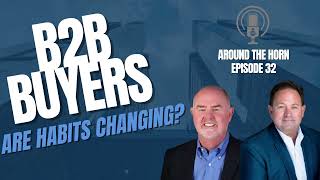
A live podcast-style video (Around the Horn in Wholesale Distribution) where Kevin Brown and Tom Burton discuss current trends affecting manufacturers and wholesale distributors. Key themes: improving digital sales strategy (beyond simple e-commerce) to meet faster, younger, digital-first B2B buyer expectations (Forrester: 77% expect immediate responses), questioning the linear sales funnel as buyers follow multi-path journeys, and operational implications for SKUs/inventory. They also touch on housing and wholesale-trade indicators, prompt engineering for generative AI (ChatGPT), a productivity piece on "to-don't" lists, M&A activity in distribution, and upcoming industry events.
Chapters
Foreign.
Welcome to around the Horn in Wholesale Distribution with Kevin Brown and Tom Burton. Sponsored each week by LeadSmart Technologies. Tom, Kevin and their guests review the news of the week and dive deep into the topics impacting manufacturers, wholesale distribution, independent sales agents and the global wholesale supply chain. Whether It's M&A SaaS and cloud computing, B2B, E commerce or supply chain issues, we peel back the onion with our guests into the topics that impact your business the most.
Hey, good morning. Good morning. How are you?
Good morning. I think being the operative word there.
Yeah, I got a message very morning. Yeah, I got a, I got a message this morning from somebody that said, did I read that right? Seven o'. Clock. So but that is, that is tied to my schedule. Unfortunately. You had to get up and get rolling a little bit earlier. I'm in, in San Diego for a conference with the national meeting for the Bearing and Power Transmission group of affiliated distributors. So that starts at 8 this morning and I've got some meetings lined up here in our booth. And so we decided to just get it, get it going a little bit early from the show here today.
Yeah.
So if we, if we see some people walking by or some background noise, we ask for people's patience with us. Whether you're listening with us live this morning or you tune into the podcast later in the day, you don't, you.
Don'T have an on air sign or something there that you can let everybody know.
You know what I should do is I've got that little black, little white sign on the black curtains here in the booth and with the company or company name, I should take a little red pencil or bread pen and do that on air thing. Right. So. But I, I don't think people, too many people will be coming in yet, so. Yep, yep. And it's still dark outside, so.
Yeah, it's getting light. Getting, getting there.
Good, good, good. Well, I'll be home for dinner. That's the good news. And the beauty of, the beauty of trade shows and events that are, you know, an hour and a half away from where you live is just always a, always a positive thing because you can get home quick. So that's pretty funny. Tom, Tom, Tom May says, am I wearing my bunny suit PJs. I am wearing the latest in lead smart technology fashion wear. So.
Yeah. But just don't know below he's got the pajamas with the feet on him.
So come on, I'm fully, we don't need this.
Let's go. All right, let's get on with it.
Fully dressed and ready for the day. Brandon joining us as well. Hey, I got some good news. I'll tell you real quick. I didn't mention this to you. I heard from this morning from Mike Hockett when who joins us pretty regularly. Mike's with from the editors at the senior editor at Modern Distribution Management. He's going to join us later in April for on a Friday morning. So we'll look forward to. Look forward to that coming along as well. So yeah let's hop into things just.
Because according to Brian as well we got some early. I think Brian's a west coast guy too so impressive.
Yep. Well we got Tom and Brandon are east coast guys and Brian west coast so that's good. We got more people coming in. This might be the comment of the day. Let's just highlight that right now I have control.
I can ban Brandon by the way. I can just, you know, remove him from the feed if that's what we should do.
I have I by the way the bill for the software that we have here comes to my credit card so I have control too.
Okay.
So Brandon, Brandon, I'll let you in because you are clearly a wise man of great taste. So those of you who are listening.
I'll chalk it up to the early morning.
Yeah, yeah. By the way it's 10 o' clock for him but he's just a man of fine taste. And by the way for those of you listening not watching, our friend Brandon Lee just put a little note in there. He says good morning gents. And he said when I say gentlemen, I'm referring to Kevin. So again I just think of a man of fine impeccable taste. So let's. But let's jump into the news, Tom.
Yep.
So we'll move a little quicker today just because of time. Again my schedule might be a little challenged with where I'm at located there. I am located this morning. Excuse me but some kind of good news on the housing front standpoint, some nice upticks in growth that we're seeing on housing. Some good news as well. Showing up here on wholesale trade revenues year over year jumping up. So you know, we can maybe talk about this for a minute. It's, it's a kind of a crazy world we got really out there right now. We got recession talks. No, recession. Yes, recession, but we're already in a minor one. Then we've got the Fed and the FDIC and everybody and Federal Reserve and you know, almost conflicting this week with monetary policies. It's a weird economic Market right now.
Yeah, it's, you know, remember back in the day and maybe they still have it, you know, that the, the rest of those World Wrestling Federations where everyone got in the ring and all kind of fought each other. Yeah. You know, to see who would be the last man standing. I sort of see that with all of these different economic factions, whether you have the Fed and you have this and you have that, and everyone's sort of the banks and the traders and all that and everybody's in there trying to like fight and, you know, see who can come out the top on the end. And I think it changes on any given day. It's just very chaotic, obviously.
Yep.
Changes in any given day. Meanwhile, you know, interesting on the housing starts, I mean, that's a pretty big jump a month over month. You know, I don't know if that's directly related to anything, you know, interest rate related or, or not. I know, mortgage, you know, costs went down a little bit, but that still seems a pretty massive jump in one month.
Well, I think one of the things, it's not even just in this article, but something I had heard earlier in the week was that, you know, there was a heavy, heavy demand long before interest rates started going up for housing. And you know, I know where you live in Santa Barbara and where I'm at down in South Orange county, you know, there was people running around for the three or four years prior to, you know, the, the economy change with interest rates going up, where, you know, people were paying 50, 100, $200,000 over asking price with cash offers just to get to the property. Well, you know, you know, what's happening now is I just was listening to something about this the other day. What's happening now is that there's a, just a huge reduction in the amount of available homes because nobody wants to, nobody wants to sell and go get a mortgage at today's rates to buy something else. Right. So then housing starts need to go up and people that were contemplating building, you know, and these, this talks about, you know, multi unit complexes or multi unit buildings is a big part of what this talks about. But for our partners in the, in the building material trade and wholesale distribution, this is just all good news. When, when, when sticks of lumber start getting delivered to job sites. That's a good, a good thing.
Yeah. And we have a customer that does drywall, so that would be another probably boom for them as well.
No, absolutely. Our friends at, in the Rockies there at Jones Harts that do, you know, metal studs and all kinds of interior building materials and drywall and so forth as well, and finishing materials is good stuff for them. So. And, you know, qu. Few of the people that. That, you know, we work with and, and we're talking with even right now about our products are in that same space. So it's good news, you know. So, yeah, Tom made just a good comment there. A question came in about a supply chain availability up as well. We had a couple articles in the last two, three weeks about supply chain things loosening up quite a bit. You know, the ports are. Are certainly less clogged. We see. I know lumber prices are significantly down. We're getting ready to throw a new roof on our house. And I'm getting ready to get a re. Quote from the company that quoted us about eight months ago, because lumber prices are down by probably 30, 40% since then. So we're seeing some of this stuff freeing up. I'm sure it's not anywhere close to what it. It had been or what it's wanted to be or what we'd like to see it to be, but it's. It's positive stuff.
All right, well, let's move on.
Yeah. So kind of back to our B2B buyer discussions. There were just two pretty good articles that, you know, I saw in the week that really tie into what we've, you know, kind of talked about a lot and you've done some writing about in your book and talk about quite a bit is just the changing buyer. You know, it's. It's happening. There's no ifs, ands, or buts. Right.
Yeah, we, we. I forget earlier this week, we were having a conversation and, you know, people were asking, well, why is the. The world of sales different now? And it's not that the world of sales is different. It's that the buyer is different. So therefore, the world of sales has to adapt, and the world of. Of, you know, the customer experience has to adapt. It's not that, you know, the conversation I was having is that sales has gotten harder and harder. It's harder to get good leads. It's harder to get, you know, more meetings and things like that with a more traditional sales approach. And the conversation was, well, it's not so much that you're, you know, that the sales people are doing things wrong or different or they are, you know, not doing them different, but they're. There's nothing that's really going wrong. It's just the buyer is very different. So therefore, you have to adapt to what the buyer is actually doing. And you know, this example here or the first one here where it says demanding digital B2B buyers. This, you know, not only talks about the experience that they're expecting in terms of the sales experience, but the speed of which they want that experience to occur.
Right.
They don't want to wait, you know, well, I want some information or I need something. Okay, I'll get that to you next week or I'll get that to you tomorrow even, or I'll get that. They don't. They want everything in real time. Which adds another dimension to all of that is how do you make sure that you can support the buyer through their process, but then have the right content at the right time or the right information at the right time in real time and you know, and that the buyer can actually find it and access it really quick. I thought this was a really interesting take on a lot of the things that we've been talking about.
Yeah, I think you're right on track. I think what's interesting about this is. And it really ties and I'll share a couple experiences momentarily about the event that I'm at now because I've been here since Wednesday evening and that one of the receptions had some good conversations and then at our little show booth here all day, all afternoon yesterday. But this article talks about some surveys that Forester research did with B2B marketing folks and it said 77% of those agreed that buyers and customers expect an immediate response to their questions. Now, it didn't say whether they wanted, you know, from a phone call, whether they wanted it from a chatbot, whether, where, how they wanted to get it. My belief with that is it's however they choose is that they want because it might be one day hand I'm at my desk on my phone, I might call into customer service at XYZ wholesaler, or I'm it's Saturday at 9am and I'm getting my car washed and I'm on my mobile device. So they have different expectations.
Well, and I think it's important to mean when that question, if you read that article, it's not just, yeah, I'm calling a support line or as Insights. It's like if I'm sitting there and I'm working and I have a question just in what I'm doing. I want access to that information right now. So it's not just, oh, I have a question, I'm going to call somebody or reach out or go to customer support. It's just I have a question and what I'm doing, I want it now.
Well, I think you're right on track with that, Tom, as well. From this is it could be product use data, it could be specification data or it could be purchasing. It could be all of these different areas. Right, exactly. It was interesting. It used, it used the term in the article. It says table stakes are rising for B2B sellers from even more demanding digital buyers. It says if more B2B sellers don't up their E commerce game, they may find themselves out of the game altogether.
Yeah.
So that's, and that's, that's not opinion. That was from research, from Forrester Research. So and I'm hearing interesting discussions at this event I'm at because obviously with our technology that we've developed and market with our CRM and customer intelligence solution is we connect into people's e commerce systems and illuminate that data as it ties into other issues that go on with those customers. And we call that our customer intelligence side of our product offering. So we tend to have those discussions quite regularly here when we're at events like this with people. And the I've just about every meeting that I have because this meet, this event, it's not just people walking by and stopping at your booth, it's coordinated scheduled meetings as well. And they go do them in 15 minute increments. And each one of the meetings that I've had scheduled, we've talked about changing buyers and I've not had one person even, you know, old school Joe from, you know, East Texas or wherever it might be that you wouldn't think. But they're acknowledging that the buyer is changing and getting younger and having different expectations doesn't mean that they're caught up and ready with E Commerce yet. But it's on everybody's radar. And I mean the folks that are at this event, they're great, great people, but they sell bearings and power transmission and belts and conveyor systems and things like that. So it's not what you would think about necessarily with E Comm. But E Comm is a lot more than just a buying transaction. E Comm ties into product information as we've been talking about as well. So everybody that I've talked to about this has talked about younger buyer and conversely. Right. We haven't seen research on this yet that it only makes sense that when we're getting younger buyers coming in, the sales people that we're looking to hire customer service people, our teams are going to be younger and looking for technology and support as well.
Yeah, I like with a term here where it says digital sales strategy. I would love to see, you know, E commerce or that concept of E commerce replaced with a more holistic term, which is a digital sales strategy, of which E commerce is a piece of that puzzle. Right. It's a, it's a relevant, you know, obviously give it on your business. But Brandon, who probably isn't here anymore because I kicked him off earlier. Brandon Lee, but.
Still here. Show us you're still here, Brandon. Come on.
Brandon is in, in ProLink, where he's, where he works with, is a customer. And it's funny because right after this, this our show today, I'm getting with Brandon and we're working on their content strategy to make their content way easier to get to their members and to their customers. Right. And how do we organize it in a way that, that's super accessible. They can find it, they can get it, it's organized. It's all of those types of things. He's still here. I must have done something wrong. But that's exactly what Brandon. And what they're doing with ProLink, with all of this is, is how do they have tons of content, they have tons of information, they have tons of data, videos and all of that stuff. But it's hard to find. Right. Or you have to kind of, you know, and it's not easy for a customer or their member as a buying group to find. So it's, it's, I think it's a. Really needs to be an important piece to look at this more holistically as a digital sales strategy and not just E commerce or any of those things. And as it says here, the longer, you know, longer a company waits to hold off on creating such a strategy, the more likely they are to lose customers to the competition. I mean, I think that's, that's pretty fair. Let's go back and grab a couple of these questions or go ahead.
But I was just going to say before we jump into what Lars's comment was there briefly, it's. And he's referencing this as well. It's so, it's so easy because, you know, I mean, I was in my hotel room last night doing some paperwork and my parents are moving to a new place this weekend and jumped on Amazon and bought some stuff for them, you know, and it's quick and easy and we think about E commerce that way off the top of our head, but it's so much deeper and so much broader. In fact, one of the things that we see so much on an ongoing basis within talking with wholesale distributors is their customers aren't necessarily placing their orders or having expecting that they're pushing the buy button. They're building orders off of the E commerce system that then transfers in that maybe they're going to have delivered or send a truck in. So there's so many different uses and that kind of ties in a little bit to what Lars is talking about here as well.
Yeah. So, you know, Lars was saying, you know, the fully agree on the buyer's desire to get information immediately. E commerce is so much more than search and the purchase. It's about the search experience to answer the buyer's questions. So E commerce is a form and as a way to get that information. Right. It's just a, as it relates to product information and all of that. But there can be other information that isn't directly related to a product transaction. It can be specs or other things on that. You know, I think also what Tom said here is a lot of this continues to be the evolution of the old days from customers demanding all orders, shipping, billing, beyond EDI in real time. It's also coming from the whole consumer expectation as well.
Right.
So it's. I, I tend to believe that the consumer experience probably has the most influence right now on the B2B experience because it's like the blur between work and home is pretty. It gets more and more gray all the time. And you know, again, I also agree with, I'm going to agree with Brandon is, you know, we have to make the. About.
About me being a handsome gentleman.
Yeah, well, yeah, that part of my conclusion. Yeah. That we have to make it easier for both older and younger audiences. Right. So how do you, how do you balance that, that you have a, you know. Yeah, you may make it easy for a real tech savvy person, but how do you also make it sad or easy for somebody who doesn't know how to do all the searches and poke around and all that kind of stuff. So that's I think another interesting aspect, all of this.
So I think maybe we need to work with our audience here over the next maybe a couple of months and identify a new phrase to go with E commerce because it's so much more than just commerce. Right. It's transactional digital sales.
I think that's what.
Yeah, I want to, I want to throw that out to our audience and see if we can come up with something as well. I wanted to go back to the. Lars's comment is, you know, Lars has a global role in his company. And if he's still with us and listening or cares to comment, I'd love to see if he has any thoughts in how things compare with what we see in E commerce and digital strategies in North America versus Europe and other parts of the world that he might be working with. So that's because my assumption is everybody's facing the same things. We don't follow as many of the newsletters, and I don't know if they're even nearly as prolific as the news that's available on the European fronts and so forth, but it's interesting to think that even if it's not the same today, it could be further advanced or it could be behind. But we're going to find a balancing act, a balancing of all of this globally very soon. Yep. So, just like Tom, I wanted to make a quick reference. You know, we have a growing podcast audience that doesn't get to see the video of what we're doing today. And you know, just as a reference point to those people that might be listening later today or sometime in the future is, you know, we have on the screen in front of our live audience the newsletter that we publish every week. We didn't jump into that. So I'll just say that every week. We didn't even introduce ourselves this morning. We were in such a rush and. But the. We publish a newsletter every week. It's called around the Horn and wholesale distribution, and it goes out to, you know, a few thousand people. And folks tend to enjoy it. I hear about it when I'm traveling and at events that people I've never even met before have said, hey, we've listened in, or we're reading your newsletter. And, and so if you're not getting that newsletter, and we're happy we have this up live on a screen in front of us that you can't see, nor can you see the comments that people are making. If you're listening to the podcast, feel free to reach out to us through LinkedIn and. Or email at simple email address. That's helloadsmartech.com and we'll get you onto that mailing list.
Well, you're making that podcast sound real appealing. You can't see the newsletter. You can't see any of the comments. But, oh, well, I guess they can listen to us. So.
That'S the facts. The facts, though, we want people to. We want people to understand what's going on right now.
No, for sure. All right, so let's go on to the next next article, because I think here this is pretty related. And again, for our podcast listeners, the article is called Is the B2B buyer's journey redundant? It might be. And I also, I think this goes hand in glove with what we were just talking about is, you know, it's talking about the traditional sales funnel and that you, you know, that Even, you know, B2B marketers or B2B salespeople, you go through a sales funnel and again, it's going to do this and it's going to go do this and it's kind of sequential. And you know, that's always been sort of the way that we forecast sales and we track sales progress and all of that. And it's, you know, basically talking about that. There's a lot of nuances to that and there's, it's kind of a multi dimensional, it always has been, I think, but even more than ever, sort of a multi dimensional buying process. And how do you adjust not only how you go about the sales process, but how do you go about managing to that? What are your, you know, how do you manage your KPIs and your objectives and even your forecasting given that the buyer journey is quite different than it was again before. And anyway, just it was a very interesting article to kind of look at it from that perspective, from the sales perspective and the marketing perspective, you know.
They made in here kind of it's almost a mic drop moment comment with things as they. In this article it says the concept of a funnel, assuming a single buyer moving through a linear series of choices is not in tune with the reality of B2B buying today. Right. So we want to put, you know, round what's now it used to be round peg, round hole. Right. Of course, you either call us or you show up at our branch. Right. Or maybe, you know, through the days, even faxed. That's the case. And then now we've got all these buying options with, you know, through digital experiences or an E Commerce and so forth. And if you're trying to shove that buying experience into what you used to do, it's not how your buyer wants to buy anymore. So.
Well, and it goes back to what we were talking about earlier, right? The buyer is in control of the journey. Right. And so before, when the buyer wasn't in control of the journey, you might be able to send them down a funnel because you could control the funnel, but when you change that and then you look at the fact that the buyer is in control of their journey and they don't want to go down that sequential path that you just talked about because it doesn't make sense to them, then you have to adjust to be able to accomplish that through that, through that process there. And again, I think that that all ties into what we were just talking about as a digital sales strategy is if you're not going to be able to accommodate that, then again you're going to have issues as you know, because the buyer experience is not going to be what that buyer is hoping for or expecting.
So they named they named a whole list. I think there were six of them of different types of buyer stages that this the writer of this article identified. They talked about explorers and hunters and active buyers and existing customers and so forth and kind of outlined them. So this was a pretty good article that, you know, it's the B2B buyer journey redundant I thought was a nice piece that we went through with that. So, you know, Lars had made a comment that was kind of pretty much in line is what I was guessing it you could almost split parts of this country into this as well as, you know, China using online portals Europe both offline online and human interaction, which is kind of what we, you know, see mostly here in North America. It's a mix of things and we have customers in Latin America that we deal with on a regular basis and we see the same is that, you know, that's very much offline and people in person are on on mobile devices in Latin America. Thanks for that, Lars.
Yeah. And then here another good comment from from Tom is, you know, also the impact of needing just in time information and delivery does not does this then make the funnel obsolete but requires sellers to maintain inventories and reduced scale SKU availability. What's your take on that? Kevin?
Well, I'm trying to unpack this a little bit further. So I don't think so. You know, I think the the buyers are we we had an article about this. I wish I remember a lot about it about just in time inventories and stuff running. And we did this probably four or five months ago when we still had so many supply chain challenges about people finding the balance because they have so much technology to manage inventory levels and so forth and their e commerce system and so forth that they should be able to in theory be really successful with just in time. But then you have these other unknown statuses that people need to keep buffers and so forth. But I don't know that and I'd be very interested in other people's opinions. I don't know that just in time inventories or on fast on demand inventory availabilities makes a funnel like this obsolete in that selling setting. I don't know the answer to that question.
I think Tom's asking a little bit of a different slant is if we have to have information in real time, right. If we have to have information accessible and available, does that force us then potentially to reduce the skew or reduce our catalog, if you will? Because we're not. We have to be more efficient and more a better experience with what we have. So do we do more with less, I guess more, more experience with less products and less inventory, or can I continue to have a large number of SKUs and inventory but still provide that experience? I don't know. It's a really interesting question.
Yeah, I guess my question, my question to Tom can, maybe he can chime back in would be is he talking about overall SKUs that someone would carry or is he referencing the number of SKUs that you would inventory and support? Because those kind of could be two different, different categories with that. Right. But it is interesting, right, because we start talking about, and I think this is, you know, some of the stuff that Brandon is working on as he was commenting on earlier today. And just about everybody that's working on an E commerce solution, right, they're using, you know, product information management systems or PIMs that are, you know, managing all of their data and trying to align E commerce data across their ERP system. And that's one of the biggest challenges that people have out there right now is they have bad and inconsistent product data in erp. And that's not translating well into a product that information manager for, because you've got, you know, Joe or Judy that's been at their desk in customer service or accounting for 27 years and they know exactly what this weird description is. And the customer knows now as well, that doesn't translate well to when you're trying to expand your audiences with E commerce. So there's a dichotomy that goes on or a challenge that really happens here across that. So I don't know that the question comes down to do you need to.
Have.
Carry fewer SKUs. It really in my, my thinking is it's more about do you have the right information about the SKUs that you carry and the product categories that you carry.
Yeah, it's funny because yesterday I was working on some, some dashboards for a customer and it was around exactly. This is how can we have more visibility on time? What SKUs are actually the most popular in real time and what are the Things that are, you know, even more seasonal. Right. Because some, in this case there, there's some SKUs that are more seasonal than others and so forth. And so I think having the, the knowledge and intelligence of what products are being bought, which ones seem to be again, going into the funnel, which ones are being, you know, considered in the funnel potentially allows you to make some adjustments on some of this. But so that, you know, make sure you can be a bit more prepared with having the right information at the right time to support what it is that's being, you know, in favor. Right. At that, at that point in time, what are the more popular things that are being purchased or whatever. But I don't know. There's an easy answer. It's just I do think you have to look at both sides of it.
Well, I think you're right, but I think really what we're seeing, right. We're in a transitional time with these things. Right. Because one, we have so many wholesale distributors that are just getting into these models, they're trying to figure it all out. And now what they're also realizing is a lot of the technology related to E commerce and so forth isn't necessarily one size fits all. So I think we're going to continue to see this evolve as we watch the buyer continue to change. The responses are going to come from the B2B distribution side as well. Yep.
So as we wrap up here, let's see if Tom has a solution. He's saying maybe a dual approach every, every day turn, everyday turn items available in real time and held in inventory, but non standard or derivative get into a traditional funnel. Yeah, it's a good question.
Yeah, I think, I think that's an interesting thought. And I think those kind of cross the lines between the sales process and then the operational side of a business. But I do think those two things, the mix. And I think Tom's point is good with that. Right. Is, and it's pretty common that we see now on most wholesale distributors, E commerce sites, they'll show right. In stock or ships in three to five days, things like that. Right. And that's what allows organizations, I mean even an organization like the size of a grainger, right. They have stuff that, you know, they have the infinite aisle concept, right. Where we may not stock these SKUs, but we have them on our website because a wholesaler or the manufacturer will drop ship directly for them as well. And so there's a lot of those options out there. But I think we want to be able to consider kind of in looking at Tom saying here as well is, hey, you know, as we're talking about a different type of buying experience. Right. And we can't assume that this funnel is, you know, again, I'm just going to go back to assuming the single buyer moves through a linear series of choices is not in tune with the reality today. Right. Which that's really leading towards the idea that says Joe calls on Tuesdays at 9 with his order for the week and we fulfill it. Joe now wants to do things different ways. Right. And there's no linear process. It may go partial E commerce. It may. I educated myself on E Commerce, but I ordered through a portal. There's just so many different ways that we can look at that.
It's more like a pinball machine than it is a funnel.
There you go, There you go. Let's jump ahead, jump ahead for a matter of thinking about time today. You know, every week we talk a little bit about the Scuttlebot, about what's going on in the. With M and A in the marketplace as well and, and some new news and appointments and so forth. So some good information here. A couple of acquisitions. Precision Products Group acquiring Saylor Technical Products, Coburn Supply and acquired Bay Electric Supply. So that's going to put a couple of good sized companies to be much, much bigger, bigger consolidated company. We're seeing more and more of that. You know, we. Every week we see, you know, no matter how much doom and gloom we heard, you know, a number of months ago about the economy, interest rates through the roof, this, that and the other, I mean, every week, you know, there's we. I see through my readings throughout the week of no less than 8-10m and a transactions. Whether it's a, you know, little guy getting gobbled by a big guy or a distressed company, you know, becoming part of another company or just large merger things we see on a consistent basis. So that's the positive things for me that we see that's going on out there. Right. In wholesale distribution. Yeah.
And I think companies are, you know, one way to kind of survive all the uncertainty. Right. Is get stronger and get bigger. And one way to get bigger and stronger is through M and A. You know. And so I think there's some, you know, it's a great way to, you know, I guess handle the uncertainty is just get bigger and stronger right. Along the way. So I'm sure as well, yeah.
If you want to start building a mode around your business to protect it in difficult times. Right. Be able to act in these Types of settings. The other article we post here, posted here this morning is AD Affiliated Distributors and again we're at one of their, I think they're seven divisions that they have. We're at one of their events right now today on my side of it and they just announced this week their new board of directors and talking to one of their executives a while back. And we're going to by the way, as a side note with affiliated distributors, Marty McLaughlin there's chief marketing officer is going to be on the show with us in a couple weeks. So we're looking forward to that. I got to go double check that date, but I think it's the third week of April is when he's scheduled. But you know they're a member owned organization and they just announced their new board of directors and they're doing I think the number is now. And they, they publish this pretty regularly. They update it on LinkedIn in different areas. Their combined revenues of their membership is over $70 billion now. So those regional, local and national distributors that are part of AD and all of their different divisions pack some pretty major buying power. Yep. Press of group now we partner with other buying groups and trade associations and there's quite a few out there. But this is some good news with the new board at AD this week. Let's talk about these last two articles before I need to get hopping and go try and earn a living.
So yeah, so this was an interesting one on the this there's more and more of these coming out. In fact I saw several of these articles about, you know, ChatGPT and I think we even talked about this maybe a couple weeks ago. But right, ChatGPT there's you know, or any sort of generative AI there's kind of two pieces to the equation. There's the data itself that's fueling the AI engine but there's also the prompts that then determine how that data is processed and what you actually see and what you get back. And so what this article was talking about is how you use what are called the prompts, right when you go in and you type something in any sort of generative AI. But if you go into ChatGPT and you say right, where's the best place to buy a hard hat that's considered the prompt. And then, but then it processes that and then tries to come back with a, with an answer for you. The what we what is talking about here is how to improve your questions, how to improve how the prompts are that you're so that you're getting the best possible data returned to you is possible. So it's, it's. And there is a whole new job that is coming out which is prompt engineering. Prompt engineers like, how do companies, as they start to use AI again, you have to have the right data. If you have garbage data, you're going to get garbage results. But assuming you have the right data, then how are you accessing that data? And that's through the concept of prompts. But for us day to day people, this is a good article on how you, how you can be more effective with chat GBT and get better results.
As I was reading this, what came to my mind is, you know, if you, if you use, whether it's Google or whatever search tool you used for Internet searches, and you use it a lot and you use it consistently, most people have identified a method, a style and a rhythm of how they search for things. And you know, you and I could go right now and into, you know, Chrome or whatever browser we're using and we could go search for, you know, where to buy X, Y and Z. But our search phrases are going to be a little bit different and the more experience you have. And I'll use you as an example, right? You're computer scientist by education, so you clearly understand how that, you know, Boolean search actions or whatever they are that are going on in the background are happening. You're going to ask, you know, questions differently, put some syntax into them. I'm going to think about what I'm, the answer that I'm looking for and how do I best, you know, ask that question. And somebody else who doesn't use the Internet nearly as much or doesn't use search as much might just ask something super simplistic. And it's the exact same thing here, right? They talked about in this, you know, of it literally was putting, you know, I did this recently, needed to write a letter. We talked about this a couple weeks ago. I needed to write a letter to some folks involved in our company and I asked it, I was struggling. I had that, you know, blank, what do we call it, White page syndrome. And yeah, so I just asked Chad GPT in an empathetic manner, right? What I could have done is to say I'm, you know, CEO of a company that does this and I could have added all these tools in. And that's what they're talking about. This. They use an example about if you're, you know, either getting ready to interview for a job or an interviewer, say who you are the type of job and the type of candidates you can start putting these prompts in. Right. That are going to get you different types of answers than you just saying as an example, give me some questions to ask somebody that's applying for a sales job. Right. And so I think we're going to learn a lot about this as we start using these. And not just chat GPT but AI tools in general.
Well and chat GPT4 is coming out which is going to have a way more data capabilities. So the prompt part is anyway, it's, it's, it's an interesting thing, Right. It'll probably be taught in school is how do you use prompts for AI to, to properly get the data that you're, you're looking for.
Right.
Something that didn't, it's something that conceptually didn't exist what, three months ago to most people.
Right.
Like, yep, pretty interesting.
Good.
And then the next one here I thought was also good is your to don't list. I think I need to move a lot of my to do's to my to don'ts. Maybe I should just do that and take the rest of the day off. Actually now that I think about it.
Nope, nope.
I don't know.
Too much to do. Sorry, you can't do that.
But anyway, I thought it was an interesting article. I think, you know, it's. You hear this a lot. It's not so much what you say yes to, but it's also what you say no to. And I think this was a great, you know, way of looking at that in your sort of to do list day to day.
Yeah, there's, you know, I think I haven't ever read the book but there was a guy, Tim Ferriss, I think it is, that does the four hour, four hour work week or whatever. And you know, I think that's a big part of the concept there. I know the guy that you and I both follow in the technology world a little bit off and on, Dan Martell just write, wrote a book about buying back your time and so much of that is about what do we say no to. Right. And it's not I won't do it, but I won't do it. Now sometimes or no, that's not something I can be involved with. But let me help you find another way to do that. And it's different for everybody what those lists are going to be. They give some good examples in the article but each week we try and publish something in our articles here for those listening in and not watching the screen today. This is talks about if you it's from Inc. Magazine and so if you just typed in the two don't list you would find that article from earlier this week. So we always try and kind of add a few things in for career development or personal development and leadership things into our into our newsletter each week. So I like this one. It gave me some good thoughts about it.
All right, well as we wrap up our must see webinar replay is still out there. What is Smart CRM and why does it matter to your business? So the link is there and definitely go check it out. We've been getting some great, some great feedback from people that have watched it. So if you're thinking about I think it fits in beautifully with the digital strategy or the sales strategy we just talked about and all that kind of stuff. So if you haven't seen it, please go check it out. And then we have our list of.
Events and yeah, first one's where I'm at now. And then you know, we get a handful of good events. In April we'll be at that ISA event as we're scrolling through these. So a lot of events coming up as we get into the second half of the year even more so.
Well, we'll go get to your event now. I think that's what you need to do is go, go jump into your event now. I want to thank everybody for getting up early with us and all the great comments and have a good weekend everyone.
Do the best. We'll chat with you later today. Tom thanks everybody. Foreign.
We hope you enjoyed today's episode and our guests. Each week we try our best to dig into the topics that are impacting your business. So please reach out to us and let us know how you think we can make the show better or topics you'd like for us to tackle or talk about more often. And even guests you'd like to see join us. We're looking forward to bringing you next week's session and and hope that until then you stay safe, stay focused and do great things. If you haven't already, please subscribe to the podcast and leave a review to help others in wholesale distribution get access to the conversation. And finally, please check out our sponsor, Lead Smart Technologies and their manufacturing and wholesale distribution industry CRM Customer intelligence and channel collaboration platform. That's Lead Smart Technologies atLead smart tech.com.
More from Tom



What does AI actually mean for a wholesale distributor #WholesaleDistribution


If your systems don’t talk to each other, your AI won’t either #AITransformation




This is why one AI agent isn’t enough for high-stakes decisions #WholesaleDistribution

