The Distributor vs. #Amazon eComm Dilemma
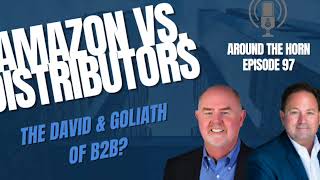
Kevin Brown and Tom Burton discuss inflation data, supply chain pressures at the Suez and Panama canals, and how distributors are competing with Amazon Business. They also cover digital transformation in manufacturing, generative AI choices for enterprises, and preview an upcoming 100th-episode panel with industry leaders.
Chapters
Welcome to around the Horn in Wholesale Distribution with Kevin Brown and Tom Burton. Sponsored each week by LeadSmart Technologies. Tom, Kevin and their guests review the news of the week and dive deep into the topics impacting manufacturers, wholesale distribution, independent sales agents, and the global wholesale supply chain. Whether It's M&A SaaS and cloud computing, B2B, E commerce, or supply chain issues, we peel back the onion with our guests into the topics that impact your business the most.
So how are you? You're good, my friend.
Good. Let's roll. We got a lot to cover today.
Yeah, it's been a busy week too. So let's kind of get ready, dive in. We'll chat about a few things in a moment. We got some exciting news. But before we dive in, like we always do, kind of, I think we should cover our, as I call it, housekeeping. So I think the first thing we should do is introduce you. Tom Burton and I'm Kevin Brown. We're the co founders of Lead Smart Technologies. We get together every Friday morning unless somebody is deathly ill. I think we missed one when I was in the hospital when we first got started and otherwise we're pretty good about it. But airplanes, vacations or hospitals is about the only time we missed. And we get together and chat about the news of the week. And how we do that is we review through a newsletter that we publish every Friday morning at, oh, dark 30 Pacific time. Tom and I both live live in Southern California and that newsletter is called around the Horn in Wholesale Distribution and Manufacturing. It goes out to about 10,000 people around the world. If you don't get that and you would like to two simple ways to do that. Just pop us a note@helloadsmartech.com and we will get that out to you. You can also go to the website that we have for the podcast and live show that we do each week. It's called www.aroundthehornpod.com. you can see past episodes there. You can see some handsome pictures of Tom and I and sign up for the newsletter there as well. But what we do is we kind of try and take a look at the news of the week around mostly North America, but some international news as well. We look at things like supply chain and the economy and manufacturing, mergers and acquisitions, all different types of topics. AI technology in general. And what we try and do is we bring all that data together, we put it in the newsletter, we put it out, and then we get together here on Friday mornings and we talk about it. Oftentimes we have guests this week we don't. We're going to talk about some upcoming guests in a few moments, but we are very happy that you're with us. We thank those of you that have made a comment so far to do that. We're live this morning. It is Friday, June 28th at 9:04 Pacific Time. Right now, we're live on LinkedIn Live, YouTube Live and Facebook Live. Later today, our editor and producer, John Taylor will have taken this all together with his team and out to Apple and Spotify and Odyssey and Amazon and all the different podcast formats where you can listen in that format as well. But if you're listening recorded, you won't see the newsletter that we'll have up on the screen. So, Tom, what did I miss? Other than thanking our sponsor, which is a company you and I work for, what did I miss besides that?
I think that's good. I think we've got it.
Good. Well, we should reference the fact that we come to you each week because the company that Tom and I both work for, Lead Smart Technologies, which is the developer of the channel cloud, customer intelligence and AI enabled CRM platform that brings together solutions that most distributors and manufacturers have never been able to see before, insights into their customers, their sales teams and their business. Lead Smart sponsors our show each week. So if there's something that our team can do to be of support to you and your digital transformation, please reach out to us. And let's get ready to go to the news. But before we do that, Tom, let's talk about our news. We're coming up on.
We have some. We have some news before the news, so let me.
Well, let's tell. Let's tell them what, what's happening before you pop that up. Right.
All right, go ahead.
Yeah. Today is number 97. So 97 times we've gotten together and talked about the news and put the newsletter out. Next Friday is one time we won't be here. We will not be here. So. That's right. It's a holiday. Well, let me phrase that. The day after the holiday. So we won't be here because we don't think any of you would come. In all frankness, Tom and I probably won't.
They come anyway, so it's okay. What the hell.
That's right. But what that says is we're just a few weeks away from our hundredth episode. And, you know, Tom, you made a great comment. We were talking about this, you know, celebration, and John, our producer and editor was, you know, talking about the importance of the celebration. That, you know, goes with that. It's, I think they say something like 90% of B2B podcasts never get past 10 episodes. So 100 is a big deal. But you know, you made such a great comment because it just doesn't matter that Tom and Kevin come every week. It's that the hundreds and hundreds of people, you know, around the world that come every week, they come. So the celebration for the upcoming hundred episode is not really about Tom and Kevin. It's about a thank you for the audience. So our thank you for you coming is we. And I'm going to tell you this, I was surprisingly surprised and grateful. Grateful is probably the best word for how quickly we got yeses from a phenomenal group of guests. So Tom, you want to pop that up and we can talk about who's going to join us on July 26th at 9?
I don't. I would doubt that this group of people has ever been in the same.
Not a chance.
At the same time. Live or in or virtual or at any point in time.
Right, well, so let's, I think you are, could not be more correct. We had early this year in January to talk about 20, prognosticate a little bit about 2024. We had Mike Marks, Ian Heller and Dirk Beveridge. And if I remember correctly, none of them had ever been together all at once. They had two of them at a time, maybe different places at an event. But we've got a great group. So we've got Ian Heller joining us. I'm just going to kind of go left to right there. Ian Heller with Distribution Strategy Group. You know, phenomenal speaker, writer, keynotes, fantastic keynotes from, from Ian. Distribution Strategy Group does some phenomenal research. We've got Dirk Beveridge from Unleash wd. Dirk's on the road right now. He's. I think he said he was going to be listening in today. In fact, Dirk, if you are and you're not driving or filming something, let us know where you're at. But Dirk's out on his We Supply America tour right now, which is just phenomenal. Stopping at family owned and independently owned and employee owned distributors around North America. We've got Mike Marks. If you've not heard Mike speak before, Mike will add the color for us that day. I think when he was with, I think one of his questions for you when he was with us in January was how much LSD did you do in high school? I think that was one of his references. So Mike will add some color and cheer for the day we we got Marty McLaughlin who's with the Mosaic Partners. And Marty does work with wholesale distribution and manufacturing in marketing and customer focus and understanding customers at a deeper and closer level. Marty's the former chief marketing officer of Affiliated Distributors. Mike Hockett is joining us. Mike's been on the show twice before. Mike is a managing editor, senior managing editor I think it is with Modern Distribution Management. Great guy. He's a lover of Ohio State. I'm sorry, wait, Mike's Wisconsin guy. So Mike will be with us and then we've got Dan Schuberth with National association of Wholesalers. Dan's the chief revenue officer and then our dear friend with us almost every week, graciously, Paul Kennedy. Paul's president and CEO of Dakota Supply Group. Employee owned H Vac Electrical Plumbing and so forth distributor that is just growing leaps and bounds. But Paul is also a board member at Affiliated Distributors and I believe now chairman of the board of NAD NAED National Association Electrical Distributors just recently installed there. So I'm kind of proud of ourselves to get this group.
No, I think it's amazing and you know there's a lot of shy people here so I think we're going to have to have fill in a lot of dead air because I don't know we, you know. But great point. Yeah, no it should be. And what I think is also interesting is it's an interesting cross section. Right. You have for example Paul from the industry, you have Dan from you know naw and the associations and Ian and Dirk and you know definitely a different cross section of a lot of different spot on different players here that are going to bring different perspective. And just before we wrap up because I know we need to get into the news here is the format is going to be similar to what we did in January where we're, we're not going to go through the newsletter but we're going to pick some, some of the same topics that we talked about in January and do a bit of a mid year review on where things are at related and get everyone's feedback on that. So this is definitely a not miss and like I said I, I don't know that I doubt that these people have ever been together and may not ever get together.
Well we got a one, we got them once. Let's hope we perform well enough that we can get it back again another time. Anyway, just back to you know that point and I'm really glad you made it in conversation. We were just having the two of us recently is I just can't I'm surprised. I'm grateful, I'm honored. I don't know what else I'd put that. People have been willing to come around, you know, every week for the last almost 100 weeks now and join us for this discussion and participate. And, you know, when I get out on the road and, you know, I'll be at a, at an industry event and we might have a booth there. I might just be attending. And every time I'm there, I meet people that I've never heard of their company and I've never heard of them that says, hey, I listen every week and thanks for doing this. And again, we wouldn't be able to do this if people didn't come every week. So it's about, it's about the group. It is going to be a little bit of an aloha theme there. There's mai tai's in discussion. There's all kinds of fun stuff. So it's not one to miss. So the 26. Hope you can be with us. Good.
All right.
You want to talk about the news?
Yeah, this is a little less. The less exciting news here.
Yeah, I think that's. Everything else is kind of secondary. So, you know, before we, as we, you know, talk about, we're looking at our newsletter that we put out every week here. We have that split up into sections. We talk about the economy and supply chain, manufacturing and distribution, AI and technology. So we got the different sections first we talk about every week is the economy and supply chain. You know, before we even talk about the news article that's there from an AP news piece about an adjustment revising the. Some economic data that had already come out. The Personal Consumption Expenditures Index came out this morning. Do you have any thoughts on what came out of that, based upon some of our, some of our wagers that we have maybe.
Well, it's about the same or not the same as expected, right? It was what was expected. What everybody thought inflation was still sticking around at 2.6%, I believe is what they, what they said.
2.6 versus what the. Down from 2.8.
Yeah, but yes, and they were again, this is quote, unquote, consensus or whatever from the thing there, the market. I haven't looked recently, but the market seemed to be reactive, reacting more or less positively from it. And you know, hey, I'm like I told you on the last week or the, you know, the. I'm obviously still sticking with my one cut, but it's. I still think there's a lot of data and a Lot of ups, ups and downs one way or the other that we're going to see between now and with now and the end of the year. So this doesn't say much one way or the other.
No, I think what's so interesting is, and I think it's just laughable, I guess. Here we are, you know, June 28, couple of days left in the first half of the year, which to me is just astounding in itself, but a couple of days left at the, in the first half of the year, and we're really no different than we were in January. This up and down. Right. What was it, you know, three, two weeks ago? Three weeks ago. Powell says, you know, yeah, we're probably going to do one cut. Everything should have said, oh, you know, Tom, Tom, those of you that don't know Tom and I have a bet. I think there's two or more cuts coming. And Tom said there's only going to be one. And Tom and I tend to either steak a few times a year together regardless. But we've got a little gentleman's wager going on with that to start with and, and called you a gentleman, by the way, just in case you catch that.
I feel impressed.
Okay, there's my compliment. And, but it just, it made me laugh looking at all this, is that we're just kind of still, even though, you know, Powell says they're thinking about likely just one, we've got these things that there's plenty of economists saying, you know, two. The one thing that did hit me this week, I, I went was having lunch the other day and I was watching CNBC and they had Mohammed El Arian on there and he's the former CEO of Pimco. And then when he left Pimco, he went to Allianz and was their chief economist there. And now he's, I think, the president of Queens College Business School at an economic school at Cambridge University and at Harvard Business School. He's a professor as well. And he was talking this week about, you know, the inflation numbers and so forth. And I thought it was just interesting, you know, nobody's going to make a change on one person's thoughts, but I just loved it. He just said he thinks the inflation goal should be 3%. Right. And maybe this 2% thing isn't the right number based upon a lot of the other economic conditions. I don't know enough to be smart enough to say it, but I've been just been saying for a year now that maybe we need to rethink the Focus. And so I think we get, we hold down around that two and a half level they've got. They're going to have, they're, we've talked about it over and over again. Right. They're going to have to do something based upon emotion, you know, of people's expectation. And then could there be another cut? Well, let's see if they have to force getting to two or if two, two and a half is enough. So we'll see.
Well, I think if you. We'll just kind of touch on this next article here. Right. About the jobless claims.
Yep.
This is how I believe it will play out. I don't think we're going to see a radical record here. Okay. Well, it's, it is, it's going. So the. I, I don't think we're going to see a lot of change from the two and a half, 2.6%, somewhere anywhere between 2.5 and 3. I don't think we're going to see that 2% anytime soon. What I do think, though is we are seeing other evidence of the economy slowing down in different places, whether it's jobs and other places, which I think will be the catalyst for a lot of cuts next year. Much more, you know, than one or two. I still think that they're going to wade their way into it with one cut this year and then next year accelerated as it goes forward. But as far as if the inflation. I don't know. I just, I don't. If you just look at all of the different numbers and look at the next article that we're going to talk about here. Right. With supply chain shortages and. Right. Leading to higher prices and other dynamics and all those things that are there. I just, I don't see us hitting that 2% anytime soon. And you know, obviously we have an election and other things that we don't know, you know, administratively, what's going to happen and so forth. So I think it's going to be other things outside of that core number that are going to drive the rate cuts as we go forward. That's what I'm trying to say in so many words.
So it'll be a balancing of a lot of factors is kind of your thinking. So let me, let me ask you a question to go with that. We get one in September. What's the other option is December, Right.
November and December. I think there's three.
So assuming nothing in July, we've got three more options. Let's say to your focus is that there's only one how many we see next year after we stay around two and a half percent or a little bit lower. What do you see out of that?
I'm not willing to bet on this yet.
So not asking for it.
I think we'll see four next year. Three. Three to three to four. It's hard to say, but if I had to, if I had to pick, I would say four.
So do you balance that out in your mind that if we have two this year that there's three next year?
No, I balance it out that there'll be one this year and four next year.
But if we had two this year.
Yeah. Then I think there would be three next year. That is correct.
Okay. So in the next 18 months, you're thinking five.
That's right. That's what I'm thinking.
And are they all quarter points?
Yes.
Okay.
Unless something crazy happens, which.
Like what?
I don't know, a war.
Over again.
You know, some macroeconomic event, something like that. Some major, major, major event.
Covid, you know, that kind of last question on this. I, I was with a dear friend last night. My wife and I were, that lost his mother. And so we were at their house till one o' clock this morning. And, and so I didn't, don't really know anything about the debates other than, you know, some headlines that I saw. Do you think, do you think at this point the election is going to matter with rate cuts?
No.
My gut, my gut tells me the same thing. It's, everybody's kind of got that whole concept is kind of baked in to what's happening probably at this stage.
Good.
All right. Well, sorry for all the pointed questions.
Good questions.
So the next article we talk about in our economy and supply chain section is the Wall Street Journal article, supply Chain shortages are Back leading to possible shortages and higher prices. Part of that article just kind of describes us like the pressures there coming with doubling and even higher of doubling of containers rates as we're getting ready to come into the busiest time of the year in the ports. We haven't had any new news yet about the east coast and Gulf coast risk of a strike with the labor contract, but that I think is set to expire in September. So we'll probably be hearing more about that shortly. But there is now this, this article talks about the risk of being back at pandemic level shortages. Kind of scary.
Yeah. Well, and talk about inflation drivers. Right? That's going to be inflation drivers because price could come up and, and so forth. So, yeah, hopefully this, some of this stuff gets Sorted out and the gridlock gets at least ungrid. Ungrid locked.
A little bit ungrid. Locked.
Ungrid locked. Yeah.
Yep. Well, and I mean this is what's going on and a lot of this is obviously tied and we, we've talked about this a lot tied to Suez Canal. The Houthi rebels are right with their drone attacks and so forth. Redeemed. That's even. There's a great segment if you didn't see it, about all of that on 60 Minutes last Sunday. That might be worth, if you're interested in these things, going back and looking at that, they had one of their, their reporters or correspondents there with the US Navy in the Suez Canals. Yeah. Suez Canal issues, you've got to slow down because of water depth in the Panama Canal. And those are, things are putting a lot of pressure in general. Fortunately, you know, while it was much less significant than these other two issues, the port of Baltimore with the, the, the tanker crash into the bridge there, that's now open and, and they're moving ships through there. In fact, the ship that was in the accident has actually moved on now. So.
Oh wow. Okay. Yeah.
So anyways, good stuff. Let's, let's jump ahead and talk a little bit about manufacturing and distribution if we can. There's a good article here that I was appreciative of about from Supply Chain Exchange. And it's less that we need to unpack all the depths of this article about. It was really a survey about manufacturers setting five year plans for digital transformation. And a lot of this is talking about using digitalization, digital twins, AI, different tools within their manufacturing processes. Any key takeaways for you out of that?
You know, one of the, the most interesting thing I saw in that article is at the very bottom actually and it just was is how much emphasis I think they said 73% of companies, if I'm not mistaken, are doing reskilling and retraining with their employees to make them more technically savvy and or have more or just more technical capabilities. Right. Technical skills in what they're doing. Which was very, very good. You know, that was very positive for me to hear because we see this still a lot. Right. Even in the sales and front office side of things is that there is a lot of times some resistance to technology and a resistance either from a skill perspective or just a change perspective. I just don't know how businesses are going to function without having employees that are trained and skilled in the use of, of technology that's there so.
Well, no matter what side of the house you're on either.
Right. That's what I mean.
Right, yeah.
Because if you're on the back side of the house, what did somebody call it this week?
The concrete and the concrete versus the carpet.
Right, right. If you're on the concrete side of things, you've got a lot of manufacturing and, and technical things happening there and more and more on the front. On the carpet side of the house. Obviously there's more and more technology that's going to be incorporated into the business. So anyway, that was a positive. That was very positive to hear.
I think there was other. There's a telling statistics that they had in here for me and I'd be interested in some of the. We've got quite a few distributors and then we've got some technology folks with us that I can see right now that just from our earlier comments that are working with and talking to distributors every day and manufacturers both. But there's a statistic here that really caught my attention of this article. It said that 86% of manufacturing leaders agree they're struggling to keep up with the pace of technological innovation and to securely integrate devices, sensors and technology throughout their facilities. So that's on the manufacturing side where we're probably talking a lot more about some hardware and so forth. But I think it really ties in well. Tom, I'm interested in your thoughts and anybody's comments. But I think it really ties in well when we think about wholesale distributors as well. We were together on a call yesterday with another technology company about a project and we were just talking with them about CRM related to their experience and they said that 70 plus percent of people that they talk to in wholesale distribution have never had a CRM in their business. Well, now we're talking about digital twins to help drive sales models and AI tools to help in the marketing departments. And we've got companies that were already way behind a curve and now we're exponentially adding technological opportunities every day. Right. And the digital transformation pieces, you know, I think it'd be great to have a survey similar to this with distributors to see where they're at. Because, you know, the people that, that we talk to consistently day in and day out, they're not just struggling with the idea of trying to keep up, they're struggling with do we have the right people much to your point about manufacturers saying the same thing?
Yeah, I just. I do think though that the fact that even if you have. Even if you have people that may not have technology skills, building that into your training, building that into your, you know, reskilling, all of that I think is very important and it's 100%. And obviously if somebody comes in and they have more of a technology background or a technology skill that might make it easier. But there's still a lot of things that are specific to a company that you have to incorporate in that. And I don't know that that's historically been part of the, of a sales training for a distributor or for even a manufacturer.
Well, and we're going to, in our, in our people and leadership section later, we're going to talk quite a bit about the skill sets and so forth of employees. So we've got a couple of great articles. So if you're with us, don't go away. We're going to talk about that shortly. But we can hit as we kind of move through our manufacturing distribution segment here, there's just a, there's an article that is worth a quick look there. We won't spend much time talking about it today, but it's valuable. You know, national association of Wholesalers we've got as we mentioned, Dan Schubert, their chief revenue officers coming with us on the 100th episode show. Eric Copland, their CEO was a guest last month with us here and they do some wonderful work for their members. But they just part of what they do is they file briefs and get involved in the political side of things. But there was the SEC has posted some requirements for publicly traded companies about their climate risk that they have and expenditures that they may have and costs that those might have but it pushes down through their supply chain as well. And you know, part of what the amicus brief that that NAW was putting out there was that just the idea of the burden that that would put on people downstream from those publicly traded, mostly manufacturers would be overly burdens and so nice to see. Naw, you know they've got the back of wholesale distribution and in staying involved on the, on that front of things and defending the little guy.
Yep.
So good. All right, well we're going to jump into our E commerce and marketing segment next article. There is From Social Media Today, 29 tips to improve your LinkedIn. Tom, you want to kind of start on that. You, you've got some typically some strong thoughts about LinkedIn use.
Yeah. And you know I noticed Brandon Lee is on as well is here earlier.
And he might be active there.
He is my go to expert for LinkedIn. He and his company fist bump. So granted, jump in. But with this article in fact, I'll bring up the. This is another infograph that we. Similar to what we had last week, which I thought was pretty good in terms of laying out some of the best use cases and situations with LinkedIn that are here. I don't want to go through all of these, but you know, obviously, right. The show is on LinkedIn. You do a lot on LinkedIn. I don't do as much posting on LinkedIn as you or certainly Brandon or some others.
Do you turned into a voyeur more recently?
Yeah, but, but I, it's interesting. I got an email yesterday from somebody who I haven't talked to in a long time and they're like, hey, I'm really enjoying seeing you on your podcasts on, on LinkedIn. So you know, these events and stuff show up there regardless of the, of the posting part. So I, you know, the thing that I take away and that what they really take away from here is how do you use LinkedIn to kind of rise above the noise a bit and build relationships and, and get people to know you and, and trust you, even if you haven't met. And I thought they had some really, really good points in here about how to optimize your profile and create content and networking and, and all of that kind of stuff there along the way.
I think one of the important things they, they do with this is right, they, they look at it both from a business standpoint and a personal standpoint. Right. So talking about, you know, there's four questions here to get started. You have those up now. Have you defined your business Persona? Are you connected with industry leaders, potential clients? Is your company page optimized for engagement and have you established content specific calendar to LinkedIn? And I think it's a little bit to your point. Right. Well, this is great. You know Will, I was hoping Will would. Will Quinn with infor.
Would.
Would chime in here. Will. Will is. Was an impressive character here with LinkedIn. Will puts it out there, man. He's in, he's in the. The. I think he was in England last week and, and he talks about show your wholesale versus only your business stuff. And, and, and it's interesting. I love Brandon's comments on that because I know Brandon has strong thoughts about that. He does some good stuff about being out, you know, connecting his personal life and his business life. I'm in the camp still and none of these thoughts are wrong in my view. I'm still, you know, I'm starting to not and nothing from the people that are with us today. That have commented in particular Will and Brandon. But if I want to know where you're having lunch, which I'm starting to see more and more on on LinkedIn, I'll follow you or connect with you on Facebook. I am interested when someone puts a post out that's connecting their business travel with something cool they got to do personally. You know, I got a note this morning, Dan Schuberth with NAW that's going to be joining us for our hundredth anniversary show or 100th episode show that he and his wife are headed out to Germany on vacation. Well, Dan will show a few things from that typically but he typically ties it into a little bit of a business discussion. So I think we're sometimes seeing people doing a little more personal stuff. But my view is when you tie that to what it means in business versus personal, I think Brandon is probably as, probably as good as anybody out there. Brandon Lee is with Fist Bump and Brandon does a lot of work with companies and individuals on their, their profiles and their, their LinkedIn posting is a great example of that. But this is I, I love the article and it's, it's well worth a look. Talking about profile optimization and all the things that you can do and it talks in there quite a bit about the thing that very few people are still doing, which is video.
Yeah, well LinkedIn has historically actually not given a lot of credit to video. Right. It did not allow a reach and it's starting to improve. So video is starting to get better traction on LinkedIn. I think it's the by far the best medium or one of the best mediums but it had not got a lot of reach. And so the LinkedIn algorithm is favoring video a bit more than it used to.
The one thing I'll share that I think this article missed, this infograph missed was take the, the chatgpt emojis out of your AI produced content.
I would agree with that.
It's it. This is, I was just, I was talking to, I was on a call the other day with, with Lindsay from 3aspens Media and she's content development agency. Great, great people over there. Great. She's a great person, she's got a great team and we were kind of joking and talking about the amount of people, you know and I, I'd say the vast majority of my network on LinkedIn of the three or four thousand people are mostly watching versus posting. But Lindsay and I were talking about the, the amount of content that you're seeing from people who historically haven't Posted most the now we're posting long form content with, you know, their, their emojis that are going with it and so forth. In my mind I'm like one, I don't have the time to read all of that and two, it screams AI.
If I see a post with a lot of emojis, it's almost like move on. Right. And it's okay to have. I think some emojis actually are quite decent, but some of them are just way overdone from the.
Well, I mean some check marks for your bullet points or something like that are one thing, but when you get and you can sometimes tell and chat, GPT will throw in lots of different ones and, and listen, I'm not for one moment saying not to use ChatGPT to help with writer block or white page syndrome or whatever you want to call it, but I think we are starting to see a lot of content there. Does not change the fact that the LinkedIn activity that article talks about year over year just keeps growing and growing. And I think I would go out on a limb and say I can't think of a more valuable tool to global business that has in my career nothing's been more valuable. Single item's been more valuable than LinkedIn.
Yeah. And just to wrap that up, it's look, there is more quantity than there's ever been out there, but the quality has gone down. So I think again, the way to rise above the noise is you're going to have to continue to provide higher quality video. But just whether you're doing personal or business, the quality and the content is what's going to cause you to potentially get above the noise that are there. And again, the article had some good tips on that. It's good.
Yep. Let's jump ahead. All right. B2B marketing turns to AI. An era of less budgets are down in marketing departments, fewer people, fewer opportunities, and folks are starting to leverage kind of ties even into what we've just been talking about. But B2B marketing leaders, CMOs are leveraging AI more and more. Any takeaways from that?
You know, the article really focused more on the fact that marketing organizations are getting their budget cut.
Yep.
Right. That was the percentage of revenue the.
Target that they were using. Right.
Would it. Which is true. I mean, marketing departments have had a lot of budget cuts depending upon your industry and so forth. It didn't really talk a lot about how to actually use AI to make up for those budget cuts. The answer isn't creating more AI LinkedIn posts with emojis in them. I would have liked to have seen a bit more in that article about. Well, what do you do. But I do agree with what they're saying is that I do think there's. As we've talked about over and over, there's a lot of ways that AI can help really create more efficiency in not just marketing, but marketing and sales and all aspects of that part of the business.
Good. Yeah. It is interesting and it surprised me kind of that because marketing done right can just be. We've talked a lot about some of the views we share some of. And I feel very strongly about having a revenue department versus having a sales and or marketing department so that they're. They're both fully aligned. So it was interesting to me just to kind of see some of the budget cuts that you know, that are there. And talking about, you know, just one of the. This was a Gartner study as well, just to be clear on that. It says average marketing budgets have fallen to 7.7% of overall company revenue, down from last year of 9.1%. So they just talked about chief marketing officers are living in an era of less. But AI done right. You can accomplish a whole lot there. Right.
Yeah. And I think you could argue that a lot of marketing budgets were pretty bloated. Yeah. In the past as well.
Reasonable point for sure.
But yeah, I think there's a lot that can be done. Didn't get into a lot of specifics, but we've talked about some of this before, so. Good.
All right, well, you want to talk a little bit about staying in our marketing e commerce thing. An article here From Digital Commerce 360 about some announcements from Amazon Business earlier this week. Amazon Business is putting quite a few new tools out there to woo, as they say, large companies. I thought this was pretty intriguing article. There's one thing, and I'm going to share something philosophical here in a moment. I guess that's not the exact term but you know, Amazon's now at. They're talking about 35 billion in annualized gross sales and more than 6 million customers buying through Amazon Business worldwide. This was key to me. It says 96 of the Fortune 100 companies are actively using Amazon business. So before I dive into my. Maybe a little bit of a soapbox on this, do you have any. Did you have any takeaways on this?
No, not really. You know, looks like they're certainly making this as enterprise ready as they possibly can with all of the quoting tools and all of that kind of stuff. So that it, I don't know how it all integrates in with people's, you know, ERP systems and.
Right. All of that.
I'm sure there's APIs and things like that, but they're obviously getting serious with just how do they woo more of those enterprise buyers and, and, and larger buyers.
Yeah. So they've got all these new features.
Right.
They've got an international business app that's available for them. They've got, you know, custom quoting tools. Do you want to go ahead and you're laughing. Might as well share why I just.
Thought this was funny. Will says Tom's going to get us off his LinkedIn line. No emojis, no dancing. No, I'm not. No emojis, Will. I'm just some emojis. The dancing part. Yeah, you're right about that.
Let's stop with it. You love dancing. Come on.
Anyway.
Yeah, very good, Will. I take offense to that, by the way. Just to be clear, the. Listen, so cross domain identity, managing management for companies, budget management. And this is a big issue for large organizations because people have the ability to do a great job of segmenting what budgets are available, what approvals they have. And there's. So there's a couple of takeaways for me on this. And the first one is it just, it makes it much more important for wholesale distributors, large or small, to be upping their game on their e commerce opportunities that they're in front of them and their resources that they're putting towards it and budgets. The second thing is there's 10 of two.
Hey, I have a question for you before you move on there.
Yeah.
So if Amazon is investing big time in e commerce, do you think that it's better served for a distributor to spend a lot of time trying to compete with Amazon on the e commerce front or are they better served providing the value add that Amazon cannot do and maybe having, you know, some decent E commerce but really investing on the side of providing the value added services and other things that you'll never get through Amazon in customer experience.
Yeah.
Knowing that we can't do everything and be everywhere, you know, spend, spend on everything.
So I think there's a. That's great question. I think there's a third leg of that stool, Tom. Okay. And the third leg of the stool is embracing Amazon versus just competing with them.
Okay.
Because. Right. So if you take a step back and that's. Right. And I'm glad you made that comment because I was describing. There's two camps on this and it's, it's both at the manufacturer level and at the distributor. The manufacturer level. There's two camps that says one with manufacturers is there's no way I'm selling at Amazon because I sell through distribution only and I don't want to upset my distributor base.
Right.
Well, I would suggest that is. And we've had, you know, Brian Beck on with us with Inceba, that's, you know, one of the foremost authorities on helping manufacturers with an Amazon presence. I think right now, where you have to be as a manufacturer is to say, look, Amazon business is a distributor. At the end of the day, they are a distributor and they are another channel to market for me. Doesn't mean for one second I'm going to reduce my support. I'm going to do anything to serve them better. They are a channel of distribution that I need to go through. But that said, there are still a lot of manufacturers who are stuck in the. And I'll say it's very myopic thinking, personal, strong, strong personal opinion, very myopic to just not look at this and say, hey, at the end of the day, I need to be with these folks versus I'm not going to do that. And what we've seen is, and I've commented on this on our broadcast before, is Amazon made it very clear when Amazon, it started out as Amazon Supply, the Amazon business, when it became available, they were very clear they were going after at the time it was only, I think, 3 billion of online sales that Granger was doing. And they said, we can go do that because, you know, as I mentioned this to you before, I had dinner one time in San Diego with an Amazon executive and we were talking and he said, you know, if it's, how do you put it? He said, if it's legal, reasonably moral and reasonably ethical and it can go in a box, we'll sell it, right? Well, they're going to be in these markets. So I think to your point, right, there's two camps and there's a third leg of this stool on the distributor side, there's also two camps, not just on the manufacturer side, on the distributor side. The two camps are, one is I'm going to have a good online presence myself and I'm going to have my own store in the Amazon marketplace where I can be taking advantage of all of the things that they can do, right? That takes. It helps me do multiple things. If I choose, I can participate further in the marketplace and have unlimited aisles because I could sell through other parties, right? Or I could just sell what I stock and I ship. But now borders, state borders and regional borders are cut because I get my bigger reach. But there's a whole nother group of thinking and I we were at the, you were with me at the Net plus Alliance event last fall and there was a great segment on E commerce and you had two distributors that were on a panel of about five people completely opposite opinions. One of them is anti Amazon, I'm going to do my thing. And another one is I do my thing and I embrace Amazon right now. I'm going to go back and I'm sorry for the rant here. I'll be done in a second. I think the answer is a three legged stool and I challenge me on this. Anybody that's out there that disagrees, three legged stool. One is I've got a very strong online presence in my own E commerce and I'm using, you know, at Lead Smart we're partnered with Optimizely that can give you these deep insights into customer journeys through the whole E commerce experience. And we're using great e commerce experiences for my customers. Secondly, having a presence not just at Amazon's supply or Amazon business, but other B2B marketplaces, having my own presence there and going back to doing Tom, what you were describing that says I am just going to crank up the value added services. You know that you're never going to get an Amazon person that's going to come out and calibrate gas detection equipment or do a cutting tool evaluation. The reason I think that this is again I'm pontificating or soapboxing here for a moment. I'm almost done. Is the reason I think that's critical and I think this might surprise some people is Amazon could buy anybody in wholesale distribution tomorrow. Tomorrow and have 1,000ft on the street adding those value added services that you brought up earlier. Right. So I think the three legged stool is my own E commerce solution. I'm participating in marketplaces and I'm focused on the value add. And then even if all of a sudden Amazon comes and buys, you know, a national distributor and has 1500 salespeople as well, I'm leveraged. So anyways, stepping off the soapbox.
No, I don't disagree with the three legs of stool and I'm going to hit Bob's comments here about this as well. Right. He says works best if you have product lens and multiple configuration options that give the customer a sense of choice. If you sell on dimensional products, probably best to do it outside of Amazon. I think what you have to do, per Bob's comment, is evaluate obviously your business related to those three stools and say, where do I get the maximum? Do I put more weight on stool one or leg one or leg two or leg three? But I do agree that you probably have to be thinking about all three of them.
You've got to evaluate to your point. I think that is a good point from a standpoint of evaluating. But I think you have to evaluate risks first. Or let me rephrase that. Not first. Equal weight to opportunity and risk.
Yeah. And you have to, well, you always have to balance that. Right. But I think this arbitrary. Yes or no. I think that's probably not a healthy way to.
No. Or just, you know, sometimes you, you know, you've gotta, you've gotta hug the devil in these settings. Right. So. All right, that was my rant for the day, hopefully. But I just.
Yeah, I think you had some passion behind that. That was.
I think there's, I just, I think there's so. And there's distributors that are doing what I'm describing. I think where our struggle is, you know, to say I do E commerce because I put up a small web store or I can do, you know, quoting with my customers. That's a great start. But it, it's no different than as we talk about digital transformation. Tom, with technology tools is we got to have a road map and a plan and E commerce is something that you, I just think is just critical that you have a plan and your plan needs to be more than my trade association or buying group has a, you know, a one off solution that I can just plug in and then say I'm done.
Yep.
Yeah, it's a living, a living thing. So anyways, for time, let's kind of move on to our technology, cyber security and AI. We, we shared an article about humanoid robots and warehouses from IoT world today. I saw we want to put a little more energy into the next article that we've got. But I did see and I wish I would have saved it. I saw a great video and I just can't remember where. And I went to YouTube to try and find it. The. It was a human looking robot, much like in this picture and it was unloading a palette of what looked like it could have been bags of cement or bags of rice, but it was leaning over like a human and picking things up and moving them. And I just, I thought, man, when you can. That knows what order to go grab. And there's another bin system over here, certainly we're going to reduce the ergonomic injuries related. Ergonomic related injuries of humans.
Can I get one of those to help with my move? Yeah, a couple actually would be quite good.
Yes, I think that would. Especially if you do that with an autonomous truck.
Yeah, good.
All right, let's jump ahead. Tom, we've got this article from Tech Target about, and I'm going to preface this and then we're going to let you talk a lot on this topic. But I thought it was really interesting again from Tech Target about how to build an enterprise generative AI tech stack. Tech Stack. And should I even consider it? So I thought that was pretty, pretty impressive to, to kind of get, get us started on that. If you want to. I jump ahead. I've got one thing I want to add in as we talk about this, but I wanted to get your thoughts first.
Yeah, I read this article a couple times and I realized that, you know, this is, there's, there's way too much here to go deep on, on this, on this show today. It would be an interesting actually webinar to do to even just take that article and break down the components and what I found interesting about the article and, and I highly recommend people reading it, not necessarily because you want to build your own AI stack, but it helps you understand a bit about just what's going on under the hood with AI and things to be thinking about. You know, we've talked a lot about data, right. On the show here and the importance of data and companies giving more respect to their data. You start to understand when you look at some of the components that go into an AI system, why that data is so, so valuable because anybody can, as you'll see. You know, the technology stack, right, is going to be, is accessible and will continue to be accessible to anybody. But the data that you have, that you use to fuel that and leverage that is what's going to make you again rise above the noise in terms of the value that you're able to achieve out of your, your AI. I am going to say, I'll say one thing on this and we had a call earlier this week with, you know, some pretty phenomenal AI experts, right. And it was actually really, you know, one of the gentlemen had been in the field since which 2012 had some of the original patents on some of the early stage AI models. And we were talking about some of the things that we're working on and how we're doing it. And it was really validating to hear him go you're right on track. And one of the things that we talked a lot about is the importance of when you think about data. You have two types of data in your business. You have what's called structured data, which is think of anything in a spreadsheet or a database or whatever. And then you have unstructured data which think of all of your knowledge bases and sales processes and best practices and all of that, which is not structured data. And how you use those two together is really going to be the secret. And they talk a bit about that a little bit here in this article about how you can combine some of these data sources that are there. So anyway, yeah, I don't think we have the time unfortunately to go to a deep dive, but I think it's well worth reading, if nothing else, to get a little more context of what are some of the things happening here.
Well, I think there's something more important underneath this article that we, we haven't talked about with this yet. I think, you know, to your point, right, we had that great call earlier in the week. I think there's two paths that wholesale distributors and manufacturers have to, to identify and you know, as we talk about all the time, we're every day, all day on the phone with either existing lead smart technologies, customers that are using our channel cloud platform or potential customers. Very, very, very few organizations have the capability. And the four things that this article talked about was choosing the right LLM, right. Second was the usage costs and understanding that go along with that.
Right.
The average person out there doesn't. If we went out and asked, it doesn't matter if they're the technology leaders or the buyers of our channel cloud product. If they could explain what a token is, it'd be few and far between. Right. Which is how you pay for the use cost of using the large language model. And then the third point that they talked about was open source versus proprietary LLMs, right. And then it was domain specific versus horizontals were the four things that talked about. Those are so broad right now that I think where we're at and I think where it's very, very important for people to be thinking about is there's two paths to go. I'm going to go pioneer and be not even pioneer. I'm going to go be a scout for AI and go try and figure all this stuff out or I'm going to partner with a trusted technology partner that is, you know, I'll unabashedly say this, you know, from our standpoint, Elite Smart, a company like ours that says I want to partner with them because I trust their understanding of my business, the industry that I serve, and this technology. Because I don't have the capability within my organization to push pause and go figure out do I want open Source or proprietary LLMs to go try and build all this stuff or when I can have somebody on the back end doing these things for me.
I agree. I mean, even if you have the resources internally and we have some customers that do. Right. If you have the resources internally, I think it's very valuable right now to understand some different opinions or different viewpoints of what's going on. We have a little bit of a different. We have a little bit of a luxury in a sense that we get to see things and because we're working with multiple companies and if you're in one company, you only get to see what's going on in your company that's there. There's just so much to talk about this. I just, I'm, I'm, I'm muzzling myself to get into. We could end up in a whole different, a whole bunch of different places.
Let's. You just mentioned it. Right. We do webinars regularly. We do webinars for some of the trade associations of buying groups we're involved with. Let's, let's put one together. I think it would be a powerful discussion, Tom.
Yeah, no, I agree. I agree.
Jeff. Jeff says here, you know, great insight on data and AI. You know, everyone is running the same engine, AI models with different fuel. I think, you know, they're. What's one of the, that's one of these topics here is figuring out. Right. Which is my choice of LLM. That discussion you were talking about that we had, what was it, Wednesday? I think it was with some folks that have, you know, been in, in the AI world for as long as basically it's been around kind of. They were talking about using multiple LLMs, right. And the fact of not needing to go try and build your own or figure that out, because you can choose that. I'm using OpenAI for this and I'm using LLAMA for that, and I'm using Gemini for this and I'm using all these tools and we're going to start seeing more and more of those language models built and there's the potential you could be using multiple language models. And then to Jeff's point here, with different fuel or the data that comes from your organization.
Yeah, right. And the next generation of models.
Right.
Whether it's OpenAI or Gemini or whatever, what's happening. And this is all being limited to a large degree by the compute power that's out there right now. A lot of these models have been trained on just data, right? Here's what they're now going to. The next stage is training them on how to reason. So in other words, how if you have a math problem or you have a whatever, how do you train somebody to go through a reasoning process and context. Right, right, context and, but reasoning and take it through. That's, that's a different training aspect than just giving it some raw data that's there along the way, which takes different. So a lot of the reason I bring that up is when you start thinking about the models that make sense for your business, you need to look at not only now, but where some of these models are headed in the future. And does it make sense to try and do some of that on my own or try and you know, can I really realistically keep up along the way? So I agree, let's, let's take that article actually and maybe do a show or a special and work through that and get through the detail because I think it would be a very, very valuable.
Well, maybe we can get from some of the people that are with us today, maybe we can get some thumbs up on if that's a good idea or not. If they, they would agree with that. The last thing I'll mention with this is, and there's value out of that article in talking about this is, and you mentioned it a few minutes ago is things are changing so fast, right? We see technology companies that built neural networks before OpenAI was available with things that can just do powerful crazy things that can be done in a fraction of the time and the fraction of the budget. So one of the things that people have to be cautious of is, you know, if I'm going to try and go this alone, right, I'm going to be a, you know, go navigate the waters of this on my own. At what level am I stuck with decisions that I made that might not be the most advanced of what's available today?
Well, traditionally machine learning, which has been around prior to the generative AI that we have now, machine learning was being driven off of neural networks and non generative models. But now the generative models with some of this again we were talking about with the group on Wednesday, the generative models now are pretty much through code interpretation and other things, can emulate anything or will be able to emulate anything that was done through machine learning models. So I Do I do believe that the older machine learning neural network sort of models of the past are going to be obsoleted through generative AI and the power and the capabilities will be much broader and much more flexible and much easier to take advantage. You're not going to have to have 50 data scientists on your team to.
Be able to use and millions and millions of dollars.
Yes. Yes.
Right. Good. All right. Jump into our people in leadership segment. We'll move into this. There's two kind of cool articles that we talked about. One's from Reuters. It talks about the great resignation enters its third year as workers embrace AI and upskilling. And the other articles from the American Supply Association, ASA talks about the rise of the tool belt generation creating opportunities. Any thoughts on either of those from you?
Well, again, I'll start with the resignation one or the Great resignation. Same thing we were touching on earlier is workers are embracing.
Exactly right.
Embracing upskilling with technology. And you know, I just thought of this, we were talking about this related to distributors and manufacturers a little while ago. Right. Seems to me that could be a competitive advantage when you're recruiting.
Absolutely.
You know, not only hey look what I'm if you come work for me, you're going to get some of that upskilling and training on using technology that you can incorporate into your resume. Right. As you go forward. So you know that a big advantage. Yeah.
And that ties in. You know that the, the tool belt generation article from asa, I thought it was really interesting. It talks about, it's. They quoted a Wall Street Journal article that says how Gen Z is becoming the tool belt generation. They said vocational focused community college enrollment is its highest level since it's been ever been tracked. Now it says, well what does that really mean for manufacturers and distributors? It says, well that's great. Those people are being trained because they could be you go to a vocational school and really understand a trade. Right. And then decide hey I like business or I maybe want to go be a salesperson in those organizations. They talked about and I there's four points that they made in that article with asa. They talked about the brand that you needed to have of your organization to attract the right people. Right. They talk about to an online presence because Gen Z and then was a Gen X before that is looking at, I don't even know how all these gens go. But you know, they're looking at more as what is your online presence. Right. They're digital first people. Then they talk about getting, having relationships with local community colleges, trade schools, and even high schools to have people understand. Right. There's this big push that says go learn how to be a plumber. Well, there's another push that should say go learn how to be on the business side of things, of selling and helping and supporting the plumbers. Right. And then they talked about polishing candidates and messaging. Polish your messaging for your candidates. I think there's a fifth piece that goes with that that they didn't mention, which is having the right tech stack in your organization, which is what you alluded to, is what we look at sometimes with older workers. Right. Struggling to adopt technology. But we also have this discussion with our customers all the time is and every one of them that I bring this up to says yes, we've heard this is they're looking at millennials and Gen Z's that they're looking to hire that are asking them questions. We heard it yesterday that are asking them questions about what's CRM, what erp, what do you have, what's your E Commerce, what marketing automation tools do we have available to us? They're asking those questions. So I think it's the bar is rising and manufacturers and distributors need to up their game. And that's what ASA was talking about here.
Yep. No. And I think there's a good competitive advantage there on both sides. So.
Good. Well, last kind of article for us for today. We you know, we have our industry scuttlebutt section, some good information there about some acquisitions. We usually cover that there. But our Goodreads section this week talks about an article from Inc. Magazine about hybrid versus traditional and they're quoting here, having the largest study of our of return on investment hybrid versus traditional work. And a crucial insight. Any takeaways for you on that?
Well, the crucial insight was retention.
Exactly right.
And I think there's also and I don't know, I didn't see it in this article, but there was another study that came out just recently as well about who are the who who thrives, you know, what types of workers thrives from remote work and which ones don't.
Yep.
And generally it was found that the that the workers that are tend to be your more a team workers, your more elite workers tend to thrive really well at home or in remote, in a remote work situation. Whereas some of the people that may not be your best top tier workers tend to do much better in the office that are there. But what they were talking about in this article is that and I think if you, especially if you look at your top workers, your 18 workers having the ability as I think it is, even sitting there a couple days a week. It wasn't even full time remote work. The retention was, I don't have the figures in front of me, but significantly higher retention of those employees versus companies that had a 100% work at the office type of thing.
Well, I think there's, there's a handful of things that go with this. And it's funny, as our organization is growing, it's something I think about a lot more is people want some flexibility in their lives. Right. And you know, we've been batting around the idea of Mondays and Fridays work from you want, from where you want, you know, Tuesday, Wednesday, Thursday, be in the office. Because there's all kinds of other research that talks about there is value of, you know, as our friend Mike Marks likes to say, belly to belly, you know, there is value to that. What this big takeaway from the study talked about though was having flexibility is what people are looking for. And the flexibility that they can apply to that versus just, just remote hybrid that's super rigid or all internal or all on site is not real flexible. And that that's what people are looking for and they stay longer when they have flexibility. So we kind of almost make sense that you would see that. But I'm a big believer that people, and I think we're starting to see some research on this now that the full hybrid model, you know, there's very few companies that can get that right. You the. I mean, I have a friend that works for Buffer that has a couple thousand people around the world and no office anywhere and, but that's a company that has twice a year brings people from all over the world to an exotic location for team building and all kinds of stuff. And you know, trying to do that in the average organization doesn't work well.
Yeah, I think, I think there's, I think it's very difficult to take an existing larger company and try and put one or the other. But I do think that if you're a smaller company, much like we are other companies that are trying to grow and evolve, I think you can intelligently put into the DNA of what you're doing a more hybrid model and a model that makes a lot more sense. And I think you can build a culture around that. I think it's just very hard to switch, you know, turn the tanker right on a dime when you have these large companies that are there. But I do think that it can be done if you, if you kind of build bottom up and work from that level.
Well, I think one of the. This wasn't part of the article but I think one of the things really that really resonates with me is the idea of, you know, post pandemic, so many people stayed fully remote just because of cost savings. Right. And we're finding that that's not optimal. Right. The research and studies are saying that we saw more of that today. There's actually a Silicon Valley venture capital fund solely allocated to 100% in person workforces because that VC group raised a fund and it doesn't mean that there's just some guys decided that this is what we're going to invest. They went out and found limited partners to put in tens if not hundreds of millions of dollars into this fund that those groups of people said we believe that in person and or some level of hybrid is a better business model than fully remote. And I just don't think most companies could make fully remote work. But anyways, I'm not human resource expert nor am I an economist. I just am an old dude that has a lot of thoughts and opinions.
Has opinions. Right. All right, well, let's wrap things up today.
Good.
I want to bring up just one more time here. Please save the date. July 26, 10am or 10am 9am Pacific, 12pm Eastern Time. Have a LinkedIn event coming out here soon so you can get signed up for it. I want to get a lot of people here supporting this group because this is like you said, it was pretty amazing that they all were available and were all able to jump on at that time.
I'm so appreciative of this group and grateful to have a relationship with all of the people that are here because I will tell you, when we decided what we wanted to do and we decided the people that we were going to ask first, this was the group and I didn't get. Can I get back to you on Tuesday? I think in 24 hours I had all yeses and it wasn't. There was not one. Let me check. Everybody just said yes. So great group of people. We're. We're grateful and appreciative of them being with us. To your point, I think it's going to be a spirited discussion we're working on. I think we're going to have like four, maybe five topics. I think those topics are going to cross over a lot. John, our producer and editor is going to join us and try and be a. What do they call it? Ringmaster. Who oversees the circus? The ringmaster.
Yeah, yeah, yeah.
So I Think that'll be John's role that day. But it's going to be fun. Like, to your point, mark your calendars. July 26th, 9 o' clock Pacific, 12 o' clock Eastern. And I think this is going to be fun. So we'll go from there. We're going to do a little aloha theme on an Aloha Friday for our 100th episode. So that's good. So, Tom, in closing, good conversation today. Appreciate a lot of your insights. The steak is going to taste great in January when we get two cuts from the Fed. But again, we appreciate everybody being with us. We ask you one favor. If you enjoy what you see here, Whether you're on LinkedIn Live, YouTube Live, Facebook Live, or listen to the podcast, if you're on the podcast, tell your friends, hit the subscribe button. Most valuable thing you could do for us would be leave a review if you're on Amazon. I see that Will Quinn says, imagine that, all group, that whole group dancing. In fact, I may, I may work that out with them in advance. Good point, Will.
Yeah, it'd be a disco. It'd be a regular disco.
It'd be Kevin and Kevin and his in his seven dancing, dancing partners behind us just to drive you crazy. But my point was, if you like what you hear each week and you're with us regularly, share it with your friends. Follow Lead Smart Technologies on LinkedIn. You'll see all the updates. Subscribe to the YouTube channel that we have, which means you'll get updates and notifications from YouTube or again, if you're listening on the podcast, not only subscribe on Spotify or Apple or wherever you're at, but leave a review that gets us out to other people. That'll help us continue to get great guests and bring good content. And again, we thank our company that Tom and I work for, Lead Smart Technologies for their sponsorship. And Tom, I thank you for your friendship and the hard work that we do together. Anything exciting for the weekend other than packing boxes?
More packing boxes. And just want to remind everybody we will not be here next week on the 5th. So the next one is on the 12th. So, yes, everyone has a good holiday week coming up.
My feet intend to be in the sand on the fifth, so that will be good. All right, everybody, thank you for being with us. We appreciate you all. Be kind, be safe and do good things.
Have a good weekend.
We hope you enjoyed today's episode and our guests. Each week we try our best to dig into the topics that are impacting your business. So please reach out to us and let us know how you think we can make the show better, or topics you'd like for us to tackle or talk about more often, and even guests you'd like to see join us. We're looking forward to bringing you next week's session and hope that until then you stay safe, stay focused, and do great things. If you haven't already, please subscribe to the podcast and leave a review to help others in wholesale distribution get access to the conversation. And finally, please check out our sponsor, Leadsmart Technologies and their manufacturing and wholesale distribution Industry CRM customer intelligence and channel collaboration platform. That's Leadsmart technologies@lead smart tech.com.
More from Tom



What does AI actually mean for a wholesale distributor #WholesaleDistribution


If your systems don’t talk to each other, your AI won’t either #AITransformation




This is why one AI agent isn’t enough for high-stakes decisions #WholesaleDistribution

