The Economy, The Metaverse, and AI In Distribution
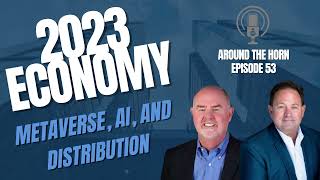
This is a recorded episode of 'Around the Horn in Wholesale Distribution' (YouTube/podcast) hosted by Kevin Brown and Tom Burton (Lead Smart Technologies sponsors). The ~Aug 11, 2023 episode covers: current economic signals for manufacturers/distributors (hiring difficulties, NAM indicators), regulatory risk for marketplaces (Amazon meeting with the FTC / antitrust concerns), industrial metaverse applications (digital twins, VR/AR, edge computing, simulations), and practical AI adoption in distribution (chatbots, Microsoft Office ‘copilots’, AI for sales enablement and customer service). Hosts emphasize human+AI teaming, leadership and cultural change, and tactical advice for individual contributors (learn to use AI, become a prompt expert) and executives (have an AI plan).
Chapters
Foreign.
The Horn in Wholesale Distribution with Kevin Brown and Tom Burton. Sponsored each week by Lead Smart Technologies. Tom, Kevin and their guests review the news of the week and dive deep into the topics impacting manufacturers, wholesale distribution, independent sales agents, and the global wholesale supply chain. Whether it's m and a SaaS and cloud computing, B2B, E commerce, or supply chain issues, we peel back the onion with our guests into the topics that impact your business the most.
Good morning. Good to see you, my friend. Nice to be with you earlier this week in person for a bit. It's good to be up in Santa Barbara at our office there and gaining some of the insights that you share with our audience in person. So, so good, good, good.
Brother, you've been drinking this morning or what?
Yeah. What I probably should have said it was nice to have dinner with you and your wife. So, you know, it's funny. We're here we are week 50 or episode 53 and of around the Horn and Wholesale Distribution. It's the hangover after the anniversary ish episode last week of 52. So congratulations again. I was talking with my middle son last night who, to age myself a little bit, is in his nearly mid-30s and he's a technology guy and a social media guy and a podcast listener and so forth. And he was extremely disappointed in us not having a party of some sort to celebrate the anniversary. So we got to figure something out for an upcoming milestone where we do something live in person or there's a champagne bottle or something. Something along those lines.
Well, we'll plan for that. So very good. Thanks, Will. Good morning, Brian, Jeff, Mike, welcome. Yeah. If you're online listening, love to hear from you where you're from. Yeah, it's kind of raining here in Santa Barbara and 65 degrees, so I figure I've moved to Seattle.
Well, I tell you, you've got Mike Mortensen with us up in, in Anchorage and Will Quinn is suggesting we do shots. So there you go.
That's an easy way to do the celebration. All right, we'll do that.
Right. Will is going to be with us soon, so maybe, maybe.
Where's Tom May? He'll be into that, wouldn't he?
Right. I was just gonna say Tom May's gonna chime in here any minute, but Jeff Lavoy is with us and, and a lot of new folks as well today, which is great to have everybody. So a little bit of a mishmash of stuff to discuss today. Right, Tom, what's on the agenda? Kind of from your viewpoint, a little Bit of.
A little bit of economy, a little bit of the metaverse, and quite a bit of AI related things. I think there's four or five articles that are AI related that have a lot of overlap. So I'm actually looking forward to that. We missed. We didn't have a lot of AI last year. Man. It's a lot warmer in Germany than it is here. Yeah.
Well, there we. There we go. So that's great. Thanks. So, Jerry, when you share that stuff with those, those of us here in the US who are not wise enough to convert to the, uh, metric system, you're gonna have to tell us what that is. But that's quite warm. I know. So, uh, good to see Marty.
It's about 80 degrees, something like that.
Yep.
Too bad.
I think you're right. Good. So, hey, good articles. Today we're going to talk. You know, as you mentioned, there's a number of things related to our guest that we had last week, David Gordon, the Channel Marketing Group and Electrical trends, the HVA trends that was with us. We didn't talk as much about that last, last session that we had, but it was as far as AI. So we're going to pick a little bit more of that up today. But before we dive into that, we have always a little bit of housekeeping to do, who we are, why we're here, so forth. So, again, my name's Kevin Brown. I'm with my business partner and lifelong friend Tom Burton. And Tom and I are the co founders of Lead Smart Technologies. Lead Smart makes a industry focused for wholesale distribution and manufacturing CRM and customer intelligence solution that is solely focused on distribution. So very different than traditional products out there with lots of tools that are AI enabled within the system. That is actually our sponsor for these shows, which is appreciative of that from Lead Smart sponsorship. With that, what we do is each week we get together Friday mornings on Facebook Live, LinkedIn Live, YouTube Live, and then early afternoons or sometimes later in the afternoons. On Friday, all of that recording gets right into the podcast. For all the popular podcast formats. Our session that we do here today, for those of you who are listening on the podcast or can't see us in a moment, up on your screen will be a newsletter that we send out every Friday morning. It's called around the Horn in Wholesale distribution, which is a consolidation of a lot of the happenings in wholesale distribution, the economy, mergers and acquisition sales and marketing technology, all the things but how they relate to manufacturing, wholesale distribution. We love the comments, we love people joining in Sharing their thoughts for the day. And if you don't get that newsletter and you would like to. Two simple ways to get it. First, send us an email. Helloadsmartech.com or you can go straight to the website for our podcast, which is around the horn pod. Aroundthehornpod.com all of our episodes are there and available, and you can sign up for the newsletter. So that's why we're here. But we always like to share that for those of you that are listening and can't see the beautiful faces of Tom Burton and myself, that you have that opportunity to know what we're showing here, which is the newsletter itself that goes out to a few thousand people every Friday. Again, if you want to let us know. So let's dive in, Tom.
All right. Get us started.
Yeah. So, you know, in the news section, we have multiple different sections. The latest news section, there's a little bit of information about the economy. There was some research that was done there and talking about small business, feeling better about the economy. But, you know, the challenge is still finding skilled workers. And we did talk about this a little bit last week. We've talked about it quite a few times in the past. Is, you know, while I think the sentiment that it showed last week, or not the sentiment, but the statistic it showed last week was. I think there was. I don't know if you remember, Tom. I think it was 1.6 jobs for every person that was looking for work. I think the challenge, you know, comes in some of these settings is when you put skilled worker, you know, to that phrase. Right. It's. It's a little bit harder when you're looking for, whether it's a machinist or it's a warehouse manager or somebody that might have some of those skills, or if you're looking into a marketing or sales or, or a senior role. So, you know, there's. There's that piece going on, but, you know, they talked about slightly better business conditions and people feeling less pessimistic about the economy in general. And before I throw this back to you, because I really want to hear your thoughts on this, I just, I think, you know, I think David commented on this. You see it all the time. If you're watching, you're reading any of the business publications or watching any of the business news channels and so forth, you know, they use that term soft landing. But I think David even commented about we could be out of these challenge, economic challenges before we really even ever felt the true effect.
Yeah. And I think, though this whole thing about hiring is there's a bit more to it, if you really look to this. Right. Is think about how difficult it is right now to recruit and find good people. It's a. It's a. It's a long process. It's hard to find the right people. And I think as a result, I know I. I see this, and talking to people is. People are being a little bit more cautious in their hiring because they don't want to make a mistake. Because if I make a mistake, I got to do it again in 90 days or.
Right.
Whatever the case may be. And all of this kind of builds on itself, right. Because the hiring process is difficult, it can be arduous, and you don't want to make a mistake. And so everything kind of elongates a bit along. Along the way. We're going to talk more about AI later on. But, you know, even I think, to me, your AI strategy, as we'll get into in a few minutes, really can impact the way that you look and go about hiring as well.
Mm. But.
But hiring is not easy. And as you said, especially for the skilled workers right now, like you said, you make a mistake, right? You hire somebody, you spend, you know, 90 days going through a recruiting and hiring process. You make a mistake and you have to, you know, let that person go in 90 days or some, all of a sudden, you've wasted six, nine months and set yourself back. So it's. It's pretty significant, depending upon the role.
Oh, it kind of goes with that theory, right. Of. Of higher, slow, fire, fast. But at the same time, if it's harder to find those people and get them in, it's going to be a challenge. You know, we've got. Marty's with us. I don't know if he's at his keyboard and could comment on this, but with Marty's the chief marketing officer at Affiliated Distributors with hundreds and hundreds of distributor members around the country. So I'm sure he's seeing something similar. Mike's Mortensen with us from arg, with branch operations all over the Pacific Northwest, that probably hearing and seeing much of the same. You know, I just. We're going to move on from here because neither of us are economists and I talk about the news and you always say, don't watch the news. But, you know, back to the comment I think David made last week and we've seen a number of times is. It's just for me. Right. And this is an individual sentiment, but I feel like that comment that we've heard whether it's, again, I'm going to go back to soft landing or we could be out of some of these challenges before we really ever felt the impact. It was more of a news story than feeling an impact. I'm. Other than interest rates. Right. I think everybody, if you, you know, are having any revolving debt or looking for money, that's a different story. But hopefully we know we're going to see that the. We're on the backside of this long tail, so to speak. You know, we're getting to the tip again.
I think there's. Not to, not to sound gloomy, but there's, you know, when something, when there's a change like we've had, there's multiple impacts. So, yeah, there's an impact of slowing growth, which is all a recession is. Right. It's recession just slowing growth. Okay, well, that's one potential impact. This hiring thing is another impact. It's, you know, all the other stuff we've talked about for the last few weeks, supply chain and strikes and all of those things are just impacts at the end of the day. So I don't think it's any one thing that's going to cause whether we're going, you know, the tailwind or the headwind, it's just a combination of things. But, you know, the recession piece. Yeah, it's just, that's just a slow slowing of growth. That's just one equation, one part of the overall equation and challenges that we're looking at. Good.
Let's jump ahead. There's. We posted another article today that, you know, if you want data and info and feedback on all of the different economic categories impacting manufacturing, wholesale distribution. We usually have an article or two each week in this discussion, but we posted an article here from the national association of Manufacturers and that has probably 15 different research pieces in there about what's going on out there, whether it's cutting tool increases or slowdowns or hiring and so forth. They did talk about, you know, new orders for manufacturing goods rising in June, which is expansion for the fourth straight month. So that's good news. Right. We want to keep seeing those things. Right. If we even like the, you know, the cutting tool index that we talked about, you know, talk about here and there.
Right.
Is selling lots of cutting tools. Factories are making lots of stuff. So that NAMM article is great. I've actually, I found it online and through another resource that we use and I've, I've requested to get that weekly so they, they publish that. But it's I don't know how closely you looked at that, but it's probably 15 different research points that were great.
So yeah, that was a good summary. Good summary.
All right, let's get into some meat outside of the economic stuff and, and jump on in and let's, let's talk about that. This, there's an article here that we published about Amazon is set to meet with a Federal Trade Commission ahead of a potential antitrust suit. And you know, this is interesting, right. We're thinking about Amazon consumer facing mostly, but there's some potential significant impacts that wholesale distribution, manufacturing needs to be looking at. Not just in this case in my mind, but broader about marketplaces and just I'm going to even say business continuity. So I'm going to ask you, going to throw this back to you about your thoughts on this particular article. And you know, this gal Lena Khan at the FTC is under some pretty big pressure from folks that, you know, think she's overreaching on a lot of these things. But let's talk about bigger pictures, what this means.
Yeah, we talked about this, I think a couple times now. My personal opinion, it's a bit of a shakedown. So I'm not, I'm not super thrilled with the way it's being handled, that's for sure. But the impact is unknown, unfortunately at this point. Right. It'll be interesting to see if they take it to trial, if they can have a settlement and the impact will be likely. You know, one of the things that she's rattling the cage about is Amazon using third party data and leveraging third party data, which is basically data that's not directly themselves but other people's data and the privacy things. And you think, well, what's the big deal of that? Well, there is ramifications of that about how the advertising model works, how the search model works. All those types of things have ramifications which then ultimately can carry over to the end user or somebody who's selling on the platform just like all the other, you know, regulations and other things that we hear a lot about. So, yeah, there's certainly a downstream effect. I'm kind of hoping that, you know, again, I, I'm, I understand the bigger thing. I just think that there's a lot of, a lot of these bigger companies that have been targeted by the ft ftc. And the other downside is, I think, you know, it can also sometimes hinder innovation with smaller companies that are, you know, a little nervous to go do these things. But yeah, yeah, again, another challenge like we just talked about, right. It's just a, it's a form of a headwind to, to potentially look at.
Well, and, and the reason that we're talking about this here, right, is that we talk regularly with, you know, guests we had on recently. Brian Beck, who's one of the, you know, top resources out there right now related to Amazon and, and the B2B side of Amazon, specifically, the Amazon business is growing significantly every, every day, right. And it's impacting our audience and in a couple of ways, right? And this impacts them in a couple ways. One is if you're fighting the Amazon battle, that's one thing you might want to see Amazon get taken down. I think, you know, as a side note back to this particular FTC chairperson, you know, she wrote an article back in 2017, this article talks about, about the paradox of Amazon's antitrust issues, but yet she wasn't appointed to the FTC as the chairperson until 2021 as part of the Biden administration. So no question, right, that she's got an ax to grind here and it's, there's a huge benefit to her. In fact, you know, I think that it's the U.S. chamber of Commerce came out against her saying she's trying to ruin American business and entrepreneurship with onerous and unfair rules. So you get large groups like that coming after you. It's an issue. But at the end of the day, right, we've got a whole lot of manufacturers and distributors who are taking advantage of Amazon business themselves and they're impacted by these three things. And you started to kind of mention these, right. Is that went on with this is third party data about how they decide which product to sell, right. The preferencing its goods at a detriment to independent sellers, right. Requiring prime sellers to use Amazon's logistics and delivery services. So these are kind of things that people have to be watching and not just at Amazon, but if you're on other marketplaces as well. So getting an understanding around that. But what's interesting to me in a bigger picture, right is that I'll just, I don't know, lack of a better term I'll call it the philosophical thing that came to mind, Tom, for me isn't, you know, we didn't get a chance to talk about this, but this plays into kind of like the, the business continuity is the only thing I can think about, right, is we all need to whether, you know, you're founders of a technology company like we are or you're, you know, folks that are visiting with us today. That might be distributor salespeople, manufacturer salespeople, distributors, manufacturing people themselves. Is the caution of where our, where our eggs are at. Right. We need to be thinking about what overreach of a government could come in and impact our business significantly. You know, this appears we've got an individual who has the backing of the current president who wants to go make a name for herself and she could impact some major business issues that not just, you know, you know, multi billion or near trillion dollar valuation company, but the people that sell on its platform. So I think we've got to kind of just use some of these things as, hey, is my business protected? Am I, do I understand the markets that I'm in and what are the ramifications? So any thoughts on that before we jump ahead?
I think that's, I mean, it's just like you said. Right. Know what you're signing up for.
Yeah.
And be prepared just like anything else. Right. What are the potential impacts and, and so forth. And we talk a lot about Omni Channel. Omni Channel is one way to help mitigate some of those things that are there.
Yeah. All right. All right, well, what's next here? Metaverse, huh?
Solving real world problems with the industrial Metaverse.
You know, the Metaverse to seeing Tupac and in a live concert or Michael Jackson jumping on stage in a, in a, in a hologram. But this is real world stuff, right?
It's, it's, it's kind of funny, right. We talked a lot about blockchain and web3 and metaverse, I don't know, six months ago or so. That was a lot of what we talked about before. The word AI was in our vocabulary every day. And we were there before.
We were talking about it before. It was cool, right?
Well, maybe, but this whole area of blockchain and Web3 has kind of gotten swept under the rug, if you will, and overshadowed by a lot of what's going on in the AI world in terms of technology. And what this article talks about, which I thought was well put together, is that you're starting to see a morphing of these things. You're starting to see a morphing of blockchain and web3 and AI and really being able to create what they call these digital twins, which is, think about it, if you're going to create a big manufacturing plant, you can basically model that entire manufacturing plan in the digital universe and the Metaverse and run things through, test it all out, try all these different scenarios, use AI to actually, you know, Evaluate and look at situations that you couldn't on your own think of or come up with and kind of going back to your point of just testing and looking at all the different options, at least from a manufacturing perspective or an industrial world, a lot of things can go on there. And think about the cost savings, right, that you can have by doing all that testing right before you go build something, right before you put it into place and, and even modeling the AI aspect of it and seeing how that's going to work or is there issues and things like that along the way. So I think it's pretty, pretty powerful and a lot of money being invested in it.
Well, and it's, you know, it really has this truly pragmatic kind of focus on what can be accomplished, right. And if you think about what we learned coming out of the pandemic, right, we nobody believed, right? And I've been a road warrior for 30 plus years, going out and seeing people face to face. And we saw so many unique pieces of technology that start to be taken advantage of and not just, you know, zoom, right, or Microsoft Teams and the different things that we could do with software. But as all of a sudden, everybody got locked down. We started. I've used this example in our discussions in the past, right. Of a cutting tool manufacturer I was talking to. And you know, they're very focused on implant applications and how is their product being used in a specific piece of machinery? Well, they would send application engineers out, right? Well, pandemic, you couldn't get into those plants and the plants that were even open. So they were doing things with virtual reality goggles and so forth, right. And bringing that into another location where the application engineers literally, they were shipping VR goggles out to customers to use in this setting. So we're just seeing this progression or evolution of these things coming into the workplace. But now if you think about it, right, you know, it's, it's very, we've, we've had business collaboration tools, you know, forever from a technology standpoint where somebody in industry in India and somebody in Germany and somebody here could be working on a project because we can share a live document or something. But now when we start modeling things that says, hey, you know what? I, I just did this work on a piece of tooling and you did this other work. Let's drop that in and see how this actually works in a plant setting in a digital twin, super powerful. So great, great article here about, you know, how this is. They use the, the, the, the quote here was industrial metaverse is being constructed with existing tools, including digital twins, artificial intelligence, high fidelity simulation, extended reality, blockchain, 5G connectivity, and cloud and edge computing. All things that we've talked about here before. So I think they might be listening in as whoever wrote this, this article. But it's interesting now we start putting those things in and.
Right.
And we don't have eggs and flour and butter and milk. We have all of these things coming together for a pretty incredible cake.
Yeah. And I'm interested. You know, Sean has a good question here. Is there an impact to the distribution side as there is in manufacturing? Real quickly, what's your two cents on that?
Well, thanks for, thanks for coming to that because, boy, Sean, the check is in the mail. I think, Sean, this might be your. We met recently. I think this might be your first time with us. And thank you for that question. So, Tom, before I answer the question, will you give a computer scientist that you are, give us two definitions? One, there's something I said a moment ago that we really don't talk about. First is edge computing, and then the second one would be digital twins. So can you give those two.
I mean, edge computing is just basically think about some of the architecture that you're using for your computing and how you're doing it in the chips and a lot of things there. I won't get into that. But it's just the power of the machines, if you will, behind the scenes.
Right.
The digital twin is what we just talked about. Right. I can, if I have a manufacturer in floor, then that's in the physical analog world.
Right.
That's what's going on. If I can replicate that in the digital world through the metaverse and the things that are there. I have a digital twin of what's actually occurring in my analog world and the physical floor. So that's the, the idea when you hear the word, and you hear this word digital twin quite a bit in a lot of different cases. But in all cases it's really, how am I taking something that's more real life analog and replicating that in the digital world, whether it's a person, whether it's in this case an operation, whatever the case may be. Good.
All right, thank you for that. Just I like to kind of get the, the, the, the, the tech speak out there and it's, it's, I'm not the appropriate one for that discussion typically, if you're here. So back to Sean's question. And I'm not sure if Mike's comment here was same thoughts about Wills that says let them eat cake or if his same thoughts were with Sean. But I'm going to go with Mike's thinking about Sean's comment. So let's take this to a different layer, right? We just talked about using it at a plant level. We can do digital twins related to how we have processes in our business, right. We can relate those to our sales process, what we're doing in marketing and so forth. Even to the point there was even a reference to this in, in this, in this article about the concept of as a digital twin that is the perfect salesperson that can be doing employee training.
Right.
So, you know, there's, there's this, it's just human nature, right, that we, we watch, we see, we hear, you know, and, and we take things in from the people around us. So if I hire a new salesperson and I send them out in the field with my best performer, they're going to get all of the things from my best performer, which might be some bad habits. But there's an opportunity now to start looking at what could come out of this from an employee training where we take the best of things that include maybe even HR requirements that go in. And Joe Smith that has this just beautiful way of selling a particular type of hoist or forklift or whatever it might be. But he's actually lax over here and how he does time management. So we take the best advantage of all of our technology that we have in house, sales tools. We bring all of those things together and we actually could have this digital twin that can actually train new employees and in the way that we want them to. And once they know the right way of doing things, then maybe, yeah, we want to send them out with Judy to go see an XYZ customer. But we can, hate to use the word indoctrinate, but we can get things done, right? So this, this digital twin piece is capable of so many different things. You know, Will Quinn, you made a comment here and I think this really is valuable, right? Will's a warehousing and distribution guy by background, a logistics guy for the military. And you know, he talks about optimizing your distribution center layout with a digital plan or digital twin. Right. We can model that out as well, but. And I think that's extremely valuable. That's as valuable as is if we're thinking about building a new tool or a new factory. So it's good.
Yeah, no, I agree with Will here. I think there's lots of opportunities to use what we just talked about with it with the what we said with the manufacturing plant, why not apply that to a distribution center or any of those things there, right? There's a lot of moving parts in a distribution center as well.
So yeah, it really triggered for me on this was the human taking it to the human side of, of helping people do their job better. That I mean, and I think maybe that's, you know, I use an example of training a salesperson, but I think that to me really gets deeper into this, right. When we think about what a wholesale distribution company or manufacturing company might be able to do, I can see this working really, really well to enable people in their work.
Well and maybe we use that as an, as a bridge or an opportunity to kind of get into our next set of things here because I think it's.
Yeah, let's. Before we jump, let's just catch Mike's comment here though. He said I, you know, if we can really quick said, I can see loading your sales process and procedures or any job function and having AI generated employee train and answer questions. That's kind of where, you know, that's the whole point of what I was kind of talking about here, right? As we get it done, we're going to indoctrinate people in the way that we're looking for them to be, be trained. But this could be a AI generated human being that they're seeing on a screen that they're literally being almost encouraged to become friends with that says I'm going to put my arm around you and take you through how this really works to optimize things for you as a salesperson, our customer and our company. So thanks for that comment, Mike. I think you're spot on.
All right, you ready to move on?
Yes, please. Thank you. Keep us going.
So, yeah, this Next article here, one I really, most marketers are experiencing, are experimenting with AI, but feelings are mixed slightly over 4 in 10 expect AI to improve work quality and creativity, while 3 in 10 expect a deterioration. So I have a couple takes on this first of all, and you probably have seen this yourself, right? AI and ChatGPT in particular when it came out. Right. There's been a lot of curiosity, a lot of trying to figure things out. But think about it, most people use it as a transactional tool. Much like when you go to search, I search for something, I'm searching for that transaction. I look to get a result. What you're seeing, especially in the marketing world, right. A lot of people have so far use Chat GPT as a transactional tool. Go in, write A blog post for me or write an email or whatever versus using it as a strategy, which I'll talk about in a minute. The second thing that you really need to keep in mind is that where we're at with AI, think about back in the Internet for us old guys, right? Think about when the Internet.
Don't call me that.
Okay, well for me, for me, back in the day when you had to do dial up, when the Internet first came out, how did you go about using it? It was very, compared to what we do now, it was very archaic. You had to dial up. AI is if you look at the maturity of it is probably about where the Internet was back in the dial up phase.
Right, right. Aol.
Yeah, it's evolving faster than we did in the Internet world, but we're still in the early stages. So a lot of the marketers and we've seen this, right, you have to be really aware of what you're getting back because you get a lot of. Sometimes you just get a bunch of B.S. in some cases, right? Or you just get mumbo jumbo that's really not super valuable for what you're trying to accomplish. But so I think that's the first thing. I'll talk about strategy in a minute, but any initial thoughts on that?
Well, you know, I, I think you're right on the, the as I read this though, right, it's, there's a big bias probably out of this research, right, Based upon the fact because there was some negative sentiment to some of this research. A low amount of people with this confidence level. And I think you look at this, it makes me think quickly about the writers strike in Hollywood. Oh, you can't let AI come into our business. We've talked to software architects and developers that are know have been flipping out a little bit about, and even, you know, within our company at Lead Smart, right, We've had to have some internal conversations with our people about, hey, we're not thinking about this, about replacing you. This is going to make you more efficient, right. And, and, and grow the company. So I think this is to your point, right? Spot on. We're very early, we're seeing the early pieces of what it can do. I, my belief is you and I were sitting in a room the other day and we used ChatGPT for help us solve a problem to, you know, get our minds working a little bit better. But I, I look at this article a little bit and I'm the one who selected it, but I see a little bit of bias from these marketing people that might be a little bit concerned. I don't know.
I think, I think there, I think there is probably a bias. But I also think in the early stages, right, once we've gotten past the novelty of it, which is, which we've done here, and I do agree what we did over when we were meeting, we used chat, GPT or AI for a strategy. So we didn't just go in and run. Absolutely. One question, come back and go, you know, give me an email. We went through. And what I mean by strategy is think about what you're trying to accomplish, whatever that is, whether it's a project or a job or whatever. And then look at how you use AI strategically to accomplish that. And that's just not entering in one transaction and being done. It's using it to, through a series of actions. That's what we did when we were here, right. We went through, we put something in, we took that data back, we talked about it, we said, let's look at it from a different way. We used it strategically like you would use a consultant in some cases or an expert.
That was our discussion, right? What we were working with it. We could have had four other people in a room, including two or three high paid consultants, right? And we. In over two days and an output that we got, right. It's. We're not firm on some of the output that we got yet, but it, we did that in two hours, right. With two, with two people. Tom, let me throw something at you related to this and get, get your feeling, you know, as I, I have some notes here in front of me from that article. And, and one of the things that really hits me about this though is I think this is, there's a bigger piece to this that maybe we haven't mentioned. And part of that is leadership, right? And ownership as executives and leaders in an organization to really bring our people to an educational place.
Right?
Because I think as we look at, you know, this was just like, you know, 22% expect negative effects on team culture. Well, you know what, I just think back to this little simple example that you were just expanding upon of us sitting in a room together the other day. You know, it's the first time I think I'd seen you face to face in like three months. But you know, we felt really good about what came out of that. But we went in with a mindset of how to use it correctly and what its role and its place was. It wasn't going to be the definitive piece. It was going to bring US information and data to make decisions from. And I looked back and I almost would love to take this and say, I'd love to do a survey like this again in an organization where leadership has gone in and said, hey, you know what? We don't know what this is going to mean yet, but we expect great things. And what we're going to commit to you is we're going to train you and we're going to train our organization to learn how to use, you know, generative AI and all the different tools out there. That's the benefit to our customer. And our customers experience you as our employee and stakeholder and our organization. And then people can go into that feeling like, oh, wait a minute, my boss isn't thinking that our marketing department is going to go from 14 people to two, you know, in nine months.
Well, there's. There's no way around it. Adopting AI from a strategic standpoint is a cultural shift. There's no. There's no doubt about that. So in a mindset shift. So, yes, first of all, you have to accept that and then start implementing against it. Are there going to be some collateral damage? If you want to call it that? Could be, yes.
Yeah, sure.
Well, be sure.
Right.
Is there an opportunity for people to really expand what they do and how they go about doing it? Right, yes, there is. So it's change, right? We generally don't like change, but it is change. But it's a cultural change. It's a strategic change. And then you combine that with the fact that we are still in the early stages of it. Right. We're still dialing up to do these things. And if you think ahead, you know, it, what took what, eight years, nine years from the time the Internet first came out till we had smartphones or somewhere in that, which seemed like a long time. I think what we'll start to really see is we probably in two or three years, major cultural shifts in businesses, if not faster, through the use of this. But anyway, we have some other articles that are kind of related I want to hear.
Before we jump ahead, though, if you don't mind, I want to ask you, because some of our other articles kind of tie into this as well. But I want to ask you your opinion on this, because our show, we get to say what we think. If you're, if you're Joe Line worker, whether that's a marketing person, a salesperson, or a warehouse manager. Take as an example, what's your single piece of advice for them in looking at how AI might impact their job. And if you're upper management or an executive in an organization, what's your single piece of advice for, for them in looking at the future of AI in their business?
Well, I think that the first person. Right. The, the individual contributor, I believe is what you're.
Yeah, great, great, great, great.
Ties back to what Mike asked earlier or said earlier. I perceive that just about everybody will have a digital twin on their phone. Right. Or their iPad. They will have a digital twin for that job. And you should embrace that as power, not as a replacement. Right. And use it, I mean, even in what we do. You know, Mike said next gen feature in our product. Right. A lot of what we're trying to do in our product from a CRM sales enablement plat environment is to enable salespeople to be more efficient and more effective in what they're doing and giving them the, the data and the tools and the information they need to do that when, without them having to hunt for it or when they're in the field or wherever they're going to be. Right. So I do believe that at the individual contributor level probably everybody will have a digital twin and it will change how they do things because there will be things that the digital twin can handle for them that they don't need to do. They're probably going to need to up their game in a bit of, in some cases. So that's the, at the management level or the leadership level. It's what you just talked about or we just talked about is the culture. Right. You're going to have to look at it for more. How does this affect my organization culturally? How do I hire people in the organization that are willing to adapt to that culture and not just willing, but excited to adapt to that culture. And I think, you know, that's also going to be changing and there'll be some people that are and some that aren't, but it's, it's, it's the same thing. It's really just being willing to adapt and look at it from really a different lens.
Well, good. I appreciate that. I'm going to just add a couple things to those. Right. I think from a, a executive upper management place, right. Is you need to stay on top of what's going on.
Right.
You can do that each week by tuning in here and joining us on around the Horn is a good start. But understanding. Right. And be talking as an executive level about what this is going to mean and have an action plan long term for how AI is, you know, and that's going to change. Right. It's going to change and evolve weekly, maybe even. But have a plan of what the, what the intentions are. Because you don't want this to pass you by.
Right.
It's like missing the Internet. But I think the last thing I'll say to this related to this as an employee is and I go back to this, this article about talking about, you know, these marketing folks. Right. If I'm, if I'm a field salesperson or I'm a marketing person in an organization, what should be going through my mind, in this guy's opinion, is I should learn as much about this stuff as I can. Not to be a programmer or an AI whiz or write a book. I need to know how to go be proactive with using it to enhance and make my job better. And if I'm the guy that can bring solutions to my boss, my job is so firm and rock solid.
Right.
We've talked to people in our organization about go become the prompt expert. Right. With AI. And it's something that I'm trying to learn as a CEO of our organization. You saw me kind of fumbling with it the other day and doing some better stuff with it as we expanded. But you know what, we have to be able to get that prompt stuff figured out. And if you want to secure your job, know how that will work and how to embrace that.
When I think Sean had kind of a mic drop comment here.
Perfect.
AI will not take your job. However, those using AI will. And well stated.
Yeah, in a nutshell. In a nutshell. Well done. Good. All right, thanks for that, Tom. I wanted kind of your feedback on those two roles so we can jump ahead here.
Yep.
So talking about briefly the next article being chat, GPT, AI and Microsoft Office teams, there's some cool stuff happening. I know you've got another podcast that you participate in. You have an executive from Microsoft in there, David Gordon, who was our guest last week. We wanted to post this. David has a upcoming event on the 22nd where he has some Microsoft folks joining him for kind of scary, a poolside chat. So I don't know if that I want to see David poolside.
Sounds fun.
Yeah, it does sound fun.
That's maybe what we should do is have a poolside episode for that celebration that you were talking about.
Beachside is where I'm, I'm, I'm headed on this.
I just want to touch on one thing on this was, you know, this was about Microsoft. Right. And they were saying 97, likely around 97% of manufacturers and distributors are using Microsoft Office in that business.
Wow.
Microsoft, you know, Word, Excel, right. All the PowerPoint teams, Outlook, all the things that we're used to, those are all going to become AI enabled with their co pilots here. Right around the first of the year, it looks like when it's going to start coming out. Everything we just talked about is appropriate to that, Right? These aren't just some little gimmicky things you're going to do. It will change the way you use Office products. It'll change the way that you go about doing things or has the ability to do that. And so what we just talked about yet here's yet another example, right? The things that you use every day are going to be enabled through AI co pilots. Who is going to win? Right? Who's going to win? The people that take advantage of those things. And so it's starting to be embedded in what it is that that's there. I kind of like Colby's idea too, about the. The mountainside fired side chat. That's not bad either. That's a good idea.
That's good. That's good. Yep. I, I will put that into the mix.
Dating himself to Lotus. 1, 2, 3. What was that other Lotus product that was around for a while? There was another Lotus Notes. Lotus Notes, that's right. That's right.
Yeah. All right. You're old, too.
I am.
I am old. I never used it. I just remember you talking about it. Anyways, back. Back to this point and those are good pieces that I'm excited about. What's going to come out with with the office tools as well. Just efficiency. Right. Is where the opportunities are with this. But key thing to. To take away and we didn't finish on was David Gordon, publisher of the H Vac Insights Electrical Trends magazine or newsletter. It's on the 22nd of August. You can go to Electrical Trends or I'll look this up real quick. I'll put it in our chat real quick for the website for that, but you can just look up David Gordon and that if you were interested in attending. It's something I'm going to try and get to.
So I think I wanted to know.
That David was supportive of us last week and has been so wanted to do that. Let's jump ahead. It's a little bit of news of industry scuttlebutt stuff. DXB with some updated results. Need to see some acquisition things going on as well. With Veritiv being acquired, PE groups jumping into play. There's money on the Sidelines, you know, we hear about that all the time about the, the dry powder that's out there. Sometimes there's hesitation to get it in the marketplace right now, but no question about the size of some of these deals that are multi billion dollar deals that are being done. So maybe the valuations aren't what people are exactly looking for, but it doesn't mean there's not deals being done and there's not. And for me, when we talk about that, it just boosts my enthusiasm of, you know, yeah, you might listen to CNBC and it seems a little bit dire, but things aren't, aren't as bad as they're supposed to be out there. Kind of cool article what Fastenal is doing there as well. Fastenal is doing some stuff that used turning used pallet wrapping into decking products and neat kind of collaboration that they have. So that's worth a little read as well. So again folks, if you are looking at or listening to us on the, on a podcast and not seeing us face to face here, what is on the screen that we're referencing? We try and do this twice a show. Remind folks, we publish a newsletter every week. It's called around the Horn and Wholesale Distribution. It's available every week through our, you know, can sign up for that either with us here. You could send us an email@helloadsmartech.com asking to get on that list or at www.aroundthehornpod.com we'll get you access to that. So if you're listening, Tom and I are here live. We're looking at the newsletter and talking about interesting and unique articles that impact wholesale distribution and manufacturing in North America and around the world. So each week we have a feature called Goodreads. This week is AI will create a new era of customer service excellence. And I kind of thought this one was cool. Tom, what's your take on this first part?
Yeah, the one thing so I wanted to you mentioned earlier about defining terms which I think is really important just to be really clear, right. We've used this word digital twin and we've used this word copilot. So a digital twin is when you take something and replicate it, right? When we just talked about take something that's in the analog or physical universe and put it into the digital universe. Whereas a co pilot, just like, you know, a co pilot in a plane, right. It's something that's assisting, it's assisting something that's actually going on. So in this article they were talking about customer service chatbots which are essentially kind of two things, right? It's, it could be used as a digital twin, it could be a digital twin of a customer service rep or a lot of times where it's kind of a hybrid model where it's potentially assisting what you can do with a customer, customer service situation. What I found interesting, and I totally agree, if you've ever used a chatbot, if you go to a company's website and you use a chatbot for conversation, and especially an AI driven one, if you find it useful and valuable, you'll use it again. If you find it not useful and valuable and actually, you know, it's two. Taking you two steps back, you won't use it again. You'll immediately jump to the conclusion this is good or bad, right? So what their point was in here is really make sure that when you roll something like this out for customer service, that is going to provide a positive experience. So people want to keep using it and they will, and it will really take off if it's a experience that causes them to go, screw this, I'm just going to call or email or do some other way, right? You tend to. And I find this for myself, right? I'll jump to conclusions on today and even tomorrow it might be five times better, but I'll jump to the conclusion that it didn't work well and I won't do it again. So it's really an area to be. I thought it was a really insightful comment in there about the customer service chatbots.
I think you're right on track with that.
Right.
And it goes back to something that we talk about all the time. They mentioned it multiple times. Here is the experience, right? And what is your experience? So we're going to go, we're going to seek out people that we have a good experience and that, that could be as simple that the experiences. We're talking about technology, but that could be as simple as, you know, little stuff, right? It's the, the Friday morning donuts on the counter at the branch, right. With a smiling face, right? That's where good experiences, you know, kind of have historically been. Now we have the opportunity to take good experiences where it says, I want to buy from these people or the, you know, the person that dropped off on a Friday evening at 7 o' clock, a part that, you know, a company needed on Saturday morning. Now we have that opportunity. When you talked about earlier, right, that experience with chatbots, I, I won't ask you this question just because of time. I'm just going to say my experience and I bet yours matches. I can't remember the last time I had a good experience with a chatbot. Right. On someone.
I've had some decent ones recently and I've been testing some of them even for our own stuff that have been again, AI enabled using OpenAI and stuff like that that are, are pretty darn good. But again, this is, we're in the early stages of this. There's a lot more of this stuff coming out. But you know, maybe just don't jump, be patient. Right. If you have a bad experience, it doesn't mean that the experience is going to be bad the next day. But I do think as a company you do have to do that testing and really you have to beware. Right. Of what you put out there to create that first impression or that impression. Because it's sometimes hard to, to take back.
Yep. Well, before we move from this, let's just cover, you know, I'd like, I always like people to have some takeaways rather than us just talking about an article. So they had some, some takeaways regarding superior cervix experience and how technology or AI is going to be able to help with that. Right. Was retaining and recalling the vast customer data for personalized interactions. Right. I'm going to let you decide if you want to share, you know, lift the kimono a little bit about, you know, one of the, the, the genius tools that you're working on within our technology when I'm done here. But retaining recalling vast customer data for personalized interactions, continuous and adaptive learning for improving service quality, contextual understanding for accurate and relevant responses.
Right.
I may have all this data in front of me, but what's the context to it that helps this solution? It's going to help us not just see what's available to do, but what to do with that data. Take the context of talks about disambiguating queries to reduce misunderstandings. Wow, talk about a lot in five words. But yeah, let's decipher what's going on here so I can make sure I'm on the same page with the customer reasoning abilities to analyze complex scenarios, provide insightful solutions. That to me says if I'm a salesperson and I'm using these AI tools for my hoping to improve my customer experience or I'm an inside sales or customer service is I may not be thinking about all thinking about all the different ways we can solve a problem I might think of how did we do it last time now how we did it last Time probably worked well and our customers happy. But could we just accelerate that customer experience by getting more insightful solutions out of that? And then it talked about managing ongoing conversations for seamless interactions and then leveraging common sense and domain specific knowledge for accurate information delivery. So really I liked how they laid that out of the things that we could look to get to. So after hitting those, I wanted some takeaways from the article. Why don't you talk for a moment about whether you want to, as I said, look the kimono at all. I'll leave it up to you because you run that side of our company. But there are some cool things that can be done with that to make life better for sales, customer support and inside sales coming.
Yeah, I mean there's three layers, right, of data. There's sort of the broad Internet world of data. There's your company data and then there's specific, what they're talking about. There is specific data related to the customer interaction, right. The one on one customer interaction. And the, and the key is, is how you use those effectively and ethically.
Right.
To accomplish that better experience. So you know, in our world, one of the things I've been on our product and one of the things I've been testing and, and you know, I know you're anxious, right, because you want to see this come to market, but we have to be very, very cognizant of because we talked about testing on these things before. These are not AI tools, are not as easy to test as traditional software where I put in two plus two and it comes out as four. Right. So there's a responsibility that is involved with this and it comes out with that experience because again, if I release something or we release something and it starts to be a little wonky, people will immediately jump to conclusions that we don't want to do. So. Yeah, but there's a lot of power on this as it goes forward to combine that data and provide that experience. And just an example would be again, as a, as a salesperson, as you said, having a copilot that they can have on their phone. They're about ready to go visit a customer. Not only do they have data about their company on that copilot, but they know what occurred from that customer and where they were and where they left off and what are the logical next steps for that customer. I mean, think about that, right? The customer is going to be very impressed that not only do you know stuff about their business, but you have knowledge and information that's going to drive what are the logic. It's adding value. At the end of the day, it's really providing value to that next level.
And some prescriptive guidance. Right. As well as what should I be doing with this? And looking at all of the data that's available with an organization and maybe even its the products we sell and all of that.
Right.
And I think that, you know, we've looked at opportunities and there's multiple companies out there in multiple markets that like suggest, you know, you sold a mop, you should sell a mop bucket. What you're describing is exponentially beyond that.
Right.
It's the idea that says I need to understand, hey, you know what? Here's the, here's the 10k filing of that company. Not that I have the 10k public filing, but there's stuff in it that's valuable to me. And they buy this company's power tool and we have these, and not only in stock, but there's a promo and there's all of these different pieces that just make me more valuable as a salesperson, whether I'm inside, outside or in support. Right. It makes me more valuable to my customer and to my organization because I'm taking all of this data that's coming from all of these different places to enhance the experience of my customer. And guess what? My customer buys more and I make more money and my company grows.
The job of a salesperson certainly now, but in the future is not about handling transactions. It's about providing value. And if you just look at it through that lens, everything you do as a salesperson, as a distributor, inside, outside, whatever, is how do I add more value to my customer? They'll buy more, not to facilitate transactions. So great. Anyway, we need to kind of wrap up here, so I think we could.
Kind of skip this last article in our TechTalk section. It was from TechTarget.com and it talks about the future of AI, what to expect in the next five years. What I thought was cool about it is it gives a little brief history of AI and literally pieces of it being discussed and started as far back as 1956 at Dartmouth. So it's kind of a good read. If you get the newsletter, take a look at that. If you don't, again, we mentioned earlier, just let us know a hello atLead smart tech.com. so anyways, anything out of that article you wanted to focus on?
Just one thing which I think ties together what we've talked a lot about today. One of the things they say is the future of AI will speed up business, the speed of business will accelerate much, much faster. And that kind of ties everything into what we've talked about today. But yeah, good article. Good, good summary on a lot of different things.
Well, the last piece out of that article, they had a series of things that's going to impact. Right. They talked about our speed of our life. I don't, I don't want my life to get faster. I hate to say that. It talks about, you know, they have a whole section about end of privacy. We could talk about that forever. Talks about AI law and, and, and we've talked about that off and on. I think we're going to see maybe not some laws but some, some best practices that are expected from trade groups or so forth. But the last thing, and I think this almost brings a lot of our AI discussion today and into literally a single statement. It talks about human and AI teaming. Right. And it's really so much of what was discussed today been made. Right. I go back to Sean's comment early. AI will not take your job. However, those using AI will.
Right.
So if I, you've commented about this in the past that you know, maybe down the road we get to a place where we have, you know, we've 10xing our, our, you know, efficiency and so forth. And I've commented to you, it's like I want 1.25 or 1.5 of what I get done now and I could do some astounding things. And so I think we're starting to see this of AI. You know, I won't say smart people, but people that are trying to grasp what's next are trying to team themselves with that AI to expand and grow. So end of my thoughts on that stuff. What's, what's else. We got our calendar. I don't. Did we get it? We didn't get our calendar updated. Next week will be great big updates to the rest of this year and industry happenings as well as into the new year. So we've got quite a bit of that. The good folks at MDM published that. We've gone out and done some additional research as well. But the MDM folks, Mike Hockey, Tom Gale and that team does a nice job of that. So we'll get some information in there. Really appreciate everybody's comments today. Really good feedback from a lot of folks. We'll have to get the figure out whether we're at the beach or the fire or the pool one of these days soon.
I like, I think it was Will's comment about shots. I think that's something we need to incorporate into the.
Just nothing about that that sounds good.
I don't know, maybe it might make for a good show, though.
Well, yeah, that's it. So I was thinking maybe a glass of champagne, which I could manage it.
9:00 clock Pacific time, but we'll give you a mimosa.
No mimosa.
And I will drink a shot, a glass of.
Yeah, Will's. You know, Will Quinn. What do you think he. He would have, right? You're. You're talking probably Jameson there, buddy. So if you want to shoot Jameson at 9 o' clock Pacific time, you know, how about it? So anyway, good stuff today. Thank you, my friend. Until next week, we thank everybody that's with us again. My name's Kevin Brown. This is my lifelong friend and business partner, Tom Burton. We get together every week to talk about what's happening. The economy, mergers and acquisitions, wholesale distribution, technology, AI. We love it when you communicate. The last thing we'll ask you today, we try not to ask for much, is if you like what we're doing, click the like button, click the share, click the follow. Whichever platform you're on, leave a review and or just tell your friends because the more we get feedback on, the better that the show gets.
Yeah. Thanks, everybody. Have a great weekend.
Do good things, be kind.
We hope you enjoyed today's episode and our guests. Each week we try our best to dig into the topics that are impacting your business. So please reach out to us and let us know how you think we can make the show better or topics you'd like for us to tackle or talk about more often. And even guests you'd like to see join us. We're looking forward to bringing you next week's session and hope that until then, you stay safe, stay focused, and do great things. If you haven't already, please subscribe to the podcast and leave a review to help others in wholesale distribution. Get access to the conversation. And finally, please check out our sponsor, Lead Smart Technologies and their manufacturing and wholesale distribution distribution industry CRM customer intelligence and channel collaboration platform. That's LeadSmart Technologies@LeadSmartTech.com.
More from Tom



What does AI actually mean for a wholesale distributor #WholesaleDistribution


If your systems don’t talk to each other, your AI won’t either #AITransformation




This is why one AI agent isn’t enough for high-stakes decisions #WholesaleDistribution

