The Top Supply Chain Optimization Strategies, With Guest James Gilman #supplychainoptimization
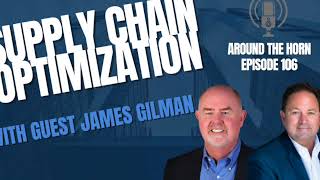
Kevin Brown and Tom Burton talk supply chain optimization with James Gilman of Perimeter Office Products. They cover supply chain risk management, omnichannel buying, and why AI adoption stumbles without the right culture and relationships behind it.
Chapters
Welcome to around the Horn in Wholesale Distribution with Kevin Brown and Tom Burton. Sponsored each week by Leadsmart Technologies. Tom, Kevin and their guests review the news of the week and dive deep into the topics impacting manufacturers, wholesale distribution, independent sales agents, and the global wholesale supply chain. Whether it's m and a SaaS and cloud computing, B2B, E commerce, or supply chain issues, we peel back the onion with our guests into the topics that impact your business the most.
James, I'm sorry you have to. Have to see this to start off the morning.
I love it.
Okay.
It's the afternoon on the. On the East Coast.
Oh, that's fine. It's fine. Okay.
Okay.
Yeah, yeah, yeah. That's totally.
I'm barely awake. Hey, James, see my cup? Can you read that? Be kind. Just remind Tom throughout the morning. Okay.
All right, will do.
Yeah, he sometimes gets a little unruly with my. With my behavior and. Or maybe my behavior gets a little unruly and Tom has.
I was gonna say it's probably equally on both sides there.
Yeah. So. Well, great to see you. Happy to have you with us, James. We're gonna talk a little bit more about you and Perimeter Office Products in a. A few minutes, but wanted to welcome everybody today as we do each week. I'm Kevin Brown. I'm here with my lifelong friend and business partner, Tom Burton. We try and get together every Friday, unless somebody's on a plane, in a hospital, or just somewhere that they just can't make it. And we talk about the events of the week. We publish a newsletter every week. It's called around the Horn and Wholesale Distribution. That newsletter goes out to over 10,000 people each week. We try and bring the news of the U.S. north America, and frankly, the world. Look at that. Related to the economy and supply chain, mergers and acquisitions people and leadership, sales and marketing, AI technology, all of the things that impact wholesale distribution as a whole and manufacturing as well. We chat with our guests about those articles and how those actually impact the wholesale distribution and manufacturing world. We do this here live on LinkedIn live, YouTube live, and Facebook live at 9am Pacific time. Tom and I are both here in California. We do that again each week. And then if you're listening or watching us live, you'll see that we're scrolling through that newsletter. If you're listening later in the day or at another time on the podcast, whether it be on Spotify or Apple podcasts or Odyssey or wherever, get your podcasts at, you're not seeing that newsletter. And again, we send that newsletter out Every Friday as well. It's what we review here on the show. If you would like to get that newsletter and you don't, there's two simple ways to do it. You can send us a email to helloadsmartech.com and we'll get you signed up for that. Or two, you can go to the website for the show, which is www.aroundthehornpod.com, and you can see past episodes. You can sign up for the RSS feed. You can subscribe through your podcast channels there and then also subscribe to the newsletter. So that's who we are. But we couldn't do this every week if we didn't have the support of the company that Tom and I work for, Lead Smart Technologies. Lead Smart has developed a product called Channel Cloud and Channel Cloud is an AI enabled CRM and customer intelligence solution. It helps wholesale distributors and manufacturers gain deep insights into not only their customers, but their teams and their overall business to accelerate growth. So if you're looking to continue your digital transformation in your business, you'd like to learn more about how you can use AI and CRM and customer intelligence in a single solution to help you accelerate growth in your company. Please reach out to us anytime. We'd love to share more with you about that final thing before we dive into the show, however, is we're appreciative of you being here, but we like lots of people to know about this. So if you're listening in for the first time today or you're a regular listener, if you're on LinkedIn Live, just hit the Follow button of Lead Smart Technologies and you'll get notified every week about not only this show, but other things that we publish. YouTube Live, hit the subscribe button and you'll get those alerts as well. Same at Facebook. If you're listening on the podcast, please please subscribe and leave us a review. And if you do that, that'll get out to others like you that can join us each week as well. So blah. Got it all out.
James, I don't know that we've ever missed.
I paid attention the entire time.
Yeah, I don't know we've ever missed an episode though, for somebody being in the hospital.
Yeah, no, we did when we first started. Yeah, I was in the hospital, remember?
No, I don't. But I don't remember missing it. So.
But yeah, and then we missed. Didn't we miss one after you had your. Your surgery while back? No, I didn't.
No.
No, you did it, huh? You're telling me you're tough.
No, I did it and then went into surgery. It was in the morning and I went right after. Right, that's right.
Totally forgot. That's okay. Tough guy, right?
Tom's Brandon. Welcome. James. Your fans are starting to show up already, so this is great.
Yeah, well, and I thought Brandon knew everything, so. So that's something.
He's the reason. He's the reason I'm here.
That's. Well, you know what? We've known Brandon.
Atlanta boys runs deep.
Yeah, we've. We've known Brandon for a number of years. I think originally I met him through LinkedIn as well, and. Or Tom. One of us did. And Tom and Brandon are involved in another podcast. And you've got your podcast now. We're going to talk about all of that in a minute, but yeah. So you know what it made me think, Tom, as you were thinking about not having had the podcast because somebody being in the hospital, we certainly had it. Not had it, because airplanes. And then I think there's two times in October where I'm going to be at trade shows that I'm going to probably. I think we'll still do something. Probably. I'll. I'll call in from the booth and see if we can, you know, still. Still broadcast something that day. But hey, before we dive into the news like we do every week, James, thanks for being with us. You're a podcaster yourself, of great renown, and I've had enough. You know, I was. You had me as a guest on your podcast. I thought it was great. You do a really nice job with that. But why don't you first tell us about Perimeter Office products, and then let's learn a little bit about you. You have one of the most unique and cool LinkedIn header profiles out there, so maybe you can share some details about you and the Gilman family and then obviously the company as well.
Yeah, no, and thanks so much. So glad to be here with you guys. I'm looking forward to learning a lot and maybe I can add one or two things, but just want to make sure I'm setting the bar appropriately. Here I am. Yeah. So you. You mentioned my LinkedIn profile. My LinkedIn profile, since we don't really get to meet in person as much these days. My height is what most people used to recognize first, and it was always the first thing that people would make a comment about. I'm 6 foot 8. I've been 68 since I was 14 years old, and I've added a lot of weight since then. But but grew up here in atl, Atlanta, Georgia, more specifically Lawrenceville, Georgia. And married my high school sweetheart Joanie. We were in band together. She was on color guard, I was on drumline. And we've got three kids, so we have. Jay is eight, Jonah six. And Juliet, our youngest daughter will almost be, is almost four. She'll be four in October.
So, so you've, James, you've posted a couple of times some pictures of your family which I thought were pretty cool on, on LinkedIn. And seeing a picture of your lovely wife clarifies that like me and Tom both, you're quite the salesperson because you, absolutely, you were playing above the rim when you, when you got your lovely wife. It's to marry you just way, way above. Just as.
No, the, the anecdote. Opposites attract. I mean, it's absolutely true. I mean she's beautiful and smart and.
And you're smart and you're smart. Right? So I, I have, I have also since I was 14, I've aspired to have my height start with a six. Not six, eight, just start with a six of any type. So. And it's never happened, but here we are.
You know, it's, it's, it's fun. But I, I would never be able to be a traveling salesman. I mean, being on a plane is like the most painfully, it's the most painful thought ever. Trying to fit in cars. And I'm a car nut too. I think we've, we've talked about that in the past.
But the, you know, it's interesting. I had a former business partner that was also 6, 8 and.
But he.
Was much older than you when we were even working together. And traveling's hard, right? At that height. It's just if you don't have an exit row or sitting up front, it's, it's almost impossible. Yeah, I know. In his case, most gate agents would move him when they saw his height and make arrangements for him. Quite often they understood. But you know what, what he would always say when people would be out to lunch or having a beer or something and people would ask him how tall he was, he also happened to be a very well dressed African American gentleman. So people, I think sometimes thought he might be a basketball player. So people would, and when people would ask him, I've been in restaurants with him. When people would come and just ask him for an autograph and he'd literally sign his name on a napkin and hand it to him, not say a word and just let them go off on their own. Trying to figure out who he was. But people would ask him how tall he was, he would say very. He wouldn't say six, eight. He just said very. So there you go.
So I've always been fascinated with psychology and how people think, and. And my dad, I think, helped spur that desire in me. He was always trying to make people laugh and trying to make people turn their head and kind of think, see if they're actually paying attention and thinking. So my response is four, three. When somebody asked me how tall I am. Yeah, four, three. And half of the people go, wow, like, not even hearing what I'm saying. The other people go, what?
Huh?
So, yeah, you got. You got to have fun with it. Right?
That's good. All right, well, tell us about Perimeter, and then let's dive into the news. But Perimeter is important.
Absolutely. I've been. I started in sales at perimeter back in 2009. It was a teeny, tiny, privately held company. Owner Mike Evert, who's a dear friend and mentor of. Of mine, he started the company in 2007, but we were just shy of 2 million in revenue, and I think I was the seventh employee that he hired. So we grew organically through the sales process here in the Atlanta area to just over 15 million in just less than 10 years. And I think at that time, we had maybe 22 people.
So.
But we were acquired by Office Depot in 2018, became a part of the Federation, which is a group of privately held or independent companies across the country. And we have gone through a couple of acquisitions. We've acquired a couple other companies, and now We've grown almost 70 employees and about 30 million in revenue here in Atlanta.
And I understand you've made some really wise technology decisions in the past year.
I absolutely did, yeah.
No.
Well, I mean. No, but seriously, though, a huge challenge, I think, for a lot of small businesses is, number one, figuring out how the technology works and even being aware of what technology is even out there. But once you become aware, how do you make it work and how to make everything talk. And if you're not a tech background, that's me. I'm not a techie at all. And it's really overwhelming. So we were. We had a CRM system, but nothing talked together. And so after I really started looking into to Lead Smart, and we looked at a number of other ones as well, we chose to move forward with Lead Smart, not only from the technology components, but honestly, in. The real tipping point is the relationships. I mean, you guys always did what you said you were going to do. And you guys have always been responsive and, and that's held true over the past. I mean, through integration. What has it been, four months now? Five months now. So. And we're still making improvements and I mean, just light years different from what our experience was with other softwares that we've had in the past.
So we're going to want to work together soon on a case study, too, and see how we're moving the needle inside the business. But, you know, it's interesting as we talk about this, I'm kind of laughing to myself because not sure we've had other customers lead smart customers on, on the show before, but we have. And the reason I say this is because about four or five months ago we had a guest on that was, you know, worked for a very large distributor and the. I had somebody text me that had seen the LinkedIn invite and say, hey, you have so and so on the show. Since he's one of your customers, can you introduce me? I really want to talk to him about X. And it's like, well, he's not a customer. And the person. So the reason I share this is the person said, I thought every guest that you had was one of your customers. And, and it's not at all the case. We just try and get really good guests and if you weren't going to be a great guest, we wouldn't have invited you here. So we already knew you're going to be a good guest. But it's kind of fun to have you as a customer as well. And, and, and now I would, I'd like to call a friend as well. So that's great to. Great.
Absolutely.
Good. Tom, anything to add before we jump into these?
We're going to talk about sales methodology, but you know, James, you were talking about your organic growth and all that stuff, and I've obviously had a chance to work with you guys and understand your sales methodology and your approach. And it's, it's quite remarkable, I think, what you've put into place in terms of the sales process, and I know we're going to talk about some of that in the news, but it's, you know, you look at the growth that you have, I think a lot of that can be attributed to the processes that have been put into place. And then when you start to automate those or have more visibility, it gives it to another level. So anyway, yeah, totally. All right, Kevin, ready for news?
Yeah, yeah. Again, we're diving into our newsletter here. First one that we talk about here was from Yahoo Finance what a bigger than expected Fed rate cut could mean for the stock market. Tom, my guess is right now that you're really thinking about hoping that the Fed goes a half a point or three quarters of a point and chokes things and they don't raise again this or lower, I should say again this year. Is that what you're thinking would be?
That would be a nice idea, but not reality. So they're going to do a quarter point. You know, we talked last week about larger cuts, and I agree with that article 100. If they do something larger, it's going to cause too much of a spook. It'll spook the market too much.
The stock market won't react well.
Yeah. And it's just. So they're going to wade into it with the quarter point.
You know, that's what, Tuesday? Next Tuesday?
I think it's next week. Yeah, I think it's next.
I think it's. I think it's the 17th, if I'm not mistaken.
That's great. Then what happens after that? I mean, you look at the numbers that just came in. Inflation overall was down, but core inflation was up. And so, you know, it's not. I don't think that there's any slam dunk on anything. And as we've certainly learned. Right. If you don't like the way something's going, wait 15 minutes because it's probably going to change. So. Yeah, but yeah, you're. You're gonna. You're gonna be playing with house money starting next week because there will be one cut and then it will just be a matter of what happens after that.
James, what's your take you thinking about? I don't know if you are.
You.
Do you know about our. The little wager that Tom and I have?
No, I don't.
Oh, okay. So Tom has been a believer since I think this got started at the beginning of the year, didn't it, Tom?
That's somewhere around there.
Yeah. We were just early in the year we were talking about cuts, and I was adamant that we would see two cuts or more this year. Tom was like, no way. We're only going to see one. And all of a sudden there was a stake involved. And so things are looking promising for me.
He's going to be playing with house money. You know, he'll get his money in September and he's on house money at that point.
Yeah.
So.
Yep. The. My. I'd say my worst case scenario is we buy our own stakes. Yeah, that's. That's the worst case scenario. But I will be having a steak with Tom probably multiple times before, before the end of the year. So that's the gig. You know, as we kind of, that drops us in a little bit to the second article. You know, Tom, you had talked about what, what we're seeing with some of the pricing it says. We posted an article here from CNBC consumer prices rose 0.2% in August as an annual inflation rate hits its lowest since early 2021. And it talked about 12 month inflation rate at 2.5% down 4. 10 of a percentage point from the July level and again lowest since February of 21. But we've got increases, decreases to your point earlier, Tom, is we're going to have to wait and see because I don't think there's any chance we're not going to see two this year. But last week and the week before I was thinking we might see three and one of them might be and if we only saw two, one of them was certainly going to be a half a point or 500 basis points. And I think what we could be seeing right now is two quarter points could, based upon this week, two quarter points could be the case.
Could be, you know, if you get another, if we get another uptick in inflation next month, then who knows, right? It's Yep. Like I said, good one. One day at a time. Literally.
Yeah. Well, it's almost like we should do a little pop in on Mondays and Wednesdays to just kind of see what's happening that week and then and do a snippet for our LinkedIn and other social audiences about what's, what's it looking like this week and what are we going to talk about Friday? Good. So in, in following up there, we've got, you know, we're, what we didn't mention is that we're in our economy and supply chain segment of our newsletter. So again we can put out a newsletter every week and within that newsletter we have these different segments. So we start each week with the economy and supply chain. This is where I wanted to get a little bit of James, take on a few things as we talk about the supply chain optimization strategies. It's from supplychaindigital.com they talk about 10 strategies here and we're going to talk a few different about a few different things today about how supply chain issues are being impacted out there right now. But either any significant takeaways from this from either one of you?
No, I mean James, what's your, what's Your overall take. I know we're going to talk a few things about supply chain here.
Yeah.
No, just from some of the things that I've noticed recently from. We pull from multiple different wholesalers and we have experienced nothing like you know, three years ago. I mean it was. The supply chain was completely wrecked. But I think coming out of. Out of that the wholesalers are trying to figure out number one, how do we keep our costs in line. I mean labor costs, fuel costs, it's hard to balance out especially when you see these big spikes, but still be able to provide that consistent delivery. So we've seen some issues and some hiccups with moving to a different freight company to try and help lower costs to keep things back in line. But then that impacts delivery. So we have seen in our industry, office supply industry, some rumbling, some disruptions. But I mean I just think that we really took a lot of things for granted. You know, pre, pre Covid assumed that everything is. Would always just work naturally without you know.
Yeah.
Really understanding the challenge and the complexity of. Of logistics.
So.
So you're, you mentioned working with a number of different wholesalers. Do you also within your business do you also work direct with quite a few factories as well? Is it a mix?
Yeah. Yeah.
So have you.
Yeah, we do.
Have you taken an uptake or an uptick I should say or frequent frequency of your check ins on supply chain? Do you meet more regularly now or.
Well that's, that's a part of the other challenge is a lot of the manufacturer representation is also rotating and churning.
Okay.
So the, the point of contacts inside of the organizations, especially when you have a private equity company that comes in and you know, and purchases this manufacturing company and this one, things change. Right. So I talked about relationships before and that's one of the reasons why we, we went with, with Leadsport. I think relationships are so valuable in, in business and we, I don't. I think a lot of people underestimate and are putting a lot of emphasis on automating things without understanding the benefit of you know, the human element and the relationships.
So the reason I asked that question is we've talked to some folks more in the building materials, construction kind of related fields that are doing almost weekly now meetings, cadence meetings about what's going on. And so the supply chain, I think sometimes when you work with a lot more with wholesalers may be a little bit more reliable and can hopefully focus on that. They're having those meetings with the manufacturer on your behalf. But this is an interesting thing right Because I don't know that we've ever seen it before. I'd love if we have any guests that might have had this type of experience would think about this, but love somebody's comments on this. But the reality I think is we're in a new kind of world post Covid or post pandemic.
Right.
What we saw is, and you know, Tom and I have talked about this a lot. We're both from Long Beach, California, which is, you know, there's a piece of man made, the man made finger that goes through the ports there which separates Los Angeles and Long Beach Harbor. But if you flew over the top of it, you'd have no idea that it's not the same port. If you combine those two ports, they are, I think the third busiest port would be the third busiest port in the world. I live about 40 miles south of there now. During the pandemic and even post pandemic, when we first started doing this show, there were ships lined up down within a few miles. In fact, I'm not even 40 miles. I'm 30, just a little over 30 miles. There were ships lined up waiting to get into the harbor.
Right.
As we were coming out of all of this and as I would, I sat down on the beach with my wife and not that she's interested in this topic, but I'm looking at that and saying there's paper clips on that.
Yep.
Right. There's reflective vests and dust masks on that. There's office chairs on that and they need to get somewhere. And then, then there's the kids, school supply or holiday presents or whatever it is. And people kind of didn't look at all of this. Well, now we start looking at the things we've been talking about a lot recently on the show with the issues in the Suez Canal. We had a weather impact of lack of rain near the Panama Canal. The Panama Canal water was so low that certain size ships couldn't get through it and they couldn't get as many ships through. We've got geopolitical issues. So we're going to talk about this a little bit more with some of the other articles we cover today. But I think right now, now is a time where understanding our supply chain staying on top of it is even more important than ever. So this article I'm going to. Tom, let's not move ahead yet. I'm going to hit it because I think this article is really valuable. And again, this is from supply chain digital.com they talked about 10 strategies that could be used and the first one was implementing risk management strategies. We kind of touched on that a little bit in our discussion. They talked about regionalized sourcing. I think we're going to start seeing a lot more of onshoring. There's an example of that in our industry scuttlebutt that we'll get to later in the show today. They talked about using different types of model. They talked about a pprr. Never heard of this before in my life. But I love the idea. Prevention, preparedness, response and recovery. I think maybe those are just four words to use in life in general. But in supply chain, pretty good, right? And then seven was invested in employee training. Yeah. So that they fully understood what supply chain issues mean. It says talks about Walmart leads the way in investing employee training for its supply chain. 11,000 stores in 27 countries, 32 billion in inventory. They use tech driven education to keep all of their people up to speed on what's going on. There's Tom. We were on the phone earlier this week and I was again yesterday with an executive from a, an AI company and that that's exactly what they do is they manage supply chain and which warehouse products should be in and so forth, doing more and more of that. They talked about optimizing inventories. Number five was enhancing data accuracy and transparency. If your data is bad, your supply chain is going to be horrible. Four was fostering stronger supplier relationships that James was talking about. Three, implementing sustainable practices. I'm getting to the end, Tom. You see you chomping at the bit to move here. Enhancing demand forecasting. And you know what, there's more and more and more tools coming available to us, specifically through AI that can really, really help demand planning. One of the things we're seeing at Lead Smart with our channel Cloud, CRM and customer intelligence solution is traditionally that is people using our software on the customer facing side of the company. And what we're starting to see more and more of our customers is saying, you know what, I need my operations people, my purchasing people and of course our executives to be seeing customer data and then now wanting to integrate other supply chain data and other data about when things are available and so forth right into that same platform because it's a wonderful visualization platform. So this was good. And I think the final one was leveraging. They talked about advanced technologies and that's what I just mentioned. And they use some of the examples of what Amazon does with predictive analytics. I guess the takeaway for me is it's probably never been more important than Having more than just we buy this from that vendor and we trust them approach. And now it's time to really, really get focused on what we're able to do. Manage supply chain versus be a victim of supply chain. I'm done pontificating. James, anything, anything in your. On your take on that? No. All right.
No, I mean I have some takes on this, but I'm going to hold on it because it's going to, we're going to talk more about some of these things later on. So I think there's a number of things that we can kind of connect the dots on. But I'm going to hold off and just so that we can kind of keep keep moving.
Good. Where are we headed next?
Manufacturing and distribution.
Yep, next segment. Everything you wanted to know about force majeure now I'm sure James, as you were last night with your glass of cabernet, you said, oh my word, I am so excited about this topic.
No, I definitely had to www.dictionary.com what in the heck is this?
Yeah, so I bet if you went back and looked in some of your vendor contracts, this is going to be prevalent in many of them and most manufacturing companies use this and many, many, many, many wholesale distributors use this as well to tie into contracts that they have. Right. If we have supply chain contracts, either distributor to end user, manufacturer, distributor with expectations, force majeure really ties into the idea that says look, we will do everything we promised and said we would do unless there's something that jumps in that we can't. And I think force majeure translates to major force is if there's something that we can't do. And you know, a few of them are acts of God, lightnings, tornadoes, hurricane, tsunamis, man made disasters, plant fires, floods, war, civil issues, riots and so forth, disease, epidemic, the pandemic that we just had. And so there's quite a few of these, even government embargo, power outages, transportation issues. But a lot of people see these and I thought it was just this was good. This is from Modern Distribution Management. I thought it was a good article just to have there from that standpoint that says these are important things to understand. Back to talking about supply chain, right Is if I'm relying on a manufacturer, if I'm an end user relying on my distributor and there is a force majeure component to our agreement which you know, my days in manufacturing and distribution both, we use them consistently. There are issues that I need to be thinking about and there's weird parts of this right you can think about it as like, of course you can't get your shipments out on time if you got hit by a hurricane. But, but what about if there's civil unrest in, you know, near your, your, your manufacturing plant or as a distributor, your, your warehouse and you can't open your warehouse to get trucks out that day. What happens if you can't? You know, number six they talk about here is government embargoes, right. We just talked a few minutes ago about steel issues. We're going to talk a little bit about that later if all of a sudden steel is tough to get and you can't get those pipes out or the chairs out or whatever it is. So it's interesting. I think there was some good pieces of this article from my viewpoint about having well drafted force majeure provisions and they added some elements to it. So any, any takeaways from you guys? I just thought it was a value and worth sharing with, with our audience.
I think it's worthwhile to. I think they made a really good recommendation in there, which is rather than just having a generic force majeure clause and your contract is. And I don't know if you can obviously name out any everything that can occur, but you could probably name out categories of things to make it a bit more specific in what you're doing. I think that's a good practice, right? I think it's a good practice. I think it helps you also understand better what are some of the things that could get in the way. So anyway, it was a good, good, interesting article. Not, not something you see every day.
Well, I think it, you know, really ties in. I think maybe the theme for today probably ties to in general of. We looked across the board and our producer and editor John always texts me about what the title for our snippets should be that are going on on the social media platforms. And, and I think this one really ties to supply chain awareness and preparedness because we're going to talk about that a few more times today. So they talked here about, you know, two. Two pieces provision should define the events that constitute force majeure. Second was the provision should set forth the supplier's rights and obligations if a force measure event occurs that impacts a supplier's ability to timely supply parts included noticing of time and resuming performance. There is, as we kind of move ahead, there are two sides of this, right? There's part of the UCC or Uniform Commercial Code that already addresses this. And so if you have your own force majeure contract either as a manufacturer or distributor in your, in your contracts, then it is super. Would supersede if it goes even broader and beyond what the UCC does. So there's a, there's a little chart in here. It calls us some key takeaways from a seller's perspective or a buyer's perspective and some things to look at and some things to include. So if you are listening on the podcast and not seeing our screen with these pieces here, this is from Modern Distribution Management, mdm.com It's it says it's hurricane season, performance excused and why it's not a breach. So that was the title of it, talking about everything you wanted to know about force majeure. So that's it. Good morning to Bob joining us here. Aloha. I've got my 100th anniversary podcast Aloha shirt on today as well. So thanks for being with us, Bob. Anything else on force majeure? You guys look enamored with this.
I think we've, I think we've, we've. Yeah, we've beat it to death.
Is the horse dead?
Yes.
All right.
A little bit of a head nod to the, the PPRR model. You even, I think you use the word preparedness kind of the same.
Yeah.
You know, same principle. Right.
Yep.
Well, and you know, I, I've said this for forever in my, my life is that I think we can be successful in life if we understand that recovery is probably the most important thing we're able to do because stuff comes at us, we can only sometimes only be so prepared. And how we're prepared to take those punches that come and recover, whether it's in our business life or our personal life is key. And that was the final R in that. So it's good stuff. All right. Yeah. Tom, talk to us about steel plants.
There's one that's closing, 150-year-old one closing in Illinois partially due to Mexican steel imports. And I believe they also blame some of the tariffs and things that come from, from China or tariffs not being enforced that are on some of the things that are coming from China. You know, I obviously, I think there's a story obviously behind that story that is not clear in here. But yeah, interesting that they brought up the point of the sort of Mexican influx of Mexican steel imports.
Yep. That's why this was included this week is from that. Ah, good. Let's catch Bob's quote there. Back to our last article.
Like Ike said, plans are worthless, but planning priceless.
Who's Ike? Who's Ike? For our millennials back in the day. Eisenhower. Eisenhower, Right.
Yes.
Very good. So plans are worthless, but planning is priceless. Love it. That ties right into failing to plan is planning to fail. Right. How many of us had our dad tell us that? So that's good. Yeah, exactly. But back to this plant closing. Right. This ties right into what we were talking about last week where the Biden administration has said that they're likely going to block the Nippon Steel acquisition of US Steel. Both parties that are running, or both candidates that are running for president have said they would likely do the same. This is going to be an interesting time. And you know, it's like, guys, why are you talking about steel? Well, you know what? We have lots and lots of wholesale distributors of H vac products and pipe valve and fittings and so forth. James, you probably, if you sat back and thought about, oh, all of the things that you have that have steel in them that are in your catalog of tens of thousands of items, you know, I think about desks and chairs, but, you know, it's all kinds of stuff that comes out of that. And then when you think about the idea of trying to re manufacturers now talking about reshoring, if there's struggles with steel, it's going to be harder to reshore. Right. So interesting time. So we'll be continuing to pay attention to that. All right, let's jump into E Commerce and marketing, our next segment. This is kind of an interesting one. We've talked about a lot. B2B buyers and sellers embrace omnichannel sales approach. But there's some nuances to this one. Did you want to kick us off, Tom?
Yeah, sure. I mean, I thought this, you know, as you know, I kind of wrote a book on the subject here about the buyer journey.
You wrote a book?
I did, I did. And it's called, and it's going to be re released here in the next couple of weeks, the revenue zone. See there?
The revenue zone.
Yeah. Yeah. But what I find it, you know, what I think I've missed in the book or I need to include more. We talk a lot about the buyer journey. Right. That the buyer has a specific journey that they're following. But what this article talks about is not only do they have a journey in terms of what they're researching and what they're looking for, but that journey is taking place across multiple channels. Right. So they may be looking for some content and some information on one channel and then looking for other content and other information on another channel, which I'm sure Isn't always consistent. Right. Some people may look in one channel and some may look in the other. So as you start to. What I call the yellow brick road. Right. What is you start to define that yellow brick road for. For your business and how your buyers go through their research and their evaluation process. It really took it to another level about looking at channels. I think we even have a. Yeah.
Would be really helpful. Let's talk about channels related to that a little bit, I think.
Yeah. Yeah. I mean, this is, I thought was a great graph, right. Of talking about buyers using multiple channels. You know, email, phone, in person, mobile, online, chat, text, messenger, you know, website, all of those things. Right. All of these different places where they may be going to get information or to, you know, engage or to, you know, move the ball down the field or whatever it is in their buyer journey.
I think this is really important. I'm glad you're outlining that, Tom, because I think a lot of times we talk about and people just think about, oh, they're, you know, engaging from a standpoint of whether they're on our website or whether they're calling us or we're seeing them in person. But, you know, huge number. I mean, and even this chart that we're showing now, if you're. Again, if you're listening on the podcast, you're not seeing our screen, but we're looking at a chart of usage of Omni channel buying or multiple channels to interact that with sellers that B2B buyers are doing. And it talks about email, phone, in person, mobile app, online chat, online portal, texting, sms, messenger apps, online knowledge bases, social media, online communities, and video chat. Now, this is 10 channels, and it says the average retail customer is only using eight in that setting. So it's kind of interesting that a B2B buyer is even more engaged in this Omni channel world. And omnichannel takes on a whole lot more than the traditional, traditional consumer would do. So I thought that was interesting. It really makes me think about our. Our partners at. At Moblico that we work with and their mobile messaging solution that wholesale distributors use consistently where they can, you know, the mobile app, they can market through it, customers can. Can pay their bills or invoices on it. They can view all kinds of things there and they can interact and they even can connect to WhatsApp and other messaging tools right through the Moblico tool. So if you're a wholesale distributor trying to communicate better with your customers, Mobilico and Lead Smart have a great integration to bring that together. So looks like we lost James.
Yeah, I guess he got. Got tired of us and decided to.
No, he just texted me. Said what? Not sure what happened.
Okay, well, I'm sure he'll be back. Hey, I want to hit Bob's comment. I also want to hit Brandon. This is a comment from Brandon Kelly a minute ago. Yeah. We were talking about steel. Right. Places of bearings. And I guess that's a, a very big common use of steel.
Yeah.
Yeah.
And I want to hit Bob's point here. I think this, he's right on the money. Right. What's new in buyer journeys and becoming more prevalent is their need for validation. They're self diagnosing and self solutioning more frequently, but they don't. But they want validation that they're on the correct path. Right. That's new. Right. And that's why, you know, I talk a lot about and we talk a lot about even with our customers, if you don't know your buyer journey and know what they're going down, it's certainly hard to validate and help them as they're moving through that process. And the people that not only have the buyer journey, but the validation is going to, to go on. You know, add more to that, to that equation.
Right.
Yeah.
Very good. Well, I think that's, you know, if, as we're marketers within the B2B world, staying on top of what buyer journeys look like is going to be probably the most critical piece. Because you don't want to be. You find yourself in a place where your customers trying to communicate and with you in a certain format and you're not there. Yep. Right. That, that's the key. And, you know, the buyers get to go wherever they want to go to buy. It's pretty rare these days where we find that, that option. So looks like James is struggling to get back in here.
So he has, he's having some technical difficulties.
It's. We'll get him back. All right, let's jump ahead. I'm going to message him real quick. Take us to our next article, Tom.
Oh, here he comes. James, are you back?
All right, got you, got you. Can hear you now.
My Internet just decided to take a nap. I don't know what was going on. I switched on the other one. Sorry, guys.
It saw those buyer journey channels and it got overwhelmed and said, oh, my God.
No, that's. That's what got. That's what I get excited about.
Yeah. Yep. No, this is, we were talking about while you were gone. Was I like this term Journey mapping. Right.
That's what Brandon is saying. You know, it's journey mapping is. Is. And, and that journey map has to not only look at the channel, but what content and information and actions are taking place within that channel. Kind of a matrix, if you will.
I think that should. That journey mapping sounds like a yellow brick road and the journey mapping is a great term.
I agree, I agree. You're mapping your yellow brick road journey.
I think that yellow brick road's a little tired. I think you should see if Brandon's copyrighted that journey mapping thing and if he hasn't, then you should drop it into your book.
Okay.
And. But I, if you do, I'm gonna want to. I'm gonna want a piece of every sale, so.
Okay. All right, I'll send you, I'll send you 50 cents.
I'll take 50 cents for every book you sell, I believe. Let's see. This has been recorded. You heard it too, James.
That's. It's locked in.
Okay. All right, let's move on.
Yeah, nobody cares about that, do they? All right, so a little bit more there about exploring the journey of digital transformation manufacturing article from Forbes. Why don't we bounce past that? Because there was a lot from that that tied into what we've just been discussing take away on the day, right. Is understand your customer's journey and it doesn't matter what business you're in. And, and I think that's one of the struggles we see a lot when we talk about and you know, we think about. I think Brandon Kelly that's with us today, you know, was commenting about bearings and power transmission. I was just at Affiliated Distributors bearing power transmission event a few weeks ago. That's where the, the folks that are keeping factories running and job sites running are at, right? With, with conveyor belts and chains and power transmission tool things, equipment and so forth. And you know, most people don't think about that because that is an, you know, old school industry, right. You just think about, we get a delivery truck coming and it drops this stuff off at the factory and somehow at the other end of that I get a widget that comes to me through a distributor of some sort. But, you know, the reality of it is, is that B2B buyer that's buying that widget to use in his factory. And I use this example all the time, right? He just probably at his lunch break ordered Uber eats to deliver food, might have bought something on Amazon and is taking his girlfriend to a movie that night that he's buying the tickets Online on his phone as well. Whole different world than when I was first selling in wholesale distribution and going out to visiting plants in the early 1990s where you just met up with Joe Bob on Thursdays because you brought donuts in or bagels in and he was going to talk to you about what his needs were and you're going to tour the plant to see a new piece of equipment. His days are not completely gone, but moving away quickly. So buyer journey.
Yes.
Technology, cybersecurity, AI. That's our next segment for the day. Transforming supply chain management, the impact of AI and data science. Tom, you would be probably. James, no offense, but I'm going to suggest that Tom's probably our expert on data science here.
1 million percent. Yes.
Tom, you have a degree in computer science that, that qualifies you to, to chat more about this?
Well, I mean this article really gets into some like deep, deep stuff. So I mean, yeah, if I remember, there's some pretty intense equations in there and stuff that they're going through related to the data science, but I think, you know, going kind of popping back up a bit higher. And I think we even have another article about this and this is more and more technology and AI is going to be used, if nothing else, to help model or put the what ifs right into the supply chain process. And the more, the deeper you can get on the what if. In fact, you know, you, Kevin, you mentioned a call we had earlier this week, right, where they've actually created a digital twin, if you will, for your supply chain that you can say what if this changes or if that changes or puts into place. I wanted to ask James though, and I'm kind of u turning a little bit from one of the things we were talking about earlier, but I think it ties into what we were just talking about about customer experience. James, how tolerant are you seeing that your customers are when they can't get things right? Is, is the tolerance. Are your customers tolerant at all of the supply chain issues that you may run into or are they just like, hey, that's your job. I just want it when I want it and I don't want to, you know, I don't want to, I don't want to hear that because supply chain becomes, these issues become a customer issue as much as they become an operations or a logistics issue?
Yeah, I, I think it, and that's a great question and I, I personally think about this all the time. It, it does depend, right? If you're doing one project, like we had a big Project at a school system down in South Georgia. Well, the furniture that we were putting in there, right, that's one big order one time. And the customer was understanding. We explained to them, hey, there was a private equity company that bought this laminate company and they decided to do inventory. Well, the piece that you bought now, I mean, two months ago, it impacted us not being able to get the piece that they ordered that we were expecting, delivered everything down there. The customer was understanding of that. But if it's something, if it's a product that a customer needs on a consistent reoccurring basis and there's an issue with it, and there's an issue with it again, and then there's an issue with it again, I think there's an understanding maybe once or twice. But then if it's that reoccurring. So it depends on the product. I think it depends on how it impacts the business, obviously. But coming out of what we all went through five years ago, I definitely feel the customer has a less brand loyalty and a larger appetite to try other, you know, products as long as it's going to serve and solve the same purpose or per problem.
It's important because you can get paper a lot of places, right?
Yeah, yeah. But if you're doing large, large prints and then, you know, you got crappy paper and it keeps on messing up, you know, So, I mean, there's there, there is, there's, there's context that needs to be kind of explored to really understand it. Yeah, there's nuance.
Very good. So again, kind of taking it back full circle, right? The, the, some of this, you know, data analysis, data science could be even based around product lines, product categories, different things that you're doing because you have to look at those from a different perspective. Yeah, interesting. All right, Kevin, where do you want to go next?
Well, we got, I think we covered a little bit of the hype, it's real and manufacturing article, the TechRadar. But that was kind of had a little bit of interest to me as well. I think one of the things, and that was an article from, As I mentioned, techradar.com the title is AI hype is real in Manufacturing. Successful adoption journeys are scarce. And I think that's a little bit worth a discussion of because I think we're getting to that place of where we're getting to the top of the hype cycle. I think if we're not already there in AI right now, and I think it's important to kind of be starting to talk about what is actually working and what is not in that setting. Because we've got a lot of people that have gone into the mindset of yep, let's do AI, let's do AI. And I'm going to go to a conference and I'm going to read all these papers, I'm going to come to a podcast that talks about it. And now it's time to try to get rubber to hit the road on these things. And that's a little bit about what this article was talking about. Here again, techradar.com talking about the hype is real in manufacturing. I think you could just substitute distribution as well here. Successful adoption journeys are scarce. And I've been even watching recently with some of the folks who we use, some of their news industry folks mostly related to wholesale distribution, that they're bringing on some distributors and so forth who were talking about their journey and some success. And as I look at some of these and I've listened to some of these, I don't think we're, those are real great success stories of what I'm seeing so far. I think what we're, what we're going to see. And Tom, you talk about this quite a bit just in general conversations that we have is that, you know, we're, we're barely embryonic stage of what AI is going to do. Right. And so people are thinking about, you know, even the, the example you used a few minutes ago, Tom, about talking about digital twins is that was kind of the first really good example that could go into distribution that is real and could be used today, the one you mentioned earlier. And I think right now what we're really looking at is now it's time to start getting the rubber to meet the road for real. And it's much more than just using chatgpt or Perplexity or Claude or whatever it might be for some marketing content.
Right.
And that's what this article kind of references is. You're finding some real good use cases and success and true journeys that are working are fewer and far between.
Well, and Bob says we're nose diving into the trough right now. Right. I 100% agree that the hype of AI as we know it today is definitely nose diving into the trough. But I think as the application of AI as we know it today has fallen short of expectations, hence what this article is saying. Yeah, right. I think unfortunately then people jump to the conclusion like they do with anything is well, AI doesn't work or it doesn't gonna work for me. Right, yeah. It's like LinkedIn doesn't work. Right. Or whatever.
Right. It's everyone's thing that's there and LinkedIn's worthless. I have seven contacts, but it doesn't work.
Right. So. But you know, OpenAI just released yesterday, I believe is an update to their model. I have not had a chance to look at it again. Supposedly it's a major improvement in the reasoning aspect of things and the analytics. Again, don't know how good or bad, but there is going to be some significant improvements in what we quote, unquote, know is AI over the next six months, 12 months, even 24 months. The timing is a little bit ambiguous, but it's going to happen. So I think the, the model is there and they talked about some of the reasons why these have fallen short. Right. And the skill set and all of that. But I do, I do. I guess I would. My, my comment would be is don't make sure. Don't say that. Okay. That means AI doesn't work or you shouldn't be thinking about AI in your organization because I do think it's been overhyped and under expectations, have been minimal based on what is available today and how it's been put into place today.
Yep. Well, I, and I think we're moving way past that thing wherever. And this is. I'm headed off to the Industrial Supply Association's conference week after next and just realizing I should probably buy plane tickets today. The in Orlando and they've got a little bit of content plan there. It's. It's always a great event that ISA does, but they got a little content there surrounding AI as well. But you know, in so many of the events that I've been traveling to or even podcasts that we listen to relating to wholesale distribution and manufacturing, we're just, we're kind of hearing the same stuff about here. We're painting the picture of the future. But then we're saying today is the idea of, well, just get started. Right? I said this earlier, right? Just get started, use ChatGPT. But we've also talked here about, in the show a number of times about putting some parameters and some guardrails within your organization, about how people are using those things. So to just say, yeah, I'm starting to use AI because I let my marketing team have a paid ChatGPT account is not AI.
Right.
And now really digging into what it is we can do to transform our organization. And that's kind of tying back to what this article talks about. They talk about what to do to avoid stalling. Right. They talk about Gartner's hype cycle that we mentioned earlier. Some tools for success. Finding the data. What's the inside of the balance of the crucial data that you want to use. Being cautious about getting stuff stuck in Analysis paralysis, cutting through the data clutter. Expect some employee pushback. Focus on the fact that AI is there to empower, not replace. And so there's a series of good points in this. Again, this is TechRadar. The article is AI hype is real in manufacturing. Successful adoption journeys are scarce. And again, I would suggest you just drop wholesale distribution in for where it says manufacturing if you're a wholesale distributor. Tom, before we jump ahead, one. James, any thoughts on that about adopting AI?
Yeah, no, I mean think point number two in, in the article was what stood out most to me and I alluded to it earlier in the show, that analysis paralysis. Right. As a leader, you're just so bombarded with all these different options and things are moving quickly. You don't want to get left behind, but you also still have to run the business too. It's like at some point you just need to make a decision and move on. And in that decision process, gotta understand what you're trying to accomplish.
Right?
Right.
Yep. That's why you're able to get started early with AI with just with Genius feed within Lead Smart channel cloud and setting some alerts to your team of what quotes are due and what customers are not buying categories and so forth. So those are some early phase things that can be done quickly and easily now. Hey Tom, before we jump ahead here to the next article, just as a quick reminder to everybody, if you're listening in on the podcast and you're not seeing our screens of these three handsome devils here, we get together every week and we do this, but we're reviewing the newsletter that we publish on Friday mornings. It's called around the Horn in wholesale distribution. So if you're listening and not seeing, you would not be seeing that newsletter. If you would like to get that newsletter, please let us know two ways. Simple. Either an email to helloadsmartech.com lead smart being the sponsor of the show and or to go to www.aroundthehornpod.com and you can sign up there as well as see previous episodes. So Tom, sales and mergers and acquisition segment that we talk about each week, how distributors can layer insight selling into their sales methodology from the distribution strategy group, our good friends Dr. Jonathan Byne and Ian Heller over there. Going to be seeing Ian in a Few weeks in, in Boulder. So any thoughts or takeaways from that to get started on it?
Well, there's quite a bit in here actually in this article. Kind of two parts to it. One, you know, I mentioned James earlier about, you know, how impressed I've been with your sales methodology and sales process. Right. And you probably take it for granted because you've been doing it that way. But many distributors that we work with have almost zero sales methodology or sales process. In fact, it's all based around the salesperson. Right. The salesperson each way has their own sales process and methodology. But what this talks about in the article is okay, you have a methodology, but then how do you incorporate into your methodology more value add essentially to your customers by providing or your prospects or customers by providing them insights or information about the market or about their business or about their, you know, and again, this is another place where AI and some AI tools can really give you a big advantage. Right. If you're using them on the behalf of the, to provide that insight into the customer. And James, be interested in your take, you know, do you see an opportunity even in your business? I would think so. To provide a lot of insights into your customer about what's going on in the market, their business and all of that. And you mentioned earlier, loyalty is sort of becoming a thing of the past. But maybe this could be something to help put some more of that loyalty into the equation.
Yeah, no, it's, it's something that is, is really, really exciting. I mean, the process that I grew up with was extremely manual. And I mean, and by manual I mean literally picking up the phone. Like it's all. Each step is reliant upon, number one, me remembering what the next step is and then me actually doing it. And a lot of times that's why organizations don't get the lift that they think they're going to, is just because of the consistency and the repeatability that of the sales nature and their sales team. So by having AI kind of and, and automated systems come alongside the sales team, honestly, it could help. Yes, it's going to help improve the productivity. But think about that, that salesperson in a day, he's not spending mental energy, wasting mental energy on a specific task. He's being reminded now can actually pour more of that energy into connecting with the customer.
Yep. I love that.
So instead of spending the time trying to understand, you know, what the motivation is for this business, how about have, you know, AI tell me, hey, what are the initiatives of this company? And it scours the entire Internet and then it can feed that to you. So it's feeding you data. It's not going to remove the human element. But if we use the tools the right way it could really aid and help that stand out amongst the crowd.
But that's, I love that we can really augment what they're, they're looking to do and that that's the goal of these things. James, let me kind of ask you a question to go with this. I'm going to make a statement and then a question is I don't have a lot of experience in the office products world and where you live, but in the other markets that we serve quite a bit in building materials, electrical, H vac, industrial safety bearing, power transmission, some of those worlds, it's not uncommon that even the largest of distributors like quarter billion, half billion, three quarter billion dollar billion dollar a year distributors are out hiring people. Not because of they understand sales processes or have processes or are driven people that are using structured methodologies. They're hiring people because Joe worked at XYZ competitor and he knows a bunch of accounts that he can bring with us and he's successful over there. So hence we'll assume he'll be successful here. Did you see that in your world as well?
Yes, yes I do and I have two different schools of thought on it. I mean if you have a well defined sales process, it's almost not advantageous to bring somebody in from the industry because you're going to have to help them unlearn whatever processes that they had to employ at the other company that doesn't have the mojo that your organization does. Right. So I mean in many cases I'd almost, instead of the experience, I, I focus more on the, the mindset and the willingness to, to, to learn.
You're good. So are you saying, are you saying you're better served not trying to hire the superstar maybe or the perceived superstar who may be a one man band or a one person band and somebody who is going to be more of.
The team player 1 million percent and, and a lot of people, I, I, I will double down. I'm a culture guy through and through. So you can hire a superstar and he can, he can be, he could be bringing on accounts but if he's a jerk or she's a jerk and interrupting other things inside of your company, you can't, you can't grow an organization around a single person.
Right?
Yeah, that's great. Just as you talking about that brings up an example, there was a distributor safety equipment and industrial equipment distributor here in Southern California that I called nine years ago when I was a manufacturer's rep in the 90s and early 2000s. And their focus for their hiring was on copy machine sales guys. And the reasoning behind that was, and they, they said any copy sales guy that came and knocked on their door and cold called them, they'd see one of the two owners would do, do have a meeting and he would listen to the entire pitch about the copy machine. And if the guy was good, they'd offer him a job because they said, you know what, the guy's got enough personality and gumption that he's willing to knock on my door and probably get thrown out on his ear. And if he did a good presentation about copy machines, they literally would offer him a job because they know he knows how to get up and out of bed every morning. They know he knows how to at least face his first set of obstacles. And sometimes showing up is the most important thing. And so that was their mindset, right, is we'll teach him how to sell, right? So he knows how to sell and he knows how to self motivate. So we'll teach him how to sell grinding wheels or hard hats or whatever it is. That's the easy part is getting that person that can go get started is interesting. So just as you were talking about that, it triggered that old story for me.
I think, you know, hitting Bob's comment here, right key, is the person coachable or not? Right. And you know, I'm not not saying that all superstars aren't coachable. Some are, but a lot of times they're, you know, they've operated based on their superstar ability, not on a team approach. That's.
Yeah. Well, last part of that before we jump ahead is it, you know, it just makes me think, Tom, you know, within our company, Lead Smart, we use eos, the entrepreneur operating system, right? And within eos, you've identified all of your core values of a company. And if you've done a good job identifying your core values of your company, then you just use the simple people analyzer tool which EOS has published and when you might find what you think is the superstar. But if your superstar that you're thinking is because he has the account over here or he sold a bunch over there, you may find a James point earlier about toxic type people that could disrupt your organization if you use that people analyzer tool and see how they line up with your core values of your company. Sometimes it's really bad news because you Think you want to hire somebody, but People Analyzer is going to tell you that you should.
Right.
So aligning your hiring with your core values becomes powerful. All right.
Did you know that short order cooks make really good, fantastic air traffic controllers? That makes a lot of sense actually.
Yeah.
You know, you're having to handle a lot of traffic depending upon where you work.
So all I, all that I that comment for me, all that says is corned beef hash and egg. Sounds really good right now. So. All right, so moving on. Graybar appoints a customer experience leader. You know what, we won't spend much time in that Graybar. Huge electrical distributor and a little bit of industrial distribution as well. The reason I shared that today in this segment was that customer experience is everything these days. We talked about it multiple times earlier today. Understanding customer journey is important. It's what we enable our customers to do at Lead Smart by taking ERP data, e commerce data marketing data, bringing that into a single platform and running AI tools against that to, to travel and watch the customer's journey with them. So it's cool to see a company of gray bars size putting somebody in charge of, as a senior leader in the organization of customer experience. So congratulations to them. Yep, good. All right. In that second, Distribution Strategy Group published a piece too about merger and acquisitions. Create sales and marketing friction. Here's how to get rid of it. So a bunch of steps as you see markets, or should say as you see companies starting to align with each other. This was written by an attorney on behalf of Distribution Strategy Group. So she's a consultant and attorney, I believe so. It was kind of interesting. It talks about, you know, integrating tech stacks and data and integration of people and building culture within the article integration of brand and communications and integration of the organizational structure. You know, James, you, you went through this when, when Perimeter was acquired, right. Was there any great steps that you guys took and put in place because.
Of the nature of the group that we became a part of? No, not really. And that was done very intentionally in our industry decades ago. I mean, there's been too many examples of great organizations that were acquired by another company and then forced to assume that company's everything. And I mean, that's why I'm such a culture warrior is, I mean, it's really difficult to build and it's super easy to lose. And so we, we did, we did acquire two other local companies, Office Depot and enrolled those underneath Perimeter and amazing people, great clients and, but there was, there was definitely some, some things that were exposed from from my perspective on like internal nomenclature and just things that we took for granted, had no idea. I mean they other people coming in and like what free trial or you know, raving fan, like what, what does this mean? So it really exposed to us a lot of the things that we needed to start documenting and paying attention to, clarifying, I should say, processes. So yeah, for a lot of businesses and leaders that that is something that you should pay attention to is if somebody came in from the outside, had no idea, could they understand easily and quickly what you do in the internal processes?
Probably some good takeaways from that article if you're going to acquire or be acquired. Good. So for sure, Tom, as we jump ahead, we have a people in leadership segment each week. We're kind of running short on time, but a couple of articles there ones from cfodive.com, companies boosting salary budgets as near record pace at near record pace in 2025. And the second article talks about, it's from TED magazine, the electrical distributor talking about labor costs remain high for small businesses. You know, I think we've had all this challenge and James, you could probably comment on this as well is we read constantly about the difficulty earlier in the year and last year about even finding people to come to work. Well, now we're getting them to come to work and that is showing in the job market that, you know, we're getting people back to work but they want to make more money.
Yep.
So what's, what's your experience been with that?
It has been. We had some difficulty filling out our accounting department, finding somebody qualified. We made a couple of moves just because the ex, you know, we feared burnout from some of our higher end, higher level executives. I mean they were doing three people's jobs, so we just need to get somebody in here. But then that created more issues because the person who was supposed to be doing the job wasn't doing the job. And so again, there's a reason why I'm a culture warrior is when people believe in the vision and the company and the people that they're working with more than the crap that they're having to deal with on a, you know, daily basis, it helps to keep that team in intact.
I think we have a new hashtag or a new T shirt. Culture trumps crap.
I love it. Yeah. Yeah. And it really does. And, and all businesses go through crap, right? I mean, that's just a part of business.
Yeah, that's right.
So what are we gonna have to make sure that, you know, Your people are going to be able to, to. To, you know, weather those storms good.
Well, I think this is something we'll probably be seeing and talking more about in the coming months and next year is about labor costs and the challenges, you know, And I, I just think about it is, you know, getting food the other day at El Pollo Loco. You guys have a Pollo Loco in Atlanta?
Yes.
For you. I'm happy to hear it. And so the we there all the time. Right. There's one right down the hill from our house and it's like 25 plus bucks for the two of us, you know, or 30 bucks for two of us there, you know, and it used to be 16, 17. I mean, it's just crazy.
Yeah.
And we're seeing this across the board. Right. But that all ties to, you know, there's food cost increases, obviously, but it certainly ties in, in a lot to the salaries and the, the hourly wages that people are making, so. All right, Tom, as we wind down for today, we have an industry scuttlebutt section. Each week, kind of a cool little spot in here, talks about Wind Supply, large distributor that is putting a partnership together. First time I've seen this at this level with a professional football team. That would be, you know, if you're not a Cincinnati Bengals fan, you might question if they're actually a professional football team. Probably shouldn't say that out loud to my friends in southern Ohio and Northern Kentucky, but kind of cool partnership that Wind Supply is doing with that. We talk about an acquisition in here as well in the industry scuttlebut section, but the one thing that I mentioned in here, and this probably wouldn't be of note, but there's a company that we reference here. The note came from Modern Distribution, Distribution Management Radians, which is a manufacturer of personal protective equipment. They're based in Memphis. Kind of started as a little small company, if I remember correctly. Their original product is they did a safety glass that had earplugs or hearing protection attached to it. I remember meeting them when they first showed up. Well, now they're a global powerhouse now. And kudos to the gentleman that built that company and. But they just expanded their headquarters dramatically, so that's good news. Relevant. Yeah, we wouldn't talk about it, but they reference in there the importance of their expansion for onshoring. Now their pro. This, this is what really hit me. Their product category is as commoditized as they come. Reflective vests, disposable gloves, leather work gloves, safety glasses, hard hats. Things that you're. They're. They're, you know, not quite consumables, but just about. Right. And. And everything about those just sings Southeast China and Southeast Asian. Right. So to see them expanding their corporate headquarters for commoditized items so that they can onshore them speaks to me. That's the biggest statement we've seen in the months and months we've been discussing on shoring and near shoring, to see those starting to look like they're coming. Coming back here at some level. So I wanted to mention that before we closed out today. So kind of each week we have also our Good reads section. The key to your overall health and happiness may boil down to one rare word. So we talk, James, each week in the newsletter. As you know, this might be about leadership, it might be about health, it might be about personal development, whatever it is. But one key word. Anybody read what that was?
I'm gonna guess peace. Yeah, peace.
Right. For those of you listening, not watching, James just flashed us the. The peace sign and finding peace in our life. And it had some. Yeah. Some very, very valuable steps and tools and. And if we can look to find peace in our life, then that would.
Be, you know, it's. It's interesting, though. And James, this comes full circle to what you were saying in the beginning, even about, you know, who you work with and so forth. I find every day working with our customers, the more peace of mind I can provide to them, that is more valuable than anything else that I do with them or we do with them. Right. It's because there's so much crap, as you pointed out.
Yep.
Anything that can be done to add a little peace into the equation. Right. And peace of mind into the equation. I think everybody appreciates. And it doesn't matter where you are in the business cycle. I think it's a really interesting. Maybe I don't know if it's a culture point or not, because I think it's more just helping to make sure that you're providing that you know what you're doing. Are you providing peace of mind or are you creating more turmoil and things and whatever you're doing.
Yep, good, good points. Bob tells us that peace is aloha.
I agree with him. There's.
Which means we're also going to need to use aloha here in a moment to say goodbye. The last article that we had there, as we talk each week, we have a second look where we publish articles on topics that we've talked about before. And that was about the ongoing Concerns about port strikes in the Gulf coast and the East Coast. That's something we're going to have to watch really close. If they don't figure something out, they've only got about two and a half weeks left, so. Hey, thanks, guys. Today's been fun. James, thanks for being with us.
Yeah.
Yep. This is. We move a little fast. You did good.
Sometimes if you go to a barbecue or anything this weekend, James, you can reinforce everybody. Only one rate cut this year. You can.
That's right.
You can say that with. Right.
Review your force majeure.
That's right.
And I tell you what, it's not.
A topping for your burger.
Only, only talk about one rate cut if you want to look like a knucklehead and don't get invited back. So. Or you can just say, I was talking to Tom Burton, the author of the Revenue Zone. Don't, don't mention Lead Smart, the author of the Revenue Zone the other day, and he said one rate cut. So he's. That's pretty funny.
I have a force majeure clause in my, in my prediction, so.
That's right. Right. Good. We covered a lot of ground. James, you did great. Thanks for.
Thank you so much. Glad to be here.
Yeah. We've had guests or invited guests that say, I don't want to come because I can't keep up because we do move pretty fast through this. But I think that's what some people like about it. We're at. Tom, where are we at 107 today? 107.
Yep.
107Th episode. We've gotten together to do this. So in kind of wrapping up, we do this every week again, I'm Kevin Brown. Tom Burton, Our great guest, James Gilman being with us. We just try and bring and shine some light on what's going on in the world and how it impacts wholesale distribution and how folks both in manufacturing and distribution can kind of expand and grow their businesses by using technology, understanding what's happening in M and A and the economy and so forth. We're appreciative of those of you who've been with us. Come back again next week. Again, as we asked about, asked of you earlier in the show, if you're listening on the podcast, you like what you heard, leave a review, hit a few five star reviews out there. Gets us out there much further. If you're Listening live on LinkedIn Live, YouTube Live or Facebook Live, just go to the page that you're on there, which would be the Lead Smart Technologies page. Hit the. Follow the subscriber the like button there. Then you'll get those updates coming to you regularly. And then again, we said multiple times today, if you'd like the newsletter, just go to the podcast website which is www.aroundthehornpod.com. we'll get the newsletter out to you. We're appreciative everybody. We're thankful. We'll wish you all a great weekend. Be kind, do good things and stay safe.
Yeah. Thanks everybody. Have a good weekend.
We hope you enjoyed today's episode and our guests each week we try our best to dig into the topics that are impacting your business. So please reach out to us and let us know how you think we can make the show better or topics you'd like for us to tackle or talk about more often. And even guests you'd like to see join us. We're looking forward to bringing you next week's session and hope that until then you stay safe, stay focused and do great things. If you haven't already, please subscribe to the podcast and leave a review to help others in wholesale distribution get access to the conversation. And finally, please check out our sponsor, Leadsmart Technologies and their manufacturing and wholesale distribution industry CRM customer intelligence and channel collaboration platform. That's Lead Smart Technologies at Lead Smart Tech. Com.
More from Tom



What does AI actually mean for a wholesale distributor #WholesaleDistribution


If your systems don’t talk to each other, your AI won’t either #AITransformation




This is why one AI agent isn’t enough for high-stakes decisions #WholesaleDistribution

