Unraveling The Complexities Of The Latest Economic Data With Guest Paul Kennedy
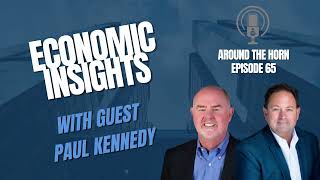
Live episode of the "Around the Horn in Wholesale Distribution" series (hosts Kevin Brown and Tom Burton) with guest Paul Kennedy (President & CEO of Dakota Supply Group). The discussion covers (1) recent U.S. economic data (Q3 GDP revision) and its implications for construction/distribution demand and inventories, (2) labor disruption impacts (UAW autoworker strike ripple effects and union organizing), (3) Amazon's expanding delivery and logistics footprint and implications for distributors, (4) cybersecurity risks after ransomware attacks on distributors/medical suppliers, and (5) enterprise AI developments (Amazon Q, data lakes and conversational analytics). Practical perspective centers on wholesale distribution, ESOP/dsg operations, and tech adoption (AI/cloud/security).
Chapters
Foreign.
The Horn in Wholesale distribution with Kevin Brown and Tom Burton. Sponsored each week by Lead Smart Technologies. Tom, Kevin and their guests review the news of the week and dive deep into the topics impacting manufacturers, wholesale distribution, independent sales agents and the global wholesale supply chain. Whether It's M&A SaaS and cloud computing, B2B, E commerce or supply chain issues, we peel back the onion with our guests into the topics that impact your business the most.
Welcome everybody. Welcome. My friend Paul Kennedy. Good to have you with us this morning.
Good morning. Great to be with you, Kevin. Thanks, thanks for the invite, Tom. Good to see you.
Yeah, likewise.
We're appreciative of you making the time. So everybody tuning in right now, Kevin Brown here with Lead Smart Technologies and my co founder and Lead Smart Tom Burton and lifelong friend and our friend Paul. Hey Paul, before we kind of dive in and I do all our housekeeping that we do every week, you've been around for a while in wholesale distribution. Maybe if you wouldn't mind, give me a little bit of your story and then the Dakota Supply Group story, if you wouldn't mind.
Sure. No, absolutely. Thanks, Kevin. And saying I've been around for a while kind of makes it sound like I'm old.
No, I didn't mean that. You've just, you've just had a few cool, really cool jobs.
There you go. So actually Mike, you know, I started out with my cool jobs actually before I got into distribution. After I got out of the Navy, I was, I pumped septic tanks. So that was my, that was my actual kind of introduction into the construction trades and all that. And then I was a plumber for, for seven years before I got into the distribution side. Have run a couple of branches when I started with Westburn Supply back in the, back in the mid-90s and then they were acquired by Ferguson and the early 2000s. So was with Ferguson for, for many years kind of running, running businesses for them both in the US and Canada. And then when I came back From Canada in 2013, I joined First Supply as their president. They're a Midwest family owned, Midwest based multi generation plumbing and H Vac distributor and, and then had the opportunity to join DSG a little over five years ago and that's, that's where I am today as I currently serve as the President CEO of DSG. We're a 100% employee owned distributor. We have 55 locations kind of across the upper Midwest. We serve the electrical, plumbing, H Vac, water works, sewer, water and well, telecom, Datacom, utility and industrial Automation pieces of the business. We don't do everything everywhere but we do a lot of stuff across our footprint.
That's great. That's fantastic. So you went from being in Canada for a few years with Ferguson, is that right?
Yes, Wolseley Canada, but.
And now you're in, you're in way southern Canada. In Minnesota, right?
In Minnesota, yes. I live in, live in Minneapolis and our DSG headquarters is in a Minneapolis suburb.
Good with DSG. How many branches, how many people?
So 55 locations across eight states in the upper Midwest. We have a thousand, thousand employee owners.
That's awesome. I love the ESOP side of things. I did some work with a company a number of years ago that was in ESOP and got to kind of see the, I did some inner executive work with them. Kind of got to see the inner workings of that. We had another guest on a few months back, Mike Mortensen with Alaska Rubber Group or ARG. They're 100% employee owned company. It's great, great to see that. And I saw some of your team has joined us today as well. So nice to have some of the new folks that haven't been with us before. So a little bit of background from you is great because we know we're going to get some fantastic insights from you today. So I'll, I'll set your bar pretty high for you now, but I'm very confident in it. So before we dive in further, we're gonna do a little bit of the housekeeping we do every week. Again, I'm Kevin Brown. Tom Burton, we're the co founders of LeadSmart Technologies. LeadSmart is a AI enabled CRM and customer intelligence solution. It's built specifically for wholesale distribution and manufacturers. So our system isn't built for a school district or a law firm like traditional CRMs. It can go anywhere. We, we have built a solution based upon my 30 plus years in wholesale distribution, Tom's 30 years plus in the technology world. We came together to build a solution for, specifically for distribution on the manufacturing side and the distribution side. So that's what we do. But what we do also is every Friday morning, very bright and early, at least for us on the west coast. Here Tom and I are both in California, we publish a newsletter. It's called around the Horn in Wholesale Distribution. That newsletter kind of takes a little amalgamation or a consolidation of a lot of things going on throughout the world. In very specifically when we talk about M and A, we talk about artificial intelligence technology, what's happening in the economy. And we bring all that together, we try and relate that to what's happening in manufacturing and wholesale distribution. We do that through that newsletter. If you don't get it and you would like to, there's two simple ways to get that. You could very easily send us an email. The email address is helloadsmartech.com. secondly, we have a website for this podcast. It's www.aroundthehornpod.com. and you can see all of our past episodes there and listen to those and sign up for the newsletter. So if you'd like it and you don't get it, catch us your way from there. We'd be happy to get you involved. Final piece on this. You may be with us live this morning. It's Friday morning, December 1st. We're coming into the last month of 2023. So we're live on LinkedIn, YouTube Live, Facebook Live. If you're listening to us on the podcast, you will not be seeing our newsletter. That will be up on the screen. So we want to give you a little warning ahead of time if you're listening in on the podcast. We're on Apple Podcast, Spotify, all the popular podcast formats. Our editors take this morning's live broadcast and prepare it for that later in the day. You won't see that, but again, if you'd like that newsletter, we're happy to get it out to you. So that's it. Tom, anything to add before we dive into the news?
No, I just say good morning to Will, good morning to Ron, and yeah, if you're out there listening, jump in, please. Say good morning to Paul. And I'd love to know where you're from and what's happening. And I think it's going to be one of these discussions today where we're gonna. It would be great to get some feedback from, from the listeners as well.
So, Tom, read Will's comment, maybe pop it up on the screen. Yeah, there you go.
Friday morning dancing is a must for Kevin. Is a must.
Perfect. Well, Quinn wins. Mic drop.
Well, good morning. Good morning, Will. I thought you had a little better. Better taste than Kevin's dancing. But good to, Good to see you this morning.
You said that much better than I would have, so thank you.
That was diplomatic. Maybe, maybe one of our other guests will defend me as well. Anyways, it's good to have folks with us and yeah, definitely, if you're, if you're out there, not only let us know you're here, but ask questions, make comments, share with us your thoughts. Those on LinkedIn, though, that are Live. We've seen in the last few weeks a couple of different times that we've had some troubles with the, the ability to ask questions. So we, hopefully those come through well this morning, and we've had a little bit of a struggle since, but good to have. Let's see. I can see this on my phone. Paul, you have a fan in Mike Bernard that's with us here. So you're just the best. I like that.
So Mike is the best. And if we get into digital transformation, I'll tell you how Mike kind of helped steer me on our digital transformation journey here at dsg.
That's great. Good. Well, we've got Christine with us from. Chris is with us here from Brazil. We always love it when she joins us. Most mornings we have three or four minimum countries participating with us here live, and then on the podcast, another seven to eight countries that we get out to. So that's exciting. So let's dive in, huh? Let's talk about this economic growth. We have an article, the first one we're going to talk about today is US economic growth for last quarter is revised up to 5.2% up from the original. What we saw and we talked about here on the broadcast a couple of weeks ago was 4.9%. So I'll let you guys throw it out to you guys. I have a few thoughts. We'll hear if we've got pessimism, optimism, or lukewarm water still that we've been talking about historically.
I don't have any of those. I just have confusion. So, so Paul, maybe you can help us unravel a little bit of this because it just, it's just hard for me to get my hands around some of this data.
Yeah, let me, I guess, let me give you my thoughts. And I've got the same confusion as you do, Tom. You know, it's what, what it, I think solidifies to me is nobody has any idea what's going on. And, you know, every time we get a one of these, making me feel.
A lot better, Paul.
Yeah, the, you know, you get these wild market gyrations and then, you know, a month later the numbers get revised. Right. So, yeah, a couple of interesting things that I kind of took out of, out of this, you know, that the consumer spending was actually a downgrade in this, in this revised report and housing increased, housing investment increased. So I just, I thought that was an interesting dynamic. And as, you know, as you and I were talking earlier, just, you know, how much of, you know, economic growth is being driven by consumer spending. And is there a detachment or a decoupling between consumer spending and kind of B2B, particularly in, you know, industrial distribution in that space? You know, we actually saw some, some, you know, lightness in our, in our business, probably more so in late second quarter through the third quarter and are starting to see, you know, that, that come back now. We're actually starting to see our waterworks business pick up, which is usually a leading indicator in the construction space. You know, waterworks investment usually goes in first, so that's usually a pretty good prognosticator of what's to come. And, and our order log is starting to grow again after, after kind of leveling out. So that gives me a bit of optimism as we go into 2024. But you know, coming off the last couple of years, right, where we had this inflation driven boom, it's, it's just been different. 2023 has been different. And I think, I think that has caused a lot of consternation for folks as we, as we start thinking about what 2024 looks like and what information we can glean from the economic reports, the greater economic reports, you know, that are moving forward. It's clear that, you know, interest rates have had an impact on housing. I mean, there's no doubt about that. And we're starting to see that affect some multifamily construction as well.
Do you see, Paul, you know, a lot of multifamily projects, right, had maybe five year loans or whatever that were lower. Now they're going to have to be refinanced or they are being refinanced at a higher rate. Are you seeing any impact from that or any sort of, you know, how the multifamily sort of, or just construction in general is handling that kind of stuff?
Well, the you know, rents, you know, because of this housing, know, housing unit shortage that is kind of, you know, across the country, you know, where we're what, 6 million housing units kind of short to support, you know, demographic growth. The, you know, landlords have kind of been in a position to be able to raise rents and I think they're starting to, I think I read in this article that, you know, rents were under pressure now and you're starting to see some of that legislated St. Paul, Minnesota put rent control legislation in here and it really dried up to your point, it really dried up new investment because they, they can't. Those economics don't work for the current borrowing structure.
Yep, that's interesting. So Paul, in your business or what you hear from your peers. And you know, one of the things we didn't mention, and I think this was you being a little humble, is you're on multiple boards of directors, if I remember correctly, with affiliated distributors, the buying group that DSG is associated with, other industry associations, you're on some boards and very active in. So I'm going to ask you this question. Tidy your thinking at DSG and then with your peers is one of the things this article talked about was inventory rates going back up. I don't know that everybody in wholesale distributions, inventories, if you could get product through 2022 and earlier this year, I don't know that people's inventories fell off that much. I want to ask you about that. And then secondly, second part of the same question is, you know, we look at purchasing managers indexes, we look at home starts, we look at all these, we have all these factors that come out, you know, the mid Eastern market manufacturing index. We've got all of these different things. Are there any one in particular that you and, or some of your peers or your CFO and other finance people, are you following any one of those in particular or are you looking at them kind of combined and then benchmarking that against your existing business and your history?
Yeah, kind of looking from a combined perspective and just from a, you know, the inventory investment, which that was another, you know, note that I kind of took, you know, is this is the season for buying group conferences and all that course of the last 60 days have been with a lot of, a lot of my peers and with a lot of manufacturers and the, the common word was destocking. There has been a tremendous amount of destocking going on. So you know, the moderate growth that the, you know, that the markets are seeing, you know, and if you, you saw ads published their third quarter results here I think a week or two ago and you know, membership members had, you know, had had good growth. But that's not translating into increased purchases from, you know, from the supplier partners because there has been so much destocking going on because you had this glut of inventory that, you know, all the panic buying over the last couple of years and then all of a sudden demand dropped off a little bit and everybody had built new manufacturing capacity and shipped everything.
Right.
With the exception of electrical gear. You know, electrical gear is, is still, still a struggle for, for most manufacturers and for most distributors. But so, you know, from a DSG perspective, our inventory is, our inventory peaked in April and is probably off, you know, from, from there and this is really just about destocking and a little bit of deflation. We're probably down 20% since our peak in April. That's substantial on sales with, you know, with sales growth.
Right. Okay. So basically at these buying group events, the guys sitting at the other end of the table from you, the manufacturer side, were sweating and begging and you're, you've got some inventory left and things didn't go necessarily as well as they wanted.
Well, they, and they know, I mean the manufacturers are really trying to understand more deeply what, what your sell through is. Right. So they can kind of plan as they look forward into 2024. When are you going to be kind of leveled out from a stocking perspective so they'll, you know, have a better idea when they can expect the demand.
That's great to hear. So a quick question kind of related to your business because I oftentimes think in my head, just because it's my background, where I come from on the manufacturing distribution side is kind of commodity driven products. And you don't have necessarily, as I would assume, a big part of your business is not commodities.
A big part of our business is commodities. When you think about, you know, conduit, you think of wire, you think works pipe. And, and it's been a big impact this year.
So did you have a significant struggle in your, in your business as well in Waterworks, pipe, valve fitting, H Vac electrical with acquisition of products from offshore suppliers in 2021 and late 2020 we did. The reason I started to jump in here, the reason I'm asking the question is on, in a lot of, in standard industrial, maybe industrial safety, you get into some of the other areas where it's just almost all commodity business, they went through this phase where they were buying everything that they possibly could.
Right.
Because they couldn't get their hands on things. And then now they've had this, maybe you could call it a hangover for into late 2022 and 2023 because things have balanced out. And now you've got the offshore manufacturers, you know, frustrated because they can't get enough orders because they boosted capacities as well.
Yep. No, you're absolutely right. And that's, that's exactly how it played out. And it was not only in the commodity space, it was also in the finished goods space because a lot of it was components that were being imported that were completing finished goods. You think of water heaters, you think of furnaces, you think of, you know, where the, the blower motor was coming from. An offshore supplier and that disruption in their supply chain impacted. So you had this, you know, kind of pig in the python of, of waterlog that's, you know, kind of still.
Working itself through ties kind of into the comment that Will Quinn is making here. Will's a regular with us on, on the broadcast from World Works for Infor, the ERP company. And he was kind of talking about some manufacturers that he had talked to using artificial intelligence and machine learning to kind of manage inventory rates. Yeah, I like that follow up comment he made. He goes just in time. Inventories turned into just in case. Right, Very good. We appreciate that, Will. Tom, let's for any final thoughts on economic stuff tomorrow?
No, no, let's, let's move on here.
All right, so we talked about this quite a bit and it's interesting. You know, I wouldn't have thought 68 weeks ago when we started this on our broadcast with the around the Horn podcast Journey that we would talk that much about labor issues. But you know, when you stop to think about it and we're going to talk about an article from Associated Press about it's called the autoworker strike. Cut ford sales by 100,000 vehicles and cost company $1.7 billion in profits. So again, if you're listening on the podcast, we're reviewing a newsletter around the Horn and wholesale distribution that comes out every week. If you'd like a copy of that each week and you don't get it, please let us know. But earlier in the year, what did we talk about? We talked about port strikes on the west coast and the potential impact of that. Right. The port of Long beach in L. A that literally is a spit of land between them that's man made is what separates those two. I think if you put their combined containers that they process, that's either the third or fourth busiest port in the world. And then you start moving tons and tons of fruits and vegetables come in from Latin America into San Diego, plus cars and you work your way up to San Francisco and up to Port Portland and then up to Seattle and then up to Vancouver. Port strikes can be major. So we talked about that quite a bit. Then the Canadian, there was going to be a Canadian port strike. A was, was a risk of that averted these. And now we come in about a month ago or so to this autoworker strike and we talked about the ripple effect. RP Ron Paulson, a retired Granger executive, was on with us and he was sharing with us some major numbers of the trickle down effect about not only, you know, how many people it impacted, but all the different companies. And now this is coming to bear, right? We're seeing it with this, this glut. I shouldn't say glut, but the challenge that's come out of that cut sales by about 100,000 vehicles and it cost the company 1.7 billion in profits for the year. So any thoughts from both of you on that?
Well, from my perspective, I think it's, it's maybe just kind of indicative of, kind of this shift of the power of the worker and you know, whether union, non union doesn't matter. But I mean I think we've seen it in all businesses as you know, it's been tougher to find employees and they have other choices. So you have to have a compelling offer. And they, you know, with, you know, with the union organizing, they, they found a way to, you know, kind of push it, push it to the limit.
Well, it's interesting too. I watched this with, I've driven many Fords over the years and you know where their most profits are is in their trucks and their SUVs. And these guys went after this hardcore, right? They, they, they went, they started a little soft and then boy, as soon as they hit those, those plants and now we can see this, right, those plants were shut down. They're not putting out as many vehicles and it's going to have a big hit. I'm thinking we're going to be talking about this again in a few weeks because we're going to see more data that what comes out. I hope at least we see the data of the ripple effect that the impact this had on the Johnson controls and the Lears and you know, all these first, second, third tier suppliers that make up your car. You know, I don't think most people think about this, but I don't know what the number is. In fact, RP just made a comment. He may know because he worked at Granger running the Great Lakes area for quite some time. But I'm going to guess there's, I might be way low here. Minimum of 25 to 40 different suppliers are putting products into a factory that go into your car. It's probably actually a lot more than that, but we don't think about that. We just think about this big picture and that impact. And when you hit a strike in any type of plant, that that ripple effect is huge. So it's an interesting maybe, maybe they all just auto companies maybe just need to become ESOPs.
Well, there's, and there's one other, one other Thing, though, that I think is worth mentioning here, and Paul would like your take on it. I was reading an article last night and this was related to a manufacturing, this wasn't tech industry or whatever, where they said millennials and Gen Z, the average time they spend on a job is less than three years right now, versus, you know, the older generation, which would spend 30 years or 25 years in a position. And so not only are you losing people and all of that, but it's very hard to build that tribal knowledge, right? It's very hard to build that experience that you, you need when you have that level of turnover coming along the way. I assume that, you know this, obviously, as the union tries to get these better contracts, that they're trying to attract people to get them to stay longer and so forth. But I think also, and I think, you know, Ron just pointed this out as well, I still believe that this is going to be an incentive or a catalyst for more automation, more AI to come in to these organizations. Because the AI doesn't quit, right? The AI doesn't quit after two or three years. The knowledge that's developed doesn't leave there. And these people that come in are not experts in what it is. So I don't know, Paul, if you're seeing that at all in your industry with younger workers or, or anything like that.
So I don't think we see it so much at DSG because we are in esop. So, you know, we've got some stickiness that goes beyond it. But I think you're, you're spot on with that. And I think the, you know, the AI and other automation that is going to continue, I mean, part of it is to help, you know, kind of tamper some of this impact, right, in labor costs. But the other thing is there's less workers, there's less workers available. So some of that work for the work to get done is going to have to shift in how the work actually gets done.
Yep. Tom, you brought up a good point there, right? About millennials and the amount of time and jobs. And I think, you know, historically, right, the labor negotiations, whether it's auto workers or longshoremen or whoever it might be, it's about the long haul for the benefits and so forth for the worker, right. Thinking that the worker is going to stick around. And, you know, we probably, all of us, you know, are probably within a few years of age here, the three of us talking today. And, you know, we probably think about our fathers. You know, Tom, I know growing up with, you Your dad, you know, it was in the same industry forever. My father's in the same industry forever. And many, many people, you know, started their first job, got the gold watch when they retired and had been 30, 40 years with the same company. Well, now you see it with some of the requests in these negotiations were that the new people coming in have a much shorter time before they get to that top tier pay, which is probably the idea about getting more people in the union and getting them to that higher rate more quickly and making up for maybe potentially what you were talking about, Tom, is that they may not want to stick around that long so they can get good wages earlier.
No, I think you have to, There has to be a way, a stickiness as you said, Paul, There has to be a way to get more stickiness in any sort of job. But at the same time you got to backstop that by using AI and other technologies because that knowledge is not even that. The tribal knowledge doesn't exist, doesn't have enough time to develop if somebody's coming and going at the way. So yeah, all right, let's jump on.
Just, we'll just talk kind of quickly. The next article that we're talking about in the newsletter today is again, it's a little bit further on this, right? The article says the next on UAW's To do list add more members from non union factories. And it just, it kind of made me laugh. It's. I'm not happy about what happened here, but it's really interesting. I don't know if either of you caught earlier in the week, I think it was on a live, I think it was a New York Times had a live event and Elon Musk was there and they were talking about the, you know, the, the, they were trying to pin him down a little bit on how he felt about her, what the impact was of, you know, Disney and some major corporations pulling out their, their advertising from, from X or Twitter. And, and he was pretty vocal, right? He said to go, you know, XYZ themselves and said it on this live broadcast. And so he's not afraid of controversy, right? And there's a whole nother discussion about that because, you know, you wouldn't see the New York Times or the Wall Street Journal try and get bullied like Twitter's trying to get bullied right now. But I'm going to be interested if as the UAW is starting to talk about the, the Tesla plants, the BMW plants, the Hyundai plants, the Volkswagen, the Volkswagen plants, Toyota, Nissan, all that have these plants throughout the Southeast that are not unionized. That may be I think a tougher battle especially when you've got a guy like a, you know, an Elon Musk who's probably got a strategy for this at some level already.
Yeah, I think as I read that article Kevin and yeah I did see Elon's and I think later we're going to talk about Sachet Nadella.
Yes.
And maybe an article there. So opposites on the way they lead.
Right.
But you know I think as I read that article and, and the interesting thing to me was about after the big three settled that the other non union manufacturers proactively gave raises. So you know, really the, the union is, you know, is, is driving, you know, behavior with the non union manufacturers. But you know, so I, I think the, these other manufacturer, the other non union manufacturers are, are taking the lead from there and understanding the dynamics but not having a lot of the other stuff that goes along with being a union manufacturer.
So that's interesting. What, what, what intrigued me and we'll close out on this fairly quick and move on. There's a lot of other good stuff to talk about today, but it just was intriguing to me out of this article. It talked about you know, one, the war chest that the UAW has but how other unions help each other with funds when they want to go do something like this. And I'll, I'll just tell a kind of a quick antidote that goes with this. My, my father listens closely every week and the, he'll laugh at this. So my wife and I have been married almost 20 years and my father in law is a retired iron worker. My mother is a retired hospital administrator. They're in the same union. The last year before mom retired, the iron workers came into the hospital to organize because the nurses were organized in a different union. They came in to organize and successfully organize the administrators. So here's my five foot tall, right off the boat from Germany, strong accent, wonderful mother who was retiring as a hospital administrator, meeting my now father in law for the first time laughing about them being in the same union. And my father in law was the guy that hung off the side of the 40 story building doing the iron work. Right. It's pretty amusing how these, these things happen. So I was, I just love that kind of story because it's unique to see this, this organizing that they do, whether you like it or not. So Tom, let's jump ahead. What's next?
Well, we have Amazon here now. The top delivery business in the U.S. you know, I was kind of wondering about that though, is, is it kind of a false statistic in a sense that they cannibalized a bunch of business from UPS and FedEx so as their business was growing, if UPS and FedEx business was dropping, kind of double dipping on all of that, but still pretty impressive about. I didn't realize that Amazon was so widespread and so prolific in the delivery business.
Well, I'll answer part of your question and then Paul can give his take on this too. There's a few pieces of this I want to discuss briefly this morning. One, I think the answer to your question is yes and yes. But I don't think the statistic is false per se. But.
It'S just a double dip, right?
Right. But I think what they've looked at, right, And I wish I would have looked this up because I saw the number recently and I was astounded the size of their, of Amazon's air fleet, right. Or I think they just call it Amazon Air and it's, it's not insignificant number. And what they've basically done is, and this, this is my big takeaway from the whole article and I'll, I'll throw this out there and you guys can kind of share your thoughts. I know Paul, you mentioned earlier had some thoughts on this, but look, at the end of the day, we're here, we're here to serve wholesale distribution, manufacturing. It's what we do with our company. It's why we're here with, with the podcast. There are a lot of people that I talk to on a regular basis who are looking at e commerce only from a standpoint of let's use an electronic means for my customers to order from me. And they're the last thing that they would ever be willing to do is, is put their products on Amazon because Amazon's the bad guy. Because Amazon, when they started Amazon Supply, now Amazon business was very straightforward that they were going after Granger's electronic business. So we have all these people out there, many people, Paul, in, you know, the trade associations you're involved with and buying groups are super concerned about this. I look at this as, you know, you should know the devil that you are looking at very closely because this is one more factor of the impact that Amazon is having on the economy and whether it's cannibalizing stuff because FedEx said we're not doing business with you anymore because you're driven the prices down too much. Amazon said good, we'll go buy more trucks than you have because they have the money. And this is a place, in my opinion, where we should be looking at. If I'm in business, I should be looking at one clearly understanding what they're doing and where they're going. Because it could be a very, very short term time when you have a representative from Amazon come and I'll even say, Paul, to your logistics team that says here's my rates versus UPS and FedEx and Amazon is going to find. We're going to talk in, you know, in a few minutes about other things that they're doing on the technology side. One, it's critical that if I'm in business, I understand their business model and what they're doing and two is it's probably time to more embrace than try and fight because it's not a battle you'll win. Doesn't mean that they're going to squash anybody or put a distribution company out of business. But understanding how to work with them is probably in people's best interest.
Yes, I agree and take it a couple of, a couple of points there, Kevin, as I think through what you just said and as they, you know, as they shifted business from FedEx and UPS, my guess is like everything they figured out that they could do it better and more efficiently. Exactly what they do. They reduced 27,000 people. They were able to cut delivery times, improve inventory management and improve search results for customers. So you know, reduced cost, created a better product and, and part of that was changing their structure. Right. I think I read that they, they moved to these regional hubs where, you know, their products, regional hubs is, is more focused. So I mean, I think that's, that's a big deal. I view, I view Amazon not as a competitor to be feared. I view Amazon as a, as a behemoth that we need to learn from, understand from because they are, they are establishing the benchmark, they established, I think the benchmark for a customer online experience.
Yep.
That, you know, hey, if, if we want to play in B2B online, we're going to have to have an experience that mimics or competes with their experience. And now I think they're taking that to supply chain and distribution and we need to be aware and be ready to react and learn.
Well, I think that's extremely well said. I mean that's really my view of all of this is that they're not going away, they're going to continue to, to innovate and do unique things. And I mean it's, it's not going to surprise me one bit if I'm very soon getting other things delivered by Amazon than what I bought. Let me rephrase that. What Mrs. Brown bought from Amazon is going to be other things are going to be coming and I just think they're going to continue to drive what we see in the supply chain.
So one last comment. I think on this is just, it's a. A constant reminder that, you know, we as distributors need to, you know, continue to refine our value proposition every day.
Perfectly said. Right. We, we need to understand and watch and so forth as well with this. So great comments here from Tyler Blankenship. I think Tyler's with us for the first time. We appreciate you being with us talking about Fastenal partnership with Amazon, which is great. So we're going to see this continuing to move. So we need to kind of move along as well. Next article we're talking about, we talked about just fact. We didn't have a show last week because of the holiday. The week before we talked about Henry Schein, the large medical distributor, one of the biggest at what they do. They were hit by a big ransomware issue, impacted their quarterly earnings results. They had to go back to.
The.
Had to go back to their shareholders and reforecast earnings and so forth. Big deal. Well, what we're seeing now is they got hit by the exact same group again. And it kind of looks like they maybe started trying to play hardball with this group that had access to their system. And they talked about having stolen 35 terabytes worth of sensitive data that would publicly release on a daily basis. Astounding.
Right?
And so boom, two weeks later, we're in the same boat. We are. They were trying to get their E commerce platform relaunched. Had to hit pause on that. Dangerous stuff.
Crazy.
Yeah, it's dangerous and crazy. But I think with this in cybersecurity, right. Is it's a multidimensional problem. It's not just, oh, do I have my data secure or do I have my privacy together or whatever. It's a multidimensional problem that there's different ways that these groups can go in and basically wreak havoc. And with the AI piece of more and more entrenched, it's going to get worse. Right? Think about injecting information into your AI framework. So now your AI is now polluted essentially from. I mean, I'm not trying to put ideas in anybody's head, but these are the types of things that we have to look at as we look forward with the cyber security. I do think technologically there's A lot of foundational things that you can do across the board to handle a lot of this. So just architecturally, you know, that can handle a lot of these things. But yeah, you have to look at it from a multi dimensional perspective. And clearly this group kind of found one one door and then went in another door.
So right. And, and was don't, don't test us because we, we're here and we're back in. I I'm going to be very, I'm going to make a, a statement but I'll have to, you know, cut out some names. But a good personal friend of mine, like they saw him yesterday, he works at a very high level globally in cyber security for a company that every one of us have involvement with on a regular basis and is a globally a household name and Chinese government got into their system and this was five years ago probably and he has a whole team on his global cybersecurity team that all their role is is to keep them over here and make sure that they can't get past these areas that the company doesn't use anymore, I guess, but not let them get out of there and then watch what they're trying to do in that little area they're in. Pretty astounding when you've got a company, I wish I could say who they are. It wouldn't be reasonable for me to do that. But pretty astounding that that's a company of that size has those issues. So it just the point that we're talking about here, right as we talk about distribution and manufacturers is and I'll make this comment again briefly as we go. When we talked about this a few weeks ago, I was at an event in August, I think it was talking with a small manufacturer, I'm going to guess 20, $30 million a year manufacturer and they they had a hit like this as well. So everybody's, you know, vulnerable at some level and I think we are going to all need to start working on on a focus for tighter security as we move on from this. Will made a good comment about, you know, getting to the cloud is a good first step on some of this. Trent Lee, thanks for being with us today. Trent Saying I'm seeing back at bad actors moving into small companies who are less focused. So he kind of recapped what I was just was mentioning. So thank you for that. Trent.
So yeah, it's, it's Tom, to your point, the threat actors are they're getting, you know, more sophisticated and the technology is getting more sophisticated. So it's kind of a multifaceted defense system that you have to, you know, put into place. And you know, our, our view from a risk perspective at the board level is really, it's not if it's going to happen, it's when. So if, if you, if you have that mentality, then you are constantly, you know, making sure that you are keeping up with your, with your defenses. And you know, in, in training and you know, we've dedicated a lot of resources to it and continue to. But it's, it's the AI item that you brought up is it would be a nefarious way to kind of in through the back door, right?
Yeah, there's, it's interesting. We have to kind of look at this as a, it's an industry, right? That's much of it is in Eastern Europe. It's an industry. And when you have an industry that gets started, you can kind of think about this, right? If you've got a handful of guys that are hackers and programmers that are working with a large group that's going after the major companies of the world, it only makes sense that a couple of these guys are going to peel off and go, well I can use this tool on my own against a small company, right. So I'll go attack that. I don't need $3 million. I need a hundred people to give me a hundred thousand dollars.
Right.
And that's I think what we're probably starting to see here a little bit. So from a time standpoint, let's jump ahead. Just another comment though here from Trent. Paul, you've got quite a fan club out there, so we're, we're happy to have some of your, your friends here. Trent's shout out from Fargo, North Dakota. So I'm guessing it's cold in Fargo.
Trent, good to, good to see you on. Thanks for joining. Trent and I worked together many years ago and I still follow his, his career up there in Fargo now.
Well, I'll say something a little self serving here is you're with us most weeks, whether you're on the broadcast with us or just listening in. So people want to keep up with Paul. You can find him Friday mornings at 9 o' clock Pacific on LinkedIn Live or however you may want to listen. So hope to have you back with us again, Trent and everybody else that joined us today. Tom, I want you to dive in though first on this next article about Amazon launching. It's called Q their business chatbot. They're starting off with this saying their answer to Chat GPT. I know you've got a lot of thoughts on this. You are a resident AI expert, so take it away.
Yeah, I'm not sure it's a, an answer to Chat GPT exactly, but what it is is they have built their own chatbot that works with certain AWS applications for supply chain and so forth. I, I think what's, there's a couple things that jump out at this. First of all, it's to a large degree being driven by your first party data, right? The data that you have in your organization versus what most people know ChatGPT with, which is using data off the Internet and scraped off the web and so forth. So this is built around their own data and they talk about being able to talk and link into different applications that you have in your business and, and so forth. The other thing that I find and I've seen it wasn't in this article, but it was another article I read about this queue is this trend about talking with your data, right. And I've, you know, Kevin, you know me, I beat, I constantly am beating the drum about this because I strongly believe.
Oh, come on.
Right. Is that what this is allowing somebody to do is to go in and have a conversation about their data and with their data and when you think about traditional business intelligence, right, what do you have? You have, you know, you basically have a database, you have reports that run and then you have dashboards you can drill in and all of that stuff, but you're not having a conversation with that data and be able to navigate based around where that conversation takes you. And to me, this is a first example of that, of the fact that we are going to see in the next two to three years or maybe even faster, is that the way that we interact with our data in our organizations is very different than what we have done historically. And it's going to have a lot more. And I'm just going to say one more piece here because I don't think it's. And this is what's different about generative AI, even against maybe more traditional AI, where you've got machine learning and so forth. A lot of this when you ask and you have a conversation with the data, the AI is on the fly determining the analysis that it needs to make based on the question that you answer it, right? So rather than having fixed sets of questions or fixed sets, fits, fixed sets of, of analysis that it's doing, if I ask, well, you know, how is it going with my supply chain in China or whatever it is that Generative AI is on the fly taking your request and then figuring out the correct analysis dynamically at that point in time to provide that data back. That's very different than having a static set of machine learning and so forth going forward. Which is exciting to me as well because we work a lot with as you know Kevin, with a lot of first party data and organizations. So yeah, this is a, it's only available if you're using certain Amazon products. This isn't a generally released product or whatever but to me it shows yet another example of where this is all headed and I'd love to hear your take on it.
Yeah, just, just two quick comments. I don't know that I can add much to what you had to say there Tom, but the one point that I highlighted was the, the statement about the visual, visualization of trade offs between different possible scenarios in supply, in the supply chain. And as I'm just thinking about that that is being generated by AI, that output and it just kind of, that blew my mind. One other thing that just comment around this is you know, you look at the data that Amazon has, right? So it's, it's he who has the data or you know, she who has the data is, is, is going to be able to produce the, the most, you know, generative AI.
Right.
And so yeah that's, that's a, that's a great point to go with this. And you know the article talked about and used the term data lake. So this is part of Amazon Web Services, right? Let's take a cut back at this. This is not the group of people that are sending your socks to your house. This is their big data warehouses that they have around the world. It's the side of the company that first allowed them to see some profits. And so they use the term here, data lake. And Tom, I'll have you correct anything that I'm. I err in here but you know I, we had our at lead Smart. We had our two days of 2024 planning earlier in the week and part of that was the one of our main architects and developers that works on Tom's team. And Tom sat down and kind of walked me through what's coming product wise and, and you know the idea coming if you think about, we always reference this back to wholesale distribution. So you're going to start hearing a lot more about this term data lake. We kind of heard about data warehouses a little bit more in the past. But you know, imagine this place where we could be where we take every PDF in our company that we've ever had, every spreadsheet that we've ever had, we connect our erp, our marketing automation, our E commerce data. We connect that into a data lakes or live data use. Right. And then we, we put every supplier spec sheet, every supplier catalog. If you choose every competitor's data that you have, you put that into this data lake and then you use a GPT like solution. And I got to see some pretty cool early stage visualizations of that earlier in the week. It got me all excited. That's me talking like the computer geek for a moment. Here is the idea if you're a wholesale distributor or manufacturer in this setting that just says hey, within an existing system I. E Like a AI enabled CRM solution to just have this conversation with all of my data that has ever been produced. We used a, a term one of the guys that works in our company, his father works for a, a large national electrical distributor that everyone would probably many here would know the name of and, and his dad's name is Greg and Greg's been around forever. So he's got, Greg's got people from branches three states away calling Greg for to be the expert. Well we don't need Greg to be the expert to the level. Right. That tribal knowledge, every bit of tribal knowledge that have ever been there is now in this data lake and the person that's been in the company three weeks can get that tribal knowledge of the person from 30 years. Right. And that's where we're moving down this road. I saw said I got to see some great examples of it earlier in the week. But this data lake will now be available to us through what we like to term as an incumbent type product. Right. We don't have to go figure out and we're going to see this from their Microsoft products and other products. Right. Incumbent solutions that we already use will introduce our entree as an organization. We don't have to go figure out do I need to go buy from this startup or that startup that's only been in business for three weeks we can get access to this from incumbent products. So that's what excites me so Tom, did I get that? All right, okay.
And just you know, I know we need to move right on here but the, I guess the big takeaway here is yes, if you have data, if you can ag. If you, if you can organize your data then really all you really need to do is determine the use cases that you want to accomplish with that data data and then determine okay, what's the experience I'm going to provide to my users to actually leverage those use cases. It's not having to figure out, well, how am I going to build a machine learning model for this? And how am I going to build a machine learning model for that? If you just get your data organized well, the AI will take care of that as you go forward. And now it's just a function of use cases and experience. So very different mindset in terms of how we go about this and as we go forward. Anyway, don't get me started. Let's move on.
Let's do this. There's the last article that we're going to talk about today is our good read that we do every week, but every week also. And just as a quick reminder, Tom, let's stop there at the industry scuttle. But just two quick things or a couple quick things there, but the quick reminder. If you're listening on a podcast, we're looking at a newsletter that comes out every week. I always try and mention this two or three times because we don't want to throw a curveball at those that are listening and not seeing us. Then we got three handsome faces here today. But if you're not able to see us, we're looking at the newsletter. It's called around the Horn and Wholesale Distribution. If you'd like to get a copy of that, just reach out to us@helloadsmartech.com or our website for the podcast is aroundthehorn. Excuse me, aroundthehornpod.com and that's all information is there. So industry scuttlebut just a couple of quick things. If you're in the safety industry or the industrial side of things, you're probably familiar with a market leader that started off in the ergonomic field and went broad ppe ergony. Their founder, who founded the company with his father, Tom Hotels retiring. Tom has been one of he's one of those guys that has just had his hand in not just growing his company, but growing an industry in a category tons of volunteer work. So hats off to Tom. He's a great guy. The other article there is a Forbes article about distributor rankings. Good read, Paul. I know you had a quick comment on this. Schneider Electric pledging a million dollars is one of the articles we posted here as well to the national association of Electrical Distributors. You want to comment on that one briefly before we move on to our last article? You bet.
Thanks. And I'd say Tom. I don't know Tom, but Tom's from St. Paul so Tom's got to be a great guy. So congratulations on your retirement and yeah thanks. On the Schneider piece you're I am active on active with NAD and just was really energized to see Schneider's pledge of a million dollars. We've had several other manufacturers make significant pledges as well as distributors to the Next Level now campaign which is really a campaign that NAD has undertaken to you know, really focus on technology change and, and driving the digital transformation of the distribution channel. So thank you Schneider and, and thank you Naed for your leadership in that space.
Good last little piece on this. We'll go to our last article before we wrap up today. What I didn't mention is Ergodyne, you, you might know this. Ergodyne is now a division, Paul, of Klein Tool. Yep. Yep. So that's kind of next time I come to the Twin Cities, you, you, Tom and I will get together. I'll buy the first round and then I'm going to leave it to you guys after that. But maybe that'd be fun group to get together. So listen, there's a cool article. We have a feature in the newsletter every week. It's called A good Read. It's usually about personal development or leadership. I just love this article. I think you liked it as well, Paul. It was about Satya Dadala, the CEO of Microsoft Microsoft quickly to tell the story and I'm going to we only have about 3 or 4 minutes left today but I want to Quickly share this. OpenAI, the company behind Chat GPT. If you don't know about it, I posted a couple of live videos last week or week before when it was all going on big board eruption board was trying to push the CEO out. Microsoft came in, looked to be kind of saving the day but there's a big piece that happened in. You know they use the term oftentimes emotional intelligence but I'm going to just call it leadership here about how he handled all of this. So Paul, I know you had some thoughts. I want to hear what your thinking is. As you know, I don't lead a thousand person organization like you do. So I love your thoughts on all this.
Yeah, thanks Kevin. As I read this article and you know for anybody that was following this in the news it was, it was a soap opera as Altman was kind of booted out and then it appeared that Microsoft was going to hire him. So after all of that and after things settled out and the board rehired Altman Back to OpenAI, Satya sent this Email or the text, I think it was in the article and it was just amazing to me as I read it. And when you talk about lessons in leadership, just how calm, focused on the mission, not getting caught up with all of the distractions. So he's really commending the Microsoft Team on not letting all of this hysteria around OpenAI take them away from their focus and their mission. Which really speaks, I think speaks to Satya, but also speaks to the culture that he's created at Microsoft. Exactly. That kind of bore itself out.
Well, I love how you describe that and I think it's so important to think about people right now. There was a business factor that went with this too because they had a huge stock bump through all of this. Never actually hired Sam Altman had the plan in place to do it, but he also offered a job to the 700 people that were there that quickly showed how supportive they were and showed that Microsoft would be a great place for them all to come. So get a chance. This is an Inc. Magazine. We need to kind of wrap up. But a great thing that I just saw from a leadership standpoint, everything that he did over the course of these days was to put the employees and people first. And it turned out with great results for them as well. So listen, that's. We kind of need to wrap up here again. If you don't get the newsletter and you'd like to please let us know all of these articles are there. We're here every Friday morning on LinkedIn Live, Facebook Live, YouTube Live, as well as our podcast that will hit this afternoon, usually hits mid afternoon on all the popular podcast formats. Lastly, Paul, any good exciting plans for the weekend?
I'm actually going to do some plumbing, believe it or not.
Do you know. Do you know where to get the equipment and the supplies?
I do.
You gotta. You got a source. That's great. That's great. Good. So thank you so much, my friend, for being with us.
Yeah, very. It's awesome. Thank you.
Paul, one. One question and in favor. Will you come back in the new year?
Sure, I would love to. This. This wasn't as painful as you made it out to be.
I hope I didn't do that.
No, you didn't. It was great. And really appreciate the opportunity.
That's great. Well, we'll wish everybody a great weekend. We appreciate you being with us. Hope you can join us. Those of you that were new haven't been with us before. Every Friday morning, LinkedIn Live, the lead smart technology page, YouTube Live, Facebook Live as well. Have a great weekend, do good things, be kind, be safe. We'll see you next week.
Thanks everybody.
We hope you enjoyed today's episode and our guests. Each week we try our best to dig into the topics that are impacting your business, so please reach out to us and let us know how you think we can make the show better or topics you'd like for us to tackle or talk about more often and even guests you'd like to see join us. We're looking forward to bringing you next week's session and hope that until then you stay safe, stay focused and do great things. If you haven't already, please subscribe to the podcast and and leave a review to help others in wholesale distribution get access to the conversation. And finally, please check out our sponsor Lead Smart Technologies and their manufacturing and wholesale distribution industry CRM Customer intelligence and channel collaboration platform. That's Lead Smart Technologies atLead smart tech.com.
More from Tom



What does AI actually mean for a wholesale distributor #WholesaleDistribution


If your systems don’t talk to each other, your AI won’t either #AITransformation




This is why one AI agent isn’t enough for high-stakes decisions #WholesaleDistribution

