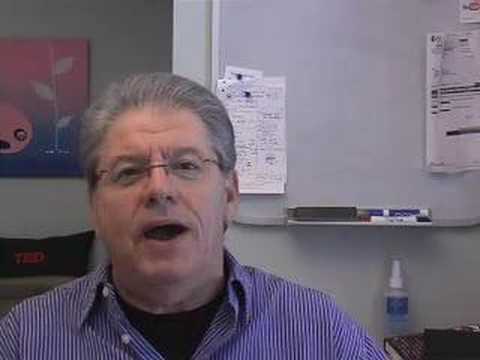
In this monologue, Tom Guarriello, a member of YouTube’s Community Council and a veteran psychotherapist and organizational change practitioner, reflects on the distinction between community‑generated videos and professionally produced content on YouTube. He describes community videos as having a “solidity” and intimacy that professional videos lack, which he sees as distant and mediated. Drawing on his two decades of experience facilitating change, Tom argues that YouTube originally promised a new, transformative way for people to connect, but has increasingly adopted the same tools and structures used by traditional media, thereby preserving the status‑quo rather than fostering change. He invokes Audre Lorde’s quote, “You can’t dismantle the master’s house with the master’s tools,” to argue that genuine transformation requires different, community‑centric tools. Tom calls on YouTube to stop “stacking the deck” against creators and to enable authentic, solid connections among community members, inviting viewers to share their thoughts.
Chapters
Well, hi, it's Tom. There have been several videos made in the last few days about community and about YouTube as a community and about what's happening to YouTube as a community. Renato made a video, he's made several. Perry Urban made several. Ken R.G. B. Nestle, 1973, I think. Pardon me if I get that wrong. So I've watched a few of those. And, you know, community is an important aspect of YouTube for me. It's probably crucial for me about the YouTube experience and I'm on the Community Council. Community is an important piece of YouTube for me. So when I start thinking about community and I start thinking about making a video about community today, I start thinking about— I start by thinking about, well, what, what are we talking about? What are we talking about in regard to a community? And How do we contrast the issue of being part of a community versus watching professional content made by professional content makers? It's not quality of the production that's done because there are a lot of videos we've all seen made by people who are amateurs like you and me who make great quality videos. It's so many things that it's not that, you know, I started trying to think about what it is. And, you know, I think for me what it is, is, um, it's the difference in what I'm thinking about as solidity. Uh, there's a solidity to videos made by people who are members of who— of what I consider the community. That's different from those made by people who are professionals. It's kind of like this: videos that are made by professionals feel like they're made at this distance. They're remote. They're, uh, I see them, but I don't feel them. Videos that are made by members of the community are like this. They're up close, they're solid, they're right there. The person who's talking to me is the person who's talking to me, not some processed version of that person, not, not some make-believe person, although we all only reveal certain aspects of ourselves and can play many characters in our YouTube presence. But there is a solidity to the presence of people in this way that to me makes a big difference. It's this kind of solidity that I really look for when I look for a video. Now, my whole life has been about change and about enabling change. I did 20 years of psychotherapy as a psychotherapist in all kinds of different settings. I've worked for the last 20 years working in organizations, working with people, individuals, with teams, with corporations about change, how to make things change. And over that time, I've learned a lot of things. And one of the things I've learned is that you can't keep doing the same things and expect things to be different. YouTube started off by telling us that it wanted to do things differently, that it wanted to create a new way for people to connect with one another by using this new medium of web video to be able to make a difference of some kind. Sometimes it's just to make people laugh. Sometimes it's to, you know, show them silly pictures of whatever. And, uh, but it changed us. The whole point of it was to change us. We wanted to be changed, and we wanted to change other people by virtue of coming in contact with one another. Now when the professionals arrive, they're not trying to change anything. The professionals want things to stay the way they are. They're just looking for another way of reaching us. They— all they want is to continue to have the sort of dominance that they've had over communication in the past. They don't want anything to change. Now if you do want things to change, the title of this video comes from a quote from a woman by the name of Audre Lorde, and the quote goes something like this: "You can't dismantle the master's house with the master's tools." What does that mean? That means that if you're looking to make a significant change in anything, you're going to have to use different tools than the people who are in the mainstream of that thing are using, or else you're just going to continue to do what they're doing. And right now, what we're feeling, saying, hearing from others is that YouTube is using a lot of the same tools that the, the master, the conventional medium owners have used over time and doing the same things by virtue of that. And those of us who came here to change that, or to be part of that change, or to watch that change, are disenchanted by seeing those tools put into place in the same way as they've been put in before. So, uh, I'm going to continue to try to make it clear that those of us who are interested in seeing— we're not talking about dismantling the media, right? Media are going to be here, and media will continue to make money. And, you know, I'm a partner, and the reason I wanted to be a partner is that I wanted to be a full member of the YouTube community. I wanted to be a part of this new way that things are being done. That's why I'm on the Community Council. I want to be part of this new way that things are being done. I think what we're asking for— we meaning the large community— are asking for is that YouTube not stack the deck against us and that it enables us to connect with one another in the kind of ways that we want to, the solid ways, the ways that feel like this rather than like this. So take care. I'd love to hear your thoughts about all of this, and have a great weekend, and I'll see you soon. Bye-bye.