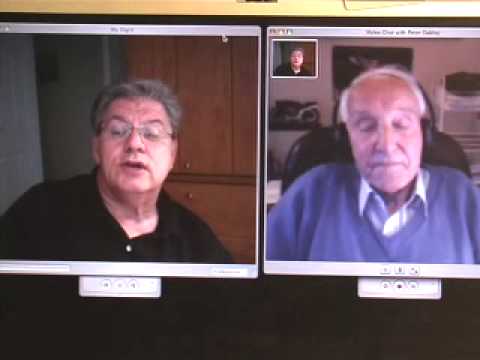
Peter left his stable job as a public-health inspector to open a bike shop and follow his passion for motorcycles. Tom and Peter compare their experiences rejecting their parents' career plans, and discuss how job security has shifted from their generation to today's constant career changes and uncertain wages.
Chapters
Hi guys, it's Tom. Geriatric1927, Peter, and I just finished recording a conversation about work, and it was, as always, a lot of fun talking to Peter. It's fun talking to Peter about anything. It was a lot of fun talking to him about work, and this is part 1 of of that conversation. Uh, originally we were going to talk about what it's like to really meet YouTubers in the flesh, and we'll do that another time. Peter, of course, had visitors to his home, and I was at the 777 gathering, but somehow or other it just felt like it'd be kind of fun to talk about work today, so we did. And, um, I hope you enjoyed part 1 and look forward to hearing your thoughts. Um, keep an eye out for part 2. Thanks a lot, see you soon, bye. So Peter, this is the second in our series of a couple of old guys on YouTube talking about whatever it is that we wanna talk about that day. We had prepared to have that conversation, but I wonder if we couldn't maybe save that just a little bit and have a conversation a little bit today about work, which doesn't sound like it's gonna be as much fun, so maybe we'll scrap it.
I just love a guy who throws in a new subject without any sort of preamble to really put Granddad on the spot. You know, I volunteered for it, so I'm happy to do that. Ask me the question.
I know, you know, I know I can count on you to be there on the spot for whatever's going to happen. Excuse me. So the question that I that I had was about work. People who followed your videos know that you had a motorcycle shop, but maybe you could talk a little more about your work, about the work you did over the course of your life.
Well, I'd have to be very brief. I followed a career, I think possibly to satisfy my parents, who I knew had had to spend quite a bit of money for keeping me at school to get my qualifications. My father was a butcher and his advice was that I should go into a profession where I would have a higher salary and possibly a motorcar and I followed his advice and I became a public health inspector, which was quite a long training and followed that career for a number of years. But I have told the story before, really, that my whole passion in life was motorcycles and the time came when I decided that I would follow my dreams and go into the world of motorcycling.
Yeah, you know, the idea of— excuse me— the idea of taking a— following a path that is going to be secure and is likely to you know, give you a solid career for all of your life, I think is something that was very prevalent in certainly in your generation's days and in mine as well. Yes, indeed. You know, my parents were also working-class people and the idea, you know, they wanted me to be a lawyer because first of all I could talk a lot, which they thought automatically meant you know, being a lawyer. If you could talk, you should be a lawyer. The idea of being a lawyer, when I found out what lawyers really did, nauseated me. Not because lawyers can't do interesting things, but I just didn't want to do the things that lawyers did. And so I tried to find something myself that was going to be a passion for me. The, the, uh, But today it's very difficult to know what would even be secure.
Mm, exactly that. I think that's the whole point. I do have great compassion for young people these days because in my day, you, whatever you did in life, uh, you had an increase in wage up to the age of 21, which you knew then was going to be the highest you were ever going to get, and you had a job for life. And you cut your cloth according to your purse as a result. But today people's jobs are not secure, and it must be very difficult for people who've studied hard and gone into some profession to know that their life could be forced to change, not by their own desires.
I think we have to, you know, that young people today have to expect that their lives are going to change, that their work is going going to change. I think there are statistics that say, you know, back in our generation's early days, people could, as you say, have one job forever, and they might change jobs a couple of times over the course of their lives. Certainly changing careers like you did was an unusual thing, not just changing jobs, but, you know, changing employers, but changing careers was a very unusual thing.
Well, yes, it was very much of a gamble, but I've never been a slave to money or possessions, and they didn't seem very important to me. The fact that I'd got a salary which was twice everybody else's wasn't terribly important because I hated the job and I loved motorcycles, and I gave up that job and went to be a motorcycle mechanic, with a firm with whom I've been friendly for many years, having been involved in the sport of motorcycling. And bless his heart, the boss of the firm, it took me probably about a whole year to get him to give me a job because his advice was all against it. He reminded me what a safe job I had got and what prospects I'd got ahead, and he thought I would be very silly. But bless his heart, he gave away gave in eventually, and I worked as a mechanic for probably a third of the wage I got before, but of course was very happy in my work.