11 Tips on Making Impactful Connections in Sales and Leadership
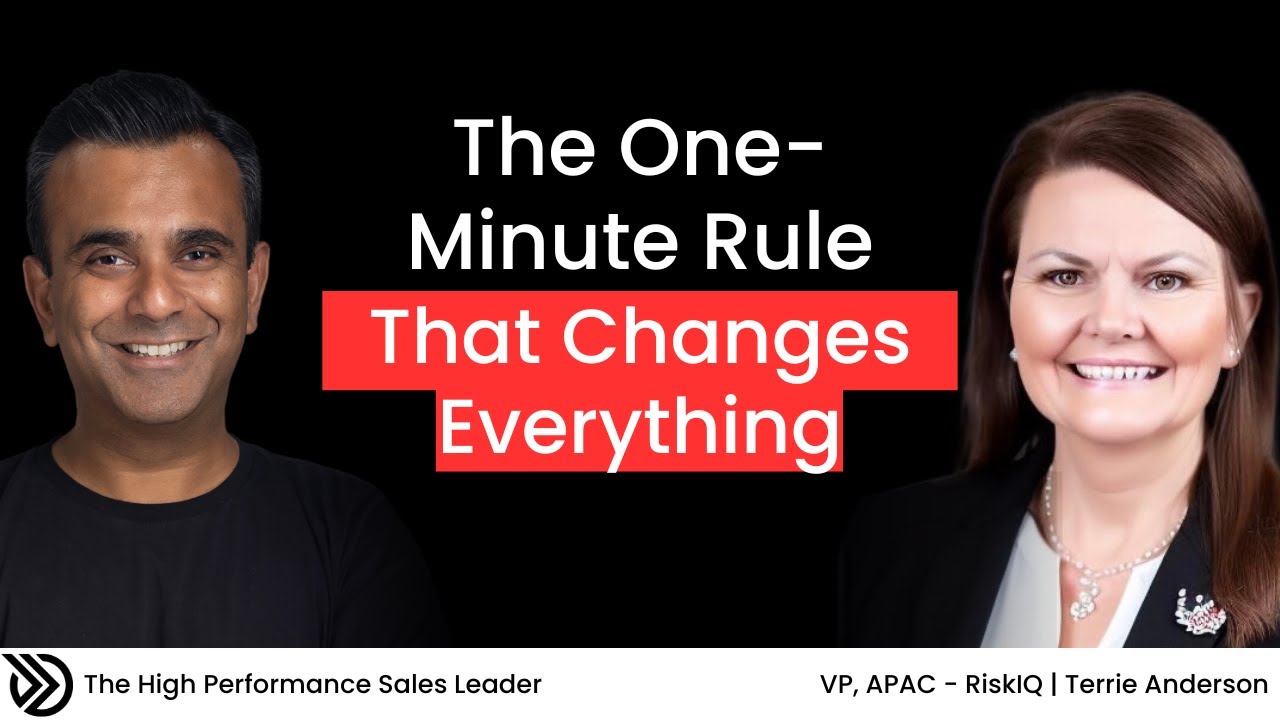
Terri Anderson, a cybersecurity executive and author, shares the "One Minute More" principle: give each person you meet an extra minute of genuine attention. She also outlines a triple-tier value network for relationships and argues that mindfulness and positive reframing matter more than formal credentials in building meaningful connections.
Chapters
Welcome to the Switch Gears Podcast. This is your host, Preet Saka, and today I'm joined by Terri Anderson. Terri, welcome to this conversation.
Thanks, Preet. Thanks for inviting me. It's great to be here.
Now, let me introduce Terri. Terri is a business leader and has worked with RSA Security, Symantec, Vanafi, and Microsoft, building and growing teams and regions across Europe and the ANZ region. What I love about Terri is that she's the author of a number of books, and that includes Legendary Selling, 30 Days of Inspiration, The Little Red Success Book, and one we're gonna talk about today, which is The Human Connection. So, Terri, tell me, what motivated you to write books?
I think I had all this stuff in me where I was naturally a bit of a coach and a mentor for people. And people just kept asking me, can you write this stuff down? And so, it started with The Little Red Success Book was the first one, Where I wrote down the stuff that I was using to coach people with. And then it just grew from there. Plus, I love it. I love writing.
Yeah, that's fantastic. And how did you get into sales and leadership in the cybersecurity industry?
That's really interesting. I started off actually being, trying to follow what my school counselor had told me I should be an accountant. Because back in those days, because you can all see that I'm very old. So back in those days, Accountants were the only people who earned double figures. That way they were a big deal. And, but then I discovered that accountants got stuck out the back and didn't get to meet people. So that was no fun for Terri. So, kind of dull, Terri, probably boredom is my worst, my worst fault. I started to realize that I had the right style for sales. And then I got interested in the business side. I did well at economics and it just grew from there. And then I started off always in technology because I've always been fascinated by the benefits that technology could bring. And I think when I started, that's what technology did, bring just benefits.
Yes.
And then as time progressed, I began to get interested in not only the benefits that technology brings, but I started to be concerned about the negatives of it too. And then, and then of course, cybersecurity hit. And when I first joined cybersecurity, it was with RSA in Australia. I actually started it here as their first employee. And people used to ask me if I worked for the Republic of South Africa because nobody knew really what cybersecurity was. And, and yeah, and since then it's been like 25+ years in cybersecurity and I absolutely love it. What other industry can you travel the world, have a great life, and sit and discuss with some of the most famous people in your industry with a glass of red wine at 4 o'clock in the morning in Las Vegas or something, but you're sitting around solving the problems of the universe, right? It's a really interesting space to be. Oh, that's amazing. And just met amazing people. That's been the big thing is just meeting the most incredible people who are either in law enforcement or government or vendors, all with that mission to try and keep the world a safer place online.
That's amazing.
We've failed miserably, by the way.
You almost had me where I thought when you started with what the counselor told you that you should go and do. And I'm like, that would be a first where I've done exactly what the counselor told me. Let's get back to the books. You have had an absolutely stellar career, but you've been able to codify success and things you've learned through writing these books. And as an author myself, I have immense respect for the time, effort, and energy it takes to actually produce a chapter, leave alone a book. You talked about the Little Red Book of Success. Walk me through some of your books and what were The inspiration and motivation behind that.
Okay, so the Little Red Success book was inspired by the coaching I was doing, and people just kept asking me to write it down. And then I started to receive really nice feedback from people on how the program helped them come to a new— I mean, this was all pre a lot of the current people who are doing there. I'd spent 10 years developing myself, over $100,000. And I thought if I can use some of what I've learned and let people have that for a lot less money than that, because not everybody can afford that sort of money and, or wants to make that commitment. It was a huge commitment. Yeah, there's just been some wonderful stories of people in all sorts of walks of life that book helped. And then as I've grown, the books have just come. I'm weird. I write in my head first.
Yes.
So I spend months wandering around in weird places and the book's going down in my head. And then when I start to write, I need a very understanding partner because I'm just compulsive, obsessive about when I start to write, it just pours out. So it's a weird situation, but the book's already in my head first.
That's fantastic. And in terms of what was your next book and what did that, what's really that about?
So then I wrote 30 Days of Inspiration, which is just how to apply the Little Red Success book in a 30-day period, how to do enough. Because 30 days is not too long. And if you can actually create change in that time and you feel better, it encourages you then to take on a longer program. And then I wrote— now I spent about 8 or 9 years, nearly a decade studying. I feel a bit bad here because I think I've plagiarized everybody I've ever met. But I studied all the people who were in sales that I really admired. And I saw them achieve year in, year out, year in, year out, no burnout. All very different in personality, all very different in style. And I thought, what are the common denominators amongst some of these amazing salespeople that are, that yeah, they're earning phenomenal money, but they're also, their mission is beyond the money. It's about really being a partner for their customers and their customers go with them wherever they go.
Yes.
And after studying that, I decided to write those attributes down and that's how the human connection was born because that was part of that. And then people just kept coming and saying, hey, I want that bit, but I want it just in a little book on its own because I want to give it to my auntie, my cousin, my teacher, my friend. And so then it, then Human, One Minute More, The Human Connection was born.
Fantastic.
Sort of, I've been pushed along by my readers, really.
I think that that is both extremely intelligent and responsive to what the feedback that you're getting. The human connection. We've had a conversation about this before, and it really impacted me. The Powerful Secret of One Minute More. And as I read through the book, it talks about the value of a triple-tier value network. So it's not only just being a good human, but also it's a smart human, right? I'd love to get your thoughts on a bit of a, the genesis of the book and some of the applications that you've had. Sure.
So I guess my journey into having a One Minute More life started with somebody that I actually hired to be a salesperson who in the interview process had told me that they knew 3,000 people in the city of Wellington in New Zealand. And I thought, yeah, that's a big claim, but salesperson, what the heck? And as it turned out, there was something more powerful than that. I would say that 3,000 people knew who he was. And that's a big thing. We can all say, hey, I've met Pri. But does Pri— but in the reality is, does Pri remember me? Does Pri know me? And that's when you know that you've made connections is when— in fact, just yesterday, someone reached out to me and said they spoke to somebody that I interviewed with 5 years ago. And I said, oh yeah, he was amazing. And I rambled on. And they said, oh, he said something similar about you. And I was like, wow. fancy that person even remembering me. Like, that's amazing. But that's a real gift back from the universe that says, okay, you do it. You're making a connection that is memorable. And that's very important. Memorable in a positive way, obviously. The thing about One Minute More is it can be used for good or it can be used for bad. The human connection can be used on either side of the fence. The universe and people don't judge on that. It's a matter of how you— So some of the most charismatic evil people have probably used quite a few of the human connection principles too. So yeah, if you're out there and you're evil, yeah, you can still use it. I probably won't be your friend, but it'll work for you just the same.
Yeah. So in your book, you talk about Kamal and the impact that has at the— tell me a little bit more about that.
So Kamal Sharma was somebody I'll never forget. He was abs— he never said Professed to be a master, but he was a master of the human connection. And he was the one that really explained the One Minute More principle to him. So I really owe this to him. But my initial reaction was, he said to me, look, because he just did stuff. He'd go out to the sandwich shop and he'd come back with a sandwich that was like this big. And I'd come back with a piece of cheese between 2 pieces of bread and we'd ordered the same sandwich. And everywhere he went, people were opening doors for him, not literally, metaphysically, and just Stuff happened for him everywhere. And he could make connections into powerful places that blew me away. And so I sat him down one day and I said, hey, you got to tell me, like, how do you do this? Do you walk around sprinkling magic dust over everybody's head or what's the story here? Like you're hypnotizing people or it's weird. And he said, no, he said, it's very simple. He said, the simple philosophy is every person you meet in any day of your life, You just give them 1 minute more. And that 1 minute more is to recognize and respect them as a human, not the job function that they're doing. And he said, and it makes you memorable and it helps you remember them. And he said, just amazing things happen in your life as a consequence. Your life changes. And because you change, other people change around you. And he said, and you bring a lot of joy into other people's lives because most people go in, they order, for example, to go back to the sandwich shop, walk in, order the sandwich, lady makes it, hands it over, takes the money. That's the end of the transaction. But if while she's making that sandwich, you can take that 1 minute more, it changes the dynamics because you've connected to her or him as a human, not just as a sandwich person providing a service for you. Same happens everywhere. Airlines, check-in desks, hotels, business, private, your kids' school teacher, doesn't matter. If you make those connections and just take that— so, you know, I said to Kamal, I can't do this. I'm a busy— I'm a busy executive. Like, I'm really important in my own lunchbox. And I can't possibly take one minute more. And he just stopped me in my tracks and he said, Terry, how many people do you meet in a day? New people, how many do you meet in a day? And he said, let's say, let's make it extreme. Let's say you meet 30 new people every day, which of course you don't, but let's say you do. That's 30 minutes. But he said, really, realistically, you probably meet 5 new people every day. That's 5 minutes. And I was like, it was that perspective that really shocked me. And then I screwed it up. Like I would do it for three days, and then I'd be busy or grumpy or whatever, and I just think, bugger it! Haven't got time. No, I'm not going to do it. That's it. I'm just too busy. And then I noticed the difference in my days, and I noticed the difference in people's reactions to me. And I began to come into a place of gratitude to Kamal for what he'd for the gift and the secret that he'd shared with me. And then I just began to practice more and more. And, and yeah, and since then there's been some amazing stories. One of my favorite stories is very close to home. It's very personal. My current partner is Belgian. And when I met him, he'd been through a fairly ugly marriage breakup. And his mom and stepdad lived some distance away. And they had a fairly, what I would describe as formal relationship. And his mom had never really spent time in his family home and stuff like that. And he would ring them and he would talk about all the stuff that was happening and then he would hang up. And so I decided to coach him on One Minute More. And so he started to take one minute more with his mum and ask her about her day and her life and her thoughts. And the relationship has changed so dramatically. And he's forever in gratitude to me for what's happened. She's come now twice out to Australia. Um, and spent 6 weeks with us.
Oh, that's amazing.
This is a lady that had never been in his home before. And they have such a beautiful relationship now. And I, I feel happiness every time he calls his mum or his step. And he used to say to me, oh, my stepdad's quite formal and blah, blah, blah. Now their relationship is so warm and so close. And it just, it changed the whole dynamics. And you can do that whether it's a business, whether it's just an everyday occurrence, whether it's like I said, your kid's school teacher, and you can do it with your kids. And you can do it with people that you interact with, your teams, et cetera. I just have a personal— I'm very passionate about this subject, as you can tell, because I've seen the difference in my own life and the life of people near me. And I think, I believe that if I could get a million people to embrace 1 minute more, the world would change. I think it's that significant. And I think it's more important than education even.
Yeah.
Now that sounds silly, but the human connection, I think, you know, if it— in education, there can be a lot of dominance. There can be like the professor will want to educate you on what he or she believes in, right?
Yes.
They want to take you down a path. There's this path of dominance and control. Whereas the more you make human connections, the more open you are, the more mindful you are. And the more you make human connections, the more— the less susceptible you are to being influenced by fake news or by one professor alone, but instead being inspired by many and have many thoughts coming in. And if you have many thoughts coming in, you can then use the great rational judgment we all have to work out what is the path for you. So I think it makes people less vulnerable as well.
And I agree with you 100% because we live at an age where there is so much information. And you talked about education, but let's just say information that people actually start disconnecting with people instead of connecting.
Yeah, I have this expression that I use, Pri, which is, never have we been so connected and never has society been so lonely. We're very well connected with all this media and everything, but a lot of us have lost the art of touch and that phone can't hug you. when you feel down and the phone can't celebrate with you when you've just had a win.
And I think that you touch upon this, that you have to be in the moment. A lot of people are not in the moment. They are rushing from meeting to meeting, engagement to engagement, that they're not taking that minute more and they lack mindfulness and awareness. How do you develop that?
So I recommend to everybody that they either watch some videos, but ideally do a course in mindfulness. I think it's really important not only to understand yourself, but to understand your impact on others. And mindfulness does teach you to be very much— it first of all teaches you to breathe better. And the more oxygen we have in our system, the better we function, the better our brains function, the less tired we are, the more energy we have. And then it teaches you to be so much more aware of your surroundings. And so just the old adrenaline flight or fight thing, you have more control over. You're less reactive. Someone cuts you off in the traffic, you're not likely to see red mist and get out and whack their windscreen in or something like you see these crazy people do. And that's just this lack of mindfulness and being in the moment. Try and have quality time in everything you do. Instead of trying to work when you should be with your family and with your family when you should be working, you need to be aware of what you're doing and how you're spending your time. And most of the old saying is, if you want something done, give it to a busy person. And that comes back to that mindfulness. People talk about time management. That's like habits. But mindfulness is so much more. And then ultimately in mindfulness, you will graduate from being in the moment to being in gratitude. And when you reach that point, the arrogance that we acquire from material things slips away because now we're more mindful of the other person that we're trying to interact with. We're more mindful of what their priorities might be, and we're able to feel less offended. And I think getting offended is a very current 2023 Increasing trend. People get offended by everything, even when it shouldn't be offending them. And if we get into that state of being in the moment and being mindful and connecting with each other and understanding where each other is coming from and what the position is, instead of just listening to talk, listening to respond instead of listening to understand. And when we can listen to understand, then we come into this place of gratitude for Even if what you're hearing is something you don't like, we then have that value system within us to judge what we do with that. Where do we park it in the memory? We park it in over in the useless things, useless five minutes I've ever spent section, or do we put it in the this has got some value to it? Does it make you question your own values? Does it make you question a belief that you've had since you were a child, and you didn't even realize it was entrenched in you? But suddenly this person is in front of you, and. You're questioning your own reactions, your own self. You have time to do that, step back.
And that resonates very deeply with me because it's very important to get the focus off from ourselves to actually to the focus on the people that we are engaging with. And I, I could just stay on, stick on what you've just talked about and talk about it for hours, but I want to get your take on Positive framing. I really like that concept. And I think that from everything that I've studied from neurolinguistic programming to how you frame things or reframe things is really important. So can you tell me a little bit more about that?
Sure. So I've got a kind of a little story that I use quite often because I seem to talk in stories, but because everything I've learned I pretty much owe to somebody else. I might have researched the internet and that started a spark of question marks, but then I tend to go and talk to people to get different views and create something from it. So there was an elderly friend of my mum's who lived in Pyrmont in Sydney, and she used to work for the sugar factory. And she was a tough old Scottish lady. She was very robust. She was amazing. And I used to often go and visit her as a young person because I just found her so wise and practical. And she didn't take any crap from me either, which was really good, right? So young person full of crap as you are. I would go in and she'd just sort me out in 5 seconds. It's like, I don't, don't swagger in here. Here's some reality for you. Anyway, she had this window that looked out into this gorgeous courtyard. And she had it all framed with a nice curtain and a blind. And you looked down and you looked into her lovely little courtyard that was there. And I said to her one day, that blind you got there, it makes the room a bit dark. Maybe you should take it away and open it all up. And so she just quietly went over and took the blind down. And I understood reframing in one second. So when she took the blind down, what you could see was all the factories and the power lines and the old rubbish that was around in that, in Piemonte in the era before it became trendy and got cleaned up. When she put the blind and the curtain back, what you saw was her beautiful courtyard garden. Right. So that suddenly became this symbol for me to remember about how I look at things is how I will see things. And you can, I mean, it's obviously it's not realistic to ignore dangers or other things. But you also don't have to look at something that's ugly every day. You don't have to frame it in a way something's happened to you. You cannot change that. This thing has happened to you or where you live, you have to stay or whatever it is, but you can reframe it. You can reframe it as a learning experience. You can reframe it as a, as something. I've been embarrassed heaps of times in my life because I've got a mouth that runs off. And so I'm often saying something, I'm putting foot in mouth firmly. And the number of times in my life I've been embarrassed and then I, but I turned that into a learning experience.
Mm-hmm.
And you know what? If you say to that person, you've just made a big gaffe. Right? You've told an inappropriate joke, you've whatever, you've done it, it's done. The best way to rescue yourself is to reframe that into a learning experience and admit it. Just say, oh my God, I've just learned something. And you know what? The person that, that may have taken offense at what you said is going to have that offense reduced by many percent because you've just admitted that you made a mistake. And you're taking it as a learning experience. And you've just reframed that whole thing.
Fantastic. Fantastic.
So you can do it whether you're doing it physically or metaphysically, doesn't matter. You can reframe pretty much everything in your life. When you have someone close to you that passes away, it's very hard on the people left behind. But if you can try as much as you can, obviously you need to go through your grief and your stages of grief. But as you start to come out of your grief, if you can reframe that back into the wonderful life of that person or the things that person contributed or did that were good, it helps you heal so much faster. That's where I use reframing. I use it all the time. When I get upset, when I get offended, I straight away go to myself, what have I done? How have I framed this? What does this look like? Can I change it?
Yeah, that's amazing that you would even— yeah, how have I framed this? Because I really think that you were talking about people being offended. I think if people were trained on how to reframe things, there would be far fewer— there wouldn't be so many unhappy people in the world, people being offended by everything that's happening out there. Yeah. Thank you. No, that's really good. I want to, before we wrap up, I want to really get your thoughts now on building Triple-tier value network. That was very interesting as well. Can you walk us through that?
Sure. So I'm going to simplify it by saying that many of us spend far too much time worrying about the wrong people and focusing on building the wrong relationships and treating all our relationships the same. So I've built this system in my head of where people belong in my life. Are they in my inner circle and therefore they're going to be critical to me for the rest of my life? Or are they just actually acquaintances, somebody I've met, I liked them, they were nice, I might see them twice a year, I might never see them again, who knows? And I'm often saying this to my partner, we travel quite a bit and I'm often saying to him when he says, oh, you know, that person wasn't so good or this, you know, bad experience somewhere. And I just look at them or he says, you know, oh, do you realize? Because I'm like crazy. I'm always spilling things on myself. You know, like I drink a cup of coffee and I wave my arms and then the coffee ends up on my shirt. And he'll say to me, that's, you know, my God, you've got coffee all down the front of your shirt, you know, or you've got dog hair all over you because I have a small dog and I've picked it up and cuddled it. And my thing back is always, where do they fit in those circles? Where, how close are they to me? How much should I care? what that person actually thinks and if that person judges me on dog hair or whether that person even matters, right? And so, I have this tiered system of where I file people, if you like. It doesn't mean I disrespect them. It doesn't mean that I don't like them. It just simply means— so, my partner, my friends, Close business associates that I've built a long-term relationship with will always be in that inner circle and they'll always be valued and I'll always go to extreme lengths to support them and help them. But somebody that I've maybe met a couple of times and may not meet all that often, and I don't care if they're the President of the United States, doesn't bother me, they will be in that outer circle because it's a different balance in that relationship.
And you talk about—
I don't know if that different perspective helps on that.
Yes, yes. And you talk about growing the new and nourishing the known. Tell me a bit more about that.
So the more people we connect with, the more people we make a human connection with, the better and richer our lives are. So we always need to be open to meeting new people, to having interesting conversations with people, not just Passerby rubbish, but actually having— making that connection. But we mustn't forget to nurture those relationships. For example, I have a relationship, and I realized the other day it's the longest— now that a lot of my family have passed away, it's the longest relationship in my life. And I hadn't thought about it in this context. I've known this lady since I was 8 years old, and we still catch up, you know, every couple of months for a telephone conversation. And I, I realized how important it is to keep nurturing that relationship because she's somebody that has a huge value to me. She gave me a gift a few years ago. She said to me, Terry, I've got to tell you something. I said, what's that? She said, I've known you since you were 8 years old. And she said, over the years, you've had times when you've had lots of money, been highly successful. You've had times when you were on the bones of your ass. And had nothing. And she said, the thing I want to tell you is you've always been the same person.
Wow.
And that was a perspective I could never get any other way, right? I could never get that feedback and understand that I, that that was something I should cherish and keep working on and make sure that didn't change. It was something she'd valued for a lot of years was the fact that I was still the same person, no matter what my physical circumstances were. And that's just about nourishing the known. And not getting so excited about the fact that you're now mixing with mostly CEOs and presidents, whereas 5 years ago you used to mix with techies. Don't get confused about the value and make sure you still look after those special relationships you've created all the way through your life, as well as always being open to where the next new relationship will come from. It might surprise you that common ground comes from somebody in a totally different walk of life, in a totally diverse culture or situation, that you find common ground. And look for the common ground. That's the big thing, right?
Yeah. Terri, you have packed so much wisdom into this time. I am immensely grateful. Every time we've spoken, I've just walked away impacted and thinking a lot more about what you've said to me. So I just want to thank you. You clearly are someone who— you started with talking about the investment that you made in yourself and the amount of learning and really sharing and observing. I can say without a doubt, I know that you leave a mark wherever you go, you make an impact. So thank you again. I, from the bottom of my heart, this has been a very enlightening conversation. Thank you.
Thank you, Priya. I really appreciate it. And thank you for the feedback. It's always nice to know what people think and how useful you can be, because my, my goal is to leave the world a better place than I came into somehow.
As a finishing line, I will say it was Dave Reeves who said you must talk to Terry Anderson. She's written The Human Connection. So it definitely— you have made A mark if people are telling others about it. Yeah.
Thank you. That's lovely. Yeah, Dave's great and he's someone who has become a One Minute More practitioner. Yeah.
All right. Thank you so much again. Bye-bye.
Thanks, Pri. Bye. Bye everyone.
More from Tom




Why GTM Leaders Still Struggle with Pipeline Visibility in 2026 | AI vs Traditional CRM





How to Build High-Performance Sales Teams | Direction Alignment Commitment (DAC Framework)

