From Startup to Scaleup: How to Make Revenue Flow Fast
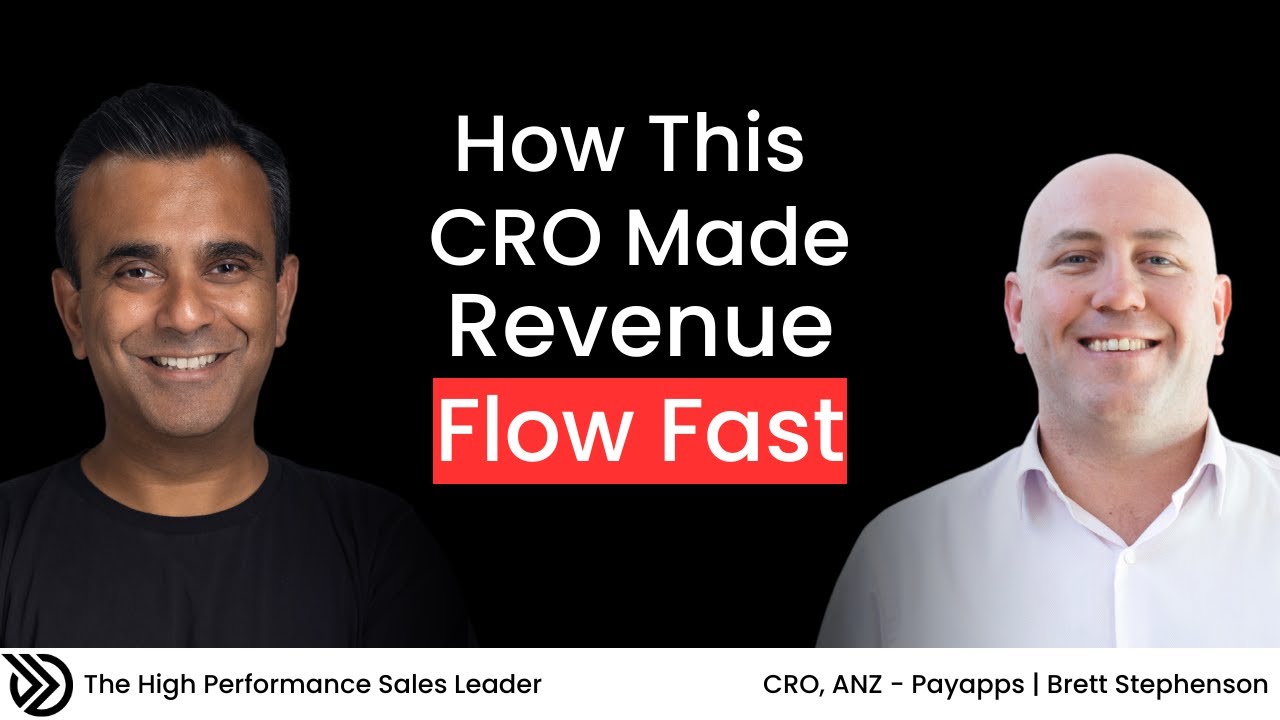
Brett Stephenson, former PayApps CRO, breaks down three scaling challenges: hiring people with tenacity and curiosity, firing low-value customer accounts to focus on high-margin ones, and forcing sales and product to sync weekly. He now applies these lessons at Early Trade, a construction payment marketplace.
Chapters
Brett Stephenson is a high-performance sales leader. As the CRO at PayApps, he led the GTM team through to a successful acquisition by Autodesk. And there's a lot that we can learn from him on how to make revenue flow fast. Brett, thank you for joining me today.
No, thanks, Brett. It's a pleasure to be here. Nice to join you.
Fantastic. Brett, you have worked through one of the big Aussie success stories in terms of the growth of PayApp, you know, Deloitte Fast 50, then through to acquisition by Autodesk. And not many people get to live through that experience. So, as the leader of the GTM organization, you know, I was really keen to understand, I guess, first, some of the challenges that you see in scale-up organizations, as well as what are some of the solutions we could have in place, because a lot of people who watch this show are in that same scale-up organization with common day-to-day frustrations. So, what would you say are some of the big challenges that you've encountered along the way?
Yeah, thanks, Preet. I think really for me, it really comes down to 3 of probably the main challenges that I kind of see when we think about those challenges in startups and going to scale-ups and hopefully moving through that business line. And first of all, it might sound simple, but it's the people. It's having the right people sort of in that process. Second to that is definitely going to be the customers. And, you know, something I'm sure we'll dive into. I think a lot of people have, you know, raised eyebrows at saying, what do you mean the customers? But, well, you know, there certainly is right and wrong there. And the last one, and really most importantly, where, you know, there've been challenges and, you know, in my new current role with certainly with Early Trade, I've seen this has done really well, is that lack of collaboration on some of those teams. And so really just trying to look at some different ways that can certainly move that forward.
Fantastic. No, that is very, very topical. So let's jump right into the right people. What do you mean by that? You know, what do you look for?
Yeah. Now, it's interesting. Look, if it was easy, everybody would have the solution. You're right. I don't have it either. It's just that where I've seen this sort of go well and, you know, sort of work it out, it always leads back to culture. But really what it comes down to, if you think about it, there are a lot of people who perhaps have worked in large organizations and the biggest organizations and used to certain processes and procedures and engaging in things. And it's, you know, Hey, such and such has got an idea, the board's got an idea, whatever it may be, the shareholders, the CEO. But then we sit down and we have numerous meetings, we collaborate across leaders, managers, etc., etc., come up with a plan, everyone has action items, and off we go and we do that. You then pivot to a startup scale-up mentality on the complete opposite side of the coin, and that is more about getting your hands dirty and getting it done. There's a much more crude way to say that, but we'll keep it above line for the sake of our podcast. But really about where it's not just about Let's go and have a conversation. It's actually, I've got to do it. I've actually got to deliver these items. And so, it's kind of going, how do I go from A to C, not necessarily skipping B, but how do I just enforce it? And so, getting the right people is important. There are some people in a large organization that come to a startup and they struggle because they don't have the foundations or the processes in place for them already. They're used to being told, this is how we do it. This is the process. You follow these steps. Now, conversely, it also doesn't work the other way. You get people that are used to startups, scaleups, going to large businesses, and they struggle because they feel trapped. They feel like, I've got to follow this process, I've been told to do this, and I've got to follow all these boundaries and kind of all these things wrapped around them. And so this is why a lot of times people in startups and scaleups don't like to become corporate. They'll use the word corporate because of that reason. They don't like the process. So when you think about getting the right people into your startup and scaleup, it's really got to be these people that have got that tenacity and willing to roll your sleeves up and get it done. guided in the right way. But you are looking for people that really want to get in and have an interest of almost, you know, just saying, we've got to get to the end goal. What steps do I need to get there and take people along as opposed to waiting to be told what to do? Sounds easy, but it's not. There's a lot of people that just can't, you know, don't think that way or think very differently. So as I said, works on both sides of the coin.
That's great. And you bring up a really good point in terms of some people have just been institutionalized in large organizations, because they have been restricted for a number of reasons, that it can be quite unnerving. People will tell me in confidence to actually not— the level of ambiguity. So what would be some of the 3 to 5 traits that you'd look for, for someone to actually— when you look at some people who've done really well in the environment, What are 3 to 5 traits that you would look for?
The first one is when you go through an interview process with people, I'm always almost not more, but just as interested to see what questions they ask us as the people looking to hire, as the potential employer. I wanna know what the potential employees are gonna ask. If it's an internal personal thing, what are my work hours, what's the remuneration, et cetera, et cetera, that's fine. And of course you should ask those questions, I shouldn't. But it's more about people that say, what's the vision of the business? What's the mission of the business? What is our short-term goal? What are the long-term goals? Explain to me what the structure is. Do I have the ability to work autonomously here? What does that look like?
Yeah.
And there's a risk that some people could be thinking, well, they're asking that because maybe they're going to— maybe they're kind of not wanting to do the work. I mean, they'll be found out pretty quick. But in my experience, the people that ask those questions, and I've definitely had a few of them along the way that have actually done really well like that and done this incredibly well and have succeeded, is because you can see them going, how can I impact the long-term goal of the business? How can I be involved in the delivery of the mission and the vision? As opposed to what's in it for me, it's more like, let me come and show you how I can shine and help you take that business to the next level. So that's definitely one that's really important. I think the other one that sort of has always come to me is where, you know, looking at what they've done before and the reasons why they've necessarily changed careers or moved paths in what it is. And is it, you know, is it one where you can see that person, you know, clearly they might have the skills and the abilities you're looking looking for because, you know, we should be looking at skilled hiring, but also sort of saying, well, I wanted to leave there because I couldn't see the growth for myself. You know, I was stuck in the mundane, which is potentially maybe that corporate kind of view. And it's those kind of people that you really want to look at and get. As I said, if they're not right, but you'll find out very quickly because when they get in the startup scale-up environment, they'll either sink or swim pretty quick. They're the 2 main ones that I certainly can think of. And then I think early on when, if you do make the hire and they are in the business, give them something, give them something they can look at, turn around and say, Okay, you're in charge of this and, you know, get them in the deep end and see how they go. The right person will swim very quickly and the others won't. But yeah, as I said, it's really for me, the top one is really those interview questions they ask at the end of your interview. I always make sure I leave a good 15 minutes in the interview for them to ask questions. And that for me anyway is a defining moment of whether I think they'll fit the culture of a startup scaler.
Yeah, you make a good point. I think what you actually ask is as important as what you say when you have an interview, right? Because I think asking good questions demonstrates a high level of curiosity, a high level of interest, as well as they are making an assessment whether this role is going to deliver the essential things that they need to be able to succeed in that role. So I think that that is very, very healthy.
And I was going to say, I think that too, as well, it also shows that, like we were talking earlier about, you know, you want someone who's willing to get in there and just do what it takes to get the job done. If they're coming in prepared with questions, it also shows that they've actually reviewed the business, they've done some homework to go, this is interesting, I'm curious about this, I think I can make a difference, this could be a place for me for the next, you know, 1, 2, 3, 4, 5 years, whatever it's going to be. And that, you know, that's what you want, right? You want people that are going to go out there and find a way to make it happen.
And that starts with, you know, getting an understanding and doing some research Yeah, and absolutely, I believe that, you know, when you have the right people in the right seats, that is a critical component in being able to move forward rather than that becoming one of the bottlenecks towards making revenue flow. So next thing, tell me a little bit more about customers. And, you know, the business exists to serve customers, but we all know that not everyone is a customer. So sometimes you can get you know, off track. So what are the right customers that, you know, will enable the growth of a business?
Yeah, and as I said at the start, we looked at this, I'm sure there's some people raising their eyebrows going, what do you mean the wrong customers or whatever, you know, aren't they— don't we all want customers now? And it's difficult, there'll be a pivot point in the business. I think initially when the founders start, there will be a lot of the times it's, you're going to have your industry and your market you're in, of course, but a lot of the time it's just go grab everybody, just, just blanket reach out to everyone, prospects, CRMs, let's Let's get out as much as we can, get our SDRs or BDRs, whoever it is, let's get them calling or founder-led calls, whatever it may be, let's go talk to everybody. But as the business starts to, as that startup goes and starts to get to the scale-up phase, what we always see happens is that we, the businesses start getting sort of held up and hooked on certain requirements or things that are being asked by some of these customers where you find you've drifted away from your core offering or your core product and you're actually trying to make your product kind of bend and conform to what the customer actually wants. Now, it's tricky, right? Because if a lot of customers want that, that could be a pivoting moment for your product to go, actually, that's where we should be going. But it's hard to know. Sometimes it's not. And I have seen other businesses where it's, you know, you sit down and have conversations and they say, well, that customer doesn't like that it's blue. They want it to be green. It's like, well, that's not really going to work for us and what it is. So, where I've seen it work well is, and it's a bit of a crude term, but, you know, be willing to fire a customer. If you get to the point where customers are starting to drain the resources you have, and remember, our idea of what we're trying to do is grow that revenue in a consistent line. We don't want to be up and down. We want to be consistently growth. The board loves consistent growth. So do investors. So do everything. Consistent growth is really, really important on stable, consistent growth. And so it might be that you need to fire some of those customers where you just say, these are draining on our resources. and actually from a revenue perspective, we're actually not getting anything out of it. This is not actually helping us do that. Once you get to that point where you have to then do that, really what it comes down to is let's stop and have a look at our potential new logo acquisition for new customers and perhaps just give ourselves a little bit of a tighter niche or a tighter segment that we're going to go after just to make sure. And, you know, it's interesting, we talk about simple sort of sales techniques. What invariably happens here is that once we then start saying to ourselves as our sales reps and sales teams, ask a little more curious questions of the prospects you're talking to, you find that actually the potential customers react better because, as we say in sales, we should be listening more and talking less. So by asking questions and engaging more, you have better conversations with potential customers anyway. And I think for anybody that's listening out there and certainly has been in sales and growth like we have, we know that a lot of customers really respect the fact that if you say, look, I've heard you, thank you so much. To be honest, I don't think we can help you. We're not the right solution for you. And they respect that because they understand that you're not just chasing the dollar. You're actually out there to make it work well for them. I had a meeting with one of our new customers just yesterday, and the conversation we had with them was, they said, sorry to ask all these questions. And I said, not at all. Neither of us wants to get 6 months down the line here and find out this is not a good fit for either of us. That won't work. And as I said, they were incredibly happy to have that conversation. So, it might sound a bit strange, but you really need to make sure you're focusing on the right customers. And then once you've got them, have a hard look to make sure, are they actually going to deliver on your growth in that revenue, or are they going to hinder you? Because it might be time that you need to pivot and look at firing someone.
Well, you make a critical point about product-market fit, because I think that at the end of the day, the greatest value that you can give to the right customers is achieving that product-market fit. Because, and part of that means it will not be the right fit for others, because if you end up having a feature or a function that other customers just don't see how that fits into what you're trying to do, you're going to end up alienating those who are already with you on the platform. So that makes complete sense. And I think it takes courage and character to be able to say no, especially when you're under pressure to deliver numbers, right? I mean, who wants to say no after you've done all the work of getting to that point? Yeah, for sure. Terrific. Tell me more about the 3rd component of the challenge that you mentioned around the collaboration and the execution.
Yeah, now this will be a contentious one, Pri. We know this, I already know this straight up. This is because it always is, it has been in every of the startups I am in. As I said, luckily, I'm in an organization now where the culture has driven this to be actually something that's actually requested and works really, really well. The lack of collaboration. And in my mind, there's 2 main lack of collaborations, or if we can, butting, if you like. The first one that comes to mind, and this will be in any SaaS business, especially any software as a service company that's out there doing that. And this is the lack of collaboration or the butting of sales and product or revenue and technology, we could say, if you wanted to look at it more of a broader scale. And I do want to call out neither of these departments. There's nothing personal there. Nobody has a dislike for anyone. It's just that when it comes down to it, the technology or product and engineering team will say, here's the roadmap, here's what we're going to build, here's what we see best on a technology side that might be ready to go. And then you have salespeople who, as we know, are rather extroverts and happy to have no problem telling anybody what we think. And so, you get this sort of merging of when sales comes and says, well, that's not what the customers want. I can sell this next week if you do that. And there's a little bit of a personal agenda there because they say they want the deals themselves. They want to be recognized for those deals. But at the same time, products are going, well, that's not on the roadmap and we're not going to fit it. And so, you just get this kind of butt of hitting the heads of where it's going. And I think really, let's talk about some of the ways to fix that before we move on to the second one because I think it's cool. We'll keep going with the same thread here of what that is. Where I've actually seen this done incredibly well is, let's say, for example, product was going to do a sprint or release or whatever they call it. So, that section of time where they're building new things or products or even just keeping the wheels on and updating the back house, which is obviously just as important. Typically, there might be, say, a budget or a thing attached to that, that they spend a certain amount releasing new products, new features, etc., etc. Where it's done really well is actually for the product team, the engineering team, might be a CIO, CTO, these sort of people, to turn around to the head of sales and say, we're going to give you 5% or 10% of that budget every sprint or every release, and you can determine what you want us to build from a sales revenue perspective outside of what we're normally building on the technology side. And so, you can see really quickly, if it's my analogy I used before, the customer saying, I don't like it blue, I want it to be green. The sales leader all of a sudden goes, "Well, hang on. That's my one thing. This this turnaround, which could be quarterly. Mind you, it's not every fortnight. Some of these are long, but they're going, "Well, I'm not really going to use my time for that." So what actually happens is it forces the sales and the revenue team to look internally and go, "All right, guys and girls. If we do have a shot to actually put some good input in to have something build ourselves, we want to make damn sure that it's something that's actually going to deliver to us and actually generate sales." And so it becomes not about the one person getting the sale; it becomes about the team, the revenue team or sales team. How much more sales? they're going to get. So then you're actually driving that revenue flow that we're talking about. The other thing is product and engineering or technology, then they're going to expect to go, well, guys, that's your call. We'll build that. But if it doesn't work, it's on you because you're the ones that asked for it. And so you start getting it. And then very quickly you start getting sales asking questions to go, well, is that a good idea? Will that— and very quickly the collaboration starts to work quite well and becomes a bit of a fragmented circle. And then it sort of irons itself out and you start getting everyone moving on the same thing and a bit of bit of common goal and common growth, as I said, to that consistent revenue line. So it is a tough one to do though, right? Both sides have got to let go and kind of say, let's do it. But I think it's a really nice way to look at it for technology to invite sales in and say, fine, you'll have X percentage and you can determine what we're going to do, but it's on you if it works or fails.
That's really good.
So really nice. Something different there for people to do. The other one that was there was that other than sales and product was going to then be And anybody that's worked in sales long enough will know this is the sales and marketing one.
Yes.
And it is similar to sales and product, as I said, but our salespeople are extroverts and have no problem telling people, so that's fine. But when you think about it, this one to me is probably almost the most important one because realistically, these are both revenue-generating departments in my mind. They both go towards the North Star of revenue generation and building. And if you can get both of these working together in harmony, that growth line will be certainly consistent and stable, which is what you want. So, obviously, as we know, the marketers are typically very qualified. They're incredibly good at what they do, and they know what is going on in the market. They've tested, they've seen what's worked, they've brought their experience from other organizations, or they're part of groups with other organizations. They know what's going on with agencies, they can see what they do. So, they really know what they're doing. But you've got sales who are sort of one-to-one engaging with current and/or future customers as they go. So, it's really going through. And, you know, it's typically salespeople, once again, that are kind of looking at it thinking, well, it'd be really good if we did it that way instead of this way. And I think it's tough. A lot of the times, it's actually an opinion that comes across from the sales team as opposed to a direction. But because sales are so used to being extroverts and out there, it sometimes can come across as abrasive. I don't think it's meant to be that way. It just does. So, Look, the best solution that I've seen where this really works is if you get your head of marketing, and it really should be the marketing lead, the person that really is directing and deciding on where that marketing budget is spent and what it goes, you get them to join the sales meeting once a week, and it needs to be weekly, and they give literally a 5 to 10 minute update of, guys, here's what we're doing for you, for the sales team, for the next week.
Yes.
It's not looking backwards because all you're going to do is get bogged down in, why did we do it that way? We should have done this. It's looking forwards. Here's what's coming up. Here's what we're doing, etc. Don't forget we've got the trade show event coming up. Make sure your customers were invited, etc., etc., etc. And really putting it through. So I think that that works well. I think the only the only section over that I would have is that when you are talking to customers, it's really important with marketing and sales that you you carve out a section and go to them individually. What you don't want to do is find you're both hitting the same customer because there's nothing more frustrating than a customer getting. 2 separate emails from the same company that looks like they haven't spoken to each other.
Yeah, absolutely. And what you're really talking about is optimizing and focusing your resources because each one has a role to play in the customer journey, right from awareness through to purchase. And just like you said earlier, I think that each one has a valuable component to play. I see a lot of marketing teams where they have a lot of marketing leads, but it's not translating into sales. And you've got sales who complain that the marketing leads are not good enough, they're not qualified, and they're not— and so I think that any improvements in communication and collaboration in that team can have a significant impact in how those teams work.
One thing to think about, we talk about the start about the right people. I think if you think about marketing, certainly for startup and scale-up, it's probably one of those ones where, you know, The head of brand at a corporate, you know, marketing type level department might not be the right fit for your startup scale up. So when you're thinking of those, right, you really want to get the people. The crude term, you know, we want doers. You want people that are going to get in there and kind of go, "I'm happy to sit down and do the strategy and discuss the plan, but at the same time, I'm willing to go and actually do the LinkedIn post, and I'm willing to go and do the social ads, and I'm willing to go and set up a trade show. You know, do it all kind of thing, and then be the owner and grow that team. If you get the other one." You get that deer in the headlights again where they're kind of going, well, I'm doing the strategy, but who's going to actually do the stuff? So just as important to hire that one to make sure you get it right because they will then fit perfectly in with your startup sales team.
Absolutely. And conversely, what would you want with the sales reps who are collaborating well with marketing in startups?
You're right, just as important. I think for those ones, you know, ideally we want reps that obviously can close. That's important. But I think at startups too, there's an opportunity sometimes to get, perhaps not get the best of the best and the person who's got the highest level of experience because similar to marketing, they're going to bring some of their own feelings or concerns or habits as we know in sales is always there. You want to get somebody that's kind of in the top of average so they can come through but also enough to kind of absorb information and say, hey, you give me the things and what you need me to do, I'll put my own polish and spin on it and then I'll go and hit the market and still be hungry. You want people that are really hungry on that and sales is kind of a bit easier, right, of hiring those salespeople. You say, look, we're on a growth journey, we'll make you part of it if you can make them part of some ESOP or some share options or something, and you just go, hey, if we succeed, you succeed. A lot of those ones that do well, they'll stick with the business right through to scale-up, if not potential acquisition if there is one, because all of a sudden they feel like they've got a personal investment in the company.
Fantastic. Before we wrap up, Brett, this has been so useful. Tell me a little bit more about your latest journey, the company that you're working with.
Yeah, thanks, Preet. So look, I made the decision to join Early Trade, someone who I knew was in the market. It's a company that's been around since 2008. 2017 in the markets in Australia and New Zealand. They've just expanded into North America and into Europe and moving into the Middle East. So a fast-growing business, and hopefully I can help them on the similar journey as we did with my previous companies. But look, really the best way to explain it, I'll explain where it came about, and the problem was really around— and if you think in the terms of, say, construction market, you know, these subcontractors and suppliers who may perhaps want some capital or some available cash available for them, if you like, Either they can't get it because the documentation they need is so heavy for those that don't have it because they're a small business, or the cost to pay is just prohibitive. They can't do it at all. On the other side of the coin, you've got general contractors or main contractors who have a lot of working capital that they're looking to invest to get the best return. So the early trade is a dynamic marketplace where basically suppliers or subcontractors can request to be paid earlier than their normal payment terms. There's a small discount applied, but then they get that capital in the next payment run, which is typically in a matter of days. And so the advantage here is there's no finance and no credit, but the general contractors are using their own money to push into their supply chain. So it's self-fulfilling and obviously they get, you know, some great returns out of it. So it's a great, it's a great tool for in the construction industry and others, but really promoting that joint collaboration across both sides in construction. But once again, in our In a very growing market that we're looking forward to certainly expand into, into a lot of regions.
That sounds really good. And obviously something every business owner struggles with, which is the cash flow. So I think it would be so useful for, you know, a mutual value exchange. That's what I see. You're exchanging value by making that cash flow a lot faster, which would be attractive to anyone. who is looking for funding, you know, in, in a matter of days rather than weeks or months. So that sounds amazing. I wish you great success. And I think with the principles you've just shared with us, you know, you've got a playbook here on how, you know, to make revenue flow fast and what good looks like. So all the best, Brett. Thank you.
Thanks, Preet. Appreciate your time.
More from Tom




Why GTM Leaders Still Struggle with Pipeline Visibility in 2026 | AI vs Traditional CRM





How to Build High-Performance Sales Teams | Direction Alignment Commitment (DAC Framework)

