Leadership & Social Selling: Insights from the Front Lines
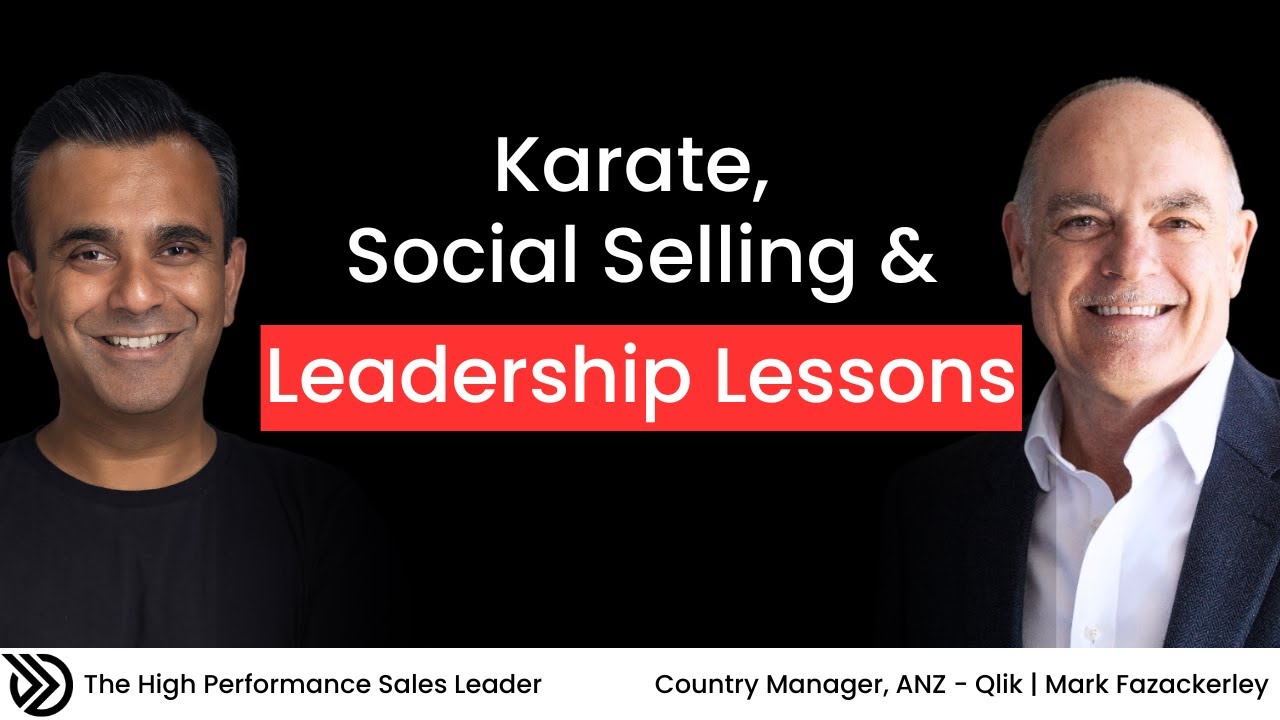
In this interview, Preet talks with Mark Fazekali, a high‑performance sales leader known as the “Roving Reporter” on LinkedIn. Mark recounts how a teenage fascination with Kung Fu and Bruce Lee led him to a lifelong practice of Japanese karate, Korean Hapkido, Filipino Kali, and personal combatives, which instilled deep discipline and the Zen concept of the beginner’s mind – the habit of seeing infinite possibilities rather than narrowing to a single expert view. He explains how that mindset drives his approach to SaaS sales: focusing on customer problems, hunting edge‑case solutions, and even applying machine‑learning models that delivered a 30 % improvement for a $10 M labor‑force client. Mark then describes the origin of the “Roving Reporter” video series – a playful, front‑line social‑selling tactic that leverages short LinkedIn videos to amplify personal brand, energize his team, and demonstrate a lead‑from‑the‑front philosophy rooted in martial‑arts teaching. He shares leadership principles of authentic, transparent, and inclusive culture: daily disciplined presence in the office, weekly all‑hands transparency, and soliciting input while retaining decision authority. Throughout, Mark ties discipline, beginner’s mind, situational awareness, and personal values together as a formula for adaptable, growth‑oriented leadership in modern sales and marketing.
Chapters
In the mind of an expert, there's always a few number of possibilities, but in the mind of the beginner, there are infinite possibilities. And so when you approach a problem with an expert's mind, you very quickly narrow it down to what it must be, whereas a beginner is more likely to take a, well, let's have a bit of a think about what this could be and where can we go? What else might it be? And I think if you try and approach as many aspects of your life with that, beginner's mind, or some would call it a sense of wonder, perhaps you can interpret it that way. With the beginner's mind, I think it's quite a good way to approach problems and approach life in general.
Mark Fazekali is a high-performance sales leader. He is well-loved by many people who have known him and have worked with him across companies like Oracle, Talend, Qlik, MicroStrategy. And essentially, Mark is someone whose life has been impacted significantly by his love for martial arts and how he shows up in the world. Most recently, you may have seen a number of LinkedIn posts from him as the Roving Reporter. And he really leads from the front, from social selling to authentic leadership. And this episode, we're going to learn everything about that. So let's jump right in.
Hey everybody, Mark Kazakely here, Roving Reporter checking in. We're in Melbourne, the Crown Promenade. I have here with me Sonia and— Hey everybody, this is the Roving Reporter back again, Mark Kazakely. I'm standing in front of the State Library of New South Wales where ClickWorld is about to kick off. Roving Reporter checking in again at the request of our marketing folk. Standing in front of the signs of our 2 sponsors, ClickWorld. Here we are.
Mark, thank you so much for joining me today on the podcast.
Thanks, Preet. Look, I really appreciate being invited. Thank you. Good to see you today.
And you as well. Now, some of you may have seen Mark's LinkedIn posts where he calls himself the roving reporter and then tells us where he is and what he's doing. And I've followed that and I've loved that for a reason. And so today we're going to talk about the roving reporter. I also happen to know that Mark has, uh, you know, he's a martial arts instructor, practitioner, and has had a long-term interest. So I'm actually going to jump first into the martial arts piece because we want to find the person behind, behind the— so tell me more about your, your martial arts interests and journey.
Yeah, sure. Look, when I was, uh, an impressionable young man, As a teenager, there was a TV show called Kung Fu on television. Not many people around today old enough to remember that, but it, you know, it starred a gentleman called David Carradine, who was a half-Asian chap who was a Shaolin monk, learned these incredible skills, and then went off to America to look for his brother and did all these amazing deeds of derring-do and was invariably a very humble-looking character until the rubber hit the road, and then suddenly he would explode. explode into action and, uh, save the, the damsel in distress. And look, I was just completely entranced by this. Um, and about the same time Bruce Lee movies became popular, uh, you know, a very long time ago. And so I thought, I'll have a go at this. And I, um, discovered it in my hometown of Christchurch, New Zealand. There was a chap teaching Okinawan karate who had actually been a bit player in this kung fu series. So the deal was sealed. I went along, signed up, and started doing karate. And it was pretty fierce. I mean, it's a long time ago, you know, talking 45 years ago or so. Um, and I guess over the years I've, uh, you know, I've executed on a family and various careers and drifted in and out of that, but probably pretty solidly have, uh, more than 30 years in Japanese karate. Um, so that's been my primary martial art along the way through Location, if you like. I've lived in geographically challenging places, so I've segued into other martial arts. I find after 2 or 3 years, if I have a break after 2 or 3 years, I get a bit twitchy. So, in that fashion, I ended up doing Korean Hapkido for 3 or 4 years. And likewise, some years later, worked into some Filipino martial arts called Kali Ilustrisimo, which is focused around sort of how to deal with blades and how people how people fight with knives. And then more recently, uh, I've become involved in personal combatives training, which is, um, really teaching people how to survive a violent encounter. And it's derived almost entirely from what we teach our soldiers. In fact, the whole program is a civilianized version of what we teach our soldiers all the way up to special forces. But for me, you know, it's been the karate philosophy that— and karate world— that is my primary shelter, if you like. You walk into the dojo, one of the interesting things about Japanese karate in particular is everybody wears the white pajamas. And so, one of the things that is kind of endemic to that is when you walk in, you take off your street clothes. Doesn't matter what you were out in the world, it all comes down to the rank that you have attained with the sweat on the floor. So, it's pretty interesting. Yeah.
That's the ultimate meritocracy.
Absolutely meritocracy verging on a little bit of autocracy there when you've got one guy at the very head of the organization, of course.
Yeah. So the most important thing that I see with people who have had, you know, athletic martial arts specific training that they've committed themselves to, you know, both yourself as a practitioner, as an instructor, is mindset. Mindset seems to be something that— and it differentiates them in terms of everything else that they tend to do, whether they realize it or not. But you can tell, you know, whether someone's been trained in the armed forces, you can— there's something about this person, right? So tell me a little bit more about the mindset that you have developed as a result of the martial arts training.
Look, I think, yeah, absolutely. There's 2 things there, actually. One of them is discipline. And I think one of the One of the interesting aspects of today's society is there are few opportunities for folks to experience true discipline. And by discipline, I mean the kind of discipline that soldiers on the parade ground will show where they have to stand there for a number of hours without moving or, you know, down to a very fine degree of control. And within martial arts, that also exists. And in fact, one of the interesting things that as an instructor that I find is asking my students, why are you here? Like, why are you here having me make you do push-ups on your knuckles and sweat on the floor at 6:30 in the morning? You know, what is that all about? And I've come to the conclusion is that people actually look for that kind of surrender of decision-making and let somebody else be the guide of what they do. So, that's one aspect of it, that discipline. I mean, as the saying goes, Motivation won't get you through times of no discipline, but discipline will get you through times of no motivation. And I find that in the sales world, it's particularly relevant that the discipline will carry you through. And then the other very important aspect for me is concept Eastern, you know, sort of Zen philosophy concept of the beginner's mind, sometimes known as Zen mind. This concept revolves around the Thinking that in the mind of an expert, there's always a few number of possibilities, but in the mind of the beginner, there are infinite possibilities. And so, when you approach a problem with an expert's mind, you very quickly narrow it down to what it must be. Whereas a beginner is more likely to take a, well, let's have a bit of a think about what this could be, and where can we go, what else might it be. And I think if you approach try and approach as many aspects of your life with that beginner's mind, or some would call a sense of wonder, perhaps you can interpret it that way. But with the beginner's mind, I think it's quite a good way to approach problems and approach life in general.
Yeah. Wow. That's— I really like the concept of the beginner's mind and multiple possibilities because How can you possibly have a growth mindset, um, you know, especially in a volatile, changing world, as we've only seen all too well over the last 5, 5 years, uh, and succeed? So yeah, that— so tell me, you know, in terms of your journey in the SaaS and the software industry per se, you know, You have worked with many different— when I think back from the Oracles to the MicroStrategies and Talent and Qlik, so many different types of organizations. How do you stay effective, growing, learning, relevant, impacting? What do you do? I can see the beginner's mind, but tell me a little bit more. How do you actually keep—
I mean, it sounds a bit twee, but I guess it's always about focusing on what our customers' problems are and what tools do we have available to help that, to fix that. And approaching that with that open mind to say, well, you know, how do we go about this? As an individual contributor, years ago, I was always that guy that the sales ops people hated because I was always trying to craft some unusual solution. usual deal, you know, because I'm looking for that win-win kind of an outcome or to, you know, find an edge case. And I think that's often where the interesting things are to be found, are in those edge cases. You know, how do we solve some problems that, you know, are not deemed unsolvable, but perhaps aren't being solved in the optimal way? I've got a great example. We've got a client right at the moment that's trialing some machine learning algorithms that we have as part of our platform. And, And very quickly, we've been able to show that it's a 30%, potential 30% changing in how they can attribute and how they hire their casual labor force. I mean, 30% of a more than $10 million labor force around them. And that's just through taking this different view to say, well, actually, how have you been doing it till now? Gut feel. Okay, well, and with these other things. So we just take a slightly different view and suddenly we find this new solution for the client. And so, you know, and obviously it's trying to keep up to date with the technology. Uh, I don't profess to be up to the, the last minute with everything, but I think if you find those people that you resonate with, um, those pundits that you resonate with, and perhaps listen to their analysis of what's happening, and then, you know, Follow that path, that you can find some interesting snippets there to help inform you as you take your— right now, AI is buzzword du jour. So, following some interesting folks who know a lot about AI and listening to what they have to say is an interesting way to inform how we're going to move forward. I don't know if that's quite answering the question, but let's try. And I try and focus on those customer problems. What are they facing now, as opposed to what they're facing maybe last year or the year before?
Yes. And from all the people that I interview, and I tend to be, you know, very selective in bringing out leaders who obviously are, have, have gone through a journey and have made it through a certain process. The 2 things that I see, and you've hit on both of them, one is situational awareness. And that's just awareness of, you know, whether it's the customer that you serve, or the industry that you work in. And secondly is the beginner's mind. mindset, the growth mindset, you know, and, and, and, and when you couple them together, it's a powerful combination where you've got both awareness and you've got learning going hand in hand. And that just creates a really adaptable leader. So, yeah.
I think a few battle scars along the way don't help— don't hurt, rather. I mean, I started off sort of 26 or 27 years ago in my IT career as a software developer.
Oh, really?
And then I became a pre-sales guy. In fact, I've had every role in the field sales team. I've been a partner guy, I've been the partner manager, I've been a pre-sales guy, I've been the customer success guy. And like, being able to walk in those people's shoes obviously is a huge help as well to understand what challenges the team faces. Yeah.
Yeah, that's fantastic. Now I want to move to our the topic that I've been wanting to get some more tips from you on. I absolutely love watching the Roving Reporter. So for those who are not familiar, if you go to Mark's LinkedIn profile, he has— he's got, you know, the radio voice, he's got the charisma, and wherever he is, he will report from the location, the Roving Reporter, and we'll you know, have my producer put in some clips. But essentially, I want to understand, you know, what was the thought process, and maybe even potentially some barriers that you had to overcome, because it takes effort to put yourself out there, so as to speak. But I admire that so greatly. So tell me more about the Roving Reporter.
Sure, thanks. Look, it kind of started as a bit of a joke, to be honest. I think if we look at where we are today in how we as vendors engage with clients and prospects, more importantly, I guess, or at least as importantly. You know, in recent years, social selling's become a thing. I mean, it wasn't a thing a few years ago. A few years ago, it was solution selling. I mean, solution selling is long dead. It doesn't really exist anymore. Social selling, on the other hand, is how do we engage with or potentially curate content that's appropriate to our audience? And more importantly, how do we then engage with our audience or the people out there? And so within my organization, several times over the last few years, we've run social selling training courses. And it's amazing, you know, you see the team, they get on board, their LinkedIn profiles suddenly look beautiful and clean and sparkly and pristine, and they're all just posting every couple of weeks— and sorry, a couple of times a week. Um, and then over time, that sort of tapers off. And, and amongst that, we, we came to Realization that video is a very powerful medium. And so, you know, one of the things that, uh, for myself as a leader is I have a view of leading from the front. And maybe that's partially my martial arts side of it. You know, most karate teachers stand out at the front of the class, tell people what to do. I stand in the line with my students and I train with them. So that's— I kind of believe that leading from the front's an important way. It's not a do as I say, it's a do as I do. And so We were at Gartner, I think, for the first one, and I was actually wearing an absolutely ridiculous wig. And, uh, because we were— it was like, you know, at Gartner's, um, uh, the symposium on the Gold Coast, they have this like a big night where everybody dresses up. And so I just thought, you know, here we go, let's do, let's do something from here to engage with our customers. And it just went viral. It's like, okay, that was pretty interesting. Um, and so then whenever we've had a major marketing event of some kind that I'll be going, usually just as I walk in, I'll stop in front of the main board and say, hey, it's the Roving Reporter here. Here I am today at the racecourse or Brisbane or wherever we are, and just give a brief rundown. And, um, I don't know, it just seems to have gone viral. Hashtag Roving Reporter. It's kind of weird. Um, and I look at having been a pre-sales guy, I'm probably a bit of a show pony anyway. I'm not that afraid to stand and, you know, having been an instructor and a teacher of various things over the years, I have no real fear of standing up and speaking in front of people. So for me, there was no real barrier to that. It was, uh, other than that I look at that and go, who was that old bloke on there? That's where I was. What happened there? Um, so yes, and as such, it's been very popular. So much so that, um, a couple of my colleagues in other geographies have not copied the Roving Reporter per se, but have taken to doing the same thing. Like, here we are at this event. And I think it's just, it's the power of the medium that we live in today. You know, everybody's looking for an easily consumable soundbite, and I think this seems to amazingly seems to deliver it. Yeah.
You've packed so much good advice. You know, you talked about the importance of the attention of the audience that you serve, and then obviously being able to engage them. And people want to engage with people, less so brands, and less so products. You know, so if they buy the person, they will buy whatever, you know, uh, the, the, they're selling. Obviously, it's got to solve a problem, but I'm just saying it helps immensely to buy into the person. So the question is, how has that impacted your team's approach towards social selling? You know, You're out there on the video. Yeah.
Well, look, I think, um, the team are pretty good at social selling on the whole, but certainly whenever I do that, it does seem to, um, give everybody a bit of a lift. Because one of the, one of the, the laws of social selling, if you like, is that you amplify it by tagging everybody and anybody in your team. Or if there's a customer there, you tag the customer and, and so on. And look, I think, you know, I think that first post got, I don't know, 5 or 6,000 views and some, like, I just couldn't believe it. It was just stupid. And, um, and, you know, once you start to sort of— once the rest of the team start to see how well that has taken off, I, I don't think anybody else on the team is doing videos, frankly. But it's certainly demonstrated the expectation I have of what we should be doing on social media. You know, we— people look at their LinkedIn feed. It's as simple as that. We scroll past the ads. We look at things that are engaging. I'm I'm never saying, don't show me this ad, don't show me this ad, I don't want to see that. But when I see something interesting, and interestingly, it's often video content, I'll stop and go, okay, what's that about? So, hard to quantify, but it's definitely part of my lead-from-the-front strategy in that respect.
Well, I can tell you that when I'm out meeting with leaders who've worked with you in the past, I can tell you that they have seen your videos. So, you're definitely Definitely, um, you know, it's definitely getting noticed on the LinkedIn network. And, um, I would just imagine because, you know, part of that authentic leadership is doing what you expect other people to do and leading from the front, not, you know, the opposite of that is going and telling them what they should do, but not doing it yourself. Right. So.
Yeah, exactly. Which I can't abide. I mean, I'm just, I'm just not that kind of a guy. Yes.
And, and so, um, I guess before we wrap up, how do you— you know, what advice do you have in terms of just being an authentic leader and just, um, bringing that to work? You know, people find themselves in very different situations in terms of existing cultures and that exist in companies. How do you bring your authentic self to work and make an impact from being who you are and being your unique self?
I think that's, uh, it's a complex question because everybody's authentic self is different. And, you know, not every authentic self is going to be, uh, necessarily the best leader. Um, but I think, you know, if you, if you, if you wrap in those concepts of some discipline around how you approach things. So, and discipline doesn't mean shouting at people. Discipline means saying you're gonna do something and then do it, right? It's not, it's, you know, for instance, I'm in the office every day at the moment. There's probably 5 people in the office on desks, seats 40. Some days we have 10, some days we have 5. But the team know I'm gonna be here. I don't have to do it. I could work from home. But having the discipline to just get up and come to the office every day. And then, you know, I think, you know, I have my own set of values, which are pretty straightforward. I think most leaders would suggest they have the same around transparency, integrity, them doing business in an ethical way, and not asking people to do something that I wouldn't do myself. So, if you can package all that up and how you comport yourself on a day-to-day basis, then you're being authentic. You're not pretending to be somebody you're not. You're showing, you know, I'm a great believer in complete transparency, there being no dark corners, uh, in the business. So we have an all-hands team meeting every week where everybody's numbers are on show and what's going on is on show to everybody in the business that wants to dial into it. And And I think in that way, you, you demonstrate that, you know, everything is here for everybody to see this. We're not hiding anything. If you've got any questions, just ask, um, and I'll do my best to answer them.
Yes. Uh, no, I think you've answered that question because again, I find from 10,000 interviews that I've done, I do that for a living, is that people who are living by their values in an environment where they have a better alignment to those values. Meaning if transparency is a value, but you're working in an environment where everything is always hush-hush and there's no visibility, you're not going to be happy in that environment for too long. So I think you've got to choose environments where people— you get a sense of this is going to be a good match to my values, and then you can thrive in that environment, whether it's an individual contributor capacity or a leadership capacity, it doesn't matter. So, yes, I think you've, you know, it's that value alignment that allows people to go beyond just being successful to actually finding significance. You know, they're bringing their authentic selves.
And being inclusive. I mean, I know it's a word we use so much today, but Inclusiveness means asking everybody, including everybody. It doesn't mean you've got to do what they say. I mean, at the end of the day, this is not a, you know, my leadership, I'm not a democracy. I might ask for your opinion, doesn't mean that I'm going to do what you want. You know what I mean? But I think being clear about that kind of thing is also very important, that, like, I'm seeking everybody's input, but in the end, I will decide. And that in itself, people being heard, is an important part of that process.
Well, I'll tie it all back to that beginner's mindset because I think it's that openness of multiple possibilities, like you said to me earlier. So, Mark, thank you so much. I could keep talking to you for hours, but you've been very generous with your time. So thank you today, and this is going to help a lot of people who listen to this. Thank you.
Thanks a lot, Preen. Roving Reporter signing off.
More from Tom




Why GTM Leaders Still Struggle with Pipeline Visibility in 2026 | AI vs Traditional CRM





How to Build High-Performance Sales Teams | Direction Alignment Commitment (DAC Framework)

