Scaling from $5M to $38M: The Unreasonable Path to Startup Success
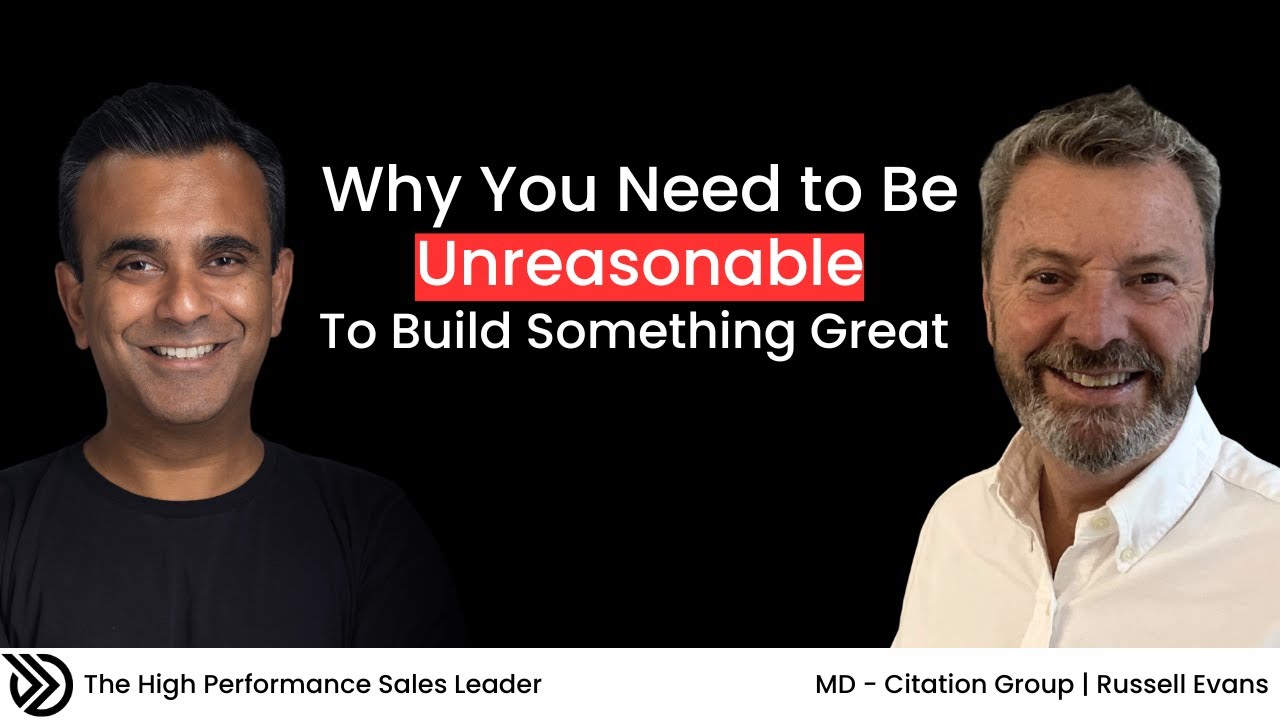
In this interview, former Wolters Kluwer APAC/LATAM CEO and Dubber CRO Russell Evans explains how Dubber grew its annual recurring revenue from $5 million to $38 million in five years. He attributes the growth to three core drivers: strategic partnerships with Cisco and Microsoft that embedded Dubber in the emerging UCaaS market; a large, fast‑growing total addressable market for cloud‑based unified communications; and a deliberately partner‑only go‑to‑market (GTM) model. Evans discusses the cultural and operational challenges of scaling a global SaaS startup—rapid hiring, aligning a dispersed team, and maintaining a high‑energy, trust‑based culture. He introduces the “Secret Sauce Calculator,” a data‑driven framework for recruiting, activating, and maturing partners, and describes how conversational‑intelligence analytics (voice‑data insights) became a key value proposition. He also shares lessons on sales‑force enablement, the confidence‑competence flywheel, the “FOLAD” fear of looking foolish among resellers, and the tension between aggressive growth and investor demands for profitability. Throughout, Evans emphasizes the need for “unreasonable” expectations, clear messaging, and relentless iteration to sustain momentum.
Chapters
The world changes and grows on the unreasonable man, unreasonable person, I should say. The founders and the early-stage directors and executives at Dubber, because we wanted to achieve significantly greater results than others, is that we had to be unreasonable. So I had to juggle it. I wanted to always act in a position of trust and integrity. But ask unreasonable— have unreasonable expectations on my people. And they'd often say, well, you just don't listen to me. You don't— you're not really caring about me. And I'd say, well, I am, but we can be bigger than this. And that was part— I know I gave a lot to you there, Bree, but it's part of that challenge of creating that culture. You want to have a culture based on trust. You want to be high energy. You want to have that sense of achievement and accomplishment. But in a scale-out business, startup and scale-out business, senior executives need to have unreasonable expectations on their people.
Russell Evans is a seasoned leader. He was the CEO at Wolters Kluwer for APAC and LATAM. And more recently, he was the CRO for Dubber, an Aussie startup success story that scaled from $5 million ARR to $38 million ARR. Today, we're going to have a conversation with Russell about the challenges and the successes and his insights in this rapid growth phase that they achieved at Dubber. So let's jump right in. Russell, thank you so much for joining me today. I am looking forward to this conversation.
Thank you.
Tell me, you've worked with some large organizations in senior roles, and then you've taken a very interesting step, with Dubba in a startup high-growth environment. What was behind the shift in large organization to startup?
Yeah, good question. I, um, so, and traditionally, if you look through my career, traditionally I've worked for large complex organizations— Xerox, Vodafone, IBM. Uh, I'd been at IBM for 5 or 6 years When I was— the last 2 years were based in Tokyo with an Asia-Pac marketing role, came back to Australia and decided to move into, in those days, a dot-com startup. So a very much an Australian startup in the application service provision space. So I'd had that taste. I really enjoyed it. After That business ended up, you know, having to wind itself up. I then got back into large corporations. Prior to joining Dubber, I was the regional Asia Pacific and Latin American regional CEO of Wolters Kluwer. So, a 185-year-old Dutch publishing digital content software business. I was there for 8 years, really enjoyed it, worked with some particularly smart people. Across both the regions, those geographic regions, as well as headquarters. But it was pretty taxing working pretty much around the clock for 8 years. I decided to step out of that role and then look for something that was really going to test me across a whole lot of different spectrums. And the best way to do that, I found, was to sort of step into a scale-out business. So when I joined Dubber, there was probably 35 people, 3 salespeople, and my quest was to really scale that business out. What I did find pretty quickly was the fundamentals in growing a business, whether it's a 165-year-old or 185-year-old Dutch publishing business or a startup, the fundamentals are by and large the same. It's obviously, you've got to work out what levers to pull At what time. But yeah, a lot of the skills you're learning working in a large corporation are similar that you can deploy in a smaller business. Just some of those levers are more sensitive than others.
I see and know of a number of APAC VPs, RVPs in Australia with global software vendors who've taken on CRO roles with Australian startup companies, 7 out of 10 times it doesn't pan out to be what they anticipated. But your story is different because you scaled from $5 to $38 million ARR in 5 years, which is very impressive. So tell me, what were the key factors that enabled Dubbel to scale? And what were some of the key drivers of that growth?
Yeah, look, I'll break it down to 3 main drivers. The first was the partnership that Dubbel was able to forge with Cisco initially and then Microsoft. The reason that was important is that probably 5 to 8 years ago, The market, I think large enterprises were definitely shifting from on-premise telephony to cloud, voice over IP, cloud telephony, category is called unified communication as a service. Cisco were having a huge play in that space, and the founders of Dubba were able to really forge a very strong relationship with Cisco. So Dubba was integrated at the core of of Cisco's telephony, voice telephony platform, cloud voice telephony platform. We then later replicated that with Microsoft. So there's definitely that as the core partnership. The second part of it was back, as I was touching on, UCaaS, Unified Communications as a Service, definitely a growth industry. It's taping off a little bit now, it's starting to mature, but when I came on board into Dubbo 5 or 6 years ago, very large total addressable market and the category, depending on the region, the category was growing by 18 to 22%. So good, sizable TAM, aggressive growth. And then the third driver of success was we decided strategically to have a partner-only go-to-market model. Now, you know, that was— there was instances of tribal warfare around that. I'll describe it, Priya. One of the founders, one of the main founders of Dubbo, a guy called James Slaney, very hands-on, kind of the brains of the organization, and I used to butt heads because we did have an urgency. There was an urgency around a land grab. There was definitely an urgency on delivering our quarterly annualized recurring revenue target. So I was, as a CRO, was always on the quest to get that delivered growth. You know, a land grab for partners, definitely a land grab for revenue, getting a big slice of that new CAS bucket. And the temptation from time to time, though, even though we're very partner-centric, if a partner, AT&T in the US, is saying there's this really good opportunity over here at Bank of America or Wells Fargo, the temptation for me to say, well, you guys are going to be very slow with that, let me at it, let our sales team at it, you guys park yourselves for a second, second, and we will then look like an enterprise sales organization. And where I used to butt heads with James, in a constructive manner most of the time, was he'd say, no, that's not— we're not that business, we're not an enterprise sales organization, we need to, at our very core of our DNA, be partner-centric. And that did I'll give James a kudos here. That was the right strategy. So partnering with Cisco, being right time, right place at the growth curve of unified communications as a service, then having that maniacal focus on being partner-centric with the drivers of, I put it, astronomical growth.
Yeah, no, that's fantastic. Now, the moment we say growth, People love the ramp story. But not often do people, at least looking outside in, realize the significant challenges that you need to face and that you overcome. And so, what were some of the toughest challenges that you faced while getting to that significant revenue?
Oh, and there's no doubt about it. Creating a global technology business is really hard. Not just about time zones and cultures and languages and things like that, but just building the team and just being able to build the team in a way that everyone gets it. Dubber is a Melbourne-based global technology business. I'm based in Sydney. So, you know, minor challenges, but when we're building a team globally, recruiting salespeople, solution architects, solution developers all around the world, it does create a lot of issues. I think one of the most challenging issues is how do you get everyone on the same page? And Jeff Weiner, you know, now executive chairman, has one of those great sayings that just as you get sick and tired of telling the message, your staff are just starting to listen. And so, it's easy to recruit people, particularly if you've got an urgency around a market expansion, recruit a team quickly, say, read this, here you go, speak to some customers, get on with it, throw them in the deep end. Invariably, that ends in tears all the way around. So, that was one of the challenges we faced. We had the opportunity to do the land grab, to grow rapidly, grow revenue rapidly, And I made some mistakes earlier on that we were too quick to hire and then we didn't really focus on getting communication internally to an art form. And from time to time, we'd hire someone in the US and the comment back was, wow, that person, they just don't get it.
Yeah.
And what I took out of those, you know, Jack Canfield, the author who wrote Chicken Soup for the Soul, one of his comments is, you are 100% responsible for the stuff that happens to you. So when you, you know, back to that cliché, when you're pointing at someone and say, that person doesn't get it, there's 3 fingers pointing back at you. So one of the painful lessons we learned was we just had to reiterate, get the message really simple. Why we exist, why we're here, why we're good, what value do we deliver to our customers? How do we, through a partner community, deliver quantifiable business benefits to their customers? We had to chunk those messages down and just repeat them constantly. And we also had to be able to slow down hiring to make sure we're getting the right fit. I'll spend a little bit of time on that because when you think about, like, who was the right person to hire? We wanted someone who understood the telco industry, understood the unified communications sector, therefore understood SaaS sales. We wanted them to be resilient, resourceful, worked in a startup, and had kind of like this psychological need to win, you know, that real hunger. And invariably The people that understood telco and UCaaS, unified communication, came from big telcos. They came from Cisco, or they came from AT&T, or Verizon, or British Telecom. And therefore, often they weren't resilient, they weren't resourceful, because they expected things. They'd always had things given to them on a platter, and they were used to a big bank salary, they were used to options and And we wanted people who really were just so hungry to win that they were prepared to put the long, long hours in and to be exceptionally resourceful. So really, when you looked at all of the characteristics we had for hiring great people, it came to a handful, really a handful of people. So we found out that we have to say, at the end of the day, we're hiring for— I know it's a cliché, We're hiring for attitude. You can train people on, you know, UCAS as a category. It's not that difficult to get your head across. But getting attitude, hiring the wrong attitude was very costly for us.
Yeah, you articulated it so well is that the experience and the exposure that you get from, you know, people who come out of large organizations often is Very good. However, the resilience, the determination to win, and the ability to do it by on your own, especially where every person in a startup makes such a big difference—you don't find enough of that with large organizations because they've been used to big brand names, a lot of support structures, and so yeah. So what? did work finally in terms of finding the right people and then enabling them with the right message to be able to create the outcomes that we now look at and say, wow, that was phenomenal.
Yes, look, so it was 2 things really. It was finding the right people and then helping them find the right partner. So coming back to our opening point, we burnt the boats. We said we are partner-centric. So therefore our ability to identify target, recruit, activate, onboard, and mature a partner community had to become an art form for us. And we had a stumble because we were on the land grab journey. We were— the temptation was just to grab any partner. Okay, you're a Cisco partner, you're in. Microsoft partner, you're in. And we were a small team. And we just simply spread ourselves too thin. initially. So we needed to be able to find out, define a scientific approach to partner recruitment, and then we had to turn partner activation and enablement into a really strong core capability. Thankfully, about a couple of years ago, we hired a sales enablement guru, a lady called Sarah Appleby, based in Melbourne. So definitely putting a plug in for Sarah because she made me look really good. She came up with a tool called the Secret Sauce Calculator. And what that was all about is, as we're looking to recruit a new partner or invest in an existing partner, say a partner comes to us and said, we want $20,000 for a campaign, an event, a promotion. We, in the past, we weren't scientific enough in really determining how we make decisions. What's our criteria? Sarah brought with her and tailored the secret sauce calculator. Because it's secret sauce, I can't tell you too much about it, but it was really how do we make it easy to engage with a partner who it's going to be easy for them to sell Dubba, easy for their customers to buy Dubba, that the sales team of that partner are really incented, and that they— what we colloquially called— had a high level in the in the GAS score? So colloquially, pre-GAS, give a shit. How do you make sure that the partner is really going to be lined up to being high on the GAS meter? And Sarah's Secret Sauce Calculator enabled us to still be high energy, still engage well in the market, but ask some critical questions. One of the best sales calls I did around partner recruitment, we asked the partner a specific set of questions on the Secret Sauce Calculator. calculator, and that triggered a response. And this was a large Telstra partner who are very, very strong in a couple of sectors that we wanted to play in. We took them through the calculator, and the senior executive in this partner said, kind of leaned back and said, look, now that you've sort of probed, I've reached the conclusion that you're a nice bunch of guys, but we're just not the right partner for you. In other words, is that— you remember that Justin Long movie? He's just not that into you. We reached a point where a partner sort of said, look, I'd love to get on board with you, but we're just not that into you, or we can't be that into you because we're not that style of organization. And I had a debrief conversation with a couple of the account managers afterwards, my account managers, and they were bummed out that we weren't able to get the partner across the line. I said, no, that was an awesome call. Getting to know the no point early has saved us a lot of burning of resources later on. And so long-winded explanation, Priya, but the secret sauce calculator really enabled us to be very, very scientific in how we targeted partners and then how we really worked well with their team to be able to onboard, induct on board and lead that engagement to a point and enablement to a point where we hit maturity or on the trajectory at a pretty rapid timeline.
Yeah, that's terrific. In fact, you, you struck upon a very good point which often gets overlooked, which is a lot of people talk about success with partners and how to get there, but often They're in— I hear people who've invested 6, 12, 18 months with partners and haven't seen the results. So, if a partner says upfront that it's not going to be a good fit, that is actually a gift because it gives you back the gift of your resource, your time, your energy so that you can actually focus it on partnerships that will actually yield outcomes. And because at the end of the day, We really have time and money and energy as finite resources.
Yeah, look, what we found, part of the secret sauce calculator is that a fairly big part of the value proposition of Dubber is conversational intelligence. So mining the details of a conversation, telephone call, or a meeting and then providing insights around, was that a happy customer, angry customer? If it was an angry customer, what were the drivers of that? Why were they frustrated? Why were they threatening to churn? And so we spoke about voice data analytics, and when we were new in the adoption curve, a lot of when we'd explain that to a rep in a partner, you could see them glazed over, like, ooh, this sounds scary. And so we hit the wall on an acronym that we called FOLAD, the FOLAD factor in a reseller, which was a reseller rep having the fear of looking like a dick. Because no one wants to, you know, no one wants to, you know, potentially engage with a new prospect and then you, you say one thing and the prospect digs into it, asks you a question, and you don't know, you don't know how to answer that. So, and this comes back to For us, we had to get really clear on that. How do you get the flywheel going of creating confidence, which then drives competence? The more competent you are, the more confident you become, which just keeps that flywheel going. If you're only engaging with a partner community every 3 or 4 months, because that's only when they think about engaging with Dubber, you can't get that flywheel confidence and competence flywheel working.
Yeah.
And they're just not going to engage with you effectively. So we found you're better off having a smaller, tighter-knit community of partners who really got you, who were confident and therefore became competent in why Dubbel was great for their clients.
Yeah, yeah. And I really like your— I like— I love the 4-lad. That is brilliant. And I really like the competent and confident model. Because when you are enabling partners, you want to make sure that they really have what they need to be able to communicate that message. So, tell me in terms of building a strong sales culture, what practices or principles would you prescribe that Yeah, look, it's one of those questions I've pondered for 30 years.
And I've read a lot. I've listened to your podcast, fascinated by the people you interview, Priya. And so I think that you can't just inject culture into people. It's got to be part of it. It's got to be a living, breathing organism. So it's part of the back to that the conversation we had earlier around how we went about building a global team by recruiting well. And so I think you've got to be able to work out how do you interview for a cultural fit, because you can always evolve who you want to be, but you've got to be able to recruit people who— what you want to be is going to resonate well with them. that they're going to say, sure, I get you. And I'm willing to tweak who I am a little bit so I can fit in your club. And so, we were always intent. We wanted to make sure that we were a high-energy organization, that we weren't full of pretense. It was a pretty flat organization. We were a shoot-the-breeze style business. So therefore, we— and this was a tough balancing act. We didn't want to hire a lot of lone wolves. But as you know, high-performing, really hyper-performing salespeople tend to be, get out of the way, give me it, give me the brief, leave me to it, don't micromanage me. And look, so we needed to get those, as I mentioned before, someone with a pathological need to win, but also shape them so they were happy to chew the fat, shoot the breeze, whatever one you want to use there. So that was part of us building out that culture of just shared knowledge, a shared desire to grow, to win. And underpinning that, we have to be data-rich. We have to be able to say, this is where we are now, this is where we're going to go to get that clarity, alignment, and accountability that's so important. Those 3 aspects are so important as you're trying to establish a global organization, and data is a big part of that, as in This is where we are now. Here's our performance. Here's our performance cadence. This is what it looks like. By the way, we're moving there because here's some data around addressable market. Here's some data around growth. Here's some data around product-market fit. So, you know, we had to have a level of science underpinning that culture of hunger and drive and with an educated edge to that. So if we did have some gung-ho salespeople, we could say to them, and they were reflecting back to us on their learnings, we could say, fine, the data is telling us if you want to win, go over there, be back with those partners, these types of partners. And so that was a big part of that, the cultural glue. And look, the other aspect of it is, you know, I'm an open, transparent sort of person. You kind of, you know, get what you see with me. And I find that's one of the better ways to build trust. All those Patrick Lencioni books around how do you build a high-performing team, you've got to have that foundation of trust. And if you're not authentic, if you're not prepared to listen, you can't build that trust. So that was always a part of who I've been historically and how I build a team is me acting in a trustworthy manner, but I've also got to be able to balance that with a level of being unreasonable. I'm not sure if you've read much about Don Valentine when he really grew Sequoia Capital. What they were looking for, Sequoia was looking for, was that kind of quadrant of Y-axis is what is the TAM, what's the product-market fit, what's the growth of the industry? And then their x-axis was about the founders, the leaders of the business. Are they reasonable or unreasonable? Of course, Don Valentine's premise was that the world doesn't change on the reasonable man. The world changes and grows on the unreasonable man, unreasonable person, I should say. So what the founders and the early-stage directors and executives at Dubbo, because we wanted to achieve significantly greater results than others is that we had to be unreasonable. So, I had to juggle it. I wanted to always act in a position of trust and integrity, but have unreasonable expectations on my people. And they'd often say, well, you just don't listen to me. You're not really caring about me. And I'd say, well, I am. But we can be bigger than this. And that was part— I know I gave a lot to you there, Bree, but it's part of that challenge of creating that culture. You want to have a culture based on trust. You want to be high energy. You want to have that sense of achievement and accomplishment. But in a scale-out business, startup and scale-out business, senior executives need to have unreasonable expectations on their people.
That is so good. I have made notes about the book that you've mentioned. So the Sequoia Capital founder, I will go and— what's the name of the book though?
Well, so, look, there's a lot around on Don Valentine. He's now passed away as the founder. But you look at Roelof, Roelof Beuther, who's one of the now senior executives at Sequoia. He did an awesome interview podcast with Tim Ferriss. Not as great as one of your podcasts, but it's the Roller Pointer Tim Ferriss podcast. Legendary. Just around Sequoia, how they've supported founders and how they've made decisions on who to invest in and who not to invest in.
That's brilliant. I am a Tim Ferriss fan. And I am very familiar with Sequoia. I'm also an investor in a bunch of different companies, some early stage, some very, you know, and I was thinking of Brian Chesky and Airbnb and, you know, even the DoorDash story around founders who are unreasonable, right? And I love quadrant. So, you've given me so much in this. This is brilliant. Thank you so much. I want to ask you one more question before we wrap up. There are so many different influences as you go through this journey of growth, which include managing the expectations of investors and stakeholders. So, how do you, you know, what advice do you have for other CROs, other CEOs, and founders who are dealing with these different pressures? You know, how did you— continue to keep moving forward quarter in, quarter out and making progress?
Yeah, look, so there's a couple of points there. One is that sort of getting the right balance between shareholders, investors, and your own quest as a group of executives. And yeah, for— and Daba found that challenging towards the end because we were just growing rapidly, revenue growth when I say growing rapidly, ARR growth, 60% to 70% year on year. Even when we matured, it was still growing at 10% to 12% per quarter. And so whereas our Australian investors, shareholders, most of them were saying by 2023, yeah, growth is good, but where's your path to profitability? And we had a level of stubbornness to say, We'll get there. We will, you know, let's— can't really use the D word, but we'll anyway— let's dominate the market and then profits will come after that. And so a lot, a lot of, a lot of tech companies at the start of 2023 really missed that strong direction from shareholders about, no, no, okay, what our preference is, you know, dial back revenue growth at all cost and show us that path to profitability. Get your sort of EBITDA margins up. But that was a tough balancing act. But for me, look, it came back to the basics of that Jeff Weiner quote. You've got to reiterate the message 10 to 20 times before not only your staff really start to listen, but your board, your major shareholders, current investors, future investors, You've got to simplify the message, not make it simple, but simplify it. And then just reiterate it until you're sick of telling it. Because by then, that community are only starting to understand it.
Russell, thank you so much. This has been incredibly insightful. I already know that this is going to help so many people who are at a crossroads sometimes when they're in large organizations and thinking about whether they should go and, you know, be tempted to go work for a startup. And I think that you've given a lot of food for thought. So, thank you so much. I appreciate it.
Oh, thanks for the opportunity, Praveen. I really enjoyed it.
More from Tom




Why GTM Leaders Still Struggle with Pipeline Visibility in 2026 | AI vs Traditional CRM





How to Build High-Performance Sales Teams | Direction Alignment Commitment (DAC Framework)

