Scaling in Asia through Crashes & Crises
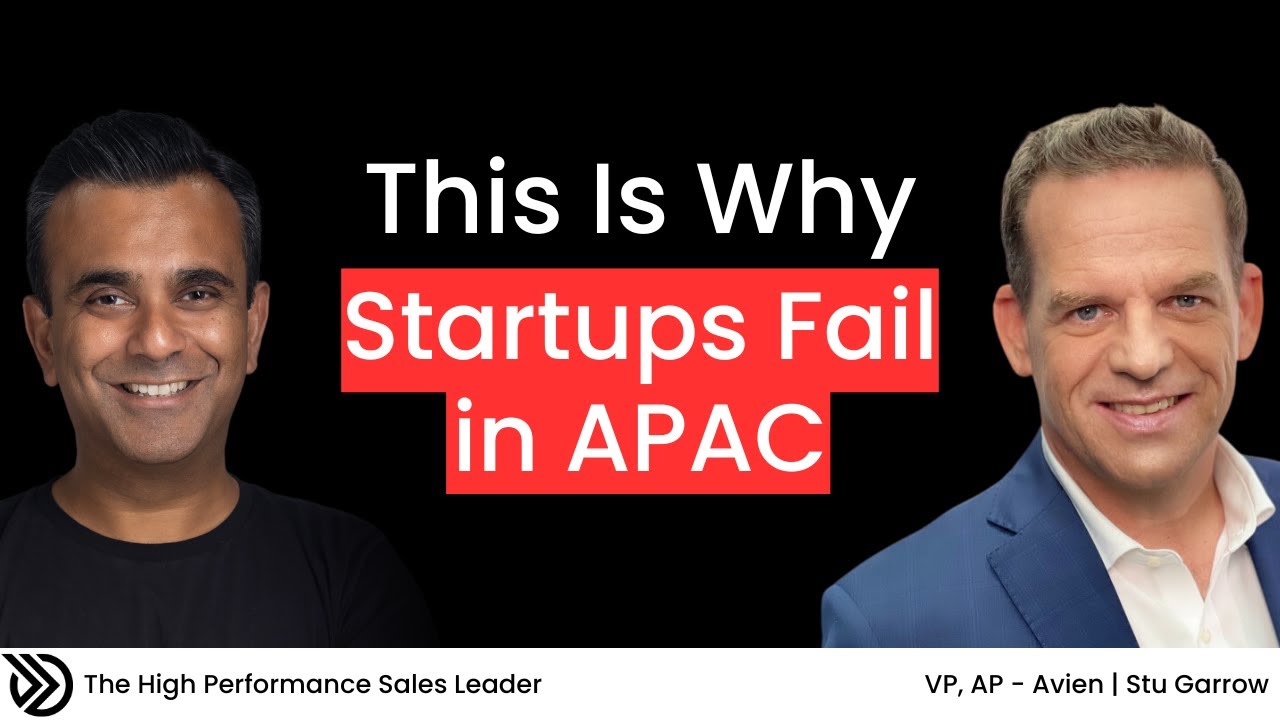
Stu Garro, who has scaled SaaS across Asia through five major crises, explains why a single strong market message beats tailored pitches for each country. He describes how Asian customers flip between growth and cost-saving during downturns, and how layoffs create pools of high-caliber engineers to hire quickly.
Chapters
Welcome to the Super Gear Show. This is your host, Preet Sarkar, and today I'm joined by none other than Stu Garro. Stu, I've known him for a number of years. He lives in Singapore and has worked in the APAC region for the last 25 years. He has scaled some of the most interesting companies. Think of MuleSoft, Talent, currently at Ivan, and he's been an advisor to a number of startups in the region. He recounted how many crashes and crises that he has been through. And there's quite a few, but, you know, there's gold at the end of every up and down. You walk away with so many lessons. So, Stu, thank you for joining us today. I'm so excited to get into some of your experiences and best practices.
Priya, I'm happy to share. It's great to be here and have the opportunity to have a conversation with you and share with your listeners for the podcast as well. So, I'm looking forward to the conversation as well.
Fantastic. All right. First question up, how, when, why Asia, the move to Singapore? Tell me a little bit more about that.
I look, I grew up in the software industry. I came out of defense. I worked, I ended up at a vendor. I ended up at Rational Software and moved around a little bit. And I ended up going to New Zealand and helping to build out the New Zealand operation. We bought a company there and I transitioned everything. And I went back to Sydney and sat with my boss and he said, you can stay in Sydney and sell software to the banks or He said, I need someone to go up to Asia and open up 6 countries. And so, wow, on a handshake, I decided that sounded like a really cool thing to do. I love things that are infinitely complex. And Asia definitely ticks those boxes of being complex.
Very nice. There are those who'd say, no thanks, I'll stay with the safe and comfortable, or you're like, hell yeah, let's go to Asia. So tell me now, you've spent a lot of time in the region. What advice do you have for people who want to scale their SaaS companies into Asia?
I have a few pieces of advice. A lot of people will tell you every country is different and they are. Every country is different. But the one thing, the mistake I see a lot of people make is they say, I'm going to go to Indonesia. And so I need a message for Indonesia and what we're going to sell in Indonesia. And I need a different one in Japan and I need a different one in China and India and Singapore and Malaysia. And that's your big mistake is you'll end up dividing yourself where your messaging gets confusing. Your corporate website doesn't match. what you're trying to do locally. At the end of the day, you need to have one strong and unique message that you take to market and avoid people saying to you, it has to be different. We're different here. We're different here. No, this is half the world's population is Asia. Somebody in Asia wants what you do. And so my suggestion to people is always, first of all, work out what your message is, what you are trying to sell, and then go and find the people that want what you do. And just stick to that. Don't worry about all the people that want you to do something different because you'll never be able to do all of the different things that different people in Asia want you to do. Stick to your one and only message. That's my first thing. Does that make sense?
Yeah, absolutely. That's very good. Yep, please go ahead.
I think that on the startup side of it, depending on what stage you're at from a startup perspective, in a similar vein, one of the things I see is people wanting to outsource their selling. If you're going to go and build a business, nothing happens until somebody sells something, and nobody is going to sell something better than you. And so really productizing your sale, making sure that you understand what is your value proposition, what do you sell, how do you sell it, what objection handling do you do. You as a founder or as part of the founding team of an organization that builds something new and unique exists because It's new and unique. So you need to productize that and avoid, hey, I'm gonna go and hire some salespeople and they'll be able to sell for me. I'm gonna go and get some partners in Asia. I got some individual that said, hey, we'll take this thing on and we'll sell it for you. No, they won't. You've gotta productize your sale and say, this is what we sell. This is to whom we sell it. This is our value proposition. This is the problem they think they're trying to solve. This is the problem we're gonna educate them that they really need to solve. Challenger 101. You've got to go and productize that sale. And then once you as a founding team have worked that out and got it nailed, then you can hire a direct team and have direct people sell. Once you've got your direct people working, you can get partners. But every time you add a layer between you and the customer, your core unique value proposition is going to get diluted.
Mm-hmm.
And you need to stay as close to that message in the productization of that message So that it doesn't get diluted because if not, your uniqueness will go away. People will go, oh, it's just like this thing over here. And then all of a sudden your uniqueness is gone and penetrating these markets will change.
Right. Wow. Okay.
That's one of my top tips for founders in going through this process.
That's really good. What are some of the challenges that you faced over the years that you had to overcome or lessons that you had to learn during this journey?
I think there's a variety. When we were having a brief chat, we talked about coming into Asia. I came into Asia just as the Asian economic crisis hit. And then you go through the Asian economic crisis and then SARS and then MERS and the global financial crisis and all of the COVID and all of the different crises that hit the world. Various parts of Asia are incredibly good at managing in a crisis. Culturally, they are. They're just good. And every country is different, but they're often very good at hunkering down, stop spending money, just hunker down and get through it. And they're very good at it. And in different ways, different countries, different cultures will do it slightly differently. That can be very challenging if you're trying to sell. You're out there in a standard, almost American-style everything is about growth kind of initiative and you hit a market like that, you have to think more like a private equity person does. With private equity, think about the rule of the rule of 40, that there's 2 levers. There's a growth lever, which is what traditionally software companies would pull. And then there's an efficiency lever that you have to think about both levers from your own perspective as a business in growing efficiently. That you've got to get leverage, that if you do everything, it's the sort of the hand in the rice bowl. If the hand stops, the mouth starves. You've got to take an efficiency approach of when I do something, how do I get it productized through all my partners, through my channels, through the teams that I have that are distributed to make that work? But equally, you have to think of it from the customer perspective because they've got 2 levers as well. They're buying stuff when they're in growth mode. But I tell you, when each of these crises hit through my career, you watch people very carefully, very quickly yank that lever back. Oh, we're not growing anymore. We're hunkering down. Doesn't mean you can't sell. You can absolutely sell in that market, but you have to put yourself in their shoes. What are they thinking about? They're moving to cost saving. They're thinking efficiency. But Efficiency in Asia is different. A lot of very Western thinking of efficiency is if I can use technology to eliminate jobs or to do jobs more efficiently because people are very expensive. But if you get to an economy where people are incredibly cheap, they're plentiful and cheap, and Asia has a few economies around that fit that category, being able to make someone 20% more efficient Can mean nothing. They're like, nope, I just put 20 more people on it. Doesn't matter. You have to think differently in terms of your value propositions and what it is you bring to the table in that space.
Yep, that's great. Really having that distinction between companies in growth mode versus focusing on efficiency. I think at the end of the day, what you're saying is that you've got to be able to bring the right value at the right time. And so through these crises that you've been through, what have you seen the impact of technology? Because you've obviously seen a lot. So how would you describe the shifts that you've been seeing in technology through that process?
The first thing that happens in these kinds of times when people go to, whoa, we're not growing anymore, we need to save money, efficiency. is that a bunch of people end up on the market and there is no better time to start hiring than when everybody else is laying off good people. It's nobody's fault, right? It's never personal with these things. Business is business, but it's just an incredible opportunity. And it goes all the way back. I remember a podcast listening to some time ago about digital equipment, DEC, years ago. If you looked at the flurry of technology organizations that were created when DEC started downsizing and all these just incredibly smart people that ended up on the market that just were unemployed all of a sudden. And they went and created a startup and created the whole generation. And so in many ways, the cycle of boom and bust and growth and crisis and that is actually very healthy because if you didn't do that, you end up with this very concentration of smart people into companies that can afford all the smart people. Things like that. And the redistribution of A-players through the industry that happens during these cycles is incredibly refreshing and it's an important part of the ecosystem. And so there's no better time to hire. If you can hire, like hiring right now, I will say I've been able in my current role to hire just some of the most amazing people that can start in 4 days' time. Because they're available just for no reason other than they just got caught up in a cycle. It wasn't, you know, anything to do with them. And so that's probably everything starts with people. You gotta just grab amazing people as they go past. And I hope I answered your question. Did I miss any part of that?
Yeah, no, I think you've, well, I think first of all, the big gem that I've taken away from that was the perspective on The redistribution of talent as a result, a direct impact from crisis when large companies— and that is almost like the bee and the pollen, right? As you keep repollinating different parts and the amount of innovation that comes, that's amazing. I think in terms of the next part, I'd love for you to share some light. What are the major shifts that you've seen In IT from when you started to where it's now, its impact on business and the region?
Look, I think technology has moved and there's many ways to answer that question. There's one particular angle that we look at at the moment is I remember years ago, I used to go and sell and there would be people that were a Microsoft shop or an Oracle shop or an SAP shop. And they aligned to a technology. There was a redistribution as people eventually, those things collapsed. People weren't able to stick to one technology and they moved around. But there was a more common theme that's probably spanned many years in the last 25 years of selling. There were people, there are companies that buy from a cultural base. They say, we buy best of breed. We go to the Gartner Magic Quadrant, we go up here, we circle the one at the top. We go, that's the technology we're gonna buy. And they buy a set of best practices, best technology in every sector. There's another set of companies that have said, we tried that and it didn't work because we did get the best technology, but we couldn't make them all work together. And if there's any air gaps of technology working together, then zero value is delivered. And so, in order to get value delivered, we buy a platform. And always there were these 2 kinds of organizations and you had to stare into people's eyes and understand which one you were looking at. And they're like, no, we're okay with the second or third best technology. If it works together as a platform, it'll deliver an outcome. And then one day we saw this next camp arrive, which was the open source camp that said, we've tried both of those, but it's all too expensive. We're okay with just good enough because we can put people on it and we're going to invest in people and open source. And there were the companies that said, we only do open source. And then some companies found that very difficult because administering and securing and patching and delivering an SLA around open source became very difficult. And they moved on and they said, you know what? We only buy SaaS. We're going cloud. Everything we buy is SaaS. I want a service. I want an SLA. I want accountability. I want support. We are only going to do that. And then the big trend that we see today is people saying, we only buy multi-cloud. I don't buy anything that's proprietary to vendor 1, 2, or 3 in the cloud space. If it only works on one cloud, we don't buy it, we don't use it. And there's big move where today in the Australian market, it's against the law for a bank to go single cloud.
Mm-hmm.
They have to go multi-cloud by law. GDPR says, I see there's at least a couple of countries in ASEAN that next year that will become law, that this move to multi-cloud is becoming a really big thing right now. And it's similar to the trends that we've moved Through each of these different technologies, approaches to how people think about acquisition of technology. Today, if I don't have complete portability across my clouds from one to the other, I don't have the ability to meet my GDPR and run multi-cloud, I don't do it. I want common skills, common cloud. I want to use the infrastructure in the way I want to use it and follow the economics that if one cloud is cheaper, I want to be able to use that one kind of thing. So we're seeing a big trend around the move to multi-cloud now as being an ethos of how people are really acquiring solutions.
Right. Wow. That's— yeah, that I— and I can see that happening across the landscape. And it's very much an inevitability. Right. Now you've built some significant teams for iconic companies. Tell me, you've got a vision you've just laid out in terms of where the tech industry is heading, in terms of the things that you've seen around customer behaviors, and overlay that with what has become an increasingly volatile landscape and a volatile industry. per se. Let's— so how do you get people around a vision? How do you get them aligned as a leader and rowing in the same direction? Because every time you recruit a person, you want to get them aligned. And then when you build an organization— so tell me, what are your thoughts and, and some of the best practices around?
A vision is so important. It is— people that join for the money will leave for the money. People that join for your vision will stay forever, right? As long as you can instantiate that vision, they'll stay. And those are the people you want to try and bring into your business, those that follow. But I think what's probably sometimes missed is how important it is for customers. Customers buy your vision. When you're in the enterprise space, a lot of the enterprise solutions— I've spent my career in everything from middleware to infrastructure to developer tools to It's very backend and very broad across an organization in where it sits. So, selling from a vision is super important because if you make a decision to use a middleware platform, then it's a 5 to 10-year decision. You think it's 5 to 7. At 5, you start, you think at 5, you're going to be trying to start replacing it. That's going to start at 7. It's going to take you 10.
Yeah.
to get out of it by that time. These are long-term decisions. So you've got to think about where you are today. If you have a 70% fit with an organization today, it matters more where they are in 5 years than it matters where they are today. Because are you heading in the same direction? If you have a 100% fit for somebody whose direction and vision is different to yours, 5 years from now when you're using this technology at scale to run your business, you're going to be completely divergent for where they're going to go and you'll be frustrated forever. And so getting people to understand is not everything gets used on the first day. What people buy is they buy outcomes and outcomes are defined by visions. You've got to have a vision of where you're going, what you're going to deliver. And that same vision that excites employees will also excite customers, that executive level vision alignment. And so that's something that I spend a lot of time on to make sure that I can draw a picture for people about why is this unique? Where does this go? Why does this span generations of technology? Because maybe I can answer a question for you you haven't asked. Which is, how do I select a company when I'm looking for a company, my next company I'm going to work with? One of the— I look for a couple of things. Can they build a great piece of technology? Right? Because if they can't build a great piece of technology, that's not going to work. But the world is full of one-hit wonders. So, I always look for, can they build 2 great pieces of technology? Because if they can show me 2 pieces of great technology they've built, they can build many. But building one does not mean you can build 2. So the first one, you've got to have great technology. You've got to have great people, vision, and culture. You've also got to have, certainly when you're operating in Asia, you've got to have the resources and the commitment that parts of Asia are very difficult and complex. So does someone, an organization have that? But then the question is, do they have thought leadership? Because if you don't have the thought leadership, you'll only be relevant as long as your technology is relevant. The moment your technology goes out of fashion, that's it. It's over. And you'll see this. But companies that work from thought leadership will span generations of technology. And the technology will change, the thought leadership and the vision doesn't. And that's what creates technology companies for me that will span the test of time. There's nothing worse than being in a technology company that's relevant right now and then it goes out of fashion. And all of a sudden you're out in the wind. So those are probably some of the things, and it probably defines why that vision and thought leadership is, is so important to me when I'm working in a company, when I'm looking for the next company that I want to commit to and work with.
I would have to say that's one of the best pieces of advice that I've heard, the way you articulated it in terms of how to select your next company. Because when I look at great companies, let's take the easy low-hanging fruit, Apple, for example. Vision and thought leadership creates, just spawns a whole ecosystem of best-of-breed products, right? Or technology. Yeah.
Yeah.
That's really good. Brings us to the next part, which is tell me about your current gig, but tell me about Ivan.
So, Ivan, for me, ticked a lot of those boxes. I talked about the different camps of customers, the different kinds of customers, and what I'd never seen was the bringing together of many of these things. And so, for me, a few years ago, open source took over as the best of breed in almost every section, every sector of the market. You saw open source bubble up to the point where people were investing, et cetera. And it was open source. And so, there's been somewhat of a melding of open source with best of breed. But today, Aiven as a company is super interesting. They deliver best of breed, open source, delivered as a platform, as a SaaS application running in multi-cloud. And frankly, nobody else does that. It's— we run in 108 data centers around the world. We run in every AWS, Google, and Azure data center. We run over 100,000 nodes globally and provide that portability. But what I love about it is this, and it comes back to a little bit of that thought leadership and going out of fashion. What we do today is we take open source and we deliver it as a service. And that's the hard part of open source. Using open source is relatively easy compared to administering it and setting it up and configuring it and securing it and patching it. making it work with all of the other open source and things like that. So we deliver a data platform of all of the data technologies, the key open source. And as open source changes, as, you know, best of breed changes, as M3 is replaced by Thanos, as Redis is replaced by Dragonfly, as new technologies come along, best of breed changes. And so what Aiven as a company does is they forever take What is best of breed, provide a seamless upgrade path, zero downtime, 4/9 SLA, run in any data center you want or run your own in your own cloud, et cetera. And so, it's super interesting. It's all about data. It works in every industry so that the addressable market is massive. The thought leadership is there. And the delivery of value is the delivery of this service that says, Do you as an organization want to align to my vision that says best of breed is going to change? So, you don't want to lock into one technology. It's not proprietary to one cloud provider. It's going to be open source and therefore visible. And that dependence on open source is just incredible, no different to the way the x86 processor from Intel was open source. It was one of the greatest examples of how if you want to dominate an ecosystem and build a long-lasting legacy, the use of open source actually helps you stay relevant forever because of the input of other people that happens to constantly improve things. And seeing the examples of that sort of thing happen from both hardware and software side to me is incredibly exciting and it's a big market. Big opportunity, unique space, really riding the wave of multi-cloud today in helping organizations go down that path. And it's, and it's a Finnish company and you don't get a lot of European Finnish companies that really go global and do what, what Aiven's been able to do. So for me, super exciting. It's a great organization.
You've got me fired up and I'm sure anyone who's watching this episode, reach out to Stu on LinkedIn and say, I want to come work for you.
Yeah, we're always looking to—
yeah. Um, Stu, you've— you just have this way of articulating the, the journey that the industry has been through. You really need to think about having your own blog because it just flows naturally. So I've learned so much from this conversation today. Um, thank you so much, and I appreciate you really for what you've done.
Thank you. Thank you.
Thank you so much.
It's been great, great conversation, great opportunity to share, and I'm always happy to share. I think these lessons, we should be open culturally with these things. We should be open. You don't benefit from closing them off. So any opportunity to share is always valuable.
We are better together.
Thank you.
That's for sure. Thank you. Thanks, Stu. Thanks, Praveen.
More from Tom




Why GTM Leaders Still Struggle with Pipeline Visibility in 2026 | AI vs Traditional CRM





How to Build High-Performance Sales Teams | Direction Alignment Commitment (DAC Framework)

