Step Outside Your Comfort Zone To Succeed
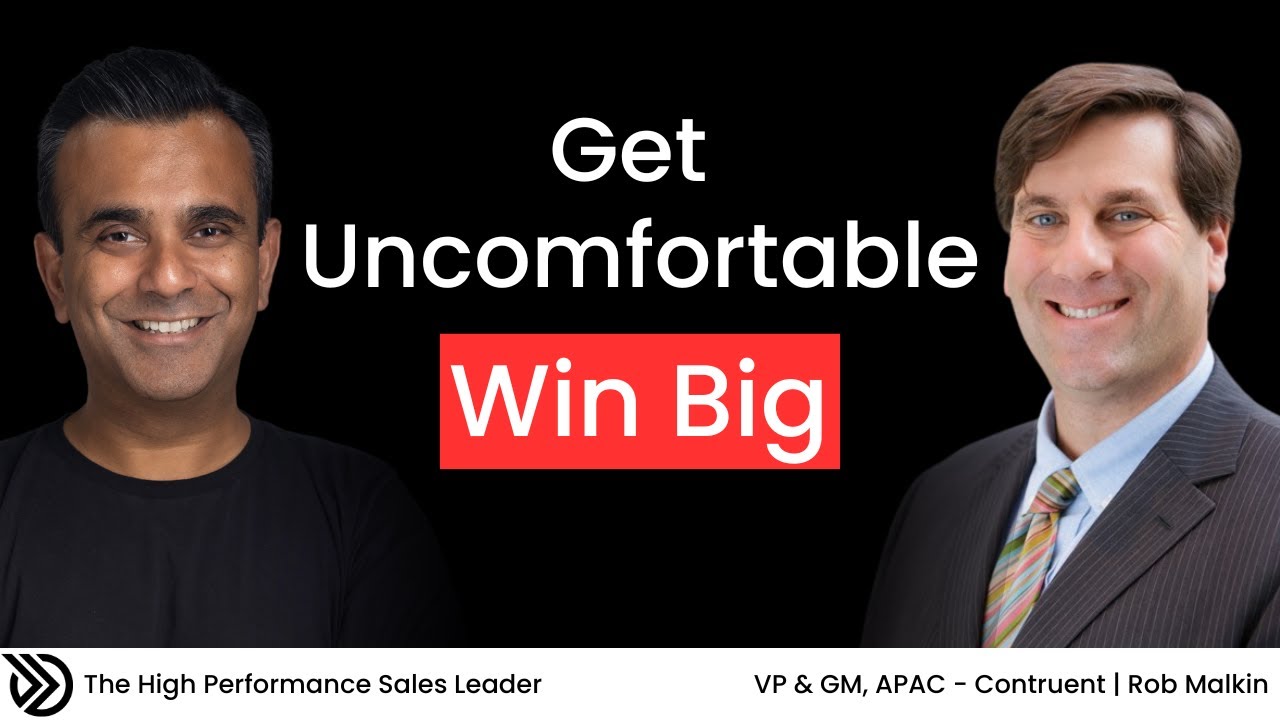
Rob Malkin, Senior Regional Director at Bentley Systems, moved from the US to Europe, Australia, and Asia by consistently stepping outside his comfort zone. He emphasizes playing singles and doubles over home runs, building relationships in different cultures, and treating career development as your own responsibility, not your manager's.
Chapters
Welcome to the High Performance Sales Leader Podcast, where we bring you actionable insights for breakthrough results. Today, my guest is Rob Malkin. Rob, welcome to the call.
Preet, pleasure being here and happy Friday to you.
And to you as well. So let me introduce Rob. He is the Senior Regional Director at Bentley Systems. He has built a fantastic career starting in the US. Traveling the world and building a life in Sydney, but running Asia for a variety of companies. He has worked with Autodesk, Commvault, Mural, and now at Bentley. So I'm looking forward to getting into this journey that he's been on and have got a whole bunch of questions for him. So Rob, are you ready?
Let's do this.
All right. So tell me about your journey because you mentioned something to me and I was fascinated about how you keep stepping outside your comfort zone. So tell me about your journey from the US to where you are today.
So, Preet, thanks for that question. And the journey was not just from the US to Australia. So when I was in my second year at Michigan State University studying international relations and economics, I did something that Americans don't do. I took equivalent of a gap year, took a year off. And I traveled to the Middle East and then I went to Europe. When I came back, so I took a year off school. I was 20 years old, maybe 21. Got back to Michigan, finished my degree and was like, there's so much more in this world than what I've just experienced in the last 19 years. Opened up my eyes. So finished school, took off to San Francisco to decide never to live in winter again. And started my journey in high tech in San Francisco. And I was fortunate because early part of my career, I got offered to move, a chance to move to London as well at 24 years old, which I took it up. So by the time I was 24, I'd been all around Europe, all around the Middle East, California, England, and then on my way back to the West Coast. And it was just, it's been a great ride and I've been working for some great companies.
Fantastic. And that is before you've done so much in Asia as well. So tell me about the next chapters.
Yeah. So after interesting little tidbits, so I had met a girl on my travels, my backpacking through Australia, and I met a woman who was Australian and moved back to California with me. And we've been married now for 20 years and she's fantastic. I met her in Hobart. Well, while we were living in California, the company I was at that point owning, Said, Rob would like to come down to Sydney and work in architectural engineering construction business for us. And my wife being from here and we started having kids, we're like, absolutely, let's go do that for 2 years. Thought it was going to be 2 years there and back. Here we are 15, 14 years later.
Right. And life happens.
Life happens and the experiences have only Become richer as far as experiences and made me a better person, leader, and a father.
Yeah.
Wow.
I love that story. I just have to say. And that just underlines something for me that I sense in you. I meet 3 types of people. So I meet, and the 3 types of people, number one is pioneers. And these are people who are typically looking forward. They're experiencing new things. I meet settlers and they tend to be more present and grounded and their focus is on the now. And I meet museum keepers and typically tend to focus on what has been rather than where we are going. And you're an absolute pioneer. Just love that meeting your wife backpacking and just traveling around. Tell me in terms of, do you just take things as they come or is there some planning involved? How have you— What's your DNA or how do you approach this?
I take it as it comes. And I'll be honest with you, when you work for predominantly American companies or matrix organizations that like to shift and be dynamic every couple of years, the journey that I was on came down to Australia. There was an org change that happened. I started taking on responsibilities of Japan and Korea. I had never been to Japan, let alone start managing a team. Gut reaction said, do this. Nothing to lose. It's just going to make me better. So I really try not to overthink it. I try to take some input from others, some trusted sources, but at the end of the day, life is about the journey and you're not always going to go forward. You're going to have to go around some obstacles. So Just roll with it, to be honest.
Yeah. What are some of the big lessons that you've learned looking back that you'd give to your, maybe your younger self or to someone who is probably in one of the teams that you and your managers lead?
The world is a much bigger place than the way you grew up and what you grew up doing, right? Coming from the US. Probably don't need to go into a lot more detail, but in the US, you think the world is the US and there's a whole different world out there. Cultures and people are different. Business is done different. Investment in people, the relationships and the time. So I would go back to myself if I was younger, the younger crew that I, that I work with.
Listen, experience.
And learn from people that have made the mistakes or been on the journey and have had the successes that you hope to celebrate one day. But again, you're gonna, your path is not gonna necessarily be straight, nor do you want it to be. But always ask for what you want and have a plan on how to get it.
That's fantastic. I really like what you talked about, that path not being straight. There's someone who I had an opportunity to be a part of their journey, and this person was, is, they started out as a web developer and they found that they had the rare ability of being not only technically very sound, But socially very competent as well. And I'm going to get bombarded for typecasting people. Do what you want with it. And he moved into a delivery role, then moved into a pre-sales role. And that's when I met him and I said, Mitchell, what do you want? And he said, I want to be able to grow and experience things. Right. And so this guy, he then joins a startup company. in Sydney and moves from sales engineering into an account executive role in Canada with the parent organization. And then 4 years later, I see his announcement that he's got his Canadian citizenship. And it's just people who have this ability to travel and experience the world and go where that opportunity comes. So that's really the pioneering spirit. Yeah.
Absolutely. And when you're developing teams and working with especially younger people that have that mobility and fun potentially, you want to know if that's one of their goal aspirations. Do they want to go live somewhere else? Do they, are they happy where they are? What have their life experiences been? And as a more mature leader, you want to help them get the experiences that made you and enriched you to who you are today.
Yeah.
Yeah.
Now applying this to the business world, right? Tell me as a sales leader and a business leader, what are some of the lessons that have transferred from what you've seen personally into how you approach the work that you do?
Yeah, it's an interesting question. The pressures of a 90-day quarter and delivering results, but you I take the long game. Customers that I work with, I still talk to that I used to work with 20 years ago because you built a personal relationship, understanding that there's business objectives, but there's also the personal aspect. And I try to impart that with the teams and customers I work with. I went through a course several years ago called Human-Centric Design, and it's not so much about the outcome, it's about the inputs. That you need to get that outcome that you want. So again, I'm always trying to say, what isn't just our objective? Our objective, of course, being in a software business to sell more. What's going to make the customer's life better? Get them home earlier, make their personal journey more enriched. Is that something we could add to it? If we can, those intangibles turn around the humongous benefits for both of us. But the daily pressures of the job, sometimes you just got to pull back, rise above it and say, what is the end goal here? Have customers long-term, continue to grow and impart that with the teams that you work with really to play to win. But it's not on a daily tactical, but it's a longer-term learning of working through those challenges together with them, really help people.
Why?
Focus and strategy to play bigger.
Understood. Now, when it comes to leading teams, as you've led teams for a significant amount of time in different geos as well, what are some of the things that from a personal development, because every time I talk to you, you've mentioned courses, you've mentioned podcasts, you've mentioned other things that you Listen and expose yourself to. So what are some of the things that you feel have been useful in becoming a better leader?
Number one's listening, right? As a youngster, as a young leader, I used to hear something and I would just go get it fixed. Just want to get it fixed and want to get it done without necessarily understanding the implications of a rapid approach. Now I spend more of my time trying to make sure that the team I'm Manage, I work with, I conduct, I'm part of, they're able to problem solve for themselves, but get the guidance that they need from me or the managers on the team. So it's listening, it's thinking through, and it's understanding the mutual benefit at the outset of the situation. And again, as a young person, Managing teams, I was a bull in a china shop and it, it, it may have got the result short-term, but it didn't, probably didn't do great things for me with the teams I was on when I was young.
And so in terms of the, you know, with the sales and with customers, how has your experience shaped in helping close deals? Be more customer-centric. You talked about that human-centric program. What are some of the factors that have impacted that?
It's work. For a long time, I was managing teams across Asia. So I'd be on a phone call. I'd be in Japan one day and Korea the next day and then Australia. Everybody has a little different ways of business. A great example was we worked on an opportunity in Japan years ago. It was one of the bigger ones we've done company and I was The customer kept saying, Rob, being an overseas person, when we win this deal, when you win this deal and we sign it, probably won't see you again. And I made them a commitment. If they signed that opportunity by 5:00 PM the day before, it was a morning flight from Sydney to Osaka to where they were, and I could be there for dinner. And lo and behold, I was on that flight the day after it was signed and had dinner with that CIO, Matt. But that opportunity took, yeah, that opportunity probably took 2 years to mature. In Australia, that same opportunity could have maybe been done in 6 months because you cut more to the chase than just the relationship building. So it's being able to change gears and multitask.
So if we were to look at some of your core beliefs, we've talked about your journey. We've talked about some of the applications in the business world. What are some of the— I've heard you say things like playing to win and going on a journey. Tell me a little bit more. Can you unpack a little bit more of some of your core principles or beliefs that I hear every time we speak?
Look, I want the best for the people on the teams that I work with, and I want the best for the companies. I really am about taking the talent. And not giving up and helping them understand what needs to get done in order to be successful. And that means playing bigger. You're not going to win every opportunity, but are you going to get a .400 batting average in baseball or how many cricket— again, being an American, but how many bats is it over the 6 mark line, right? Don't go for the home runs every time in the 6s, go for the Pre, you tell me what it is in cricket when they just run back and forth once.
Singles.
But in baseball, it's singles. It's a, in baseball, it's a single or double in order to advance the relationships. It's not about, it's almost as important when you've lost, what is it you've learned than when you've won and you think you did it perfectly. It's being, it's understanding who you are, your strengths. Weaknesses isn't a word I like to use, but the opportunities you have to better yourself and better your opportunities.
That's fantastic. I think you've touched a nerve there about learning from your losses as well, because it's funny you say that because just last week I was talking to the CEO of a tech company. They were a mid-sized tech company and he was talking about that their win ratio in this year has been 10%. So you can imagine How much effort is being wasted on either not qualifying or not learning from what? And that's really where I think that self-awareness factor that you've talked about, learning from your mistakes as much or losses as much as you do from your wins, really helps you get better and better at qualifying in and out of opportunities.
There's no doubt right now, the economic environment in the last 12 to 18 months has been tougher. But customers are still spending. People are still buying. You've got to take a different approach and not have copy ears. Qualify yourself. Someone says, call me back, and you called them back 4 or 5 times. They're still not getting back to you. They're still not interested. You gotta move on to the next opportunity because your time as a, as an individual contributor or as a manager is the number one asset you have.
Hmm.
And if someone doesn't respect that, then just move on to how to better yourself, your family, and your profession.
Yeah. I've also heard you talk about owning your challenge. What's your views on that? What do you mean by that?
I've been at all kinds of different companies, big and small, where companies will say, we have your best interests at heart and we're here for you. And I believe that 100%, but where I've seen success and where I've been successful, when I have a career progression and what I want to do, and I make my manager known and I make HR known, and I get time with the executive level, say, here's where I am today. I want to be on the journey tomorrow. And here's where I want to be in 2 years. How, how can you help me? How can you help me achieve my goals? And often companies that I've been at, which I've been fortunate, will say, that's great stuff. You're owning your career and the challenges to get where you want. Let us get you an executive coach, or here's an informal mentor internally to help you navigate and not play the politics. I think you got to own your destiny. And many people let the companies— here's the career development path, which is great. But does it map into yours? Normally it does, but then take yours and put it on steroids or Elon Musk rocket on there and really step it up and demand, and what you're investing, demand that you get that investment back.
That's, that's fantastic. And I think that is something that often with smaller SaaS companies, Sometimes can be lost as AEs need to think about, or people just need to think about that they truly own their career and that they can really— they don't have because they don't ask. And if they ask and then they don't get, they realize that they're probably not in the right place. One last question before we wrap up. From a— this theme of self-development keeps coming through really strong from everything that you've said. So how would you recommend somebody who is at an earlier stage in their career just keep developing themselves? What are some of the things that they can do to just become better versions of themselves or become the kind of where they want to go?
Pick it up. Where's the book? There's a book called Outliers by Malcolm Gladwell. I don't know if you've read it, Priya, but if you haven't, I have. To be good at something, you're supposed to do 10,000 hours of something. So I take that analogy and apply it to myself. I've spent 10,000 hours or more on airplanes all around the world to become a better world citizen. And I just looking out the corner of my eye with that 10,000 hours. So if you want to be good at something and you have an interest in it, spend the time. And that time's walking the dog, listening to a podcast, and it's talking to people who are like-minded, but it's really Take your passion, take your interest and just run with it. Um, for me again, it was moving to Asia 13, 14 years ago and having companies believe that this kid from the Midwest who had never been parts of Asia, but now could run parts of the businesses or verticals or segments. And I just thrived doing it. And it's something that really motivates me every day that I get to talk to customers from all around the world. And work with people from all around the world and learning something every day from someone around the world. And it's a very satisfying and motivating thing for me at this point.
Rob, thank you so much. I think this is going to help a lot of people who potentially are feeling a bit stagnant or are feeling that they don't have options or even for people who just want to think bigger and dream bigger. So. Thank you. Thank you for sharing your story. Thank you for sharing your thoughts. And I appreciate it.
Great. Thank you for having me today. I'm all too happy to be participating and happy to talk to anybody who wants to, to just have a noodle. So thank you, sir.
Thank you.
More from Tom




Why GTM Leaders Still Struggle with Pipeline Visibility in 2026 | AI vs Traditional CRM





How to Build High-Performance Sales Teams | Direction Alignment Commitment (DAC Framework)

