The 3 Keys to Leadership: Clarity, Culture & Cadence
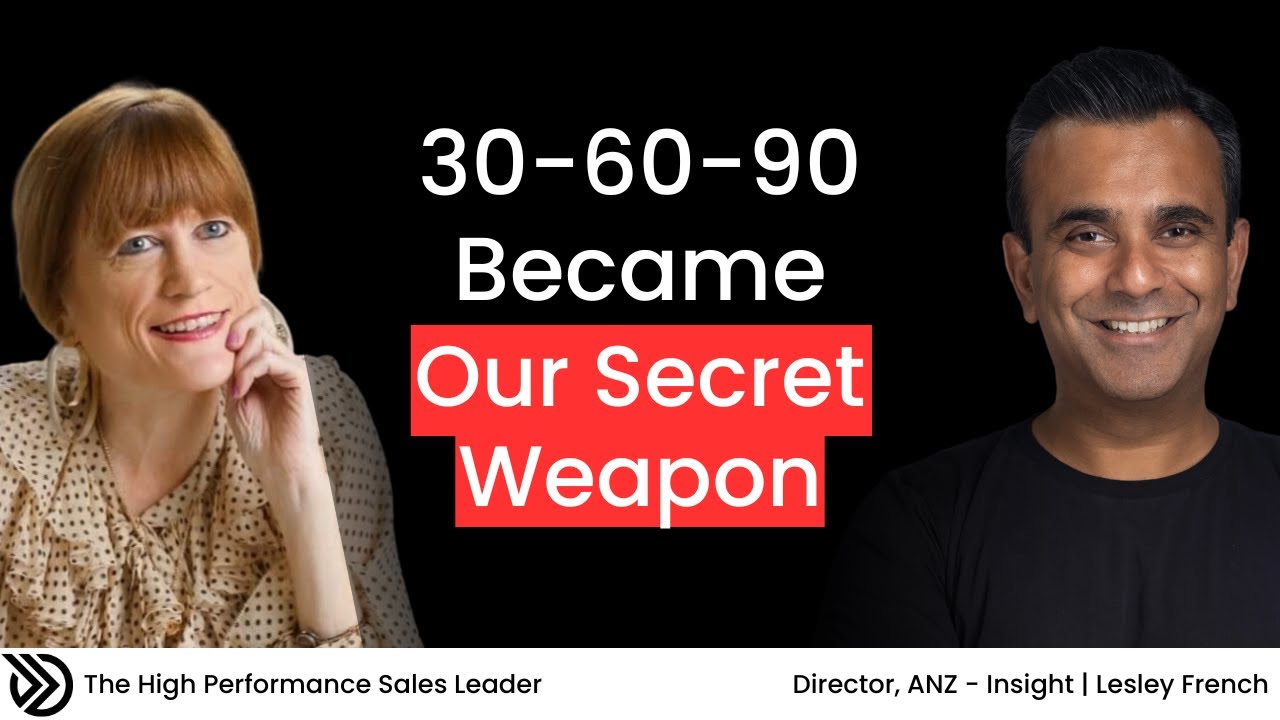
In this interview on the Switch Keys Show, host Pri Saka talks with seasoned technology leader Leslie French about how she drives transformation in large organizations. French explains her interview‑driven discovery process that informs a customized 30‑60‑90‑day plan, which she executes within the first two months to quickly assess people, blockers, and opportunities. She then outlines the concept of a leader’s intent – a clear, purpose‑driven vision broken into simple, bite‑sized steps that are communicated transparently to the team. To keep momentum, she establishes a cadence of quarterly town‑halls, monthly check‑ins, and weekly or weekly‑as‑needed meetings, aligning metrics and progress reviews with the leader’s intent. French describes a strategic shift from low‑value small‑and‑medium‑business (SMC) pursuits to focusing on “big‑bet” enterprise accounts, tracking the top ten each quarter and aligning compensation and territory definitions accordingly. Culture is presented as the foundation of success, embodied in Insight’s corporate values of Hunger, Heart, and Harmony, which guide hiring, teamwork, and inclusion. Throughout, she shares concrete examples such as Insight’s Microsoft Partner of the Year award, the importance of transparent communication, and the need for clear territory boundaries to drive sales performance. The conversation weaves together practical frameworks, cultural principles, and measurable outcomes for effective leadership.
Chapters
Welcome to the Switch Keys Show. This is your host, Pri Saka, and today I'm joined by Leslie French. Leslie, thank you so much for joining us today.
Thanks, Pri. Absolute pleasure to be here.
I have known Leslie for a number of years. She is a seasoned and successful leader in the technology industry. She has worked with companies like Cognos, IBM, Microsoft, MicroStrategy, and Insight Enterprises in VP and director roles. Along the way, she has collected a long list of accolades, which include finalist in the ARN Women in ICT Award, the Global Manager of the Year, 3-time APAC Manager of the Year, largest global federal government deal of the year, Employee Hall of Fame, and much, much more. Most importantly, she is best known for building great culture, winning teams, and a high level of retention. So Leslie, again, I'm so excited that you made the time to join us. Thank you.
Yeah, look, thanks, Pri. What can I say? Thanks so much.
Let's get started. And tell me, when you walk into organizations and the, the challenges that you have, And the goals that you— how do you go about planning a transformation which involves some of the key things that you're best known for around culture and other activities? Tell me a little bit more about that.
OK. Thanks, Pri. Great question. If I look at where I am possibly in the last 2 organizations, because my time at Cognos, I was there for a long time, 22 years.
22 years. Wow.
But if I look at where I am now, here at Insight Enterprises, I think an important phase is actually the interview process to gather a lot of information on what the key stakeholders expect you to do when you come in.
Right.
So, do that preliminary understanding before you actually get ensconced into the organization directly. And then once you do land, I know from my own personal experience here at insight, I had prepared a 30, 60, 90-day plan purely based on the conversations I had through the interview process.
Excellent.
So, I guess I commenced with the organization with a perception of what I expected them to want me to do. But having come in, I pretty immediately, and in fact, in the first couple of weeks working to that, 30, 60, 90-day plan, I quickly dove in into sort of assessing the people. And that is the most important thing I think we can all do is get to know the team, get to know their drivers, get to know their— understand what maybe their blockers or barriers to success may or may not have been.
That's good.
And, but that explanation and understanding that you learn through the actual interview process is really quite key because you're not too embedded in the organization at that point. So, you're getting a very clear view of what management expect from you. So, I think that's important. I did find in my own experience here that the 30, 60, 90-day plan, I had probably executed on all of it within under 60 days, well under 60 days.
A couple of things I love about what you've said. First of all is that You were consultative in the interview process, which allowed you to understand what the challenges were. You built a 30-60-90-day plan, which was based on actual information rather than cookie-cutter templates, which I see often happening as well. And then, more importantly, you've spoken very much like a people-focused leader. You got to know the people and what was preventing them From being successful, and I think that and and finally you actually executed on your 30, 60, 90 day because truth be told a lot of them get forgotten after the interview phase.
Yeah, and look, I'll I'll be completely transparent. I've still got the copy of that 30, 60, 90 day plan. For some reason, that stood out to me as something as a real accomplishment that was told me I was. In the right place. Wow. It endorsed the decision to join Insight.
Yes. I think that's, again, that is so insightful because I think if you don't like what you find out during your discovery, interview being discovery of a potential employer, then don't take the job. Back out. And if you really like it, and that's up your alley in terms of what you can do and will do, I think that's great.
Thank you. We spend a lot of time on that too here as an organization. I know personally, as a leader of the team here, the first, the first 7 days in, the first, the first fortnight, the first month, et cetera, I'm constantly asking, repetitively asking the same question. How are you settling? How does being here in the organization feel this week as compared to last? It's important to the way we operate. And we all work a hell of a lot long hours. And if you're doing that, it's got to feel like you're in a good place.
Wow, that— I really like that. How does this week feel against last week? That is good. That is very good. Now, you've mentioned the leader's intent to me, and that really struck me. And can you tell me a little bit more about that?
Yeah, look, it is something all the leaders hear. We— it's a sort of modus operandi, if you like. And the The leader's intent itself is about purpose-driven leadership. And in essence, it's about creating clarity to your team on what the vision is and keeping it very simple so that it's easy to understand and simple in the sense that we can actually execute on it.
Yeah. Wow. I do believe fundamentally that clarity is a superpower. Because people who are clear are easy, easier to understand, easier to align with, and it makes execution a lot easier in whatever direction. So, tell me a little bit more about that, please.
For it to be effective, and I can think of a number of different examples of where we've presented to the team, the leaders, my personal intent and vision for the business, and one that I delivered back at the beginning of, I think it was, FY21, as we're all amongst COVID and things, and we're in a very rapidly growing and scaling business. And my 3 years leader's intent was to be the preferred partner of choice with Microsoft, which is the business we're in here. And at that point in 2021, we had a good brand with great clients at but growing, and there were many steps we needed to take, if you like, to get to becoming the partner of choice with Microsoft in this case. And I expected that would take a number of years to get there. It's not something that you can execute on, decide on, and deliver on within a fiscal year necessarily. And so, when you set the leader's intent, it's a vision. You also need to explain the steps that need to occur to progress you towards that ultimate goal and vision. And again, you need to be very simple about what the steps are and the key things you need to do. We need some strategic clients. We need to have them in these industries with incredible outcomes and powerful success stories that create compelling vision for other clients in that industry.
Right.
those same industries. And these steps need to be able to be executed on in bite-sized chunks. You also need to be clear on what we perceive the obstacles along the way might be in order to get to that ultimate vision, if you like. So, communicating clearly. And look, the leader's intent is something you share with your direct reports as well as the next level down.
Mm-hmm.
And by doing that, you're providing that clarity on what the vision is. And the ultimate objective here is you're giving the team full transparency and the ability to understand what the vision means and how it can impact the business. And when you do that effectively, the team buys into it and they become— without them, you can't get to that vision, right? You need them on the bus, as many people in the business say, if you like. And leader's intent, if you can keep it clear, keep it simple, life becomes a lot more easier in terms of driving towards that goal.
That sounds really good. And I, what really stood out to me is that you mentioned both the vision, the intent, but you also mentioned bite-sized steps, Which I think is often missing because you can— some people stay too much around tactics and not have the strategy or can end up with the strategy without tactics. How do you— 2 questions. How do you connect the 2? And what's the cadence at which you would review that or recommunicate that? Because people need top-ups, otherwise, it's easy to forget. So, what's your advice on that?
Depending on the, on what the actual leader's intent is. And for example, in the case of becoming the partner of choice that I just mentioned, that was a long-term goal that I expected to take 2 to 3 years. And, and by the way, I will mention Insight just got announced on the 28th of June as the Microsoft Partner of the Year. So it was absolutely not through my sheer leader's intent by any stretch of the imagination, but my part of the business were absolutely committed. Wow. To doing our part to drive that ultimate goal, to make it possible. So in that scenario being a 2 to 3 year goal, if you like, there were quarterly check-ins with the broader team to say, here's how we're tracking, here's how we've— here's our top 10 strategic enterprise accounts that we've gone deeper, wider into because that is a stepping stone towards Becoming a stronger brand in the Microsoft space in this particular case. So that's a measure of success in how we're partnering with our clients. We would run town halls quarterly, but monthly I would do other meetings and check-ins with my direct reports on how their individual business units are performing across key metrics of client success. and financial outcomes as well. If it's a shorter-term goal, then it could be weekly meetings around that. Yeah.
Fantastic. And congratulations. I think it's incredible.
Huge. It's absolutely exciting.
And you've connected this back from really when you interviewed and your 30-60-90-day plan and staying on course. That is just Phenomenal. And I know that it takes an organization, a team, and people, but it is so congruent how you describe how it's been executed. I just want to say congratulations.
Thanks, Preet. Awesome, awesome result for the ELT here at Insight, to their services delivery team, my team, and the huge effort from our marketing team.
Yeah, amazing.
Very exciting achievement.
Now, I am certain that as you go— as we go back to the 30, 60, 90 days, there were more obstacles that you identified. So tell me a little bit more about early days, some of the challenges, and how you worked to overcome them.
Okay. So look, again, Before I joined, in the interview process, my leader, the VP of Asia Pacific, had outlined to me, as had the CTO, that they were— the sales team were in pursuits every day, but most of them were very tactical. And the tail in terms of the ROI on those pursuits was insignificant in many cases. We had a lot of the sellers basically Not being focused with, without industry alignment. That was a very direct reaction to wanting to meet 30 and 60-day pipeline metrics, if that makes sense.
Yes.
And so again, when I came in, it really only took a matter of weeks or the first month or so, and I was able to see that it was just through a lack of clarity, lack of leader's intent, And that quickly evolved into a message and a vision that we need to focus on enterprise clients versus any client, which is there. There's a huge SMC market out there, for example, but that's not the space that we particularly wanted to focus on based on what we think our value proposition is for our customers. And yet we were constantly selling into that SMC market. So it was a matter of changing direction there and focus to say, this is our industries, this is our market alignment. Here's the industries that we want to be known for as, as great references, great case studies, success stories with clients. And, and have the sellers also be of that maturity level that they can actually sell to the enterprise clients. It is a different sales motion and a maturity of Zella as well. So, there were, I guess, aspects to what were preventing us from making huge progress. So, we were able to make, quite frankly, pretty huge progress very quickly by making a few small changes to how we focus and how we do it and how we communicate that back to our partner, in this case being Microsoft. So that we had clear alignment.
Yeah, that's—
does that answer your query?
Yes, it does. And it resonates so deeply because actually, I was mentioning this to someone else today. One of my favorite books recently is Essentialism by Greg McKeown. And he— one of the lines which I've actually got written on a Post-it note at both my workplace office and my home office is selective is effective.
Yes.
Right? Is that you've got to be selective and, and to be effective, because if you say yes to everything, you will actually get very little done. But if you say no to what is not core, what is not essential, but you say yes to that, then you will actually get outsized returns from that. So, thank you. That, that, and I think the other thing is that as you were talking about the leader's intent, it's also the seller's intent that in that territory, you're really spending your time focused on the right accounts, the right opportunities, the right level of engagement so that even if it's beyond your 30-60-day pipeline, you're really building towards something that will set you up for success as you clearly have done so.
And when I did join there, to expand on, on, on that comment, Pri, I very quickly coined this term that we're still stuck with, if you like it or not, is big bet accounts.
Okay.
So I sat down with my leader here and, and I said, take a look at everything. And we're selling to SMC, we're selling a bit to enterprise, we're selling to everyone that will talk to us basically. And we need to get laser-focused, and we need to get very intentional on who we sell to, and we need to be very transparent with our customers about that as well. And out of that came the concept of focusing on big bet accounts, which were certain industries of a certain revenue size that, that would make it absolutely a win partnership between Insight and the customer themselves. And the name Big Bet is something we look at quarterly. We look at our top 10 Big Bet accounts. We track, are we going deeper and wider in those accounts with our solution offering so that we can actually be a better partner to them versus aiming to sell for— to, sorry, 100 different accounts in a quarter. Less is more in our case. Let's focus on the accounts that matter so that we can make a difference. And they'll continue to partner with us this year, next year, and the year after.
That's great. Um, tell me, how do you get your team to transition? Because it cannot happen without a transition or a transformation from chasing everything, or a combination of SMC and large accounts, to really Gearing your sales force towards the big bet accounts, what are some of the things that you've done that have helped with their level of engagement, how they're partnering, you know, any tips and advice on that?
If you're a sales leader listening to this, I guess what I would say is it's tear off the Band-Aid type situation. Don't tap dance around it. You've got to address it. You've got to be very To answer your question, I think you need to be 100% black and white. This is the territory, this is where we're focusing, without being detrimental to any existing customers that you may have that you're looking after. But you need to say, this is the way we're moving forward. Complete clarity. Again, go back to leader's intent. Complete clarity on, on where we're going to engage and, and do business. When I look at the various sales teams I've managed over the years, if there's an essence of gray area around what their territory is or isn't, you'll have confusion and you'll have misdirected sales teammates that are, you know, lose focus. And when you lose focus, you're not selling. So be very black and white about what the territory is. With the team, and we were able to do that very quickly. You'll always get pushback. You'll always get explanations about why, why there's special circumstances for certain clients. And you've just got to stick to your guns, quite frankly. You absolutely have to stick to your guns. And I think by doing that, you change, you completely change the dynamic overnight. There's all sorts of other aspects to it. Your comp plan needs to reflect the focus that you want to drive for the teammates. There is also, I certainly found through my experience here, there's all different types of styles of sellers and definitions of sellers, hunters, farmers, enterprise, SMC, industry-focused sellers, and they're all great in the right organization with the right territory and markets. When I did start here, we were definitely more focused on SMC and trying to move away from that. And that required a different maturity of seller and a different experience set of sellers. So there was some transitioning of the sales team over the last almost 3 years that I've been here. It doesn't need to happen overnight necessarily. But certainly if you want to sell to large enterprise in complex matrix situations and sales deals, it is a different dynamic and not everyone can, wants to even grow into that, evolve into that sort of landscape, if you like. So you've just got to work through that with the individual teammates and make sure again, it's the right territory. Based on their experience and where they want to go in their career.
Fantastic. Now, that's really good. And I can see that you've got the vision, but then you've got a strategy and a set of tactics to keep moving people along. And you would need a good cultural underpinning to make that all happen. Because otherwise, like John Maxwell said, If you are a leader and you turn around and there's no one behind you, then you're just going for a walk.
True.
You need people following you. So, tell me a little bit more about culture. You've made mention to some really interesting concepts when we've spoken in the past. Tell me a little bit more about the cultural component and what do you build or focus on?
It's all about people. Like, I could talk for hours about this, Pri. So, I know we don't have that. But Look, at a very young age, and I've been in the industry over 30 years now, at a very young age in my Cognos time, it was through some simply terrific leaders there that I was, I was well trained in understanding that people are your greatest asset. And that's remained absolutely in my core DNA, no matter what role or organization I've been in during those For 30-odd years, there is no doubt that you cannot sustainably achieve the financial metrics that every organization expects you to achieve on a quarterly, be it monthly, quarterly, annual basis if you don't have a great team. You might luck it one year or two even, but without great teammates and them all buying into your leader's intent, and it just It's just not possible. So, the more you can, as an organization, take that time out to invest in the people and the culture, it is going to pay never-ending dividends in my point of view.
Yeah, that is absolutely. And I, again, as you talk, I really think of some people who impacted me early on in My, my career, because leadership is often caught, not taught. You have to work around some great leaders to be able to see what good looks like, and occasionally the odd bad leader to see what you don't want to be like.
Still good learnings.
And you mentioned to me hunger, heart, and harmony. Can you tell me a little bit more about that?
Yeah, look, I just love it. And, and look, In all my career, I haven't worked in an organization where I can honestly say every employee in our organization here at Insight knows our corporate values, which are hunger, heart, and harmony. Firstly, they were defined by the people in the organization, I think a couple of years before I started, as what describes our culture. And out of 13,000, 14,000 people globally, Wouldn't matter who you reached out to, they'd be able to go Hunger, Heart and Harmony. Hunger for the passion, the drive to win opportunities, to go the extra mile. Heart for, we're, we call ourselves teammates here. So we don't talk about people or FTE at all. Like, I probably haven't used that term in 3 years or so now. It's all about the teammates. So it takes, it has a really cool connotation to it. in itself. And so that drives the spirit of heart that we're all here and in this together. The harmony is about diversity and inclusion so that we're supporting each other, which truly and genuinely supporting each other to drive the ultimate outcome and objective of the organization and drive results, right? It's something very near and dear to my heart and in every person. And I do interview a lot of people every week for various roles. across the organization here in my team. And I always take probably too long in the interview process, but I don't think so, 10 or more minutes to talk about our company and our culture to ensure that I'm very transparent with how important it is here at Insight. Because if that's not special to you at the end of the day, it may not be a great fit. culturally for you. It's so important to us that we don't tolerate politics here in the organization.
And I think that what you've just laid out is that when people perceive the value that they are getting from an organization, it lifts their level of contribution back. Because at the end of the day, it is a mutual value commitment. And I think that Clearly, with what you've described in there, you are living your values. I think you can really divide the world on, on the corporate world on values— companies that are living their values and companies that aren't living their values, right? And I think that if we were able to, and maybe someday when AI can compute any question in a matter of seconds, we'll be able to see—
It's happening!
Yeah, it's happening! We will be able to compute how are organizations that actually live their values performing versus those who aren't living their values. And I think that there's a lot to it in what you've just described in getting to the Partner of the Year with Microsoft. And again, congratulations! Everything that you have said to me is so congruent and coherent and really a set of best practices, really, at the end of the day, into how to build culture, set goals and take the team along with that. So— Thank you so much. This has been an outstanding conversation. I could go on for hours, but I am sure you've got things to do. But thank you, Leslie. This is— I truly appreciate your time. I appreciate your thoughts and your stories. And thank you. I know that people who are listening to this will find it very useful.
Yeah, look, awesome. Thank you, Pri. Great to spend time with you as always. I really appreciate it. Thanks a lot.
All right. Thank you.
More from Tom




Why GTM Leaders Still Struggle with Pipeline Visibility in 2026 | AI vs Traditional CRM





How to Build High-Performance Sales Teams | Direction Alignment Commitment (DAC Framework)

